New Centerstage Review Up!

I saw my first Victory Gardens show last week. It’s always a little weird to go from storefront theater companies with hardly any budget to an established company with a board of directors and a solid budget for costumes, set design, and so on. If only every theater group had these resources! It’s a Sarah Ruhl play, so there was lots of lofty discussion and several surreal moments. Lovely. Here’s an excerpt of the review:

Dr. Givings (Mark L. Montgomery) treats women with “hysteria,” that particular female condition caused by various problems with the womb, be it too much moisture, lack of children, or any number of things. What the well-to-do ladies in town do is enter the operating theater, lie back on a table, and allow the good doctor to apply his mechanical device under her skirts on her, er, area.

Read the rest of the review here. Enjoy it this weekend. Have a great one! I’m in Montreal on vacation and will, of course, report back soon.

Aesthetically Speaking: Catherine Adel West

This week’s interview was conducted with Catherine West, a colleague of mine at work. We found out we actually grew up blocks from each other in Evergreen Park, and now years later we’re working as editors in a small office in downtown Chicago. Small world. Catherine’s blog makes me laugh every time I read it, and I’m looking forward to reading more as the inspiration strikes her. Thanks for sharing, Catherine!

What is your name and city of residence?
My name is Catherine Adel West and I live in Chicago, IL.

What medium do you work in?
I am a writer. Whether or not I am a legendary writer remains to be seen.

Catherine West

Catherine West, legendary writer

How often do you work on your art–is it a full-time endeavor or something you work on in your spare time?
I write in my spare time. Mostly I write after work or during breaks. It’s for the most part when inspiration hits me, which is more and more often these days.

How does art fit into your life, in general? Is it something you think about and talk about every day, or every week, or only in certain situations, etc.?
As I have to edit other people’s words, I think about my work and my words all the time, every time. It actually helps to know what techniques work in writing and which ones do not.

When you start on a piece, what kind of end result do you have in mind? Does it get performed or published, put in a permanent form or is it more temporary?
When I begin a story, it is very fluid. I never know where I’m going to end up which is most of the fun. My result varies with each story I create; I want to make you laugh; I want to make you cry. My overall goal is always the same and that’s to make the reader feel something powerful. I will publish my work on a blog. I am, however, experimenting with the idea of being more aggressive and entering short story competitions.

What goals do you set in relation to your art, both short- and long-term? Is it something you hope to make money doing, or is it something you want to keep uncommercialized? Does the term “sell-out” hold meaning for you or do you see the art/commerce relationship as a necessary one?
My ultimate dream or goal has always been two-fold. Become a successful writer both literary and screenwriting (maybe an Oscar or two in my future). To me, sell-out is not a dirty word as I have never been the “starving artist” type. We do have to make a living and we all, as artists, want to reach as many people as we can with our words, music, images, etc.

I think the lines that one is willing to cross determine the extent to whether they will be able to ultimately live with their decisions or not. I think in the end, I will be able to live with my decisions and do so happily.

What role does collaboration with others play in your art, if any?
Collaboration, if any, for me comes mostly in the editing process. I give my stories to a few trusted people and they give me their honest feedback. We will go back and forth about things that can be edited or changed. However, writing is mostly a very single and lonely process.

How conscious are you of your artistic influences? Who are your artistic influences?
I think anyone who performs music, paints, writes, or whatever is constantly trying to live up to an ideal person. With every note played, word written, or brush stroke comes a constant questioning of how would this person handle it or how can I put my own unique spin on my art form. I am no different.

 I read and re-read every line and compare myself. How I write, every word used has little bits of Zora Neale Hurston or Dean Koontz or Anne Rice or Chuck Palahniuk. I try to write to combine love of ethnicity and mystery and description and dark humor. I want my writing to be all of these things in a unique shell.

Since this is a travel blog, how does travel relate to or affect your art? (Themes in what you produce, road trips to perform your music, thoughts on what happens to your painting when you ship it across the country to a customer, etc.)
Travel mainly affects the way I describe a place in my writings. A lot of it I pull from different places I’ve visited. A hotel room in Paris; a casino in Vegas; the way the Pacific Ocean beats the sand in Santa Monica — all this helps me give a place or setting as much depth and feeling as the characters themselves.

And finally, a right-brain question: If your art was a map, what would it be a map of?
As much as I dislike the wilderness, I would actually compare my art to the forest. There is a lot of beauty, dense and raw, and it can be hard to get through, but once you hit that beautiful meadow, and the sun is shining off the picturesque lake, the trek was totally worth it!

If you’d like, share your website/Facebook page and any upcoming gigs/plans you’d like readers to know about.
I have a wonderful blog titled “Ghetto Yuppies.” It’s funny and crazy and a good read so I invite all people to check it out! http://catherineadelwest.blogspot.com/
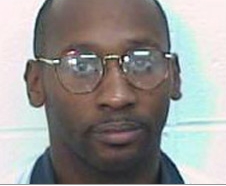
RIP Troy Davis

Last night, at 11:08pm Eastern Time, the State of Georgia executed Troy Davis by lethal injection. Davis was convicted in 1991 for the 1989 slaying of a police officer. Davis maintained his innocence until the end, and considering there was no physical evidence against him and seven of the nine witnesses identifying him as the killer have since recanted, I am one of the many people who believe him. His death is a perfect example of how very flawed the legal system is, and how blind to justice those who work it are willing to be.

"I Am Troy Davis" supporters keeping vigil

There are a lot of smart arguments against the death penalty (it’s heinously expensive to taxpayers, it’s applied disproportionately to poor and non-white people, it does not actually deter violent crimes), but the possibility of innocence is perhaps the most compelling for people who otherwise think capital punishment is just. Groups like The Innocence Project meticulously track the many cases in which the reasonable doubt is too strong to justify a conviction, let alone the extinguishment of a life. In some cases, DNA testing has proven innocence posthumously, which ought to be as clear-cut and scientific proof as anyone could ask for. Yet it’s legal in almost every state in the country, and as the recent presidential debate showed, a lot of people are enthusiastically for the death penalty.

I want safe streets and punishment for violent crimes, just like anyone else. But I don’t want it at the expense of real justice.

Last night I attended a rally in Daley Plaza attended by some 100 people who waited anxiously to hear whether there would be a last-minute stay of execution. I left at 7pm Central Time when it was announced that he’d been given a seven-day stay and there was more fighting to be done. We cheered and grinned at one another at this new glimmer of hope. It turns out we were misinformed or the court decision changed, of course. But that doesn’t mean there isn’t more fighting to be done. There are hundreds of capital punishment cases throughout the United States, and laws on the books at the state and federal level. There’s a whole system to transform.

Troy Davis’s last words were: “I ask my family and friends to continue to fight this fight. For those about to take my life, God have mercy on your souls. And may God bless your souls.”

Rest in peace, Troy Davis, and know that you will not be forgotten. We will continue to fight this fight.

Troy Davis

Troy Davis, October 9, 1968 – September 21, 2011

Image 1 from here. Image 2 from here.

UPDATED: People inspired to help can donate to www.innocenceproject.org and www.amnesty.org, and find action points on both sites.

Aesthetically Speaking: Natalie Hurdle

This week’s interview is with Natalie Hurdle, co-founder of Strange Bedfellows Theatre here in Chicago, a new company just putting down roots in the city. I’m excited to see what productions come next. Thanks for sharing, Natalie!

What is your name and city of residence?
My name is Natalie Hurdle and I live in Chicago.

What medium do you work in?
I work in the theatre–I am a co-founder and ensemble member of Strange Bedfellows Theatre, and I also work at Piven Theatre Workshop.

How often do you work on your art–is it a full-time endeavor or something you work on in your spare time?
That’s an interesting question to answer as a young artist–as Strange Bedfellows continues to grow, I hope that one day it can be my one and only job. In the meantime, I work in arts management at Piven to pay my bills and learn how to run my own theatre company. Even when I’m not actively in rehearsals or meetings, I feel I’m learning and preparing and garnering new resources for my work.

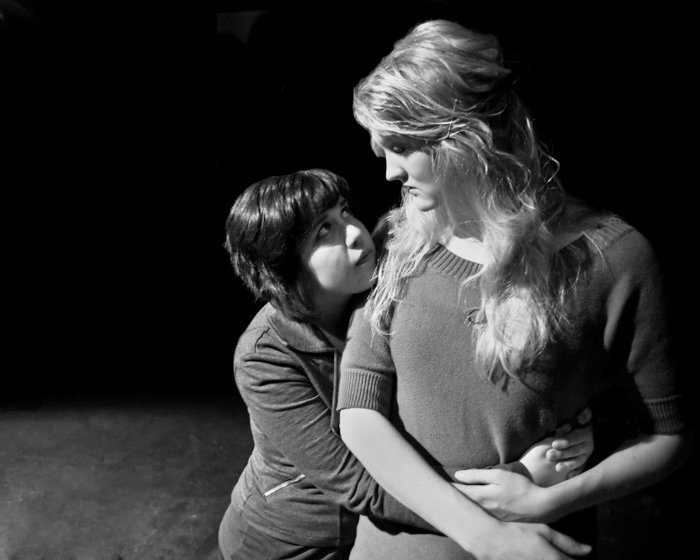
Fire Island by Strange Bedfellows

Natlie Hurdle and Jen Westervelt in Strange Bedfellows' "Fire Island"

How does art fit into your life, in general? Is it something you think about and talk about every day, or every week, or only in certain situations, etc.?
Art drives my life. It’s a constant thread in my heart and mind. Almost everything I experience ends up informing my work in one way or another. Every day, artists make the decision to keep creating–a decision that can require considerable compromises and sacrifices when it comes to personal relationships, financial security, and all the other messes in life.

On the other hand, I think to be a great artist, you need to have a life outside of art, otherwise you have nothing new to bring to what you create. Your art is richer and fuller when you step outside of your art bubble and splash around in the world and bump into other people. And there are definitely nights when I have a beer with a friend to talk about anything BUT theatre. We all need time to rejuvenate–making art can be exhausting.

When you start on a piece, what kind of end result do you have in mind? Does it get performed or published, put in a permanent form or is it more temporary?
Theatre isn’t theatre if it isn’t shared with an audience–the performers and sets and sound and lights are only half of the equation. The reaction of each different audience changes the show so incredibly. I love how I can see a performance of the same play with the same actors in the same place ten different times and the makeup of the audience alchemically alters the show. One of the things I love about theatre is how very temporary it is. That performance for that audience will never be repeated again, no matter how long the production runs. And you can’t capture the experience.

What goals do you set in relation to your art, both short- and long-term? Is it something you hope to make money doing, or is it something you want to keep uncommercialized? Does the term “sell-out” hold meaning for you or do you see the art/commerce relationship as a necessary one?
I would love to be bringing more money in as an artist so I can put more time and money back into my art. Art is valuable; I see no reason to refuse payment for making it. I don’t believe that I have a super commercial bent as a theatre artist, but finding ways to reach and engage a new audience is something I think theatre artists in particular should be thinking about–and creatively.

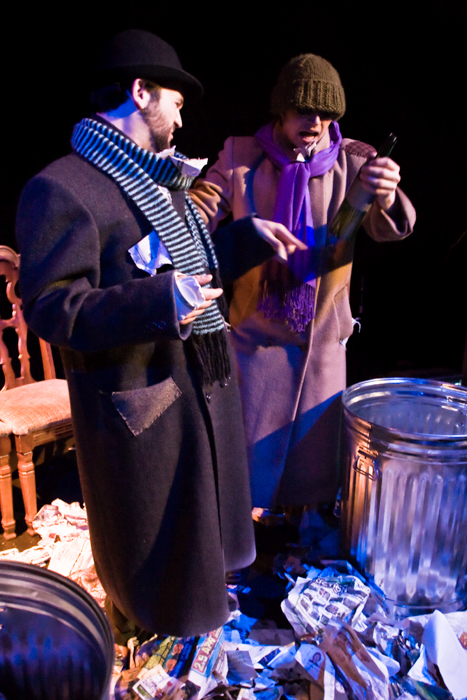
Fire Island by Strange Bedfellows

Brooks Applegate and Derrick Marshall in Strange Bedfellows' "Fire Island"

What role does collaboration with others play in your art, if any?
Strange Bedfellows is a very collaborative company. I think the work we do together is stronger and more interesting because it is made by dissimilar people with unique strengths and ideas and a common goal. Strange Bedfellows indeed.

How conscious are you of your artistic influences? Who are your artistic influences?
Very conscious. I read a lot; I see a lot of theatre; and when I feel stuck and uninspired, I go back to the artists who remind me of my passion. Anne Bogart, Paula Vogel, Sarah Ruhl, Mary Louise Parker, not to mention my great teachers–Joan Herrington, Mark Liermann, Jim Daniels, Elizabeth Terrel, and the list goes on.

Since this is a travel blog, how does travel relate to or affect your art? (Themes in what you produce, road trips to perform your music, thoughts on what happens to your painting when you ship it across the country to a customer, etc.)
When I was sixteen, I had the unreal experience of performing at the International Fringe Festival in Edinburgh, Scotland, the largest theatre festival in the world. That sealed the deal for me as an artist. I wanted to make theatre and engage with theatre and connect with other theatre artists and lovers of theatre for the rest of my life. Learning from artists of other backgrounds and cultures and examining the changing contexts in which theatre is made fascinates me. I would love to travel more to do all of that. For now, Chicago is our home base, and I imagine it will be for a long time. Who knows, though?

And finally, a right-brain question: If your art was a map, what would it be a map of?
A map of empathy. A map of magic.

If you are looking for any other information on Strange Bedfellows Theatre, check out our website.

Photos by Daniel Halden Fitzpatrick.

My Kind of Town Monday

Image

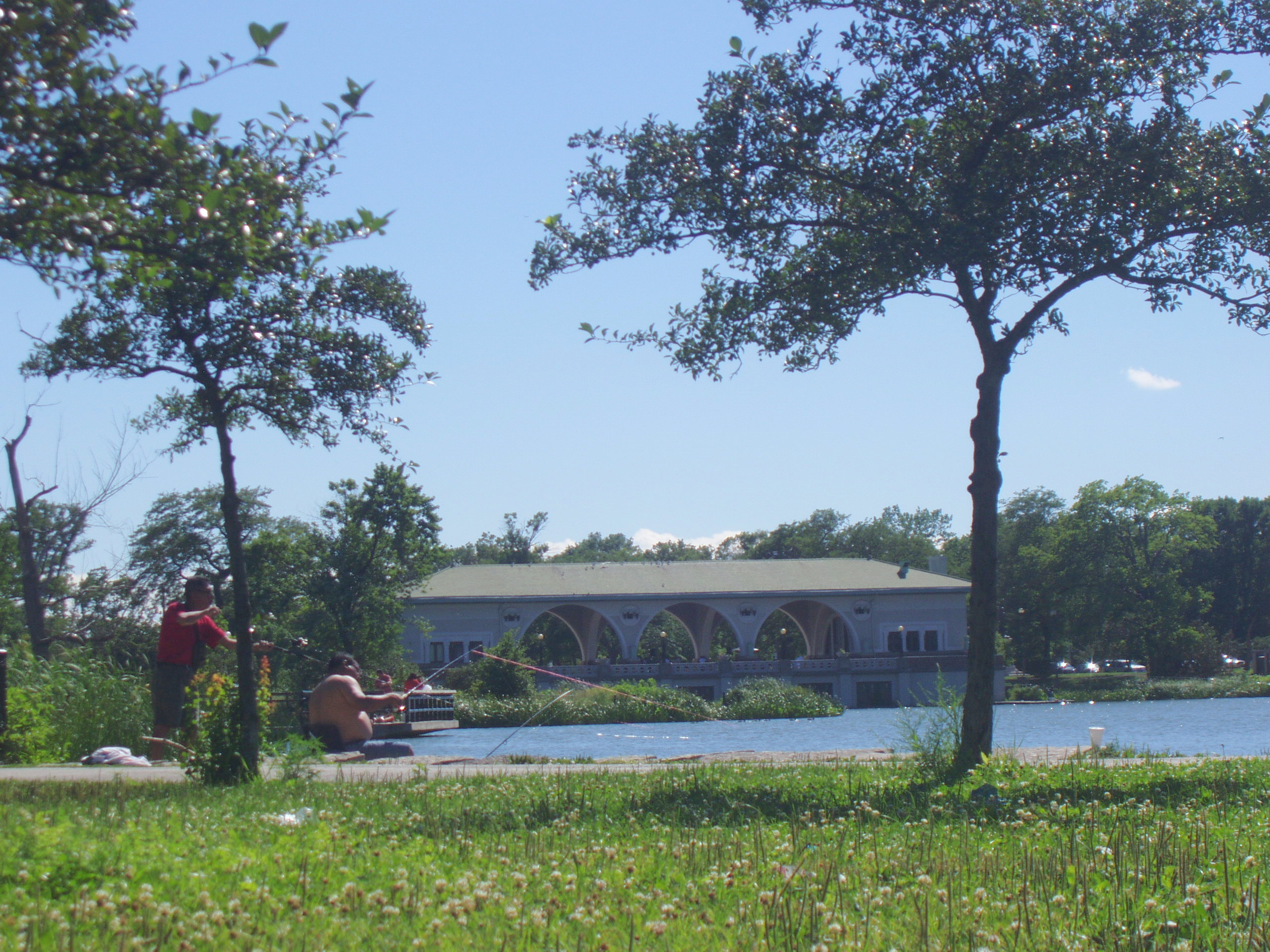
More weekly features! My Kind of Town Monday is a series of photos I’ve taken around Chicago. Some of them are well-known spots, others less so, and some are just places I love and don’t want to forget when I move away. It’s a year-long project of remembrance, and bonus, you get to look at pretty pictures.

Humboldt Park boathouse, Chicago, IL

Humboldt Park boathouse, Chicago, IL

The Perils of Reviewing Theater

Persuasion is my favorite Jane Austen novel. That story of long-lost love being rediscovered is entirely too easy to swoon over, not to mention the supporting cast of characters is a hoot. So when I saw that my September review options for Centerstage included a musical adaptation of the book, I jumped on it. As Beth said, you can’t miss “Persuasion: The Musical!”

But oh how we should’ve missed it.

Beth drove three hours to visit me and see the play, and she said it was the worst play she’s ever seen. I felt so bad, although of course I couldn’t have known. It turned out to be a really expensively funded community theater production, with several shaky singing performances and one spectacularly bad acting and singing performance. Here’s an excerpt of the review:

Ms. Landis wrote the libretto for this adaptation, and even traveled to England to do research for it, so it is clear that this is a labor of love. Unfortunately, that love didn’t translate into a stronger performance, and enthusiasm alone can’t carry a play. This story deserves a passionate production, not a three and a half hour slog.

Three and a half hourrrrrrrrs. Nothing is that long. Maybe the Ring cycle. No one even does Shakespeare at that length anymore. Three and a half hours I will never get back.

The woman playing Anne, Barbara Landis, is the Artistic Director of the company, so she pretty clearly cast herself, but what she needed was someone to tell her no, you can write the libretto, you can pick the music, but you cannot play this part. We wondered if maybe she had an illness, because her movements and facial expressions were so odd that it seemed possible she didn’t have proper control over them. This would be terrible! To be slamming the performance of a woman who bravely overcame an illness or stroke. Except that there is no mention of that in the program, there is no indication that she is anything but well, so I have to go with the information I’m given. Based on that, it was a supremely narcissistic move to cast herself in a role she couldn’t possibly carry, and that is unfair to her cast, her crew, and her audience.

But also, she has all these accolades from past performances! (I Googled her.) She was in so many prestigious performances, as were many of her cast (several of whom were not at all up to the opera singing required). Who is casting these people? What are they seeing that I’m missing? Am I making a huge mistake in giving this a strongly negative review?

I’ve never run into this problem before. I’ve seen a couple shows that I wrote more negative than positive reviews for, but none that made me want to leave at intermission (I even texted my editor to see if I could do that, but let’s face it, that’s pretty unethical if you’re reviewing a show, to only see half of it). I was torn up about whether I should really lay into this play for being as bad as it was, and this actor in particular, or whether I should give some leeway. As you can see in the review, I devoted a whole third of my allotted words to pointing out the positives. But in the end, that’s all I could afford, because I ultimately saw it as more important to be honest, even brutally so, than to guess at motives and try and be nice. And maybe I’m out of step with the other reviewers in town, but I suppose that’s why we have so many: a reviewer for every taste.

Read the rest of the review here.

New Year’s Celebrations Check-In

Hello, dearest fellow travelers! How are your New Year’s Celebrations coming along? Eight months of the year have come and gone, so while the magazines are already moving from guilting you for your bathing suit body to guilting you for your imminent holiday gluttony, I propose we go back and review our much more fun lists of activities we knew we’d enjoy in the year 2011. Here’s a recap of the concept:

“[With New Year’s Resolutions,] soon every decision becomes a negotiation, every moment a cost/benefit analysis. It’s mentally exhausting to live in a near-constant state of trade-offs.

“Thus, New Year’s Celebrations are totally free of cause and effect. You don’t go see that iO show as a reward for going 30 days smoke-free; you go because you have a free night and $12 and it sounds like fun. These are no-strings-attached things to do. The list is just a reminder of all the ways you love to have fun, a handy reference for whenever you might have cause to use it and celebrate the fact that you are alive.”

Here were mine. I’ve put a strikethrough the ones I’ve done this year, and I’ve added some new ones as well.

  • Spend an entire day at the beach
  • Spend an entire day reading
  • Visit a museum I’ve never been to before, like the DuSable or the NMMA
  • Eat a peach (and play a good album)
  • Say “yes” to a random invitation when I have plans to do something more dull
  • Visit the Garfield Park Conservatory when it’s cold outside, all the better to enjoy the tropical interior
  • Drink a beer chosen by the bartender at Quenchers
  • Lose my voice singing along to a mix CD of Andrew Lloyd Webber musicals
  • Learn how to sing harmony on a Girlyman song
  • See a band in concert I’ve never heard before

What about yours? Got any new ones? Any that you’re happy to have done?