Black History Month: Belle

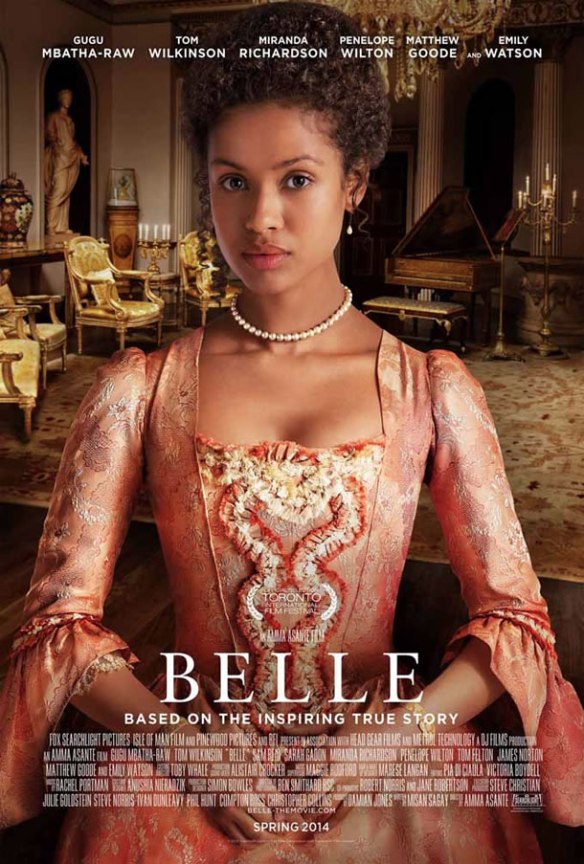
I described Belle to a friend as “an 18th-century period piece interrogating race and class — with romance, and pretty dresses.” The poster alone sends a little jolt: here’s a typical Jane Austen adaptation-type poster, with a pretty young woman in a gorgeous dress, in a well-appointed room, hands demurely clasped in front of her, awaiting the man that will be a good match for her. But this pretty young woman isn’t white, as all the others in all the other posters are; she’s black.

file_584855_belle-poster

Continue reading

Black History Month: Girls Trip

In recent years, Hollywood has seen #OscarsSoWhite and #TimesUp, and it has generally responded with a shrug of the shoulders and a few token awards and wider releases to appease the masses of us who just want better representation, fair pay, and a safe and equal place to work. In this context, enter 2017’s Girls Trip, which is at once a reflection of real issues in women’s lives (love, career, friendship) and a raunchy group comedy that gloriously pushes the bounds of what we’re used to seeing on screen in a major studio release.

In this movie, black women are allowed to let loose and let fly like they rarely are in movies and indeed in real life. Part of this is the privilege of class — these are upper-middle-class women, except for Regina Hall’s character, who is rich and about to get richer — but also it’s because reality is only allowed so much rein here. The women get into a fistfight in a club and then sneak out the side door, no one the wiser. They get off their faces on absinthe and laugh about it later, rather than being kicked out for inappropriate behavior. In short, they’re friends goofing around and getting into mild trouble, like in The Hangover or Bridesmaids or any other film that allows groups of friends to kick back without any real consequence. Continue reading

Taking and Making: February 2

Today, I took in:

Groundhog Day

a chapter of A People’s History of the United States

several chapters of Over Sea, Under Stone


I made:

a post on The Hate U Give

some frankly adorable brownies with little Oreo groundhogs popping out of them (see below), which were enjoyed while watching Bill Murray undergo his Buddhist journey toward enlightenment in the classic 1993 film

27628971_875814384200_121500797285502735_o

Black History Month: Selma

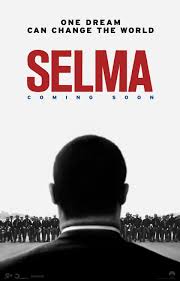
Ava DuVernay’s Selma is apparently the first feature-length attempt at a biopic of Martin Luther King, Jr. I say “apparently” because it didn’t even occur to me that I haven’t seen a movie about him that hasn’t been a documentary — his voice, his words, his image are so omnipresent in the United States, especially during the federal holiday devoted to him and the month following it, that I didn’t even consider there wasn’t a major fictionalized version of him out there. But this is definitely a version of him we needed — one that contradicts the safe-for-white-folks version of him we see most of the time. DuVernay wanted to show King as a radical speaking truth to power, and in Selma, she succeeds.

selma

In Selma, MLK is a larger-than-life hero and a flawed human, an irreplaceable leader and one part of a movement much larger than any individual. This is the kind of movie you want to see made about your heroes, where the sanitizing is kept to a minimum and there’s no melodrama or clumsy foreshadowing. It’s also cleverly kept to a short but important period in his life, with no sepia-toned flashbacks or tired story beats we see from so many moviemakers who seem to think that in order to capture the essence of an extraordinary person’s life, you need to show the entire timeline. Continue reading

Taking and Making: January 31

Today, I took in:

“Footprints in the Snow” by Maurice Leblanc in Foreign Bodies, a collection of stories from around the world from the ‘golden age’ of crime/detective fiction

a couple chapters from Howard Zinn’s A People’s History of the United States

Colossal, a movie that bears little resemblance to its lighthearted trailer — it’s a really good film, but it turns dark around the halfway point and stays that way to the end, so be prepared


I made:

a nice walk around my neighborhood park

Film Club: While You Were Sleeping

There are many reasons why I shouldn’t like While You Were Sleeping. The entire plot is based on the thinnest of misunderstandings, even by rom com standards. Peter is the victim of a creepy, prolonged mind game by Saul and Lucy. No way anyone would believe that someone engaged to fancypants Peter wouldn’t have a giant rock on her ring finger, which should have stopped the plot dead in its tracks right there. Anyone who has lived in Chicago for even a month would know northside Peter supports the Cubs and not the White Sox. And yet, it’s one of my favorite movies.

the delightful family from "While You Were Sleeping"

Is this sight scary or heartwarming? Depends on your tolerance for meandering discussions of Guy Lombardo and Argentinian beef.

The chemistry between Lucy and Jack sparks right away, and any scene with the whole family is gold. Obviously, the movie pushes the idea that half the reason Lucy’s in love with Jack is because she finally has a family she can join. When I was younger, I never believed that Lucy would be as friendless and alone as she’s shown to be, but the more time I’ve spent trying to fit in to new cities, the more I appreciate just how difficult it is to get set up with new friends. And I have the Internet, with its Couchsurfing and Meetup and things, which is more than Lucy had, back in 1995. Lucy makes friends at work, but when your job is sharing a small booth with one other person collecting subway tokens, you don’t meet a lot of people. Besides which, she’s grieving her father, who died just the year before. It’s actually not surprising that she’s so isolated.

Meeting the Callaghans, who are marvelously open and friendly (perhaps a bit too much so, to a strange woman who claims to be engaged to their comatose son), would feel like coming home. And then you get to sit through dinners talked at such cross-purposes that in my family, when things are getting similarly ridiculous and rowdy, someone just yells out, “I never said he was tall!”

Of course it’s a Cinderella tale, and we can’t forget that Lucy would never afford that trip to Florence on her own, while the upper-middle-class Callaghans can shell out for it no problem. But I’m willing to go along with the idea that the real treasure Lucy gains is the love of a family, and their wealth is a nice bonus.

Other great things:

  • Despite her timidity in other areas of her life, Lucy has no problem cracking wise with her boss or putting the love of her life gently but firmly in place whenever he starts going off about whose type she is.
  • Jack tries to do the right thing by not sharing his feelings with Lucy and messes it up royally, which is endearing.
  • Peter is such a self-centered jag that you don’t really mind he’s the victim of a terrible mind game. Peter Gallagher does a great job of playing a guy so into himself he’s not even worried about being that into himself; he’s equally concerned about whether he sucks as a person or whether his outfit sucks (maybe more concerned about the outfit).
  • Joe Jr., a strange amalgam of Queens and southside Chicago, is a glorious punchline in every scene, and I hope his future involves strutting around in his own pair of high heels.
  • Lucy’s apartment is in my old neighborhood of Logan Square–I tracked it down on Logan Boulevard a few winters ago. Those buildings really are that gorgeous.
  • Perhaps most importantly, Lucy never once brushes her hair in this film and she is the heroine–god bless the mid-’90s.

And Elsie has the best answer to “would you like some more wine?” ever. She says, “Oh I don’t drink anymore.” Beat. “I don’t drink any less, either.” For a grandmother like that, you might fake an engagement to a man in a coma, too.

They Don’t Make ‘Em Like They Used To

As I’m sure you’ve guessed from my various movie posts, I’m a sucker for the old studio films. I love the sharp costumes, the smoldering glances, the real moral dilemmas, the incisive character profiles. But mostly, the smart dialog! It’s great across the board. Thrillers like The Third Man, where every word means four different things, and screwball comedies like Bringing Up Baby, where the back-and-forth between the romantic leads is the whole point. But I don’t often find the lighthearted patter of a romantic comedy in a film noir, so I was delighted to find that the 1944 film Laura had just that. There are some wonderful twists and femme fatale moments, as there are in all the best film noirs, but it adds some extra touches like this scene between Laura (Gene Tierney) and Shelby (Vincent Price, before his horror movie days).

a little rom com in your film noir

Shelby: I knew there was something on my mind. What is it… Oh yes–will you dine with me tomorrow night?

Laura: Maybe.

Shelby: No, that isn’t what’s worrying me… It’s the next night.

Laura: But Shelby, I can’t–

Shelby: Good. What about three weeks from tonight and all the nights in-between?

Laura: Don’t you think I have any other engagements?

Shelby: What about two months from now and the month after that?

Laura: What about next year?

Shelby: That’s all settled. What about breakfast?

Laura: (laughs) What about dancing? (They get up and dance.)

Shelby: What about lunch? Beautiful lunches. Day after day after day after–

Laura: What about work? Beautiful work. Day after day after day…

Shelby: Why, Miss Hunt, the way you talk, you’d think I was in love with you.

At which point I fell a little bit in love with this movie.

Image.