Border Crossings I’ve Made by Land

I’ve made three border crossings by land on this trip. Actually, when I got to Europe I made several bus and train crossings, but they were all seamless, and all but one were in EU countries, so I don’t really count them. The ones that stand out are Thailand to Laos, Cambodia to Vietnam, and Canada to the United States. Guess which one was the most aggravating?

I got 3/4 of the way through this top form before messing up, and I had to start all over again. Genius.

I got 3/4 of the way through this top form before messing up, and I had to start all over again. Genius.

I’m used to either shuffling through the EU, where they glance at your passport, grunt, and move on; or flying into a new country and standing in a long line at border control, to have an official scan my passport through some criminal system, take my fingerprints, sometimes even snap a photo. The land crossings I made on this trip fell somewhere in-between these types.

Thailand to Laos

Crossing from the town of Chiang Khong, Thailand to Huay Xai, Laos was pretty simple. I walked up to the small hut near the bottom of the hill, filled out the card that border control had stapled to my passport when I entered the country, and turned it in to the guard, who literally did not look up from the pile of papers he was stamping. He just stamped my card and waved me away. At the bottom of the hill I bought a ticket to cross the river, waited until there were enough people for a full ride, then climbed in the skinniest boat I’d ever been on.

A tiny boat on a huge river

A tiny boat on a huge river

I suppose that technically this was a water border crossing instead of a land one, but whatever, the main thing is I hardly breathed as that tiny boat skimmed across the Mekong River. Once on the other side, I filled out a long form and helped a Japanese guy fill his out; he had a little English, but not enough to navigate the customs questions on his own. An Israeli chipped in when I had trouble explaining a concept, and then we all went up to the window to get our visas. Most Westerners owe $35 (except for Canadians, who owe $42—what did Canada ever do to Laos?). I had crisp tens and twenties, as I had read enough to know that beat-up bills might be rejected, and then you’re screwed, because they want payment in US dollars, and where are you going to find an ATM with US dollars on the western border of Laos? I had read it was good to have exact change, but not necessary. Well, for me anyway, they wanted exact change. I had two flimsy dollar bills and was wondering whether to insist they take three tens and give me five back, or just tell them to keep the five, when the Israeli next to me in line said he could help out. He gave me $3 with a smile. I peeked in the office and saw three officials standing around and two creating visas, which seems a standard ratio of layabouts to workers for government offices worldwide. Eventually, I received my visa, shiny and pink, and I was officially allowed to stay in Laos for 30 days.

Cambodia to Vietnam

My bus from Phnom Penh was mostly full of Cambodians and Vietnamese, which I think explains why some aspects of the border crossing that are infamous on internet boards were absent in my experience. No one charged me an extra dollar or three for a “health exam,” for example, and I didn’t get taken to a fake border control office. Unlike in Laos, the bus didn’t drop me off a kilometer or two from the actual border, forcing me to hire a tuk-tuk to get to my actual destination.
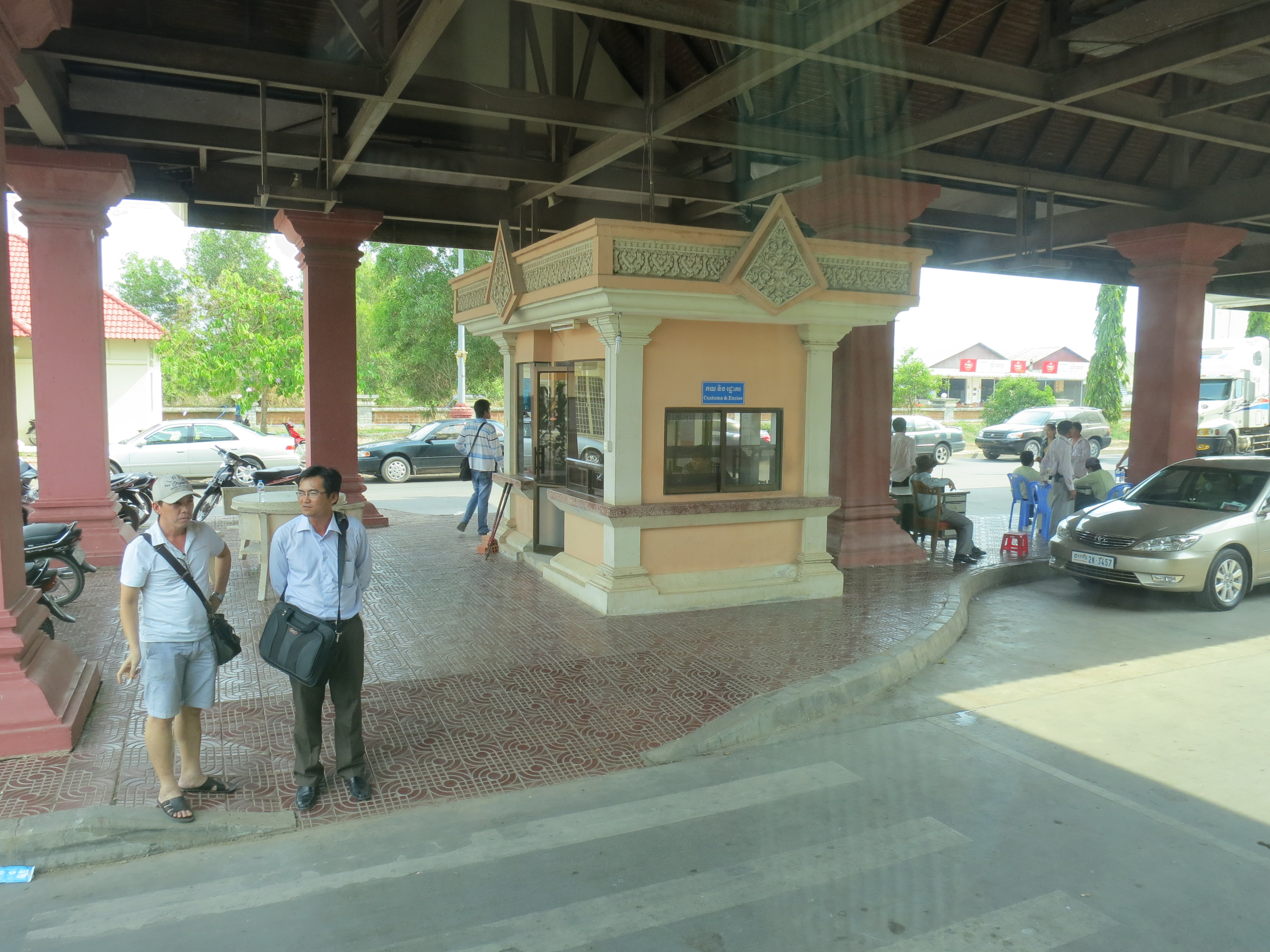
Guard station at Cambodia to Vietnam border crossing

Guard station at Cambodia to Vietnam border crossing

Instead, our bus pulled up to the Vietnamese border control office (we never did anything to say goodbye to Cambodia), and we were waved off and told to bring everything with us, including our bags from the hold below. We stood in a clump in the mercifully cool border control building and watched our driver hand over a stack of our passports to an official, who then stamped each one without a glance or a scan anywhere. The driver then called out people whose passports were ready. I grabbed my passport, walked past an empty “health exam” window, and put my bags on an x-ray belt. I picked up my bags on the other end, showed my passport with its stamp on my visa to a guard slouching in a folding chair, and walked to the bus, which had been moved to the other side of the border. Voila!

Crossing from Cambodia to Vietnam was pretty painless. Officials didn’t hassle me or anyone on my bus, and security was light. The bus was carrying goods for some small businesses, and they must have checked those while we were inside, because when I put my bag back on the bus, everything was back in there, customs approved and ready to go.

Canada to the United States of America

Here’s where it got annoying. Trying to get from friendly neighbor Canada to my home country was way harder than it should have been. They are strict! And by “they” I mean the US Border Office. The bus I was on breezed through Windsor, Ontario and took the tunnel under the Detroit River. When we popped up on the other side, the bus pulled over at the super clean border patrol office. We unloaded our gear and stood in line. Probably it would have been fine if it hadn’t been for one officer.

Passport control on the Thailand side of the Mekong River

Passport control on the Thailand side of the Mekong River

This guy was a total tool, almost stereotypically power tripping. He targeted me and two other people, all of whom had backpacks instead of rolling suitcases. I showed him my US passport and he waved me ahead, but the woman from New Zealand and her boyfriend from South Africa, these needed special attention. He demanded to see their visas; the Kiwi said she had the waiver that she’d filled out online. Nope, doesn’t count, he made her fill it all out again on paper. Isn’t the online form supposed to save us from wasting time like this? He grilled the South African on just why he wanted to visit America anyway—what were his intentions? He didn’t plan to stay, did he? Worse was when it was the Kiwi’s turn. She explained that they were couchsurfing in Chicago, and that they’d been traveling for nine months. Why would you want to travel for that long, and what is this “couchsurfing” you speak of, etc., etc., and all in a smarmy tone. He leered at her as he talked, and when we got back on the bus she said it felt like he was hititng on her. While making her feel small and trying to find a way to keep her out of the country. Ugh.

Even I got a bit of a hard time from the officer checking my passport. Where was I living? How long had I been gone? Why had I gone to so many countries? I just want to go home, yeesh! Then I sat in the row of hard chairs with the rest of the people from the bus (about 15 of us) while we waited for any one of the four free officers to turn on the x-ray machine and run our bags through them.

The South African and the Kiwi were camping for much of their trip, so there were pots, a tent, and a large carving knife in the guy’s bag. The officer pointed out the knife to a civilian standing next to him at the x-ray machine and said, “Huh, wonder what’s up with the knife” and waved him on. So that seemed like a secure process. Not that it had been any more secure at the Vietnamese border, but they weren’t pretending it was, and the US officers were definitely treating us like we were all smuggling in kilos of drugs and AK-47s, while not really checking to make sure we weren’t; but they still did their best to make us all—including the American citizens—feel super unwelcome.

Thailand by the Numbers

Attempts to say ‘thank you’ in Thai before I got remotely close: 23

Attempts to bargain at night markets: 8

Successful attempts to bargain at night markets: 5

Elephants hand-fed: 10

Baby monkeys cooed at: 1

Fruit shakes consumed: at least 30

Laundry I washed myself during my six weeks in the country: 0

Meals I cooked myself during my six weeks in the country: 2

Oceans fearlessly kayaked in: 1

New fruits tasted: 5

New favorite fruits: 5

Meals that introduced a whole new meaning to the word ‘spicy’: 3

Total days spent in Thailand: 44

Total money spent: $2,947

Average per day: $67

Total money spent, not including airfare: $2,802

Average daily cost, not including airfare: $64 (yes, that is much more than many backpackers spend while there, but I got a lot of gifts and some comfortable private rooms, not to mention a week with the elephants, on that budget)

Pools, rivers, and oceans swum in: 3

Wats (temples) visited: countless

Times I tired of admiring the symmetry and detail of a Thai wat: never

Wat Po

Wat Po in Bangkok

A Few Sights in Chiang Rai

I didn’t spend much time sightseeing in Chiang Rai. I’d just come from a busy couple weeks in Chiang Mai and the Elephant Nature Park, so I visited the White Temple but otherwise relaxed in this small town in the northeast corner of Thailand.

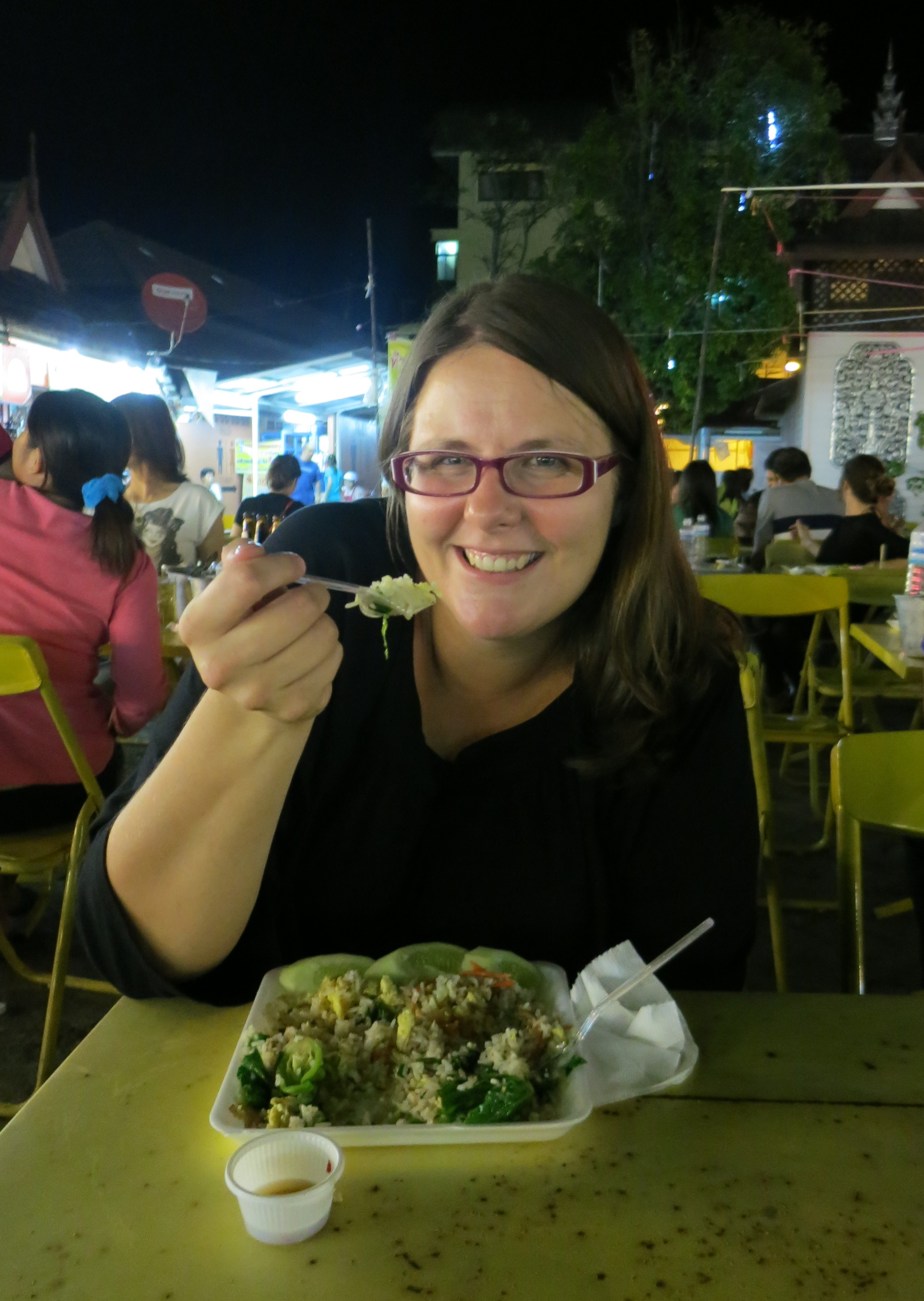
Night market eats

Night market eats

A full food court at 10pm

A full food court at 10pm

I’d met another solo traveler at the bus stop in Chiang Mai, and together we found the hostel I’d booked and hiked the four flights of stairs to the dorm rooms on the roof. Julie, from Belgium, spoke more English than I speak French, but not much, so our conversations were a hodgepodge of our native grammars and what little vocabulary we could remember from the other’s mother tongue.

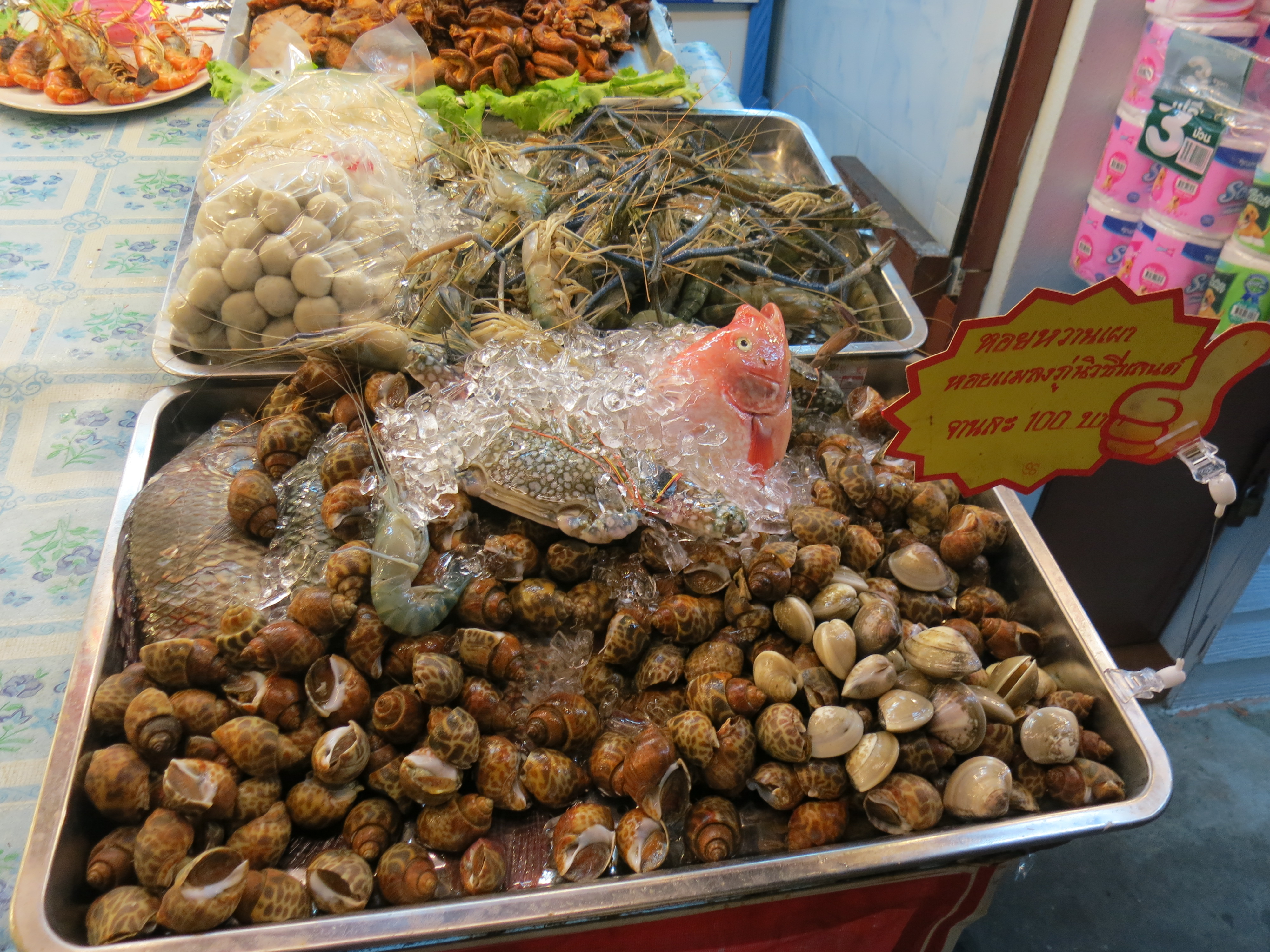
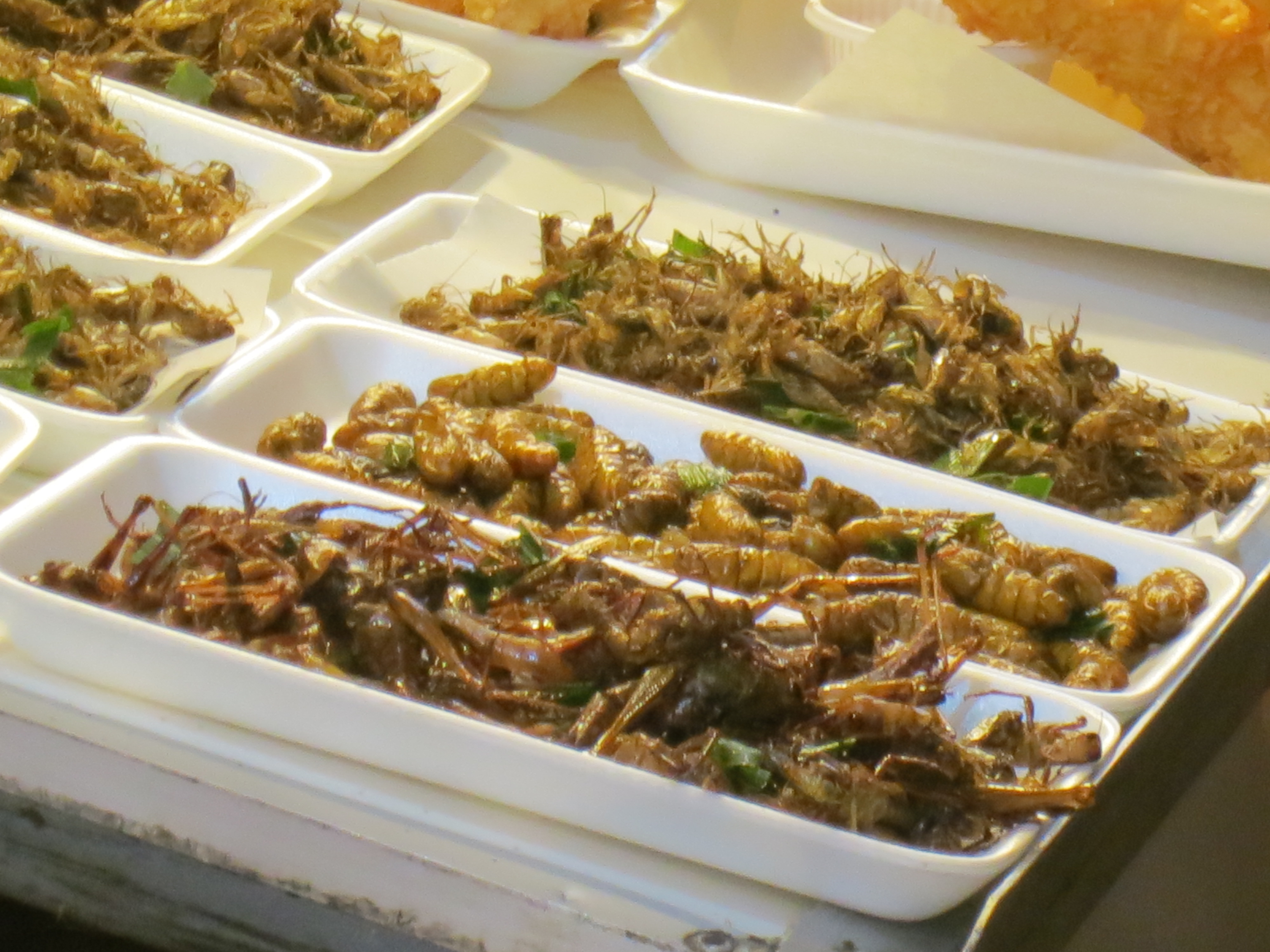
I did not eat these

I did not eat these

Or these

Or these

We stumbled our way through a conversation at the night market and then gave up and just enjoyed the end of the lip-synching performance taking place on the stage at the end of the enormous food courtyard.

A gown and a cape--winning

A gown and a cape–winning

Then we wandered among the various tables with their homemade crafts and mass-produced goods, and of course bought at least one souvenir each.

Tempting

Tempting

NOT tempting. What the hell?

NOT tempting. What the hell?

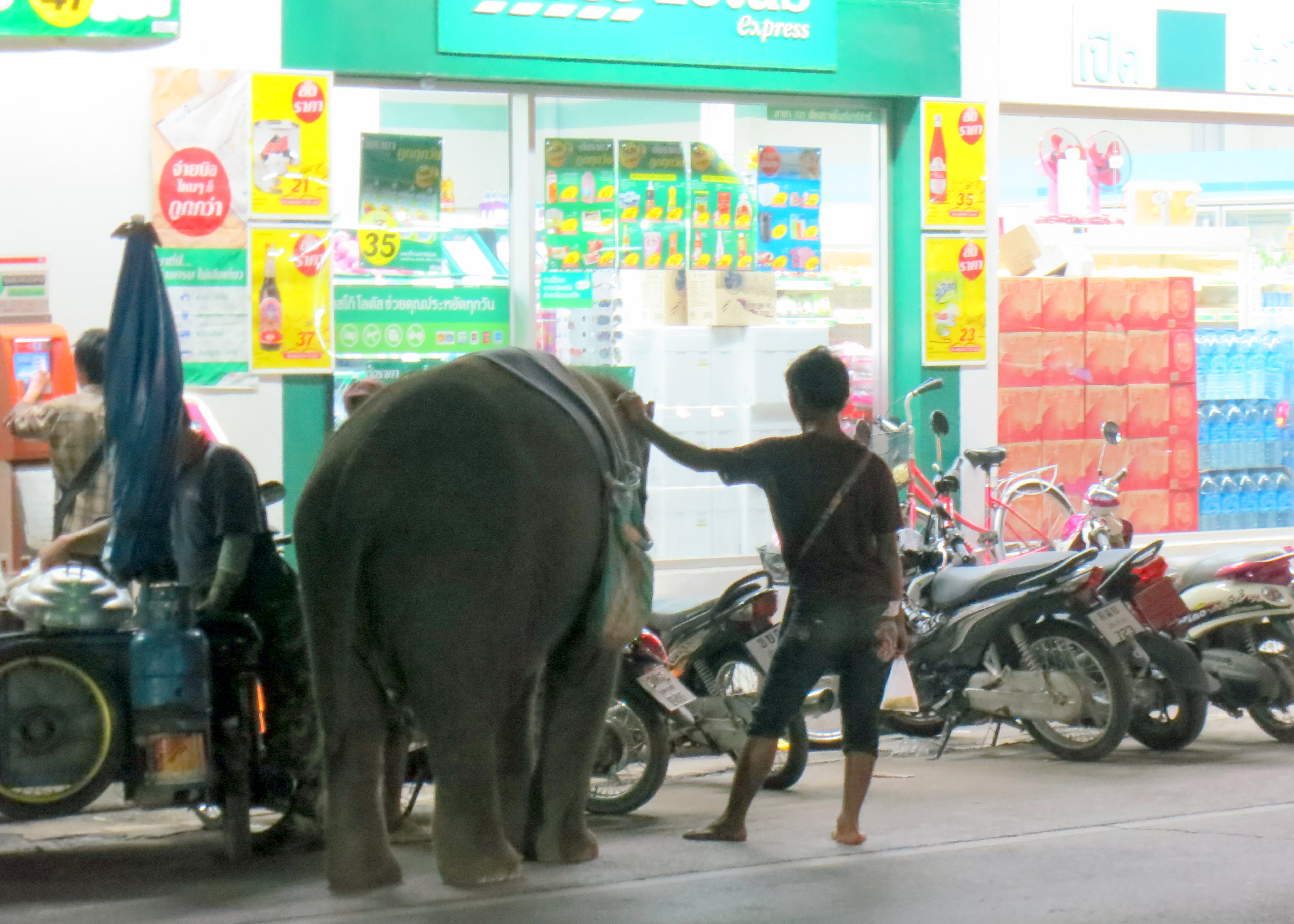
On my last night in town, I saw a man wandering through town with a small elephant; he led the elephant up to tourists, who could give money to feed the elephant or to climb up and perch atop the elephant. I steered clear of this man and his captive elephant; I knew from my time at the ENP that he likely had a nail hidden in the palm of his hand to use as a goad behind the elephant’s ear to get it to go where he wanted it to.

Sad sight

Sad sight

Happily, my last image of Chiang Rai was a nicer one. As I waited for my bus out of town, I saw a couple leaning into each other, sharing one set of headphones between them as they waited for their own bus. It was sweet.

True love means sharing an iPod?

True love means sharing an iPod?

The Toilet Spectrum

I knew there would be squat toilets in Asia, and I thought I had mentally prepared myself for them, but this one on the road from Chiang Rai to Chiang Khong in Thailand gave me a moment’s pause:

Use the bucket of water to splash water in the toilet as a kind of flushing

Use the bucket of water to splash water in the toilet as a kind of flushing

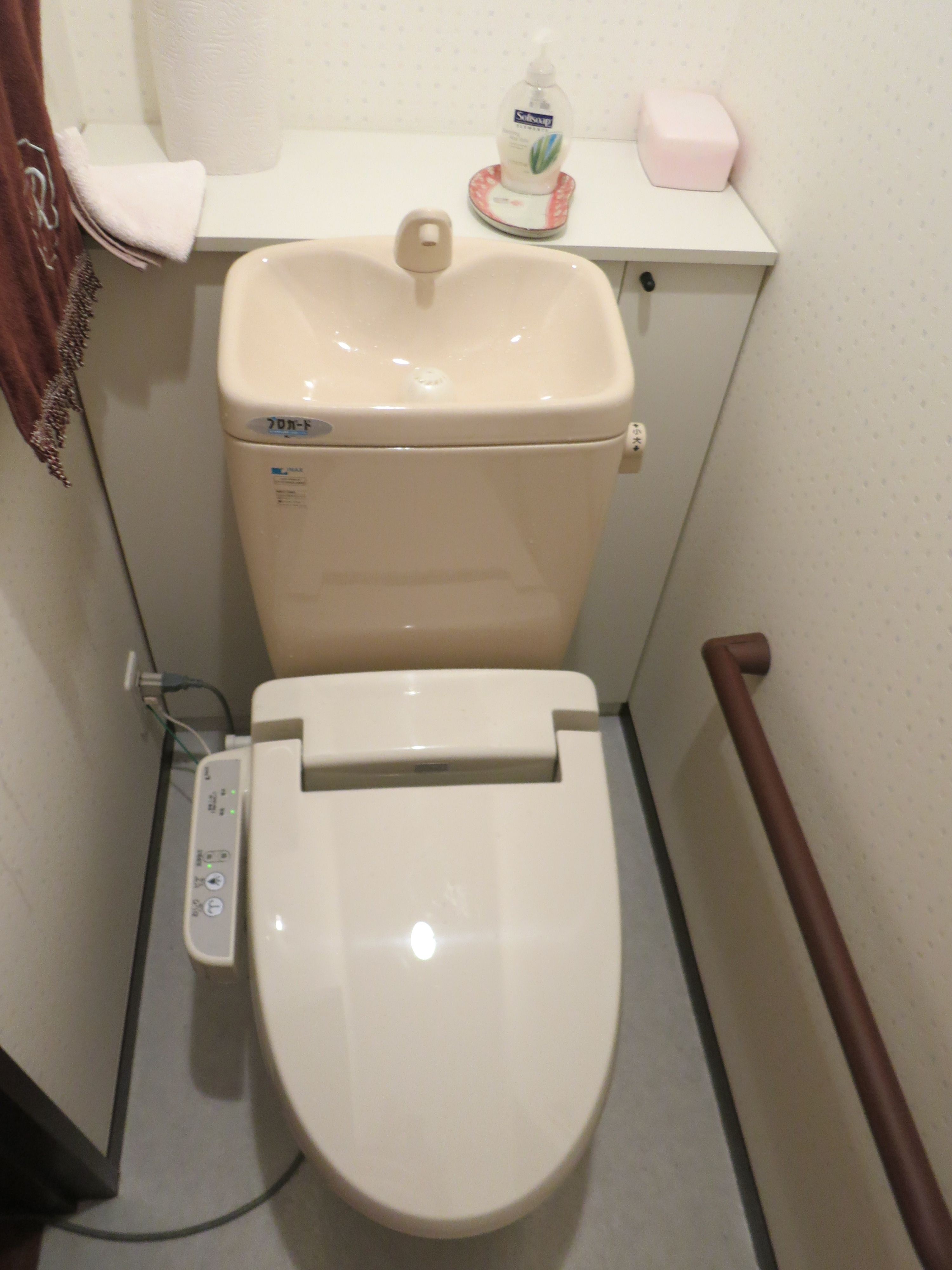
There are squat toilets in Japan, too, but also the elaborate seat toilets with at least four features–noise to cover up the fact that you’re voiding your bowels, bidet, light butt wash, and heavy-duty butt wash (haha):

Your toilet of the future

Your toilet of the future

Elaborate instructions

Elaborate instructions

Blindingly Bright: The White Temple of Chiang Rai

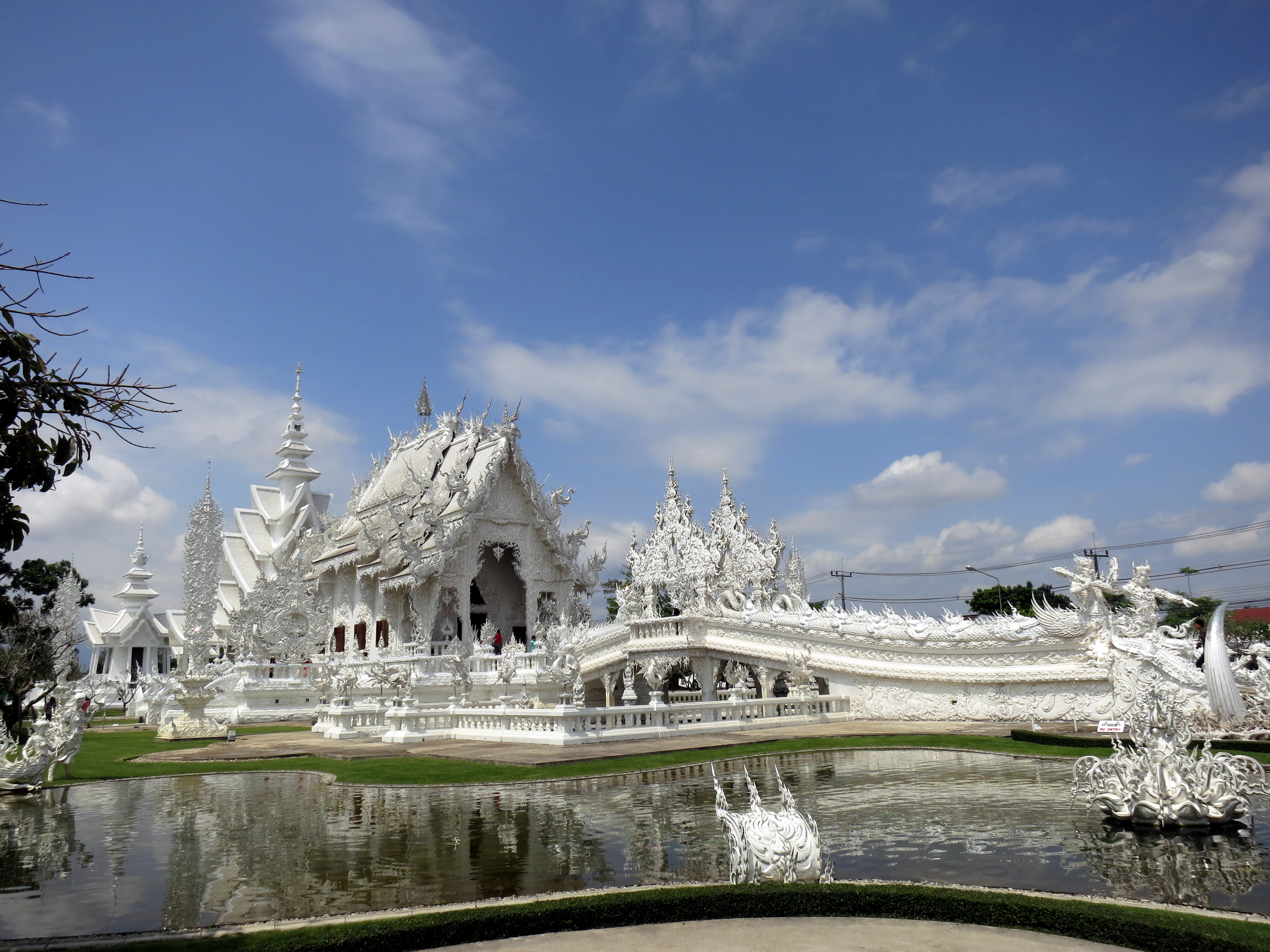
One of the assumptions I made going to temples around Thailand was that they would all be old. Most of them are several centuries old, very well maintained, with elaborately gilded and painted exteriors. But the White Temple in the northeast of the country, just outside the town of Chiang Rai, has only been around for under twenty years, and it’s not even finished. It was a beautiful, strange place to visit.

Wat Rong Khun, The White Temple, Chiang Rai, Thailand

Wat Rong Khun, The White Temple, Chiang Rai, Thailand

Wat Rong Khun (nicknamed “the White Temple” in English) is the brainchild of Chalermchai Kositpipat, an artist who sees the temple as a project that will continue years after his death. There’s frustratingly little information about the temple online, but what I remember reading while there is that it’s a privately owned temple, so Kositpipat feels no pressure to build or decorate according to any government or religious dictates. But it seems to be a functioning Buddhist temple, so I’m not sure how that jibes with its independent status.

Begging hands, symbolizing desire

Begging hands, symbolizing desire

white temple chiang rai

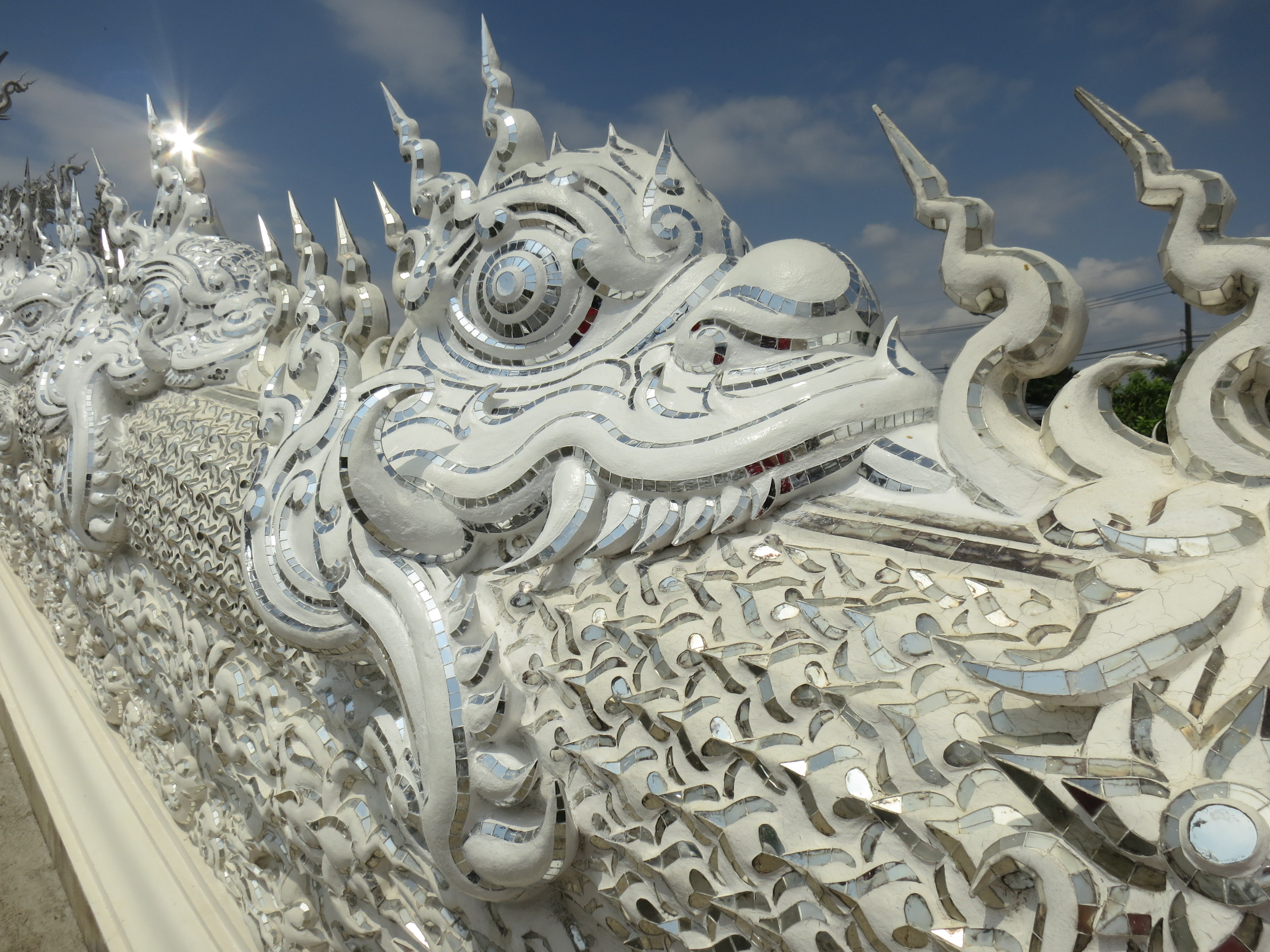
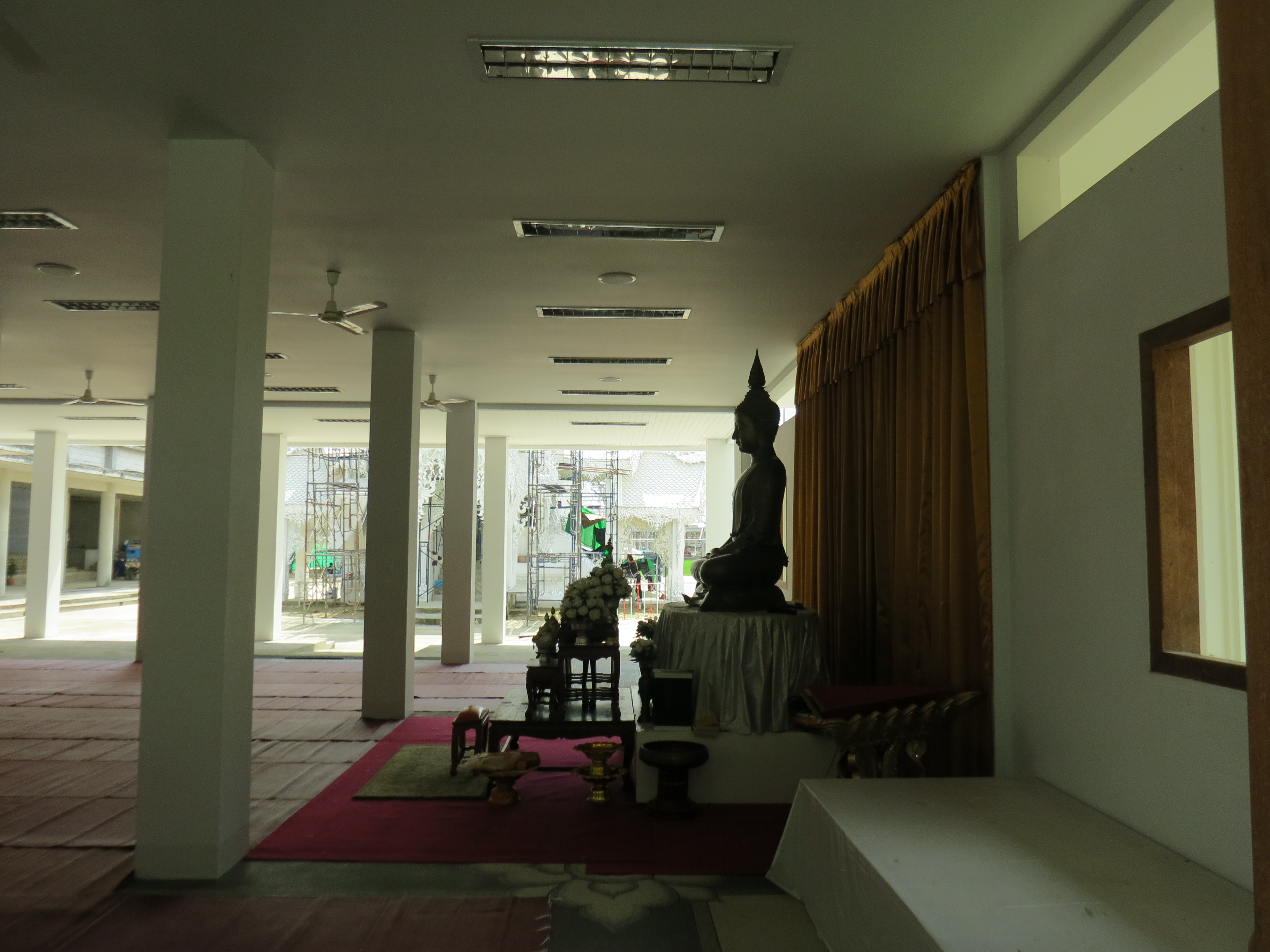
Kositpipat started construction in 1997, and the projected end date is 2070. He employs over 100 artists and craftspeople, each of whom works painstakingly on one small part of the temple complex. When I visited, the main temple, complete with long, dragon-flanked entryway and a buddha statue inside, was built and painted blinding white. A small building behind this was unfinished, and off to the left was a whole courtyard of incomplete structures. Everything is painted white, apparently as a symbol of purity, and many surfaces are dotted with tiny mirrors, and in the bright sunshine it almost looks like a mirage rising from the surface of the earth.

Elephant tusks are common frames at altars in Thailand, or near the entrance--there's a combination of the traditional and the new here

Elephant tusks are common frames at altars in Thailand, or near the entrance–there’s a combination of the traditional and the new here

Snakelike dragons are also traditional on the stairs leading up to temples in Thailand

Snakelike dragons are also traditional on the stairs leading up to temples in Thailand

Inside, Kositpipat is slowly painting unconventional images on the walls of the main temple. Anyone who’s been will recognize that Neo from The Matrix makes an appearance on the back wall, but I also saw Spider-man, Captain Jack Sparrow, and several anime characters. These movie heroes ride on waves of sea water and the orange tentacles of a large sea monster. The large demon on that back wall has George W Bush and Osama Bin Laden in its eyes, which caused some furor when it was first painted in the early aughts. Seeing a small version of the planes crashing into the Twin Towers was strangely upsetting, given its bizarre context, and I had to remind myself that all the images on the back walls of Buddhist temples  show the battles we have in the realm of delusion, and the depiction of 9/11 is meant as a symbol of one of the evils of history. (Photos were forbidden inside, so I have no images to share with you.)

Wishing well

Wishing well

Work in progress

Work in progress

Some of the more finished structures

Some of the more finished structures

Outside, one of the trees is hung with the white papier-mache heads of movie bad guys like Freddy Krueger and ambiguously good guys like Hellboy and Batman. A sort of raised wishing well stood to the left; I watched a grandmother teach two small boys how to toss a coin in and put their palms together in respect. Elaborately decorated signs put a line through a bottle of booze, reminding you not to drink on the premises.

white temple chiang rai white temple chiang rai an ornate "do not drink" sign

The complex also boasts that it has the Most Beautiful Toilet in the World. I certainly have never been to a more golden one. Possibly my most favorite part of this wonderfully wacky and yet still reverent place was the large cardboard cutout of the artist with his arms in the air. You can duck under those arms for a smiling photo with the man behind it all.

white temple chiang rai

Portrait of the Artist as a Cardboard Cutout

Portrait of the Artist as a Cardboard Cutout

Temples, Street Food, Night Markets, and Spas in Chiang Mai

I’ve reconnected with old friends and met a lot of wonderful people on this trip, and it’s all been great. But there’s nothing like seeing a familiar face, and that’s what had me most excited about going to Chiang Mai. I met up with my Chicago friend Hannah and we spent just under a week exploring the northern Thai city together. We’d never traveled together before, and I was a little worried, because Hannah’s laid back, and I’m… less so. But that turned out to be a great combination, and we  focused on finding tasty food and seeing one or two interesting sights each day.

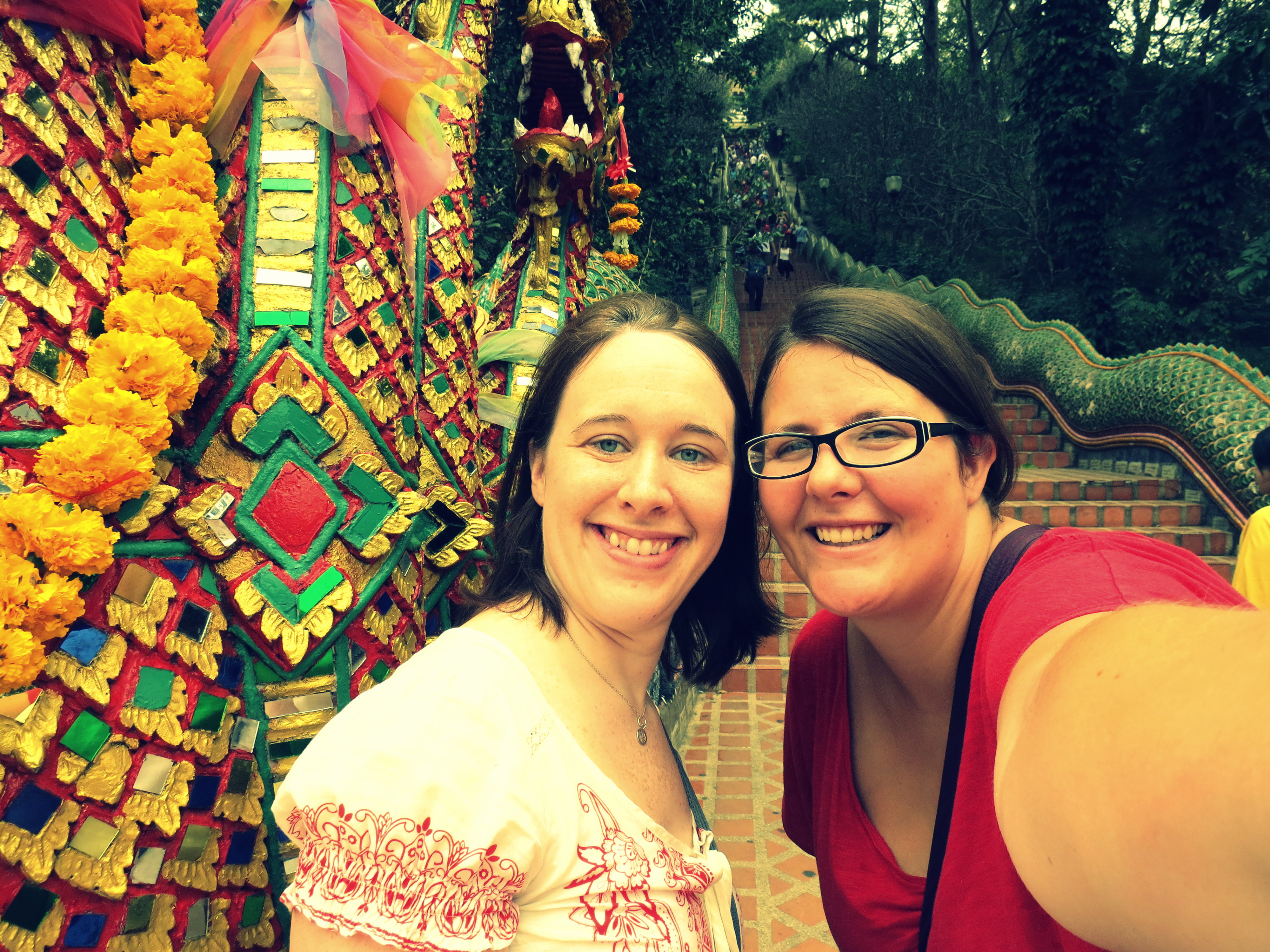
Hannah and me at the bottom of the stairs to Doi Suthep

Hannah and me at the bottom of the stairs to Doi Suthep

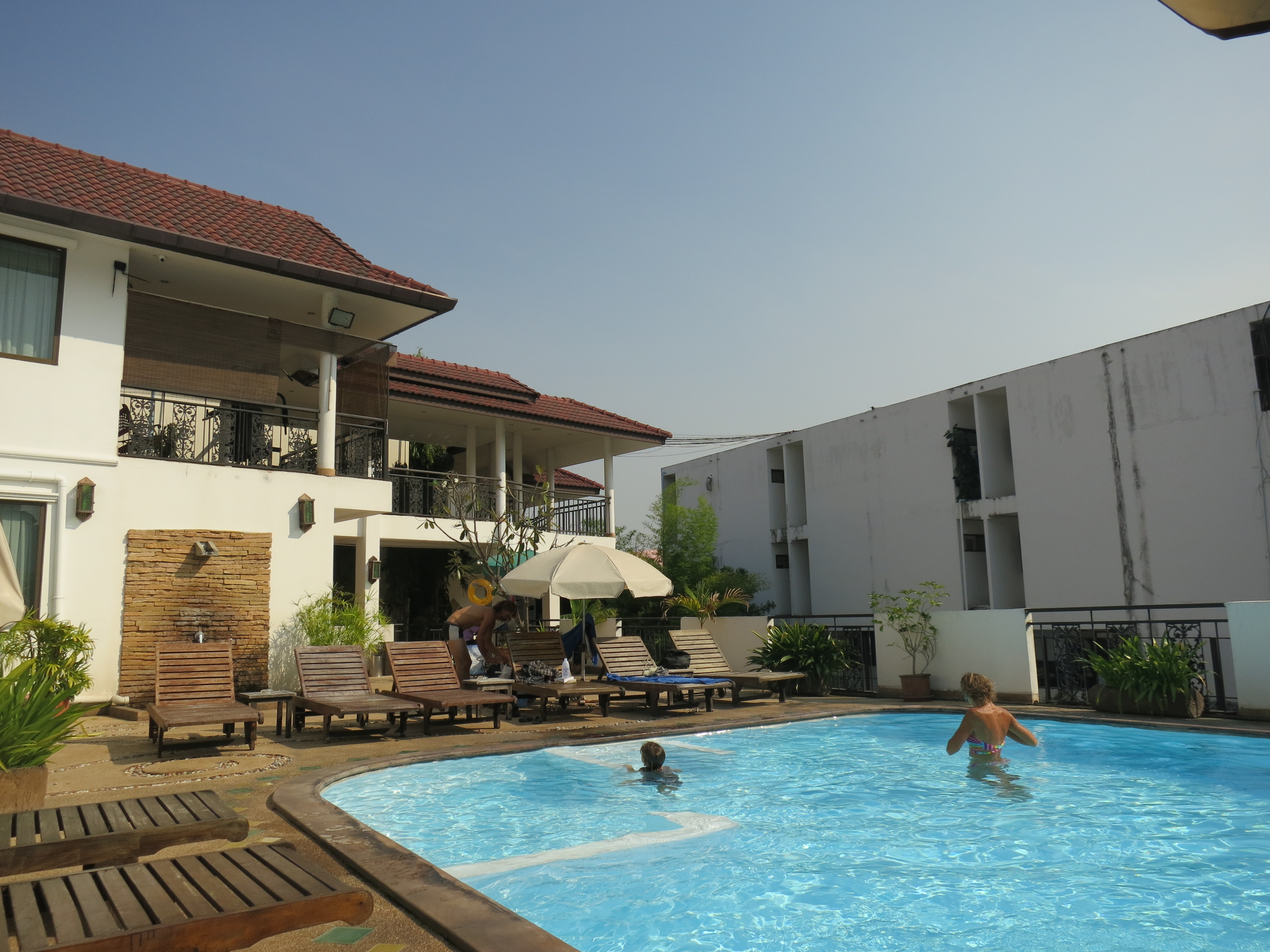
We stayed in Eurana Hotel, a step up from the guesthouses and hostels I’d used so far. It had a pool and was next door to Sumphet Market, in the tourist-flooded northeast corner of the old city. We mostly stuck to this part of town, and if we’d had more than five days I’m sure we would’ve explored more, but there was plenty to see just in that area. Our first two days we lazed in the pool area, poked around in Sumphet, and bought tons of souvenirs at the Saturday and Sunday night markets.

Poolside

Poolside

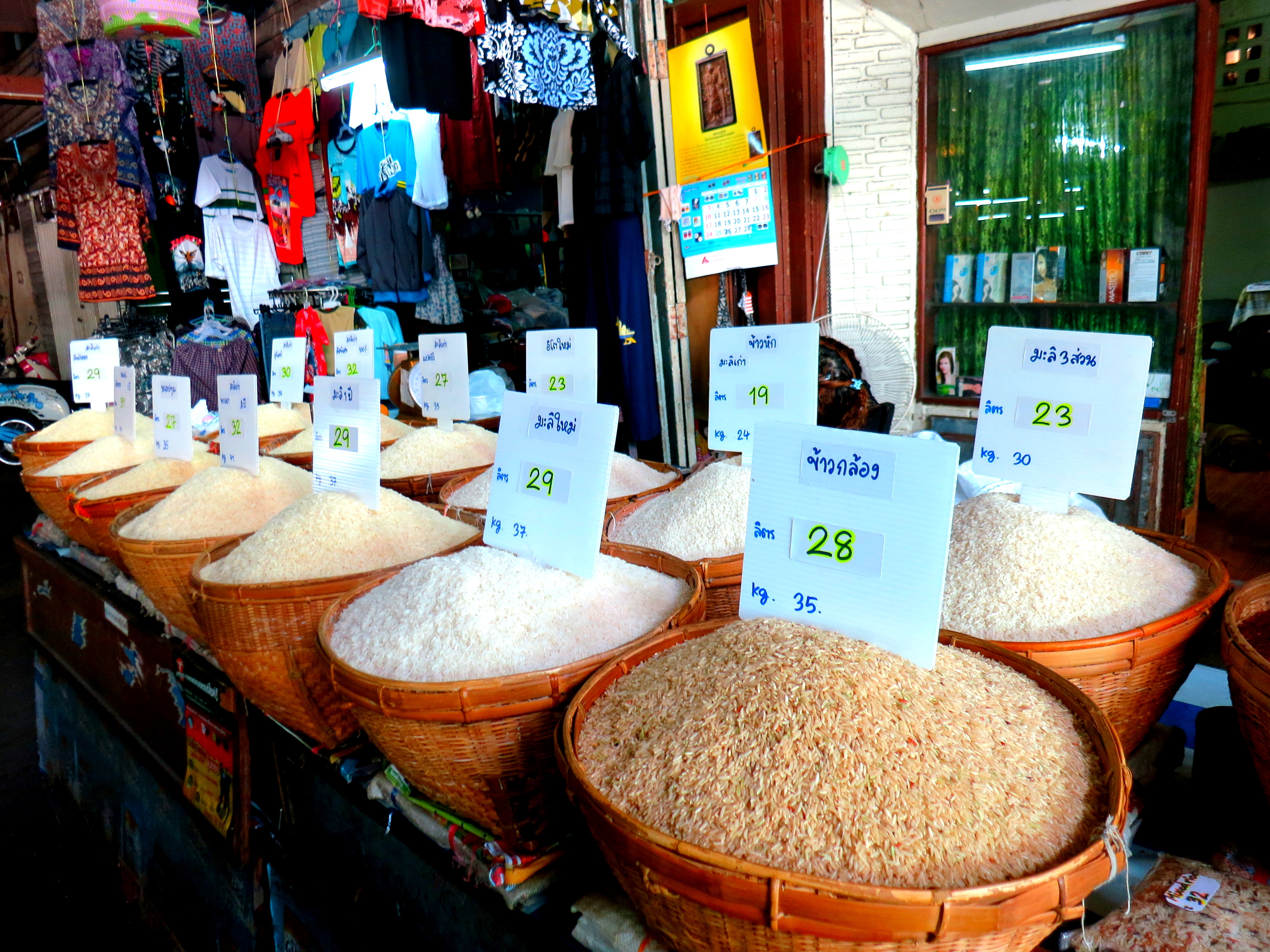
Our chef at the cooking school talked about the different kinds of rice used in Thai cooking.

Our chef at the cooking school talked about the different kinds of rice used in Thai cooking.

Sumphet Market, Chiang Mai, Thailand

Sumphet Market, Chiang Mai, Thailand

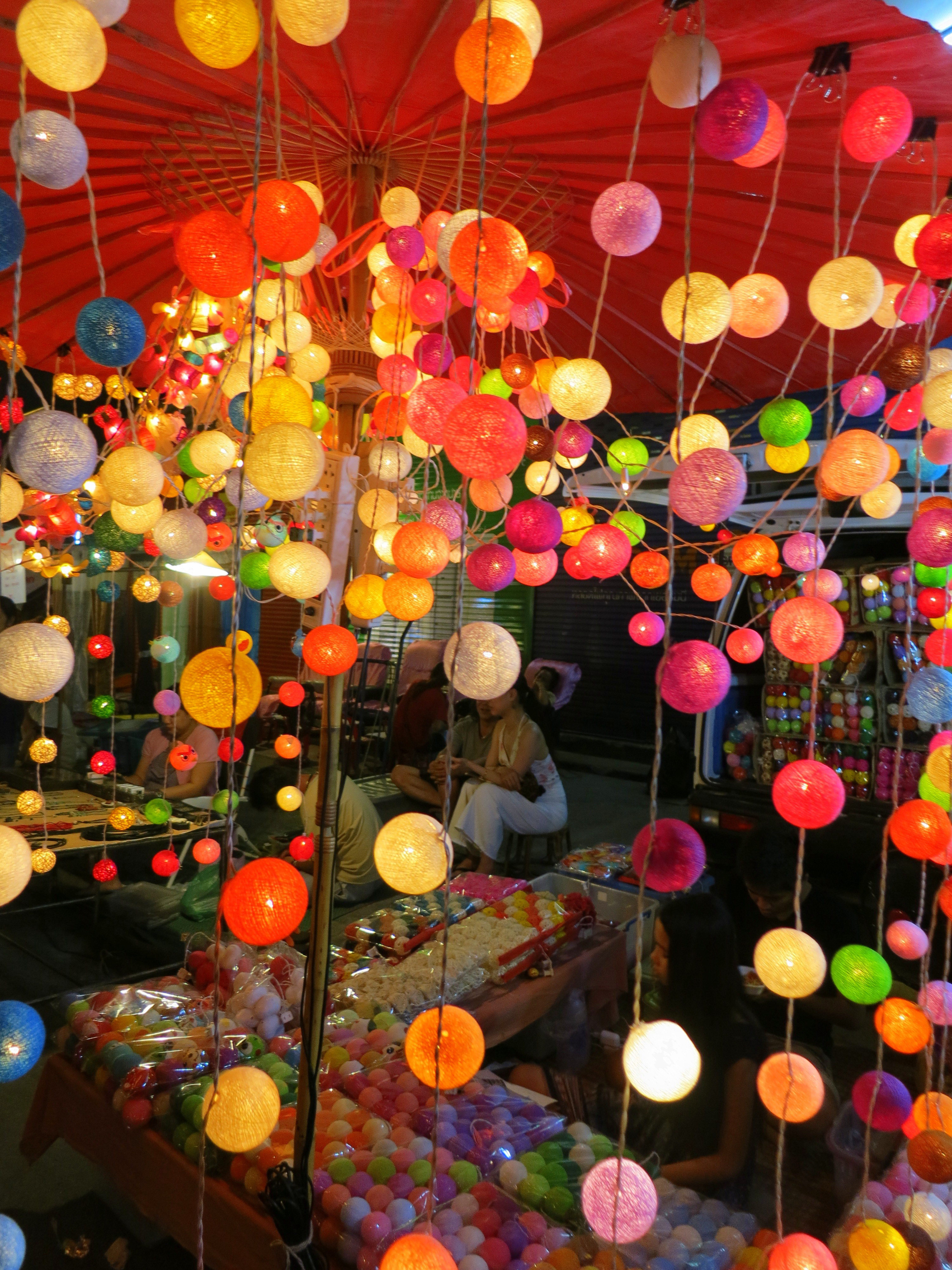
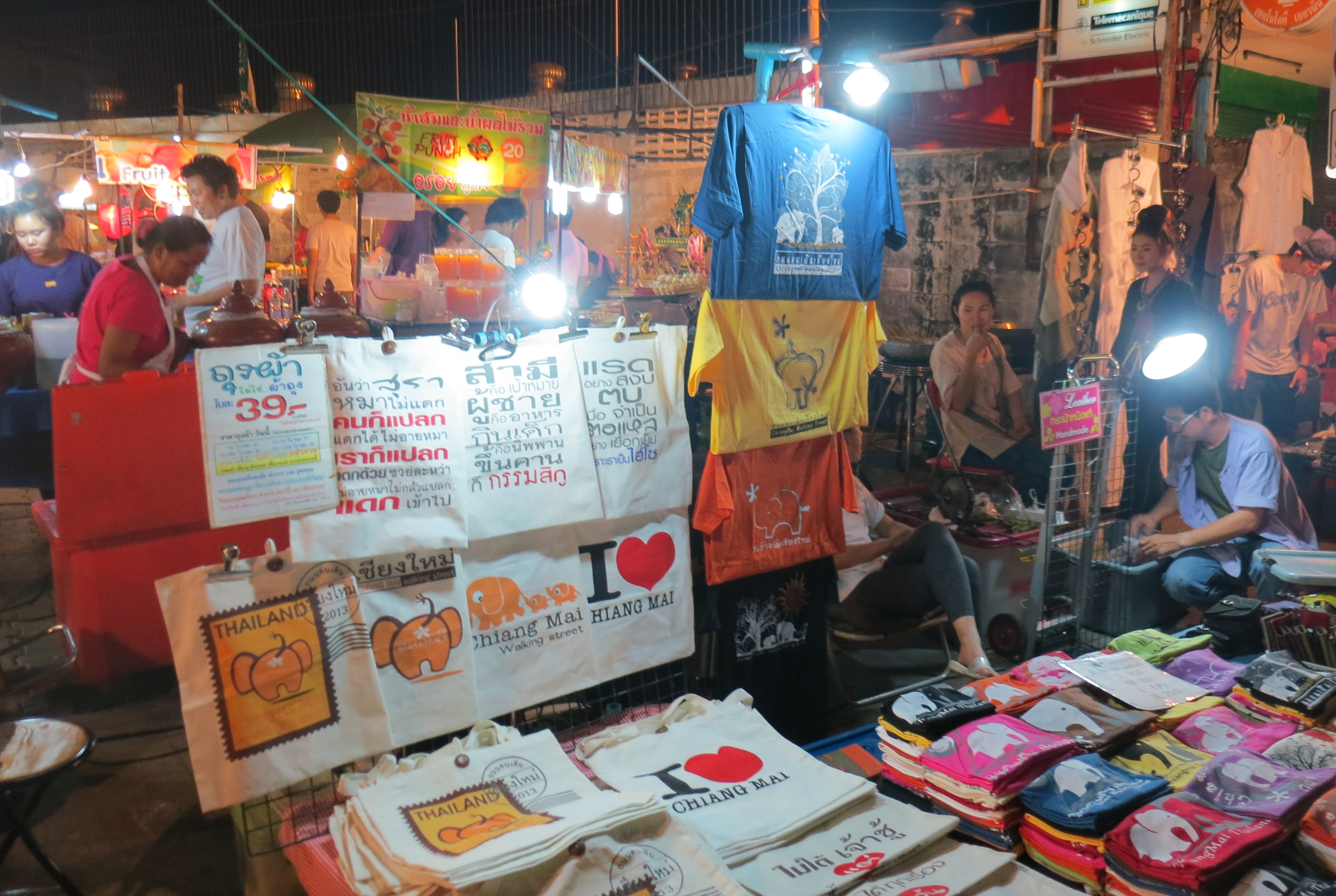
Around 3pm the streets are cordoned off and vendors set up card tables, some with awnings and backdrops, and displayed their wares: coin purses, t-shirts, jade statues, lamps, bedding, hippie pants, chopsticks, wood carvings, scarves, paintings, silver jewelry, pillow cases, and on and on. The food stalls usually clustered in their own areas. We ate a lot of delicious things (wonderfully described in Hannah’s guest post).

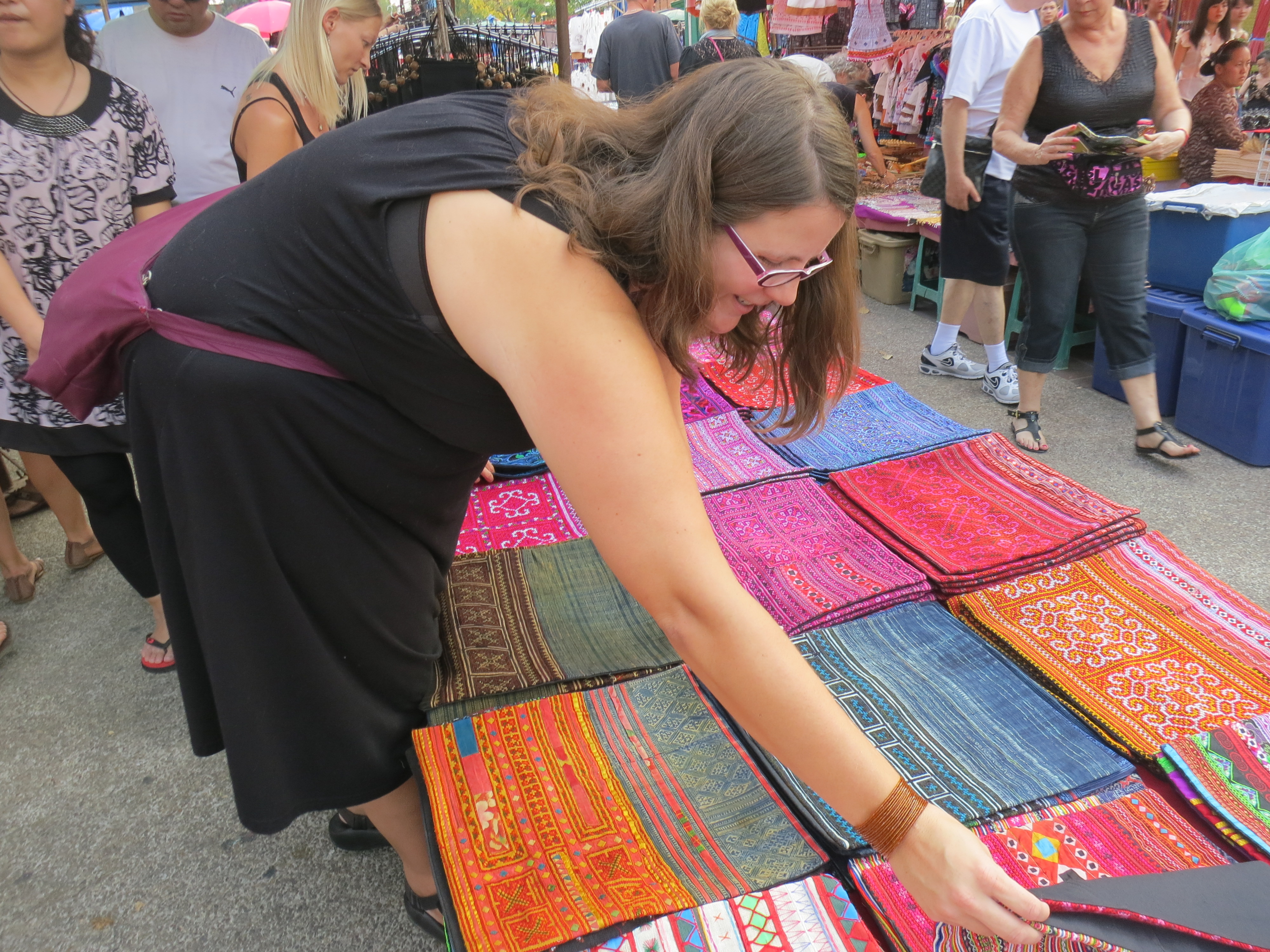
I can get into shopping if I'm buying gifts--or books & music, of course

I can get into shopping if I’m buying gifts–or books & music, of course

At the market

At the market

chiang mai

The Sunday market was located on Rajdamnoen Road, starting at the eastern gate (Tha Pae Gate) and carrying on down the road for what seems like miles when you’re shouldering your way through the massive crowds. Several temples line this street, and the food stalls set up on the temple grounds, so you can munch on your mango and sticky rice next to the crenellated head of a dragon, which we found really cool. We watched a man make sugar cane juice–he took giant stalks of sugar cane, peeled off fibers, fed them into a clattering pressing machine, and caught the juice that was squeezed out.

Doi Suthep, Chiang Mai

Doi Suthep, Chiang Mai

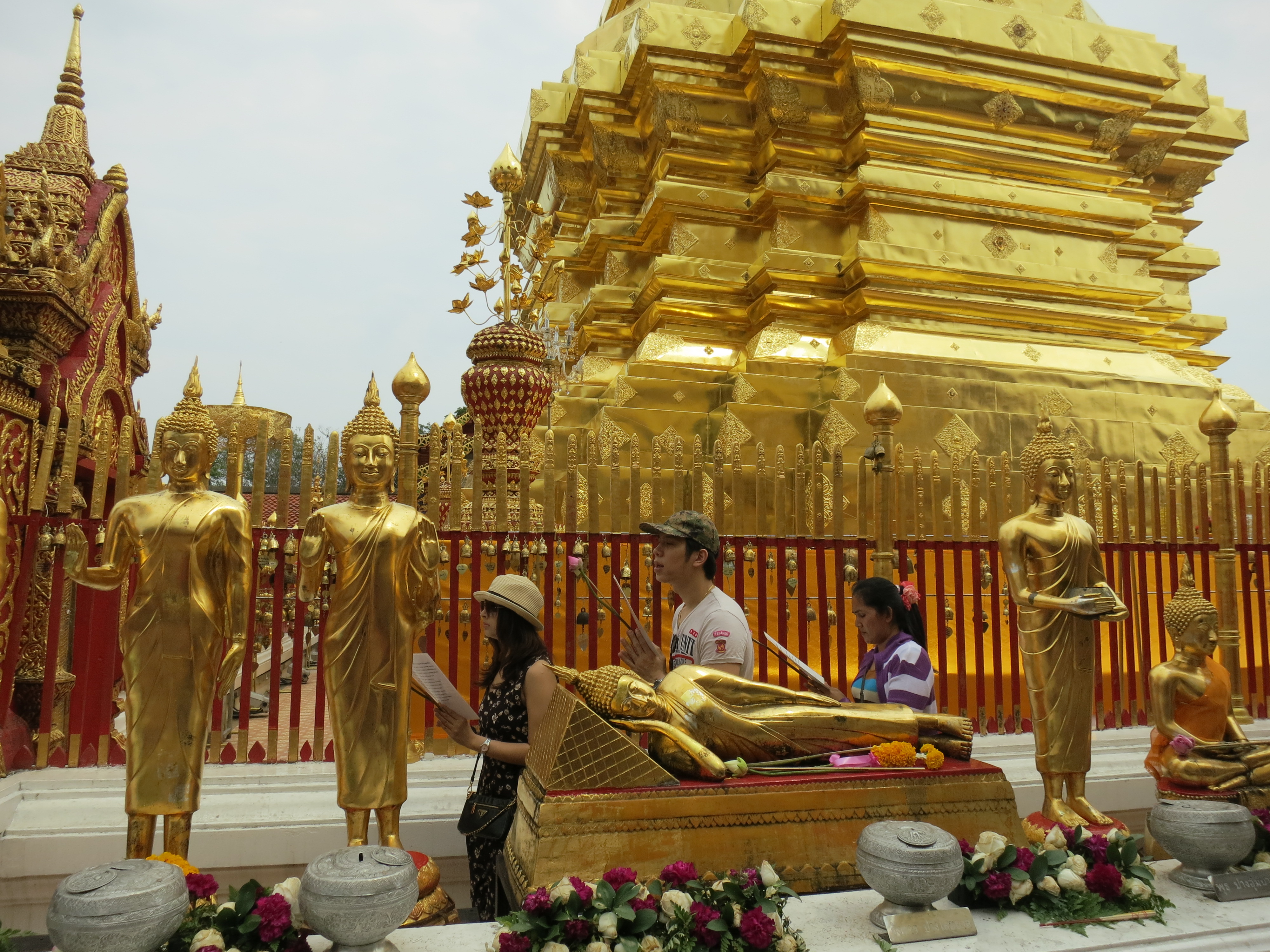
Wat Doi Suthep is located atop a mountain 15 kilometers outside of town. Legend says that King Nu Naone sent a white elephant out into the jungle, bearing a religious relic. The elephant climbed Doi Suthep, trumpeted three times, and died, which the king took as a sign. He ordered construction of a Buddhist temple in 1383, and this beautiful set of buildings was made. Apparently there’s a tram you can take to the top if you want to avoid the 309 steps, but I didn’t see the tram and anyway the steps weren’t so bad.

Blessings from a monk

Blessings from a monk

Walking around the stupa (or chedi) and chanting prayers

Walking around the stupa (or chedi) and chanting prayers

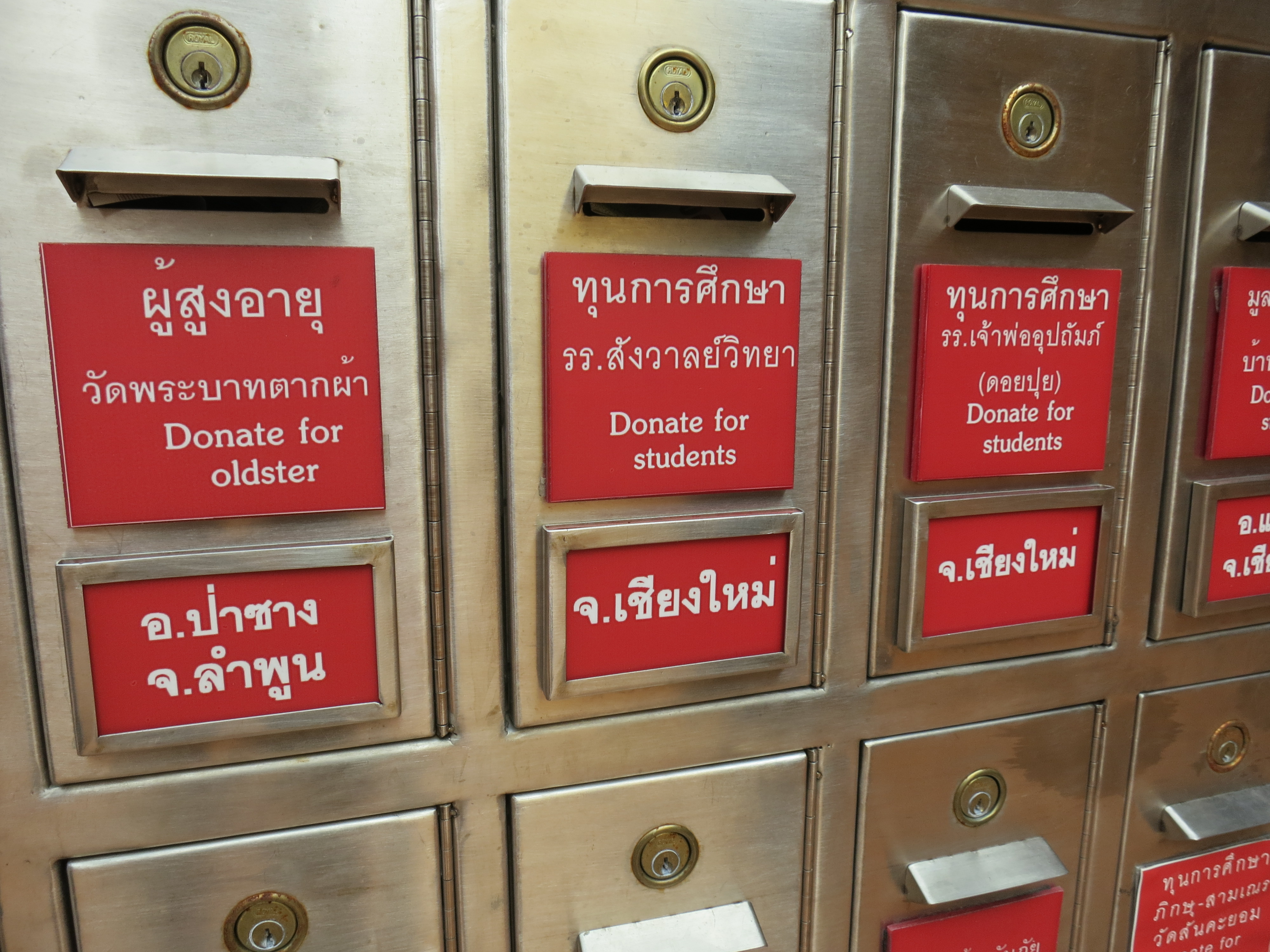
Hannah and I paid the small entrance fee (“Foreigner Buy The Ticket Now” said the sign at the top of the stairs), removed our shoes, and went inside. We marveled at the gold leaf on everything, the little hearts people had  donated money to write their names on, the small jade buddha, the bank of small file drawers labeled with the different causes you could fund with your donations, the flowers and incense sticks adorning various altars. We sat in the main shrine, our feet tucked behind us, as a monk chanted over us and splashed holy water on us. He said, “for good luck, for good luck” at the end and smiled at us, and we smiled back and thanked him. At the main stupa in the center of the complex, we picked up a pamphlet of prayers and walked around the stupa three times, reading the prayers out loud.

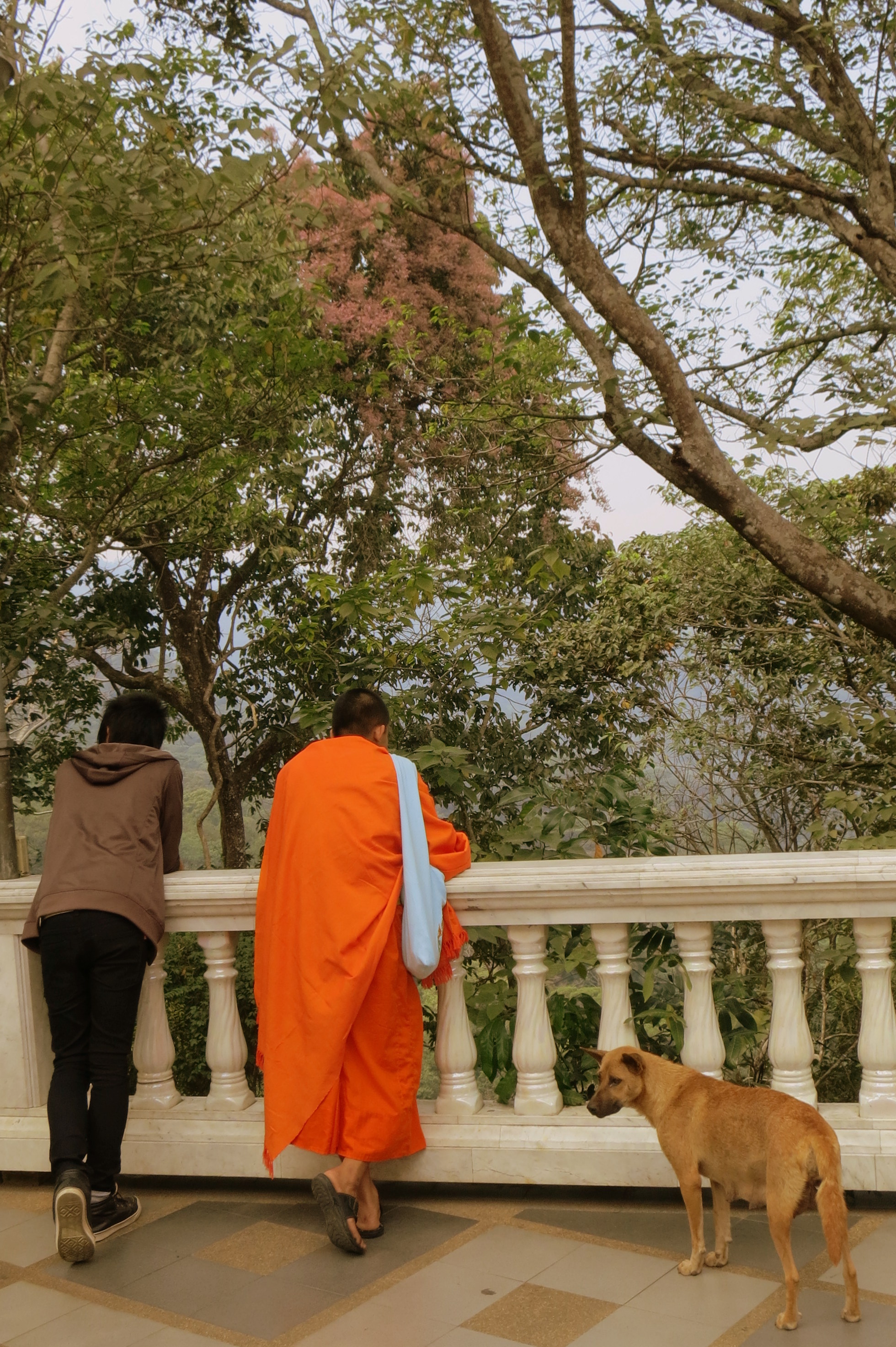
A teenage novice and his friend have a chat

A teenage novice and his friend have a chat

Choose your cause

Choose your cause

We walked around the outer courtyard and watched people ring the bells along one of the walls. We checked out the view of Chiang Mai below, but it was a hazy day and we couldn’t see much. We watched three puppies eagerly  play around the ankles of their favorite monk, a young man more properly called a novice (you’re a novice until age 25). A statue of the legendary white elephant stands to the left of the entrance, standing guard over her temple.

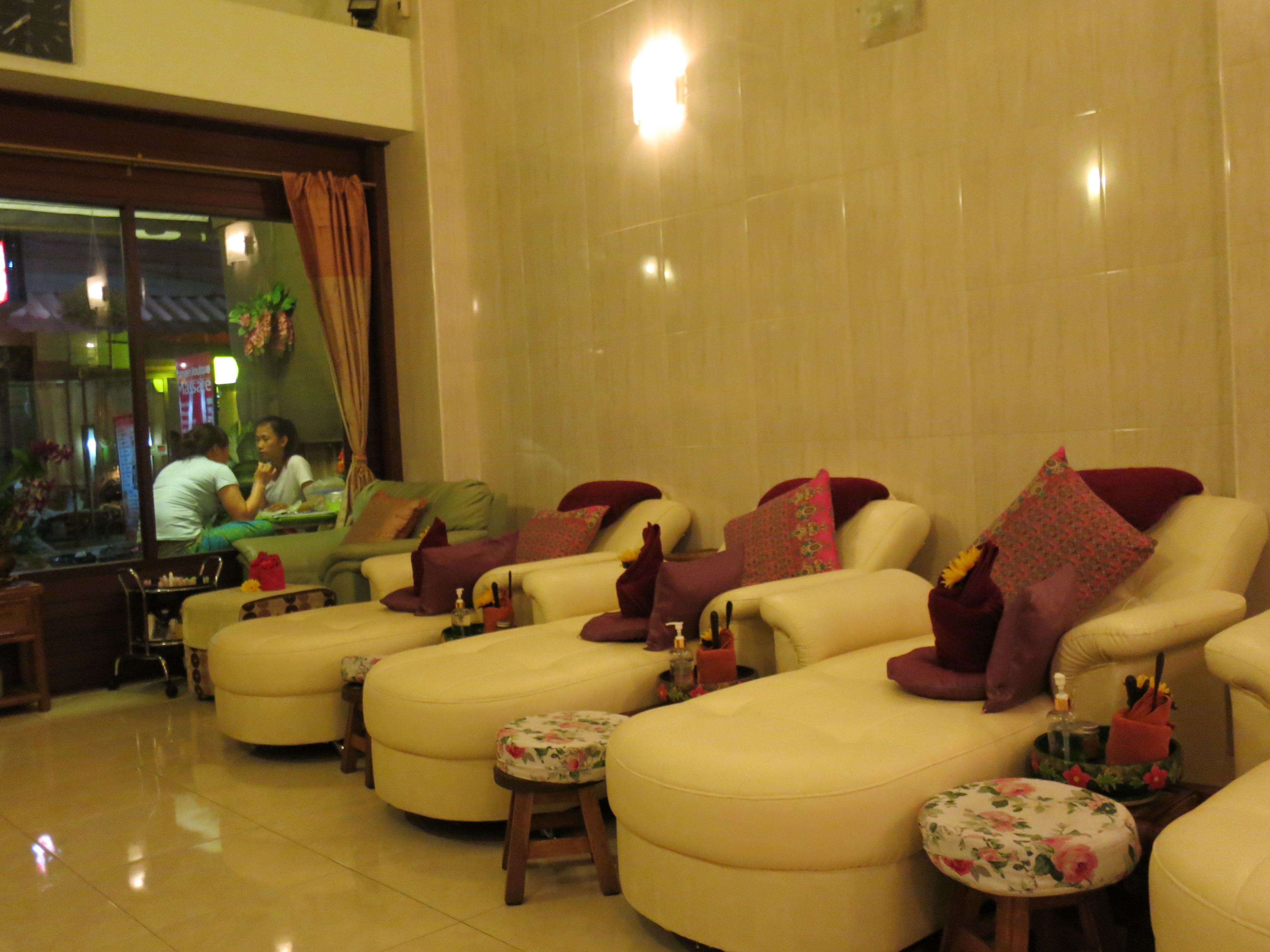
Sweet set-ups at the spa

Sweet set-ups at the spa

Thailand is well-known to western tourists as a place to go for cheap spa treatments. I hadn’t done much of this kind of pampering before, but I did learn to appreciate a pedicure while there. Hannah and I also went to Lila Thai Massage, which is a small chain of spa shops that employs formerly incarcerated women. My massage there wasn’t as peaceful as it might have been, since the masseuses all chatted among themselves as they went to work on six of us in one long room, but for $6 you can’t complain too much. We tried a different place later in the week, where Hannah had her first Thai massage and I got a pretty pedicure.

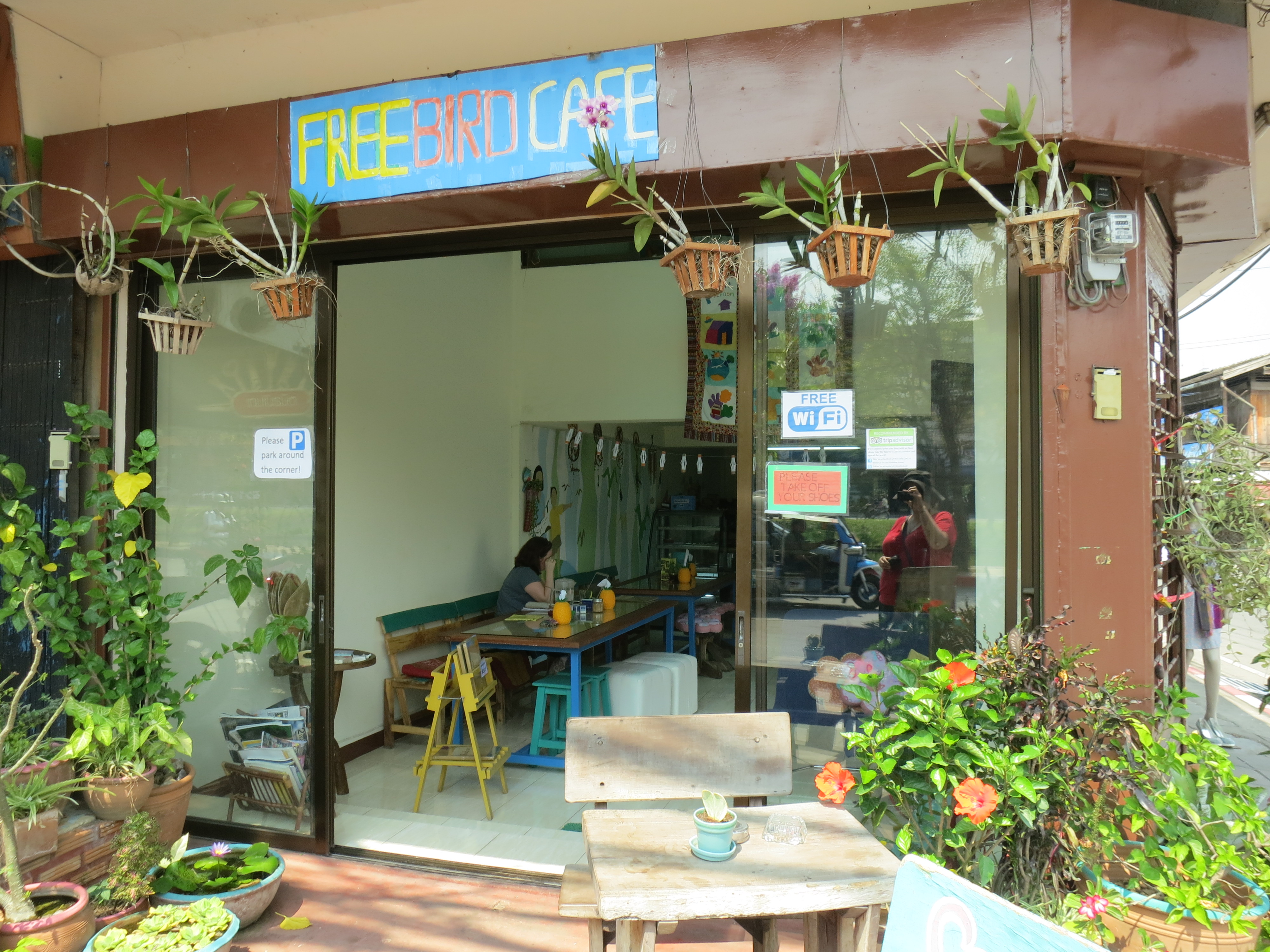
Free Bird Cafe is a lovely little place

Free Bird Cafe is a lovely little place

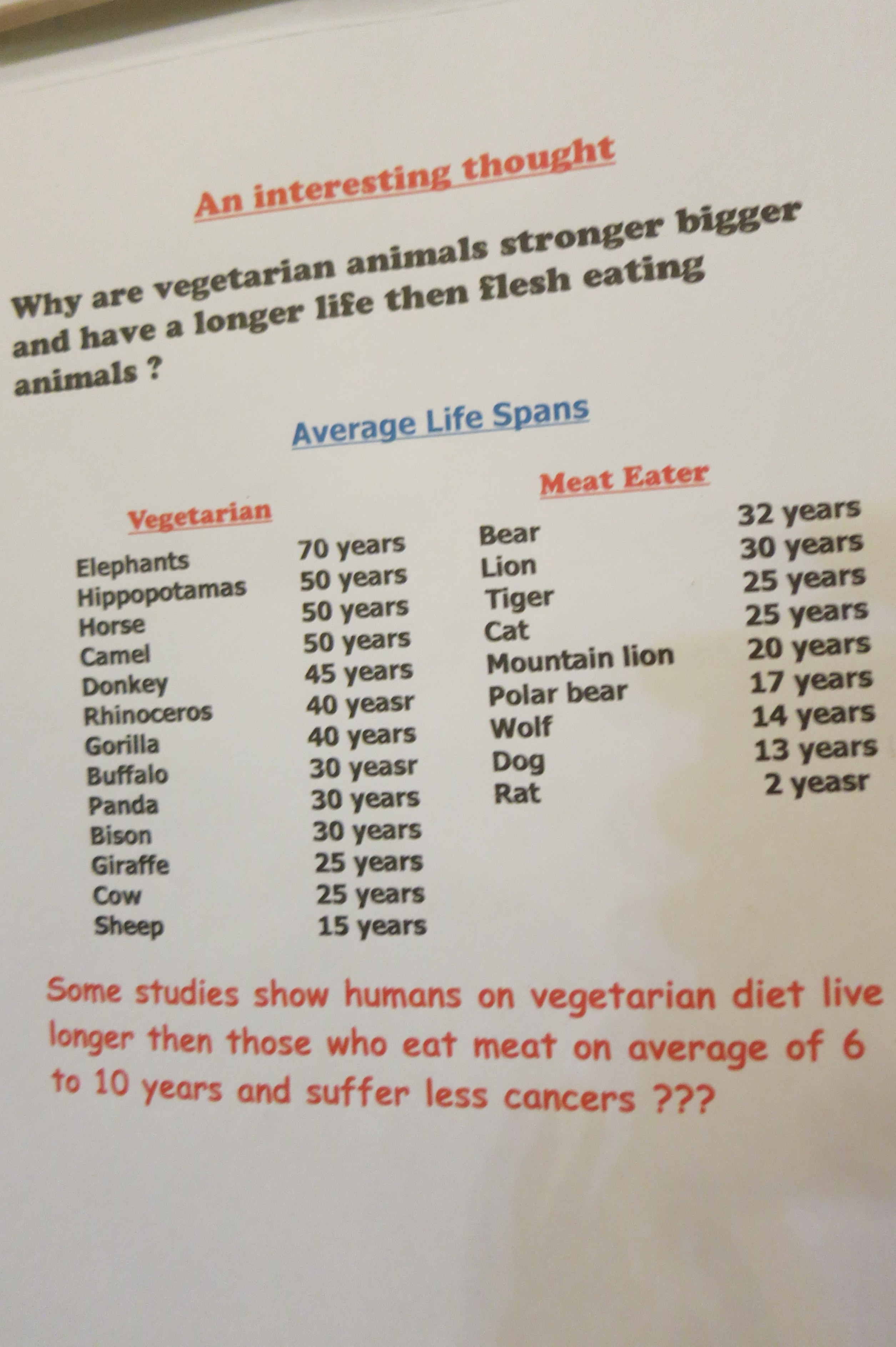
Lots of vegetarian paraphernalia at Taste of Heaven

Lots of vegetarian paraphernalia at Taste of Heaven

We went to a couple restaurants that cooked for a cause. Taste from Heaven donates its proceeds to the Elephant Nature Park, and it papers its walls in photos of animals and posters beseeching people to become vegetarians. Free Bird Cafe is part of Thai Freedom House, which provides education to Shan refugees from Burma. The restaurant also houses a small thrift store. We ate the Shan specialties recommended on the menu, and they were delicious.

Hannah makes the curry paste

Hannah makes the curry paste

I made a coconut soup and tasty penang curry

I made a coconut soup and tasty penang curry

We went to a four-hour cooking class with Asia Scenic Cooking School. I’m glad we did it, especially because Hannah enjoyed it so much, but we did seem to spend an awfully small amount of time actually cooking. Perhaps the full day course involved more time at the stove. Still, it was fun to learn about the different spices used in Thai cooking, and to experience first-hand how labor intensive grinding curry powder is. Also, we made delicious food and got a cookbook so we can try these on our own back at home. The book even includes some substitutes you can make if you don’t have access to the necessary herbs and spices.

Muay thai boxing

Muay thai boxing

We went to see muay thai boxing, which is one of the few sporting events I’ve actually made it to on this trip. We both sort of knew what to expect, but we were still surprised by the violence of the kicks to the ribs and knees to the groin, especially as we couldn’t see so much as a mouth guard on any of the participants. We sat on one side of the ring with a bunch of other dazed Westerners, and followed the lead of the Thai people to our right, who clearly knew what was going on and had money riding on the outcome.
Silk worm cocoons

Silk worm cocoons

So many choices!

So many choices!

On our last day together, we went out to Shinawatra Silk Showroom. We watched a woman pull the impossibly thin threads of silk out of worms, and another woman work a foot-powered loom to weave colored threads into long skeins of colorful silk. We then entered the showroom and spent a really long time picking out silk for ourselves and presents for others. We held each other’s hands and breathed deeply as our purchases were rung up and our credit cards run through, but we made it relatively unscathed.

At one of the many temples in Chiang Mai

At one of the many temples in Chiang Mai

Thai cover band--they tore through rock hits for a good hour

Thai cover band–they tore through rock hits for a good hour

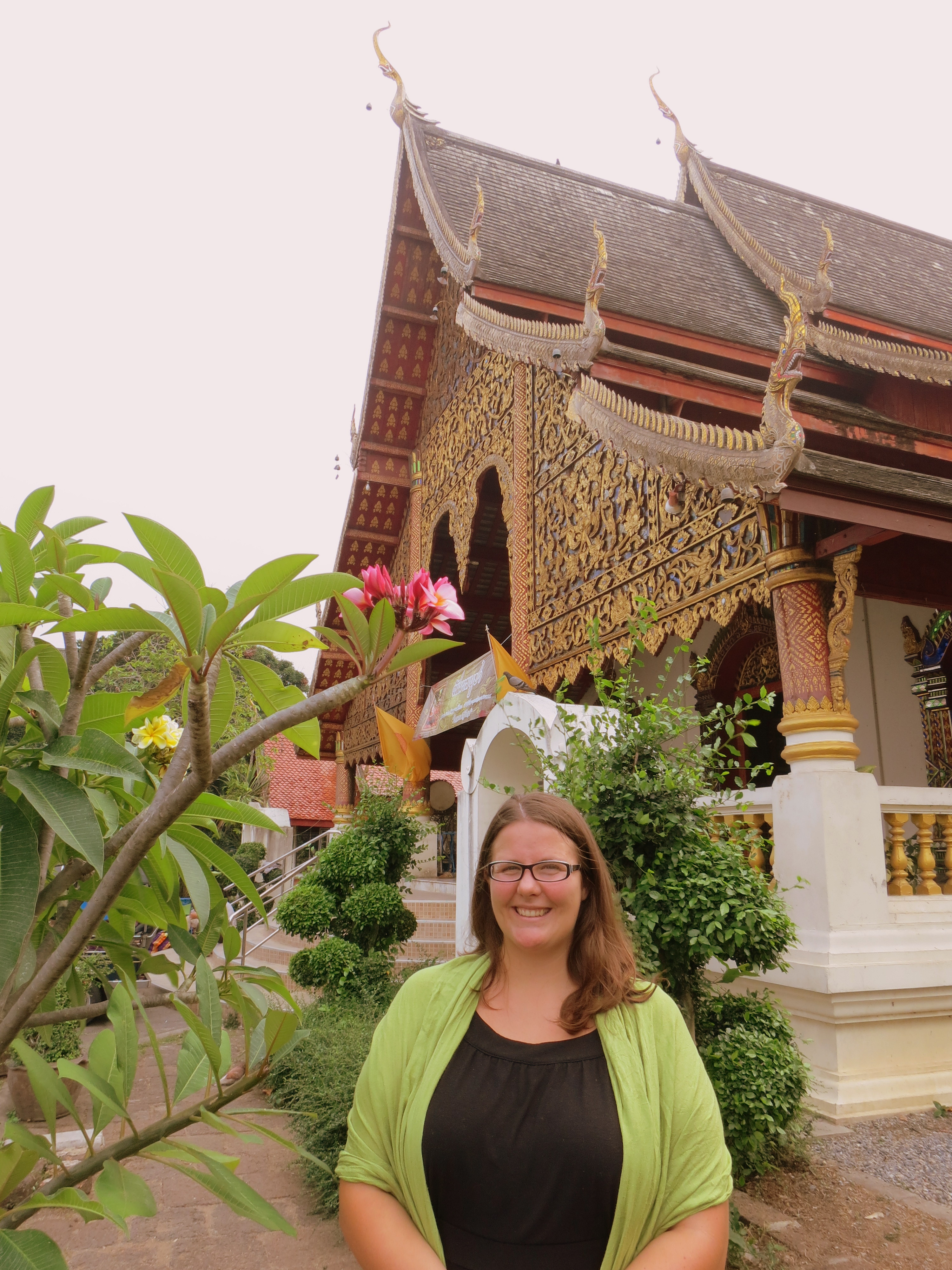
Hannah and I visited other temples in town–including one with a stupa supported by giant stone elephants–and had fun getting lost in the alleyways. We went out to a few bars and heard some fun cover bands while enjoying Tiger beers. We caught up on each other’s lives and enjoyed the luxury of vacation time.
I had a great time in Chiang Mai, finding the right mix between relaxing and sightseeing, and I’m so glad I got to explore the town with Hannah.

Guest Post: How to Eat in Thailand

Hannah Esper is a good friend of mine from our days working together in Chicago. She’s now a journalist and editor living in Michigan. She visited me in Chiang Mai in February this year, and we had a wonderful time seeing the sights and sampling the tastes of Thailand together. I asked her to write up something about her week there, and she obliged with this lovely piece on the things she learned about food in Thailand. Thanks, Hannah!

Many people asked why I had chosen Thailand as my destination to meet Lisa on her trip. The decision was an easy one for me as I had worked as a server at a Thai restaurant when I was younger and had become accustomed to the food and culture. Thai food is still my favorite cuisine and I felt rather knowledgeable and excited about it going on this trip.
As was a main goal of mine, Lisa and I ate a lot during our week in Chiang Mai. Most everything was as delicious as I was hoping for. There was also a couple disappointing dishes as well. The following is list of what we discovered on our culinary adventure:

1. Atmosphere is not a good indicator for quality/taste.

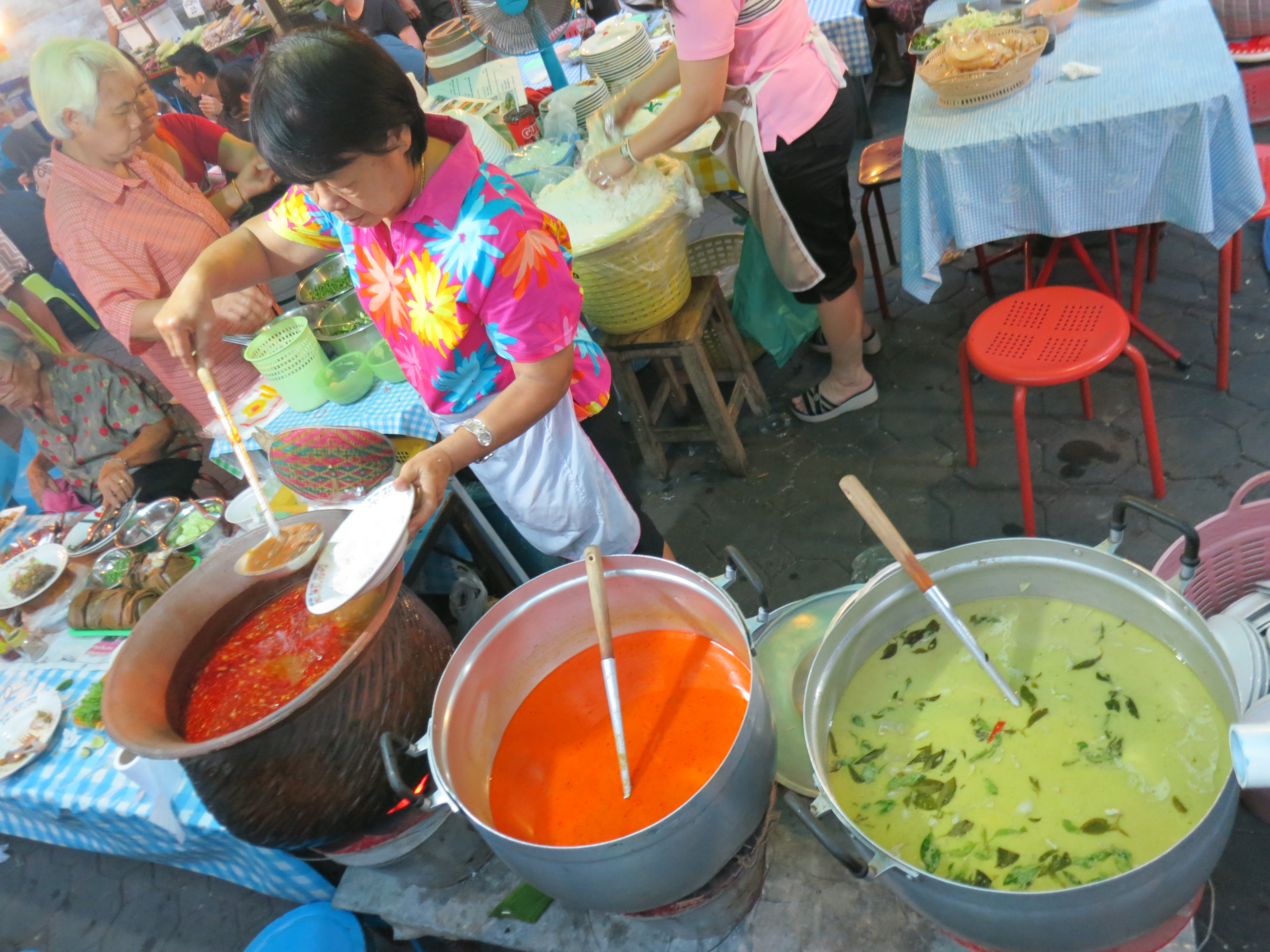
Vats of delicious curry

Vats of delicious curry

One of the best meals we ate was at this tiny place that was near our hotel. I wouldn’t quite call it a restaurant, as it was more like the back of someone’s house, as many places were. There were two tables in the alley that was basically a woman’s backyard. We were served on mismatched plates and silverware, and served our dishes one at a time, since there was literally one person cooking the food. It was pretty common in Chiang Mai, in fact, for dishes to come at all different times, which made eating with others interesting.

The worst meal of the trip was at a cute, kitschy bar called “The Wall” that was owned by a Westerner. Adorned with Pink Floyd memorabilia, the bar served mostly Western food, including french fries without salt, and a terrible attempt at Pad Thai.

2. You often will not receive what you order, but it’s fine!

One of the vegetarian places we tried

One of the vegetarian places we tried

As was true at the backyard “restaurant,” mentioned above, you often don’t receive the exact dish that you ordered. The menu might say the chicken is fried, but it comes out grilled. Or the menu says the dish has broccoli in it but you actually get broccoli, carrots, and mushrooms. The most exciting surprise is… when you ask for mild spice and it comes out burn-your-insides spicy! The food was always delicious, though, so we didn’t mind these modifications.

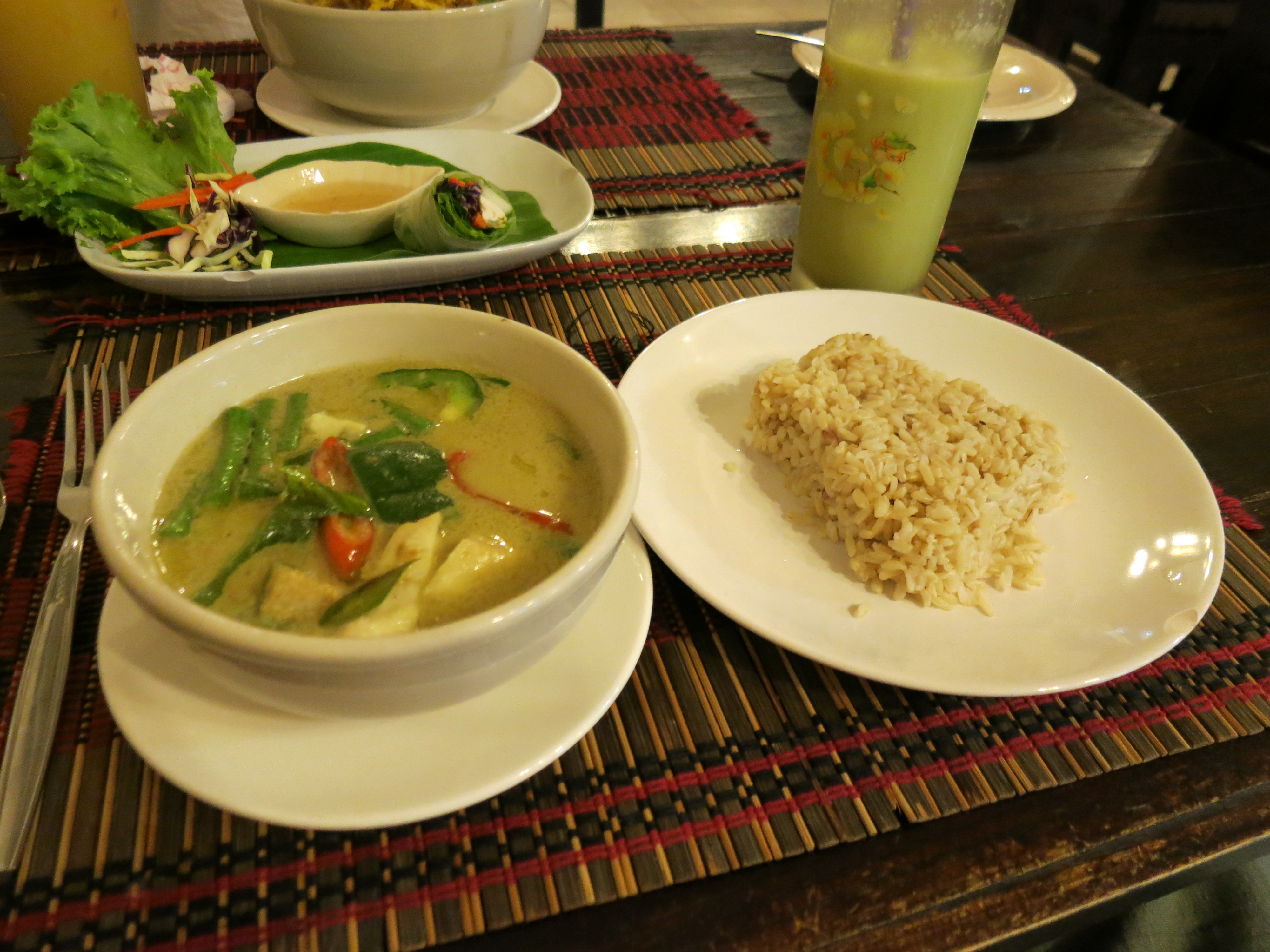
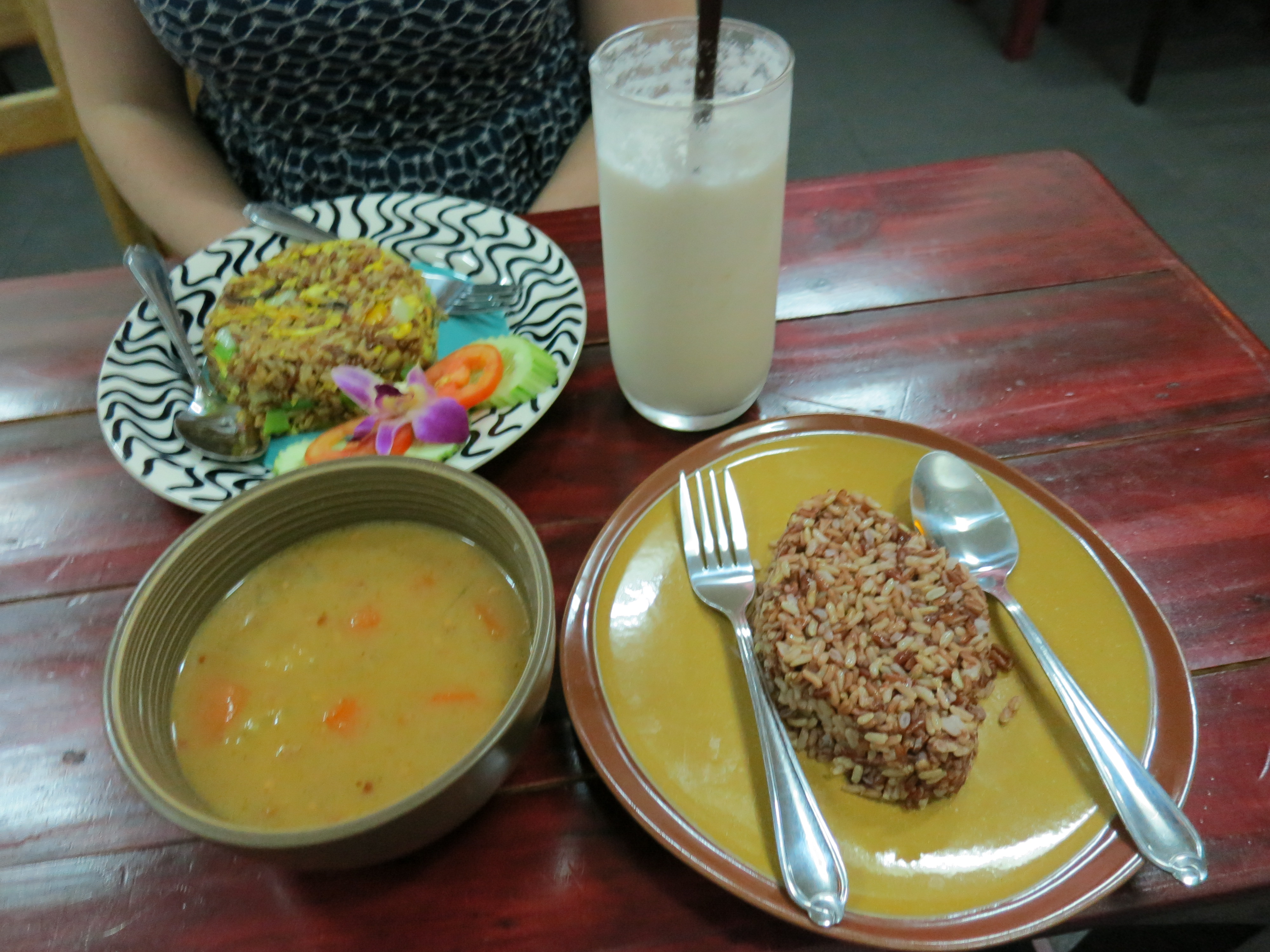
3. Vegetarian options are plentiful; you just have to look for them.

Massaman curry, yum

Massaman curry, yum

Thai food is great for both meat-eaters and vegetarians alike. The Thai restaurant I worked at in high school was a hot spot for all the vegetarians and vegans in town. In the states, tofu is a common protein option in most dishes at Thai restaurants. In Thailand, however, most food vendors serve dishes with the traditional protein that is intended for that particular dish. Tofu is often served in Pad Thai but not many other dishes. Fortunately, there were many restaurants in Chiang Mai that served strictly vegetarian food. After a couple days in town, Lisa and I got better at finding them. At these restaurants, traditional dishes were served with meat substitutes, but we found that most dishes were so flavorful that it wasn’t even necessary. We were content with just the rice/noodles, vegetables and curry.

4. Expensive does not equate to better.

Hannah with the best meal of the week

Hannah with the best meal of the week

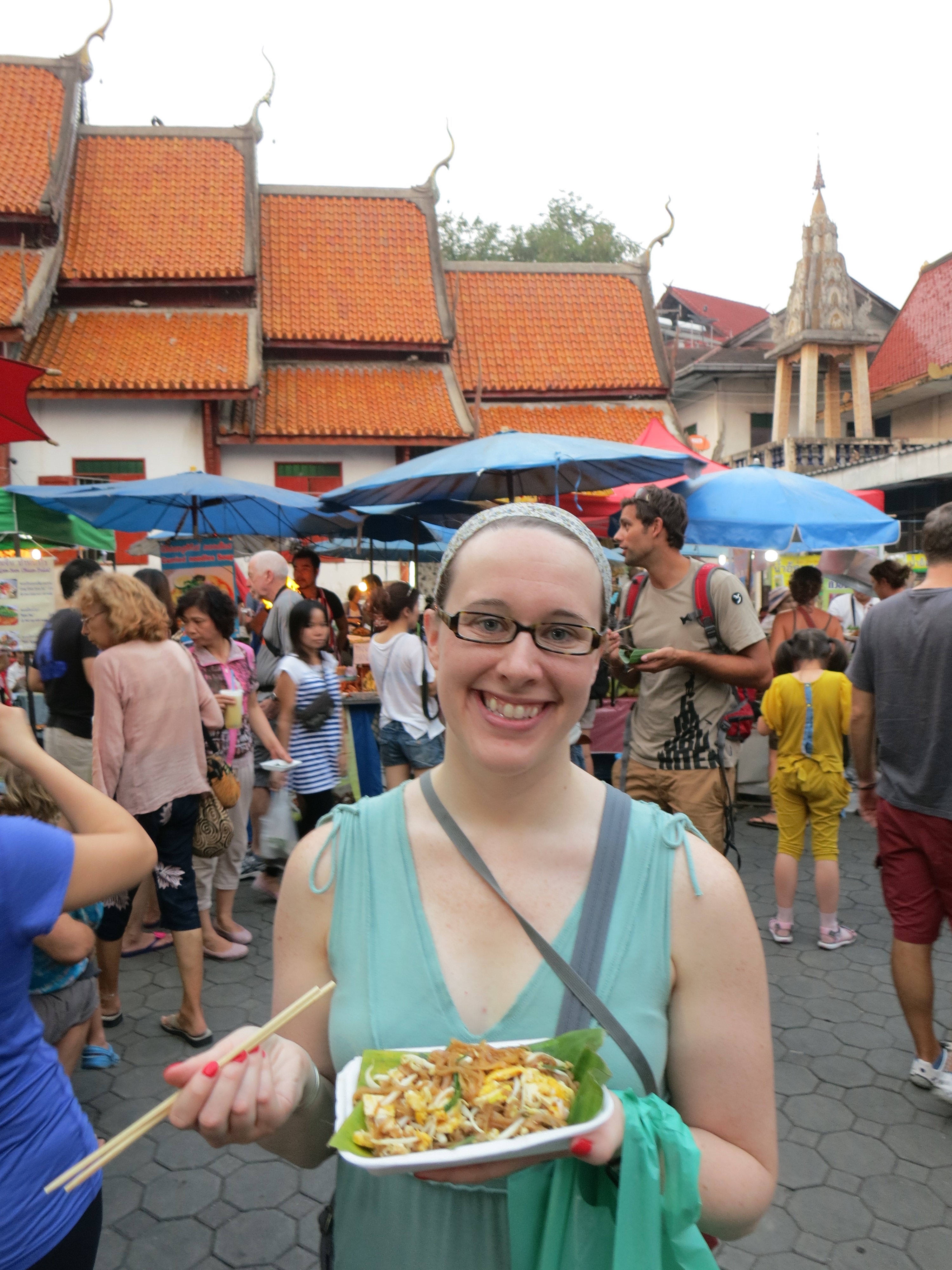
Probably the best food we ate in Chiang Mai was bought on the street, and cost less than $2. The first night I was in town, Lisa and I went to the Saturday night market, which had many vendors selling cheap eats on sticks. I did not partake in the meat-on-a-stick, but Lisa enjoyed it. I did, however, eat fried banana with condensed milk and it was quite possibly the best thing I’ve ever tasted. The Sunday night market had even better food and we enjoyed the best Pad Thai of the trip. The cook had a huge bowl of the pre-made ingredients, which she tossed in the wok with some fried egg and sauce and served up in a banana leaf.

5. Fruit shakes – a surprising delight.

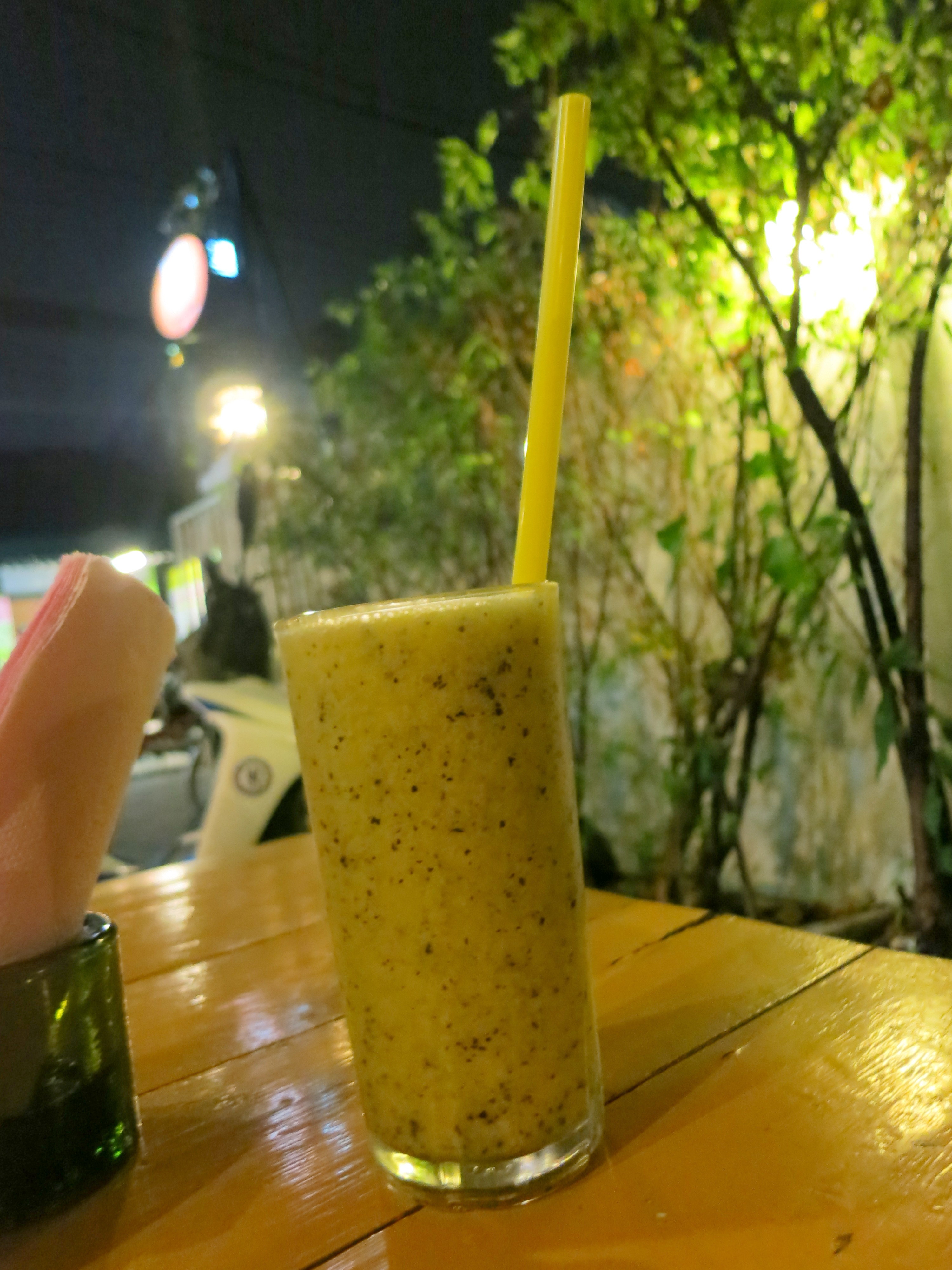
One of the many fruit shakes consumed that week

One of the many fruit shakes consumed that week

On every corner. Every fruit combination. All delicious and cheap. Check out our favorites.

6. Nobody cooks Thai likes Thais.

With the meals we cooked at Asia Scenic Cooking School

With the meals we cooked at Asia Scenic Cooking School

Since moving to Mississippi a few years ago, my mom has been going through Thai food withdrawal. We bought her a wok and she’s begun to cook her own Thai dishes. She’s even started teaching other Mississippians who’ve never had the pleasure of having good Thai, or any Thai, for that matter. Her dishes are good… but it’s just not the same.

Over the years, I’ve attempted to replicate dishes from my old restaurant. I picked up a few things while working there, but I just can’t get the tofu as crunchy or rice as sticky. During our trip, Lisa and I took an excellent cooking class at one of the local schools. We learned to make a couple traditional dishes, including curry paste, and were sent home with a simple recipe book. Everything we made that night was incredible. Now that I’m home, I will try yet again to recapture the tastes of Chiang Mai.

My Top Ten Firsts of the Trip (So Far)

In no particular order:

1. First time driving on the left

Coromandel Peninsula, New Zealand

Coromandel Peninsula, New Zealand

2. First time eating sushi (the real kind, with raw fish)

Kyoto, Japan

Kyoto, Japan

3. First time riding in a tuk-tuk

Chiang Mai, Thailand

Chiang Mai, Thailand

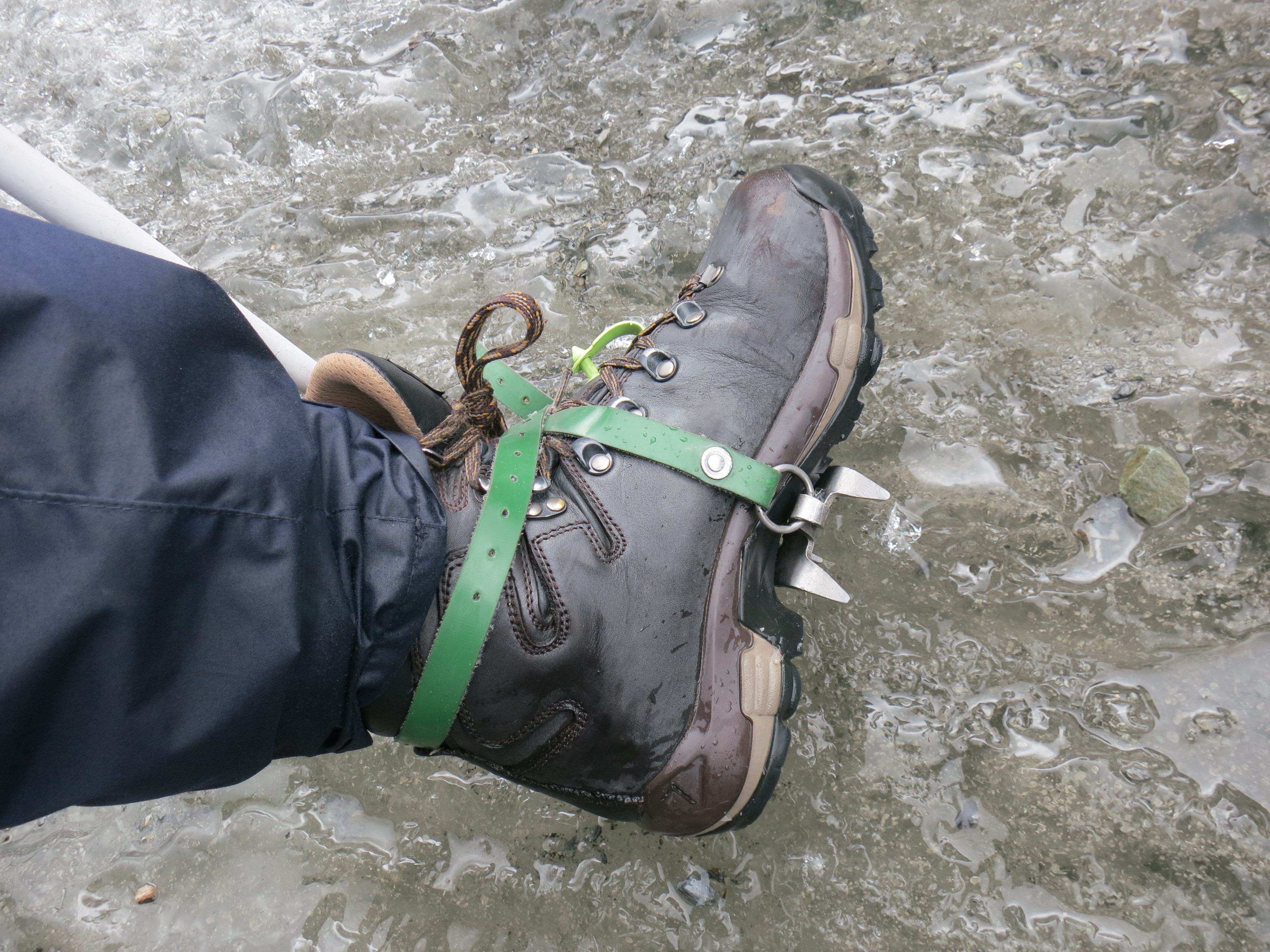
4. First time using crampons

Attaching metal spikes to my feet

Fox Glacier, New Zealand

5. First time drinking sake

Kyoto, Japan

Kyoto, Japan

6. First time riding a motorbike

Phuket, Thailand

Phuket, Thailand

7. First time eating kangaroo and camel

Yulara, Australia

Yulara, Australia

8. First time sailing

Whitsundays, Australia

Whitsundays, Australia

9. First time snorkeling

Kailua Kona, Hawaii

Kailua Kona, Hawaii

10. First time feeding an elephant

Elephant Nature Park, Thailand

Elephant Nature Park, Thailand

Among the Splendid Ruins of Ayutthaya

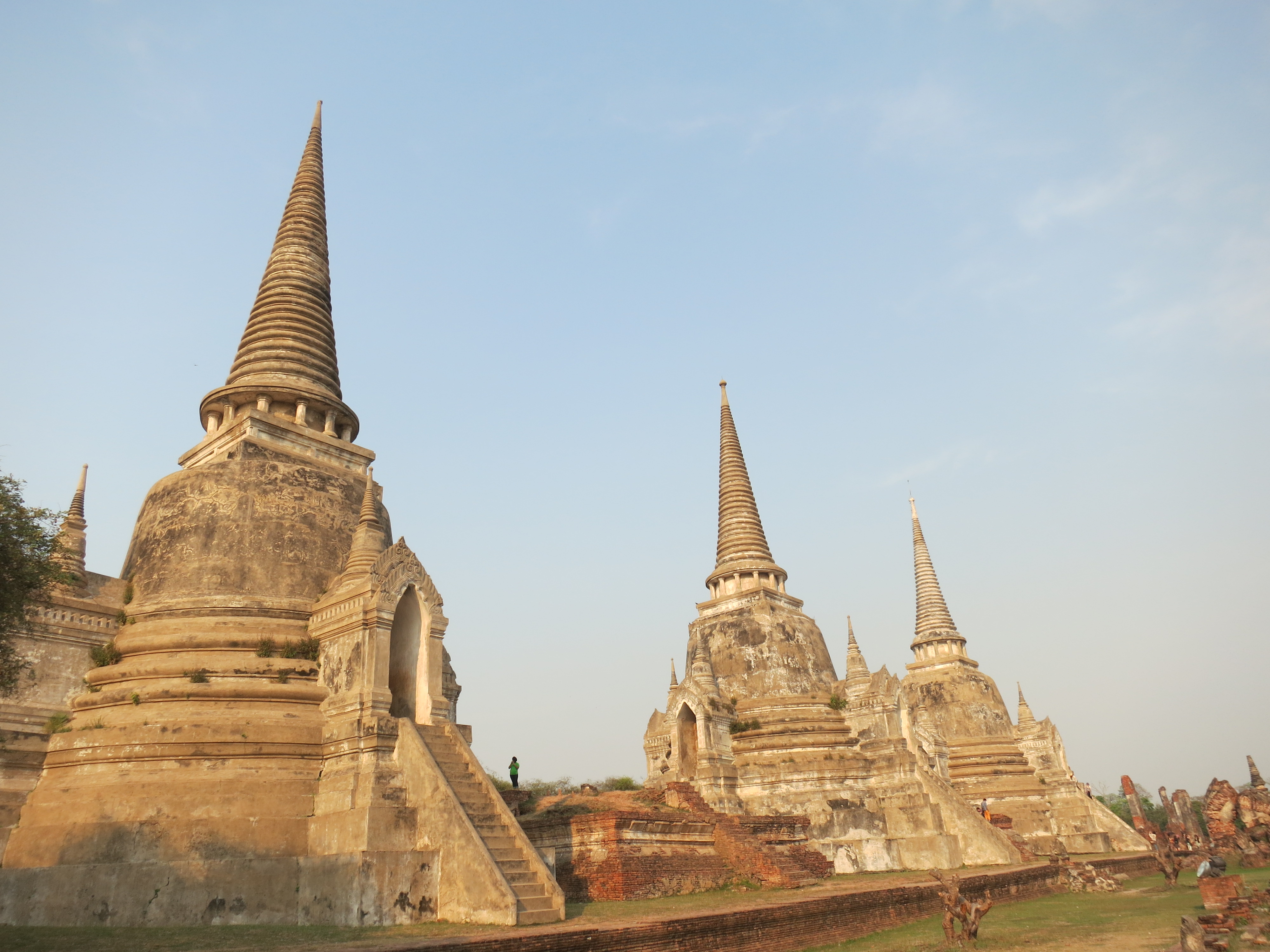
I like to pretend that my short time in Ayutthaya, ancient capital of the kingdom of Siam, was spent in the manner of a ruler from that era: whisked from magnificent stupa to impressive monument in my personal chariot, all doors open to me. In reality, of course, I bounced along in the back of a tuk-tuk and paid the same entrance fees as everyone else, but when the afternoon sun is beating down and you only have a few hours in a place when you’d planned to have two days, you have to inject a little romance where you can.

Astonishing what one color against stone can do.

Astonishing what one color against stone can do (no filter)

Ayutthaya is a World Heritage site, and as such it’s better maintained than many tourist sites in Thailand. All the guidebooks suggest renting bikes to get from one site to another, which sounds nice in theory, but in practice it still means dodging terrifying traffic and sucking in mouthfuls of exhaust. Some friends did bike to different temples, and they said those were the problems exactly, plus it’s super hot, of course. So all in all, I’m glad I paid $20 for a driver to take me door-to-door for three hours.

ayutthaya

Tiny me in there for a sense of scale

Tiny buddhas at Wat

Mini buddhas at Wat Phra Chedi Chaimongkhon

The city of Ayutthaya was founded in the 14th century, and at its peak at around 1700 CE it had 1 million inhabitants, which made it one of the largest cities in the world. In 1767 the Burmese invaded, burning the city to the ground and committing blasphemous acts like cutting the heads off the stone buddhas in the temples. The kingdom would be fought over and rebuilt over the next few years, but the capital was never re-founded on the same site, and it’s remained in ruins to this day.

One of the many headless buddhas

One of the many headless buddhas

Wat Phra Mahathat

Wat Phra Mahathat

Some of the temples seemed to be out of use, while others contained buddha statues, yellow or saffron cloth coverings, and other signs that they were still active places of worship.

I think he looks downright cozy

I think he looks downright cozy

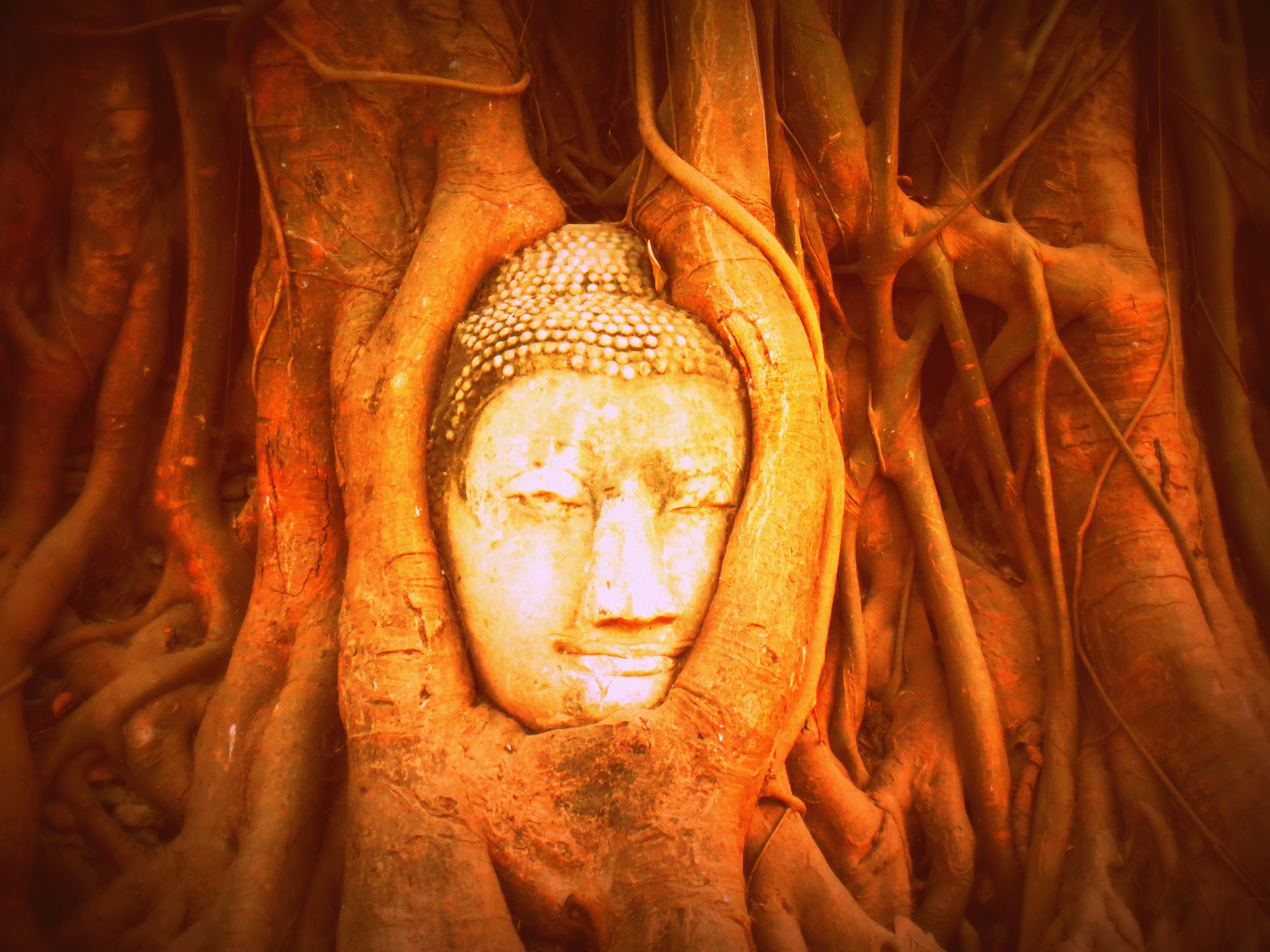
Guards stationed themselves by the head in the tree of Wat Phra Mahathat to make sure people took respectful photographs. It’s considered disrespectful to put your head above that of a buddha or monk, so any time you’re in a temple you have to watch yourself. Since this particular head somehow got wrapped up in the roots of this tree, it’s even lower than statues usually are, and you have to kneel on the ground to make sure you’re not breaking any taboos.

Mortal Kombat

Mortal Kombat?

I visited Wat Phra Sri Sanphet, which a fellow American told me was the site of some scenes from Mortal Kombat–look familiar, anyone?

Reclining buddha of

Reclining buddha of Phra Budhasalyart

The reclining buddha of Phra Budhasalyart, according to legend, got in that position because a giant was boasting about how big he was, and how therefore he didn’t need to pay proper respect to the buddha. The buddha made himself bigger than the giant and just laid out on his side, like, hey, what’s up, we can play this game if you really want to. (I presume the giant was humbled, though accounts don’t say.)

Wat

Wat Phu Khao Thong

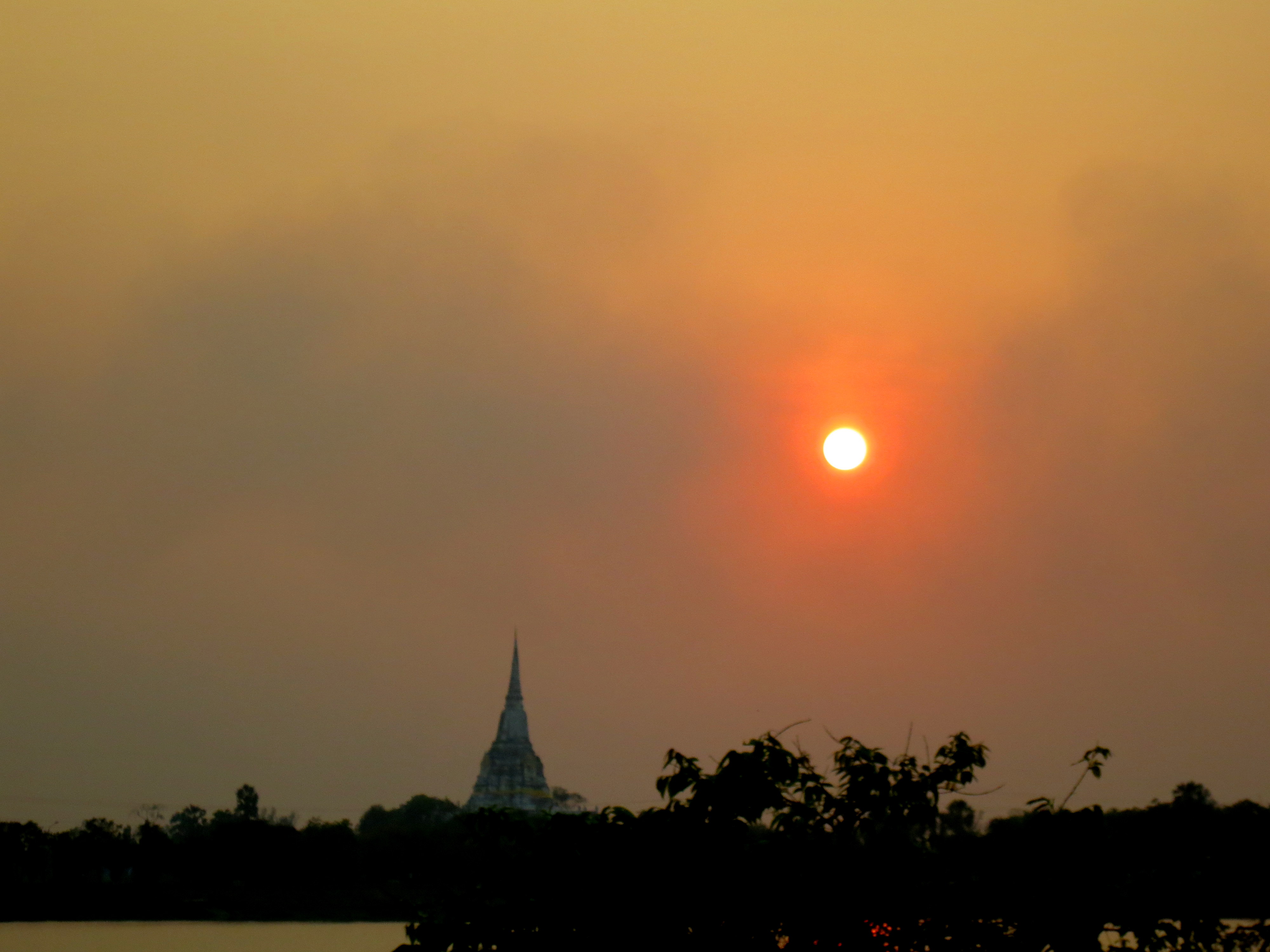
The last stop of the day, Wat Phu Khao Thong, was one of the nicest simply because the sun was going down and the site was deserted. Once my driver dropped me off at the bridge that served as the entrance, it was just me and a determined evening jogger as the sun descended and the temple folded itself in shadow. It was a peaceful end to a busy afternoon of temple-hopping, and kudos to my driver for arranging it that way.

A peaceful good night

A peaceful good night

Two Days in Bangkok

If the title of this post put that awful song in your head, I apologize. My first night in Bangkok was as grating as that song, and the first day was kind of a wash, but things picked up for the latter half of my stay there. Including infuriating political discussions on a street full of escorts.

Wat Po

Wat Po

I arrived late at night and wandered around Khaosan Road, and the next day I moved across town to a quieter hostel. On the way, I stopped at the central train station to buy a ticket out of town, and not only was the ticket I wanted not available, but I had to change transit three times just to get to the train station and then twice to carry on to the new hostel. All with a 30-pound backpack on and the tropical heat making me dizzy. My mood didn’t improve when I checked in at the hostel and learned that the Grand Palace closes at 3:30pm and there’s no way I’d make it in time, so I’d have to try to go the next day, although I’d have to go early in the morning because I needed to leave town by noon so I could get my train out of Ayutthaya in the evening. Ugh, just writing about my poor planning and the inconvenience of the sprawling city is frustrating me all over again!

Buy coupons for your every need

Buy coupons for your every need

I decided the solution to my bad mood was ice cream, so I went to the Magnum Bar downtown. I bought an electronics converter for $5 from one of those odds n ends stalls near the train station, the kind of stall probably entirely stocked with stuff that fell off a truck somewhere. But that converter is still working today, keeping my electronics from frying in the changing voltages in new countries, so I’m not asking any questions.

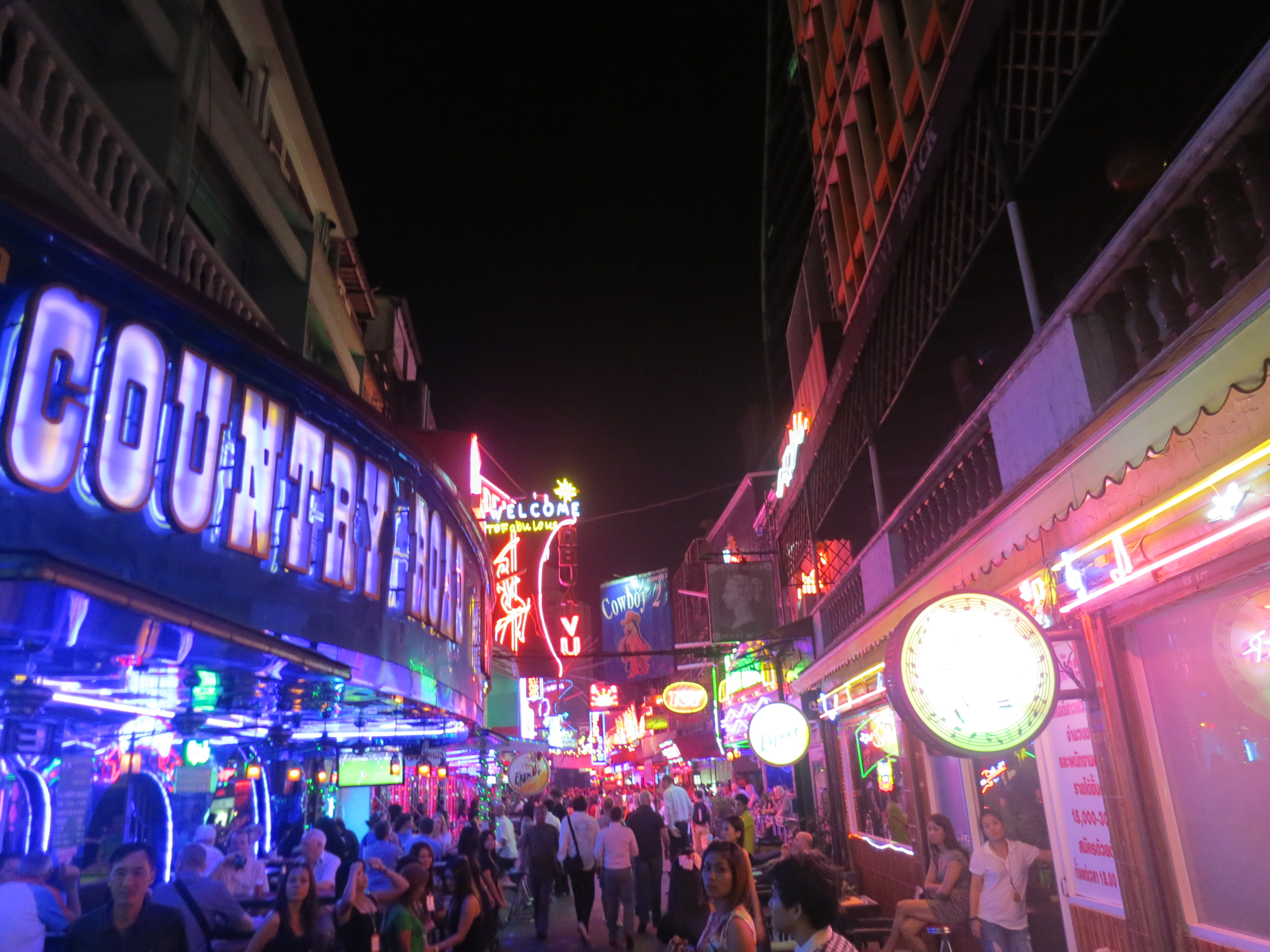
That night, I went out with two women I met at the hostel; H and K* are both teachers in China, in a “small” city about 2 hours west of Beijing. (“Small” in China means only a few million people, of course.) We thought we were going to a ladyboy cabaret, but K’s phone directed us to Soi Cowboy, which is a street that combines all the stereotypes about the seedier side of Thailand: neon everywhere, girls wearing next to nothing idling outside their clubs, lackluster table dancing inside the clubs, old white men at all the clubs, and a general sense that everyone is trying really hard to pretend it’s all normal and not sad.

Soi Cowboy

Soi Cowboy

We walked the length of it–the only tourist women there except for a few middle-aged women we spotted with their husbands–and ended up on the patio of Cowboy, which had a cover band inside instead of dancing girls. H had a lot of uninformed things to say about gender and sex work, which frustrated me to no end. She kept asking about ladyboys: “What are they, women or men? What parts do they have? What are they, really?” Do your homework. Even a cursory glance at a guidebook will clarify for you that ladyboys (who usually refer to themselves in other terms, actually, like “kathoey” or “a second type of woman”) are usually biologically male, but their chosen gender expression is female. Asking what gender someone is “really” is hugely insulting, no matter the culture, but especially in a place like Thailand, where information is readily available on this prominent part of the population, it’s inexcusably ignorant.

Soi Cowboy bangkokHer other favorite topic for the evening was whether the women working here had chosen this life. She’d read all sorts of stories about the “white slave trade” in Southeast Asia, which… what. But she also thinks that some Thai girls, while not kidnapped for the sex slave trade like white girls from America (WHAT), are still forced into the job. If they chose the job, though, she was okay with it. I did a little “choosing from super limited options isn’t a true choice” (my main line when encountering “feminism is about choice” defenders), but mostly I was irritated that she insisted on talking about this while we were sitting right there. If this scene bothers you, that is perfectly understandable, but there’s no reason you have to stay here. As soon as we arrived, we could see it for what it was; babbling about how worried you are for these women as you drink cocktails they bring you is useless and almost insulting.

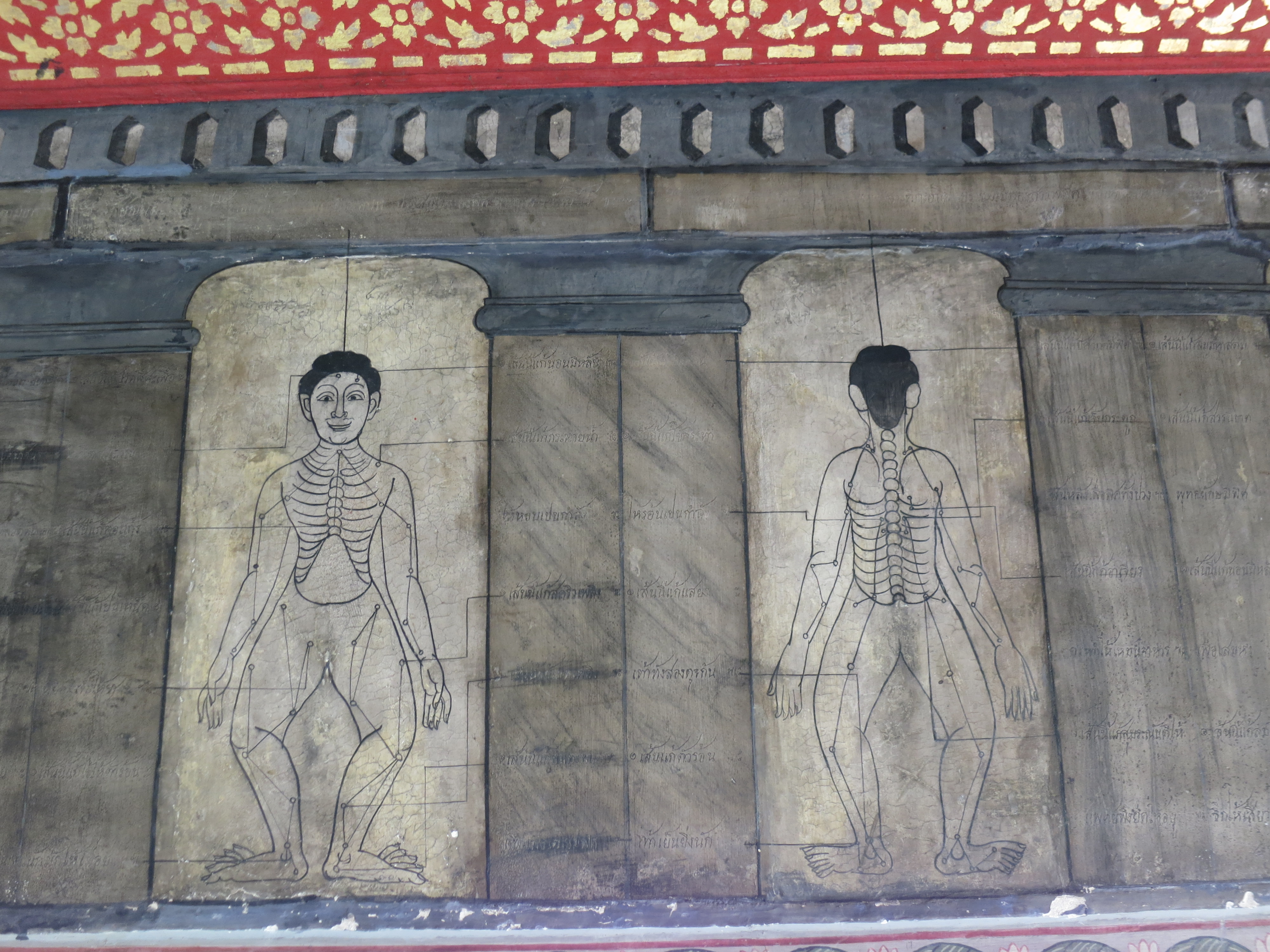
Medical diagrams at Wat Pho

Medical diagrams at Wat Pho

Anyway, when we steered clear of those conversations, we had a good time, and I was glad to have gone out for one night in Bangkok. (Oh no, I did it again.) The next day I went to the Grand Palace, but by the time I got there, every tour group in Thailand was shoving its way into the gates, and it was too overwhelming. I walked along the outer wall and crossed the street to Wat Pho instead.

Reclining Buddha in Wat Po

Reclining Buddha in Wat Po

Wat Pho (or Po) is a beautiful complex. It contains the largest reclining Buddha in Thailand, covered in gold leaf and housed in a building barely big enough for it. Pillars hold up the roof and split up the view of the buddha, which is too bad for taking in its magnificence in one look, but did give intriguing glimpses as I walked down toward the feet. The soles of the buddha’s feet are covered in intricate mother-of-pearl decorations, which were lovely. The rest of the grounds contain a massage school, a shrine to a seated buddha, and small stupas. There was also a small display on President Obama’s visit to the temple in November 2012, including the gift he brought with him–a candle from Chesapeake Bay. A candle? Really? A candle is what you get someone when you don’t know them well enough to know what to get them. Surely someone on the team could’ve tried a little harder.

The feet of the reclining buddha

The feet of the reclining buddha

After I walked around the wat, I collected my luggage, spent far too long finding a minibus, and got to Ayutthaya for a few hours of sightseeing before headed farther north. A whirlwind trip to Bangkok.

*Usually I use full names in my stories, but since I dwell on the negative parts of my time with H, I thought that imprudent.