Queenstown, New Zealand; January 2, 2013
Queenstown, New Zealand; January 2, 2013

Karangahake Gorge, Coromandel Peninsula, New Zealand; December 9, 2012
In no particular order:
1. First time driving on the left

Coromandel Peninsula, New Zealand
2. First time eating sushi (the real kind, with raw fish)

Kyoto, Japan
3. First time riding in a tuk-tuk

Chiang Mai, Thailand
4. First time using crampons
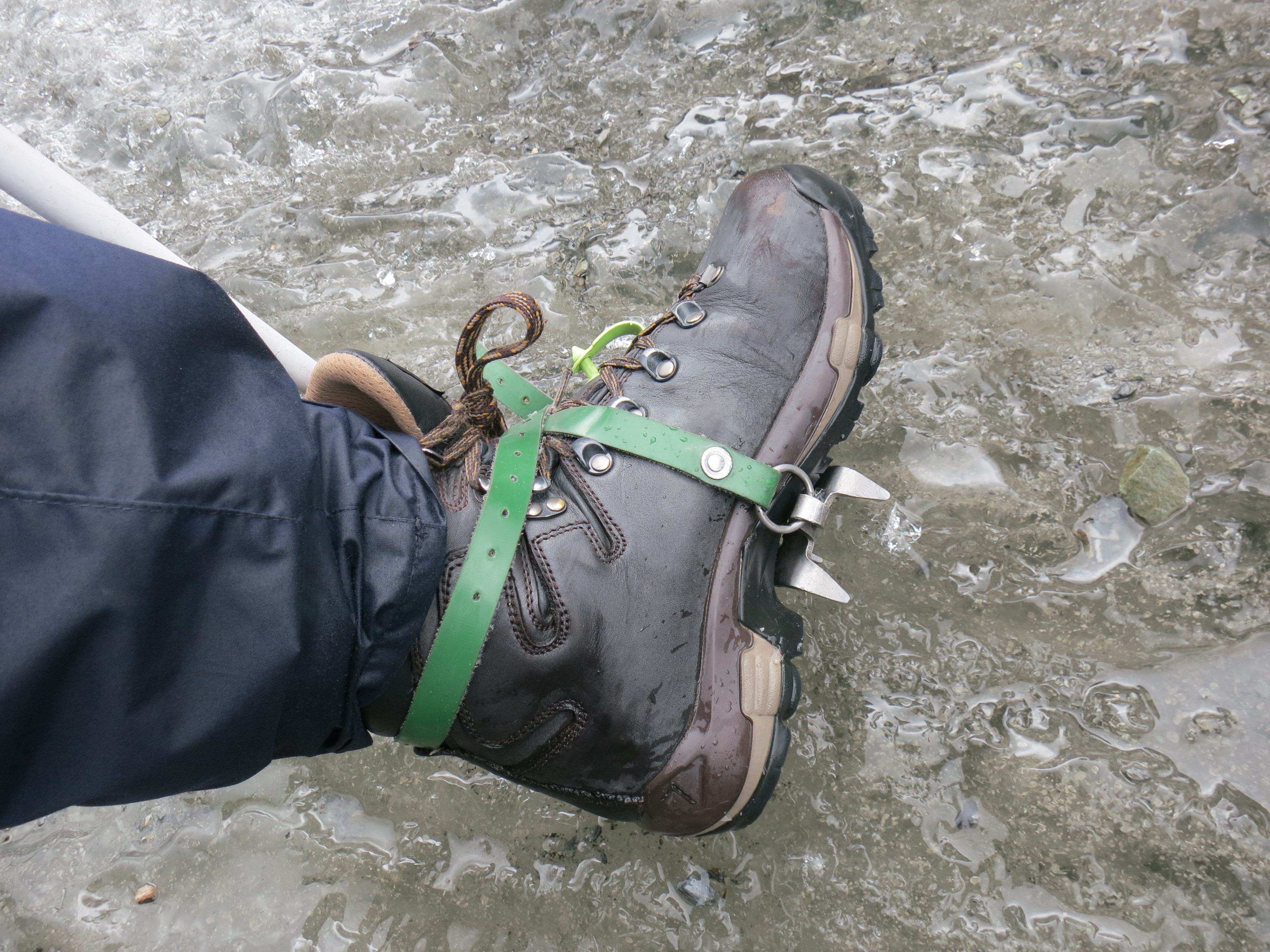
Fox Glacier, New Zealand
5. First time drinking sake

Kyoto, Japan
6. First time riding a motorbike

Phuket, Thailand
7. First time eating kangaroo and camel

Yulara, Australia
8. First time sailing

Whitsundays, Australia
9. First time snorkeling

Kailua Kona, Hawaii
10. First time feeding an elephant

Elephant Nature Park, Thailand
Hot spring rivers frolicked in: 2
Sights that made me say “wow”: at least 12
Sheep spotted: ~100,000
Cows spotted: ~80,000
Glaciers hiked: 1
Couches surfed: 8
Times I had no idea what vowel a Kiwi was using while talking: at least 9
Concussions sustained: 2
Road trips enjoyed: 3
Radio stations picked up on entire 8 weeks in the country: 2
Times I heard the inexplicably popular song “Maneater” on those radio stations: 9
Number of different tracks off the 12-track “Jagged Little Pill” I heard on those same radio stations: 6
Total days spent in New Zealand: 55
Total money spent: $3,965
Average per day: $72
Christmas carols sung at full volume while driving through the mountains: 8
Carols we knew more than the first verse to: 0
Dolphins swum with: at least 30, possibly more; magic is hard to quantify

Wellington proudly wears the title given it by Lonely Planet—“the coolest little capital in the world”—and I’d say it has good claim to it. It’s a small city on the southern tip of the North Island of New Zealand. Although most of the city is curled around the harbor and seems like it ought to be protected, the city is relentlessly buffeted by winds that rival Chicago’s. Or possibly outdo Chicago’s. Four months later, I’m still combing the tangles out of my hair, so I haven’t had time to consider the question.

Much of the public art in Wellington plays on how windy it is there.
I spent a few hours in Wellington with my friends after Christmas, as we waited for the ferry to take me across the Cook Strait. They drove me up to Mount Victoria, which stands guard over town. It contains a monument to Antarctic exploration, made up of stones from a glacier on the seventh continent; and a cannon that was fired at noon every day for years, to tell time by. We stood at the lookout and watched planes brave the gusts of wind on their descent into town. On the way down the hill, my friends pointed out a stand of pine trees that had been used for scenes in the Lord of the Rings movies.

View from Mount Vic
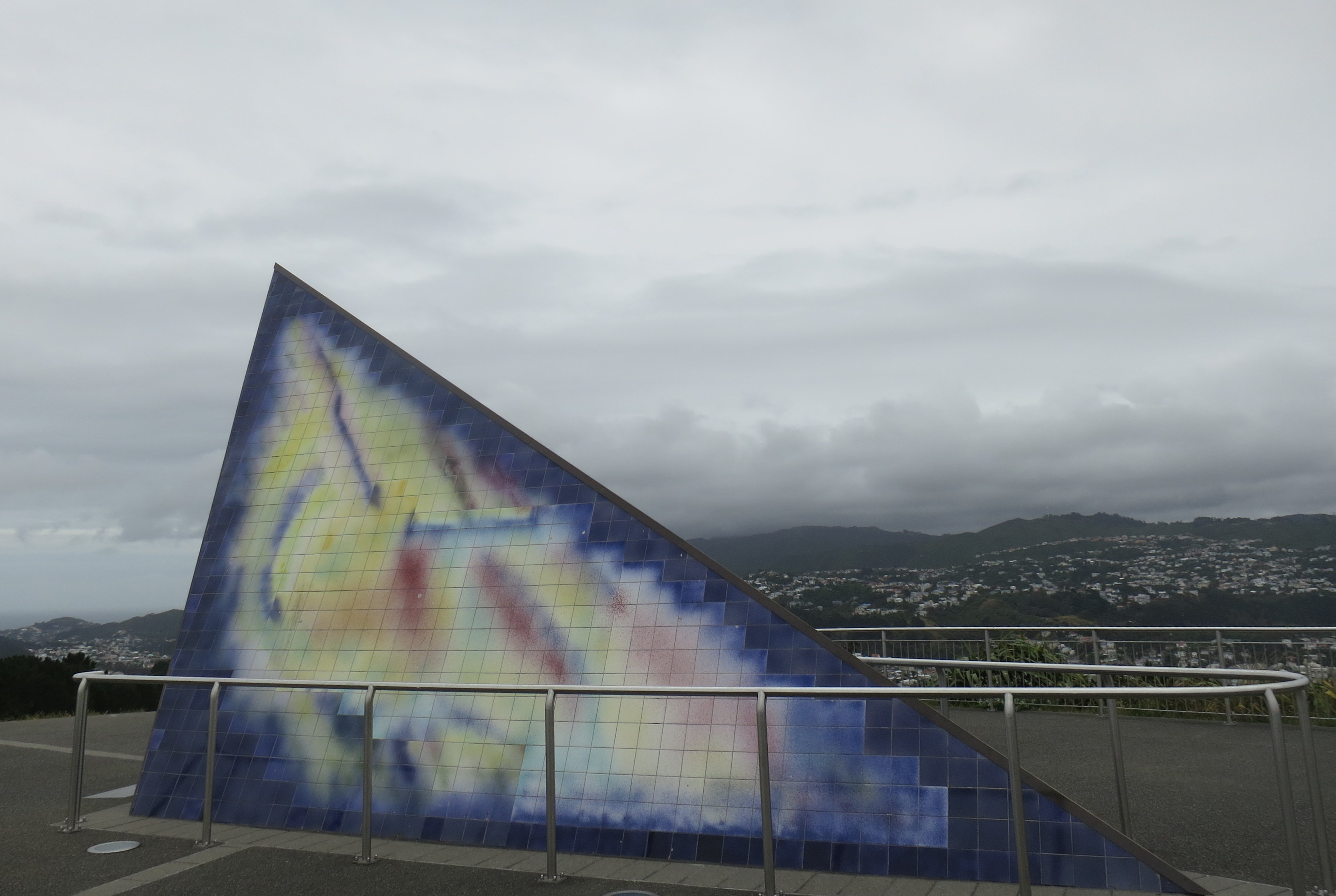
Antarctic monument
My second time in Wellington, I lucked out yet again in my Couchsurfing host. Woo was an accommodating host, and the other surfers at his place were super friendly. We had a nice dinner out and cakes in a frilly tea shop. Also, Woo’s place was right downtown, so for probably the first time since I set foot in New Zealand, I didn’t have to hike up and down hills just to get to the corner store.
I’m not sure what the economic situation is in New Zealand right now, or in the greater Wellington area, but I can say with confidence that the government has put a lot of money into the downtown area, because it looked great. City Hall and its square; Te Papa, the national museum; Waitangi Park and the waterfront; the Embassy movie theater, home of Lord of the Rings premieres: they were all pleasant places to spend time in, without seeming too whitewashed.

I wouldn’t mind Gandalf watching over my city
I grabbed a couple free brochures from the visitor’s center and went on a self-guided tour along a path that followed the Art Deco trail and the Te Ara O Nga Tupuna trail through downtown. The Art Deco tour was less historically interesting than the Maori sites tour, but I sure do like that sleek, clean style of the interwar period.
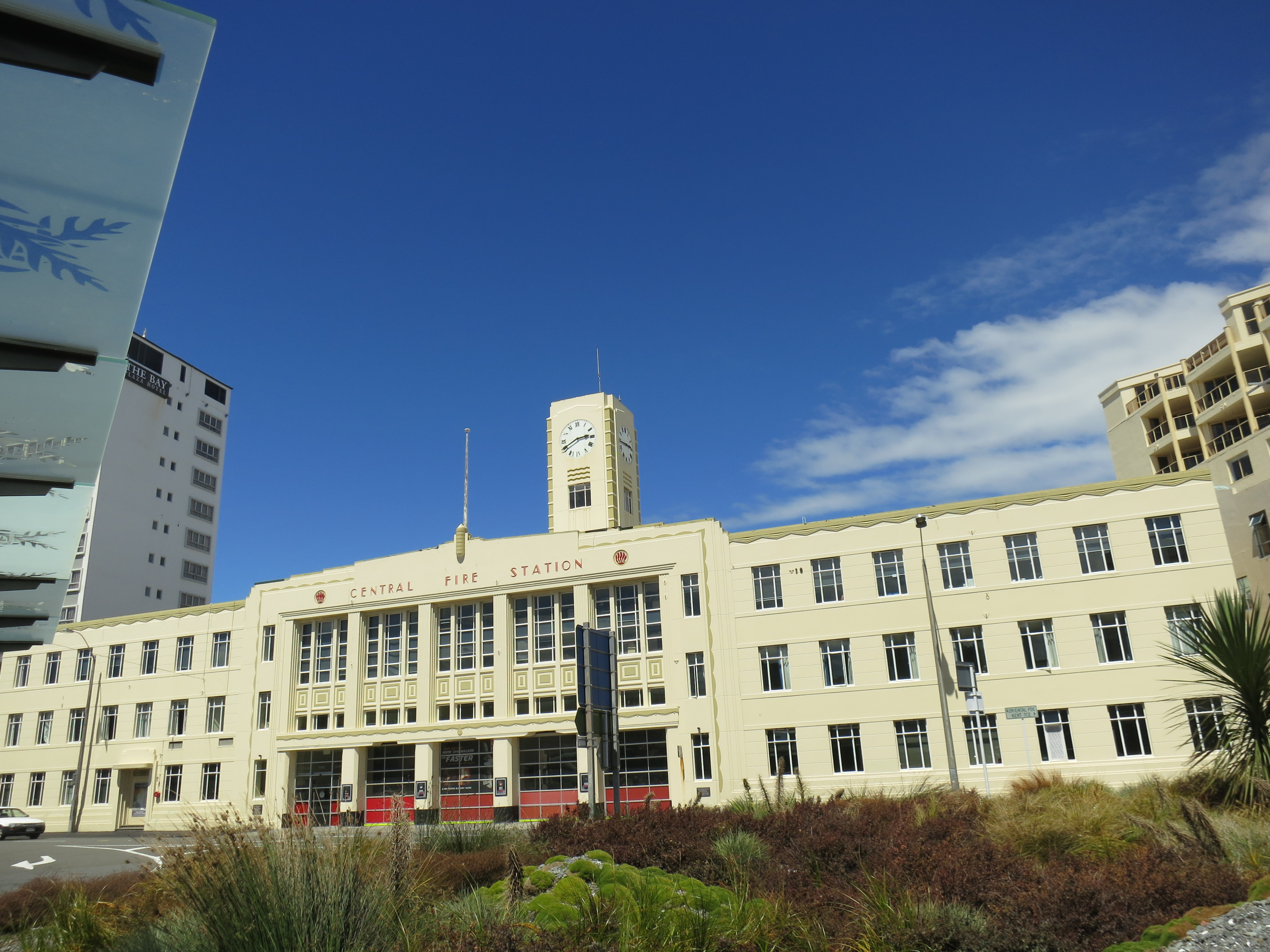
Quite the fire station
The Te Ara trail covers a broader area than can be walked, but there are a few sites in town important to Maori history that the brochure points out. Waitangi Lagoon was a major source of food in pre-Pakeha times, and is now a major intersection. Waitangi Park is up the road, a carefully maintained patch of marsh grasses facing both the harbor and Te Papa, with a climbing wall at the end.

Waitangi Park
The most surprising site was Whare Ponga, a storefront that contains an archaeological dig showing the original Te Aro Pa—a pa being a fortified Maori village. The site, which was unearthed, like so many interesting sites around the world, during construction work, is from the 1840s.

Te Aro Pa
I met up with Jose, a traveler friend from Chicago, at the botanic gardens for a summer concert in the park. It was quite chilly for a summer concert, but that didn’t stop everyone from coming out. The band played upbeat reggae, and at least one overtly political song, and Jose took me ‘round the gardens as the sun set to show me the colors.

The groovy duck pond
When the sun goes down, the lights come up: pink globes on the duck pond, red spotlights on the palm trees, even a blacklight area by the ferns. Bubble machines were mounted on some of the lampposts, and when they started up, all the kids in the area leaped into the path—some to dance, some to swat at the bubbles with their sweatshirts in a battle that they all won.
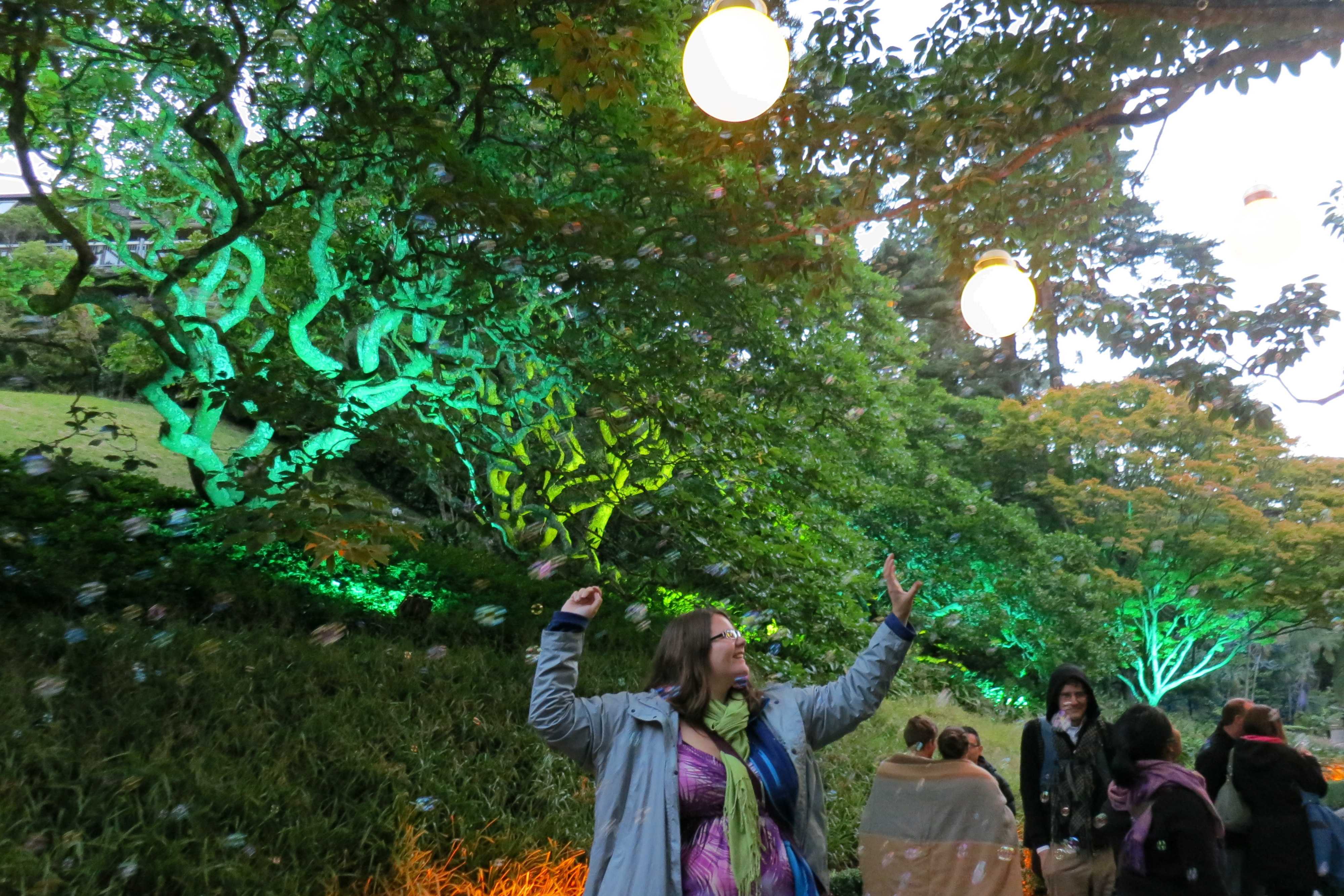 Jose showed me a willow tree that seemed to sparkle; when we pushed aside the leaves and stepped under the tree’s broad branches, we saw a half dozen disco balls rotating in the air, reflecting hidden lights and creating a dance hall for fairies. The whole place was magical.

Blurry disco scene–is there any other kind?
I took the cable car up to and down from the gardens. It’s a quaint little car, with small wooden seats and brass poles. It makes a few stops along the way, so if you live on the hill, you could use the cable car to get around. That’s the only form of transit I took the whole time I was there. Woo picked me up from the ferry station and took me to the airport (an excellent host, as I said), but otherwise it’s a super walkable city, and it was nice to wander around. I passed the Bucket Fountain on Cuba Street, and plenty of other public art installations around town. I walked by a guitarist busking on the sidewalk and a girl who sat nearby and quietly harmonized on a recorder.
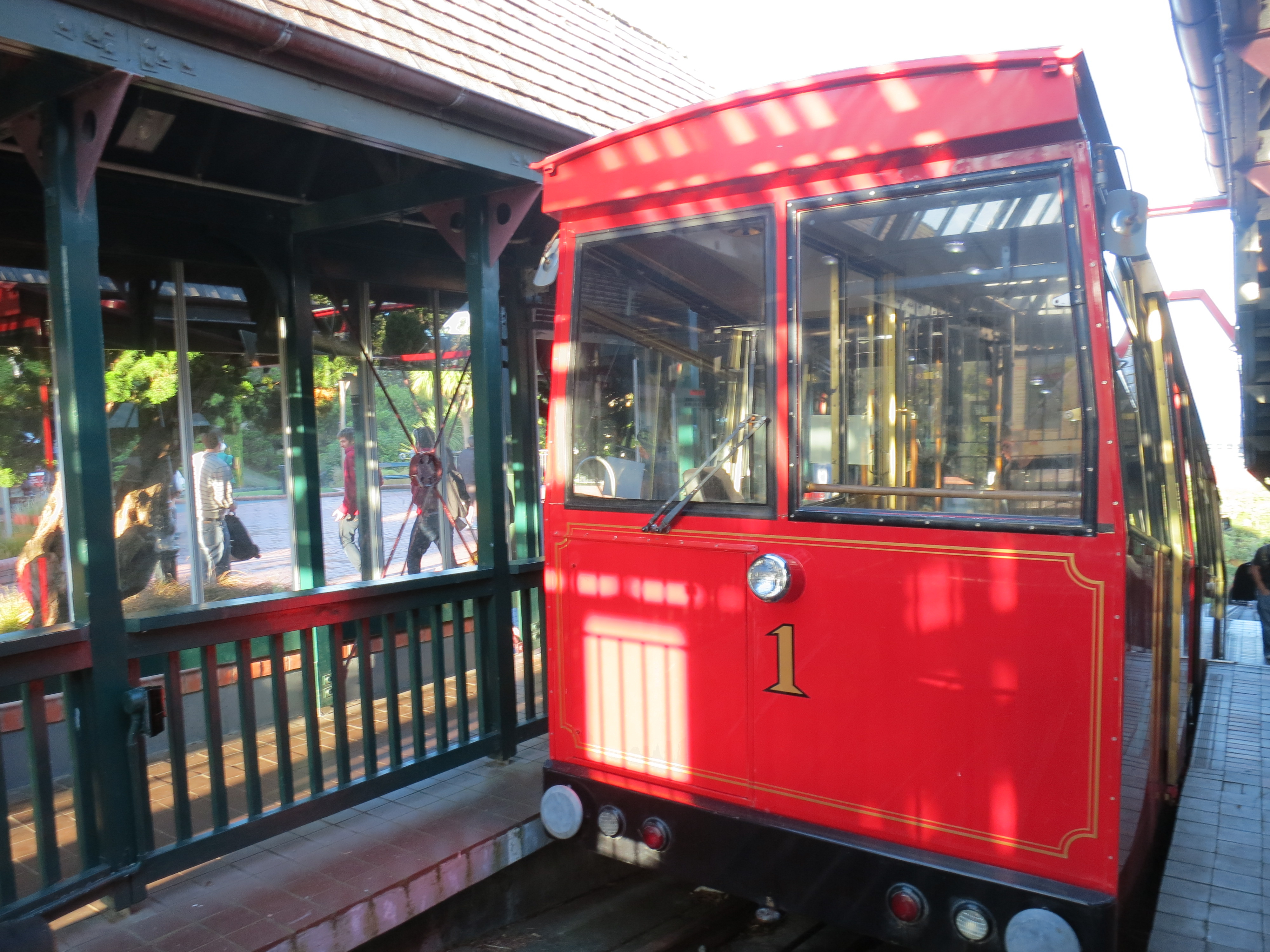
The cable car

Bucket Fountain–that little kid loved it
I left the visitor’s center on my last day in town and cut through Civic Square, where a drag queen and her assistants cheered on audience participants in a delightfully clumsy dance contest, and then two police officers on duty were cajoled on stage, where one cheerfully did her own little dance and put on the tighty whiteys flung at her before continuing on her beat. That was easily one of the simplest, most fun moments of Everyone Getting Along I’ve ever witnessed.

Fun for everyone
Te Papa is a huge museum five floors tall, and its permanent exhibits include a Maori meeting house built specially for the museum, a hokey display about geothermal activity, and an interactive hall about the sea and forest especially aimed at kids. It was a great museum, too big to explore in one day, so it would be easy to revisit again and again, which is fitting for a museum built as a tribute to a country’s citizens, who might return over a number of years.

Te Papa meeting hall
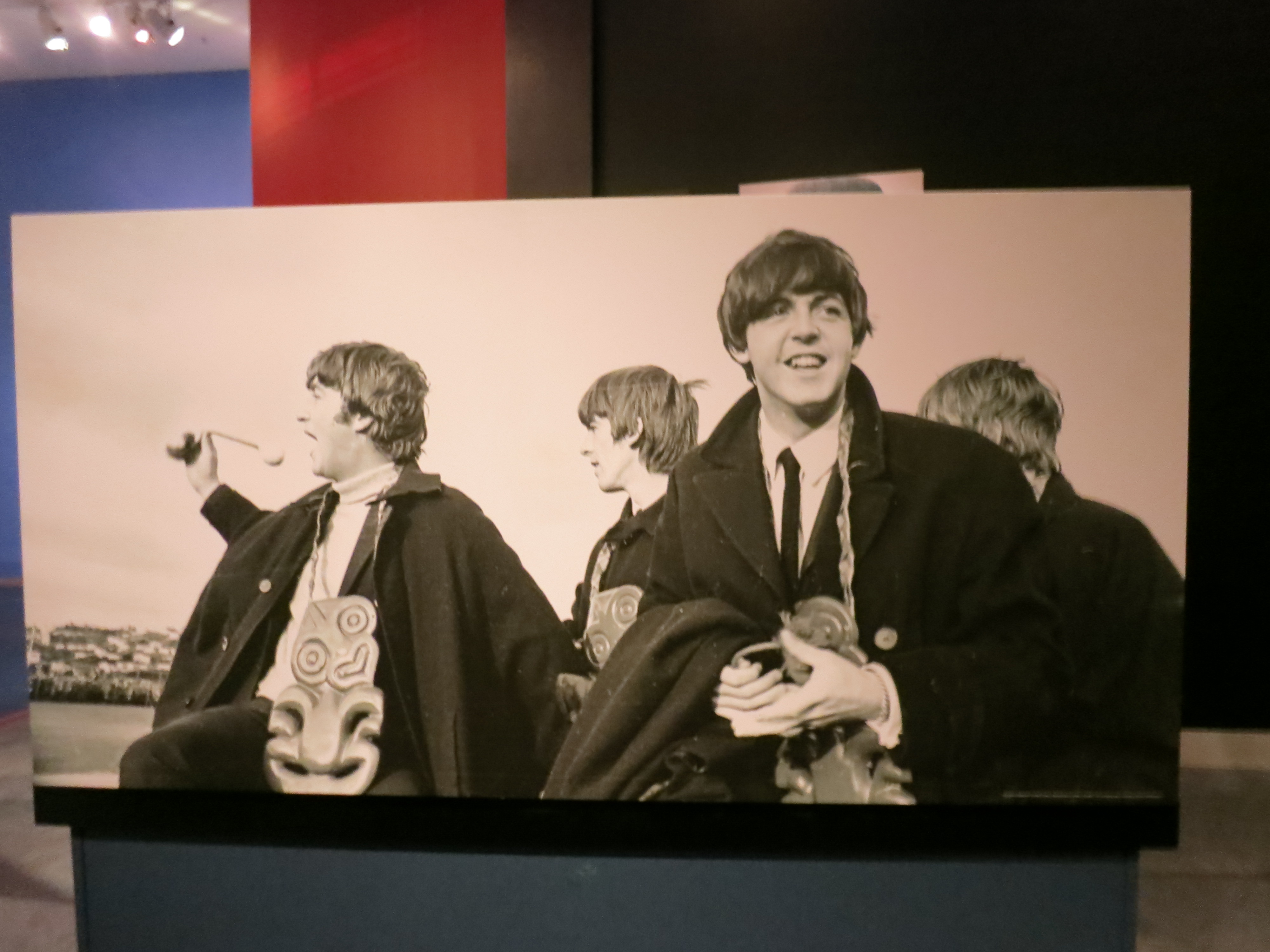
The Beatles look cheerful, but I know they must have been freezing under those capes.
The Maori exhibits struck a tricky balance between anger and indignation at Pakeha treatment of Maori throughout history, and relaying information about Maori traditions still maintained today. One plaque carefully explained how disrespectful it is to wear images of carvings, which are considered something close to sacred, which I hope informs visitors’ souvenir choices.

Lovely detail and color
I had an epic night out with Jez, who I’d met at Theresa’s in Melbourne. We drank delicious local craft beers during Wellington Weekend at Hashigo Zake, caught the end of a queer rock show on a hoedown theme night at Bar Medusa, danced to the sometimes questionable choices of the DJ at Mighty Mighty Bar, and ended the evening at an overpriced Irish pub playing bad Top 40–a somewhat ignominious end to an amazing night.
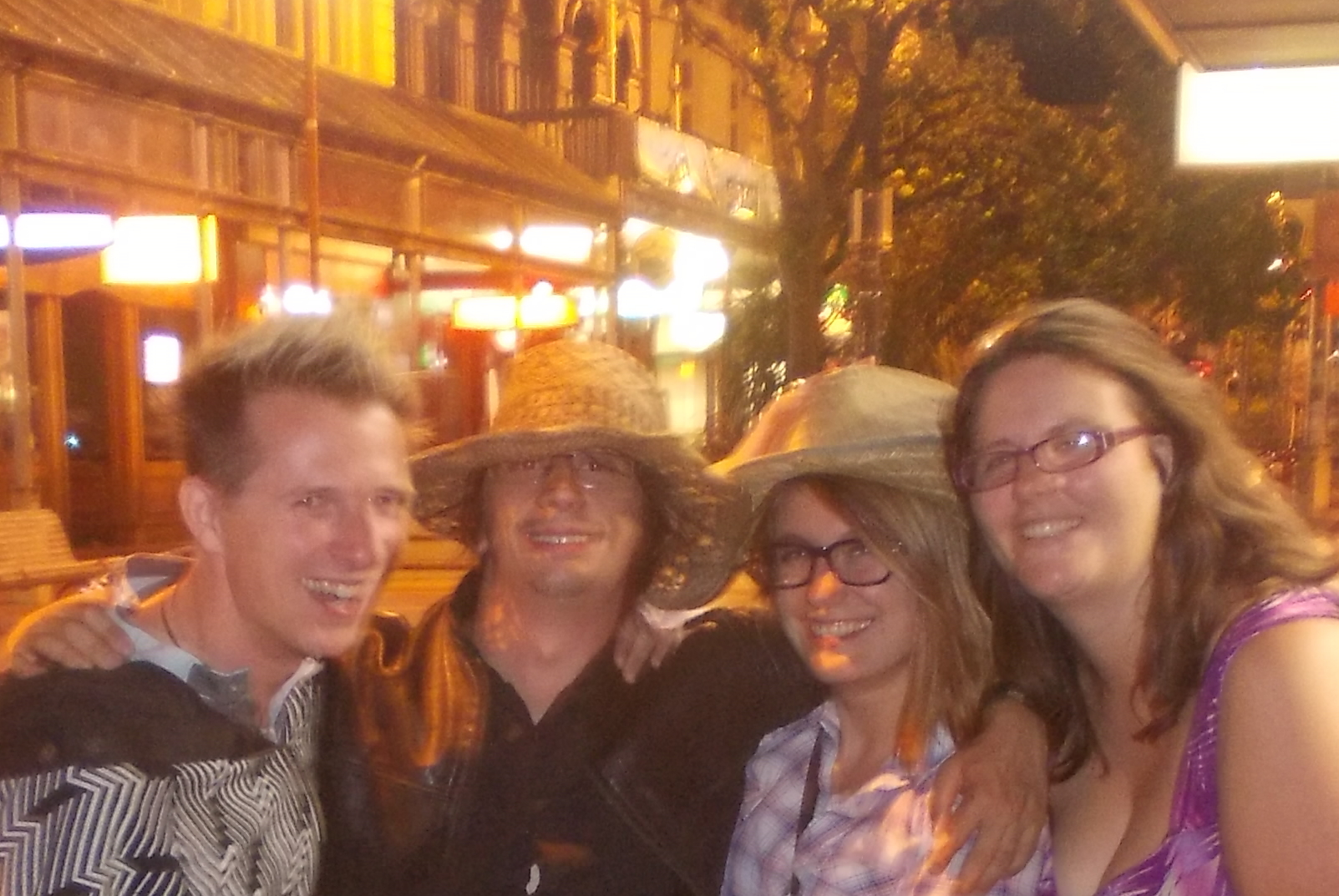
Good times
I know a lot of people who want to immigrate to New Zealand, and after days exploring downtown and a night of fun and music, I was half convinced to myself.
You’re supposed to sing to them, and dance. Slide into the cold water in a thin rubber suit and flap your finned feet until you’re beyond the noise of the people still on the boat. Fit your mask tightly to your face and dive in to the open ocean. Watch the world around you turn a cloudy blue, deeper than you expected or can really imagine. You are over a major oceanic trench that plunges toward the earth’s core, and that kind of depth is beyond imagination, or maybe at the borders of it, where krakens lurk.

Kaikoura, New Zealand
Before the creatures of the deep can fully emerge in your mind, recall the instructions of the skipper to attract the animals you’re here to see: Make high-pitched noises, like singing, and move your body around in circles, like a dance. Be entertaining or they’ll tire of you quickly. This early-morning hour is neither feeding nor sleeping time for them; it is devoted wholly to play, so play with them. So you squeak a few times and wave your arms, and suddenly–it is so sudden you wonder how you could have not seen them before–there are six, seven, eight of them, swimming next to you.
Dusky dolphins glide past you, above you, below you. Your jaw drops and you sputter as the snorkel fills with water. You surface, drain, and dive back down, and you could easily believe that their open mouths mean they’re laughing at you, but you can’t blame them. They’re made for this world, their smooth skin the same blue-gray of the water, their sleek bodies small and flexible in the rough waves of the Pacific. You’re just visiting.
 You hum tunelessly, a high soprano song that seems to entertain. A dolphin moves to your right in a tight circle around you, and you spin with it, making two full circles before you get dizzy and the dolphin swims off, laughing again. Another one immediately swishes up and moves to the left, and you’re off again. Don’t try to get too close, don’t try to touch something this wild and free. They’ll leave if you do.
 A dolphin swims directly toward you–you’re staring straight into its eyes as it rushes forward–and leaps to the side just before your noses touch. Grin widely as dolphins wriggle below your feet and barrel-roll near your torso and jump in the air above your head. You are surrounded by dolphins, enveloped in their joyous movement.
Feel entirely calm amid the flurry of activity, as if time hasn’t stopped so much as it has slowed enough for you to appreciate each fin-flick, each shimmer of gray-black skin. You hardly feel your own body, buoyant and smooth in the water. You make no wrong moves here as you do on land. Your body floats easily among the dolphins, in the blue-green-gray water, as if it belonged there, as you have always suspected it might.

Hum “Ave Maria,” one of the loveliest songs you know and also one with a lot of high notes. You float in what you know to be saltwater, but with Schubert thrumming in your head and evolution’s best moment swimming graceful circles around your swaying body, you could easily believe yourself transported somewhere not of this world, or maybe somewhere that distills the best parts of this world into perfect beauty and peace.
Physically touch your chest to feel your heart beating, to hold to your heart this moment and all the grace it contains. Your body sustains the vibrato of the hymn, your eyes fill with your own saltwater, and it is too much, and it is just enough, and you are sharply conscious of thinking, “I am happy to be alive.”

It’s a peculiar thing to visit a place still recovering from a natural disaster. Khao Lak was badly hit in the tsunami, but by the time I went there, it was built back up again and was a thriving tourist town. Christchurch, on the other hand, is far from reconstructed. The earthquake of February 22, 2011 hit the town center hard, and a huge part of downtown is completely shut off as workers dig up the rubble and reinforce the remaining buildings against future earthquakes.
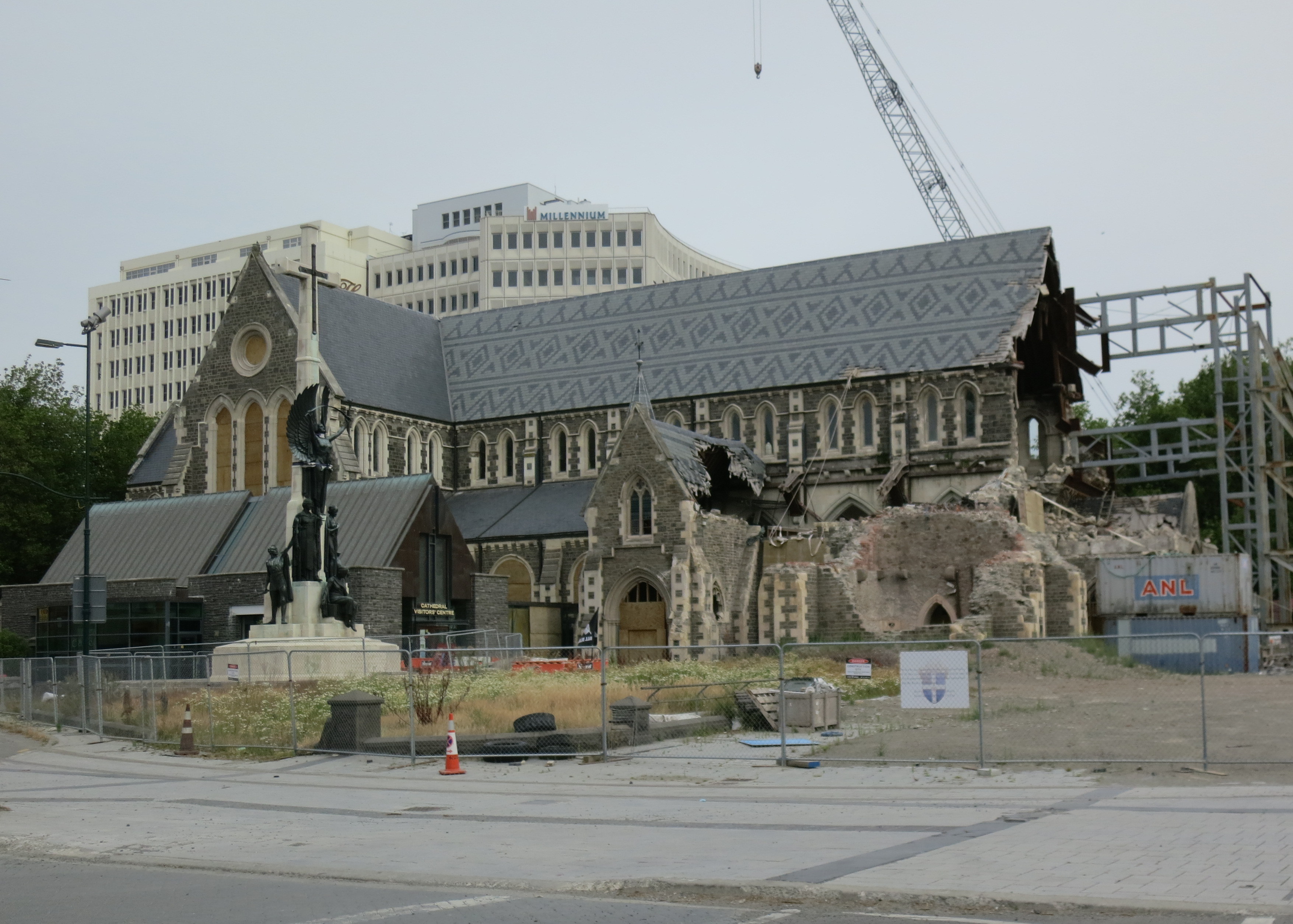
Central Christchurch
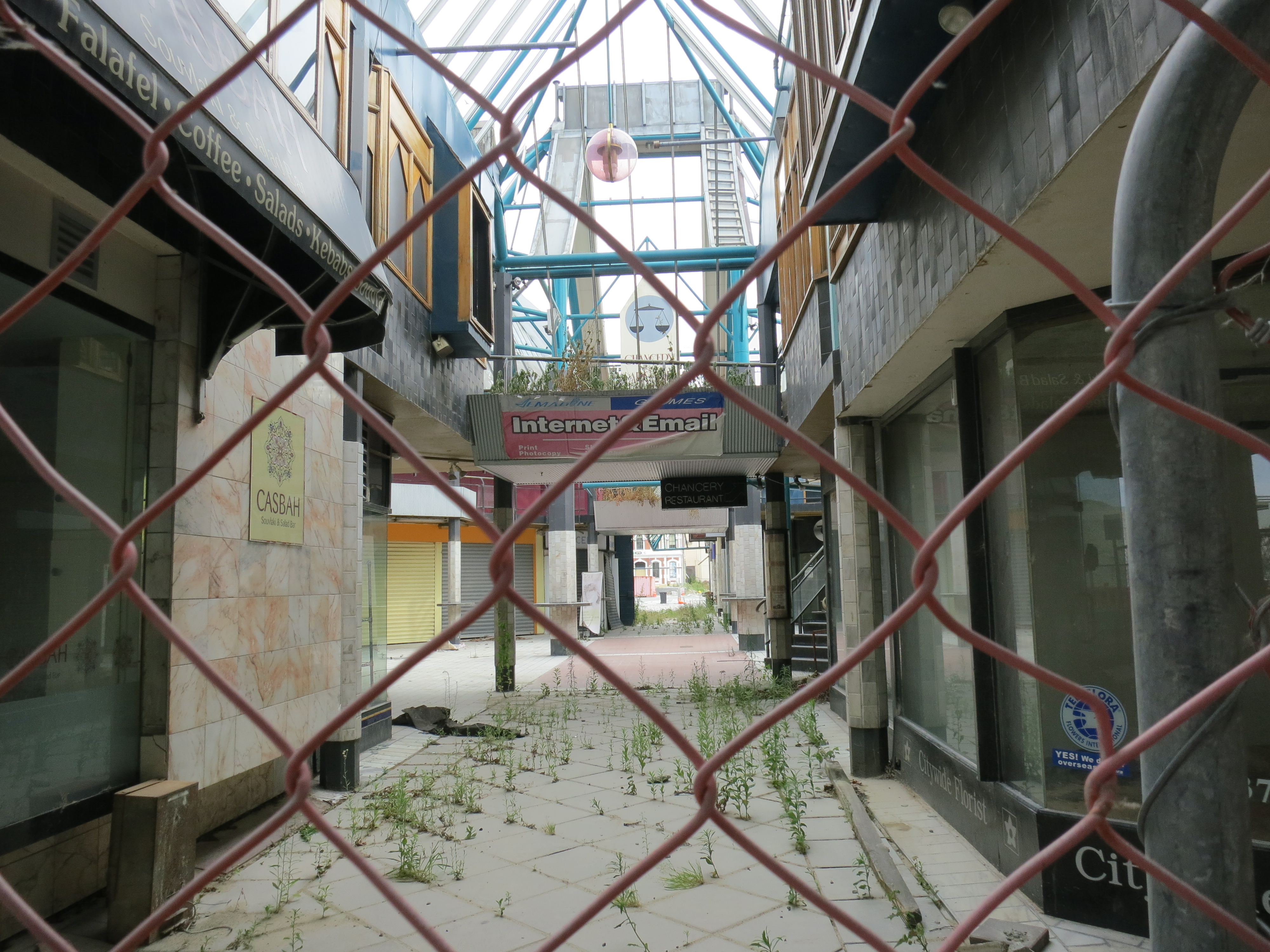
Walking past the no-go zone is eerie; shops have been left just as they were on February 22. The neon sign for an Italian restaurant lay tipped over in the overgrown grass, and weeds poked through the pavement on a walking street that no one’s walked on in two years. I looked through the smashed window of a barbershop and saw a perfectly preserved mirror and a chair facing the outside, as if someone had been in the middle of a haircut and turned to see what that rumbling sound was.
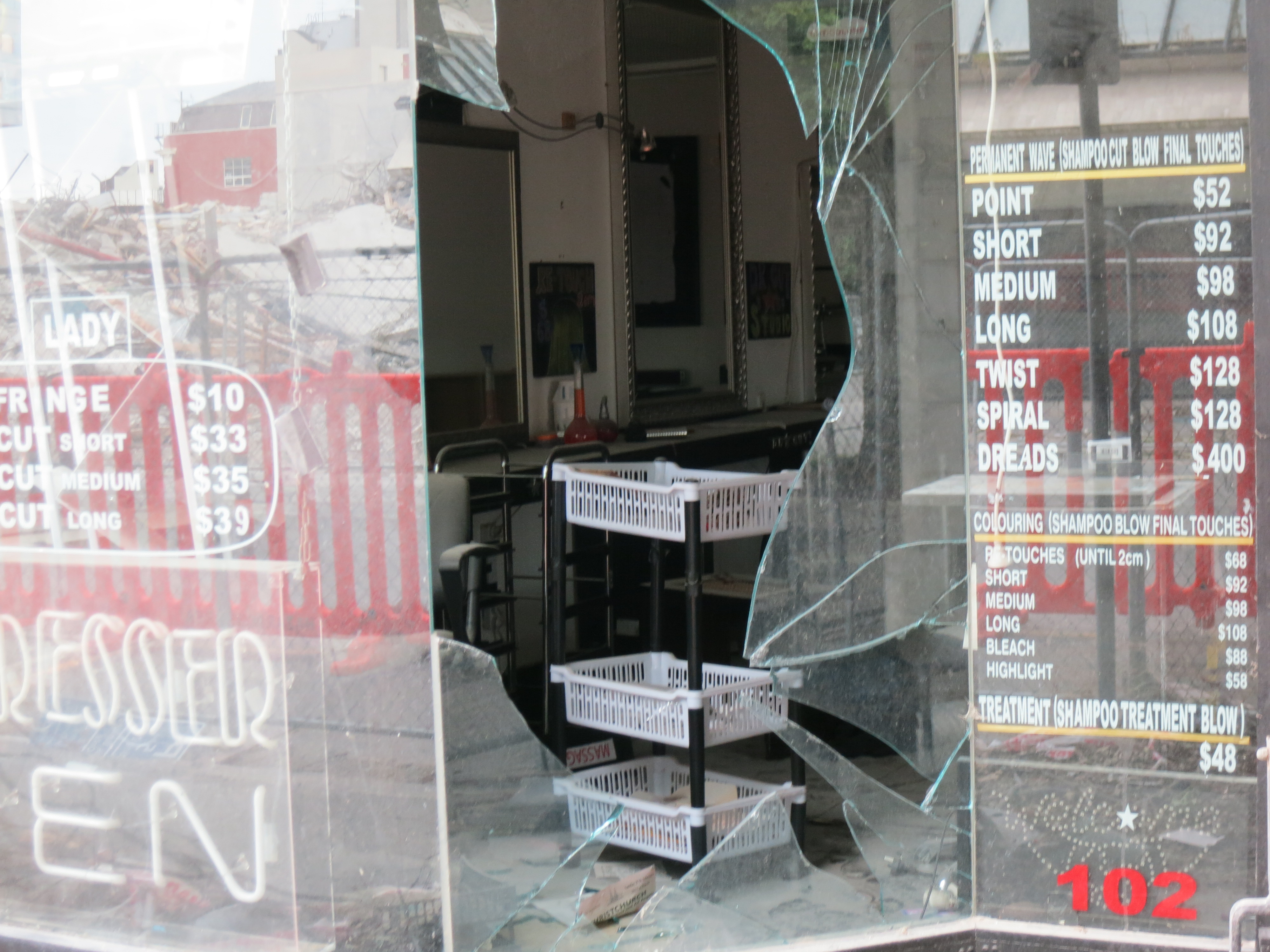
A modern-day Pompeii
There’s a lot of controversy about how to rebuild the city, in terms of how funds are allocated and which neighborhoods get priority. Condemned buildings stand alongside brand-new constructions (which actually reminded me of some neighborhoods in Chicago that are gentrifying quickly). Insurance companies were apparently unable to pay out to everyone who was affected, and anyone who wants to buy a house now can’t even get earthquake insurance. So you invest in the city’s recovery, but you can’t get protection for potential damage to that investment. Not a great situation.
 The city was bursting with art, a lot of it graffiti or pop-up displays. Some of it focused on the earthquake and the city’s resilience, and some of it was unrelated. One of the more moving pieces was a permanent-looking display on the site of St. Luke’s in the City, a church built in 1859 and destroyed beyond repair in the earthquake. The congregation have erected a small wooden bell tower, a labyrinth for reflection, and a circle of stones from the rubble of the church—one stone for each of the 185 people who died on that day.
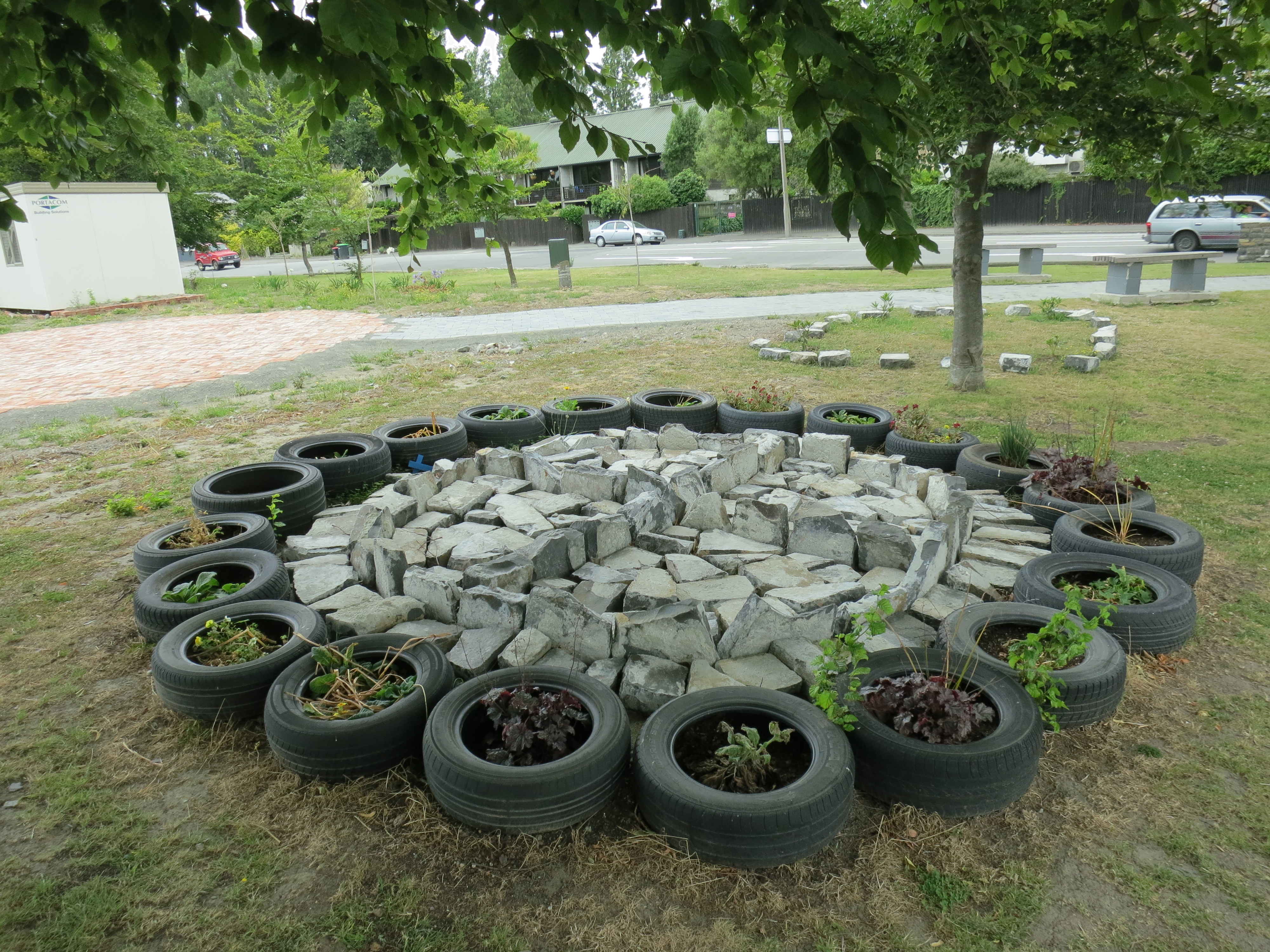
Memorial to the 185 killed in the 2011 earthquake
I stayed with Biz, a friend of a friend from back home. She put me up in her flat near the center of town and fed me veggie burritos—perfect! The next day I walked past the destruction to the botanic gardens, which are remarkably well-preserved. The visitor’s center and greenhouses are shut indefinitely, but kids were running around the playground, and a modern sculpture rose, gleaming, from one of the ponds.
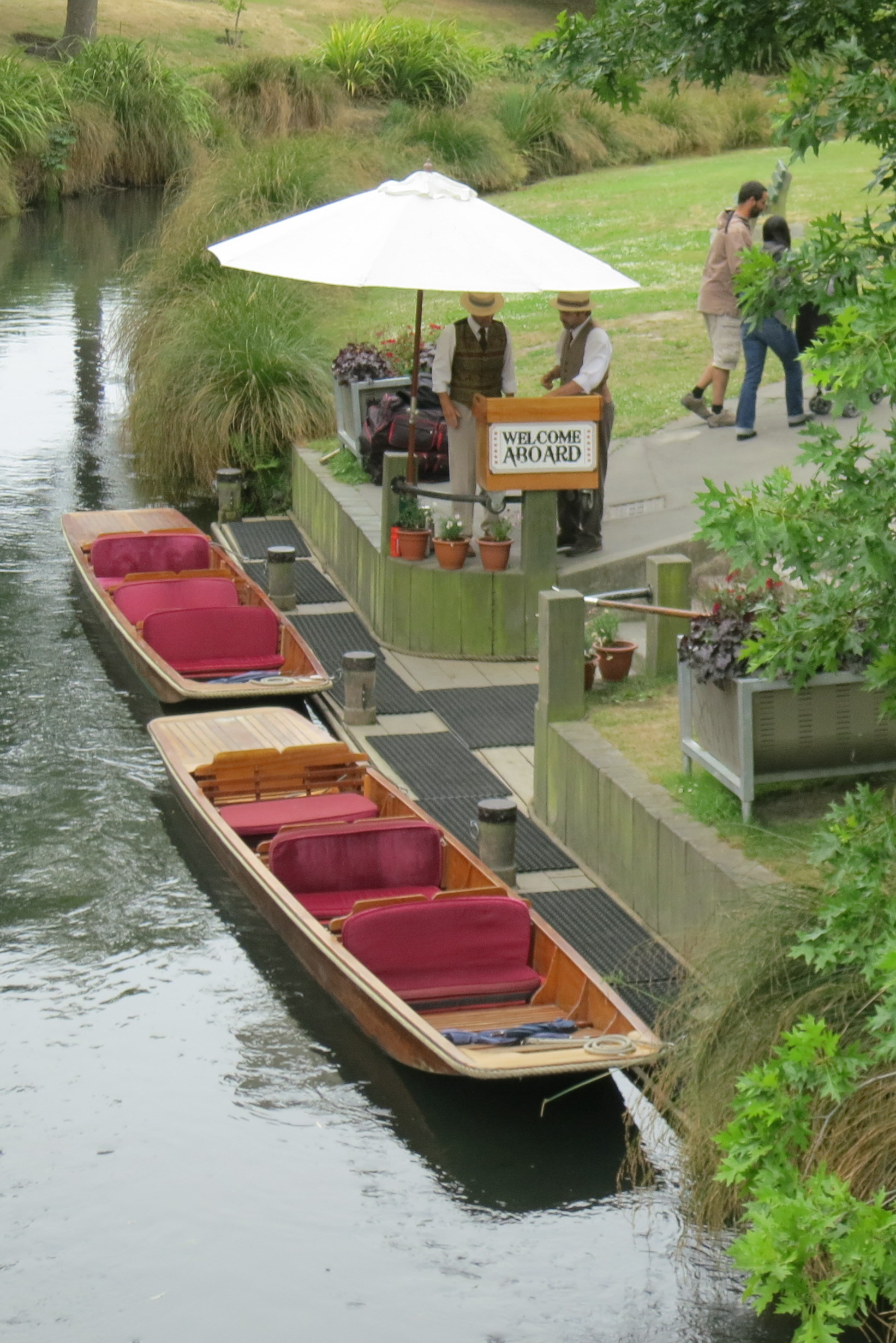
Punting along the Avon
Before the earthquake superseded whatever else anyone knew of the city, the tagline for Christchurch was that it’s more English than England. The gardens are the greatest example of this. Carefully maintained flower beds, a river named the Avon that you can punt along, and a museum built in the style of Cambridge. The park was too big to explore in one afternoon, so I focused on the famous rose garden, which is a giant circle of 250 varieties of roses, all of them wonderfully colorful and in full bloom. I had a pleasant walk around the gardens and got back to the flat just before the inevitable rain started.

Central Rose Garden
 I was going to make the last paragraph something about the resilience and spirit of the people of Christchurch, and how they’re going to make their city great again. But that’s self-evident, and there’s not much to add except I admire the folks of Christchurch and wish I could stay longer to see what that rebuilding looks like.
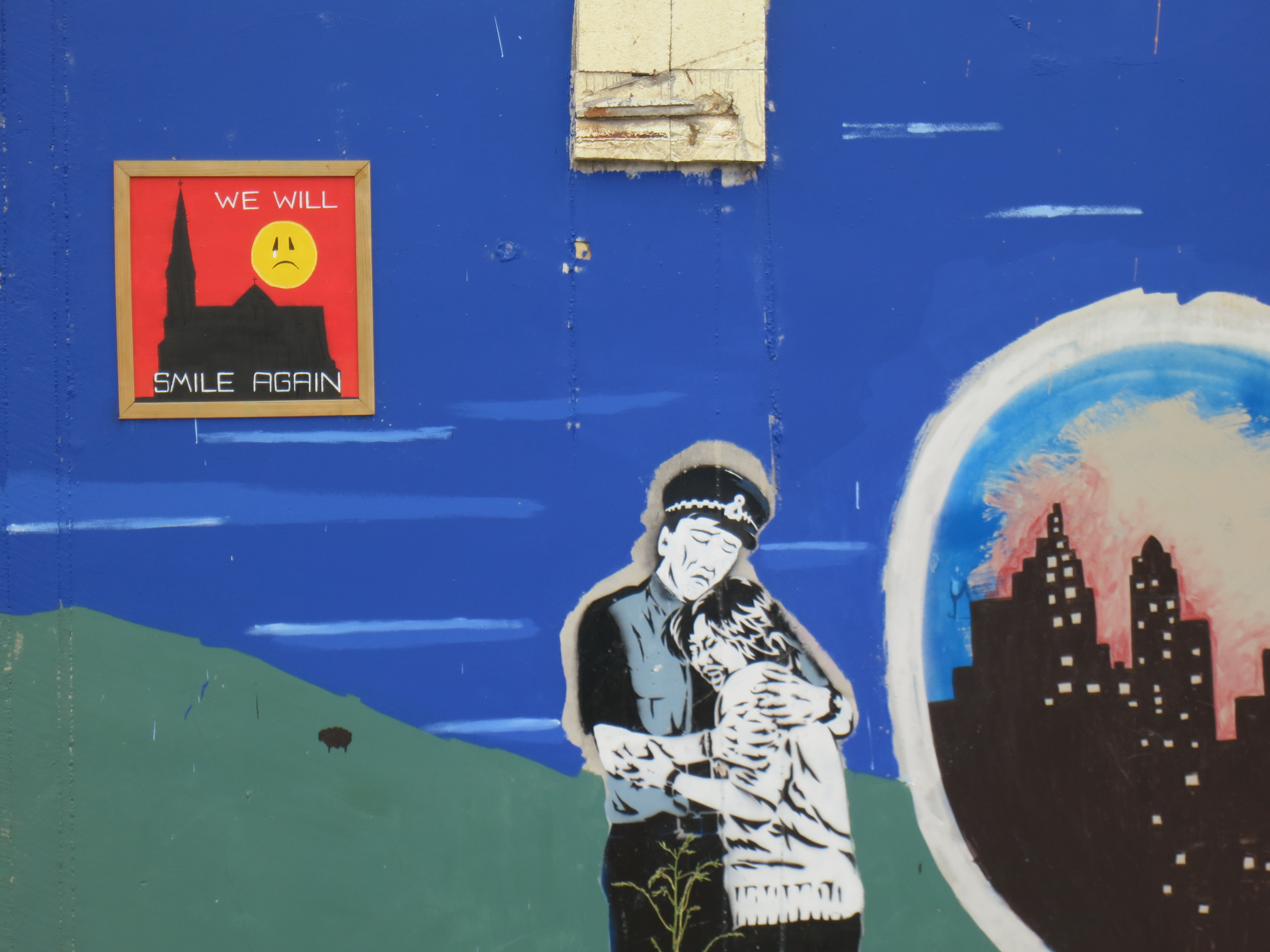
We will smile again
Water of Leith. Glenorchy. Macandrew Bay. There are a lot of Scottish names on the South Island, and that’s just the most immediate sign that the main Pakeha settlers in this part of New Zealand came from the land of lochs. Dunedin (Gaelic for Edinburgh) used to be a major industrial and commercial center for the country, but nowadays it’s mainly known as a university town. I’d intended to spend a couple days there, but as so often happens near the end of a stay in a country, there suddenly didn’t seem to be as much time as I’d thought there’d be. I liked what I saw of the town, though.

Dunedin train station, now the site of farmer’s markets
Theresa’s friend and fellow Couchsurfer Ritchie picked me up from the bus station and we decided the beautiful weather made it the perfect day for a drive along the Otago peninsula. We stopped at a shop next to a tiny beach half full of determined ocean bathers, and I bought a cheese roll, which Ritchie said is something of an Otago institution. It consists of a piece of long bread (the kind you find pre-sliced) rolled around soft cheese and chives, and then toasted. It wasn’t a delicacy, but it did the trick for lunch.

The closest I got to seeing an albatross was this stuffed one.
We drove up to the Royal Albatross Centre. The albatross is a rare bird. There’s a well-protected colony on the Otago peninsula, and you can often see them up at the center. We saw a lot of seagulls but no albatross, so we carried on down the winding coastal road to the small town Ritchie lives in. His house overlooks the ocean, and he said he often goes spearfishing for his supper. We relaxed on the balcony and I had the luxury of an afternoon nap and a few hours of reading. That night, Ritchie’s roommate mentioned how clear the skies were, so we stood on the balcony staring at the stars. I’d been searching for the Southern Cross the whole time I’d been in the southern hemisphere, but hadn’t had any luck finding it until this night, when Ritchie pointed it out to me. Just in time before I headed back to the northern hemisphere, where you can’t see it.
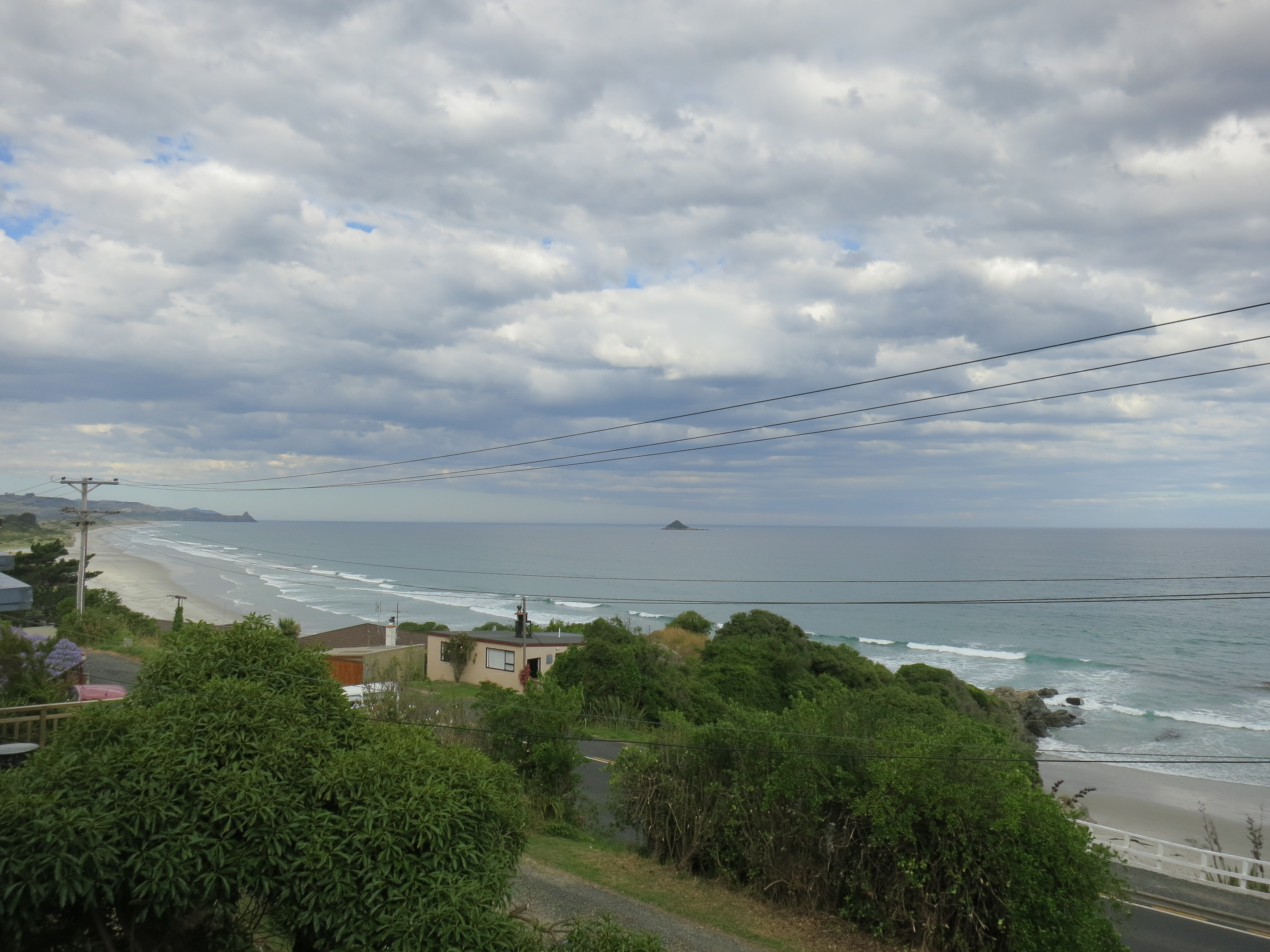
Ocean views from the balcony
The next day, I had to catch the bus up to Christchurch, so Ritchie dropped me off in the Octagon a couple of hours before it left. The Octagon is the town square, with—you guessed it—eight sides. A road rings the small park in the center, and another road bisects the park. Fancy shops and nice restaurants take up most of the storefronts, and there’s also Town Hall and the Cathedral Church of St. Paul the Apostle. Right at the top of the hill—this is New Zealand, remember, so there are hills everywhere, I hardly need mention that the Octagon was set on a hill—anyway, right at the top of the hill is a statue dedicated to Scottish poet Robert Burns. This is a city that wears its heritage with pride. (Also, Burns’ nephew was one of the founders of the Otago settlement in 1848.)

Impressive stuff at the top of the Octagon
The cathedral was putting on a free “cruise concert” for cruise ship passengers right as I was admiring the building, so I went inside. It was a lovely twenty minutes of listening to the organist play Bach, Handel, and Elgar while sitting in the spacious, sparsely decorated church. Afterward, I had lunch at a perfectly collegiate café (trendy, charming, overpriced) and admired the train station made of local stone. On the bus ride out of town, our driver told us some fun facts about Dunedin, all of which I’ve forgotten, but what stuck with me is I need to come back and spend more time here.
My last day in the Catlins was a short one, since I had to return the car that afternoon. But this being the wild and wonderful world of New Zealand, a short day is still packed with more things to do than most long days in other places. In this case, I walked on a beach of petrified forest, had a staring contest with a penguin, and glimpsed the fins of a dolphin, all before lunch.
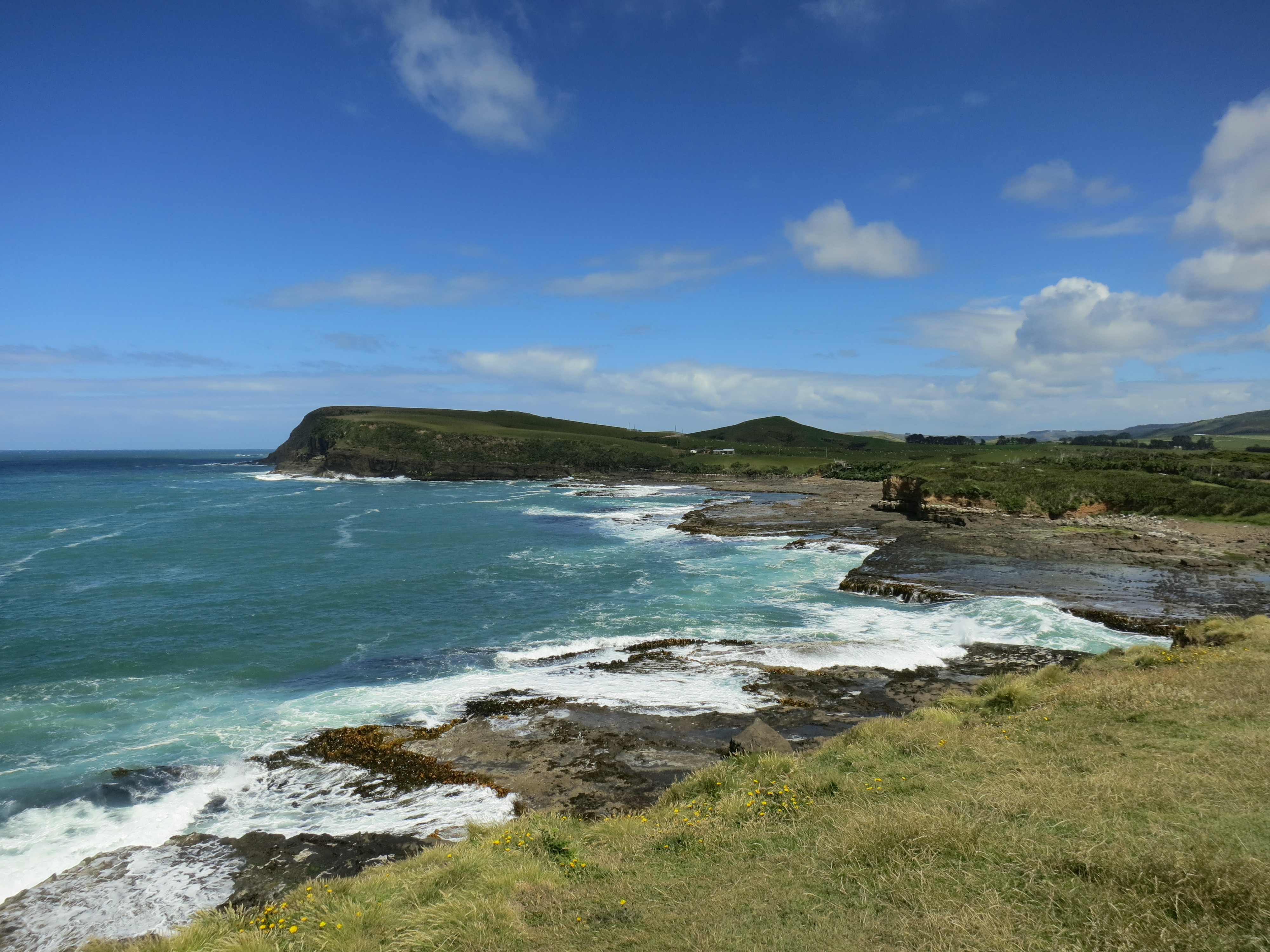
Curio Bay in the Catlins
Porpoise Bay is famous for being a refuge for a pod of Hector’s dolphins (which is the name of the species, not some dude’s pets). I met some travelers who went swimming in the bay, and dolphins just came right up next to them. If you go swimming, signs around the bay remind you to “love us from a distance or lose us forever,” and never approach a dolphin. But when I went, it was too cold to swim, and only a few brave surfers were in the water.
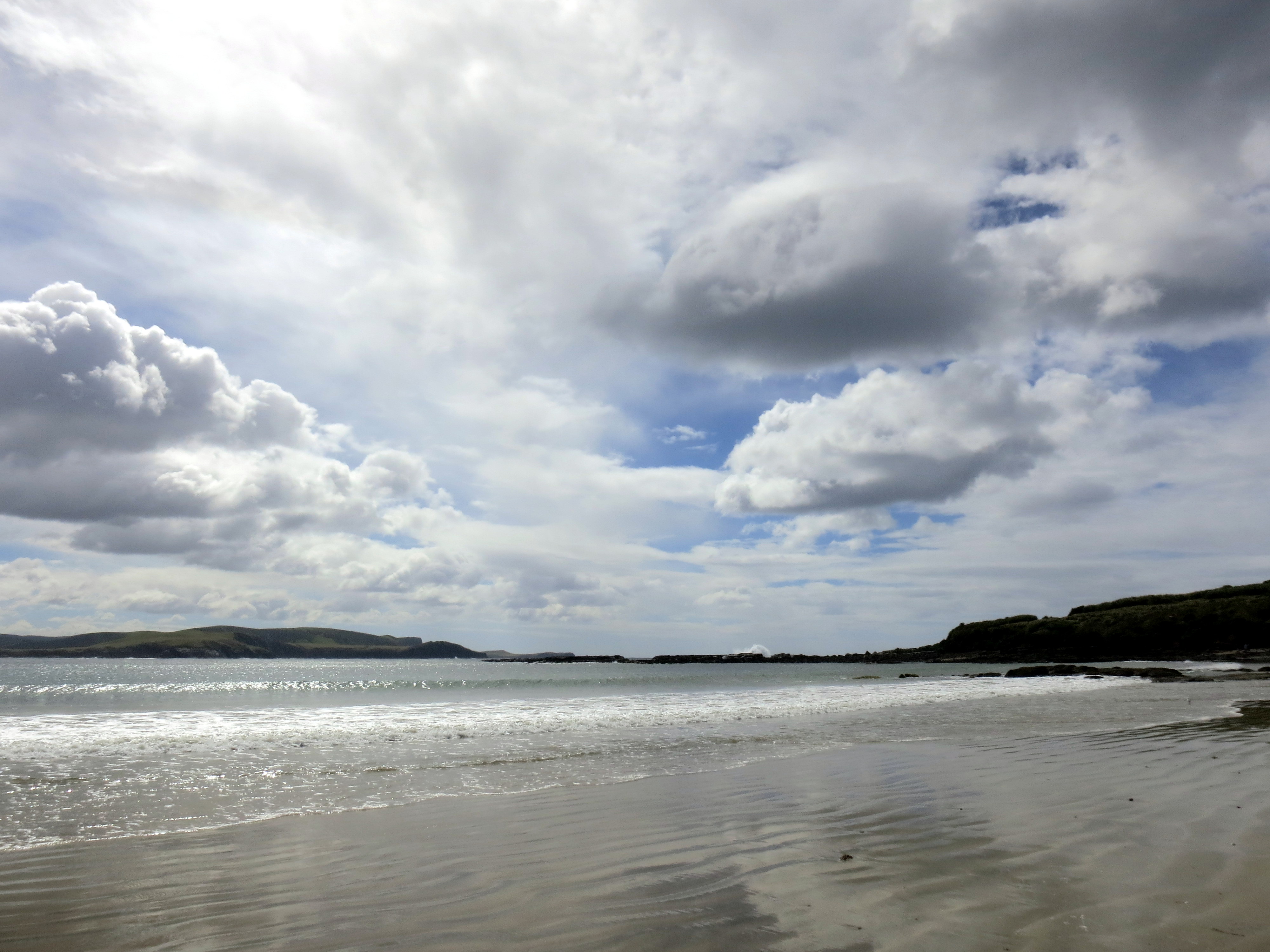
A beautiful day in Porpoise Bay
I walked along the beach and scrambled over some rocks, and saw the fins of a couple dolphins as they briefly surfaced in the distance, but they weren’t in much of a show-off mood that day. So I went back to the base of the stairs, moved aside the plank of wood spray painted “sea lion barrier/gate,” and went up to the cliffs above.
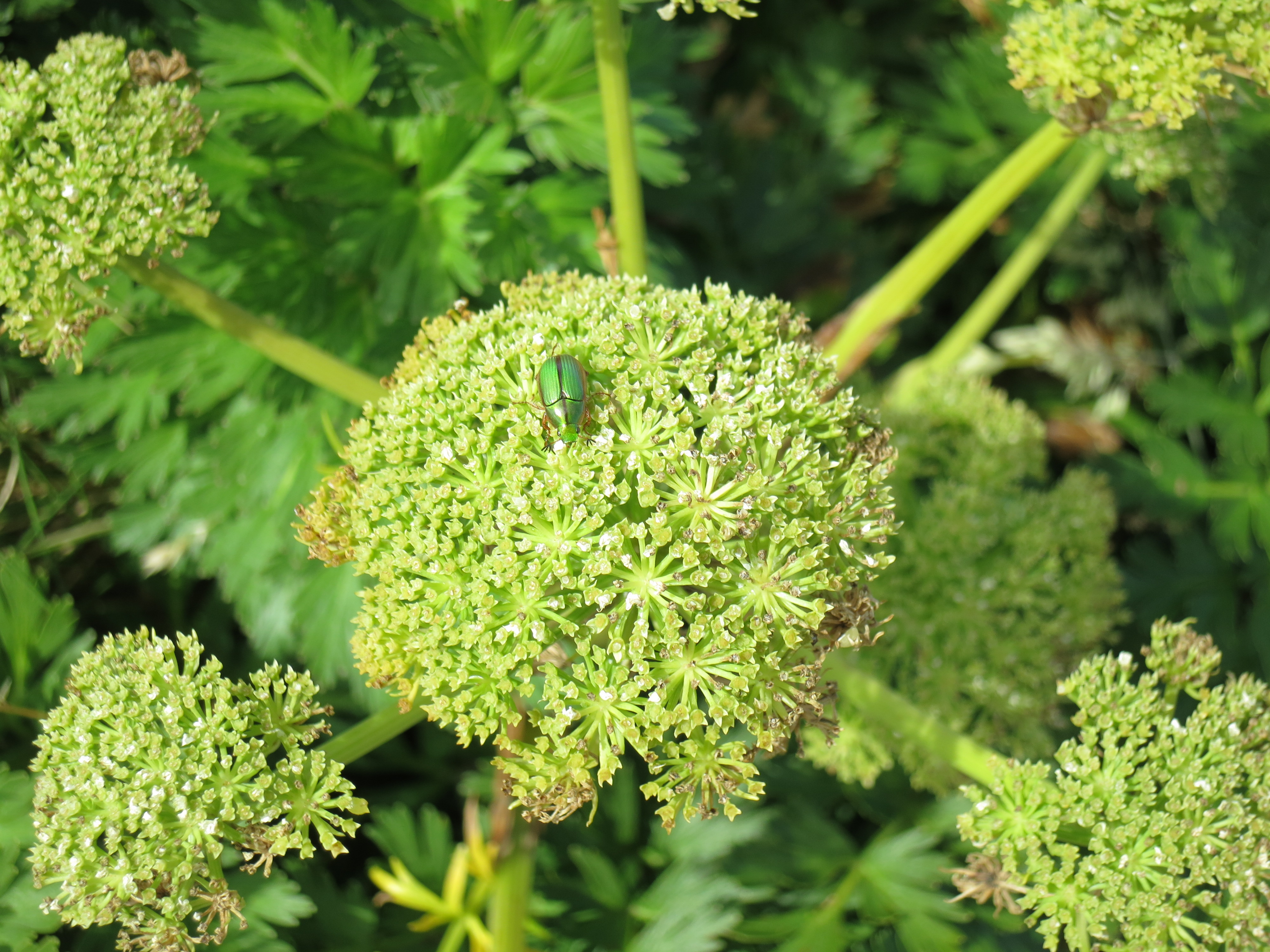
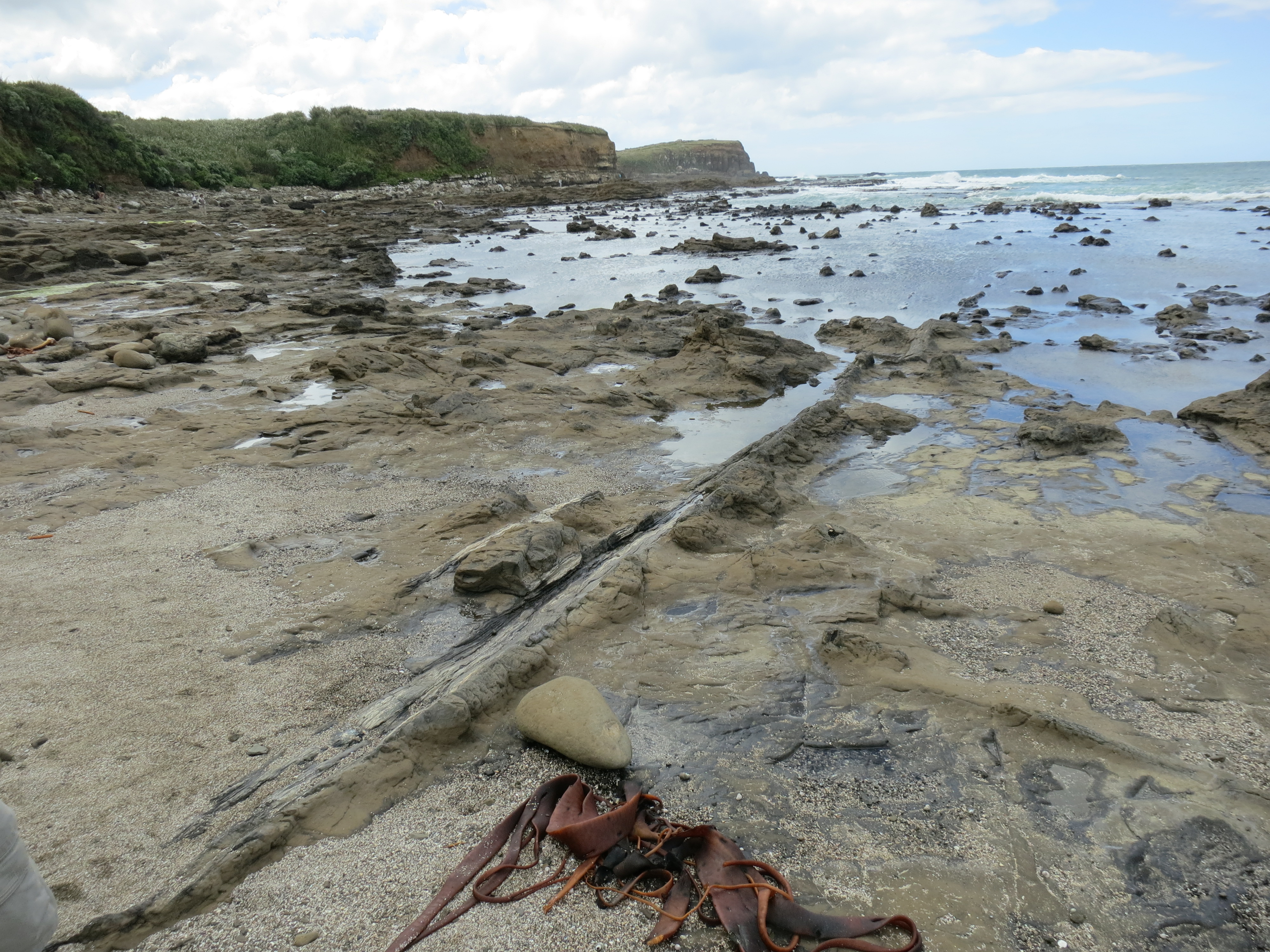
Curio Bay, just across the spit of land from Porpoise Bay, is the site of a petrified forest from the dinosaur age–it’s about 180 million years old. Long, flat logs were felled by some force in ancient times and petrified into stone, and the remains are there on the beach for anyone to walk by. I got a thrill reaching out and touching something from another age, similar to the excitement I felt touching Uluru. The tactile can be pretty powerful.


Some of those rare yellow-eyed penguins have set up a colony here too, and one little guy was out for a walk at the same time I was. A circle of paparazzi immediately surrounded him, although most people were obeying the signs asking that people keep 10 meters between themselves and penguins.
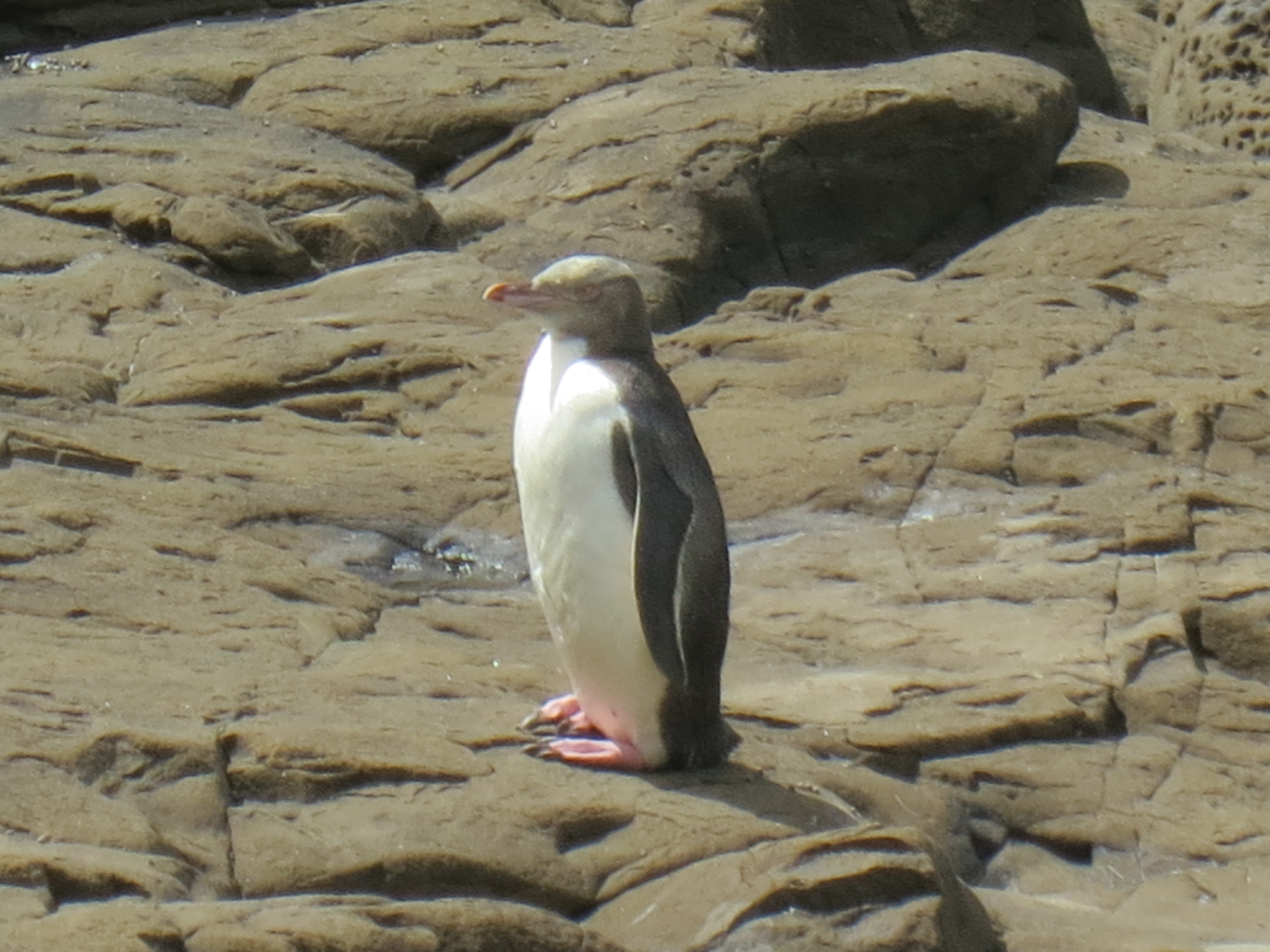
Out for a stroll
Keeping with the theme of things from the time of dinosaurs, I visited the museum in Invercargill and saw a tuatara, which looks like a lizard but is apparently unrelated. They are literally the contemporaries of dinosaurs. The most famous tuatara in the museum is Henry, a young man born sometime in the 19th century and still going strong on a diet of “if it moves, he eats it” and an exercise regimen of hardly ever moving.
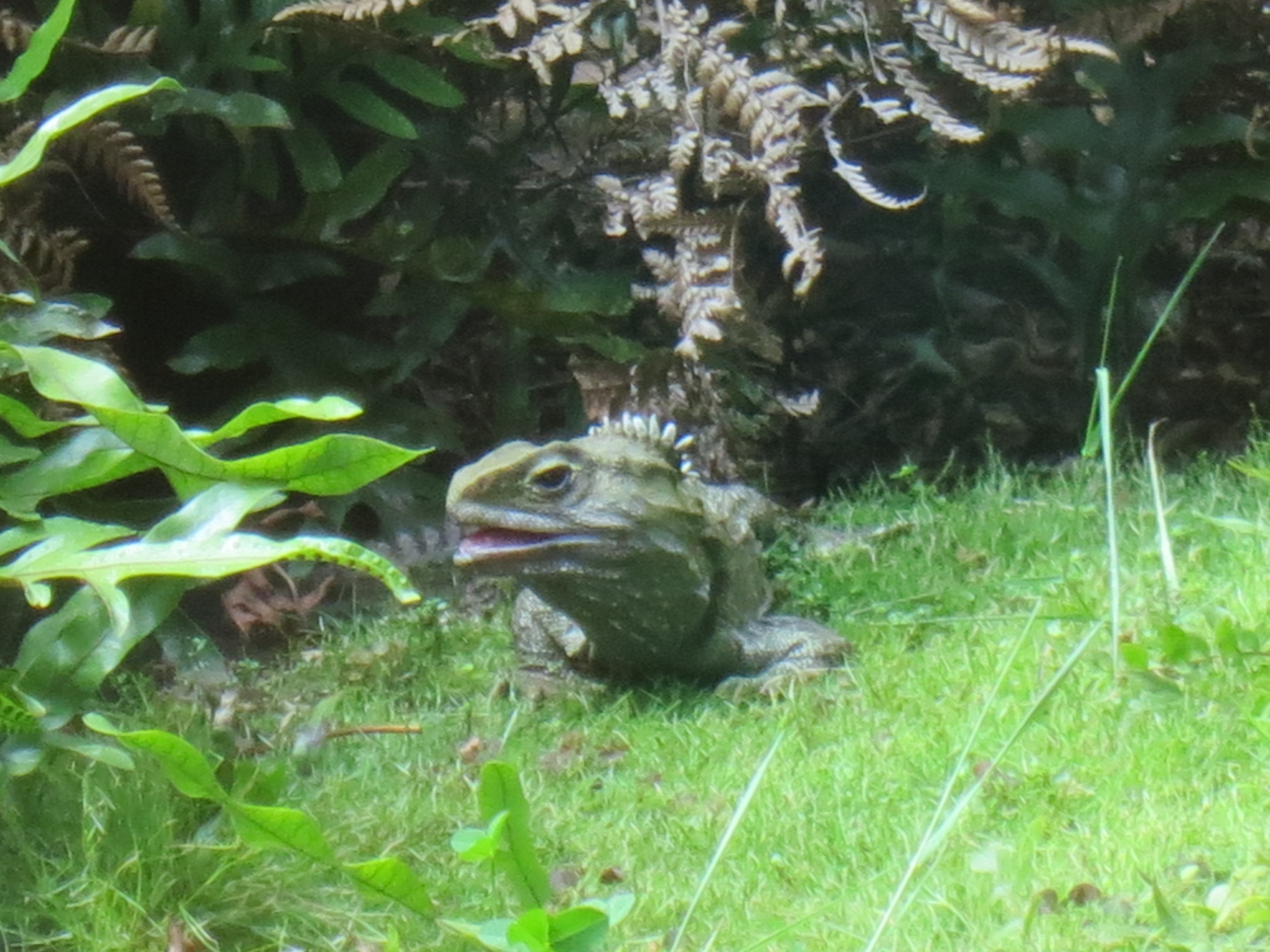
Tuatara
It was hard to leave the Catlins. There were more walks to do, and beaches to explore, and even a couple waterfalls to find, but they’ll have to keep for next time. And I do hope there’ll be a next time.
Some people count birds. Others log marathon miles. I chase waterfalls, and I saw five on my second day in the Catlins. That’s a personal record. (That’s also me plagiarizing myself from Facebook, but I liked it for a lead so here we are.)
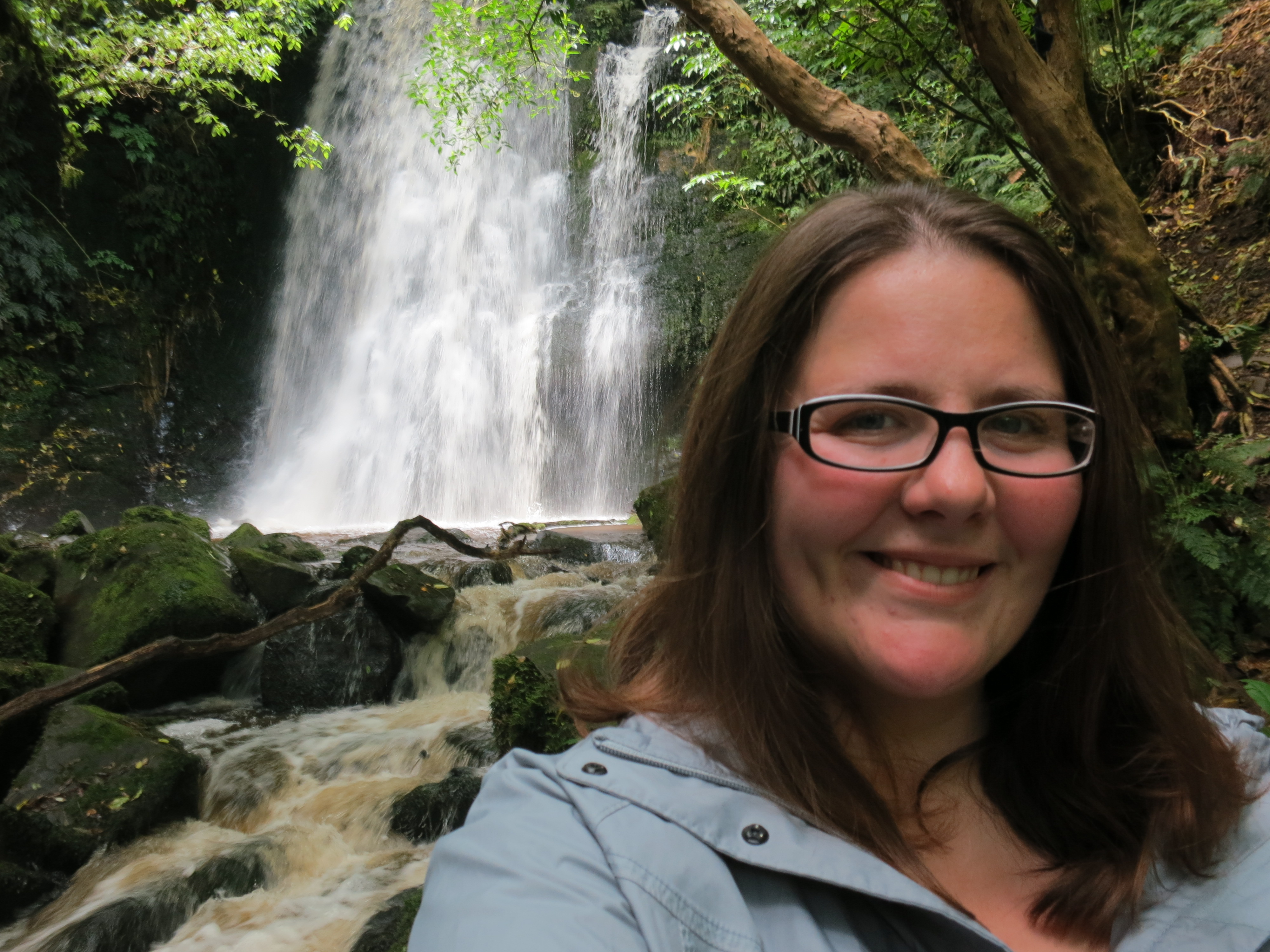
This is my “OMG waterfalls” face (at Matai Falls)
I started the day off at Jack’s Bay, where I threw a ball for an eager dog and chatted with his owner. The wind was picking up, lifting a whole layer of sand off the ground and hurrying it along to the other side of the bay. I carried on to the Owaka Teapot Gardens, which is actually the yard of someone’s home covered in teapots of all sizes and arranged in whimsical set-ups with garden gnomes and fairies. The next door neighbors know a good kitschy tourist attraction when they see one, and they set up Dollyworld, a doll and teddy bear museum. The entrepreneurial spirit is thriving in Owaka.
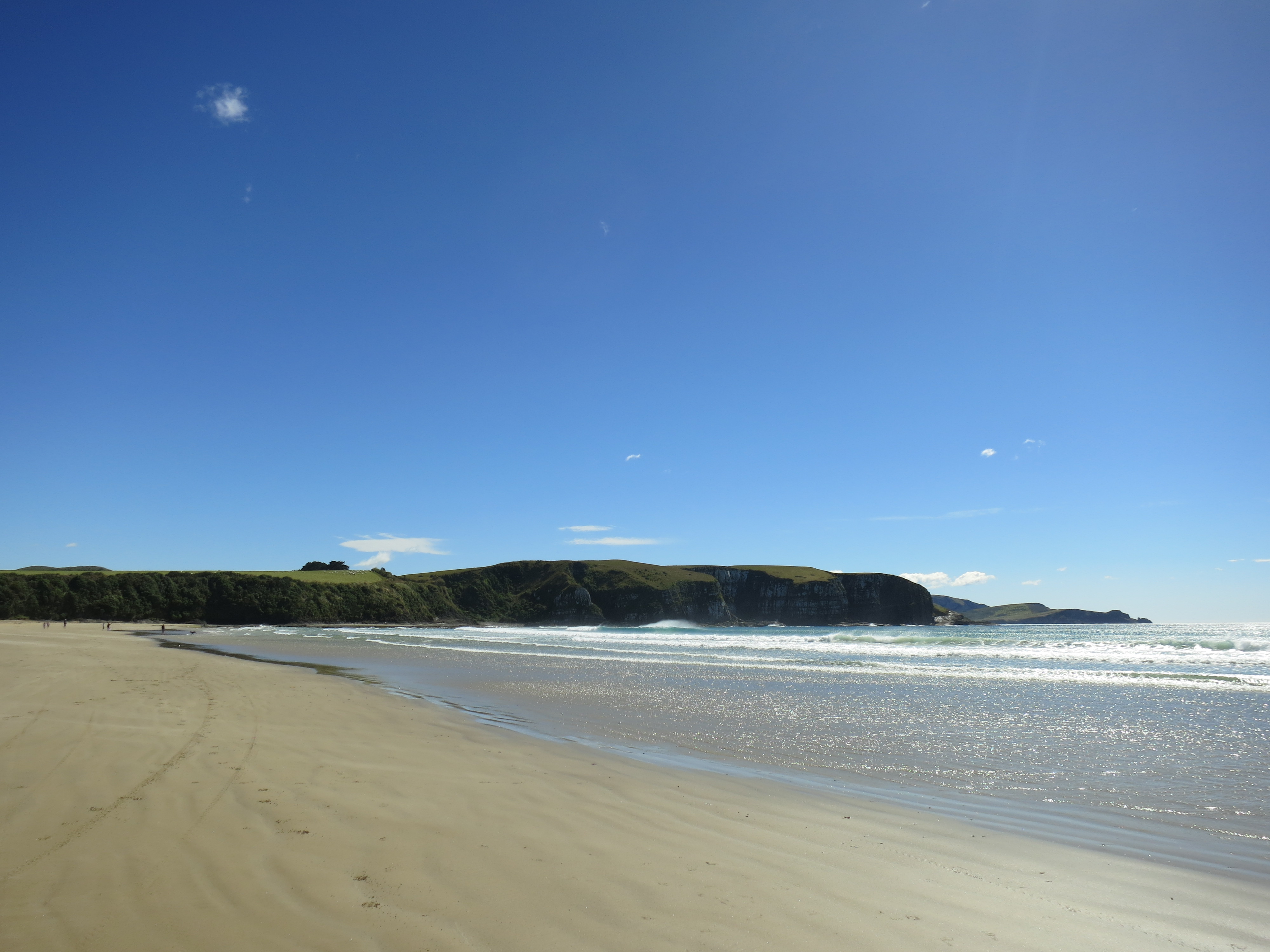
Morning at Jack’s Bay
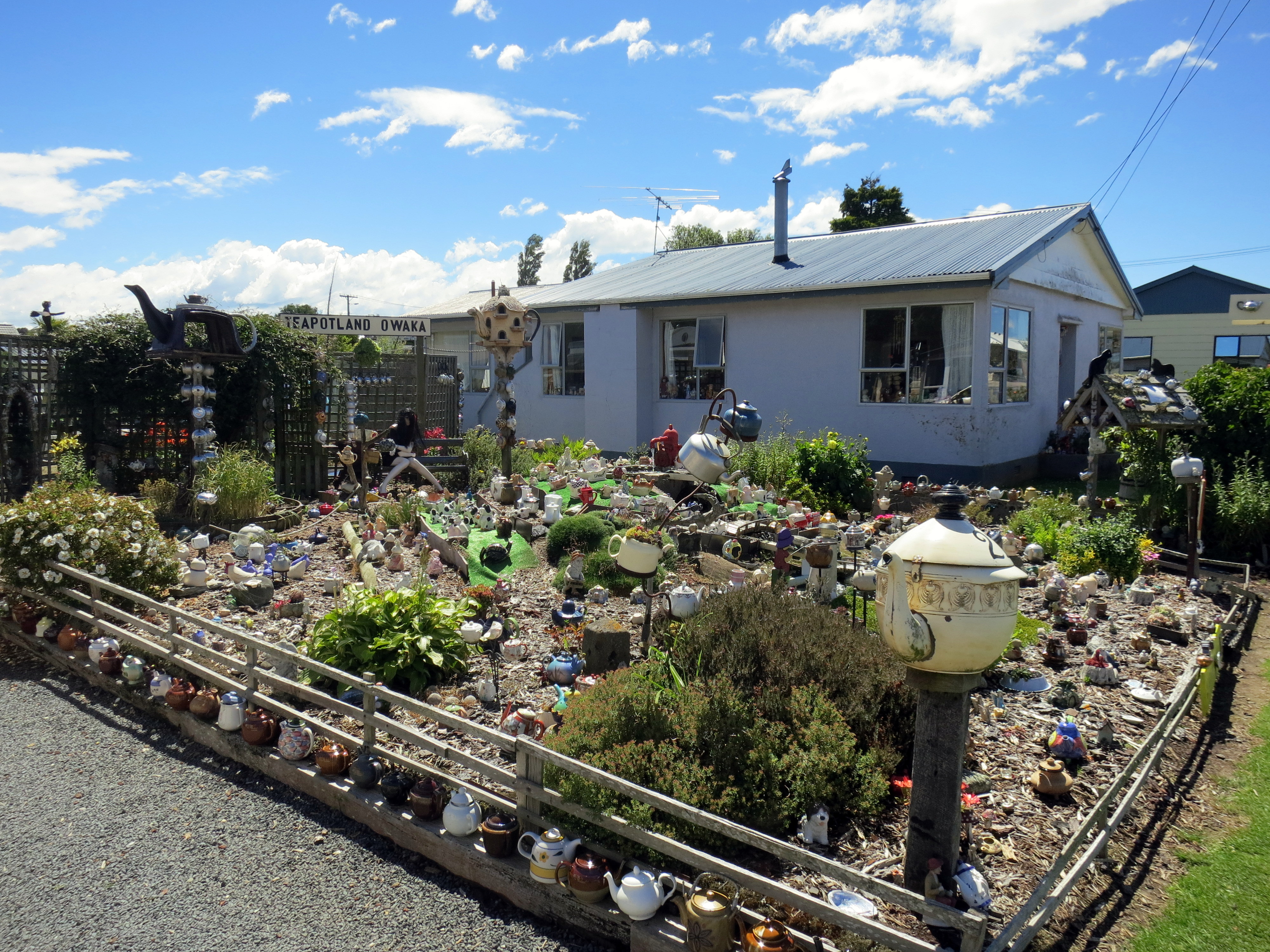
They even printed up a poem about Teapotland, which includes the lines, “In every cranny and nook/doesn’t matter where you look/Big ones, little ones, there is a teapot/Sorry, but they are all cold, not one is hot!”
I left the dolls and fairies behind for the natural world, and I spent the rest of my day falling ever more in love with this part of the world. It was a beautiful New Zealand day, which means I only had to wear my rain jacket half the time. It had rained heavily overnight, so the falls were gushing water mixed up with a bit of mud, rather than falling more prettily with clearer water. I liked it, though. Nothing like a roaring waterfall to remind you of the power of nature.
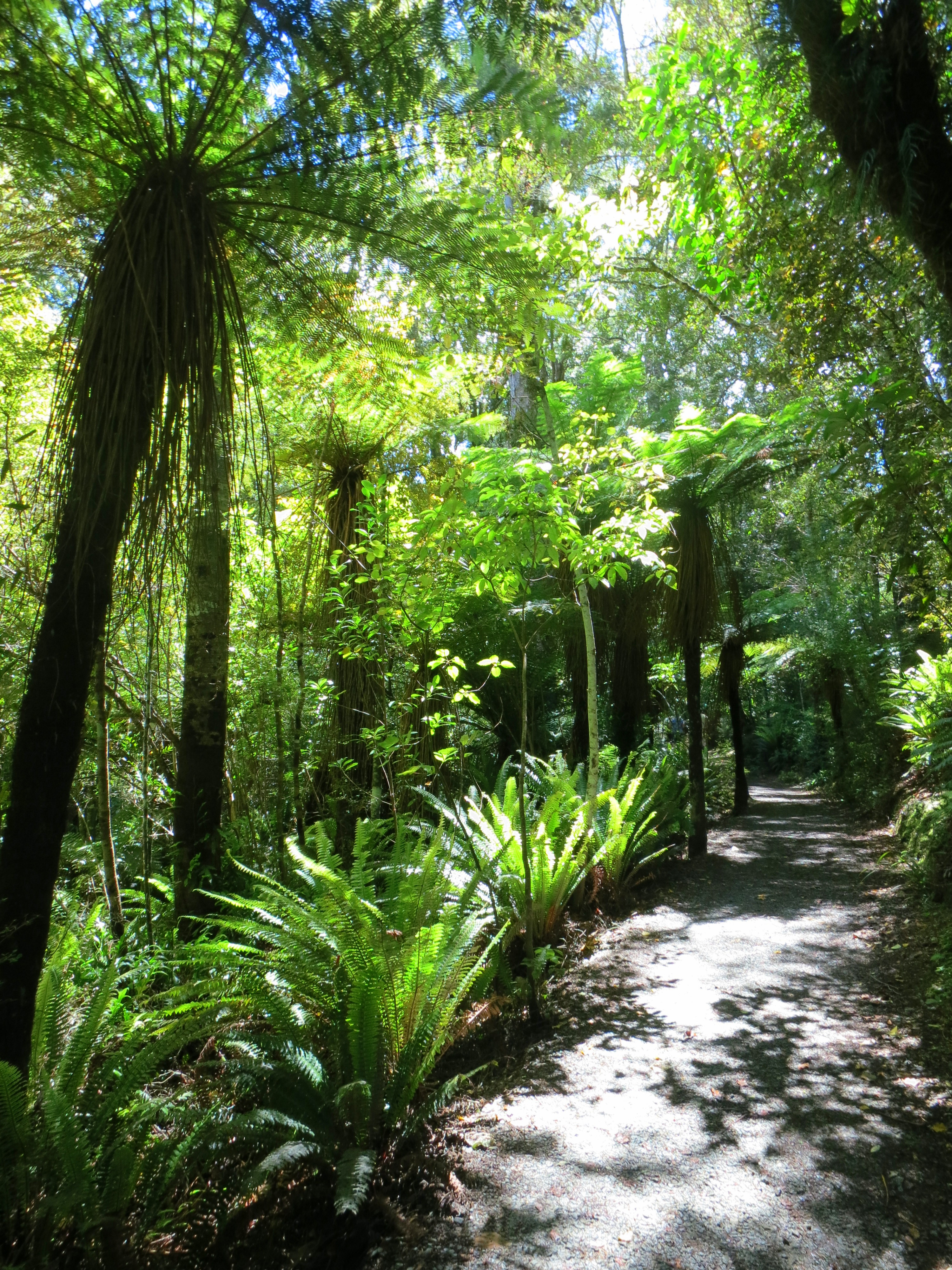
Purakaunui Falls is the most popular spot in the Catlins, and apparently the most photographed waterfalls in the country. It was an easy walk on the packed dirt path through the fern-feathered forest, across a small footbridge, and up and down a steeper track to the viewing area. I had the falls to myself for about two minutes, and then a small tour group came down, and a family with small kids, and I saw how popular the place was.

Purakaunui Falls
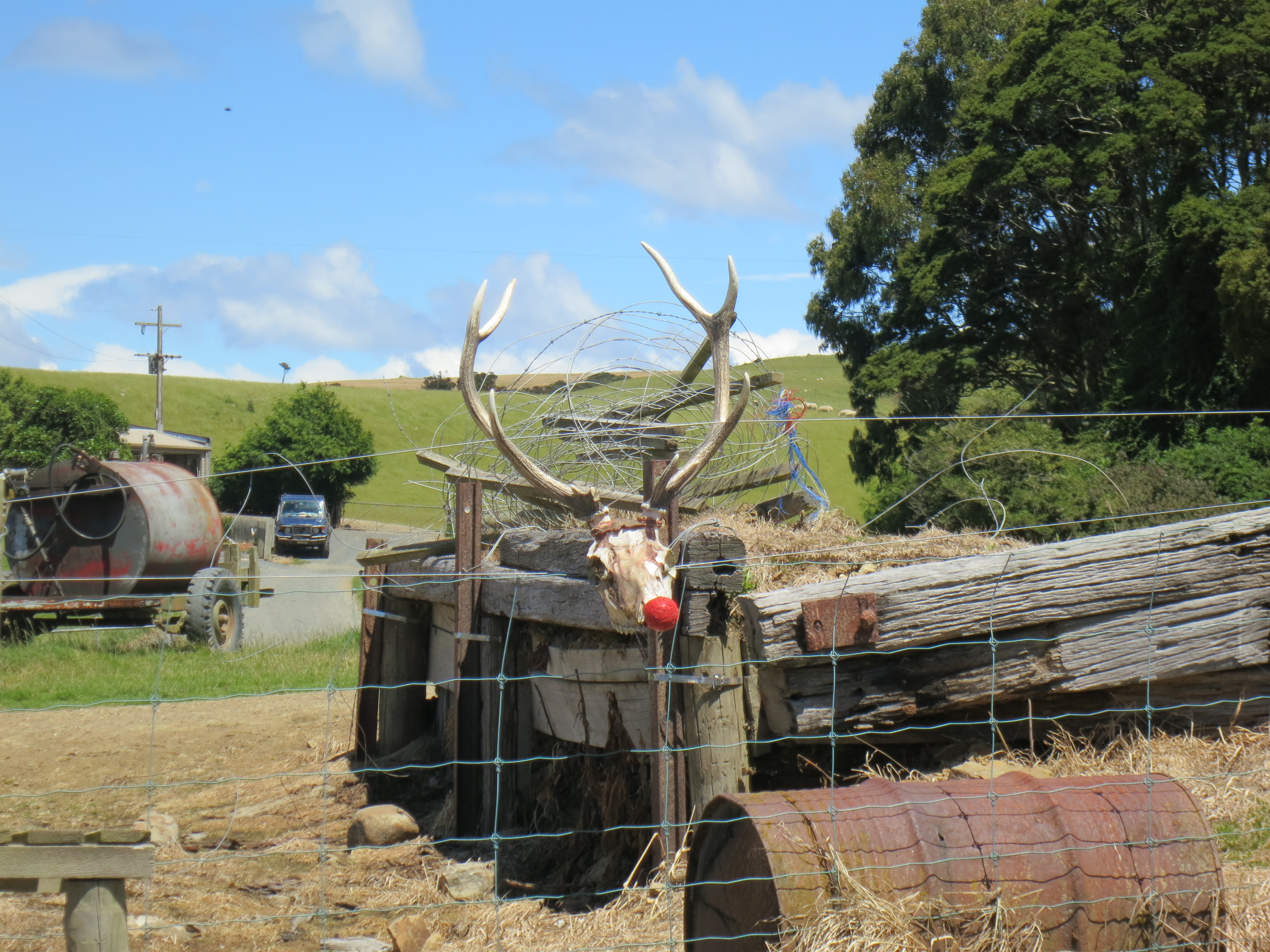
Poor Rudolph
The next stop had a one-two punch of Horseshoe Falls, and farther along that same river, Matai Falls. I only passed five other people on this trail, which suited me just fine, but the people who skipped this stop were missing out.

Horseshoe Falls
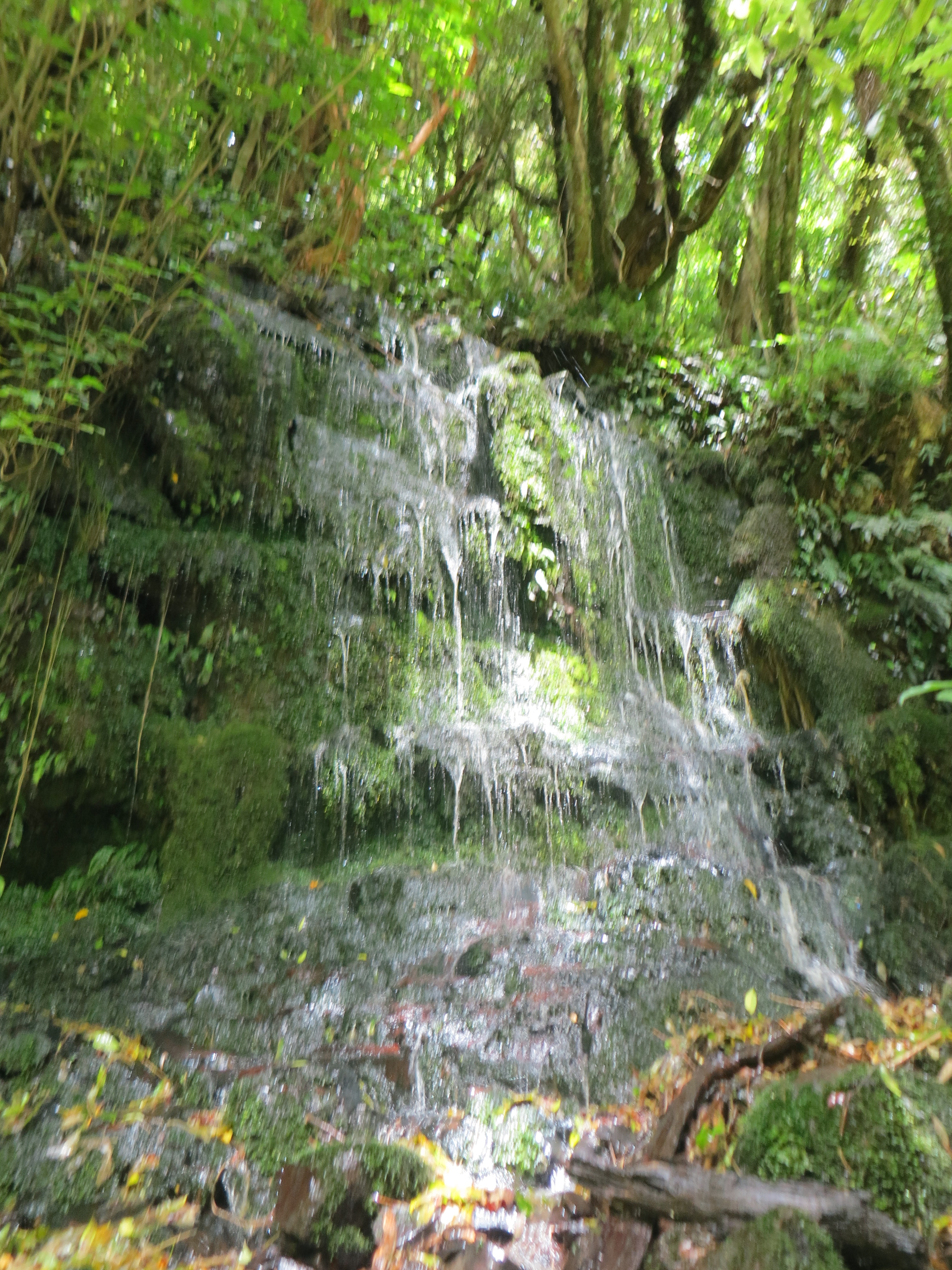
This patch of moss normally just drips, but with the heavy rains the night before, it was a mini waterfall itself.
Florence Hill Lookout was a well-signed spot, explaining the historical and ecological significance of the area. Some of the trees are over 1,000 years old, and in fact it’s the only place on the east coast of the South Island where native forest goes right down to the sea (instead of being interrupted by any of the many introduced species). This was a Maori fishing village, a Maori and Paheka whaling town, and the site of a sawmill before it became protected land.

One of the last native forests to reach the sea on the South Island
My penultimate stop for the day was McLean Falls, which involved a 30-minute walk, only 20 minutes of which could be described as leisurely. The last part of the walk was a steep climb up a switchback path, on uneven stairs made of stone and slippery packed dirt. But was it ever worth it!

Bliss
The McLean Falls were certainly the most impressive falls of the day. I sat on a rock a little to the right of the upper part of the falls and stared at them for about half an hour, mesmerized by the sights and sounds.

McLean Falls
The last falls of the day were Niagara Falls, and they barely qualify as falls at all, more like a hiccup in the river. But if my Catlins map is going to count them, then so will I. My favorite part of this stop was the sign that showed a photo of the more famous Niagara Falls, just in case you needed a comparison. Nice to see everyone has a good sense of humor about it.

Haha, good one, settlers
I spent the night at a farmstay/hostel at Slope Point. It was a working farm with a few small buildings of basic rooms for rent. I chatted with an Australian family and a French couple, and we all sat around the kitchen table listening to Van Morrison on my iPod while working on a jigsaw puzzle and eating dinner. The Aussies and French were keen hikers, so they told me about the big walks they’d been on that day, which sounded cool, but I wouldn’t have traded my day of waterfalls for anything.

Sunset at Slope Point
 Stowaway Travel Writing & Editorial Services