
Semana Santa food market, Cusco, Peru; April 18, 2014
Semana Santa food market, Cusco, Peru; April 18, 2014
I hope we shall be in Bath in the winter; but remember, Papa, if we do go, we must be in a good situation. (Persuasion, p. 29)
I hadn’t seen my parents in nine months of travel, so I was excited to meet up with them in Bath last May. We were in a very good situation–they’d found a great bed and breakfast for us to stay in, and I settled gratefully into my own bedroom with en suite bathroom after months of shared dorms and bathrooms down the hall. I mean, the woman who owned the house we were staying in made her own soaps. I was using handcrafted soaps in Bath, which actually fits my image of that town perfectly.
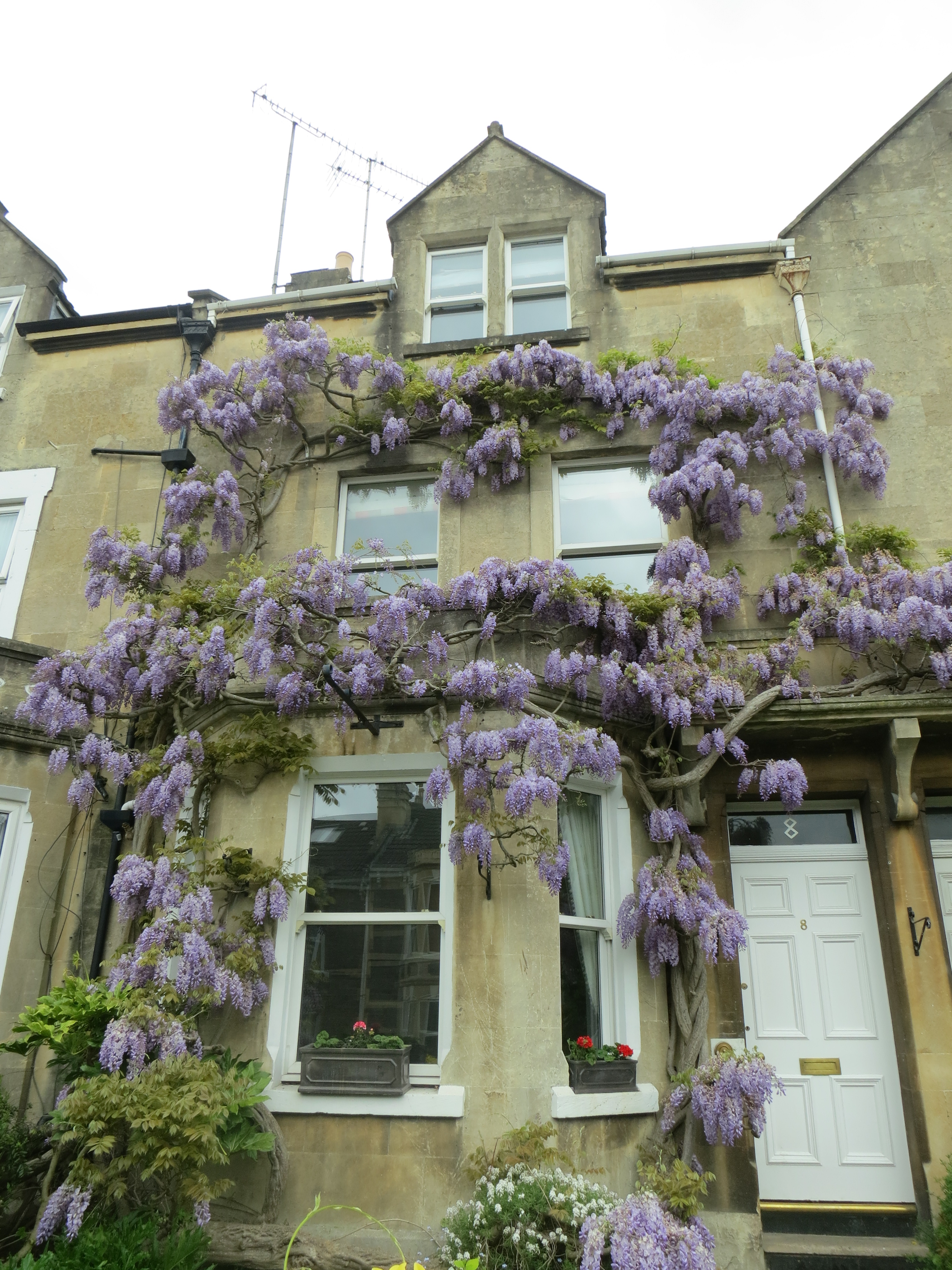
Well situated, indeed
In Jane Austen’s time, it was a playground for the rich, a place for fashion, gossip, and soaking in the thermal baths that give the town its name. Today, it mostly trades in tourism, for the baths themselves and for the Georgian architecture that dominates downtown. It’s not the fashionable spot that it once was, but it’s still pretty expensive.

The abbey, as watched by a warrior at the Roman baths
The Roman Baths
We visited the Roman baths on a blustery day, but the surface of the large green pool barely rippled in the wind. This seemed right to me, because for all their atrocious laws and conquest-hungry power moves, the ancient Romans were fine architects, and they built things to last. Why shouldn’t the very water of the place be as still as the columns and statues surrounding it?
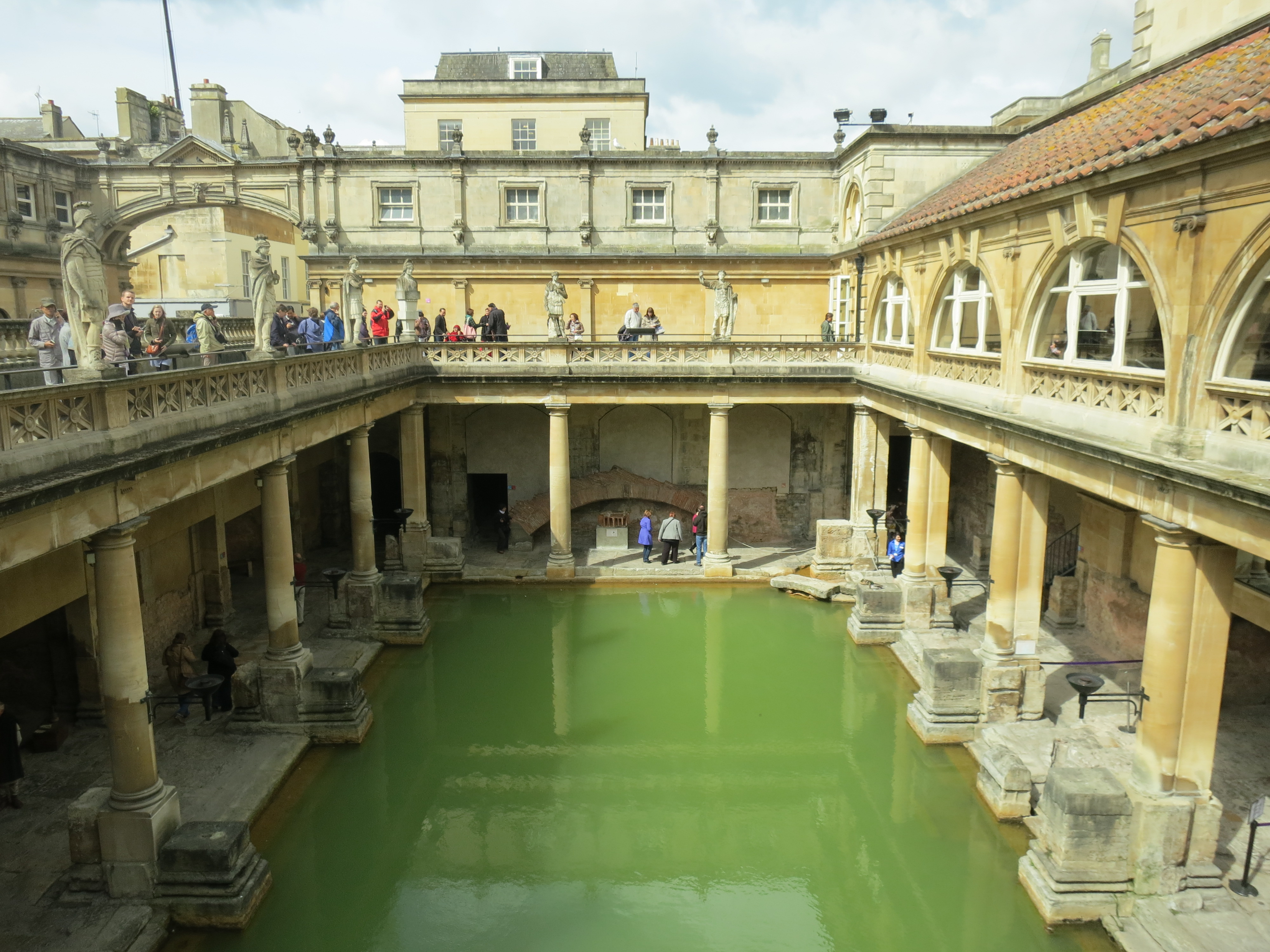
The baths of Bath
Of course, as with most things the Romans stumbled upon, the local people had been aware of the baths for hundreds of years. The Celts built a shrine to local goddess Sulis, and when the Romans built up baths here in about 60 CE, they folded her into their conception of the place, and dedicated the baths to Sulis Minerva. The audio guide and educational texts posted around the baths emphasized that taking the waters was a religious experience for the Romans and locals. They were immersing themselves in sacred waters overseen by a wise and stern goddess.
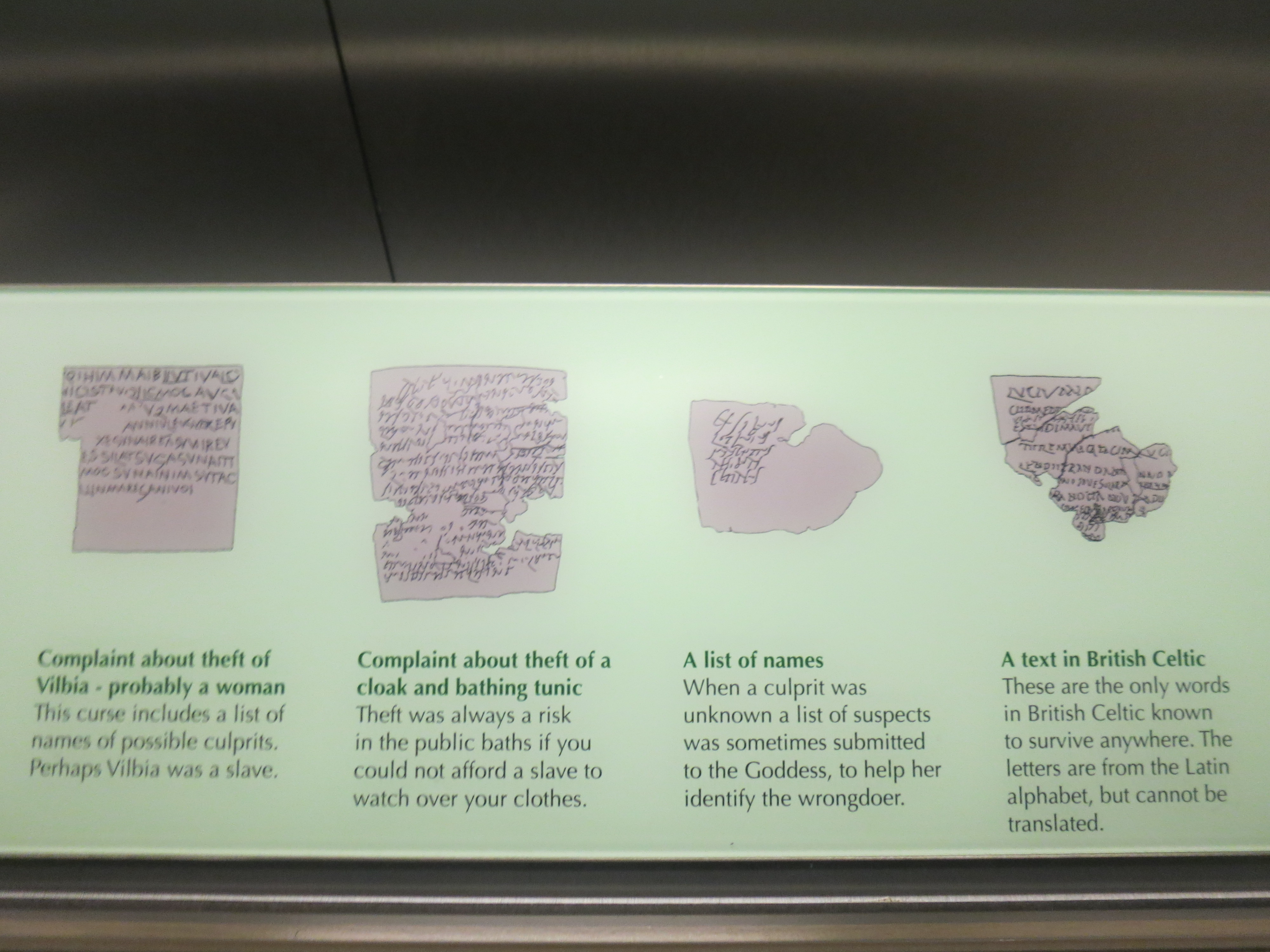
Some of the curses in the baths
That doesn’t mean very human concerns didn’t have their place here. The museum displays dozens of curse tablets that were unearthed here–mostly requests for the goddess to inflict severe pain upon whoever stole the supplicant’s clothes while they were in the baths. Some people even helpfully provided a list of names of possible culprits, an extra step which I’m sure the goddess appreciated.

Coins from earliest Britannia
The baths were a marvel of construction, of course; there were steam rooms and smaller pools in addition to the great pool, and an elaborate system of pipes and drains underneath kept it all in working order. No one uses these pools to bathe in anymore, although there are pricey places in town you can visit if you want to take the waters. Apparently people even drink the water sometimes, in an attempt to access those healing powers the sulfuric stuff is known for. I had a sip at the museum and can’t recommend it.
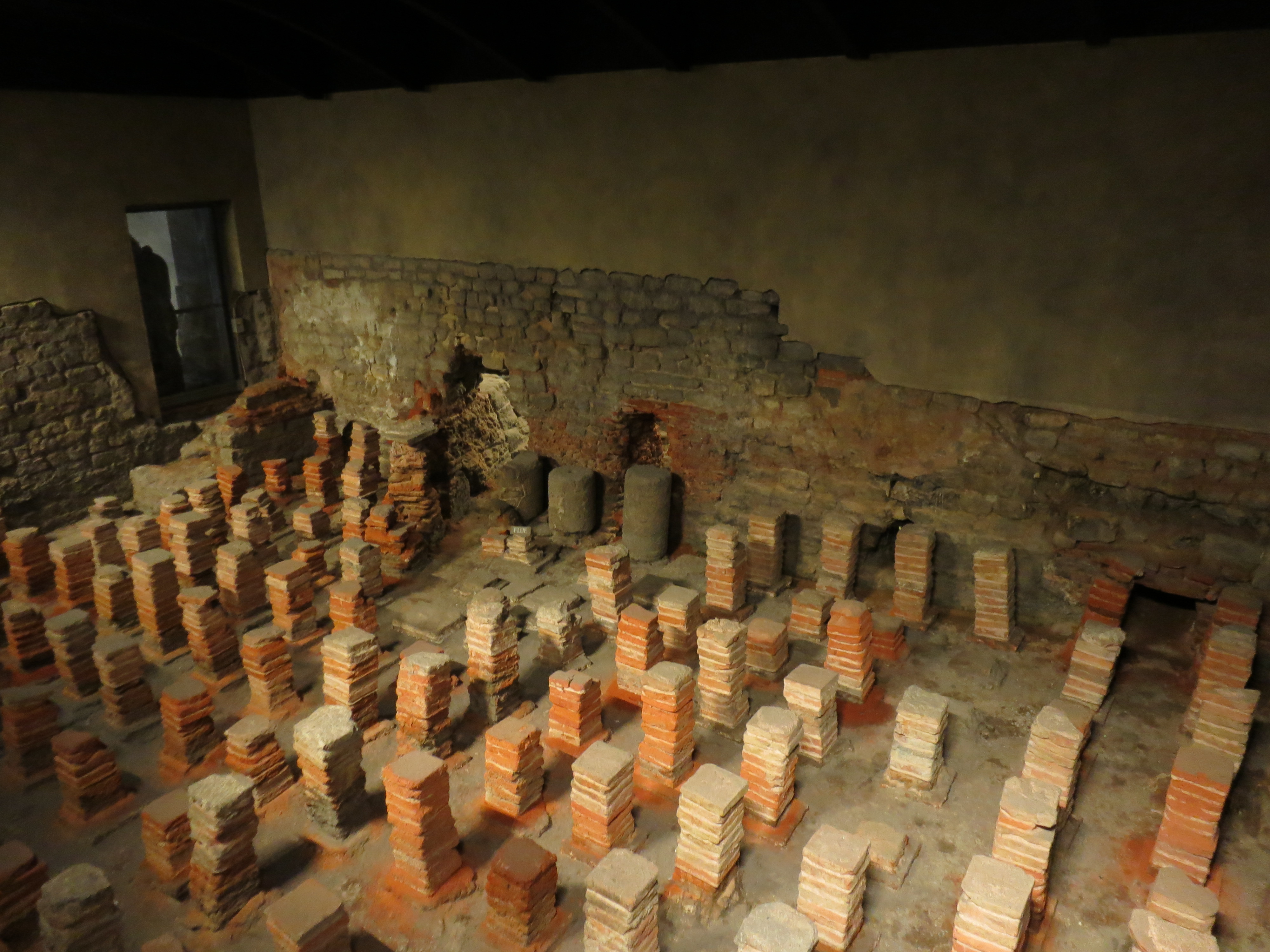
Foundations from one of the steam rooms
Jane Austen
She disliked Bath, and did not think it agreed with her; and Bath was to be her home. (ibid, p. 9)
Jane Austen could have been writing about herself with that line. She disliked the bustle of Bath, but she had to live there a couple different times in her life. I’m willing to call it ironic that the center dedicated to study and appreciation of Austen’s works is based in the town she loathed. Ah well, she might appreciate that irony if she knew.

The ceiling of the abbey–I love that design
The Jane Austen Centre is just up the street from Queen Square, so that’s where Mom and I left Dad when we went in to see the exhibition (my dad is an enlightened modern man, but we still haven’t convinced him to like Austen yet). We were ushered upstairs and sat in a Regency-period drawing room, where we listened to a college student in costume give us a few quick facts about Austen’s life in general, and her time in Bath in particular. Then he fielded questions, which was a little tricky, as the audience ranged from people who have only seen the Pride and Prejudice movie, to amateur experts with very particular questions.
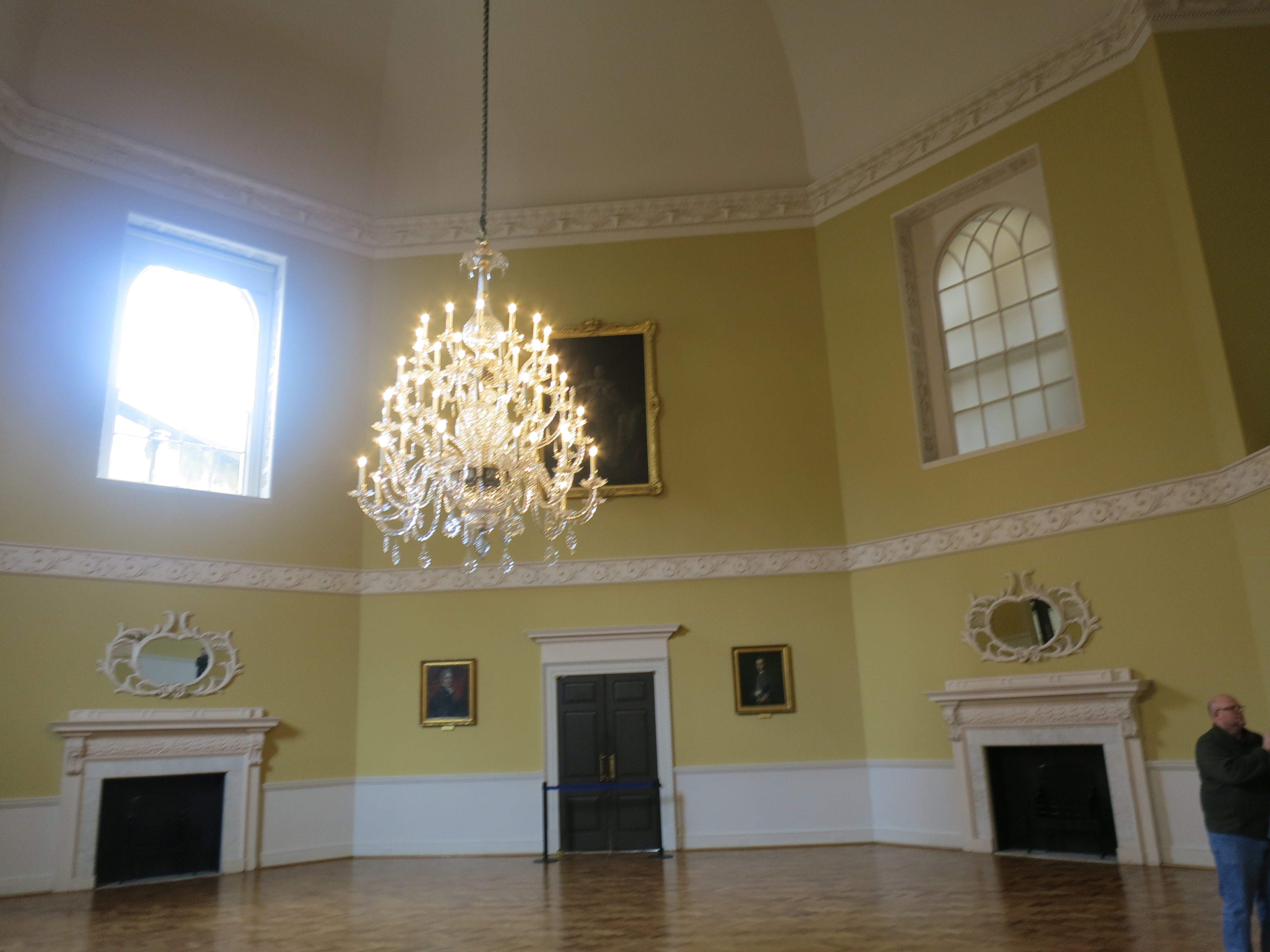
The Assembly Rooms; I did geek out a little about standing in the same place as one of my favorite fictional characters
The next stop was a too-crowded set of rooms downstairs, which acted as museum display. Our guide said he’d be available for questions, but I didn’t see him again. The focus in these rooms was on Austen’s life in Bath, and on the bits about Bath that appear in her novels. One corner contained a rack of dresses and a box of hats and fans; I have never played dress-up at a museum for adults before, but it was kinda fun.
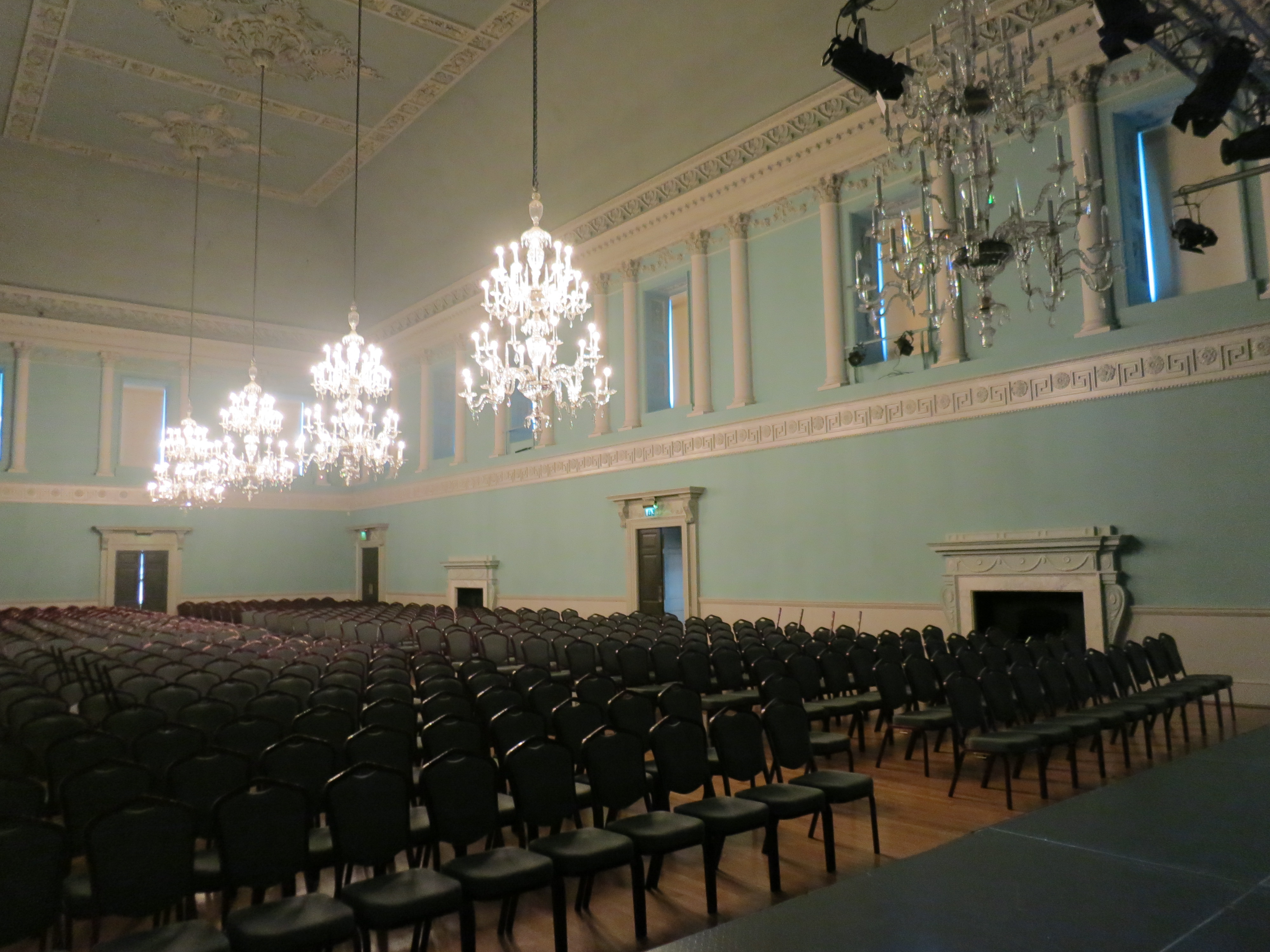
The music room of the Assembly Rooms, ready for a concert that night
I liked the last couple rooms the best; in one, the only known painting of Austen was hung, and right next to it, a modern painting, taken from descriptions in letters and journals. The official portrait (by Austen’s beloved sister Cassandra) is, frankly, ugly, and the artist who made the new one justified it by pointing to letters from Austen’s relatives who complained that Cassandra’s portrait didn’t capture Austen’s liveliness or prettiness.
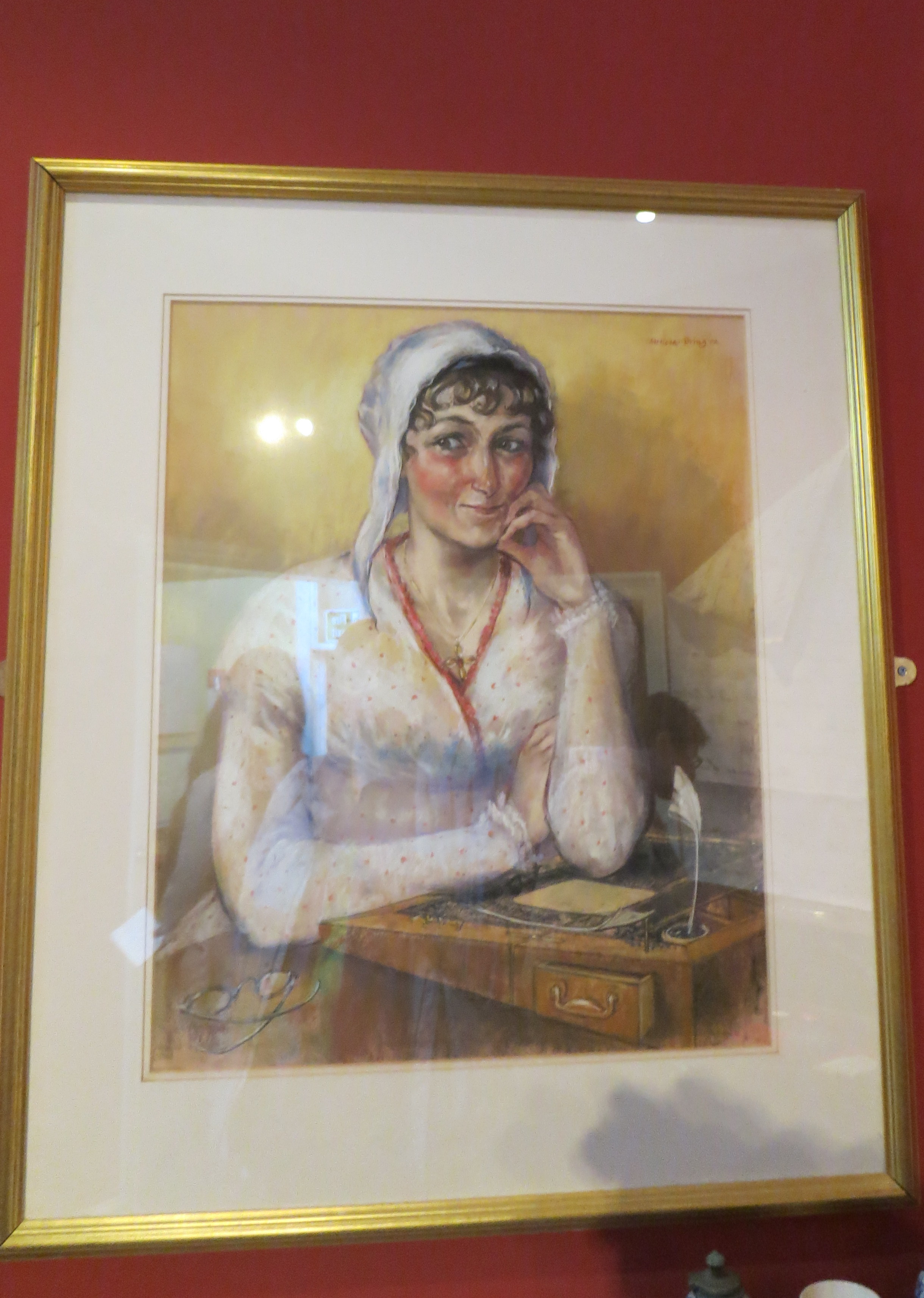
Melissa Dring’s portrait of Jane Austen
The last room holds some photos from the movie version of Sense and Sensibility, and a charming handwritten letter from Emma Thompson. Also, an inkstand and paper so you can try writing like they did back then. It is hard. You have to write in the tiny, cramped script you always see in original documents; writing any larger just dries the ink out of the quill and leaves a mess.
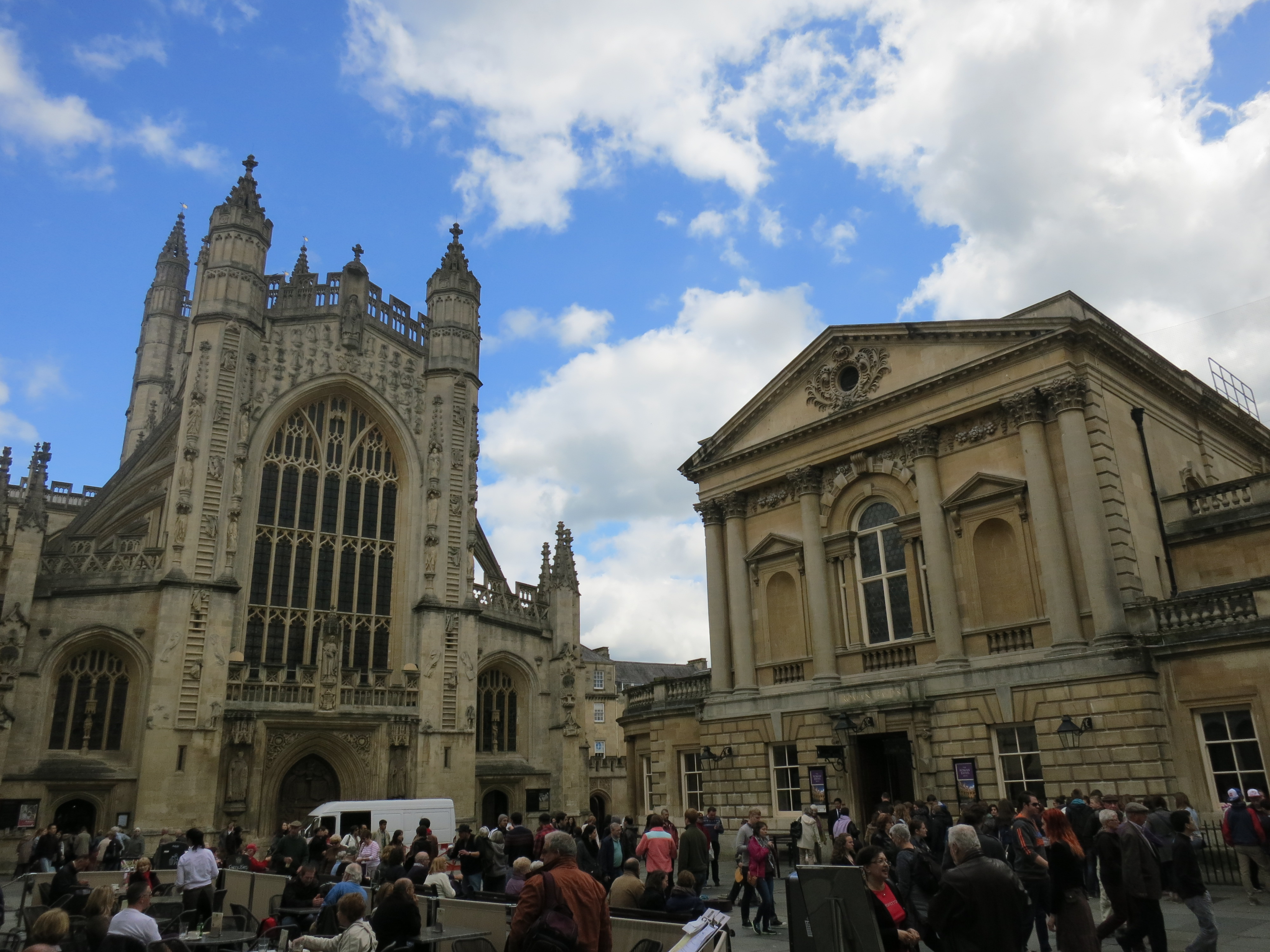
The abbey and entrance to the baths
Georgian Architecture
There are a few independently designed places in Bath–Robert Adam’s Pulteney Bridge and the 16th-century abbey in the center of town come to mind–but for the rest of the city, it’s all John Wood. John Wood the Elder and John Wood the Younger, a father-son team of architects who designed the Royal Crescent, The Circus, and other grand residential places in a neoclassical style. (Apparently, the correct term is Palladian, after a particular architect who revived Greek and Roman styles in the 18th century. The more you know.)
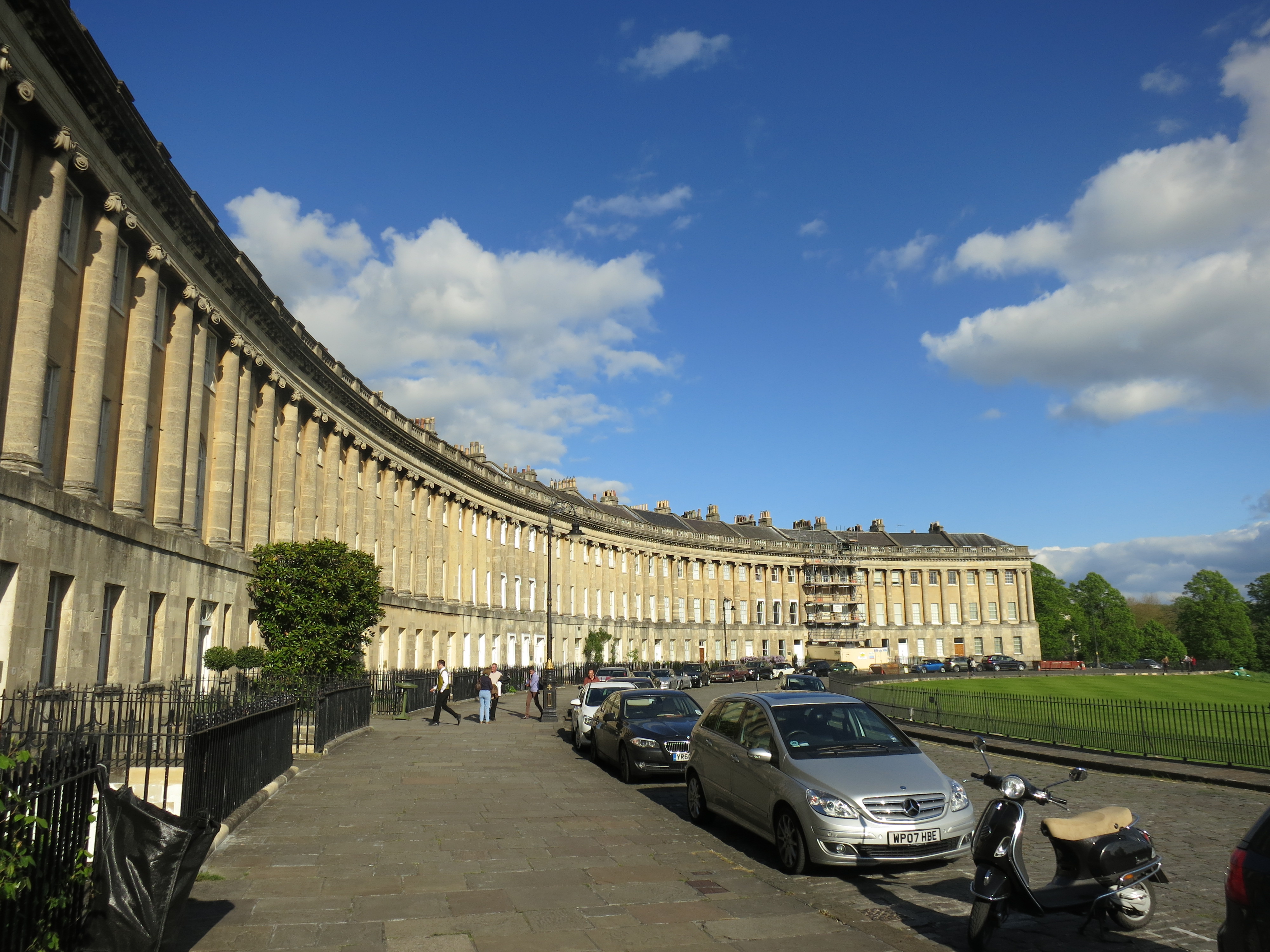
Royal Crescent, which looks out over a large park
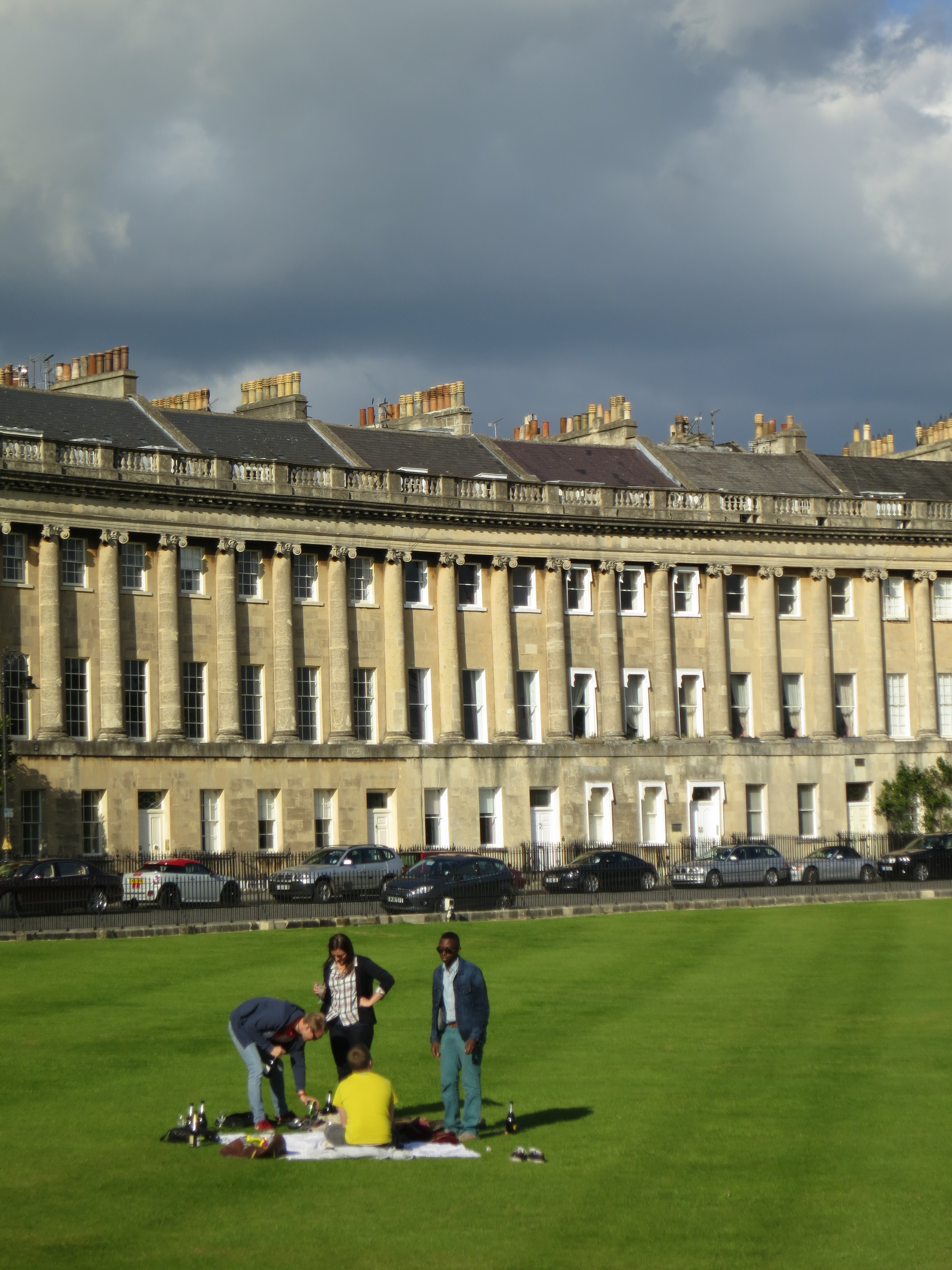
In what had to be a parody of rich kids, these teenagers stumbled out of one of the Royal Crescent apartments, jumped the fence to their private lawn, and started glugging champagne in the afternoon sun.
It’s this consistency of design that got Bath listed on the UNESCO World Heritage list, and while I think I would go a bit crazy if I had to live in a town this uniform in style, it is striking to see, and I can appreciate the harmony of the local yellow stone forming row after row of columns. After all this uniformity, it was all the more surprising to see two front doors on the Royal Crescent painted a different color than all the other front doors. Surely there’s a fine for such an affront to the 250-year-old look!
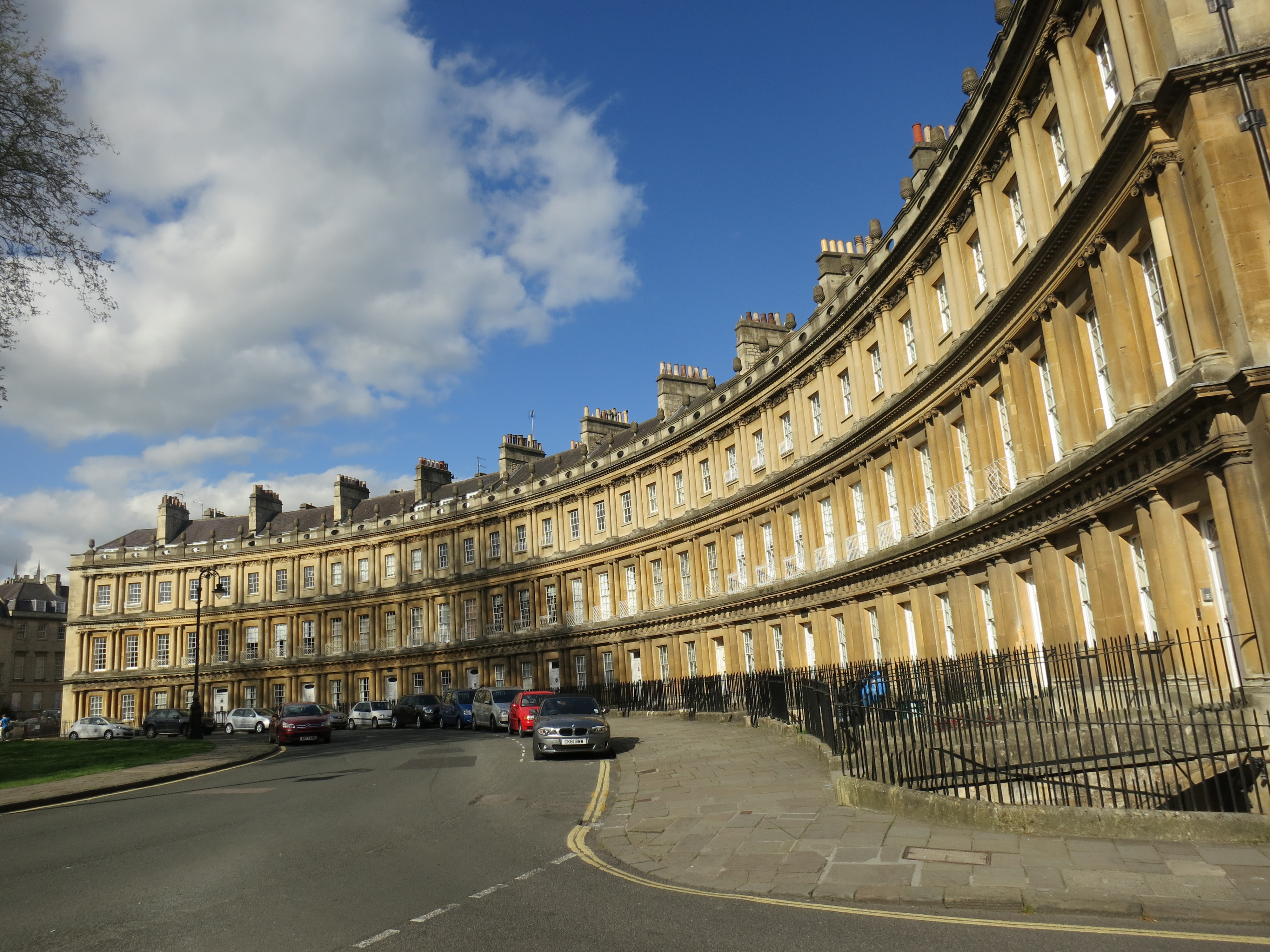
The Circus, created so that wherever your front door was, you always saw houses just like yours when you stepped out

The Pulteney Bridge, apparently based on rejected plans for the Rialto in Venice
Upon my word, I shall be pretty well off, when you are all gone to be happy at Bath! (ibid, p. 29)
Yes, Mary, we were all very happy at Bath, indeed.
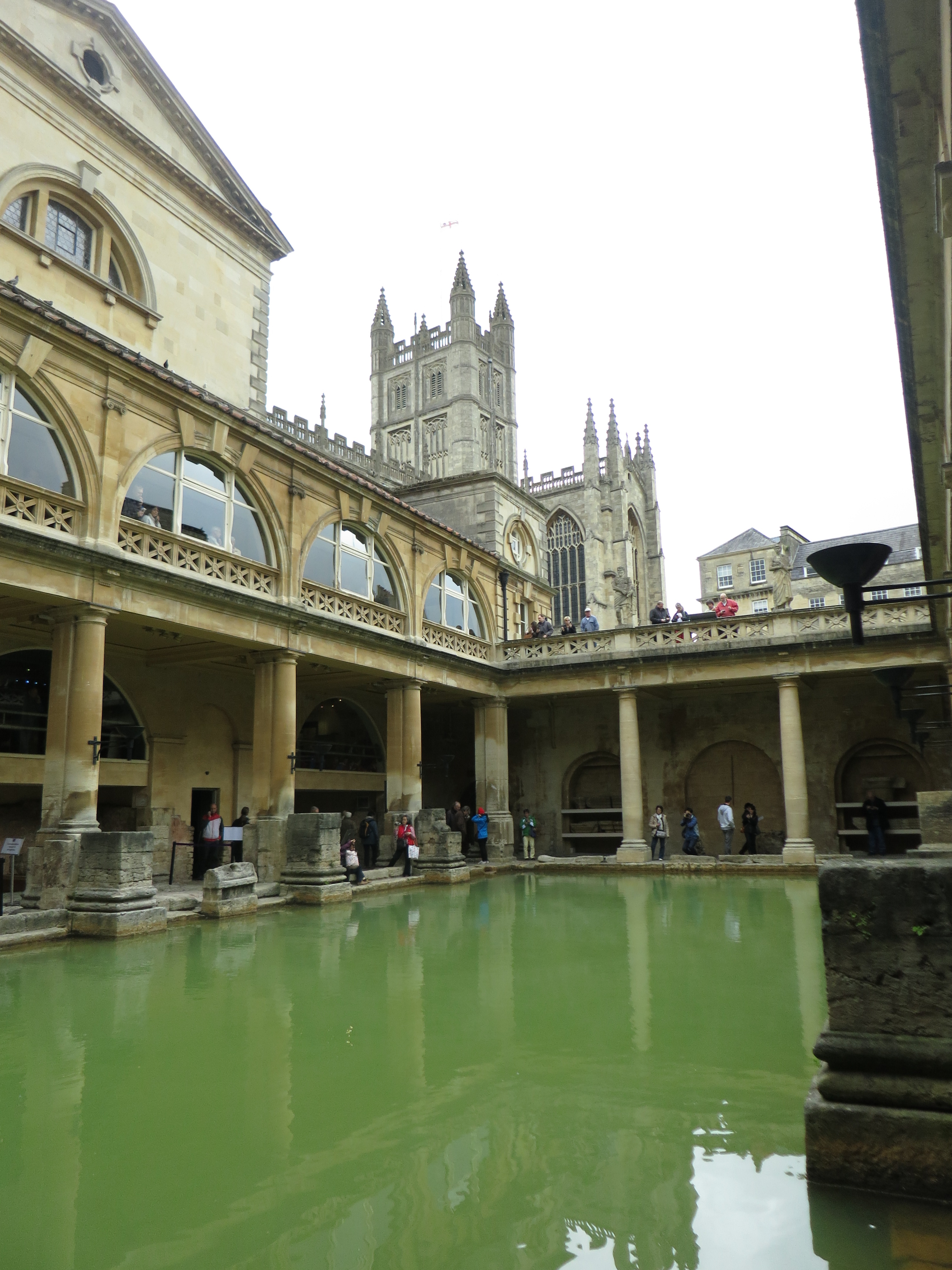
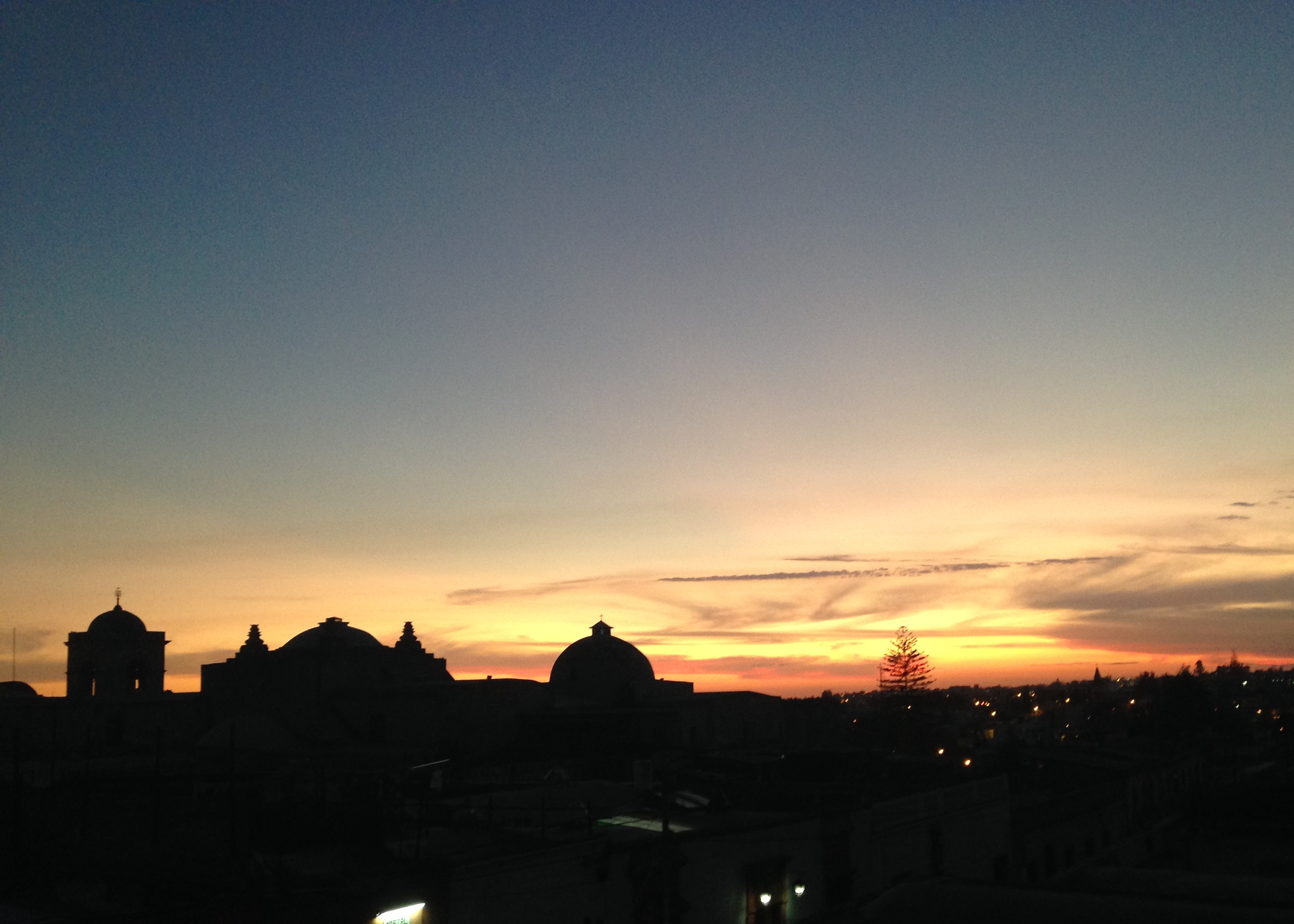
Sunset, Arequipa, Peru
Things Not to Say to Someone Who Has Just Been the Victim of a Nonviolent Robbery (all true things I heard within hours of having my purse snatched in Peru)
“You really have to be careful with your things.”
“So you were just sitting there writing? He didn’t hold a knife to you or anything? How did you not notice?”
“You know the police aren’t going to do anything, right?”
“They’re only material items.”
“Oh, you’ll be upset for a couple days, but after that you’ll feel so free and unburdened by the things of this world.”
Note that it is particularly vile to pontificate thusly while holding an iPhone 5.
The One Truly Helpful Thing to Say to Someone Who Has Just Been the Victim of a Nonviolent Robbery
“That’s terrible. I’m so sorry! Can I buy you a drink?”

Cusco, Peru; April 18, 2014
In a misunderstanding straight out of a sitcom about traveling in foreign lands, I almost didn’t visit Guayasamín’s Capilla del Hombre when my language school offered an excursion there. The school sign simply read “Capilla del Hombre,” which my friends and I correctly translated as “Chapel of Man.” I didn’t connect this to the much-lauded museum mentioned in my guidebook, and I dithered about whether we wanted to go to yet another church; it seemed like I’d been to a lot of churches lately. Happily, I did decide to go, and once our taxi shuddered to a stop at the top of the steep hill the building’s located atop, I made the connection. Oh, this is the museum and house of the famous Ecuadorian artist, Oswaldo Guayasamín.
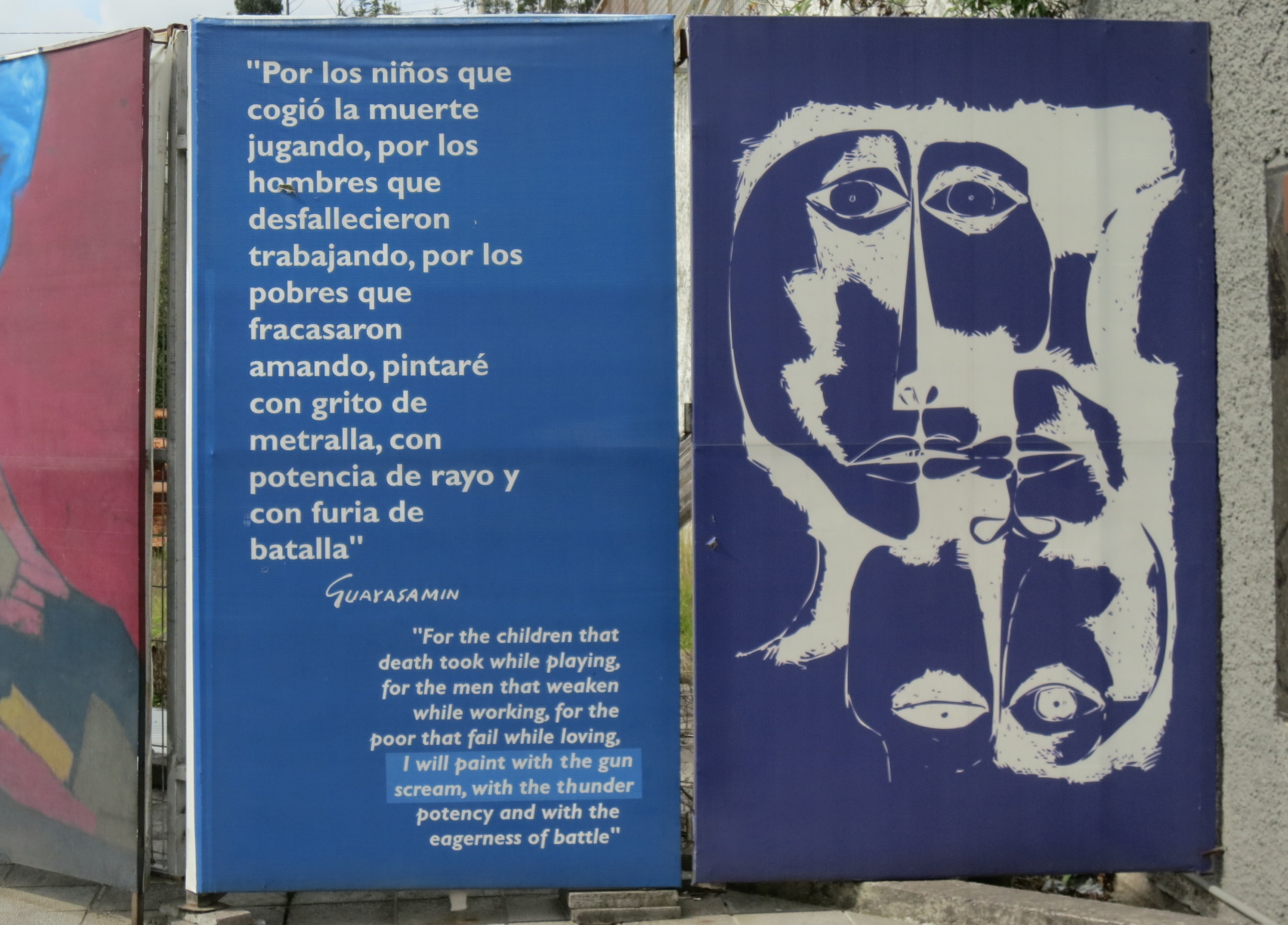
Grand purpose
The Chapel of Man, designed by Guayasamín himself, is pitched as a tribute to the oppressed peoples of the world, especially the indigenous of South America, and in fact is a museum for many of Guayasamín’s works. There’s nothing wrong with that, and his commitment to social justice is apparent, but I do take some issue with using exclusively your own art in a building dedicated to all of humanity.
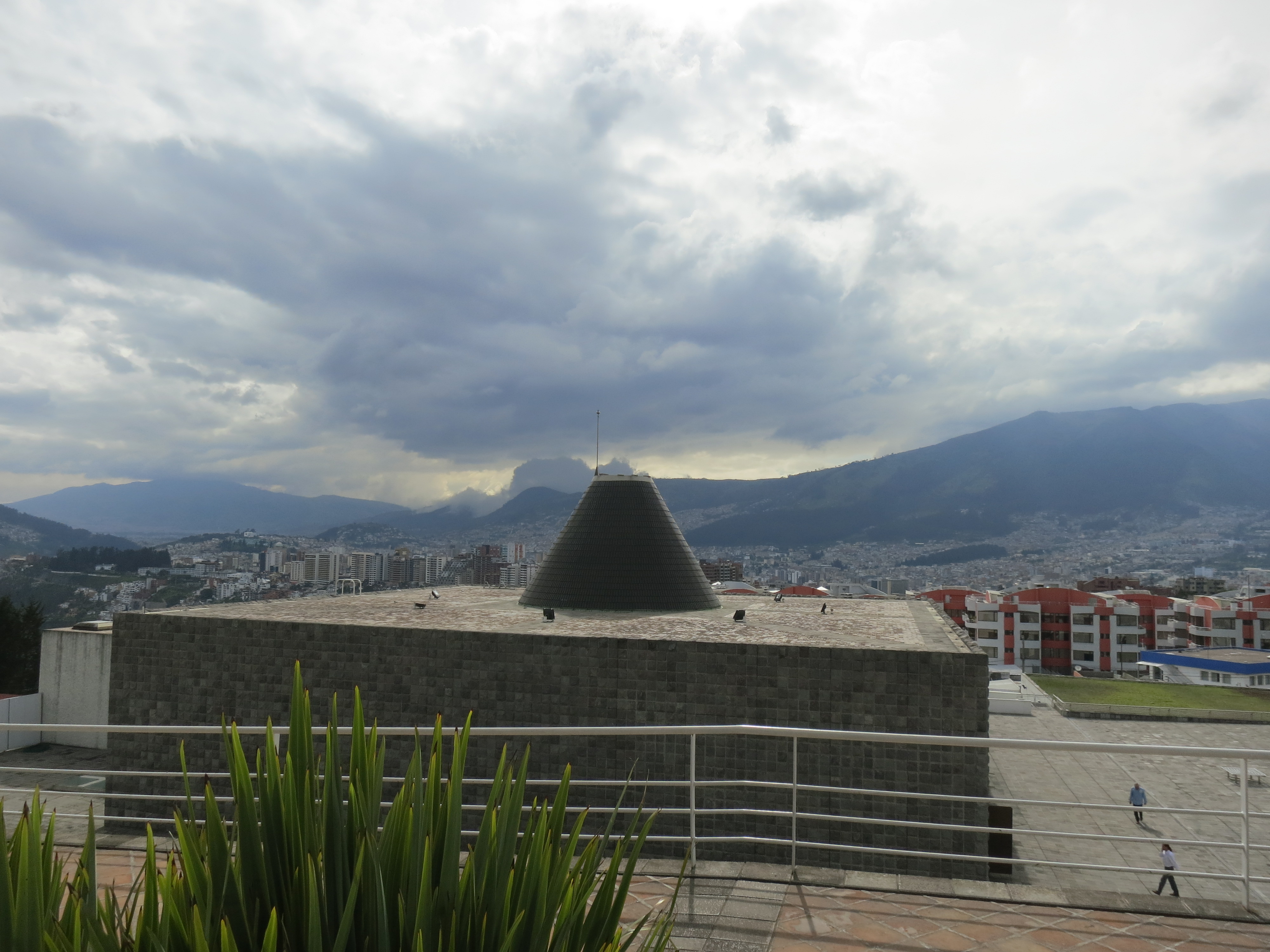
La Capilla
Still, his art is amazing. He was a Cubist and Expressionist, and he painted huge canvases of elongated figures, huge eyes, bold colors. He had three major periods, which have been dubbed tears, suffering, and tenderness. Darker colors in the first, brighter in the second, warmer in the third. One painting was called “The Mutilated,” and it showed pieces of bodies torn apart by war. He painted them on six panels, and those panels can be moved around in different configurations, to show the random cruelty of war, the way we’re all reduced to body parts when violence takes us. The panels themselves are fixed in place by the museum, but there’s a computer nearby that lets you move them around on the screen, in a sort of gruesome game.

I snuck just one photo inside–photos were not allowed, so please Google Images his work and see some great stuff
One of my favorites was a reworking of a 14th century Pieta, which removed the halos, stigmata, priest, and Christ’s clothes of the original and put in a blood-red background and Mary’s hands held up to heaven in grief rather than pressed together in prayer. It stripped away the religiosity and presented a mother’s grief, a man’s death. It was striking and beautiful.
Many pieces were dedicated to the enslaved indigenous peoples (Mayans, Quechuans, Incas, Aztecs—not much seemed to be made of the fact that many of these were conquerors themselves, that was not his focus), and enslaved Africans. The walls boasted several quotes about helping each other, being the light in the world. One said “I cried because I did not have shoes until I saw a child that did not have feet.” The center of the museum contains a giant bowl with an eternal flame inside, because when he was dying, Guayasamín said, “Keep the light on, I will be back.”
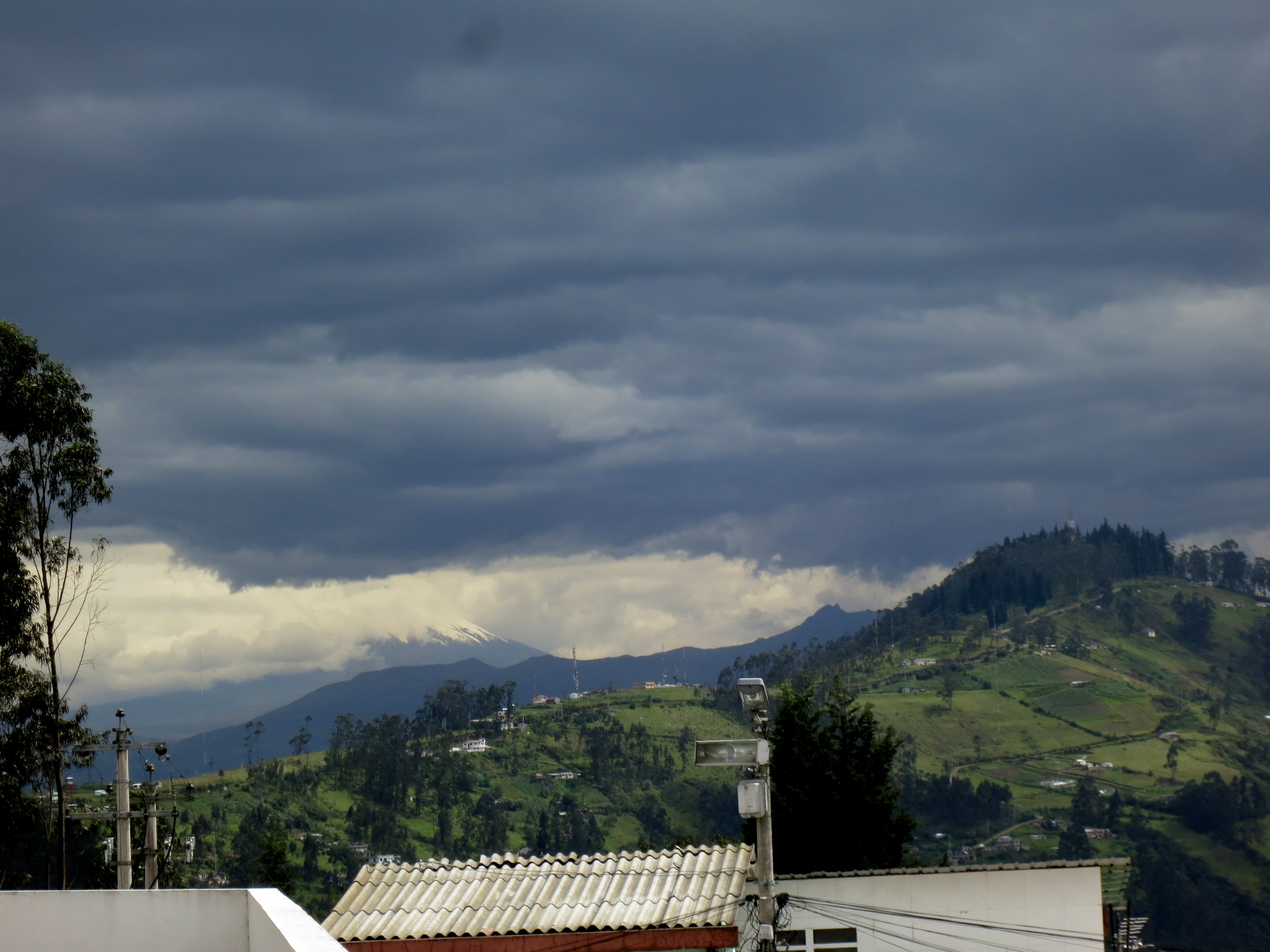
Not a bad view from your front yard
Unfortunately, the museum guide knew about as much English as I know Spanish, and our school guide had much more interesting asides, so I wish our group had just gone around alone with the school guide. Also, the museum guide would ask for interpretations of the paintings and then tell us we were wrong! As in, “What do you see here?” “I see despair.” “No, not despair. Anyone else?” A different approach to appreciating art, for sure!

Not a bad front yard, either
The ticket price includes admission to Guayasamín’s house and studio, which are on the same grounds. We caught up with a tour midway through, but I zoned out for most of it and just stared at the amazing number of beautiful things Guayasamín amassed during his life. A handmade guitar inlaid with mother-of-pearl, erotic statues from various parts of the world, Catholic icons, traditional paintings, etc., etc. It would be a privilege to wake up in this house every day, never mind then going to work in your own cavernous studio next door.
I’m glad I didn’t let my own ignorance get in the way, and I decided to go to the Capilla del Hombre. It was my first introduction to Guayasamín, and an impressive one at that. I saw his art in all sorts of places after that, seeing his style and influence through Ecuador (including in the governmental palace in the center of Quito).

Final resting place
Guayasamín died before construction was quite complete, but he got to see the beginning of the realization of his vision. He’s buried under a tree in the corner of the yard. Flowers dot the ground and wind chimes sing in the breeze over his final resting place, with his chapel just behind and his city in the distance.

A postcard showing one of his pieces from the “Tenderness” phase
Colca Canyon: Part 1 can be found here.
Every single town in South America has a central plaza, often called the Plaza de Armas or Plaza Mayor. It’s the colonial influence–the Spanish built the main church in a central plaza and a grid system of streets emanating from it. (I’m not sure what it’s like in Brazil, where the Portuguese held power.) Even tiny towns have a central plaza.
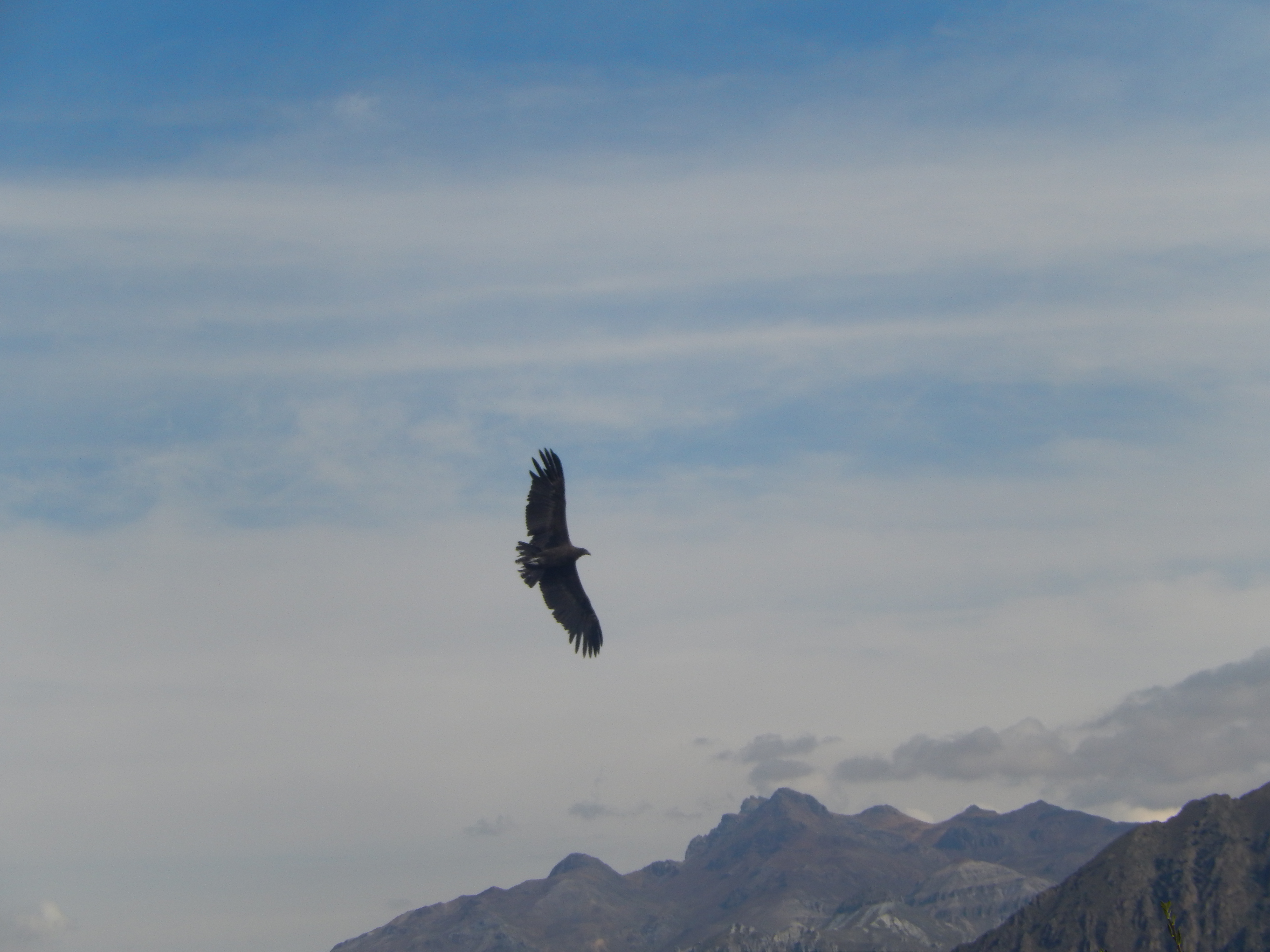
Condor takes wing
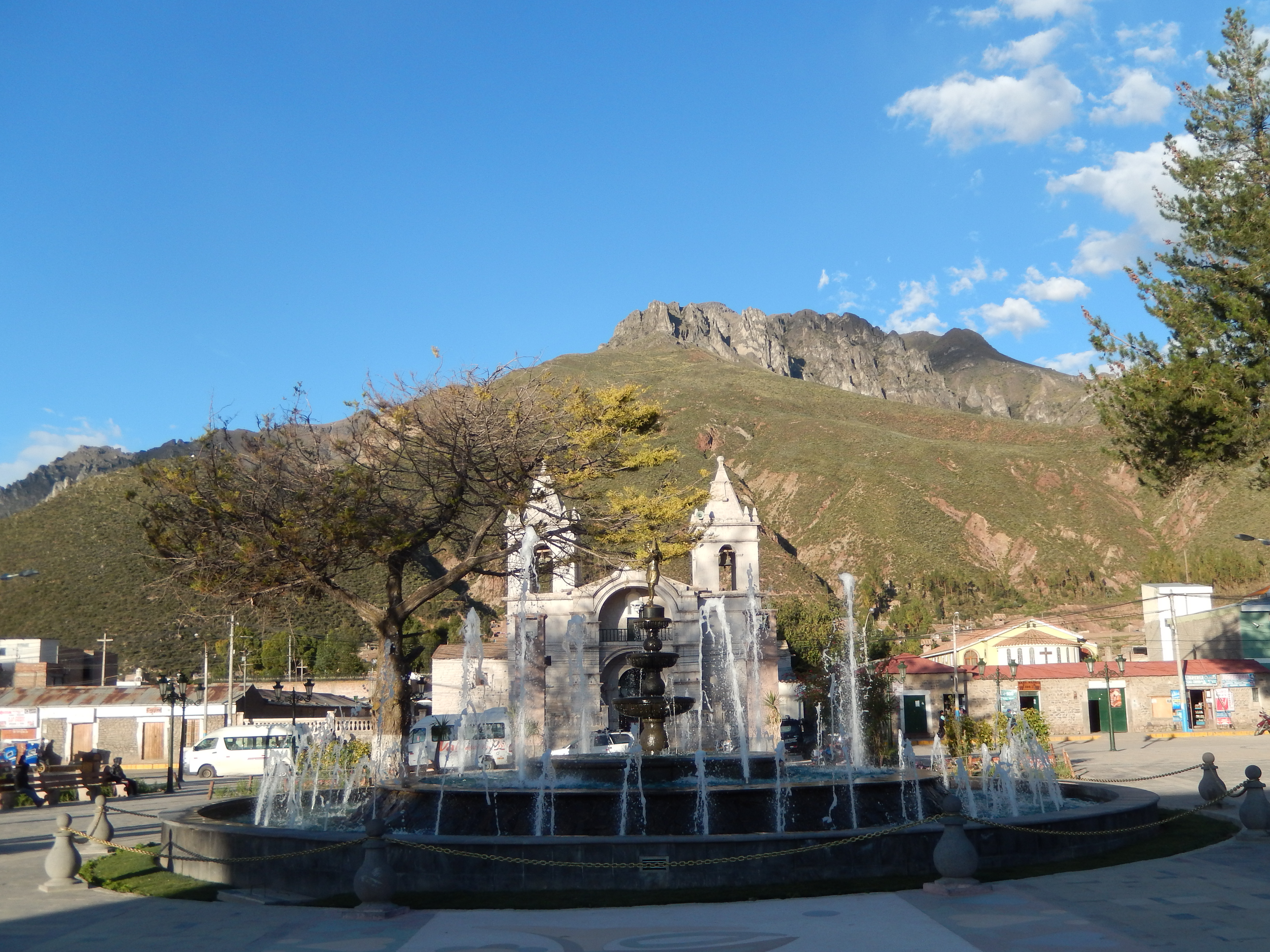
Nice little backdrop to your church
The one in Chivay has been renovated in recent years, and it’s a pleasant place to spend some time while you’re, say, grinding your teeth in frustration because guides and hotel staff alike assured you that you could Skype in this town but it turns out even the internet centers are so slow that they don’t download Skype and the call centers don’t make international calls and you have a phone date on your birthday with your parents that you have to cancel via basic HTML email. Just for example.

Inside the church of Chivay
The night of my two-day, one-night tour, most people opted to go to Pizzeria El Horno, a large restaurant only open for dinners, which caters to tour groups on a nightly basis. Our group got the head table, right across from the tiny stage for the musicians, and right in front of the bit of floor used by the dancers. The food was mediocre to fair, but the entertainment was terrific.
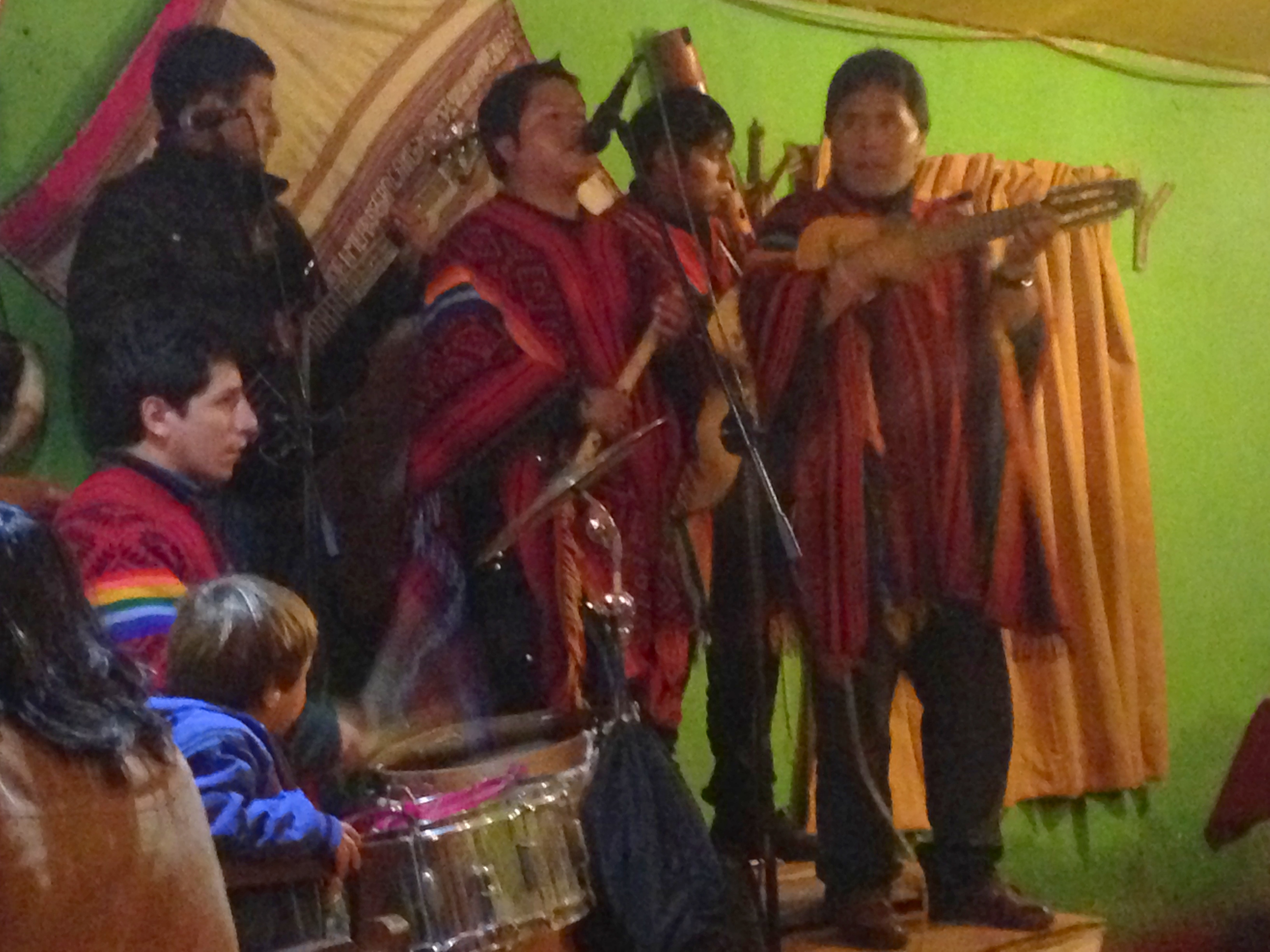
The band, on the tiniest stage I’ve ever seen
This was a peña, a popular Peruvian dance hall event (as with most local traditions here, there’s a range of peñas, from the small and local to the large and touristy–guess where this fell). The band leader called out the names of the dances and then away they went. Some of the dances were clearly based on important traditions, like one involving agricultural symbols and movements. Others just looked fun.

The dancers wore different outfits for each dance
Probably the one that had us all the most entranced was the condor dance, which involved the man moving like a condor flies, stealing an onion from the woman, taking a bite, and falling to the floor on his back, at which point the woman takes out a strip of cloth and beats him with it, eventually putting her skirts over his face to revive him. He gets up and it repeats with her stealing the onion, etc., and then he picks her up and spins her around until they’re both dizzy. Probably there is more to it than that, but it was a sight to see.

By the end of the night, the dancers had dragged half the audience onto the dance floor for a big circle dance, and then they put costumes on people. The kids in the crowd loved every second of it.
The next morning, we got to see actual condors fly. (I did not notice any onions, beatings, or resurrections.) Condors are magnificent birds; they’re the heaviest airborne bird, and their wingspan can reach 3 meters, just under that of the albatross. They mate for life (males sometimes commit suicide if their mates die first), and they can live until they’re 75 years old. Because they have such a long lifespan, their aging process is not dissimilar to ours; they spend two years in the nest and are able to start reproducing at age 15. When they’re young, they’re brown, and they gain black feathers when they’re older; males grow a white collar around their necks.
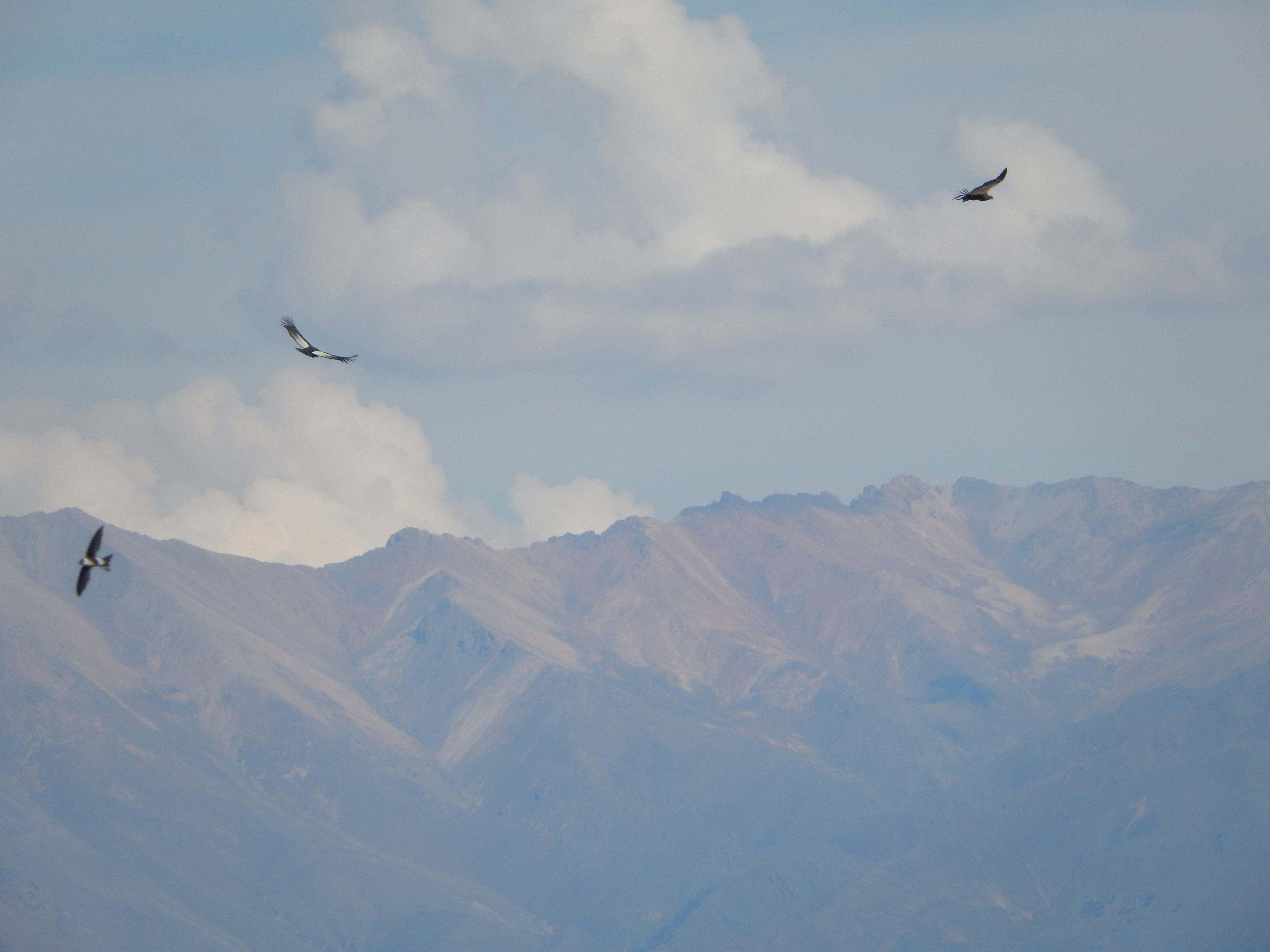
Stunning sight
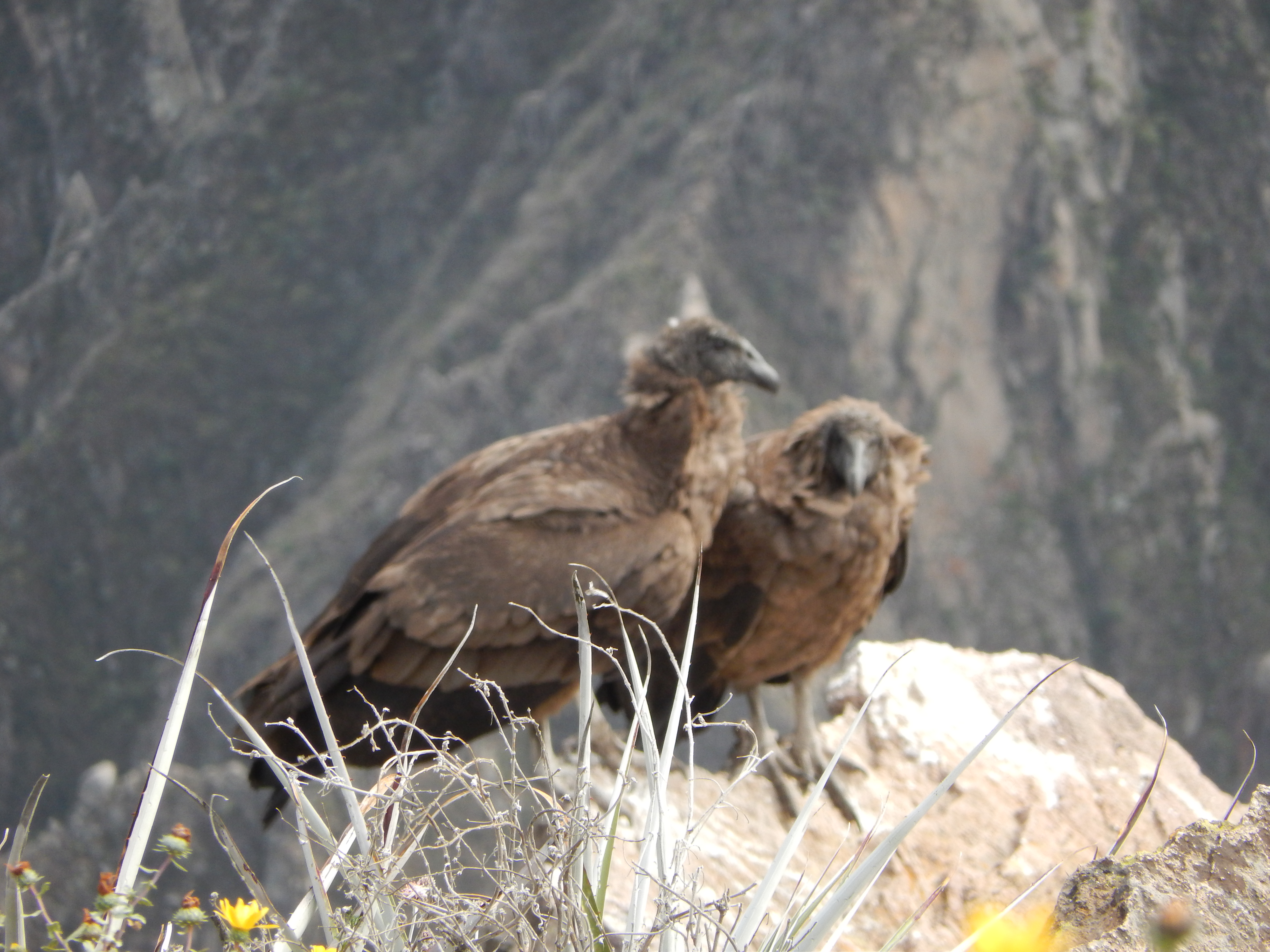
Young condors–one of them stayed huddled on that rock the whole hour I was there
Apparently, the Andean condor here has just one predator–a hummingbird! Hummingbirds are very territorial, and if condors get too close to this one type of hummingbird’s food supply, the hummingbird will use its long beak to go for the condors’ eyes. Never would’ve guessed it.

Because of their weight, condors try not to fly unless they have a little help, so their most active time of day is in the mornings, when the thermal drafts of the canyon are strongest. They don’t fly in the afternoons or evenings. Instead, they stay in the nests they build in holes in the walls of the canyon. We were lucky to see at least 10 condors soaring on the wind, against the glorious backdrop of the green, rugged mountains.

The adults flew above and away from the young ones, sometimes dived below (to get to a nest or a snack?), and only occasionally stopped by to check on the young ones. They must not have been too young.
(A woman at my hostel in Cusco informed me that the reason that particular site is so popular for viewing condors is that the national reserve staff push animal carcasses over the edge of the canyon, drawing the non-hunting birds. If that’s true, it means the animals aren’t quite as wild as I’d thought, but I don’t think it diminishes the experience.)

Happy birthday to me
When I asked some people in my group to take my birthday photo for me, they burst into “Happy Birthday” in Spanish, which was embarrassing but sweet. Later, the group took a one-hour walk along the canyon’s edge, taking more photos, learning more about condors, and appreciating being away from the crowds at the Mirador del Condor.

Colca Canyon
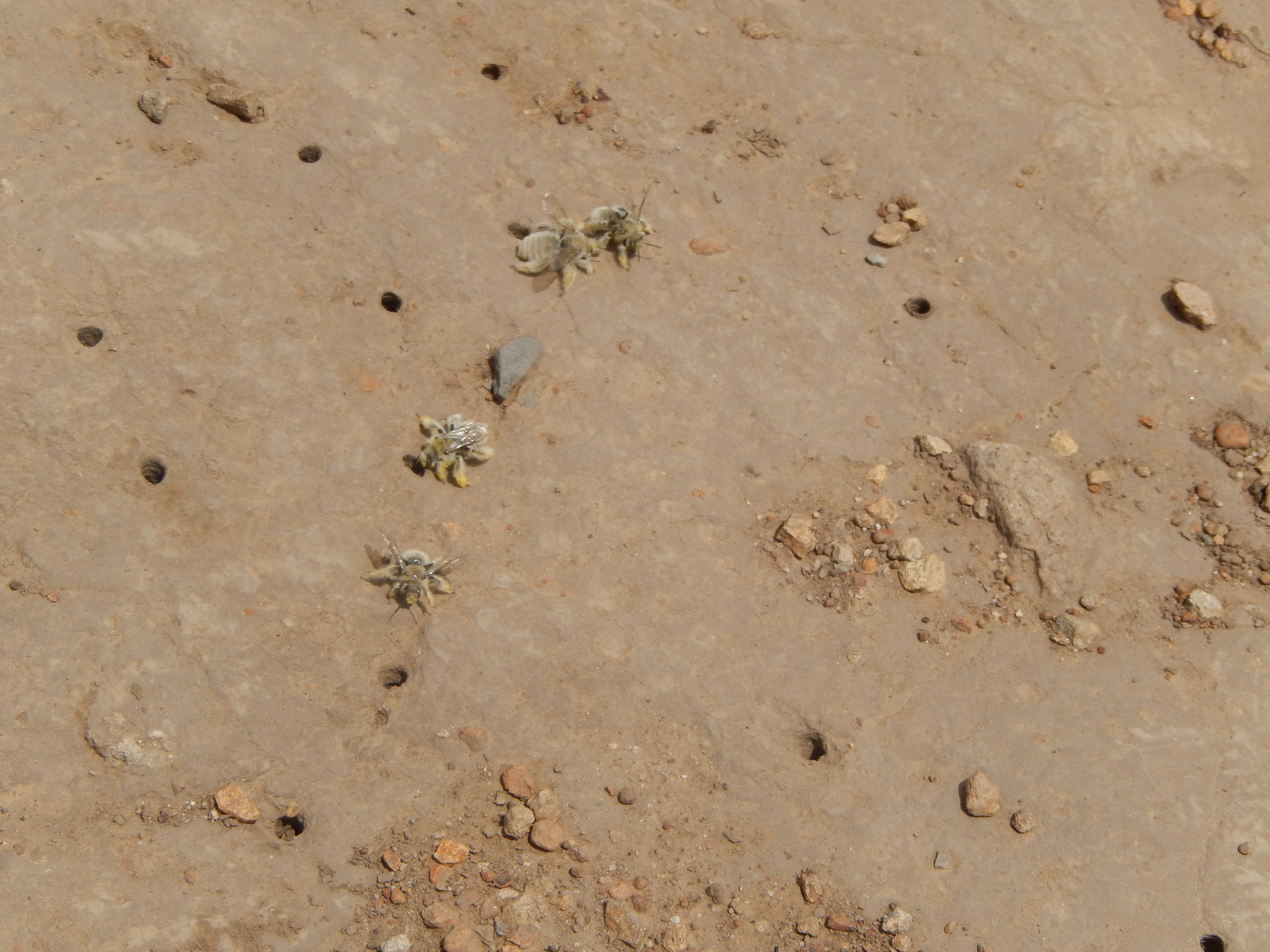
Little white bees that apparently do not sting and live in these holes
We had a quick lunch in Chivay and then began the journey back to Arequipa, this time with no stops. My last glimpse of the Colca Canyon was of a bright yellow flower swaying in the breeze on the edge of a cliff, while the green mountains stood watch behind.
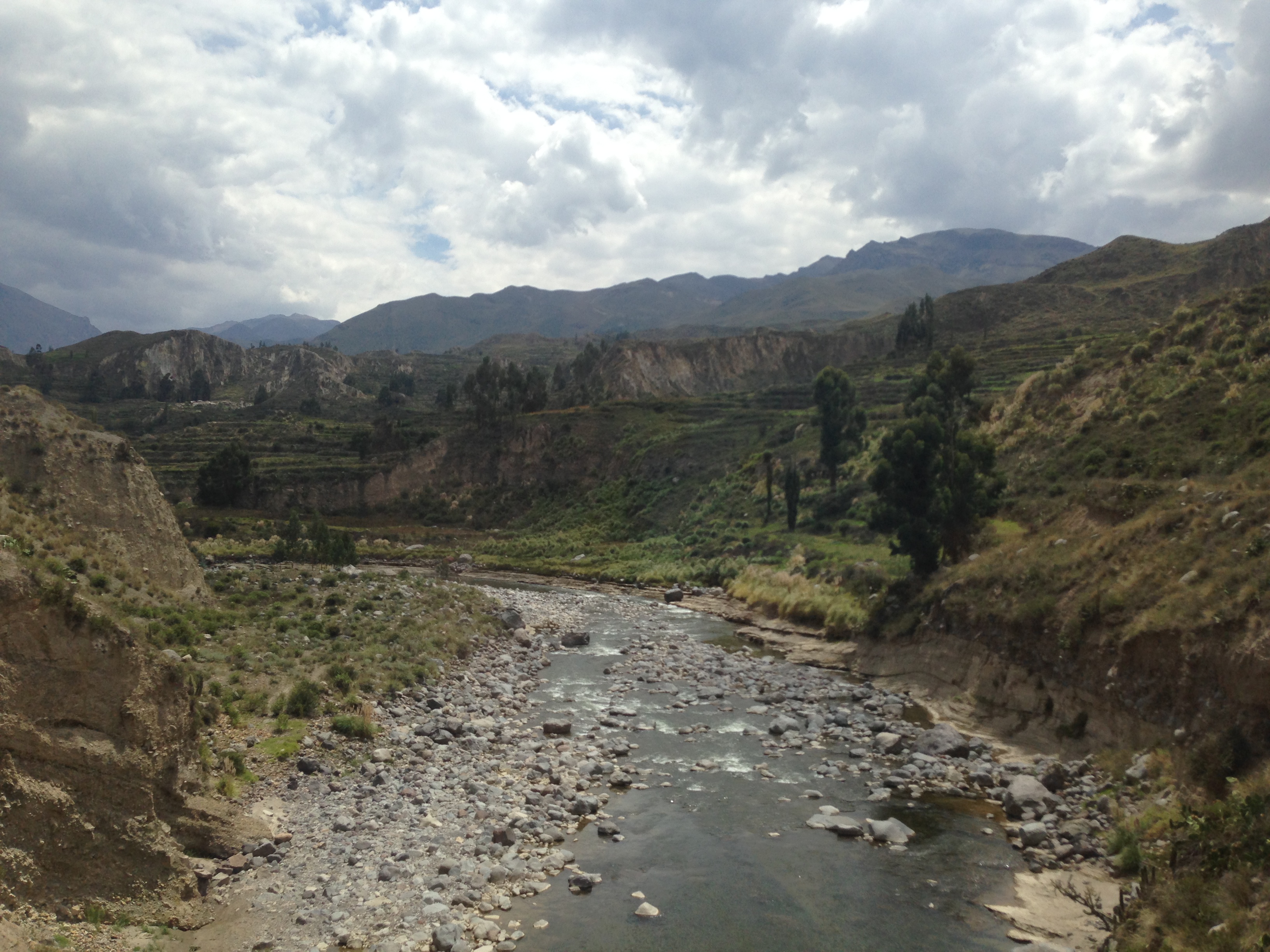
We took an alternate route back through the canyon and got to see the river up close

There were a lot of pretty yellow, red, silvery, and purple flowers along the canyon
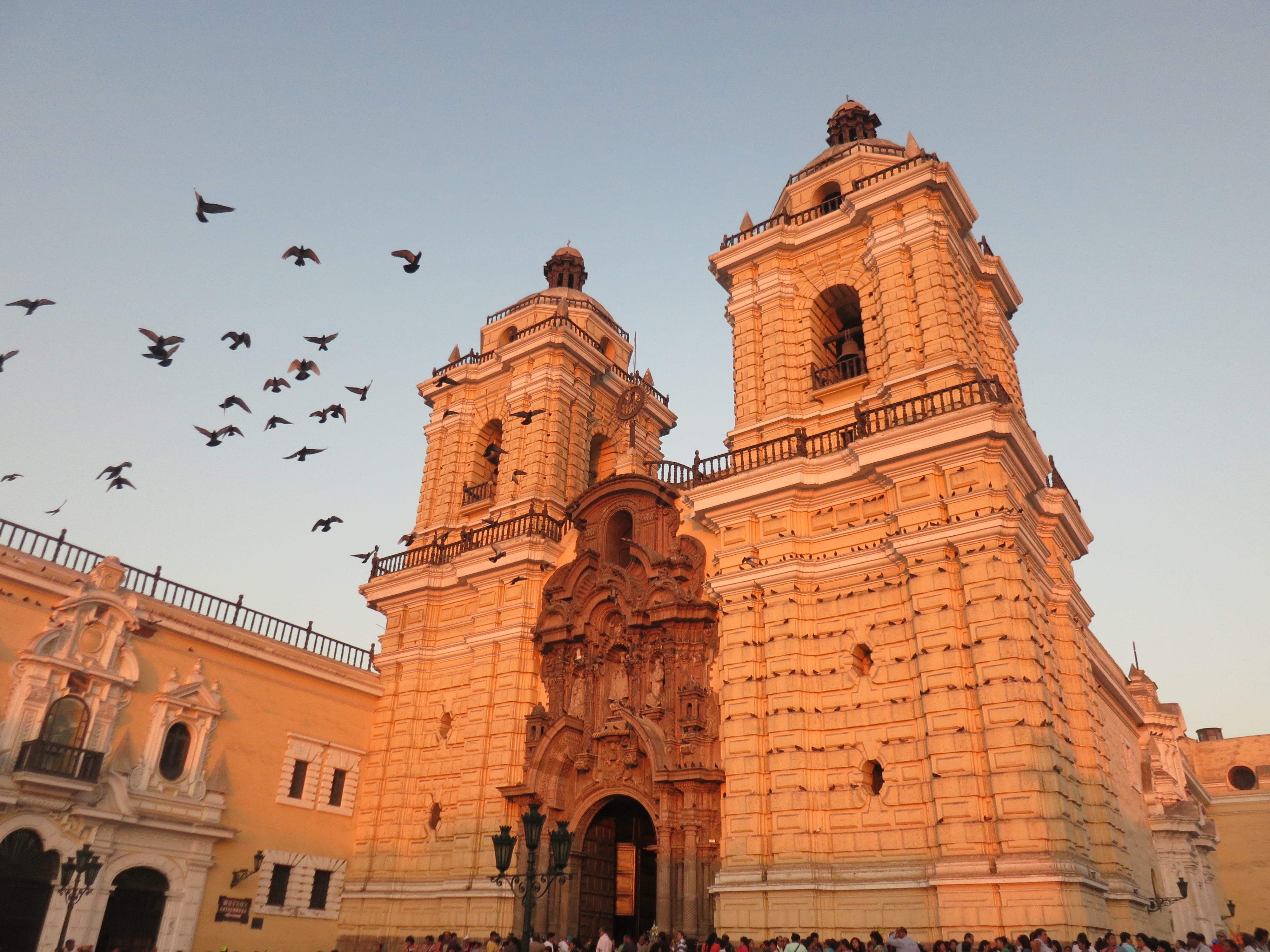
Iglesia de San Francisco, Lima, Peru; March 28, 2014
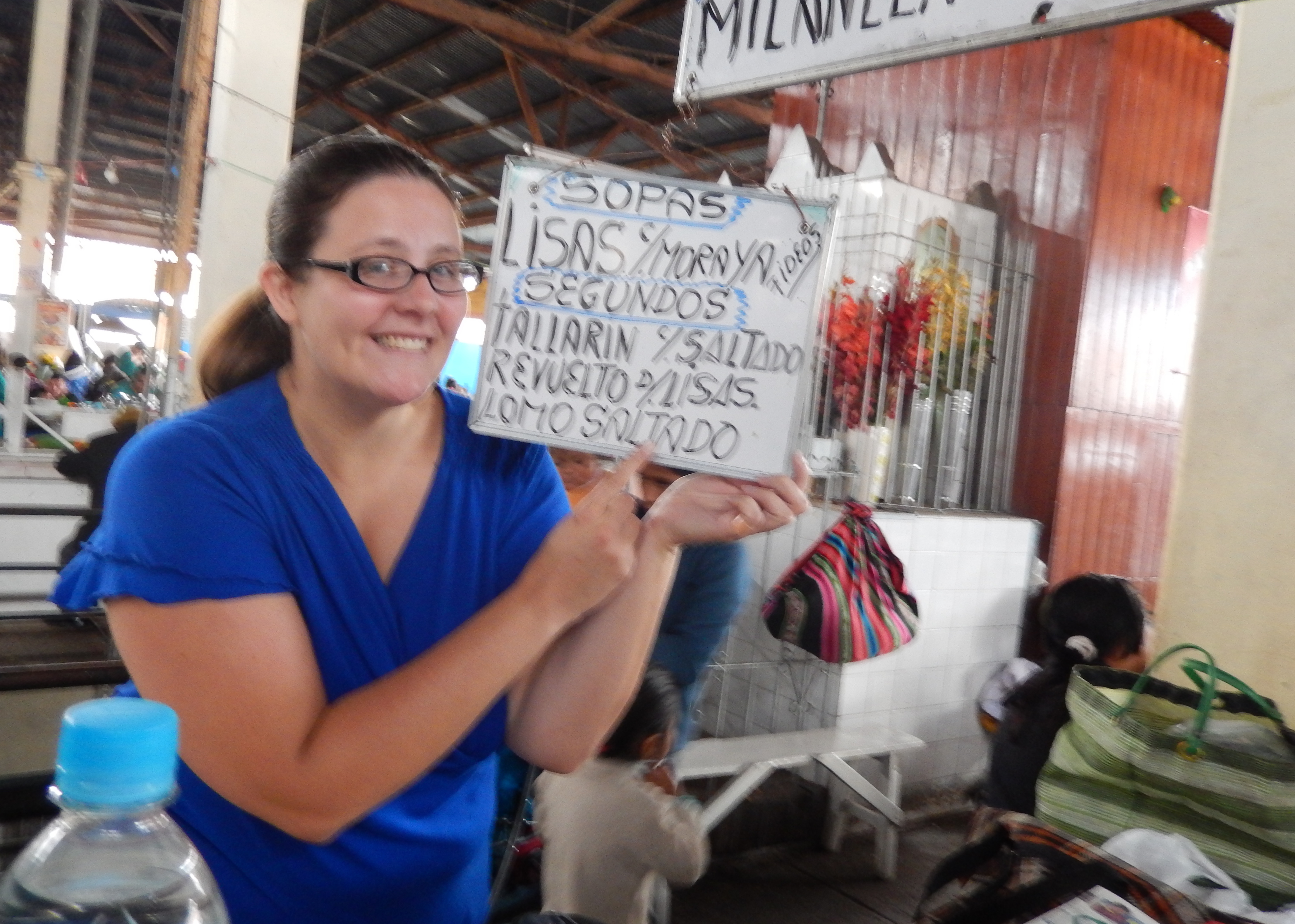
The potato is me
I ate this dish at San Pedro Market in Cusco, Peru. Lisas are one of the many types of potatoes here. The woman who sold me the meal was tickled pink when I told her my name.
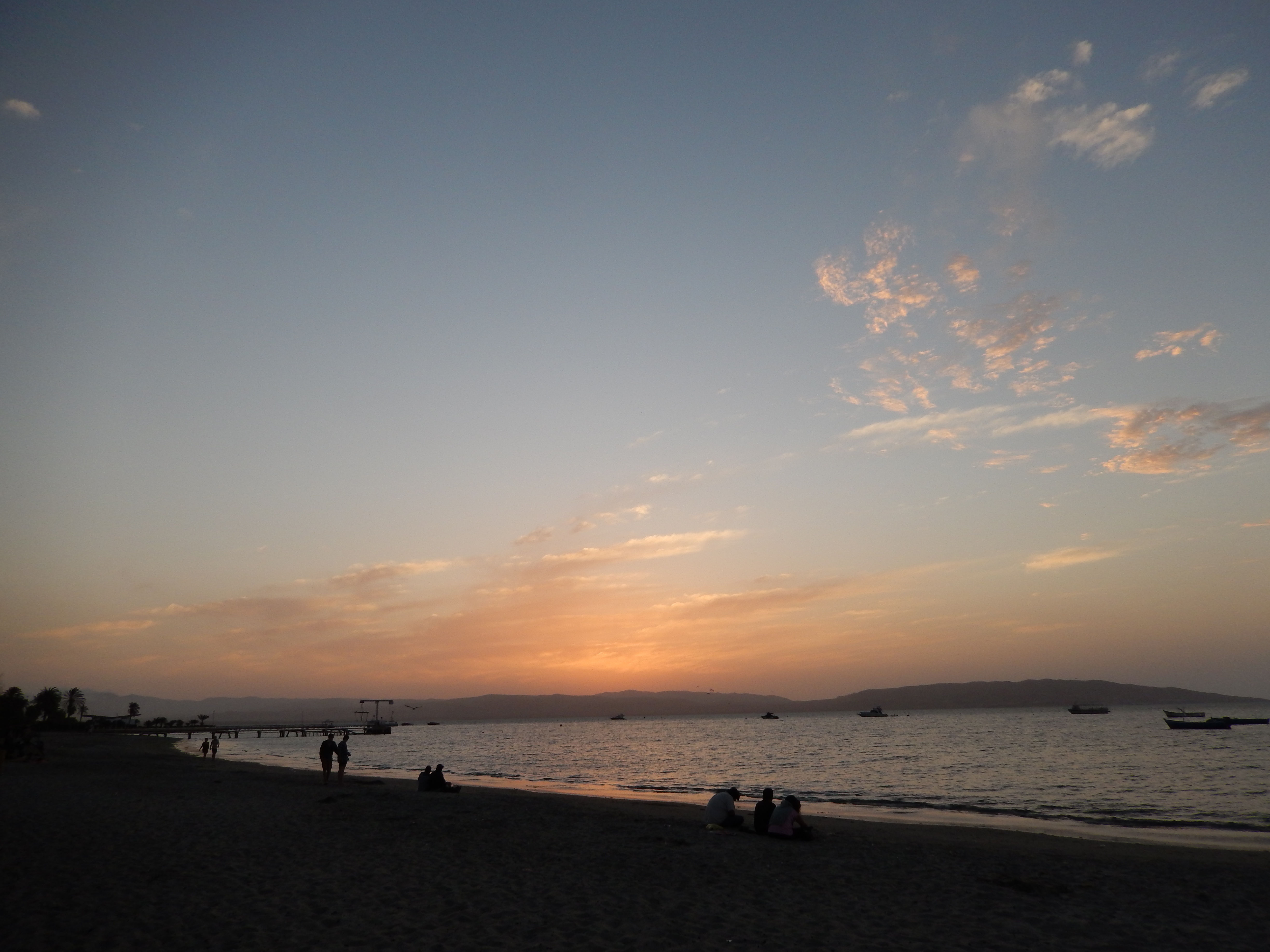
Sunset, Paracas, Peru
 Stowaway Travel Writing & Editorial Services