Shrines and Scams in Phuket

Every town has something worth seeing. Any trip that lasts more than three months is necessarily going to include downtime; you won’t see highlights every day, and every few weeks, entire days are taken up with the minutiae of travel: laundry, planning onward travel, etc. But even the stopover towns have a monument or natural feature or a really good diner, and if I have more than a night in a place, I try to check it out. So even though my time in Phuket Town was mostly spent recovering from jet lag and visiting hospitals (shingles lingers for an impossibly long time), I did spend an afternoon admiring the buildings at the center of town.

Old Town in Phuket

Old Town in Phuket

The free “Treasure Map” of town explains the origins of the town’s Sino-European architecture: Phuket is perfectly placed for ocean commerce, and it was a big trade center where Indian, Malay, Arab, European, and Chinese merchants gathered–and some settled down. Chinese tin miners were especially influential, building the colorful two-story shop-houses that I also saw lots of in Singapore. A few downtown streets have recently been renovated, and apparently one in particular, Soi Rommani, is a popular filming location. Phuket is so heavily strung with electric wires that it’s a wonder they don’t fall to the ground, so it was nice to walk along the renovated streets, where the cables have been buried.

Soi Rommani

Soi Rommani

It took a little backtracking and poking my head into the wrong alleyways, but eventually I found the Shrine of the Serene Light, a Chinese Taoist temple. The courtyard was full of bamboo scaffolding, long wooden boards, and bags of building materials. A man crouched near a sculpture to the side and carefully applied a new coat of paint. No one else was in there, so I covered my bare shoulders with a hat and a bandana in a hasty stab at proper dress, and went inside.
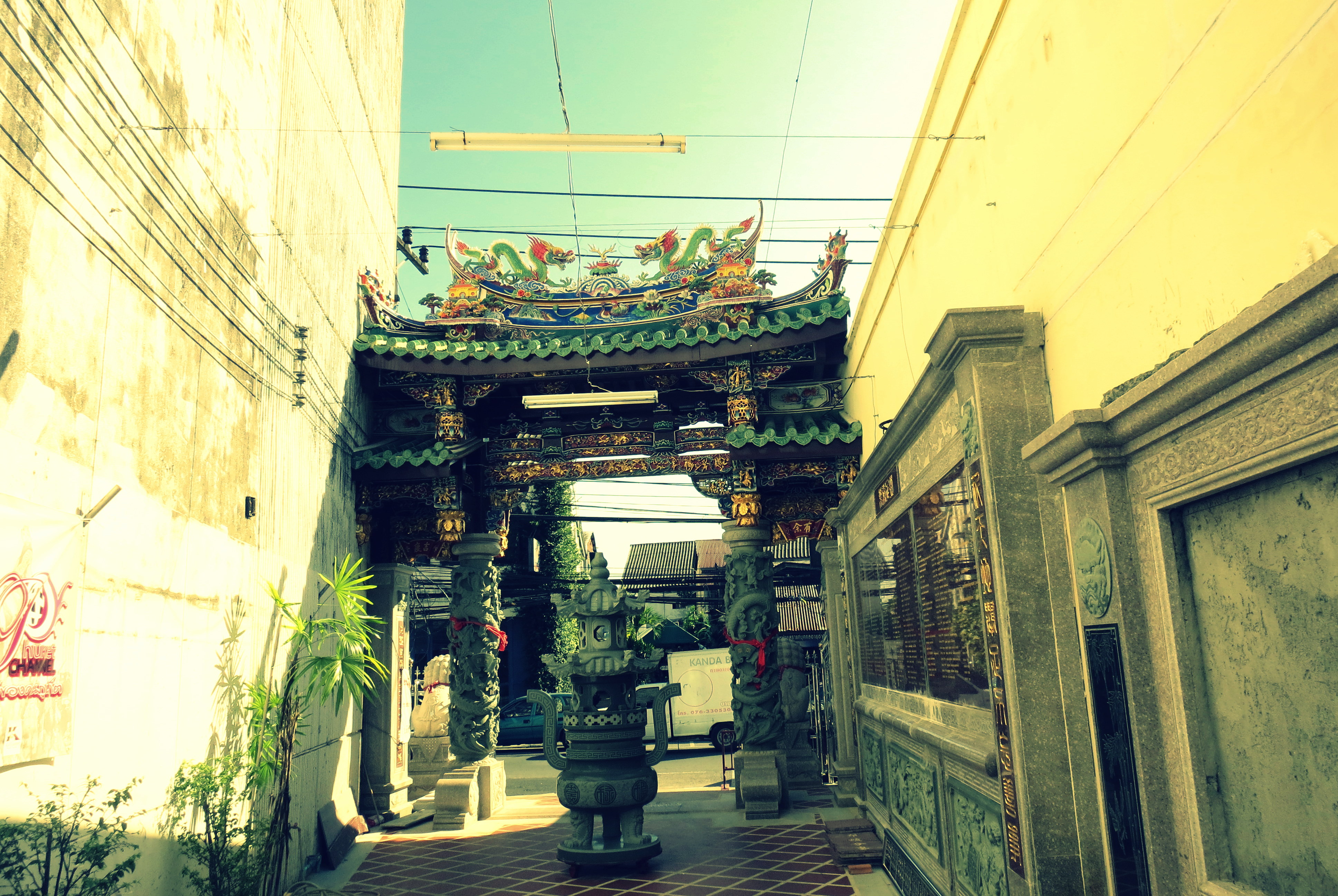
After passing under an elaborate gate, you walk down a long alleyway overshadowed by construction before you get to this second gate for the Shrine of the Serene Light

After passing under an elaborate gate, you walk down a long alleyway overshadowed by construction before you get to this second gate for the Shrine of the Serene Light

I had already passed under two gates to get to the shrine, and now I took off my shoes at the pavilion immediately in front of the shrine. I ogled the fruit laid out in offering, and stepped over the threshold into the dark temple. Drawers of paper-slip fortunes lined the right-hand wall, and a wisp of smoke rose from the tall candles in the center of the room. A boombox in the corner played what I assume was a religious song, and I walked to the back of the small room to look at the different altars; one had a bronze bas-relief on the wall, one housed a statue under a carved wooden canopy, and one was so cluttered with flowers, fruits, and candies that it was hard to see the honored figure behind.

Shrine of the Serene Light

Shrine of the Serene Light

phuket

I had only been in Thailand for a few days, but already I was used to being honked at while walking down the street, and hearing drivers shout out “Taxi! Motobike!” in a bid for my business. So I wasn’t surprised, while walking back to my hostel from the hospital one hot afternoon, to hear a “Taxi! Madam! Taxi!” and to see a songthaew driver lean out his window and gesture to me frantically. I smiled and said, “No, thank you,” and carried on.

But he was not done. He followed me for several meters, and after I thought I’d finally shook him, I heard a pattering behind me and looked up to see that he had got out of his car and actually chased me down on foot. Had this been nighttime instead of broad daylight, I would have been frightened.

Songthaew means "two benches." They're somewhere between bus and taxi on the scale of public/private transit.

Songthaew means “two benches.” They’re somewhere between bus and taxi on the scale of public/private transit.

He held a map out and said, “10 baht, 10 baht, I take you anywhere you want to go, 10 baht, we go here first.” 10 baht is about 30 cents and cheaper than any songthaew ever costs, so it was clear to me that this was one of the Souvenir Shop Scams I’d read about. You get in an absurdly low-priced vehicle, the driver takes you to at least one souvenir shop, more if he can, and he gets a cut of whatever you spend. It was very hot, the hostel was quite far down the road, I wanted to know what these mysterious souvenir shops look like, and I thought, hey, I’m not really getting scammed if I know about it up front, right?

I got in the songthaew and when he pulled in to the souvenir shop I obediently went inside. Immediately, a woman in a long traditional dress greeted me, and she shadowed me for my entire time in there. It was a vast room, like one of those abandoned shops in the mall that occasionally gets rented out to a book discounter or a Halloween outfit, and it was almost entirely filled with jewelry cases. Two women peered into the cases and seemed intent on buying at least one piece each from the smiling saleswoman behind the counter. The huge room was empty except for us.
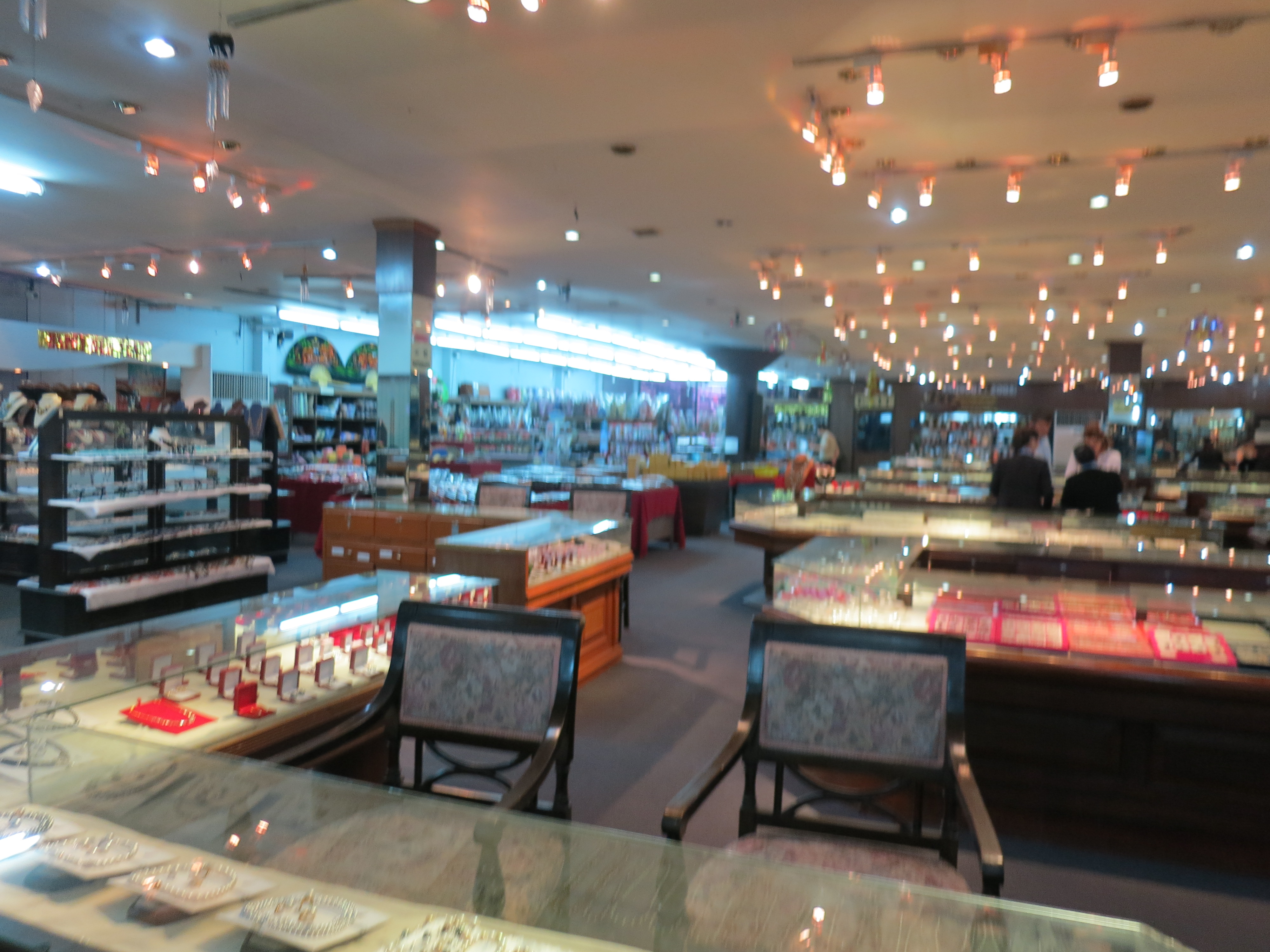
Acres of jewelry cases

Acres of jewelry cases

My guide tried to steer me to the jewelry, but I looked around the walls, at the t-shirts, scarves, and trinkets. I took a blurry photo before my guide could stop me and point to the many “No Photo” signs posted around the room. Then I bought two postcards, to my guide’s evident disgust, and went back to the songthaew. He wanted to take me to the mall next, but I’d experimented with the scam long enough and asked to go straight back to the hostel.

I was only in Phuket for a few days, but I managed to see the old buildings and the new scams, which is not bad for a stopover town.

Chinese medicine shop

Chinese medicine shop

Volunteering at the Elephant Nature Park: Days 6 and 7

This week is all Elephant Nature Park (ENP), all the time. Every day will be a detailed post on a day or two of the seven days I spent at the park in February 2013. I hope that those researching volunteer opportunities will find the detail helpful in determining if this is a week and $400 they want to sign up for. In my opinion, it’s totally worth it! Once again, thanks so much to donors who made this week possible. For more info on the ENP, you can visit their site here and learn more about the individual elephants here.

Day 6 and Day 7

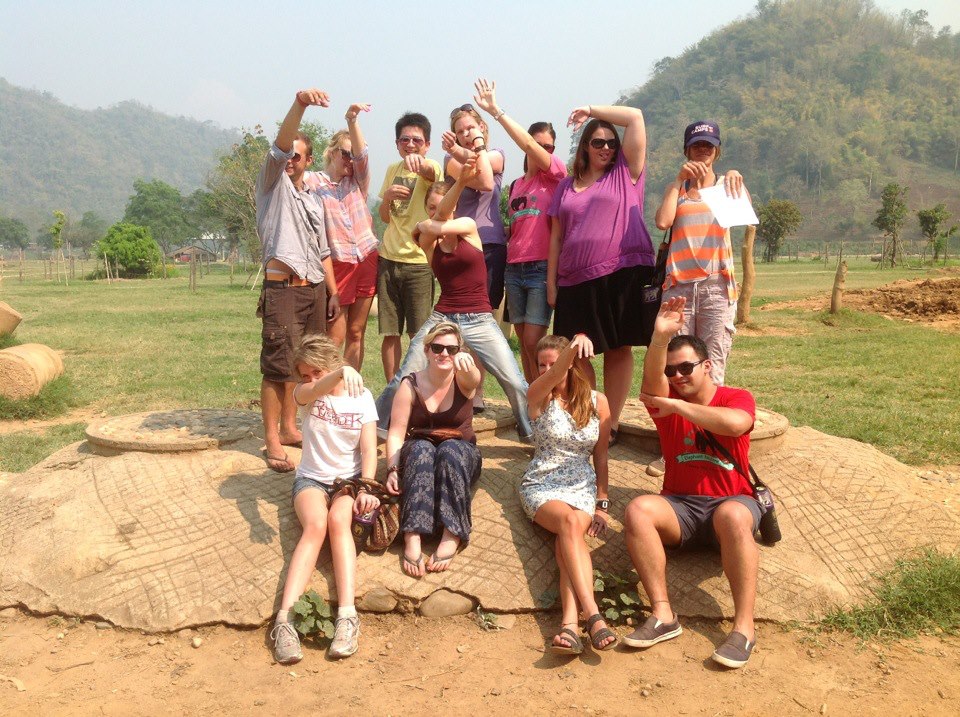
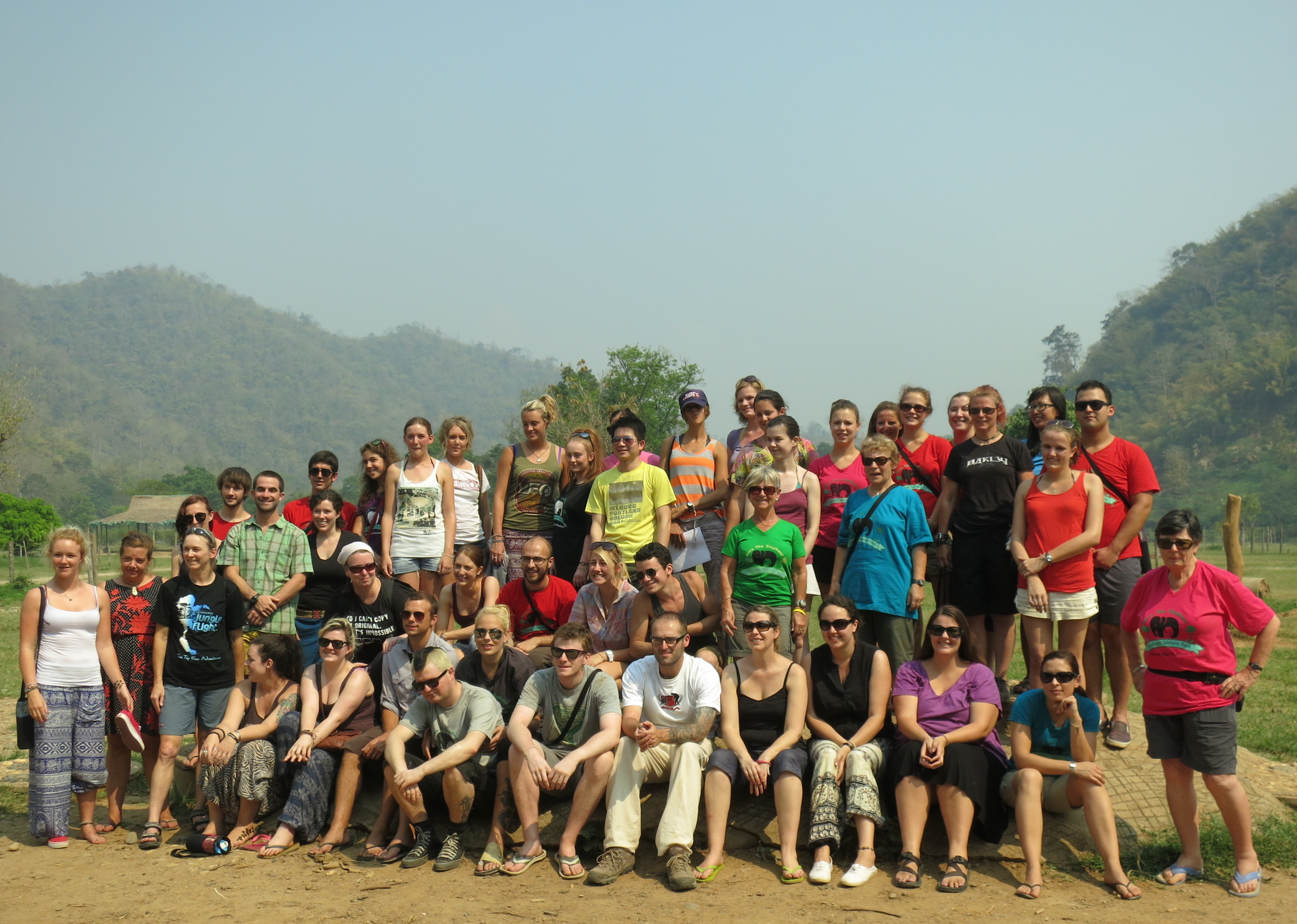
On our last day of work, we had ele poo duty in the morning, and a group photo in the afternoon. That night, we had a farewell dinner, sitting on the floor and watching dance performances by girls from the local village. Chet MC’d in a spangly vest and bow tie, which I coveted.

The farewell dinner dance

The farewell dinner dance

We had one last bit of excitement, as we did one last job on day 6. One of the elephants was really sick, and needed sandbags under her to keep her supported as she lay down in her last days. (Sadly, she died a week later.) We walked far out in the field to the riverbed and poured sand into old flour sacks, and then heaved the sacks up on the two trucks the volunteer coordinators drove out there. Suddenly, an elephant wandered over to us, curious as to what we were doing and possibly intrigued by the gray truck that looked vaguely elephantine. The VCs shouted for the mahouts to come over, and all of us volunteers circled the trucks to get away. It was a comical little dance, until the rest of the herd came over too. Then it got a little scary: the mahouts were sprinting across the field, shouting “hut! hut!” and the VCs were yelling at us to run, and we all hoofed it in the opposite direction. We arrived back at the main building a little out of breath but okay, and laughing about the close call that even a safe haven for wild animals can provide.

The volunteers of the week of February 25, 2013

The volunteers of the week of February 25, 2013

What else can I tell you about the experience at the park? There was an activity most evenings, which you could join or not, as you chose. One night, the VCs taught us about Thai culture, and we ended the evening singing a song called “Dance Banana,” which was as silly and fun as it sounds.

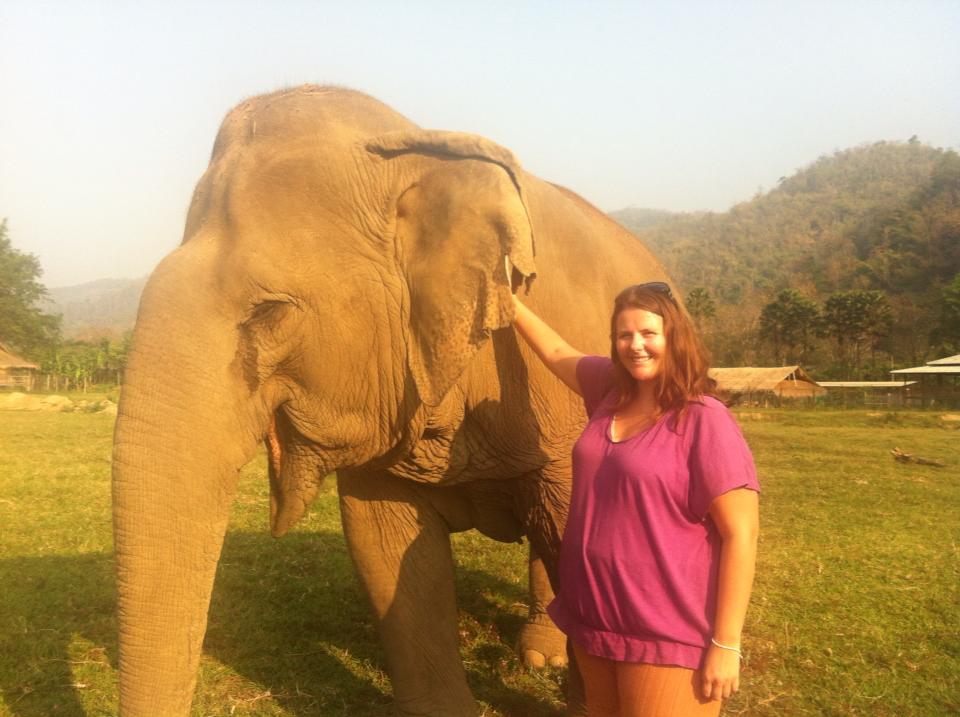
Me and Sammyi

Me and Sammyi

Another night, founder Lek spoke passionately about her work here and how we all make a huge difference in what she’s able to do and the elephants they’re able to help. Her whole ethos is one of respect and caring, and it’s no wonder everyone who meets her is inspired to help.

Navaan, the youngest elephant of the park--until a few weeks ago, when a new baby was born!

Navaan, the youngest elephant of the park–until a few weeks ago, when a new baby was born!

The rooms were more comfortable than any of us had expected—a few people got their own rooms, but most of us bunked with one other person, in a room with twin beds covered in mosquito netting. Western style toilets were also a pleasant surprise, as was the wifi sometimes available in the dining area. You’re roughing it, but not as much as you might expect to.

Luke, me, Charlotte, Jane, and Claudio

Luke, me, Charlotte, Jane, and Claudio (Thanks to Christine Barnett for the photo)

Elephant shelters are right outside the rooms, so you can see them standing there every time you go to the bathroom. You can even spy them through the windows in the showers.

The accommodations

The accommodations

They do have a laundry service, which I used, because I simply didn’t have enough clothes that I could bear wearing again when they got as dirty as they did. Pro tip: bring at least 2 pairs of pants or shorts, so you can alternate, and be sure to bring at least one pair of pants and one long-sleeved shirt; you’ll want them when you’re cutting corn and bamboo.

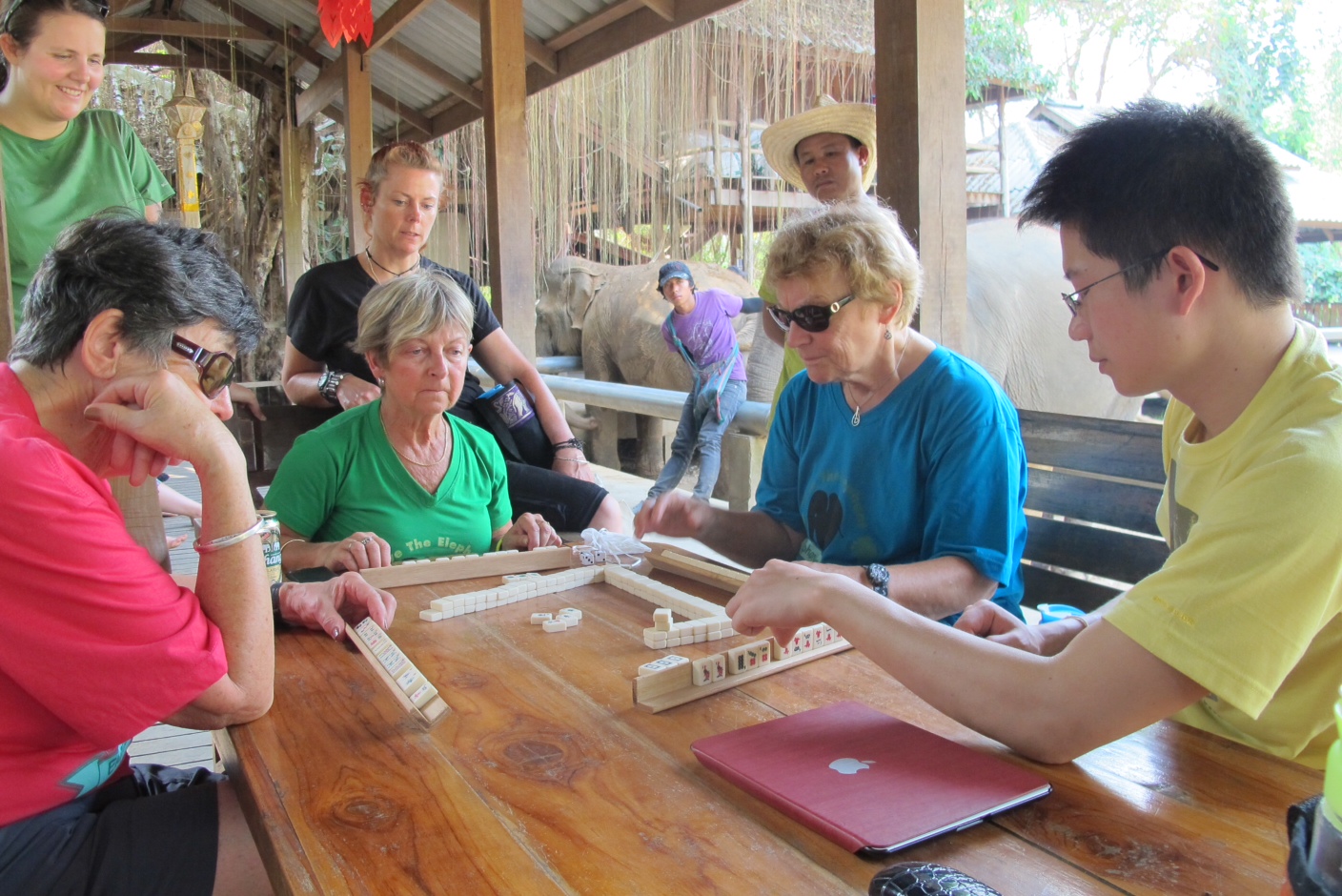
The "gray nomads" of Victoria, Australia played mahjong a few times, and Eric from Guangzhou joined them once (I loved these ladies--inspirations for sure)

The “gray nomads” of Victoria, Australia played mahjong a few times, and Eric from Guangzhou joined them once. I loved these ladies–inspirations for sure. (Thanks to Julie Warren for the photo.)

There’s plenty of leisure time. I wrote in my journal, read, chatted with fellow volunteers, and sometimes napped. Some volunteers went up the road to the dog shelter, and others went up to the store outside the park for their cigarette and salty snack needs. Women from the village come to the area above the dining room each night to give massages (at the cheapest rates I saw in Thailand), and a woman sells beer and snacks til about 9pm.

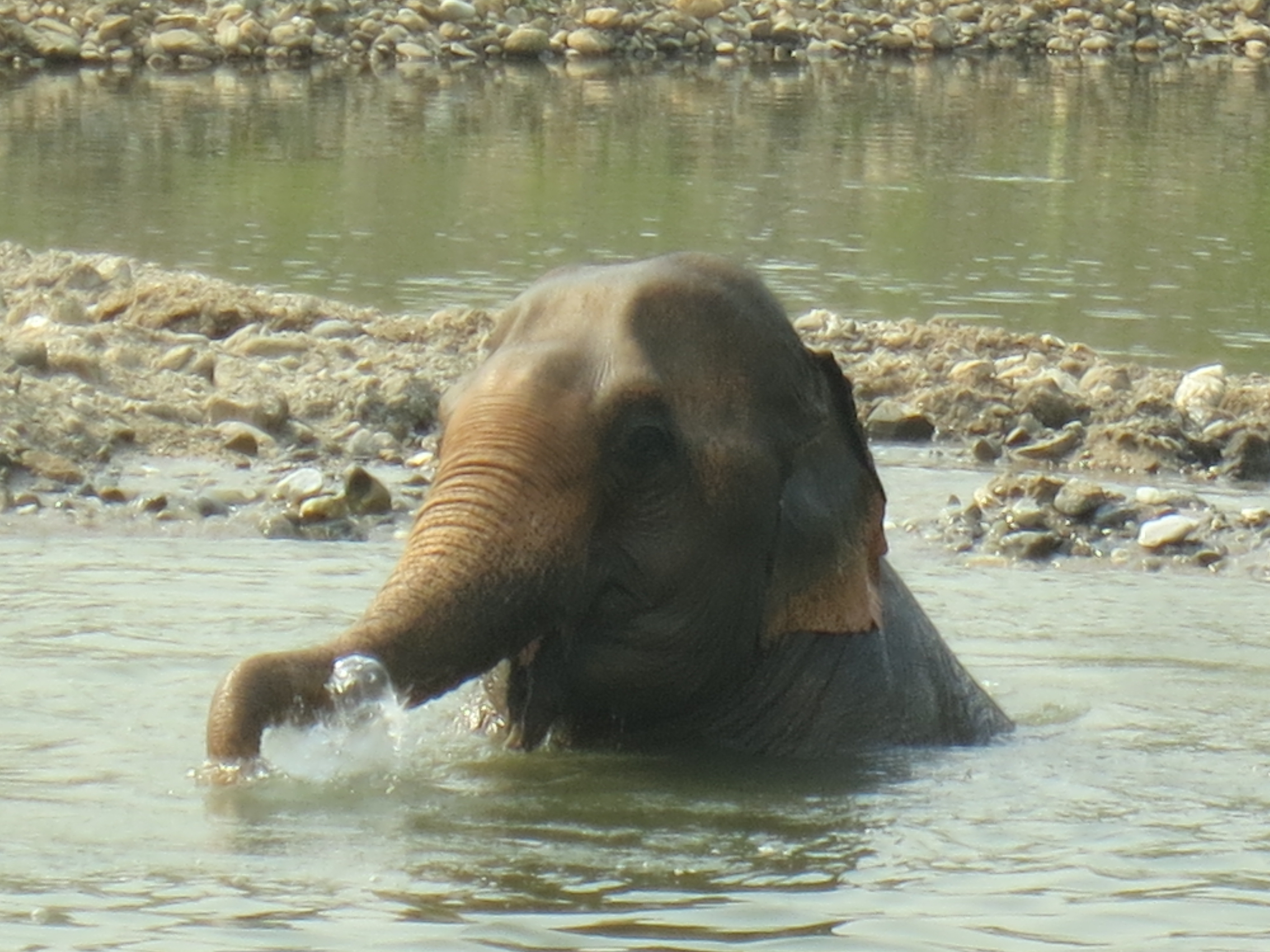
Elephant bathing on its own--one of Lek's goals is to dredge the river deep enough to make it possible for the eles to bathe themselves, bringing them one step closer to their wild selves

Elephant bathing on its own–one of Lek’s goals is to dredge the river deep enough to make it possible for the eles to bathe themselves, bringing them one step closer to their wild selves

I had a wonderful time volunteering at the Elephant Nature Park. I met a lot of wonderful people and had some great conversations. I saw one of the loveliest moonrises of my life. I watched a baby elephant practice using his trunk. I was exhausted the whole time, yet almost always contented.

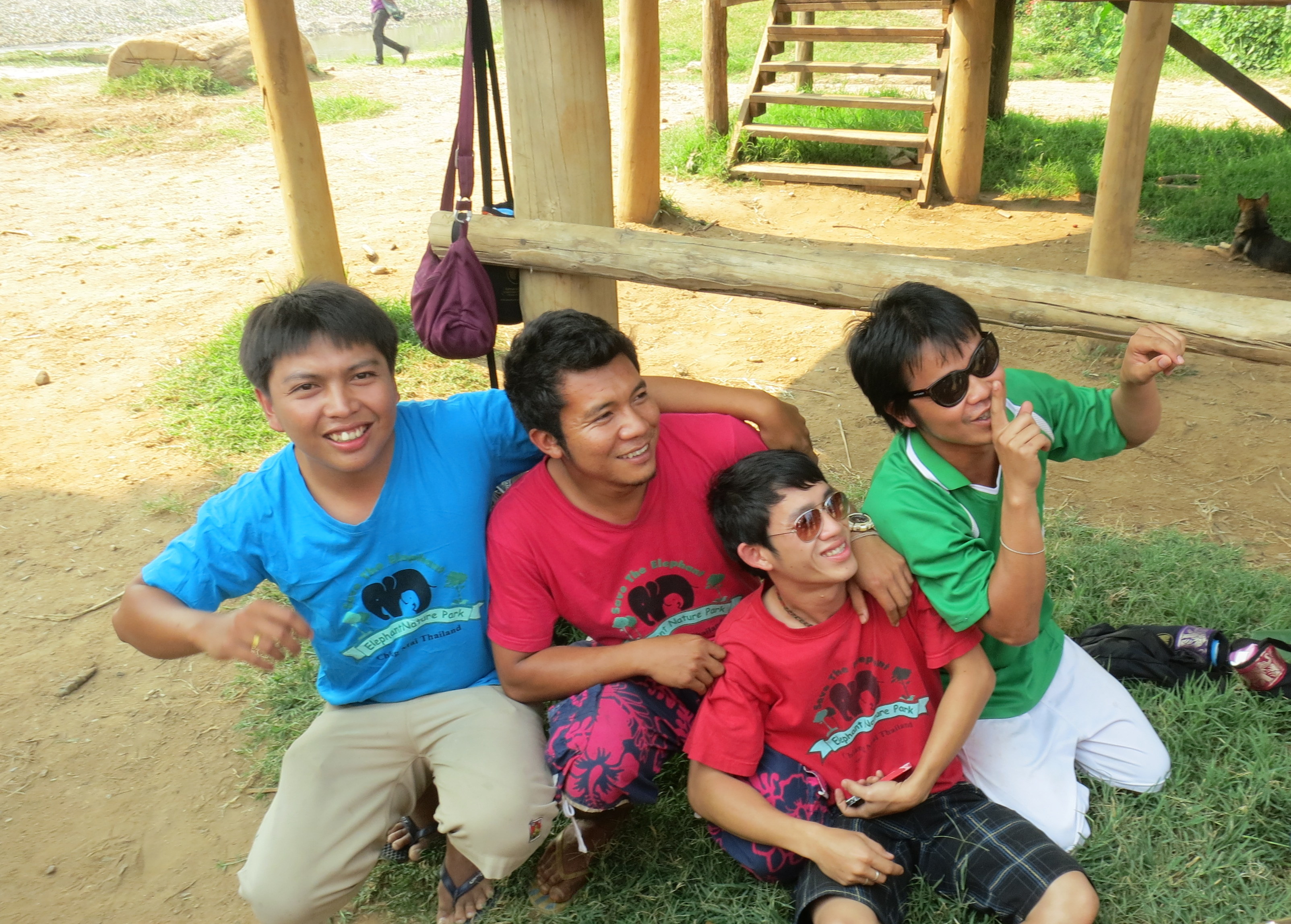
Jane, Toby, Mix, Chet -- our Volunteer Coordinators

Jane, Toby, Mix, Chet — our Volunteer Coordinators

I was nervous going into it, but I was able to keep up with the rest of my group and I can look back and proudly say, “Yes, I was witness to the grace and beauty of elephants, and I did something tangible to make the world a better place for a short time.” That’s about as good as it gets, isn’t it?

enp

Volunteering at the Elephant Nature Park: Days 4 and 5

This week is all Elephant Nature Park (ENP), all the time. Every day will be a detailed post on a day or two of the seven days I spent at the park in February 2013. I hope that those researching volunteer opportunities will find the detail helpful in determining if this is a week and $400 they want to sign up for. In my opinion, it’s totally worth it! Once again, thanks so much to donors who made this week possible. For more info on the ENP, you can visit their site here and learn more about the individual elephants here.

We chopped that food the elephant is enjoying

We chopped that food the elephant is enjoying

Day 4

Ele poo duty today! We carted wheelbarrows, shovels, pitchforks, and a couple rakes out to the shelters where the elephants sleep. They were off bathing and eating and generally having a good time, so we were free to shovel it all in to the wheelbarrows—softball-sized turds and the green leaves covering them. Some of those leaves were the corn we’d cut for them; eles only digest 40% of what they eat, apparently. There are a lot of jobs that are tough on the back here, and shoveling shit is one of them. We collected from piles around the different shelters, and a couple people worked up an “Every day I’m shoveling, shoveling” line to that wretched LMFAO song, and we all did little dances with our farm implements.

Top-notch shit shoveler

Top-notch shit shoveler

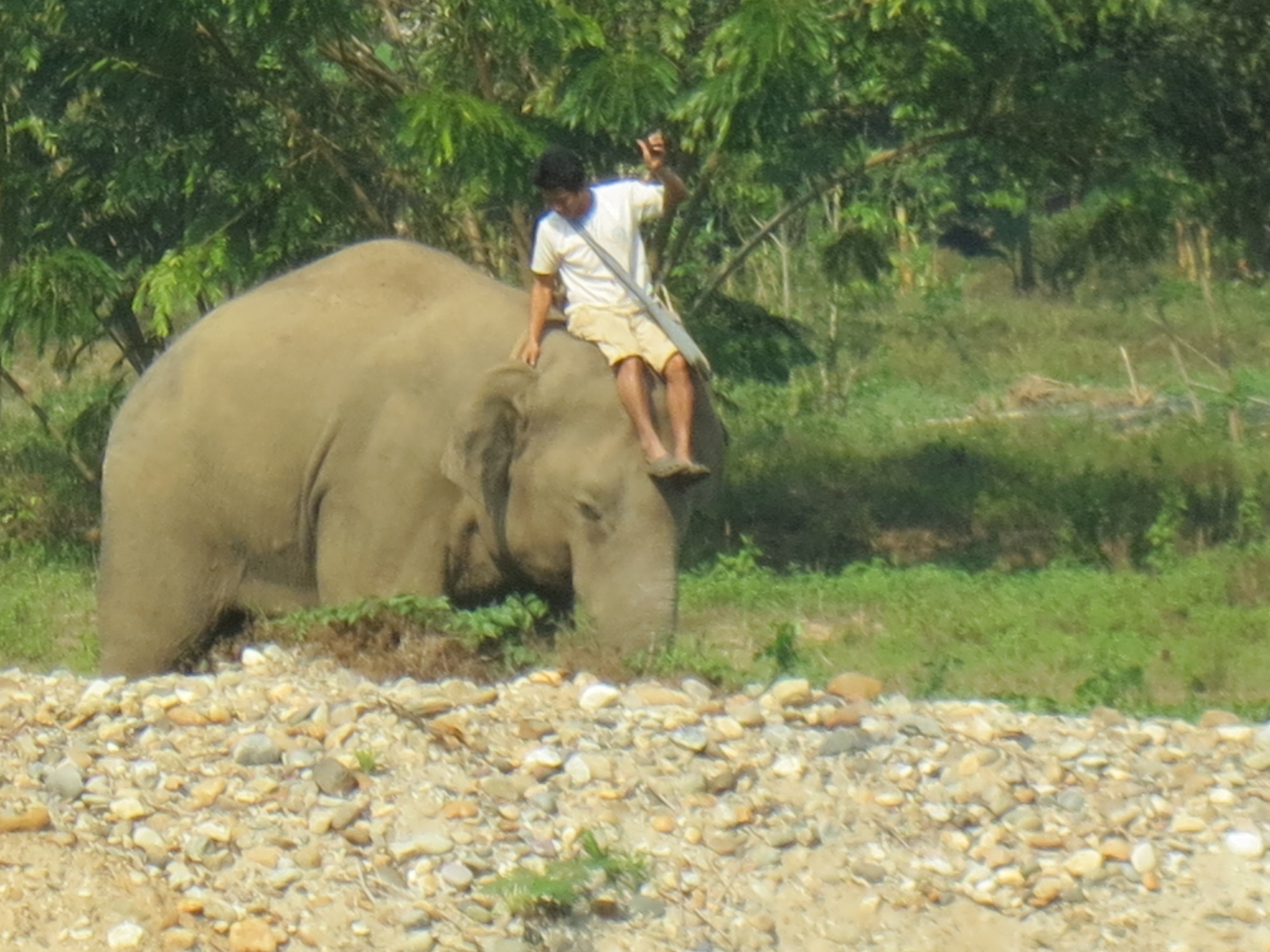
We saw Hope across the river. Hope is an adolescent male who just can’t get over his hormonal ways, and they call him “naughty boy” here—along with Jungle Boy, who also has to be chained separately and watched carefully so he doesn’t try to mount the females. One day after lunch, one of the young bulls knocked down an entire wooden shelter. We all heard an almighty crash and when we looked up, a few young elephants were casually walking away from the demolished shelter, clouds of dust rising in the air. There’s always something exciting going on here.

Hope's mahout sliding off his shoulders (it doesn't hurt the elephant to be ridden there, just on the back)

Hope’s mahout sliding off his shoulders (it doesn’t hurt the elephant to be ridden there, just on the back)

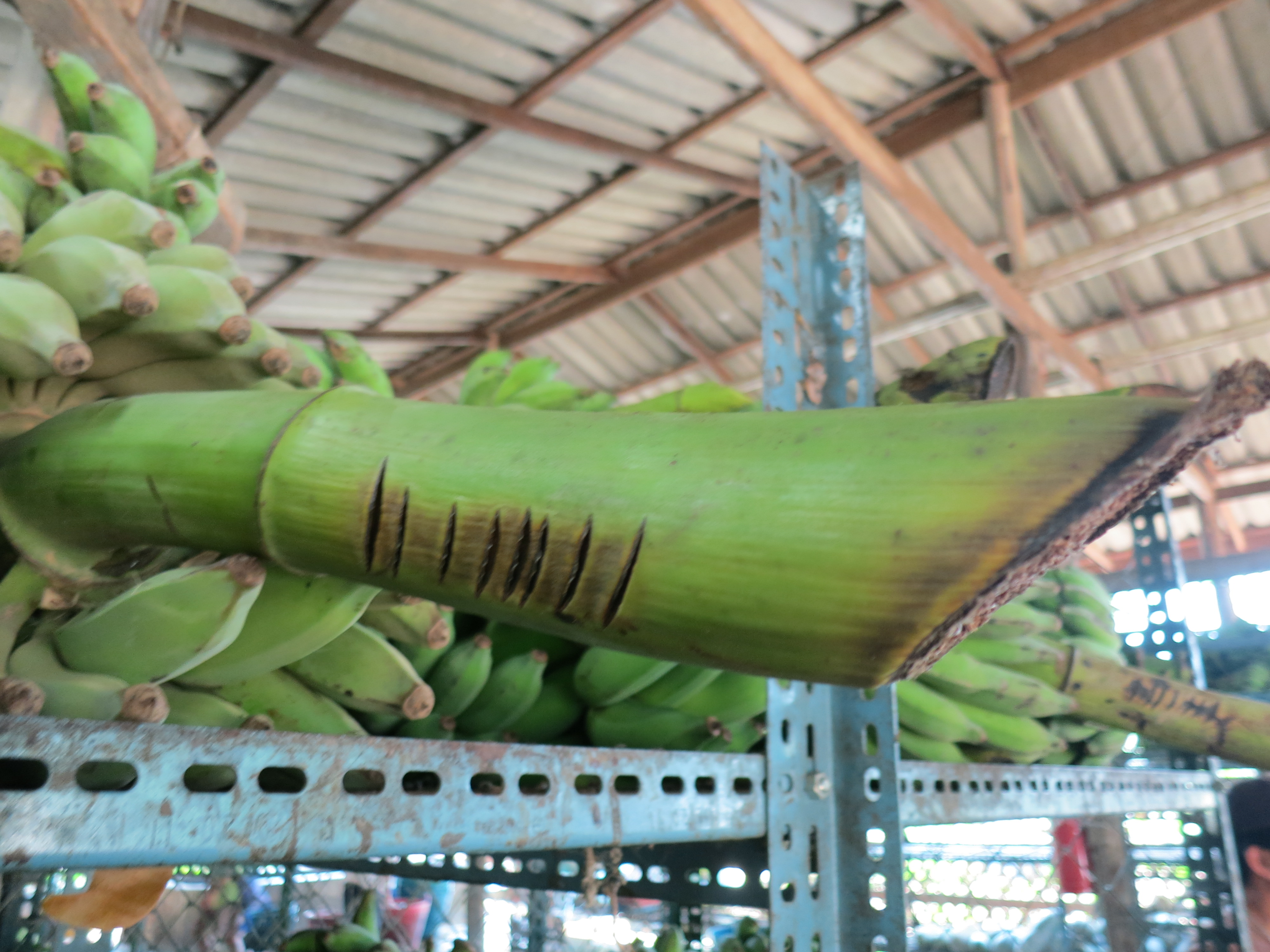
After lunch, we unloaded a truckful of green bananas, the bunches of which were carefully counted so we could pay the farmer correctly. 90% of the food here is from organic farmers in the area, 5% is grown by the park, and 5% is from markets in Chiang Mai.

The notches say how many banana bunches there are per stalk

The notches say how many banana bunches there are per stalk

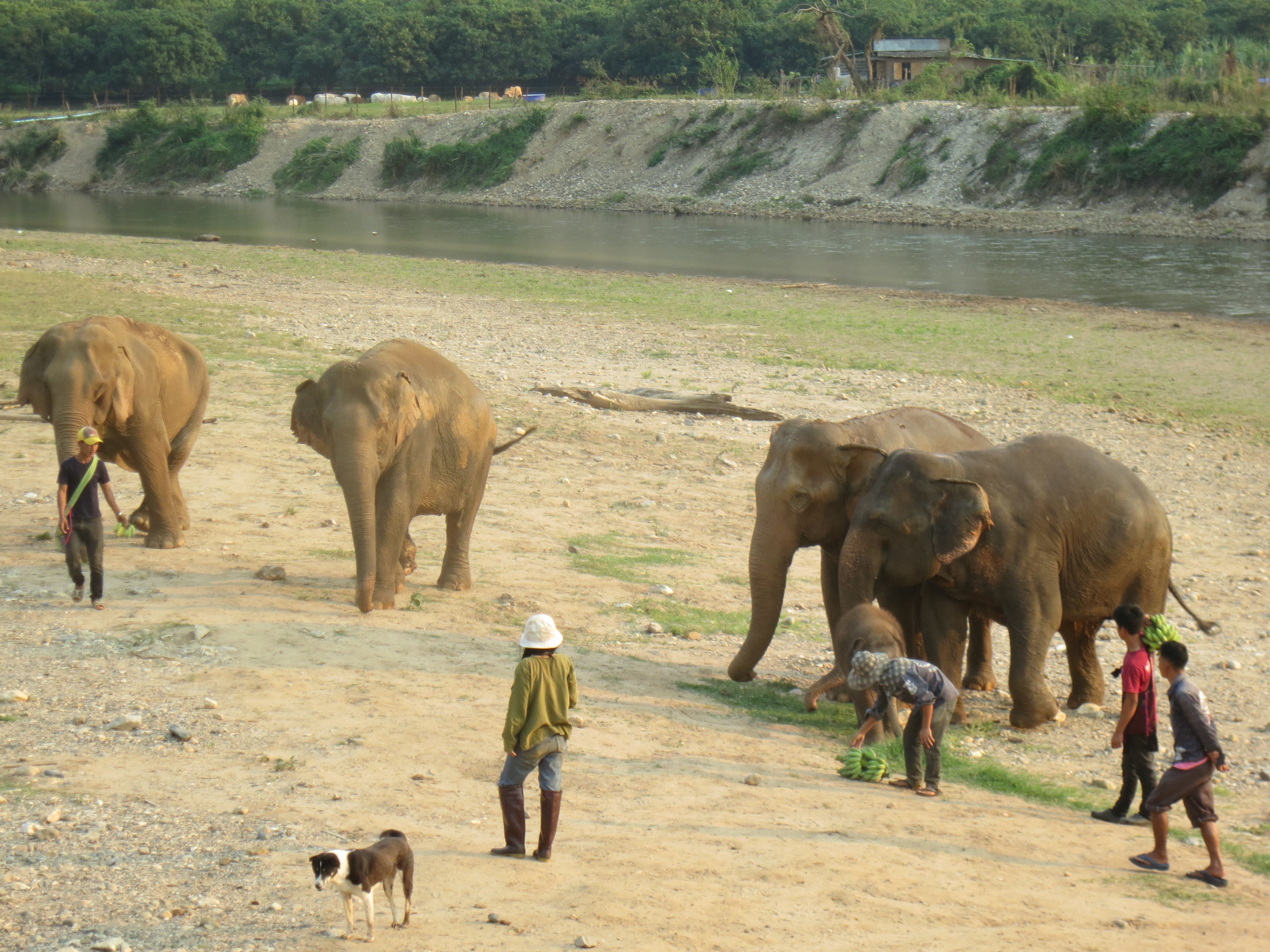
We went on a walk with Jane in the afternoon. We took a couple of bunches of bananas each, so we could feed the eles we met along the way. We stopped by Navaan and his mother in their concrete sleeping area. The mother’s foot was mutilated when she stepped on a land mine. We fed her but not Navaan, because at three months old, he’s still on a diet of mother’s milk only.

Nursing

Nursing

We walked out to see Jungle Boy, but before we got even a little bit close, we had to back off, because he roared at us when we were at least 100 yards away. An elephant roar is an amazing sound—a low, guttural noise that crescendos to an almost howl. It’s different from trumpeting, which is a sound they make when they’re concerned about something but not yet angry.

There's a herd of water buffalo at the park too--I swear I never heard them make a sound. They just grazed all week and occasionally sat in the mud pit.

There’s a herd of water buffalo at the park too–I swear I never heard them make a sound. They just grazed all week and occasionally sat in the mud pit.

We had to trot a bit as Mae Perm walked over to us, with her mahout too far behind to keep her in place. Then Jokia, faithful friend of Mae Perm, joined us, and we fed the two of them and stroked their trunks. These two are always together. Jokia was blinded by her former owners, and Mae Perm acts as her eyes and guardian.

enp

We went down to a mahout hut, where some of them sat in the shade watching 7 or 8 eles gather a little down the way, next to the river. We watched people riding eles on the horizon, at the edge of the property where some of the resorts are. It was striking to see the difference between those downcast beasts of burden and the herd peacefully grazing near us.

Mae Perm and Jokia

Mae Perm and Jokia

Day 5

On our fifth day of work, we had ele food duty. The elephant kitchen is a smallish platform (everything but the kitchen for human food and sleeping rooms is open air here), with long metal shelves holding pineapples, small watermelons, and bananas. The trough was full of purple water—the purple is some kind of cleaning agent because although the farms they buy from are organic, nearby ones may not be, and pesticides drift. We did a quick 1-2-3-4 scrub around each melon and pineapple and put them in baskets. A plank of wood was laid across a chair and used as a chopping board as a couple fellow volunteers got to slicing and dicing.

Purple fruited trough

Purple fruited trough

Once our hands were dyed a yellowish-brown that made us look jaundiced, we picked yellow bananas off bunches and put them individually into two large baskets. Next, we helped two employees take green bananas off the shelves and pile them in a large tarp, presumably so they can ripen. Meanwhile, a few people sat on the floor, peeled bananas, and mashed them up in tubs. Then they added rice flour, crushed corn, and salt, and mixed it all up. They formed that mash into large balls for the older and sicker eles who have trouble handling solid foods. We were grooving to Chet’s laptop for the whole morning—Beyonce, Kelly Clarkson, club hits. Everything’s better with a dose of Kelly Clarkson.

Group C--love ya! (minus Christine, who had to leave early)
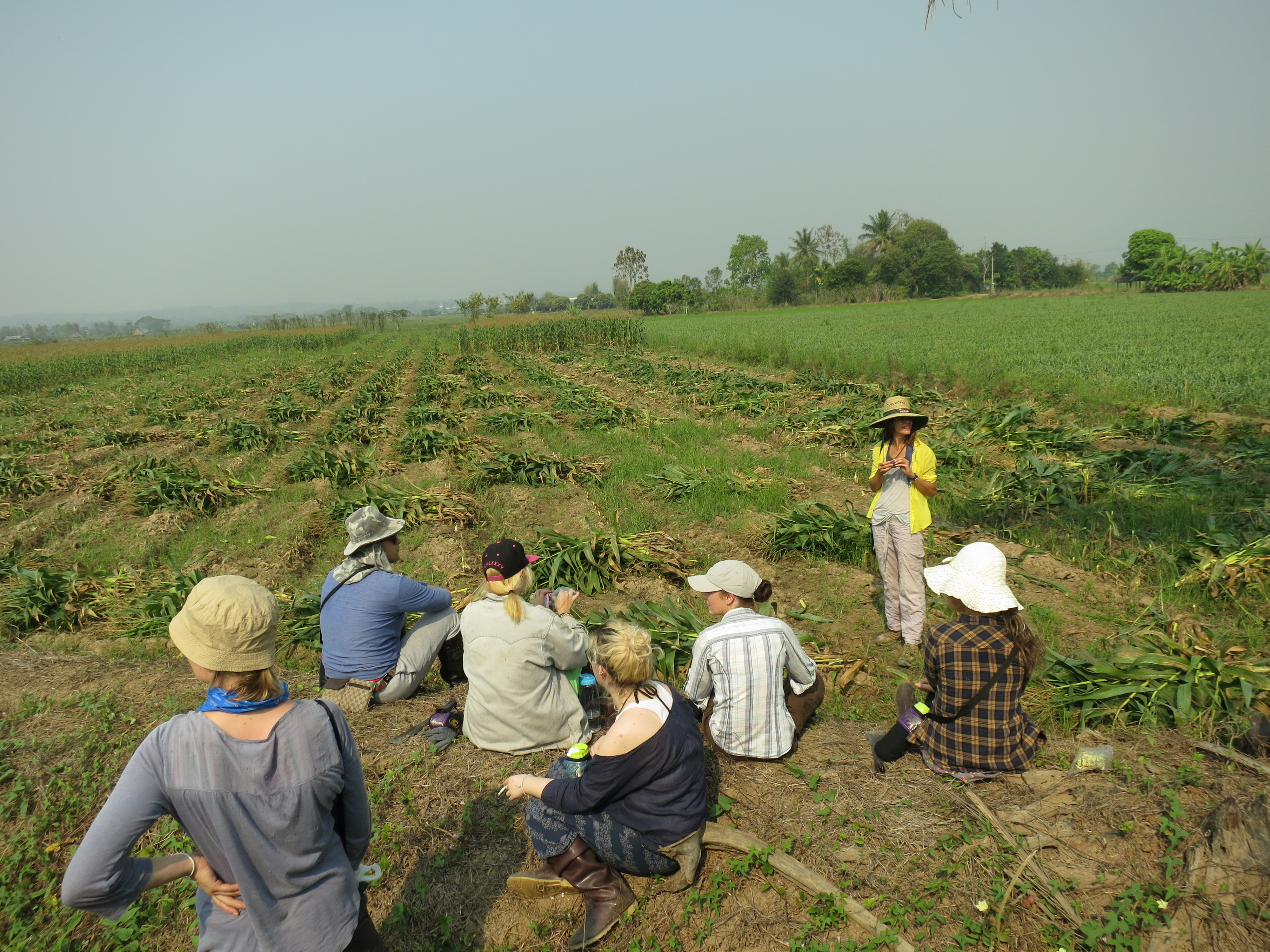
Group C–love ya!
(minus Christine, who had to leave early)

Good thing the morning job was easy, because the afternoon job was terrible. Poles ‘n’ holes—and yes, we did snigger when we said it. Earlier in the week, the other volunteer groups had dug holes around a sad-looking little tree protected by a barbed-wire fence. The park is mostly empty of trees, and of course Asian elephants thrive in jungles, so the ENP is slowly trying to add more trees. But the elephants tend to tear down the slim trees that dot the park, so the park workers put up barbed wire fences around the trees to protect them, and they’ve started building stone pylons around them as well. That’s what we were making today.

Our wobbly pylons

Our wobbly pylons

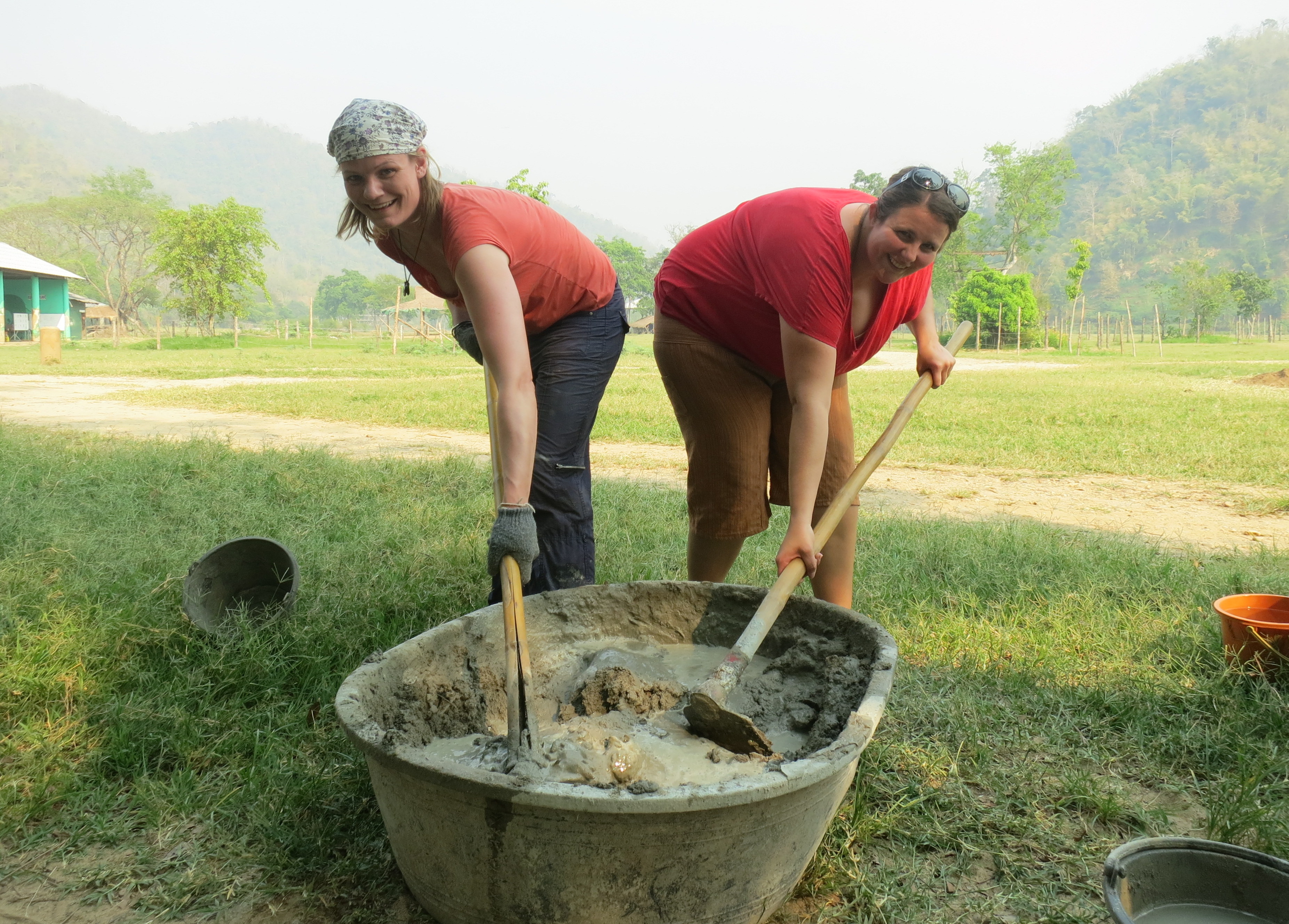
We mixed up water, sand, and cement, and took buckets of the cement over to the holes. We poured some cement, stacked large rocks in a square around the metal grid forming the backbone of the pylon, layered on more cement, and stacked more rocks on top. The pylons are also used as scratching posts by the elephants, so the rocks have to stick out for easier scratching.

My roommate Annika and I make cement

My roommate Annika and I make cement

Some of us went around near the river and picked up rocks to add to the piles back by the tree. It was hot, and the work was tedious, and we kept looking at the machinery down the other end of the park and wondering if this couldn’t all be done a lot faster if they just used those. Oh well, as we reminded ourselves any time the work was rough, it’s all for the elephants!

VC Chet was a celebrity at the park

VC Chet was a celebrity at the park

Mix tried loading buckets of water on a pole and lost them all in the most hilarious slapstick fashion. It was like watching a Buster Keaton routine.

Mix tried loading buckets of water on a pole and lost them all in the most hilarious slapstick fashion. It was like watching a Buster Keaton routine.

Volunteering at the Elephant Nature Park: Day 3

This week is all Elephant Nature Park (ENP), all the time. Every day will be a detailed post on a day or two of the seven days I spent at the park in February 2013. I hope that those researching volunteer opportunities will find the detail helpful in determining if this is a week and $400 they want to sign up for. In my opinion, it’s totally worth it! Once again, thanks so much to donors who made this week possible. For more info on the ENP, you can visit their site here and learn more about the individual elephants here.

Day 3

Our second day of work, our group started with a leisurely walk across the park, visiting with some elephants along the way. I watched one ele pick plants with her trunk, gathering more and more without dropping a single stalk, and then she swung it all into her mouth. She patiently let us stroke her side and her trunk, but she was focused on eating that grass. Eles do eat 5-10% of their body weight each day, after all.

Good morning

Good morning

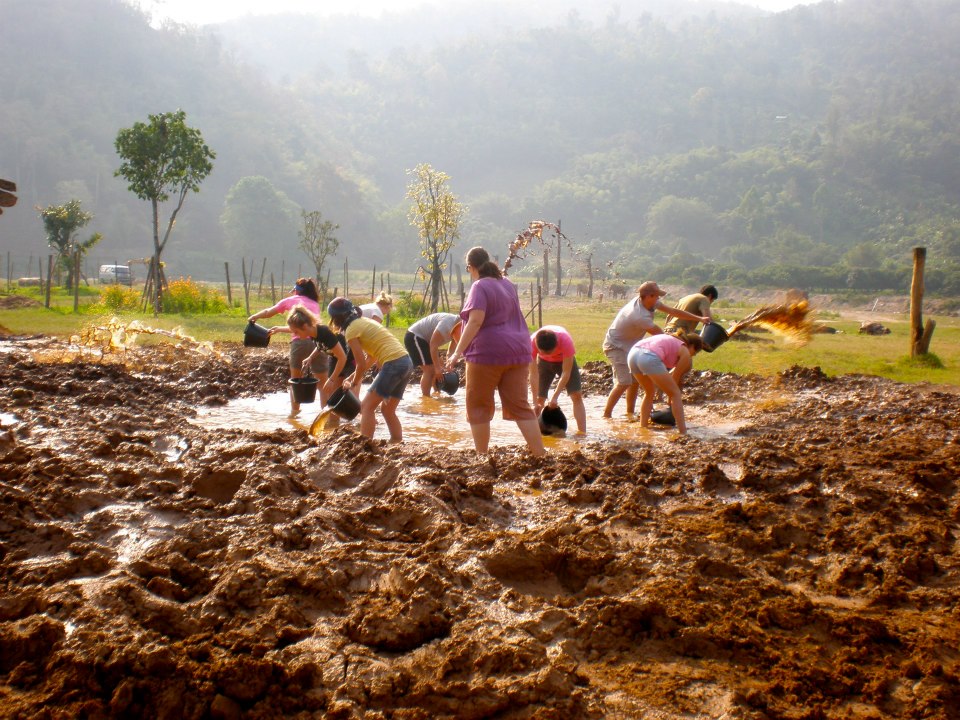
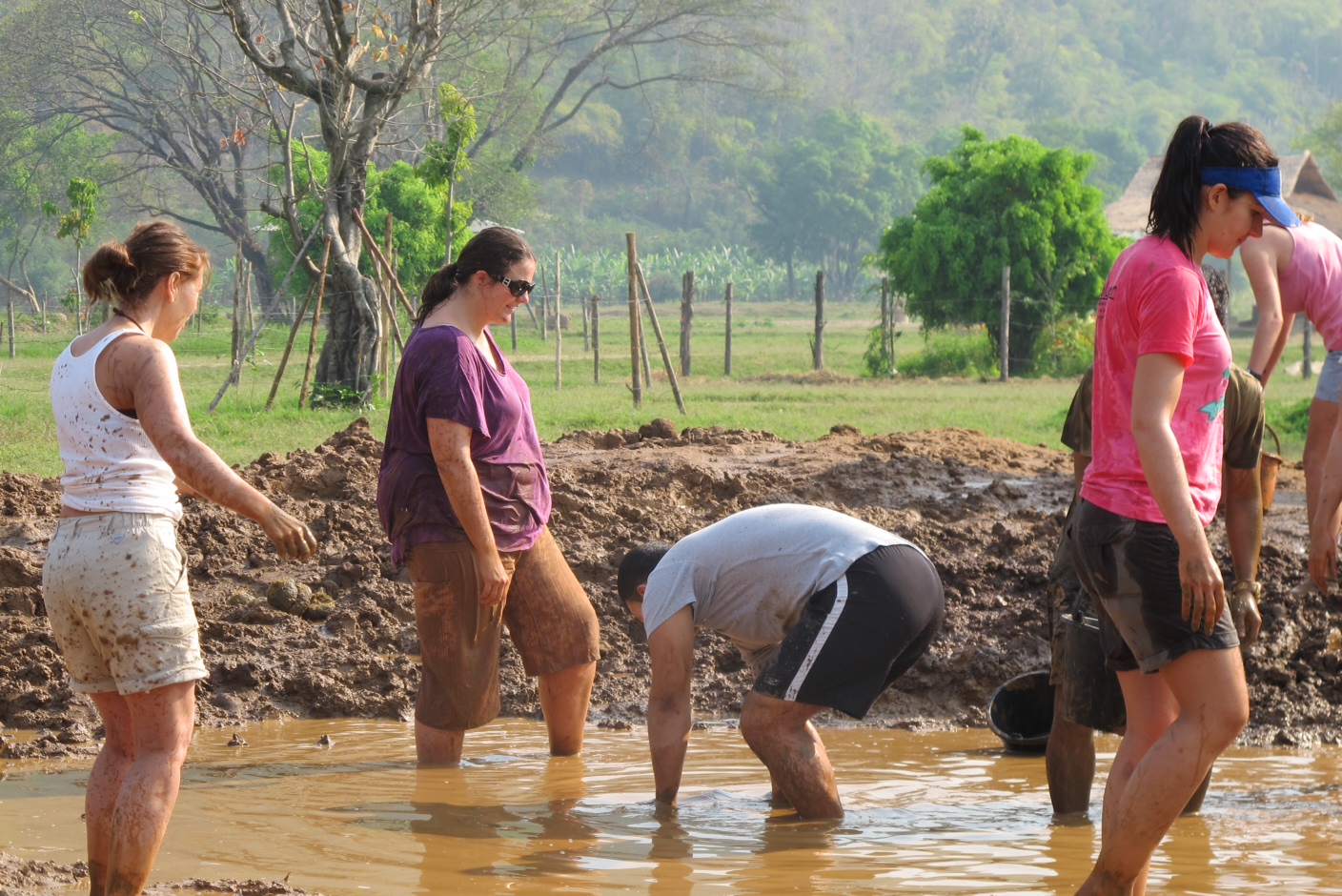
Then we were on mud pit duty, which as far as we could tell, was the only straight-up busy work they gave us. When elephants bathe, they get out of the water and head straight to a pit of mud, which they fling all over their bodies. The mud acts as natural sunblock and cooling aid, and it also keeps parasitic bugs from laying eggs in the folds of their skin. So our job was to make the mud pit more comfortable for the eles, but I don’t really see how we did that.

Mud pit

Mud pit (thanks to Christine Barnett for the photo)

We waded into the muck and scooped water out with buckets, chucking it into the grass. A park employee then immediately refilled the hole with a hose that sucked water from the river. Next, we dug in the muck with our fingers and pulled up any rocks we found—although they were as likely as not to be clods of manure. All this work for the half of the mud pit that we never saw the eles enter; they stayed on the other side, out of the water, on solid ground. So what were we doing? The only possible response to such a seemingly pointless task was to go all in, so of course we got in a mud fight. Followed immediately by a dip in the river and a quick shower. No shower, no dinner!

This doesn't look like work, but trust me, I'm searching for rocks with my toes. (Ow.)

This doesn’t look like work, but trust me, I’m searching for rocks with my toes. Ow. (Thanks to Julie Warren for the photo.)

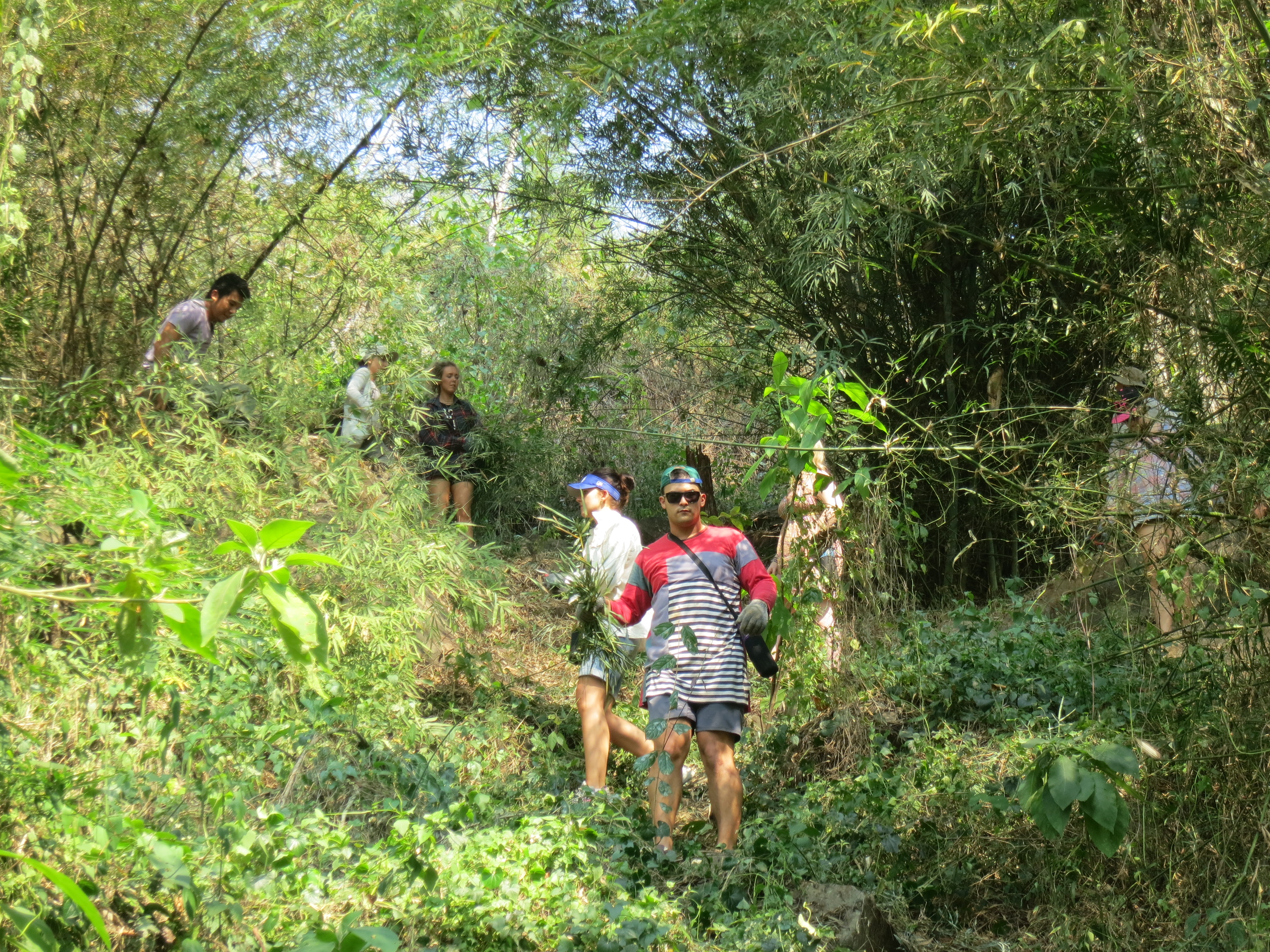
That afternoon, we stood up in the back of a pickup truck and drove out of the park for about 10 minutes, and parked in a lay-by. We scrambled up the bank of the hill on the side of the road and everyone started hacking away at bamboo with small shears and secateurs.

Standing in the back of a pickup was scary

Standing in the back of a pickup was scary

We formed a human chain and passed armloads of leafy bamboo branches down the hill. I stood at the bottom and threw them all in a ditch to form a large pile, which we later trucked back to the camp.

Cutting bamboo

Cutting bamboo

We stripped the leaves off the stalks in the ele kitchen and put them in baskets for the eles with high blood pressure. That done, we went to the skywalk outside to watch the eles use the mud pit we’d fixed up that morning.

Founder Lek is the woman in the center of the photo

Founder Lek is the woman in the center of the photo

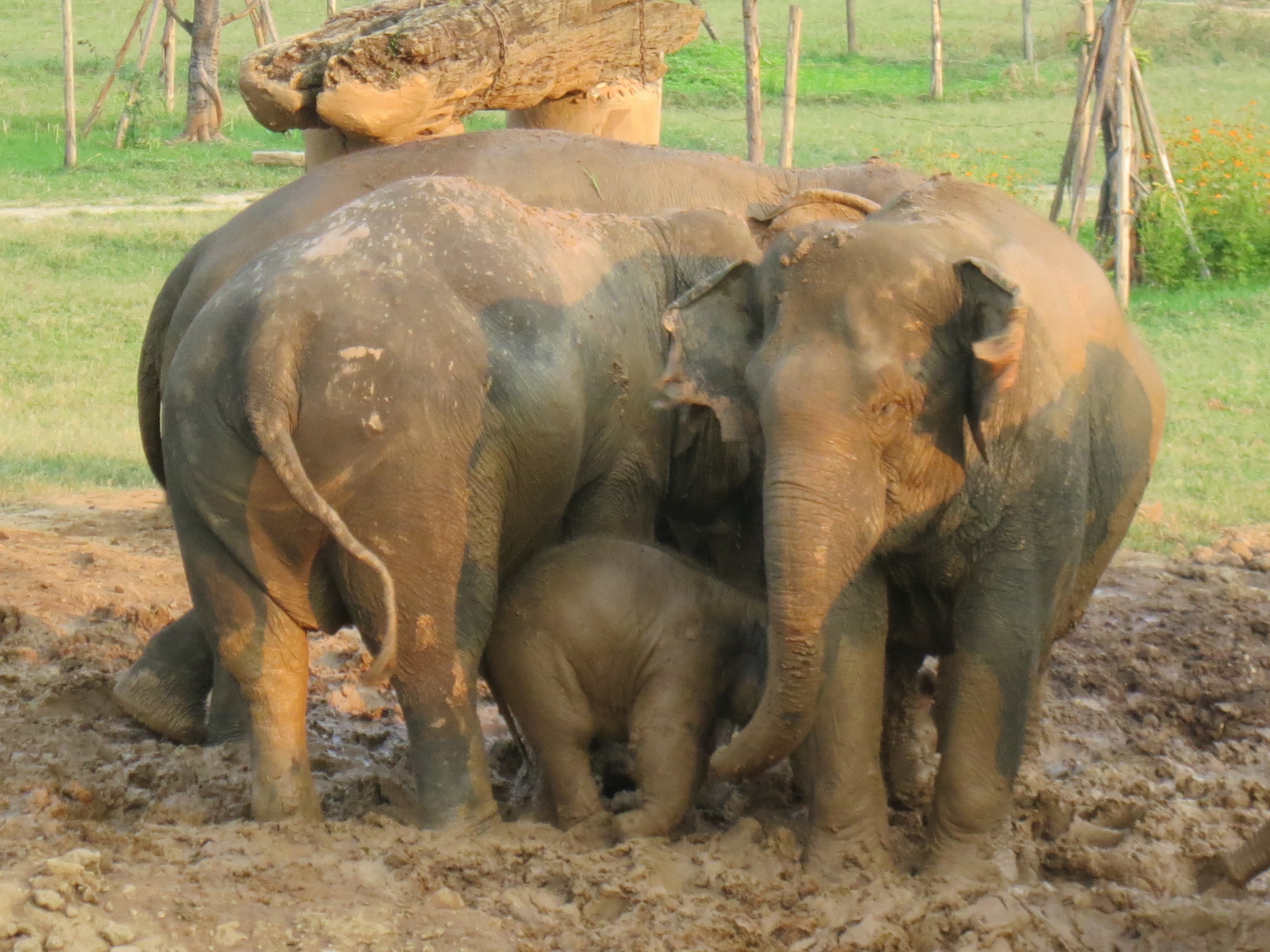
The baby elephant, Navaan, was 3 months old and mischievous. He would run to the pit, nuzzle his mom and the two elephants who acted as nanny and grandmother, then awkwardly canter out again, and the mahouts would have to chase him back. The adult eles formed a protective circle around Navaan in the mud pit, and while they stood still and moved only their trunks in lazy arcs, to slap mud on their backs, the little ele never stopped moving. He just fit under the stomachs of the adults, and he’d push his way through from under one patient ele to the next, nibbling at the mud with his trunk, scratching his side against the leg of his mother, and generally having fun. It was delightful to watch.

Mud pit nuzzling

Mud pit nuzzling

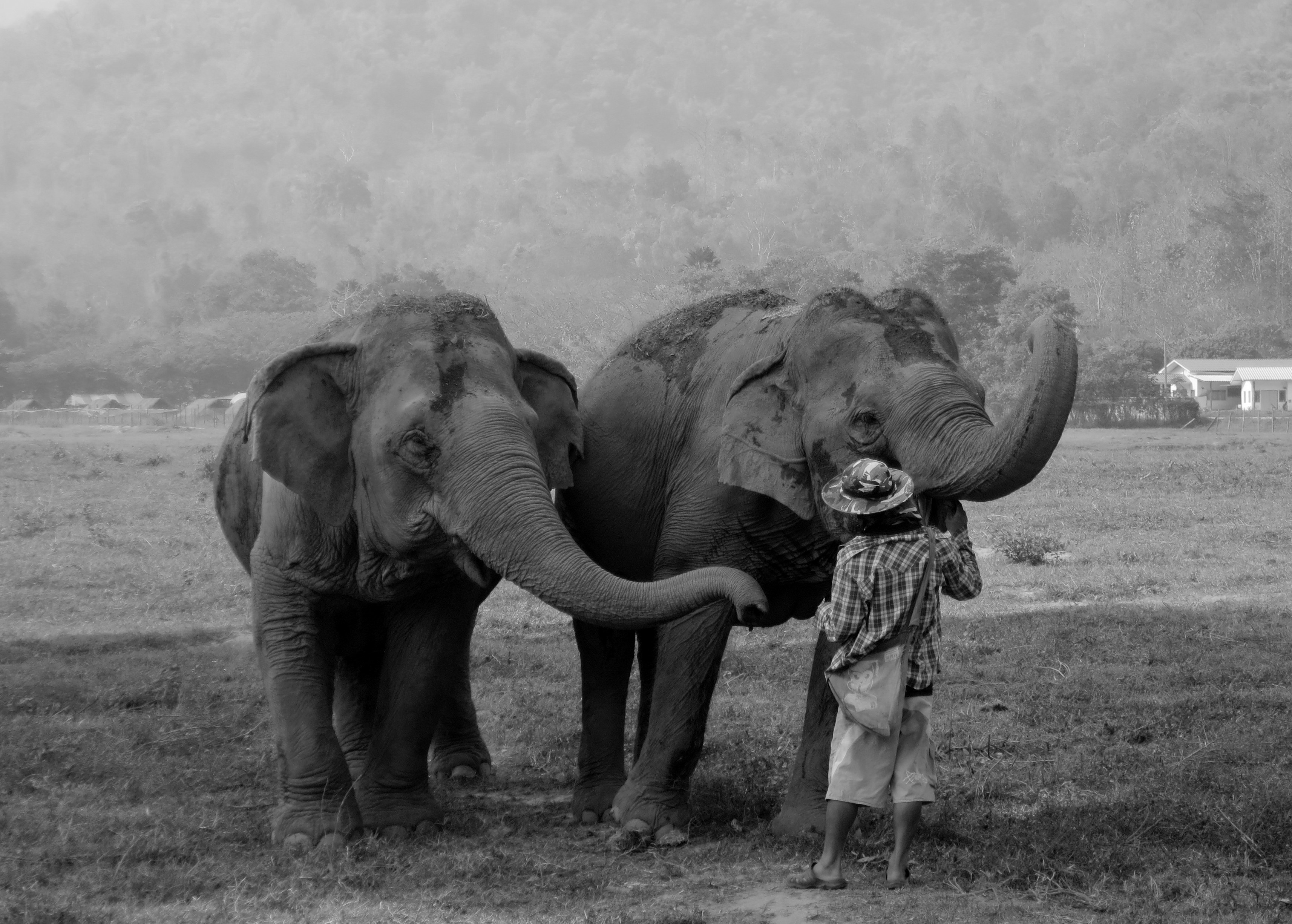
There’s one mahout per elephant, and it’s meant to be a lifelong partnership of trust, although of course it doesn’t always work out that way. We learned about the awful ways most mahouts learn to interact with their eles, starting with the phajaan and through to using the metal hook when they’re riding or guiding them. Phajaan, or “the crush,” is the breaking process whereby a young elephant is taken from his mother for the first time in his life, put in a wooden cage almost too small for him, and beaten with sticks topped with nails by many shouting men. The beating goes on for at least three days, during which time the elephant is denied sleep and food, and must learn to obey commands to step into shackling ropes to limit her own movement. This is the traditional taming method used by elephant trainers in India and Southeast Asia; its proponents believe that an elephant must fear its mahout in order to ensure obedience and the safety of the mahout. When we drove out to the cornfield on our first day of work, we saw tourists riding in chairs on the backs of elephants from the nearby resorts, and the mahouts who sat on the ele necks beat the ele heads and ears with their hooks. How you could see that and continue riding on the elephant, I don’t know.

enpThe mahouts at the Elephant Nature Park have had to relearn how to interact with the elephants, and they mostly use a reward system of bananas. They all carry cloth bags full of bananas, which they toss out to their elephant any time they want to encourage the elephant to move somewhere—to the river, away from the river, etc. They also use verbal cues, a short call that sounds almost exactly like the “hut! hut!” of a quarterback at the snap. (Which makes perfect sense, according to this article on how “hut” is a normal animal training sound adapted by the military and later by football teams.) Many of the mahouts at the ENP are Burmese refugees; it’s nice to be in a place that provides security for humans who have escaped persecution, and animals that have been saved from mistreatment.

Leading by banana

Leading by banana

A herd heads in for meal time

A herd heads in for meal time

Volunteering at the Elephant Nature Park: Day 2

This week is all Elephant Nature Park (ENP), all the time. Every day will be a detailed post on a day or two of the seven days I spent at the park in February 2013. I hope that those researching volunteer opportunities will find the detail helpful in determining if this is a week and $400 they want to sign up for. In my opinion, it’s totally worth it! Once again, thanks so much to donors who made this week possible. For more info on the ENP, you can visit their site here and learn more about the individual elephants here.

Day 2

One of the newer features of the ENP is the addition of a lot of dogs. There’ve always been a few rescues, but in 2011 Lek rescued hundreds of dogs who were abandoned by their owners during the floods in Bangkok. She set up a dog rescue shelter at the edge of the property, right when you enter from the road, and a lot of dogs stay up there, but at least thirty other dogs roam freely around the park and main food area. A few of them wear red bandanas to indicate that although they look cute, they will bite if you try to pet them. Most of them don’t wear bandanas and really are friendly. Their coats are brushed and they’re clearly well cared for, but they still have ticks and fleas, and a lot of people in the volunteer group wouldn’t pet them despite being dog lovers. But most people loved the dogs and found them all adorable, if a little intrusive.

A small number of the many dogs who roamed the park

A small number of the many dogs who roamed the park

As for me, I’m actually a little afraid of dogs. One on one, or even with a couple, I’m okay, and I appreciate how fun they are. But if they get too excited, or if there’s a whole pack of them, I get very tense. They just have so many teeth and they’re so unpredictable. These dogs, too, would often growl at one another and have little mock fights, which did nothing to calm my nerves. Apparently the website mentions the dogs, but I never saw it, and I wish they’d make it much more obvious what you’re in for when you sign up. Also, what about the poor people who are allergic? The dogs sit on the tables where you eat, the chairs outside your rooms, anywhere.

The other thing that made the dogs a hot topic of conversation was their tendency to bark, in unison, during the night. Sometimes right outside the dorm’s window. Every morning, without fail, they’d bark somewhere between 5 and 5:30 for a solid five minutes, and nearly everyone woke up for it. It was an early wake-up call, since most of us didn’t have to wake up til 6:30 to be ready for breakfast. Imagine how much I love sleep, and how hard it is for me to fall asleep in the first place, and how hard it is for me to fall asleep again once I’ve been woken, and how much I dislike barking, and you will have a pretty good idea of how I felt about that situation.

If I had to be up that early, I'm glad this is what I woke up to

If I had to be up that early, I’m glad this is what I woke up to

Our first day of work started with the 5:15am chorus of barking, and more formally with the 7am breakfast. We split into our groups at 8, and my group—Group C—started the week off with the toughest job. Nothing like getting it over and done with! We climbed into the back of a large open-air truck, picked up a few employees who do this daily, and rattled down the road to the main highway, then farther along for about 30 minutes until we reached the cornfield. The corn itself is harvested and sold in market for 10 to 15 baht an ear (about 30 to 50 cents), which raises money for the park. What we were there to do was cut down the cornstalks, tie them into bundles, and toss them in the truck. The elephants eat corn and grass as their main food, and the fruit visitors feed them throughout the day is a supplementary snack.

Machete modeling

Machete modeling

Our volunteer coordinator, Jane, did a quick demonstration of swinging the machete at the corn, then sent us off to find our own rows. They’re double rows of corn, so I cut down a few stalks on the right, then a few on the left, and put them all in a pile behind me, at a right angle to the rows. Swing the machete in an arc and slice the cornstalk at an angle, if you can. Sometimes I just pulled up roots, though, or had to hack at the stalk a few times. I never got into a rhythm more than 4 or 5 stalks in a row. After maybe 45 minutes we took a break, drinking water and eating tasty rice crackers drizzled with sweet syrup.

My double row of corn, half done

My double row of corn, half done

We only cut for another 20 minutes or so after the break, by which time we’d cut enough for the day. The next step was to take the bundles of corn up to the truck and toss it all in the back. The full-time employees had followed behind us as we’d chopped, tying the bundles up with thin rope and, when that ran out, strips of bamboo. The corn was unwieldy and heavy; you could carry it on your shoulder/back like the Thai employees, under an arm balanced on the hip, or dragged on the ground. This was tough work, especially since the ground was uneven earth full of bumps and rocks and potential holes. We did most of the front half of the field, then as we wandered to the back I suggested we do more of a tag-team thing; some of us moved them from the back half to the middle, and some moved them from there to the front.

At the break

At the break

After about 40 minutes, all the corn was loaded in the back of the truck, and then it was time for everyone to climb up and sit on top of the corn for the ride home. That looked fun, but also like a climb that might kill me, so I rode in the cab of the truck on the way back.

A full truck--and 10 people sat up there on the way back!

A full truck–and 10 people sat up there on the way back!

Our reward for cutting corn was a tubing trip. We grabbed inner tubes, the kinds with the metal knobs sticking out, and stood up in the back of a small truck for the drive upriver. I hadn’t been tubing in years, and it was great fun. The river meandered at a leisurely pace, except for a few exciting spots with mini-rapids to rush down. We floated along in nothing but swimsuits and tubes, passing tour groups from nearby resorts in helmets and lifejackets, presumably returning from whitewater rafting trips, but they still looked overdressed.

Children played in the river and yelled out “hello!” as we passed, and at one point a whole gang of them rushed up to each one of us as we passed and splashed until we were entirely soaked. One boy appointed himself captain of my tube, and steered me down the river for a ways. When I rounded the last corner before the park, a couple elephants were being led down to bathe in the river. I sat and watched them in the late afternoon sunlight, feeling totally at peace.

enp

Volunteering at the Elephant Nature Park: Day 1

I spent a week volunteering at the Elephant Nature Park north of Chiang Mai in Thailand, and it was one of the best weeks of my trip so far. Despite the fact that I am neither a big animal rights activist nor remotely useful in manual labor, I decided that this was how I wanted to contribute something useful while on my trip. I read up on the volunteer experience on blogs and decided I could handle the work, and I don’t know anyone who’s immune to the charms of elephants, myself included.

Welcome to the Elephant Nature Park

Welcome to the Elephant Nature Park

This week is all Elephant Nature Park (ENP), all the time. Every day will be a detailed post on a day or two of the seven days I spent at the park in February 2013. I hope that those researching volunteer opportunities will find the detail helpful in determining if this is a week and $400 they want to sign up for. In my opinion, it’s totally worth it! Once again, thanks so much to donors who made this week possible. For more info on the ENP, you can visit their site here and learn more about the individual elephants here.

Day 1

I got myself to the ENP office in Chiang Mai at 8am, filled out the paperwork and finished paying, and then packed into a minivan for a little over an hour drive to the park. We watched a documentary by a couple of self-serious North Americans, about the park and founder Lek’s work.

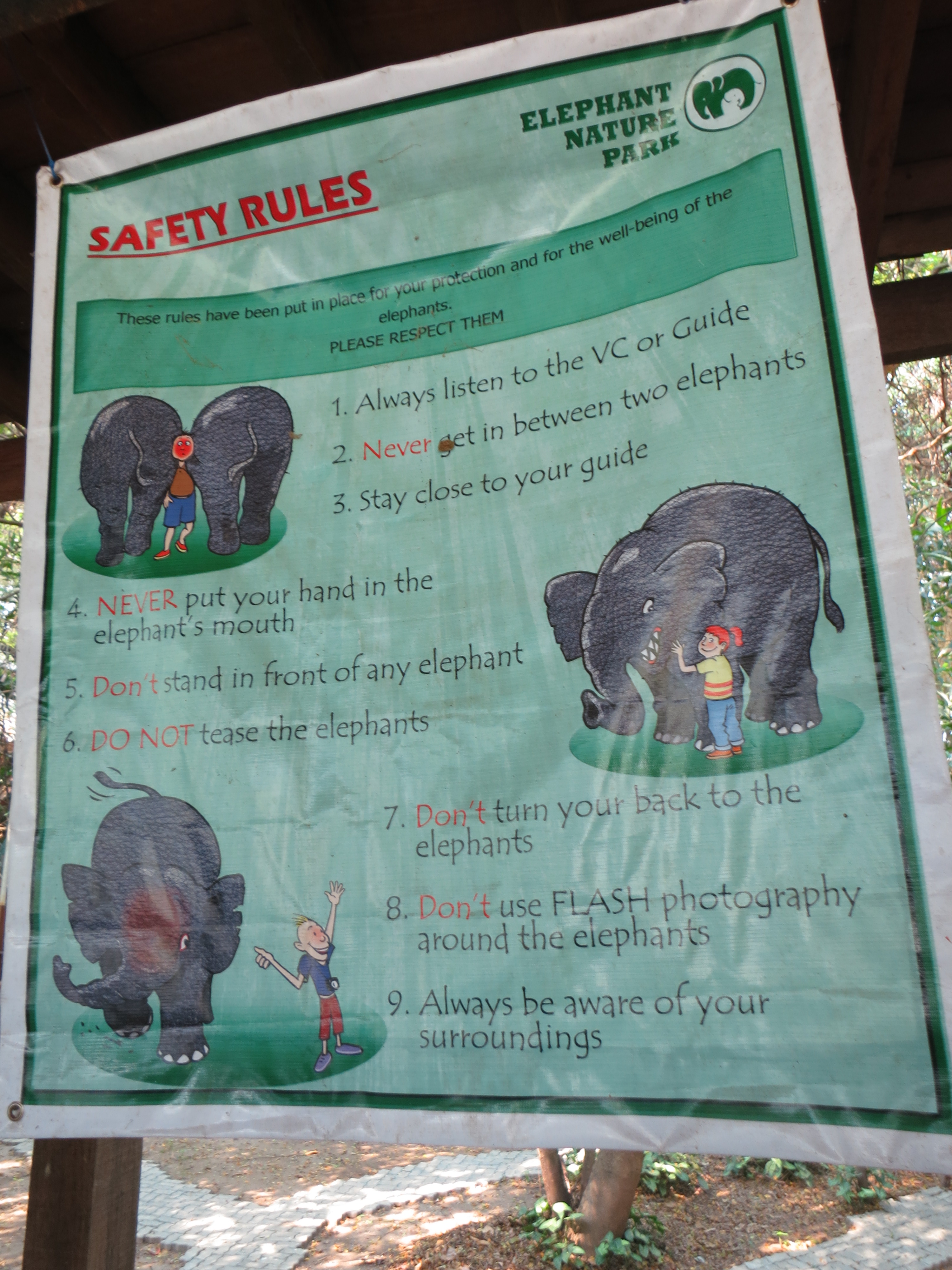
Once at the park, we got to meet elephants almost immediately (and we learned that workers often abbreviate “elephant” to “ele,” so I’ll sometimes do that in these posts too). The first day fairly closely resembles a day trip visit, and work begins in earnest on day 2. We walked out below the skywalk that leads to the main platform, and the mahouts (ele trainer/handler/friend) led their elephant friends up to us. You’re supposed to stay on one side or the other of their trunk, not right in the middle, because it agitates them and one swing of the trunk can knock you out—or worse. Also, don’t stand behind them, obviously, just as you wouldn’t with most any animal.

Common sense and good reminders

Common sense and good reminders

Gosh, they’re beautiful! Smaller ears and smaller stature than African elephants, but still 6-8 feet tall, and massive. One of the ones we saw had a broken leg and ankle from illegal logging, and apparently it can’t be fixed so she limps, and looking at her from behind, her hide looks like an ill-fitting suit with the bones jutting out at odd angles. Very sad.

Painfully broken hip

Painfully broken hip

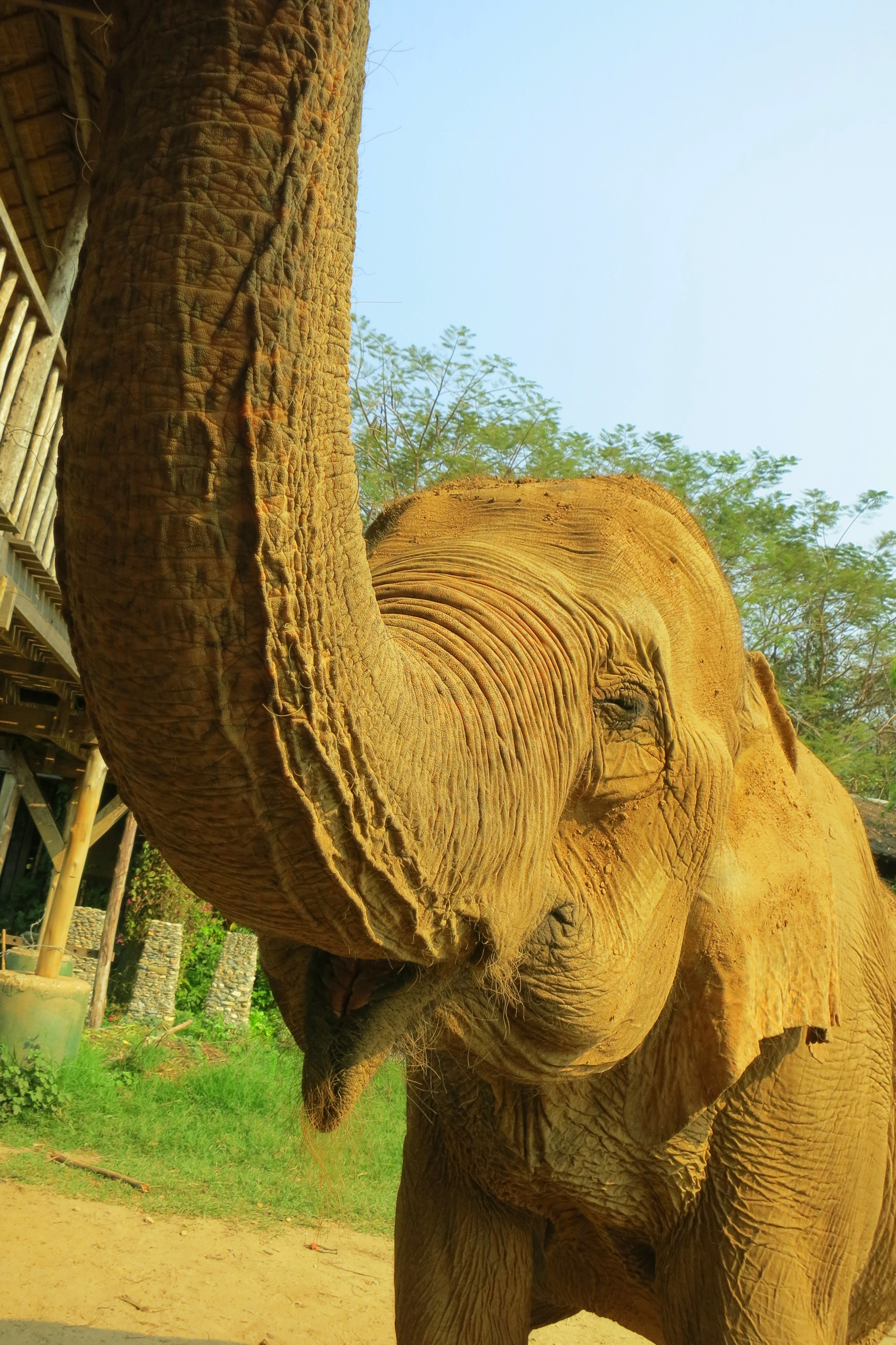
Next, we helped feed the elephants snacks—chopped watermelon and pineapple, whole bananas still in their skins (although some baskets have food a little more prepared, if the ele is particularly picky). You stand behind the red line so the ele can’t grab you along with the food, and you lean down and hold out the fruit. The eles are on the ground beneath the concrete platform, so their head is about level with your hand. They curl their trunk around the fruit and pull it into their mouth. One ele insisted on taking two pieces at a time. The trunk was super strong—don’t hold onto the fruit!—and had tougher skin and harder general feel than I’d expected.

Feeding time

Feeding time

Now it was lunchtime for humans. Employees laid out a large buffet, and there were no labels on the dishes, so I just took a bit of everything. It’s all vegetarian here. Some stuff was better than others, but it was generally good (which is a relief, because it’s a small rotation of the same dishes for the whole week, so you want to like it). I sat with some volunteers and chatted. It’s an overwhelmingly female volunteer group, with the men mostly halves of couples.

Lunch time

Lunch time

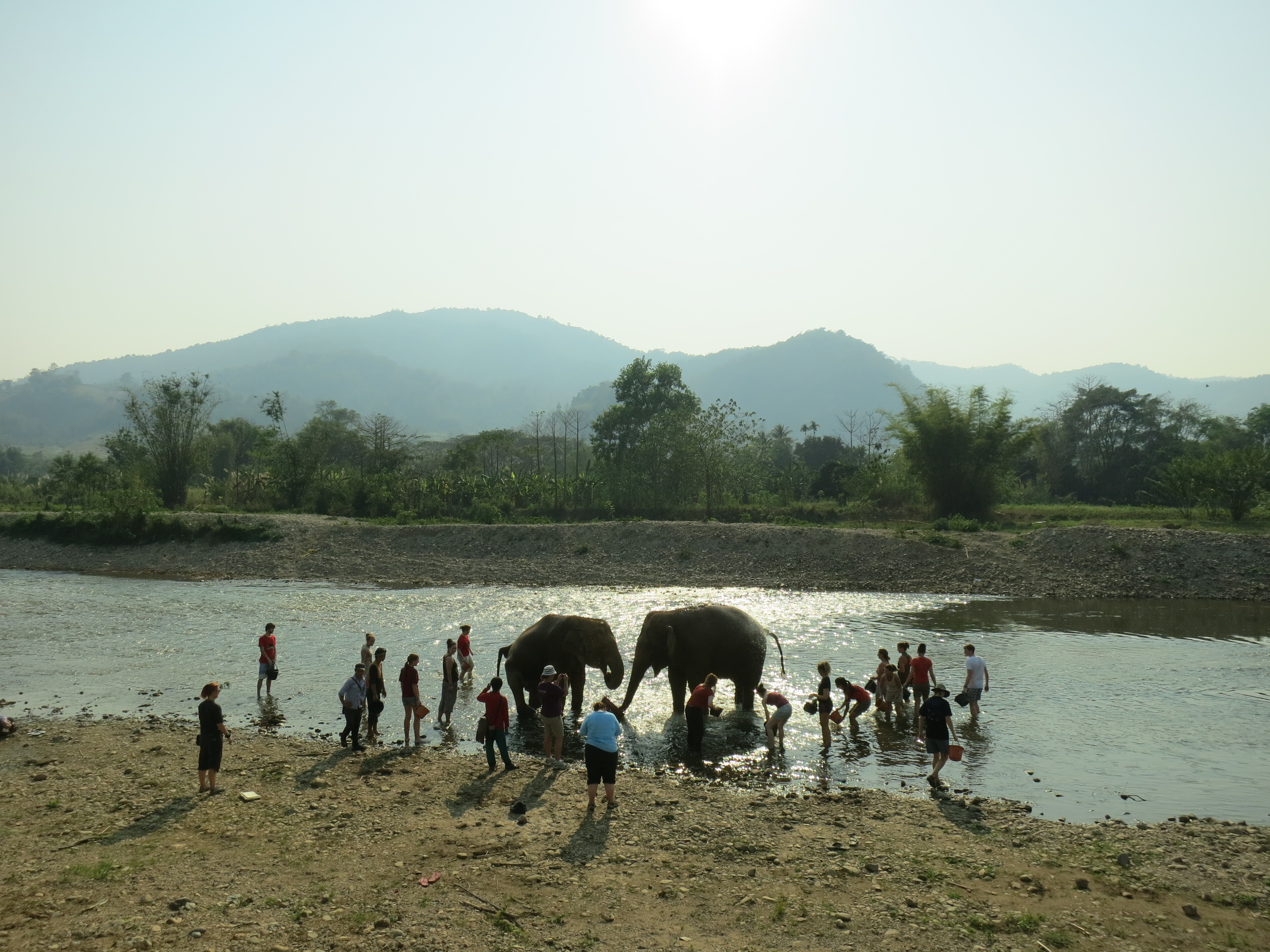
After lunch, we got our room assignments and put our stuff away, then we went straight down to the river to bathe the elephants. There were several groups of day trippers bathing pairs of elephants, and the large group of volunteers was assigned a pair as well. Take a bucket and heave the water into the air with it, and don’t get water in the ele’s eyes or they might get infected.

I look almost as tall as them here, but they still felt massive when I was right there next to them

I look almost as tall as them here, but they still felt massive when I was right there next to them

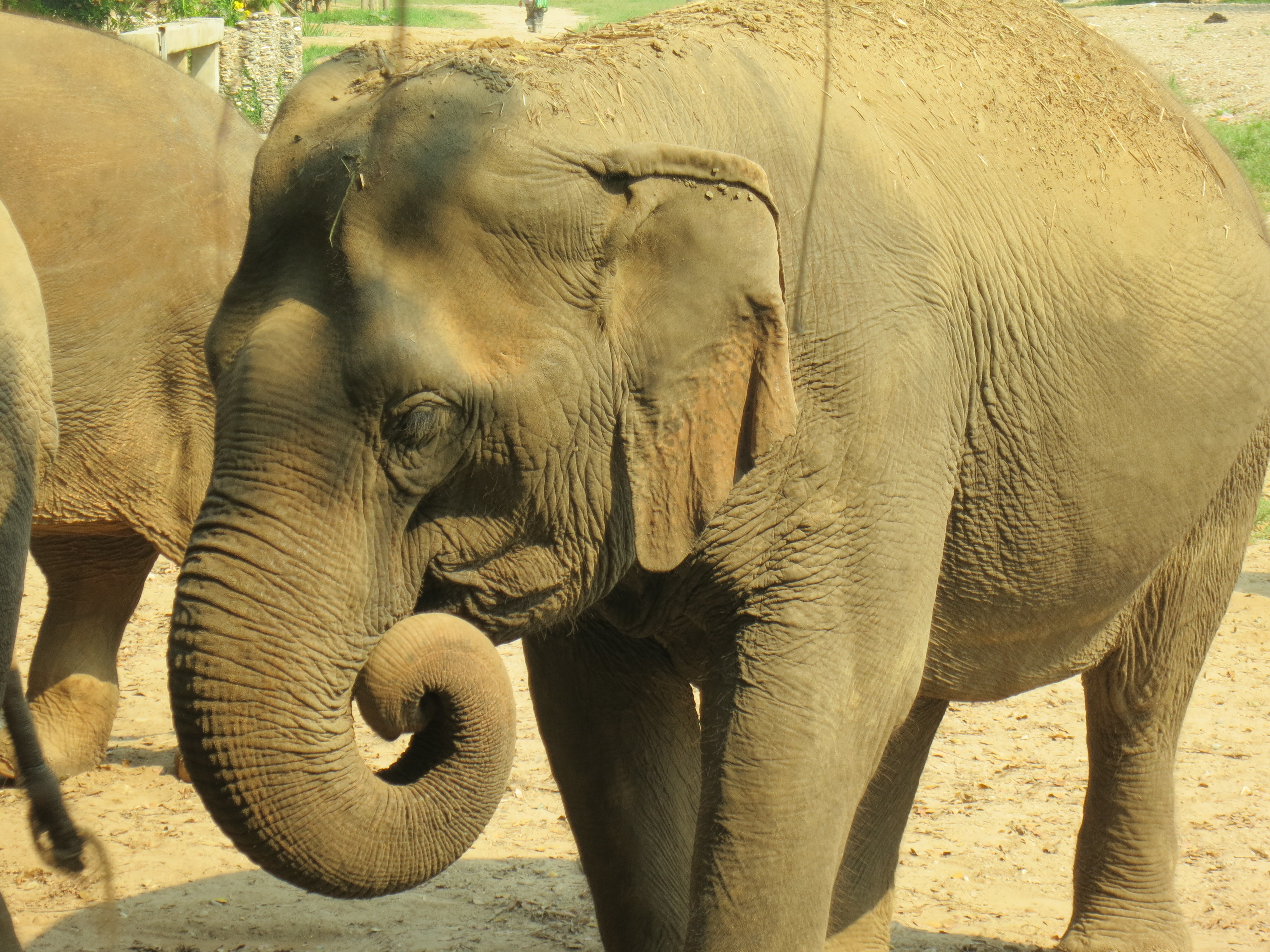
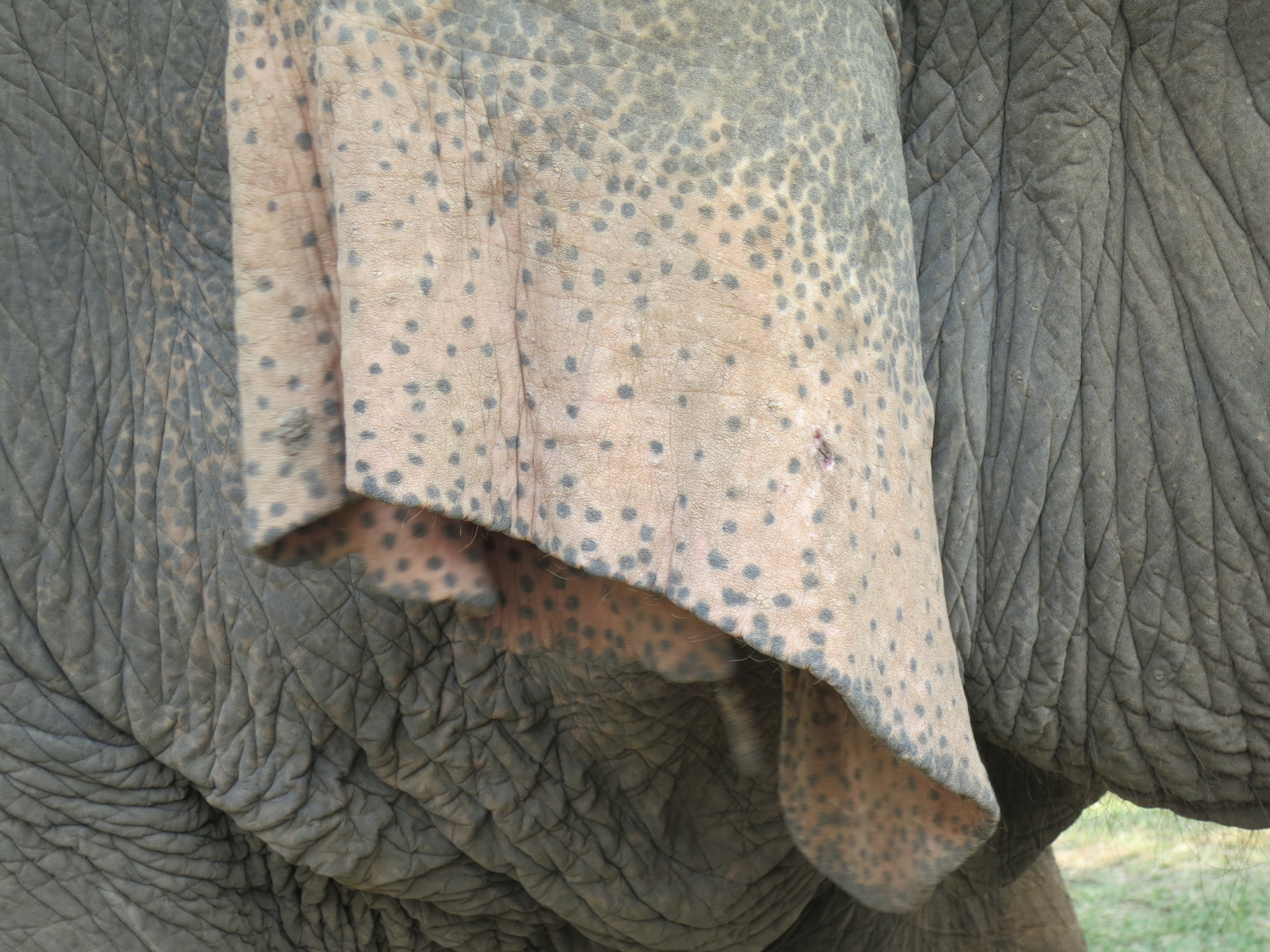
This was the first time I touched an elephant’s side, and I was surprised by how much flesh I could feel beneath my hand; all the wrinkles and the way the skin hangs, it seemed like it would feel much looser, but the muscle is right there on the surface. Also, the skin is covered in bristly black hairs. Their ears are a lighter brown/almost pink color on the lower half, with little brown dots on them, like freckles.

enp enp my hand, dwarfed by elephantWe watched a National Geographic documentary on the park and other elephant conservation places in Thailand. Then we helped unload a truck full of watermelon, tossing the fruit out and passing from person to person until it reached a pile in the corner. Also, we picked out the yellow bunches of bananas from the huge shelves full of them and passed them along for storage too.

Everyone pitches in when food arrives

Everyone pitches in when food arrives

We worked with four volunteer coordinators during the week. They all chose Anglicized nicknames for us to use—Jane, Mix, Chet, and Toby (all men). At around 4, Jane sat us down on the main platform of the skywalk and told us the rules of the park and the basic schedule for the week: 7am breakfast, 8-10 work, 11:30 lunch, 2-4 work, 6:30pm dinner. He emphasized the importance of keeping clean during this week of dirty work, and said, “No shower, no dinner. Save water, save the world, but not here—shower 2 times a day, 3 better.” We would all come to agree wholeheartedly with these sage words over the course of the week.

Hello, beautiful

Hello, beautiful

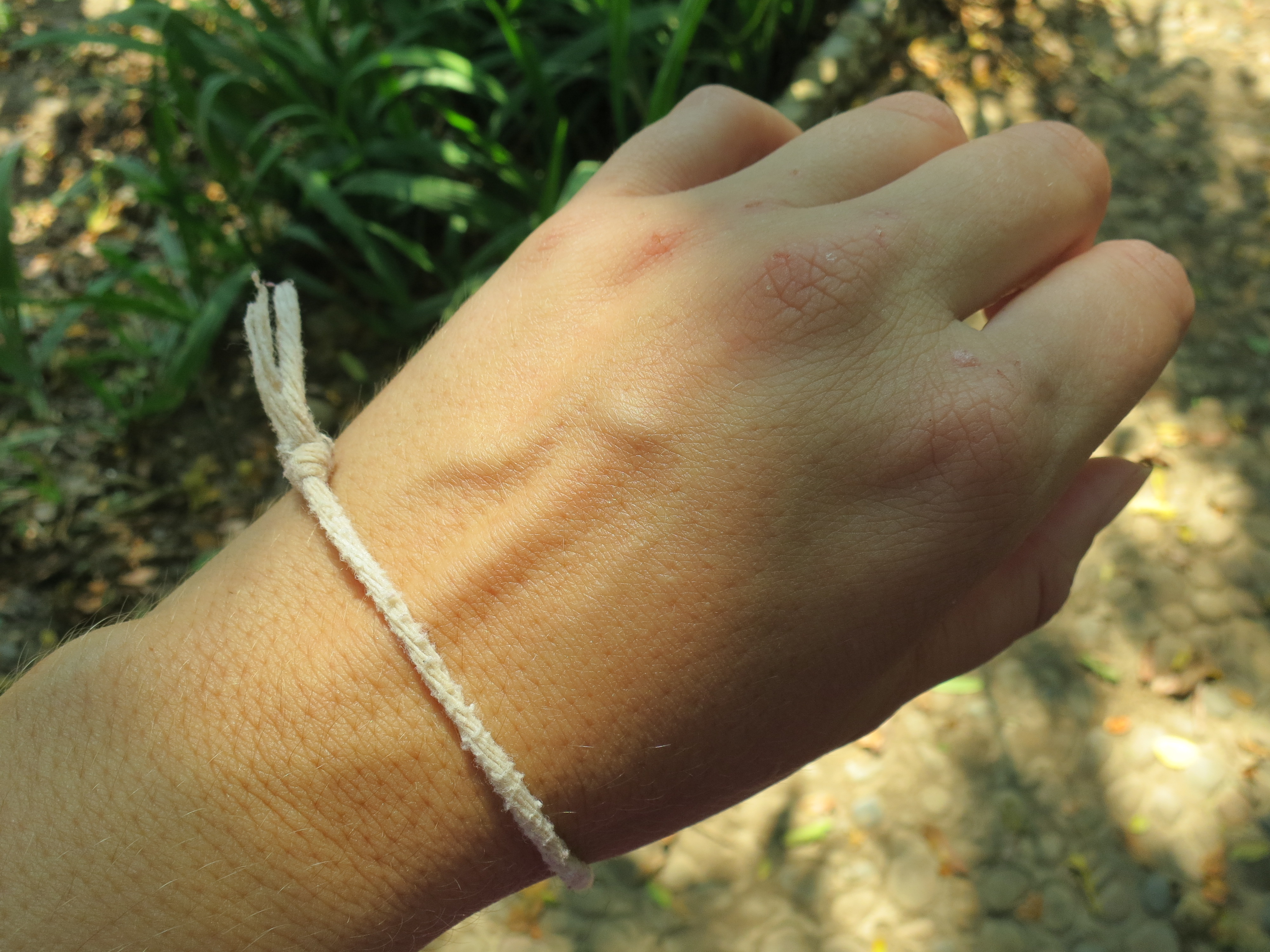
At 6:30 we gathered for a welcoming ceremony. Some young kids played traditional instruments for a little while, and the assistant manager of the park welcomed us and explained the ceremony about to take place. The shaman of the local village would take all the bad luck in the group and put it in a little arrangement of plants and flags in a banana leaf container, and then he would put good luck on a larger floral arrangement and a collection of white threads. Elder women of the village would then tie those threads onto our wrists—left for women, right for men—and we should wear them for at least 3 but no more than 7 days. Do not cut the thread to remove it, but pull it apart (or I just slid mine off), and then keep it in a good place, rather than throwing it away.

The shaman chanted rapidly during the first part of the ceremony, then transitioned into a song that he kept going for almost as long as it took all 55 of us to get threads, and then he walked around the room, singing and tossing water on us with a collection of grasses that looked like a large paintbrush without the handle (similar to the kind I’ve seen Buddhist monks use).

For luck

For luck

We all stood up with our extra luck and met in the conference room to introduce ourselves—name, country, how long in Thailand—the usual traveler details. Chet asked if anyone wanted to try naming everyone after we’d all gone ‘round twice saying our names, and I gave it a go. I’m pretty good with names and faces, at least in the first few days of meeting someone (might not be if I see them again weeks later). There were about 50 names for me to repeat, and I got all but four. People seemed to regard this as a minor miracle, and for the next three days any time I talked with someone new, they made jokes about taking me to Vegas so I could count cards. Good grief!

Moonrise

Moonrise

New Zealand by the Numbers

Hot spring rivers frolicked in: 2

Sights that made me say “wow”: at least 12

Sheep spotted: ~100,000

Cows spotted: ~80,000

Glaciers hiked: 1

Couches surfed: 8

Times I had no idea what vowel a Kiwi was using while talking: at least 9

Concussions sustained: 2

Road trips enjoyed: 3

Radio stations picked up on entire 8 weeks in the country: 2

Times I heard the inexplicably popular song “Maneater” on those radio stations: 9

Number of different tracks off the 12-track “Jagged Little Pill” I heard on those same radio stations: 6

Total days spent in New Zealand: 55

Total money spent: $3,965

Average per day: $72

Christmas carols sung at full volume while driving through the mountains: 8

Carols we knew more than the first verse to: 0

Dolphins swum with: at least 30, possibly more; magic is hard to quantify

milford blues

Welcome to Wellington–You’ll Want to Stay Awhile

Wellington proudly wears the title given it by Lonely Planet—“the coolest little capital in the world”—and I’d say it has good claim to it. It’s a small city on the southern tip of the North Island of New Zealand. Although most of the city is curled around the harbor and seems like it ought to be protected, the city is relentlessly buffeted by winds that rival Chicago’s. Or possibly outdo Chicago’s. Four months later, I’m still combing the tangles out of my hair, so I haven’t had time to consider the question.

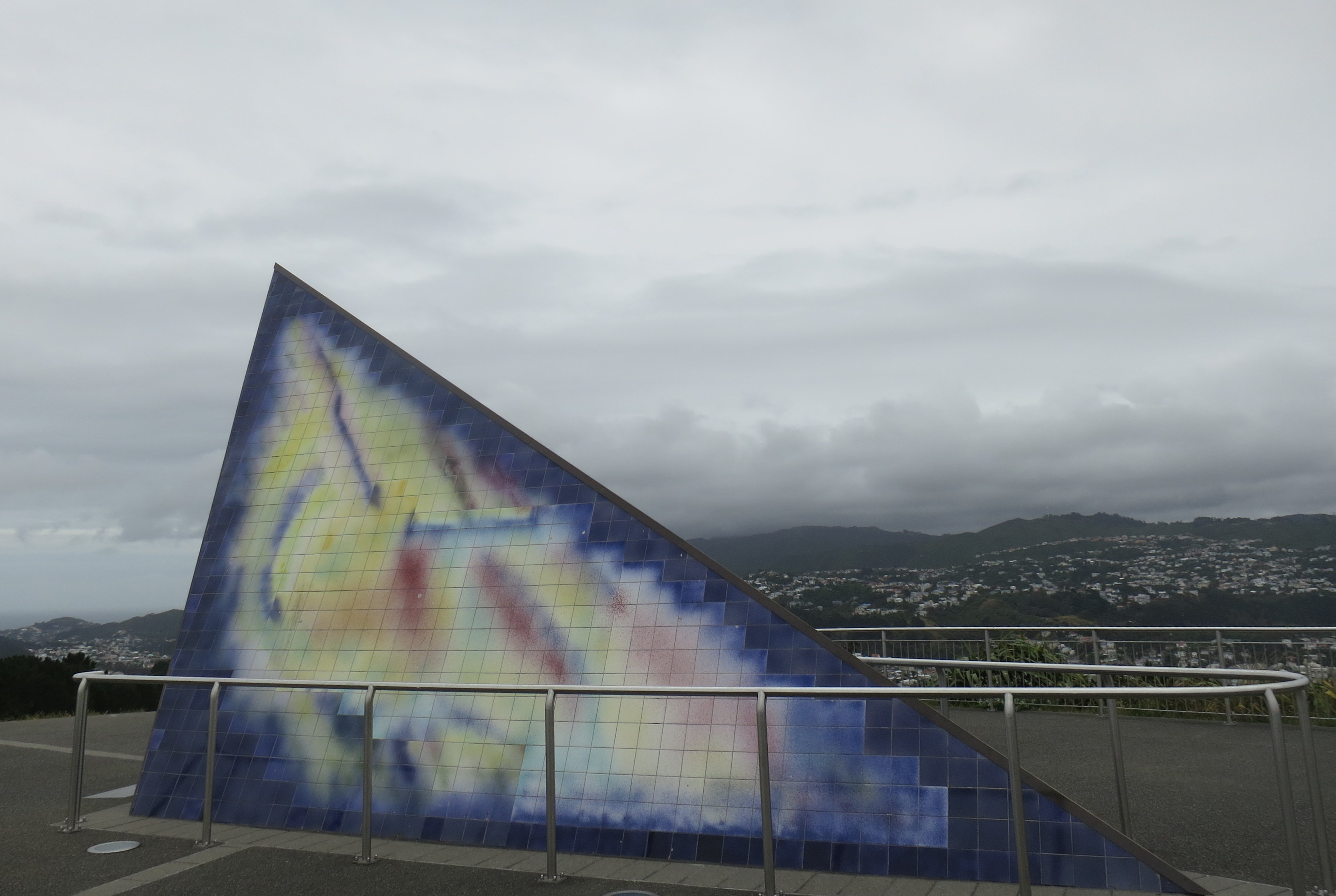
Much of the public art in Wellington plays on how windy it is there.

Much of the public art in Wellington plays on how windy it is there.

I spent a few hours in Wellington with my friends after Christmas, as we waited for the ferry to take me across the Cook Strait. They drove me up to Mount Victoria, which stands guard over town. It contains a monument to Antarctic exploration, made up of stones from a glacier on the seventh continent; and a cannon that was fired at noon every day for years, to tell time by. We stood at the lookout and watched planes brave the gusts of wind on their descent into town. On the way down the hill, my friends pointed out a stand of pine trees that had been used for scenes in the Lord of the Rings movies.

View from Mount Vic

View from Mount Vic

Antarctic monument

Antarctic monument

My second time in Wellington, I lucked out yet again in my Couchsurfing host. Woo was an accommodating host, and the other surfers at his place were super friendly. We had a nice dinner out and cakes in a frilly tea shop. Also, Woo’s place was right downtown, so for probably the first time since I set foot in New Zealand, I didn’t have to hike up and down hills just to get to the corner store.

I’m not sure what the economic situation is in New Zealand right now, or in the greater Wellington area, but I can say with confidence that the government has put a lot of money into the downtown area, because it looked great. City Hall and its square; Te Papa, the national museum; Waitangi Park and the waterfront; the Embassy movie theater, home of Lord of the Rings premieres: they were all pleasant places to spend time in, without seeming too whitewashed.

I wouldn't mind Gandalf watching over my city

I wouldn’t mind Gandalf watching over my city

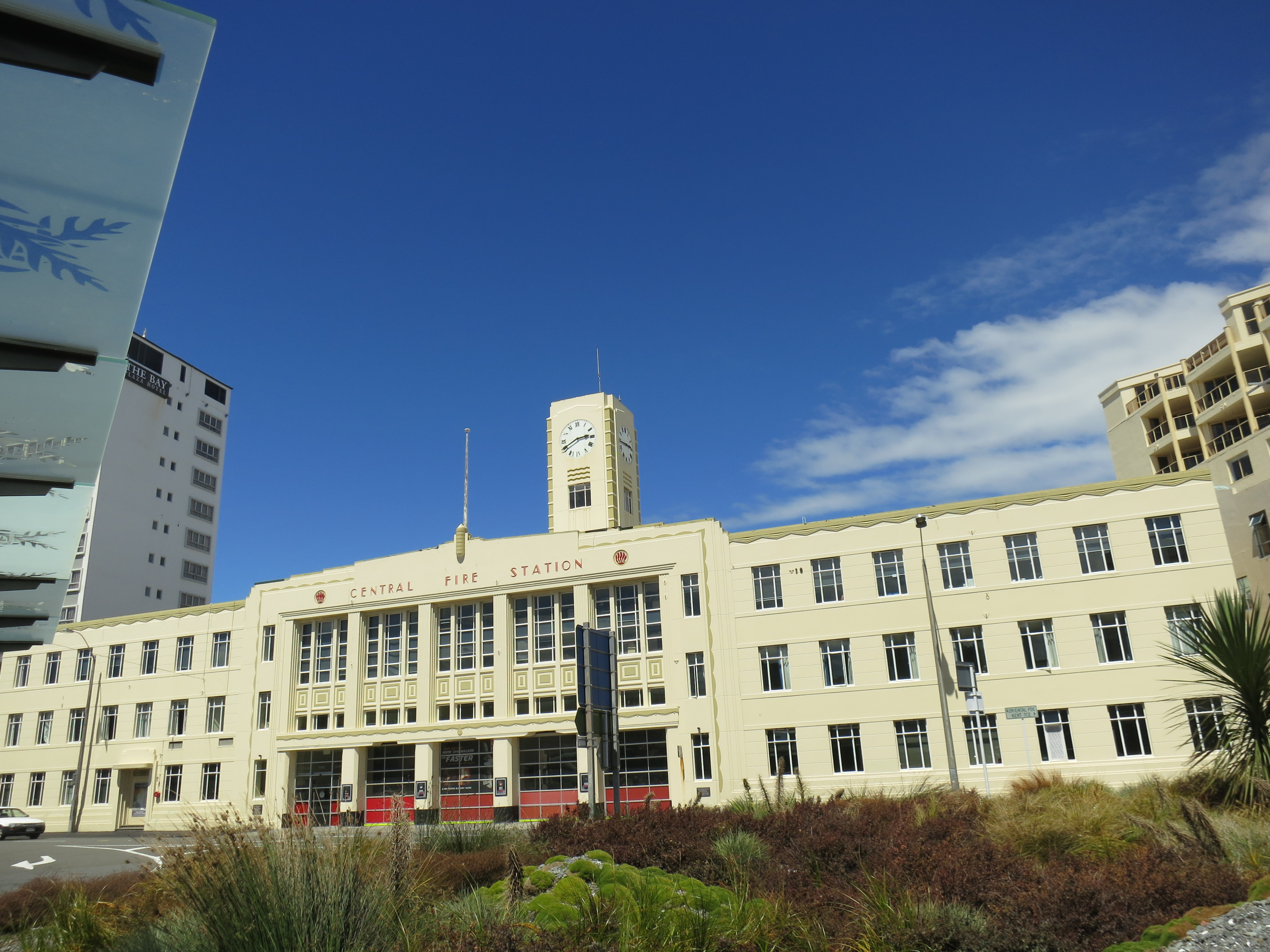
I grabbed a couple free brochures from the visitor’s center and went on a self-guided tour along a path that followed the Art Deco trail and the Te Ara O Nga Tupuna trail through downtown. The Art Deco tour was less historically interesting than the Maori sites tour, but I sure do like that sleek, clean style of the interwar period.

Quite the fire station

Quite the fire station

The Te Ara trail covers a broader area than can be walked, but there are a few sites in town important to Maori history that the brochure points out. Waitangi Lagoon was a major source of food in pre-Pakeha times, and is now a major intersection. Waitangi Park is up the road, a carefully maintained patch of marsh grasses facing both the harbor and Te Papa, with a climbing wall at the end.

Waitangi Park

Waitangi Park

The most surprising site was Whare Ponga, a storefront that contains an archaeological dig showing the original Te Aro Pa—a pa being a fortified Maori village. The site, which was unearthed, like so many interesting sites around the world, during construction work, is from the 1840s.

Te Pa

Te Aro Pa

I met up with Jose, a traveler friend from Chicago, at the botanic gardens for a summer concert in the park. It was quite chilly for a summer concert, but that didn’t stop everyone from coming out. The band played upbeat reggae, and at least one overtly political song, and Jose took me ‘round the gardens as the sun set to show me the colors.

The groovy duck pond

The groovy duck pond

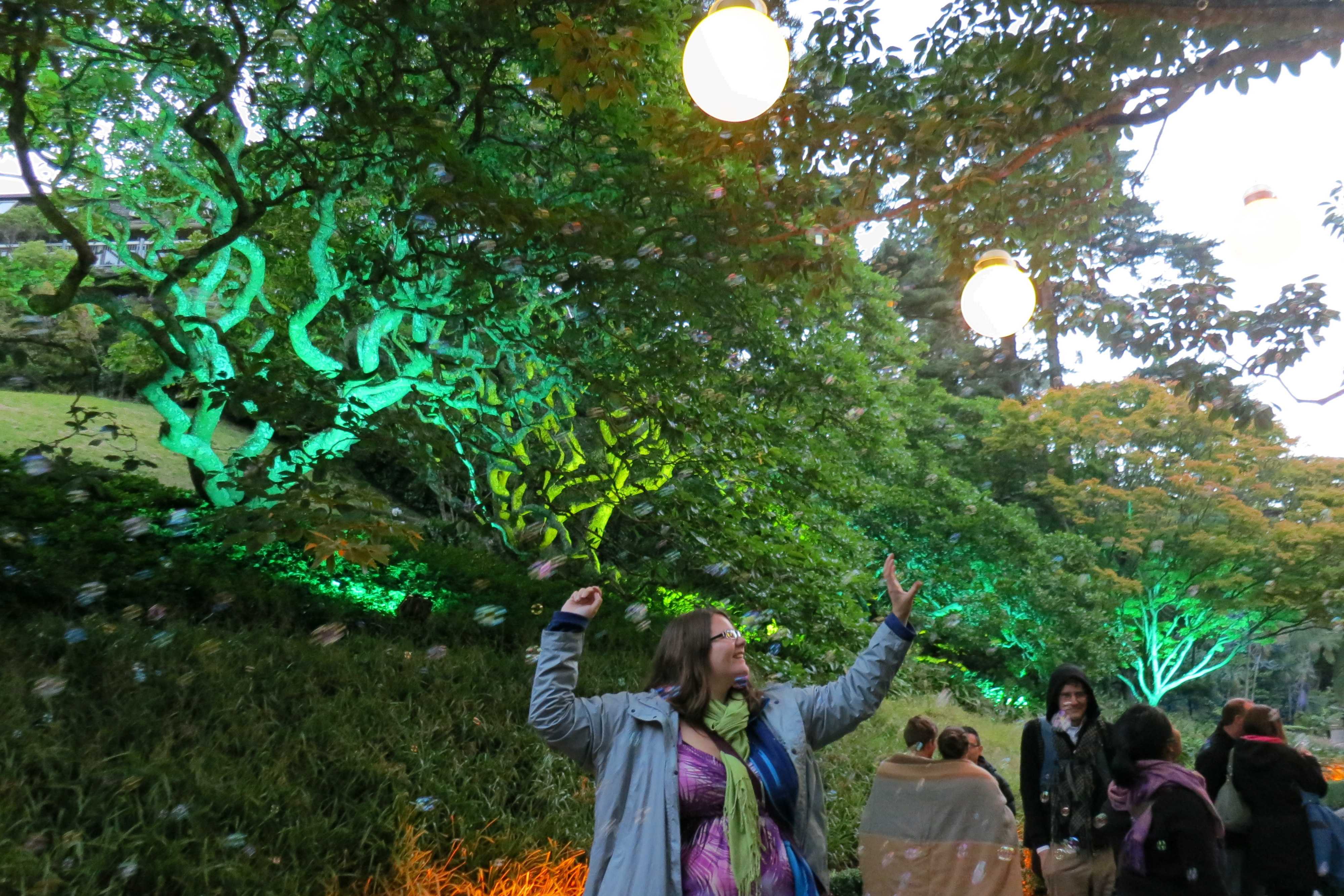
When the sun goes down, the lights come up: pink globes on the duck pond, red spotlights on the palm trees, even a blacklight area by the ferns. Bubble machines were mounted on some of the lampposts, and when they started up, all the kids in the area leaped into the path—some to dance, some to swat at the bubbles with their sweatshirts in a battle that they all won.

wellingtonJose showed me a willow tree that seemed to sparkle; when we pushed aside the leaves and stepped under the tree’s broad branches, we saw a half dozen disco balls rotating in the air, reflecting hidden lights and creating a dance hall for fairies. The whole place was magical.

Blurry disco scene--is there any other kind?

Blurry disco scene–is there any other kind?

I took the cable car up to and down from the gardens. It’s a quaint little car, with small wooden seats and brass poles. It makes a few stops along the way, so if you live on the hill, you could use the cable car to get around. That’s the only form of transit I took the whole time I was there. Woo picked me up from the ferry station and took me to the airport (an excellent host, as I said), but otherwise it’s a super walkable city, and it was nice to wander around. I passed the Bucket Fountain on Cuba Street, and plenty of other public art installations around town. I walked by a guitarist busking on the sidewalk and a girl who sat nearby and quietly harmonized on a recorder.

The cable car

The cable car

Bucket Fountain

Bucket Fountain–that little kid loved it

I left the visitor’s center on my last day in town and cut through Civic Square, where a drag queen and her assistants cheered on audience participants in a delightfully clumsy dance contest, and then two police officers on duty were cajoled on stage, where one cheerfully did her own little dance and put on the tighty whiteys flung at her before continuing on her beat. That was easily one of the simplest, most fun moments of Everyone Getting Along I’ve ever witnessed.

Fun for everyone

Fun for everyone

Te Papa is a huge museum five floors tall, and its permanent exhibits include a Maori meeting house built specially for the museum, a hokey display about geothermal activity, and an interactive hall about the sea and forest especially aimed at kids. It was a great museum, too big to explore in one day, so it would be easy to revisit again and again, which is fitting for a museum built as a tribute to a country’s citizens, who might return over a number of years.

Te Papa meeting hall

Te Papa meeting hall

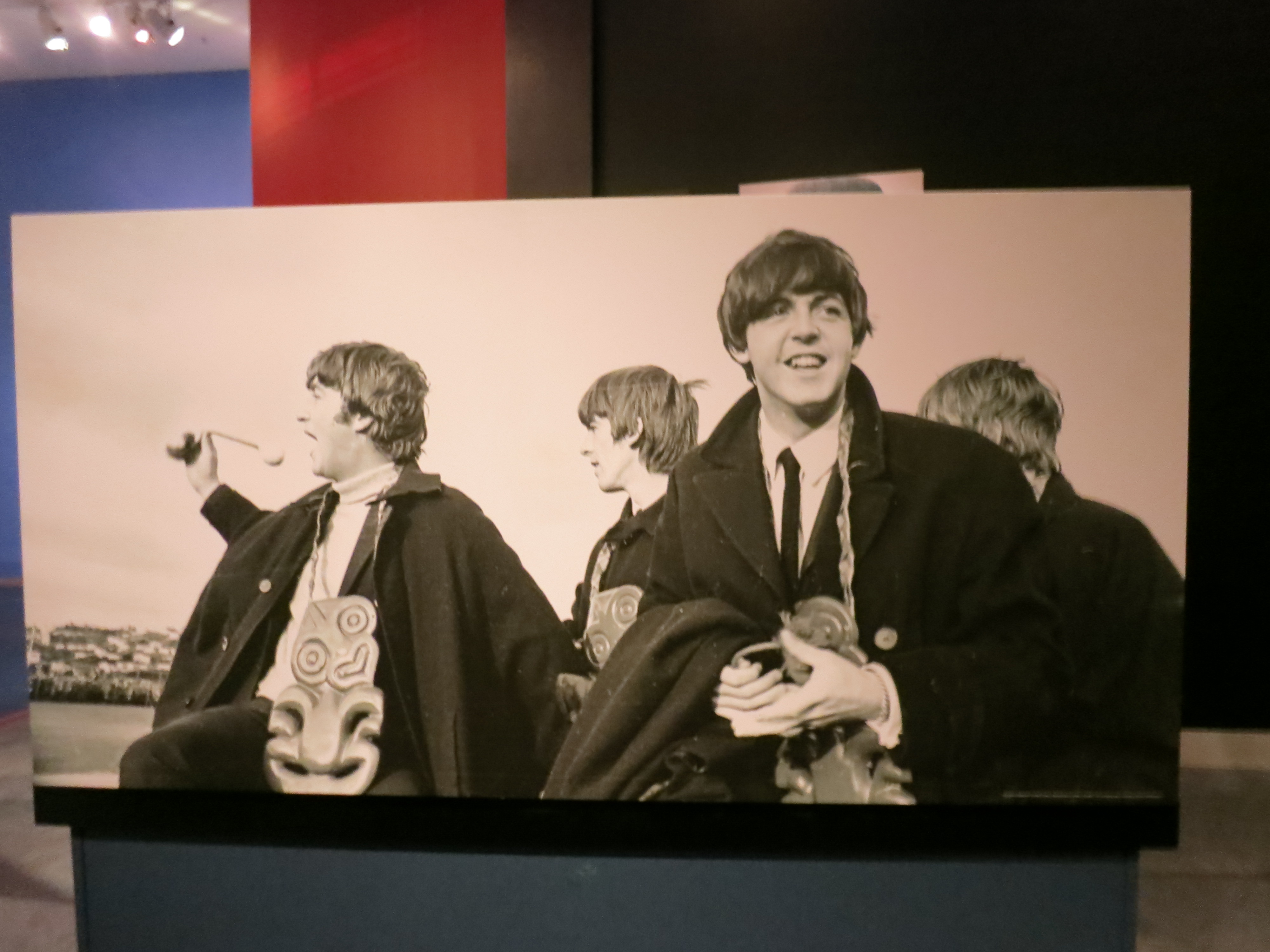
The Beatles look cheerful, but I know they must have been freezing under those capes.

The Beatles look cheerful, but I know they must have been freezing under those capes.

The Maori exhibits struck a tricky balance between anger and indignation at Pakeha treatment of Maori throughout history, and relaying information about Maori traditions still maintained today. One plaque carefully explained how disrespectful it is to wear images of carvings, which are considered something close to sacred, which I hope informs visitors’ souvenir choices.

Lovely detail and color

Lovely detail and color

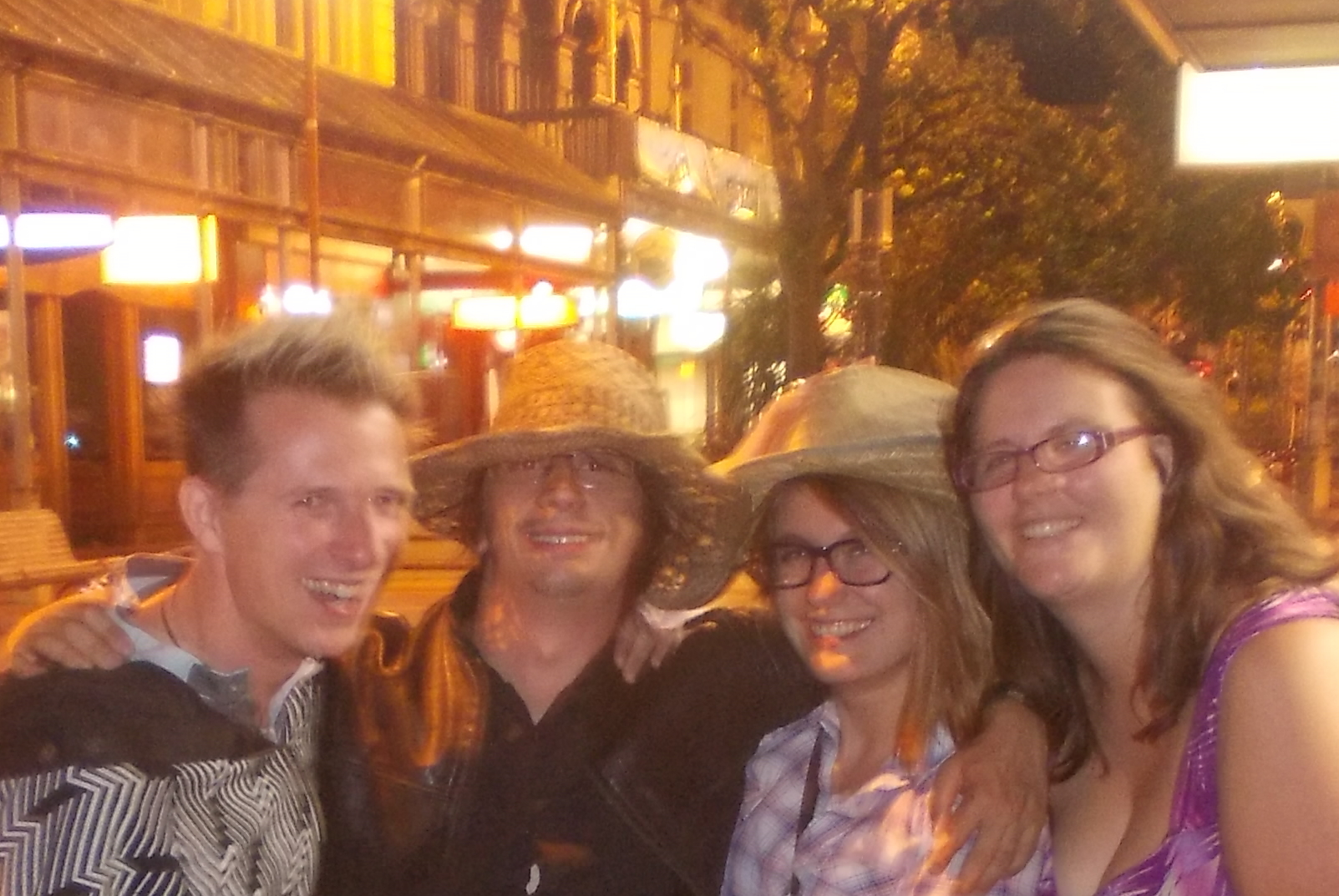
I had an epic night out with Jez, who I’d met at Theresa’s in Melbourne. We drank delicious local craft beers during Wellington Weekend at Hashigo Zake, caught the end of a queer rock show on a hoedown theme night at Bar Medusa, danced to the sometimes questionable choices of the DJ at Mighty Mighty Bar, and ended the evening at an overpriced Irish pub playing bad Top 40–a somewhat ignominious end to an amazing night.

Good times

Good times

I know a lot of people who want to immigrate to New Zealand, and after days exploring downtown and a night of fun and music, I was half convinced to myself.

Feasting in Vietnam

Since everyone enjoyed my Singapore foods post so much, I thought I’d give you another update on the tasty things I’ve been eating in Southeast Asia. I still have another week in Vietnam, but I’ve already eaten so many delicious foods that they deserve their own post. I’ve copied the names from Wikipedia when I can (to get the accents right–there are a lot of accents in written Vietnamese), and if I can’t remember the name or find it online, I just describe it. Grab a napkin to catch your drool, and enjoy!

Pho; Ho Chi Minh City

Pho; Ho Chi Minh City

I’m getting slightly better at chopsticks, and it’s worth it to try, when there are foods like pho to shovel in my mouth.

Pork in coconut milk curry and sticky rice; Ho Chi Minh City

Pork in coconut milk curry and sticky rice; Ho Chi Minh City

Delicious and creamy.

Bánh xèo; Ho Chi Minh City

Bánh xèo; Ho Chi Minh City

Pork and veggies in an egg pancake.

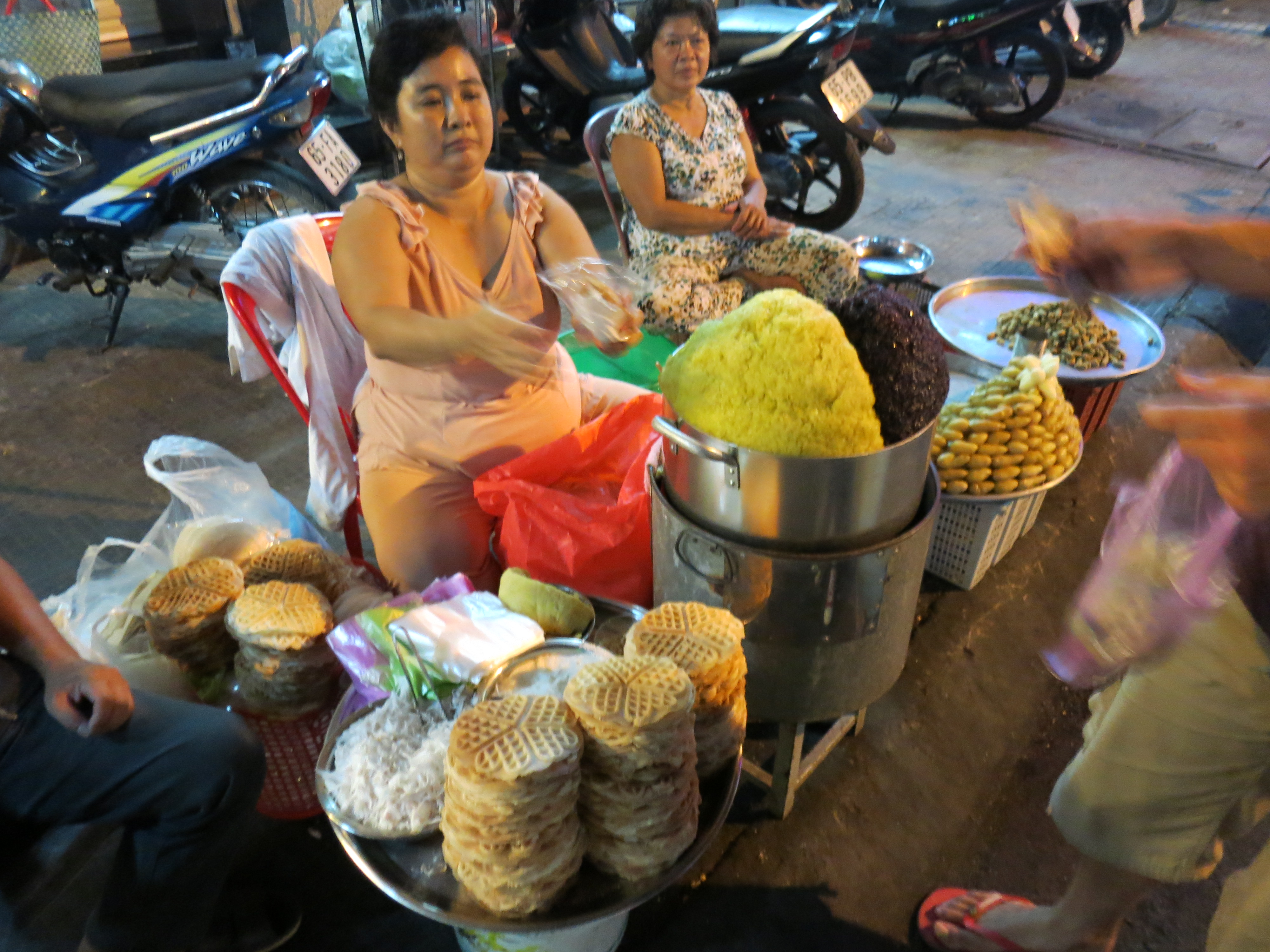
I don't know what this was called, but rice, bean paste, sugar, and a few other things were wrapped up in a waffle and consumed with relish; Can Tho

I don’t know what this was called, but rice, bean paste, sugar, and a few other things were wrapped up in a waffle and consumed with relish; Can Tho

We ate one of these sweet snacks, went to a pho place for dinner, and then on the walk back to the hotel, my friend had another.

Bún thịt nướng with pork spring rolls; Can Tho

Bún thịt nướng with pork spring rolls; Can Tho

This was a refreshing cold dish for lunch. Cold noodles, lots of fresh veggies and herbs underneath, and warm fried spring rolls on top.

Coconut candy; Mekong Delta

Coconut candy; Mekong Delta

We ate the candy warm from the machine and freshly cut, as part of our tour of a small village in the Mekong Delta.

A very spicy Bún bò Huế soup, a delicious pork satay-wrapped-in-veggies dish, fresh spring rolls in a peanut dipping sauce, jackfruit salad; Mon Hue Restaurant in Ho Chi Minh City

A very spicy Bún bò Huế soup, a delicious pork satay-wrapped-in-veggies dish, fresh spring rolls in a peanut dipping sauce, jackfruit salad; Mon Hue Restaurant in Ho Chi Minh City

I met up with a friend of a friend in Ho Chi Minh City (Saigon) who wanted to introduce me to the foods of Mon Hue Restaurant, which focuses on the regional specialties of Hue (which is in the middle of the country). She ordered way too much food, which we thoroughly enjoyed.

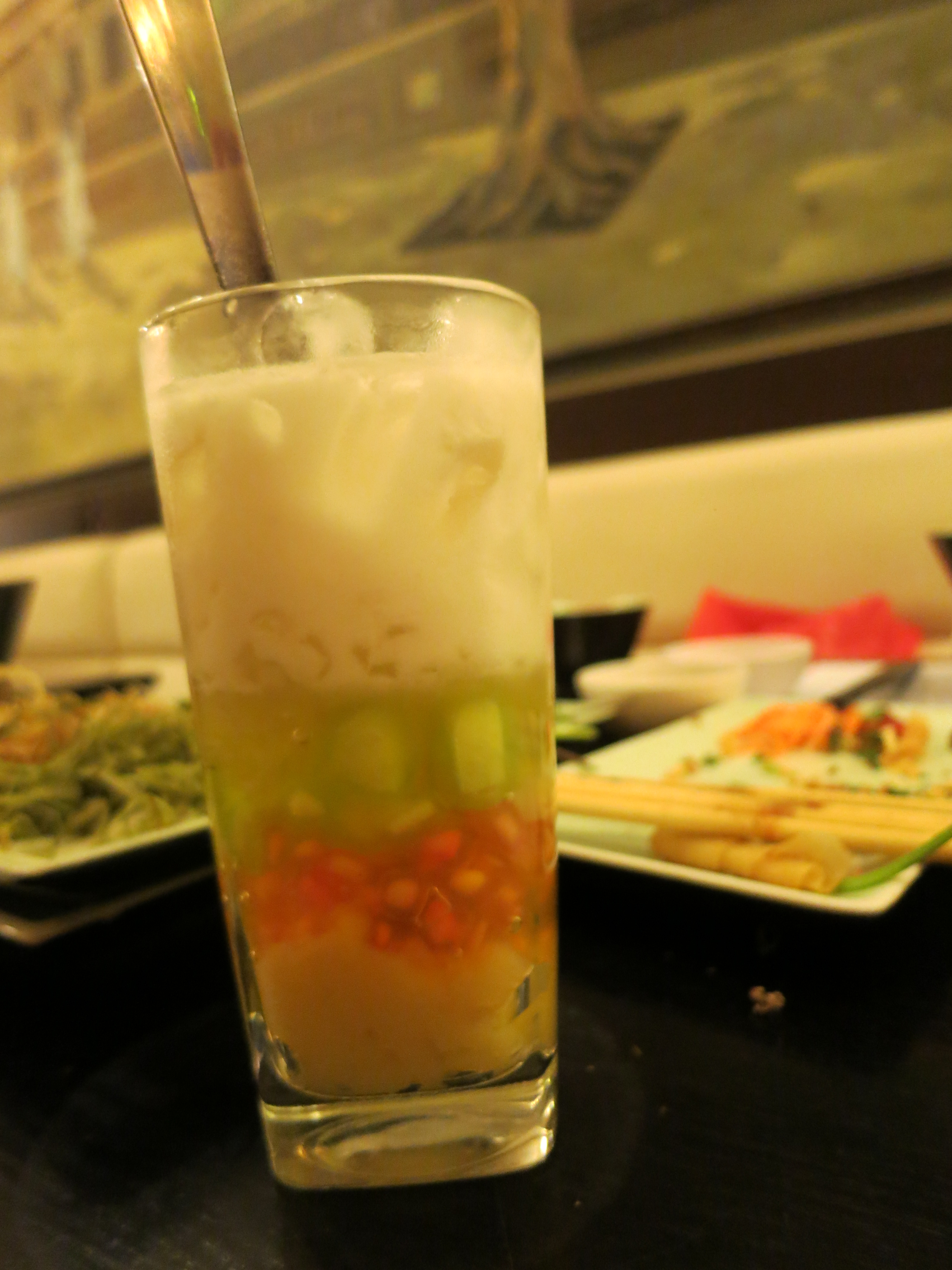
Che ba mau (green mung beans, white black-eyed peas, and red azuki beans in coconut milk); Ho Chi Minh City

Che ba mau (green mung beans, white black-eyed peas, and red azuki beans in coconut milk); Ho Chi Minh City

A substantial dessert drink.

Sweet breads, Ho Chi Minh City

Sweet breads, Ho Chi Minh City

A tasty breakfast that my friend found on his walks around the alleyways near our hostel.

White rose; Hoi An

White rose; Hoi An

A small amount of shrimp in a dumpling, topped with fried onions. The woman who served me said she could give me pork white rose because shrimp generally makes me ill. I’m not convinced what I ate was pork, but I didn’t get sick, so it doesn’t matter.

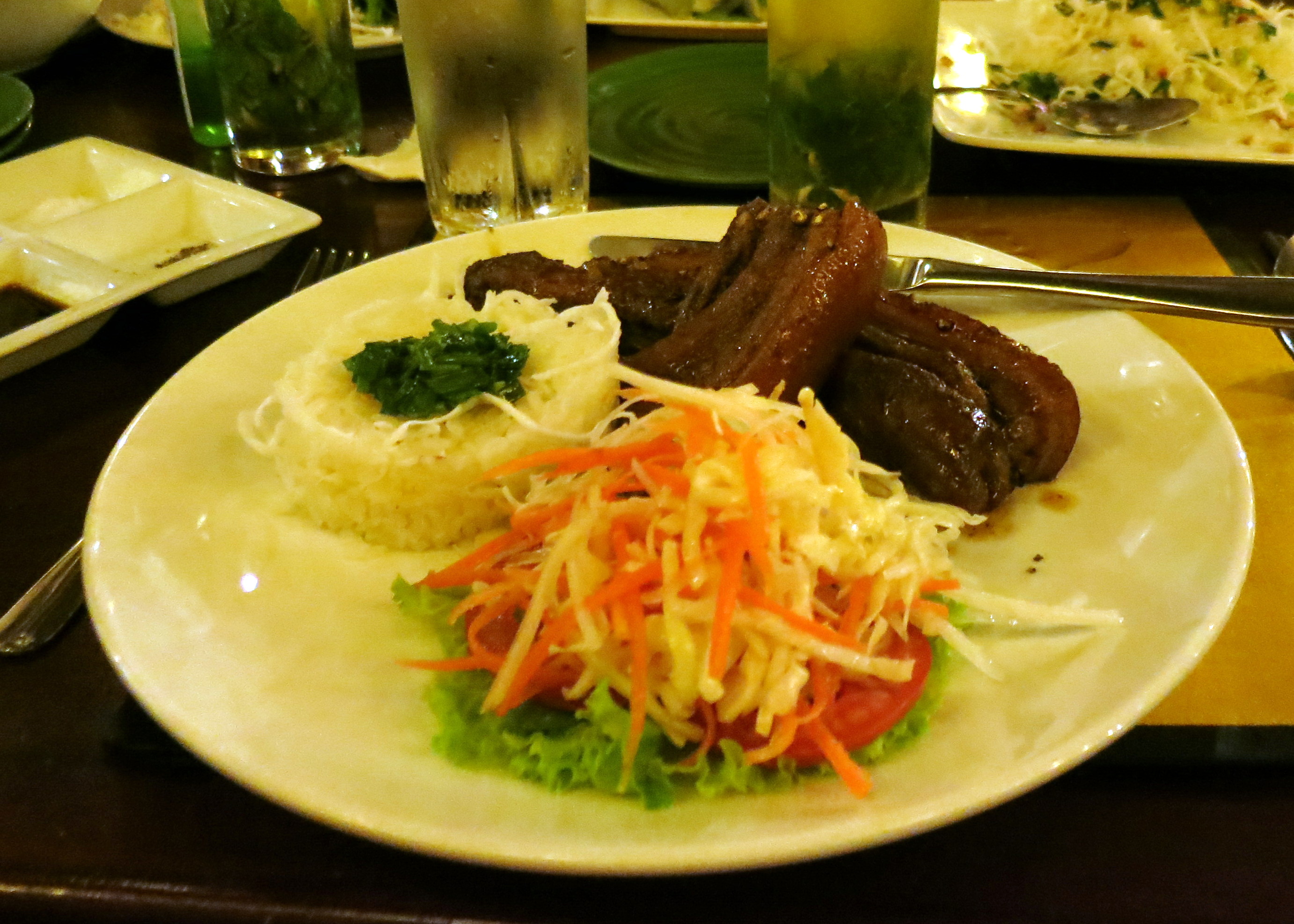
Pork belly and coconut sticky rice; Hoi An

Pork belly and coconut sticky rice; Hoi An

I celebrated my birthday with friends from the Elephant Nature Park. We went to Morning Glory Street Food Restaurant, which is fancier than its name implies. This pork belly was rubbed in five spices and lighly layered in a caramel sauce. The sticky rice was mixed with shredded coconut. I’m even learning to appreciate cabbage over here, since it often arrives mixed up with carrot but not turned into coleslaw.

Cao lầu; Hoi An

Cao lầu; Hoi An

Apparently the noodles (which you can barely see in this picture, sorry) are only made by one family in Hoi An, so you can only get authentic cao lau here. The noodles are thick and chewy, and you mix it up with greens and pork.