Sydney: It’s More Than Just an Opera House

I think most Americans have only a few images of Australia in their minds: kangaroos, koalas, the Great Barrier Reef, maybe Uluru, and the Sydney Opera House. At least, I know that’s all I could picture before I left the States. My first full day in Sydney, I went on a walking tour with I’m Free Tours. We spent three hours visiting the many sights of the city that don’t involve a building poised to set sail–although we saw that as well.
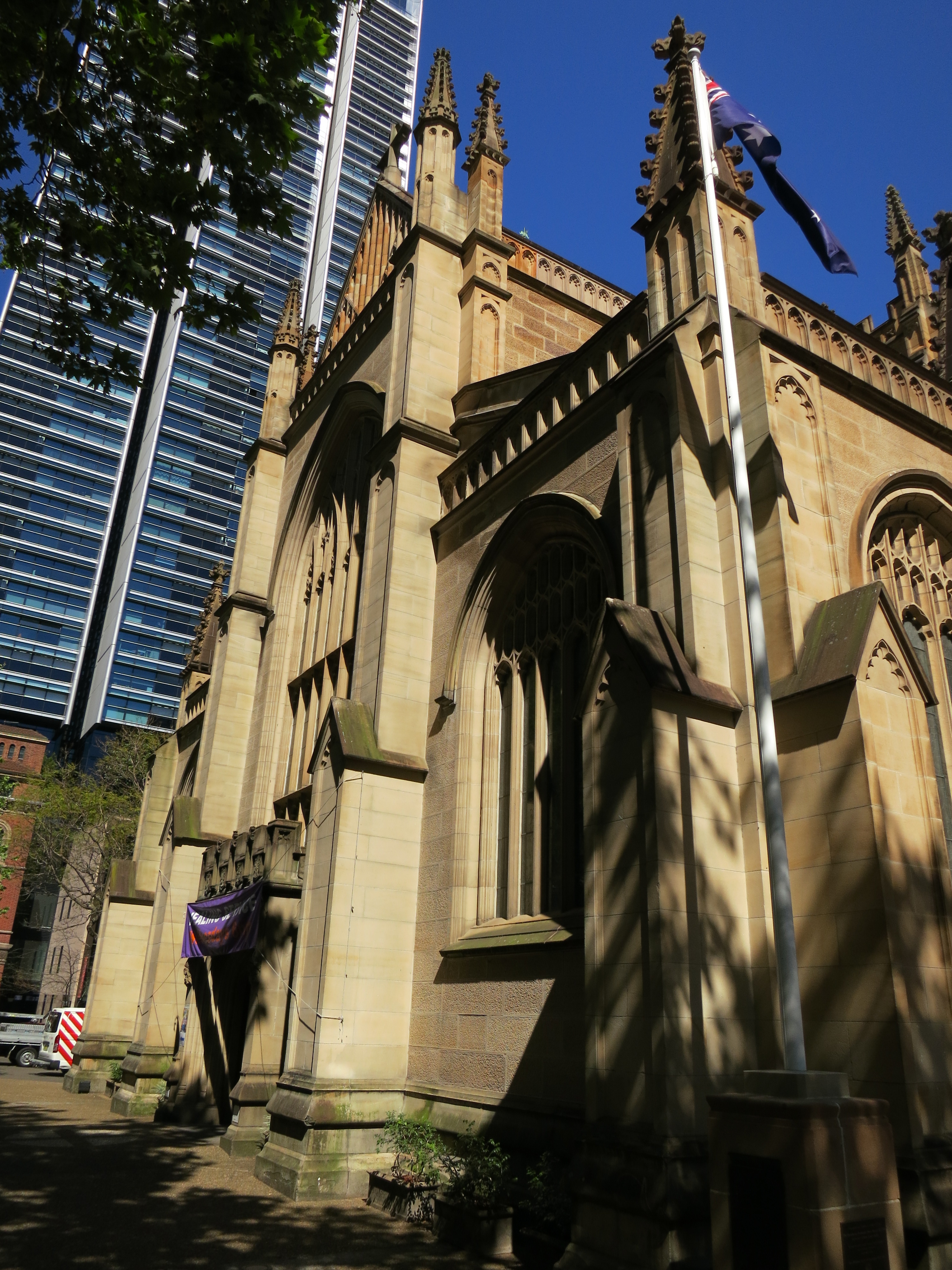
St Andrew’s Cathedral

We started at St. Andrew’s Cathedral, the oldest one in Sydney. It struck me as serviceable but not particularly impressive, and then our guide explained that this view is the back of the building. The front used to have a proper amount of lead-up space in front of it, but the city decided to build a road right about there, and the church then built a school by that road, so now it’s pretty well hidden. What an odd series of architectural choices.
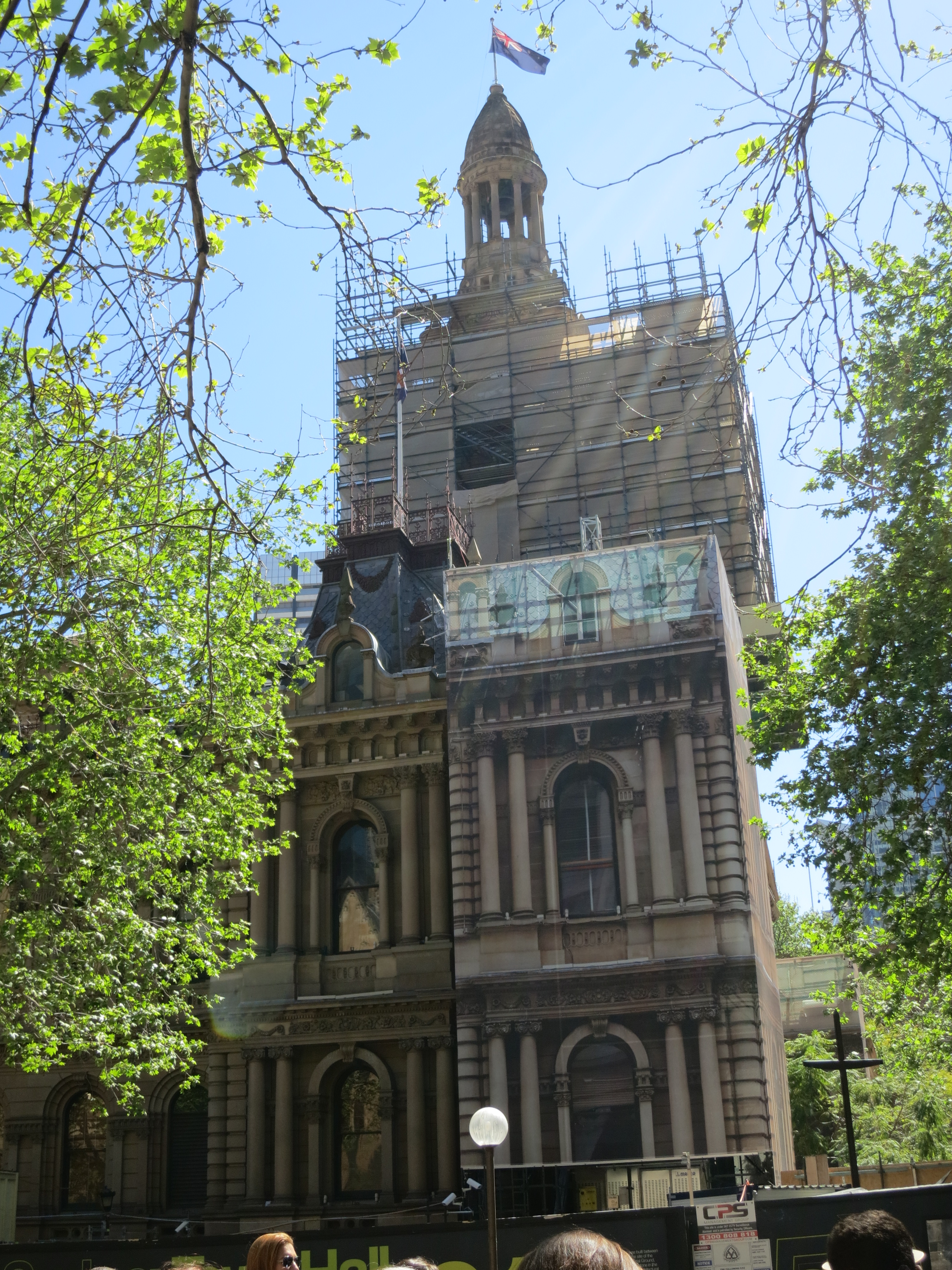
Town Hall

Town Hall is in the same square as the cathedral. It was under construction, as you can see in the photo, but after all the building originally took 21 years to complete, and our guide said finishing touches took decades more to add, so maybe scaffolding is the natural state for this building. Apparently, when they started work on the building in 1868, they knew the area had been a graveyard, and they moved some graves, but they weren’t terribly thorough. As recently as 2007, restoration workers found new graves in the foundations. A messy business!

Queen Victoria Building

The cupola of the QVB

Australians shorten the names of just about everything, so it’s no surprise that the Queen Victoria Building, an indoor marketplace, is just called the QVB by locals. It’s been many things through the years, including a library and the city council building, but now it’s back to its original purpose, more or less, as a three-story shopping mall. Nothing too special about that, but the interior is lovely–graceful arches, wrought-iron balconies, stained glass windows. Two elaborate clocks have little mechanical figures performing scenes from British and Australian history, including the hourly beheading of Charles I. And there’s a statue of a dog outside that talks when you throw coins in the fountain, although it wasn’t working when we tried. AND Queen Elizabeth II wrote a letter to the people of Sydney and put it in a vault in the QVB, and it can’t be opened for another 70 years. This building is a collection of quirks.
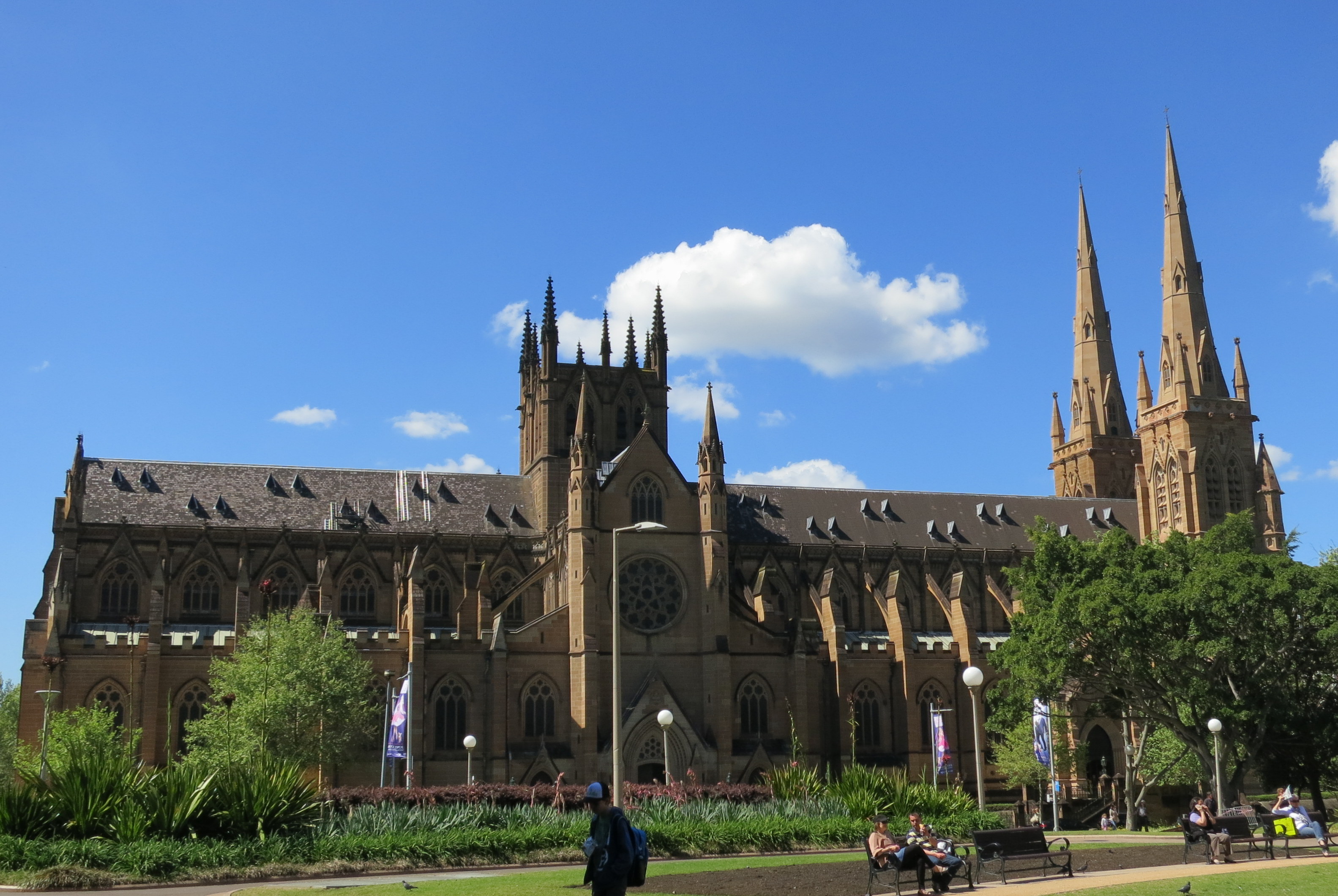
St Mary’s Cathedral
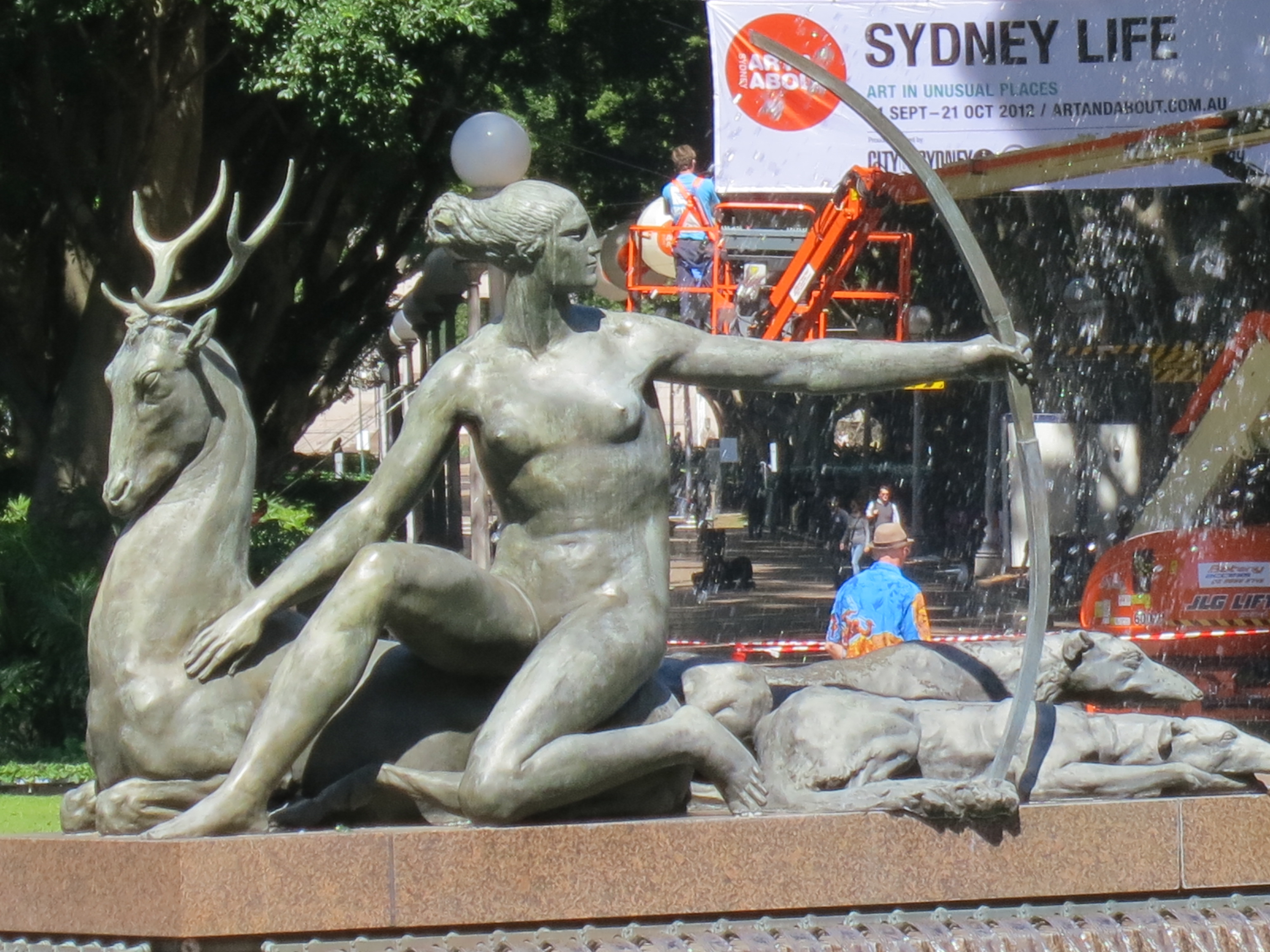
Archibald Fountain

Hyde Park is a tenth the size of its namesake in London, but it’s the same idea–an oasis of green amidst the city bustle. Boy Scout groups lunched on the lawn, two people with furrowed brows played a game of chess on a giant board, and a model posed for photos at Archibald Fountain. St. Mary’s Cathedral, the largest one in Sydney, sprawled gracefully to our left as we stood under an avenue of trees and listened to our guide tell us about the fountain, which was an international affair–commissioned by an Australian, created by a Frenchman, and built to show classical Greek mythical figures.
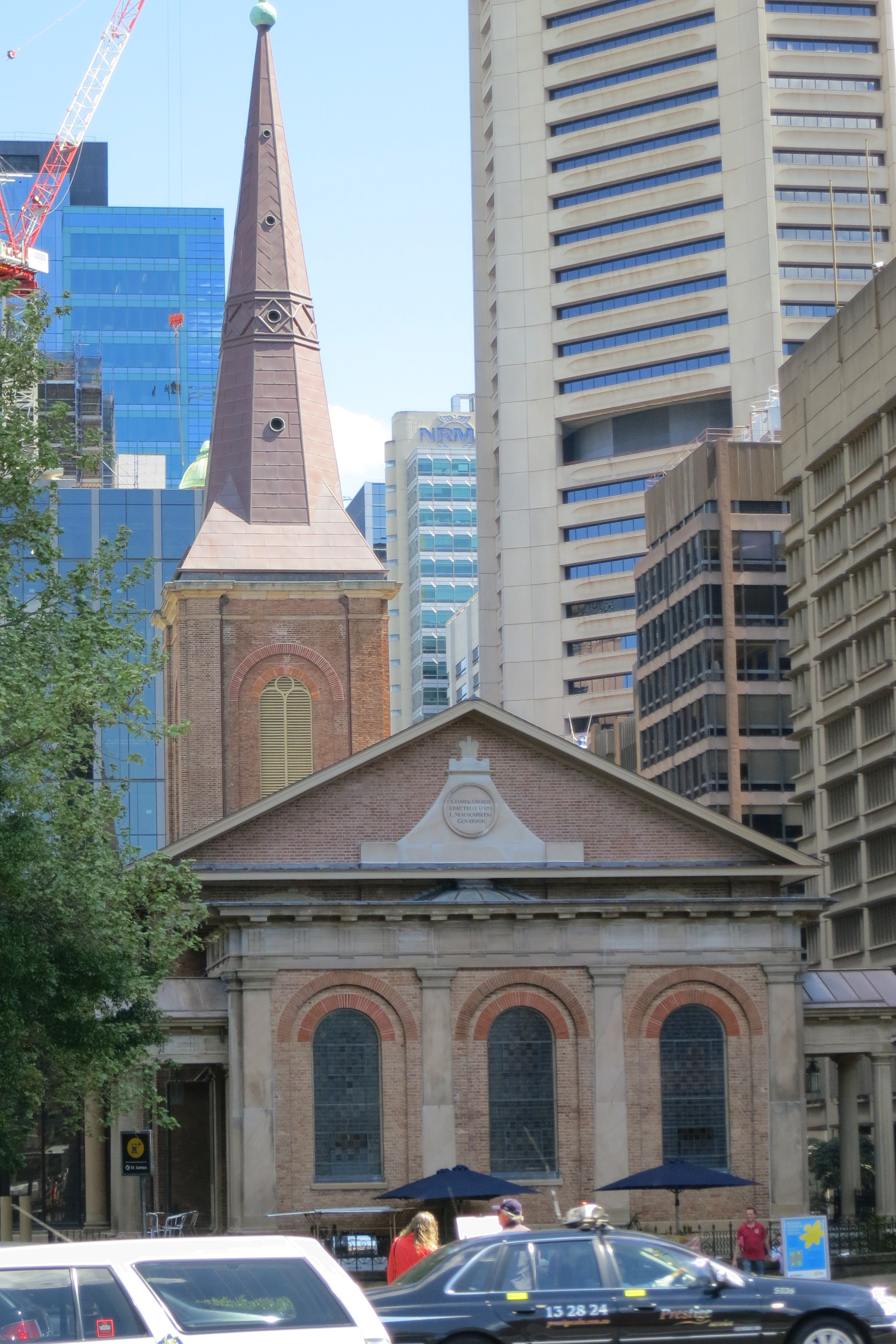
St James’ Church
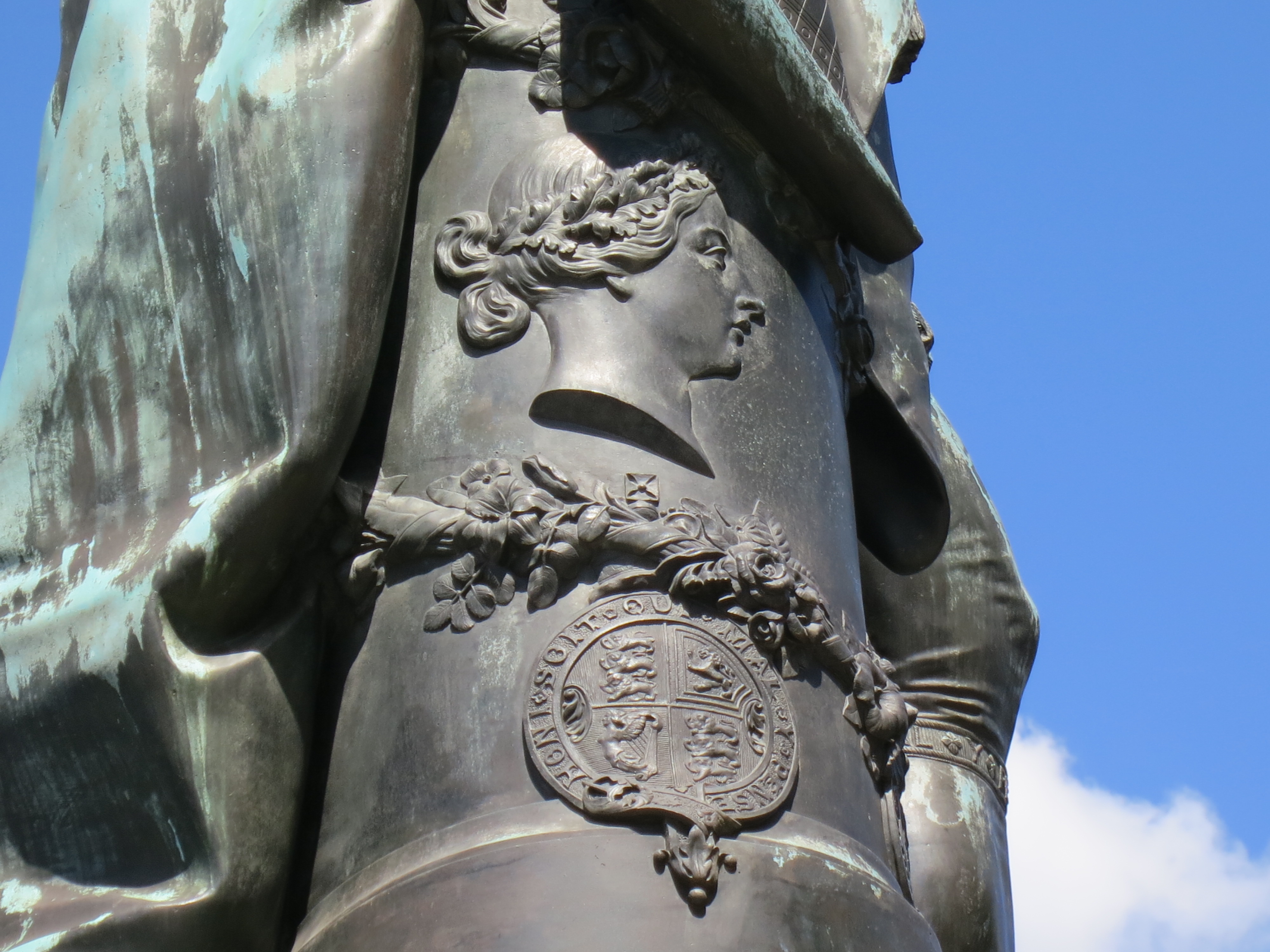
Albert the Good statue

Hyde Park Barracks

Just past Hyde Park, Macquarie Street is full of historical buildings and monuments. St. James’ Cathedral was the highest point in Sydney for a long time–as you can see, that’s no longer the case. We passed yet another statue of Queen Vic, although this time a statue of her husband looked across the street at her. She was really attached to him, though, so there’s a portrait of her face carved into the half-column to his right. Nothing says love like pressing the side of your face into your husband’s thigh on a major road. We passed the Hyde Park Barracks, which was commissioned by Governor Macquarie in 1818 and designed by a convict, Francis Greenway, who was sent to Australia for forgery. New beginnings!

The Rum Hospital

Il Porcellino

The first hospital in Sydney wasn’t built by taxes or philanthropy, but by booze. Governor Macquarie wanted to build a hospital but the British government didn’t deign to provide funds, so he came up with a workaround: a few local businessmen would front the money, and in return they’d get a monopoly on rum imports for a certain period of time. Thus, the nickname for the collection of three buildings: The Rum Hospital. Today, one of the buildings is a museum to the national Mint, while the central building remains a working hospital. A replica of “Il Porcellino,” a bronze boar statue in Florence, was placed in front of the hospital in the 1960s. You can rub his snout for luck, although closer inspection reveals that people are rubbing, um, other parts of its anatomy as well.

The national crest

First Fleet anchor

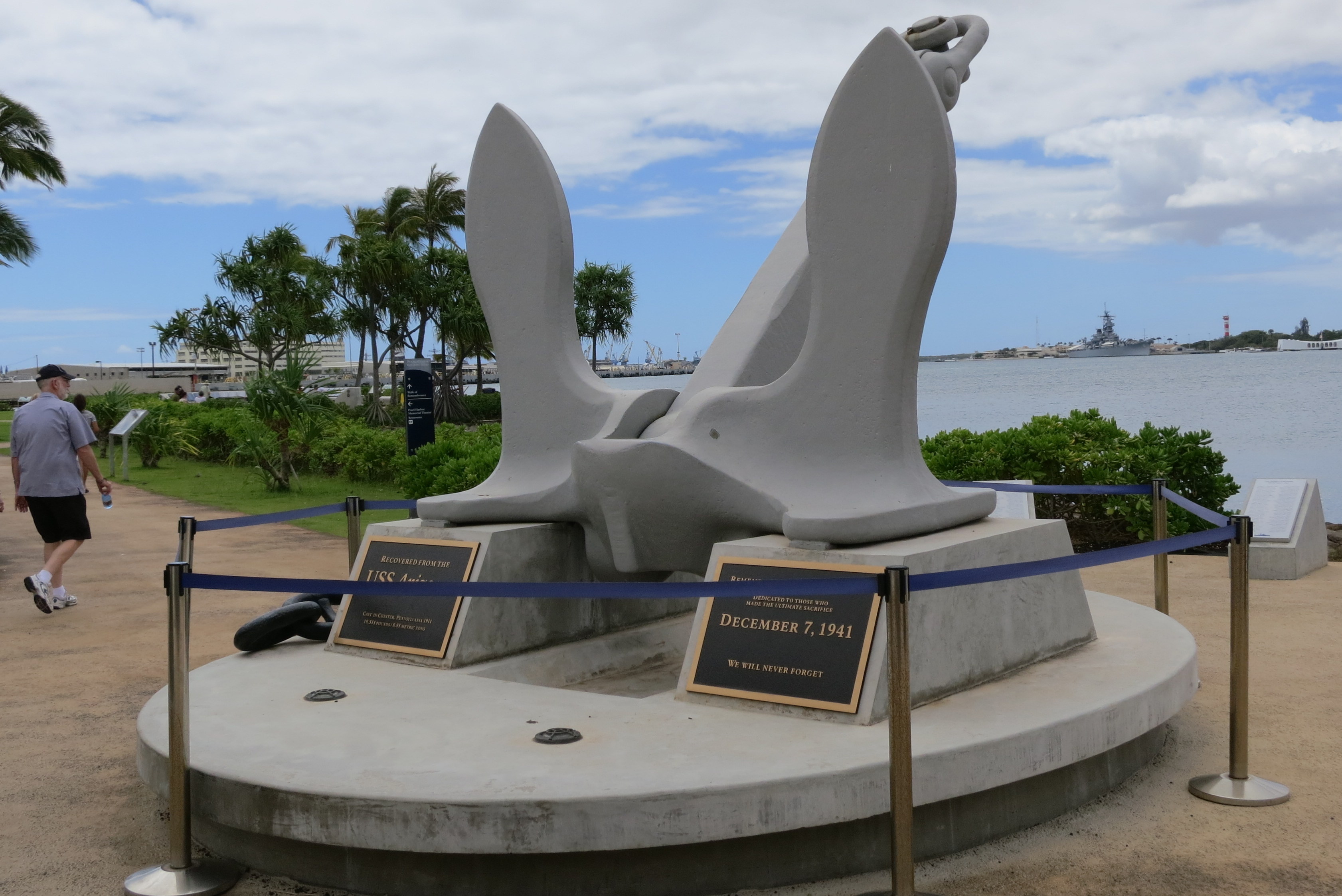
The Australian coat of arms, which we saw on the national bank building, features the emu and the kangaroo, two native animals that were chosen in part because they were believed to only be capable of moving forward, not backward, and thus they represented progress. (In reality, the animals can, but rarely do, move backward. But let’s not be spoilsports.) We walked past the anchor from one of the ships in the First Fleet, which arrived in 1788 with hundreds of convicts and a couple hundred Marines, sent from England to establish a colony.
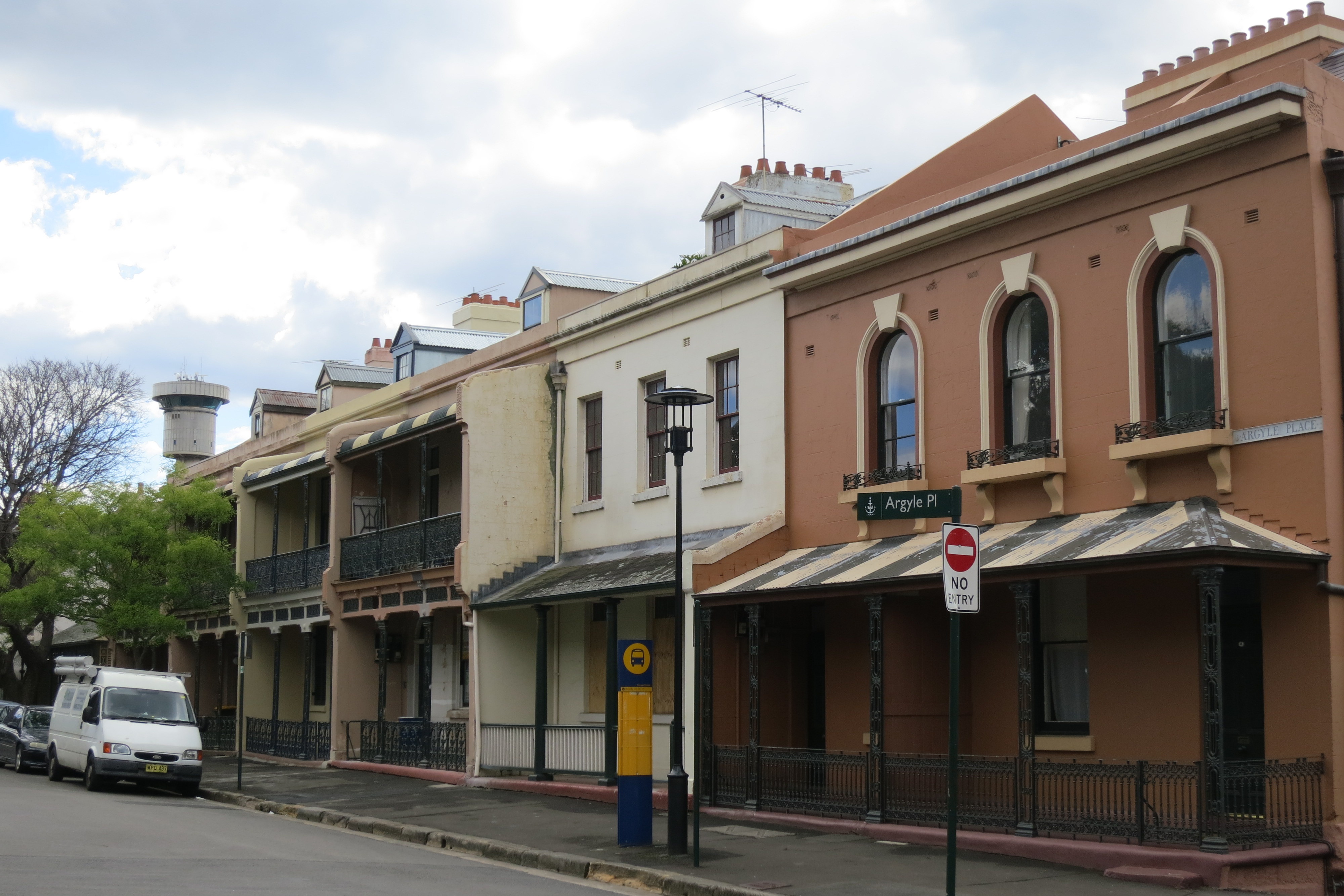
The Rocks

One of two pubs in Sydney claiming title to oldest

Our last stop before looking at the harbor was The Rocks, which is the oldest area of Sydney. As with so many other cities, this once dangerous area has been sanitized almost past the point of recognition. It was the docks originally, and now it’s got museums about the docks, and several high-end restaurants. Still, many of the original buildings have been saved from destruction and repurposed, which I think is generally a good thing.

A glimpse of the Harbour Bridge

And then, at last, we reached the harbor. While I’d only ever heard of the opera house, Sydneysiders (as Google tells me denizens of Sydney are called) are also really, really proud of their bridge. When it was first built, critics called it “the coat hanger,” but it’s a solid addition to the skyline. You can climb up to the lower part of the bridge and walk across it, on a path that runs parallel to the road, or for a couple hundred dollars, you can hitch yourself to a dozen other people and walk up the curved part of the bridge, to the very top. I opted not to do either of these things, and just admired it from afar.

Sydney Harbour Bridge

And finally, we turned to the right and saw the Sydney Opera House, a beautiful building that has been described variously as a collection of sails, a flower opening, and a group of clams or seashells. I saw the sails resemblance, probably because there were plenty of sailboats out on the water while I was in Sydney, prompting a comparison. The building was designed by Danish architect Jorn Utzon in 1957, although after a few years and some changes in government, he was scandalously forced out of his own job and not paid in full. Drastic cost-cutting changes were made to his designs, some of which affected acoustics, which is unforgivable in a performance space. Utzon was so upset at his ill treatment that although he lived until 2008, he never returned to Australia. A kind of reconciliation seemed to occur in 2004, when they named a room after him in the Opera House, but overall it was a shady business that damaged a man’s career and a great performance space. Still, it remains an iconic building, and one that doesn’t hurt for performance engagements despite the acoustics.

In all, it was a great tour, with a friendly guide and just enough information to pique interest but not overwhelm. If you’re in Australia, I recommend the I’m Free tours, which are apparently also in Melbourne.

Sydney Opera House

That was a good walking tour
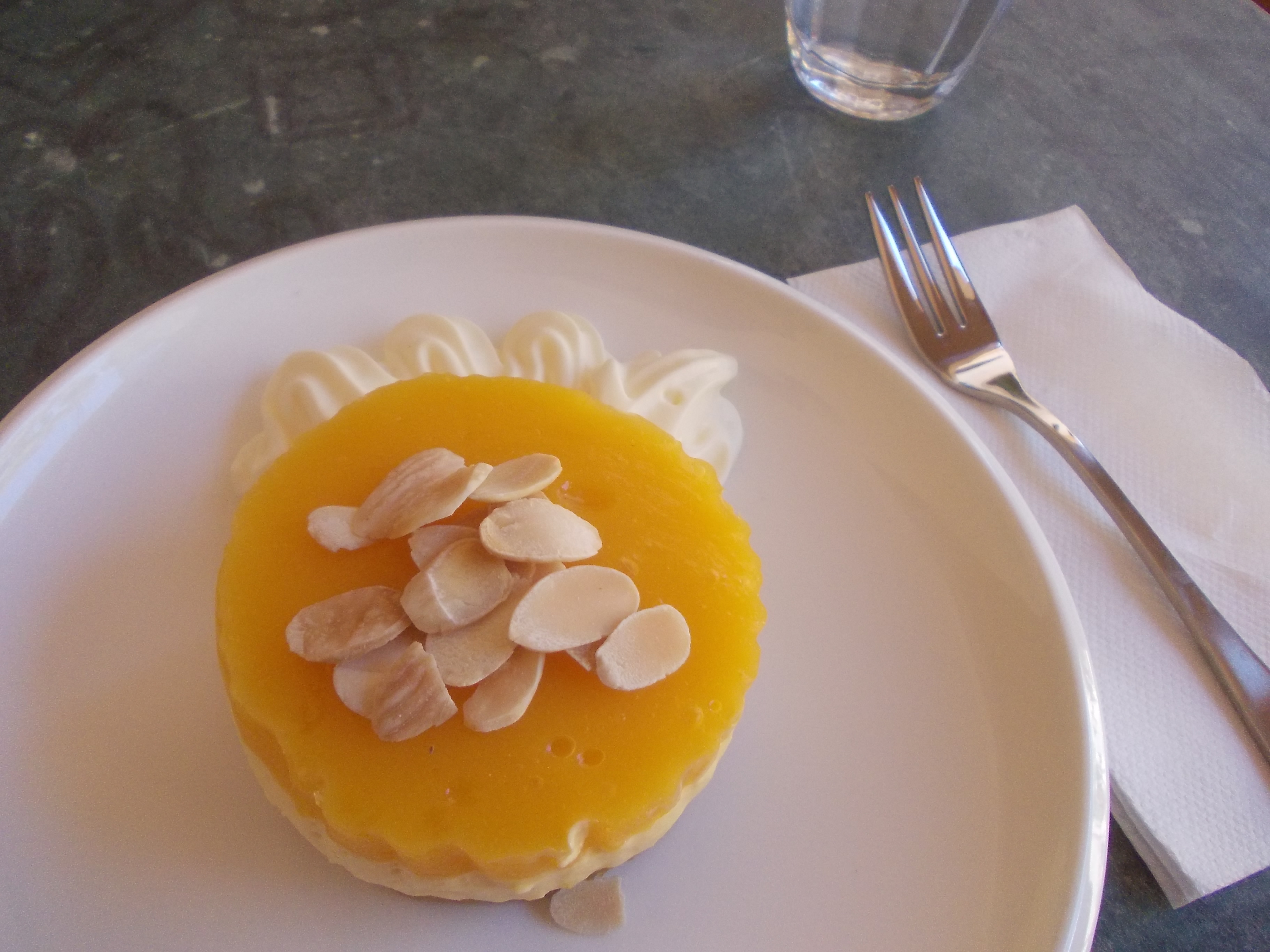
Small Things

Sometimes, when you’ve traveled 50 minutes by bus to your third ophthalmologist appointment of the week, only to be told that you can’t have the eye drops to cure your light sensitivity because your eye still isn’t healed enough, then the only thing to do is enjoy the mango cheesecake from the local gluten-free cafe. It definitely improves things.

Hawaii by the Numbers

Miles driven: 362

Beds slept in: 5

Accommodations rented: 4

Accommodations with balcony ocean view: 3

Waterfalls admired: 4

Hours snorkeled: 3.5

Sea turtles seen: 2

Fake tattoos painted on Heather: 4

Flowers worn in my hair: 1

Hula dances watched: 2

Near-death driving experiences: I can’t even think about it

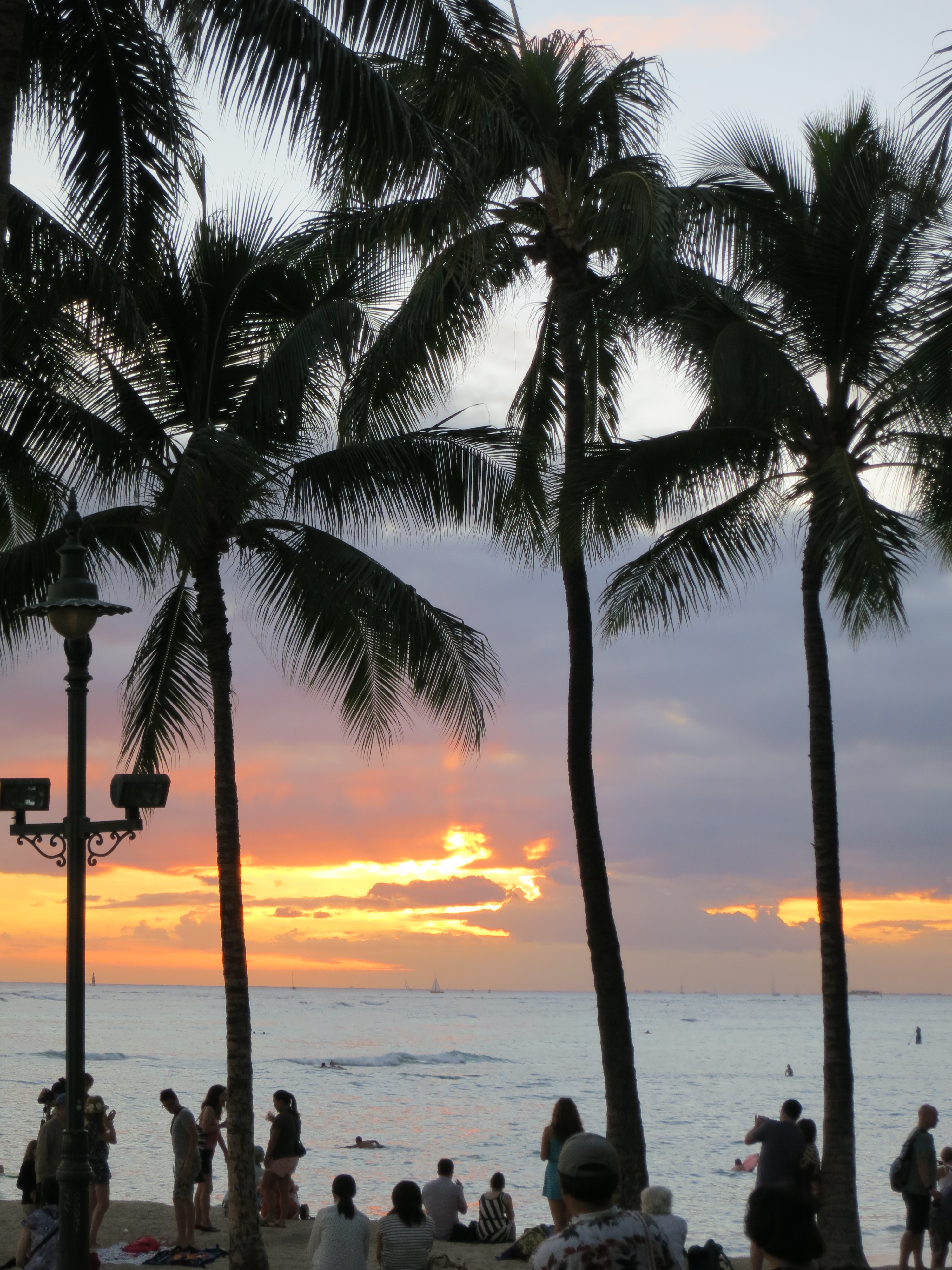
Sunset drinks drunk: 9

Palm trees photographed: approximately 500

Hawaiian words I knew before arriving: 2

Hawaiian words I learned while there: 15

Hawaiian words I know now: 2

National parks visited: 2

Friends made by Heather, at the hotel check-in, at restaurants, at the luau, etc.: At least 6

Total money spent, including airfare: $2,477

Total days spent there: 14

Average per day, including airfare: $177

Total money spent, NOT including airfare: $1,677

Average per day, NOT including airfare: $120

Money regretted having spent: not a cent

Moments treasured with a beloved sister: countless

Island Indulgences on Oahu

When Heather and I got back to Oahu from the Big Island, we didn’t have big plans. In fact, other than “visit Pearl Harbor,” we didn’t have any plans at all. We were perfectly content to sleep in, stroll to the beach to read and swim, walk around town, eat at the condo or out at a restaurant, and generally indulge in easy living. Here’s what that looked like:

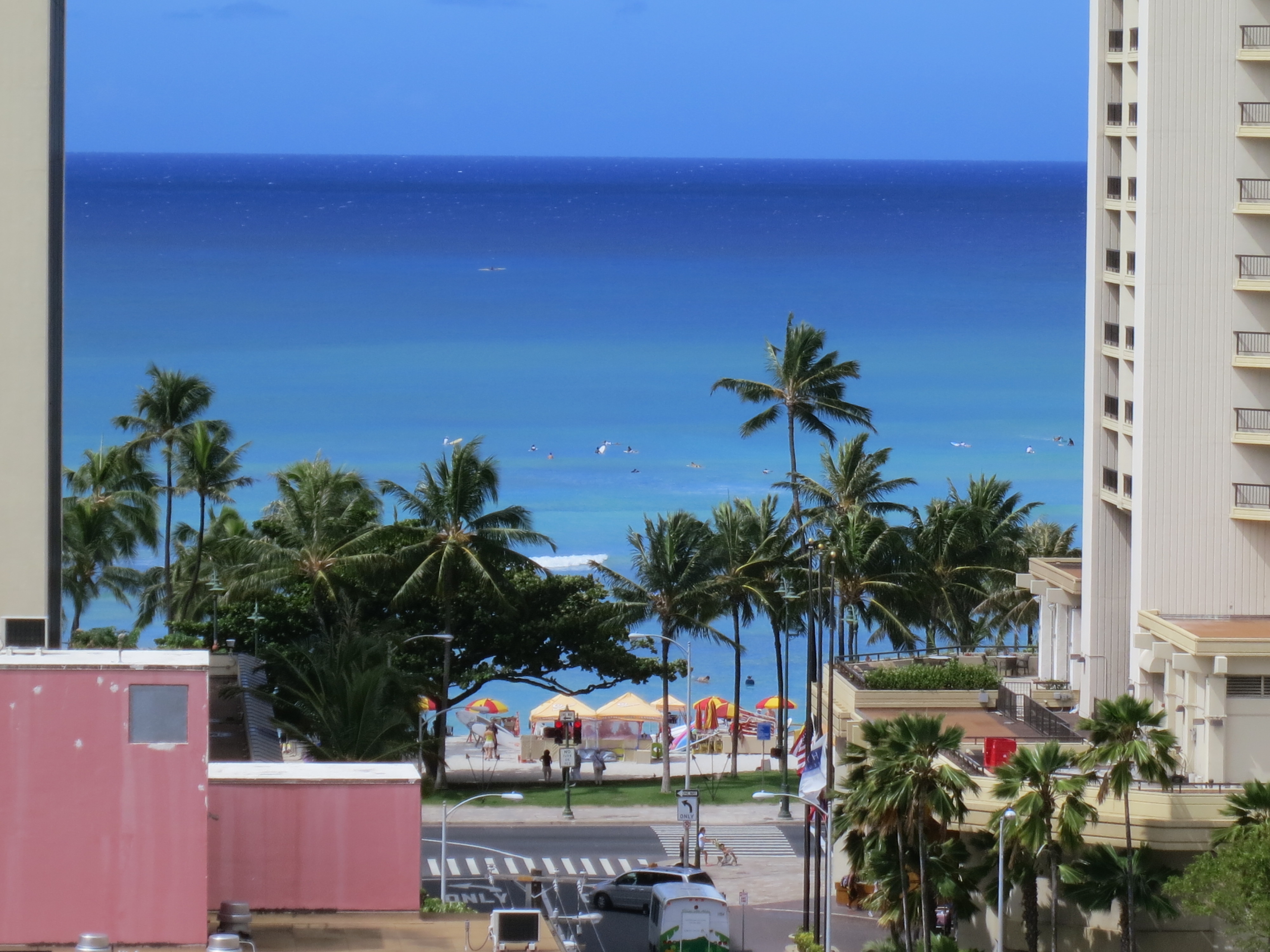
The view from our condo rental

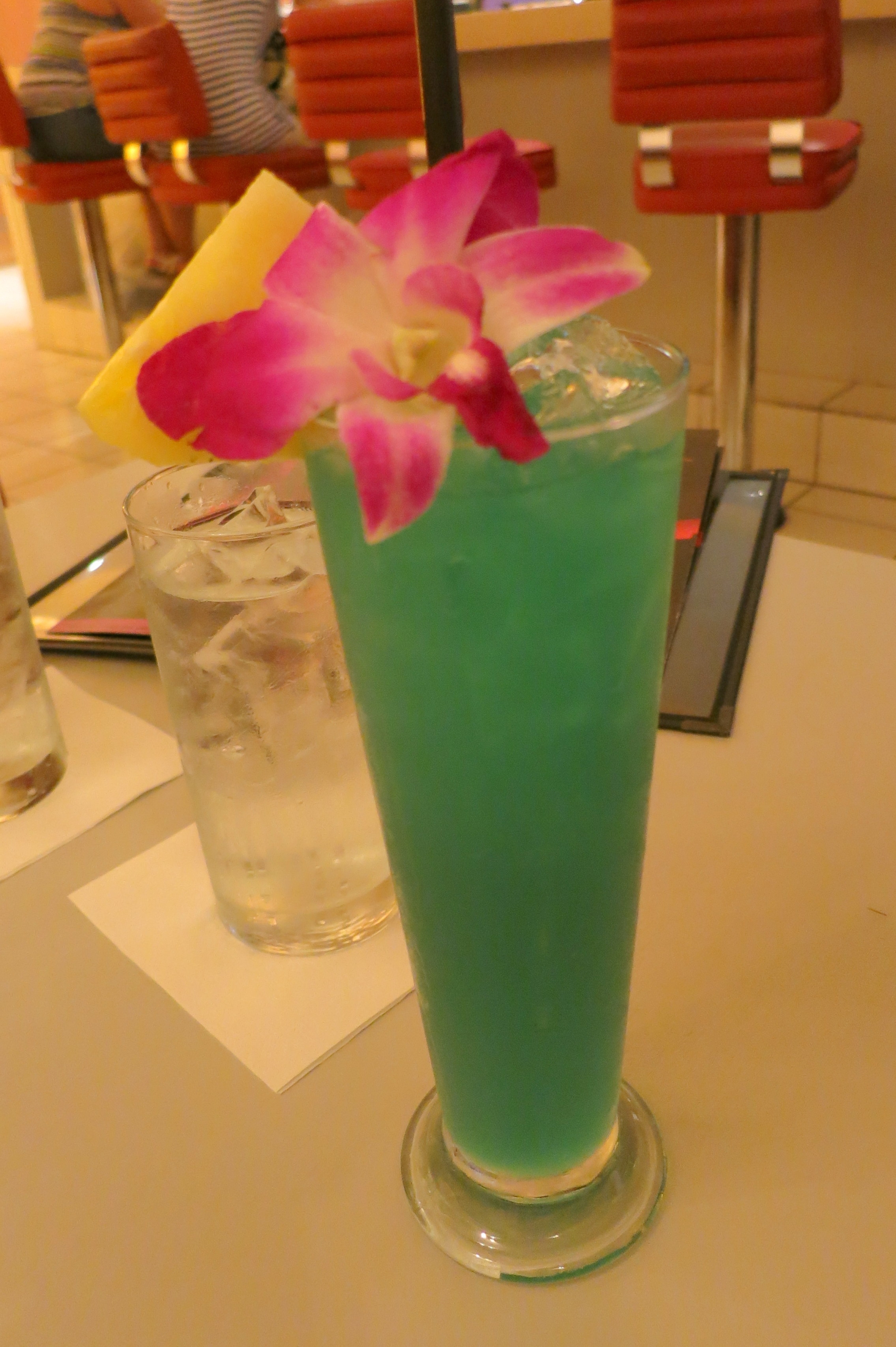
I want flowers in my drinks

Duke Kahanamoku statue at Waikiki Beach

some of the sidewalks around town had Hawaiian words and definitions in them

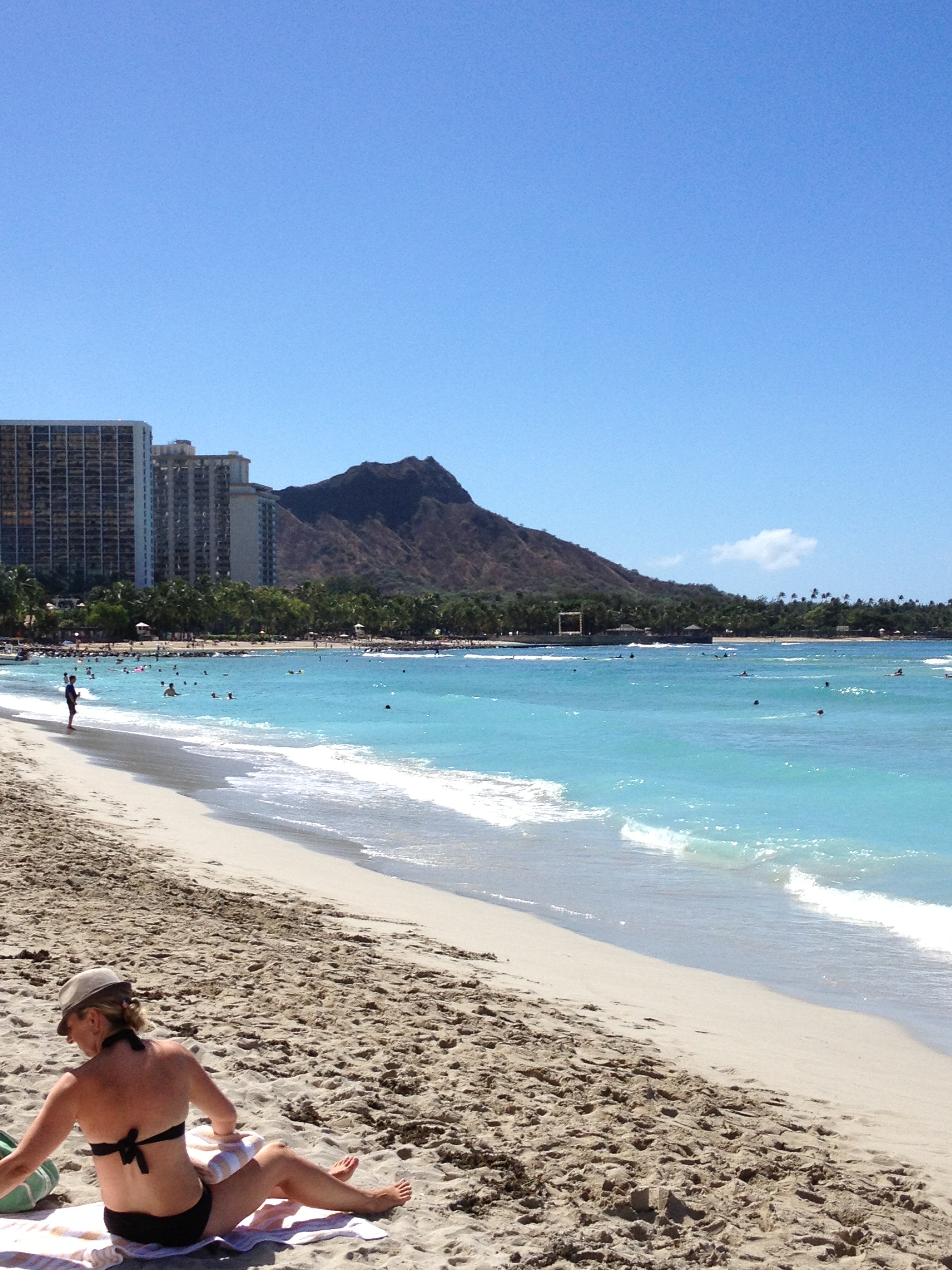
view of Diamond Head

Surprise Wednesday night fireworks, seen from our balcony

Australia I Love You But You’re Bringing Me Down

(We interrupt your regularly scheduled Where in the World Wednesday for a truly scary Halloween post. Fair warning, this post contains a couple photos you don’t want to see while you’re eating, and some graphic descriptions of my gruesome illness.)

Australia is trying to kill me. Not with the expected methods–shark attacks, spider bites, bloodthirsty dingoes, or calculating crocodiles–but with something far more bizarre and at the same time mundane. I’m stuck in Australia with a bad case of shingles.

SHINGLES. Like you get when you’re 80. I’ve had mysterious ailments all week, and finally on Monday I saw a doctor who said, “Oh yes, that’s a bad case of shingles you have in your eye.” IN MY EYE. And all around it. Y’all, I do not even need to dress up for Halloween this year. I’m going totally natural. Naturally gross, that is.

Scary monster

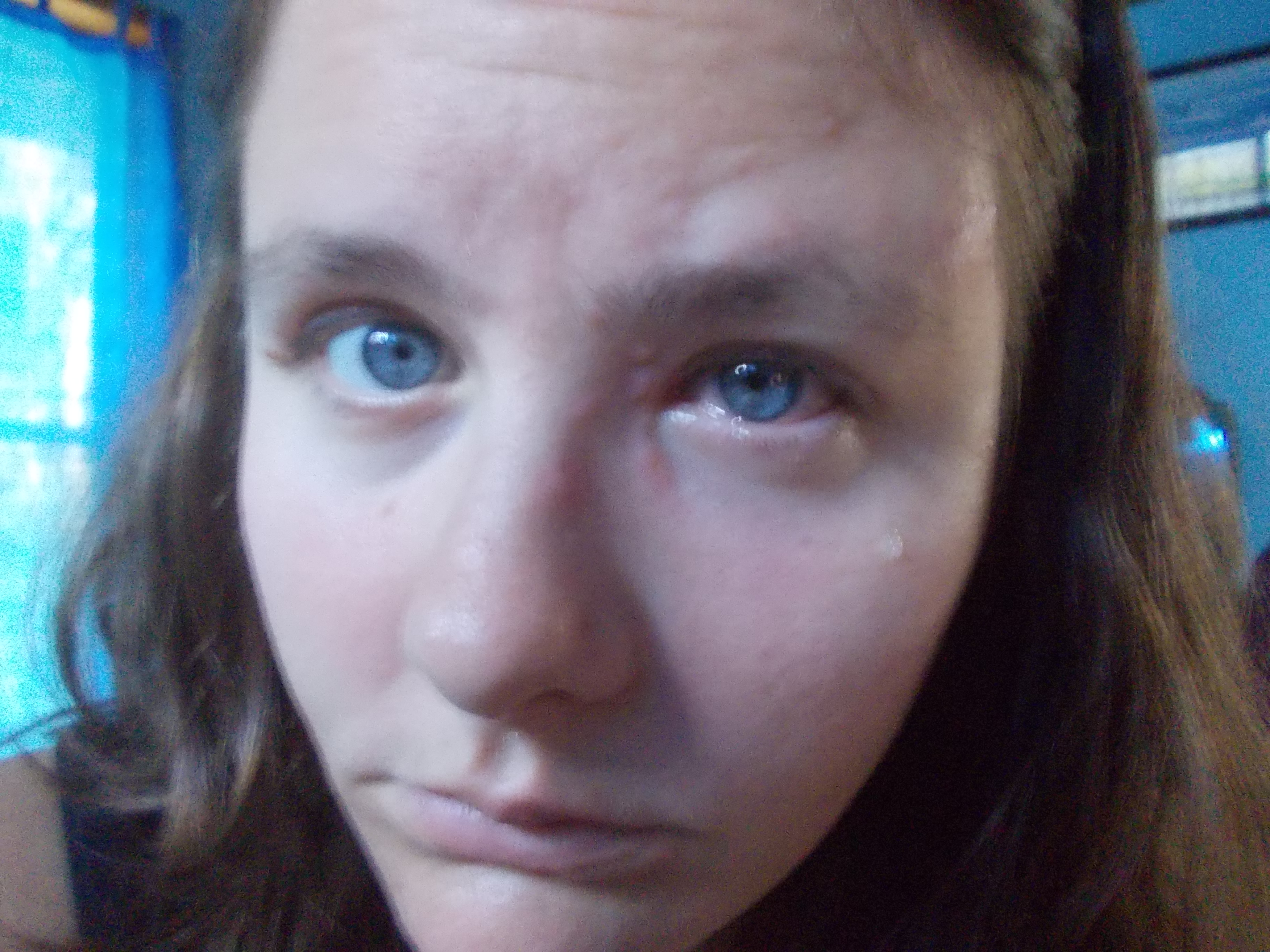
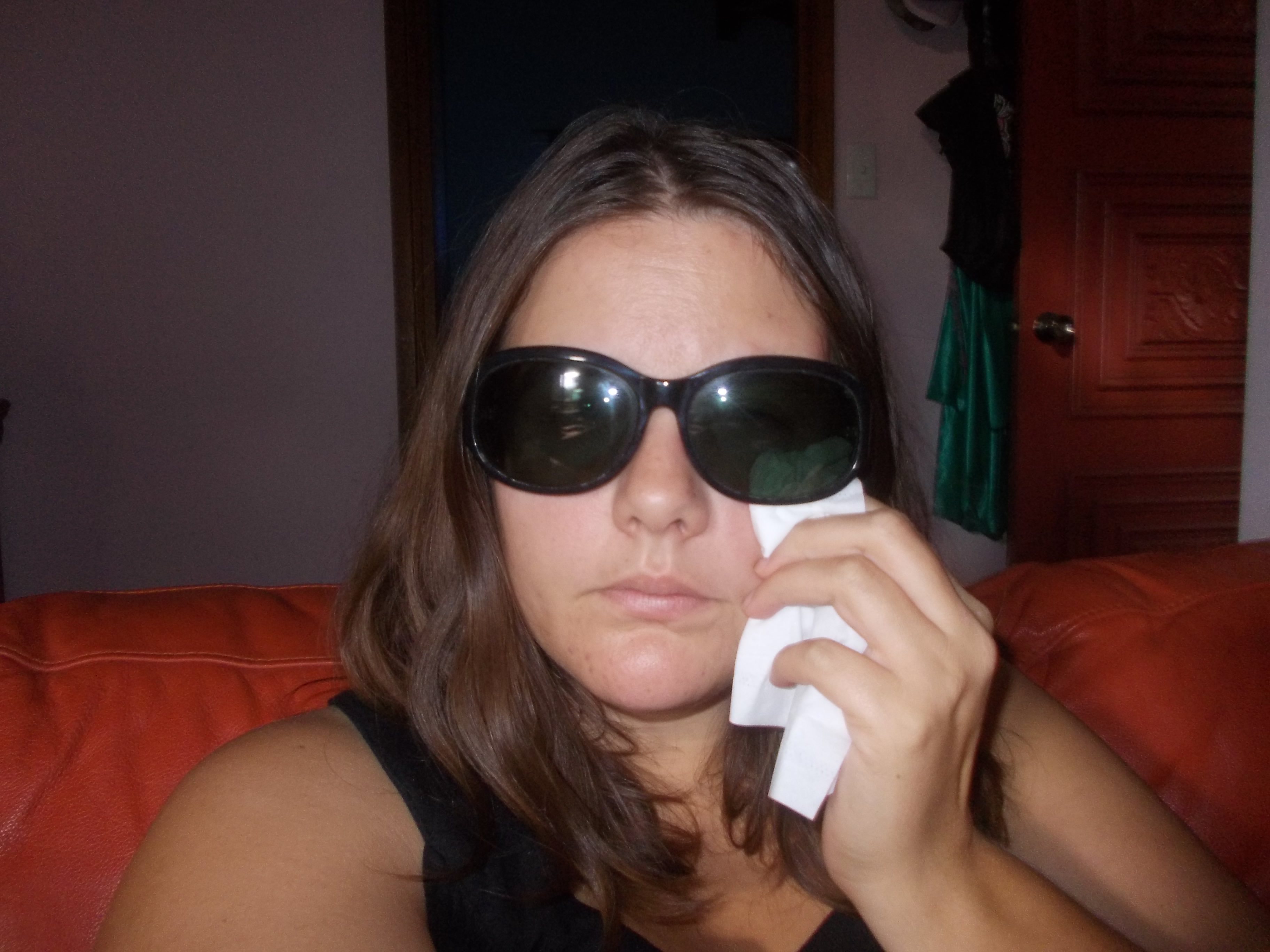
I hope this photo conveys to you just how nasty the left side of my face is right now. Lesions from my forehead to my eyebrow, in the little crook of the eye where you get eye gunk at night, and all down my nose. A sprinkling on my cheeks. And then a bright red eye peering out between swollen eyelids. The most comfortable position is for me to have the eye closed, but that does not mean I am comfortable. I’m constantly leaking tears, which I have to be careful when dabbing so as not to disturb the lesions on my face. (LESIONS. Like a freakin’ leper over here.) Despite all the leaking, the eye isn’t lubricating much, so it’s dry and sometimes I feel the lower lid sticking to the eyeball. The eyeball itself is alternately itchy and sore, like part of it ripped, so even when my eye is closed I feel that. All this eye leaking means some of the liquid is going down the nasal passage, so I’m blowing my nose all the time too. All the bones in my face ache, and while the lesions aren’t too painful right now, the doctor assures me they will be. Oh, and I have a stabbing pain in a specific spot on my head, like someone sending an electric shock through my brain every 10 minutes or so. Shingles: they are not fun.

Seriously.

What is going on with me? If you had chicken pox when you were a kid, it’s possible you could get shingles later. If your immune system is compromised, the chicken pox virus might come out to play, and it takes the form of shingles. What happens is one nerve branch is affected (maybe more, on me it seems to be just this one), so all along that nerve branch you get lesions and pain, and in bad cases, the nerve damage can be permanent and sometimes you can even get scarring. Let’s not get ahead of ourselves here, the doctor thinks I got to him in time for the antiviral drugs to be effective, which should keep permanent nerve damage out of the picture, but you don’t know until it’s over. And since it’s a virus, it just hangs out in your body and comes back when conditions are right and it’s feeling malicious. As with other ailments, if you’ve had it once, you’re more susceptible to having it again. GOODY.

Well, how did I get here? By doing too much, too fast on this trip, is how. The last few weeks before I left were highly stressful (leaving a job; discovering bedbugs–yes, that’ll be another post; saying goodbye to everyone I know and love). I did relax in Hawaii, although as you’ve seen from the blog posts, we did pack a lot in as well. When I got to Australia, I thought I was pacing myself okay, but it might’ve been too much for my exhausted body to handle. Illness is rough enough without thinking that you probably brought some of it on yourself, and it’s all compounded by my annoyance that I couldn’t handle it. I thought after 29 years of inhabiting this body, I was a pretty good guess on what it could do. It’s frustrating to be told in gross, lesion-y terms that I was wrong.

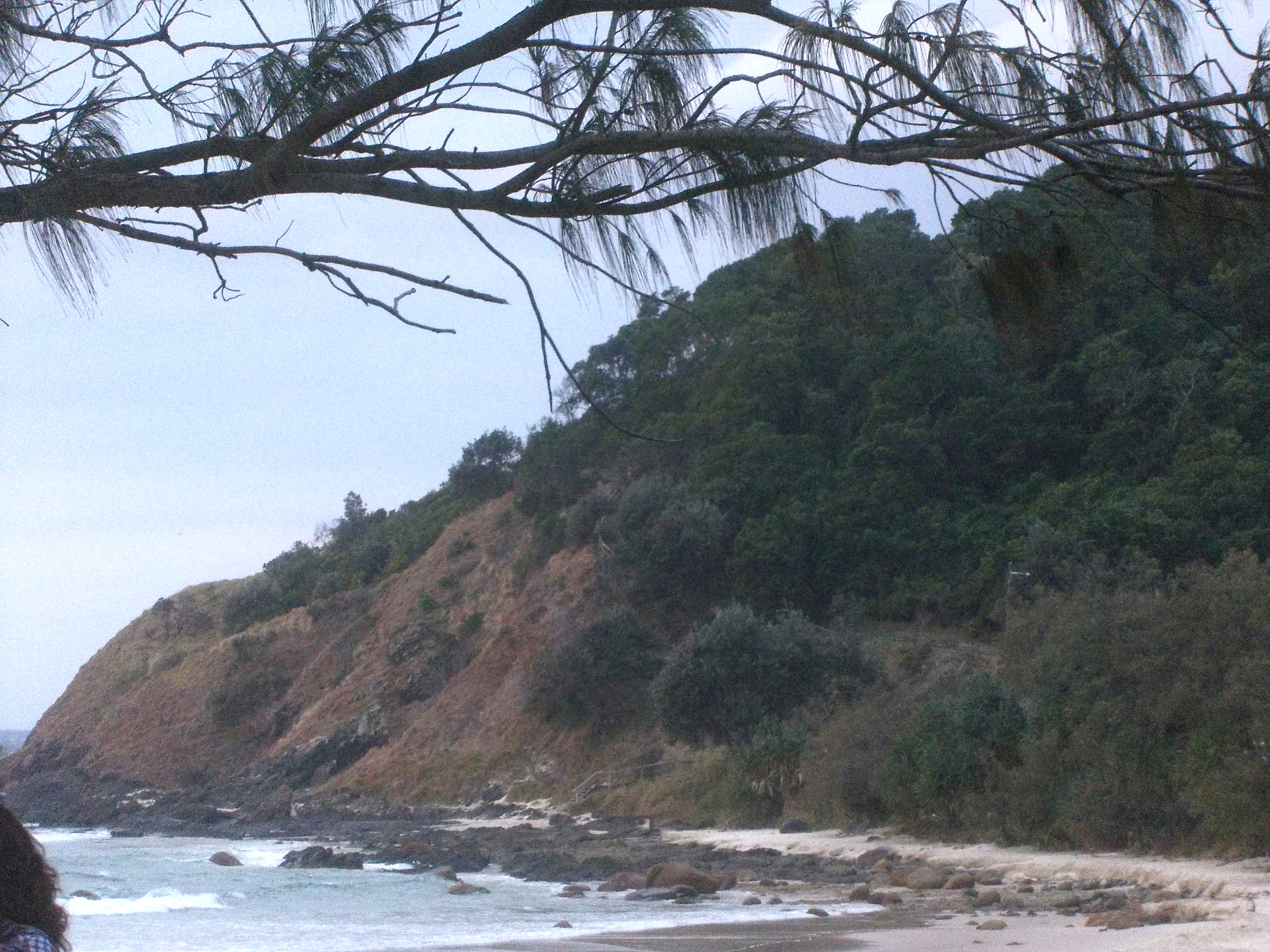
Watego’s Beach, Byron Bay

Now, out of the whole country of Australia, this is the place to be stuck. I’m staying with relatives in Byron Bay, and they’ve generously offered me a room for as long as I need to heal. I’m in a home and not a hostel, I have my own room and bathroom, I share meals with the family, and when I’m feeling up to it, I can walk into town for people-watching and cheesecake-eating. I’m hugely grateful to them for putting me up, and for ferrying me to the doctor as well!

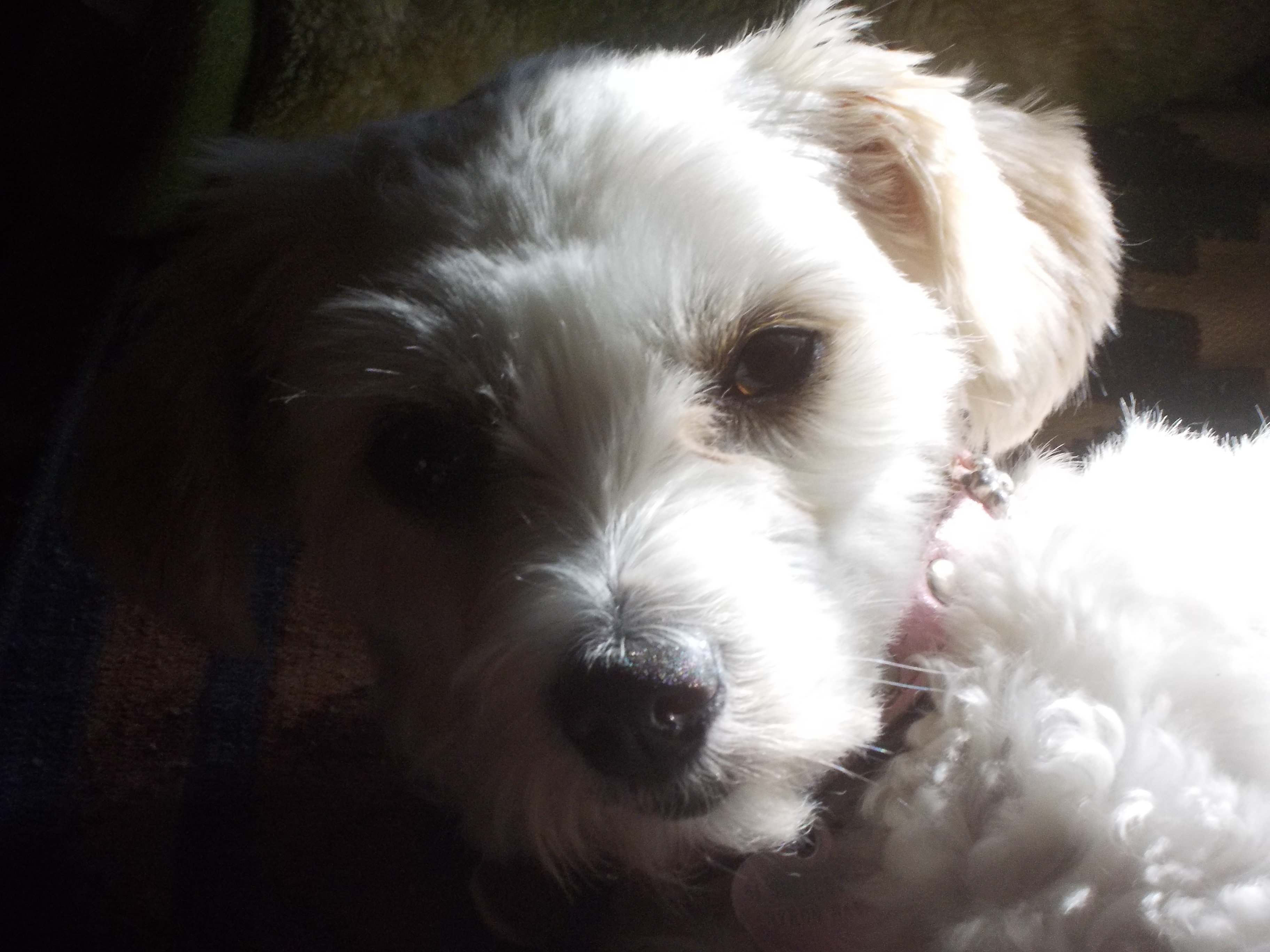
Also, there are a couple of these guys keeping me company

I should be clear that although going full throttle probably contributed to getting me in this state, I had a lot of fun doing it. I hope the Where in the World Wednesday posts and occasional Facebook updates convey just how beautiful Australia is, and how much I’ve enjoyed seeing it.

I’d hoped to be in Melbourne by this time, but that’s just not going to happen. It hurts to open my eye for too long, so I’m not sure how much writing I’ll be able to do, but I do plan to catch up somewhat. I’ll take it slow and easy, and hopefully in a few weeks I’ll be able to carry on. These aren’t the adventures I was hoping to have on my trip, but such is the nature of travel: you truly never know what’s next.

The glamorous approach to protecting my hideous eye

Somber and Conflicted at Pearl Harbor

Pearl Harbor is the most popular tourist attraction on Oahu, but I felt uneasy the whole time I was there. It’s a massive monument to a successful military strike, as told from the losing side in that strike. It’s a memorial for over 1,100 people who didn’t even have time to register that they were dying before they were gone. It’s a collection of solemn displays and audio clips that plot out exactly what happened on December 7, 1941. It’s a narrative of how the tide turned and the USS Missouri, one of the attacked ships, became the site of the official surrender ceremony on September 2, 1945.

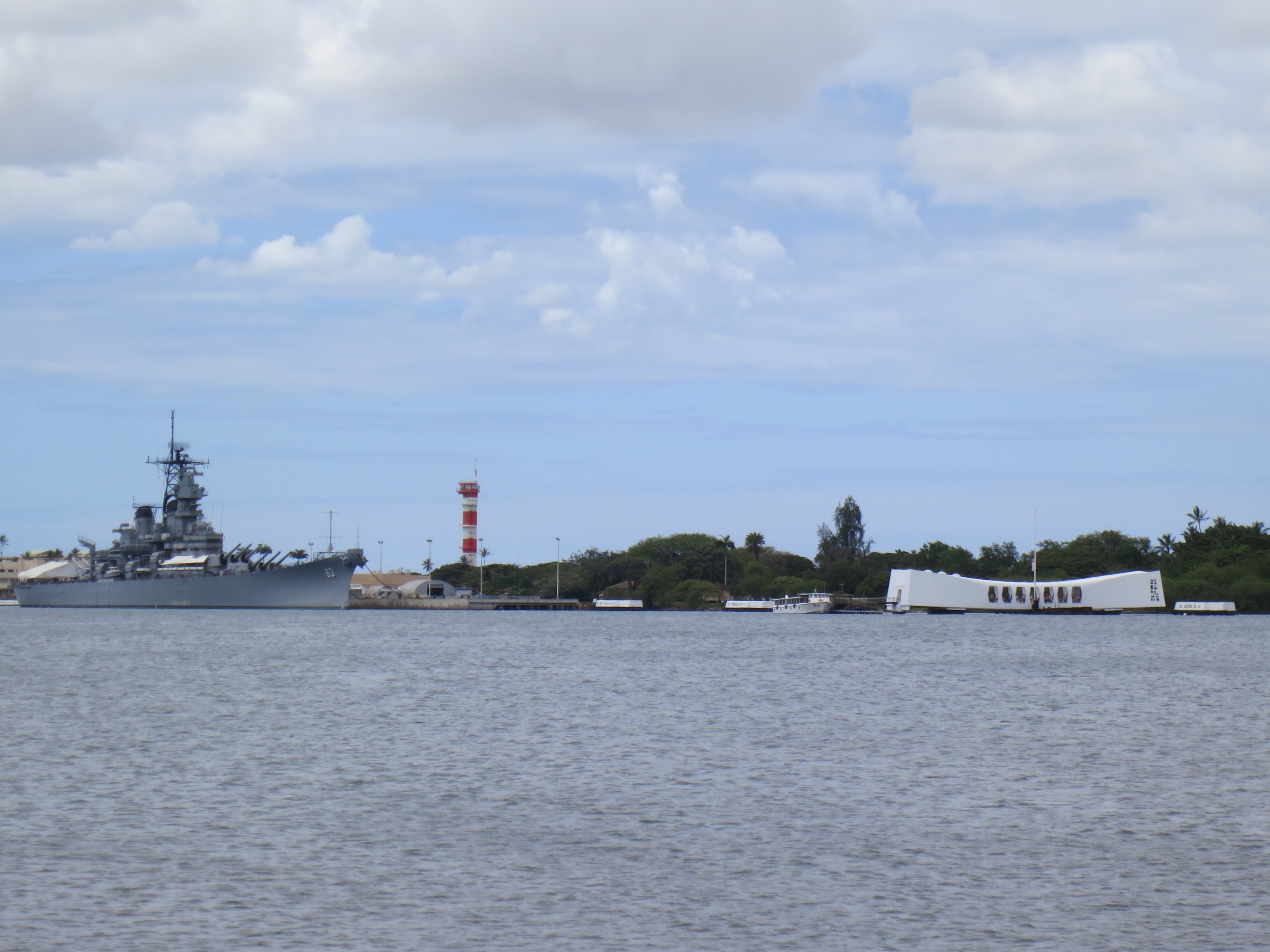
The USS Missouri and USS Arizona Memorial

There’s a strange mix of lax security and overblown alert levels at the World War II Valor in the Pacific National Monument. We had to check our bags and only carry in cameras and wallets, but then we breezed through the gates with hardly a glance from the security officer on duty. Tickets to see the USS Arizona Memorial are free, but you have to pick one up so that you can start the tour in a specific time block.
The political and military significance of Hawaii’s location was stressed again and again

First, you watch a video that attempts some historical context for the attack on Pearl Harbor, although it’s comically simplified and contradictory. For example, it mentioned the commercial interests the United States wanted to protect in various parts of Asia, and then condemned Japan for having similar interests. I mean, I know this isn’t an unbiased museum display or anything, but that did seem a bit odd. The website actually does a better job at telling the story, I think.

Half mast

The rest of the video drives home just how thorough the Japanese were in preparing and executing the strike, and how a bad bit of luck resulted in the Navy getting no warning. (The guy on radar was literally on his second day on the job, with minimal training, and they were expecting a block of B-17s that day anyway, so a large group of planes flying in didn’t alarm them as it should have.) The video then does a good job of emphasizing that the Arizona is now a graveyard and should be treated with respect and solemnity. It seems an odd thing to have to point out to people, but then once we got to the memorial, I saw a couple posing for smiling photographs in front of the wall inscribed with the names of the dead, so I guess it’s necessary.

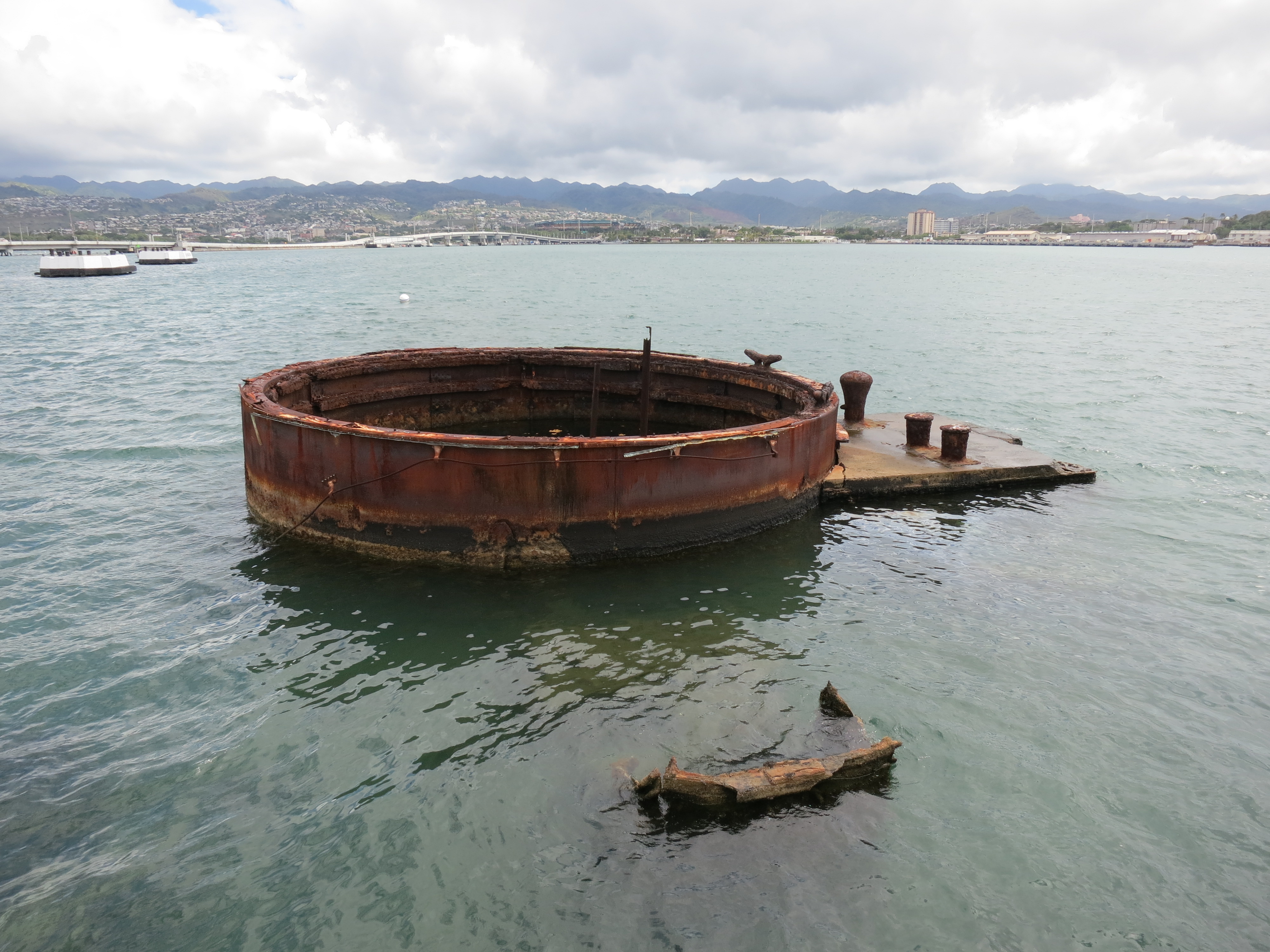
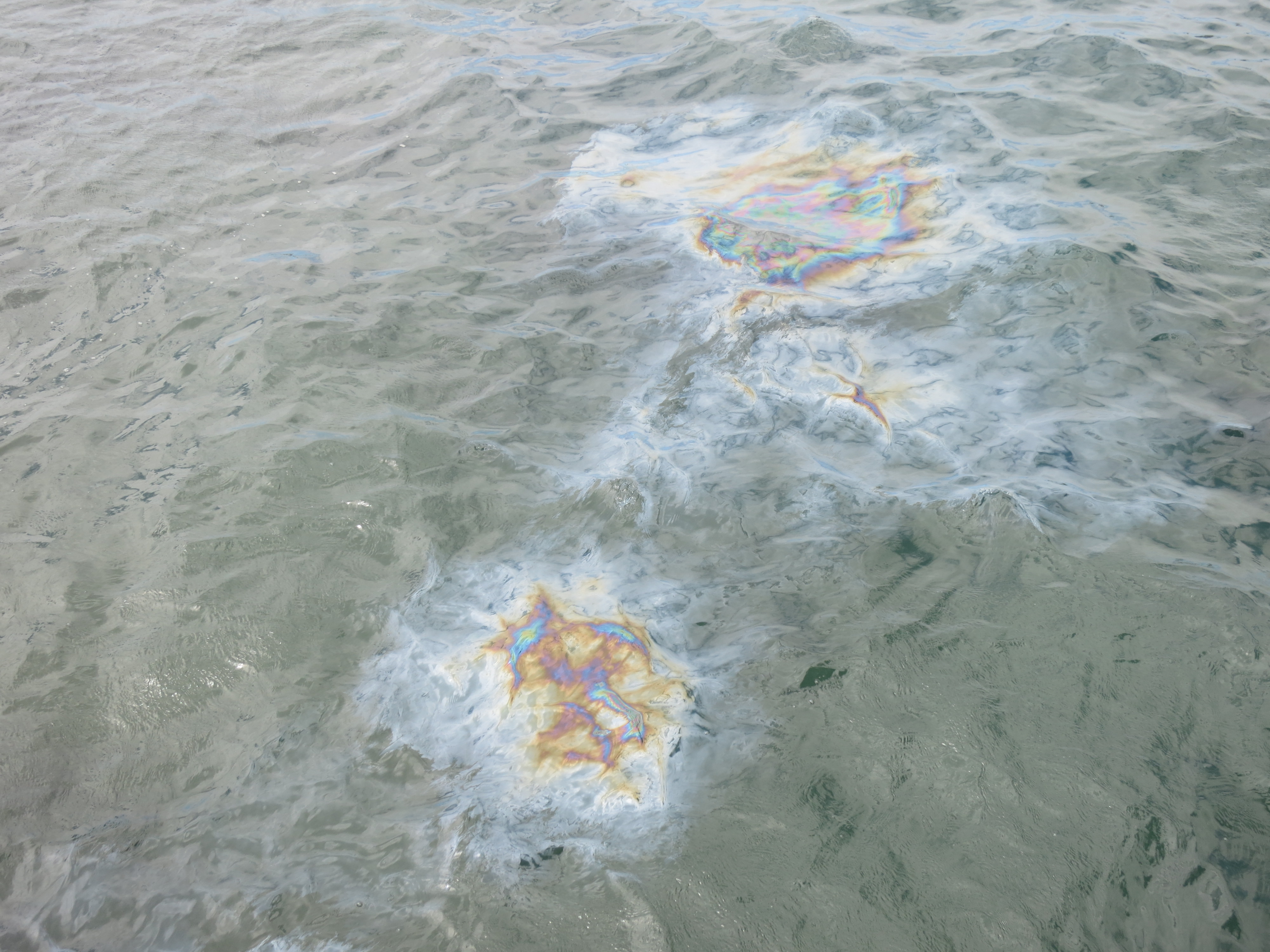
We took a short boat ride over to the memorial, which was built on top of the sunken wreckage of the ship. It’s a white building that sinks in the middle, which the architect said was to show how well the US was doing before the war, how low it felt after the attack, and how it emerged victorious at the end. The bridge-shaped building has been placed at a 90 degree angle to the ship, so that when you look out one window you can see a gun turret on one of the decks, and the “tears of the Arizona” leaking from beneath it. The National Park Service has decided it would disturb the dead too much to clean up the oil, so the remaining 500,000 gallons will continue to leak into the ocean for the foreseeable future.

USS Arizona gun turret

The tears of the Arizona

I liked the monument for its simplicity and focus. You can gaze at the Missouri across the harbor. You can look into a small hole in the floor of the memorial that shows flower petals floating in the water above the wreck. You can meditate on the flag flying at half mast. You can read the names of the dead on the wall of the shrine at the far end of the memorial. You can read the few plaques dotted about and listen to the audio tour, which features first-person accounts of being on the ship that day. That’s it. There is nothing else to do here, no gift shop to visit, no adjoining display to wander off to, not even any bathrooms to go to. When you are at the Arizona memorial, you are there to reflect on the lives lost on the day of infamy and in the war that followed.

Back at the museum, we listened to an audio tour narrated by Jamie Lee Curtis (her father was a WWII vet before he was a Hollywood star) and walked through an exhibit that got very detailed about battleships and 1940s military technology. Outside the building, there’s a path along the shoreline with quotes from people who survived the attack, and from people commending the valor of those who died.
The most heartbreaking plaque on the Walk of Remembrance

I do not mean to diminish the importance of the deaths of those who lost their lives in the attack, but I do not understand how it was a matter of valor for those who died almost instantaneously. Surely we should be commending the brave men who survived the initial bombing and fought back, and the civilians who rushed to the hospital to help the wounded? It seems to cheapen the whole idea of valor to apply it to people who were unfortunate enough to have been in the wrong place at the wrong time, even if that place was a military ship.

I also wondered what it was like for the Japanese tourists who were there, quietly walking along the same path as me and hearing the same audio about the vicious Japanese attack and seeing the same signs about defeating the Japanese. War tourism is a strange thing.

I feel strange in places that walk a fine line between memorializing the dead and celebrating the war that killed them, but overall, I’m glad I went to a site that looms so large in American history.

Big Times on the Big Island, Part 3

I might eventually write a piece on the many terrifying obstacles to smooth driving the Big Island presents, but I’m still too traumatized to attempt it. Suffice it to say I was relieved every time we passed something we wanted to photograph, because it was a chance to pull over and release my death grip on the steering wheel. Of course, there were a million such photo opportunities, because the Big Island is 4,028 square miles of visual perfection.

I mean, really

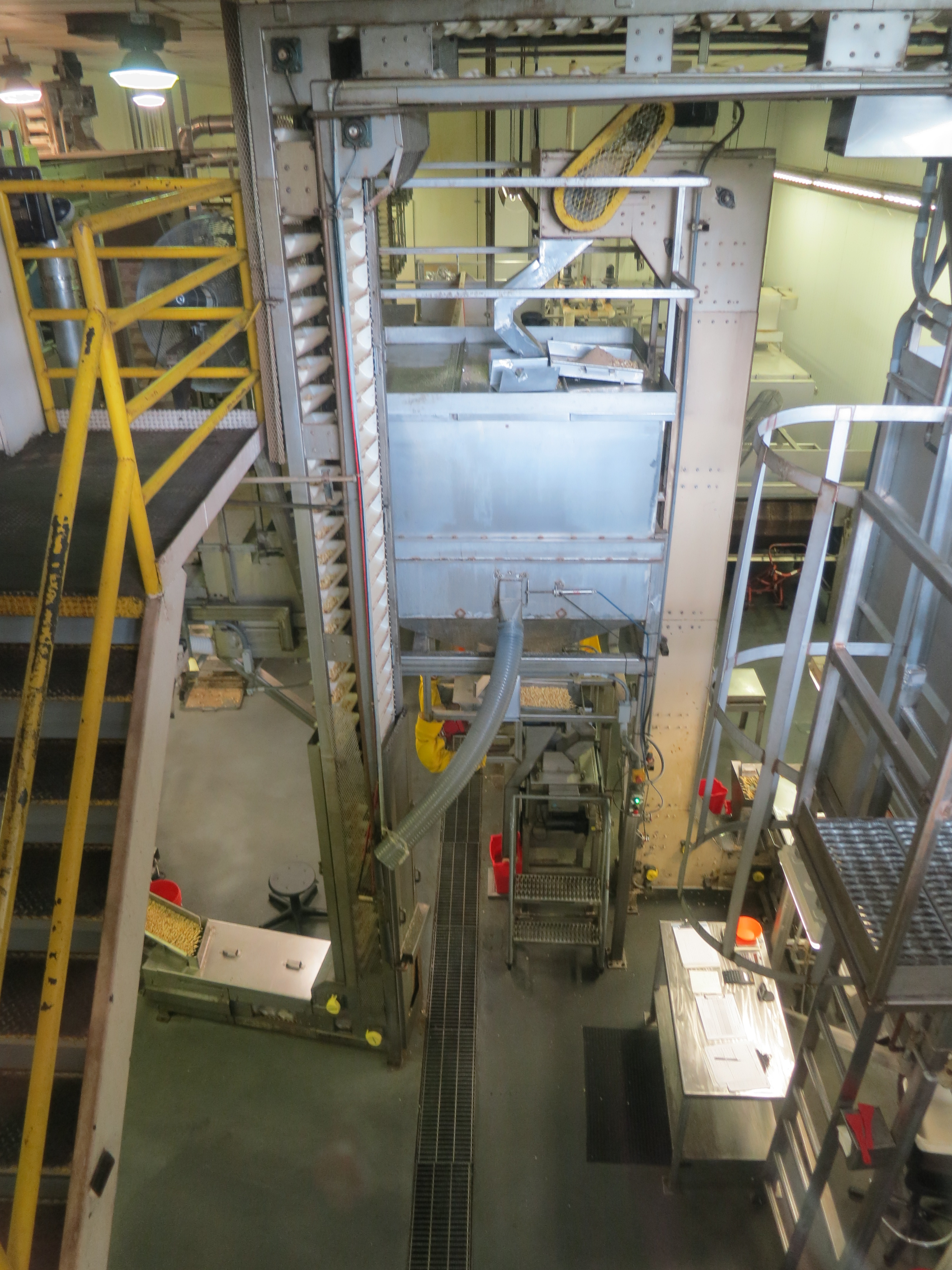
We were reluctant to leave Puna; the house was so lovely, and we hadn’t been to the hippie spa yet, or gone to one of the Wednesday night beach parties, or ventured onto the nude beach nearby. But we packed up on Sunday and drove through the drizzle to the Mauna Loa Macadamia Nut Factory. The factory is set three miles off the main road, and you drive through groves of nut trees dotted with Burma Shave-style signs to get there. After careful deliberation, we each chose a can of nuts to buy, and while the white chocolate covered nuts were good, the butter candy ones were deemed best after an extensive taste test later that evening. The factory building has a wall of windows on one side of it, so you can walk along and look inside as the nuts get sorted by machine and by hand, and then salted, and then packed up. We saw Mauna Loa nuts sold everywhere we went in Hawaii, so it was neat to see where they all start out.

On the factory floor

We drove through Hilo and up the coast, and this part of the drive was tough not so much for the road conditions as for the stunning valley views we passed every few minutes. I had to will myself to look at the road and not the deep crevasses of green spilling into the blue sea below. I put Heather on photo duty, and she made a valiant effort to get in-focus pictures while going 50 miles per hour.

Driving to Waimea

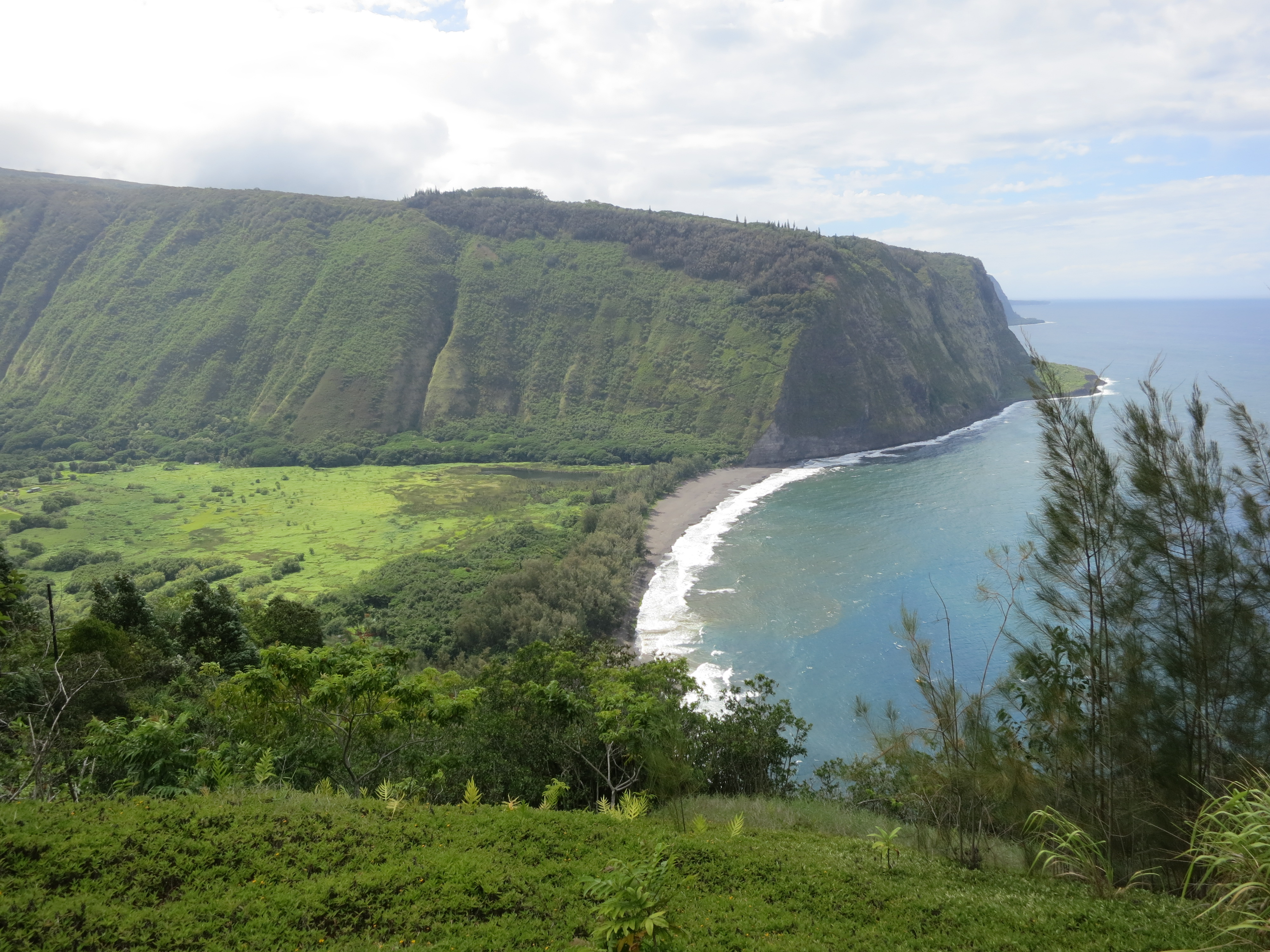
After a while, we passed into another ecosystem, a grassy area called Hamakua that’s been used for farming for centuries. We were passing into the region of the kings of Hawaii. Somehow, the hills got even bigger, and we passed fields of cows and horses as we climbed them. We eventually reached the Waipio lookout. I’d thought about hiking down into the valley, but it was even steeper than I’d expected, and there were several signs asking visitors to consider not descending, as this was a sacred area. So instead I stared out into the sliver of valley visible from the lookout, and saw why you’d establish this as the seat of your kingdom.

Waipio

We made a stop at a local souvenir shop, where Heather attempted to buy one of everything (lucky for her friends back home!), and then we drove on into yet another ecosystem. It didn’t take very long for us to pass out of lush farmland and waterfall central into a desert. I actually shook my head in amazement when I realized we were looking at something very similar to the American Southwest, mere minutes after seeing the Heartland.

I was driving across a burning desert…

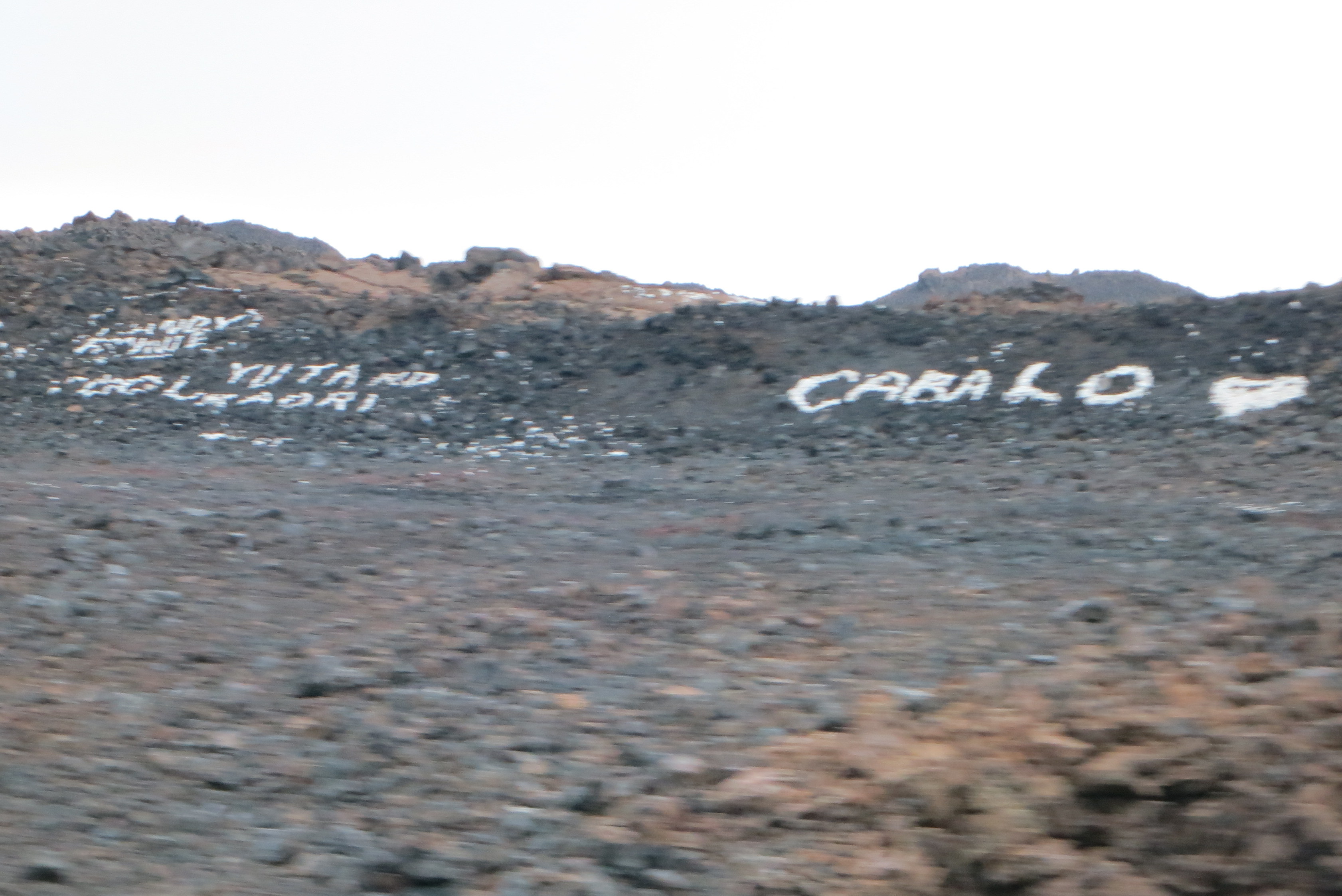
Kona coffee comes from this side of the island, although I’m not sure where in this dry place they grow it. We didn’t see evidence of coffee plantations, but we saw many signs of other people who’d driven through here before us. The ground was all a dark gray, and there were lots of little white rocks scattered around. People gathered them up and spelled out their names, big hearts, little messages to photograph and send back home. We’re so fond of leaving our mark.

Kailua Kona is a fun little beach town, and as we went down the main drag, we checked out the shops and restaurants to see where we might want to visit the next day. Monday morning, we went snorkeling, which you can read about here. It was so fun, and mesmerizing; it’s easy to spend hours at it without realizing how much time has passed.

That evening we strolled across the street to Huggo’s on the Rocks, a beachfront bar, and had cocktails and dinner. A couple guys played classic rock covers on acoustic guitars as the sun set, and Heather and I toasted each other with our pina coladas and mai tais. Later on, some girls from a nearby dance school did a little hula show, much to our delight.

Big night out on the Big Island

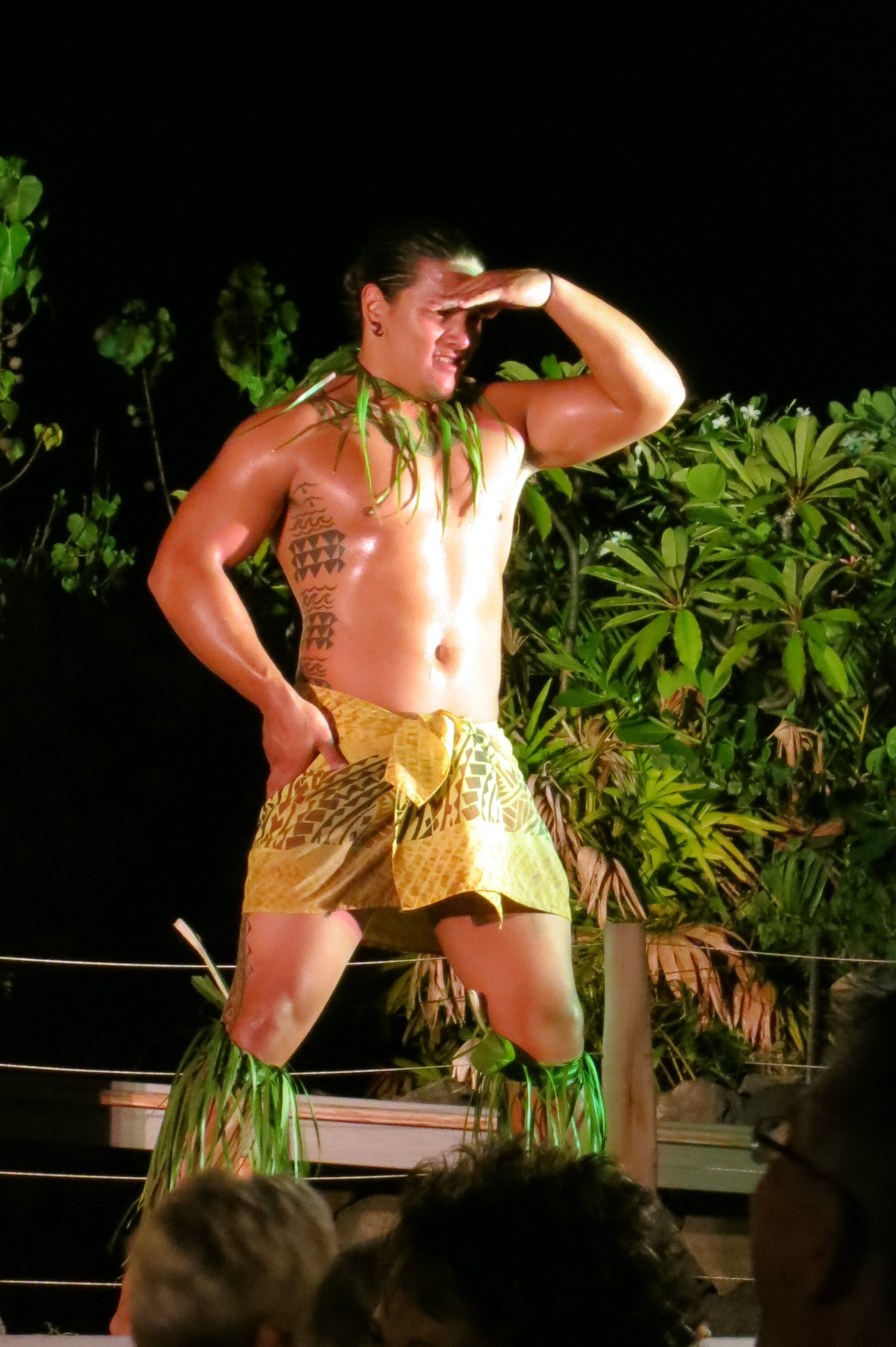
On Tuesday, we took it easy after snorkeling, so that we’d be all ready for our big night out. We’d ponied up the money for a luau, and at 4:30pm we lined up on the King Kamehameha Kona Beach Hotel lawn with about a hundred other smiling tourists. We bought leis—a flower one for me and a kona nut for Heather—and then wandered to the pre-dinner area. Heather got some tough tattoos, and I took a hula lesson. Everyone was laughing and scooping up more mai tais from the punch bowl, so it was a relaxed and happy group that sat down to dinner. Heather immediately made friends with the whole table, of course, so that was fun. We chatted with our neighbors as we ate poi, ono (which was ‘ono!), Hawaiian sweet potatoes, pork from the imu, and fruit.

The royal court arrives

The entertainment featured the same 10 or so dancers going through various Polynesian styles of dance, while a live band played to the side. We had good seats right in the center, so we could fully appreciate the athletic jumping, shaking, stomping, and twirling of dances from Hawaii, Tahiti, Samoa, Fiji, and New Zealand. Apparently it’s normal to end with a fire dance. Since I’ve never been to a luau before, I don’t know what’s normal, but the fire dance was pretty great, and what a way to finish. Heather and I went back to the condo fully satisfied with our immersion in tourist country.

The next morning we drove back across the island to Hilo and caught a plane to Honolulu, for the last part of our vacation together. Tune in soon to read about Pearl Harbor and island living!

Where in the World Wednesday

Image

It’s the triumphant return of Where in the World Wednesday! Since blogging in real time isn’t going as I expected (as in, I haven’t even finished the first week of Hawaii and here I am six weeks into the trip), I thought it’d be good to set up some weekly photos to keep you interested.

Langford Sand Bar sunset, Whitsunday Islands, Australia, October 12, 2012