Black History Month: Selma

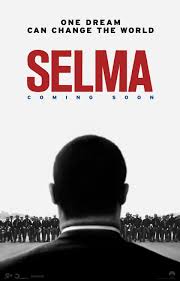
Ava DuVernay’s Selma is apparently the first feature-length attempt at a biopic of Martin Luther King, Jr. I say “apparently” because it didn’t even occur to me that I haven’t seen a movie about him that hasn’t been a documentary — his voice, his words, his image are so omnipresent in the United States, especially during the federal holiday devoted to him and the month following it, that I didn’t even consider there wasn’t a major fictionalized version of him out there. But this is definitely a version of him we needed — one that contradicts the safe-for-white-folks version of him we see most of the time. DuVernay wanted to show King as a radical speaking truth to power, and in Selma, she succeeds.

selma

In Selma, MLK is a larger-than-life hero and a flawed human, an irreplaceable leader and one part of a movement much larger than any individual. This is the kind of movie you want to see made about your heroes, where the sanitizing is kept to a minimum and there’s no melodrama or clumsy foreshadowing. It’s also cleverly kept to a short but important period in his life, with no sepia-toned flashbacks or tired story beats we see from so many moviemakers who seem to think that in order to capture the essence of an extraordinary person’s life, you need to show the entire timeline. Continue reading

Poldark: A Drinking Game for the BBC Show

BBC is returning to the well with its latest miniseries Poldark; they already made a TV series out of Winston Graham’s novels back in the ’70s, and now it’s being updated for a new generation. Which basically means more shirtlessness from the titular hero. I’m watching the series with my friend and flatmate Liz, and after the first episode we agreed that it’s not really good enough to love wholeheartedly. But if you make it a drinking game, it is utterly delightful. It’s just about finished its run in the UK but is still available online, and it’s going to be broadcast in the US in June. So you still have time to enjoy your own Poldark Imbibe & Jibe experience.

The main thing to keep in mind is that this miniseries is primarily a love letter to the Cornwall countryside, and to Aidan Turner’s smoldering good looks. Lingering shots of both the landscape and Turner’s impressive eyebrows make up a significant percentage of the show. This is not a bad thing.

Dramatic landscape and even more dramatic eyebrows. Image.

A quick synopsis: Ross Poldark (played by Turner) returns to Cornwall in southwestern England after fighting for the redcoats in the American Revolutionary War. He was only fighting because it was either that or prison after bad gambling debts–this is the kind of ne’er-do-well our hero used to be, and who everyone back home remembers. But he’s grown up a bit since losing a war and he’s ready to return home and get to work.

Surprise! His father’s dead and the small estate he owns has fallen into ruin, including the copper mine that used to be how they made money. Everyone thought he was dead, so the love of his life (Elizabeth) is engaged to his cousin (Francis). Things are not looking good for ol’ Ross.

Now that you have the basic premise, here are the rules to the game:

Commuter cliffs: Ross does a lot of galloping along the cliff edge on his horse, to and from his home. We see shots of this more often than strictly necessary for continuity or comprehension of the passage of time, so we must conclude the director figured a few more shots of stunning Cornish countryside wouldn’t do any harm. He’s not wrong. When you see Ross racing along the cliff edge on his horse, yell “commuter!”, drink, and then make clopping noises with your hands until the scene’s over.

Mines: Mining was the major moneymaker in Cornwall for a while, but it was drying up in the late 18th century. Ross takes a big gamble on reopening his father’s copper mine, and mining talk makes up a good portion of the dialogue of the show. Any time someone says “mine” or “mining,” yell “mine!” and take a drink.

Repression: One of the problems with taking this show seriously is that there’s very little chemistry between the actors playing Ross and Elizabeth, our star-crossed lovers. Ross is largely motivated by his desire to remain close to Elizabeth, even if he can’t marry her, and we’re meant to see her torment at having to marry another man because her love returned to her too late. But all they do is stare at each other with slightly pained expressions on their faces. It is unconvincing. Still, they do enough pained expression staring to give us a sense that there are repressed! feelings! going on, so when you sense repression bubbling underneath the surface, yell “stop repressing!” and take a drink. You also get to do this when you notice repression in other situations, like when Francis’s excellent but mistreated sister Verity gets her own bittersweet taste of romance or when Ross’s kitchenmaid Demelza looks adoringly at her employer.

Flashbacks: There aren’t many flashbacks after the first couple episodes, but it’s worth having this category for those few times, because you take a drink and yell “flashback!” then do the wiggly hands and noises they do on Wayne’s World.

Frog man: Francis and Verity’s father is an unpleasant old man who tries various ways to get Ross out of the picture and his own son into top position in the region. He also looks a little like a frog, with protruding eyes and a wide mouth. So whenever he arrives on the scene, do your best “ribbit!” frog impression and take a drink. Don’t do this for the duration of the scene or you will pass out.

Cornish specialty: There are several things specific to Cornwall, or things that we think might be, so any time you see something Cornish, yell “that’s Cornish!” and take a drink. This may include unintelligible accents, a certain kind of wedding dance, or a particular costume. We keep waiting for Cornish pasties to be shown, but sadly haven’t seen one yet. (There was a pie once and we debated whether it was small enough to be a pasty. These are the kind of important intellectual discussions you’ll get into while watching Poldark.)

Soulful cliff stare: Another opportunity to appreciate how gorgeous the landscape is, and also to FEEL your FEELINGS. Any time one of the characters stands at the cliff’s edge and stares out to the far horizon, as the waves of the Atlantic lap upon the shore, yell “that’s soulful!” and take a drink.

Layabout servants: Easily one of our favorite criteria, and the most reliable. Ross’s father had two old servants who prove to be utterly useless, but out of a misguided sense of loyalty and protectionism, Ross keeps them on. Even though they do freakin’ NOTHING. Almost every time a scene opens in the Poldark house, those two are sitting on their butts, or having a quickie in the corner, or drinking their boss’s rum. The one thing you can be sure they’re not doing is working. So when you see them, yell (incredulously and gleefully) “get to work!” and take a drink.

There you have it. Provided you’re just making your way through a glass of wine or beer, you won’t be wasted, but you will be a little tipsy by the end of an episode. What’s more, the often stilted writing and barely fleshed-out characters won’t bother you. That’s how you do the Poldark Imbibe & Jibe. Enjoy!

Film Club: While You Were Sleeping

There are many reasons why I shouldn’t like While You Were Sleeping. The entire plot is based on the thinnest of misunderstandings, even by rom com standards. Peter is the victim of a creepy, prolonged mind game by Saul and Lucy. No way anyone would believe that someone engaged to fancypants Peter wouldn’t have a giant rock on her ring finger, which should have stopped the plot dead in its tracks right there. Anyone who has lived in Chicago for even a month would know northside Peter supports the Cubs and not the White Sox. And yet, it’s one of my favorite movies.

the delightful family from "While You Were Sleeping"

Is this sight scary or heartwarming? Depends on your tolerance for meandering discussions of Guy Lombardo and Argentinian beef.

The chemistry between Lucy and Jack sparks right away, and any scene with the whole family is gold. Obviously, the movie pushes the idea that half the reason Lucy’s in love with Jack is because she finally has a family she can join. When I was younger, I never believed that Lucy would be as friendless and alone as she’s shown to be, but the more time I’ve spent trying to fit in to new cities, the more I appreciate just how difficult it is to get set up with new friends. And I have the Internet, with its Couchsurfing and Meetup and things, which is more than Lucy had, back in 1995. Lucy makes friends at work, but when your job is sharing a small booth with one other person collecting subway tokens, you don’t meet a lot of people. Besides which, she’s grieving her father, who died just the year before. It’s actually not surprising that she’s so isolated.

Meeting the Callaghans, who are marvelously open and friendly (perhaps a bit too much so, to a strange woman who claims to be engaged to their comatose son), would feel like coming home. And then you get to sit through dinners talked at such cross-purposes that in my family, when things are getting similarly ridiculous and rowdy, someone just yells out, “I never said he was tall!”

Of course it’s a Cinderella tale, and we can’t forget that Lucy would never afford that trip to Florence on her own, while the upper-middle-class Callaghans can shell out for it no problem. But I’m willing to go along with the idea that the real treasure Lucy gains is the love of a family, and their wealth is a nice bonus.

Other great things:

  • Despite her timidity in other areas of her life, Lucy has no problem cracking wise with her boss or putting the love of her life gently but firmly in place whenever he starts going off about whose type she is.
  • Jack tries to do the right thing by not sharing his feelings with Lucy and messes it up royally, which is endearing.
  • Peter is such a self-centered jag that you don’t really mind he’s the victim of a terrible mind game. Peter Gallagher does a great job of playing a guy so into himself he’s not even worried about being that into himself; he’s equally concerned about whether he sucks as a person or whether his outfit sucks (maybe more concerned about the outfit).
  • Joe Jr., a strange amalgam of Queens and southside Chicago, is a glorious punchline in every scene, and I hope his future involves strutting around in his own pair of high heels.
  • Lucy’s apartment is in my old neighborhood of Logan Square–I tracked it down on Logan Boulevard a few winters ago. Those buildings really are that gorgeous.
  • Perhaps most importantly, Lucy never once brushes her hair in this film and she is the heroine–god bless the mid-’90s.

And Elsie has the best answer to “would you like some more wine?” ever. She says, “Oh I don’t drink anymore.” Beat. “I don’t drink any less, either.” For a grandmother like that, you might fake an engagement to a man in a coma, too.

They Don’t Make ‘Em Like They Used To

As I’m sure you’ve guessed from my various movie posts, I’m a sucker for the old studio films. I love the sharp costumes, the smoldering glances, the real moral dilemmas, the incisive character profiles. But mostly, the smart dialog! It’s great across the board. Thrillers like The Third Man, where every word means four different things, and screwball comedies like Bringing Up Baby, where the back-and-forth between the romantic leads is the whole point. But I don’t often find the lighthearted patter of a romantic comedy in a film noir, so I was delighted to find that the 1944 film Laura had just that. There are some wonderful twists and femme fatale moments, as there are in all the best film noirs, but it adds some extra touches like this scene between Laura (Gene Tierney) and Shelby (Vincent Price, before his horror movie days).

a little rom com in your film noir

Shelby: I knew there was something on my mind. What is it… Oh yes–will you dine with me tomorrow night?

Laura: Maybe.

Shelby: No, that isn’t what’s worrying me… It’s the next night.

Laura: But Shelby, I can’t–

Shelby: Good. What about three weeks from tonight and all the nights in-between?

Laura: Don’t you think I have any other engagements?

Shelby: What about two months from now and the month after that?

Laura: What about next year?

Shelby: That’s all settled. What about breakfast?

Laura: (laughs) What about dancing? (They get up and dance.)

Shelby: What about lunch? Beautiful lunches. Day after day after day after–

Laura: What about work? Beautiful work. Day after day after day…

Shelby: Why, Miss Hunt, the way you talk, you’d think I was in love with you.

At which point I fell a little bit in love with this movie.

Image.

Where’s the Game?

The other week I was on a shuttle bus headed back from a wedding reception to the hotel, and we passed a large white van pulled over on the side of the road. The cop car lights were flashing and as we zipped by, I saw the logo on the side of the van. It was a Salvation Army van! What was a Salvation Army van doing out and about at midnight, and in trouble with the law?

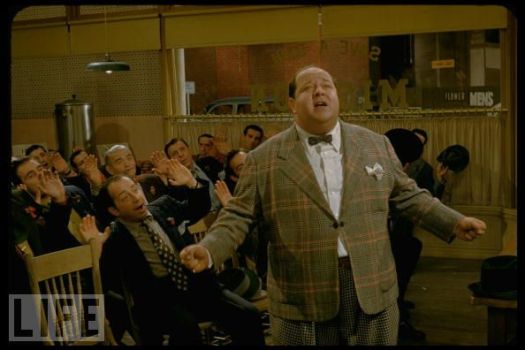
My bet is Nathan Detroit found a new place for the craps game.

Nicely Nicely in "Guys and Dolls"

Rockin' the boat went mobile

In Praise of Sam Rockwell

I am slowly working my way through the Sam Rockwell catalog. Basically, I want to see anything he’s been in. Doesn’t matter if it was a bit part, because Rockwell’s genius is stealing scenes no matter the role. He’s easily one of the best character actors working today, and also, bonus, he is extremely attractive.

No foolin'

Apparently his mainstream breakthrough was as a vile criminal in The Green Mile, but I remember first seeing him in Charlie’s Angels, in which he plays a shaggy, soft-spoken geek who turns out (11-year spoiler alert) to be the ruthless villain. For a summer popcorn film directed by a man known only by his made-up last name, this actually showed Rockwell’s range nicely. He was easily the shy nerd kissing Drew Barrymore, and just as easily the pompadoured cad shooting her through a window and lighting up a cigarette.

Also, the dancing. He famously loves dancing, and shows off his fancy footwork at every opportunity. I’ve seen him shake it in Charlie’s Angels, Confessions of a Dangerous Mind, Hitchhiker’s Guide to the Galaxy, Moon, Iron Man 2, and The Winning Season. No, watch, he’s really good:

I don’t think I’ve seen him in a movie in which he wasn’t unhinged or just a little off. At some point in every film, his eyes go wild with desperation or dark with hopelessness. He often plays someone with a hidden side (Charlie’s Angels, Confessions of a Dangerous Mind), or a dangerous side (Snow Angels, The Green Mile), or both (Moon). He invests his characters with such emotion and commitment that I find myself marveling at the humanity he reveals in even his most despicable characters. I’ve read actor interviews about treating their villainous character as the hero of the story in order to find their motivations, but I didn’t really get what that meant til I saw several Rockwell movies close together. He’s never smarter than his sadsacks or kinder than his killers; instead, he knows his sadsack’s frustrations and his killer’s sick itch. He must be a novelist’s dream actor, since he so easily conveys the paragraphs of internal turmoil and meditation usually lost in translation from page to screen.

I’d love to see him on stage and see how his intensity plays out there. But until I get that chance, I’ll be looking out for him in whatever projects he chooses next. Coming soon, Cowboys & Aliens! I’ll be enjoying him, whether he’s looking like this:

Poor clone man, what is your identity now?

or this:

You still look a little lost. I will definitely help you find your way.

Photo 1 from here.
Photo 2 from here.
Photo 3 from here.

Film Club: Out of Africa


What a surprising movie, dearest fellow travelers! When the film started up, and Meryl Streep started in with yet another perfectly practiced accent telling tales from long-ago days while the camera swept over idyllic African vistas, I rolled my eyes and wondered why I’d let Netflix talk me into this. But it turned out to be an impressive film, a romance that investigates what it means to be a relationship, and a historical drama that doesn’t completely romanticize the rich white people’s experiences and their influence on the native black people.

one of many sweeping vistas

Image from http://www.dvdbeaver.com/film3/blu-ray_reviews51/out_of_africa_blu-ray.htm

Karen von Blixen-Finecke lived a pretty amazing life, marrying twice, growing coffee in the highlands of Kenya, building a school for Kikuyu children, writing a famous memoir, and making sweet, sweet love to Robert Redford. Okay, that last part is just what Meryl Streep gets to do in the film adaptation, but it’s based on real events with Karen’s lover Denys Finch Hatton. The movie’s PG, so we don’t see so much as a boob, but the steaminess of the romance is easily conveyed nonetheless.

My favorite part of the romance was how it was allowed to be a little rough-edged. Sure, there were plenty of scenes in which Karen and Denys share tender moments, or gaze deeply into one another’s eyes, but the conflict between the characters was never resolved to either party’s satisfaction. They were deeply in love, but Karen needed him to be home more often, creating a joint life with her on the farm and not jetting off to do safaris for months at a time, and Denys clung to his independence and his ideal of being able to love someone without possessing them or their time. The movie shows just a couple arguments about their differing needs, but they’re well-written and fair to each character. Karen could easily come across as a needy nag, and Denys could easily be a commitment-phobic cad, but we get to see the validity of both their positions, and the pain it causes them to be unable to compromise on their deeply held beliefs.

How often do you get a romance like that in the movies, one that doesn’t work out (not a big spoiler there; when the movie starts with a voiceover telling us that a man “gave the greatest gift” it’s no big leap to surmise that it ain’t gonna last and probably someone dies), but not because of outside forces like other lovers or an inconvenient death? One that doesn’t work out because love isn’t enough to sustain a relationship if other factors don’t line up like shared ideas about how relationships work and how to balance independence with commitment.

Karen's wedding outfit in "Out of Africa" -- 1913 fashion, yes please!

Image from http://pinoyfilmzealot.wordpress.com/2011/04/19/t500fc-369th-out-of-africa-sydney-pollack-1985/

The other major part of the movie, of course, is that this is a film set in colonial Kenya, a place ruled by a small group of upper-class British men who hardly considered their African “subjects” as anything more than servants and hunting guides. Now I know that Pollack was a sentimentalist, and there is definitely some unfortunate romanticizing and simplifying going on here, but there’s also a surprising amount of complexity and sensitivity. For example, Nairobi in 1913 was far from a homogeneous place but was rather  a multicultural hub, with Somalis, Indians, Kikuyu, and Europeans all interacting, and the movie shows that in tracking shots across the marketplace as well as in the background of many tête-a-têtes between main characters. Also, Karen’s  connection to the Kikuyu in her life is genuine, and her interest in improving their lives (treating wounds and illnesses in an informal hospital, securing land for her tenants when her farm fails) is real, and appreciated by the beneficiaries. The fact that she says she must get land for “her” Kikuyu, well, that’s paternalism for ya. (Ugh.)

Denys, unlike most of his fellow white men, admires the native Masai and Kikuyu people for having their own traditions, stories, and lifestyles. He still feels totally entitled to hire a local man to be his servant as he wanders the country shooting all the wildlife, of course, and that is an entitlement the film does not address. His admiration also too often veers into Noble Savage territory, but he still provides a welcome contrast to the boorish paternalism of the other members of the ruling elite in the film.
Malick Bowens, yes please

Image from http://www.imdb.com/media/rm3819084288/nm0100942

He also provides a great moment of real moral conflict for the audience to participate in, when he argues with Karen over whether the local children should be educated. Her view is that of course the children should learn how to read, as it will undoubtedly improve their lives and it is unfair to deprive them of it. Hard to argue with, except Denys points out that this will just create little Englishmen out of the children, and since they already have their own culture, do they really need the European one imposed on them? It’s hard to separate out the good of educating people from the harm of doing it by a colonial master’s mandate. Not to mention that it’s not like the Kikuyu children weren’t receiving an education already; it just wasn’t a traditionally European one involving books and schools. And all this swirled about in my head after watching a Hollywood romance! Not bad.

By the end of the (very long) film, I was totally engrossed in the life of this complicated, strong woman and the many people she comes to know and love during her time in Kenya. Apparently, the title for Blixen’s book came from a Latin saying, “Out of Africa, always something new,” and a few inevitable Hollywood clichés aside, this movie delivers on providing a few new ways of portraying love and colonialism on the silver screen.

Also, the cinematography makes me want to visit Kenya, like, yesterday.
Vote with Your Dollars! Go See “Bridesmaids”

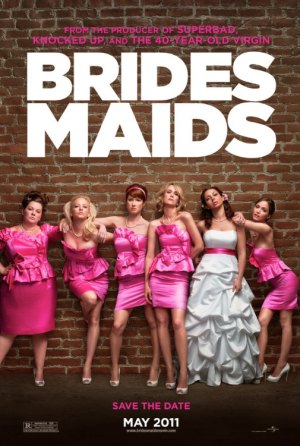
I don’t know about y’all, but we’ve been having a miraculous week of warm weather and sunshine here in Chicago. Luckily, it’s going to be rainy and cold this weekend, lest we get too confused about where we’re living and start advertising the city as a spring break destination or something. This means that it’s a good weekend to see a movie without any feelings of guilt for not enjoying the outdoors! May I recommend you go see Bridesmaids in droves.

Bitchin' but not bitchy? It could happen.

I haven’t even seen the movie yet, but I’ve read all the build-up to it. And people are putting a whole lotta pressure on this movie; it’s supposed to be the one that proves that not only are women funny, but they’re bankable. Putting aside the inherent ridiculousness of even pretending that women aren’t funny and that no one wants to spend money watching them be funny in movies, and also putting aside the fact that it took a big-name male producer (Judd Apatow) and established male director (Paul Feig) to get this female-penned screenplay (Kristen Wiig, Annie Mumolo) made, I say that since the movie has already been built up as a litmus test for what kinds of comedies studios will be greenlighting for the next decade, it is worth it to speak up.

And how do we speak up in this country? If you guessed “vote in elections,” nice try! The correct answer is “with money, baby.” So vote with your dollars for a funny, raunchy movie written by and starring women. If you can make it, go see it this weekend, since studios rely heavily on opening-weekend box office numbers when they make decisions for future projects.

Many reviewers liked the movie, including Manohla Dargis at NYT, Dustin Rowles at Pajiba, Mary Elizabeth Williams at Salon, Dana Stevens at Slate, Scott Tobias at The AV Club, etc. I doubt the movie will show me a Headly Surprise, but it just might pass the Bechdel Test, and at the very least a movie about how exhausting weddings can be for single people is welcome in this, my year of seven and counting wedding invitations. And perhaps most importantly, this movie’s going to be hilarious.

UPDATE: It was hilarious!