
Cusco, Peru; April 18, 2014
Cusco, Peru; April 18, 2014
In a misunderstanding straight out of a sitcom about traveling in foreign lands, I almost didn’t visit Guayasamín’s Capilla del Hombre when my language school offered an excursion there. The school sign simply read “Capilla del Hombre,” which my friends and I correctly translated as “Chapel of Man.” I didn’t connect this to the much-lauded museum mentioned in my guidebook, and I dithered about whether we wanted to go to yet another church; it seemed like I’d been to a lot of churches lately. Happily, I did decide to go, and once our taxi shuddered to a stop at the top of the steep hill the building’s located atop, I made the connection. Oh, this is the museum and house of the famous Ecuadorian artist, Oswaldo Guayasamín.
Grand purpose
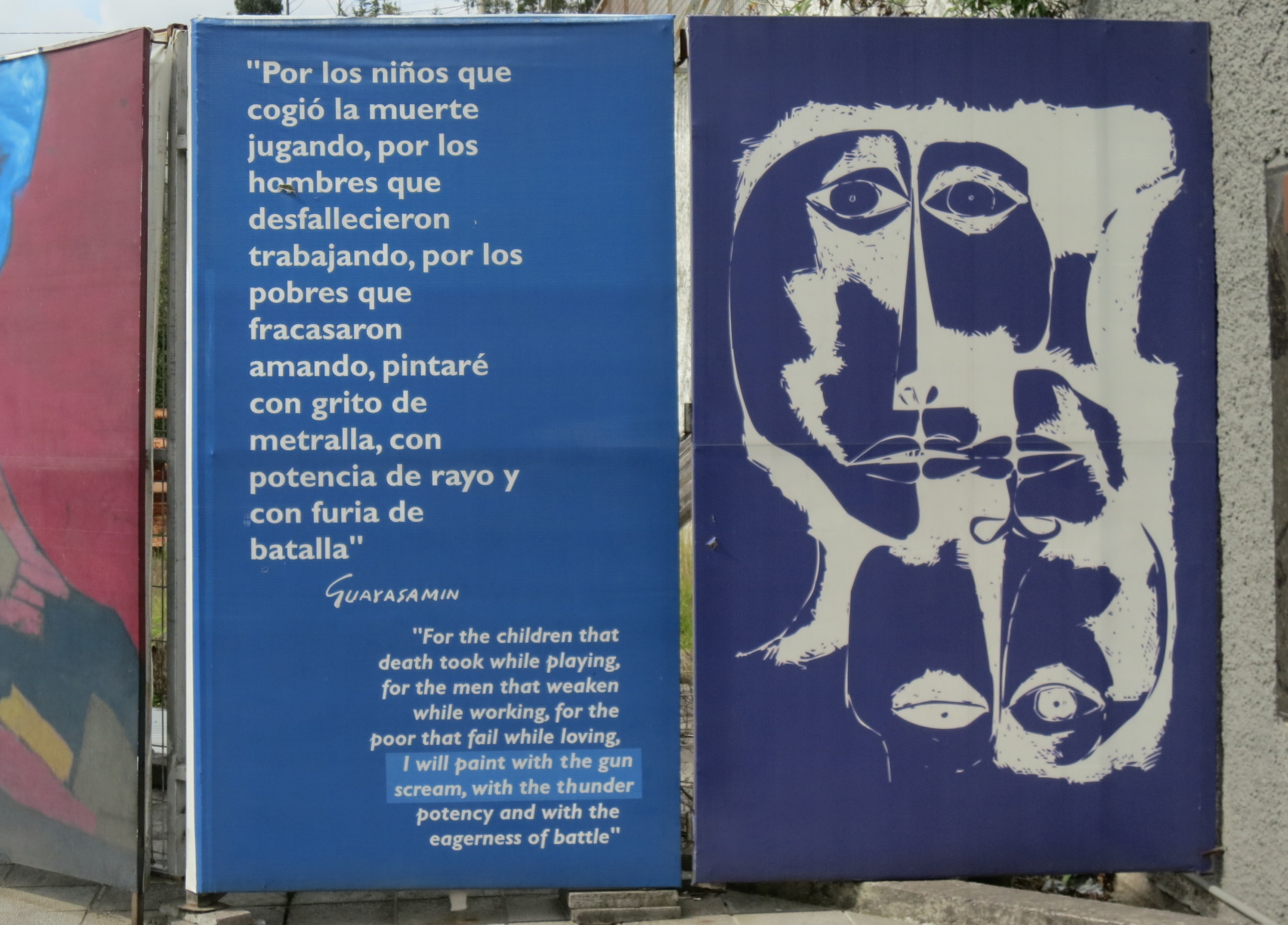
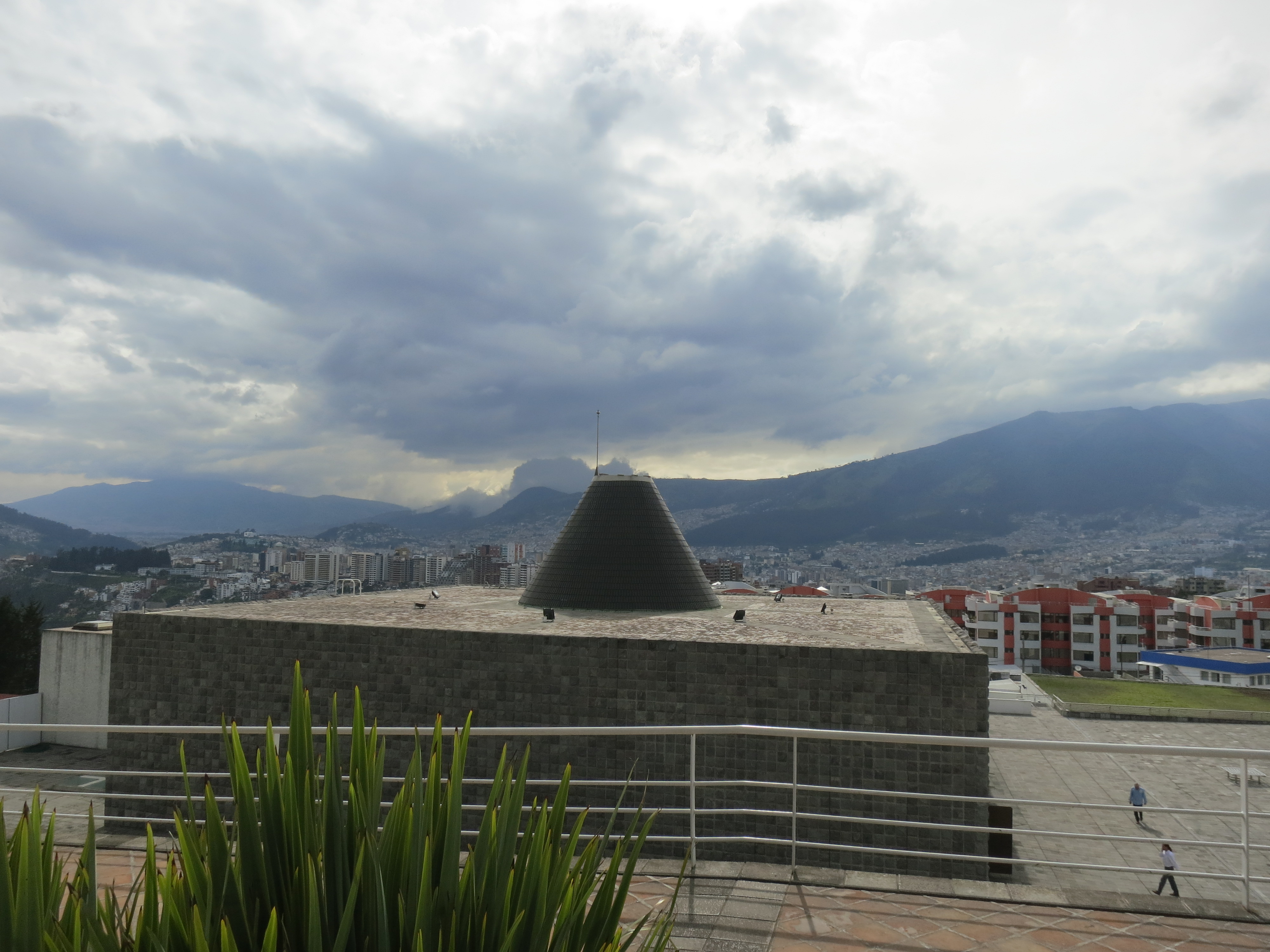
The Chapel of Man, designed by Guayasamín himself, is pitched as a tribute to the oppressed peoples of the world, especially the indigenous of South America, and in fact is a museum for many of Guayasamín’s works. There’s nothing wrong with that, and his commitment to social justice is apparent, but I do take some issue with using exclusively your own art in a building dedicated to all of humanity.
La Capilla
Still, his art is amazing. He was a Cubist and Expressionist, and he painted huge canvases of elongated figures, huge eyes, bold colors. He had three major periods, which have been dubbed tears, suffering, and tenderness. Darker colors in the first, brighter in the second, warmer in the third. One painting was called “The Mutilated,” and it showed pieces of bodies torn apart by war. He painted them on six panels, and those panels can be moved around in different configurations, to show the random cruelty of war, the way we’re all reduced to body parts when violence takes us. The panels themselves are fixed in place by the museum, but there’s a computer nearby that lets you move them around on the screen, in a sort of gruesome game.

I snuck just one photo inside–photos were not allowed, so please Google Images his work and see some great stuff
One of my favorites was a reworking of a 14th century Pieta, which removed the halos, stigmata, priest, and Christ’s clothes of the original and put in a blood-red background and Mary’s hands held up to heaven in grief rather than pressed together in prayer. It stripped away the religiosity and presented a mother’s grief, a man’s death. It was striking and beautiful.
Many pieces were dedicated to the enslaved indigenous peoples (Mayans, Quechuans, Incas, Aztecs—not much seemed to be made of the fact that many of these were conquerors themselves, that was not his focus), and enslaved Africans. The walls boasted several quotes about helping each other, being the light in the world. One said “I cried because I did not have shoes until I saw a child that did not have feet.” The center of the museum contains a giant bowl with an eternal flame inside, because when he was dying, Guayasamín said, “Keep the light on, I will be back.”
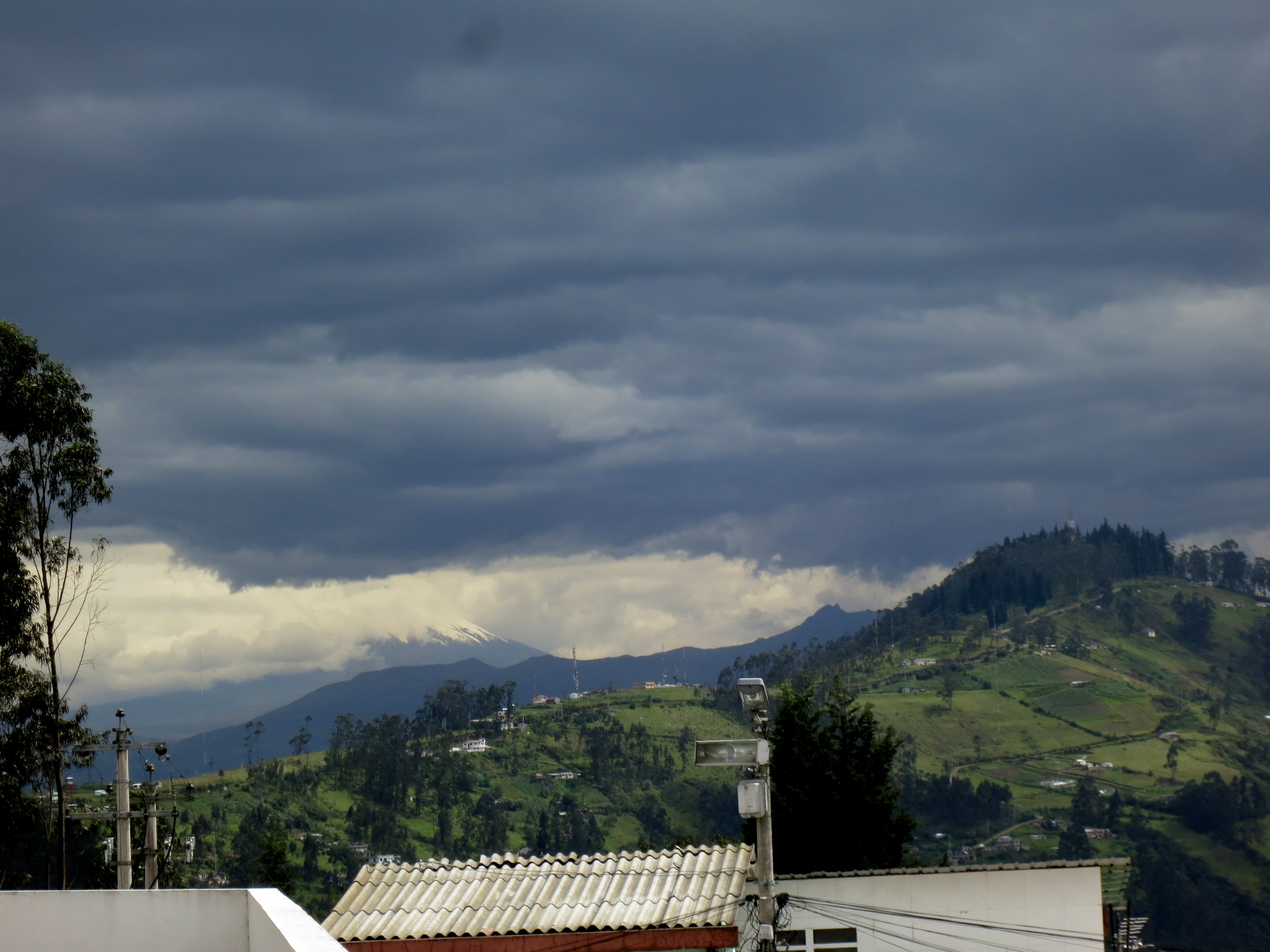
Not a bad view from your front yard
Unfortunately, the museum guide knew about as much English as I know Spanish, and our school guide had much more interesting asides, so I wish our group had just gone around alone with the school guide. Also, the museum guide would ask for interpretations of the paintings and then tell us we were wrong! As in, “What do you see here?” “I see despair.” “No, not despair. Anyone else?” A different approach to appreciating art, for sure!

Not a bad front yard, either
The ticket price includes admission to Guayasamín’s house and studio, which are on the same grounds. We caught up with a tour midway through, but I zoned out for most of it and just stared at the amazing number of beautiful things Guayasamín amassed during his life. A handmade guitar inlaid with mother-of-pearl, erotic statues from various parts of the world, Catholic icons, traditional paintings, etc., etc. It would be a privilege to wake up in this house every day, never mind then going to work in your own cavernous studio next door.
I’m glad I didn’t let my own ignorance get in the way, and I decided to go to the Capilla del Hombre. It was my first introduction to Guayasamín, and an impressive one at that. I saw his art in all sorts of places after that, seeing his style and influence through Ecuador (including in the governmental palace in the center of Quito).

Final resting place
Guayasamín died before construction was quite complete, but he got to see the beginning of the realization of his vision. He’s buried under a tree in the corner of the yard. Flowers dot the ground and wind chimes sing in the breeze over his final resting place, with his chapel just behind and his city in the distance.

A postcard showing one of his pieces from the “Tenderness” phase
Colca Canyon: Part 1 can be found here.
Every single town in South America has a central plaza, often called the Plaza de Armas or Plaza Mayor. It’s the colonial influence–the Spanish built the main church in a central plaza and a grid system of streets emanating from it. (I’m not sure what it’s like in Brazil, where the Portuguese held power.) Even tiny towns have a central plaza.
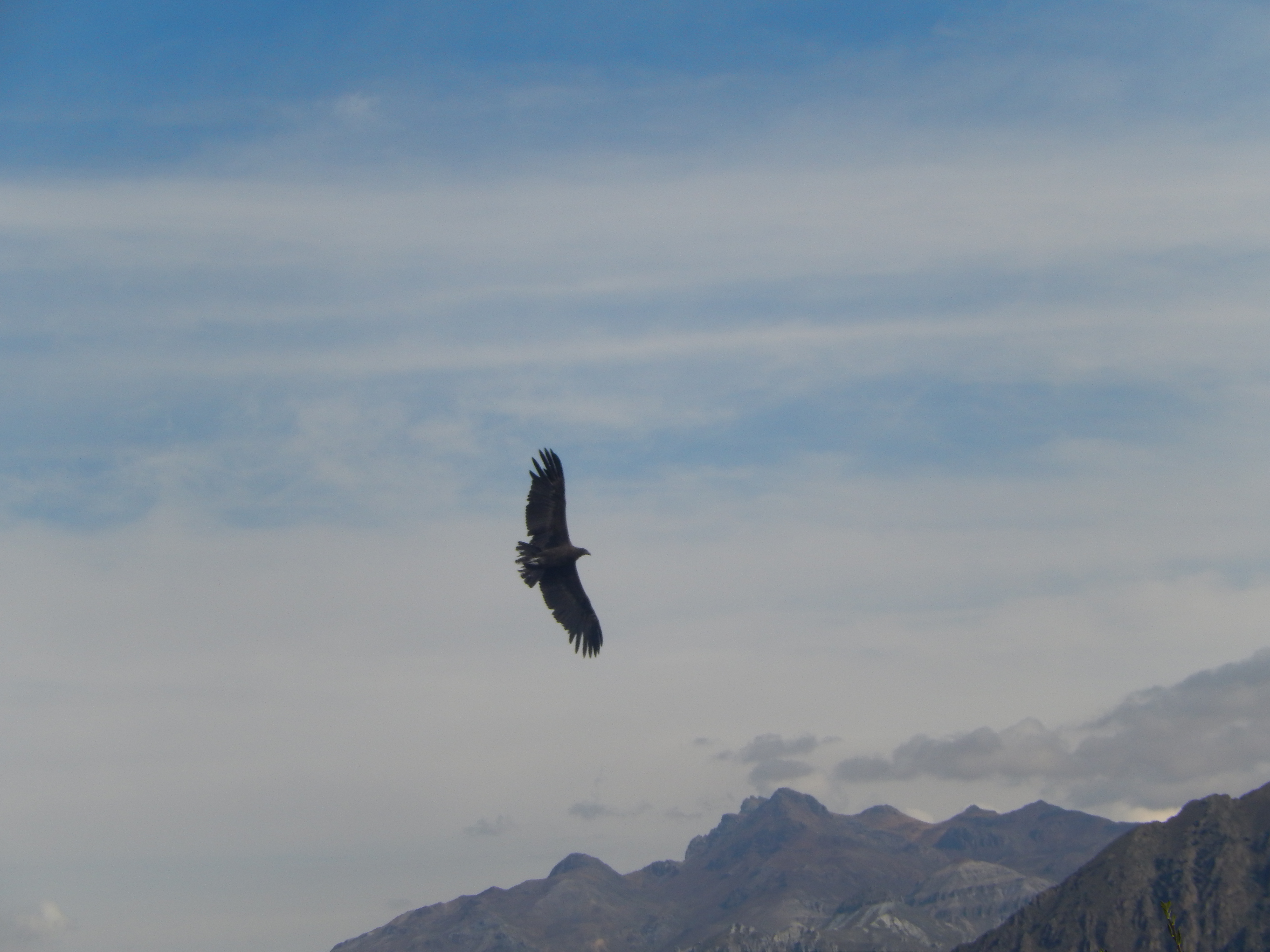
Condor takes wing
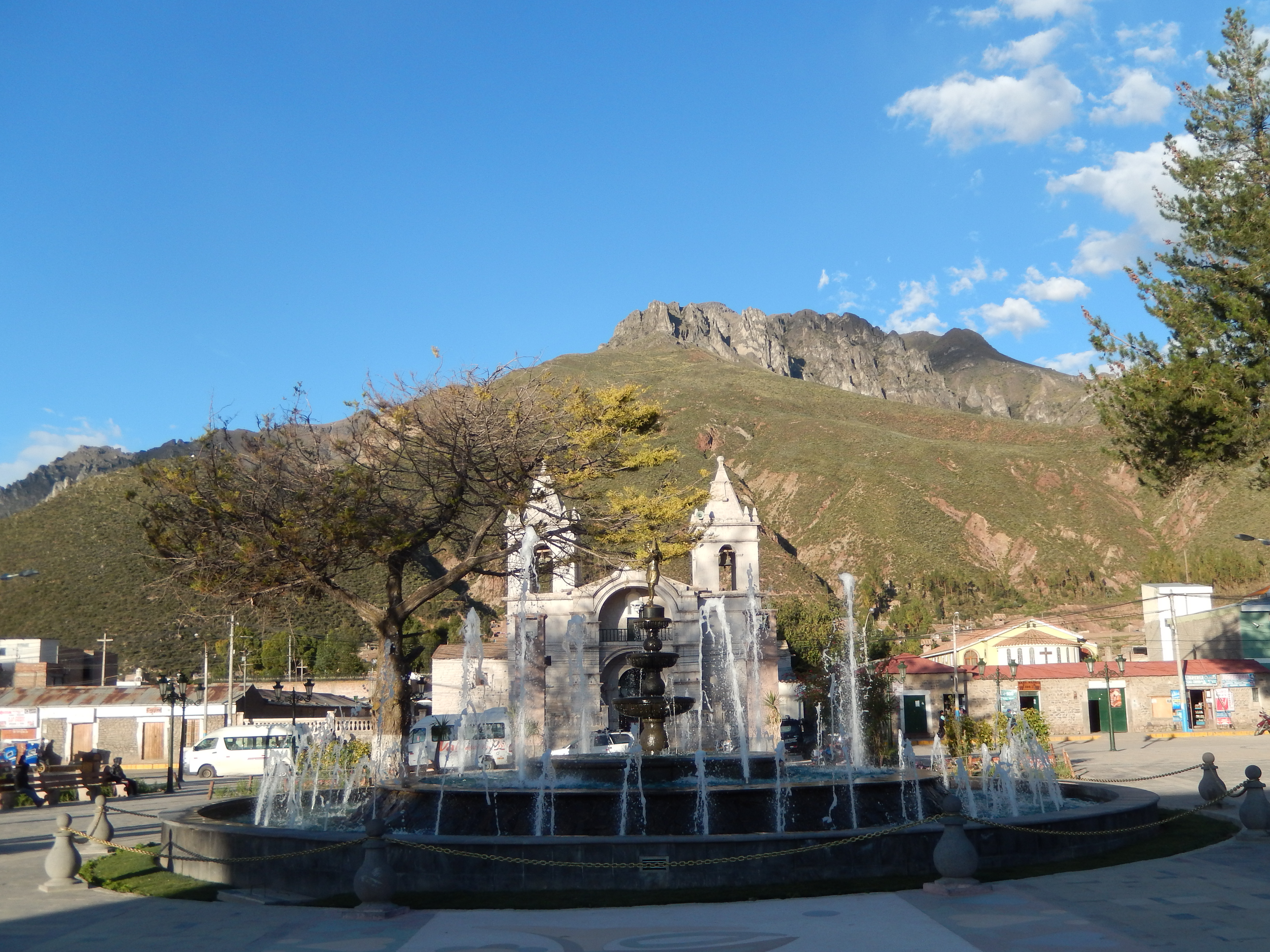
Nice little backdrop to your church
The one in Chivay has been renovated in recent years, and it’s a pleasant place to spend some time while you’re, say, grinding your teeth in frustration because guides and hotel staff alike assured you that you could Skype in this town but it turns out even the internet centers are so slow that they don’t download Skype and the call centers don’t make international calls and you have a phone date on your birthday with your parents that you have to cancel via basic HTML email. Just for example.

Inside the church of Chivay
The night of my two-day, one-night tour, most people opted to go to Pizzeria El Horno, a large restaurant only open for dinners, which caters to tour groups on a nightly basis. Our group got the head table, right across from the tiny stage for the musicians, and right in front of the bit of floor used by the dancers. The food was mediocre to fair, but the entertainment was terrific.
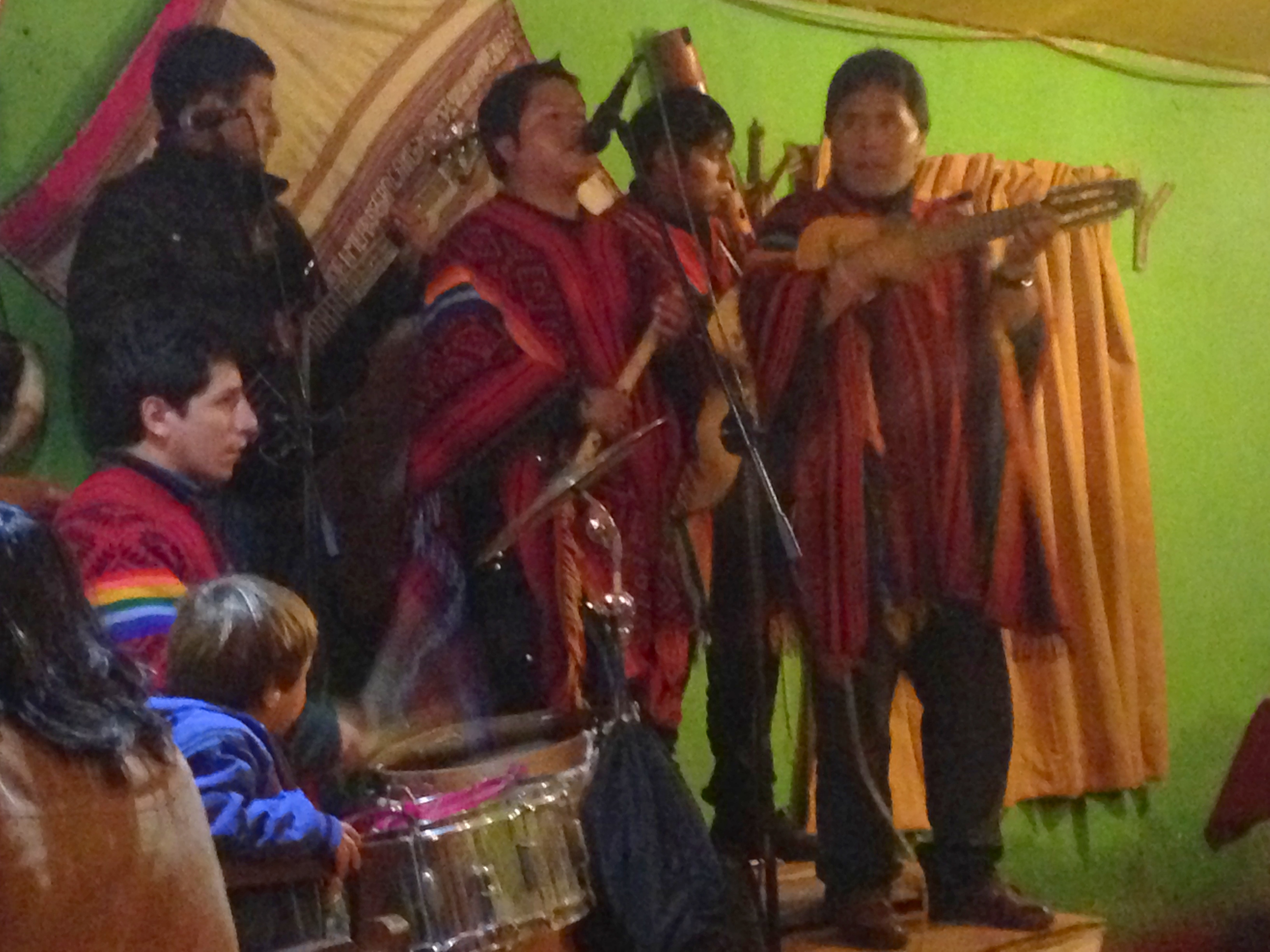
The band, on the tiniest stage I’ve ever seen
This was a peña, a popular Peruvian dance hall event (as with most local traditions here, there’s a range of peñas, from the small and local to the large and touristy–guess where this fell). The band leader called out the names of the dances and then away they went. Some of the dances were clearly based on important traditions, like one involving agricultural symbols and movements. Others just looked fun.

The dancers wore different outfits for each dance
Probably the one that had us all the most entranced was the condor dance, which involved the man moving like a condor flies, stealing an onion from the woman, taking a bite, and falling to the floor on his back, at which point the woman takes out a strip of cloth and beats him with it, eventually putting her skirts over his face to revive him. He gets up and it repeats with her stealing the onion, etc., and then he picks her up and spins her around until they’re both dizzy. Probably there is more to it than that, but it was a sight to see.

By the end of the night, the dancers had dragged half the audience onto the dance floor for a big circle dance, and then they put costumes on people. The kids in the crowd loved every second of it.
The next morning, we got to see actual condors fly. (I did not notice any onions, beatings, or resurrections.) Condors are magnificent birds; they’re the heaviest airborne bird, and their wingspan can reach 3 meters, just under that of the albatross. They mate for life (males sometimes commit suicide if their mates die first), and they can live until they’re 75 years old. Because they have such a long lifespan, their aging process is not dissimilar to ours; they spend two years in the nest and are able to start reproducing at age 15. When they’re young, they’re brown, and they gain black feathers when they’re older; males grow a white collar around their necks.
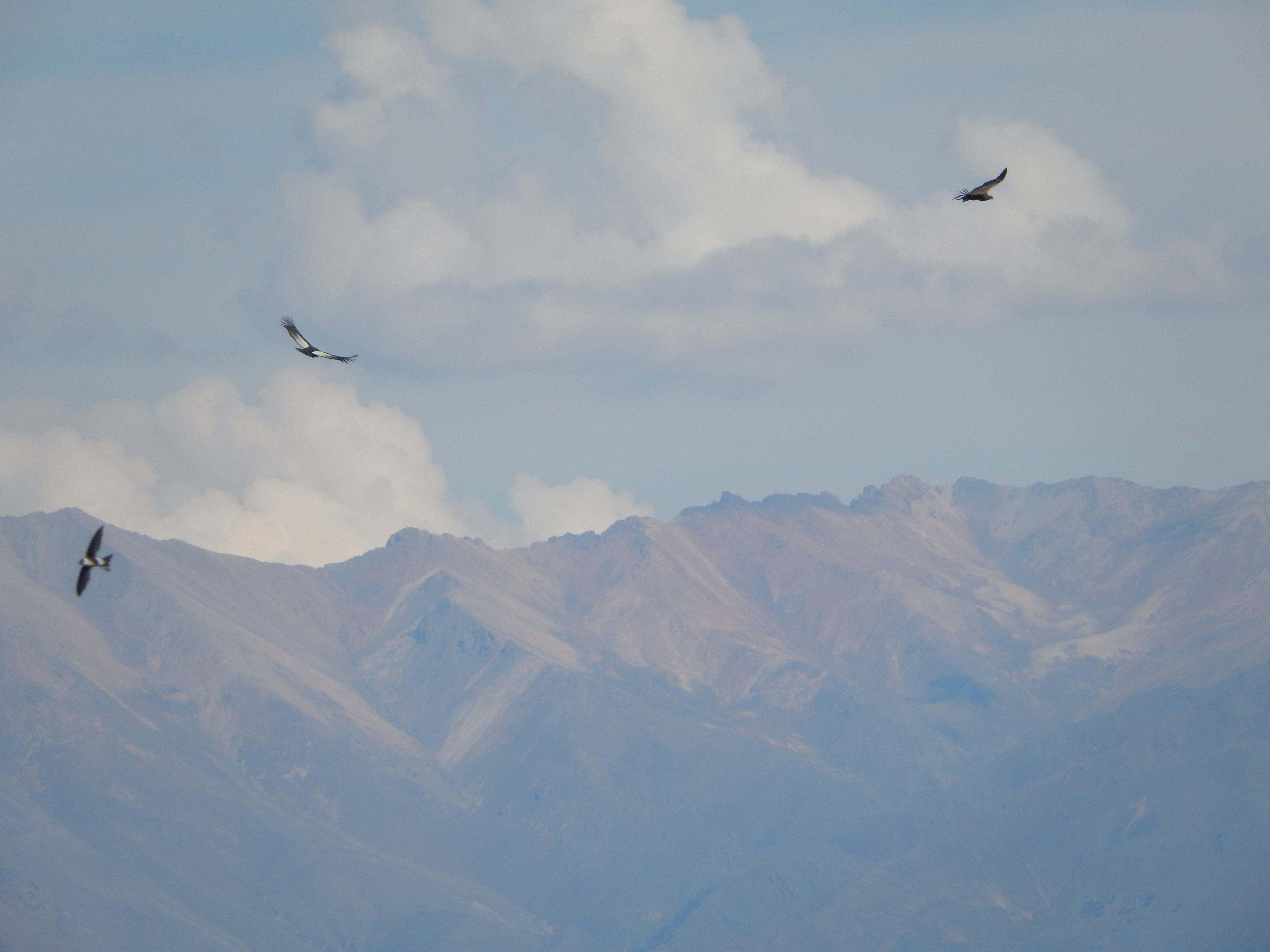
Stunning sight
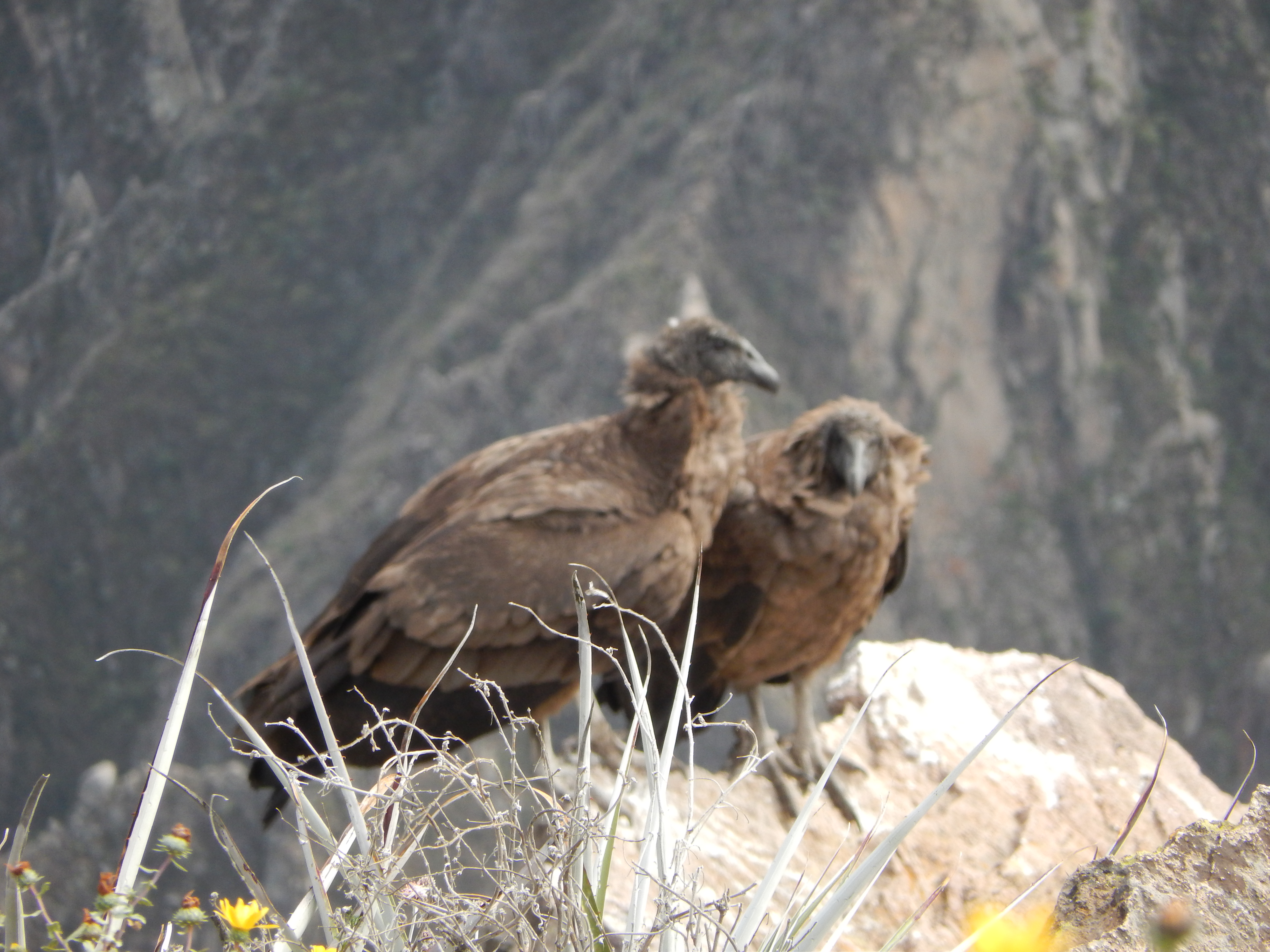
Young condors–one of them stayed huddled on that rock the whole hour I was there
Apparently, the Andean condor here has just one predator–a hummingbird! Hummingbirds are very territorial, and if condors get too close to this one type of hummingbird’s food supply, the hummingbird will use its long beak to go for the condors’ eyes. Never would’ve guessed it.

Because of their weight, condors try not to fly unless they have a little help, so their most active time of day is in the mornings, when the thermal drafts of the canyon are strongest. They don’t fly in the afternoons or evenings. Instead, they stay in the nests they build in holes in the walls of the canyon. We were lucky to see at least 10 condors soaring on the wind, against the glorious backdrop of the green, rugged mountains.

The adults flew above and away from the young ones, sometimes dived below (to get to a nest or a snack?), and only occasionally stopped by to check on the young ones. They must not have been too young.
(A woman at my hostel in Cusco informed me that the reason that particular site is so popular for viewing condors is that the national reserve staff push animal carcasses over the edge of the canyon, drawing the non-hunting birds. If that’s true, it means the animals aren’t quite as wild as I’d thought, but I don’t think it diminishes the experience.)

Happy birthday to me
When I asked some people in my group to take my birthday photo for me, they burst into “Happy Birthday” in Spanish, which was embarrassing but sweet. Later, the group took a one-hour walk along the canyon’s edge, taking more photos, learning more about condors, and appreciating being away from the crowds at the Mirador del Condor.

Colca Canyon
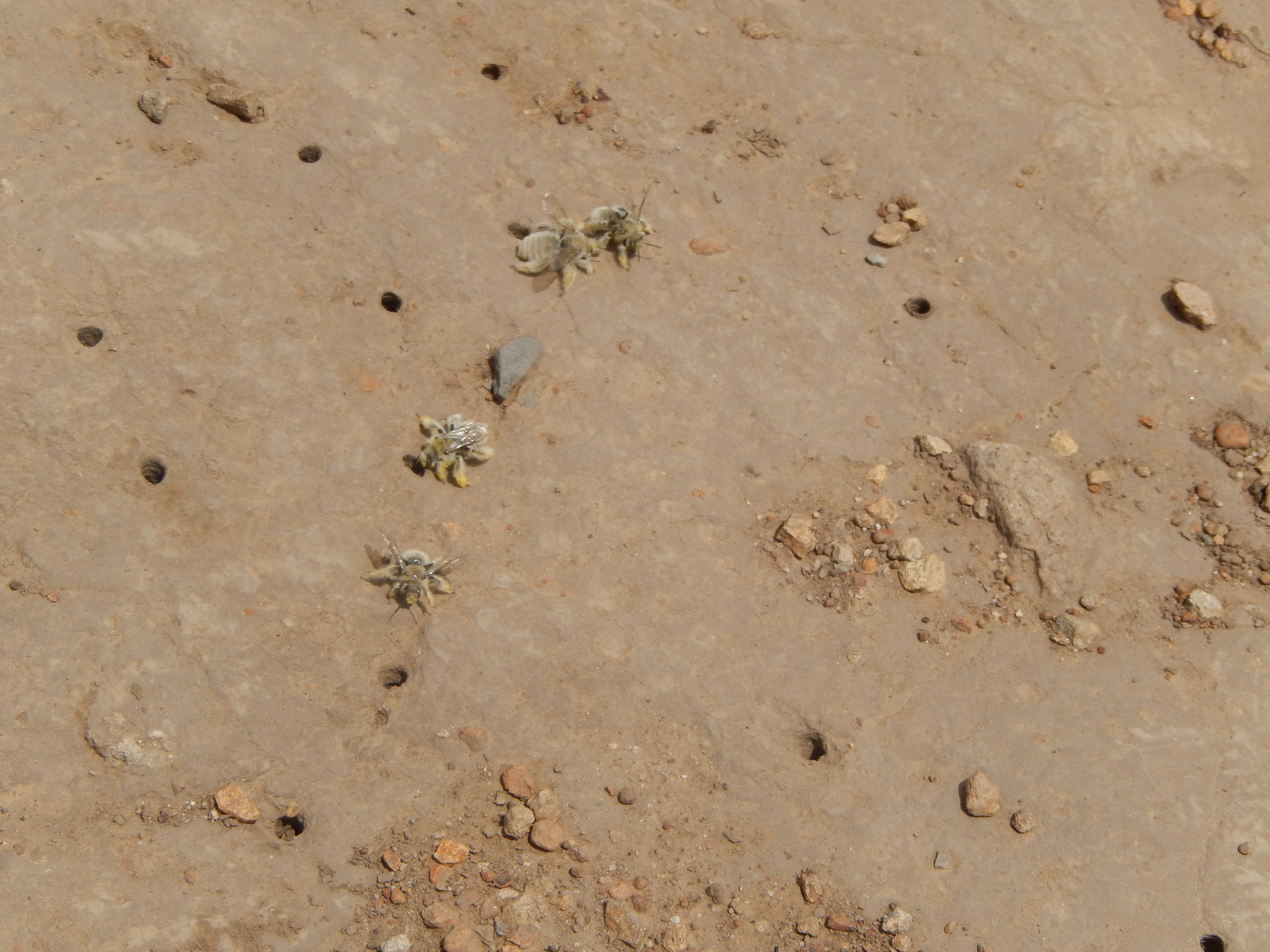
Little white bees that apparently do not sting and live in these holes
We had a quick lunch in Chivay and then began the journey back to Arequipa, this time with no stops. My last glimpse of the Colca Canyon was of a bright yellow flower swaying in the breeze on the edge of a cliff, while the green mountains stood watch behind.
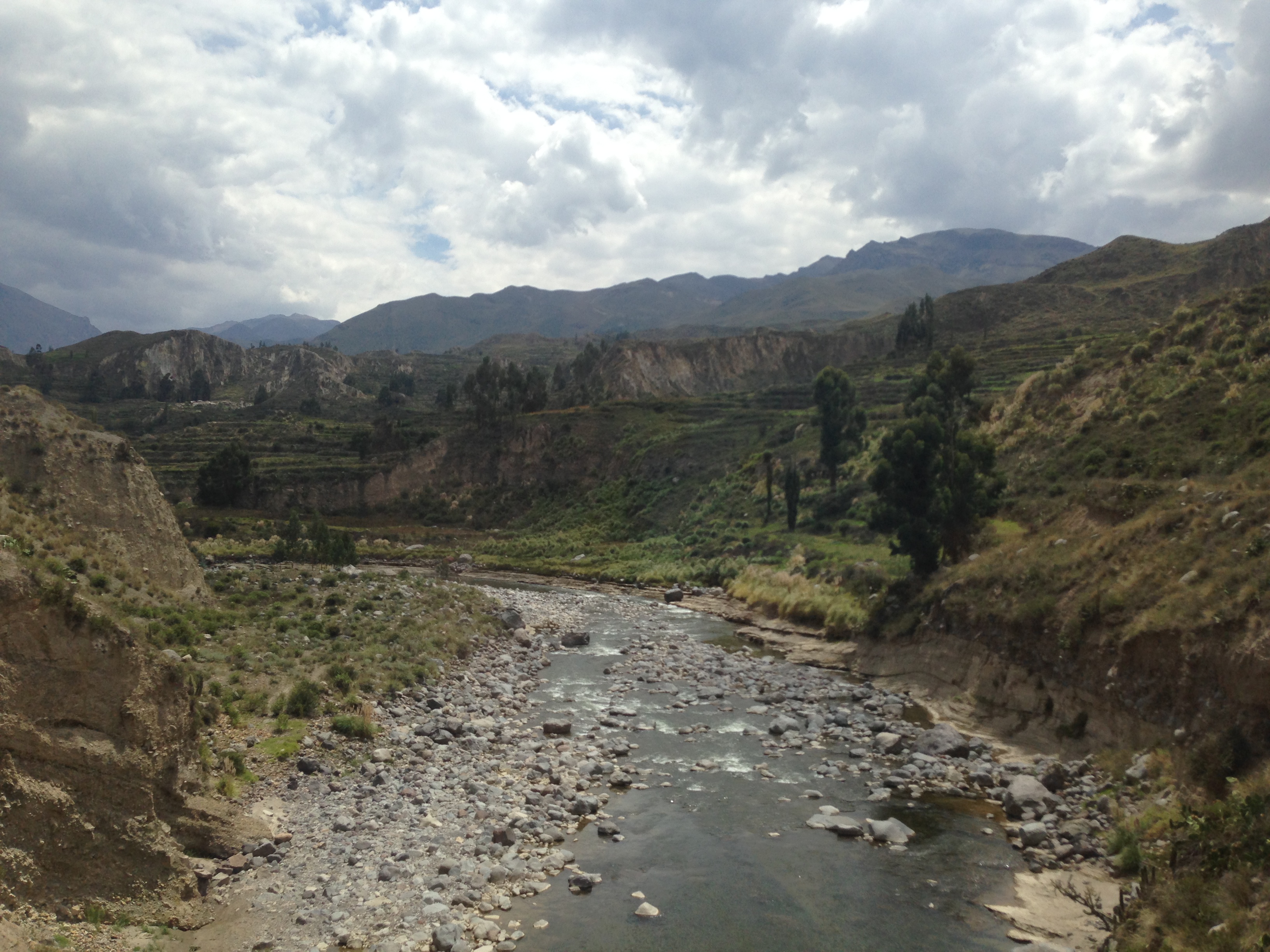
We took an alternate route back through the canyon and got to see the river up close

There were a lot of pretty yellow, red, silvery, and purple flowers along the canyon
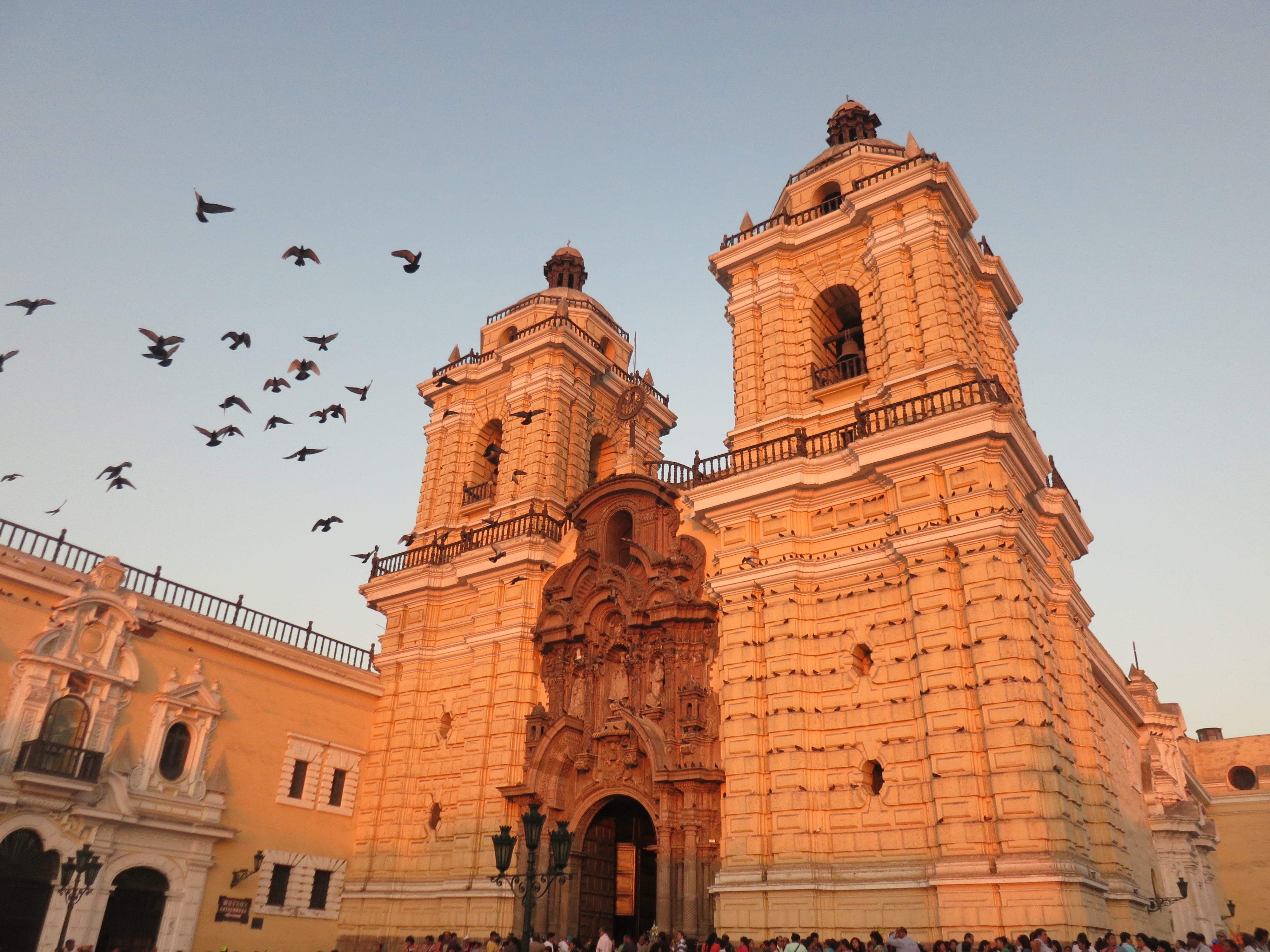
Iglesia de San Francisco, Lima, Peru; March 28, 2014
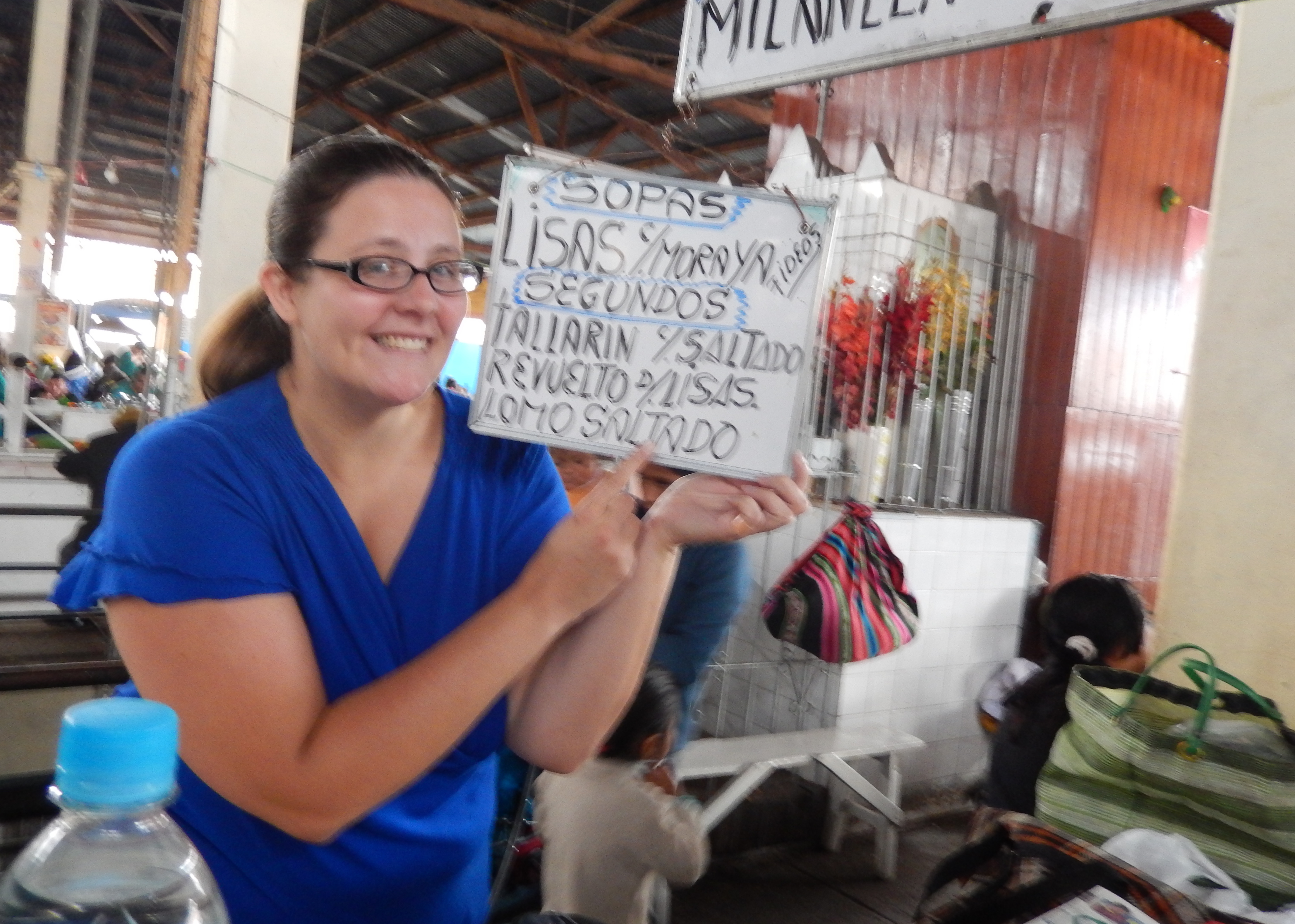
The potato is me
I ate this dish at San Pedro Market in Cusco, Peru. Lisas are one of the many types of potatoes here. The woman who sold me the meal was tickled pink when I told her my name.
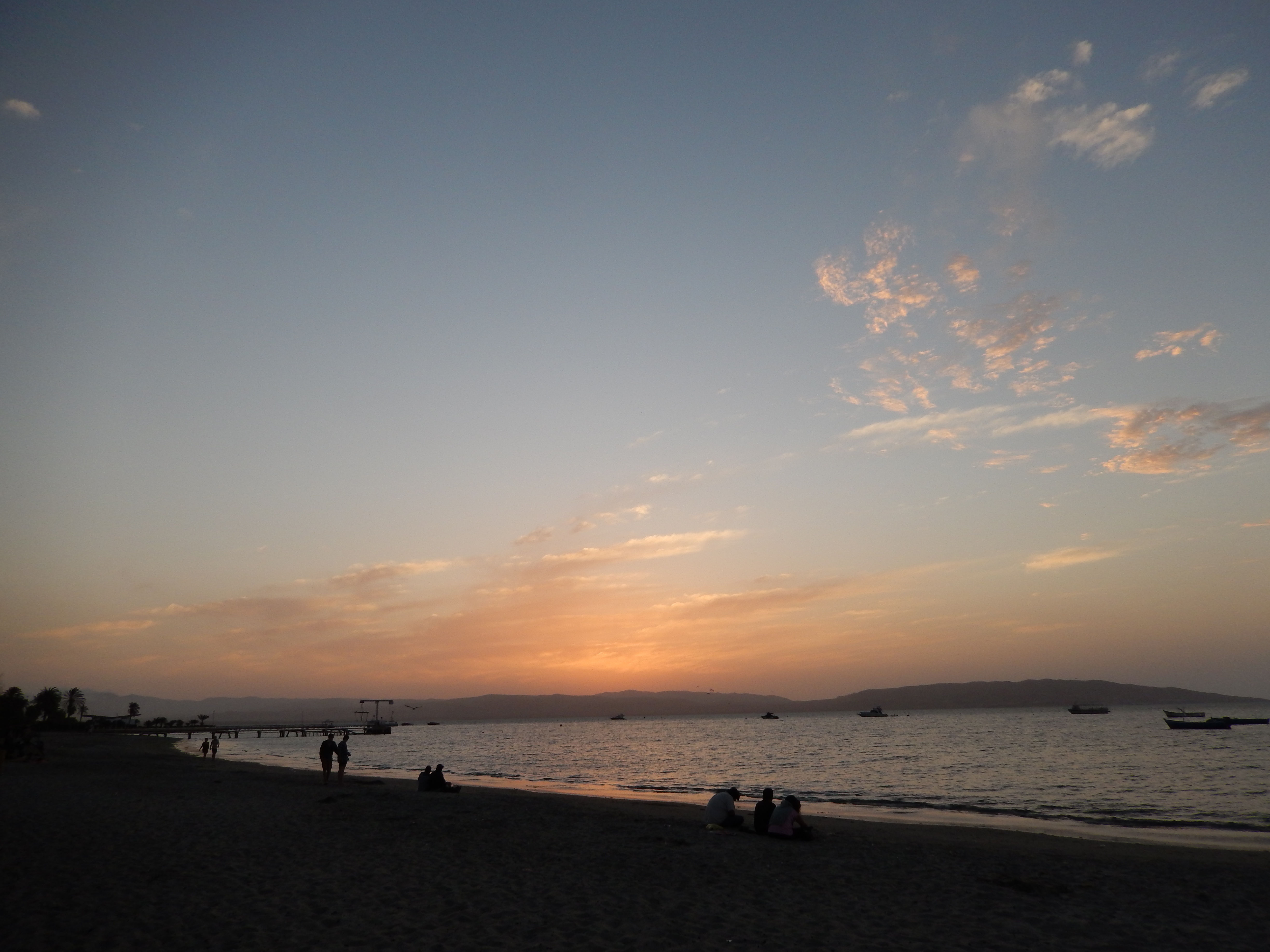
Sunset, Paracas, Peru
Short-term tours are a risky prospect. They’re usually organized to see one particular attraction, so that’s the focus, but all tours add stops along the way to make you feel you’ve got good value for your money. The main risk lies in the guide—will she hurry everyone along to keep to a strict schedule, then linger far too long at overpriced souvenir stands; or will he appreciate that everyone wants to take photos and admire the scenery, and not pressure everyone to get going? There are other risks, too—will the food be decent, will the transportation be comfortable, will the other people on the tour be fun?
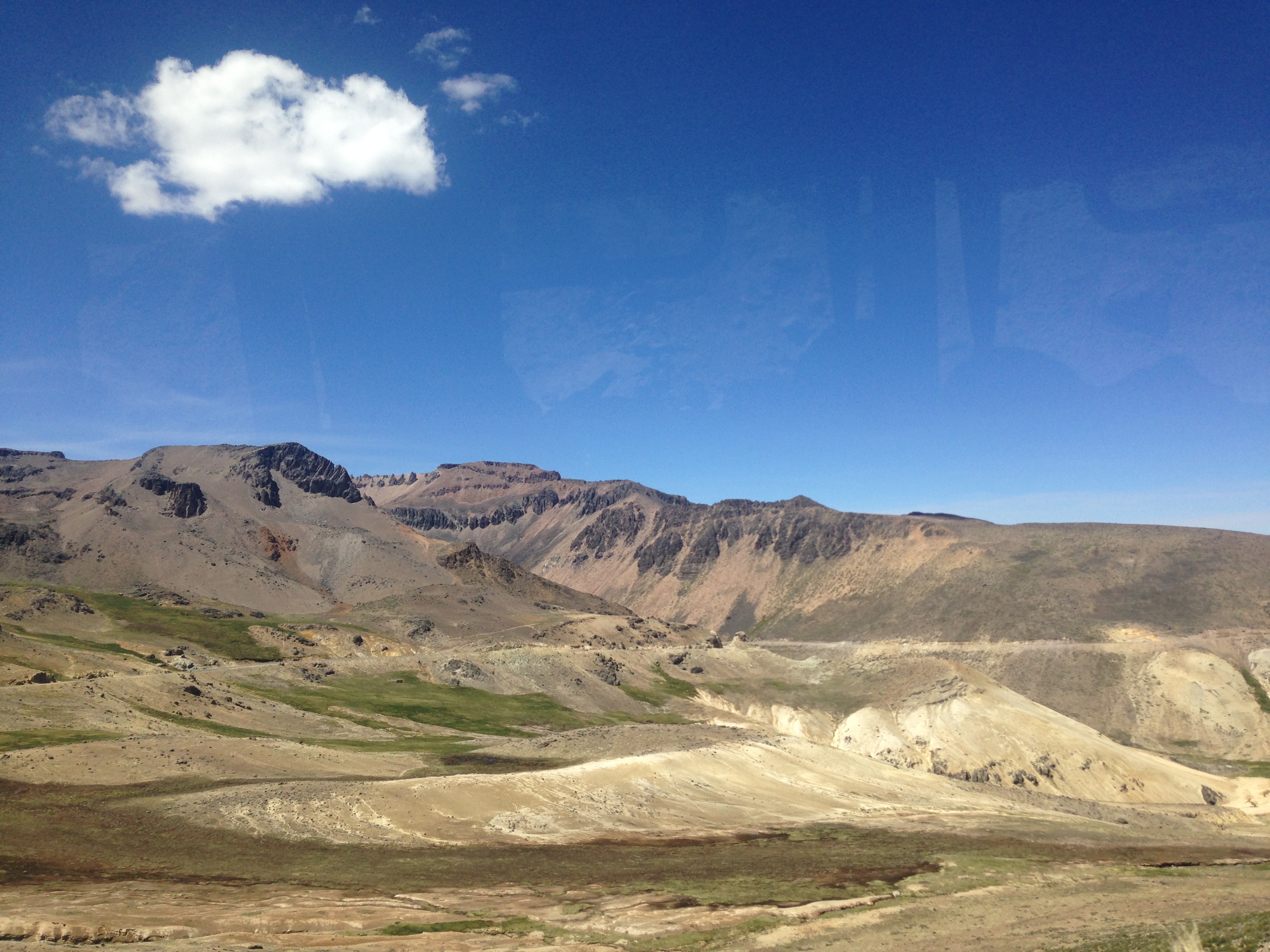
The road to Colca Canyon

4800 meters above sea level
I’m not a long-term tour kind of traveler; I like my independence too much to follow a guide around for 8 days in a row and stick to their schedule. But there are some attractions that are extremely difficult or expensive to see on my own, and that’s when I turn to short-term tours, like visiting the Cu Chi Tunnels outside Ho Chi Minh City in Vietnam or driving out to the Škocjan Caves in Slovenia. For the weekend of my birthday this year, I decided to risk a short-term tour to the Colca Canyon in southern Peru. I lucked out—it was a good tour.
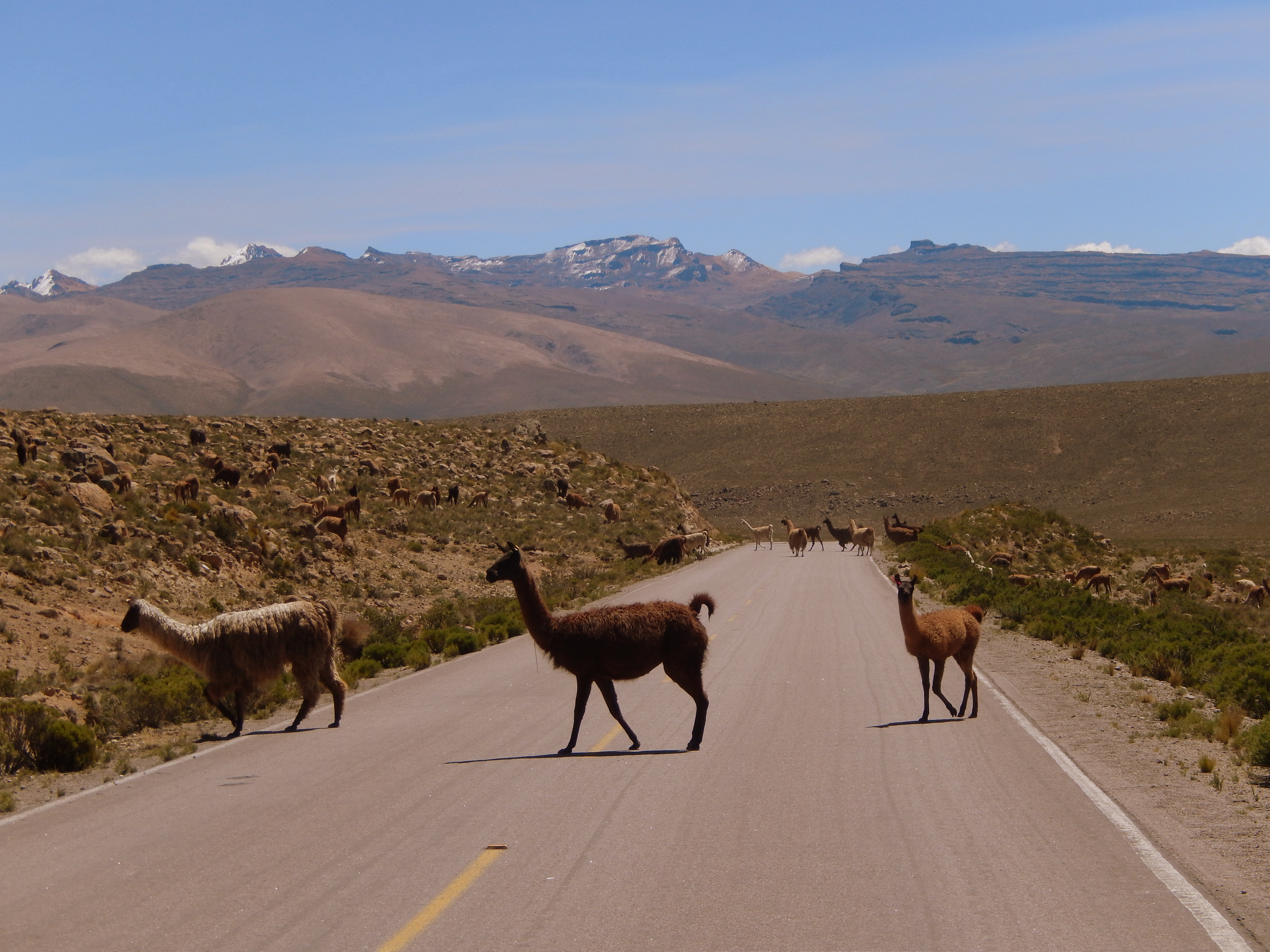
Llama crossing
The best part of the tour (other than the stunning, jaw-dropping, give-up-on-adjectives-because-this-country-is-too-beautiful scenery) was the guide, Elizabeth. She does this tour multiple times a week, gripping a microphone in one hand and the rail of the careening bus in the other, but she’s a pro, never giving any indication that this was tiring work or that she was bored repeating the same information over and over.

Coca tea–wake up!
She also asked the driver to stop multiple times along the road in the national park, and let us have more time to take photos than most other bus groups I saw on the same road. Granted, this meant we arrived in the valley town of Chivay an hour later than scheduled, but that didn’t affect anything, because we had a cushion of time in town anyway. Elizabeth also gave the entire tour in two languages—she’d give a little speech in Spanish for the 23 Spanish speakers on the bus, and then she’d repeat the whole thing in English for the 3 of us who couldn’t get past “gracias.” Impressive!

Piles of stones for wishes
Back to that stunning scenery: The land around the canyon is a vast, brown desert, and it was surprising to see the landscape change drastically into lush, terraced farmland after an hour or two of driving. “Colca” roughly translates to “granary” in Quechua, and that’s exactly how the Incas used this region when they conquered it—as the bread basket of the empire. Before the Incas got there, two ethnic groups populated the valley, building their terraces first at the top of canyon, the better to look down and see any advancing enemies, and then moving farther down into the canyon as their population grew (and later, as the Incas demanded more taxes in the form of crops).

Chivay and some terraces from the road into town
By the time the Spanish arrived, about 60,000 people lived in the canyon. After only four years of their “mine all the gold, import all the diseases, take food from the locals” approach, the local population dwindled to 45,000. Today, 10,000 people live in the area, 7,000 of them concentrated in the town of Chivay. Agriculture and tourism tie for the main industries in the area.

Terraced farming in the Colca Canyon
Agriculture, as Elizabeth described it to us, includes not just the terraces of grains and vegetables, but the plains populated with llamas and alpacas. Both llamas and alpacas have been domesticated for hundreds of years. They’re herded across the vast desert terrain and along the craggy tops of the canyon walls, and every so often they’re sheared, and the hair is used for super warm clothing and rugs.
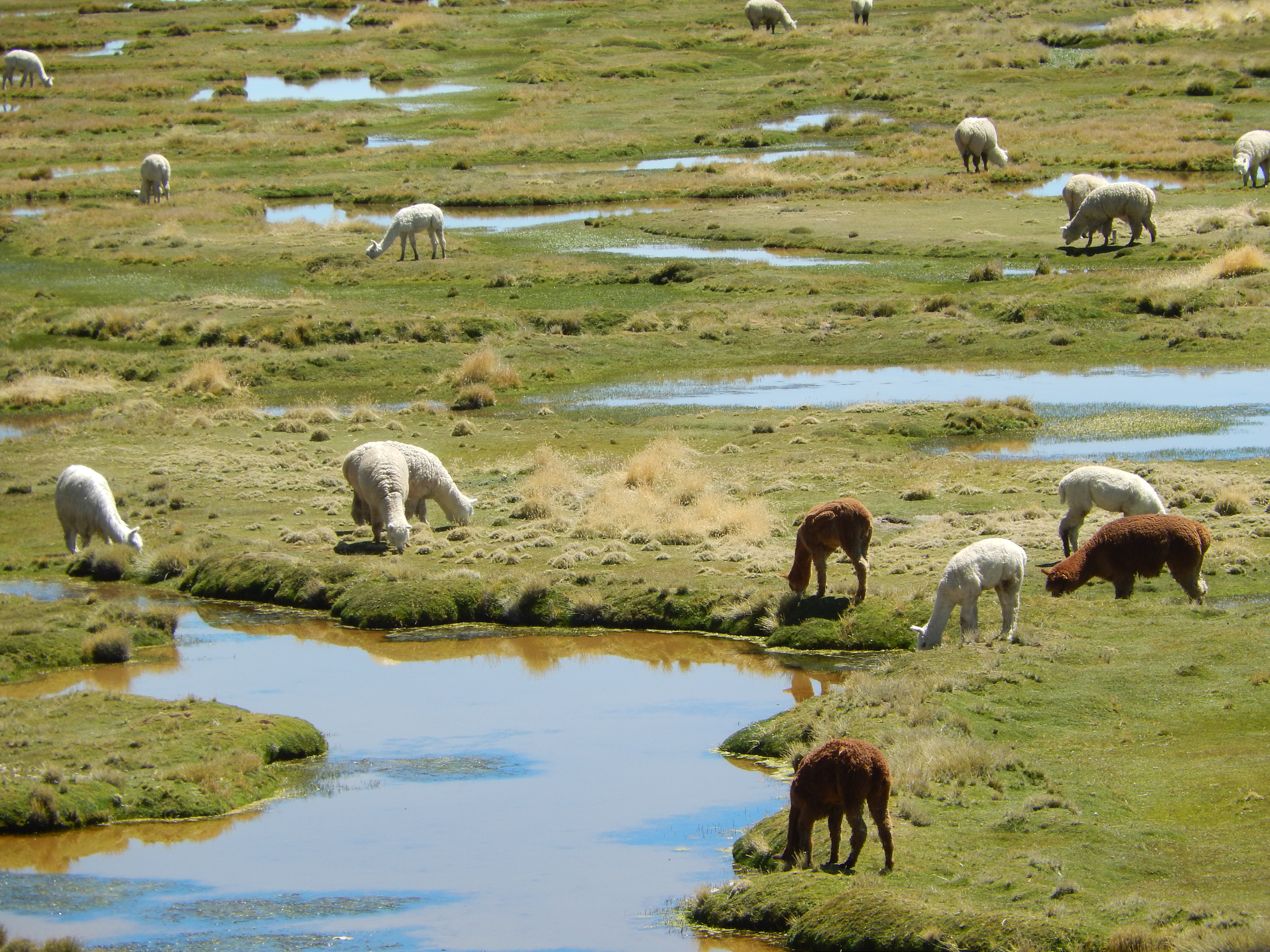
Alpacas
There’s also an animal called a vicuña, which is wild and protected by the Peruvian government. They’re the same type of animal as the llama and the alpaca, a camelid, but they’re much rarer. Their hair is even softer and the clothes made from it even more expensive. (Apparently, there’s a hefty fine for anyone without a license who tries to shear one, and even a jail sentence.) The road leading to the canyon is dotted with signs warning drivers to decrease their speed, because vicuñas graze here.
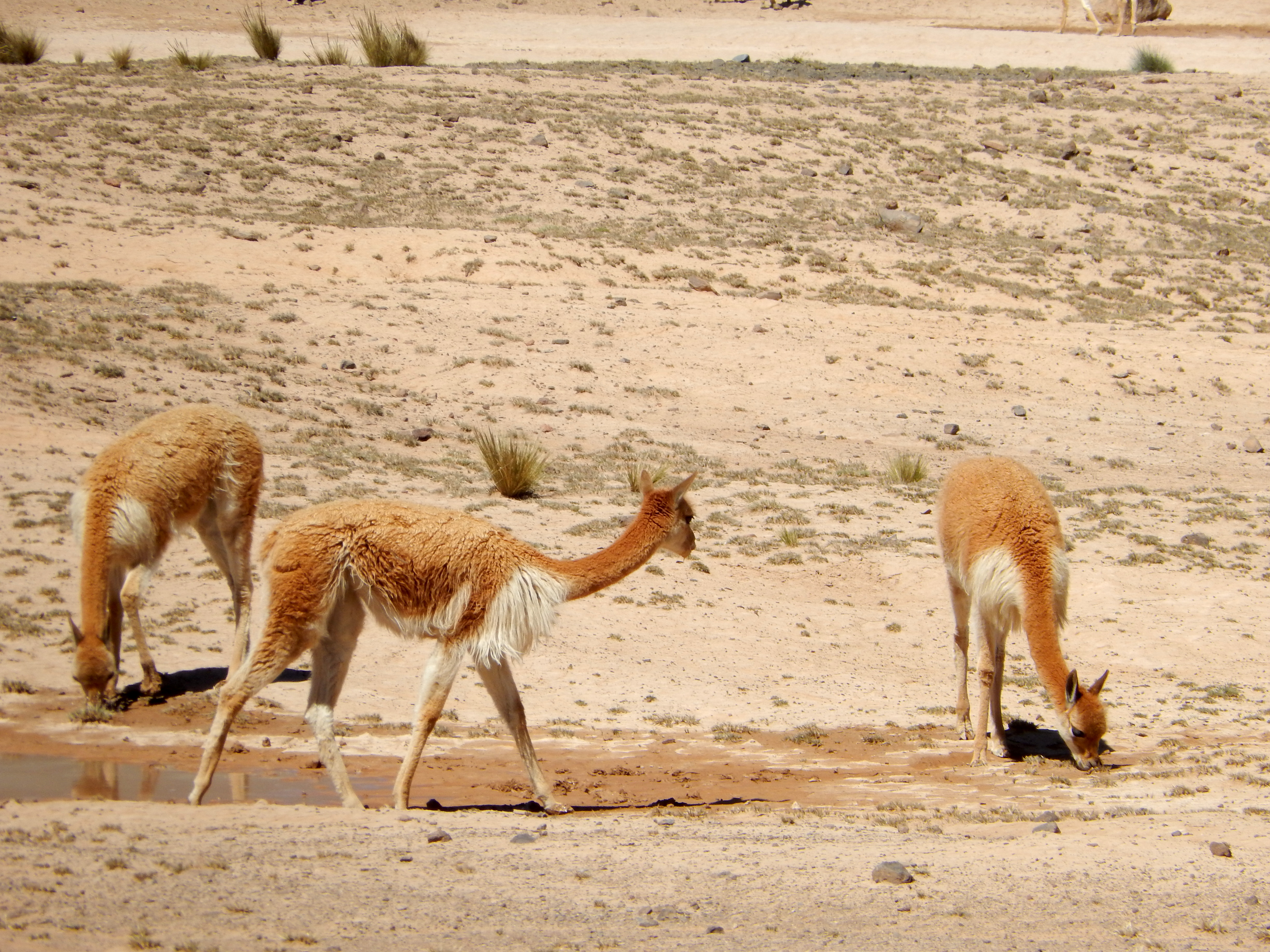
Vicunas grazing on the reserve
One of the ways to cope with the incredibly high altitude of the Andes is to chew on coca leaves. Coca leaves, of course, are the stimulant used in Coca-Cola (they say they don’t use the leaves anymore, but Elizabeth said Peru sells thousands of tons of coca to the company every year, so…), and also one of the ingredients used in producing cocaine. Locals drink coca tea and chew on the leaves, to aid in digestion, alertness, and access to oxygen. Elizabeth showed us how to do it—roll up at least 9 leaves around some ash, which acts as a catalyst, stick it in your back teeth, and chew for at least 20 minutes. It made the left side of my face numb. I suppose I did feel a little more alert, but it’s probably not a habit I’ll pick up.

It’s like nature’s Novocaine
Oh and in answer to the other questions about short-term tours: the food was pretty good but a little overpriced, the bus seats were a little small but otherwise it was comfortable, and the people were nice.
Next week, in Part 2: an elegant central plaza, traditional dances at a peña, and condors soaring through the mountains

Goodnight, moon
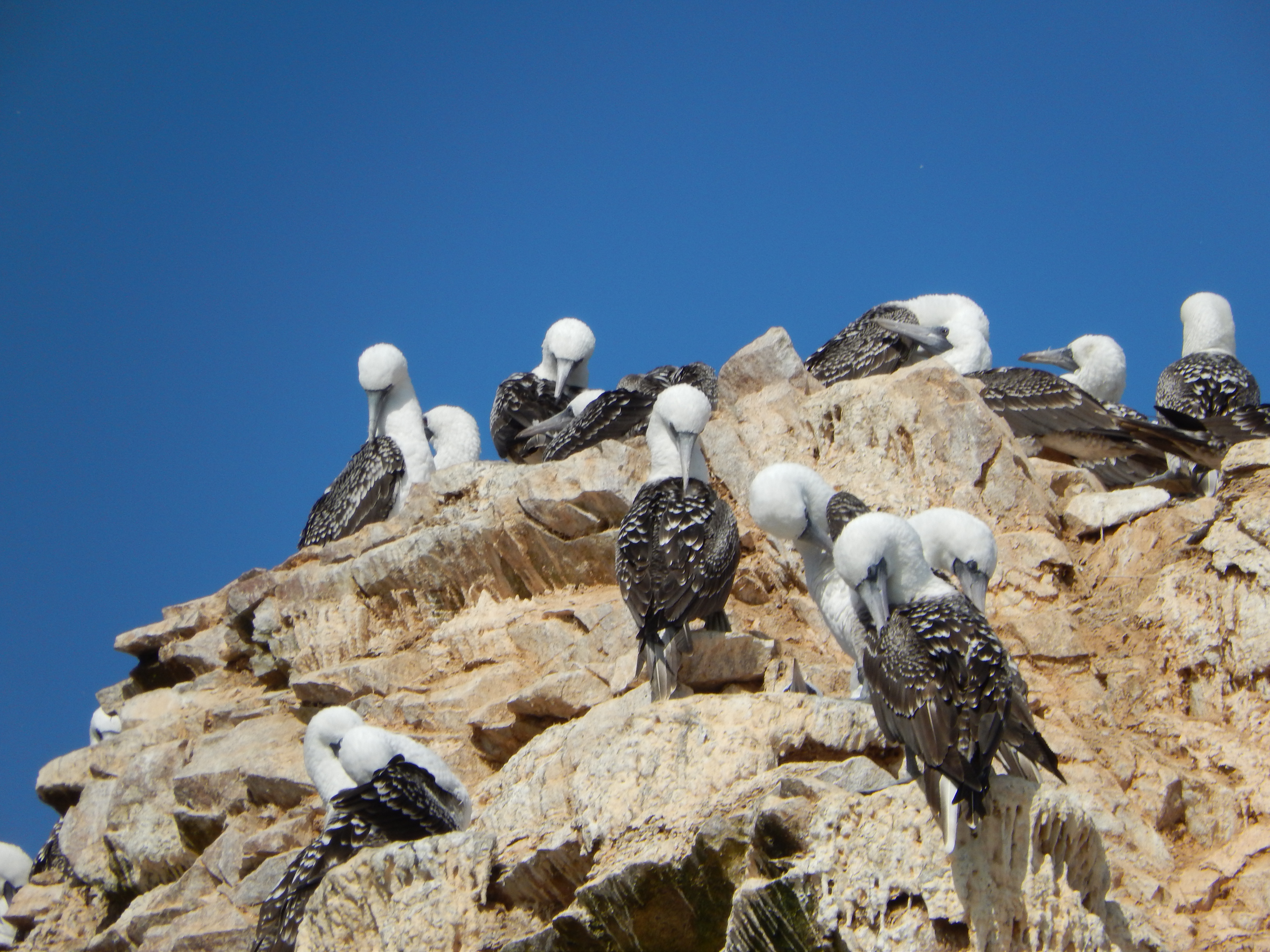
Peruvian boobies, Ballestas Islands, Peru; April 7, 2014
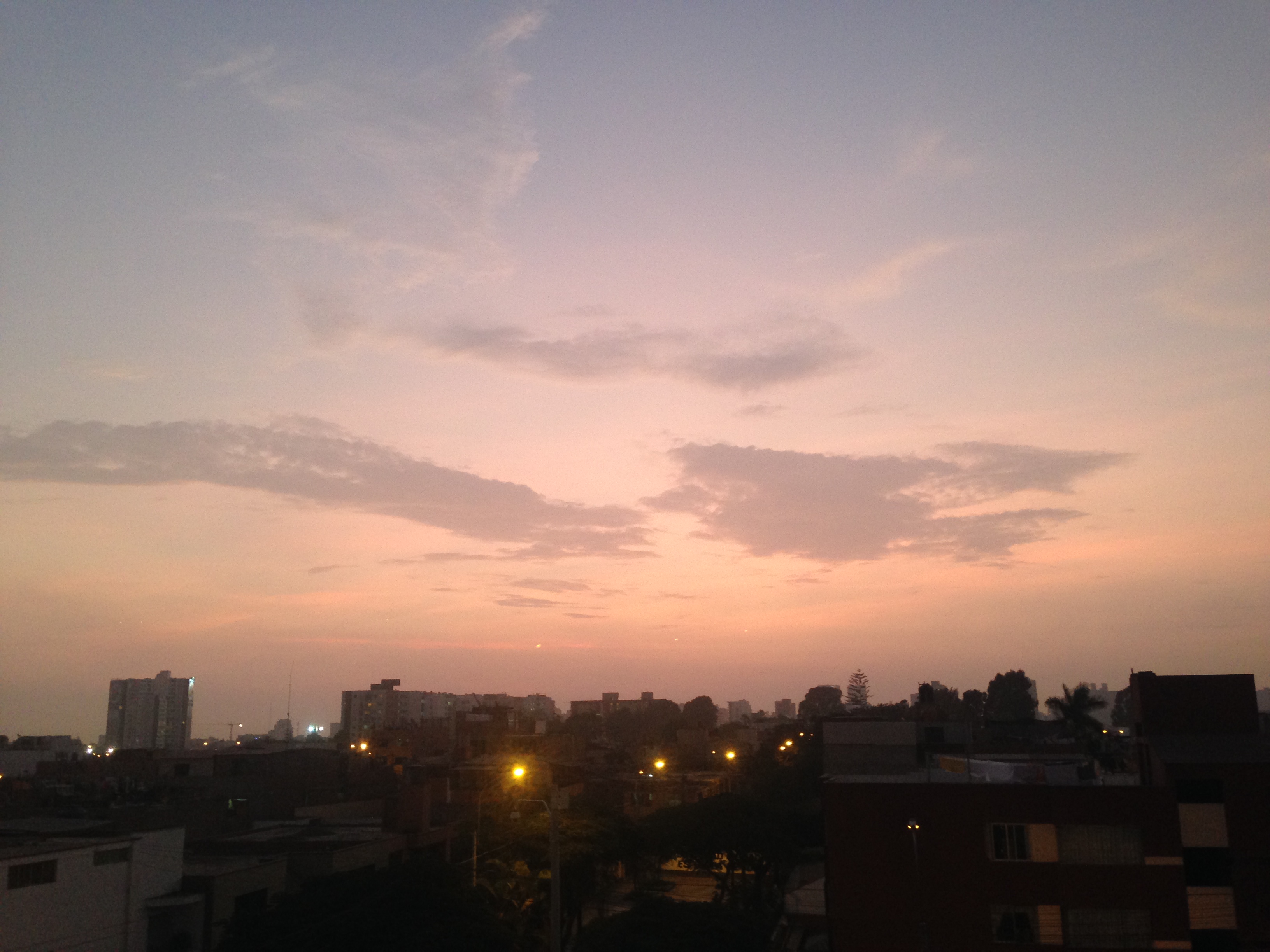
Sunset, Lima, Peru
Lima, Peru; March 29, 2014
 Stowaway Travel Writing & Editorial Services