ACAM: What to Do in Thailand

Today, dearest fellow travelers, a quick look at some things to do and sights to see in Thailand. My many friends who have been there before: what am I missing? Other than the metric ton of street food I plan to eat, of course.

Baby!

Volunteer at the Elephant Nature Park
Elephant rides are popular throughout Southeast Asia, but the elephants usually work in terrible conditions and it’s generally more ethical not to contribute to their ill treatment by paying for rides. Instead, you can pay about $400 for a week of volunteering at the Elephant Nature Park, in the northern part of Thailand, and contribute to the healing of elephants who used to give tourist rides or do backbreaking work in logging operations. Volunteers muck in as needed, helping feed, bathe, and clean up after the elephants. It sounds like an amazing experience.

time to relaaaaax

Relax on the beaches of the western coast
Phuket is probably the most famous resort town in Thailand, partly for the name that Westerners love to mispronounce (it’s really pronounced Poo-KET) and partly for the gorgeous beaches. But also there are monuments to the two sisters who defended the town from invaders through trickery, which sounds pretty excellent.

The Grand Palace in Bangkok

Visit the Grand Palace in Bangkok
It’s a giant palace compound, made up of multiple residences, temples, gardens, and courtyards. The royal family has lived elsewhere since 1925, and now it’s open to the public, so you can wander around for entire days, taking in the exquisite architecture and imaging yourself dancing along to the soundtrack of The King and I. 

Image 1. Image 2. Image 3.

The More Things Change…

From Mark Twain’s A Tramp Abroad (published in 1880):

Travel isn’t what it used to be
“Seventy or eighty years ago Napoleon was the only man in Europe who could really be called a traveler; he was the only man who had devoted his attention to it and taken a powerful interest in it; he was the only man who had traveled extensively; but now everybody goes everywhere; and Switzerland, and many other regions which were unvisited and unknown remotenesses a hundred years ago, are in our days a buzzing hive of restless strangers every summer.” (p. 225)

I saw this really cool thing… on the Discovery channel
“[The Ladders] are built against the perpendicular face of a cliff two or three hundred feet high. The peasants, of both sexes, were climbing up and down them, with heavy loads on their backs. I ordered Harris [hired man] to make the ascent, so I could put the thrill and horror of it in my book, and he accomplished the feat successfully, through a sub-agent for three francs, which I paid. It makes me shudder yet when I think of what I felt when I was clinging there between heaven and earth in the person of that proxy.” (p. 255)

I never go to tourist spots. I prefer to see the REAL places in a new country.
“I flit,–and flit,–for I am ever on the wing,–but I avoid the herd. Today I am in Paris, tomorrow in Berlin, anon in Rome; but you would look for me in vain in the galleries of the Louvre or the common resorts of the gazers in those other capitals. If you would find me, you must look in the unvisited nooks and corners where others never think of going. One day you will find me making myself at home in some obscure peasant’s cabin, another day you will find me in some forgotten castle worshiping some little gem of art which the careless eye has overlooked and which the unexperienced would despise; again you will find me a guest in the inner sanctuaries of palaces while the herd is content to get a hurried glimpse of the unused chambers by feeing a servant.” (p. 284)

Home-Cooked Meals Away From Home

When you’re traveling more than a week or two, eating out for every meal is not only expensive but also a bit tedious. There’s something about a home-cooked meal, even when you’re not at home, that just tastes right. Of course, I usually prefer my home-cooked meals to be cooked by someone else, because I am lazy. But when I’m solo traveling, I don’t really have that option. So I try to make sure that there’s a kitchen wherever I’m staying.

Hostels
Not all hostels have kitchens, so you have to check the listing before booking. Once you’re there, check out the equipment provided (do they have sharp knives? more than one pan?) and see if there’s any communal food or spices before heading out to the store, so you don’t buy more than you need. Eva Holland provides a guide on hostel cooking, and Fiona Honor Hurley’s step-by-step list even includes recipes to try out in hostels.

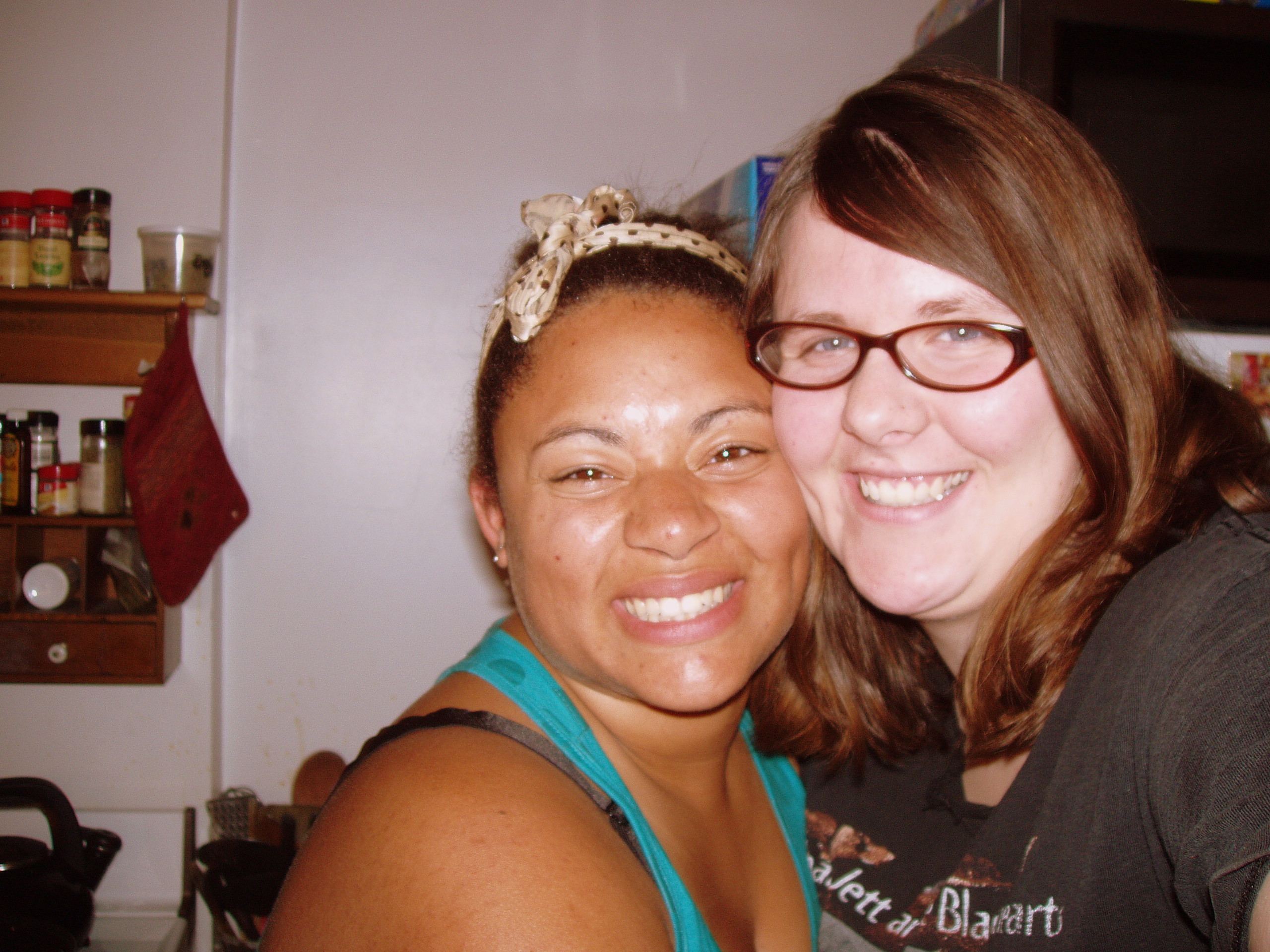
Cooking with my couchsurfer Sophie in '09

Couchsurfing
If you’re couchsurfing, many of the same principles apply, but since you’re in someone’s home, there are additional things to take into consideration. Are your hosts cooking at the same time; is there enough room in the kitchen for several meals to be made at once? Or even better, cooking a meal for your host is a great way to say thank you for their hospitality. Be sure to check for any dietary restrictions and kitchen rules before starting. For example, one of my former roommates was a vegan, and she had a special cutting board and knife that we meat eaters couldn’t use; good info to have before you start chopping up ingredients for a chicken stir-fry.

Home rental service
There are fewer limitations when using a home rental service like Airbnb, since renting out the whole apartment means you have free rein of the kitchen provided. Still, surprises are possible; the twins and I checked the cupboards at our rental in Montreal and saw table salt. It was only when we returned from the grocery store and started cooking that we discovered the salt was a rock-hard block of indeterminate age.

What tips do you have, dearest fellow travelers?