The state of Arizona recently passed SB 1070, which is a terrifying piece of legislation that mandates racial profiling, rewards paranoia and hate, and puts Arizona back at least 50 years. This is no exaggeration. Take a look at that NYT article — this law REQUIRES police officers to demand identification papers from anyone they suspect might be in the country illegally; it makes it a misdemeanor to not carry immigration papers; and it lets any citizen sue local law enforcement if they think this law isn’t being enforced. First we have Driving While Black; now we have Living While Brown.
This is the only law of its kind in the United States, but don’t think that doesn’t mean other states aren’t running to catch up. And don’t think for a second it isn’t racist. Check out Rachel Maddow’s short but effective rundown of the authors of the bill — longstanding members of groups whose explicit purpose is to make sure America’s majority is white. Who are most of the undocumented immigrants in Arizona? Latinos. So a law aimed at cracking down on illegal immigration is aimed at cracking down on Latinos. And how do you determine which Latinos are US citizens, legal immigrants, tourists, etc. and which are crossing the border from Mexico without official approval? No really, how do you tell? Even Governor Jan Brewer, who signed the bill into law, couldn’t answer that question. “I do not know what an illegal immigrant looks like,” she said when asked. But the police are supposed to know and make arrests based on that unknowable qualification? Is this like porn — I know it when I see it? Nope, pretty sure it’s like mandatory racial profiling — all brown people are immediately suspect.
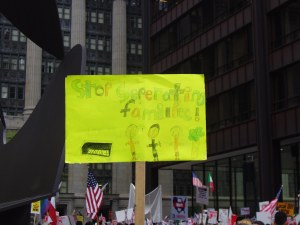
no child should know what a SWAT truck looks like
My dad is always concerned that I consider the other side of the matter before taking a stand, which is good advice. So okay, people who support this bill are concerned about what, exactly? Sharing increasingly scarce resources with people who weren’t born here? Talk to your representatives about spreading the wealth a little more evenly. Losing your job to someone who braved brutal conditions, rape and murder on the trip from Mexico to the States? Even fairly conservative groups will agree that many undocumented immigrants do the work you don’t want to do, and in some cases their presence even raises wages. The increasing rate of crime in your state? Take a look at those who say they’re protecting the American way and then talk to me about rising crime rates. But mostly the support for this bill comes from many white Arizonans’ discomfort at the many brown faces they encounter on a daily basis. I hate to break it to you, but you weren’t exactly here first, and you were never really the majority.
I think the reasoning that most kindhearted but ignorant Americans hold is that it’s already illegal for these people to be here, so what’s the big deal if they get caught? Well, a whole lot of people who have every legal right to be here are going to be caught up in this giant net that’s been cast, simply based on the way they look. What if they run a red light, as anyone is liable to do, and they forgot their immigration papers at home? White Arizonans would be ticketed for running the red light and sent on their way. Latino Arizonans will be ticketed, handcuffed, and brought to the police station for holding and questioning while they’re run through the system to see if they’re allowed to be here. Everyday lives will be dramatically circumscribed, as every action is weighed against the possible consequences from a hostile law enforcement body. And that’s just legal immigrants and citizens.
Undocumented immigrants (“illegal immigrants” confers illegality on a person’s very being and thus dehumanizes them, and anyway is less accurate than “undocumented immigrants,” so I won’t use it) face grave consequences for simply being out on the street when a police officer happens along and decides to take a closer look at them. The category of “undocumented immigrants” encompasses a whole host of people, including people who were brought here by their parents when they were young and know no other home than the States, people who are escaping brutal regimes and couldn’t gain refugee status but are still terrified to return to their homeland, and women who are escaping the more commonplace but equally terrifying regimes of their brutal partners. “Undocumented immigrants” does not equal “job-stealing criminals.” It equals “people.” It equals “you or me in a different situation, in a different stroke of luck or fate.” The consequences for undocumented immigrants under this law is families being ripped apart, wretched treatment in detainment facilities, forced deportation, and uncertain and dangerous futures. That’s the big deal if they get caught.
This law is not “misguided,” as President Obama has called it. It is hateful and wrong.

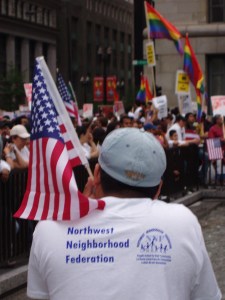
May Day Workers' Rights and Immigration Reform Rally at Daley Plaza 2010
So what do we do about it? This roundup at Feministe has some suggestions. The May Day rally I attended in Daley Plaza certainly united people in a loud, strong voice against it. Even some law enforcement officials are outright refusing to obey the law. Write to your Congressperson and Senators; encourage them to work on strong immigration reform legislation in this next congressional session. Write to President Obama and tell him “okay job on health care, we’ll see if Wall Street reform works, now let’s get to immigration reform.”
And since this is a travel blog, as my friend Pam suggested, let’s consider the travel implications. It might seem a small thing, but I do believe every stand we take matters. Representative Grijalva has called for a convention boycott of his own state in protest of the law, and the city of San Francisco has already voiced its support. I’m just one traveler, but I can keep my money away from Arizona and its repressive ways. This isn’t even the only racist law they’ve instated recently — ethnic studies courses are now banned as treasonous, and the state Department of Education is removing teachers who speak with too thick a Spanish accent (even though a study shows that accented teachers might be better for their students). This is a state intent on enforcing a very narrow definition of “normal” and “acceptable,” and it is a state that needs to be stopped. Whatever we can do to turn back this tide of racism, xenophobia, and hatred, we must do. Of course, there are many people in Arizona and out of state who have worked tirelessly for years for human rights in Arizona, and there was a big push from a lot of groups prior to the signing of this law to stop it before it got to the governor’s desk. Unfortunately, their calls for reason and basic decency went unanswered in this case, but that doesn’t mean that’s the only answer they’ll ever get. Americans are scared, and scared people often do stupid things. We must help people see that fear is not the right way to live, or the right way to vote.
And that’s where travel boycotts come in. Pam asked me to consider the ethics of traveling to repressive places, and what I’ve come up with is this: There are varying degrees of repression in every single human-occupied place on this planet, so of course I can’t avoid them all, nor would it be right to do so. But I can refuse to support local economies with my money and my high praise if I find their laws reprehensible. This is a work in progress kind of rule, but I think it comes down to agency and power (as so much does). The residents of Burma, for example, have agency, as every human being does, but they have very little real power, because the ruling junta has it all. The brutal laws of Burma are terrible, but I might still visit there to aid locals (if they wanted me — not all foreigners are welcome, since Americans especially can cause more trouble than they’re worth there). A boycott of Burma might hurt the residents more than the state, and the residents haven’t yet been able to oust their repressive government in favor of another.
The residents of Arizona, on the other hand, have agency AND power. They have the power to nominate and elect legislators who will pass just laws and protect the interests of ALL residents, documented and undocumented alike. Instead, an unfortunate majority of Arizonans has elected cowards, racists, and calculating fearmongers to lead them, and so we get laws like SB 1070. I will not visit a state that elects such people. I will not give money to citizens who support such legislation. This is rough for the many, many Arizonans who work so tirelessly for equality and justice, but I think it is an important statement to make against those who work for the degradation of fellow humans. Arizonans have the power to change their government, their laws, and their way of life, and so I will hold them responsible for doing just that. I have a very good friend in Tucson, but I don’t think I can visit her until her fellow residents have worked out some of their problems. People are rightfully quoting the “First they came for…” poem, but as Problem Chylde says in a brilliant and impassioned post, “We no longer wait for them to come. First we fight.”
What do you think? What is the ethical approach to visiting repressive states? What is the right response as a traveler to unjust laws and fear-filled populations?
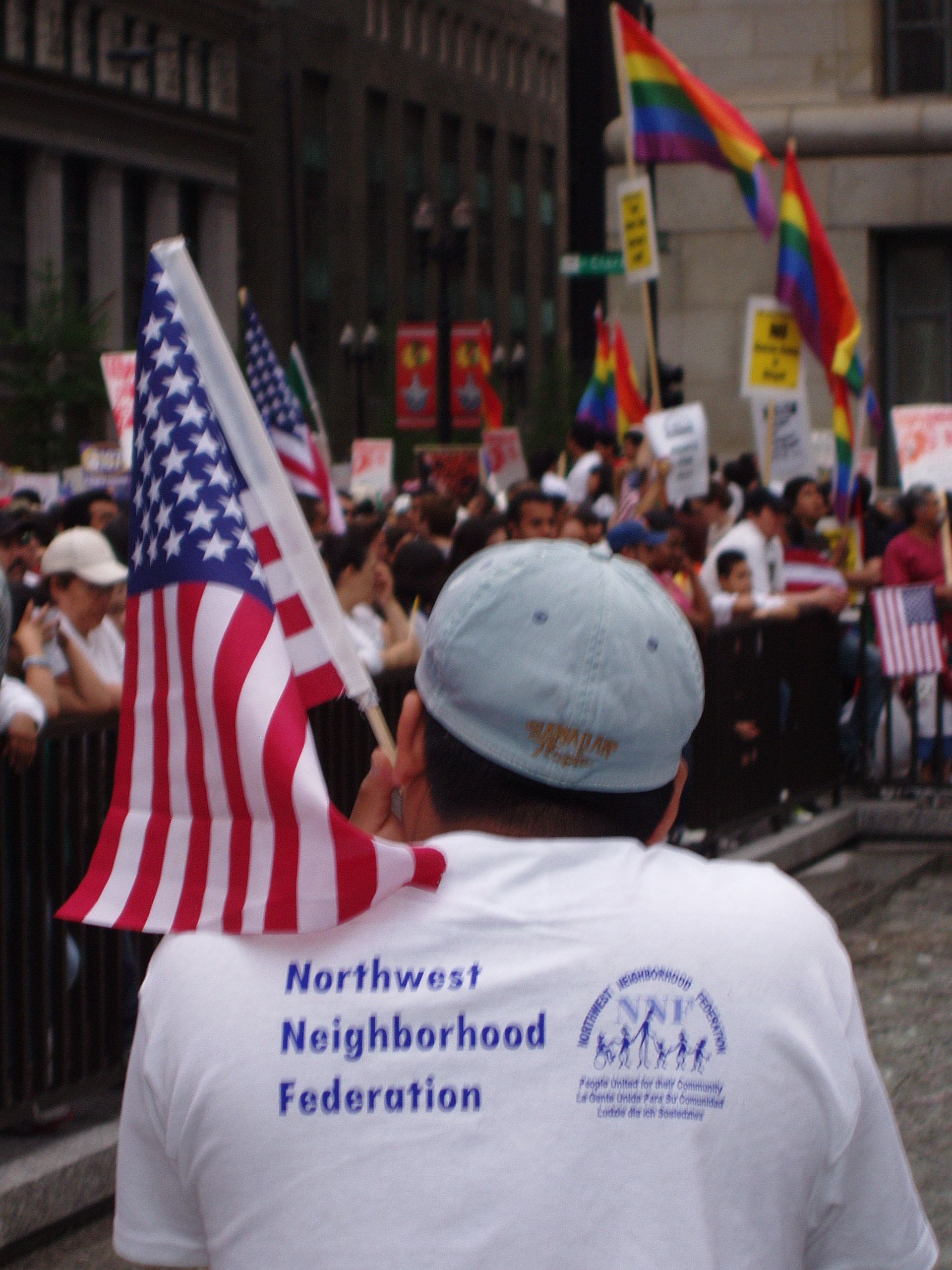
Rallying for change and hope
P.S. I know I’ve used the word “racist” a lot in this post, and I know that makes a lot of people uncomfortable. Generally I agree with Jay Smooth when he says that you need to address the action rather than the sentiment behind it, but sometimes you have to call a racist a fucking racist.



 Stowaway Travel Writing & Editorial Services