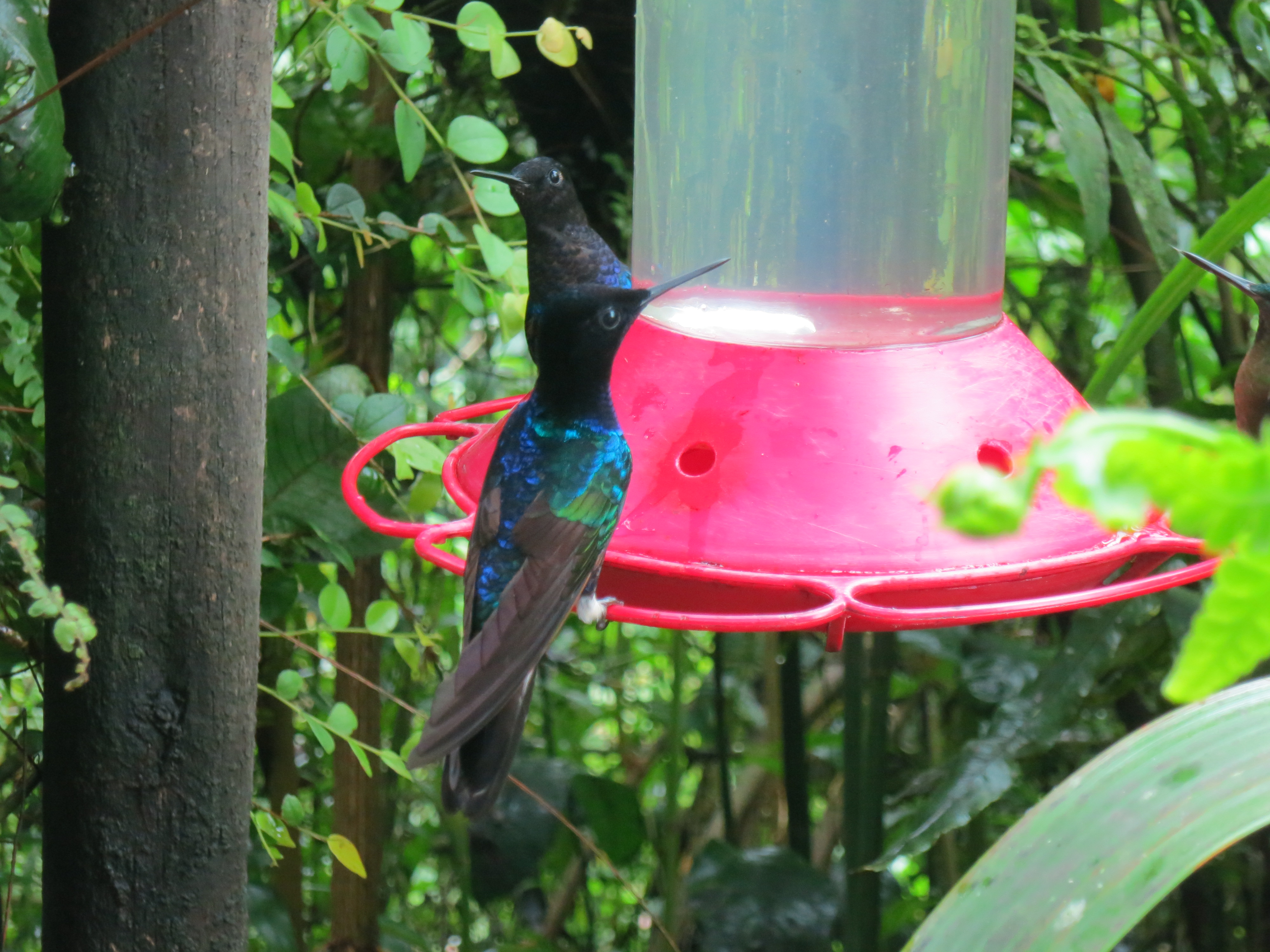
Mindo, Ecuador; February 26, 2014

Mindo, Ecuador; February 26, 2014
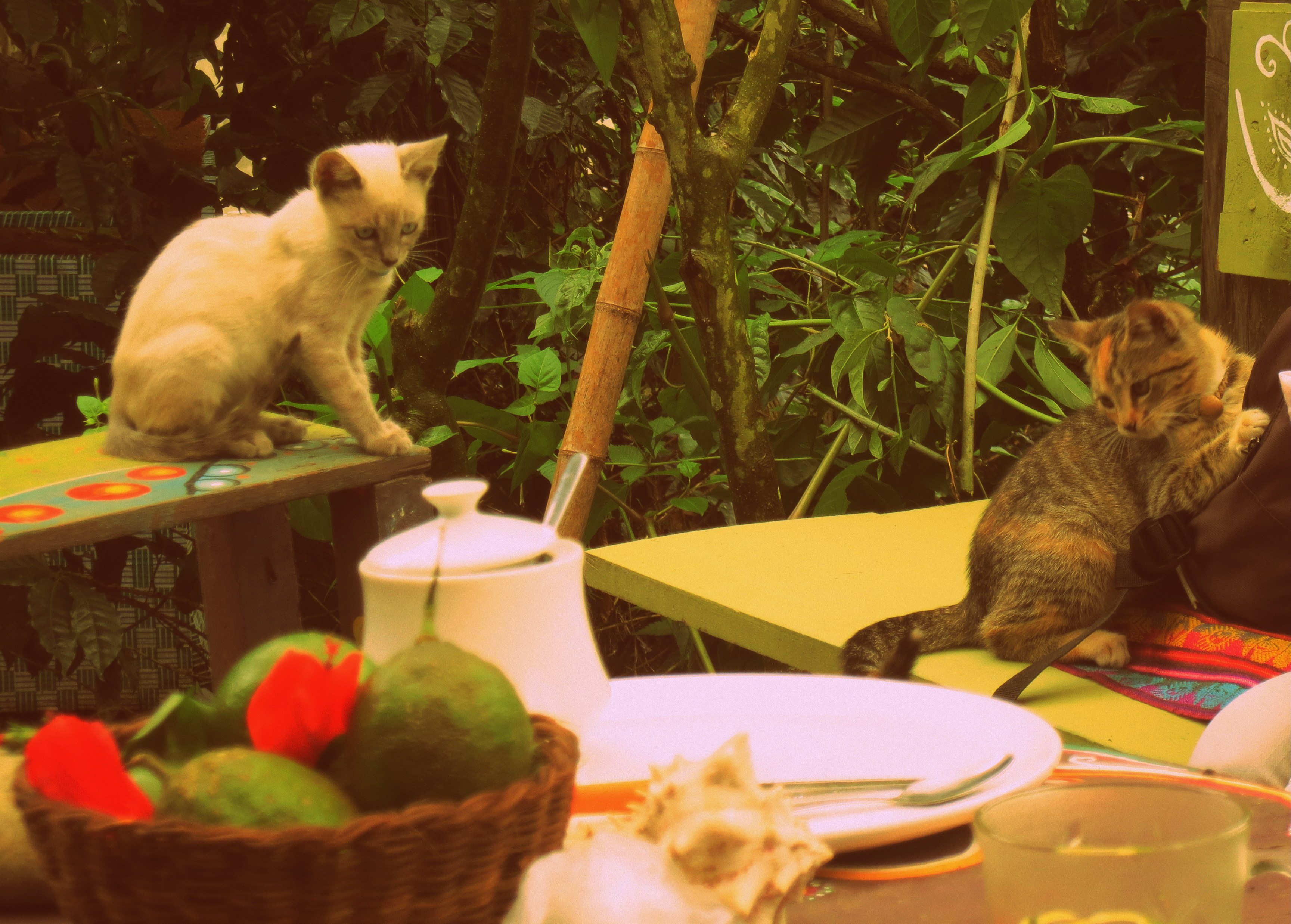
Mindo, Ecuador; February 25, 2014
Way back when I was still in Ecuador, I posted photos of some of the delicious foods I had while there. Here are some more. Unfortunately, I’ve forgotten most of the names of these, so join in if you recognize a dish.
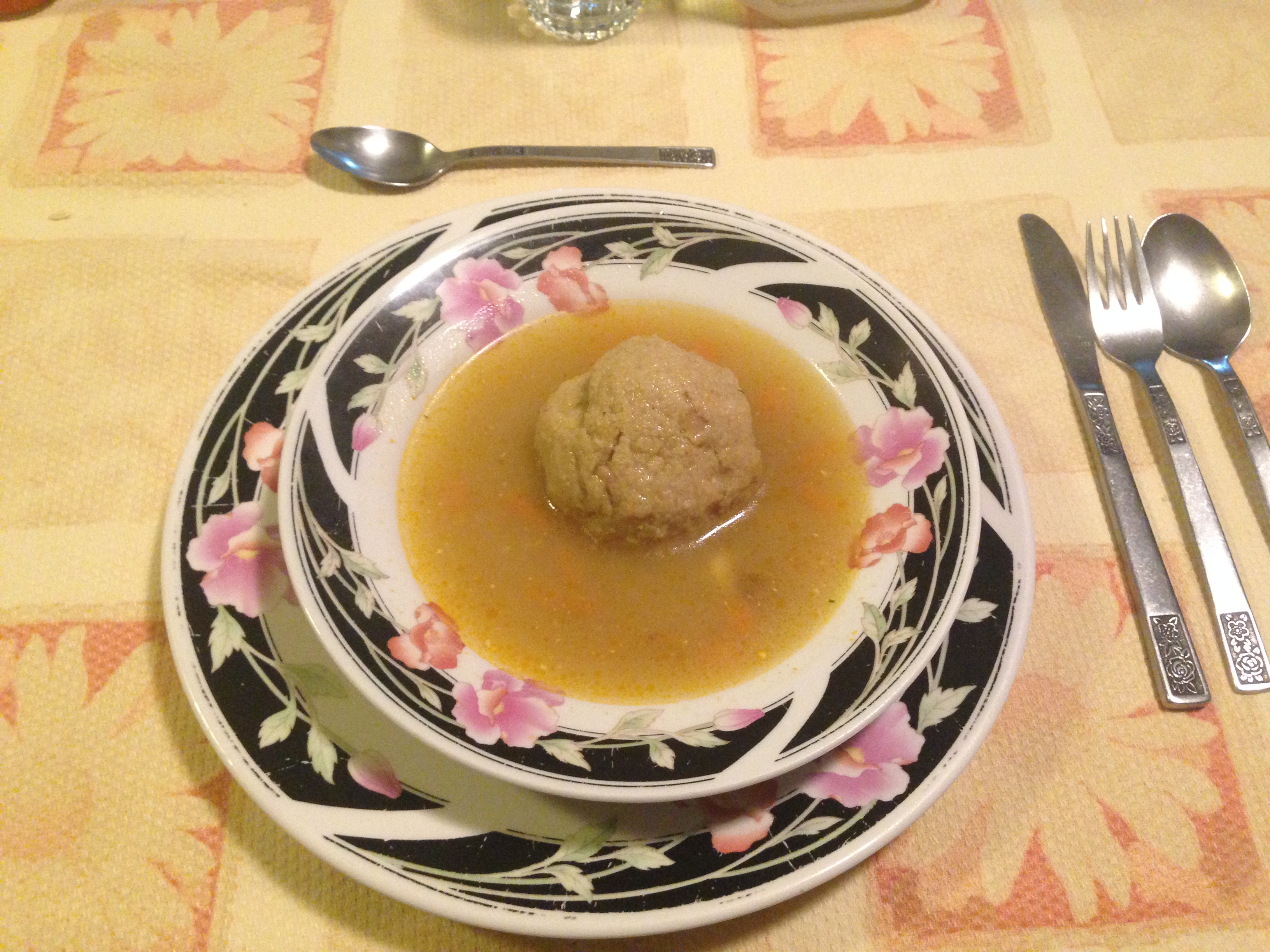
That big ol’ ball of mush was surprisingly tasty

Quinoa-based soup
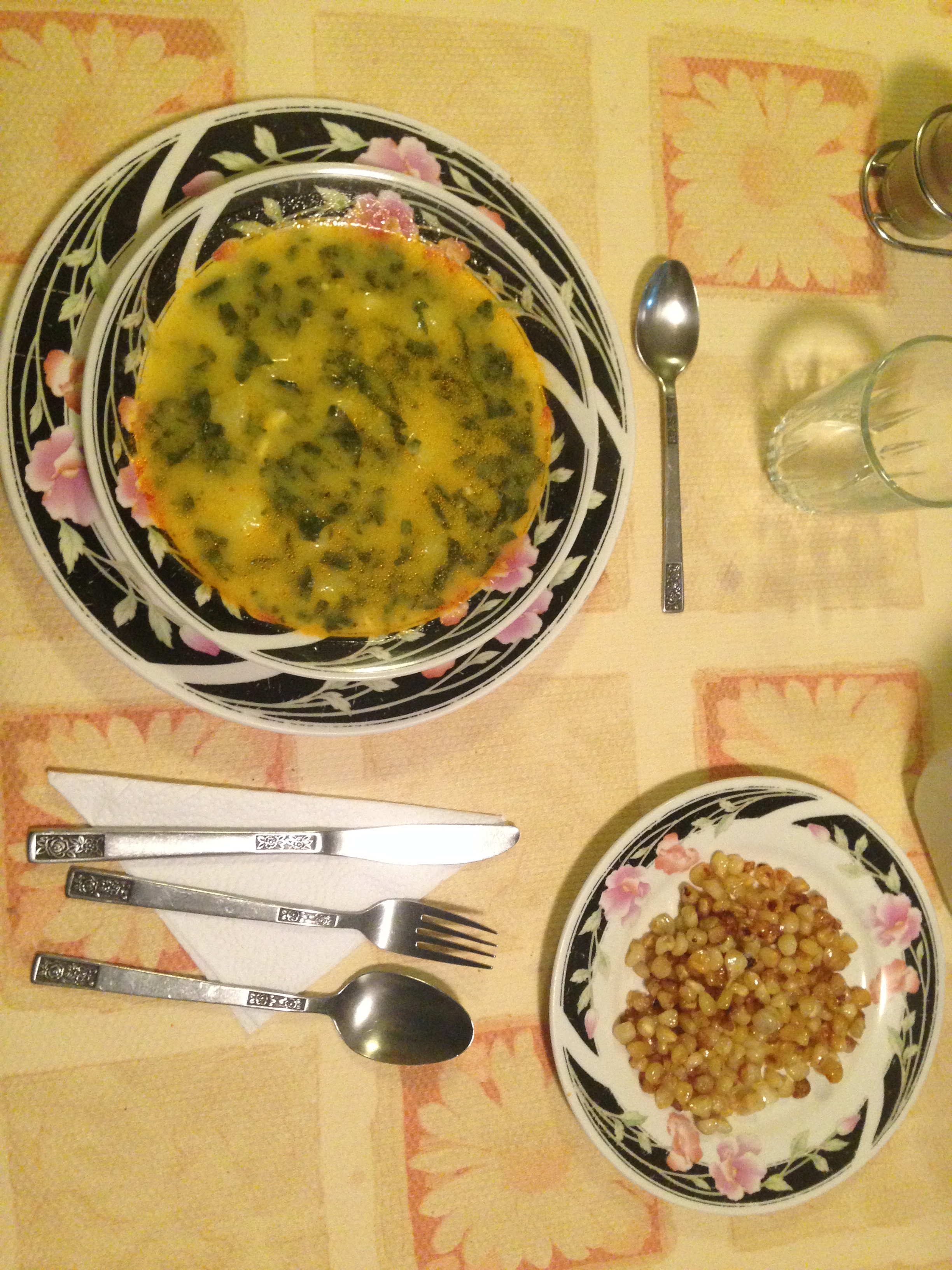
Spinach soup and large corn kernels
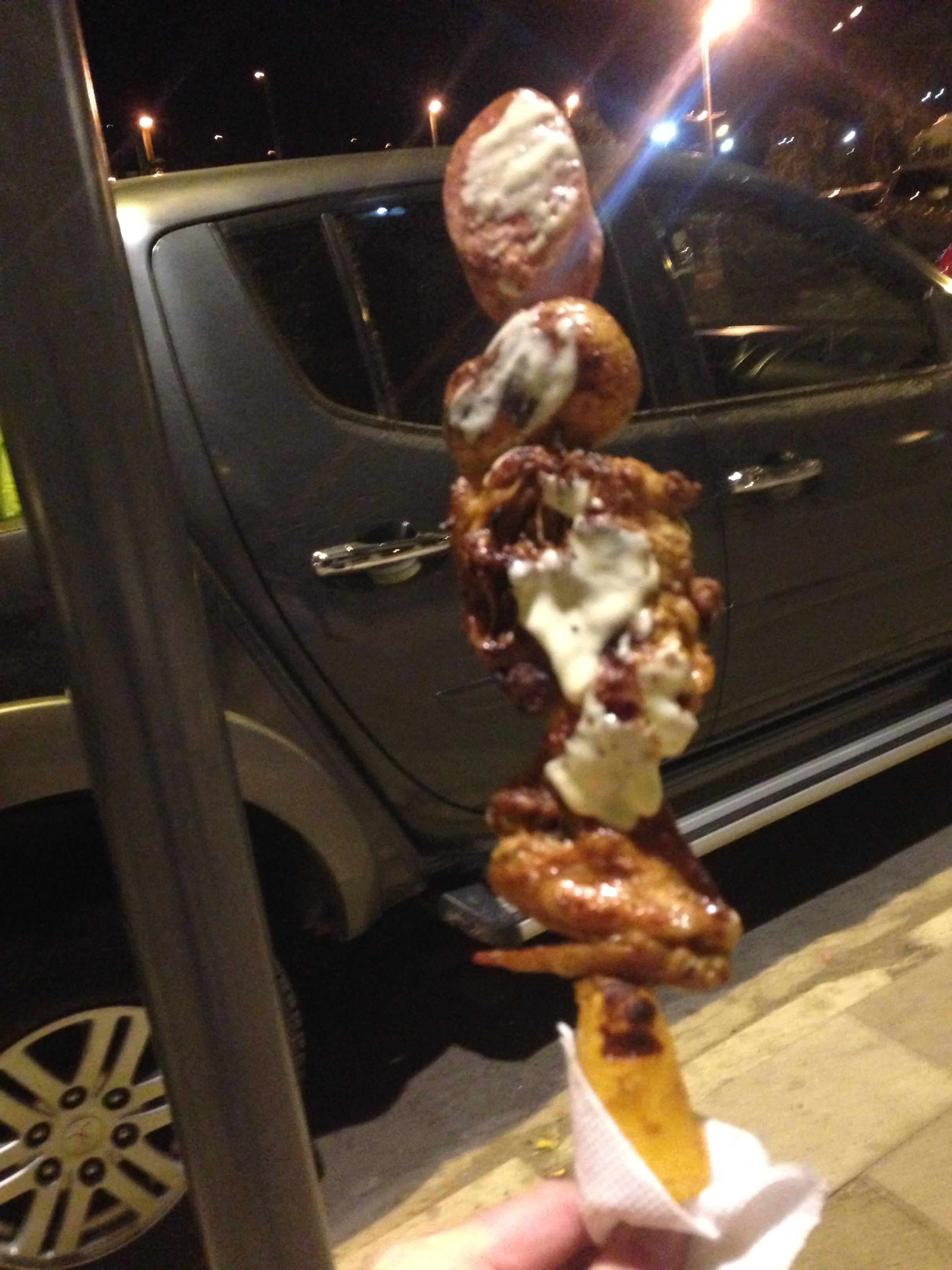
Delicious meat and potato on a stick

The four items included in every daily lunch menu in Ecuador: juice, soup, main plate, and dessert

A fancy deli selection of meat, veg, and queso fresco
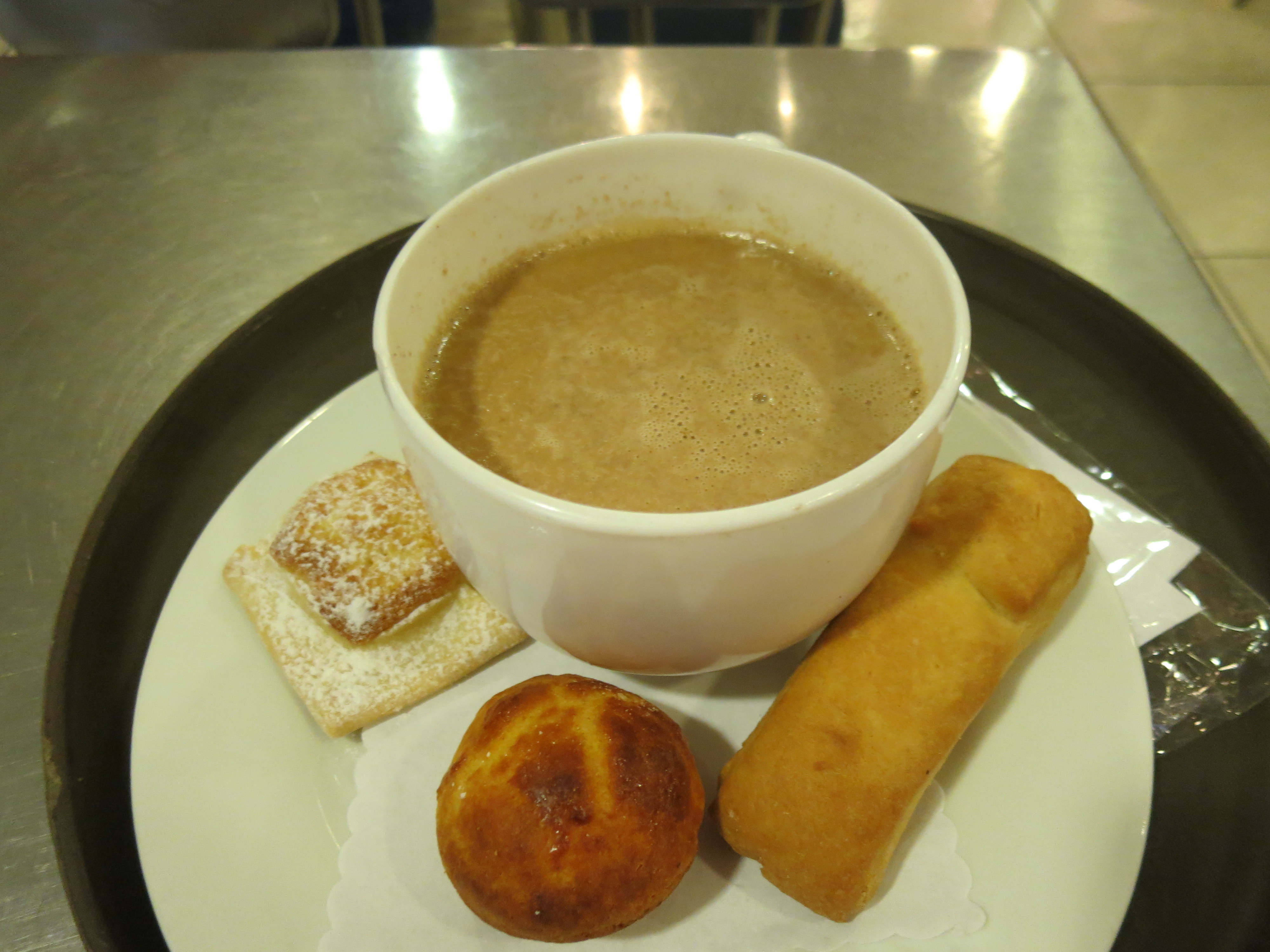
Chocolate caliente with sweet cakes; there’s also a chocolate caliente con queso, and you can eat the cheese separately or dip it in the drink
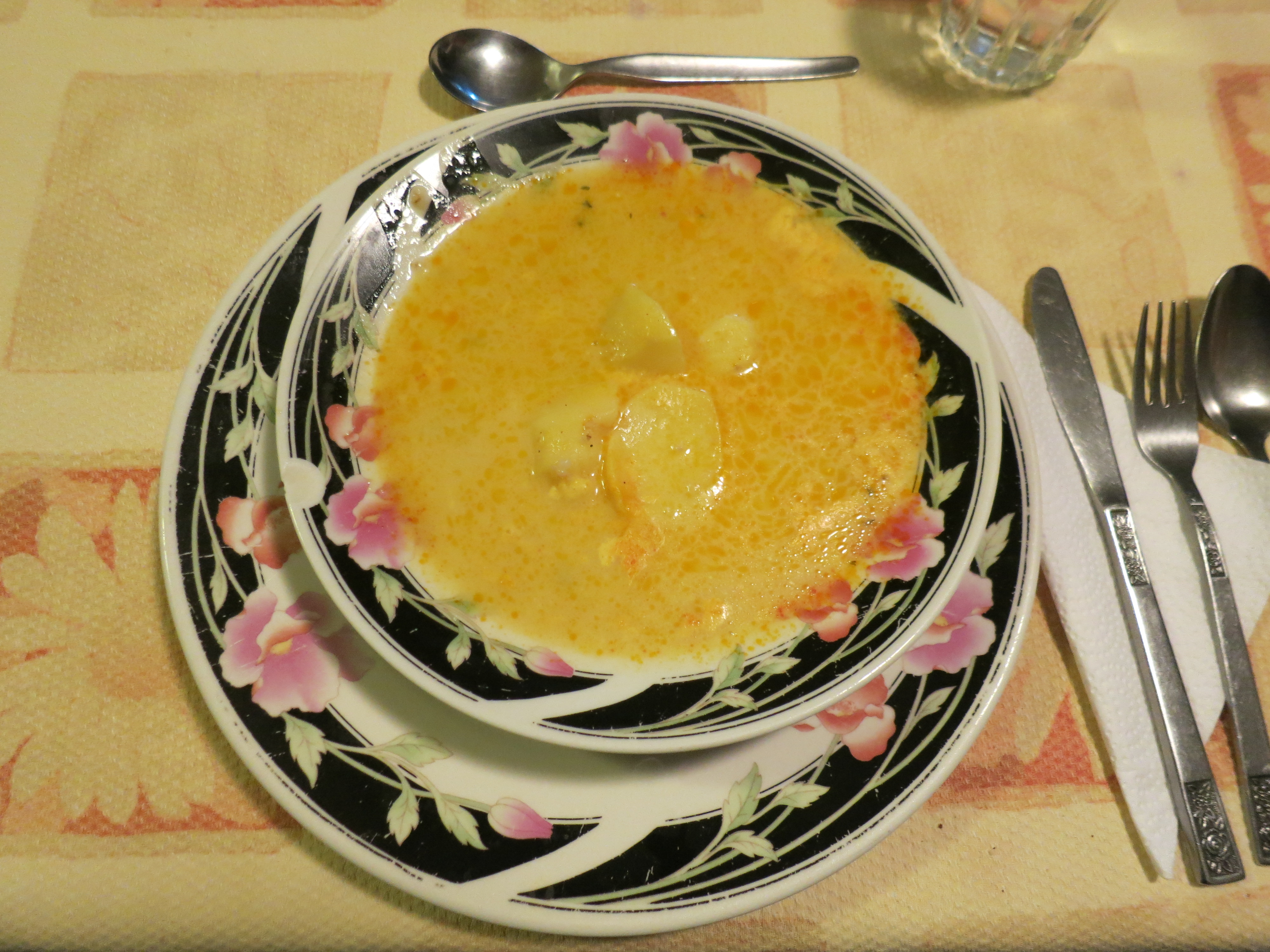
Soup is very popular in the Andes

Freshwater fish in Mindo

Fancy llapingachos
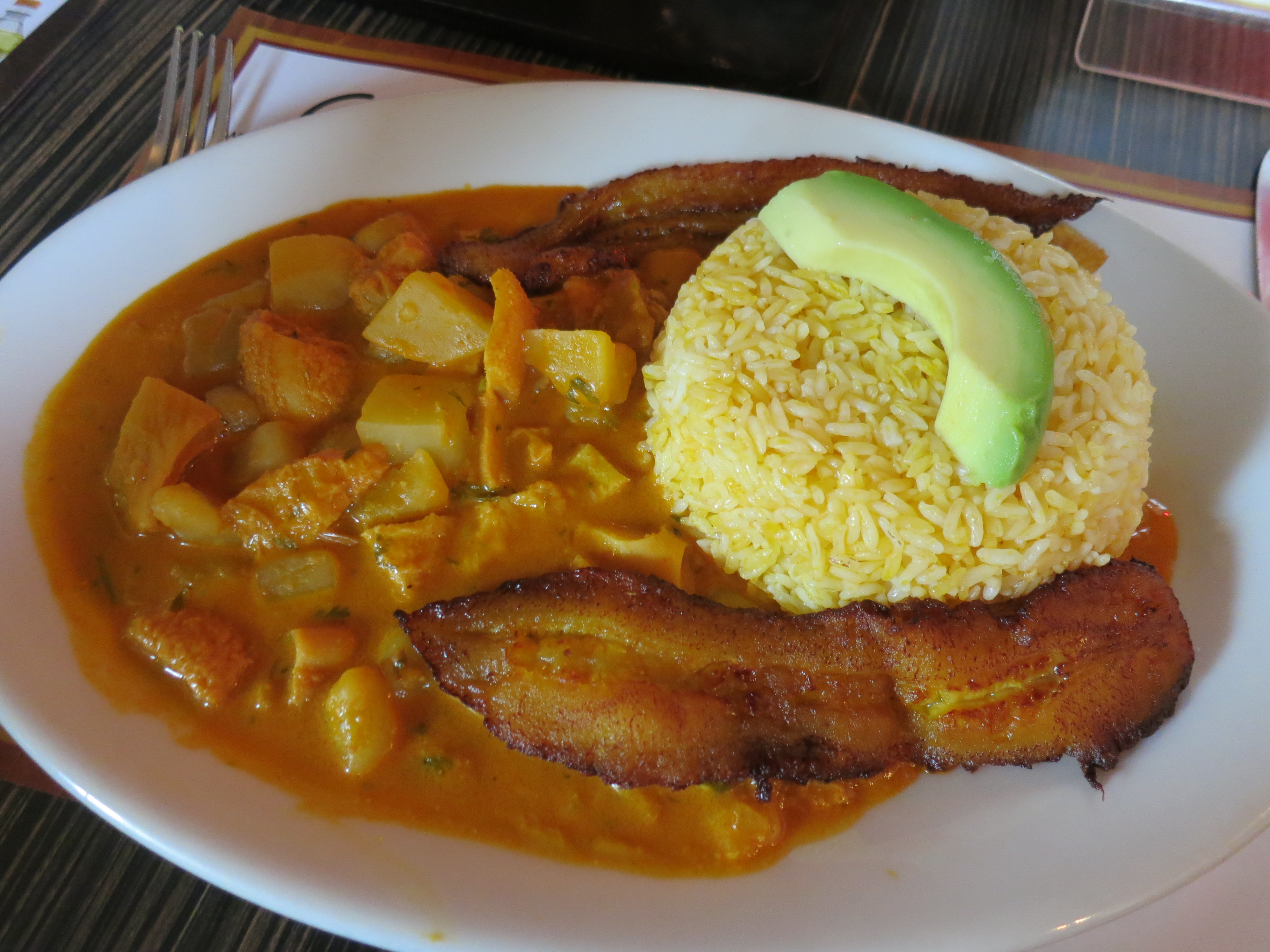
Guatita, beef tripe in a peanut sauce–a popular dish in Guayaquil
It’s no secret that waterfalls are my favorite natural phenomenon (a phenomenon, yes; although it’s just gravity tugging at a stream, it always seems more than that). I’ve wondered how far I might go to see them, and after my visit to Mindo, Ecuador, I have a partial answer: I’ll walk two hours on a sprained ankle to see a waterfall.
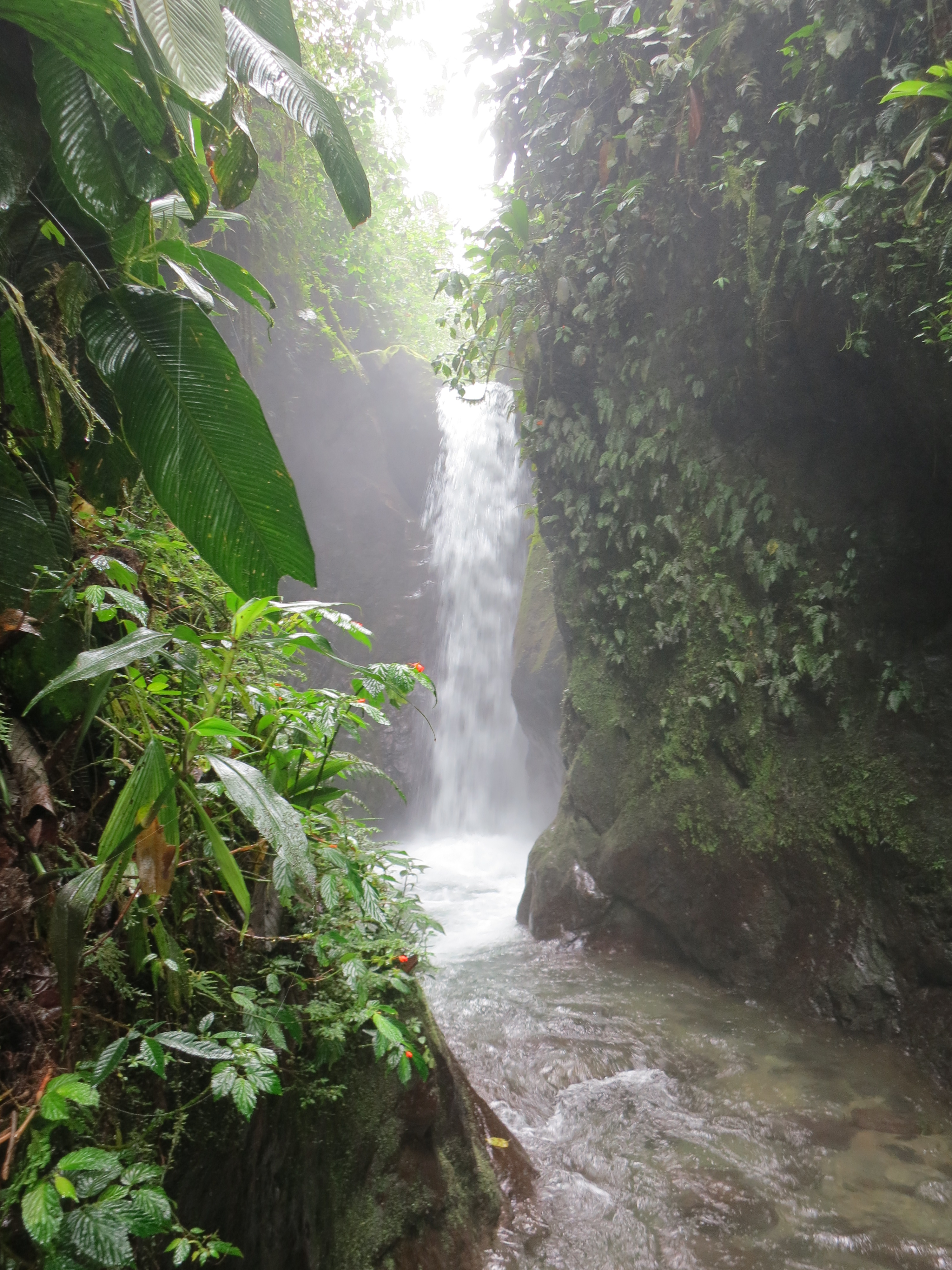
The last waterfall of the hike
Mindo is a small town about two and a half hours outside of Quito, in a cloud forest–wonderful phrase–in the mountains. The town itself consists of about six streets, but it sees a lot of tourism in high season, because it’s a great spot for birdwatching, and they’ve also turned it into a little adventure sports destination. Of course, the first thing my eye was drawn to in the hostel’s brochure was “cascada”–waterfall.

You can see why it’s called a cloud forest
Getting to the series of waterfalls was a small adventure in itself. A small group of us piled into the cab and flatbed of a local man’s pickup truck, and he drove us out of town, up the very bumpy unpaved road, for $2 per person. Then four of us climbed into a tiny, open-topped wire cage suspended from a cable, and we whizzed across the treetops. It was exhilarating, just one minute long, but it felt like flying.

The tiny cable car
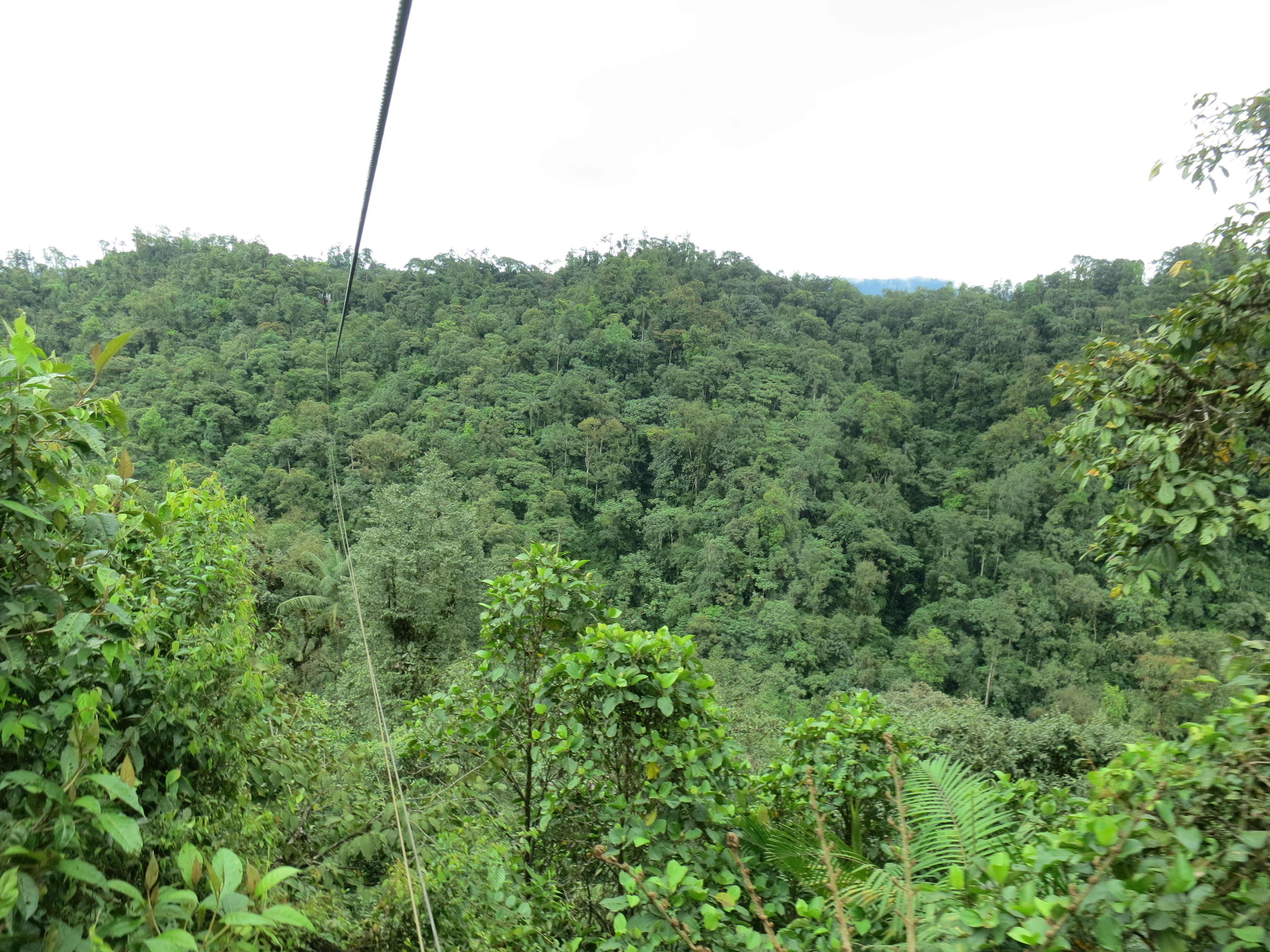
We were quite high up
On the other side, we descended and the cable car worker gave us a small, mostly useless map of the park, so we could decide which waterfalls to visit in which order. The trail, made of packed dirt and smooth stones, was a bit treacherous, as the daily afternoon rains had made the stones slick and the dirt sloppy mud. Within fifteen minutes, I’d slipped and fallen on my butt. When I stood up, I felt the all-too-familiar twinge of a twisted ankle, but I hobbled down to the waterfall anyway. It was okay, but small and a little far away, so I decided to ignore the throbbing in my ankle and go on to the next few. These were much lovelier, and worth the painful walk.
Looking through a hollow tree branch
A couple let you get very up close and personal: at one, I had to wade through shallow waters downstream from the waterfall, to continue on the trail on the other side. At another, I kicked off my shoes and scrambled up a rock to better admire the waterfall, while other visitors battled the strong current to get right up to the crashing water itself. A whole gaggle of teenagers on a field trip splashed their way to the base of the waterfall and took selfies, including one couple that demanded their friend photograph them making out in the spray. Ah, youth.

I didn’t go on any early-morning birdwatching tours in Mindo, but I did want to see at least some. I split a cab ride up to a private home about ten kilometers out of town, called Mindo Lindo (“beautiful Mindo”). The owner, Pedro, told us to take a walk around the grounds, which consisted of dense trees and bushes.

Hand-planted jungle
When we returned, he informed us that he and his wife had moved here twenty years ago, when it was all grass, and they’d planed the forest by hand, even ferrying in water in buckets, as the river hadn’t been diverted yet. After five years, there were enough trees and insects for hummingbirds to be attracted to the area, and now there are 28 types of hummingbirds on the five acres they own.

There were so many, flitting here, alighting there
We saw eight different types of hummingbirds in the feeder-laden trees next to the porch. Pedro let us take turns holding one of the feeders, and the birds flew right up to us, some perching on the feeder, but most fluttering right next to it as they dipped their thin beaks in the sugar water. They were different colors, but all had an iridescent shine to them. They made a thrumming sound, which wasn’t their tiny heartbeats but their rapid wingbeats.
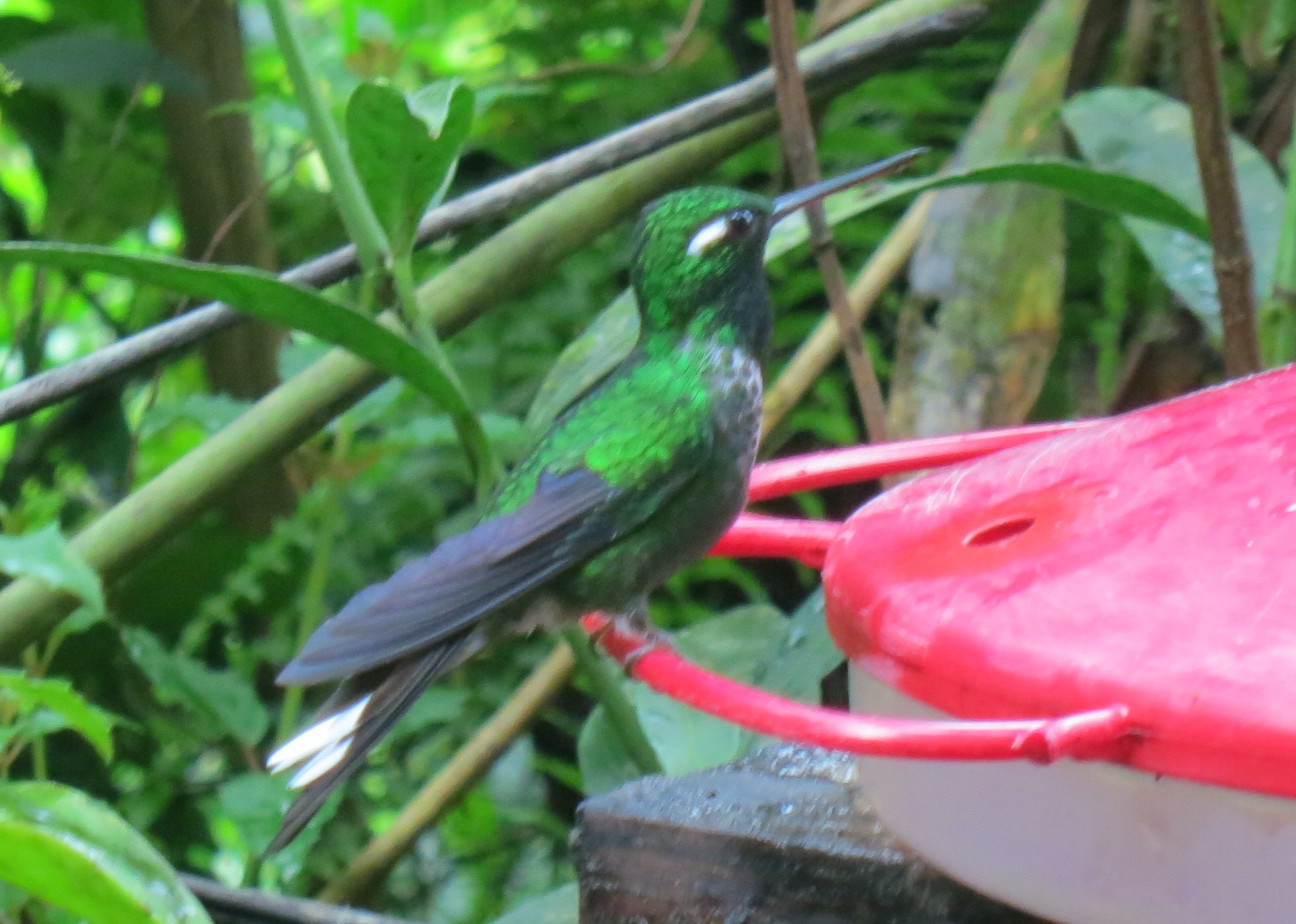

Pedro explained that different hummingbirds fed from different flowers, based on the curve of the hummingbird’s beak and the curve of the flower’s stamen. He opened up a book of birds and pointed out the ones we were looking at, and then he fed us granadillas and lemongrass tea as the afternoon sun glinted off the blur of wings in front of us.


Mindo, Ecuador; February 25, 2014
 Stowaway Travel Writing & Editorial Services