Too Old for Hostels

Matador has a great post up about how you know you’re too old to stay at hostels. Just about every one of those applies to me, except I don’t think about telling people to shut the hell up after 1:30am, I actually say that to them.

Most cities have non-party hostels, so those are the ones I usually stay at, thus bypassing many of the problems mentioned in the Matador post (party boats, etc.). And in Southeast Asia, a private hotel room with attached bathroom was so cheap, I usually went with those.

But some of the things they mention–rolling your eyes any time someone talks about “just living,” stereotyping Australians–well, those apply anywhere.

Going Full Backpacker in Phnom Penh

Sometimes you just have to go full-on backpacker. I spent my last few days in Cambodia in Phnom Penh, the capital city, which has a reputation for being a more dangerous place to be a foreigner than most other Southeast Asian cities. I’d just spent a week in Siem Reap, absorbing the beauty of the temples of Angkor, eating at the mostly-locals food shack down the street, and sitting very still in my air-conditioned bedroom during the worst heat of the day. I was about to go to Vietnam and dive into the history of that nation. Not to mention I was mainly in Phnom Penh to visit the Killing Fields and S-21, two sobering monuments to the victims of the Khmer Rouge regime. For a couple days here, I needed a place to retreat, reflect, and relax.

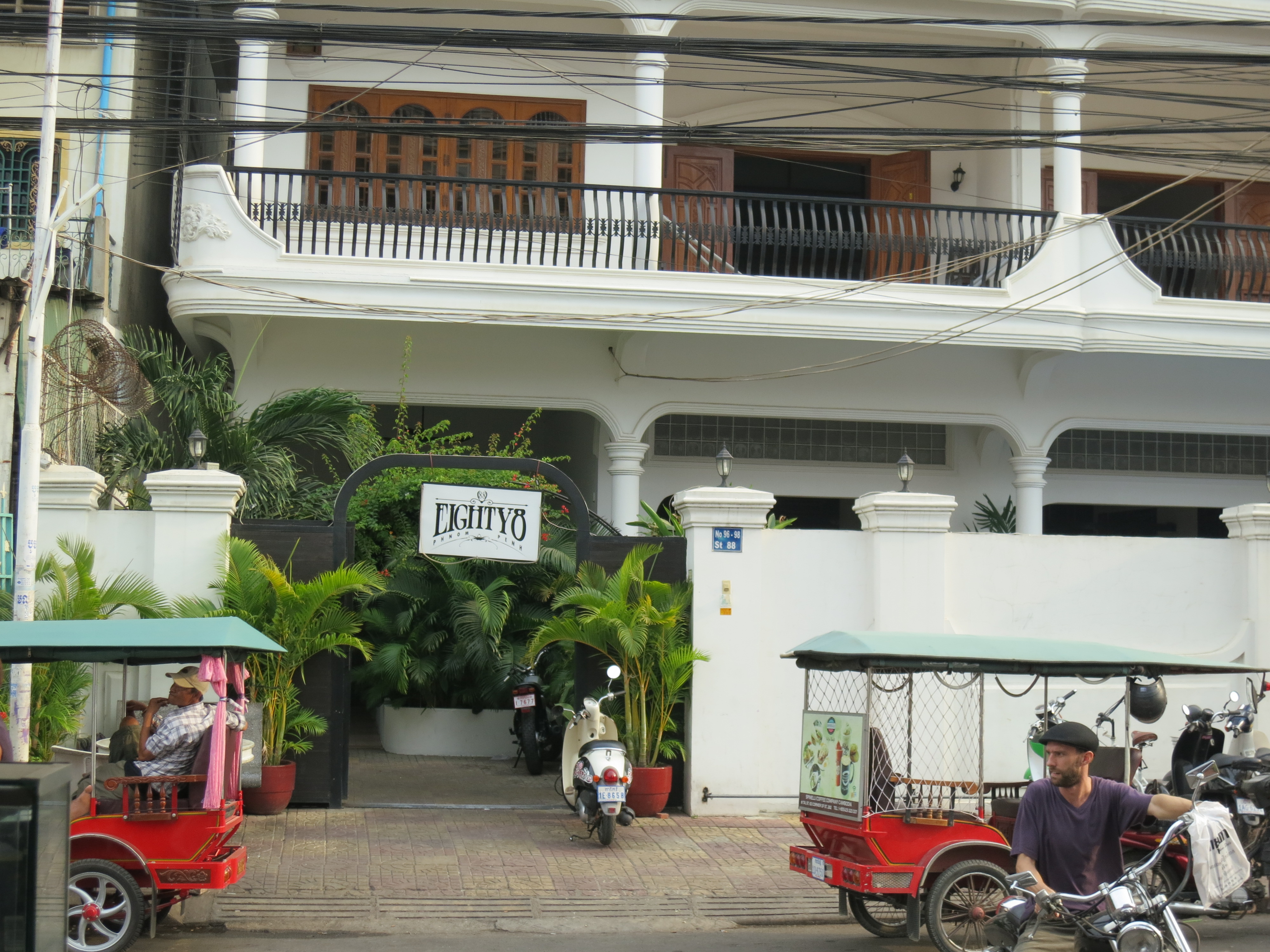
The 88 in Phnom Penh

The 88 in Phnom Penh

I stayed at The 88, a backpackers’ hostel not particularly close to the sites of the city, but just down the street from a fruit market. Also, it didn’t matter that you couldn’t walk to much, because it was entirely self-contained; the hostel had a full restaurant and bar, a pool, and a raft of tuk-tuk drivers willing to take you on any of the pre-set tours the hostel’s laminated sales sheets described. Of course I enjoy exploring neighborhoods on my own and meeting people along the way, but when you’re in need of a mental and physical break, there’s a lot to be said for a hostel that makes everything easy for you.

So when I wasn’t sightseeing, I was holed up behind the hostel walls, lounging in the pool, drinking cocktails with the girls from my dorm room, eating Western and Khmer dishes from the hostel restaurant, sending my laundry away to be done, and waiting for my Vietnam visa to be processed. I hung out with a Spanish couple, who felt like old friends by this point–we’d met on the slow boat to Laos, seen sights together in Luang Prabang, and had dinner in Siem Reap.

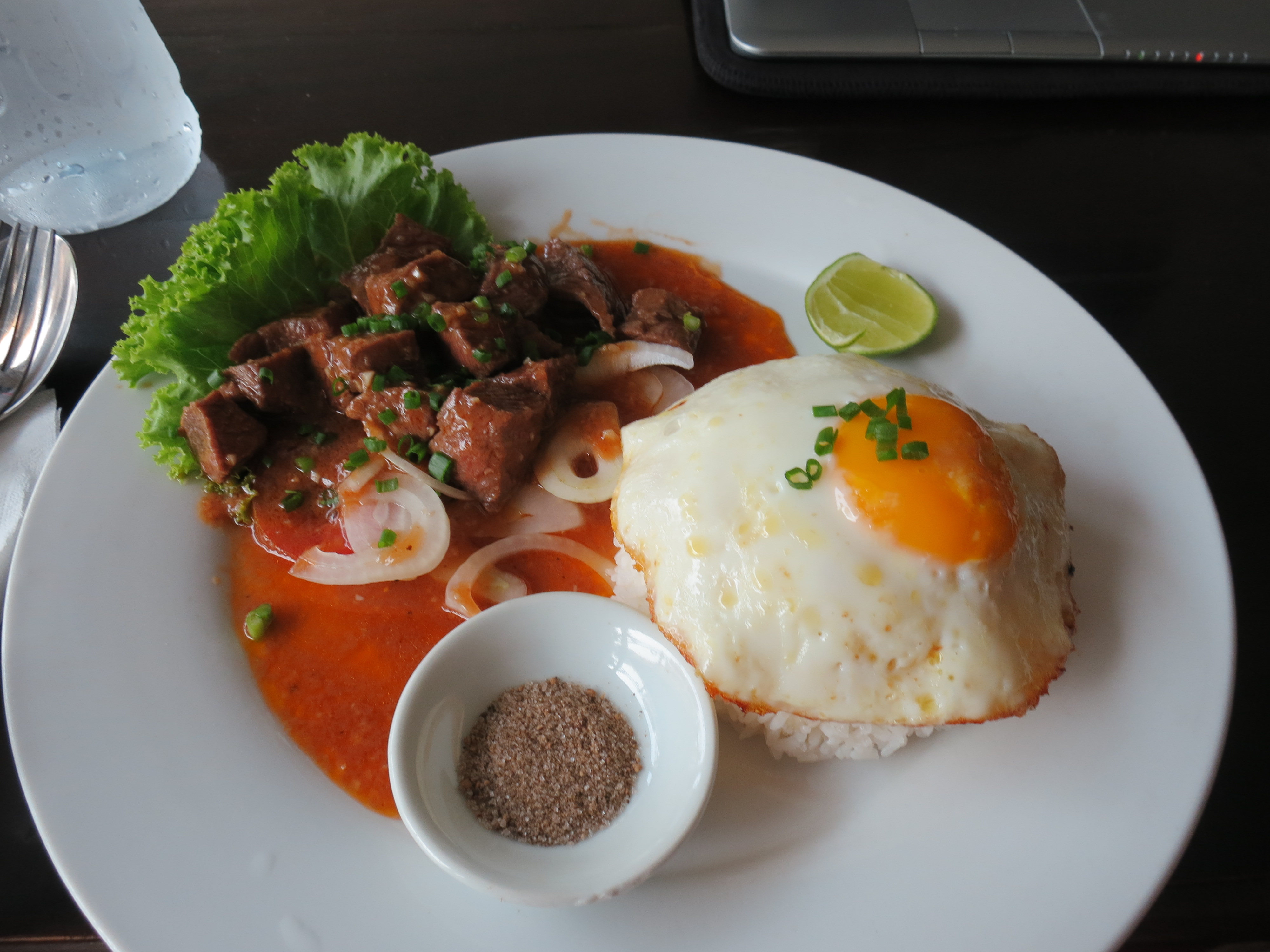
Beef loc lac--a delicious dish

Beef loc lac–a delicious dish

I say “going full backpacker” because I saw many a backpacker who spent all night partying and most of the next day recovering in the hostel common room, hardly leaving the hostel at all to explore the sights of the city they’d flown halfway around the world to visit. It was remarkably easy to be sucked into this lifestyle, and it’s important to recharge like this from time to time when you’re on long trips, but I wouldn’t recommend it for the long-term. Otherwise, why even bother leaving home?

When I got to Ho Chi Minh City a few days later, fresh visa in hand, I returned to more adventurous ways. I left my hostel to explore the area and interact with the people who lived there. But for a couple days in Phnom Penh, it was nice to remain isolated and regroup.

Home-Cooked Meals Away From Home

When you’re traveling more than a week or two, eating out for every meal is not only expensive but also a bit tedious. There’s something about a home-cooked meal, even when you’re not at home, that just tastes right. Of course, I usually prefer my home-cooked meals to be cooked by someone else, because I am lazy. But when I’m solo traveling, I don’t really have that option. So I try to make sure that there’s a kitchen wherever I’m staying.

Hostels
Not all hostels have kitchens, so you have to check the listing before booking. Once you’re there, check out the equipment provided (do they have sharp knives? more than one pan?) and see if there’s any communal food or spices before heading out to the store, so you don’t buy more than you need. Eva Holland provides a guide on hostel cooking, and Fiona Honor Hurley’s step-by-step list even includes recipes to try out in hostels.

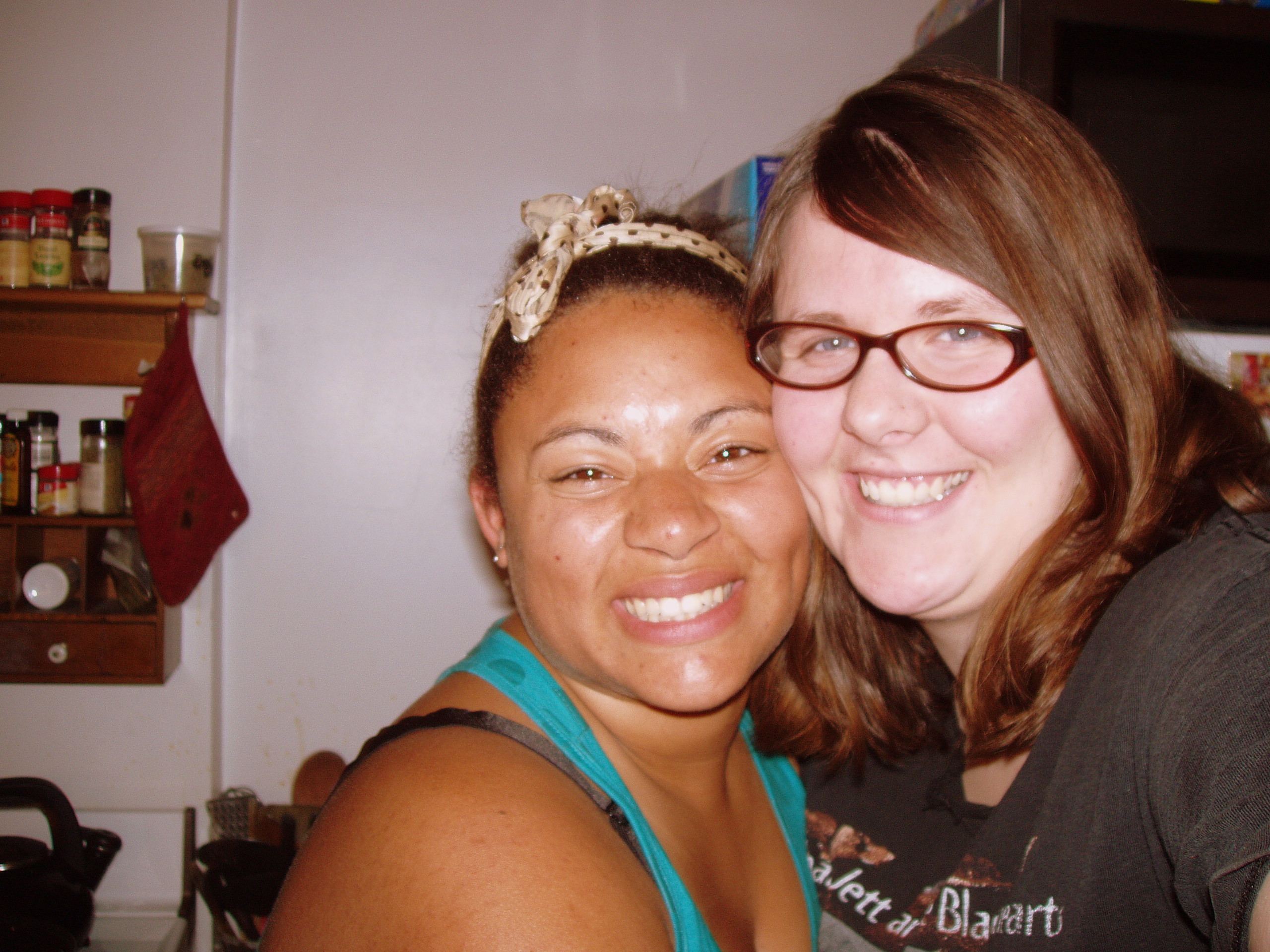
Cooking with my couchsurfer Sophie in '09

Couchsurfing
If you’re couchsurfing, many of the same principles apply, but since you’re in someone’s home, there are additional things to take into consideration. Are your hosts cooking at the same time; is there enough room in the kitchen for several meals to be made at once? Or even better, cooking a meal for your host is a great way to say thank you for their hospitality. Be sure to check for any dietary restrictions and kitchen rules before starting. For example, one of my former roommates was a vegan, and she had a special cutting board and knife that we meat eaters couldn’t use; good info to have before you start chopping up ingredients for a chicken stir-fry.

Home rental service
There are fewer limitations when using a home rental service like Airbnb, since renting out the whole apartment means you have free rein of the kitchen provided. Still, surprises are possible; the twins and I checked the cupboards at our rental in Montreal and saw table salt. It was only when we returned from the grocery store and started cooking that we discovered the salt was a rock-hard block of indeterminate age.

What tips do you have, dearest fellow travelers?