Temples in Kyoto

There are more temples in Kyoto than days on a Japan Railpass, but I did manage to see the Golden Palace, the Silver Palace, Ryoan-ji, and Kiyomizu Temple over the course of a couple days. I can see why people rhapsodize about them.
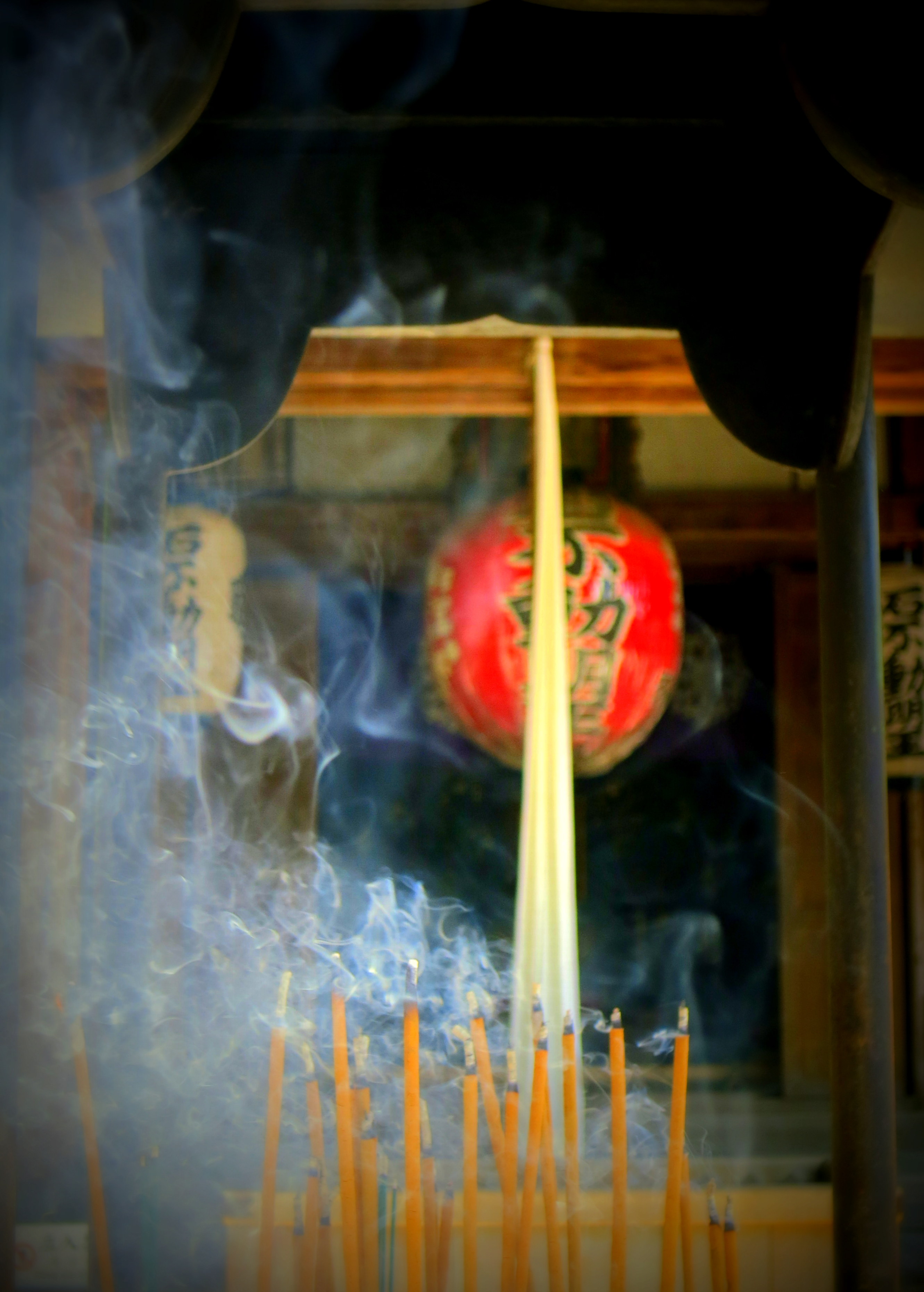
Kyoto temple

Kyoto temple

Ginkaku-ji (officially Jisho-ji) was built in the 15th century, and is probably nicknamed the Silver Palace as it came after construction of the gold-leafed Golden Palace. Possibly it was even going to be covered in silver foil, but that never happened, and it remains a painted wooden sculpture.

Ginkaku-ji

Ginkaku-ji

The Silver Palace, a wooden structure whose proper name is Temple of Shining Mercy

The Silver Palace, a wooden structure whose proper name is Temple of Shining Mercy

The approach to the temple was direct, but felt like a giant maze because of the huge hedges

The approach to the temple was direct, but felt like a giant maze because of the huge hedges

The grounds were extensive (I feel like a character in an Austen novel every time I say that, but it’s true). The gardens I visited in Japan were all meticulously laid out, and little arrows pointed the exact path you should follow, both to avoid congestion and to appreciate the gardens according to the aesthetic plan of the designers. The gardens at Ginkaku-ji were flowering beautifully, and the large raked rock garden (it is a Zen temple) was a perfect complement to the leafy trees.

Lovely gardens

Lovely gardens

Seriously lovely

Seriously lovely

Another view from the hill walk

Another view from the hill walk

Kinkaku-ji, the Golden Palace, was super crowded–it’s one of the most popular destinations in the country, for domestic and foreign tourists alike. There’s a little spot set aside for photos of the gilded palace across the pond. Trying to elbow in for a photo in front of the fence was a bit of work. A Japanese teenager tried to take a photo with me–with me as the tourist attraction. I declined. Was that so different from taking a photo of the women in line with me at the kabuki theater? I like to think it was, since I chatted with the women in line before asking for a photo, but I’m not sure.
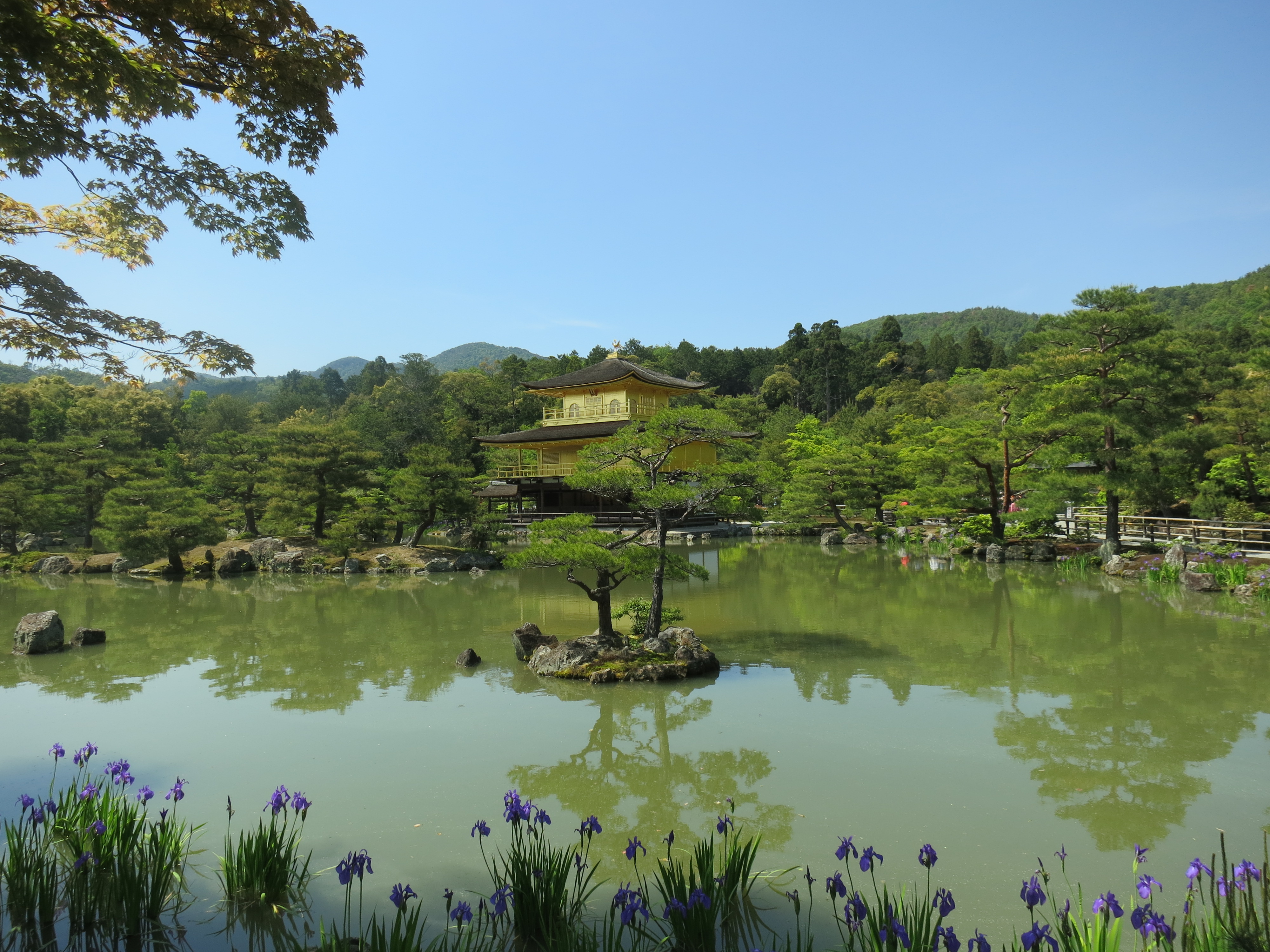
Golden Palace

Golden Palace

May was a great time to visit, with everything in bloom
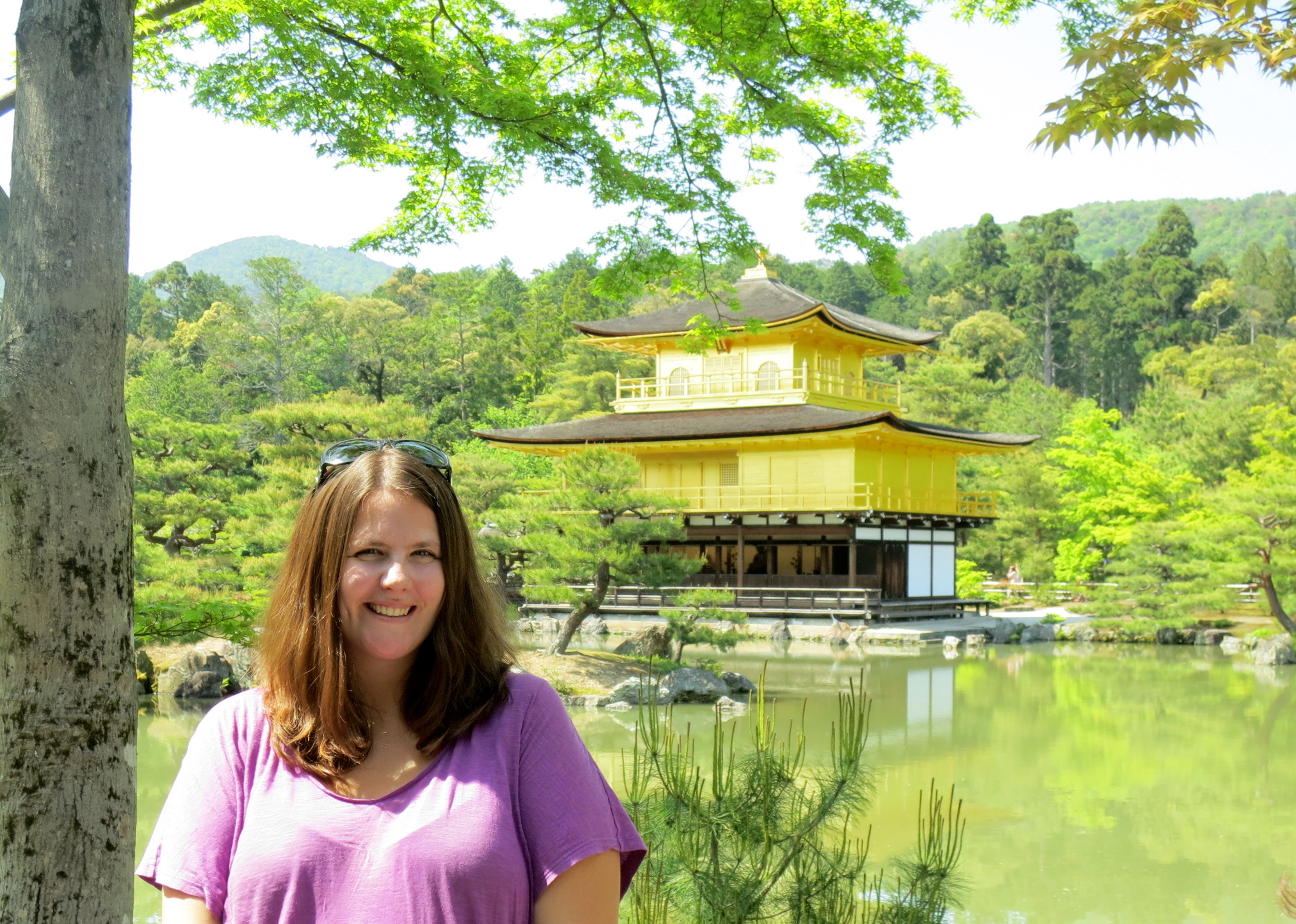
May was a great time to visit, with everything in bloom

Finding space to get this shot was an exercise in patience

Finding space to get this shot was an exercise in patience

The palace a large house on stilts. It was originally the villa of a wealthy man; another man bought it later and then asked that it be turned into a Zen temple upon his death. So he got to enjoy the lavish place for himself and then piously give it over to religion–nice one! The original structure was burned down by a disturbed novice monk in 1950, and it has since been rebuilt. The hill walk here was far less impressive than that of the Silver Palace. I’m glad about that, actually, since I take it to mean that I’m getting a little better at distinguishing among the Japanese gardens I’ve seen, and determining which are more pleasing.

I love the temple gates

I love the temple gates

In the gardens of Ryoan-ji

In the gardens of Ryoan-ji

A view of the rock garden of Ryoan-ji

A view of the rock garden of Ryoan-ji

Ryoan-ji is part of the World Heritage listing of Kyoto, and it’s famous for its Zen rock garden, which has kept the same arrangement since the 15th century. The grounds are huge, and they include a large pond with ducks (which are apparently rare here), and a little fox shrine on a tiny island on the pond. Up the hill was the building. Everyone had to remove their shoes before entering, which is actually the first time I’d encountered that in a religious temple in Japan. (I removed them at every temple in Thailand.)

Teenagers in traditional dress, taking a selfie

Teenagers in traditional dress, taking a selfie

A miniature of the rock garden, so you can see the layout

A miniature of the rock garden, so you can see the layout

The rooms behind the rock garden were empty except for these beautifully painted screens

The rooms behind the rock garden were empty except for these beautifully painted screens

The rock garden is enclosed in a large stone fence. There are 15 rocks, set in carefully raked gravel/gray sand. I couldn’t get a good angle to see the whole garden at once, which is apparently intentional; you’re meant to sit and reflect on the portion you can see, and take meaning from that. You’re also only able to see 14 of the 15 rocks from any one point on the viewing pavilion, because you can “see” the final rock when you reach enlightenment. It would have been peaceful to sit there and reflect, but there were a lot of people and they all talked loudly, so that didn’t happen.

Kiyomizu-dera
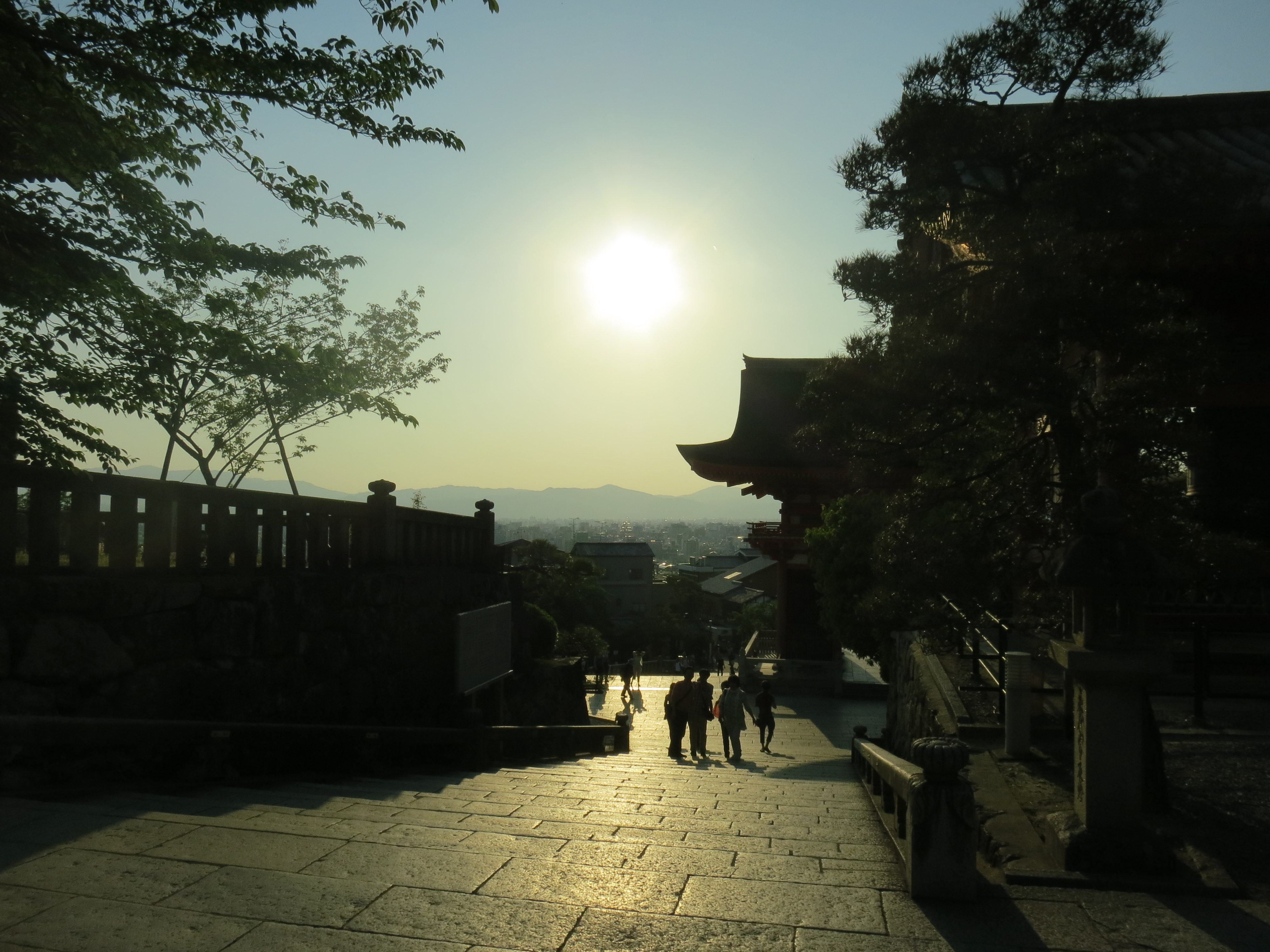
Kiyomizu-dera

One last temple before sundown

One last temple before sundown

Detail on one of the structures at Kiyomizu

Detail on one of the structures at Kiyomizu

Picture perfect

Picture perfect

Getting to Kiyomizu Temple was more of a journey than I’d expected. I took a bus, walked up an endless hill, which finally turned into old Edo period buildings, and eventually I reached the shrine. It was a large complex, set around the edge of the hill, so for the first part you stood on the patio and looked across the ravine to a pagoda. (“Jump off the ledge at Kiyomizu” is a Japanese idiom similar to “take the plunge”–if you could jump 13 meters from the pavilion to a spot below, you’d get your wish. Not everyone survived this plunge.)

A peek at the pagoda
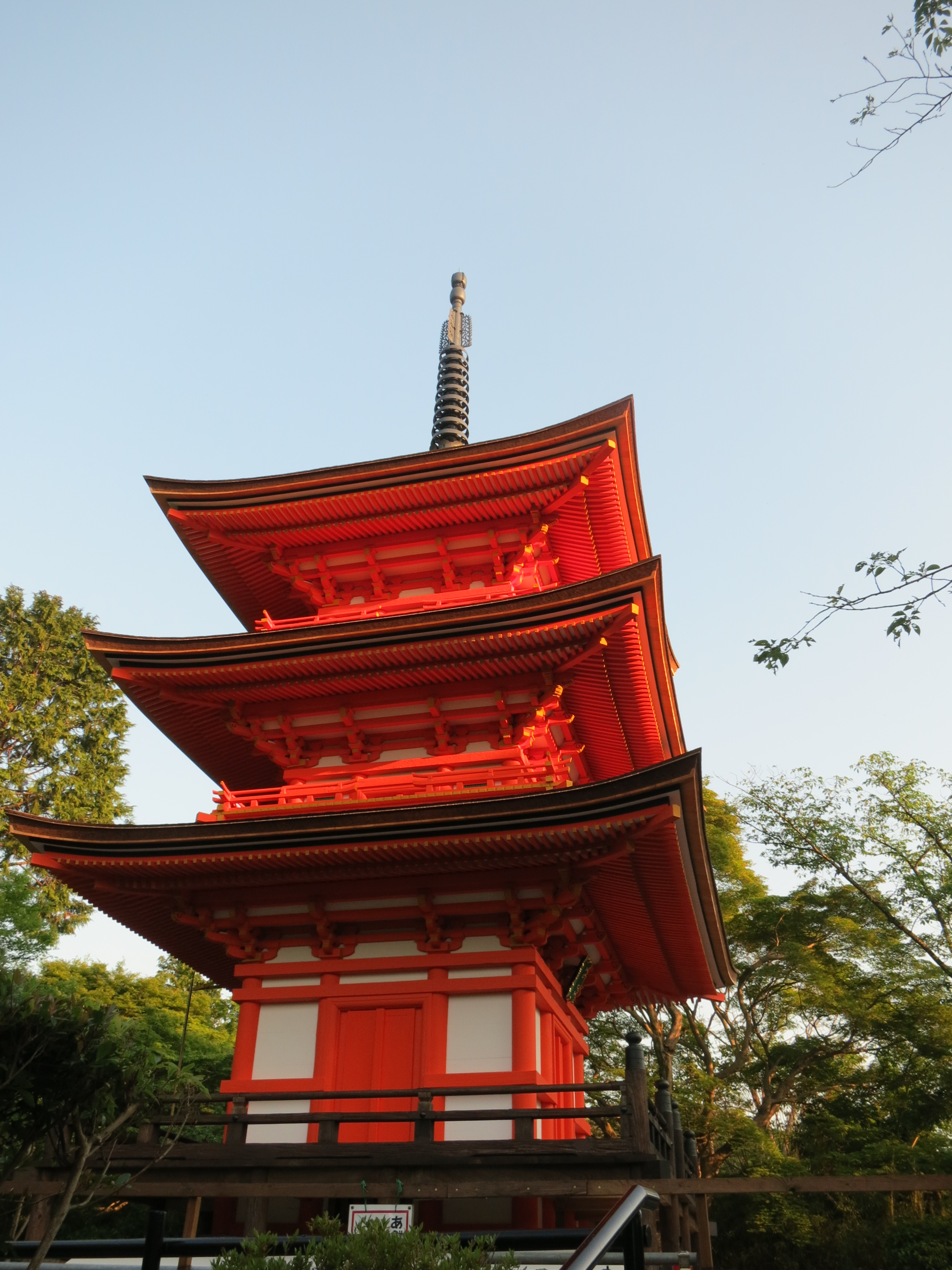
A peek at the pagoda

Up close

Up close

I saw what looked to be overflow on stock of religious sculptures on my walk through town

I saw what looked to be overflow on stock of religious sculptures on my walk through town

Then I walked along the rim of the valley to that pagoda and looked back at the buildings there, with the city off to the side and the sun starting to set. It was all picturesque, as just about everything in Japan was. Because I was there at closing, I didn’t get to to see the waterfall for which the temple is named, so, next time.

Goodbye, Kiyomizu and Kyoto

Goodbye, Kiyomizu Temple and Kyoto

An Afternoon in Asakusa

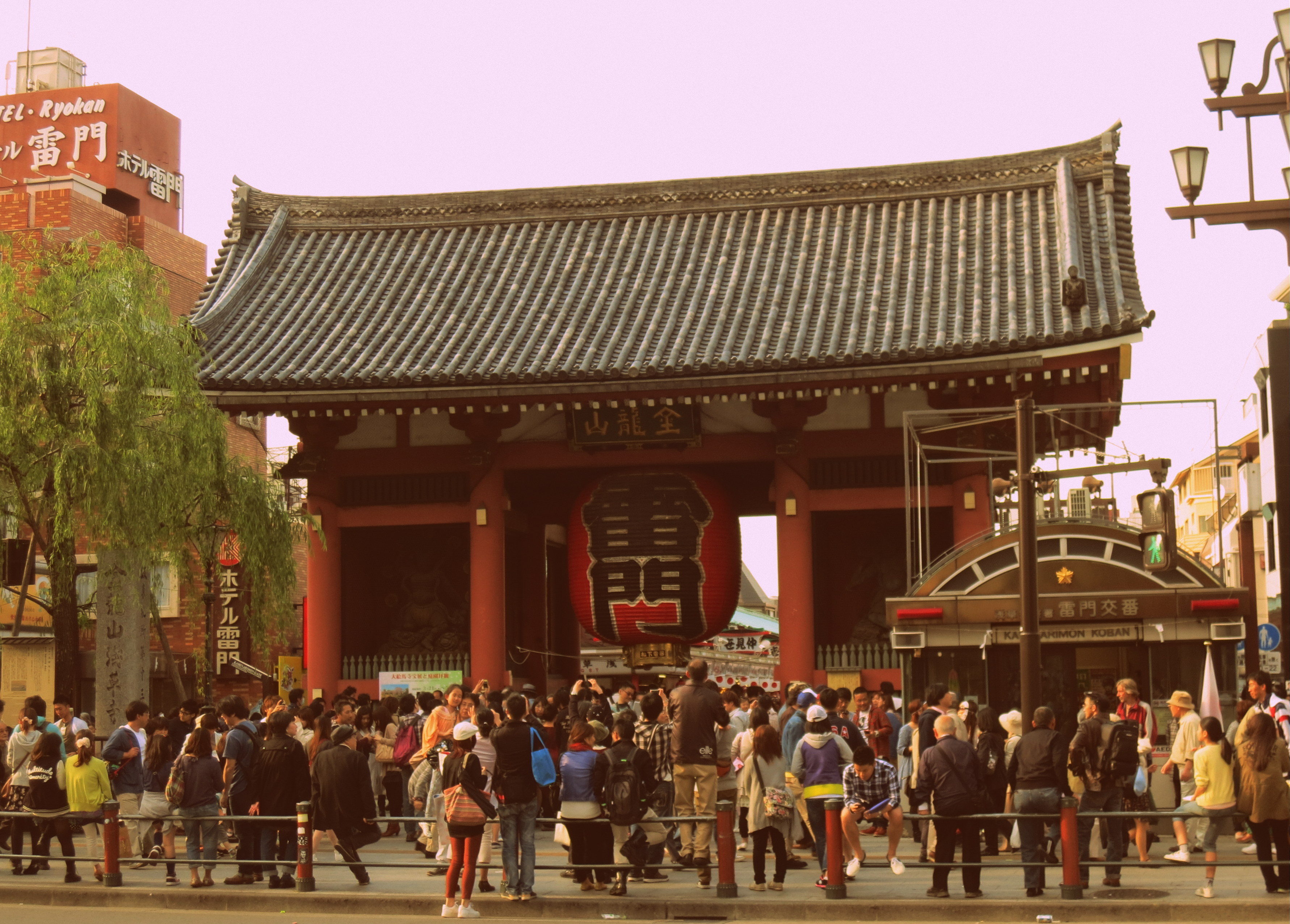
Kaminarimon Gate swarmed with people. The gods of wind and thunder who guard the entrance to Sensoji Shrine looked fierce in the afternoon sun, and all the Golden Week visitors snapped photos under the red lantern that takes its name from those wooden guardians. Kaminarimon, or Thunder, Gate is in the heart of Asakusa, a district in Tokyo on the Sumida River.

Kamariniron Gate

Kamariniron Gate

tokyo asakusa

The lantern at Thunder Gate

The lantern at Thunder Gate

I sailed up the river on a packed tourist boat and followed the crowds past the rickshaw drivers, under the gate of thunder, and down Nakamise-dori, a walking street selling snacks and souvenirs. I had some mochi and admired the five-story pagoda at the end of the street.

Rickshaw rides

Rickshaw rides

Nakamise-dori, a walking street of souvenirs and snacks leading from the gate to the shrine

Nakamise-dori, a walking street of souvenirs and snacks leading from the gate to the shrine

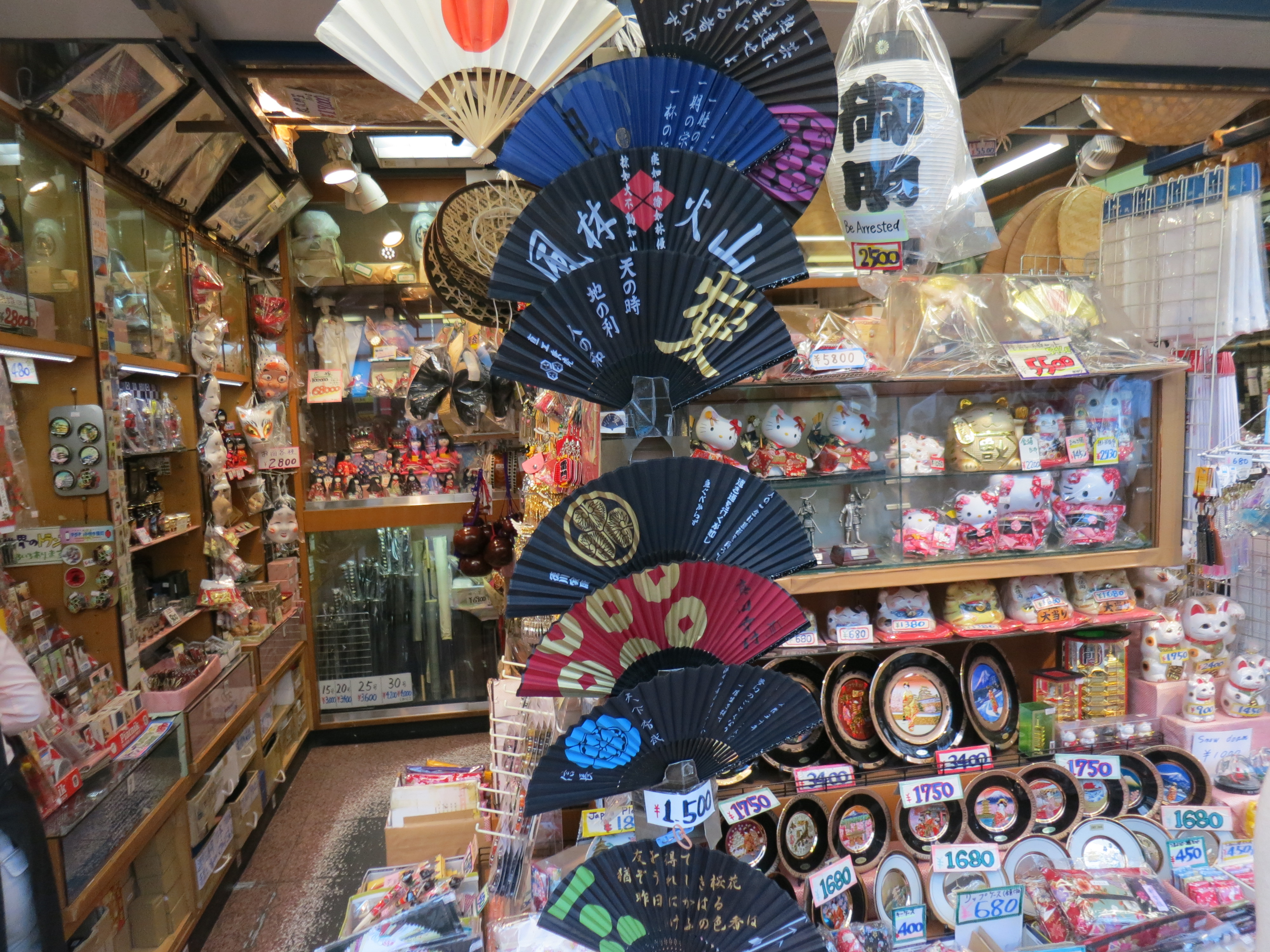
Souvenirs

Souvenirs

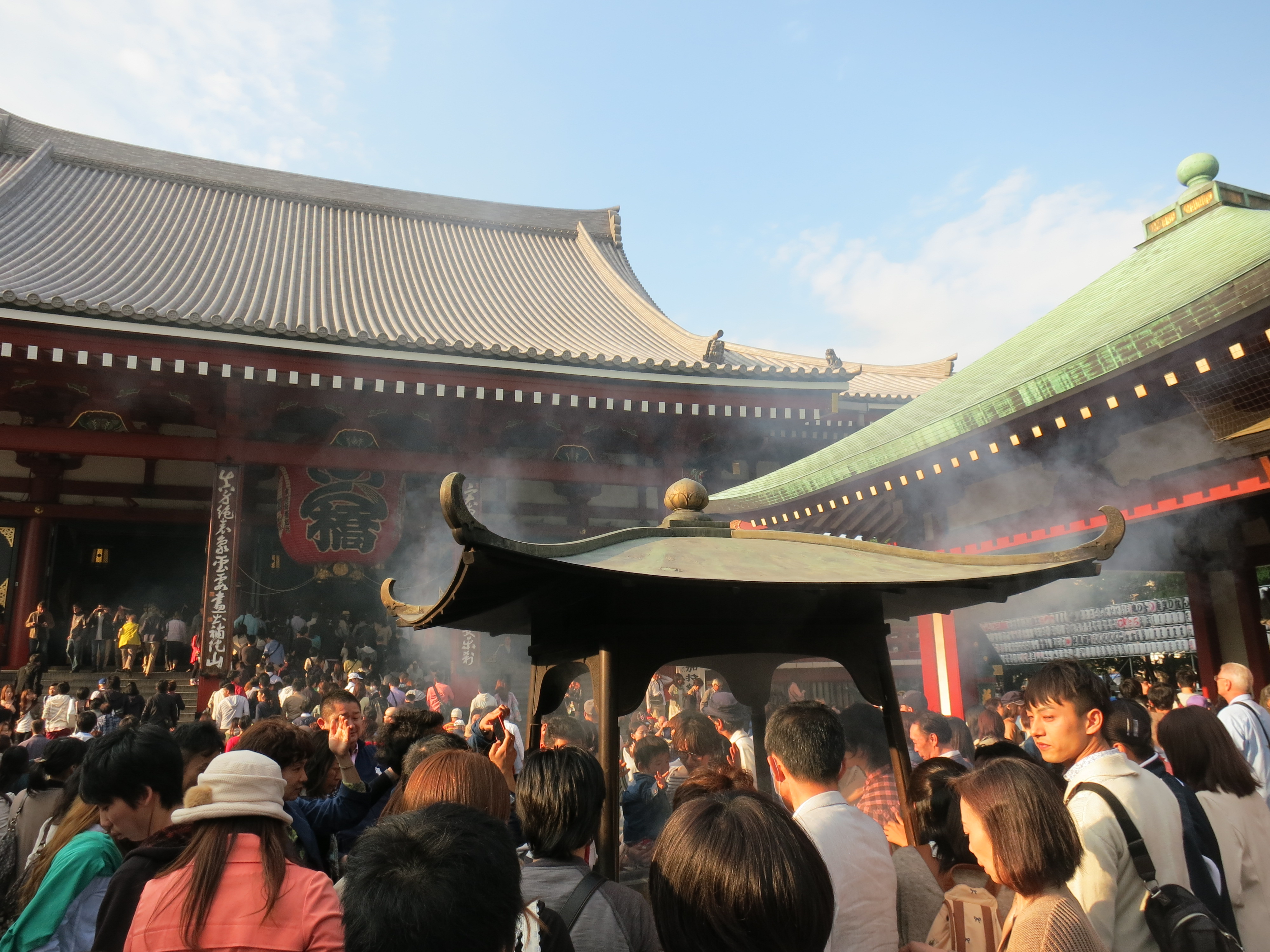
Rows of drawers filled with paper fortunes lined the approach to the shrine, and people tied fortunes they didn’t want to a fence in one corner of the pavilion. I joined in others who stood at the fire in front of the shrine, waving purifying smoke toward my face while wishing for luck.

Purifying smoke

Purifying smoke

Discarded fortunes

Discarded fortunes

I climbed the red steps to the shrine and took a couple photos before I saw the sign requesting that people turn off their cameras. So I won’t show those photos, but I’ll tell you that the altars were an ornate gold, fronted by rows of flowers, and the ceilings were painted with scenes of sinuous dragons and elegant women.

Leading up to the shrine

Leading up to the shrine

The five-story pagoda

The five-story pagoda

Asakusa used to be the main entertainment district of Tokyo. Shinjuku and Shibuya have taken over as the nightlife areas of the city, but sites like the Kaminarimon Gate and the Sensoji Shrine keep it a central part of the city’s identity.

200 Faces and A Stonework Cockfight at Angkor Thom

Angkor Thom was the first stop on my first day in the park, and it turned out to be my last stop of the day, because there’s so much to see and it’s too hot to move quickly from one site to the next. (Have I mentioned how hot it was in Southeast Asia yet? Don’t worry, I’ll be sure to dwell on that point for the next several weeks, because even summers spent in muggy Michigan swamplands and concrete-baked Chicago porches could not prepare me for the humid heat of this part of the world.) Anyway, heat aside, Angkor Thom was a great introduction to the wonders of the park at Angkor.

At Bayon in Angkor Thom

At Bayon in Angkor Thom (there I am for a sense of scale)

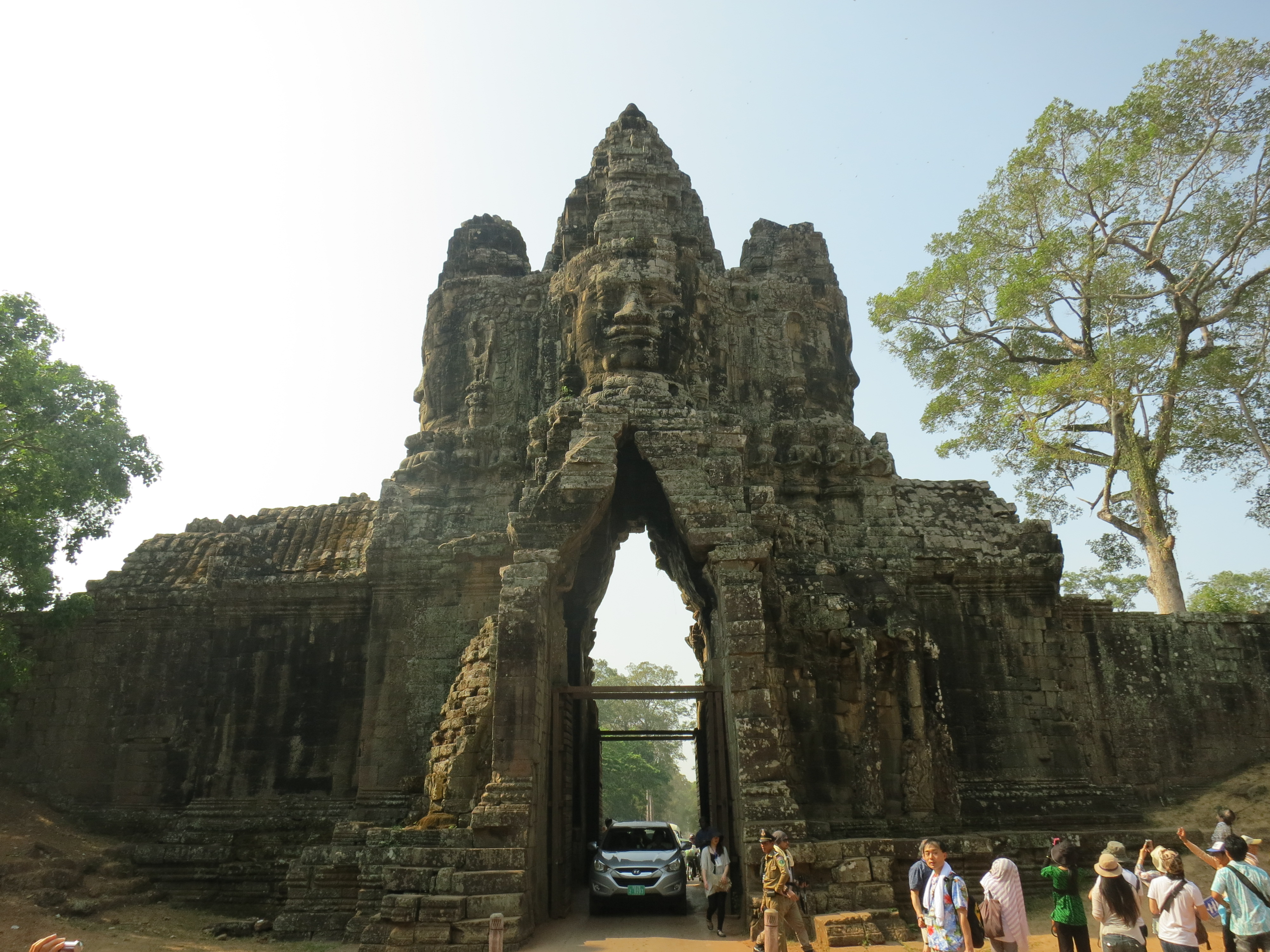
The South Gate

angkor thom face tower

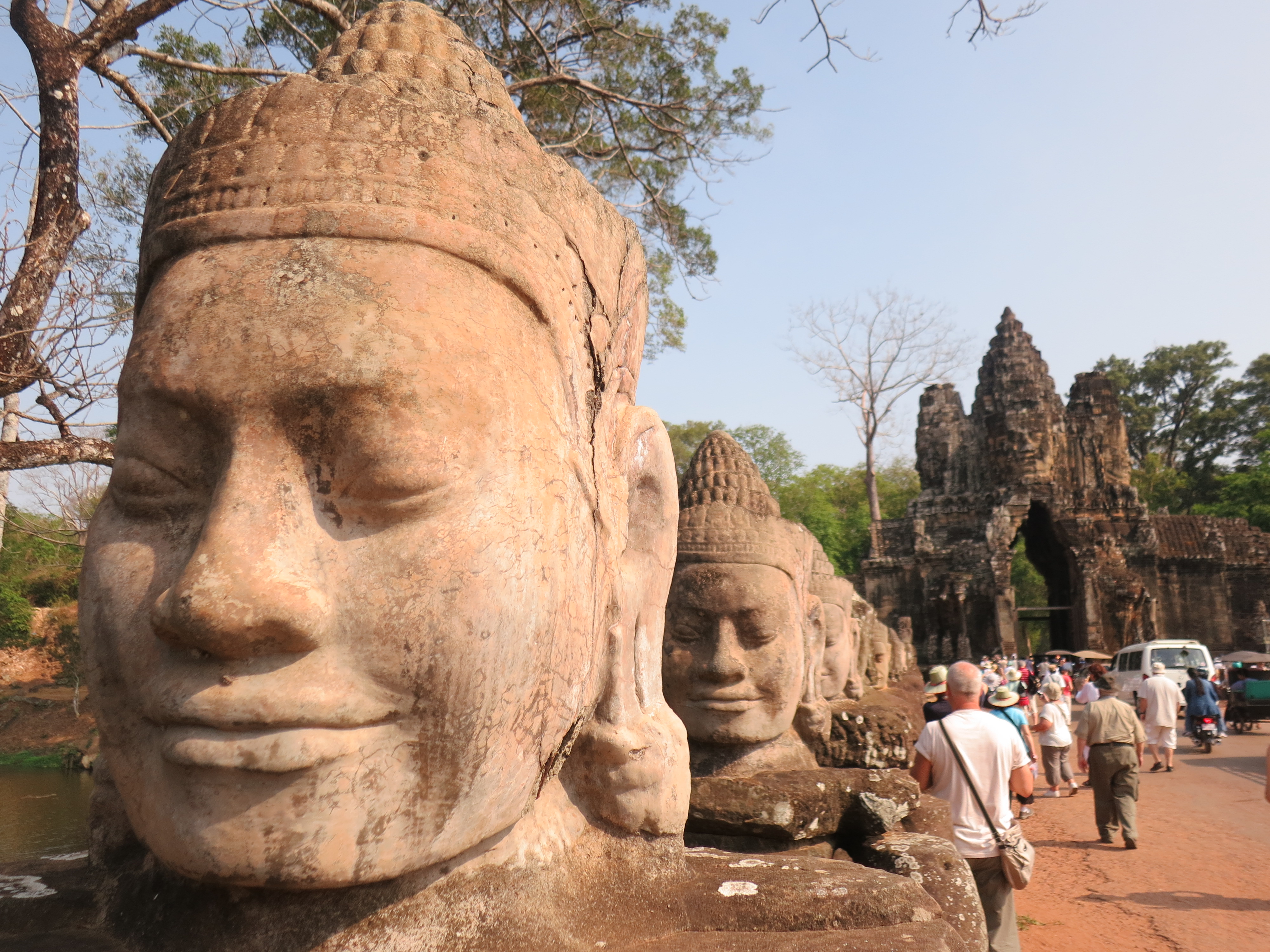
The south gate is the main entrance point for modern visitors, and it’s an impressive introduction to King Jayavarman VII’s city-temple. The bridge over the moat is flanked by two rows of figures–gods on the left, demons on the right–and each group of figures holds the body of the rainbow naga, a giant serpent, which is either meant to bridge the world of the gods and the world of humans, or to show the creation myth the Churning of the Sea of Milk, making the center of the city the created world. That’s a difference between Angkor Thom and most of the other temples in the area–there’s no moat or wall around the main temple inside, Bayon, so archaeologists theorize that the whole city is meant to represent Mount Meru, rather than just the temple, which would seem to bring up a lot of theological questions in terms of the inhabitants of the city, what activities were and weren’t holy in the city, etc.

Serene gods

Serene gods

Anyway, this is how I reacted to these interesting archaeological and theological questions:

Holding up the snake

Holding up the snake

Bayon

Bayon

Bayon

The Bayon is a weird and wonderful temple. Its central portion is filled with face towers: large blocks of stone with a face carved in each of the four sides. The faces might resemble King Jayavarman VII or Lokesvara, the bodhisattva of compassion in the Buddhist tradition, or they might resemble Jayavarman as Lokesvara. There’s a long tradition of rulers around the world having their likeness dressed up as historical heroes or religious figures; it lends majesty. Apparently there are 216 faces in this one temple alone, but there used to be more, or maybe less. It’s hard to tell with all the renovations made over the centuries. So there may have been some significance to the number of faces found in the temple, but it’s hard to know what it would be.

So many faces at Bayon

So many faces at Bayon

The many face towers contribute to the crowded feeling of this temple, since there’s a tower cropping up just about everywhere you turn, unlike at other temples, where there were carefully planned distances between the considerably fewer towers. Apparently, the Bayon was just added to and added to over the years, and built up higher than it was originally intended to be, so we see more towers, and also narrower hallways, than at other temples.

Crowded hallways in Bayon

Crowded hallways in Bayon

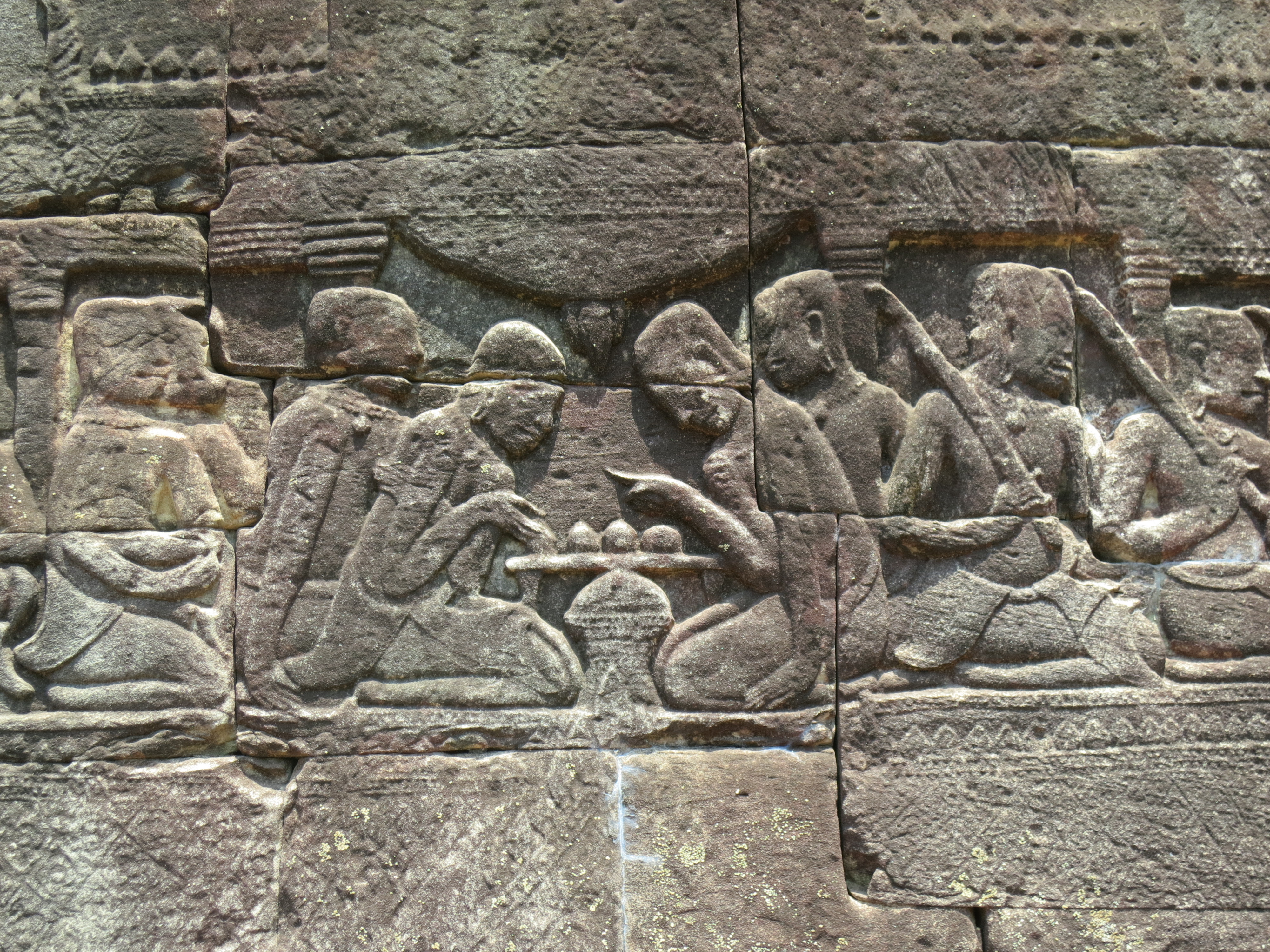
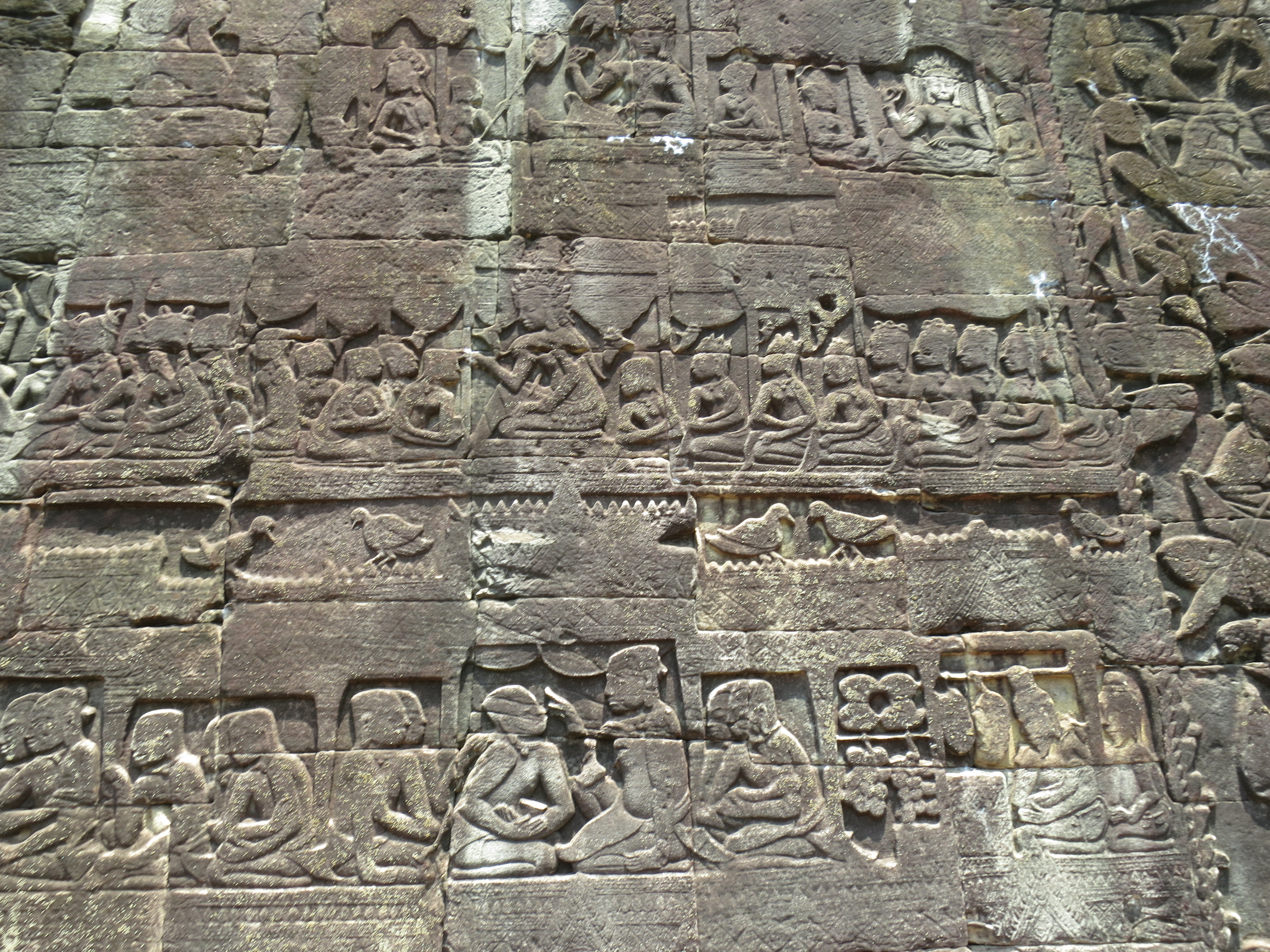
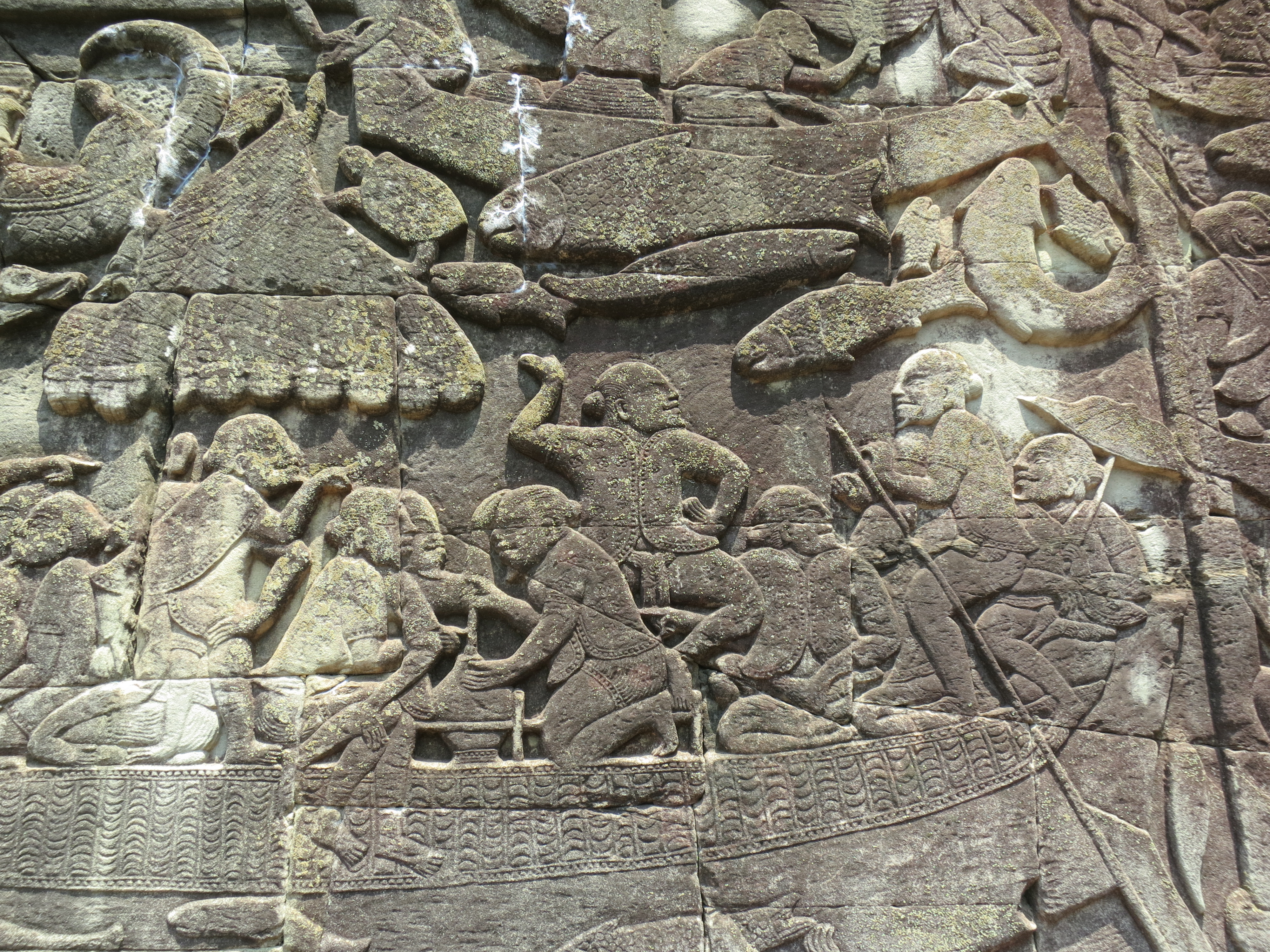
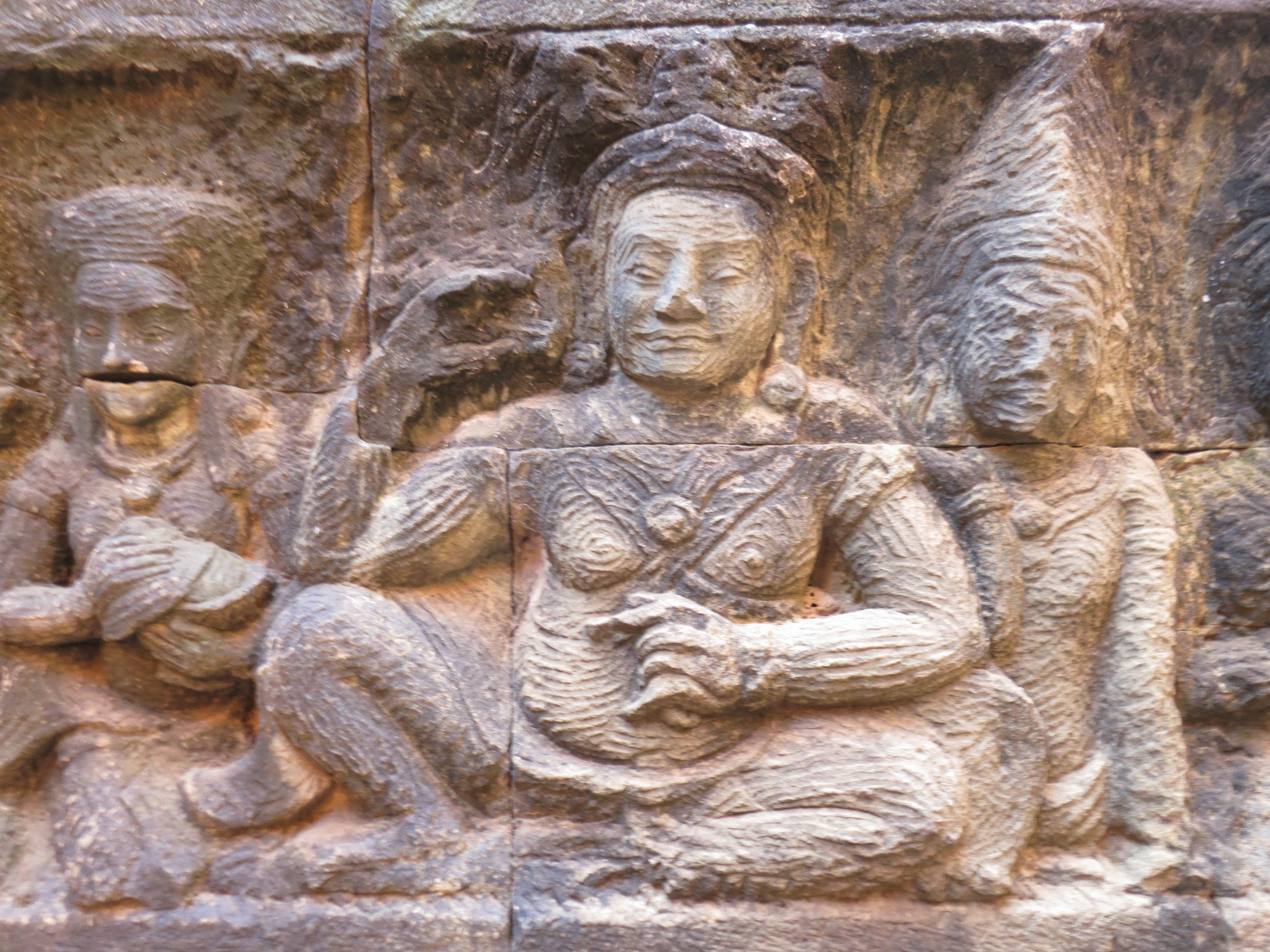
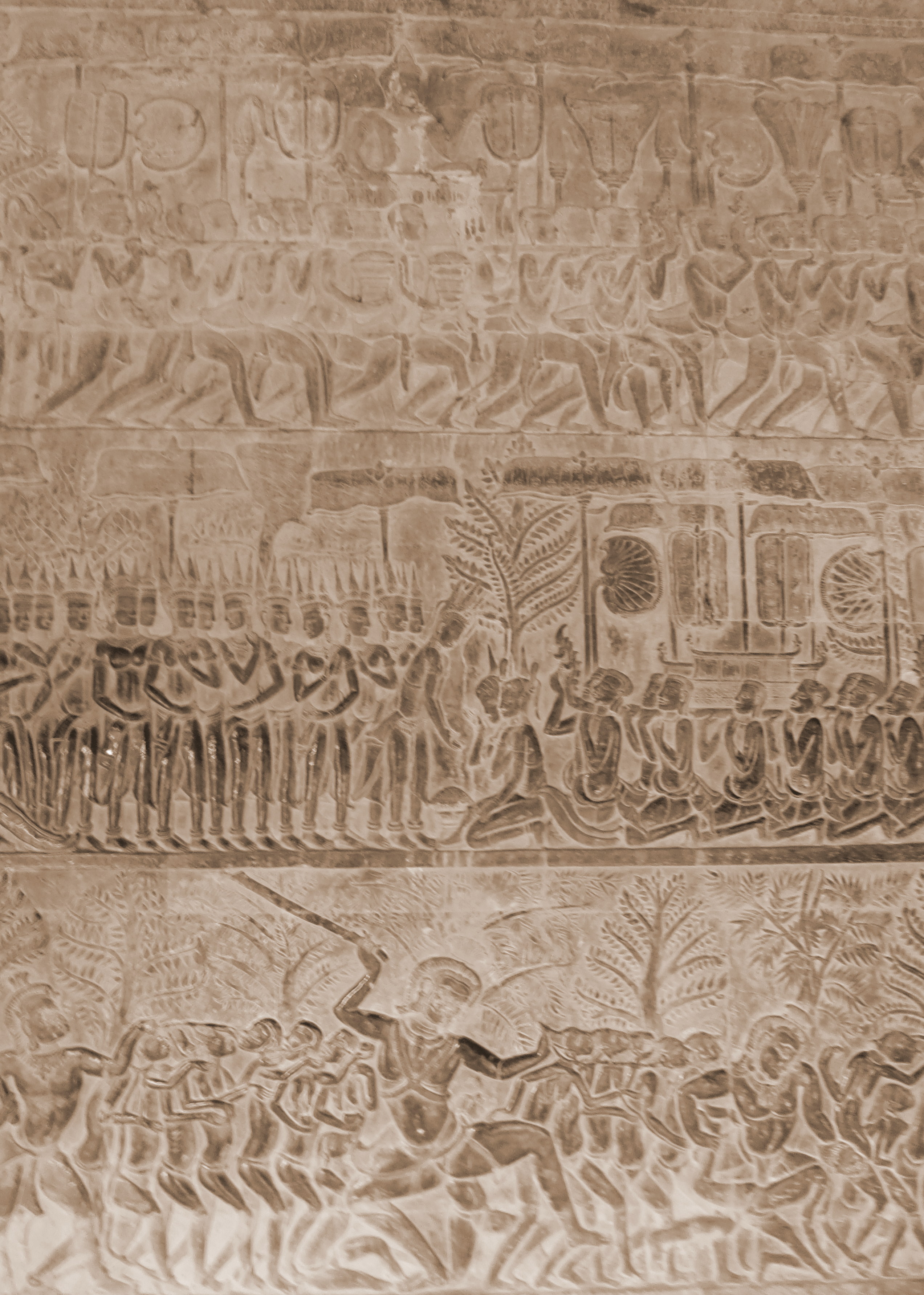
The Bayon also has one of the most extensive collections of bas-relief friezes in the park. Like Angkor Wat, the Bayon does include friezes depicting mythological scenes from Hindusim, but there are also huge walls of bas-reliefs showing everyday life in the late 12th century in Angkor, as well as some historical events. There’s a wrestling match, a chess game, a cockfight, and a market scene, among many others.

Cockfighting

Cockfighting

Chess game

Chess game

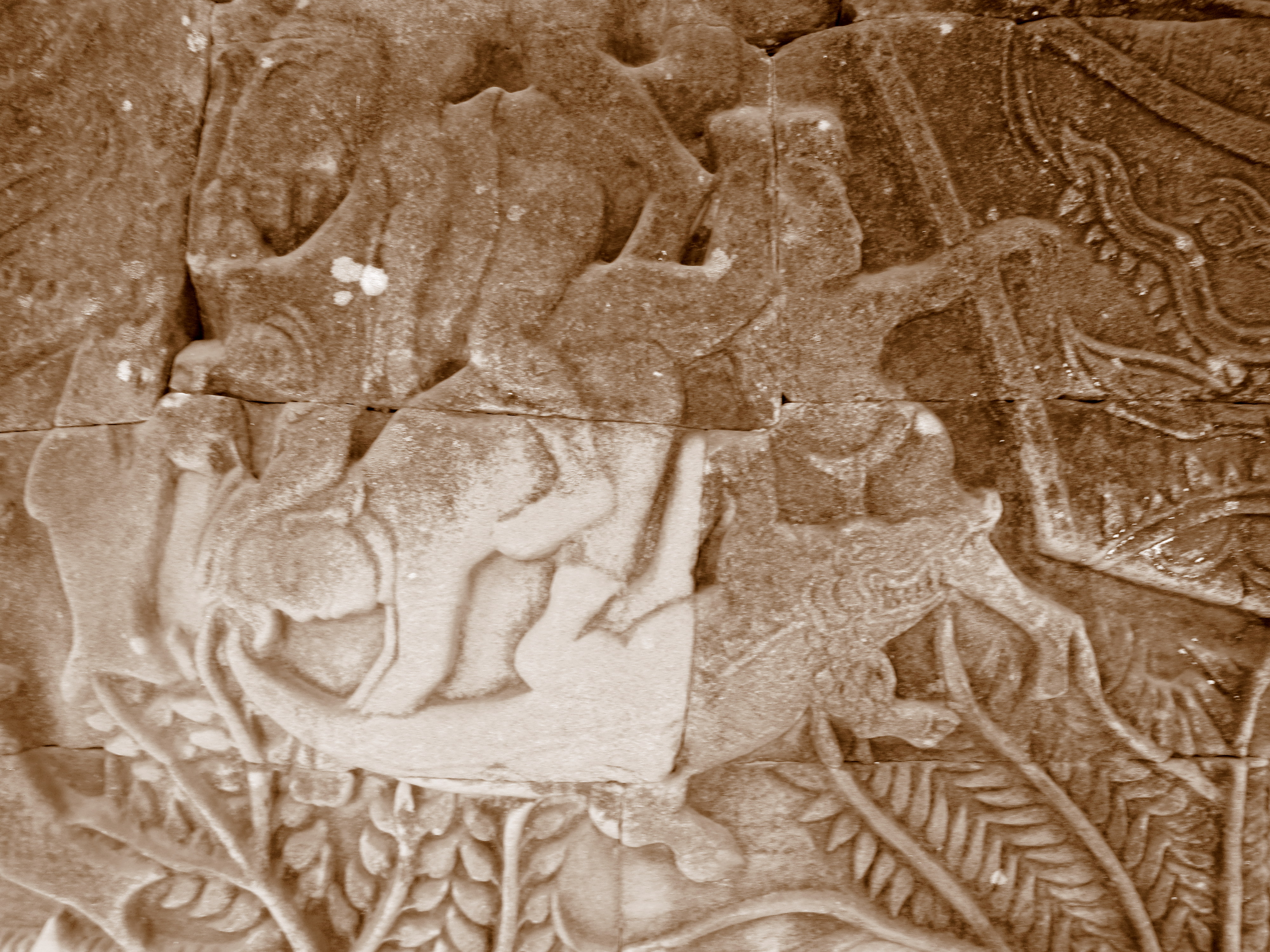
There are also naval battles between the Khmer and their traditional enemies the Cham, and some processionals involving Khmer generals atop their elephants. I really enjoyed poring over all these scenes.

The friezes were multilevel

The friezes were multilevel

Dancing on a boat

Dancing on a boat

Crocodile mishaps

Crocodile mishaps

Bapuon

Bapuon

Bapuon

Here is where my guidebook’s last update (2003) came in sharp contrast with reality. The book shows photos of a grass-covered mound, and vaguely describes the massive temple as once more impressive than even the Bayon. Reality shows a completely restored, impressively massive temple, complete with ridiculously long bridge with a couple ponds on either side, and my first introduction to just how steep the steps of Angkor temples can be.

Everyone made jokes about what a workout it was to go up and down these stairs

Everyone made jokes about what a workout it was to go up and down these stairs

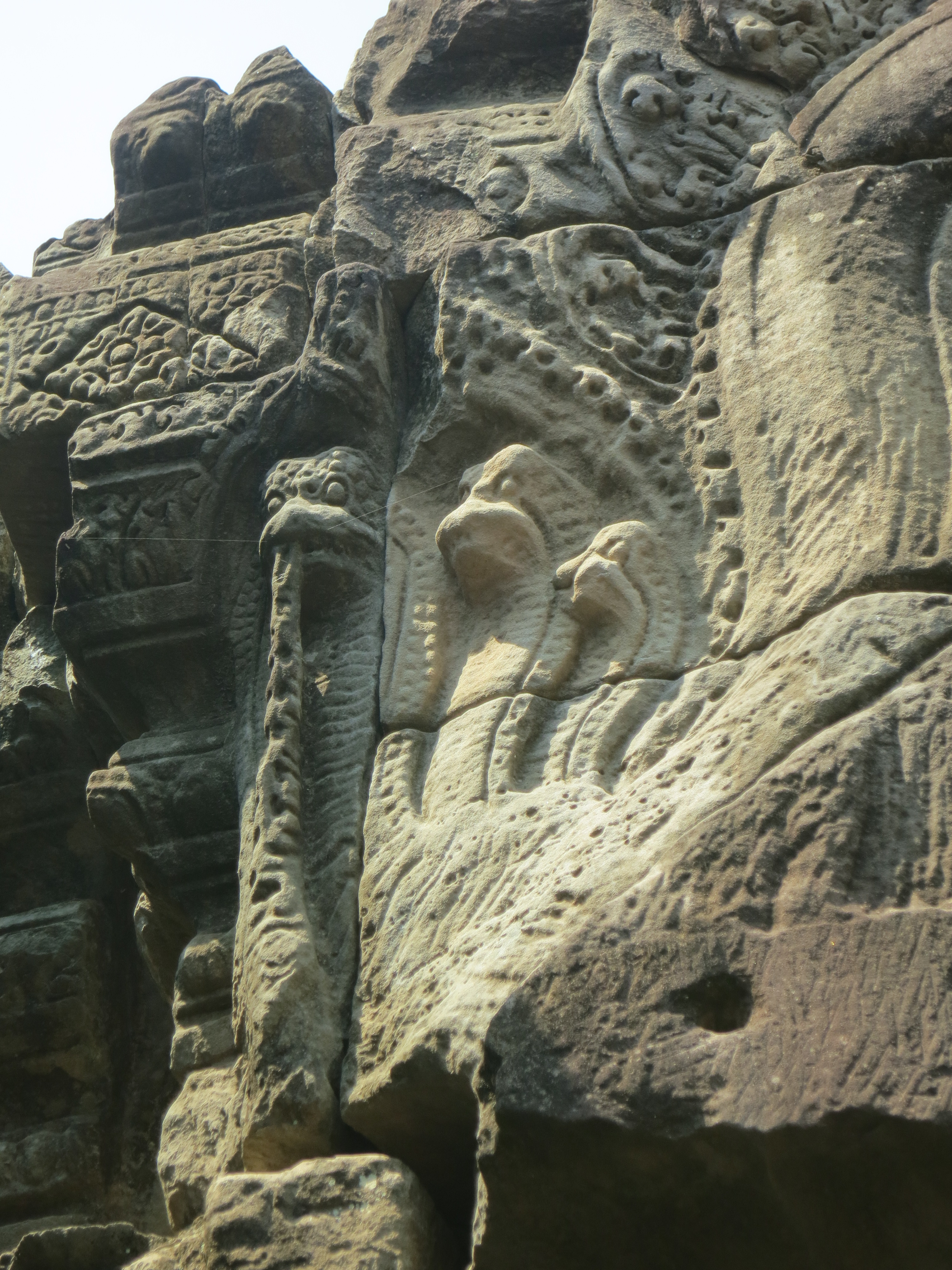
Ssssstone carvings

Ssssstone carvings

Not sure who carved the arrow--the ancients or modern restoration workers--but the hole was probably used to hold wooden pegs as stones were maneuvered into place, then removed when the stones were snugly fitted

Not sure who carved the arrow–the ancients or modern restoration workers–but the hole was probably used to hold wooden pegs as stones were maneuvered into place, then removed when the stones were snugly fitted

The Royal Palace and Phimeanakas

Philijdsf

Phimeanakas

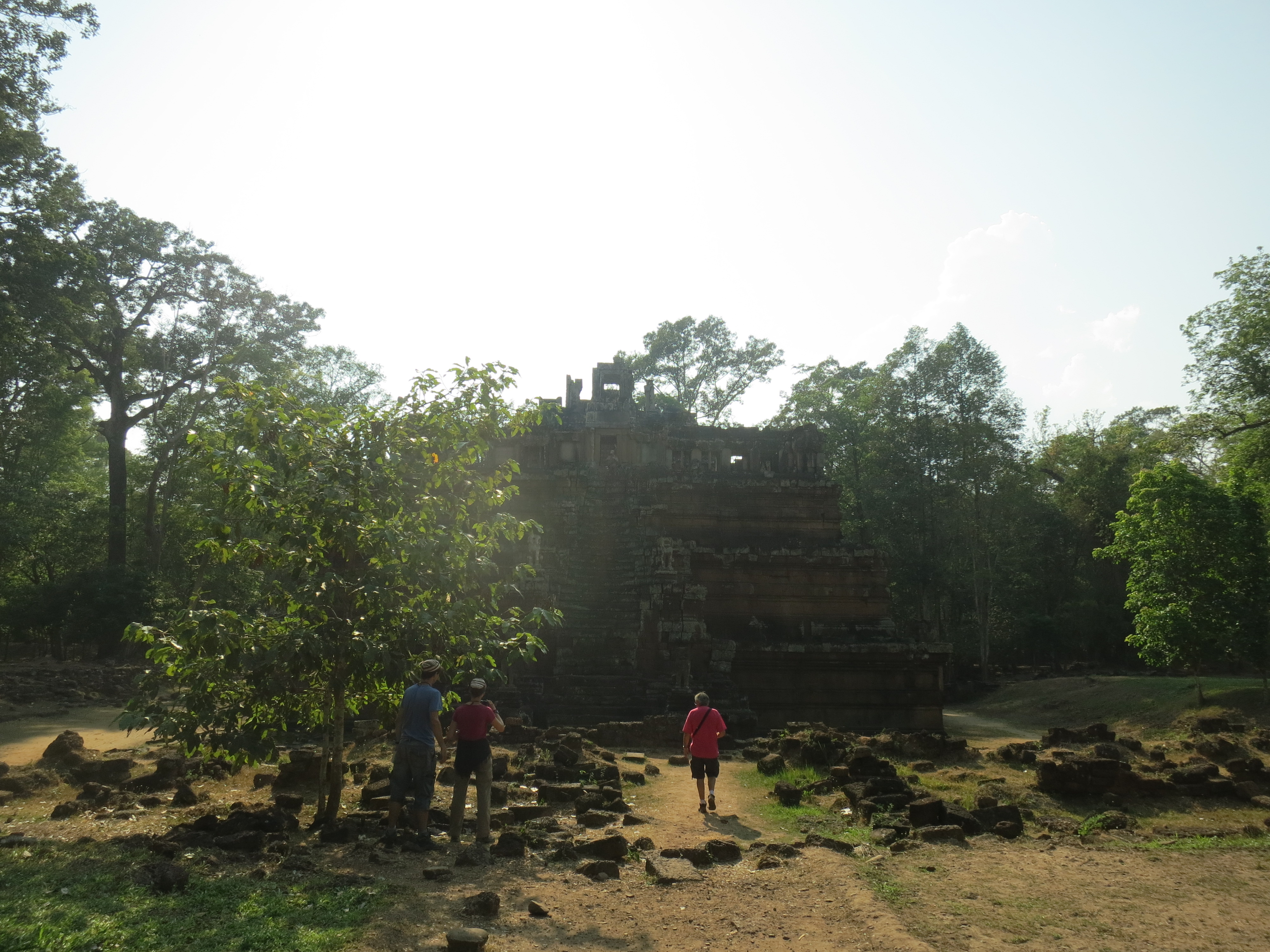
I tried to follow my guidebook’s plan to get to the Elephant Terrace after the Bapuon, but found myself going through a side entrance to the grounds of the Royal Palace. Tucked back here is the Phimeanakas, the temple of the king. It wasn’t in great condition and couldn’t be climbed on. A dusty path led away from the temple toward what was left of the gate of the palace.

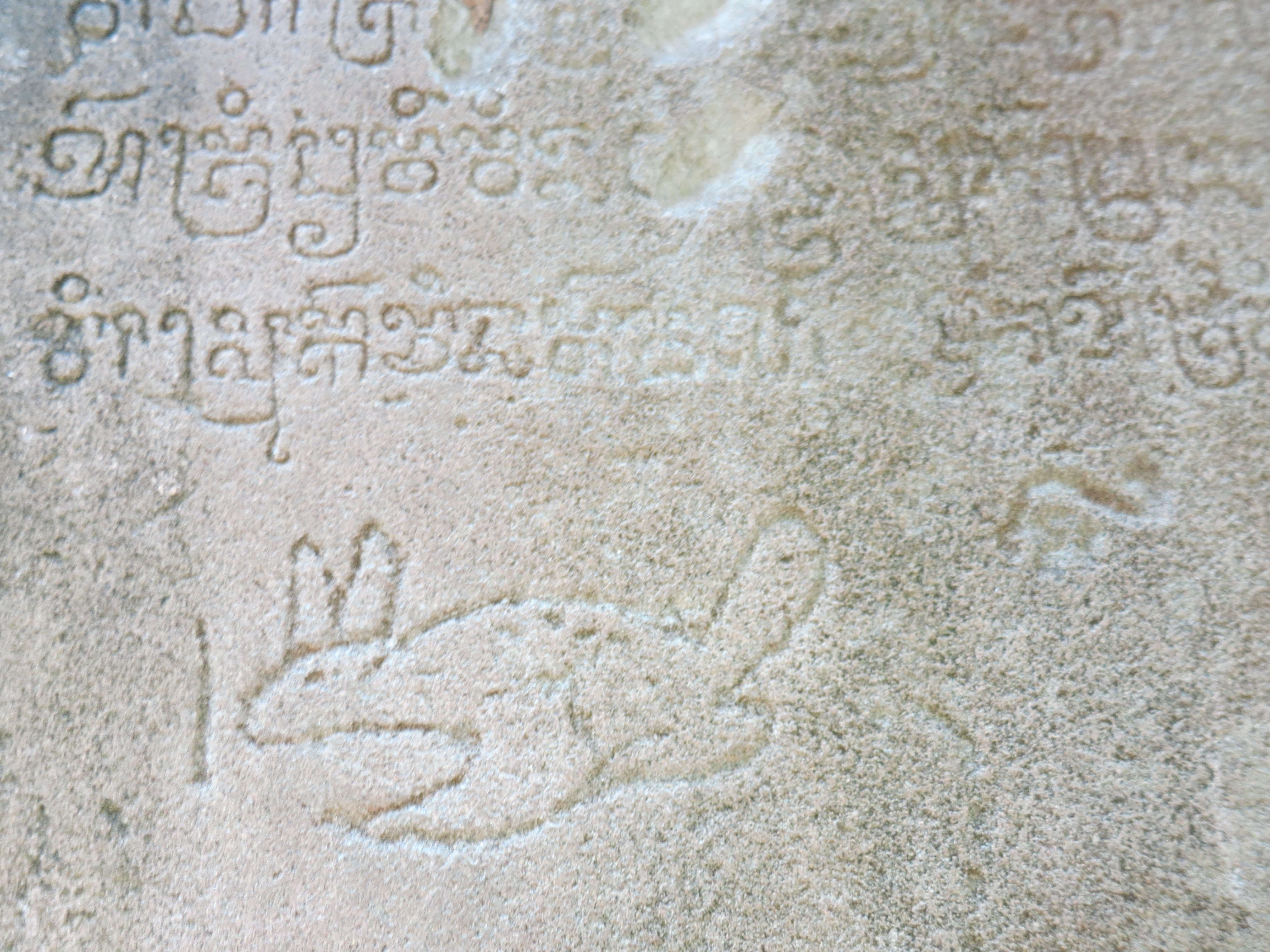
A rare instance of Khmer writing at Angkor

A rare instance of Khmer writing at Angkor

In a small grove of trees to the right, I saw a group of Cambodians eating lunch and resting from the heat of midday, kids running around playing games and screeching as kids do. Pretty much everyone I saw touristing at Angkor was white or East Asian, so I guessed these families were working here, and were taking a break. Then I saw a couple of the women stand up and grab plastic bags and long poles and realized that they were part of the crew I’d seen picking up litter all along the roadways on the way here. They were why Angkor was so much cleaner than most tourist sites I’d visited in Thailand.

Snack Break

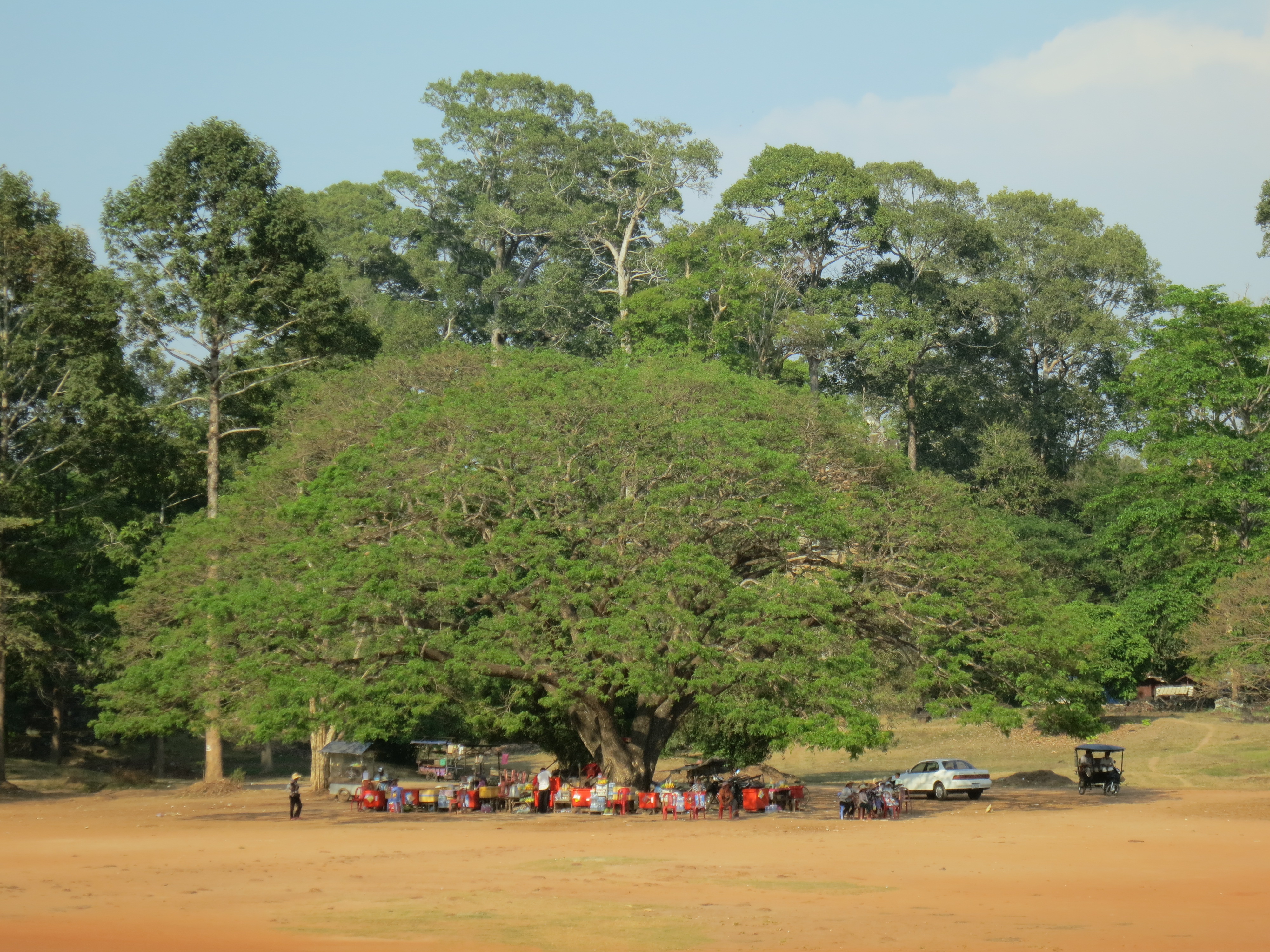
The snacks tree

The snacks tree

I left the palace and went across the road to find some refreshment. As soon as I started crossing that road, at least three women started screaming out for me to visit their stall. I headed across the field toward the large tree under which the snack stalls were set up, but the women literally ran toward me in order to be the one to get me to buy a $1 bottle of water. It was disconcerting to be the focus of such a ferocious sales pitch, and saddening to get to the shelter of the tree and buy my mango slices and bottled water from the 10-year-old daughter of one of the women who had run to greet me. Several girls vied for my attention and my dollars, and they all talked to me in good English. They’d all learned English by selling snacks to thirsty tourists, and none of them could be spared by their parents to go to school, or if they could be spared, they couldn’t afford the uniforms required to attend.

I swallowed my privileged American white lady guilt along with the mango slices and went back across the road to see the rest of the structures, but I’d lost the enthusiasm I’d had earlier.

Elephant Terrace

Elephant Terrace

I admired the Elephant Terrace (so named for the long-trunked animals carved into the side of the terrace) and smiled as kids chased each other through the narrow walkways of the Leper King Terrace (so named for the king of legend who had leprosy, whose likeness might be seen in one of the carvings–or who might be called to mind simply because the lichen has eaten away the carving of the king figure here).

Restoration work is a giant jigsaw

Restoration work is a giant jigsaw

Dig the groovy swirls

Dig the groovy swirls

Then it was time to catch a sunset at Angkor Wat and head back to the air-conditioned comfort of the guesthouse before another day in the splendid ruins.

So. Hot.

So. Hot.

Angkor Wat: A Temple, A City, A Breathtaking Sight

When I say I’ve been to Angkor Wat, people sometimes reply, “where?” but when I show them this photo, they nod in recognition:

Angkor Wat at sunrise

Angkor Wat at sunrise

Oh yeah, that place. The giant temple thing in Cambodia. In fact, Angkor Wat is the largest single religious monument in the world. (I guess that’s under dispute by Those Who Measure Religious Monuments or something, because most of the info I can find on it won’t give me a hard yes or no on the topic. Regardless, it’s huge–the outer wall runs over 2 miles long.) Of course it’s big, when you learn that “angkor” roughly translates to “city” and of course we know “wat” is fairly synonymous with “temple.” Angkor Wat is a temple and also a city.

Angkor Wat

Angkor Wat

Khmer king Suryavarman II built Angkor Wat in the beginning of the 12th century. He broke from tradition by dedicating it to Vishnu rather than Shiva, and orienting the temple complex to the west, rather than the east. In the next century, the main religion of the Khmers changed from Hinduism to Buddhism, so the religion associated with the temple changed, too. One of the main statues of the temple, which was somehow not destroyed during the reign of the Khmer Rouge (as most of the statuary was), is an eight-armed Vishnu whose head has been swapped out for a buddha’s head.

Vishnu/Buddha

Vishnu/Buddha

Other decorations, however, are not so easily changed from one religion to another. Angkor Wat is impressive not just for its size and age, but for the bas-relief friezes that run around a large part of one of the inner walls. These friezes show scenes from the Ramayana and the Mahabharata, two Hindu epics. Many of the friezes have been restored by various conservation groups over the past few decades, and I’m so glad I got to see this artwork dusted off and cleaned up. It’s much easier to appreciate the incredible detail of each carving when the accumulated grime of centuries has been swept away.

The Churning of the Ocean of Milk

The Churning of the Ocean of Milk

Bas-relief frieze

Bas-relief frieze

Angkor Wat is built in the temple mountain style: it’s meant to resemble Mount Meru, the home of the gods in Hindu mythology. There are always outer walls representing mountains, and usually a moat to represent the ocean. The inner temple is made up of five pyramids representing the five peaks of Mount Meru–usually four in the corners, and an elevated one in the center, the innermost sanctum of the gods.

angkor wat

One of the distinctive features of Khmer architecture, according to my architecture guidebook, was the “trick of perspective” achieved by progressively reducing the height of each structure from the center outwards, making the central towers appear even taller and more impressive. This architectural trick expresses the religious beliefs of its builders, too, since it emphasizes the importance of the home of the gods and the humility of the rest of creation in comparison to it–even the oceans are reduced to flat moats calmly reflecting Mount Meru’s glory back to it.

angkor wat

For those of us who haven’t made a study of Khmer architecture or Angkor period temples (and that’s most of us, isn’t it), it’s good to keep in mind that a Khmer temple “was not a meeting place for the faithful but the palace of a god,” as Michael Freeman and Claude Jacques note in Ancient Angkor. Thus, the tiny space in the interior of the central pyramid, made only to house the statue of the god and not for crowds of worshipers; the super steep stairs that were usually only scaled by a few temple workers; and small buildings housing various gods, the grouping of which made up one large temple, rather than one temple per god. This is such a different approach to religious architecture from the Western, Christian one that I hadn’t even realized I had been making assumptions about what a temple was for and how that affected the architecture until this book pointed it out.

angkor wat

I’m used to vast cathedrals built to house masses of congregants; the altar is often large and ostentatiously decorated, and it’s easy to see from just about anywhere in the building. The temple mountain structure of the Khmer Hindu places of worship also accommodates large crowds, but in the outer areas of the grounds; the inner areas are difficult to reach, and the sacred space is small and hidden from the casual eye. I love that the book made me look at the temple in a different way, and also had me reflect anew on the churches I’d been to before.

angkor wat

None of the buildings from the city surrounding the temple (the “angkor” part of “Angkor Wat”) have survived. They were likely made from wood, unlike the sandstone, brick, and laterite of the temples. This means that a lot of imagination is required to envision what it must have looked like in its heyday, a little harder than putting paint on the Forum in Rome, but not as difficult as seeing the cooking fires smoking at the side of Uluru. I stood on the east end of one of the interior walls of the temple and looked out over the forest that stretched to the moat nearly two miles away. All this forest was once royal palace, regular houses, streets, food stalls, markets–all populated with one of the largest concentrations of humanity in the pre-industrial age.

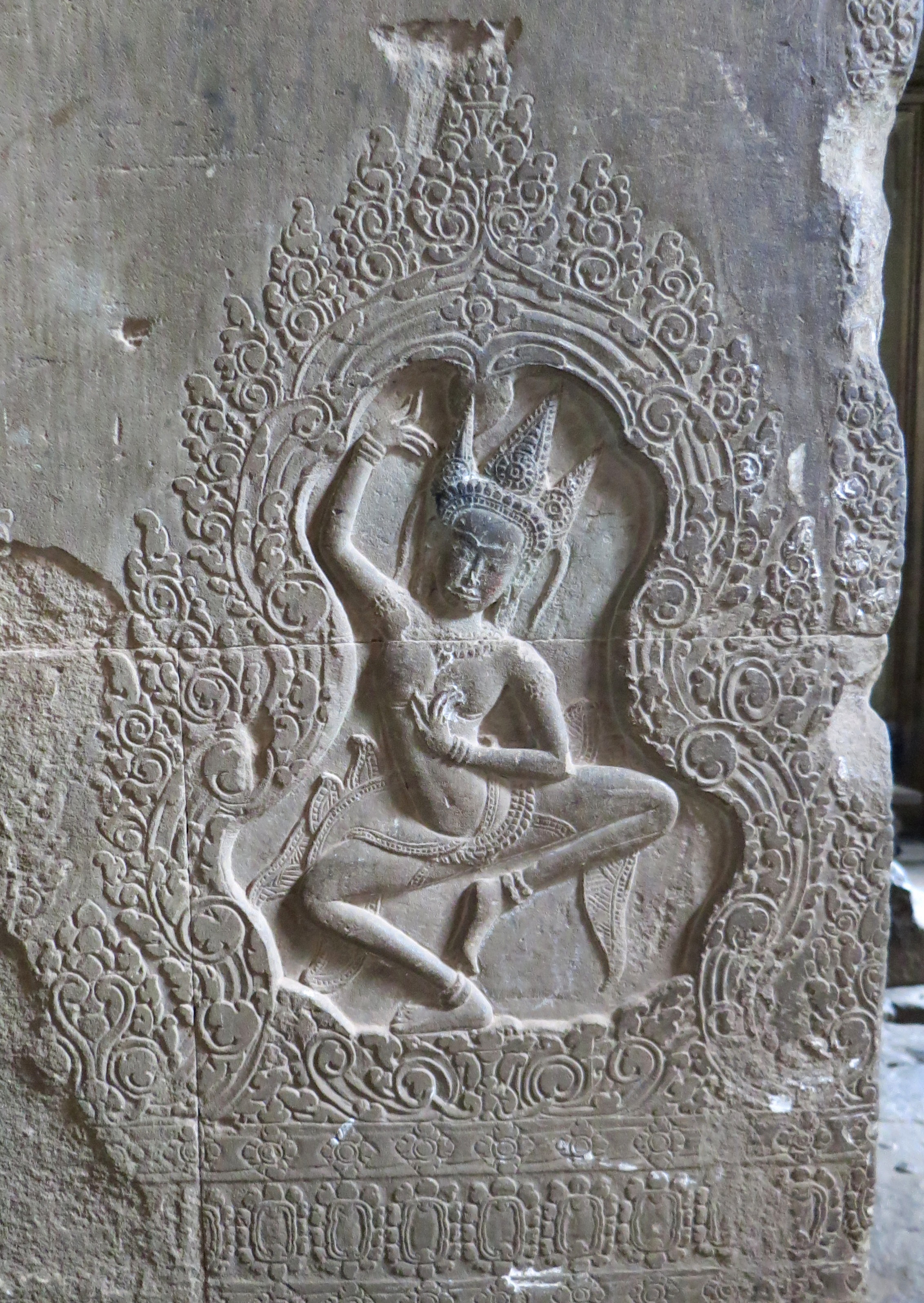
Aspara

Aspara

This is all about Angkor Wat, but let’s not forget that the Angkor period lasted several hundred years, and almost every king built at least one temple (perhaps as a mausoleum for himself, the god-king), so there are nearly a thousand temples in the area. Dozens of these have been restored and opened to the public. It all seems an embarrassment of riches once you see Angkor Wat. Not only is there this magnificent complex, but there are more–and in different styles, with their own delightful carvings and architectural quirks? I enjoyed discovering those temples as well; stay tuned this week for more on those.

Embracing the sunrise

Embracing the sunrise

The Temples and Night Markets of Luang Prabang

UNESCO put Luang Prabang on its World Heritage Sites list because it’s a town with a well-preserved mix of Laotian and French colonial architecture. After the jumble of rowhouses and tiny shops of Chiang Mai, it is striking to see the long, broad buildings of Luang Prabang, painted a colonial yellow and set at a dignified distance from the brightly decorated Buddhist temples.

Colonial architecture

Colonial architecture

Colonial yellow

Colonial yellow

Dignified, stately, slow-moving: these are the words I kept coming up with as I wandered the streets of Luang Prabang. A little in keeping with that stately feeling (and certainly in keeping with its colonial history), there were a lot of fences and walls; more space is cordoned off in this small town than I saw walled away in all of Thailand.

laos luang prabang

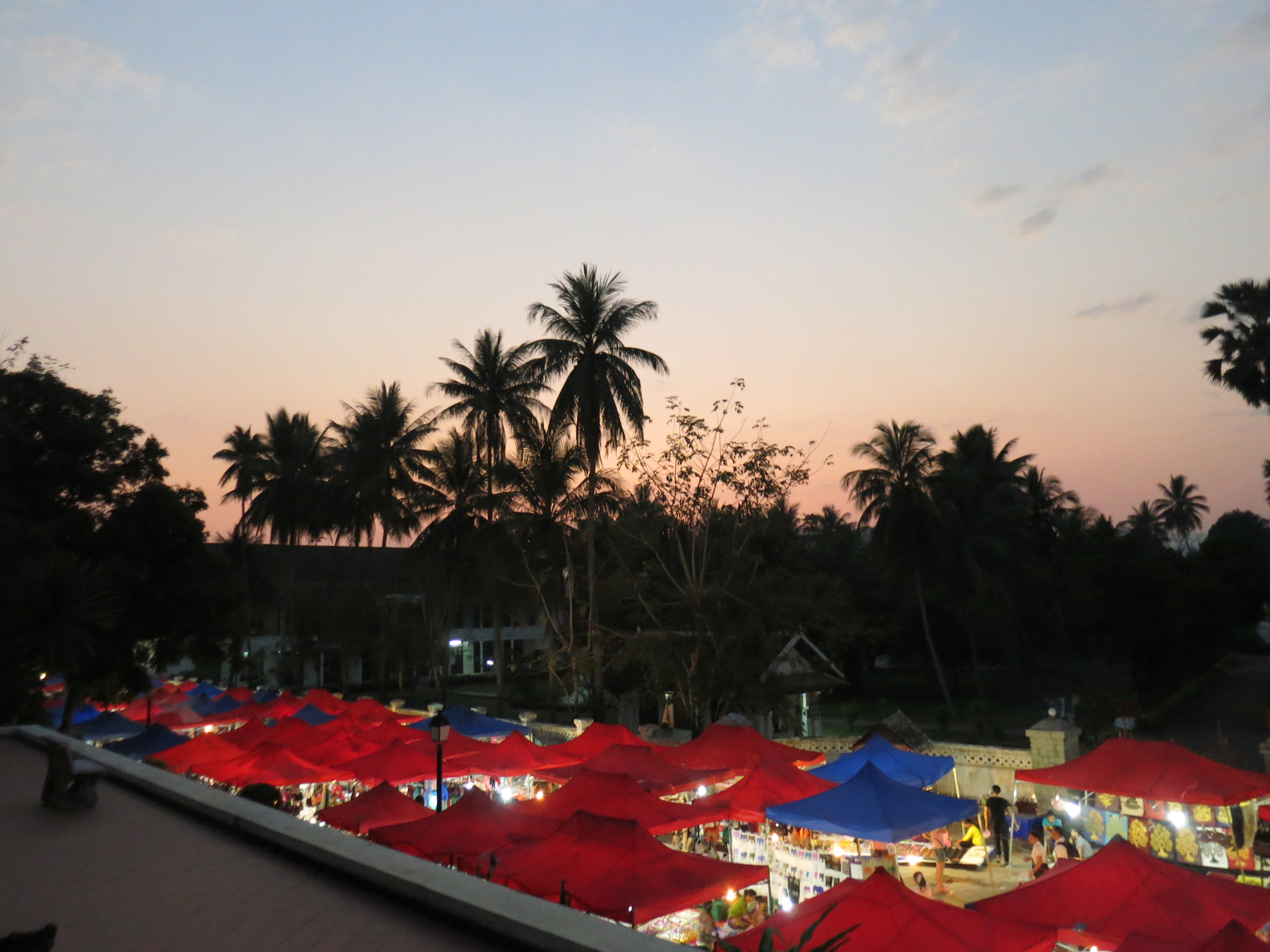
Every evening, vendors set up outside those walls for the night market. In Thailand, the markets are set up on card tables, but in Laos, the goods are laid out on tarps and blankets on the ground. If you want to inspect the goods at a particular booth, you have to squat down, or use one of the tiny plastic stools the vendor whips out for you. I would gingerly lower myself onto these unstable pieces of plastic and smile genially as all the women selling quilts and table runners laughed. Just about every stall has a woman holding a baby, and some stalls are staffed by men or teenagers. I saw one little boy playing on an iPad while his parents sold handicrafts–it’s a shrinking world, indeed!

The tents of the night market

The tents of the night market

Bombs to bracelets

Bombs to bracelets

I picked out wedding presents and souvenirs from various stalls, but my favorite spot was the bombs-to-bracelets stall. The US waged a secret bombing campaign on Cambodia and Laos in the late ’60s and early ’70s, as part of its campaign against the Communist bogeyman. The villagers of Ban Napia in eastern Laos took the aluminum from the thousands of bombs dropped on their homes and, in their words, turned it from “something that kills into something that feeds,” producing spoons. They later added bracelets and charms to their collection, and the number of bombs dropped can be guessed at by the fact that they’re still making jewelry today, nearly 40 years after the bombs stopped falling. I chose to support the artisans, although there is some controversy in doing so, because villagers have to collect scrap metal to make them, and there are a lot of accidents and sometimes deaths with the UXOs (unexploded ordnances). As with so many potential purchases, it’s complicated.

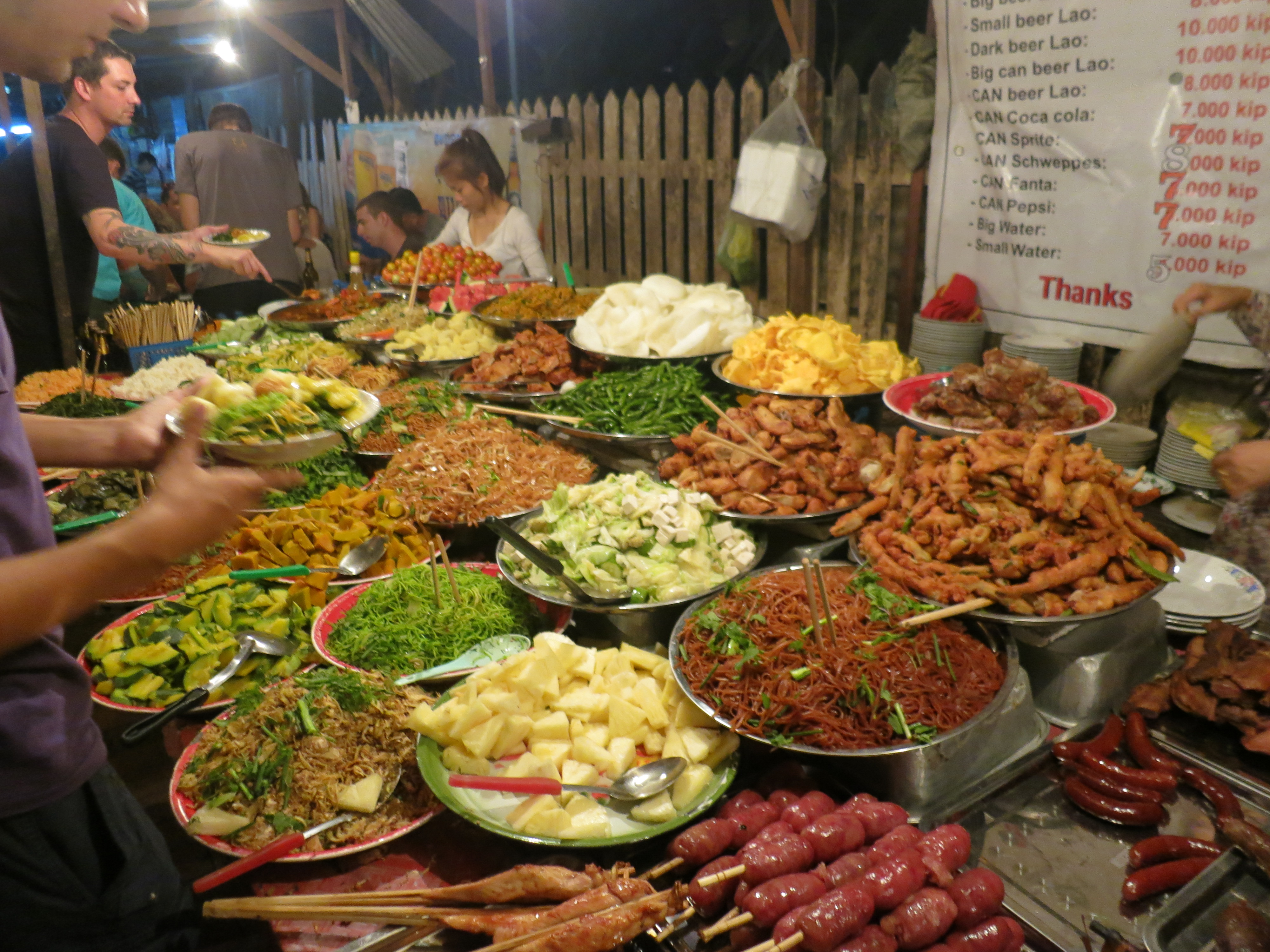
Meat on a stick--a lot of it

Meat on a stick–a lot of it

The much-lauded buffet (I never tried it)

The much-lauded buffet (I never tried it)

Of course, there’s food. One woman sliced watermelon with a machete while another flipped sweet potatoes on a small woodfire grill. A narrow alley of food vendors included pork and fish on sticks, dumplings, grilled sticky rice, and two giant all-you-can-eat buffets. I had really good veggie and pork dumplings, and a non-spicy lemongrass sausage (a specialty of the area).

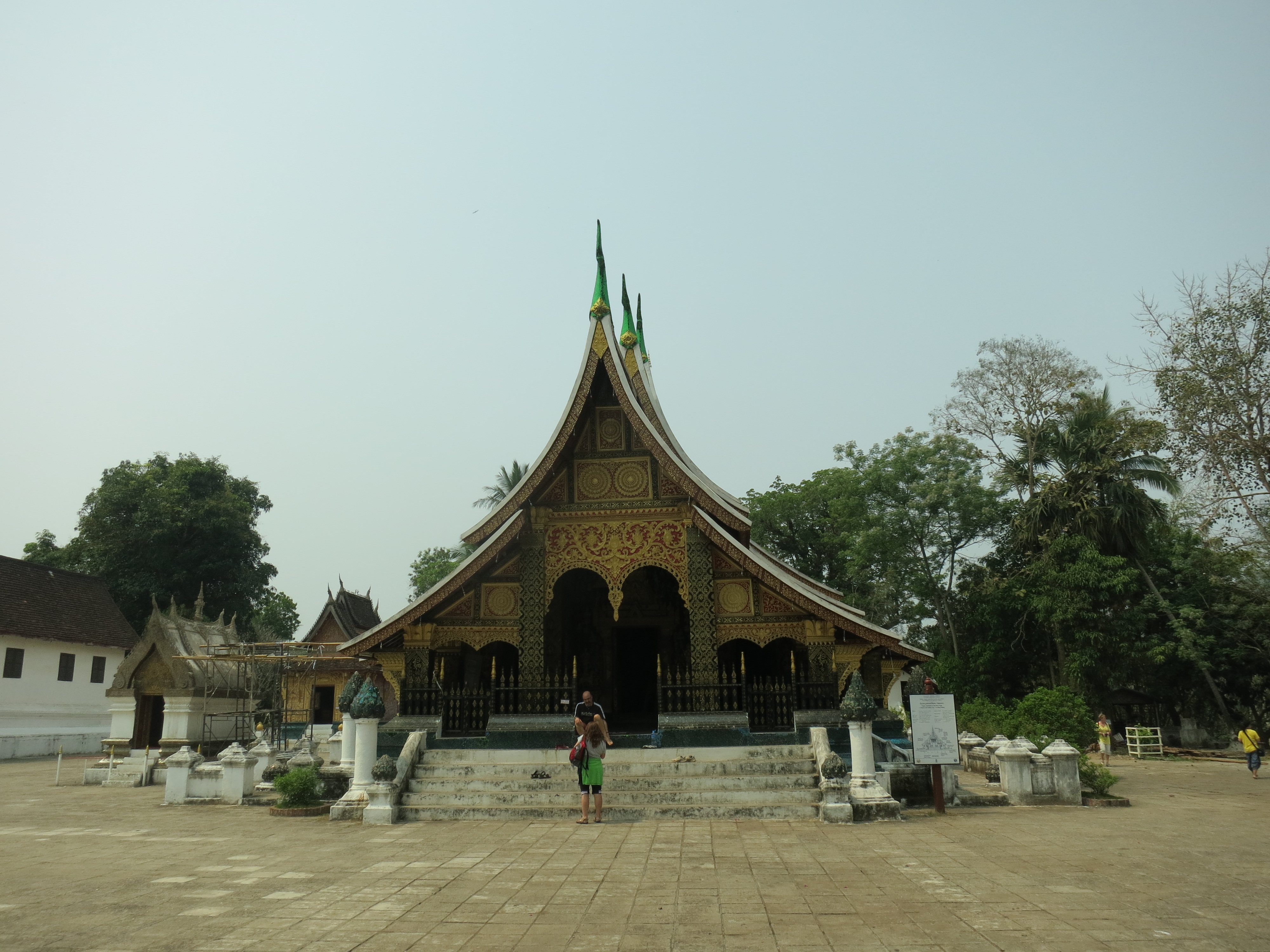
Wat Xieng Thong

Wat Xieng Thong

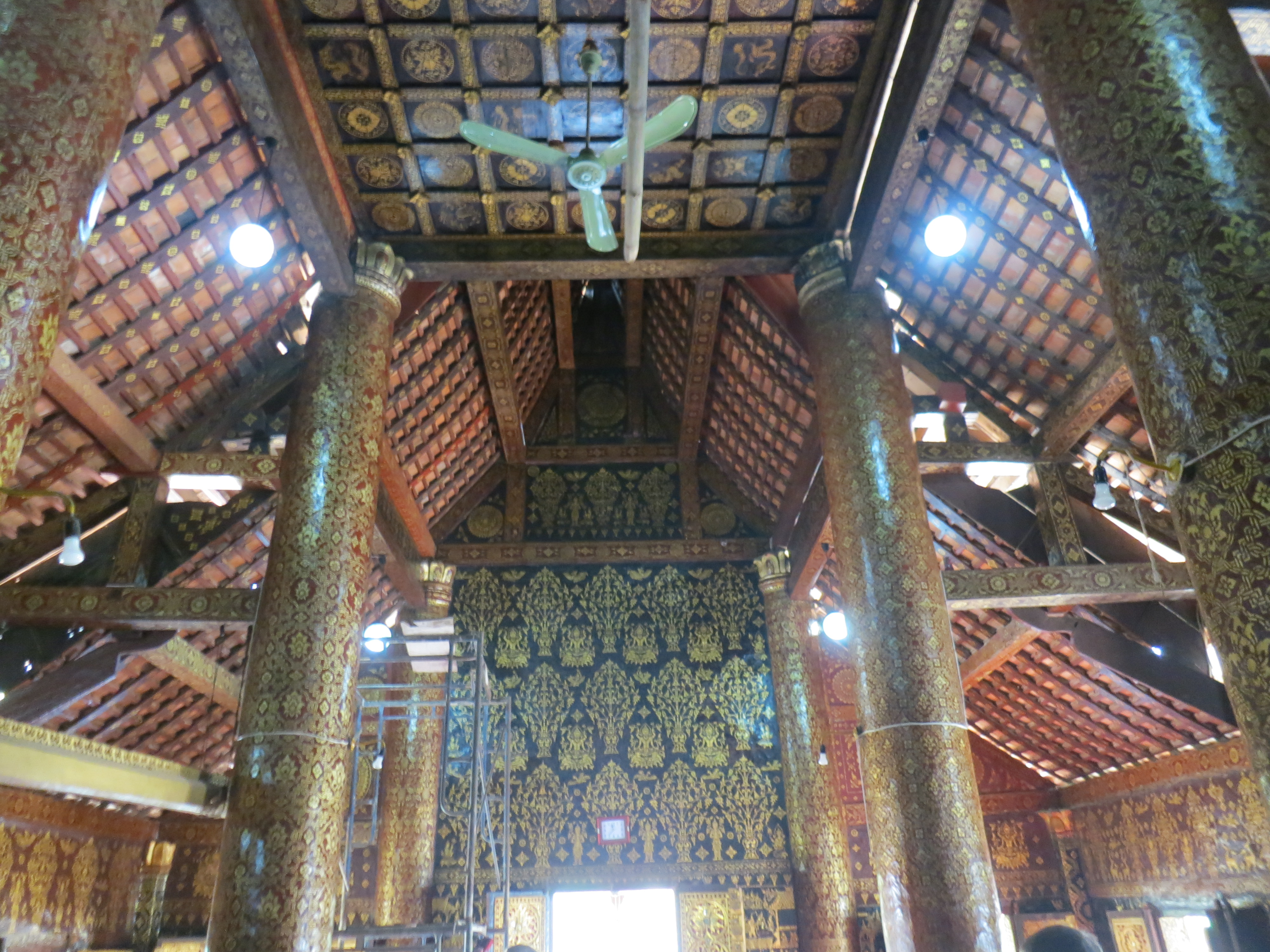
Gold painting everywhere

Gold painting everywhere

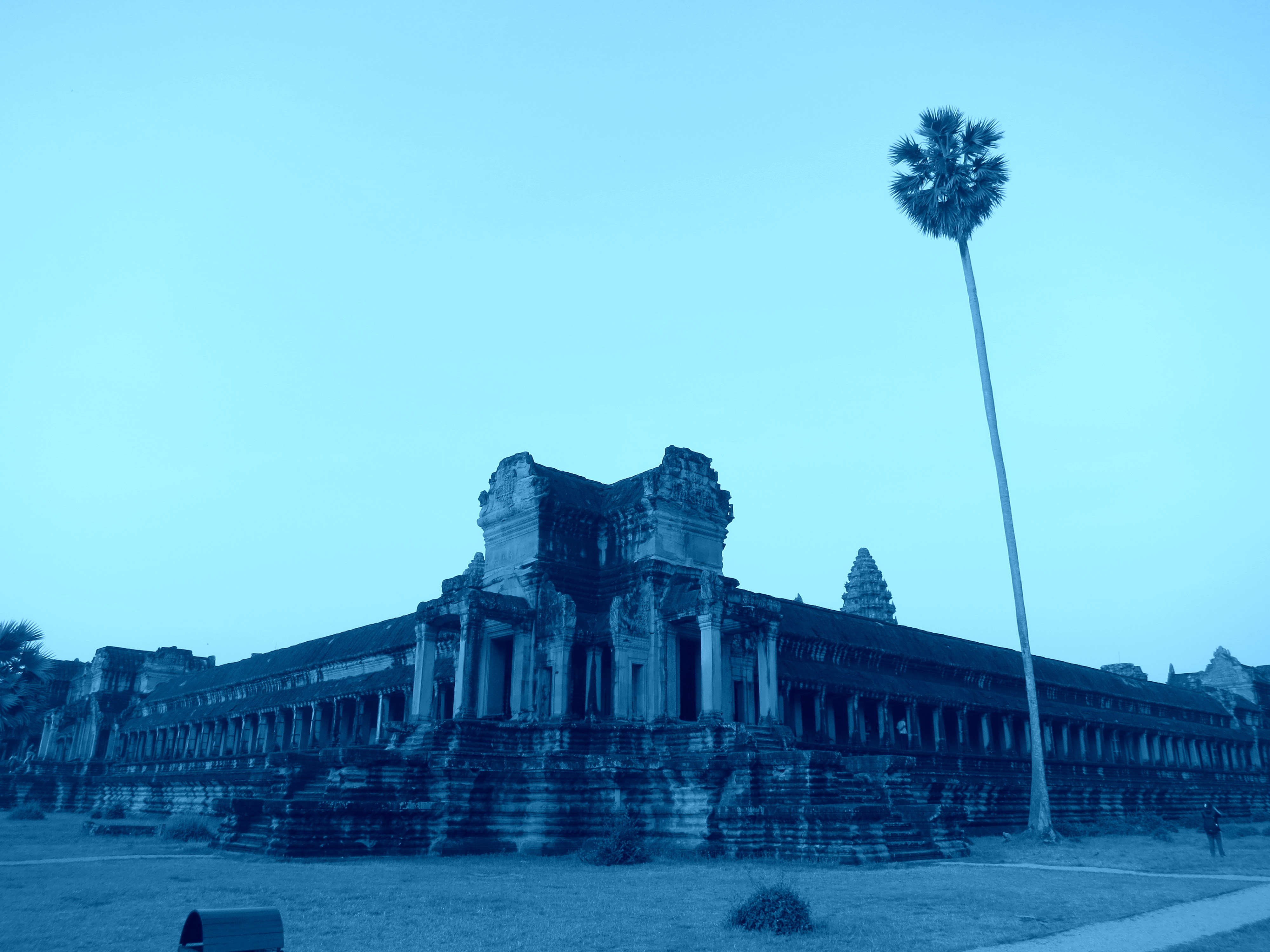
Luang Prabang has dozens of Buddhist temples, and a high concentration of monks and novices (those under age 25 are called novices). The temples, or wats, are painted in elaborate, intricate scenes, sometimes both inside and outside. The grounds are spare, with just a little greenery carefully confined to a few areas, and the rest tiled courtyards between buildings. Monks and novices move around on the edges, running errands, doing homework (many boys enter the monastery to get a good education), making adjustments in the temples.

Seriously impressive

Seriously impressive

luang prabang laos

Probably the most famous wat in Luang Prabang is Wat Xieng Thong, sometimes called The Temple of the Golden City. Since Luang Prabang is on the World Heritage list, there’s a lot of upkeep work going on at various temples, funded by various countries–and this temple is no exception. The US Embassy is supporting efforts to reinforce the structural elements of the temple, and scaffolding was set up around the buddha when I visited.

Unfinished renovations

Unfinished renovations

luang prabang laos luang prabang laos

The main building was painted a maroon color inside, and then gold leaf designs were painted on top of that, on every available surface–ceiling, columns, walls. Inside, a long wooden pipe sat along one wall, and at the end of it sat a small buddha in a glass box. During a water-based festival, water blessed by monks travels through the wooden pipe and washes the buddha. My favorite part of this temple was a separate building, which housed a giant dragon boat. The back wall was red, covered in intricate, colorful mosaic scenes and accented with sparkly glitter. There was no way to get a decent picture to show just how big and full of life it was, but I tried. Exteriors of some other buildings were dotted with similar mosaics.

View from Mount Phousi

View from Mount Phousi

Buddhas in various positions

Buddhas in various positions

Mount Phousi rises above the center of town, and a small temple sits atop it, with various buddha statues and shrines scattered below it, so each step of the climb to the top takes you past a holy site. At the top, if you can balance yourself between the edge and the dozens of fellow tourists, you can see a beautiful sunset over the Mekong. On the walk up, off to the side is the Imprint of the Buddha’s Foot; it’s a large, vaguely foot-shaped indentation in the rock that someone decided was a holy sign. (In that way, it reminds me of the Virgin Mary water spot under the bridge on Fullerton in Chicago.)

Indentation of the Buddha's Foot

Indentation of the Buddha’s Foot

The foot is just past a pavilion with a view of the Nam Khan River to the east, and on this pavilion stood a young novice. His name was Tip, and he was doing homework. He clearly stations himself here most nights in hopes of practicing English, because he was eager to ask and answer questions with me. He was 17, he’d been a novice for many years, his wat was across the river, America sounded interesting… I didn’t have time to ask for a photo or chat with him further, because a couple teenage Laotian boys entered the pavilion, and Buddhist monks aren’t supposed to be alone with women. I didn’t want him getting in trouble, so I said goodbye and he said, “I hope you have many happinesses in your travels in Laos.”
luang prabang laos

Bumming Around Byron Bay

Byron has a way of making you stay longer than you’d planned, I’ve heard more than one person say. This can happen in various ways; some people take up surfing and never want to leave, others get into the relaxed nightlife, and some of us get stupidly ill. Oops! I spent about four weeks in Byron Bay, three weeks longer than I’d intended. Obviously, I spent a good part of that recovering from shingles on my eye, but there was plenty of time for other, much more fun activities.

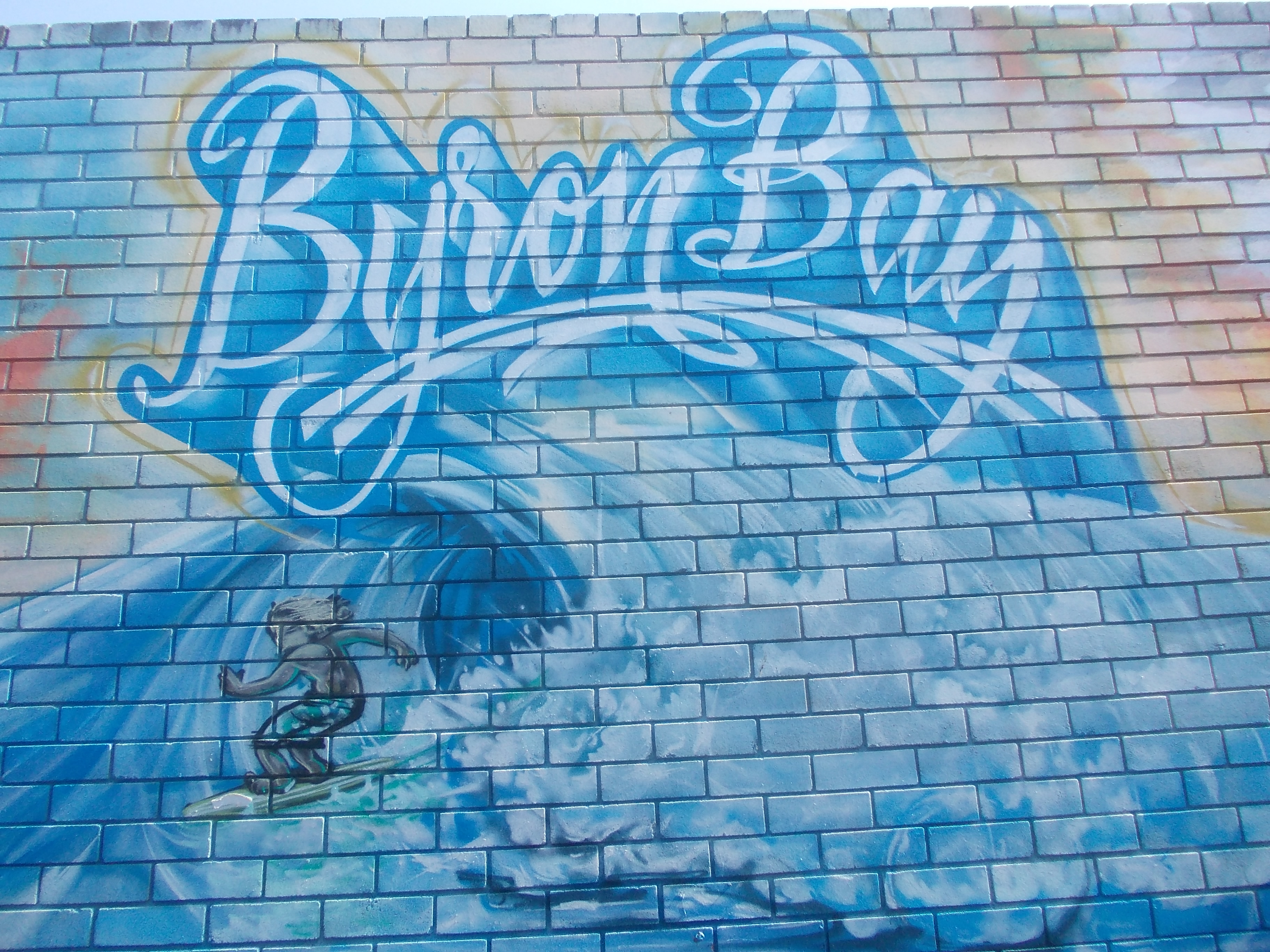
Lots of fun street art here

Lots of fun street art here

I stayed with Heather and her daughter Ruby-Mae,  second cousins on my mother’s side, and their short-term tenant, Sophie. They live near Arakwal National Park, and a short walk up the hill behind their house takes you to a great lookout in the middle of the peninsula, so you can see water all around. On the day of the solar eclipse, I went up there to watch the sunrise, and then we stuck around for the eclipse. I was scared to look at the sun, even with the emergency blanket everyone was using as a safety measure, so I looked at a woman’s pinhole camera, and tracked the moon’s slow progress across the sun in shadow.

Sunrise over Arakwal

Sunrise over Arakwal

Waiting for the eclipse

Waiting for the eclipse

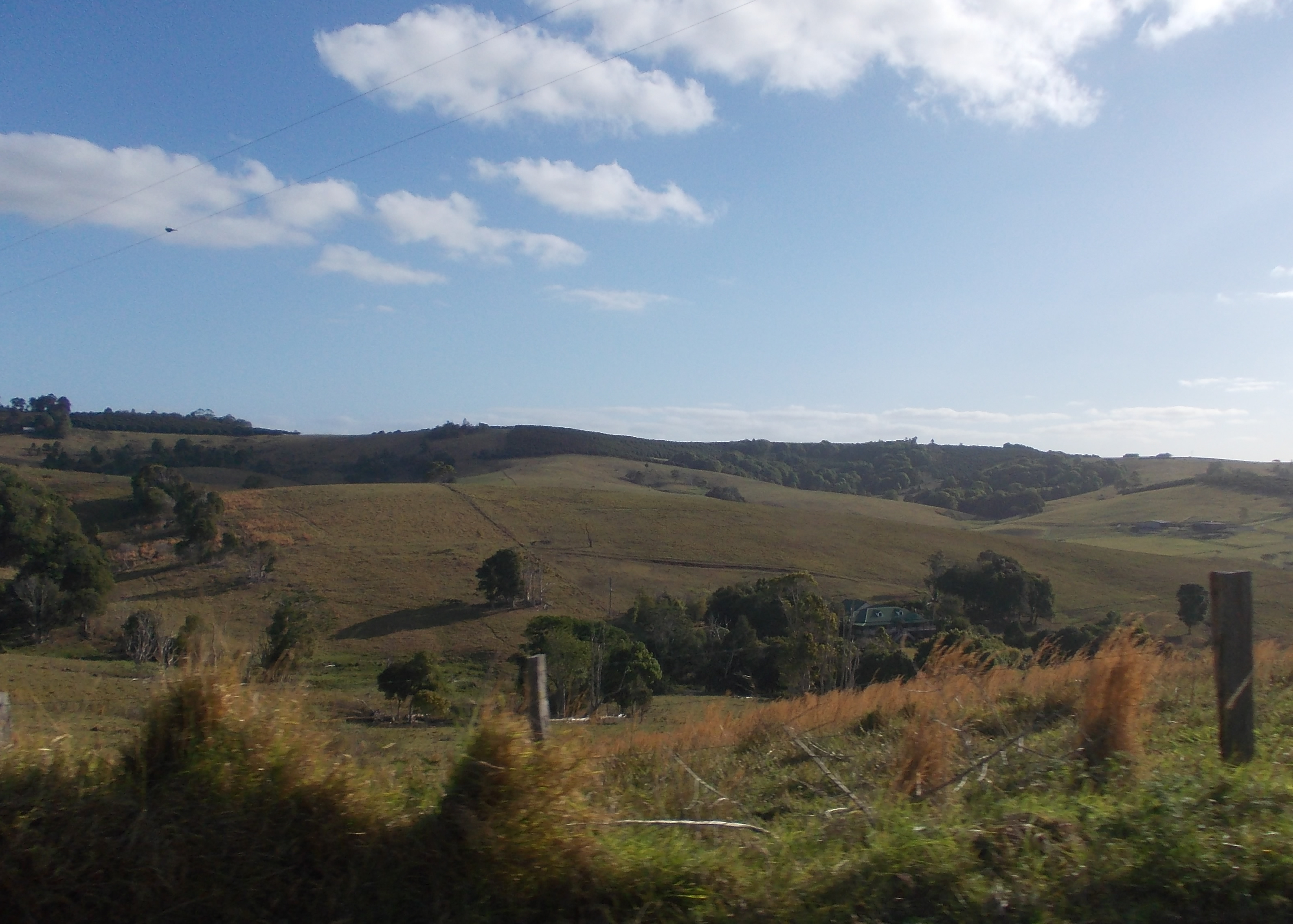
Heather owns several horses, so a few times we went up to the field they live in and I watched her feed them. We drove through the countryside, which to my mind looked like the English countryside, so I can see how settlers would want to make it look like home. It seemed to go on forever, so imagine their surprise when they went farther west and hit the Outback. Heather points out that a quick way to tell the difference between Australian and English fields (other than the different plant life, of course) is the barbed wire. They use hedges in England and barbed wire fences in Australia.

I think this one was Handsome Phil

I think this one was Handsome Phil

countrysideWe went to a show in town, which was billed as a theatrical event but was basically a stand-up routine. The comedian was clearly very nervous, and the audience was very patient with him for a long time, but he never really got going, just kept asking us what it was like to live in Byron and fumbling with the mic while his video cameras recorded every misstep. Then he finally told a joke, and it was “I have a bestselling book, you may have heard of it, it’s called the Bible,” which is not only not funny but is not original. I was still willing to give him more time to redeem himself, although Heather, Ruby-Mae, and Sophie were ready to go. Then he told another joke, which was something about how women will ruthlessly tear out your heart, and I was ready to join the exodus of people streaming from the theater. I’ve never walked out on a show before—it felt weird! But definitely right.

We had an ice cream and wandered around the night market, speculating on how much of the show was done in earnest and how much of it was Andy Kaufman-esque performance art. I think he’s just a bad comedian, but if you see a movie about the greatest trick ever pulled on an audience and I’m sitting in the front row looking shell-shocked, we’ll know it was all part of a master plan.

Beanie, looking contemplative, instead of getting overexcited and trying to pee on guests, which was her usual MO

Beanie, looking contemplative, instead of getting overexcited and trying to pee on guests, which was her usual MO

Several times, we took the dogs for walks down the road, at a place they call “the lakes.” This includes a large lake surrounded by tea trees, which turn the water the color of brown tea, as well as a path over a hill to the beach. One time we walked along the beach and I saw lots of blue jellyfish up on the sand. They were just lying there, a little shiny in the sun, and as large as a dinner plate, and they looked really cool, but I didn’t have my camera with me, sorry.

The tea tree effect

The tea tree effect

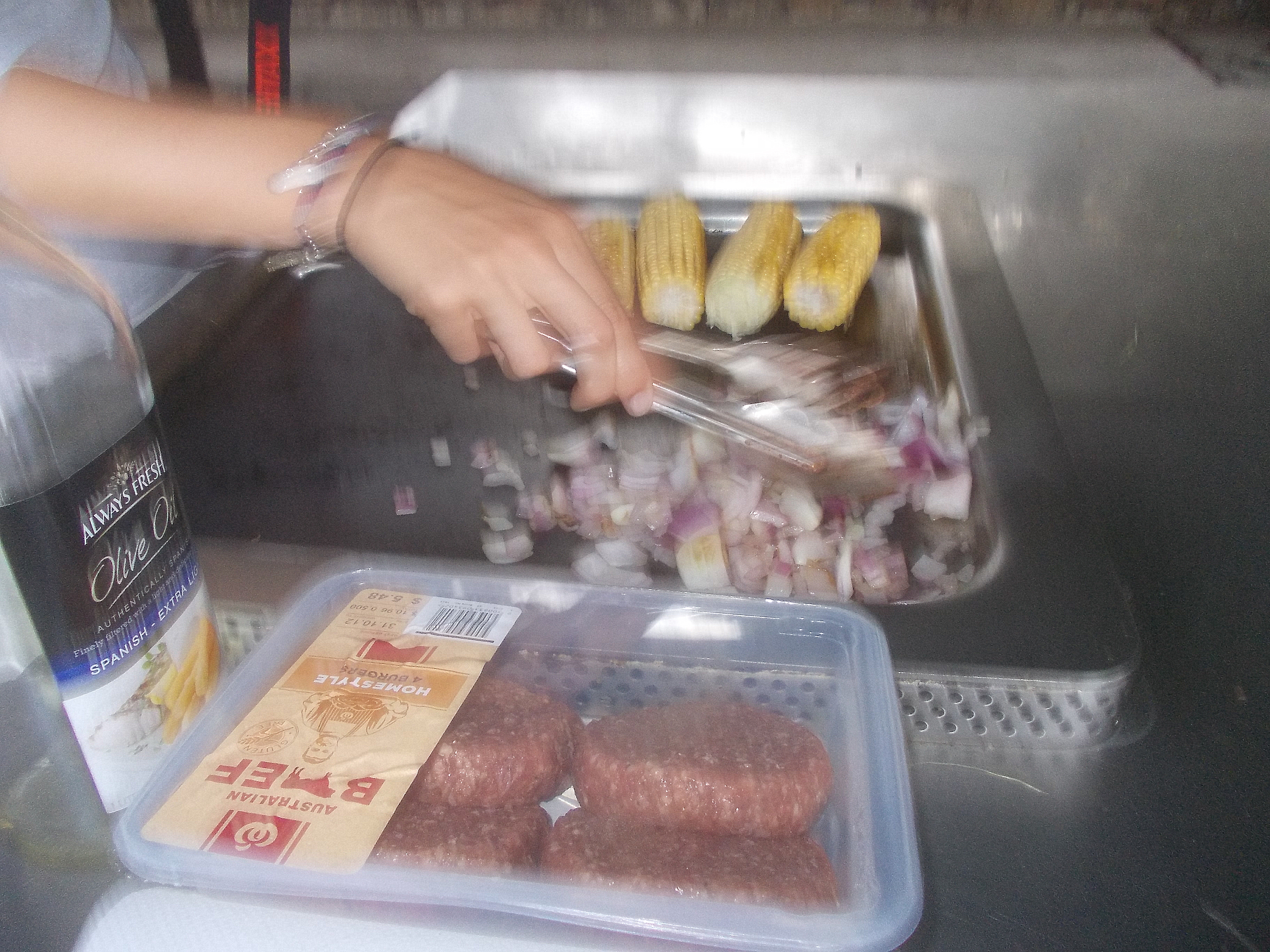
We barbequed by the ocean, in sight of the most expensive hotel in Byron, where all the celebrities stay. Australia has barbeque kiosks set up all over the country, with clear instructions pasted to them. We cooked up some burgers and corn and ate it while watching the ocean and feeling the wind rise. Finally, the months-long drought ended, and we ran back to the car as the rain the town had been waiting for arrived at last.

I'm not sure why this is such a blurry action shot, but anyway that's what the grills look like here.

I’m not sure why this is such a blurry action shot, but anyway that’s what the grills look like here.

Dinner at the beach

Dinner at the beach

We went to the farmer’s market, which is similar to all the other farmer’s markets I’ve been to; mostly white, middle- to upper-middle class people, everyone in a great mood, delicious food. The difference here is that a third of the customers were barefoot, which is much more common down under than back in the States. I thought it was a bohemian Byron thing, but then I saw people going into superstores barefoot in other towns and concluded it’s the relaxed way of life here.

To market, to market

To market, to market

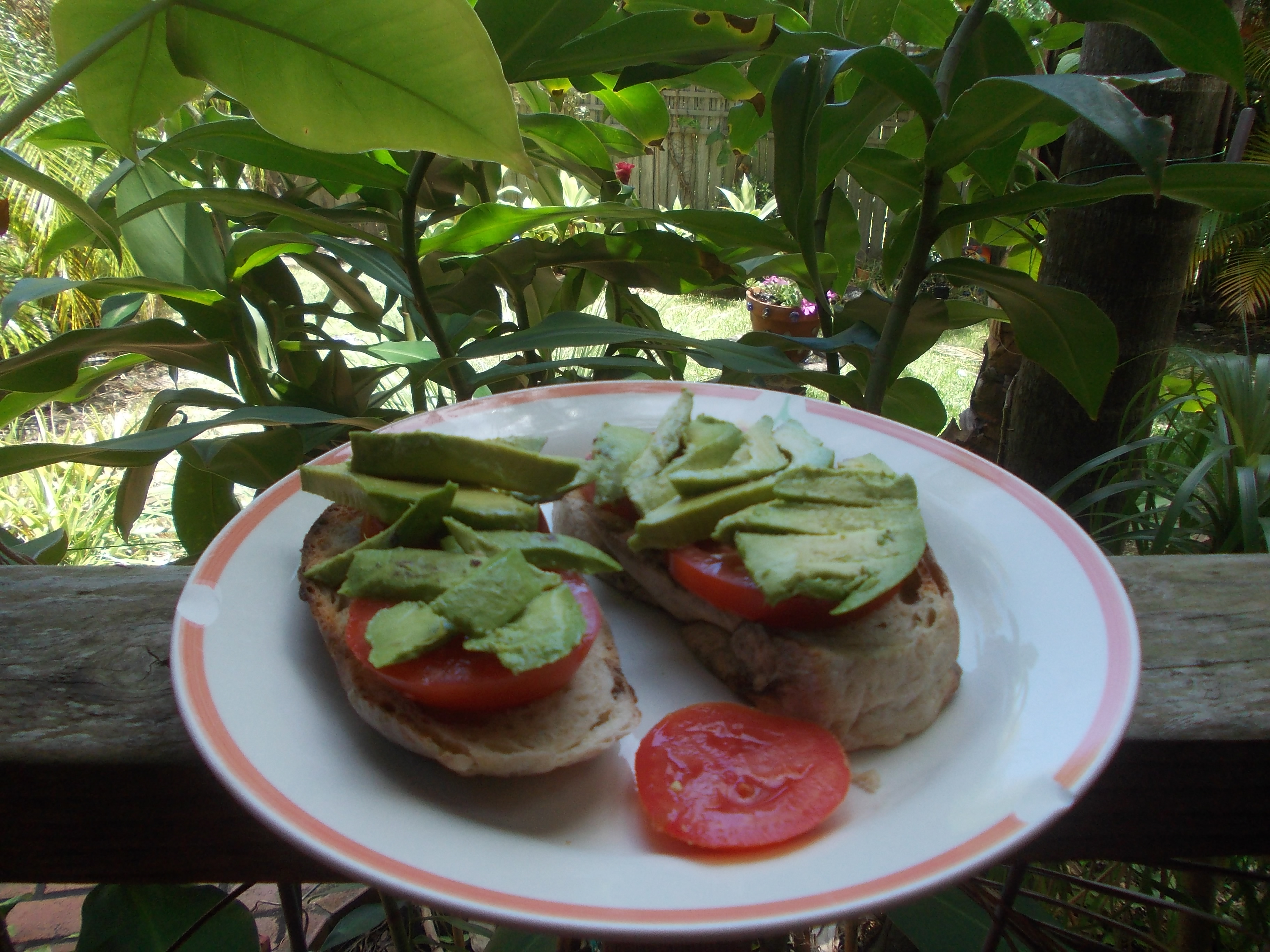
I ate very well in Byron. Ingredients are incredibly fresh here, and I’d make myself lunches with ripe avocadoes and tasty sourdough bread that had just been made the day before. Heather is an excellent cook, and she included me in the family dinner each night, so I had curries, pasta dishes, and all sorts of tasty things while I was there. I made a feeble attempt to repay her kindness by making a dish my last week there, one they’d never heard of: chilaquiles. They went over well!

Lunch time

Lunch time

Dinner time

Dinner time

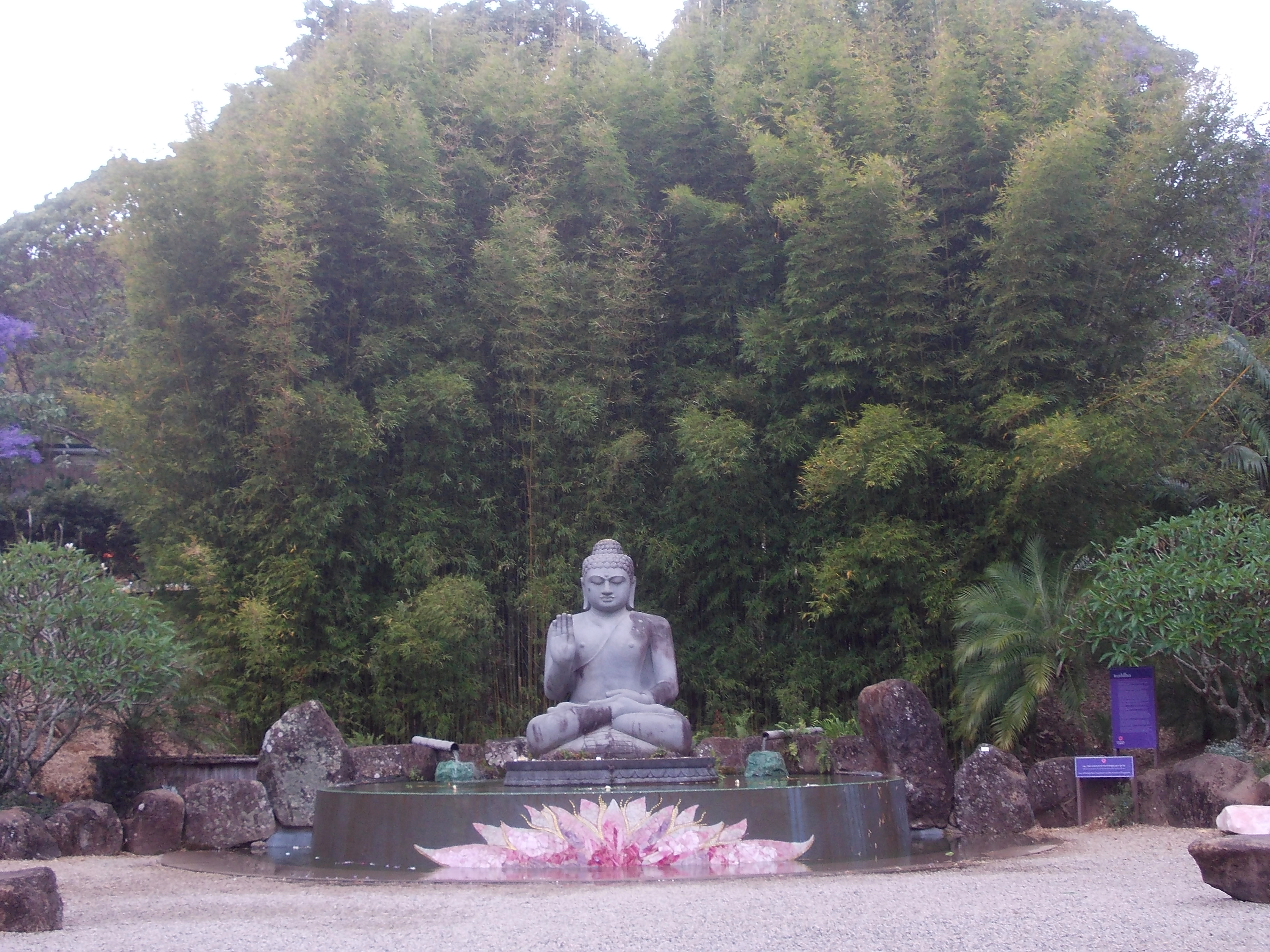
One Saturday, the local Buddhist community had an opening ceremony for their peace stupa, the only one of its kind in the southern hemisphere. We drove out to the Crystal Castle and joined in the ceremony. We walked around the stupa three times, turning the prayer wheels as we went. Those prayer wheels each contained rolls of prayers for peace, and the idea is that as you turn them, you increase their effectiveness. We watched the monks, who had come down from Asia for the occasion, do their own circuit of the stupa, and after one last prayer, the ceremony was over (we arrived toward the end).

Spinning the prayer wheels

Spinning the prayer wheels

byron stupa monks

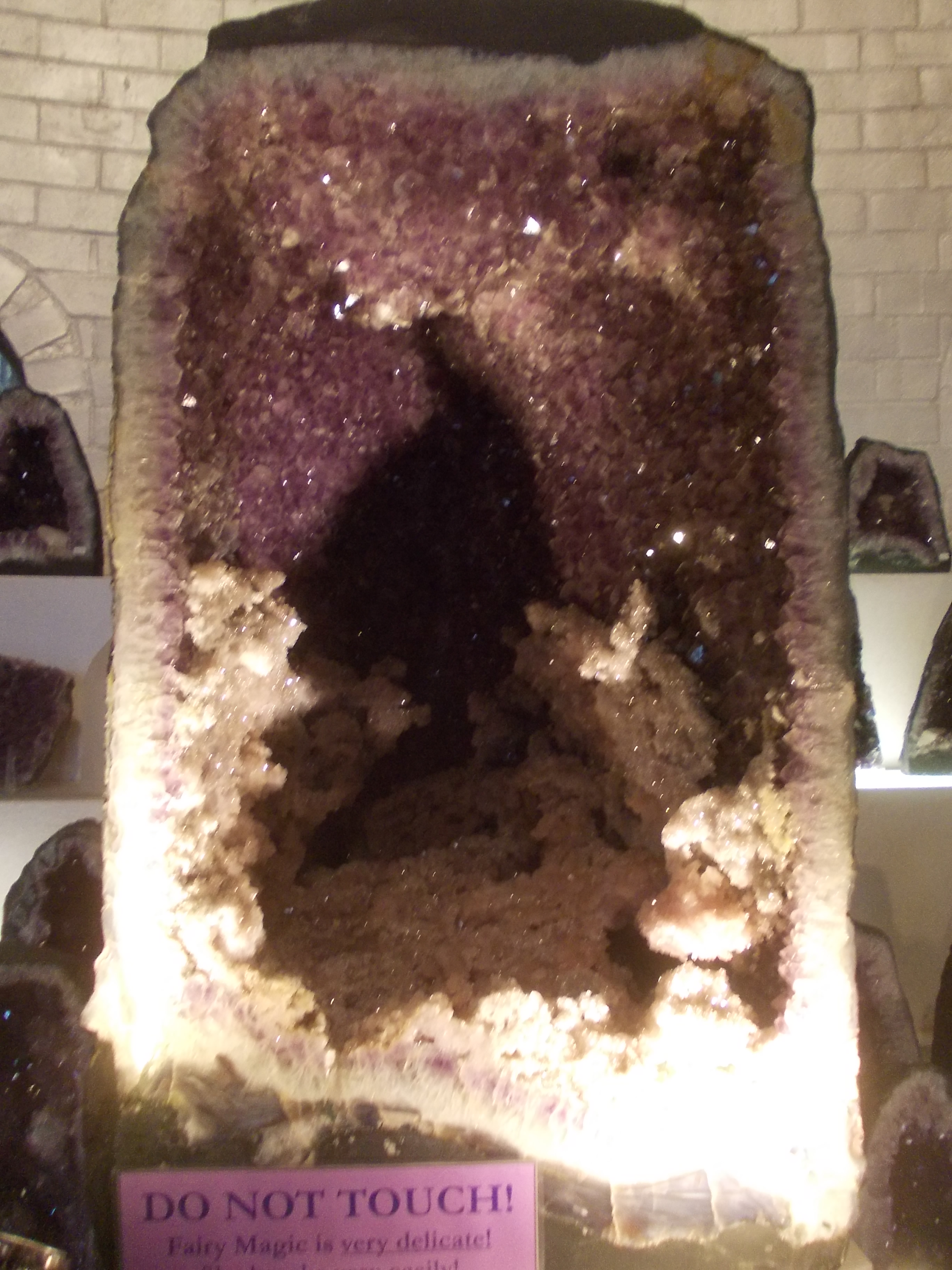
Then we walked over to the main building and looked at the huge collection of crystals they have here, a lot of which come from South America. I walked in the meticulously maintained gardens, and admired the statues and crystals they’d mixed in with the plants.

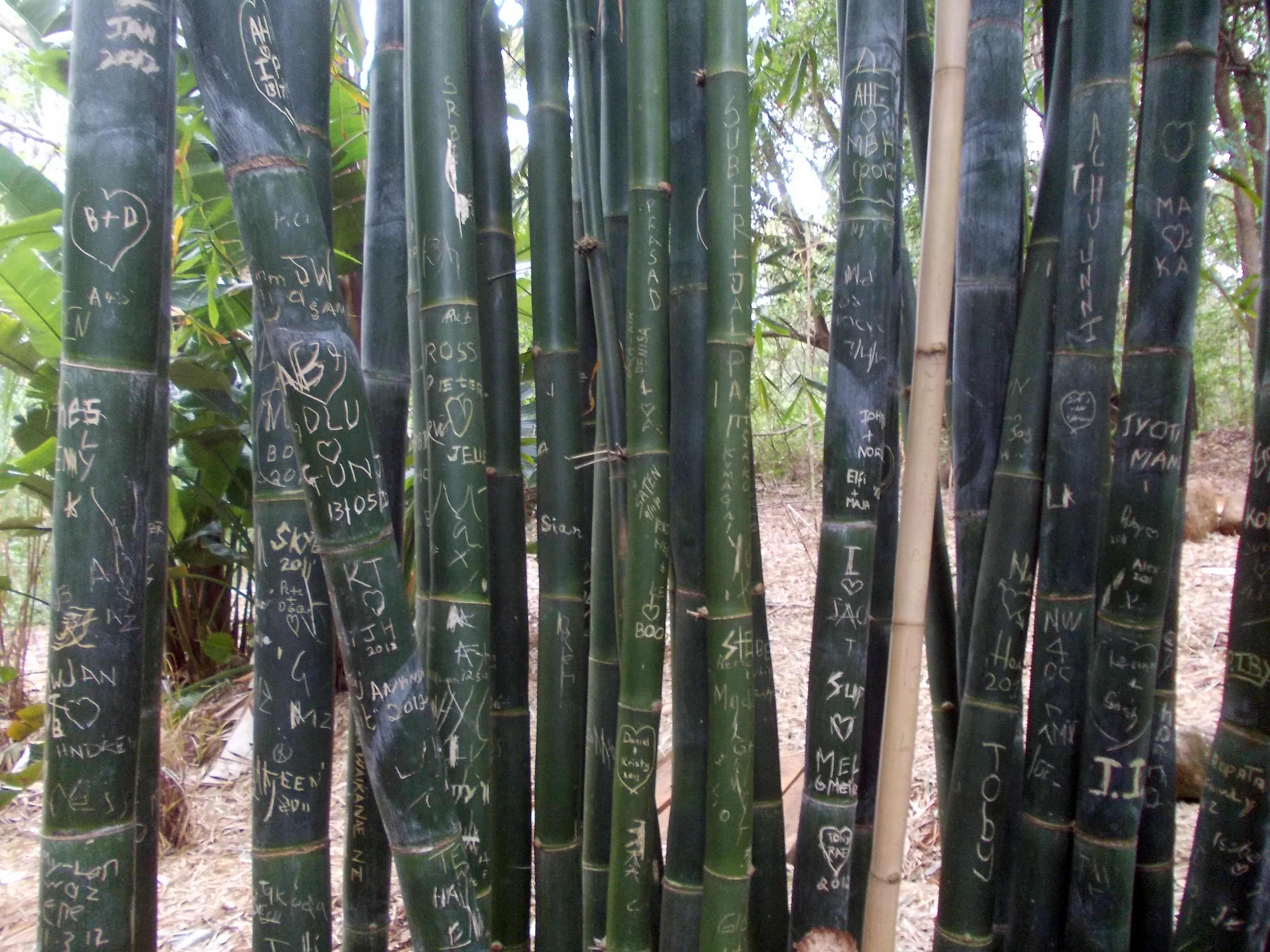
Graffiti on the bamboo!

Graffiti on the bamboo

One of the many giant crystals found at the Crystal Castle

One of the many giant crystals found at the Crystal Castle

The center of the gardens

The center of the gardens

I spent some time wandering around town, picking up prescriptions, indulging in treats at cafes, walking the beach.  Byron is a funny town, a mix of surf shops, head shops, and designer clothes shops. They have a great restaurant scene here, something like 90 eateries in this small town.

Boutique

Boutique

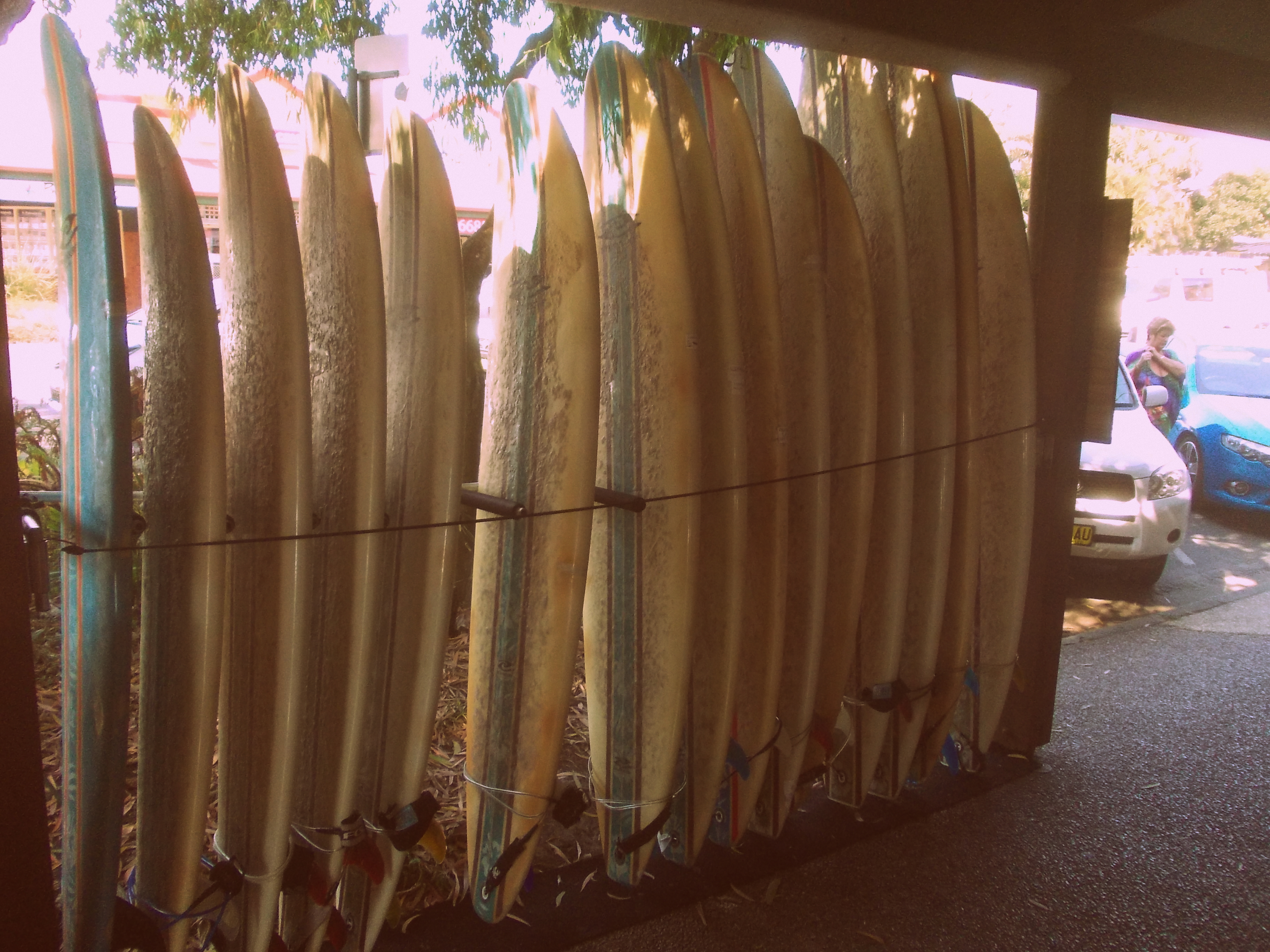
Surfer's choice

Surfer’s choice

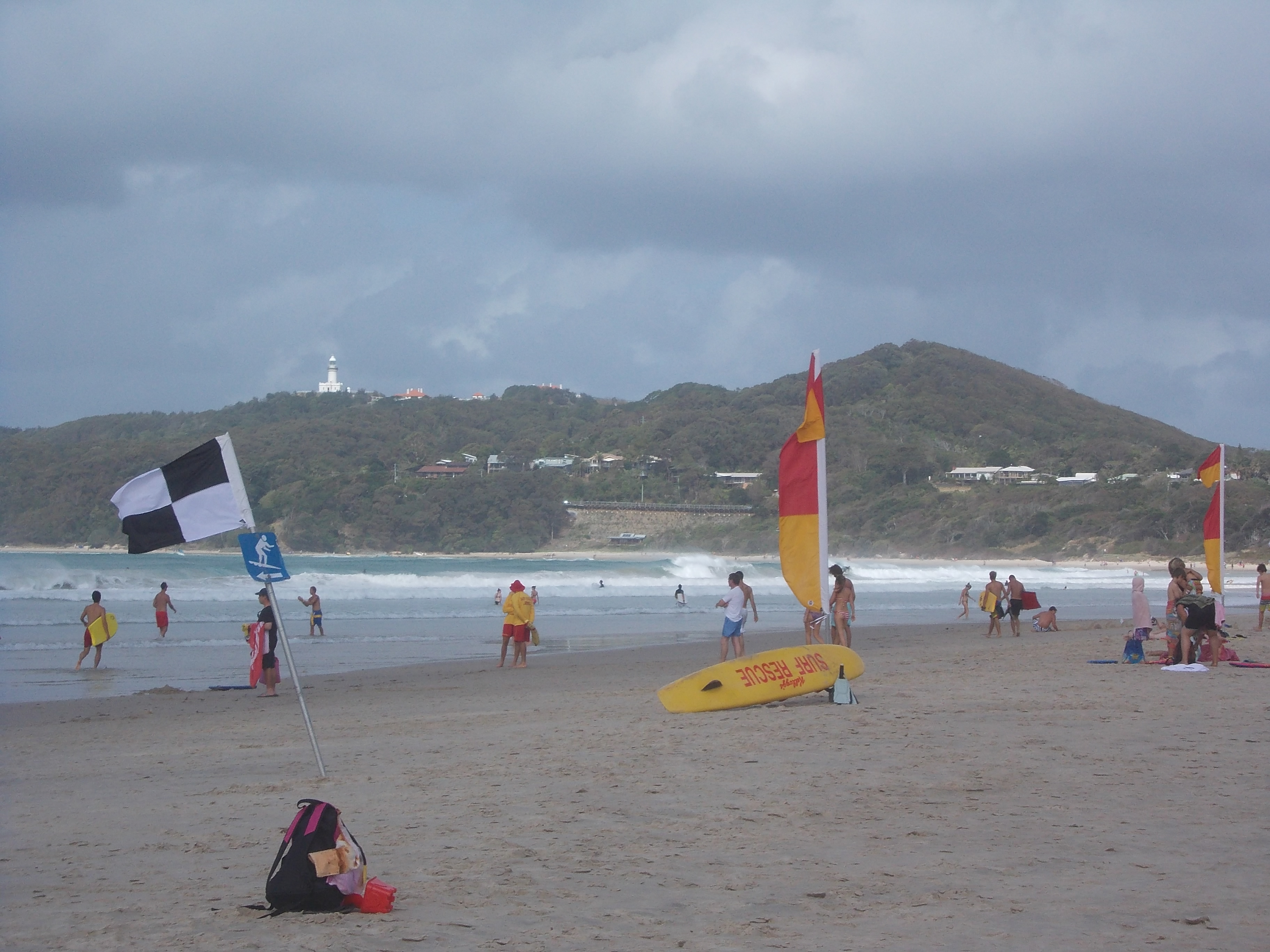
Stay in the flags!

Stay in the flags!

I went to a few concerts at local bars and restaurants with Heather. It’s a big music town here, which is a draw for their family, as Rick is a musician (he was on tour while I was there). We heard some rock covers, reggae, and a few originals over the time I was there. It was great to see a town so enthusiastic about live shows.

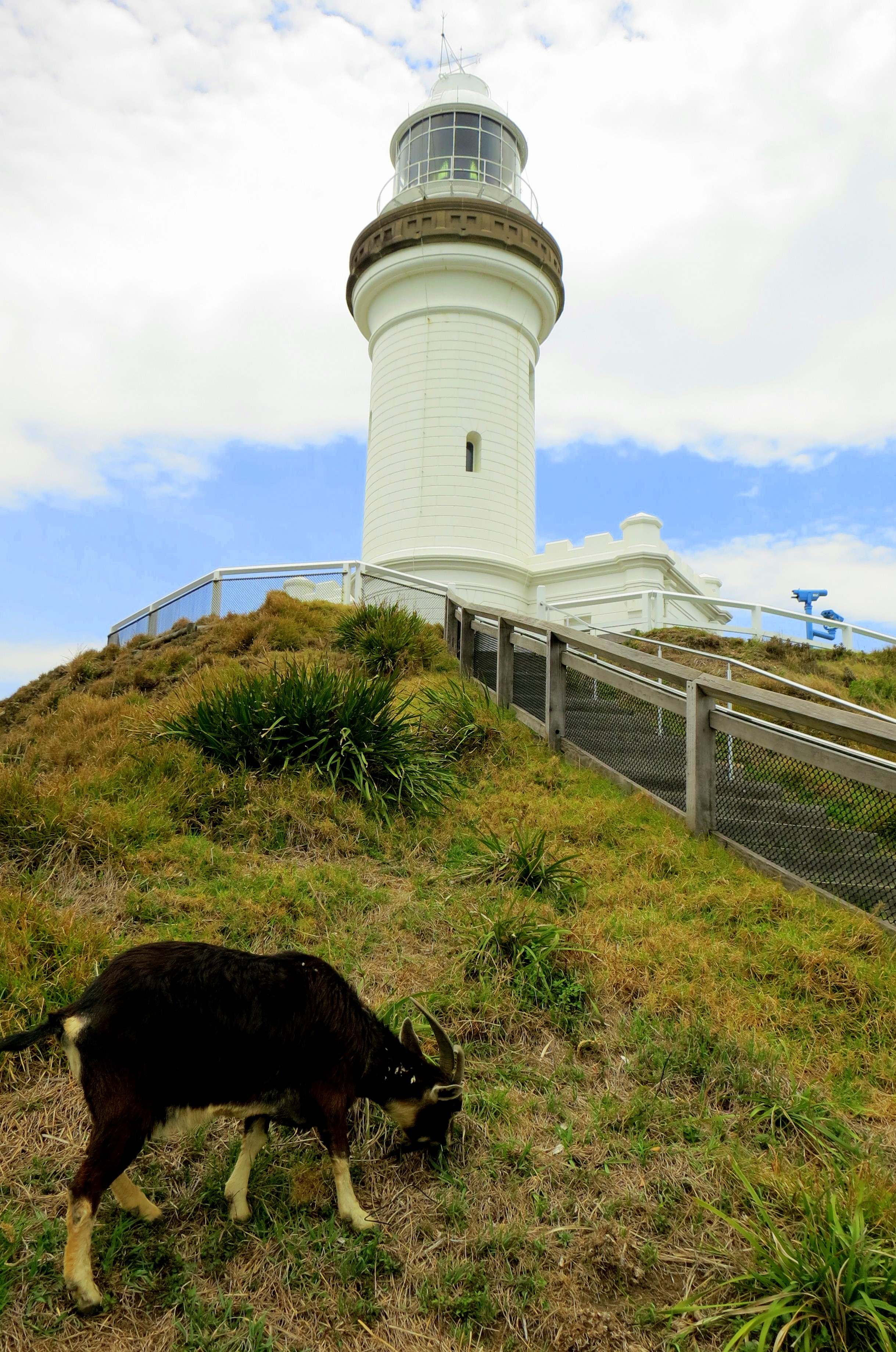
On my last day in town, Heather drove me up to the lighthouse. There’s a little museum at the top which has the old lighthouse chair and light on display, as well as a few other items. (Heather and Rick own a lovely, detailed scrimshaw from the mid-1800s, which they’re considering donating to the museum.) We walked down the path to the lookout, which declares this to be the most eastern part of Australia. Then back up the hill, and we saw the goat, a holdout from when the government decided to reverse their earlier policy of introducing goats and instead wanted to remove this invasive species. This goat in particular is a crafty one, and has never been caught, so the Byron lighthouse still has a goat guarding its hills.

Far out

Far out

The goat and the lighthouse--sounds like a work of literary fiction

The goat and the lighthouse–sounds like a work of literary fiction

Byron Bay is a great little town, with a lot going on, and I’m glad that despite my time in sickbed, I was able to experience a lot it had to offer. Special thanks to my gracious relatives!

Peace and Justice

Peace and Justice

ACAM: The Time Warp Effect of Travelogues

I’ve just finished Hard Travel to Sacred Places by Rudolph Wurlitzer, and I was struck by how of its time it is. Published in 1994 (written in ’93), it’s about Wurlitzer and his wife traveling to sacred sites in Thailand, Burma, and Cambodia as they grieve the sudden death of their son. They’re American Buddhists looking for some measure of peace at various temples and shrines, and the book is full of quotes from various Buddhist texts and religious thinkers.

book cover of Hard Travel to Sacred Places by Rudy Wurlitzer

travelogue/time machine

The jacket copy on the book mentions the word “classic” more than once, and certainly Wurlitzer’s meditations on grief and loss are moving and timeless. How do we cope with the death of a child? How do we hold that unspeakably personal sadness and also hold the tragedies of deaths on a massive scale in various parts of the world? How does the death of a loved one force us to face our own mortality? Wurlitzer’s prose is simple and swift as he grapples with these questions, and I appreciated his insight even while I, as someone who doesn’t practice a religion, couldn’t quite grasp the religious framework he’s working with.

So that part was, despite the personal nature of his grief, universal and timeless. But the rest of it was so specific to 1993! He’s horrified by the commercialization of Thailand, specifically the Coke-drinking, sex trade-working, neon-lit city of Bangkok. Now, of course, the seediness and Westernization of Bangkok is well-known and few travelers are surprised by it when they visit.

In Burma–wait, he visits Burma (Myanmar). That, right there, is different from now. According to Wikipedia, about 800,000 people visited the country in 2010, compared to 1.13 million overseas tourists visiting Chicago alone in 2009. When Wurlitzer visited, Aung San Suu Kyi had only been under house arrest for a few years, after the 1990 elections that saw her party overwhelmingly elected were disregarded and the military junta decided to stop having them for awhile. Wurlitzer talks about an antiquated country, one with very little new industry or commerce since the outside world isn’t dealing with the junta (his descriptions sound like descriptions I’ve read of Cuba), and while he wonders at the brutality of the junta, he sounds relieved to be in a calm, quiet country after the electric buzz of Thailand. Nowadays, some groups advocate tourism to Burma to bring money to the local people and help them keep in contact with the outside world, but most activist groups discourage it, since the junta has forced labor in tourist destinations and the industry mostly supports the junta and not the people. A far cry from the sleepy country Wurlitzer visited almost 20 years ago.

In Cambodia in 1993, the Khmer Rouge were still a major threat; Wurlitzer heard gunfire and saw holy sculptures vandalized by people taking parts of them over the border into Thailand to sell on the black market. He describes a country in chaos, with elections right around the corner, but no one sure of who will win or who ought to win. Today, Cambodia has finally prosecuted some Khmer Rouge as war criminals, and humanitarian groups have sprung up all over the place, but its prime minister, Hun Sen, has kept in power through some very shady means, and the country is still one of the poorest in the world. The biggest change on the ground is the lack of Khmer Rouge with guns around every corner, although the mines from the civil war that could blow up at any time in 1993 can still blow up on any unlucky pedestrian today.

I enjoyed reading Hard Travel to Sacred Places both for Wurlitzer’s thoughts on death and grieving, and also for the time warp experience. It’s fascinating to read a contemporary travelogue alongside a history textbook and see how personal experience intersects with facts.

Image from here.

ACAM: Angkor Wat, Cambodia

Hello, dearest fellow travelers! We are now moving from Singapore to Cambodia in the ACAM Project. I’ve been reading A Short History of Cambodia: From Empire to Survival by John Tully, and so far I’m liking it as a very brief overview. One of the things that Tully emphasizes is that there are so few records of Cambodia before the 16th century. Unlike the ancient and well-documented civilizations of China and Japan to the north, the Khmer people live in the hot, wet land of southeast Asia, which doesn’t do so well for preservation of paper. So what we know of the history of Cambodia is largely taken from what visitors wrote about it over the years, and also a bit from stone inscriptions.

Angkor Wat photo by Trey Ratcliff

If it's this magnificent now, imagine how Angkor Wat looked in its day.

The ancestors of the Khmer people built the city of Angkor in the 9th century CE, and at its height it was the largest city in antiquity, with a population of 1 million. One million people in one place in the pre-industrial age! For comparison, London grew hugely in the 16th century and still only reached 225,000. So Angkor, today a giant ruin of temples and not much else, was, for several hundred years, the largest city in the world.

Tully is eager to emphasize that the massive building projects of Angkor were all based on a huge slave population. I got a bit uncomfortable with his descriptions of the “overweening egotism and peculiar religiosity” (p. 25) of the devarajas (god-kings) who ruled over their enslaved subjects and commissioned giant temples. I’m not uncomfortable with pointing out the barbarism of slavery, but there are several other places in the book where Tully draws comparisons between the Angkor people and other ancient peoples, which helps put their culture in context. I mean, when I read about tens of thousands of slaves dragging several tons’ worth of stone to a building location to construct an enormous temple made for the glory of a god-king, the first thing I thought of was the ancient Egyptians. Right? Pharaohs, gods incarnate, built pyramids as massive tombs for themselves, to be filled with materials to carry into the afterlife; and all at the considerable expense of slaves’ sweat and blood. But Tully never draws this comparison, which strikes me as odd.

Maybe the constructions weren’t similar enough for him? He says several times that the wats were an unprecedented religious construction; they were temples and mausoleums at the same time. So they weren’t like a church or mosque, which may have some tombs in it but serves the main purpose of being a place of worship for people; nor were they like pyramids or large tombs, which serve the main purpose of housing the deceased. They were places to worship the deity Vishnu or Shiva, but only through worshiping the god’s manifestation on earth, the god-king’s body. (Or at least this is what I got from re-reading the relevant chapter over and over; please correct me in the comments if I’m missing something.)

Angkor Wat photo by Philip Lock

splendid

Speaking of religion, the wats (yep, the Angkor Wat is the largest religious construction of what used to be this major city, and that’s how it got that name) were part of a strain of Hinduism practiced in Angkor, influenced by Mahayana Buddhism and Khmer folk beliefs (p. 39). Tully references historians who believe that the decline of these religions and the rise of Theravada Buddhism contributed greatly to the decline of the Angkor empire. The drive to build monuments glorifying one man, at the expense of thousands of men who literally lived to serve him, was a concept supported by Hindu and Mahayana Buddhist beliefs. Theravada Buddhism, on the other hand, emphasized living a simple life resigned to suffering. This resignation to suffering may have comforted the laborers, but the more democratic focus on achieving nirvana by living a good life rather than making great displays may have stirred up discontent among them as well and undermined the devaraja rule. (Please note that I am not familiar with the particulars of various strains of Buddhism, so I’m paraphrasing Tully here, who is talking about Buddhism as it was practiced 1000 years ago. These may not be the same as current iterations of the religion.)

Tully points to two other major factors in the decline of the Angkor empire: increased raids by neighboring Siam (today known as Thailand), and environmental destruction. The city (which was spread over a large swath of land) depended on a particular system of irrigation canals. Deforestation above the canals caused damage to the water and soil below, which destroyed many fish and introduced still water patches perfect for malarial mosquitoes to breed in.

So the people believe in a more equitable religion, one that denounces material things, right around the time armies are invading, and old farming and forestry practices are destroying the people’s habitat. Easy to see how these factors combined to kill and displace people, and transform the population of a mighty kingdom into a minor city and eventually a grand ruin.

Photos from here; photo 1 taken by Trey Ratcliff, photo 2 taken by Philip Lock.