Black History Month: Lucille Clifton

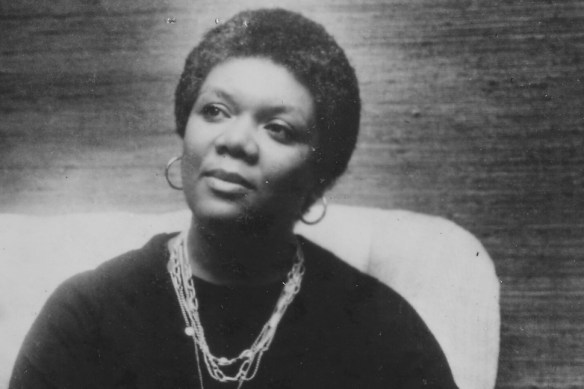
In my writing classes in college, one of the poets I often tried to imitate was Lucille Clifton. She had the wonderful ability to use as few words as possible to convey an idea beautifully and completely — by many definitions, that is exactly what poetry is, but so often length, rhyme, form, and complex wordplay clutter it up. Not in Clifton’s poetry. She wrote short lines, often adding up to just a few stanzas, using all lowercase letters and only necessary punctuation. Adjectives were used sparingly, and somehow metaphor was rarely necessary; these two loom so large in poetry in general, but after reading the few, perfect words Clifton chooses in each poem, you begin to wonder why we need them at all.

Clifton’s poems are funny, quietly poignant, intimate, inclusive. Reading poems like “blessing the boats,” you do actually feel a holy hand upon your forehead, the warmth of a sincere wish for safe passage across the unknown ocean of the future: “may you kiss/the wind then turn from it/certain that it will/love your back.” (And of course, this is the poem that is all metaphor, so okay.) Reading “here rests,” you delight in the picture of Clifton’s sister, who brought her pimp with her to read to her ailing father, getting her just reward after death: “may heaven be filled/with literate men/may they bed you/with respect.”

There’s no mistaking that Clifton grew up black in the Jim Crow era, that being a black woman informed much of what she wrote. Her eulogy for James Byrd Jr., lynched by white supremacists in 1998, echoes with the thousands of lynchings that came before and the fear of more to come: “why and why and why/should i call a white man brother?/who is the human in this place,/the thing that is dragged or the dragger?” Even “homage to my hips,” a joyous celebration of the particular curves of her body, doesn’t forget the wrongs done to bodies like hers for centuries in the United States: “these hips/are free hips./they don’t like to be held back./these hips have never been enslaved,/they go where they want to go/they do what they want to do.”

Clifton wrote about family, biblical characters, sensual encounters, the cancer she survived, the baby she had who didn’t. She often wrote about death and life and the shimmering, barely-there line between the two. She never wrote anything trite or superficial, but even her poems that grieve most openly about personal or historic tragedy are imbued with hope, a sense that there is always something in this world to celebrate — and to share with one another.
lucille-clifton

Image.

Taking and Making: February 2

Today, I took in:

Groundhog Day

a chapter of A People’s History of the United States

several chapters of Over Sea, Under Stone


I made:

a post on The Hate U Give

some frankly adorable brownies with little Oreo groundhogs popping out of them (see below), which were enjoyed while watching Bill Murray undergo his Buddhist journey toward enlightenment in the classic 1993 film

27628971_875814384200_121500797285502735_o

Black History Month: The Hate U Give

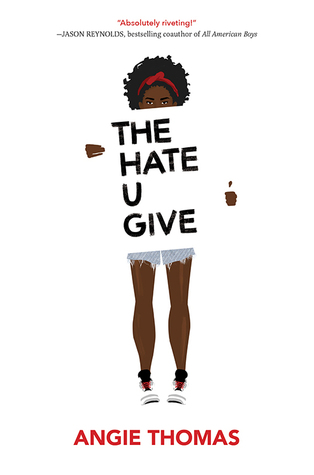
Angie Thomas’s YA book The Hate U Give is one of those rare books that is perfect for all audiences — for black folks who want an honest reflection of daily reality for many of them, for white folks who want to be better allies in the #BlackLivesMatter movement, for white folks who don’t understand why #AllLivesMatter is bad. 

Starr is a wonderful main character, full of verve and love. She witnesses the brutal, sudden murder of her friend at the hands of a cop, and spends the rest of the book grappling with the fallout of that event. Starr is a black teenager living in the city and commuting to a nearly all-white prep school in the suburbs, and much of the novel involves Starr navigating those two different worlds and figuring out her relationships in both of them. She’s also a teenager figuring out romantic relationships, and a sister joking around with her brothers, and a dutiful daughter in a family that expects a lot from her. There’s a lot of easy humor and genuine affection in this novel.

Starr’s family and friends are well-drawn characters as well, written with a complexity supporting characters aren’t always given. But it’s important that they be complex, because this book is so grounded in the real world that if there were any false note, you’d notice it immediately. Instead, I cried and feared for Starr and her loved ones as they helped each other through some of the hardest things people have to experience.

32313894

Image.

Taking and Making: January 31

Today, I took in:

“Footprints in the Snow” by Maurice Leblanc in Foreign Bodies, a collection of stories from around the world from the ‘golden age’ of crime/detective fiction

a couple chapters from Howard Zinn’s A People’s History of the United States

Colossal, a movie that bears little resemblance to its lighthearted trailer — it’s a really good film, but it turns dark around the halfway point and stays that way to the end, so be prepared


I made:

a nice walk around my neighborhood park

Taking and Making: January 29

Today, I took in:

a chapter of Howard Zinn’s A People’s History of the United States

the latest episode of Crazy Ex-Girlfriend

“Everything That Rises Must Converge” by Flannery O’Connor and “Pigeon Feathers” by John Updike, in 100 Years of the Best American Short Stories


I made:

some goofy games with adorable kids at the volunteer gig

some nice harmonies with my choir