Black History Month: Lucille Clifton

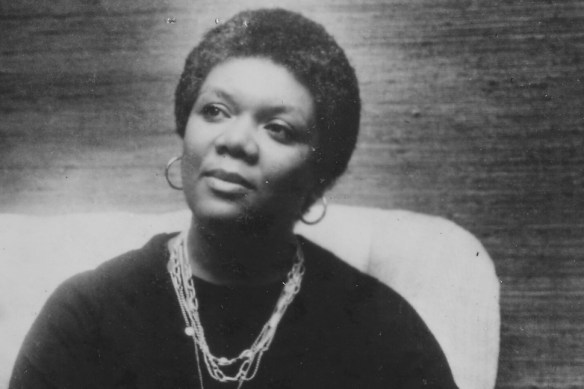
In my writing classes in college, one of the poets I often tried to imitate was Lucille Clifton. She had the wonderful ability to use as few words as possible to convey an idea beautifully and completely — by many definitions, that is exactly what poetry is, but so often length, rhyme, form, and complex wordplay clutter it up. Not in Clifton’s poetry. She wrote short lines, often adding up to just a few stanzas, using all lowercase letters and only necessary punctuation. Adjectives were used sparingly, and somehow metaphor was rarely necessary; these two loom so large in poetry in general, but after reading the few, perfect words Clifton chooses in each poem, you begin to wonder why we need them at all.

Clifton’s poems are funny, quietly poignant, intimate, inclusive. Reading poems like “blessing the boats,” you do actually feel a holy hand upon your forehead, the warmth of a sincere wish for safe passage across the unknown ocean of the future: “may you kiss/the wind then turn from it/certain that it will/love your back.” (And of course, this is the poem that is all metaphor, so okay.) Reading “here rests,” you delight in the picture of Clifton’s sister, who brought her pimp with her to read to her ailing father, getting her just reward after death: “may heaven be filled/with literate men/may they bed you/with respect.”

There’s no mistaking that Clifton grew up black in the Jim Crow era, that being a black woman informed much of what she wrote. Her eulogy for James Byrd Jr., lynched by white supremacists in 1998, echoes with the thousands of lynchings that came before and the fear of more to come: “why and why and why/should i call a white man brother?/who is the human in this place,/the thing that is dragged or the dragger?” Even “homage to my hips,” a joyous celebration of the particular curves of her body, doesn’t forget the wrongs done to bodies like hers for centuries in the United States: “these hips/are free hips./they don’t like to be held back./these hips have never been enslaved,/they go where they want to go/they do what they want to do.”

Clifton wrote about family, biblical characters, sensual encounters, the cancer she survived, the baby she had who didn’t. She often wrote about death and life and the shimmering, barely-there line between the two. She never wrote anything trite or superficial, but even her poems that grieve most openly about personal or historic tragedy are imbued with hope, a sense that there is always something in this world to celebrate — and to share with one another.
lucille-clifton

Image.

Black History Month: Girls Trip

In recent years, Hollywood has seen #OscarsSoWhite and #TimesUp, and it has generally responded with a shrug of the shoulders and a few token awards and wider releases to appease the masses of us who just want better representation, fair pay, and a safe and equal place to work. In this context, enter 2017’s Girls Trip, which is at once a reflection of real issues in women’s lives (love, career, friendship) and a raunchy group comedy that gloriously pushes the bounds of what we’re used to seeing on screen in a major studio release.

In this movie, black women are allowed to let loose and let fly like they rarely are in movies and indeed in real life. Part of this is the privilege of class — these are upper-middle-class women, except for Regina Hall’s character, who is rich and about to get richer — but also it’s because reality is only allowed so much rein here. The women get into a fistfight in a club and then sneak out the side door, no one the wiser. They get off their faces on absinthe and laugh about it later, rather than being kicked out for inappropriate behavior. In short, they’re friends goofing around and getting into mild trouble, like in The Hangover or Bridesmaids or any other film that allows groups of friends to kick back without any real consequence. Continue reading

Black History Month: The Hate U Give

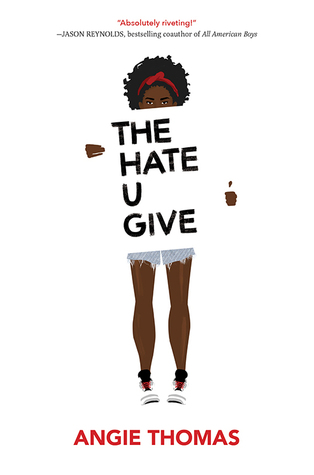
Angie Thomas’s YA book The Hate U Give is one of those rare books that is perfect for all audiences — for black folks who want an honest reflection of daily reality for many of them, for white folks who want to be better allies in the #BlackLivesMatter movement, for white folks who don’t understand why #AllLivesMatter is bad. 

Starr is a wonderful main character, full of verve and love. She witnesses the brutal, sudden murder of her friend at the hands of a cop, and spends the rest of the book grappling with the fallout of that event. Starr is a black teenager living in the city and commuting to a nearly all-white prep school in the suburbs, and much of the novel involves Starr navigating those two different worlds and figuring out her relationships in both of them. She’s also a teenager figuring out romantic relationships, and a sister joking around with her brothers, and a dutiful daughter in a family that expects a lot from her. There’s a lot of easy humor and genuine affection in this novel.

Starr’s family and friends are well-drawn characters as well, written with a complexity supporting characters aren’t always given. But it’s important that they be complex, because this book is so grounded in the real world that if there were any false note, you’d notice it immediately. Instead, I cried and feared for Starr and her loved ones as they helped each other through some of the hardest things people have to experience.

32313894

Image.

Black History Month

For longer than I’ve been alive, the US has celebrated Black History Month in February.  The risk of having a month like this is that schools and other institutions only focus on the struggles, accomplishments, contributions, and real-life issues and joys of black folks during the shortest month of the year. But if done right, it can be a jumping-off point to discussing these things and setting them properly in the wider historical and social context.

For every day in the month of February, I’m going to write about a piece of art made by a black person. I’m mostly going to focus on those works of art I enjoy and/or things I think are well done, but there may be the occasional reassessment of a favorite. Why me, a white woman in her mid-30s? Well, it’s my blog and I want to, hello, welcome. But also, a big part of our problem is white folks not paying enough attention or engaging critically enough with black folks’ words and work. I can be part of that re-engagement.

So tune in every day now through the 28th for more!

Spoiler alert: I’ll be doing the same thing for Women’s History Month in March.

black history month

Image.

Black History Month: Selma

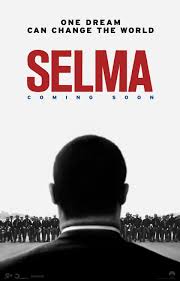
Ava DuVernay’s Selma is apparently the first feature-length attempt at a biopic of Martin Luther King, Jr. I say “apparently” because it didn’t even occur to me that I haven’t seen a movie about him that hasn’t been a documentary — his voice, his words, his image are so omnipresent in the United States, especially during the federal holiday devoted to him and the month following it, that I didn’t even consider there wasn’t a major fictionalized version of him out there. But this is definitely a version of him we needed — one that contradicts the safe-for-white-folks version of him we see most of the time. DuVernay wanted to show King as a radical speaking truth to power, and in Selma, she succeeds.

selma

In Selma, MLK is a larger-than-life hero and a flawed human, an irreplaceable leader and one part of a movement much larger than any individual. This is the kind of movie you want to see made about your heroes, where the sanitizing is kept to a minimum and there’s no melodrama or clumsy foreshadowing. It’s also cleverly kept to a short but important period in his life, with no sepia-toned flashbacks or tired story beats we see from so many moviemakers who seem to think that in order to capture the essence of an extraordinary person’s life, you need to show the entire timeline. Continue reading