Hirosaki in Bloom

Hanami celebrates the ephemeral nature of life and the beauty of friendship and the natural world, but this year the few people I saw engaging in the custom were also celebrating hardiness and perseverance, whether they meant to or not. Hanami is the Japanese custom of having a picnic with friends under the blooming cherry trees in spring, but it was an especially cold and rainy spring in Hirosaki this year, so I was impressed by the few groups of people I saw laying out plastic sheeting and blankets, bundled as they were in raincoats and scarves.

Celebrating hanami despite the gloomy weather

Celebrating hanami despite the gloomy weather

I wasn’t upholding a national custom or family tradition by visiting Hirosaki for the sakura (cherry blossoms), but I did rearrange my schedule and endure the cold and rain for it. I was as determined as those chilly revelers to admire the beauty of the sakura in weather that did its best to mask it.
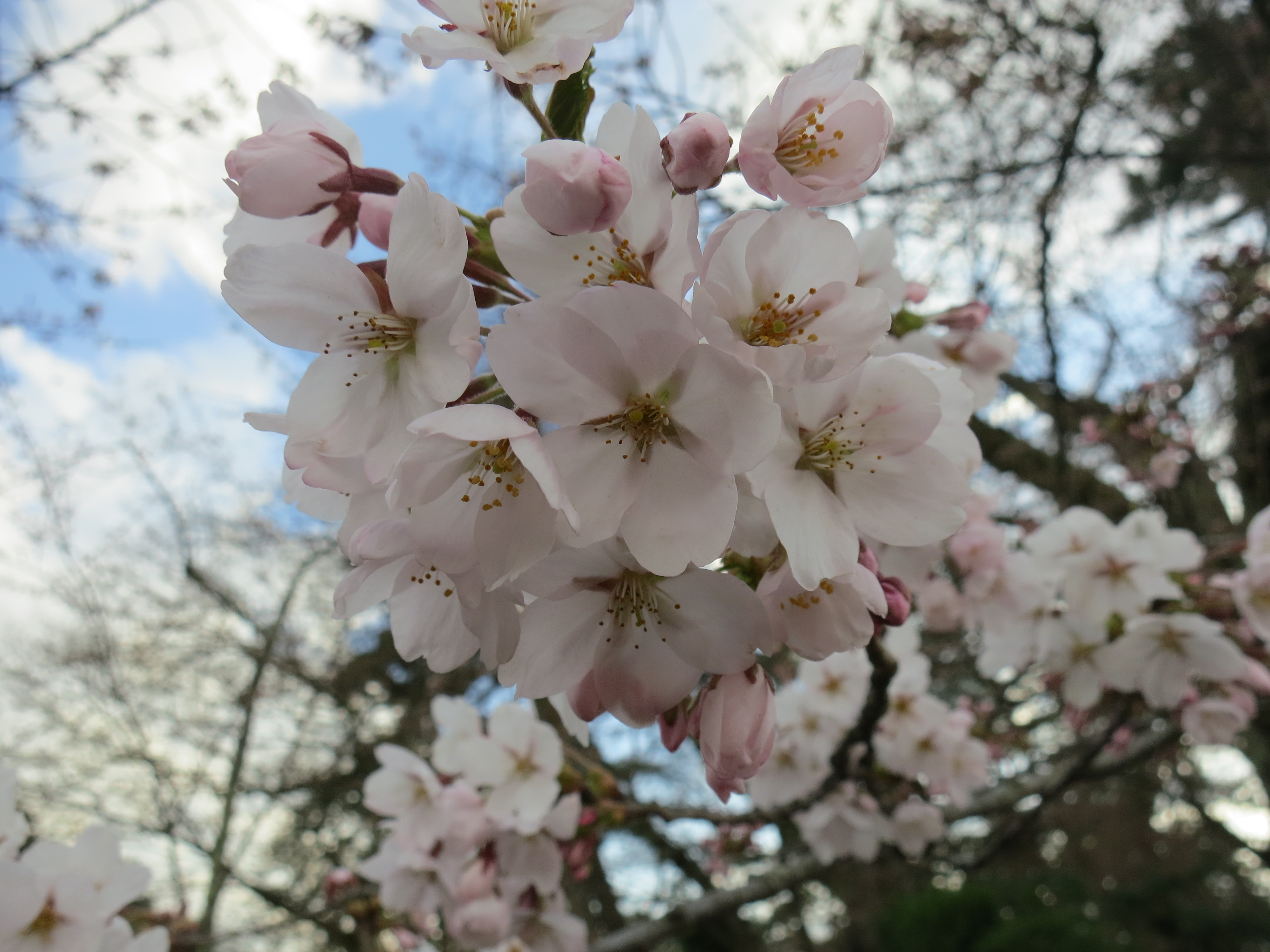
Sakura in bloom

Sakura in bloom

Hirosaki is in Aomori Prefecture, the northernmost district on the main island of Japan. It’s 400 miles northwest of Tokyo, and part of my journey there was spent on the Shinkansen (bullet train). As expected, the trains were clean, comfortable, and on time. I covered 400 miles in about 5 hours, including changing trains. I’ll repeat what every American who’s ever traveled this way has likely said: Why aren’t we doing this in the States? They love cars in Japan, too, but they still put money, research, and time into the train infrastructure.
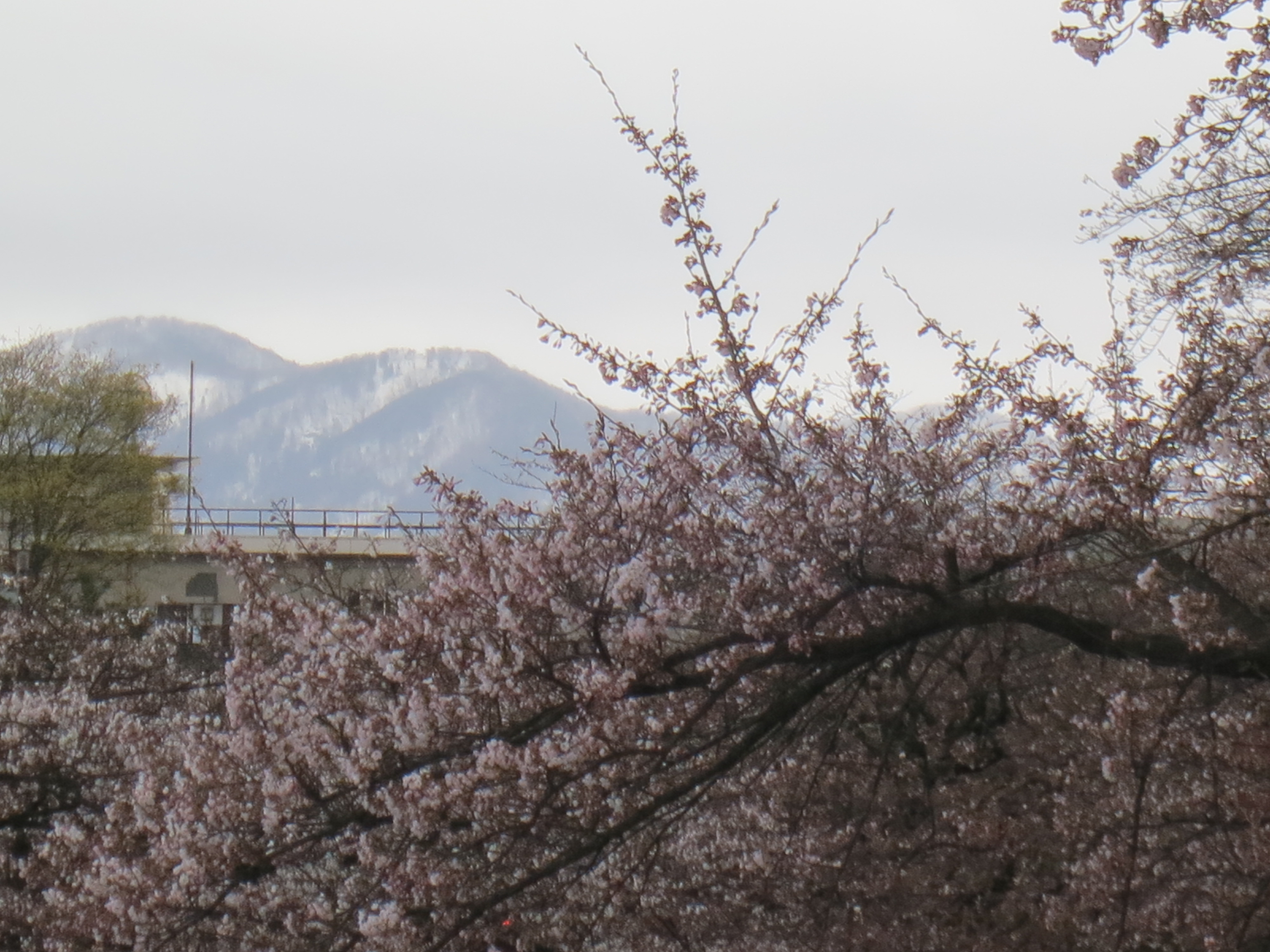
The nearby mountain is popular for winter sports

The nearby mountain is popular for winter sports

Anyway, sakura season was already over in most of the country by the time I arrived in Japan in late April, but I’d done my research and I knew that I could still catch the fleeting beauties if I went north. I saw patches of snow on the hills the closer the train got to Hirosaki, the first snow I’d seen since March of the previous year. Except for a few sunny hours the day I arrived, it was cold and rainy the whole three days I was in town, so I went everywhere in my fleece, raincoat, and scarf. It felt like New Zealand all over again.
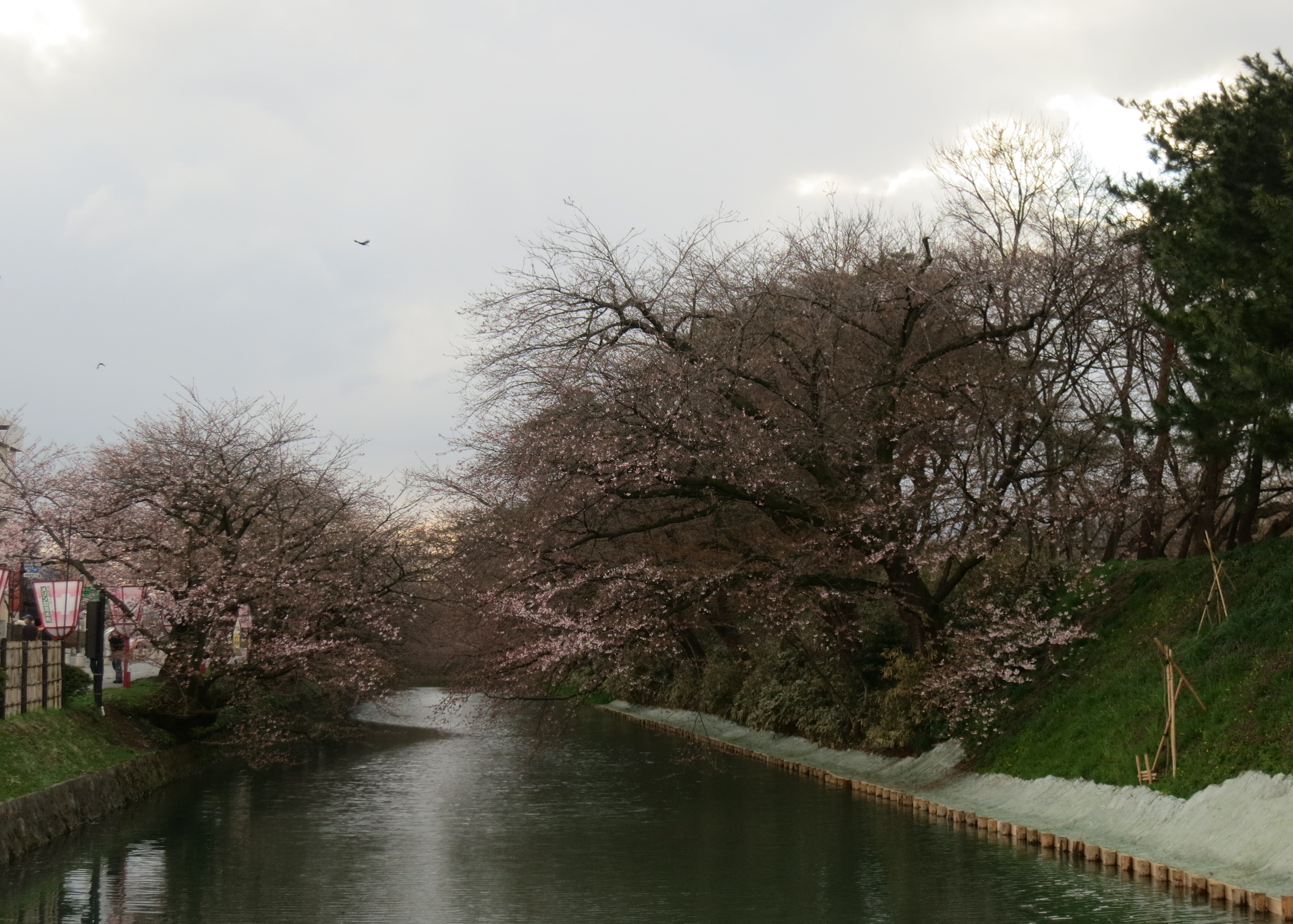
Snow on the ground, blossoms in the trees
Snow on the ground, blossoms in the trees

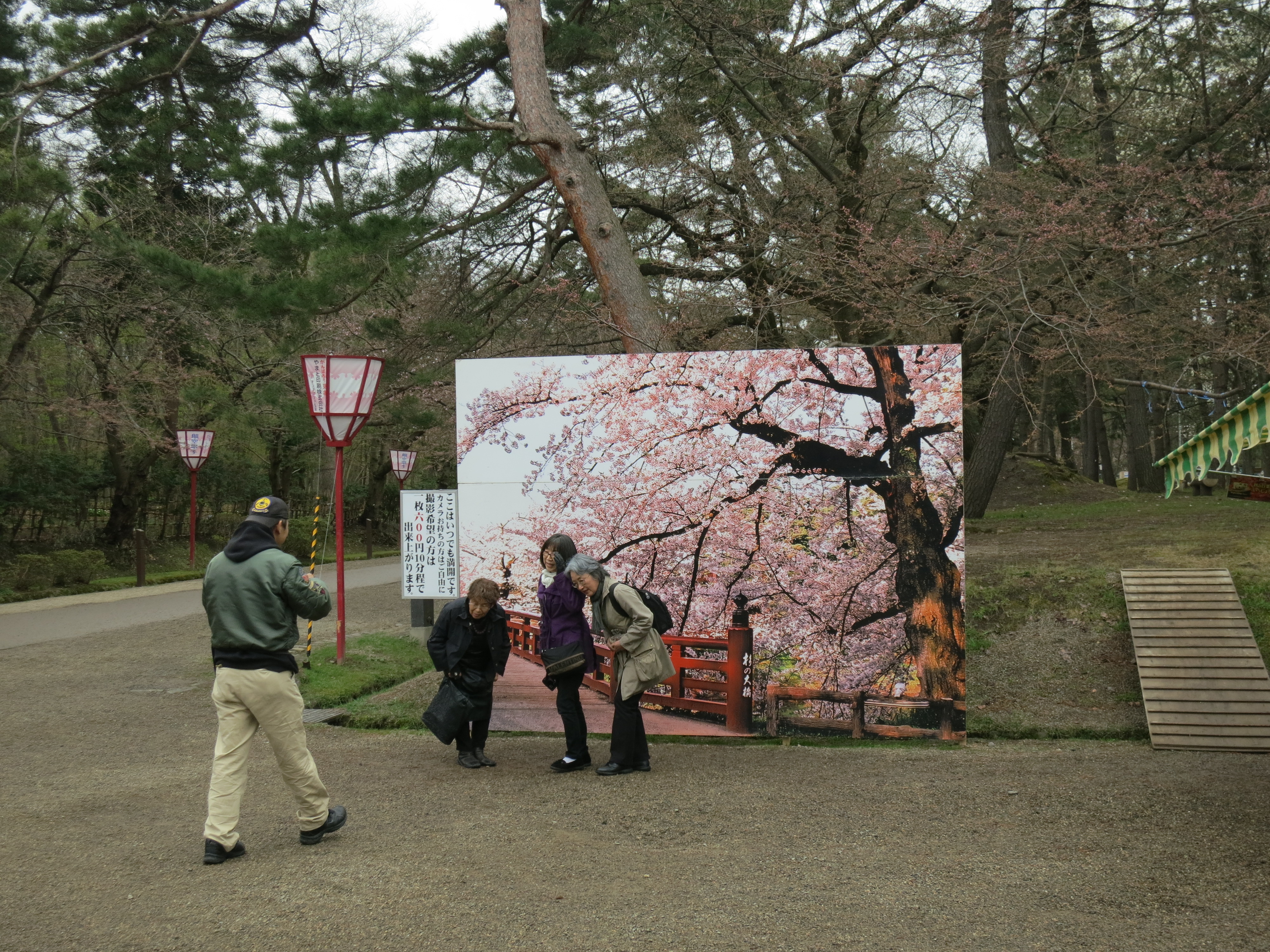
The park provided a couple of backgrounds like this, so you could take your picture with the sakura even if they weren't actually in bloom.

The park provided a couple of backgrounds like this, so you could take your picture with the sakura even if they weren’t actually in bloom.

Part of the appeal of the sakura is the setting, and Japanese towns go all out in creating the right atmosphere. In Hirosaki, it’s easy, because there used to be a castle there. One of the guard towers of the inner castle still remains, and there are some stone foundations and impressions in the grass that show where other parts of the castle used to be. It’s free to cross the moat and enter the outer walls of the castle, and then to cross the inner moat.

Foundations of a guard house in the inner castle grounds

Foundations of a guard house in the inner castle grounds

The outer moat

The outer moat

Some concessions for English-language tourists

Some concessions for English-language tourists

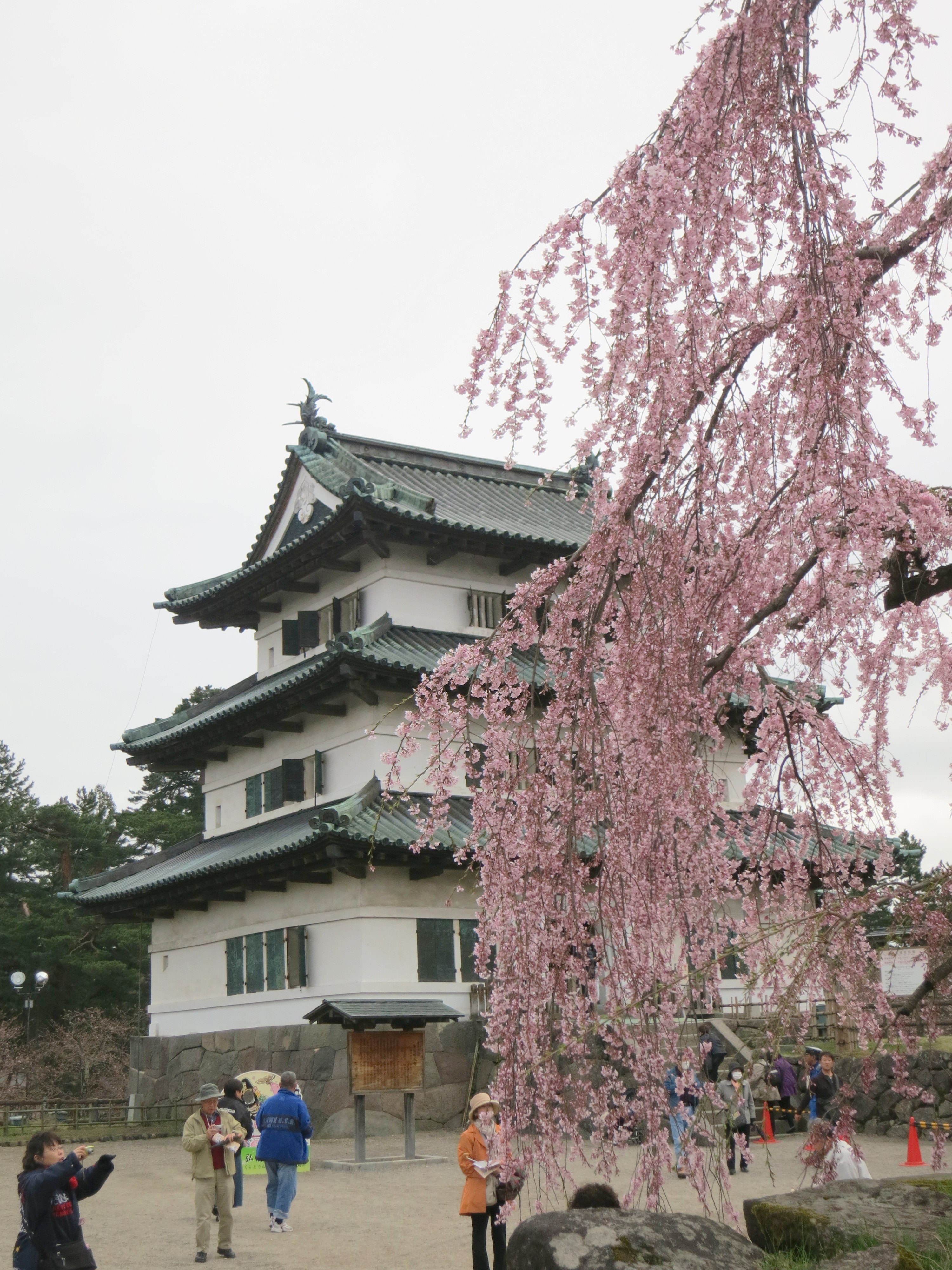
They only charge to enter the inner castle area and the guard tower. My excellent Couchsurfing hosts told me to save my money on the entrance fee, but I spent the $6 anyway. They were right about the guard tower. Steep stairs, half-hearted displays of samurai weaponry, unimpressive views through tiny windows more suited to the arrows of warriors past than the cameras of today’s tourists. But there was a gigantic weeping cherry tree in the courtyard, more in bloom than most of the non-weeping varieties outside, that I was glad I saw.

View from the guard tower of Hirosaki Castle

View from the guard tower of Hirosaki Castle

Another view from the guard tower
Another view from the guard tower

This weeping cherry tree, in front of the inner guard tower, is over 100 years old

This weeping cherry tree, in front of the inner guard tower, is over 100 years old

The grounds are large, and several paths are lined with food and souvenir vendors. I had a pork bun, a sausage on a stick, a chocolate-dipped banana, and a donut that at first struck me as dry and only vaguely sweet, like communion bread, but about halfway through I realized it was delicious, and I wished I’d bought two! Do with that what you will for metaphors about trying new things, sticking it out, etc.
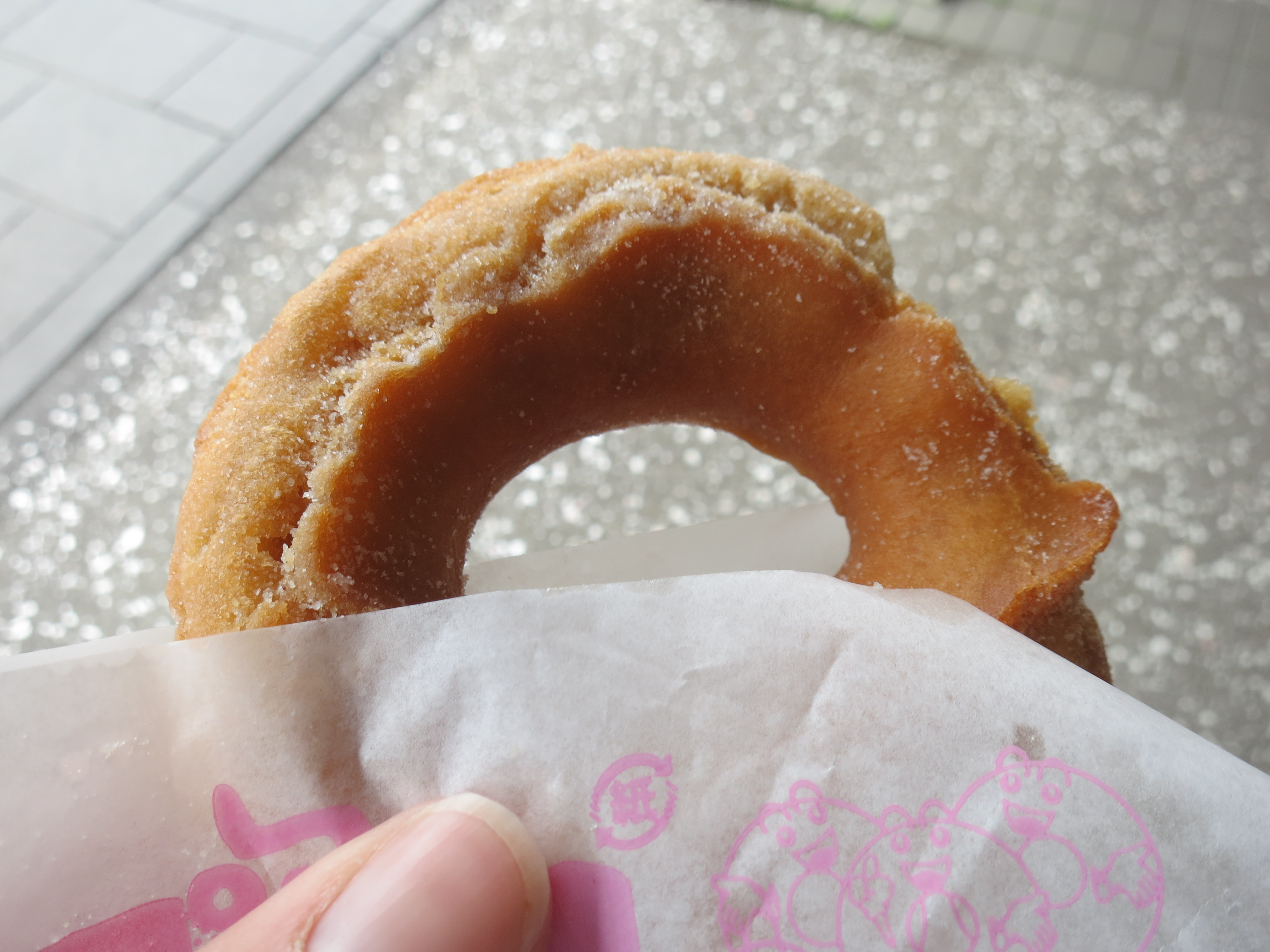
The donut of metaphors

The donut of metaphors

These fences were actually made of hard plastic--it's the most convincing fake wood fence I've ever seen!

These fences were actually made of hard plastic–it’s the most convincing fake wood fence I’ve ever seen!
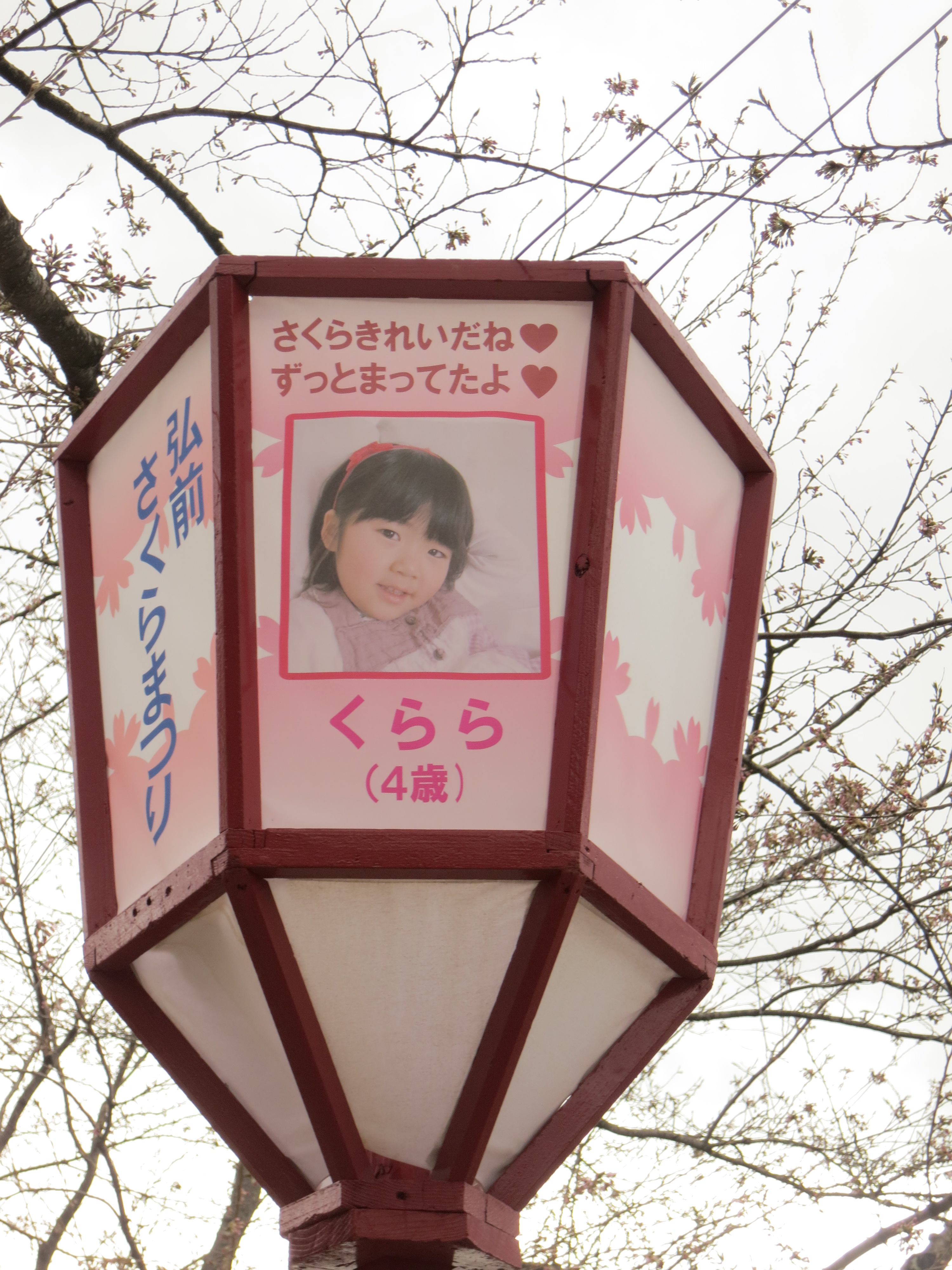
The lamps along the paths were mostly photos of adorable children, like this one. Looks like people could buy the space to show off photos of their kids and support lighting the castle grounds.

The lamps along the paths were mostly photos of adorable children, like this one. Looks like people could buy the space to show off photos of their kids and support lighting the castle grounds.

Not everyone chose to put their kids' photos up.

Not everyone chose to put their kids’ photos up.

The blossoms were at 10% when I arrived, and maybe 30% when I left (the government issues sakura updates, so you can see what percentage of “open” the blooms are in which areas of the country–that’s how big a deal the sakura and accompanying hanami celebrations are).

My first day in Hirosaki--hardly any blossoms

My first day in Hirosaki–the trees are just starting to bloom

The trees exploded in bloom a few days after I left, but that’s how it goes sometimes. The admiration the Japanese have for the sakura is their perfect, delicate beauty and the fact that such beauty is only on display for a short time every year. Cherish the beauty you see in the world, and accept that it’s ephemeral.
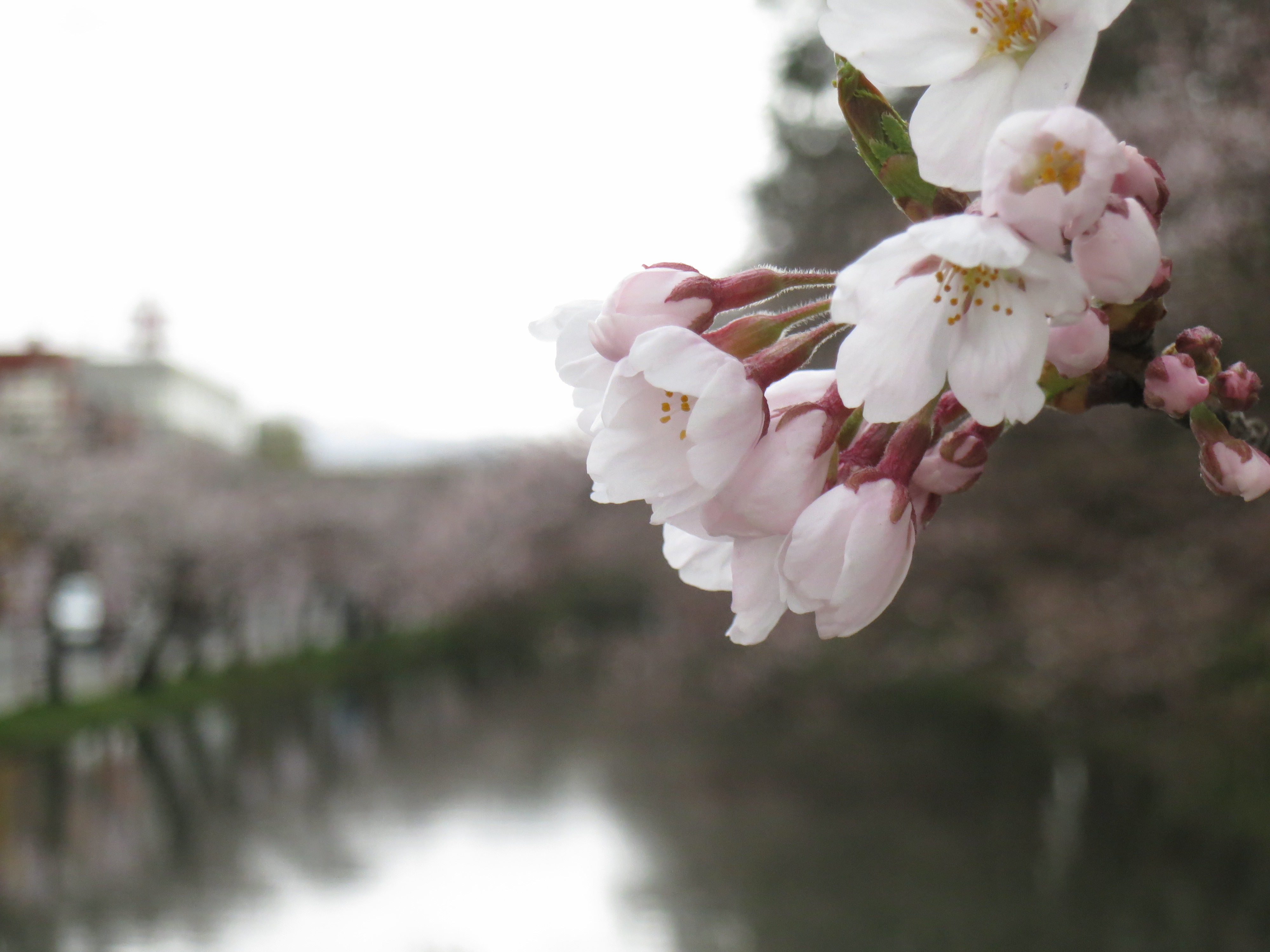
My last day in Hirosaki--more blossoms

My last day in Hirosaki–more blossoms
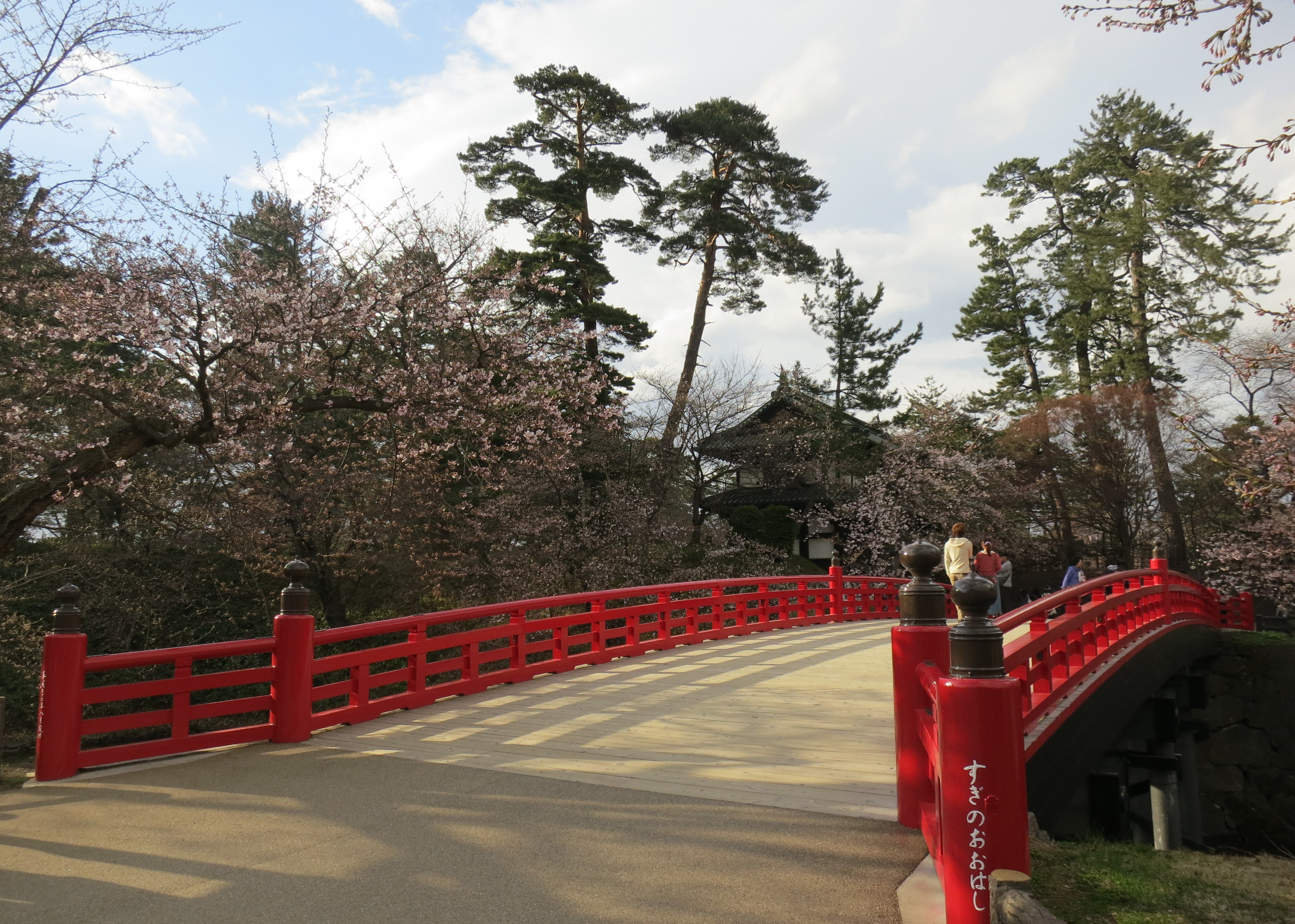
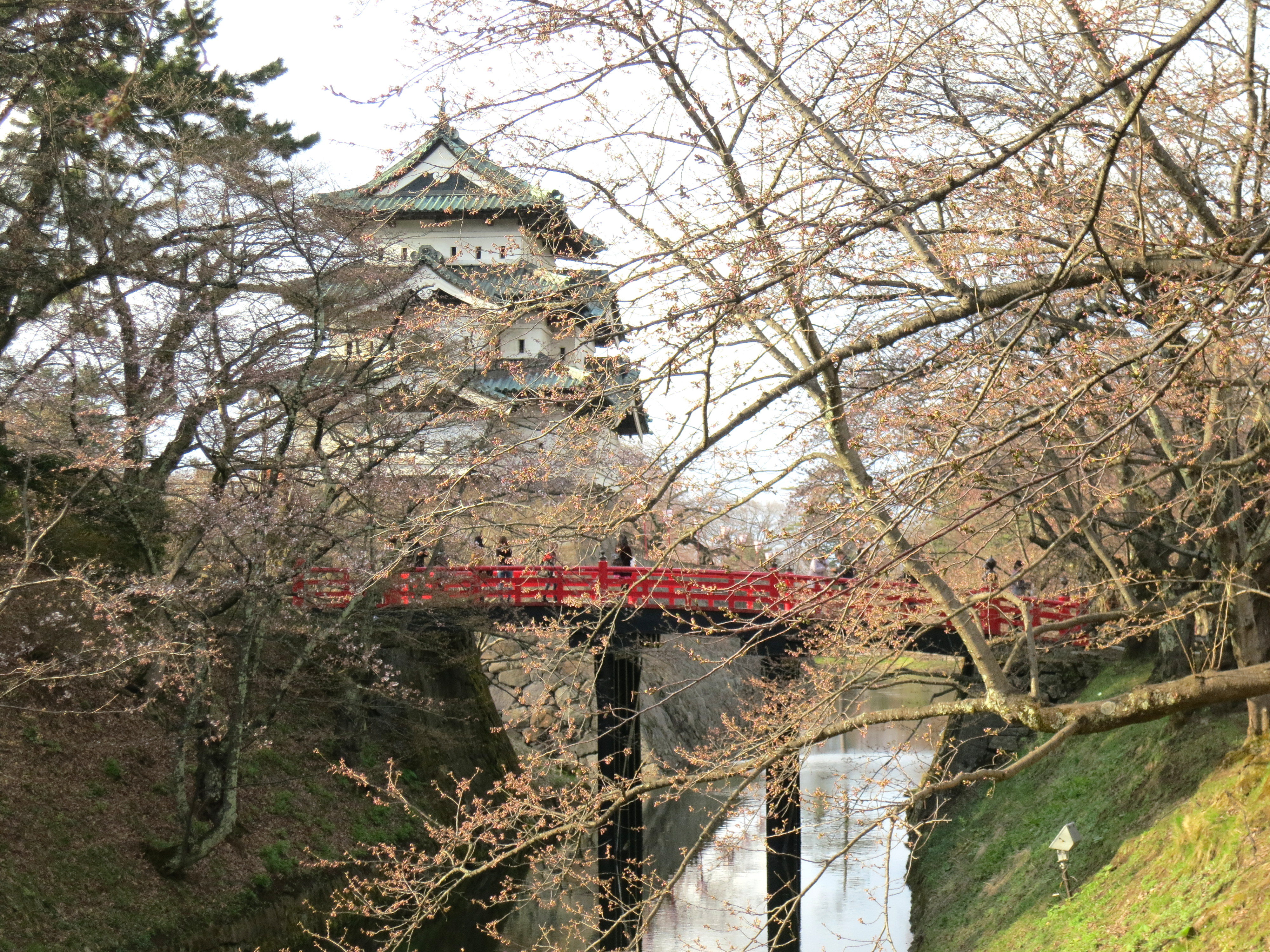
One of the serene bridges of the castle grounds

One of the serene bridges of the castle grounds

Seeing cherry blossoms hang over a red bridge reflected with a castle tower in placid water was still worth it, even if the blossoms were only barely open, even if rain drizzled down the back of my neck and my toes slowly numbed throughout the day, even if I spent a lot of extra money to travel north just for this rather than stay south. The weather did its best to dampen my spirits and dull the bright white blooms of the cherry trees. Nice try, weather, but the blossoms were still beautiful to behold, and I’m glad I went out of my way to see them.
Aesthetically pleasing
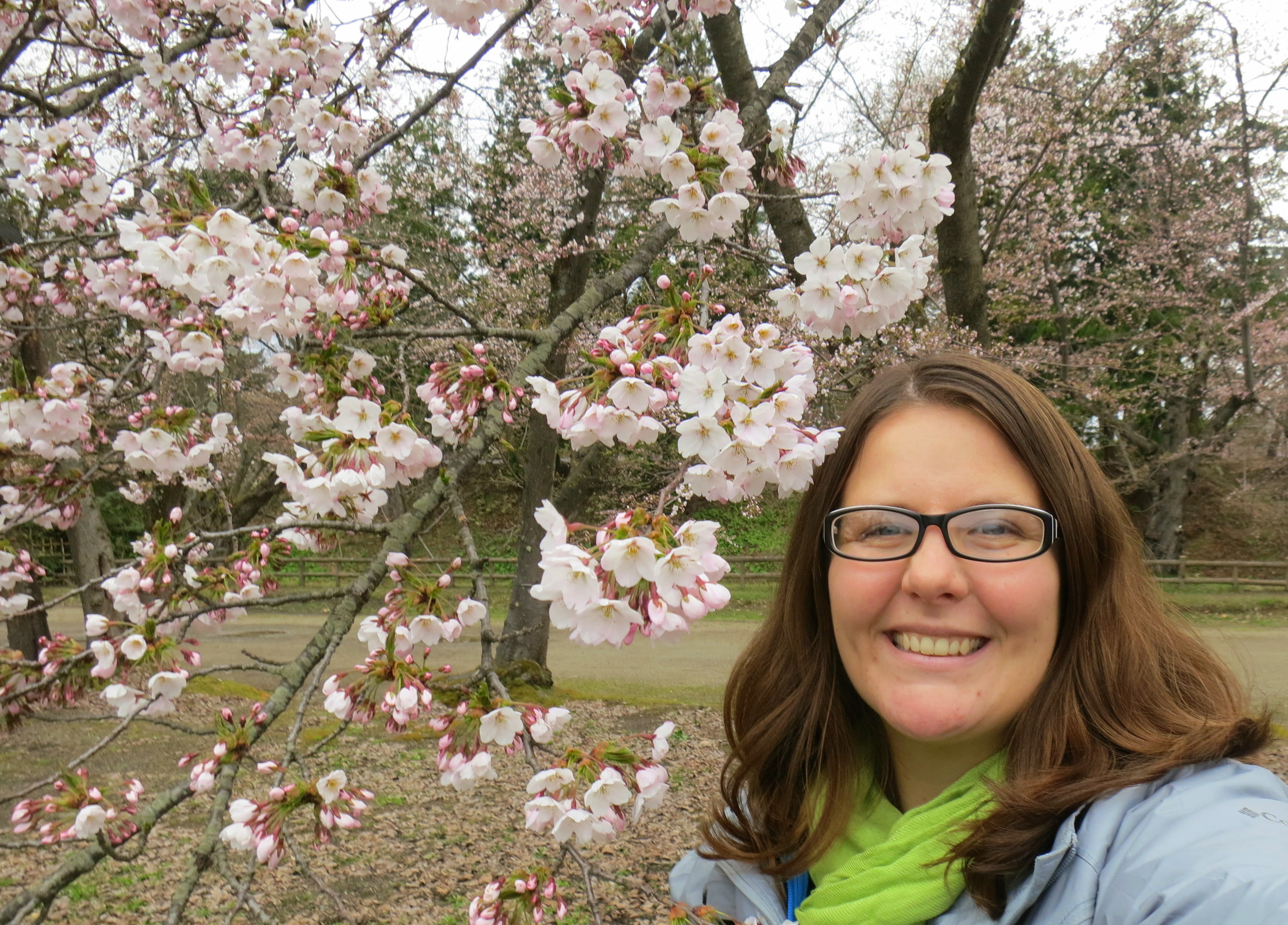
Aesthetically pleasing

I was so happy to see these little flowers in this setting
I was so happy to see these little flowers in this setting

Kawagoe: The Edo Period and Today, Side by Side

My day trip to Kawagoe was the first time I saw the historical side of Japan alongside the modern. I got a map and directions at the train station, and followed the crowds past a shopping mall, down a walking street full of people shopping at Golden Week sidewalk sales. My favorite booth was one that held a man, his dog, and jars of what looked like honey. People paid money to sit with the dog on their lap, and the man took pictures of them. I’m not sure where the honey entered into it.

Golden Weekers on parade

Golden Weekers on parade

The modern side of town

The modern side of town

My favorite booth

My favorite booth

Colorful fish windsocks hung from wires strung zig-zag style across the street; these were put up in celebration of Children’s Day, a national holiday celebrating the children of Japan. (It was originally Boys’ Day, and some Japanese people I met still referred to it as such, but officially it’s now for boys and girls.) The flags fluttered in the wind, wiggling the fish bodies so they looked like they were swimming in the air.

Fun fish for Children's Day

Fun fish for Children’s Day

I stopped briefly at a small shrine, and watched people pay their respects. People used wooden dippers to ritually wash their hands, they rang a bell at a central structure and clapped their hands, and walked in sock feet on the pebbled path leading up to the main area. It felt like a carnival atmosphere to me; everyone was happy and talking in normal voices, not the hushed tones of temple interiors or church altars, and everyone rotated through the various activities under colorful banners.

Hand washing at the shrine

Hand washing at the shrine

A diagram of the foot to the side of this walkway made me wonder if this was for meditative or massage purposes. Or both?

A diagram of the foot to the side of this walkway made me wonder if this was for meditative or massage purposes. Or both?

The fortune ring toss

The fortune ring toss

I admit that what probably put “carnival atmosphere” in my head, though, was the ring toss. I think the idea was that you toss the ring to reach the peg, and if you’re successful, you select a slip of paper with a fortune on it from a box to the side. (I can’t find confirmation that the ring toss and the fortunes were connected activities; please correct me if you have better information.)

The first Edo period building I saw

The first Edo period building I saw

I expected to leave one walking street for another when I reached the old part of town, where the Edo-period buildings were, but strangely, these major attractions were on a busy main road. They were also mixed in with contemporary buildings. Crowds streamed down the sidewalks, often spilling into the street, but the most the drivers ever responded with was a polite “beep beep.” No cussing or laying on the horn. Welcome to Japan.

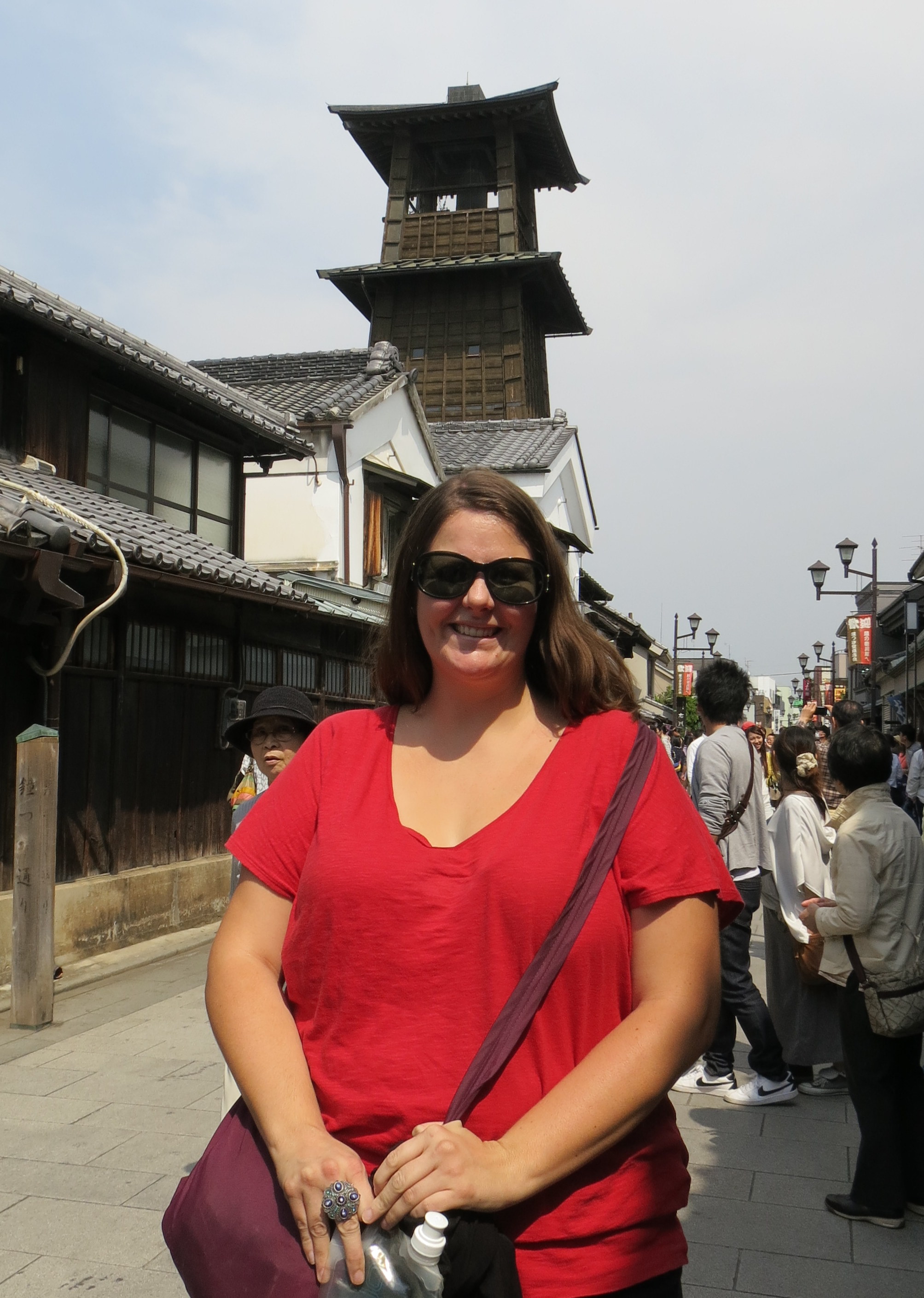
In front of the clock tower, waiting to hear one of the 100 most beautiful sounds in Japan

In front of the clock tower, waiting to hear one of the 100 most beautiful sounds in Japan

The Edo period is a 265-year span named after Edo, the city that later became known as Tokyo. The warehouses and shops in this area of Kawagoe are from that time; in fact, Kawagoe is sometimes called “Little Edo.” The clock tower that stands on a side street today was rebuilt in 1894, after a fire demolished an earlier structure. It’s still considered to be the clock tower, though, as if the essence of the clock tower matters more than the wood beams and bell ropes. According to the sign by the tower, the bell that rings four times a day is considered one of the 100 most beautiful sounds in Japan, and is officially recognized as such by the government. I love that!

Sweet potato and vanilla, a surprisingly delicious ice cream

Sweet potato and vanilla, a surprisingly delicious ice cream

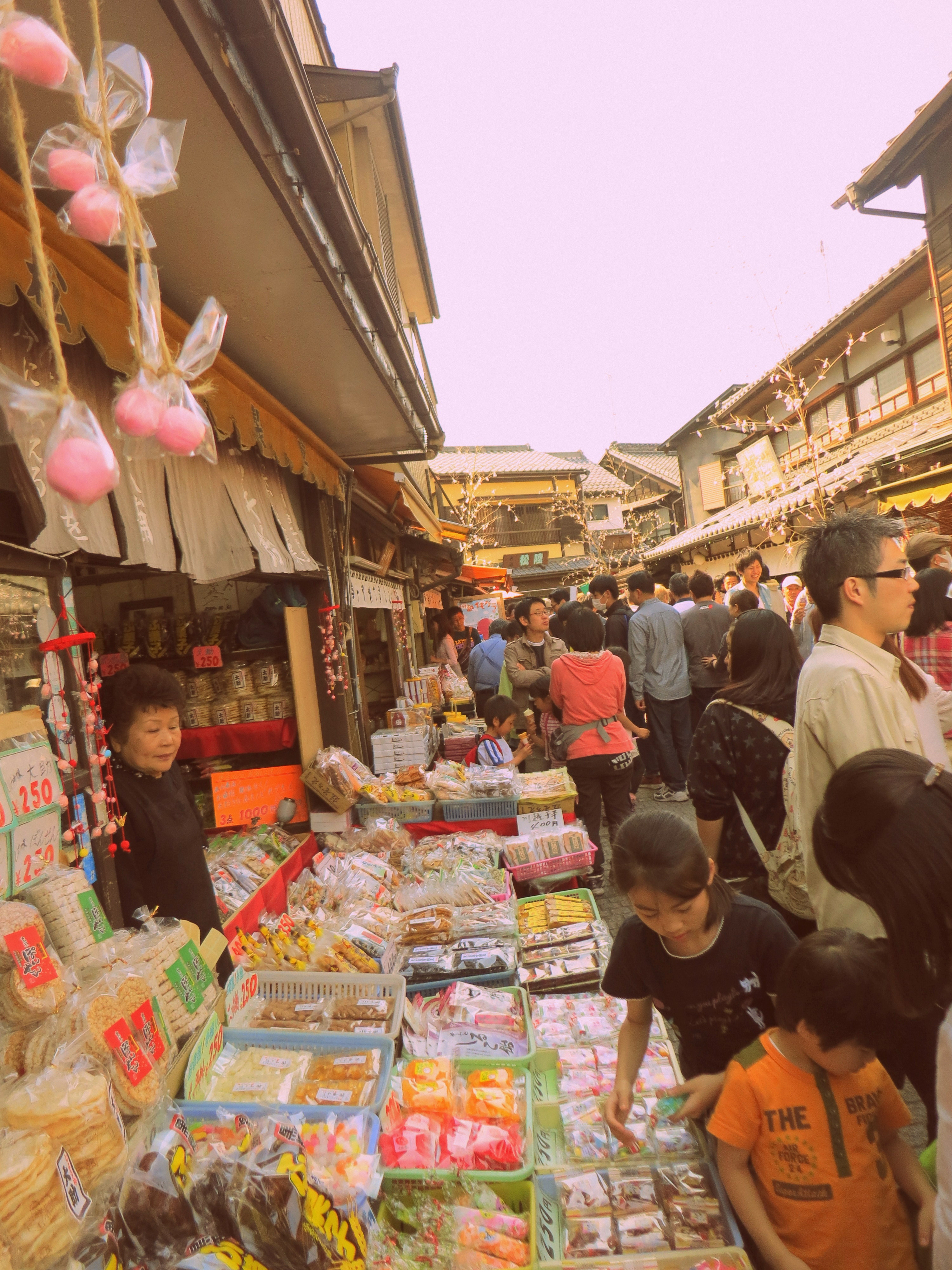
Sweets as far as the eye can see on the penny candy street

Sweets as far as the eye can see on the penny candy street

I followed the lead of the Japanese enjoying their stroll through town, and ate a lot of snack foods and desserts in Kawagoe. Grilled balls of what I think were tofu; red bean paste mochi; a waffle in the shape of a fish, stuffed with custard; sweet potato and vanilla soft serve ice cream (the area is famous for sweet potatoes); and, about a million sweet treats found on a street my map labeled the “penny candy lane.”

Everywhere I looked, people were stuffing their faces with yummy treats I’d never encountered before, and admiring the buildings of an earlier era. I happily joined them.

My Personal Ryokan in Japan

I bought the Fodor’s Japan e-book while I was in Vietnam, to get ready for the next country on my trip. The author of the guidebook spent many pages rhapsodizing about the ryokan, a traditional Japanese inn. Ryokan are a simpler form of accommodation than modern hotels, with no amenities like mini-bars, TVs in the rooms, or wifi. Instead, the emphasis is on a peaceful, introspective stay. The tatami (rice straw) floors, futon beds, sliding doors, private garden views, and expertly cooked food are consistent features from place to place, and you can expect to pay at least $100 per night. But I stayed at a top-notch ryokan in Shinrin-koen, and I didn’t pay a cent.

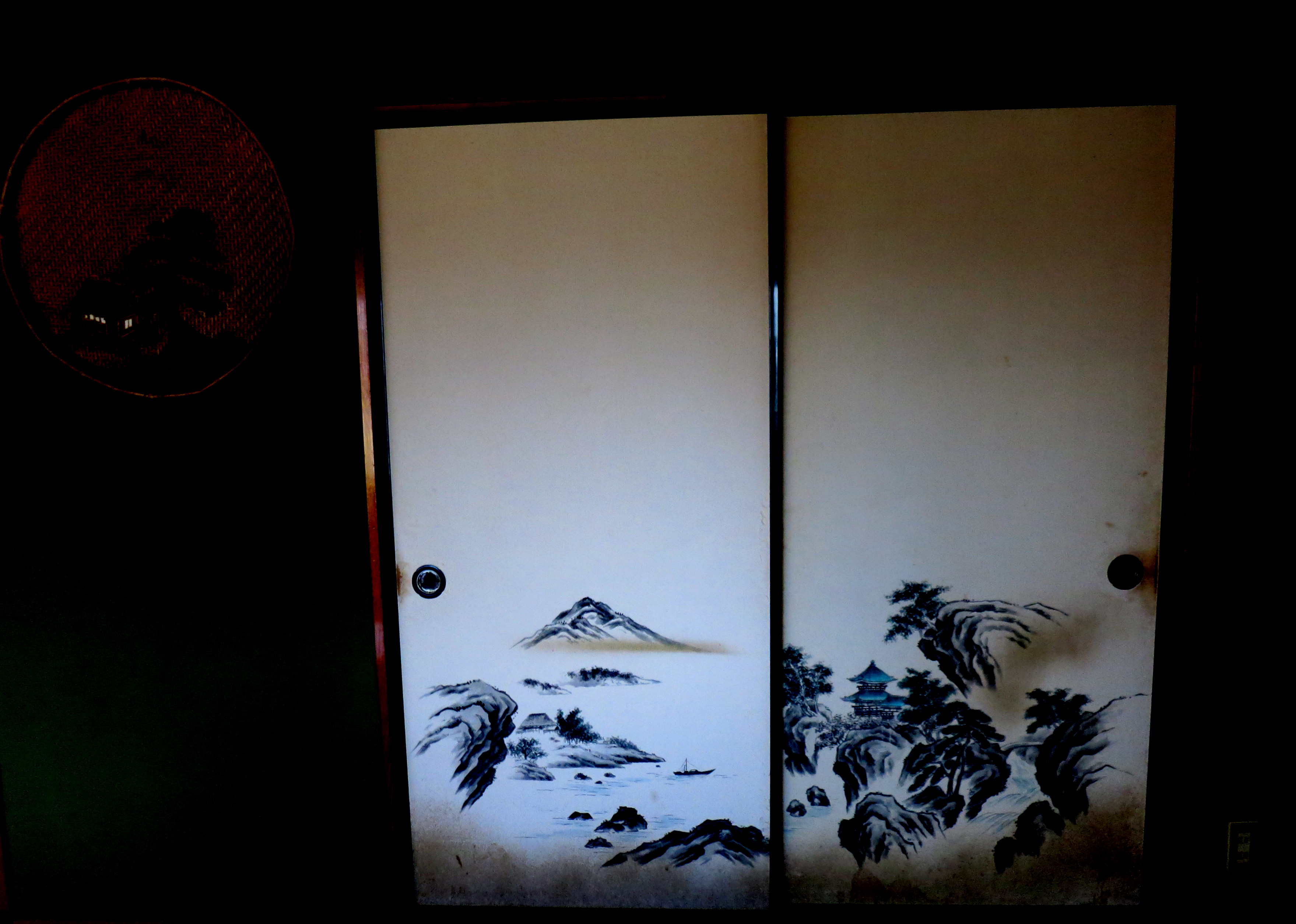
Painted screen doors in the traditional home I stayed in, in Shinrin-koen, Japan

Painted screen doors in the traditional home I stayed in, in Shinrin-koen, Japan

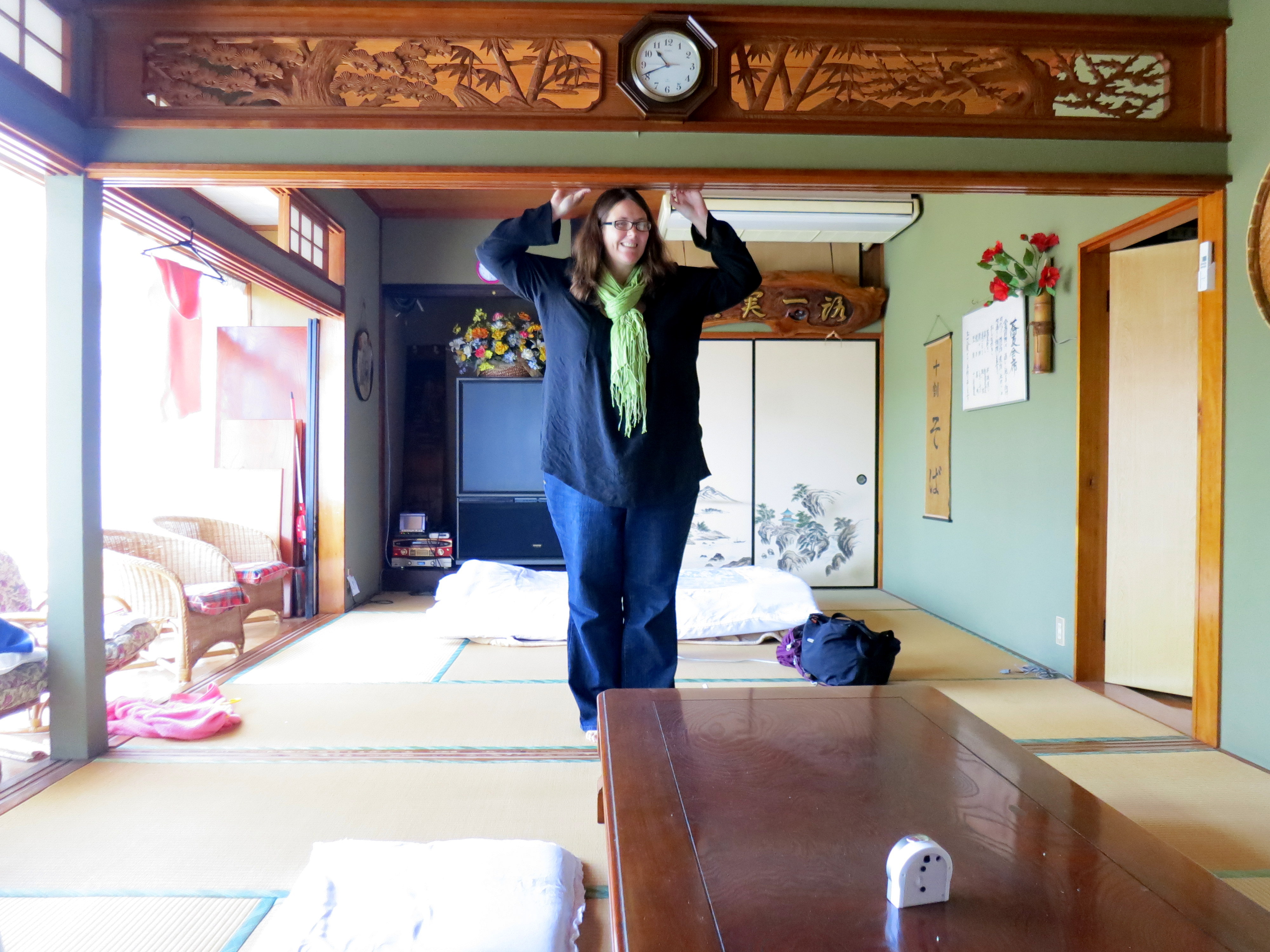
Giantess in the ryokan

Giantess in the ryokan

The secret is to know incredibly generous people, so I cannot flog this as a general travel tip. Too bad, because I want everyone to meet the Shirotas, who put me up and fed me for five days. The assistant rector of my parents’ church is from Shinrin-koen, a small town in the Saitama province, about forty minutes northwest of Tokyo. When he heard I was going to Japan, he put me in touch with his parents and assured me they’d be happy to host.

Blossoms in the garden

Blossoms in the garden

I quickly learned to wear slippers as soon as I walked in the door

I quickly learned to wear slippers as soon as I walked in the door

Kuni and Kimi run a restaurant that’s attached to their house, so it was no surprise that everything I ate was delicious. They spoke very little English, and I spoke no Japanese, so we used Google Translate to bridge the gap. That is a very imperfect tool, I am here to tell you. We had some delightful misunderstandings, all taken in stride by the three of us, and everything smoothed over with the smiles permanently on our faces. I was grateful to be taken care of after months of looking out for number one, and touched by their generosity. They were pleased to host and chuckle with a young person who couldn’t ever seem to remember how to say “good night,” no matter how many times they pronounced it. They were the sweetest hosts, so my permanent smile wasn’t just a tool for cross-cultural communication. It was the real thing.

Kuni and Kumiko, my gracious and generous hosts

Kuni and Kimi, my gracious and generous hosts

And although their home isn’t really an inn (except for once a year, when they host several international travelers who come to town for a famous multi-day walk), it was the real thing, too.

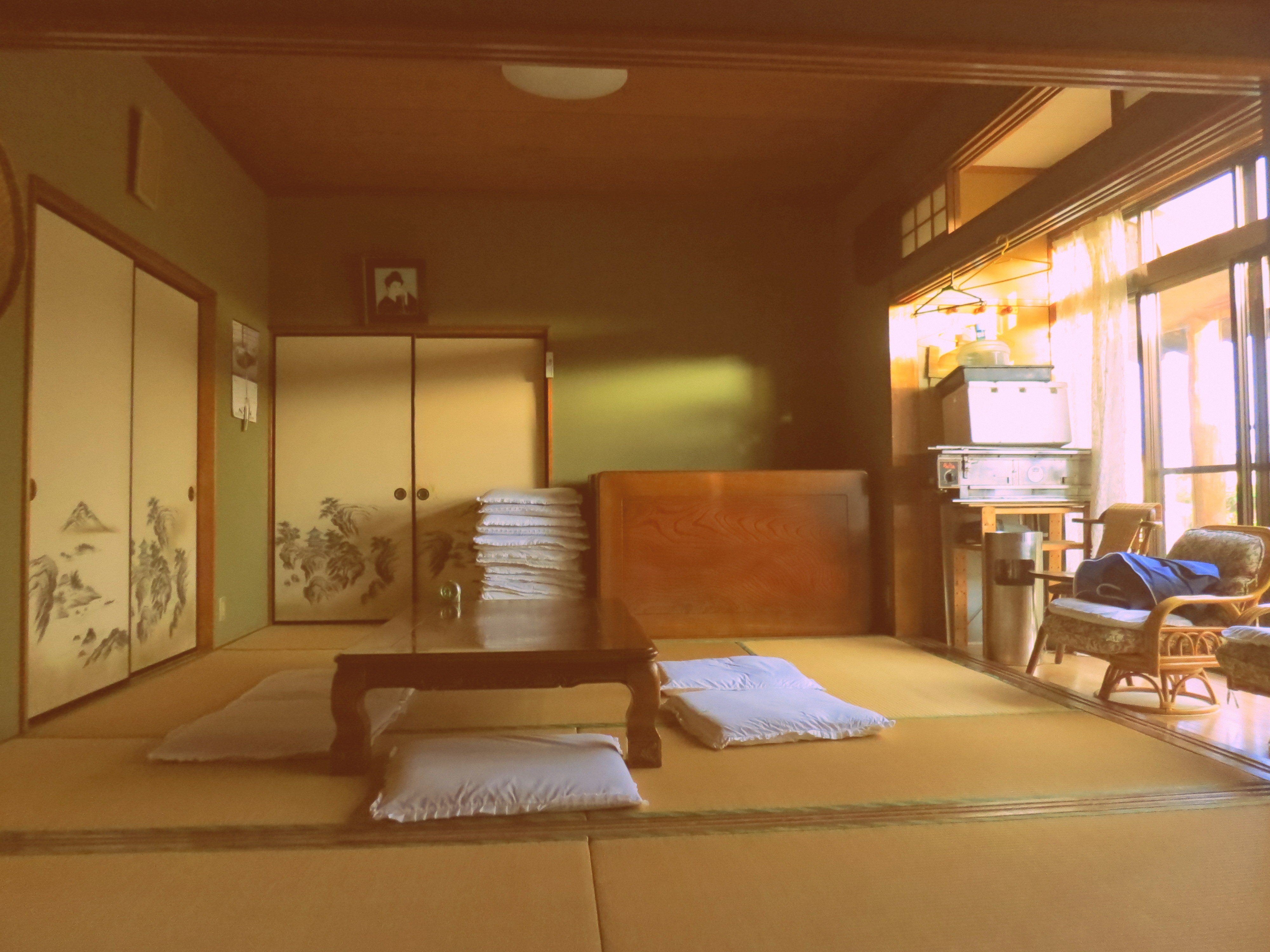
The room had tatami mats and a low table:

Traditional table and tatami mats

Traditional table and tatami mats

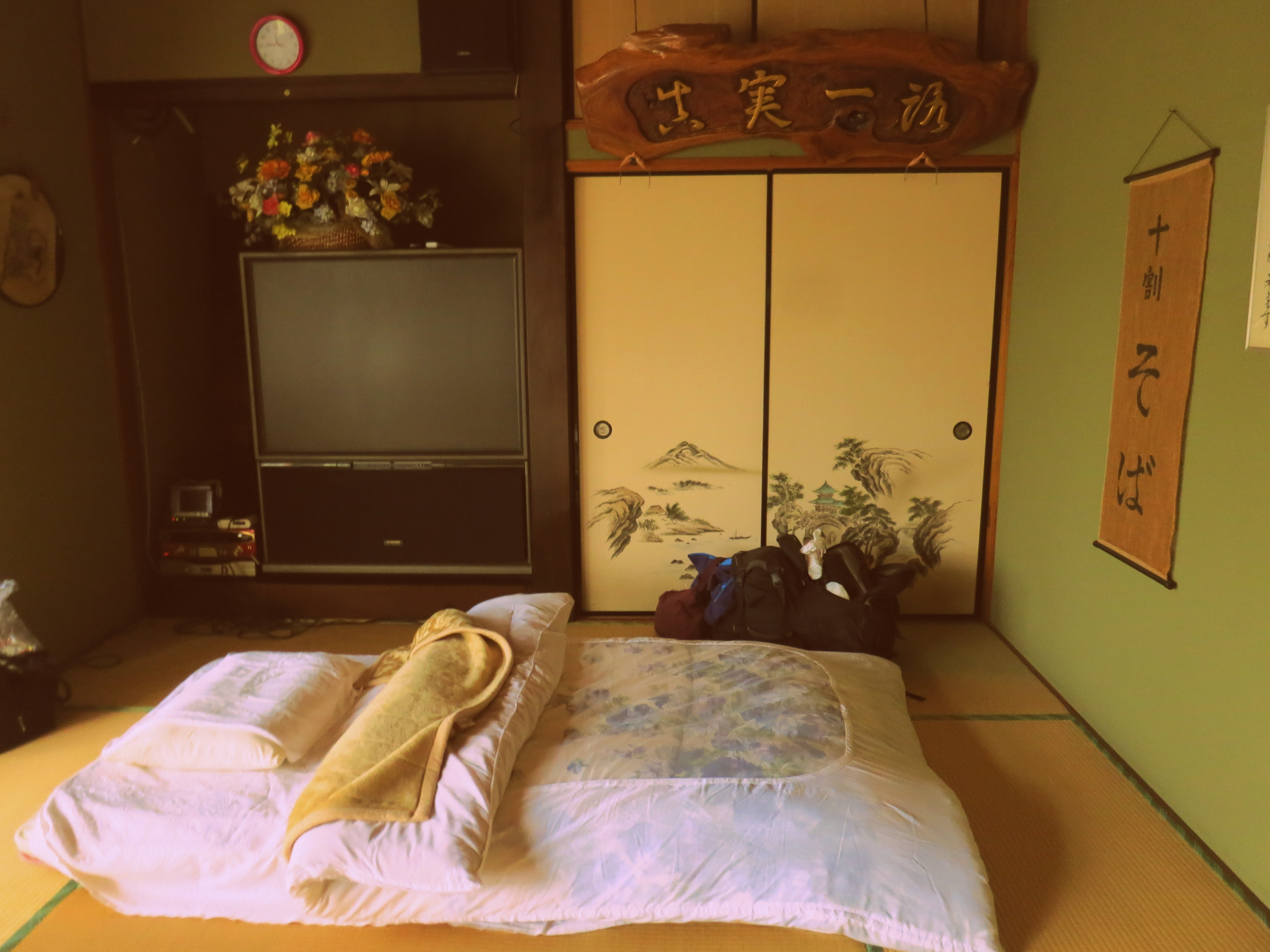
And a futon rolled out on the floor:

A comfortable floor futon

Super comfortable. I had some of the best sleep of my trip here.

My room looked out on a small, lovely garden:

Peaceful work station

Peaceful work station (and yes, they had wifi, which was handy for blogging)

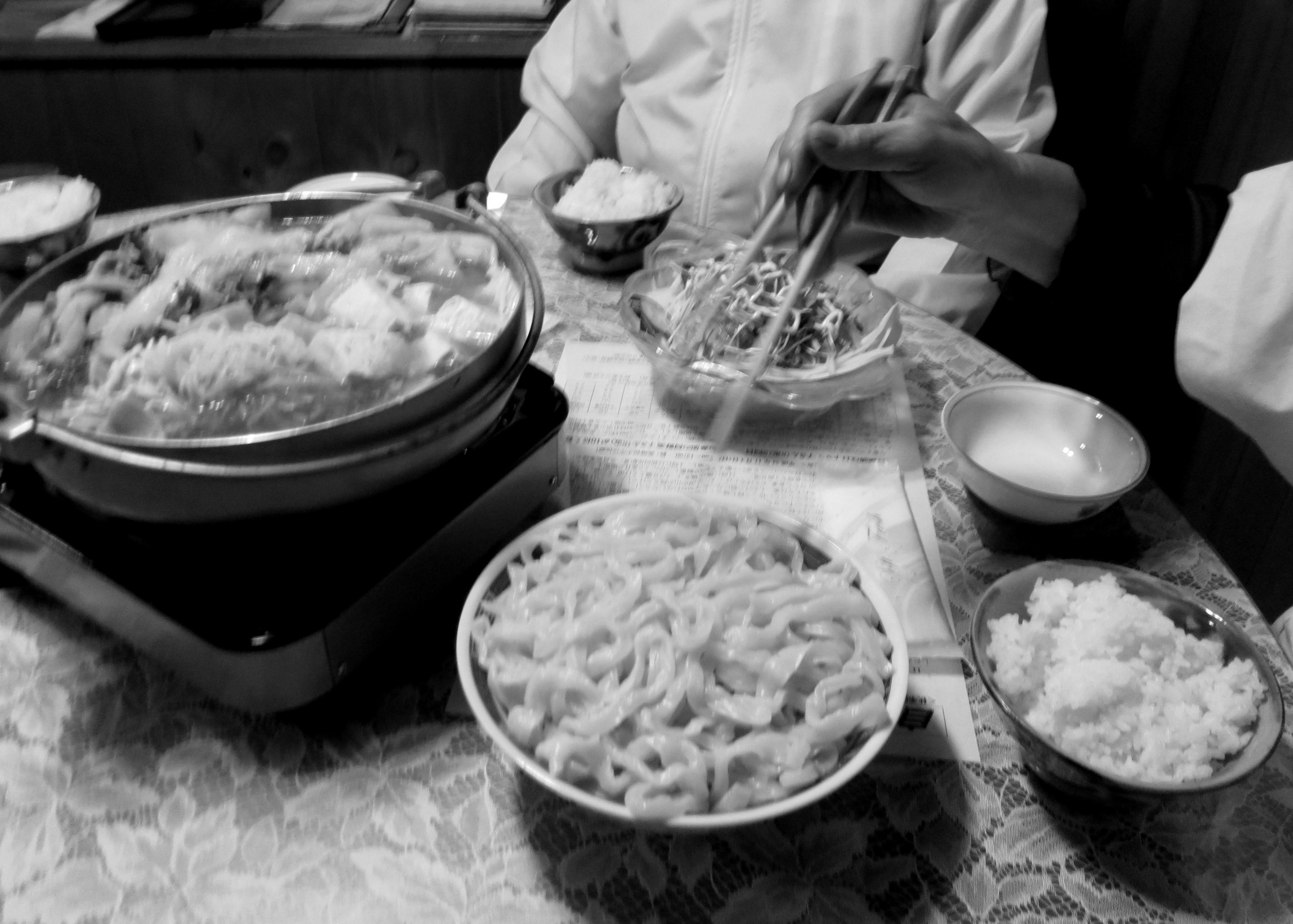
And I ate very, very well:

shinrin-koen ryokan

Handmade soba noodles

shinrin-koen ryokan

Beautiful presentation, every time

Delicious food

Delicious

I knew as soon as I met Kuni and Kimi that they were going to be wonderful hosts, and that I’d love staying at their home. Thanks to my guidebook, I also knew how lucky I was to have a ryokan experience without the expense.

Springtime in Shinrin-koen

I had no winter this year, but I still gloried in spring. It’s amazing the psychological effect a fresh breeze and budding flowers can have, even when you aren’t thawing from a long, cold winter. I’d been melting in the tropics, and as gorgeous as the flora and fauna of Southeast Asia were, it was a relief for this Midwesterner to be back in temperate climes just as everything was starting to warm.

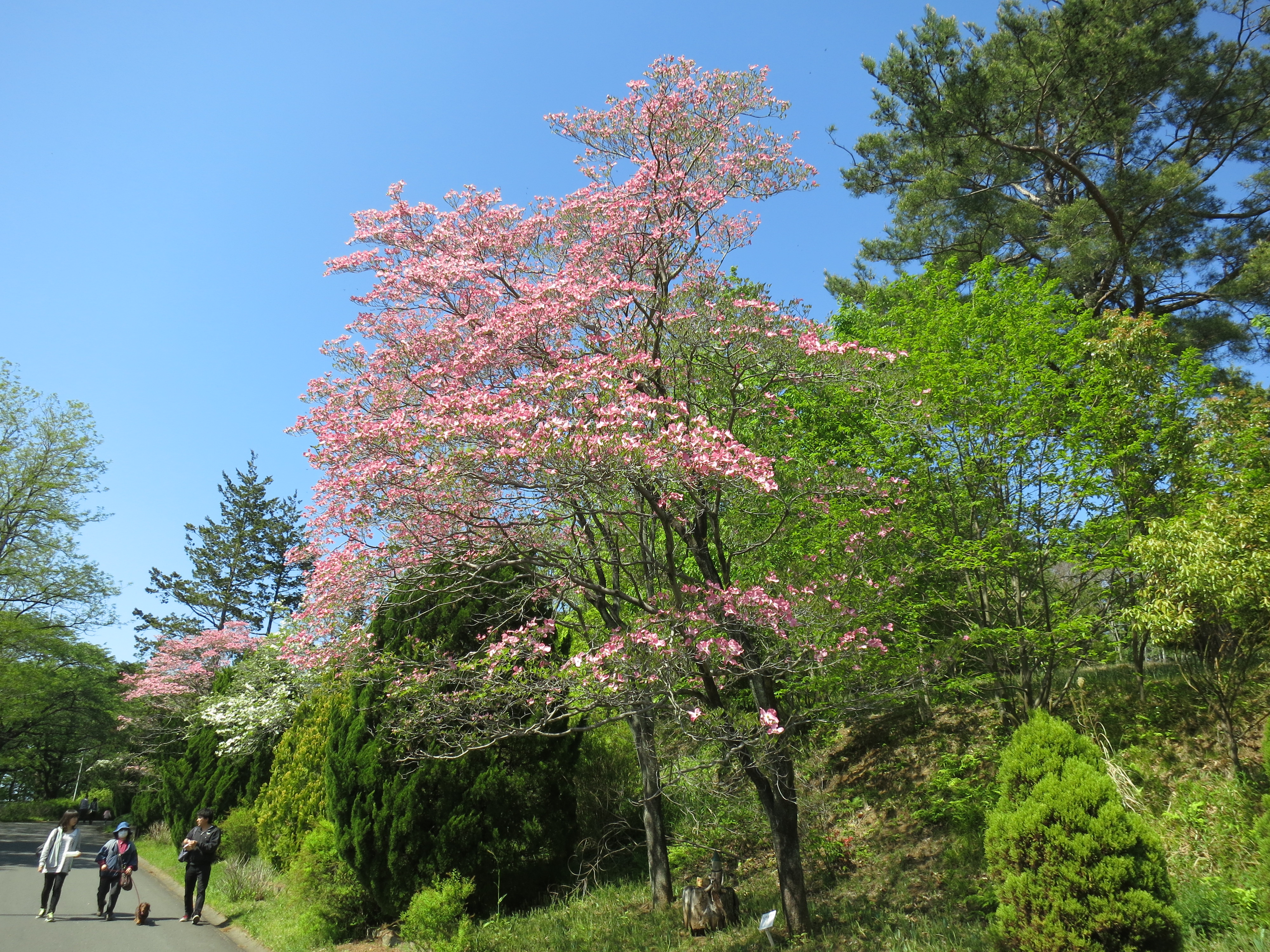
Amongst the flowers at the national park in Shinrin-koen

Amongst the flowers at the national park in Shinrin-koen

shinrin-koen park

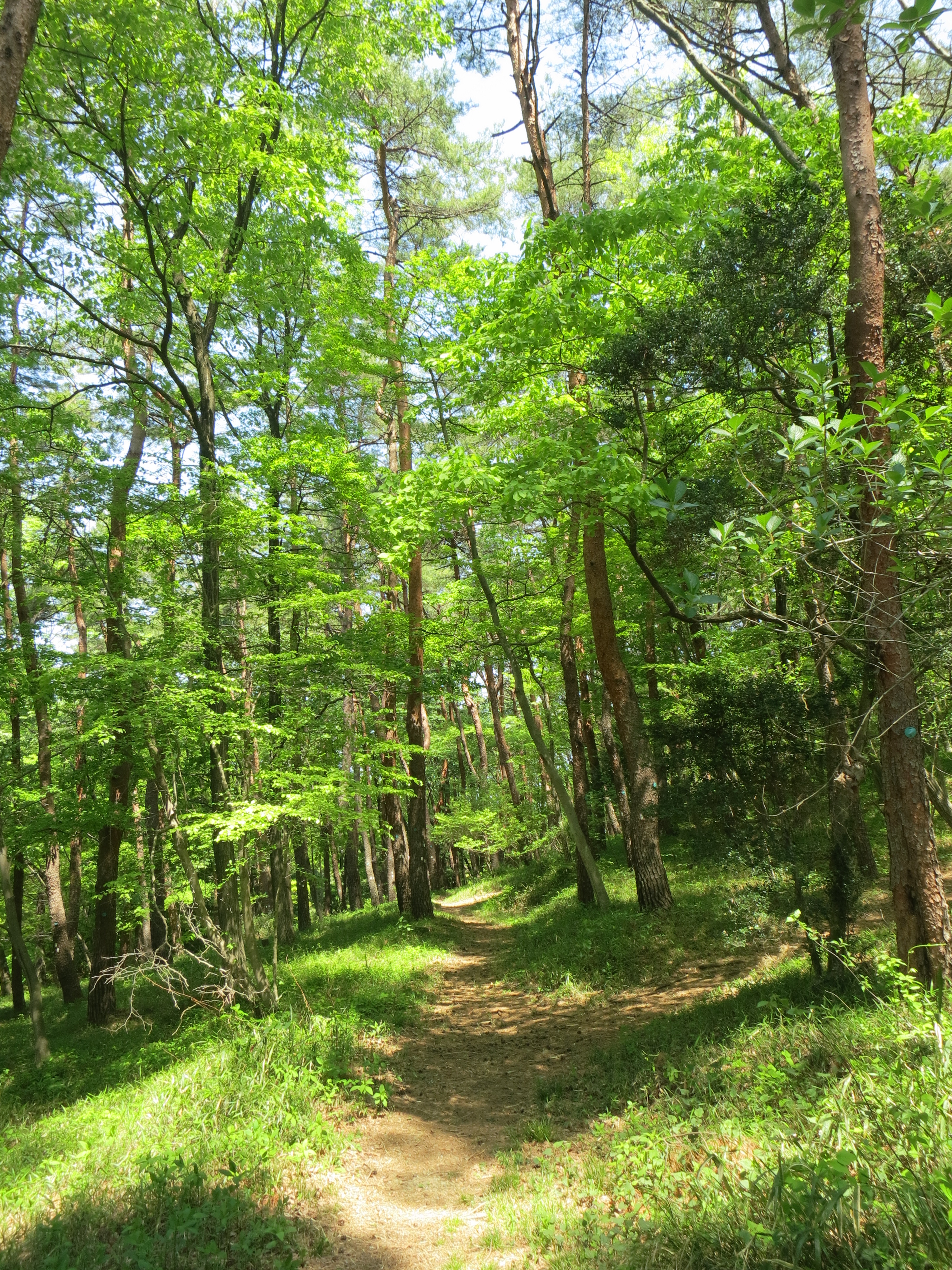
I went to the national park at Shinrin-koen in the Saitama region, one fine Saturday afternoon. It’s a sprawling park, and every inch of it is carefully manicured. There was no wildness at all there, so it felt more like a garden than what I think of when I think “national park.” It was a garden of wonders, one of the best-planned parks I’ve ever been to.

Hi kiddos!

Hi kiddos!

A walk near the castle ruins

A walk near the castle ruins

shinrin-koen park

Straight off, giant plush mascots greeted families as they entered the park, and posed for photos with children. This set the stage for the rest of the park, which was packed with frolicking kids and relaxed parents. This was a sunny weekend at the beginning of Golden Week, the biggest holiday week in the country, so it was no wonder it was full of families. Still, it was a big enough park that I was able to find my own patch of grass in a quiet corner and read a book for an hour.

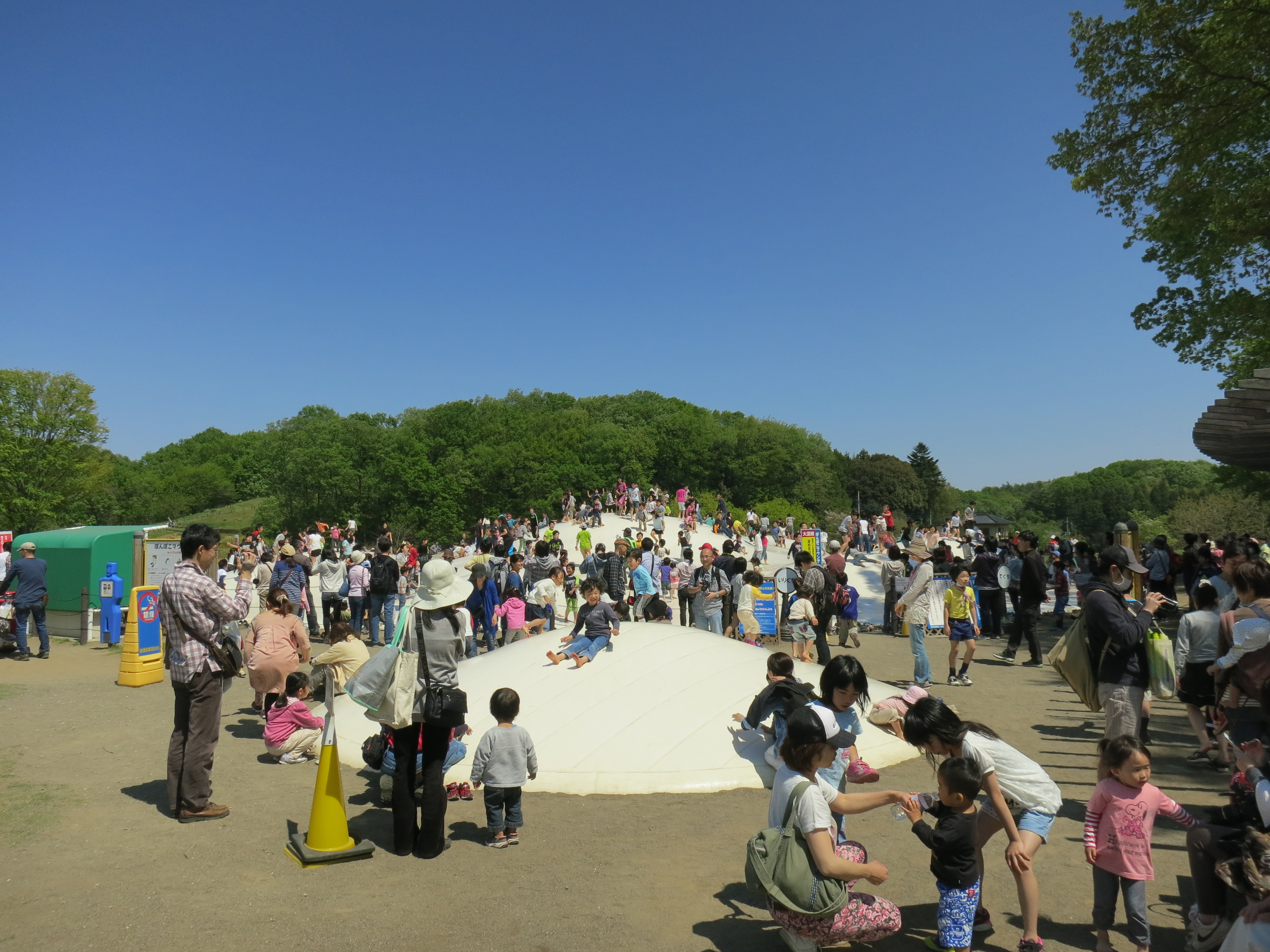
Giant trampoline

Giant trampoline

Playing catch with artwork

Playing catch with artwork

I walked on broad, paved paths, while cyclists zipped by on separate paths (brilliant move). You can rent bicycles at several of the entrances to the park, or of course, bring your own. There was a motorized train you could pay to get from one end of the park to the other, since it was so large. Signs were placed throughout the park reminding visitors not to remove plants or animals. Most signs were in both Japanese and English, and I got an English map at the park entrance, which was very helpful. 

A memorial of some sort

I can’t remember what this is a memorial to

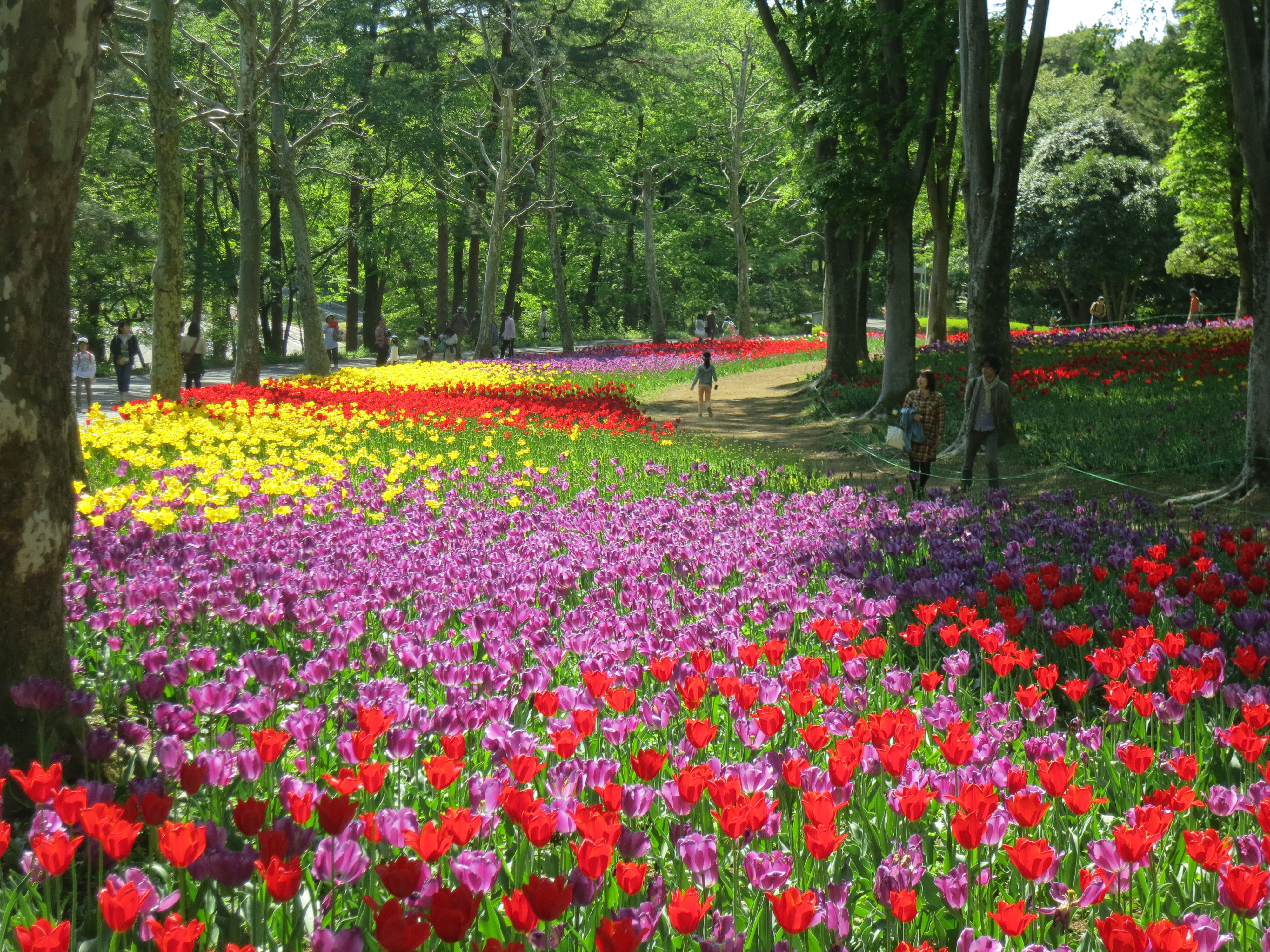
The park was made up of lots of different areas–sculpture garden, performance pavilion, cherry tree grove, barbecue grills, giant trampoline, tulip garden, pony rides, lake dotted with water fowl, snack shack, play structure, and a lot of other places I didn’t get to in the three hours I was there. I walked over what a sign said were the ruins of a castle, although by this point they were just indentations in the earth.

shinrin-koen park

The giant trampoline was more like a white dome of soft, bouncy material, and kids from toddler age on up to about ten were having great fun jumping around and sliding down to the ground, then clambering up again. I had my first Japanese soft-serve ice cream, which I found out later was a majorly popular treat throughout the country. Vanilla and rose flavor, delicious.

shinrin-koen park

I posed for photos in front of various trees and flowers, and smiled at all the kids throwing up peace signs in their photos. It was a lovely day for a walk in the park, and if I’m ever in the area again, I’ll go back.

Tiptoeing through the tulips

Tiptoeing through the tulips

Autumn in Michigan

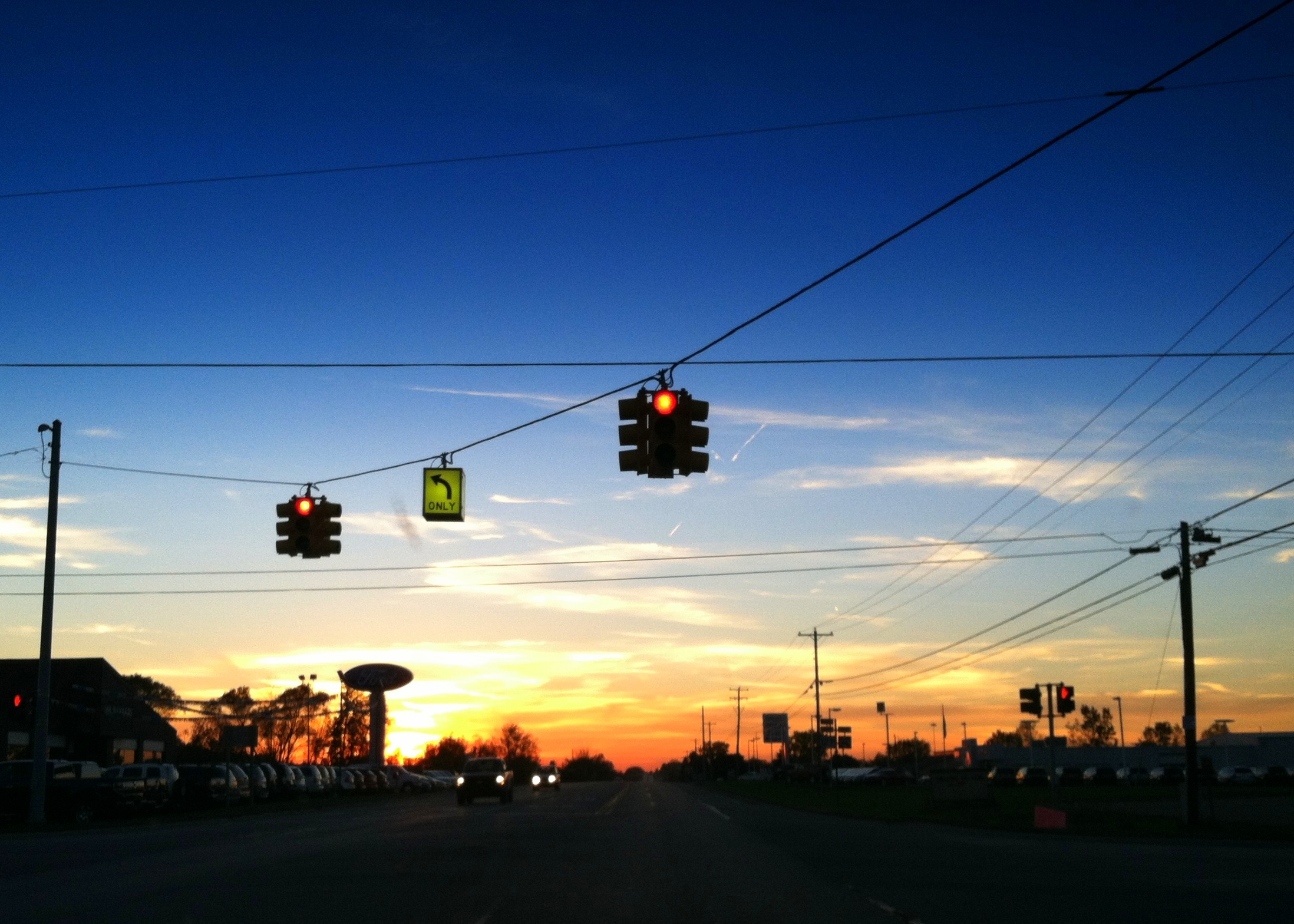
Here are some photos I’ve taken on my near-daily walks around the neighborhood. No change to color saturation changes in these photos because there’s no need, although they’re not always the best quality because I took them on my phone–sorry! Mid-Michigan trees and clouds looking good:

Vietnam by the Numbers

Delicious pork-based meals consumed: 20+

Delicious pork-based meals that were bun cha: 10+

Items of bespoke clothing purchased: 3

Animals seen: 10 or so (easily the fewest of my entire trip)

Entombed heads of state briefly glimpsed: 1

World Heritage sites admired: 2

Instances in which I was run over by a four-door sedan: 1

Packages of Oreos and Ritz crackers offered as recompense for being run over by a taxi: 4

Weeks for burns to heal: 4

Weeks for puncture wound to heal: 7

Major sightseeing trips canceled due to injuries: 2 (see you next time, Sapa and Halong Bay!)

Total money spent: $1,468.40

Number of days in the country: 28

Average amount spent per day: $52.44

Total money spent, minus the hospital costs: $1,026.30

Average amount spent per day, minus the hospital costs: $36.65

New friends made: 6

Old friends happily re-met by chance: 2

Reasons to go back and see more, uninjured this time: 100+

hue bike traditional hat

The Monument He Never Wanted: Ho Chi Minh’s Mausoleum

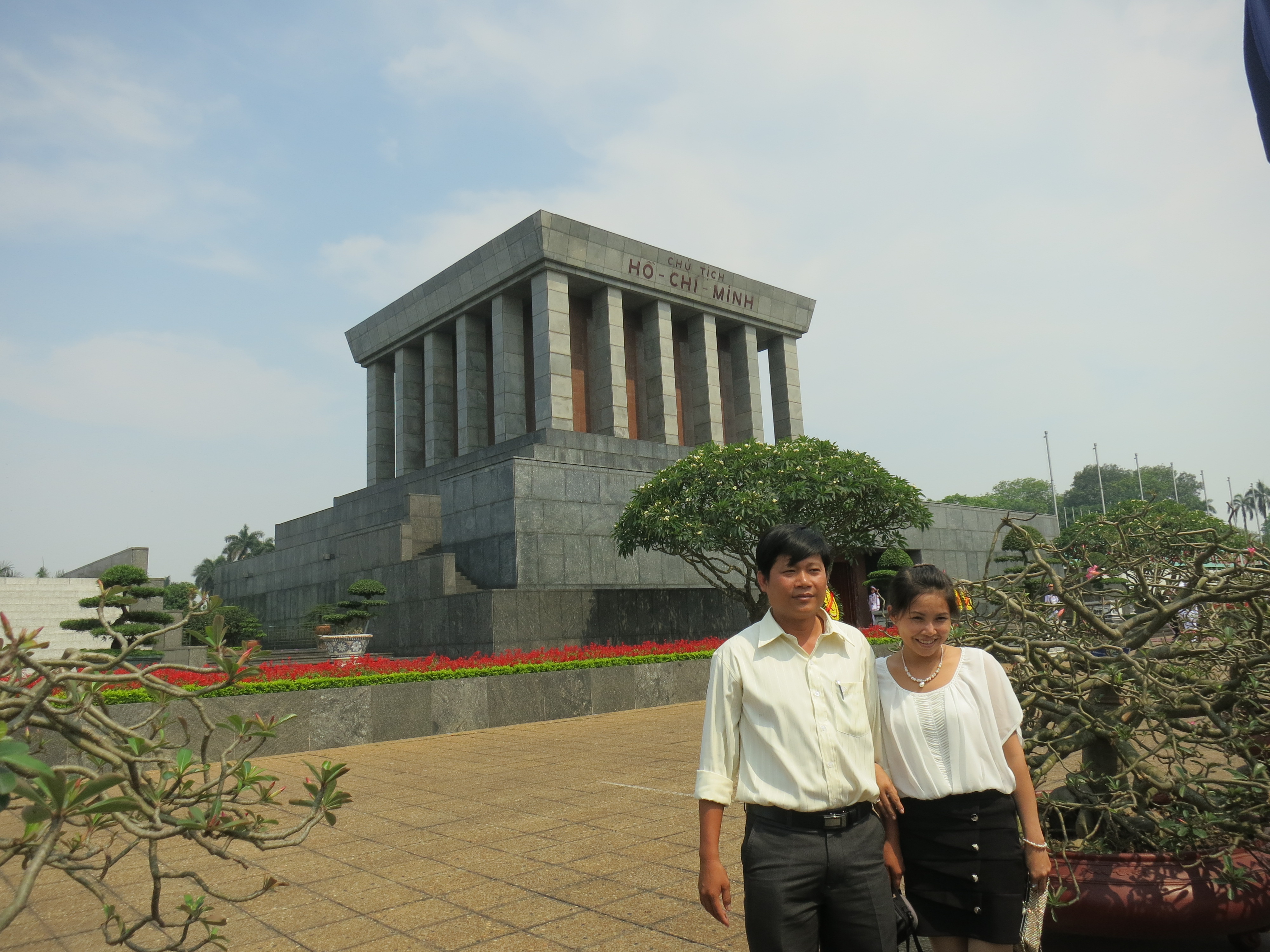
Ho Chi Minh wanted his body cremated, his memory kept alive in the spirit of the soldiers still fighting the war that went on several years after his death. But the leaders left behind upon his passing on September 2, 1969 decided they needed a more visible symbol, so they embalmed his body and erected a tomb in which to display it. The tomb is modeled on Lenin’s, and as with that monument, hundreds of people file past the embalmed body every day to pay their respects.

Ho Chi Minh Mausoleum

Ho Chi Minh Mausoleum

I’d heard how strict the guards were about not allowing visitors to take photos, but we were allowed to take our cameras into the complex. The mausoleum is only open for three hours every day, and some days the line extends for ages. Luckily for me, the lines were short when I visited, so I stood under an awning for only about 20 minutes before I entered the building. Once we were in front of the building, the guards enforced the no-photos rule, so I have none of the inside.

Standing in line, protected from the midday sun

Standing in line, protected from the midday sun

Inside, we walked single-file past armed guards, up a ramp and into the tomb. The glass case was mounted on a pedestal in a sunken floor, and was surrounded by another four armed guards. We were ushered through quickly, just enough time to see the waxy face and uniformed body of Ho Chi Minh, an eerie Snow White in a glass coffin.

This Vietnamese couple snuck a photo when the guards weren't looking, and I snuck one of them

This Vietnamese couple snuck a photo when the guards weren’t looking, and I snuck one of them

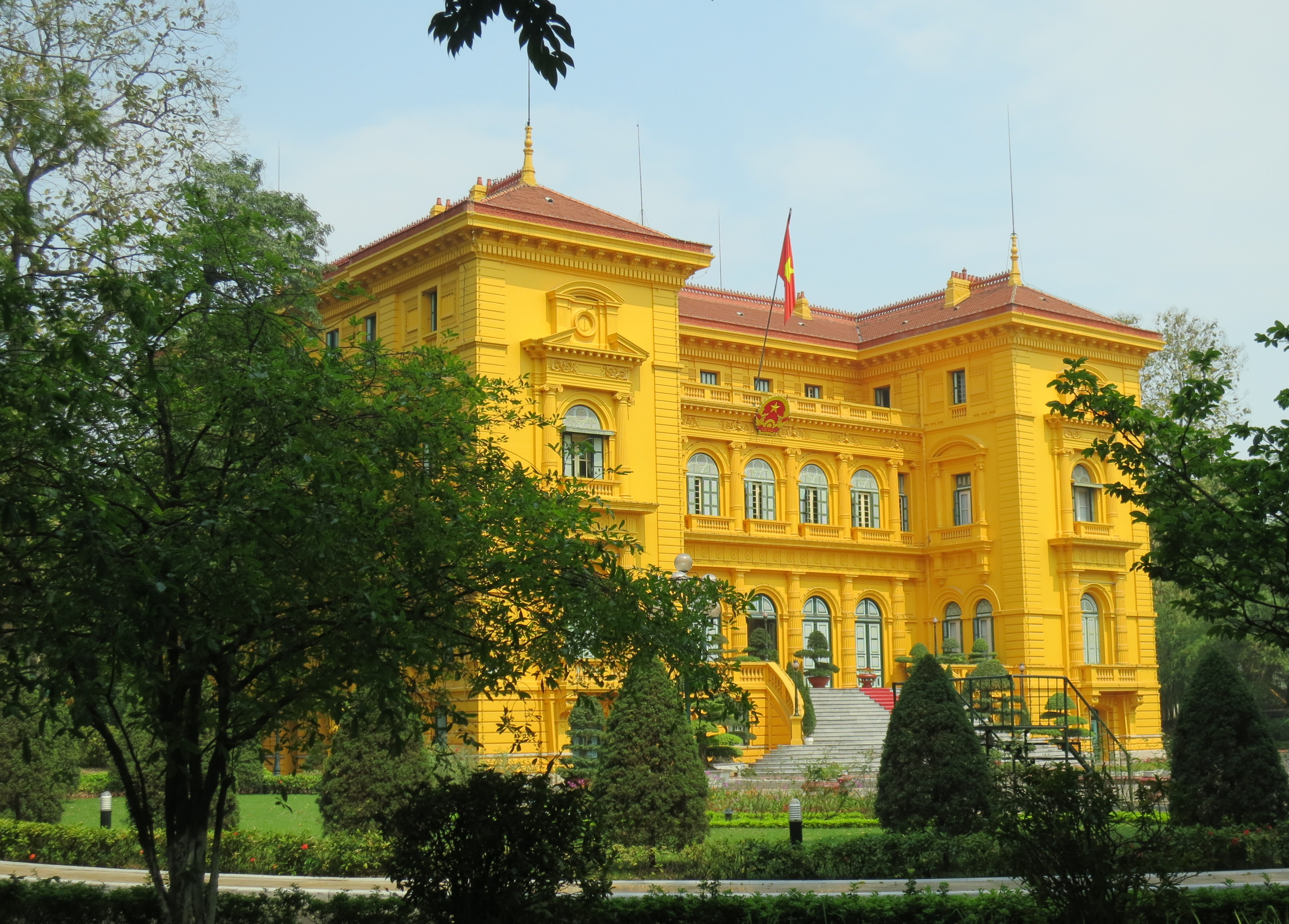
Outside, we were all encouraged to visit the palace grounds. I watched a group of schoolchildren, giggling in their little uniforms, sing a patriotic song together. I saw the outside of the palace, which had been built for French colonial rulers, was then used as the palace for Ho Chi Minh, and is now blocked off to the public.

The closed-off palace

The closed-off palace

Tranquil palace grounds

Tranquil palace grounds

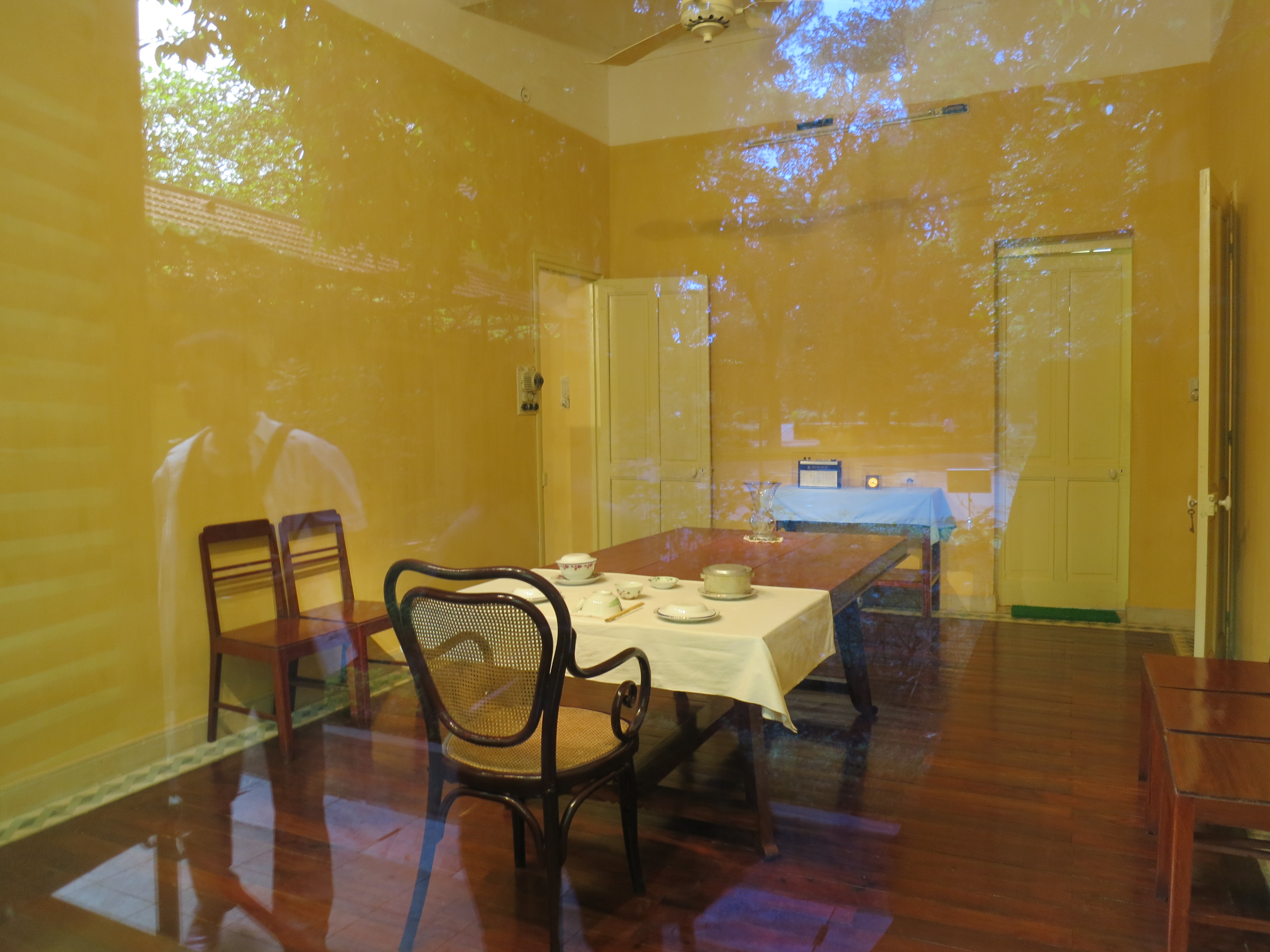
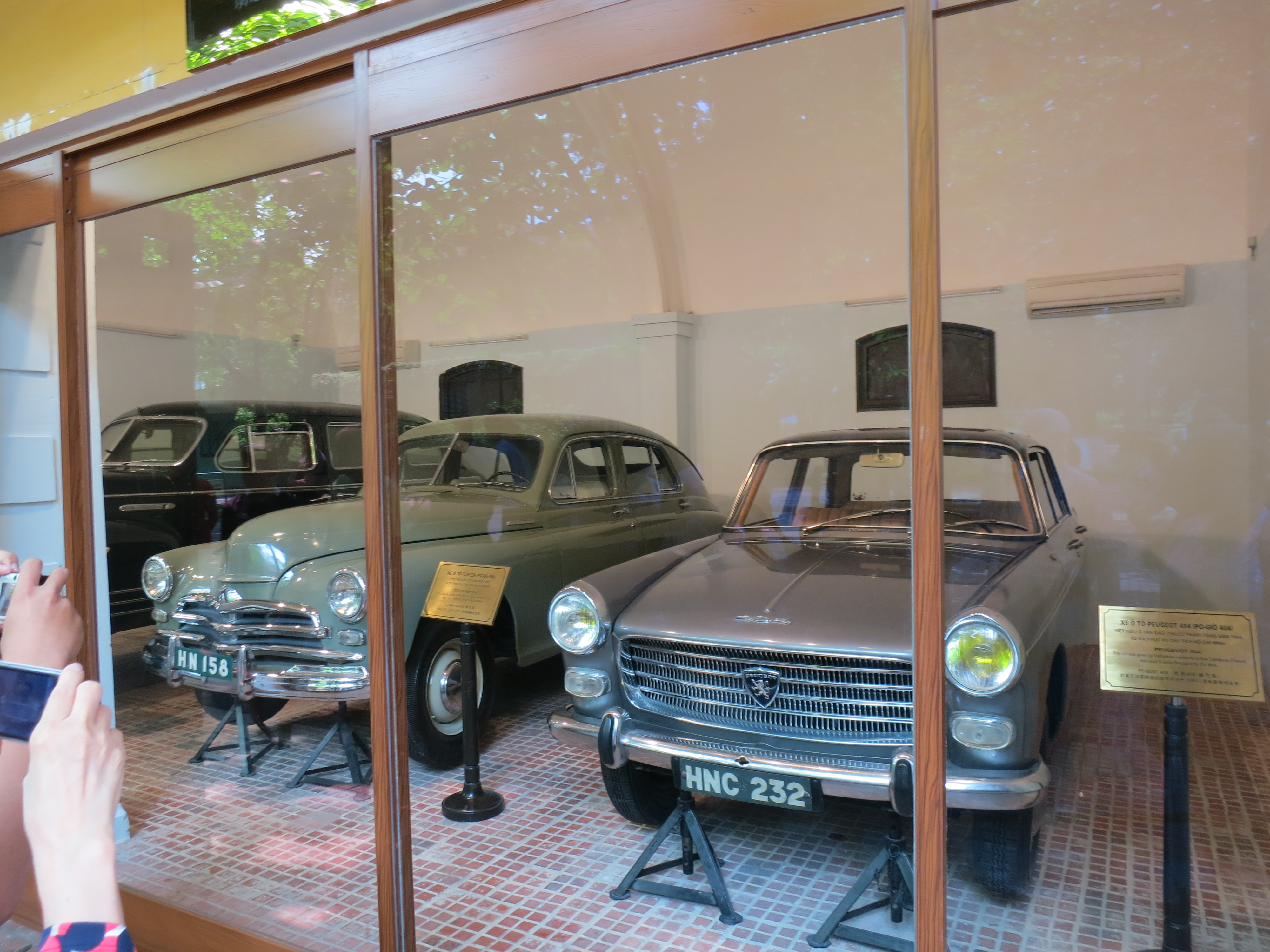
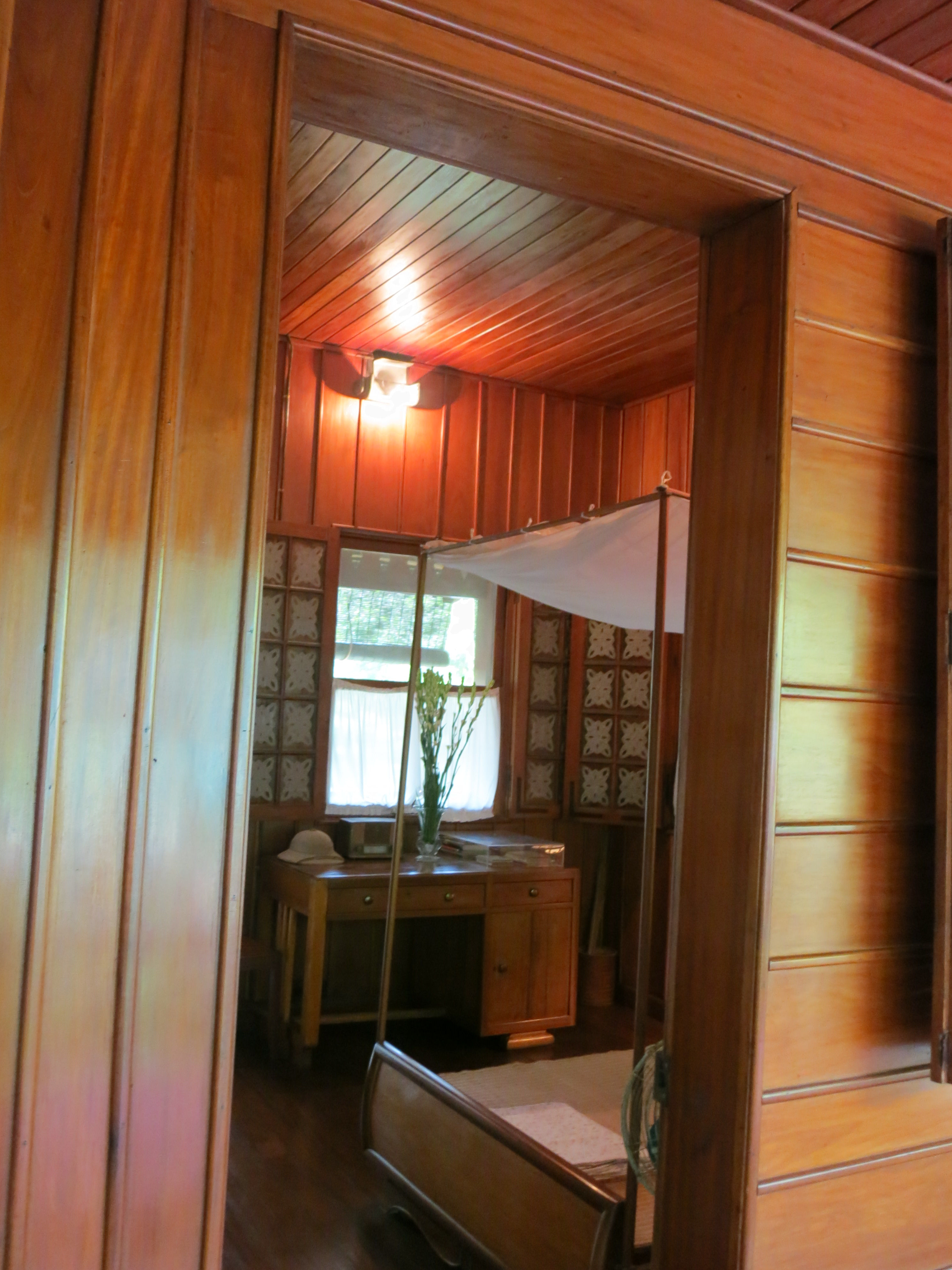
Ho Chi Minh apparently preferred to live in a simpler building during his presidency, and that building was displayed next to his three fancy cars near the small lake down the path. A little further along was the house on stilts, an even more basic construction that he retreated to during the later part of his tenure.

Simple quarters

Simple quarters

The cars of Ho Chi Minh

The cars of Ho Chi Minh

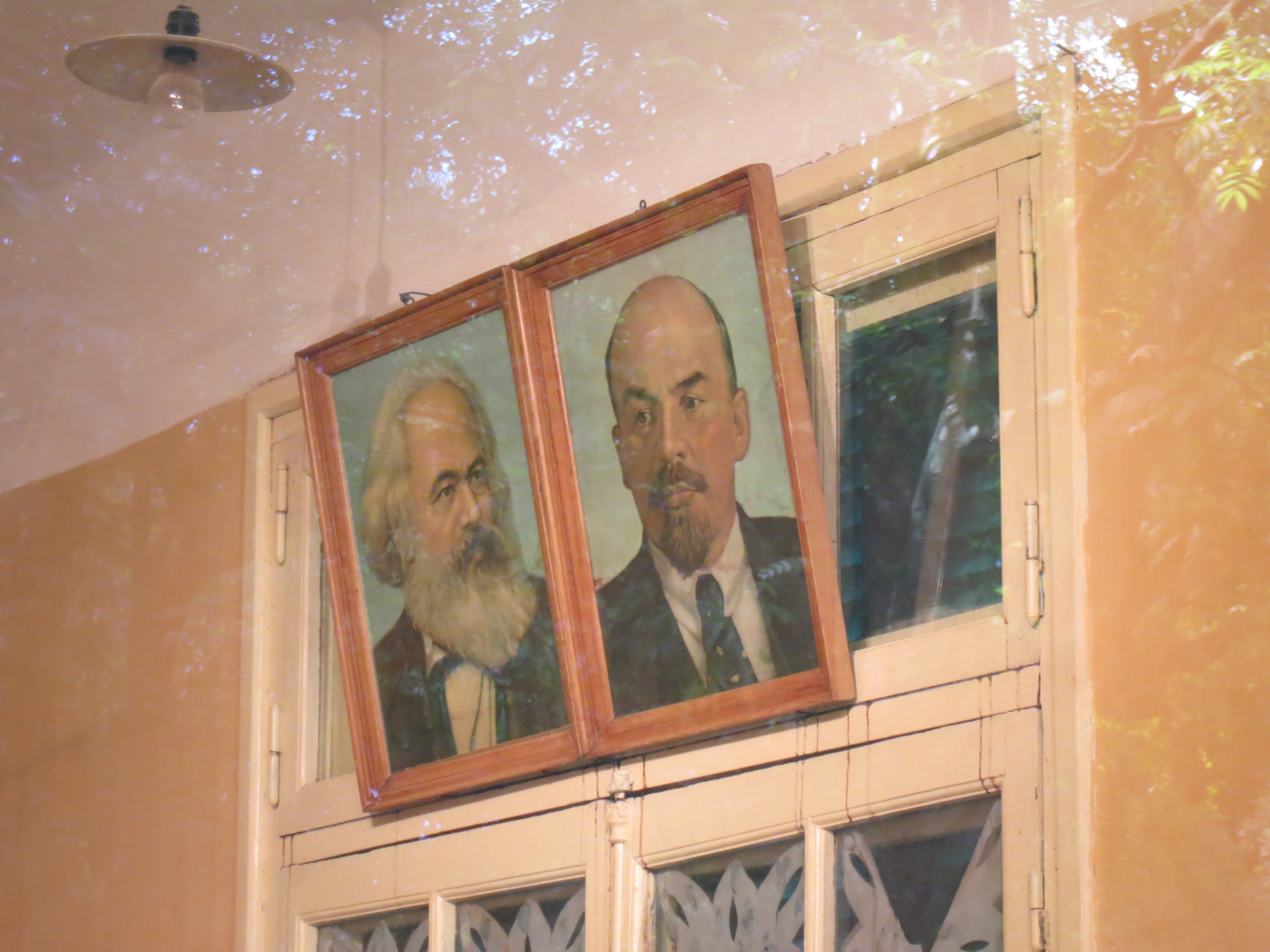
Inspirational posters for Communist leaders

Inspirational posters for Communist leaders

How much of this humility is legend and how much is the truth of the man, I don’t know. From the little I know of Ho Chi Minh, he did seem to truly believe in the cause he was fighting for, and in the liberation he believed a unified communist state would bring to Vietnam. It’s entirely believable that a man who worked most of his life for that outcome would request cremation and be embarrassed by the mausoleum he received instead.

A quick glance inside the stilt house (the crowd was pushing forward very quickly!)

A quick glance inside the stilt house (the crowd was pushing forward very quickly!)

The stilt house

The stilt house