
Sunset, on I-69, Michigan

Sunset, on I-69, Michigan
May it be spent in pursuit of magic.

Street art on the sidewalk in Brooklyn, September 2013
Seen outside a food market in Cairns, Australia:

PERSON TRAPPED
There is a dedicated alarm for PERSON TRAPPED. I guess it’s good they’re looking out for that sort of thing, but I don’t think I want to go in there.

Singapore; February 8, 2013
This weekend, I went Christmas tree hunting. Our family friend Diane used to come with us back when the twins and I were kids, and this year my parents and I joined her and her two kids, so we’ve come full circle. It turned out to be a warm day (by which I mean like 42 degrees, fully 10 degrees above freezing), so we were all walking around in coats and scarves and gloves, but no hats. That’s a December heat wave, I tell you what.
Anyway, I could describe the whole tree finding experience, or I could use this as an excuse to re-post my 2011 video about it. Imagine this, minus the snow, plus two adorable kids–including a 7-year-old girl waving a spare tree branch through the air like a superhero’s shield–and you’ve pretty much got my Saturday afternoon.
Also, I must include this photo of the siblings walking into sunlight together, because I almost said “aww” out loud when I took it.

Aww
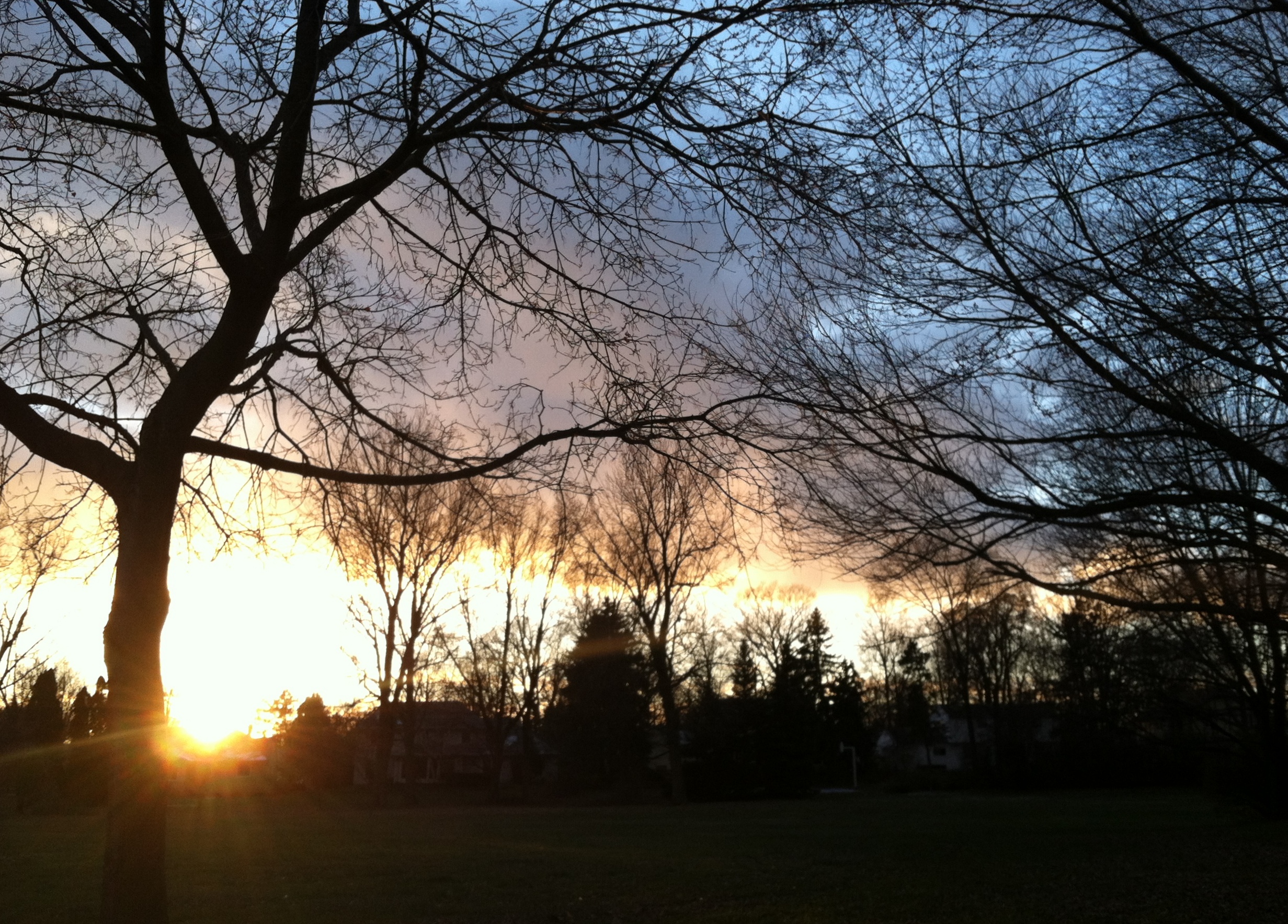
Sunset, East Lansing, Michigan
Takeshita Street is a famous side street in the shopping district of Tokyo. All the latest trends either start here or become mainstreamed here, I’m not sure which. I walked down the street, surrounded by teenagers dressed up in outrageous outfits shopping for even more outrageous outfits.

Famous enough for its own sign

It was crowded
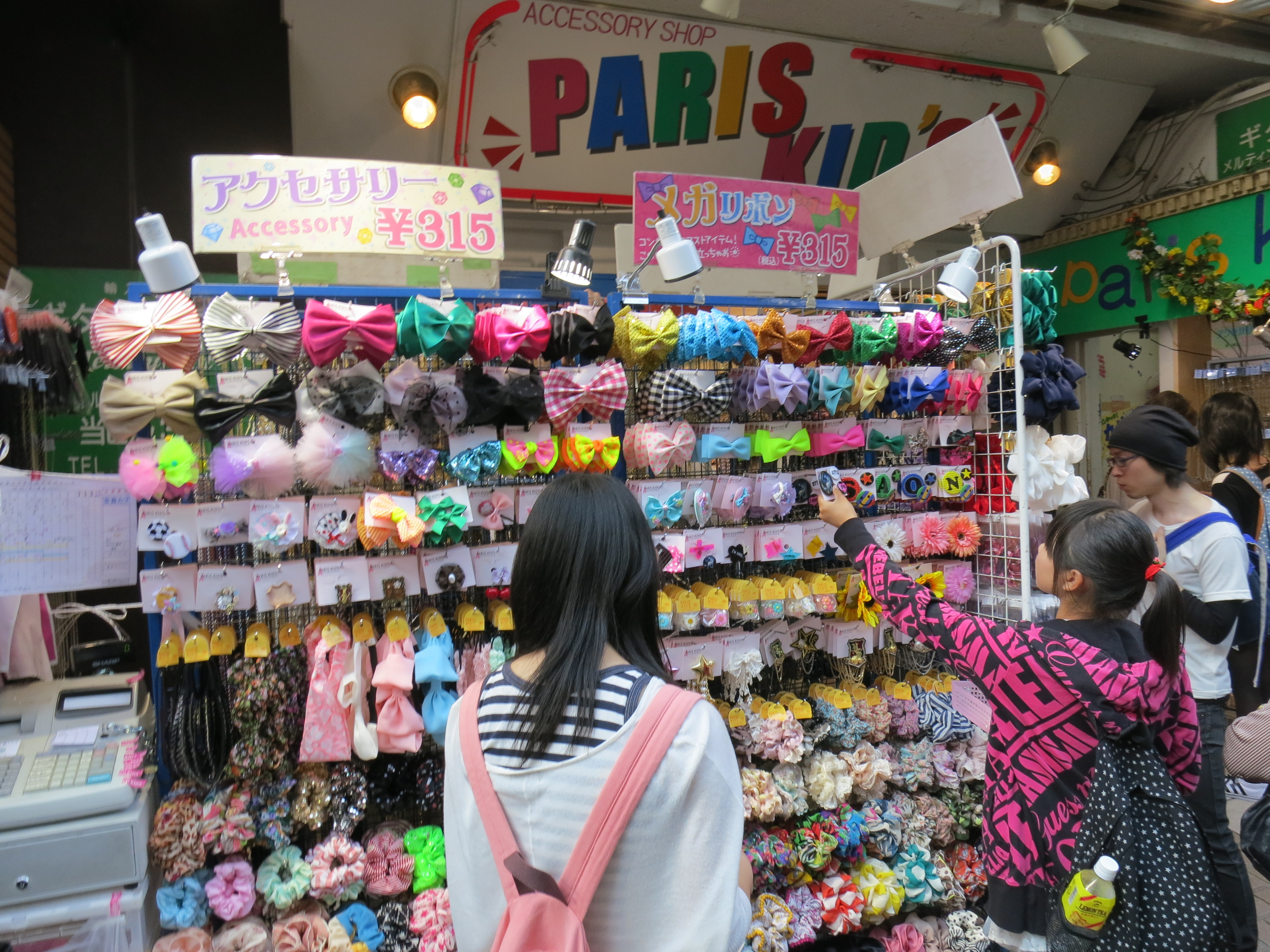
Anyone for a hundred bows?
Shop employees stood up on plastic stools to shout about their wares via megaphones. At least one store was devoted entirely to tights and leggings. I passed what I think was a photography studio, where you and your friends can dress up as pop stars and have your pictures taken with glamorous backgrounds. Or maybe it was just a place selling posters of pop stars.
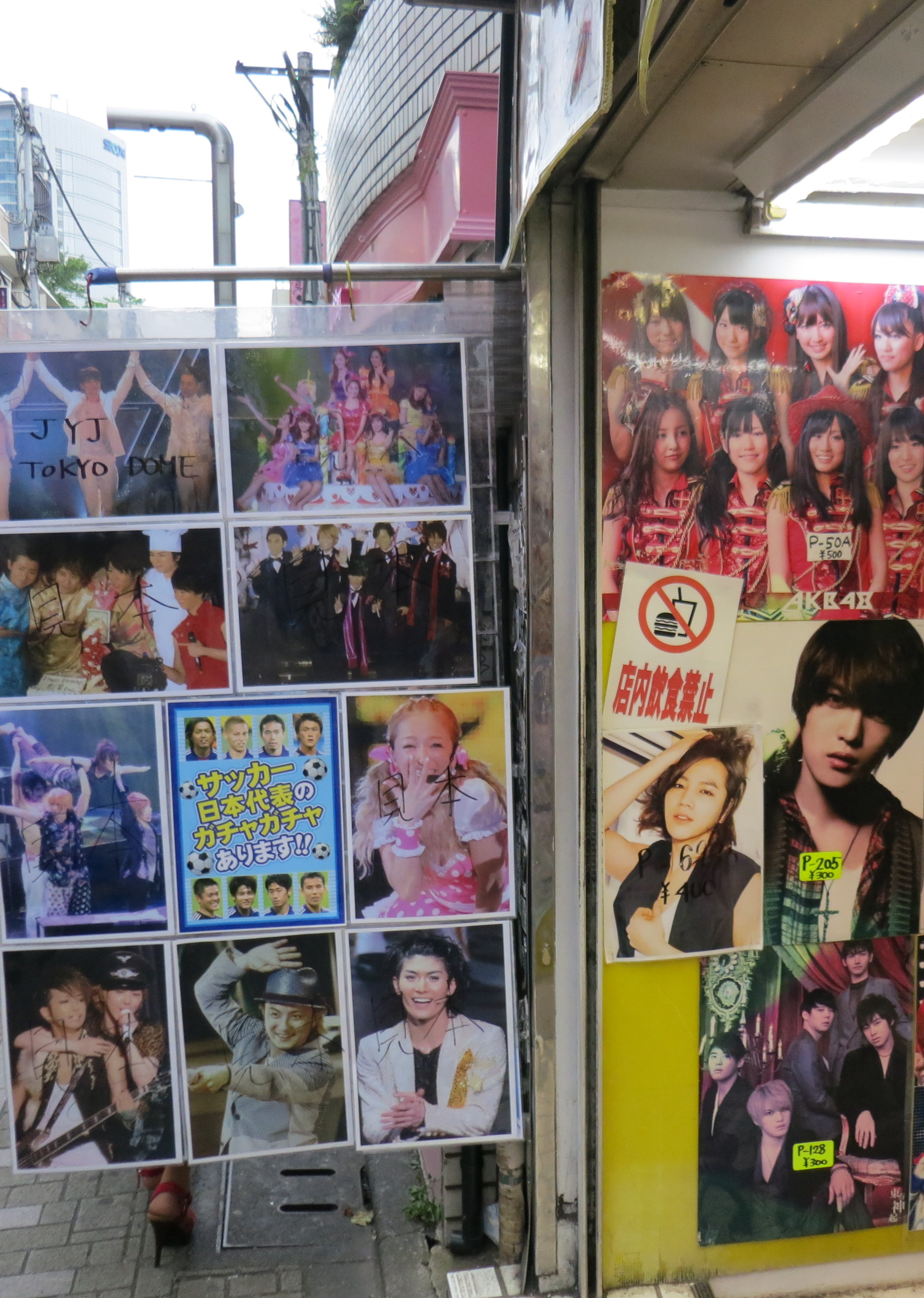
Dreamy pop stars

Anyone for a hundred pairs of tights?

Going hoarse from selling

The theme here is COLOR
I went into a Daiso, a chain 100 yen shop (a dollar store), and came out with some souvenirs and travel items. The store is large enough that it has its own directory. Some of the English translations describe items that I couldn’t actually find or couldn’t figure out what they meant (what’s Straps?), so that’s a bad translation, and some of them were just very specific (an entire section for Opera glasses).
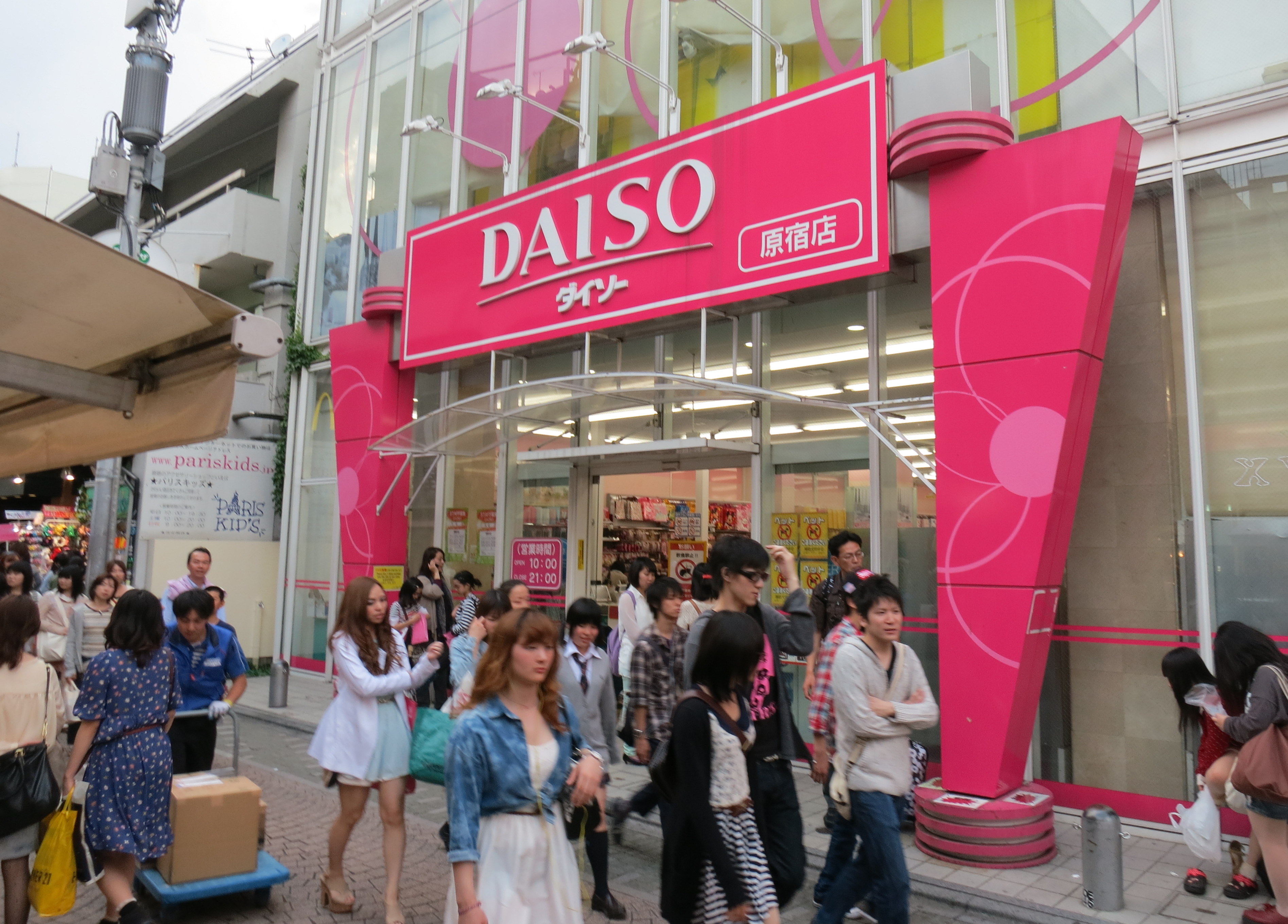
Daiso!

My favorite store directory

Down another shopping street, what did I find but Garrett Popcorn? As the window says, a Chicago tradition. I almost bought some, but as is the case in all the Chicago stores, there was a long line.
Nighttime View
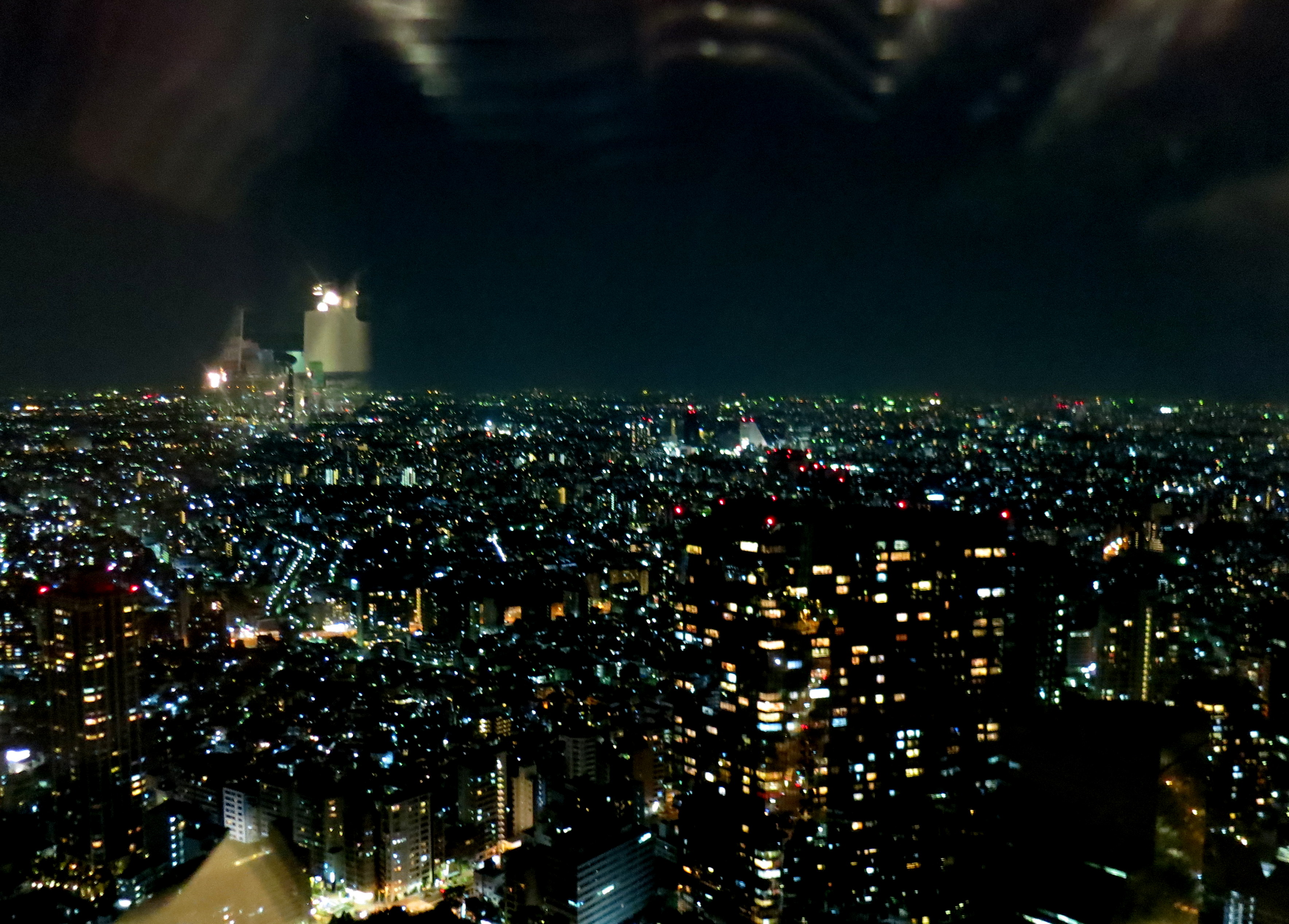
Tokyo from on high
My host Junko told me how to get a sweeping city view for free instead of paying for an observation deck at Mori Tower, so one night I went to the Tokyo Metropolitan Government Offices building. (This is like sending people to the Hancock instead of the Sears when they go to Chicago.) The observation deck on the 45th floor was made up of a restaurant, an overstuffed souvenir shop, and windows all the way ‘round the room. I liked seeing all of Tokyo spread out before me, lit up as far as the eye could see. (One of the downsides of going to the free deck is that it’s not set up well for photos, so there’s a glare on most of these, sorry.)

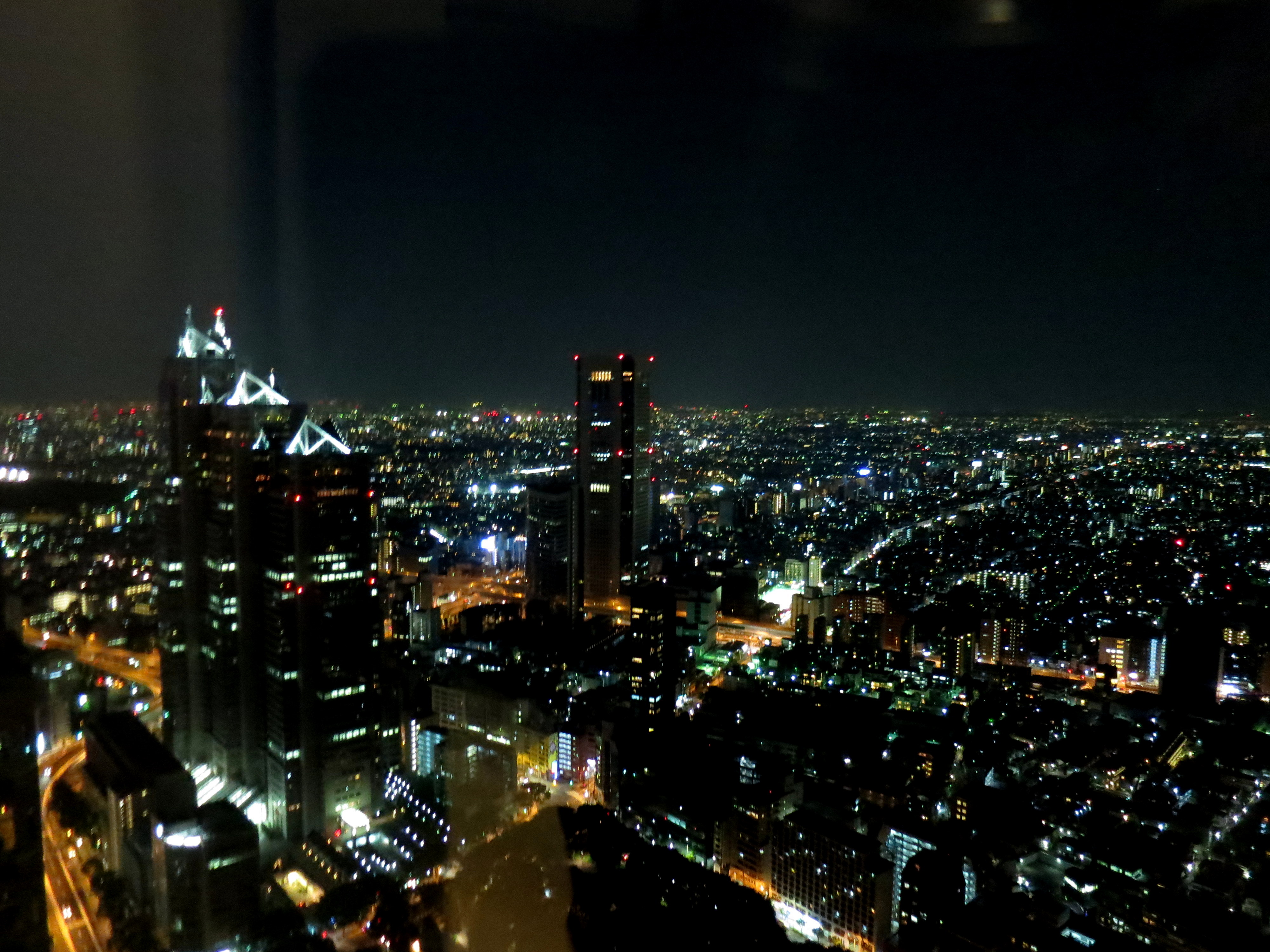
Bright lights, big city
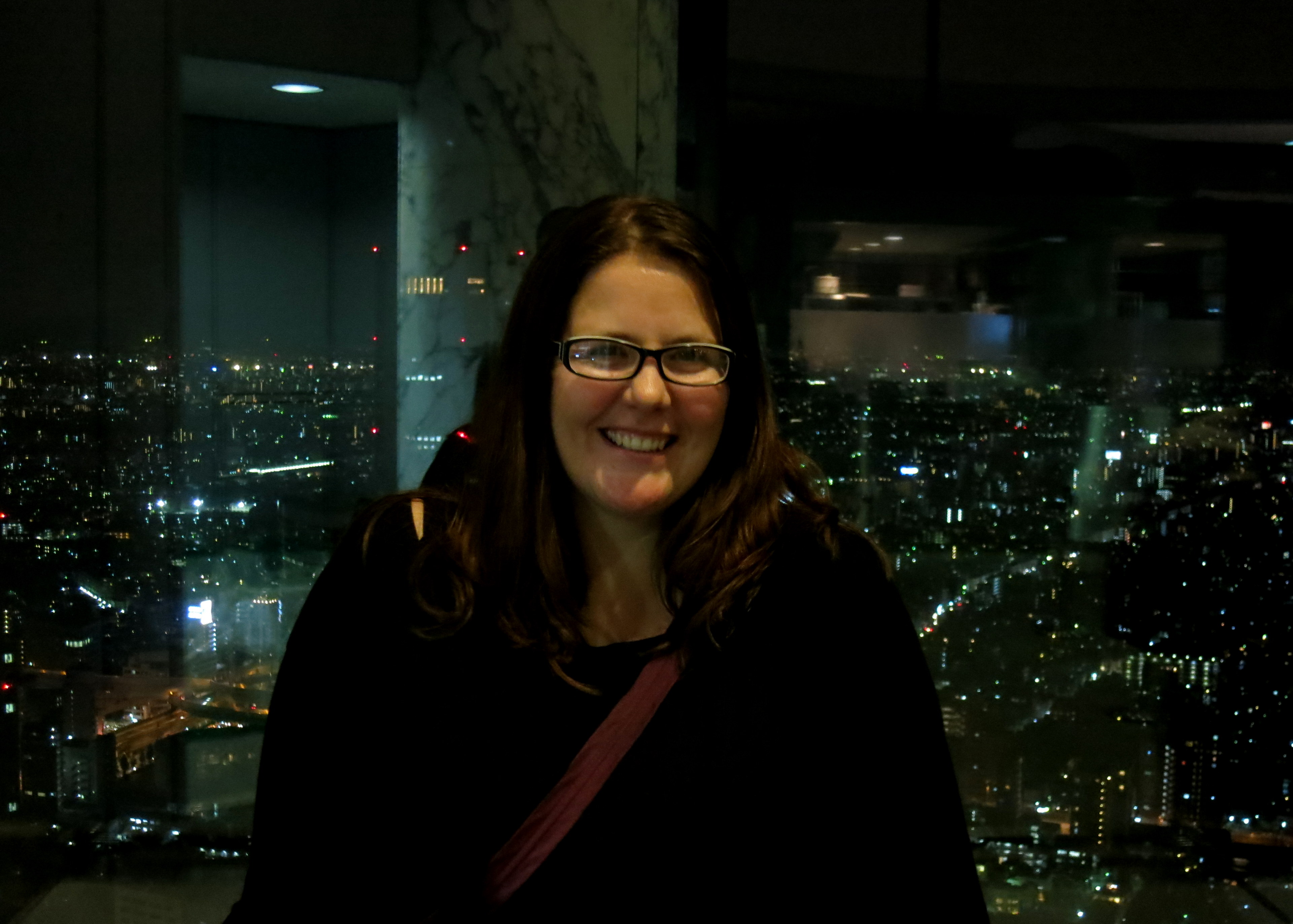
Over the city

Goodnight,Tokyo.
I’ve seen a lot of “Days of Gratitude” posts on Facebook this month. People post about something they’re grateful for every day up to Thanksgiving, usually with an accompanying photo. I think it’s a great idea, but I haven’t taken part, mostly because I feel like every blog post I’ve written this year has been a gratitude post.
Every day I get to write, which I’m grateful for in the way that most writers are grateful for the chance to write—it’s an aggravation, sometimes nearly impossible, but occasionally totally satisfying. Every day I write about this amazing trip I’ve been on, so every day I’m grateful anew for the places I’ve been and the people I’ve met.
I’ve spent seven months of this year on a trip around the world, gone to the weddings of some of my most beloved people, celebrated my grandmother’s 80th birthday with the whole clan, and published a piece on a major website. It really has been a terrific year, and I’m grateful for every day of it. Can’t wait to see what 2014 brings.

Thankful for the laughs from this year

Krka National Park, Croatia; June 11, 2013
The Meiji Jingu shrine is named after the last Meiji emperor of Japan and his wife, Empress Shoken. The shrine was built after the emperor’s death in 1912, near the imperial couple’s favorite iris garden.
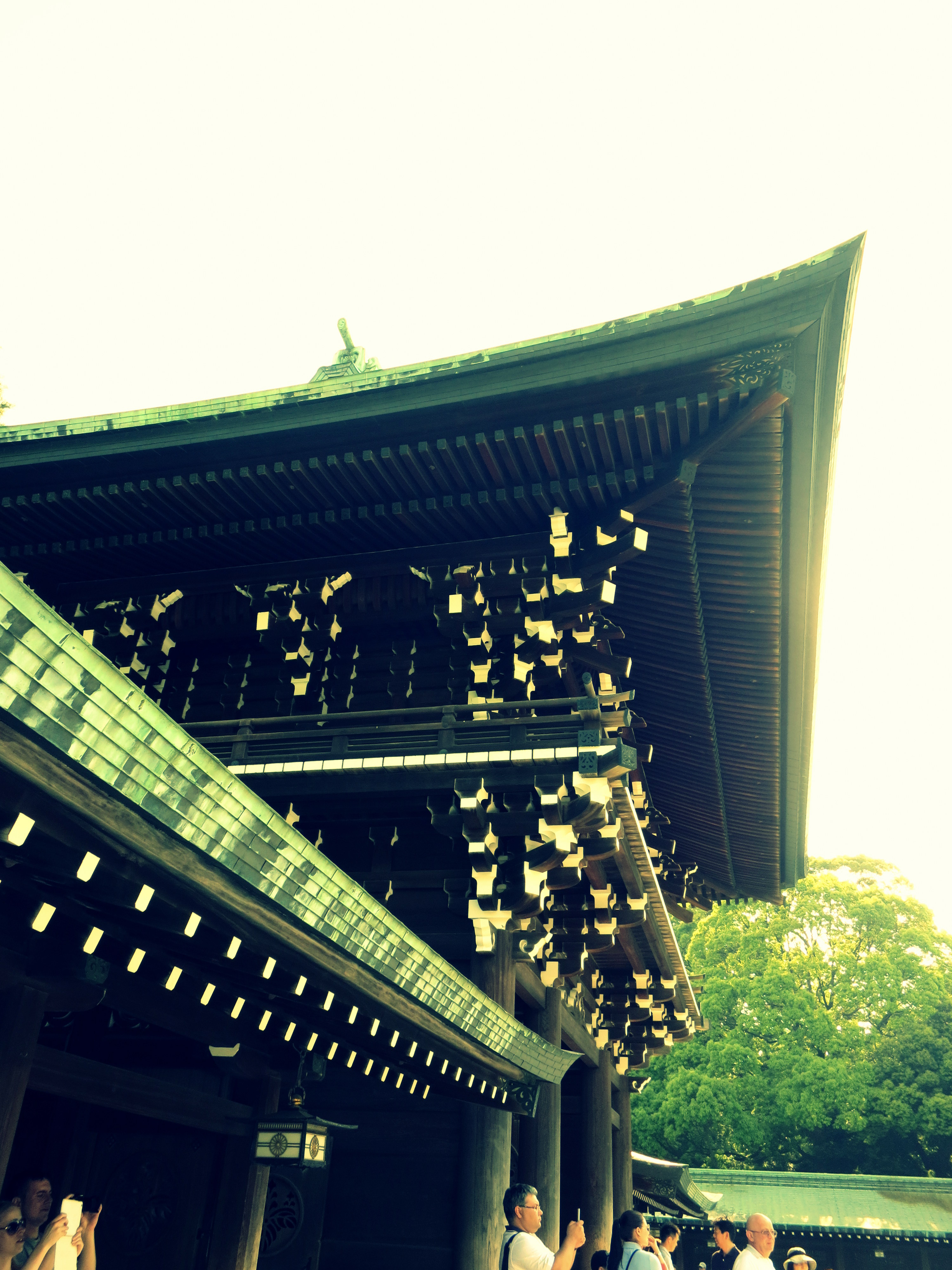
The Meiji Jingu Shrine in Tokyo

The front of the shrine
The government decided to build a Shinto shrine to the deified spirits of the emperor and empress, and they surrounded the building with over 100,000 trees donated by citizens from around the country. I found that a lovely idea, to build a living, natural shrine as well as a painted, manmade one.

Turtles laying out
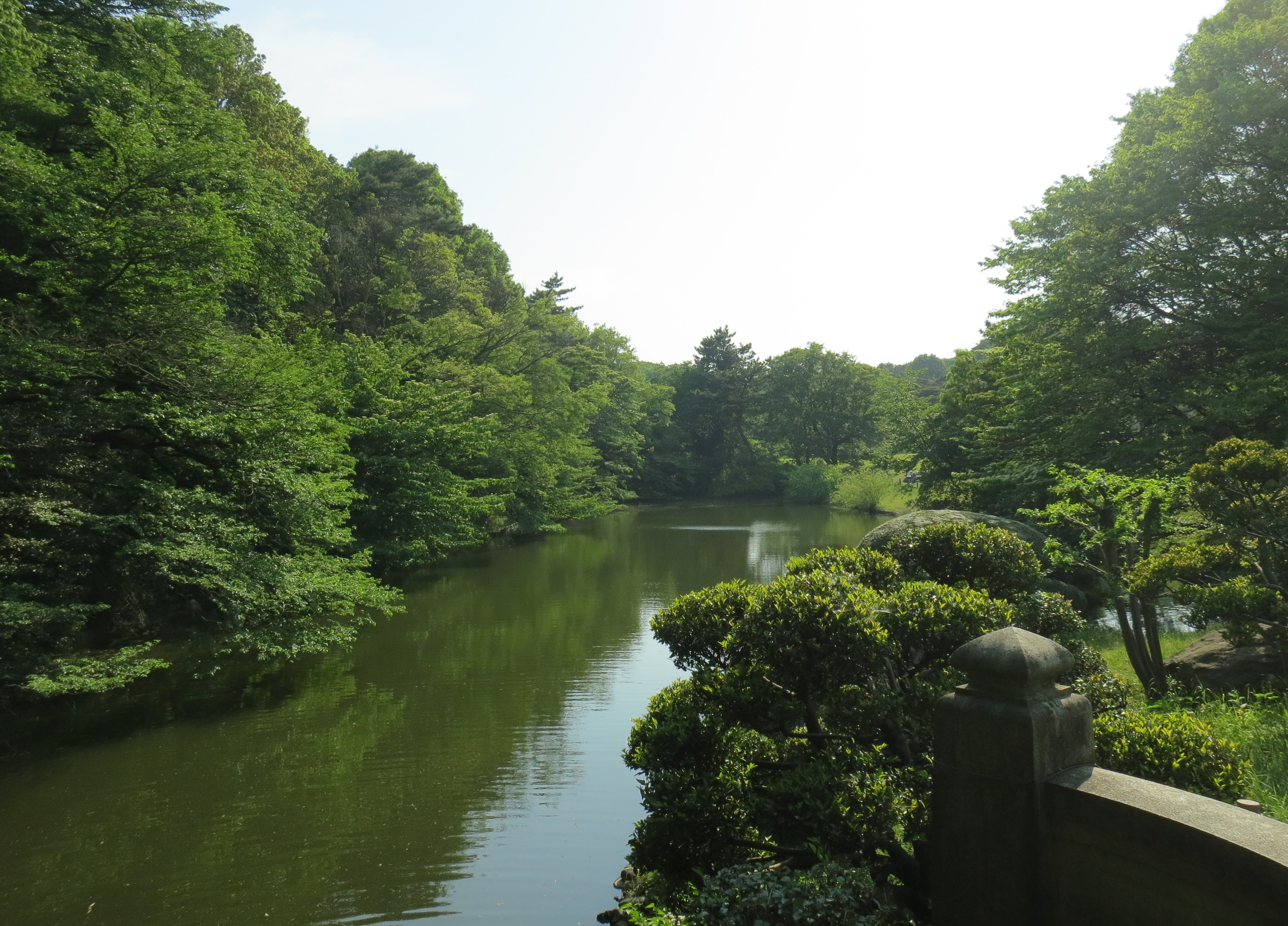
The peaceful gardens surrounding the shrine

Trees donated by people from all over Japan
The park is large, as you can imagine since it contains over 100,000 trees, and I had a nice walk through the forest, over a pond lined with turtles sunning themselves. I entered the main grounds and took in the large trees hung with paper lightning bolts of power, and saw a wedding party walking across the large gravel courtyard.
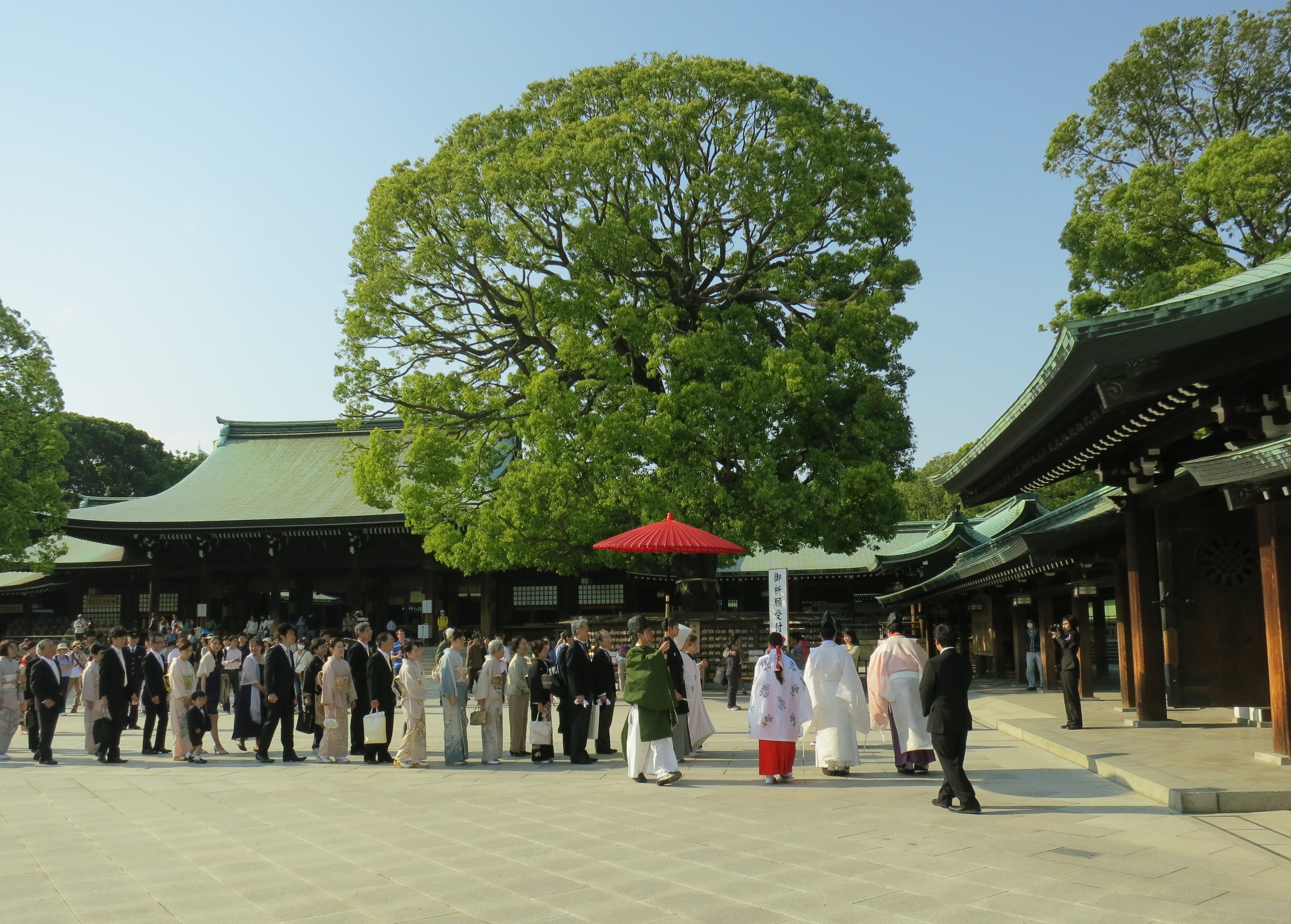
A wedding procession

Everyone quieted down in respect for the passing wedding party
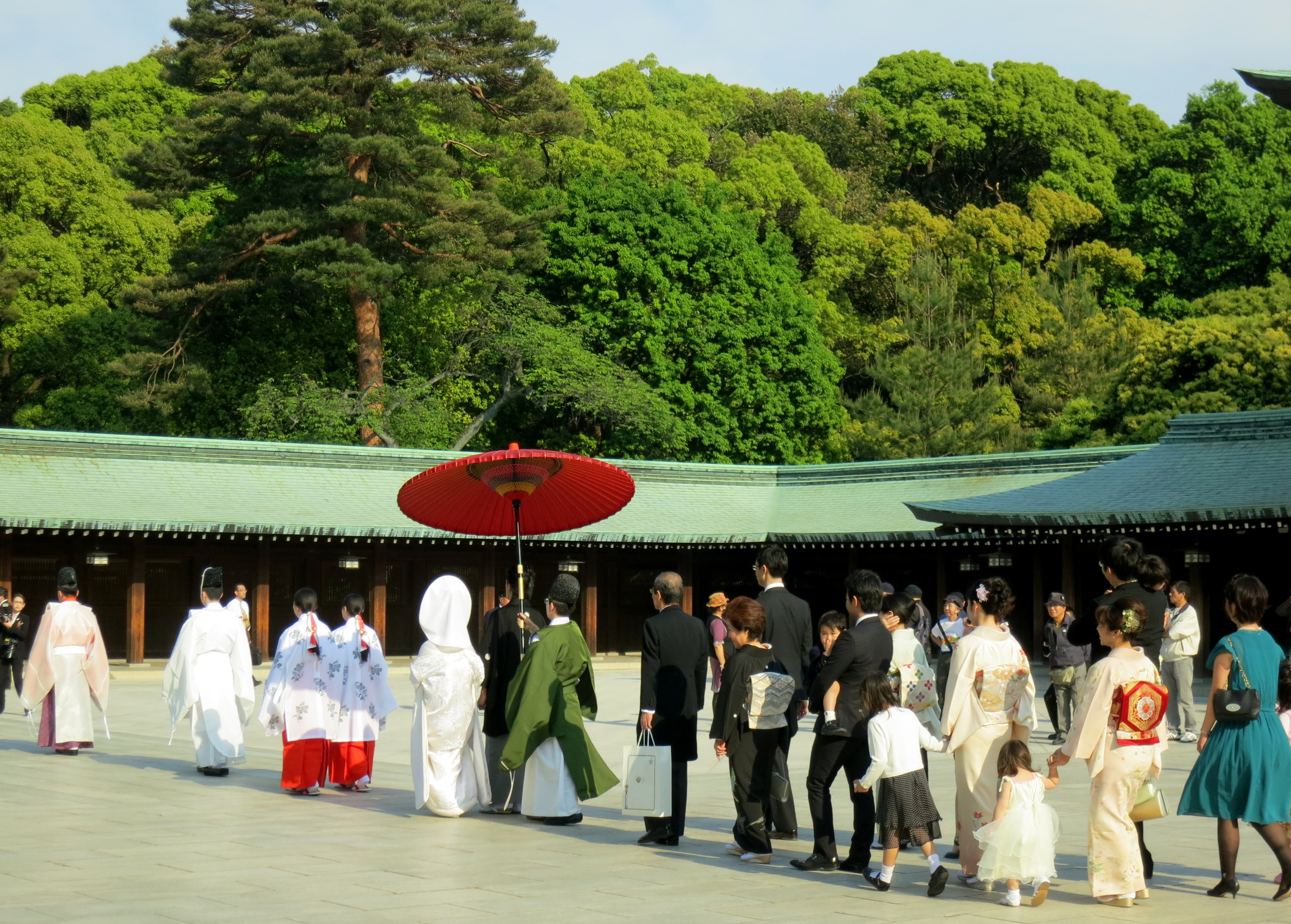
Wedding procession from behind
Priests in ceremonial dress led a procession through the courtyard to a side yard and around a corner out of sight. The groom wore a dark suit and the bride wore a white kimono with a mushroom-shaped hood. A female attendant carried a parasol over the bride. Friends and family, some dressed in kimonos but most in contemporary clothes, walked behind.

One of the massive doors to the shrine

Tree hung with lightning
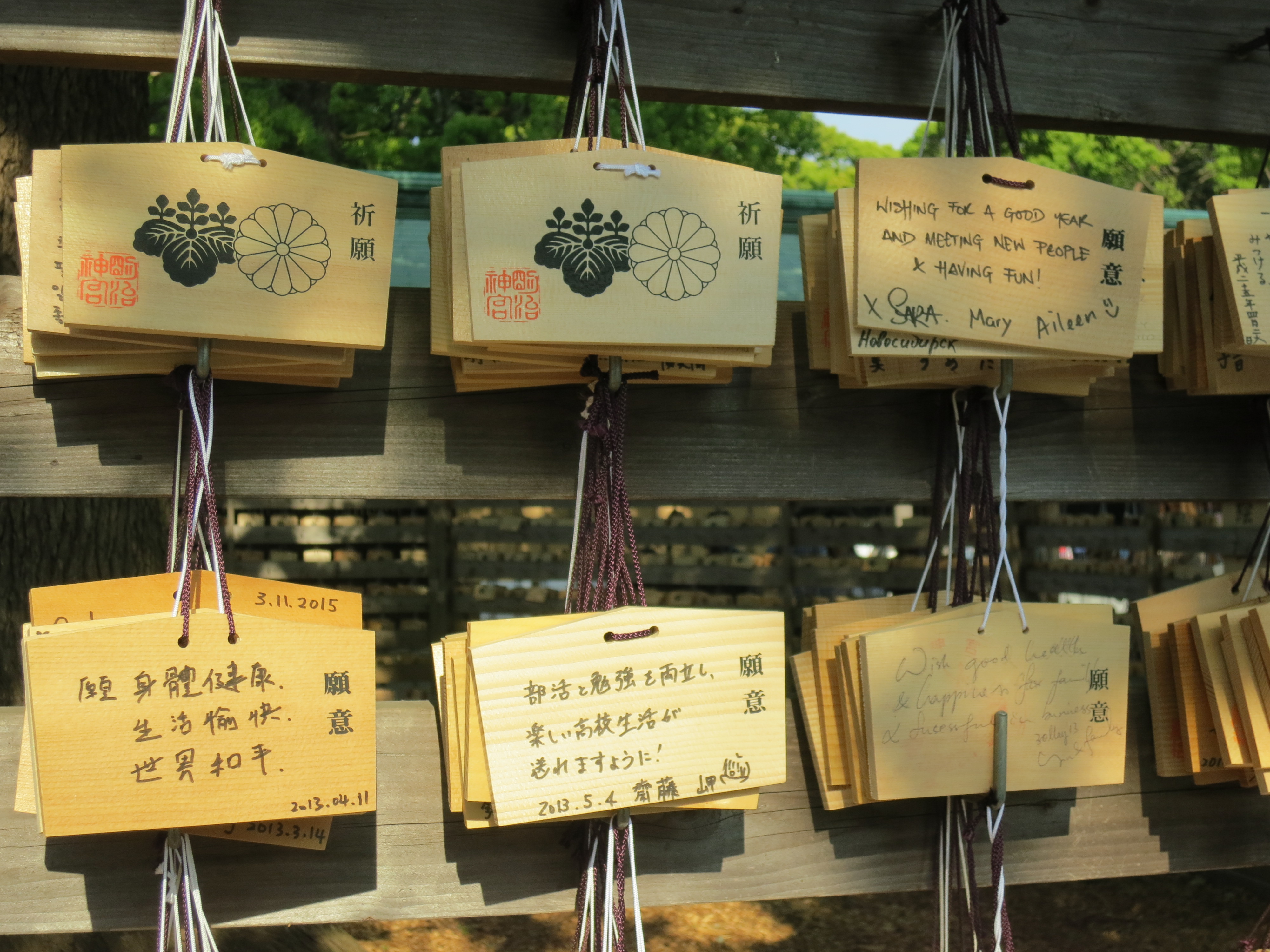
Fortunes and prayers to hang on the trees
The empress was a big supporter of the Red Cross, so there were collection boxes for the charity around the temple. The emperor was considered quite the poet, and for 107 yen, I purchased a small roll of paper with a short poem inscribed on it.

The edge of the torii
The torii, the main gate to the shrine, is the oldest of its style in Japan. According to the sign posted under it, the torii was rebuilt in 1975, modeled exactly after the original built in 1920. It seems unlikely all other torii of this style in the country were built after 1975, so this seems to be another instance of something being displayed as an original in Japan, without actually being made of the same materials as the original. I’m so used to the old buildings and sites of Europe and the States, which are venerated for being the very same stones touched by previous generations.

A priest near the lightning bolts
The original is such a prized thing in Western civilization, from paintings to cathedrals, and the materials used are an integral part of that originality. I have not made a study of this, so please do correct me in the comments if I’m wrong, but originality in Japanese culture is less important, or it’s interpreted in a different way; the materials aren’t as important as the precise style and location, perhaps. The London Bridge was moved to the Arizona desert, and people still flock to see it because it’s made of stones centuries old. In Japan, temples may have been rebuilt only a few decades ago, but they imitate the form and decoration of their predecessors so precisely, and inhabit the same space so perfectly, that they are admired as the temple, not a copy.
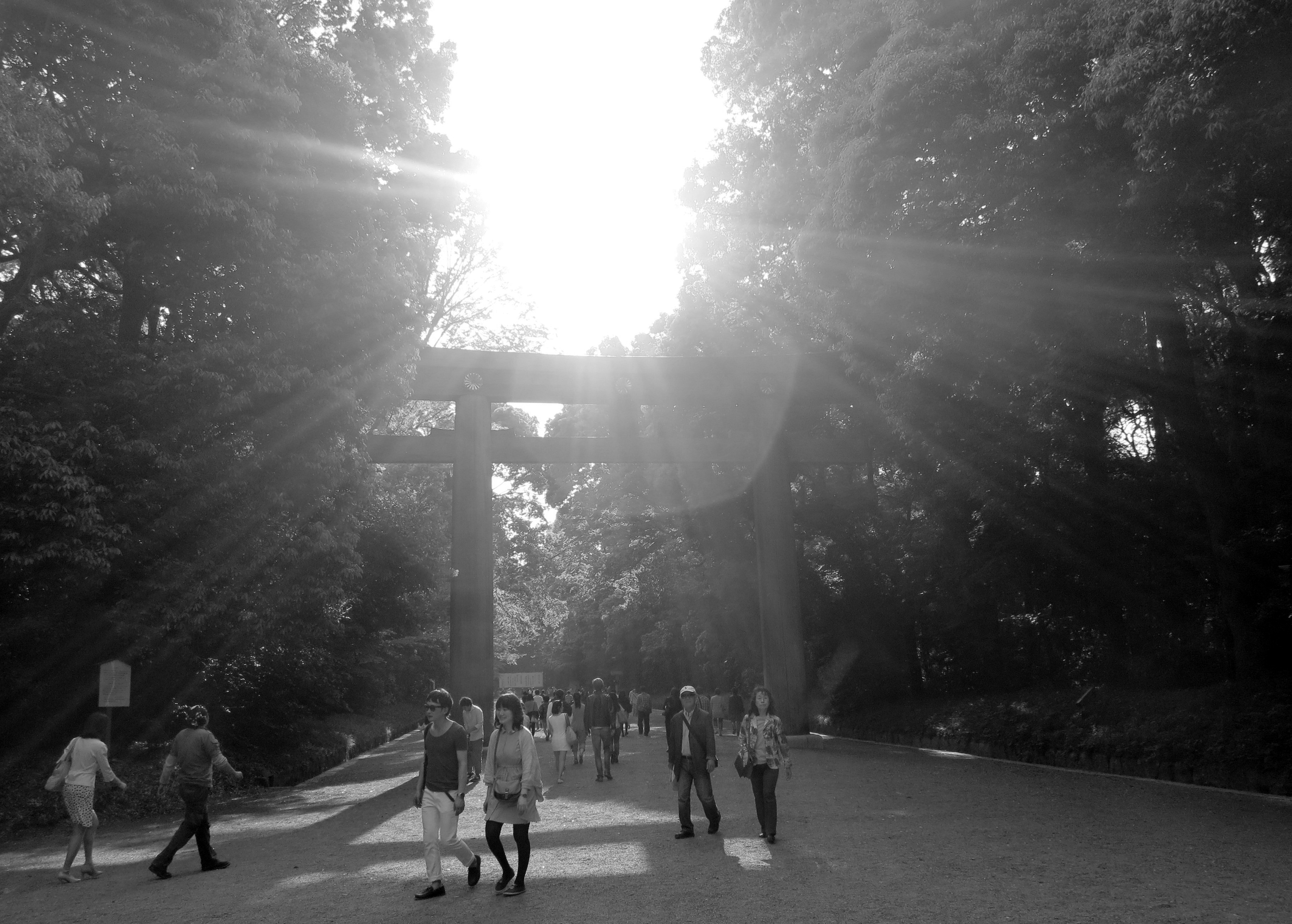
On the approach
This is ending up very freshman philosophical, all “what is the you-ness that makes you, you,” but it’s something I pondered several times at the different tourist sites I visited throughout Japan. I admit to a thrill when I see or touch something truly old, but seeing a perfectly symmetrical temple identical to one people admired centuries ago is a thrill of its own. The common thread, for me, is the historical connection to others. Whether it’s the actual building that people stood in, or a replica, the exciting thing is the idea that I might be experiencing the sights and sounds of a place just as earlier generations did.
 Stowaway Travel Writing & Editorial Services