Bath, Michigan; November 30, 2013

Bath, Michigan; November 30, 2013
High-speed trains whisked away on: 6
Temples visited: 20+
Wedding processions stumbled upon: 2
Bill Murray homages performed: 1
US Navy bases visited: 1
Perfectly planned gardens appreciated: 15
Perfectly planned gardens found wanting: 1
Traditional performances attended: 3
Schoolkids who made me part of their project: 17
New foods consumed: 23
New foods enjoyed: 21
Beatles cover bands watched: 1
Intimidatingly fashionable teens seen on the street: hundreds
Total days spent in Japan: 20
Total money spent: $1,254.60
Average per day: $62.73
Total money spent, minus the rail pass: $629
Average per day, minus the rail pass: $31.45
Gratitude I have for my many hosts: boundless

Children’s Day banners in Kawagoe
There are more temples in Kyoto than days on a Japan Railpass, but I did manage to see the Golden Palace, the Silver Palace, Ryoan-ji, and Kiyomizu Temple over the course of a couple days. I can see why people rhapsodize about them.
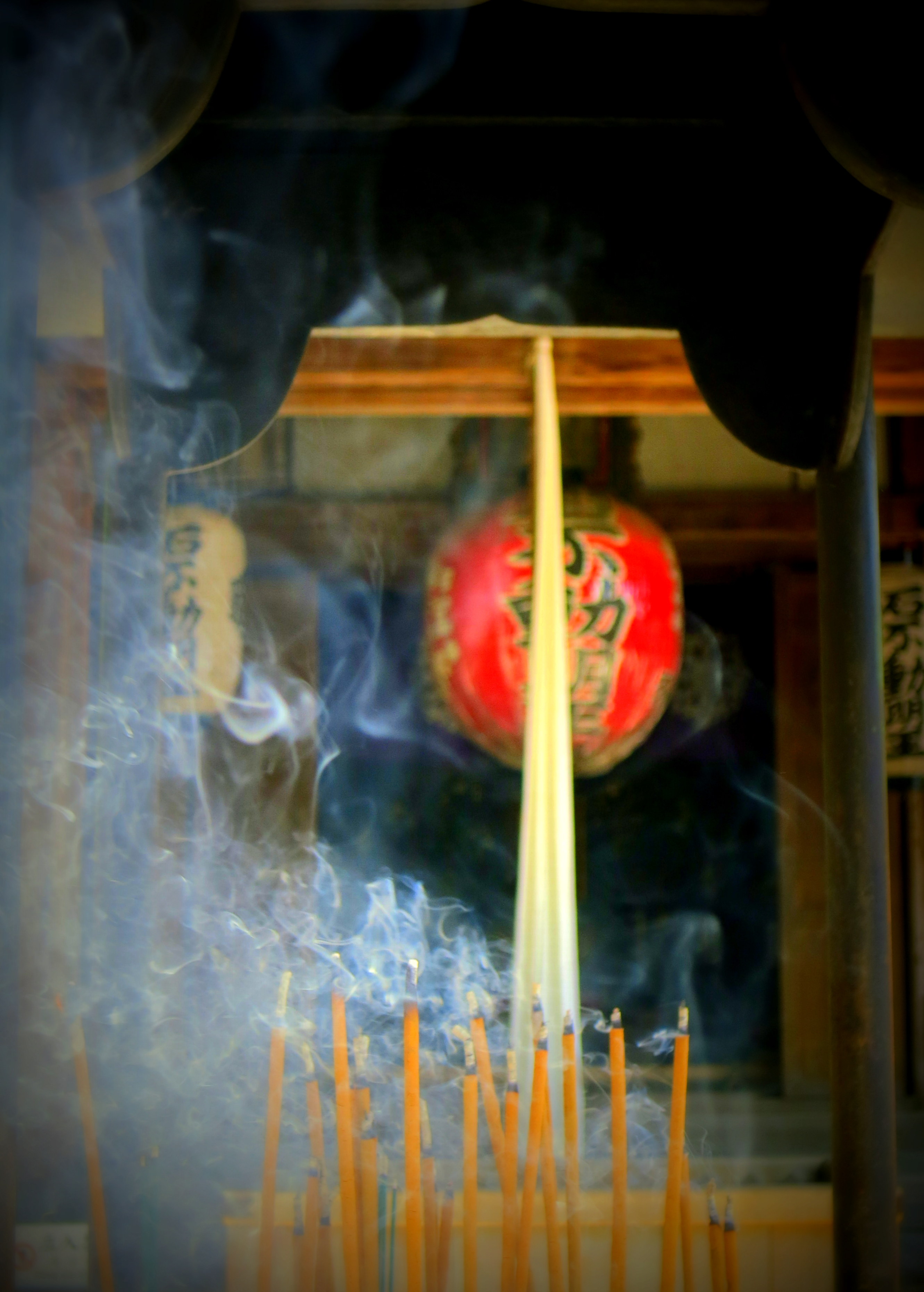
Kyoto temple
Ginkaku-ji (officially Jisho-ji) was built in the 15th century, and is probably nicknamed the Silver Palace as it came after construction of the gold-leafed Golden Palace. Possibly it was even going to be covered in silver foil, but that never happened, and it remains a painted wooden sculpture.

Ginkaku-ji

The Silver Palace, a wooden structure whose proper name is Temple of Shining Mercy

The approach to the temple was direct, but felt like a giant maze because of the huge hedges
The grounds were extensive (I feel like a character in an Austen novel every time I say that, but it’s true). The gardens I visited in Japan were all meticulously laid out, and little arrows pointed the exact path you should follow, both to avoid congestion and to appreciate the gardens according to the aesthetic plan of the designers. The gardens at Ginkaku-ji were flowering beautifully, and the large raked rock garden (it is a Zen temple) was a perfect complement to the leafy trees.

Lovely gardens

Seriously lovely

Another view from the hill walk
Kinkaku-ji, the Golden Palace, was super crowded–it’s one of the most popular destinations in the country, for domestic and foreign tourists alike. There’s a little spot set aside for photos of the gilded palace across the pond. Trying to elbow in for a photo in front of the fence was a bit of work. A Japanese teenager tried to take a photo with me–with me as the tourist attraction. I declined. Was that so different from taking a photo of the women in line with me at the kabuki theater? I like to think it was, since I chatted with the women in line before asking for a photo, but I’m not sure.
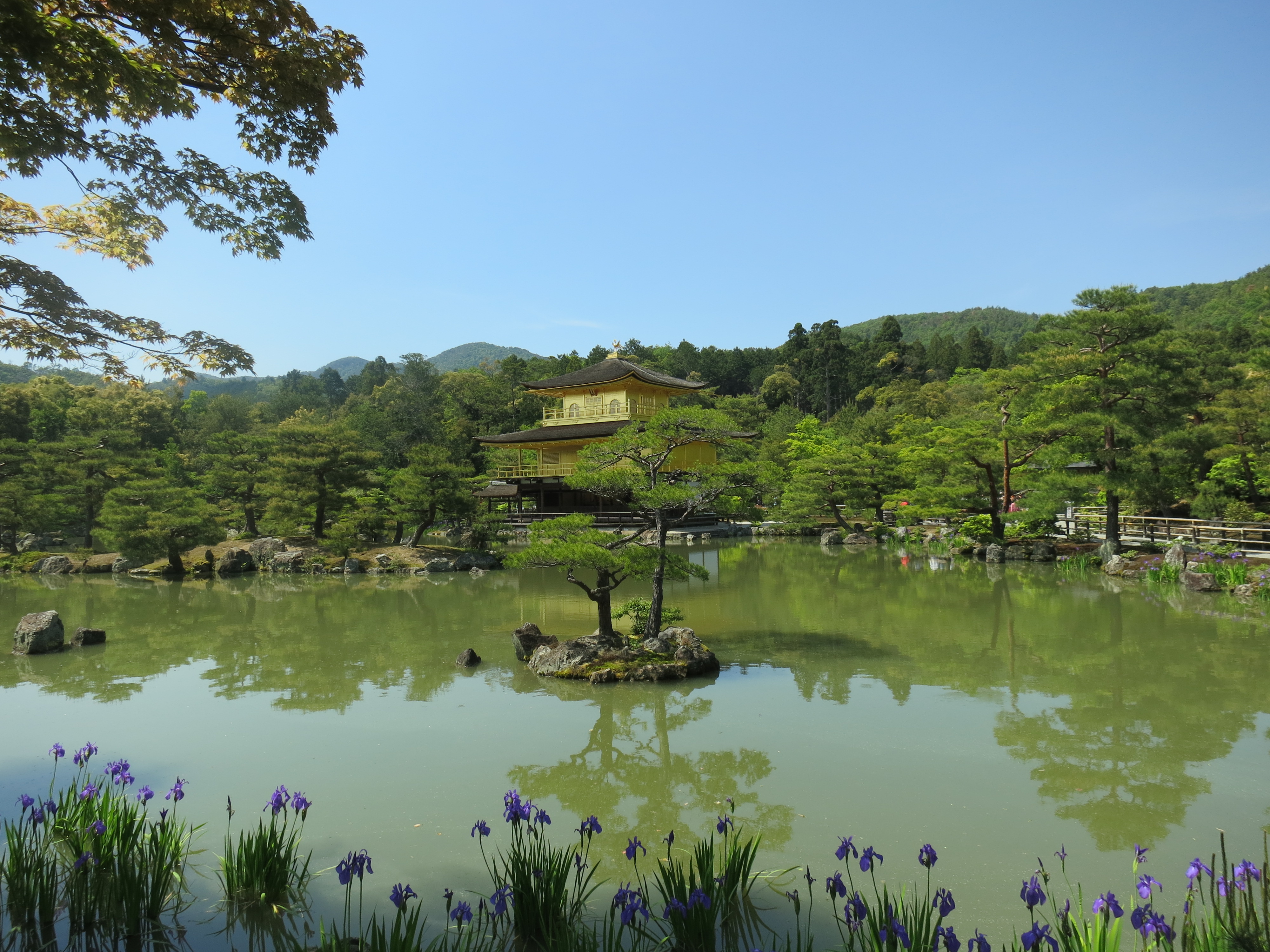
Golden Palace

May was a great time to visit, with everything in bloom
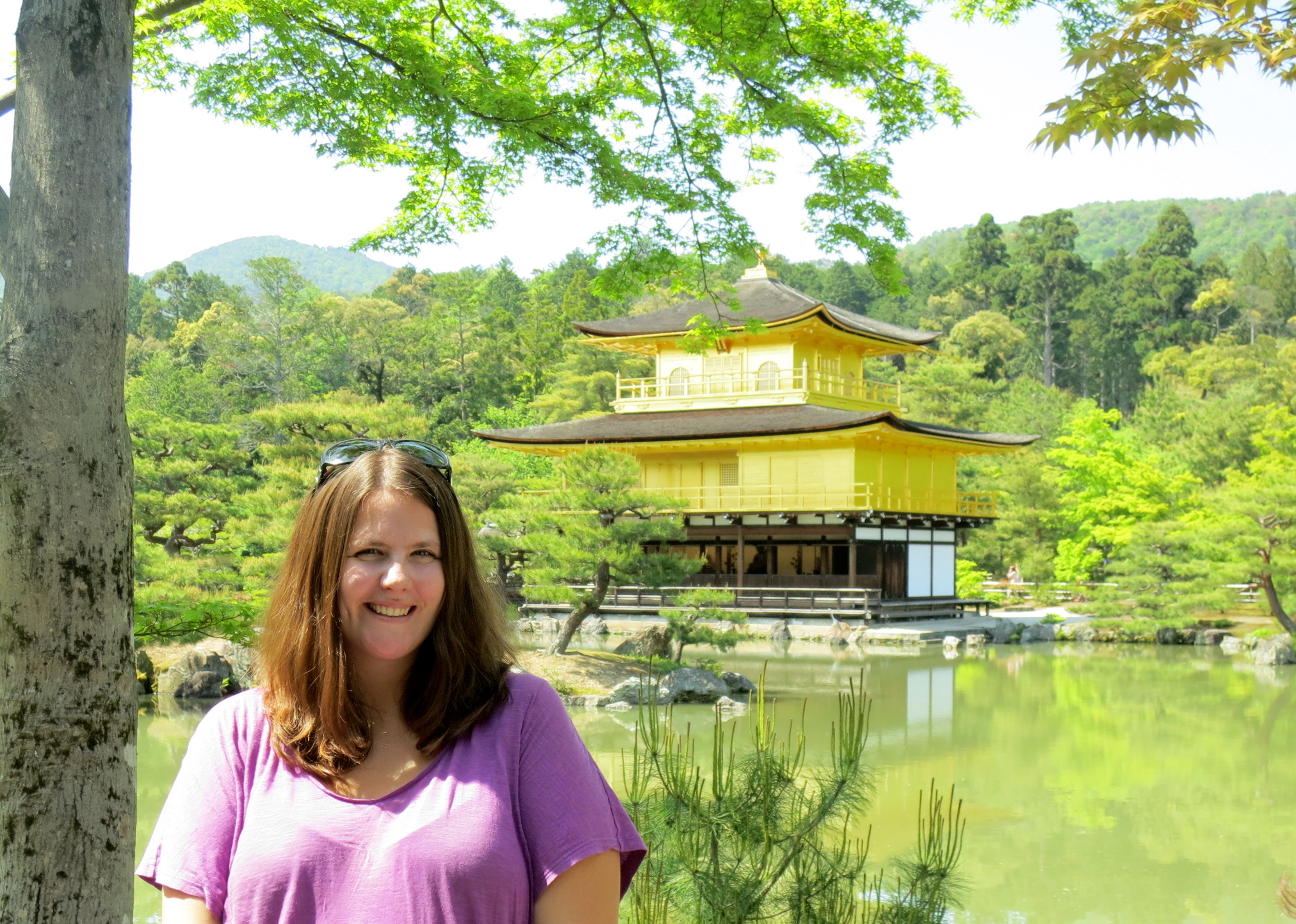
Finding space to get this shot was an exercise in patience
The palace a large house on stilts. It was originally the villa of a wealthy man; another man bought it later and then asked that it be turned into a Zen temple upon his death. So he got to enjoy the lavish place for himself and then piously give it over to religion–nice one! The original structure was burned down by a disturbed novice monk in 1950, and it has since been rebuilt. The hill walk here was far less impressive than that of the Silver Palace. I’m glad about that, actually, since I take it to mean that I’m getting a little better at distinguishing among the Japanese gardens I’ve seen, and determining which are more pleasing.

I love the temple gates

In the gardens of Ryoan-ji

A view of the rock garden of Ryoan-ji
Ryoan-ji is part of the World Heritage listing of Kyoto, and it’s famous for its Zen rock garden, which has kept the same arrangement since the 15th century. The grounds are huge, and they include a large pond with ducks (which are apparently rare here), and a little fox shrine on a tiny island on the pond. Up the hill was the building. Everyone had to remove their shoes before entering, which is actually the first time I’d encountered that in a religious temple in Japan. (I removed them at every temple in Thailand.)

Teenagers in traditional dress, taking a selfie

A miniature of the rock garden, so you can see the layout

The rooms behind the rock garden were empty except for these beautifully painted screens
The rock garden is enclosed in a large stone fence. There are 15 rocks, set in carefully raked gravel/gray sand. I couldn’t get a good angle to see the whole garden at once, which is apparently intentional; you’re meant to sit and reflect on the portion you can see, and take meaning from that. You’re also only able to see 14 of the 15 rocks from any one point on the viewing pavilion, because you can “see” the final rock when you reach enlightenment. It would have been peaceful to sit there and reflect, but there were a lot of people and they all talked loudly, so that didn’t happen.

Kiyomizu-dera
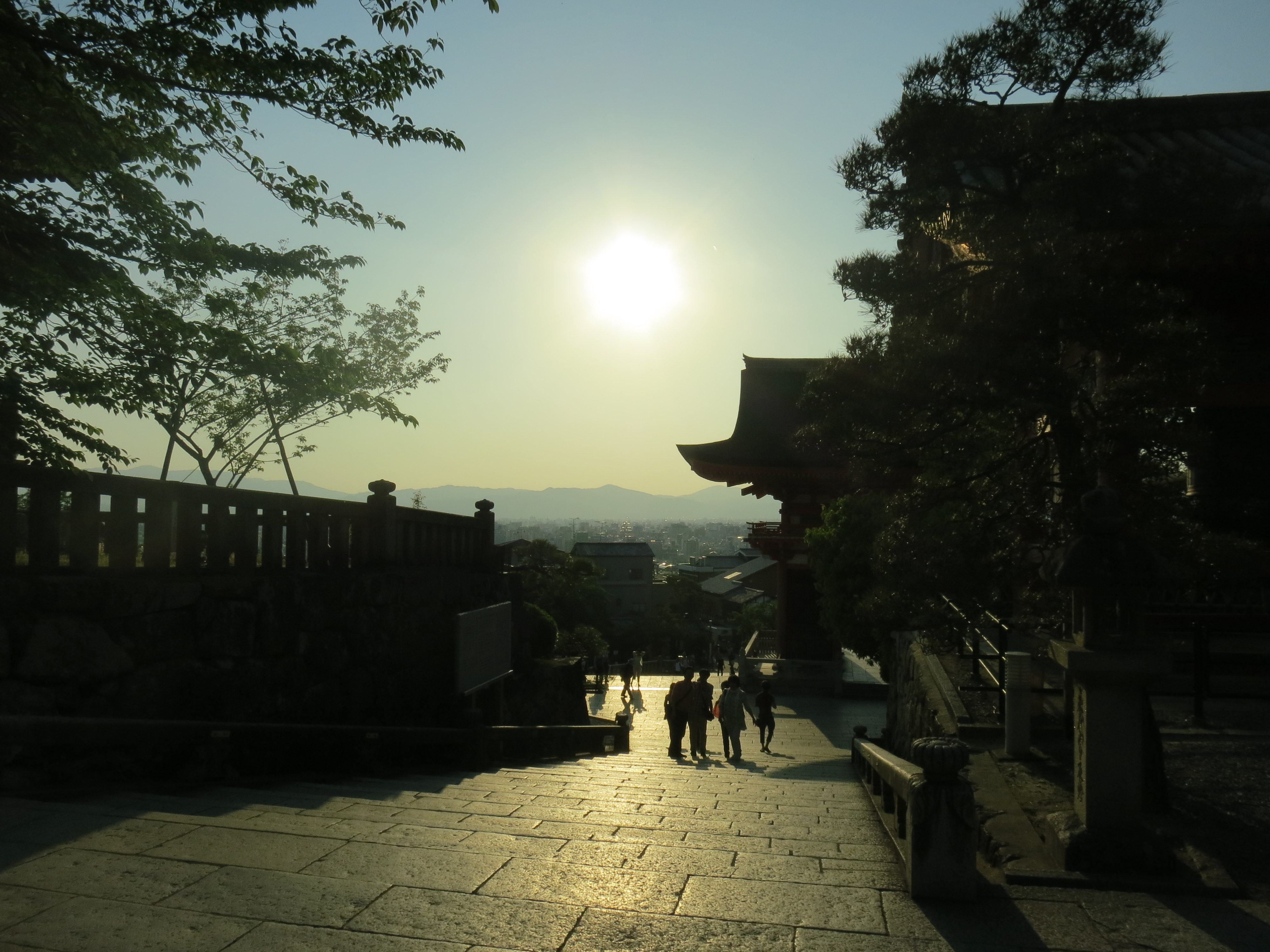
One last temple before sundown

Detail on one of the structures at Kiyomizu

Picture perfect
Getting to Kiyomizu Temple was more of a journey than I’d expected. I took a bus, walked up an endless hill, which finally turned into old Edo period buildings, and eventually I reached the shrine. It was a large complex, set around the edge of the hill, so for the first part you stood on the patio and looked across the ravine to a pagoda. (“Jump off the ledge at Kiyomizu” is a Japanese idiom similar to “take the plunge”–if you could jump 13 meters from the pavilion to a spot below, you’d get your wish. Not everyone survived this plunge.)

A peek at the pagoda
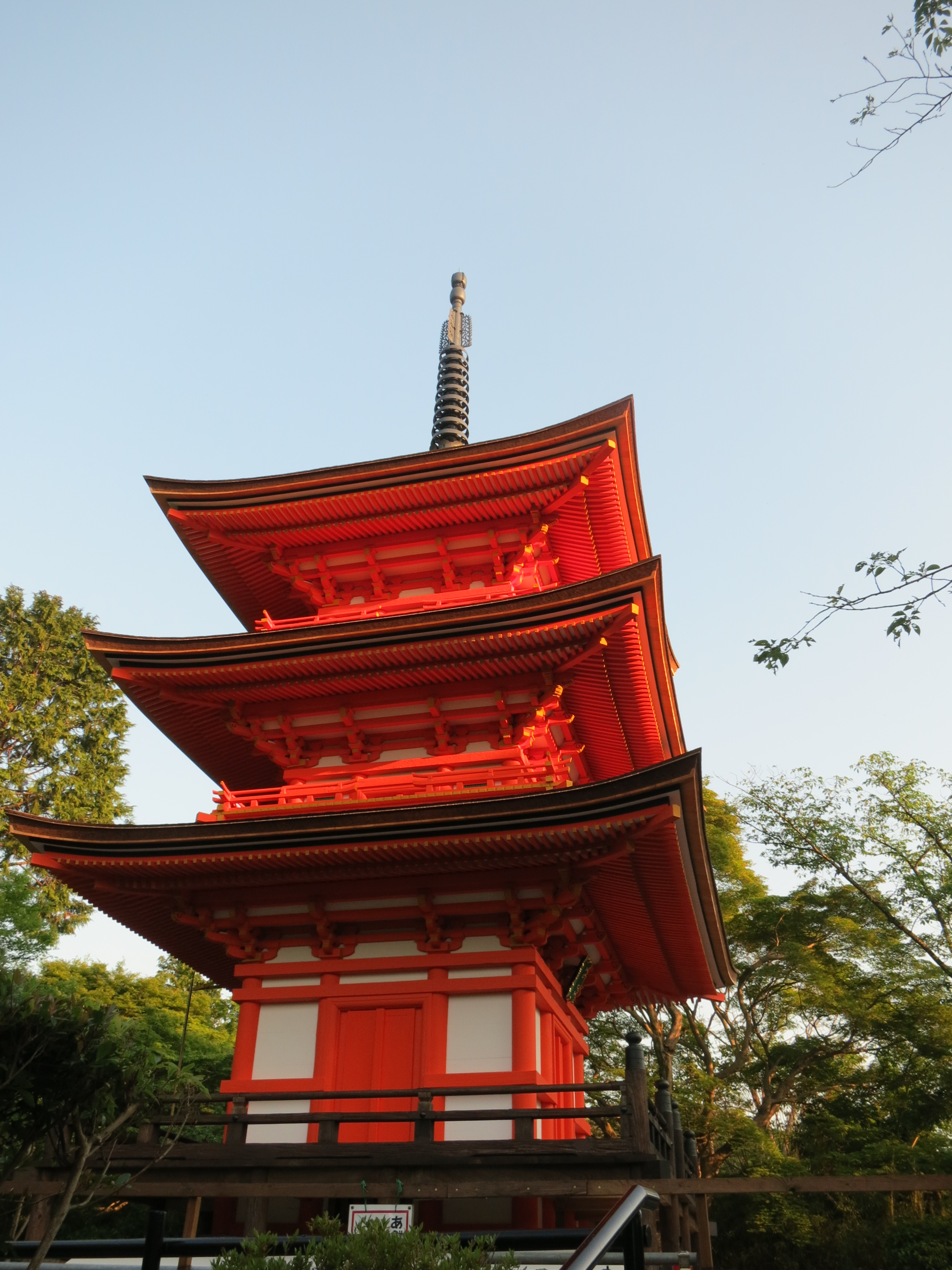
Up close
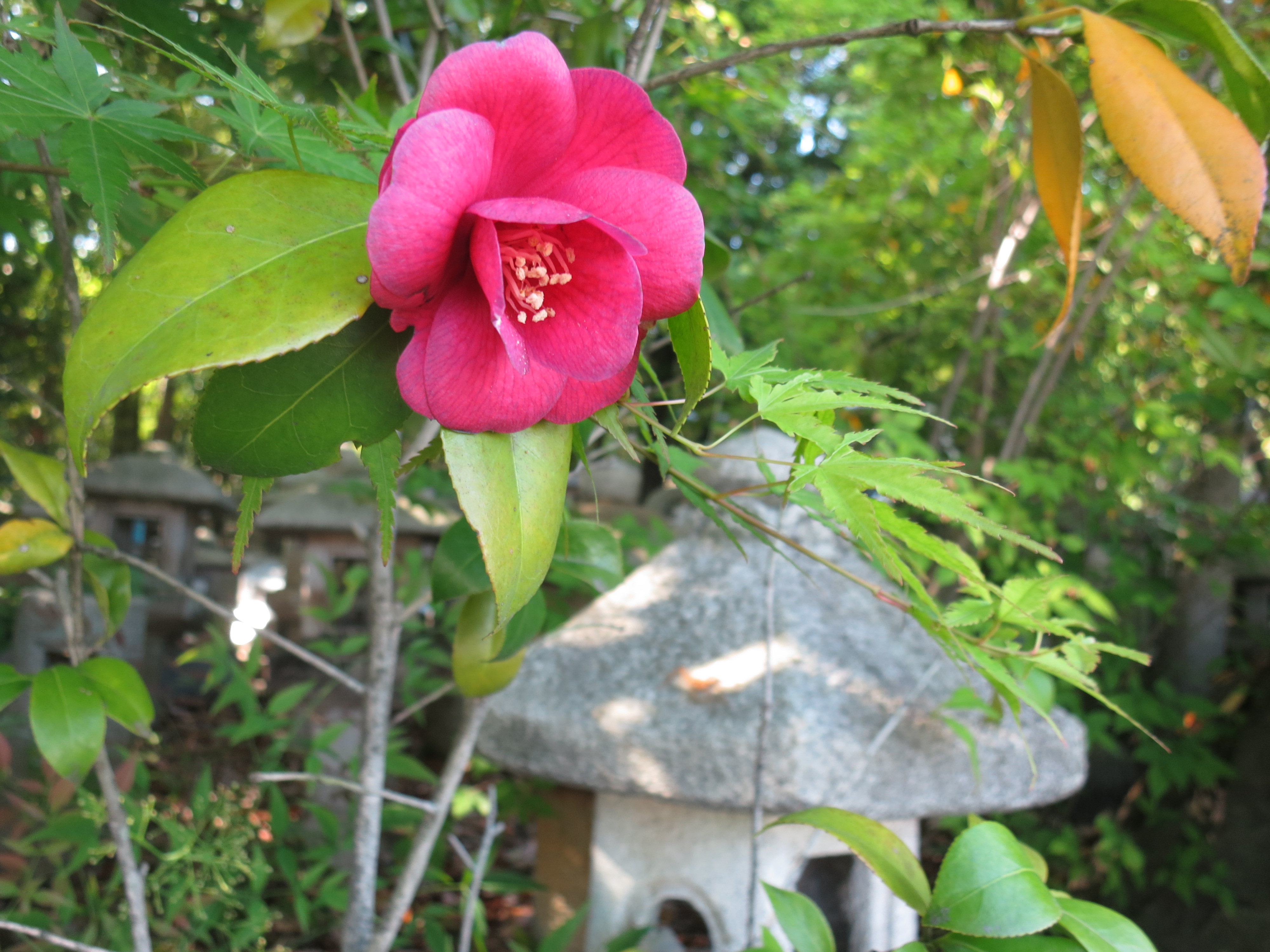
I saw what looked to be overflow on stock of religious sculptures on my walk through town
Then I walked along the rim of the valley to that pagoda and looked back at the buildings there, with the city off to the side and the sun starting to set. It was all picturesque, as just about everything in Japan was. Because I was there at closing, I didn’t get to to see the waterfall for which the temple is named, so, next time.

Goodbye, Kiyomizu Temple and Kyoto
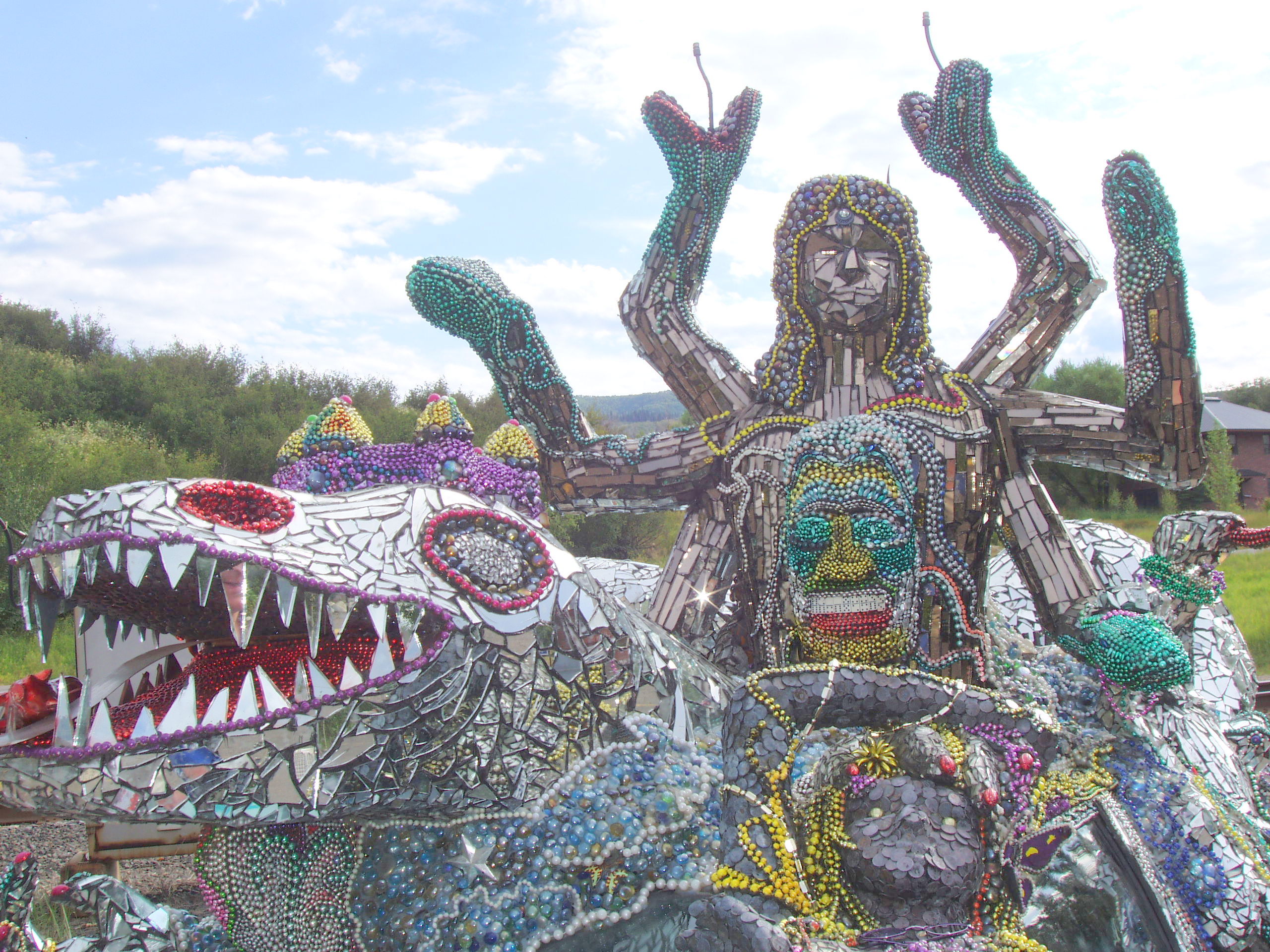
Steamboat Springs, Colorado; August 5, 2005
As I wrote in my Thanksgiving Day piece: “I’ve spent seven months of this year on a trip around the world, gone to the weddings of some of my most beloved people, celebrated my grandmother’s 80th birthday with the whole clan, and published a piece on a major website. It really has been a terrific year, and I’m grateful for every day of it. Can’t wait to see what 2014 brings.”
I don’t have much to add to that except to say that my New Year’s resolution for 2013 was to post five times a week for the whole year–and I did it! Every Monday through Friday, I posted something from my travels–a photo, a diary entry, a reflection on travel, and only occasionally a “ahh I am too busy to come up with anything today, but I haven’t forgotten you” post. People who work in media have to generate content (that’s the key phrase) all the time, but this is not my job, it is a side project and labor of love. Thus, the challenge of my New Year’s resolution, and my happiness in meeting it.
I won’t be posting every day Monday through Friday for 2014 like I did for 2013, but I will post often. I can’t say what the new year will bring, but plans include: traveling to South America, meeting up with my goddaughter somewhere this summer, posting at least twice a week on Stowaway, gaining more freelance editing clients, and writing for more publications. It’s going to be a good year.
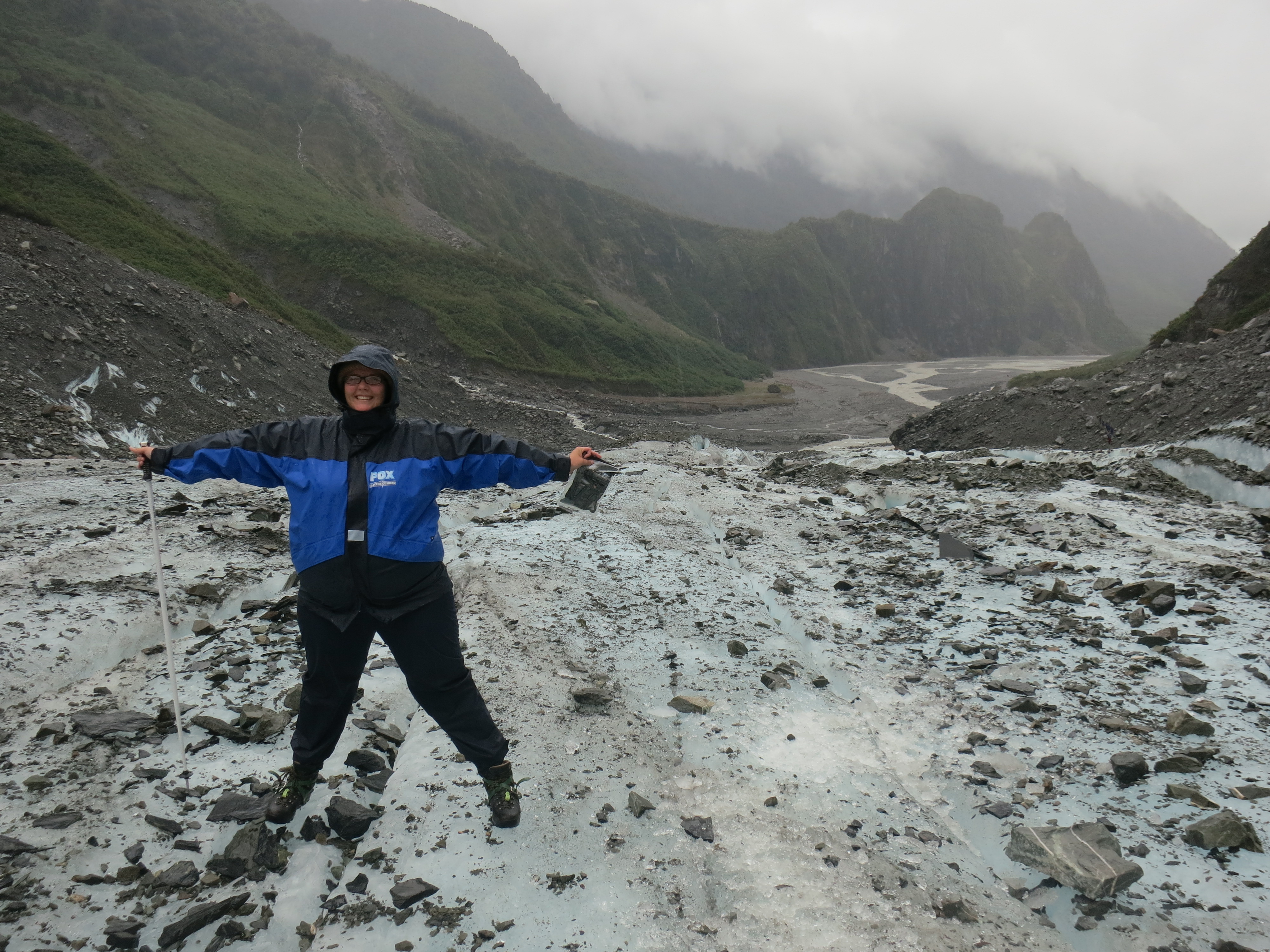
Climbing literal mountains in 2014. Happy New Year!
It rained most of the time I was in Kyoto, which was too bad for seeing the temples, but perfect for attending a tea ceremony and a dance performance one afternoon. Kyoto is famous for temples and geisha, but all these traditional elements are fit into a large, modern city. So I took a bus downtown and then walked down an alley to get to the theater for the dance.

Lamps in the lobby

Doors to the theater
The theater presents shows seasonally, and I was lucky to be there for the spring show by the maiko (geisha in training) and geisha. Kabuki is performed by an all-male cast, and near as I could tell, this show was all women. The first half was a full play, and again I was struck by how stylized every movement was, as it had been at the kabuki show. There was no English translation or program provided here, though, so I couldn’t really follow the story, but it involved thwarted love and I’m pretty sure mass suicide at the end.

A sneak photo before the show

Beautiful screens
After a short intermission, they performed a series of dances, mostly in small groups, with some individuals coming forward for a few moves. All very graceful, small movements, all set to live music from stage right. It was like a ballet in its wordlessness and gracefulness, and it was beautiful to watch.

After the show
There are several ways to attend a tea ceremony in Kyoto. I went to the one recommended to me by my hostel; I was the only one who attended this session, so after a short introductory conversation with the host, I sat on the tatami floor for instruction. She explained what a few implements were–the whisk, the serving bowl, the scoop–then said, “Now I will begin,” and walked out of the room.
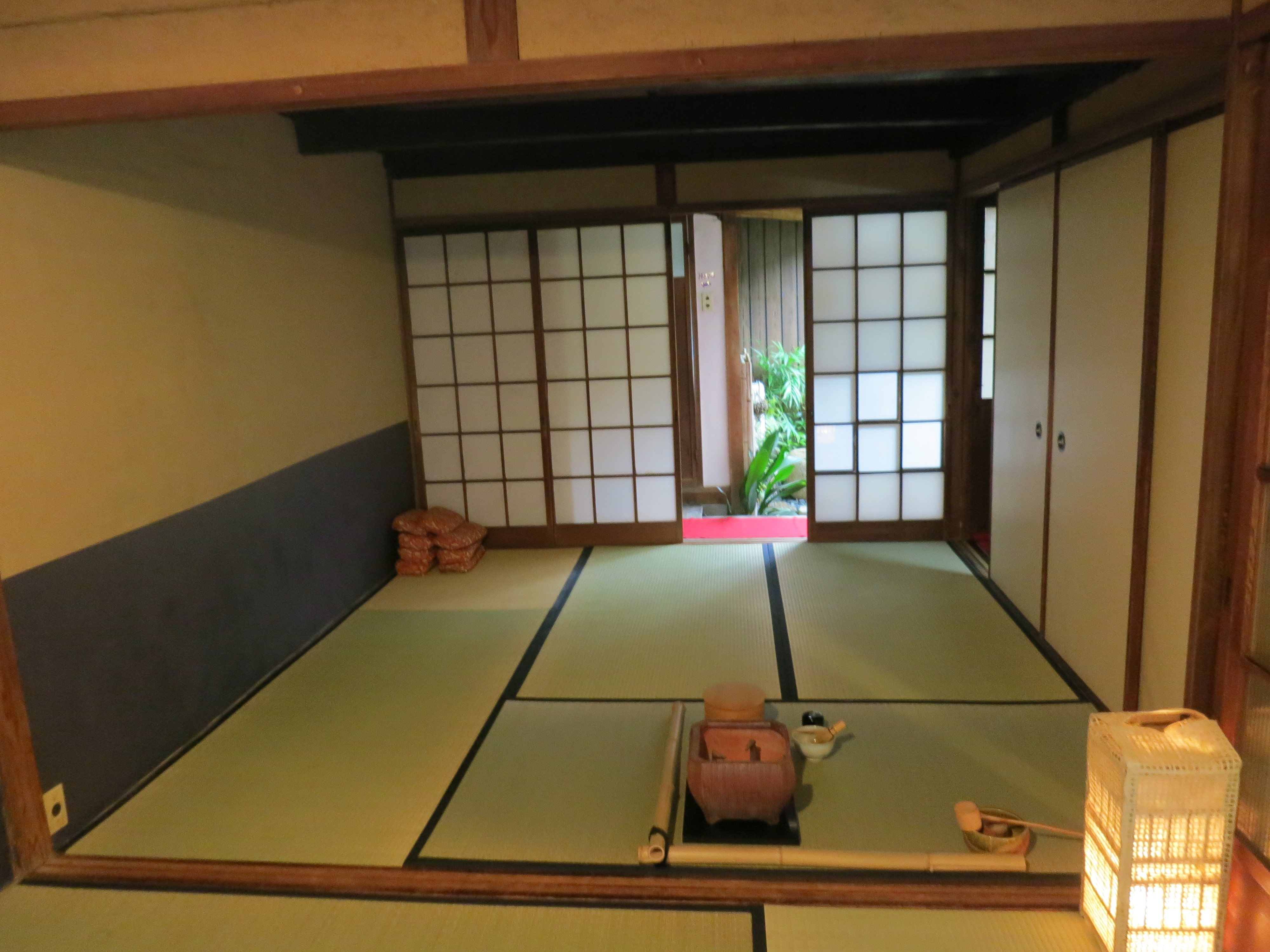
A simple layout
Everything for the next 15 minutes was silence, as she re-entered and performed the ceremony with precision and grace. She folded a red cloth a certain way and wiped the tea bowl with it, then refolded it and wiped the wooden tea scoop. Water from a small hot coals stove, tea whisked with a bamboo whisk. She bowed when serving me the tea, and I lifted my bowl in respect, turned the bowl a quarter turn, and then sipped.

Tea ceremony rooms
After she served me the tea, she left the room briefly. When she came back in, she explained some of the symbolism behind it all and had me whisk green tea on my own. The four qualities necessary to any tea ceremony, she said, are respect, harmony, purity, and tranquility. Each quality follows from the other–harmony from respect, etc. I found the ceremony the perfect end to the afternoon, a quiet, lovely time to reflect.
A final Christmas post for this year. Here’s our lovely tree.

All the lights aglow
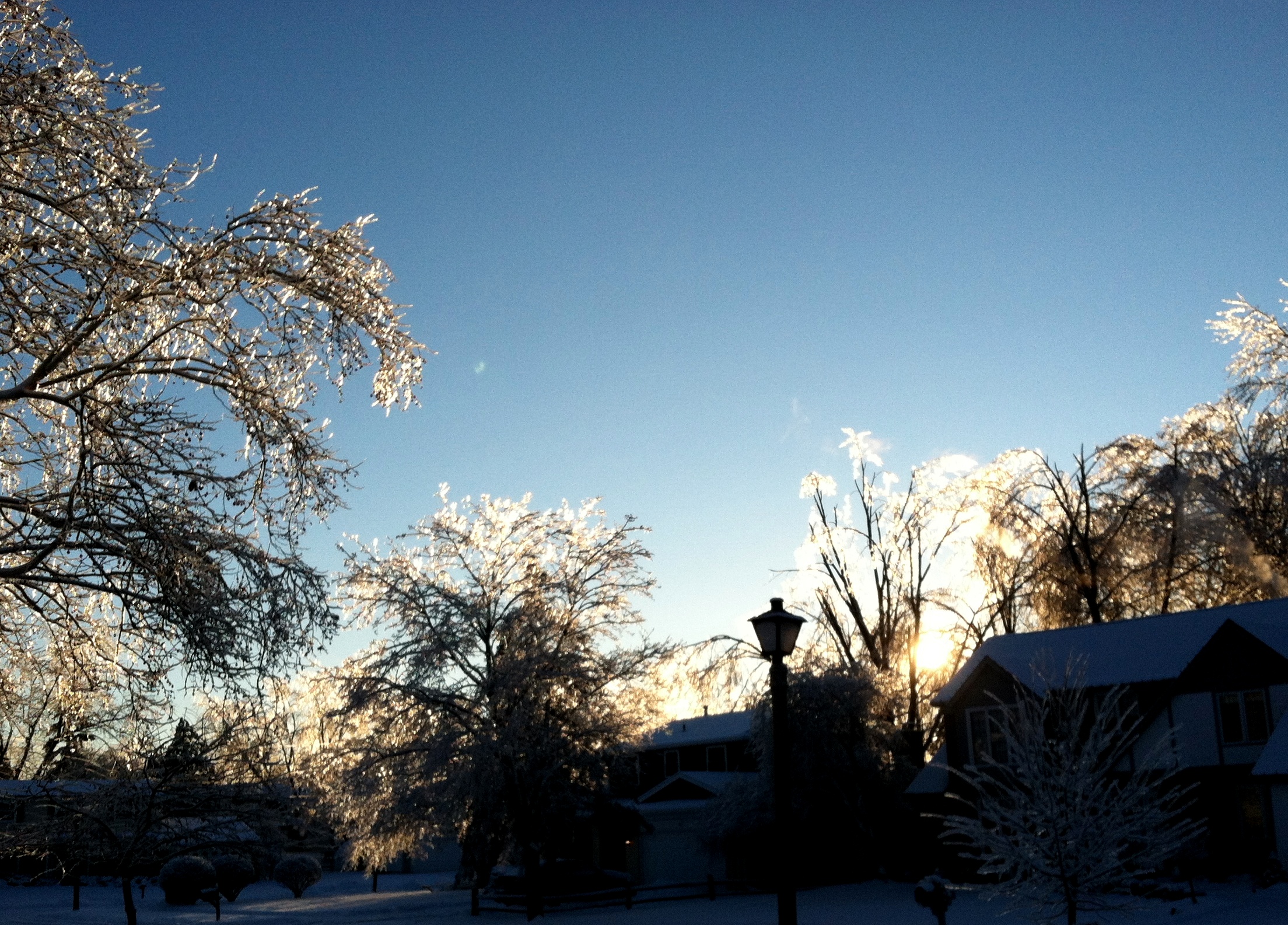
Sunrise, East Lansing, Michigan
Merry Christmas, everyone!

December 5, 2013; East Lansing, Michigan

Winter baking
 Stowaway Travel Writing & Editorial Services