Taking and Making: February 2

Today, I took in:

Groundhog Day

a chapter of A People’s History of the United States

several chapters of Over Sea, Under Stone


I made:

a post on The Hate U Give

some frankly adorable brownies with little Oreo groundhogs popping out of them (see below), which were enjoyed while watching Bill Murray undergo his Buddhist journey toward enlightenment in the classic 1993 film

27628971_875814384200_121500797285502735_o

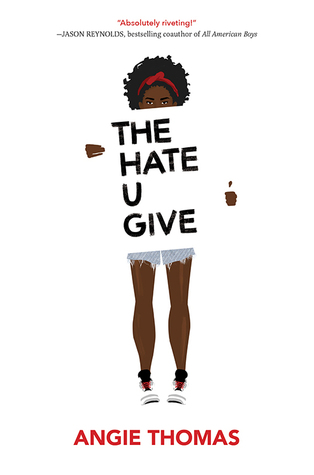
Black History Month: The Hate U Give

Angie Thomas’s YA book The Hate U Give is one of those rare books that is perfect for all audiences — for black folks who want an honest reflection of daily reality for many of them, for white folks who want to be better allies in the #BlackLivesMatter movement, for white folks who don’t understand why #AllLivesMatter is bad. 

Starr is a wonderful main character, full of verve and love. She witnesses the brutal, sudden murder of her friend at the hands of a cop, and spends the rest of the book grappling with the fallout of that event. Starr is a black teenager living in the city and commuting to a nearly all-white prep school in the suburbs, and much of the novel involves Starr navigating those two different worlds and figuring out her relationships in both of them. She’s also a teenager figuring out romantic relationships, and a sister joking around with her brothers, and a dutiful daughter in a family that expects a lot from her. There’s a lot of easy humor and genuine affection in this novel.

Starr’s family and friends are well-drawn characters as well, written with a complexity supporting characters aren’t always given. But it’s important that they be complex, because this book is so grounded in the real world that if there were any false note, you’d notice it immediately. Instead, I cried and feared for Starr and her loved ones as they helped each other through some of the hardest things people have to experience.

32313894

Image.

Black History Month

For longer than I’ve been alive, the US has celebrated Black History Month in February.  The risk of having a month like this is that schools and other institutions only focus on the struggles, accomplishments, contributions, and real-life issues and joys of black folks during the shortest month of the year. But if done right, it can be a jumping-off point to discussing these things and setting them properly in the wider historical and social context.

For every day in the month of February, I’m going to write about a piece of art made by a black person. I’m mostly going to focus on those works of art I enjoy and/or things I think are well done, but there may be the occasional reassessment of a favorite. Why me, a white woman in her mid-30s? Well, it’s my blog and I want to, hello, welcome. But also, a big part of our problem is white folks not paying enough attention or engaging critically enough with black folks’ words and work. I can be part of that re-engagement.

So tune in every day now through the 28th for more!

Spoiler alert: I’ll be doing the same thing for Women’s History Month in March.

black history month

Image.

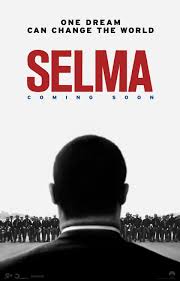
Black History Month: Selma

Ava DuVernay’s Selma is apparently the first feature-length attempt at a biopic of Martin Luther King, Jr. I say “apparently” because it didn’t even occur to me that I haven’t seen a movie about him that hasn’t been a documentary — his voice, his words, his image are so omnipresent in the United States, especially during the federal holiday devoted to him and the month following it, that I didn’t even consider there wasn’t a major fictionalized version of him out there. But this is definitely a version of him we needed — one that contradicts the safe-for-white-folks version of him we see most of the time. DuVernay wanted to show King as a radical speaking truth to power, and in Selma, she succeeds.

selma

In Selma, MLK is a larger-than-life hero and a flawed human, an irreplaceable leader and one part of a movement much larger than any individual. This is the kind of movie you want to see made about your heroes, where the sanitizing is kept to a minimum and there’s no melodrama or clumsy foreshadowing. It’s also cleverly kept to a short but important period in his life, with no sepia-toned flashbacks or tired story beats we see from so many moviemakers who seem to think that in order to capture the essence of an extraordinary person’s life, you need to show the entire timeline. Continue reading

Taking and Making: January 31

Today, I took in:

“Footprints in the Snow” by Maurice Leblanc in Foreign Bodies, a collection of stories from around the world from the ‘golden age’ of crime/detective fiction

a couple chapters from Howard Zinn’s A People’s History of the United States

Colossal, a movie that bears little resemblance to its lighthearted trailer — it’s a really good film, but it turns dark around the halfway point and stays that way to the end, so be prepared


I made:

a nice walk around my neighborhood park

Taking and Making: January 29

Today, I took in:

a chapter of Howard Zinn’s A People’s History of the United States

the latest episode of Crazy Ex-Girlfriend

“Everything That Rises Must Converge” by Flannery O’Connor and “Pigeon Feathers” by John Updike, in 100 Years of the Best American Short Stories


I made:

some goofy games with adorable kids at the volunteer gig

some nice harmonies with my choir