
Sunrise, Elephant Nature Park, Thailand

Sunrise, Elephant Nature Park, Thailand
Bad wordplay in the title! Liz and I did go to a lot of tourist spots in Taupo, and they’re hot because like Rotorua, Taupo sits on a lot of thermal activity and it’s even near some volcanoes. In fact, we had to get up early the morning we were leaving town, because the woman we stayed with had to catch a flight up to the nearby volcano to study its latest rumblings.
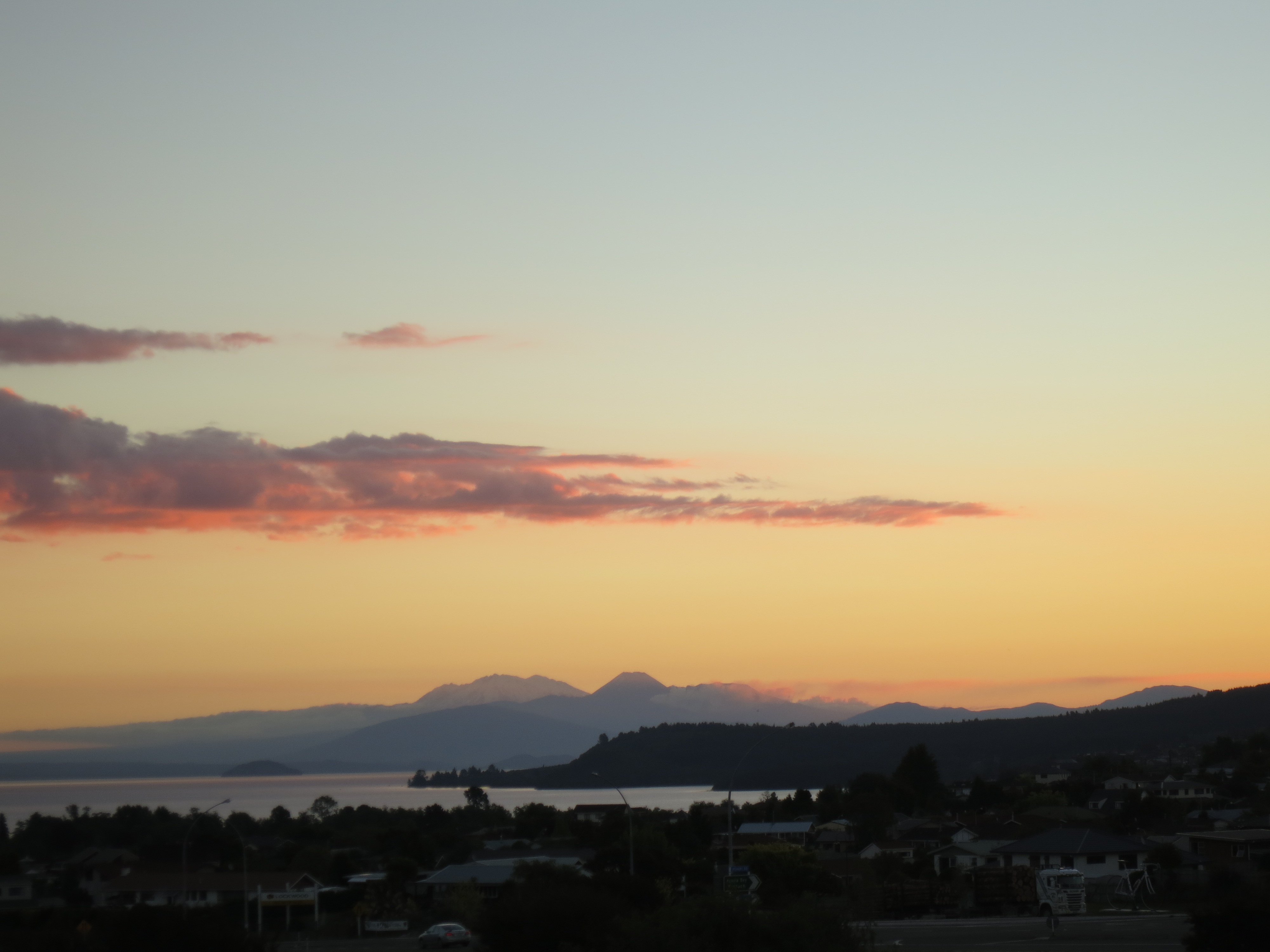
Volcanoes in the distance from a Taupo lookout point
The main tourist places in Taupo are all clustered along the same road, so Liz and I just worked our way down the road until it was time for dinner. First, we stopped by Huka Falls, which is one of the most visited places in New Zealand; its incredibly easy access probably has something to do with that–cross the parking lot and walk 20 feet to the bridge that spans the narrow chute of water rushing through and turning the most wonderful shade of blue. Apparently the air bubbles caused by the rapidly moving water (the river narrows from 100 meters to 15 meters across for this little bit, and then empties into almost 100 meters again) intensify the effect of the clear water reflecting blue light, and voila, a waterfall the color of a swimming pool. It was gorgeous to look at.
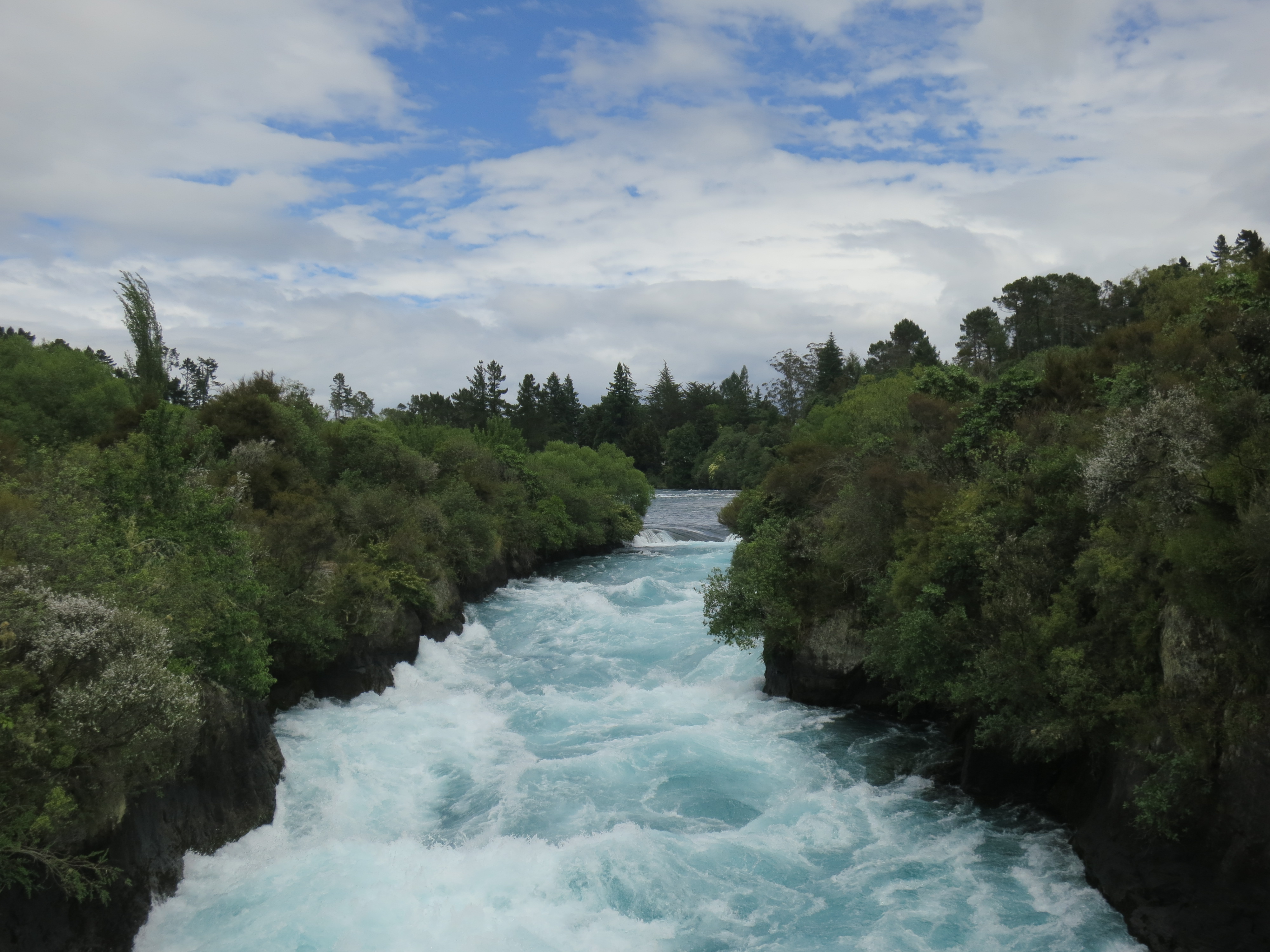
Not photoshopped
We drove for five minutes and stopped in at Craters of the Moon. There are indeed several craters here, but many hardy plants cover the land between the craters, so it’s much greener than I understand the moon to be. It was still a little otherworldly to stroll along the boardwalk around the park, though. Steam rose from the ground in a steady stream from various vents, and yellow signs warned us that steam burns, which was awfully thoughtful. The earth in the craters was gray and cracked, mud that had dried in the extreme heat. One of the craters had a little bit of mud bubbling at one end of it, and I kept waiting for an ancient lizard to crawl out of the ooze. Maybe that’s what the park was like, actually–prehistoric.
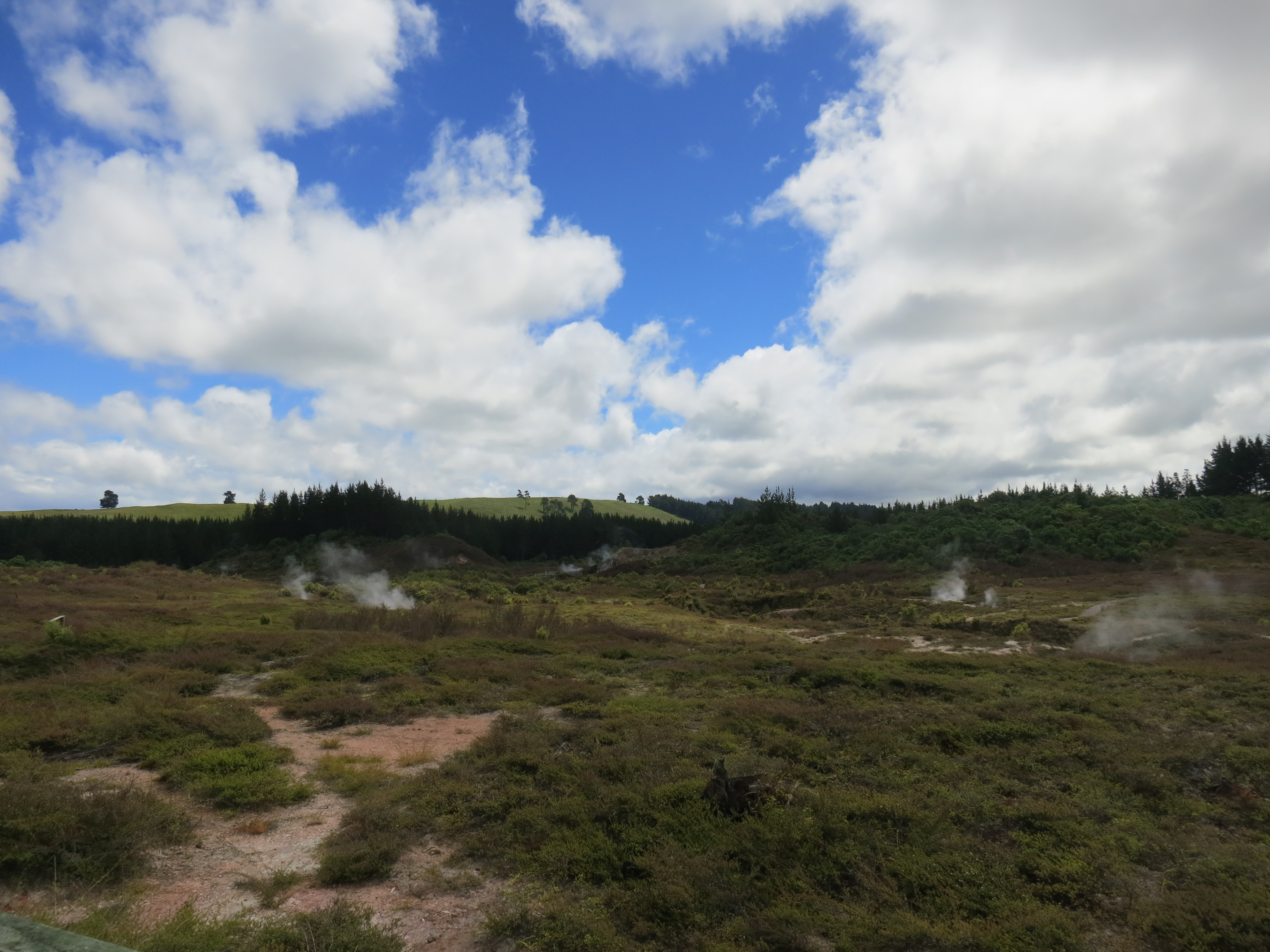
A grassy moonscape
We decided to extend the walk a little bit and hike up the small hill at one end to get a view of the whole park, and as we started out I saw Liz check her watch, which I’d noticed she’d been doing throughout the walk. Turns out that her wilderness adventuring instincts are strong, and she always times how long it takes to do any kind of walk, a precaution necessary when hiking up mountains so you can estimate how long it will take you to go back down again. And here I’d been dawdling along the boardwalk at my usual slow pace! She laughed and said it didn’t actually matter how long it took, and we continued on our way, each a little more knowledgeable of the other, the way you get when you travel with someone.
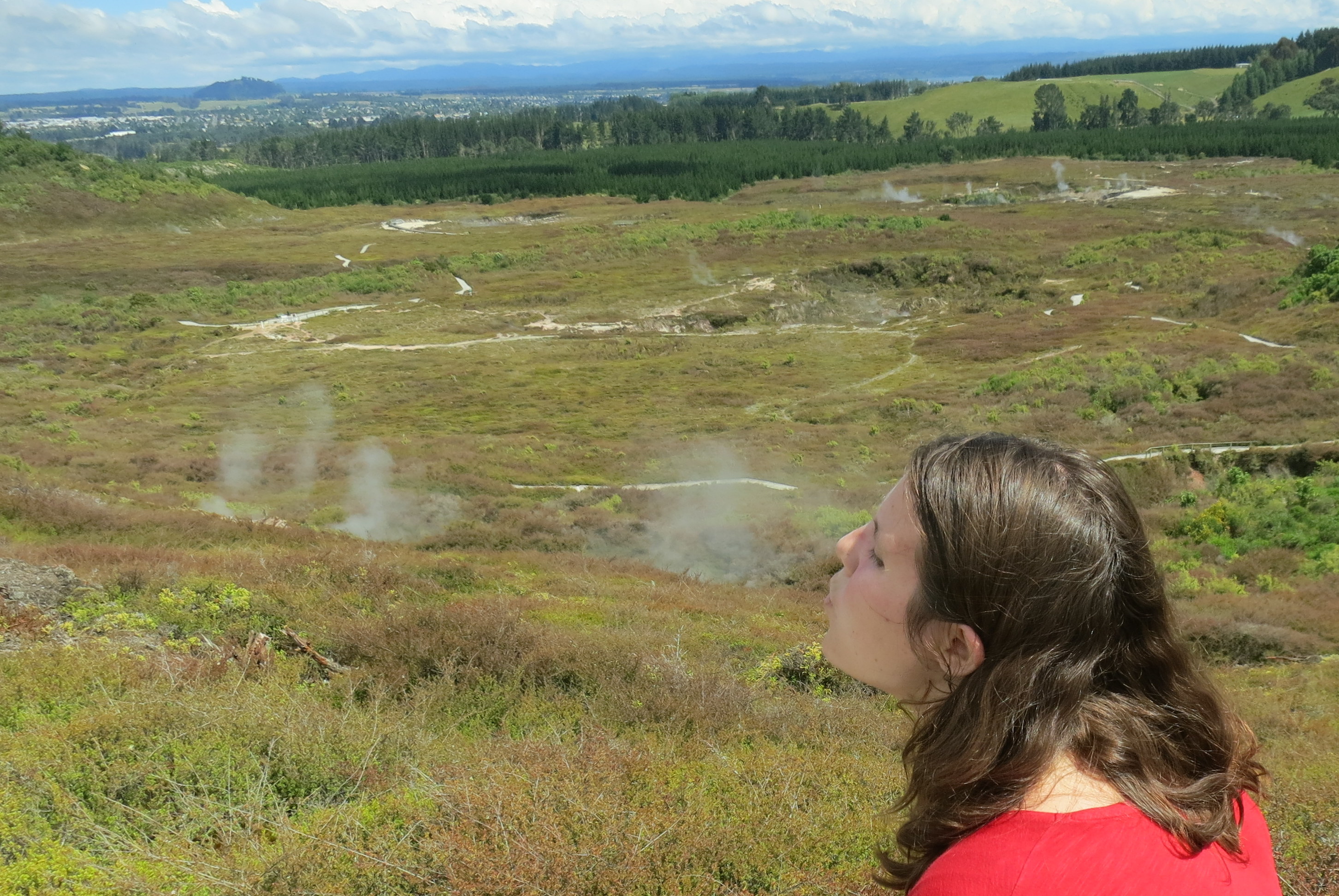
And then I turned into a fire-breathing dragon
Our last stop of the day before finding our host’s home was at the most blatant cash grab of our trip so far. We went to the Honey Hive, which is a large showroom of honey products of all kinds–soaps, lotions, liqueurs, ice creams, chocolates, etc. Manuka honey, made from the manuka tree’s beautiful flower, is a big deal in New Zealand, and I bought some small gifts for my hosts further on down the line. We sampled the liqueurs, had an ice cream, and squeezed ourselves into a spot made for 8-year-olds for a silly photo.
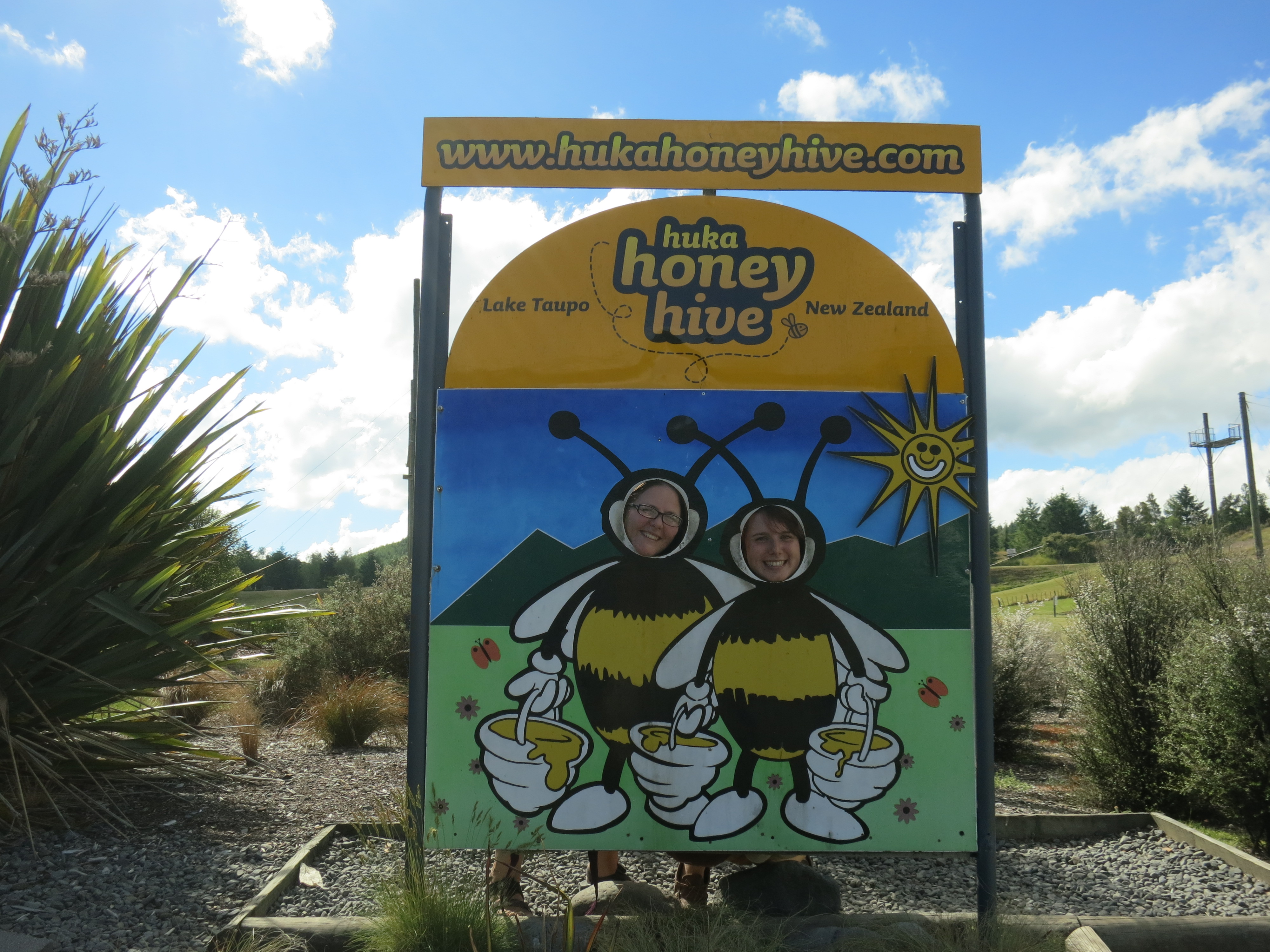
Bzzzt travel buddies! (Apologies)
The next morning, our host told us about a free hot springs nearby, and after our success with the free spot in Rotorua, we were eager to try this one out. Spa Park is a big park with different sections. One area had a playground, and evidently some kind of event was taking place, because it was crawling with more kids and parents than usual. A short walk down a hill takes you to the banks of the Waikato River. If you cross the little wooden bridge there and keep walking for an hour or so, you come to Huka Falls. We stopped at the wooden bridge and ducked under it to sit in the tiny little pools created by tiny little waterfalls there. It was super hot and we had to move between the little pools and the main river to regulate our body temperature. We’d passed a few people on their way out on our way in, but when we got there at around 9 in the morning it was just us, the clear blue sky, and the free spa of the hot springs.

Smiles you can only find on vacationers who’ve just found hot springs along a river
We did get out eventually, and by the looks of our lobster-red legs, not a moment too soon! We drove out of town to a sky dive place, where I sat in the shade and watched Liz leap from a plane at 15,000 feet and float back down to the earth. We didn’t know, it but it was the last good weather we’d have for several days; our final impression of the area was a calm blue lake reflecting a clear blue sky caught in our rearview mirror.

Til next time, Taupo

Sunset, Chiang Mai, Thailand
The first letdown, of course, was the very mixed bag that was the trip to Fraser Island in Australia. The fact that I’ve only had two disappointing tourist experiences in the first four months of travel strikes me as a really good record. Waitomo Caves is a major tourist attraction in the Waikato region of New Zealand, and it’s an efficient operation. But the tour I took wasn’t really worth what I paid for it.

Exiting the Waitomo Caves
The caves were known to the Maori of the area for years, but it wasn’t until a Pakeha and his Maori guide saw the caves in 1887 that tours started arriving. There have been tours here pretty much ever since. There are several different tours to take, and a couple different cave systems with different kinds of formations. I went on the main tour, although there are three to choose from, and you can combine them in different packages. (You can also go on a black water tour, which involves spelunking, floating, and abseiling. That’s the one Liz went on, and she loved it, but I’m too unfit and claustrophobic to attempt it.)
My tour went down to the caves with a quiet older Maori man, and he took us through the caves, which are a lovely white-ish color. (Photos weren’t allowed in the caves at all until just as we were leaving.) He showed us different stalagmites and stalactites, and pointed out the ones that looked like animals and pipe organs. He stood us in the center of the cave and sang us an old Maori song. The acoustics right there are perfect; they’ve held opera concerts there.
Next, he showed us some glowworms in a corner of the cave and talked about their lifecycle, how the shimmery blue color we see is the long, sticky line of the nesting larva, so it can feed. The larva grows for nine months before entering the pupa stage, emerging, mating, and then, of course, dying, as insects do.
Finally, we walked down some steps and entered a dark part of the cave. Here, we were told to keep as quiet as we could, to preserve the mystery of the boat ride. Our guide stood at the bow and moved the boat slowly around the cave by pulling on guide cables strung from the ceiling. The glowworms were lovely, and the cave ceiling was a starry sky of bright blue.
It’s just, well, it was rather small, and the ride was rather short. The ads all showed pictures of a much larger cave, which frankly would have just been more magnificent. It was a smaller, shorter experience than I was expecting, and I suppose that’s the main part of it: expectations. I’d expected something a little different, and I’d paid almost $50, and I was disappointed when expectations didn’t match reality. It happens all the time, although as I said, not too much to me on this trip. Still, all that said, it was a beautiful sight, and gliding through the dark in a boat was a wonderful way to experience the luminescence.

Krabi Town, Thailand; February 4, 2013
I was lucky to go on several excellent road trips in New Zealand. After the Coromandel, I met up with a woman I met via a rideshare posting in Couchsurfing, and luckily for us, we hit it off right away. We would only end up traveling together for about nine days, but we packed a lot of fun and adventure into those nine days.

The Waikato countryside in New Zealand
Liz is a 21-year-old from the Canadian side of Sault Ste Marie, and she had a few weeks of travel time before starting a job running outdoor education treks near Christchurch. She’d rented a car, and I joined her on the North Island before Christmas, and on the South Island afterward. I joined her in Rotorua, and right away we headed for the sights.
New Zealand is one of the newer land forms on Earth, and as such it’s still growing–earthquakes cracking up the land, thermal energy pulsing underneath the ground, the mud bubbling up and steam breathing through vents. The towns of Rotorua and Taupo are in the center of all the thermal action, and Rotorua in particular is a popular place for spa getaways in hot pools, and also for viewing an Old Faithful-esque geyser erupt every morning.
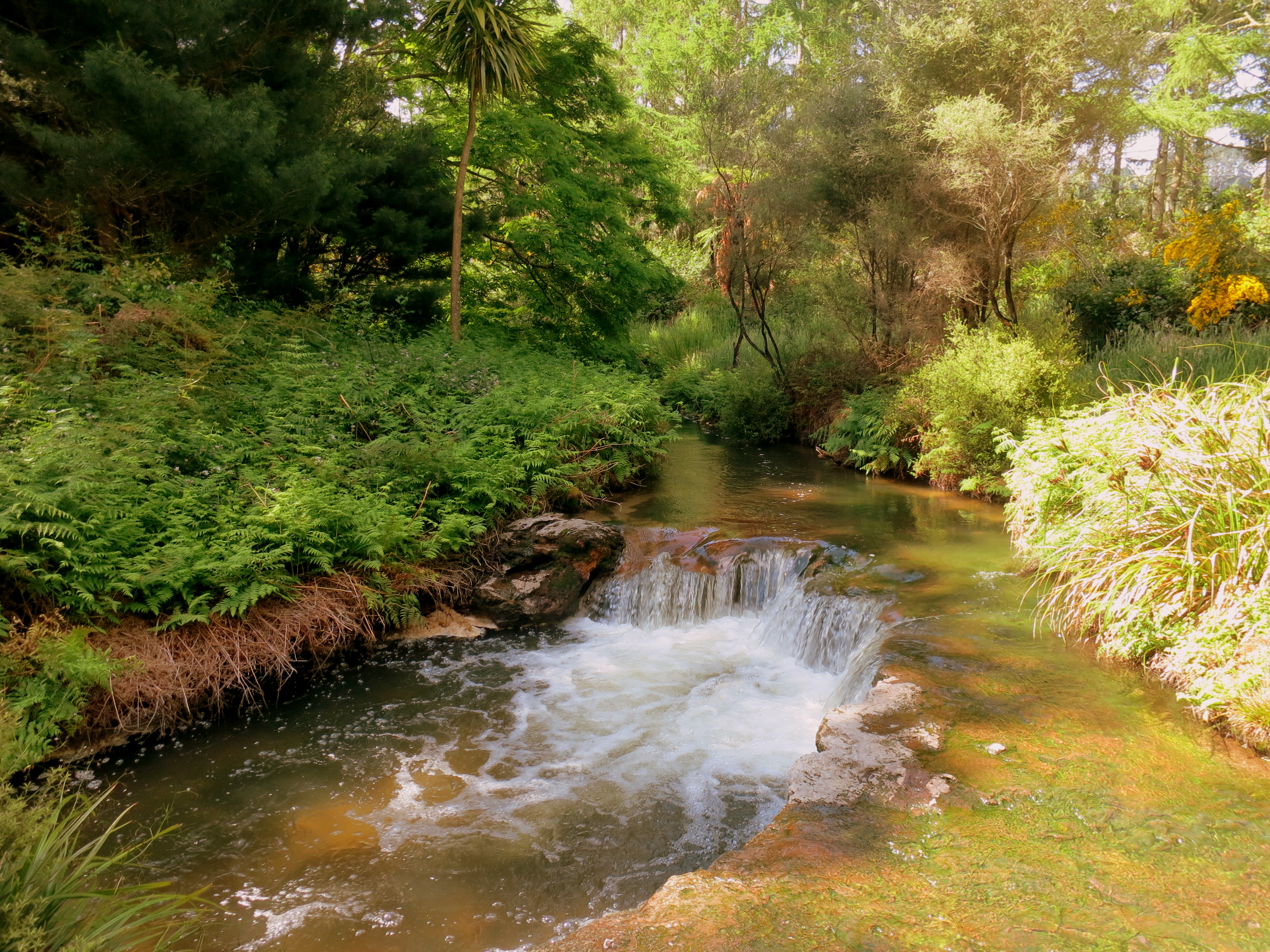
Kerosine Creek
Of course, most of those places charge fees, but I’d heard from friends about a free place a little outside of town. We got directions from a local and pointed our car toward Kerosine Creek (I would’ve thought you’d spell it “Kerosene” but the sign said otherwise). Off the main road, we took an unsealed road (gravel roads are all over New Zealand) to a makeshift parking lot with about six other cars in it. We didn’t find signs pointing out the way, and the path was hard to find, but it turned out to be a short walk to the creek, which tripped along as merrily as any other creek, but when we dipped our toes in, that water was almost hot. We lounged in the water for awhile and then headed off to set up camp.
 Lake Okareka has a very basic campground–so basic that there aren’t any spots as such. There’s a long driveway you can turn around in, and a sheltered picnic table, and non-flush toilets. Then some grass, a tiny strip of sand, and then this:

Sunset at Lake Okareka
That sunset almost made up for the fact that I did not sleep at all that night. I swear I used to be a pretty good camper–we used to go most summers when I was growing up–but I’ve lost the ability to get comfortable on the hard ground, and I never was good with tiny two-person tents. Ah well, I dozed a bit in the morning while Liz productively ate breakfast and journaled, and after we returned the sleeping bag I’d bought the day before, we were back on the tourist track.
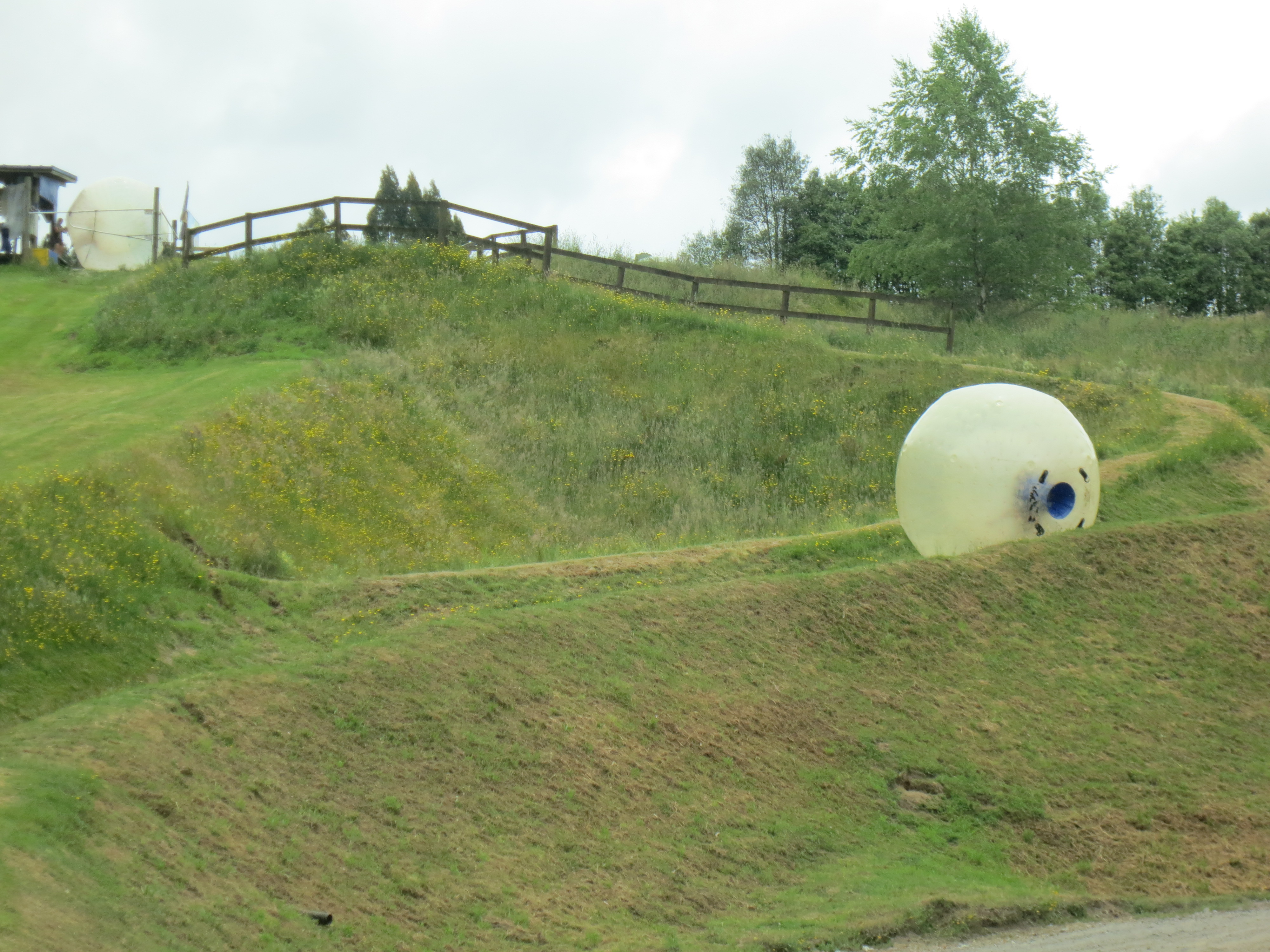
Zorbing!
We totally touristed it up that second day in Rotorua. First, Liz went zorbing, which involves climbing into a giant plastic ball and getting pushed down a hill. Variations include a zig-zag path and a ball full of water to splash around in. I thought zorbing sounded like a lot of fun, but since I was walking around with a concussion, I thought maybe I’d better just watch.

Bringing the sheep in for the show
After a short picnic lunch, we drove a bit down the road to the Agrodome, which bills itself as the place for “famous farm fun!” I couldn’t not go to a place like that. First, we went into the baby petting zoo section of the building, and just about passed out from all the cuteness. Baby sheep, baby pigs, baby ducklings, baby rabbits… We recovered ourselves and had a little chat with the sheep patiently waiting for their star turns on stage during the show.
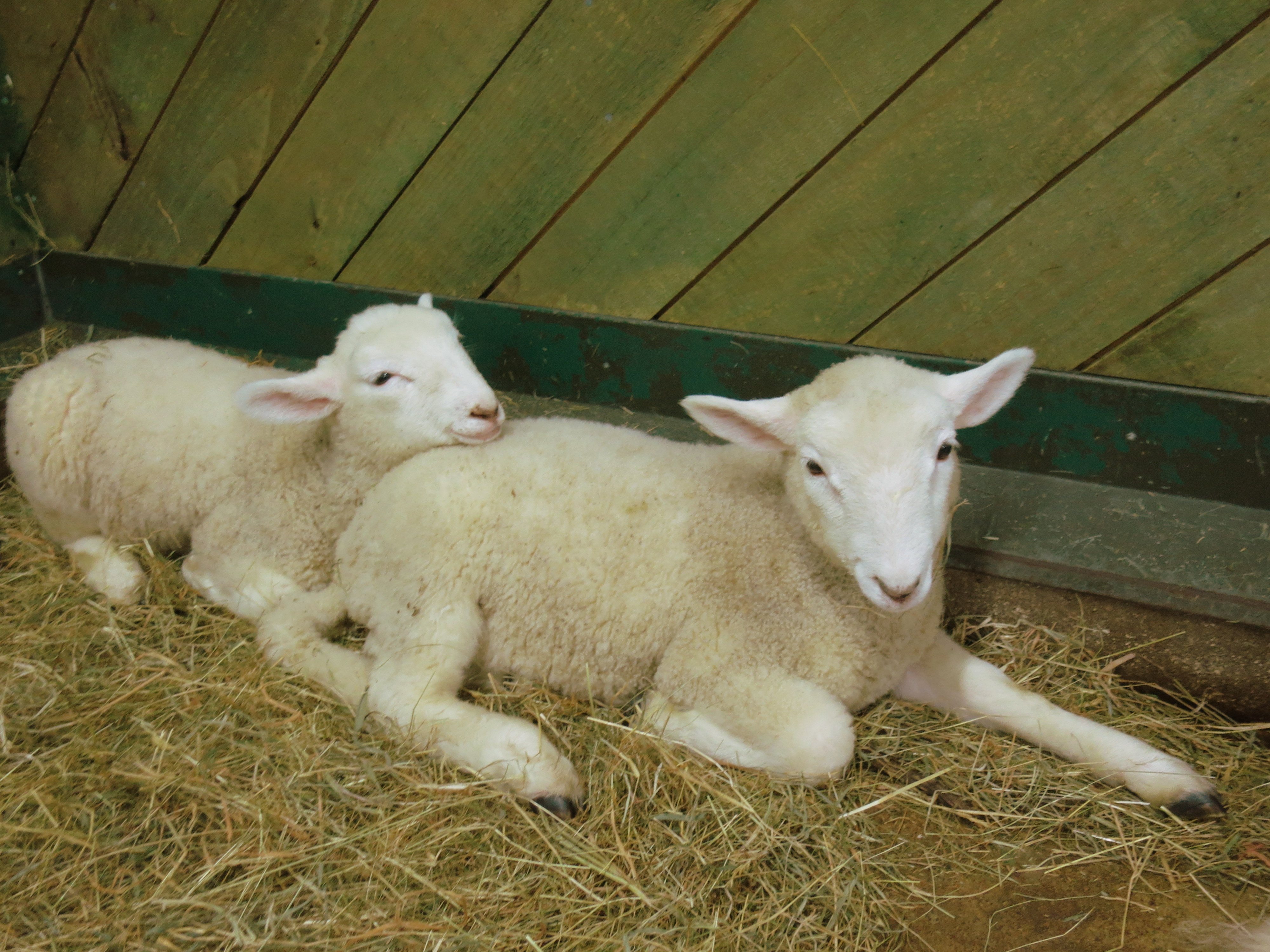
Can I make a bad pun here? “Lambs, ewe are so cute,” or the like? No? Okay, but they are.
The room was filled with long benches that reminded me of pews–The Church of Agriculture–and soon those benches were filled with tourists, most of whom carried headsets that they plugged into the little boxes dotting the benches. They could tune in and hear translations in seven different languages! I think they do the translating based on who’s in the crowd, because I only saw two translators in the back; either that or the guides of the tour groups serve as translators themselves, not sure.

Liz chatting with a sheep
The show featured an absurdly well-toned Kiwi, who led us through the paces at a good clip, with plenty of groan-worthy jokes that we all dutifully chuckled at. His assistant led the sheep up on stage, and hooked their leads to the feed trays so the sheep would stay on display. He brought some kids up on stage and let them feed some lambs from bottles. A sheepdog came out and attempted to herd some geese, although these flapped off the stage and ran around the audience for a bit, and based on the shepherd’s increasingly agitated calls to the dog, this wasn’t part of the show.
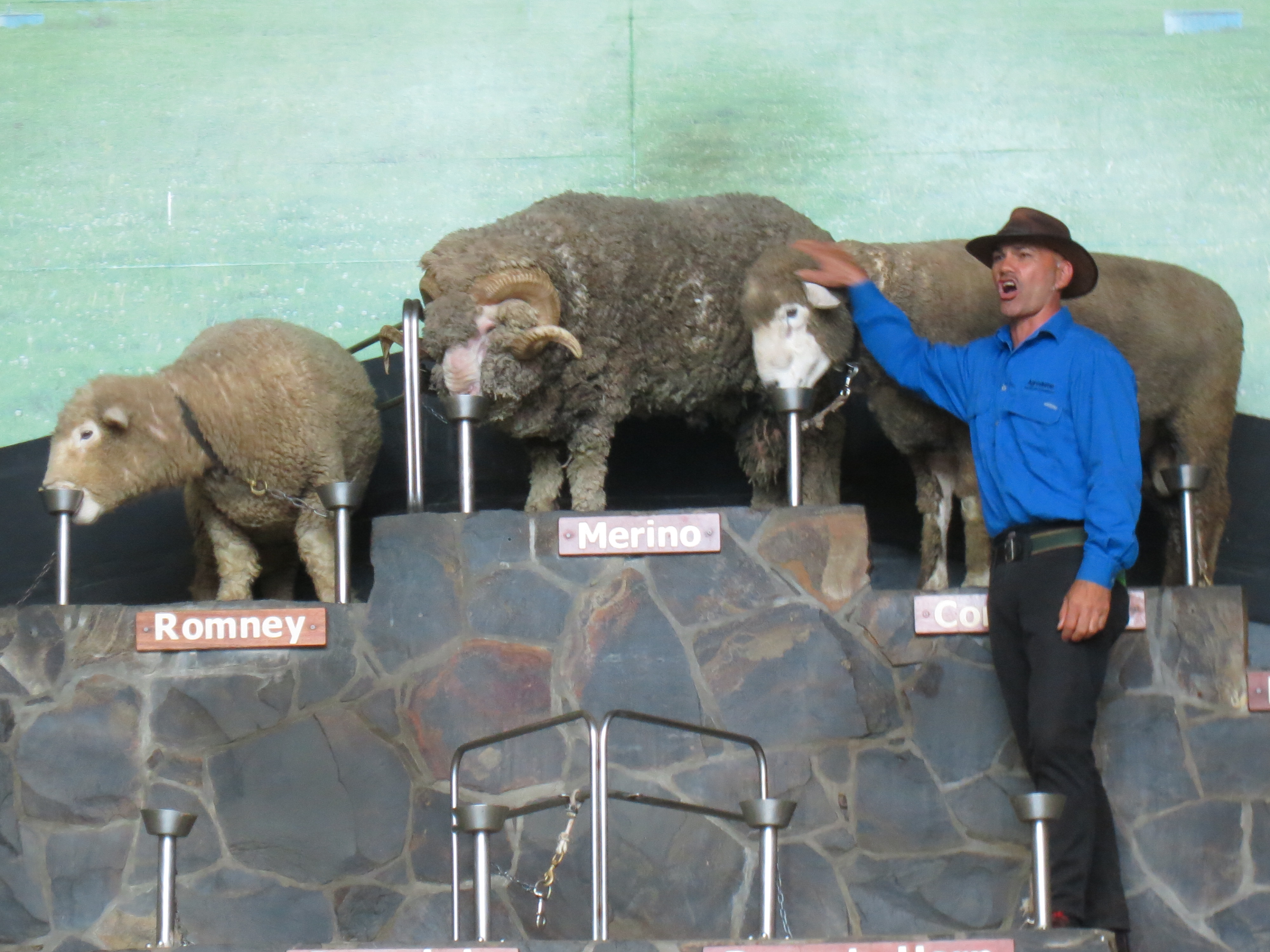
Putting them up on a pedestal
But my favorite part of the show was the sheep shearing. A sheep trotted on to stage, and the shepherd held her by her head and front legs, told us facts about who holds records for fastest shearing with motorized clippers and manual ones, and shaved all the wool off the sheep in three minutes. Sheep shearing! It’s even fun to say.
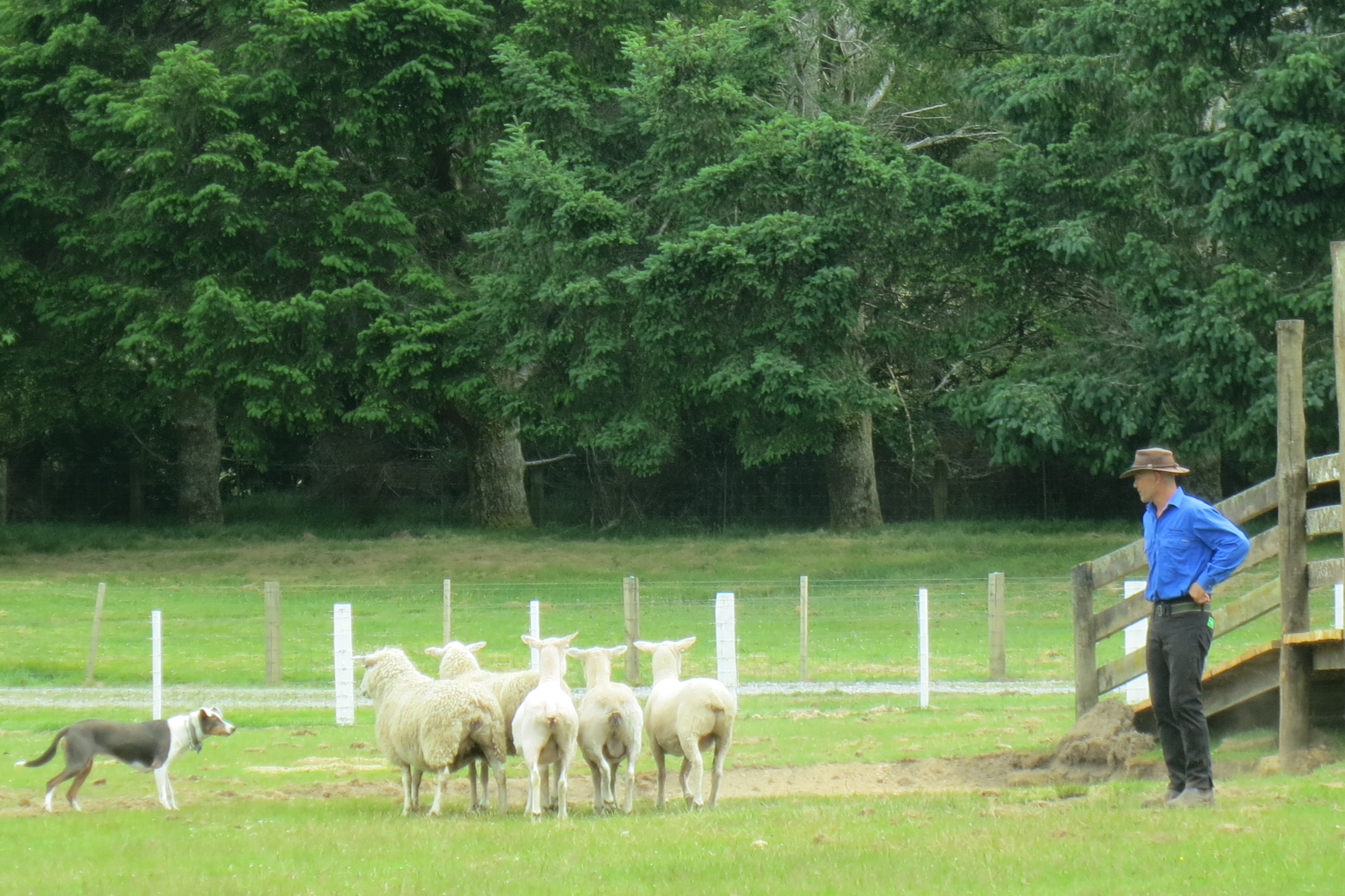
We got a short display of sheepherding outside. The shepherd uses vocal commands with the dog, and the dog makes eye contact and uses body language to move the sheep–no nipping at their heels.
That night, we stayed with some friends of Liz, sleeping on a dairy farm and briefly waking at 4am as they got up to do the first round of milking for the day, then going back to sleep til a more civilized hour to start another day.
Dearest fellow travelers, I’m spending the week in the jungle, living with elephants. I’m volunteering as a general helper at the Elephant Nature Park, a rescue and conservation reserve located an hour’s drive outside of Chiang Mai. I’ll be feeding them, bathing them, and scooping up their poop. I’ll be doing various odd jobs like cutting down corn with a machete and laying in foundations for new buildings. I know, me, with the animals and the physical labor. Who’d have thought?

At the Elephant Nature Park
I am very nervous about being able to keep up and be useful, especially after reading this account of how hard the work is. But I think it’s time to do something tangibly helpful on this trip (it’ll be my first volunteer gig), and it also seems sort of magical, to live in close quarters with these gentle giants. (Not so gentle if you annoy them, as my friend Mindy is quick to point out–no matter how domesticated they may be, they are at heart wild animals, so tread carefully.)
My friend Hannah visited me here in Chiang Mai last week, and she went to the ENP on a day trip. She said it was amazing, beautiful, etc., and while I expect it will be quite different to be literally in the muck, I also expect the close, constant contact might make the whole experience even more meaningful.
Those of you who have donated, thank you so much! You may remember that this is one of the things listed on the Fund This Stowaway page. (Apparently it costs a quarter of a million dollars to feed the elephants each year, never mind all the other costs, so volunteers pay $400 for their week’s stay, and that includes food and lodging). I’m happy to say that your generosity has almost entirely funded this week; I’ll be thinking of you all as I hand-feed the elephants and bathe them in the river.
Just because I’m leaving town to sleep on a wooden deck with generator-powered electricity, don’t think that’ll make me abandon my New Year’s resolution only two months into the year; I’ve set up posts for the rest of the week so you can catch up a bit on my adventures in New Zealand. I won’t have access to Internet (unlike the rest of my trip, when I haven’t been away from it for more than two days at a time), so apologies if the system holds up some of your comments for approval. I’ll get it all sorted as soon as I’m back to Chiang Mai on March 3rd.
Have a wonderful week!
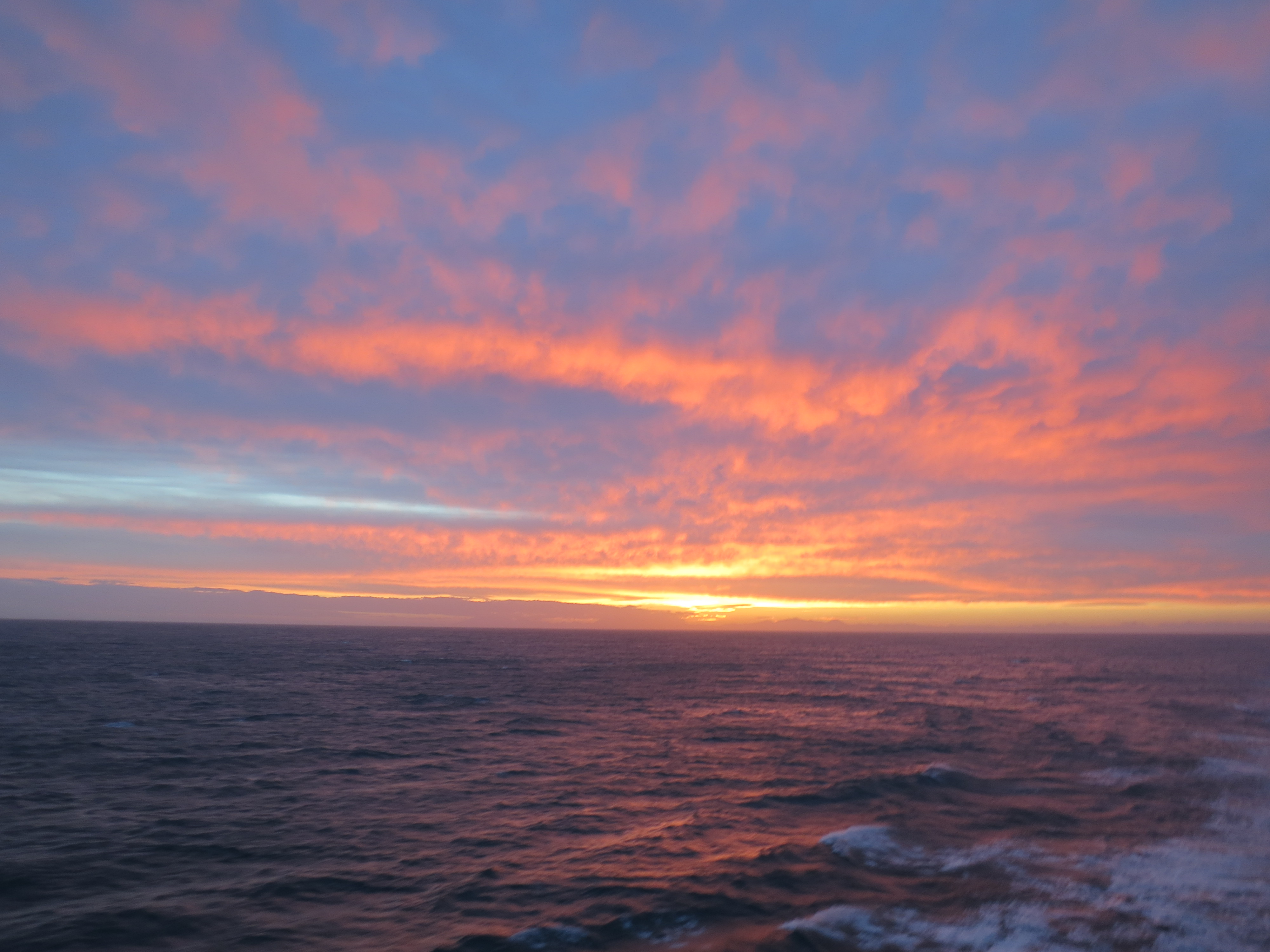
Sunset, Between the North and South Islands, New Zealand
Thailand is, of course, a land of many delicious foods, and I was looking forward to them long before I got here. What I didn’t expect to find were fruit smoothies on every corner. You point to a fruit from the cart, and the vendor chops it up in a blender with ice, a little water, and often corn syrup or honey. That’s it. And every single one I’ve had has been heavenly. Clearly, it’s the freshness of the fruit that makes it so good, but I also love that there’s no cream or yogurt or anything necessary to make it sweet and refreshing. Here are some photos of the many fruit smoothies I have loved.
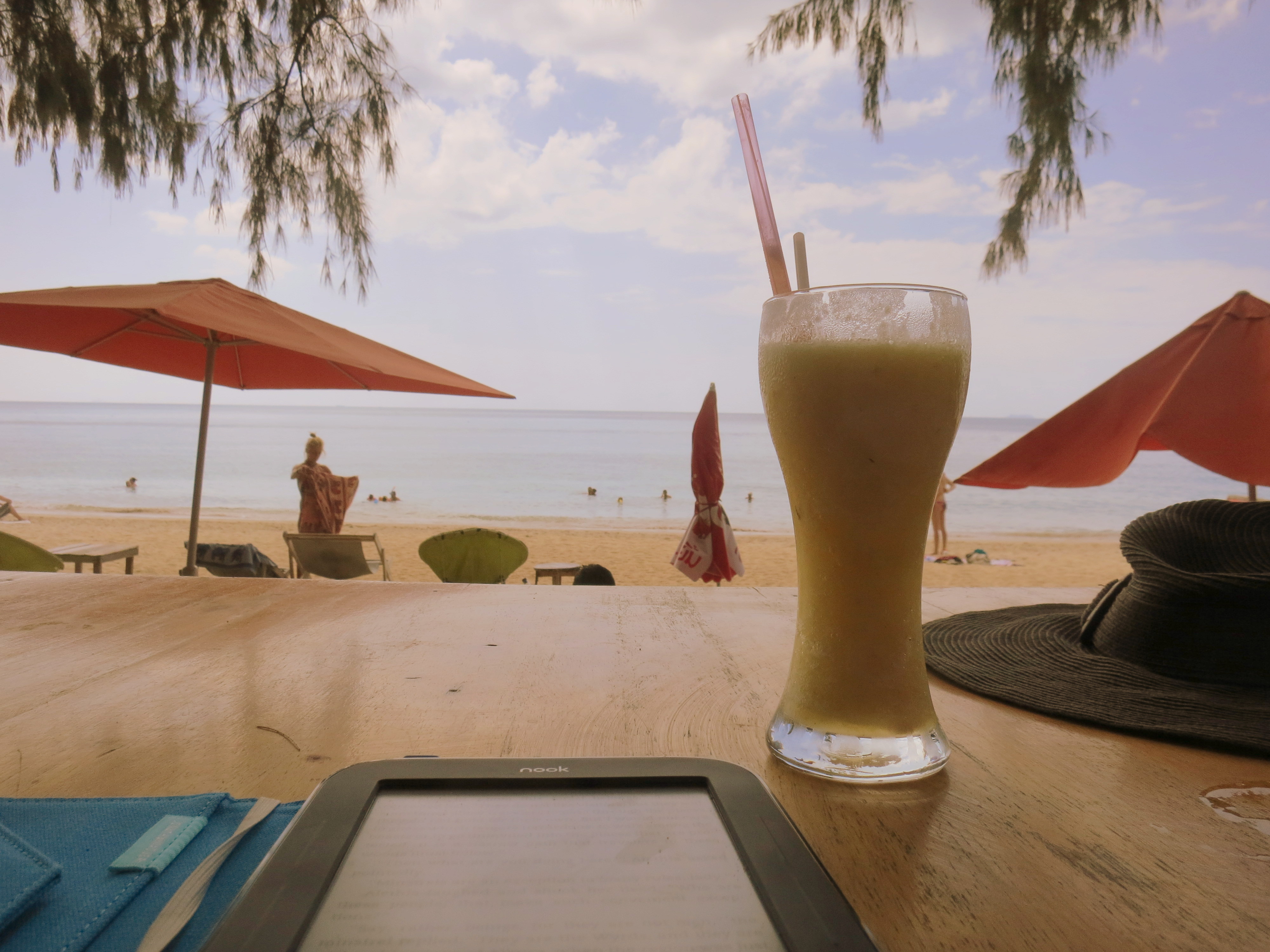
Pineapple

Mango

Avocado

Passion fruit with mango and banana, and Pineapple and banana
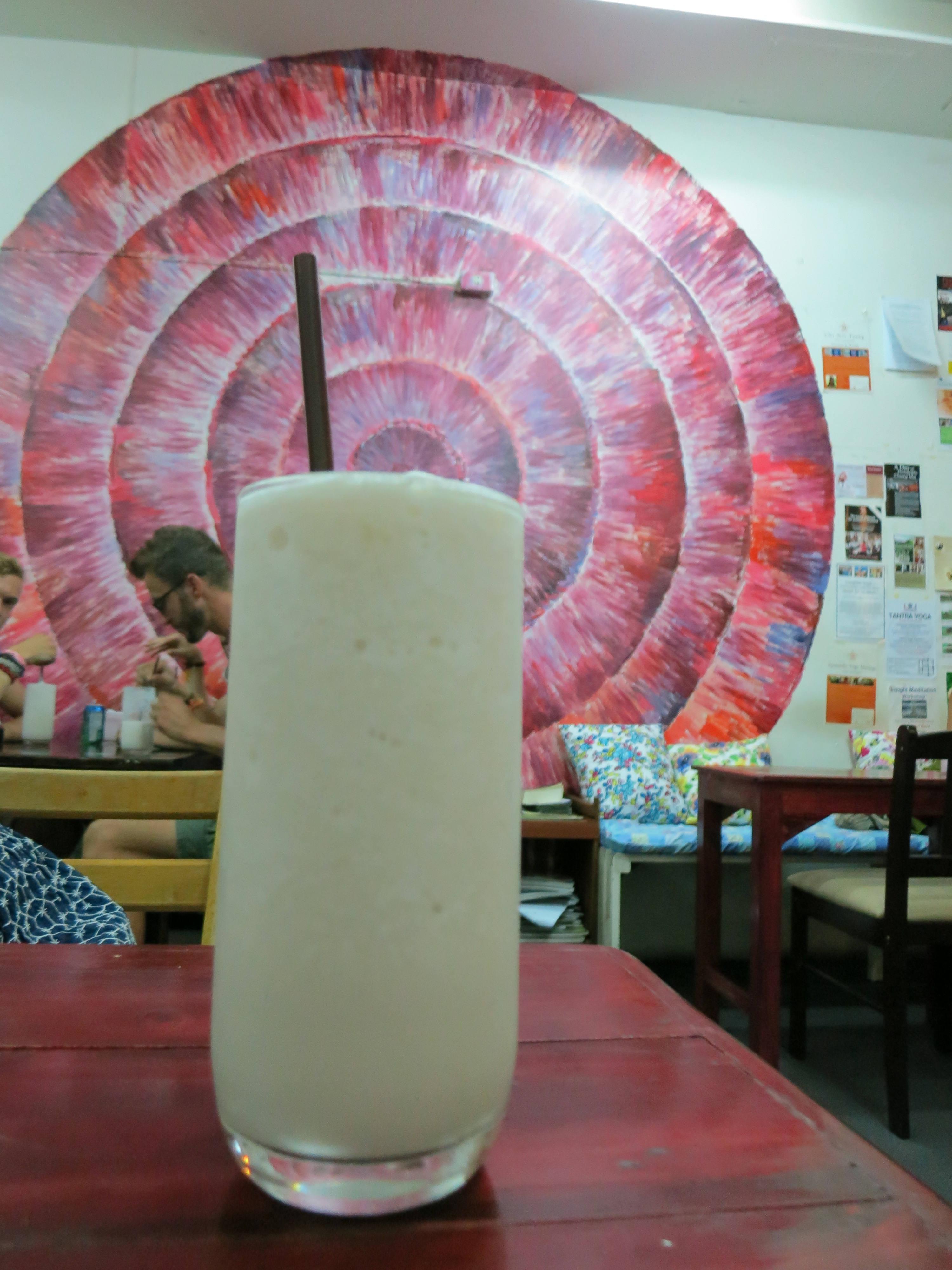
Coconut milk, coconut water, coconut, and cinammon

Passion fruit
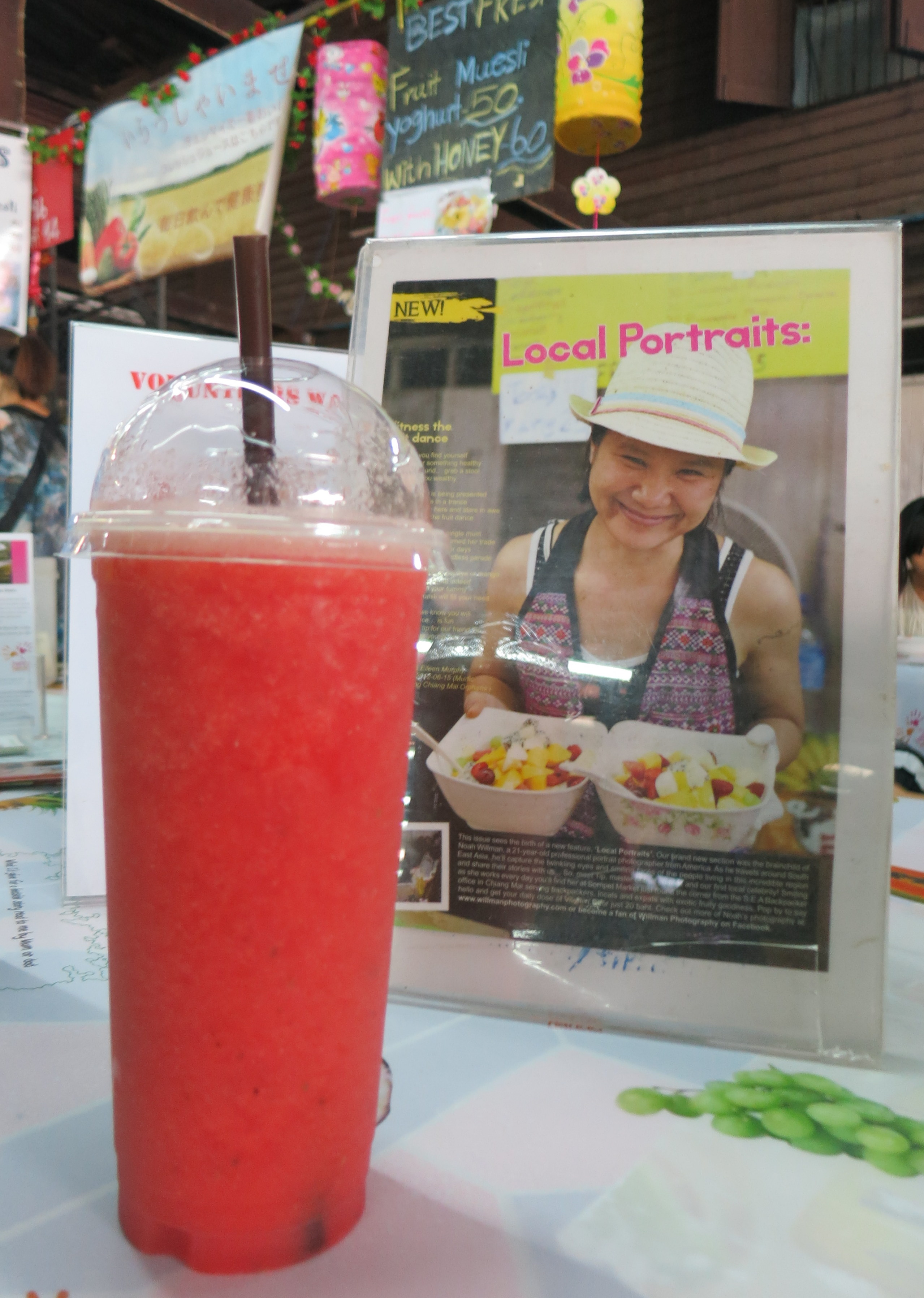
Watermelon

Banana
Not pictured: a tasty kiwi shake

Phuket Town, Thailand; January 28, 2013
 Stowaway Travel Writing & Editorial Services