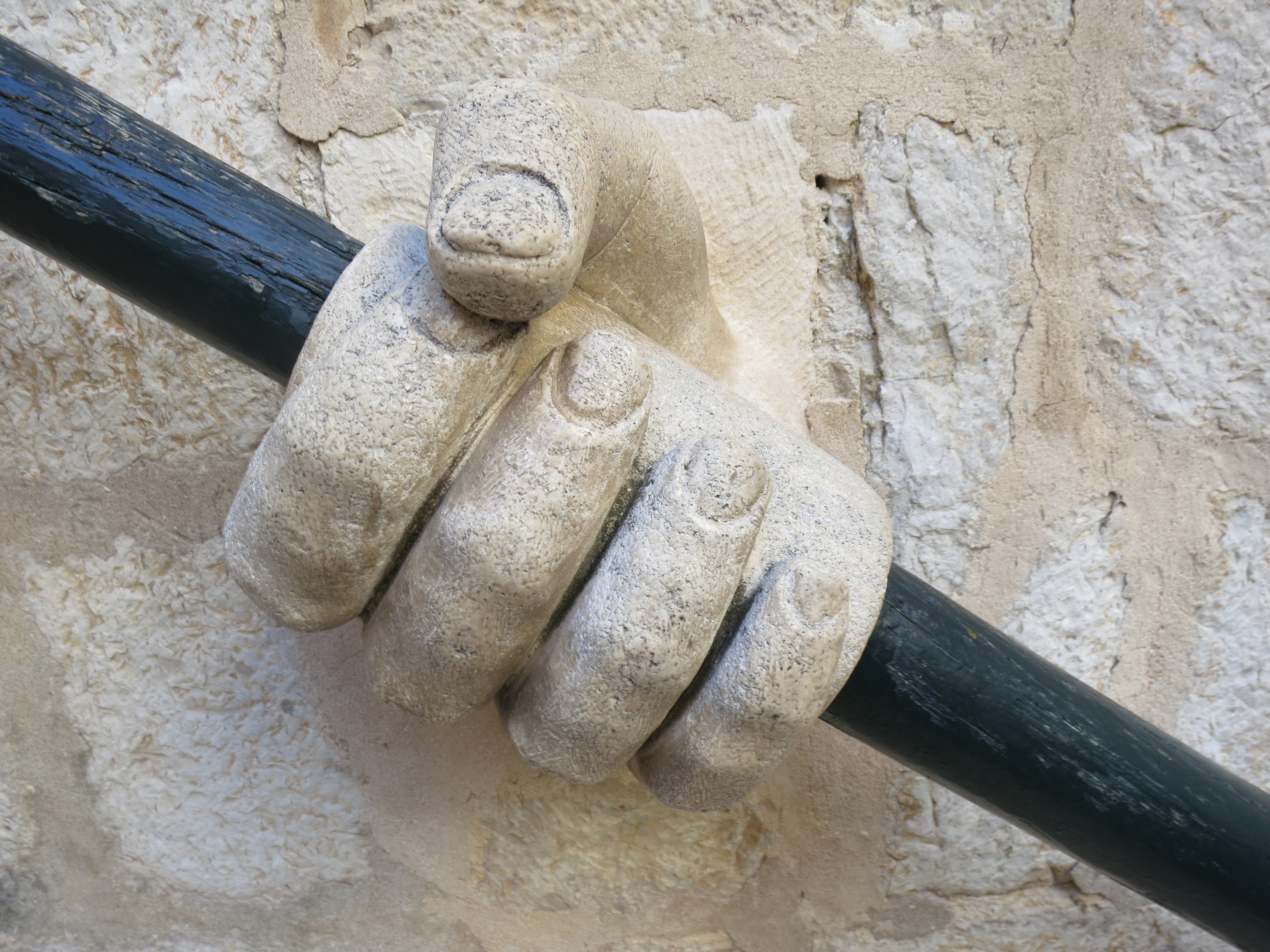
Rector’s Palace, Dubrovnik, Croatia; June 5, 2013

Rector’s Palace, Dubrovnik, Croatia; June 5, 2013
UNESCO put Luang Prabang on its World Heritage Sites list because it’s a town with a well-preserved mix of Laotian and French colonial architecture. After the jumble of rowhouses and tiny shops of Chiang Mai, it is striking to see the long, broad buildings of Luang Prabang, painted a colonial yellow and set at a dignified distance from the brightly decorated Buddhist temples.

Colonial architecture

Colonial yellow
Dignified, stately, slow-moving: these are the words I kept coming up with as I wandered the streets of Luang Prabang. A little in keeping with that stately feeling (and certainly in keeping with its colonial history), there were a lot of fences and walls; more space is cordoned off in this small town than I saw walled away in all of Thailand.

Every evening, vendors set up outside those walls for the night market. In Thailand, the markets are set up on card tables, but in Laos, the goods are laid out on tarps and blankets on the ground. If you want to inspect the goods at a particular booth, you have to squat down, or use one of the tiny plastic stools the vendor whips out for you. I would gingerly lower myself onto these unstable pieces of plastic and smile genially as all the women selling quilts and table runners laughed. Just about every stall has a woman holding a baby, and some stalls are staffed by men or teenagers. I saw one little boy playing on an iPad while his parents sold handicrafts–it’s a shrinking world, indeed!
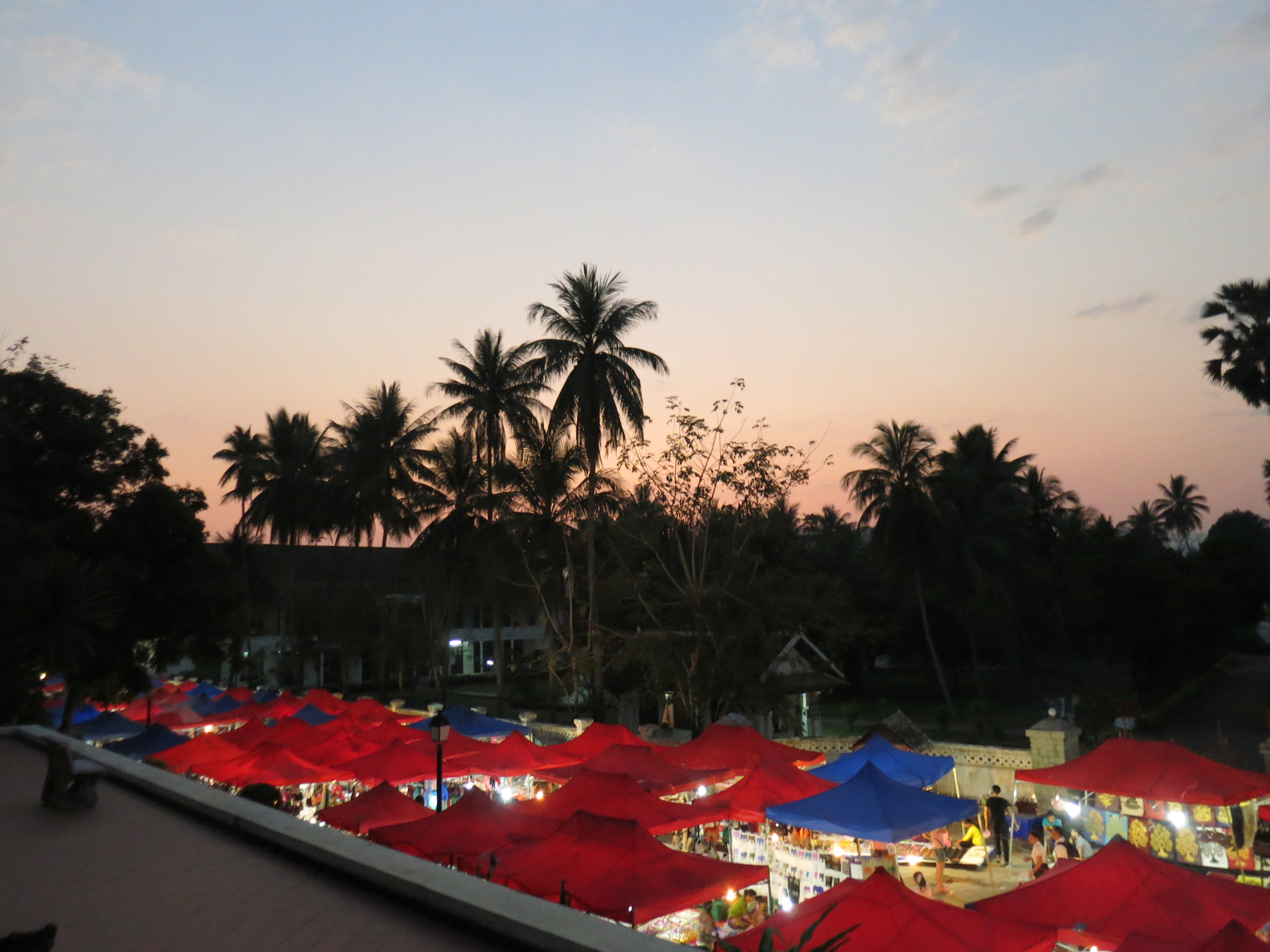
The tents of the night market

Bombs to bracelets
I picked out wedding presents and souvenirs from various stalls, but my favorite spot was the bombs-to-bracelets stall. The US waged a secret bombing campaign on Cambodia and Laos in the late ’60s and early ’70s, as part of its campaign against the Communist bogeyman. The villagers of Ban Napia in eastern Laos took the aluminum from the thousands of bombs dropped on their homes and, in their words, turned it from “something that kills into something that feeds,” producing spoons. They later added bracelets and charms to their collection, and the number of bombs dropped can be guessed at by the fact that they’re still making jewelry today, nearly 40 years after the bombs stopped falling. I chose to support the artisans, although there is some controversy in doing so, because villagers have to collect scrap metal to make them, and there are a lot of accidents and sometimes deaths with the UXOs (unexploded ordnances). As with so many potential purchases, it’s complicated.

Meat on a stick–a lot of it
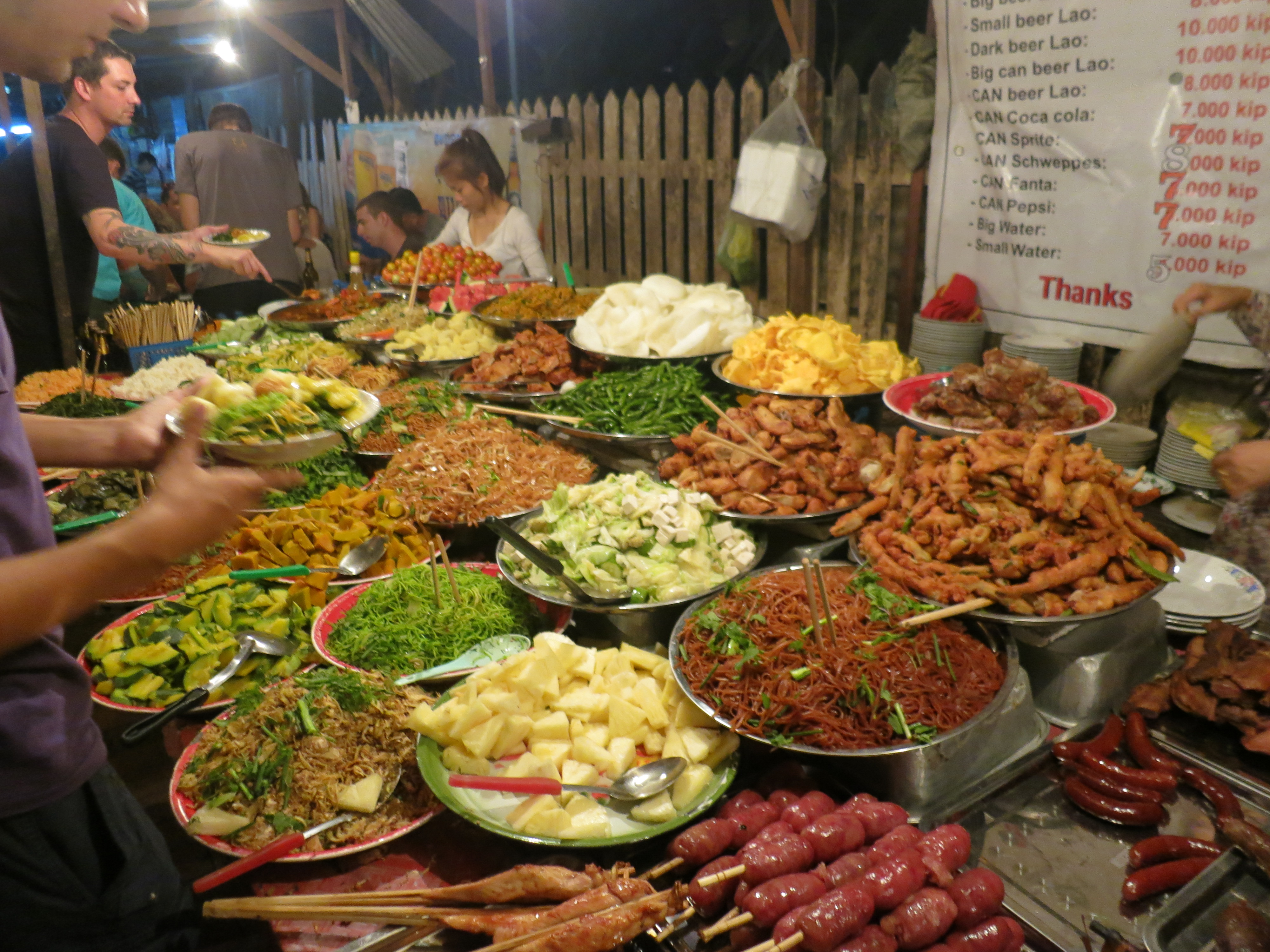
The much-lauded buffet (I never tried it)
Of course, there’s food. One woman sliced watermelon with a machete while another flipped sweet potatoes on a small woodfire grill. A narrow alley of food vendors included pork and fish on sticks, dumplings, grilled sticky rice, and two giant all-you-can-eat buffets. I had really good veggie and pork dumplings, and a non-spicy lemongrass sausage (a specialty of the area).
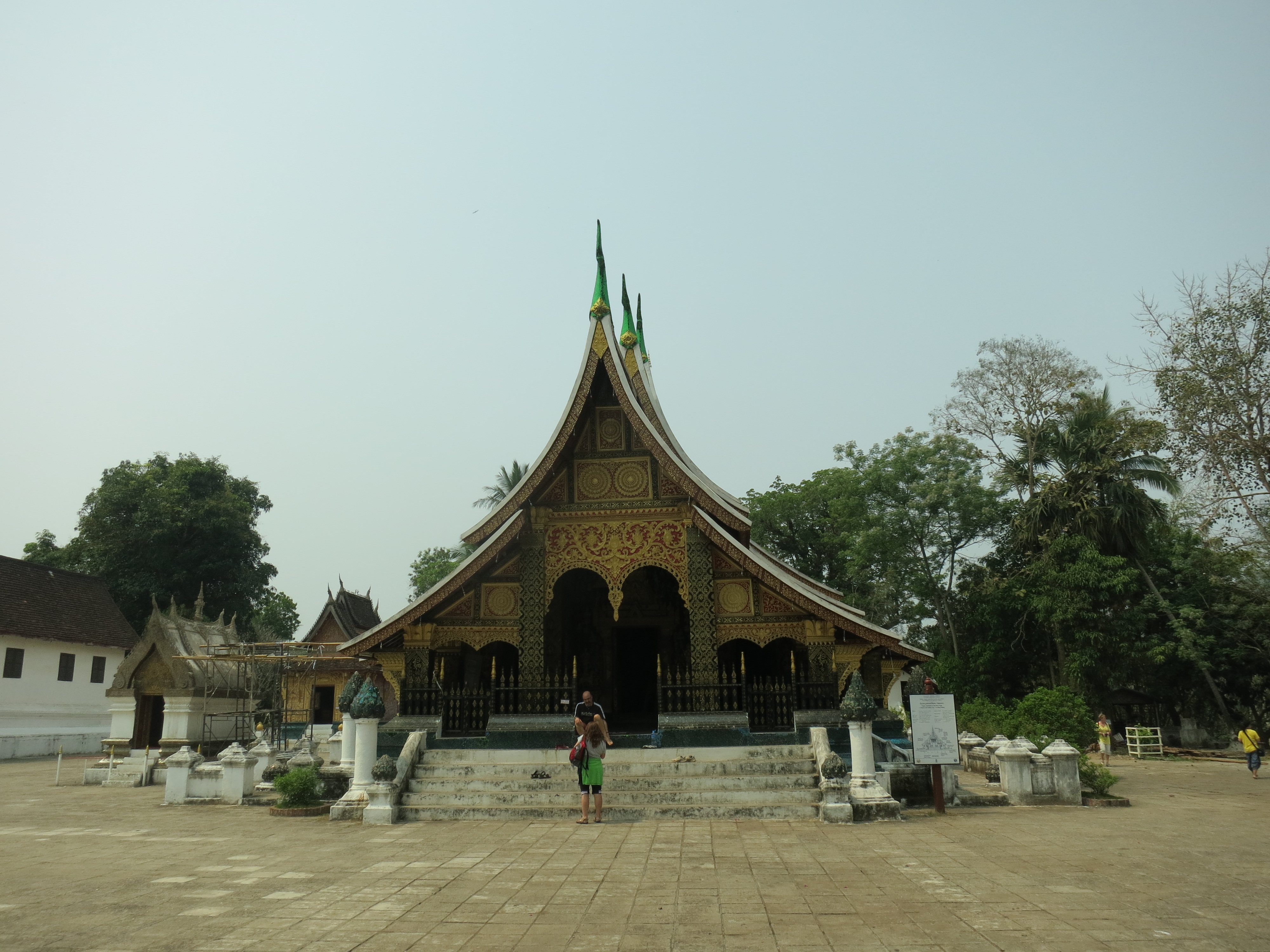
Wat Xieng Thong
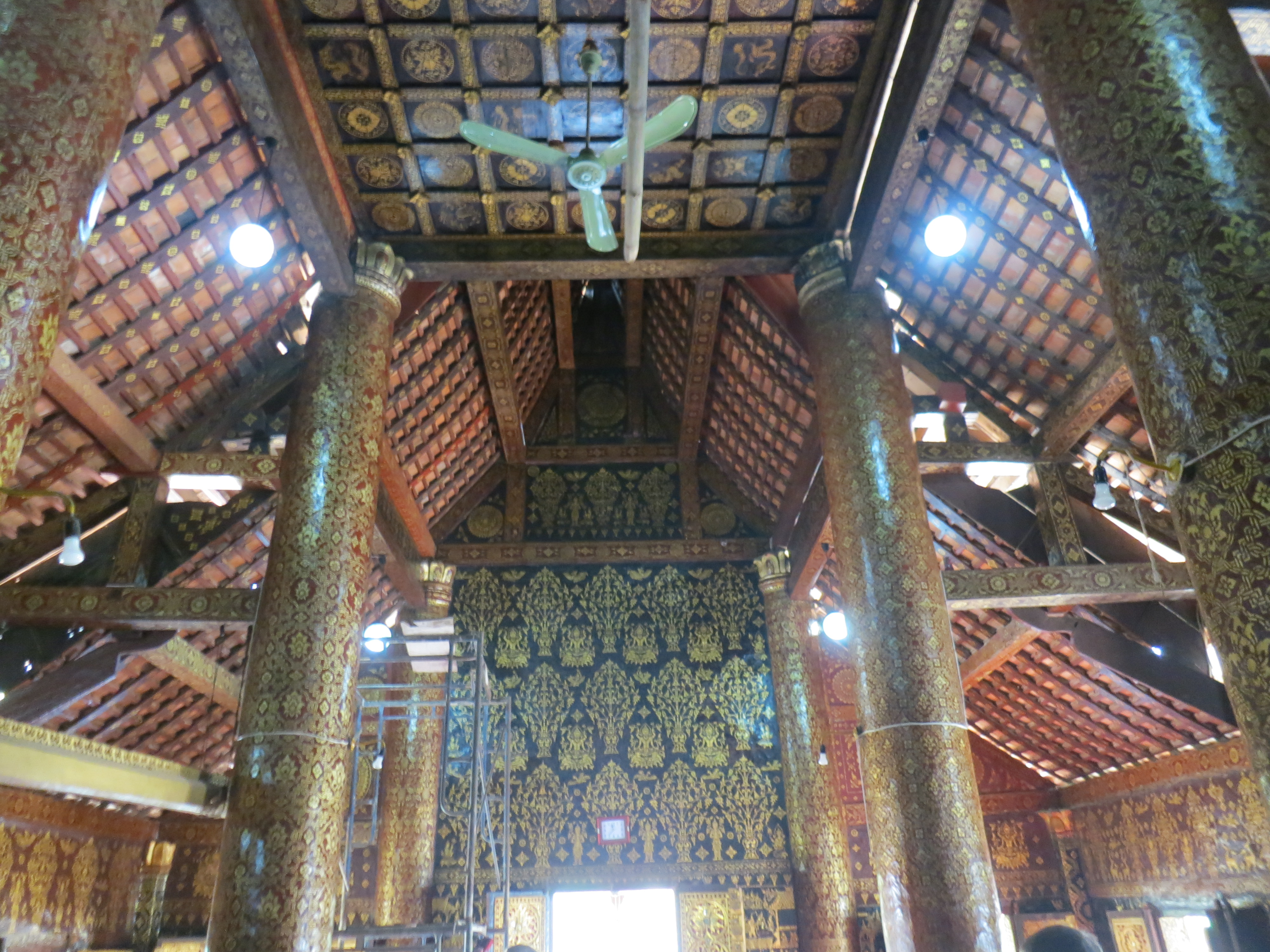
Gold painting everywhere
Luang Prabang has dozens of Buddhist temples, and a high concentration of monks and novices (those under age 25 are called novices). The temples, or wats, are painted in elaborate, intricate scenes, sometimes both inside and outside. The grounds are spare, with just a little greenery carefully confined to a few areas, and the rest tiled courtyards between buildings. Monks and novices move around on the edges, running errands, doing homework (many boys enter the monastery to get a good education), making adjustments in the temples.

Seriously impressive

Probably the most famous wat in Luang Prabang is Wat Xieng Thong, sometimes called The Temple of the Golden City. Since Luang Prabang is on the World Heritage list, there’s a lot of upkeep work going on at various temples, funded by various countries–and this temple is no exception. The US Embassy is supporting efforts to reinforce the structural elements of the temple, and scaffolding was set up around the buddha when I visited.

Unfinished renovations


The main building was painted a maroon color inside, and then gold leaf designs were painted on top of that, on every available surface–ceiling, columns, walls. Inside, a long wooden pipe sat along one wall, and at the end of it sat a small buddha in a glass box. During a water-based festival, water blessed by monks travels through the wooden pipe and washes the buddha. My favorite part of this temple was a separate building, which housed a giant dragon boat. The back wall was red, covered in intricate, colorful mosaic scenes and accented with sparkly glitter. There was no way to get a decent picture to show just how big and full of life it was, but I tried. Exteriors of some other buildings were dotted with similar mosaics.

View from Mount Phousi

Buddhas in various positions
Mount Phousi rises above the center of town, and a small temple sits atop it, with various buddha statues and shrines scattered below it, so each step of the climb to the top takes you past a holy site. At the top, if you can balance yourself between the edge and the dozens of fellow tourists, you can see a beautiful sunset over the Mekong. On the walk up, off to the side is the Imprint of the Buddha’s Foot; it’s a large, vaguely foot-shaped indentation in the rock that someone decided was a holy sign. (In that way, it reminds me of the Virgin Mary water spot under the bridge on Fullerton in Chicago.)

Indentation of the Buddha’s Foot
The foot is just past a pavilion with a view of the Nam Khan River to the east, and on this pavilion stood a young novice. His name was Tip, and he was doing homework. He clearly stations himself here most nights in hopes of practicing English, because he was eager to ask and answer questions with me. He was 17, he’d been a novice for many years, his wat was across the river, America sounded interesting… I didn’t have time to ask for a photo or chat with him further, because a couple teenage Laotian boys entered the pavilion, and Buddhist monks aren’t supposed to be alone with women. I didn’t want him getting in trouble, so I said goodbye and he said, “I hope you have many happinesses in your travels in Laos.”

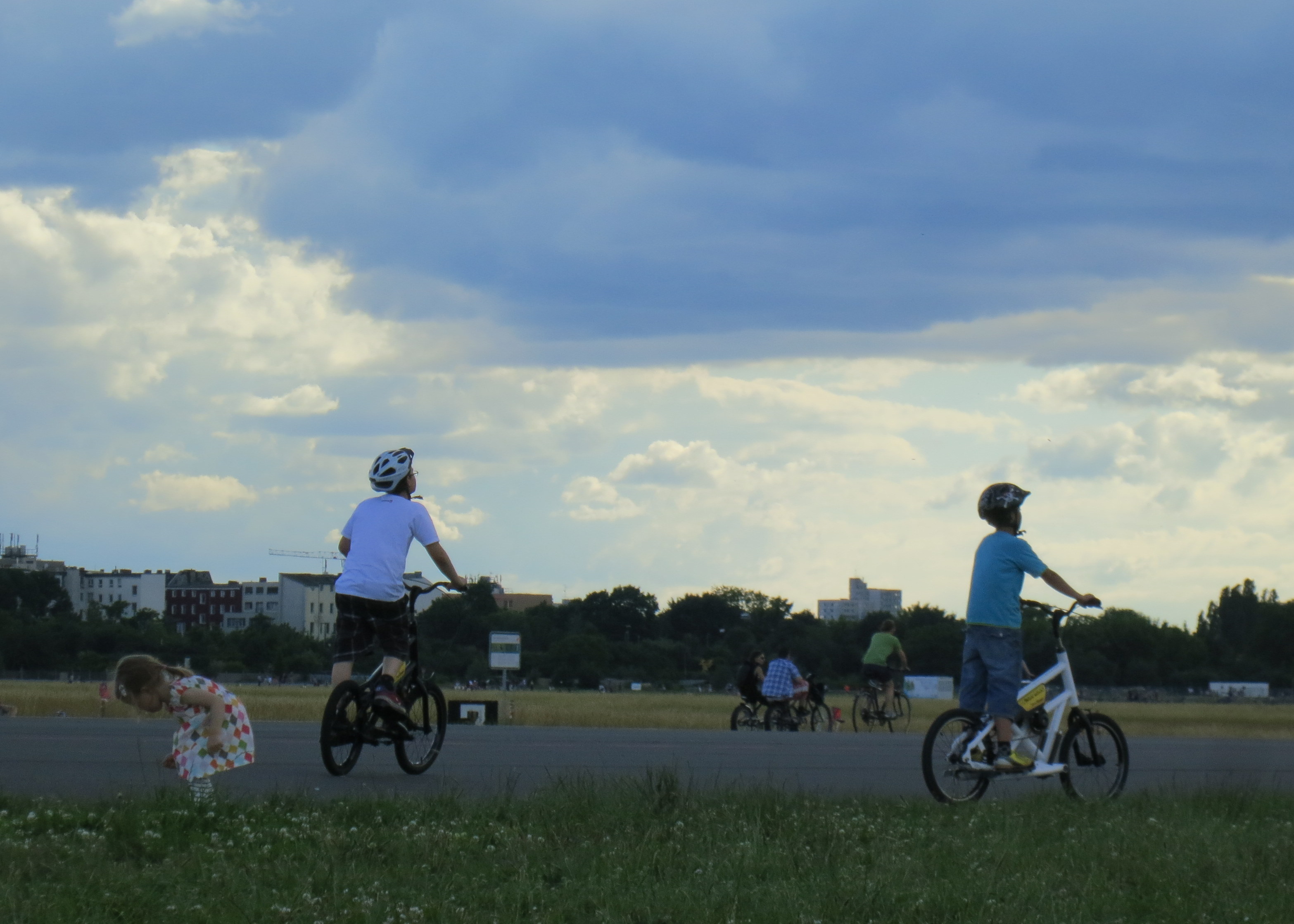
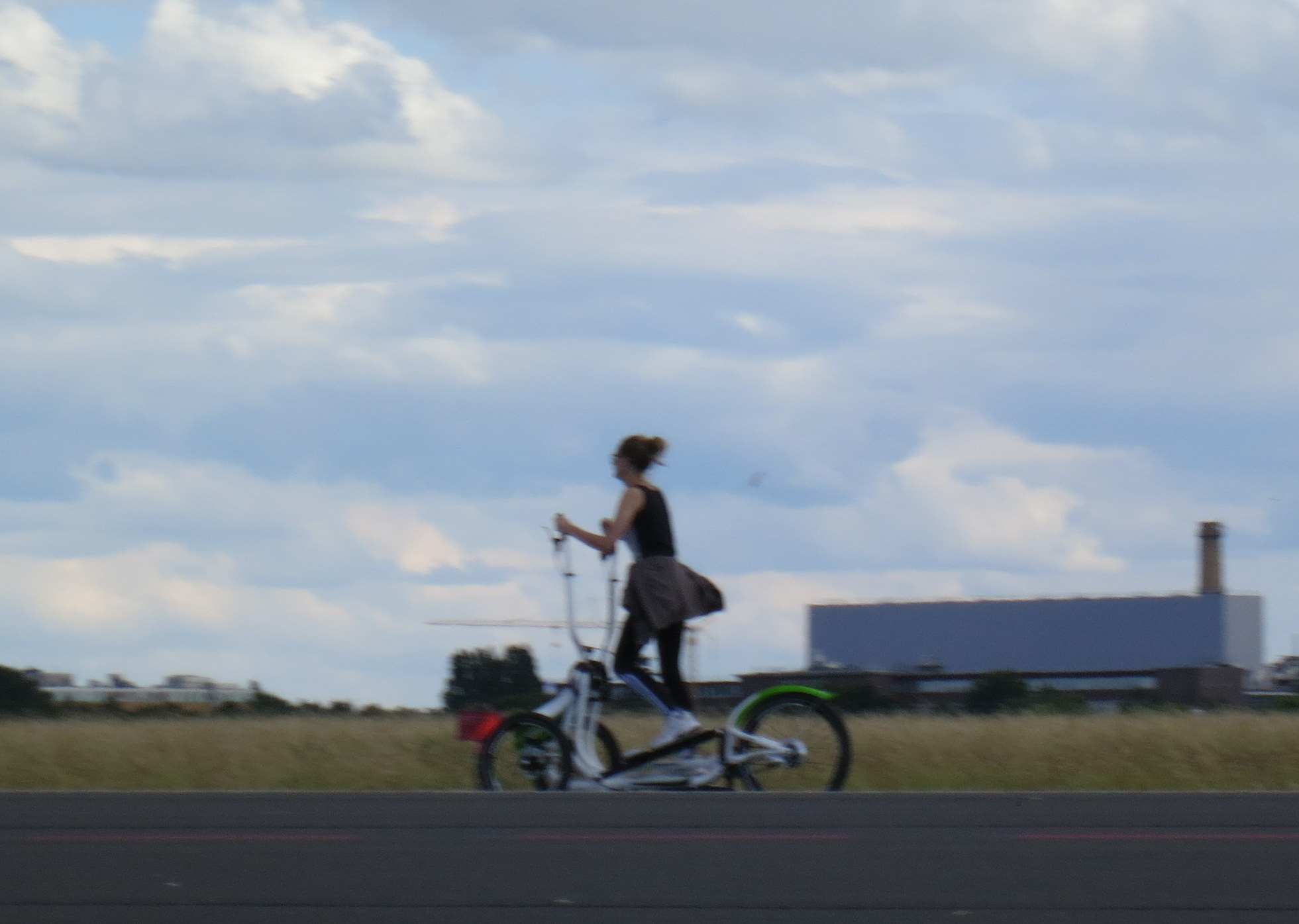
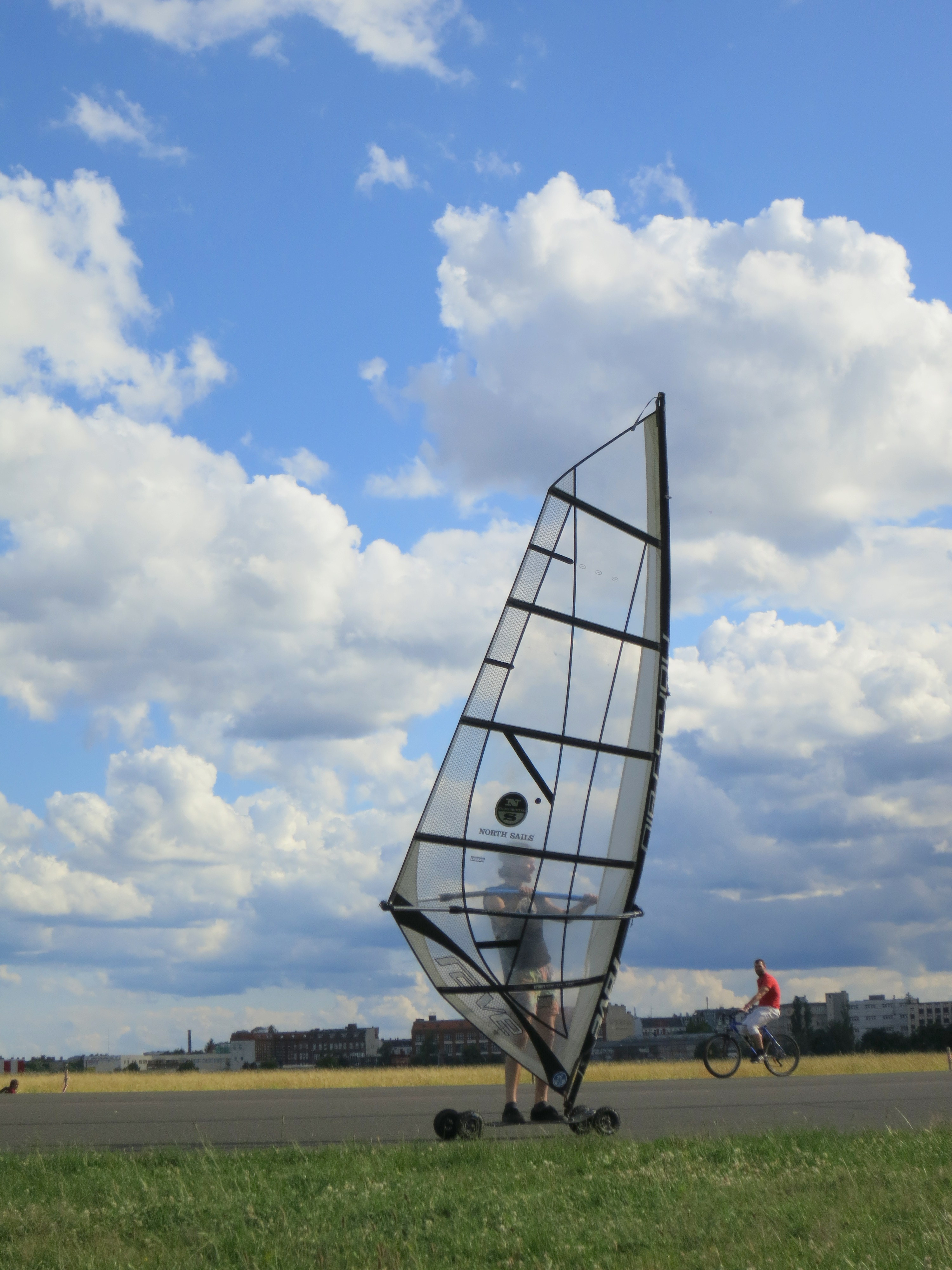
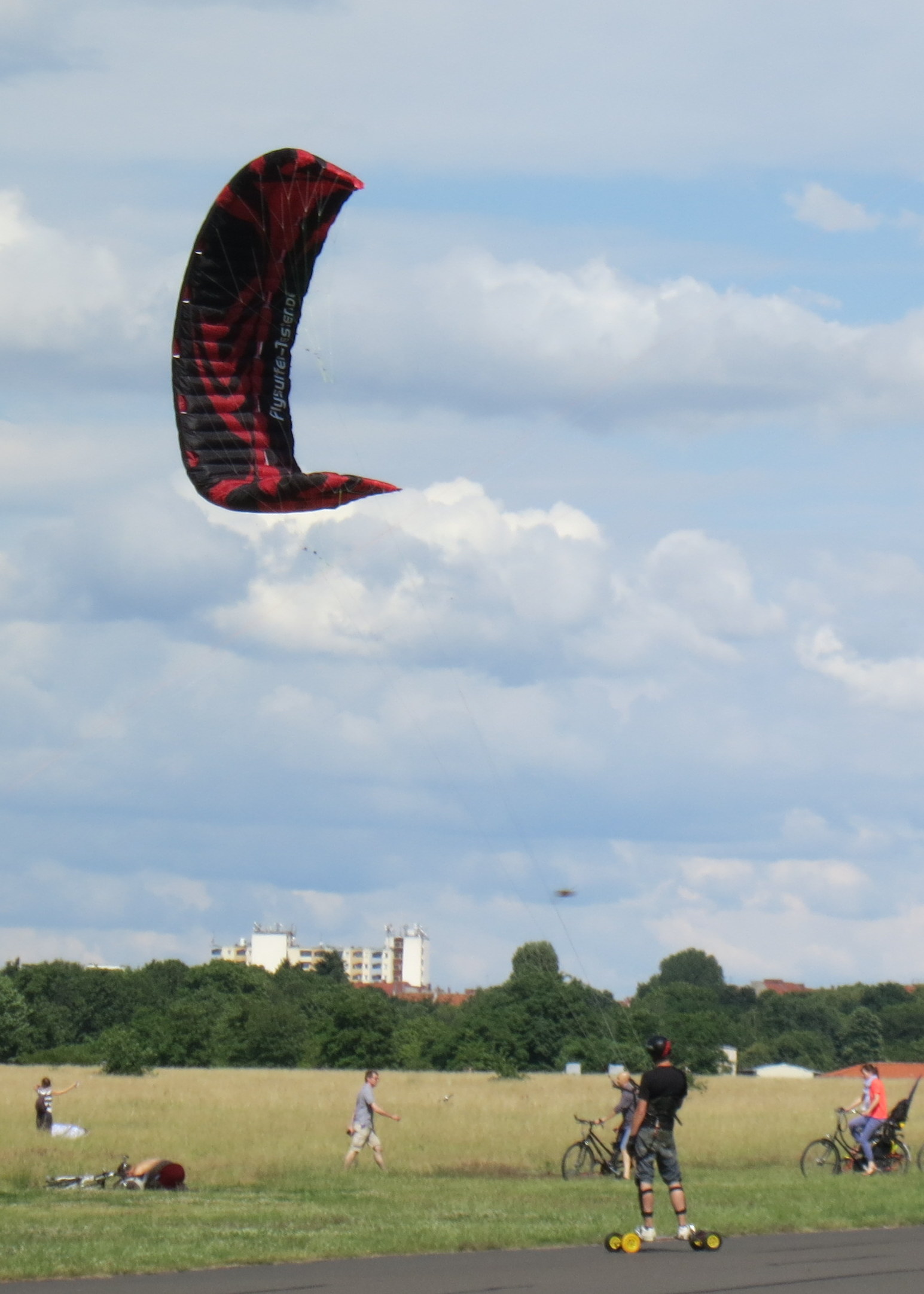
I’m in Berlin for a few days, staying with my future sister-in-law and enjoying the lazy summer days spent at Pride parties and giant airport parks. Yes, airport parks. Berlin used to have an airport called Tempelhof, but in 2008 it was shut down. Now they stage marathons and festivals here, and it’s been a park since 2010. Lizzie and I spent a Sunday afternoon picnicking and chatting on the grass next to the runway, watching people play. After awhile, we realized we were seeing the biggest variety of things on wheels we’d ever seen before. Rollerblades and bikes, sure, but also kitesurfers, moving ellipticals, and dry land skis. The Berliners love finding new ways to zoom around their parks! Check out the many wheels of Tempelhof.


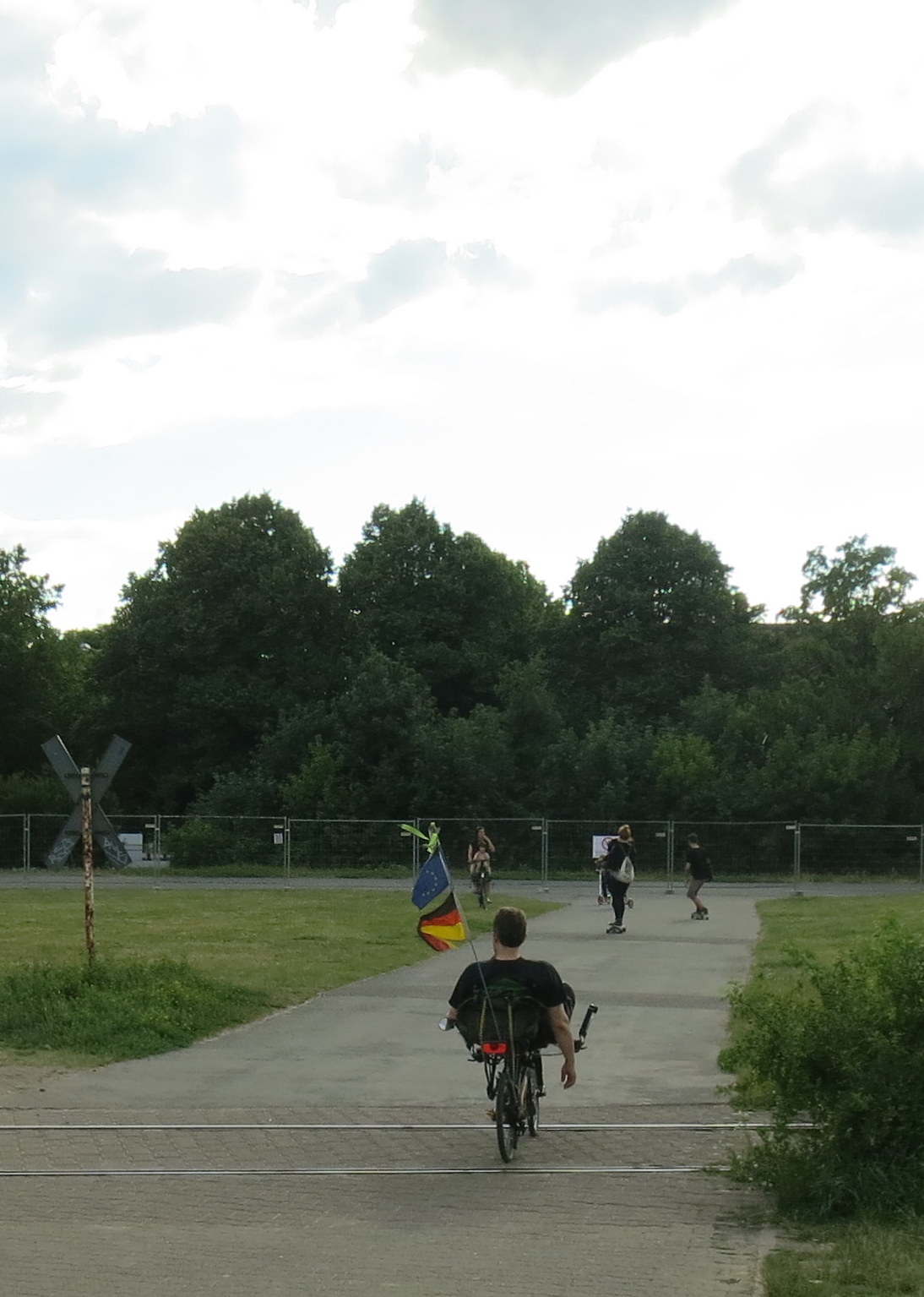

Not on wheels, but adorable




Everyone’s running marathons and jogging in fun runs, and, never one to let travel impede my recreational activities, I decided to do a walk here in Slovenia: The First Annual Lisa Findley Lazy Lake Day 5K. I finished in the top five and even got a prize for it. I can definitely recommend this approximately 5 kilometer trail to you if you’re ever in the Lake Bled area.
First, I made sure I was in the right gear.

Skirt, floppy hat, large bag (but not backpack)… that’s normal 5K gear, right? (Photo taken in road mirror, so it’s not the best quality.)
Then, I took a look at the competition.

I could take the babies, but the mom would give me a run for my money.
And I was off!

I got this.

Practically no hills–a real smooth track
Soon it was time for a lunch break while contemplating the rest of the course.

Lunch view
At about the halfway mark, everyone took a dip to incorporate some light triathlon training.

You can’t NOT swim in that.

Europeans in all their speedo glory.
I admit I got a little distracted by the views.

The monastery on the only island in Slovenia.

Still life with castle
After only one lunch break, one swim break, and one reading break, I easily made my target time of 4 hours. Time for a prize!

Victory is sweet.
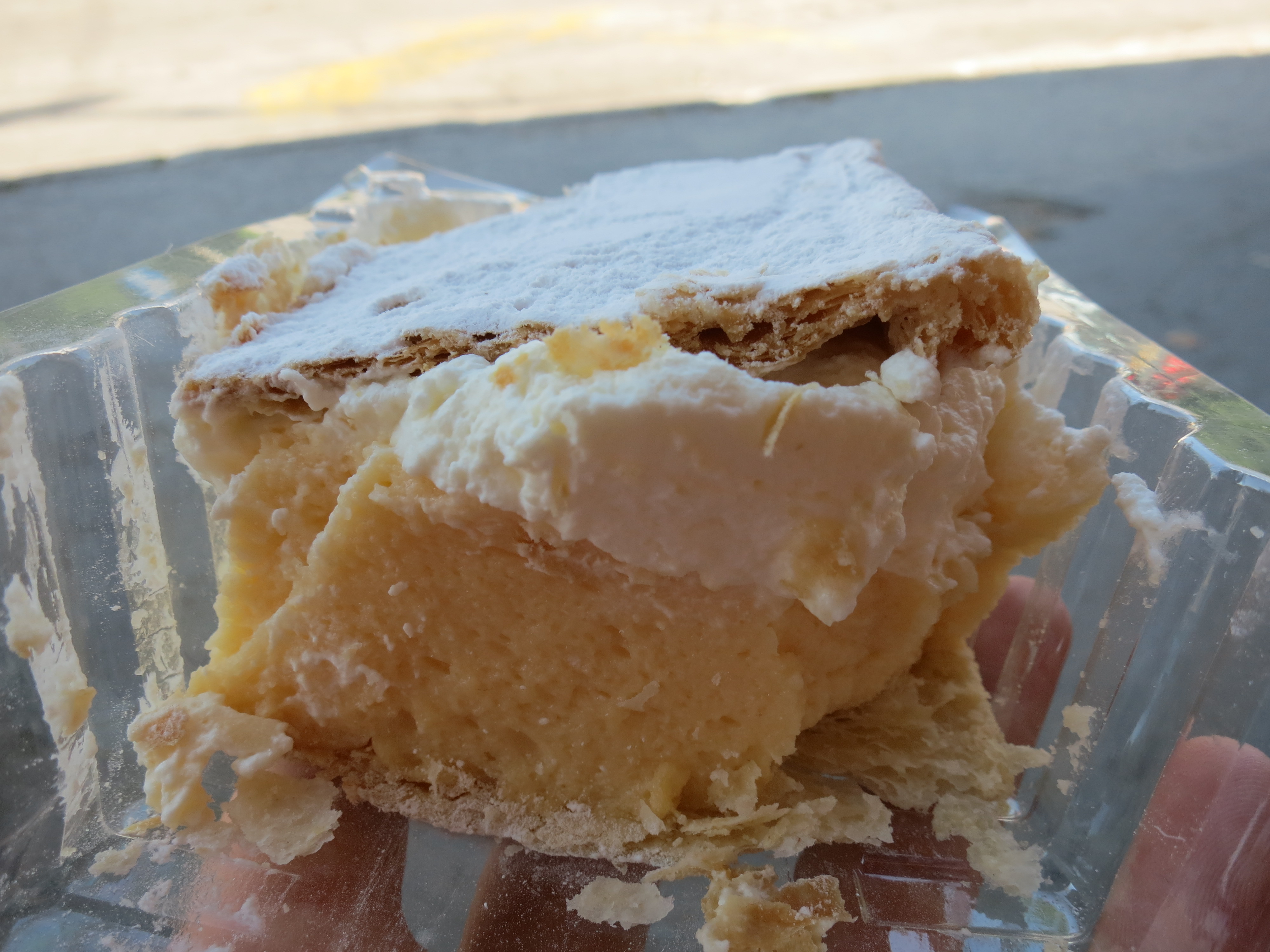
Literally.
(Cream cakes are the Thing To Eat while at Lake Bled.)
If all 5Ks were like this, I’d be a champion.

Sunset, Sibenik, Croatia
Hay-on-Wye, United Kingdom; May 21, 2013
How’s your back sweat situation right now? Probably pretty bad. Don’t tell me about it, I already know. Here in Ljubljana (the capital of Slovenia), it’s in the upper 80s and we’re all sweltering. So I’m getting a visual break from the heat by compiling shots of the wonderfully cold water I’ve swum in or been near in the last two weeks, in Croatia. Warning: Serious envy possibilities here. I envy my past self as I sweat my way through the afternoon here.

Lopud, near Dubrovnik

Bol Beach, island of Brac

Brac

Krka National Park

Zadar

Seaside saltwater pool in Zadar

Plitvice National Park

Plitvice National Park
Feeling refreshed?
“Oh, you know they’re always trying to rip you off.” “They’re always looking for a way to scam you.” “You have to be really firm with them.” I heard variations on this theme so many times in Southeast Asia that I started to wonder what I was missing, because I didn’t feel that way. How much of this attitude comes from personal attitude, and how much from the many, many guidebook warnings on scams and ripoffs in Southeast Asia? Probably a mix. A not very pleasant mix of reality, stereotypes, and suspicion.
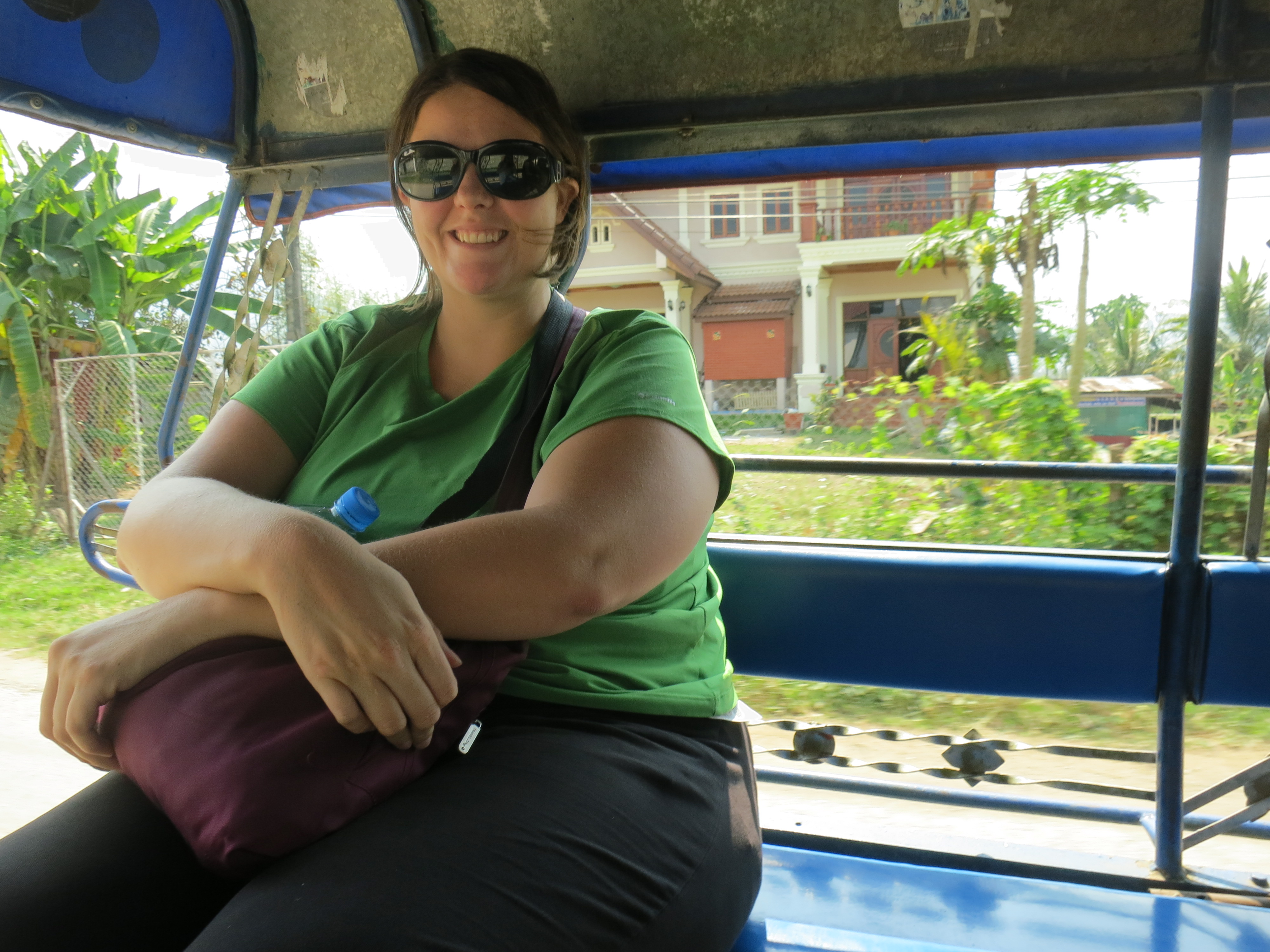
In the 40,000 kip tuk-tuk
Guidebooks and websites list the various scams you can fall prey to–the gem scam, the tuk-tuk scam, the travel agency scam, to name just a few. I even knowingly went into one of the well-known scams, to see what it was like. There are a lot of setups to separate you from your money, and the more serious ones have legal repercussions if you don’t cooperate (see: anything involving drugs). Being wary of any deal that seems too good to be true is a smart move for avoiding scams anywhere you go, including SEA. That’s pretty straightforward.
It’s the ripoffs that are a murkier area. Traveling in SEA from a Western country means encountering new currencies, new modes of transport, new foods, and a new bar of “normal” prices for it all. I got pork satay for $1 and thought I’d got a bargain, until further up the street I saw someone selling it for 50 cents. Did I feel cheated out of those extra 50 cents? Slightly. Did it affect my budget or my mood? Not at all.
I met some women on the slow boat to Laos, and when we arrived in Luang Prabang we decided to share a tuk-tuk to the Kuang Si Waterfalls, 40 minutes outside of town. We found a couple tuk-tuks and asked how much to take us there and back. (You never have meters with tuk-tuks; you always negotiate price upfront.) The drivers wanted 50,000 kip per person, round trip. What a ripoff! That’s much more than it should be! We’re going to find someone else! And then they did start walking off to find someone else. The drivers let us get pretty far; this wasn’t a haggling technique, you could tell, they really didn’t want to drop their price. But finally they consented to 40,000 kip each, which was deemed acceptable. (I should say here that I really enjoyed hanging out with these women, as we did over the next several days, but we just disagreed on this point.)
We passed a checkpoint (all the tuk-tuks in Luang Prabang belong to a group that they report rides to and presumably pool some money for), and I saw a sign saying trips to the waterfalls are 200,000 per tuk-tuk. There were four of us, which meant the 50,000 was just basic math, not a ripoff at all. But when I mentioned this, the women said no, they’d read online that it shouldn’t be more than 40,000 per person, and it’s a matter of principle, not being ripped off. And “they” will rip you off any chance you get, I was reminded; hadn’t the price of a dress been slashed in half at the market yesterday when one of the women simply started walking away after hearing the opening figure? That proves that they’re always asking for way more than it’s worth.
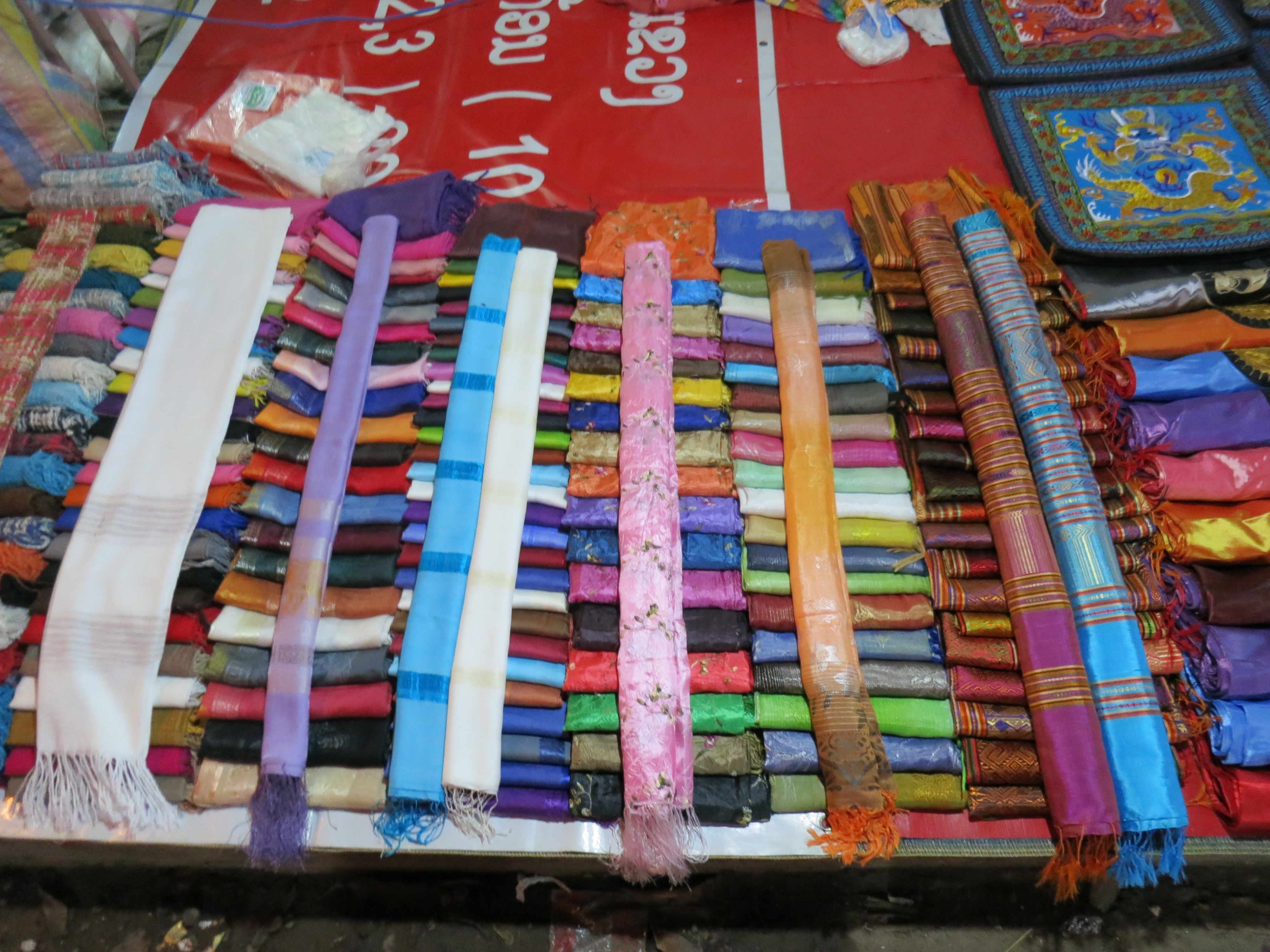
How much, how much?
But I think it’s not that simple. The dress, yes, that was a funny piece of haggling, because clearly the woman would have settled for much less than her opening price, but why shouldn’t she give it a shot? It wasn’t out of line with prices in other stalls, and it was still only $10. It’s frustrating when you’re not sure what the normal price is, but markets here are meant for bartering, so make up your own normal, or what feels comfortable for you without leaving the seller with no profit.
The tuk-tuk, though, is much easier to avoid being ripped off. They’d gone online to see what the norm was–40,000–so if the driver had said 100,000, we would have known straight away that we were being ripped off. But 50,000 isn’t unreasonable, and according to the tuk-tuk company sign, it was in fact appropriate for the size of our group.
And in the end, it’s a $1 difference. Yes, it was the difference between a $7 or an $8 ride–for 40 minutes out, waiting several hours, and 40 minutes back to town. That $1 means so much more to the driver than it does to me, so why begrudge him that slight boost in his pay for the day? It’s going to go a lot farther in his pocket than in mine. Sure, they countered, but if you keep saying, “oh it’s only one dollar” everywhere, those dollars are going to add up, and you’ll lose a lot of money that way. Yep, I replied, and I’m okay with that.
I complain about how much I’m spending on this trip more often than I should, but I’m still acutely aware of how fortunate I am. I’m far more upset about the ATM fees I pay every time just to access my own damn money than I am about the couple hundred dollars I’ve probably overpaid to people trying to send their kids to school or get dental care.
Finally, this kind of thinking can get dangerously racially based. There’s way too much “they” and “them” in the talk surrounding scams and ripoffs. If you’re always thinking that a certain group of people is always out to get you, you’re not allowing them any individuality, and you’re closing the door on opportunities for understanding each other. That isn’t to say you shouldn’t look out for ripoffs–I had to bail on a taxi in Hanoi with a super-fast meter, for example. But try not to make it the first thing you see in a person.
If you see someone as a scam artist solely based on his race, that’s racist. If you see someone as out for your money, that’s one more friend you haven’t made. That’s a lonely way to travel, and it doesn’t fit in my budget.

Sunset, Olney, England
A lot of people assume that my year-long trip is one giant vacation, that I drift from day to day with a cocktail and no agenda. Actually, I’m doing something pretty much all the time. If I’m not sightseeing or meeting locals and other travelers, I’m writing this blog or keeping in touch with loved ones, and if I’m not doing that, I’m looking up where to go next and how to get there, or moving funds around and cursing the slow internet connection. I’ve read more books in the last nine months than I did while I had a job, but not as many as I’d hoped, and I get way behind on my journal with some regularity. So you can imagine how much I appreciated the abrupt change in pace when I got on the slow boat to Laos.
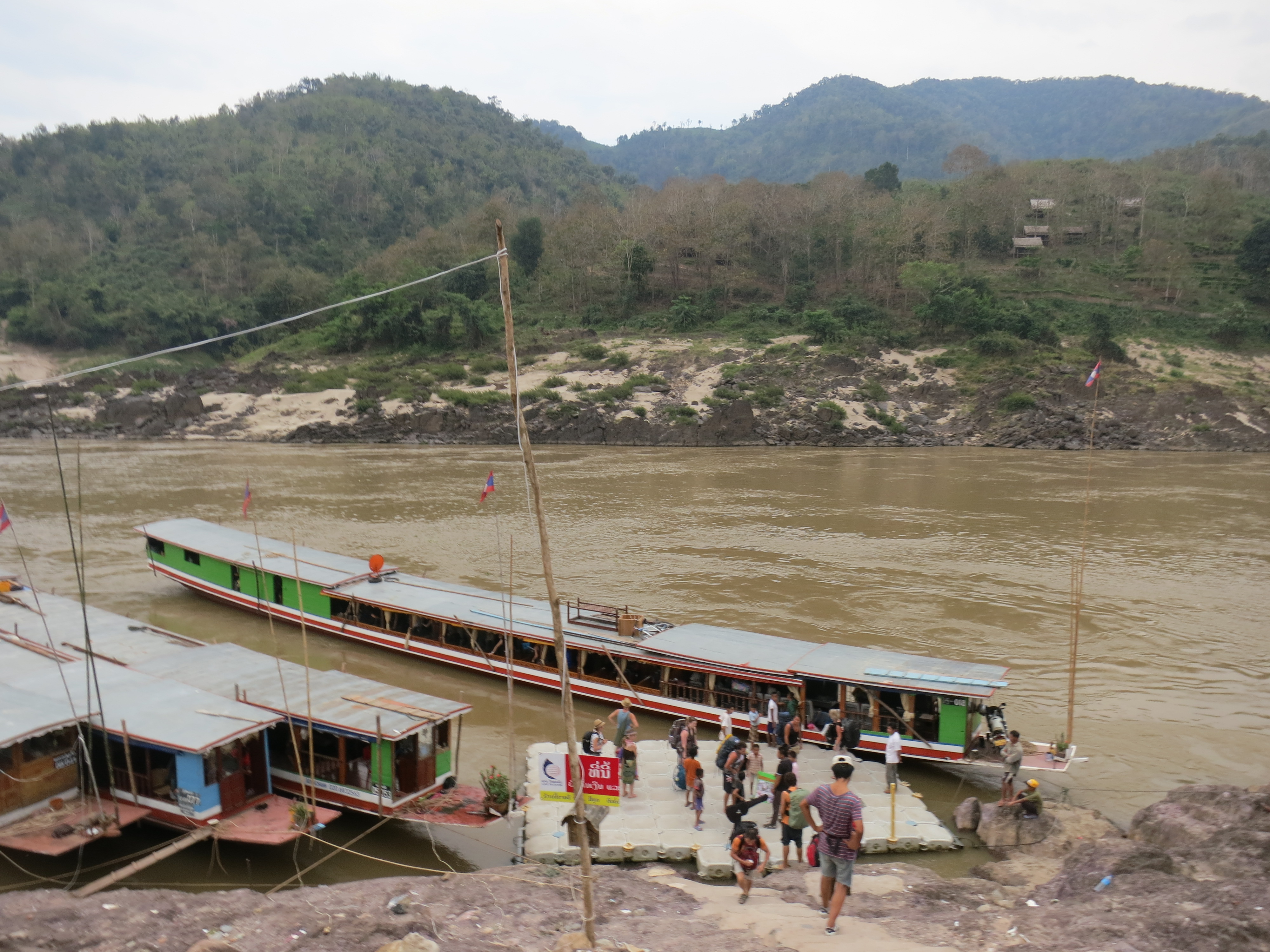
The slow boat
Boats used to be the main mode of travel in Laos, but in the last 20 years the country has undertaken huge road projects, and increasingly buses and cars are the way to get around. There are still a few boat routes in use, however, and one of the more popular ones for backpackers is from the Thai border at the town of Huay Xai, down the Mekong River to Luang Prabang. The journey takes two days, with about 7 hours of boat travel each day, and a night’s rest in Pakbeng.

The view
It is literally a slow boat—a long, low houseboat with a roof overhead and a small engine room in the back. We took a different boat each day, but the setup was pretty much the same. A few two-seat wooden benches, and then rows of minivan seats lining the narrowing prow, with a “bar” in the back selling some beers and a few bags of chips. Bags are stowed below the floor, with a few in the back near the engine. As in the rest of Southeast Asia, no one makes safety announcements or points out the life jackets; you just sit and wait for the magical moment when it’s deemed time to go, and suddenly you’re moving down the Mekong.
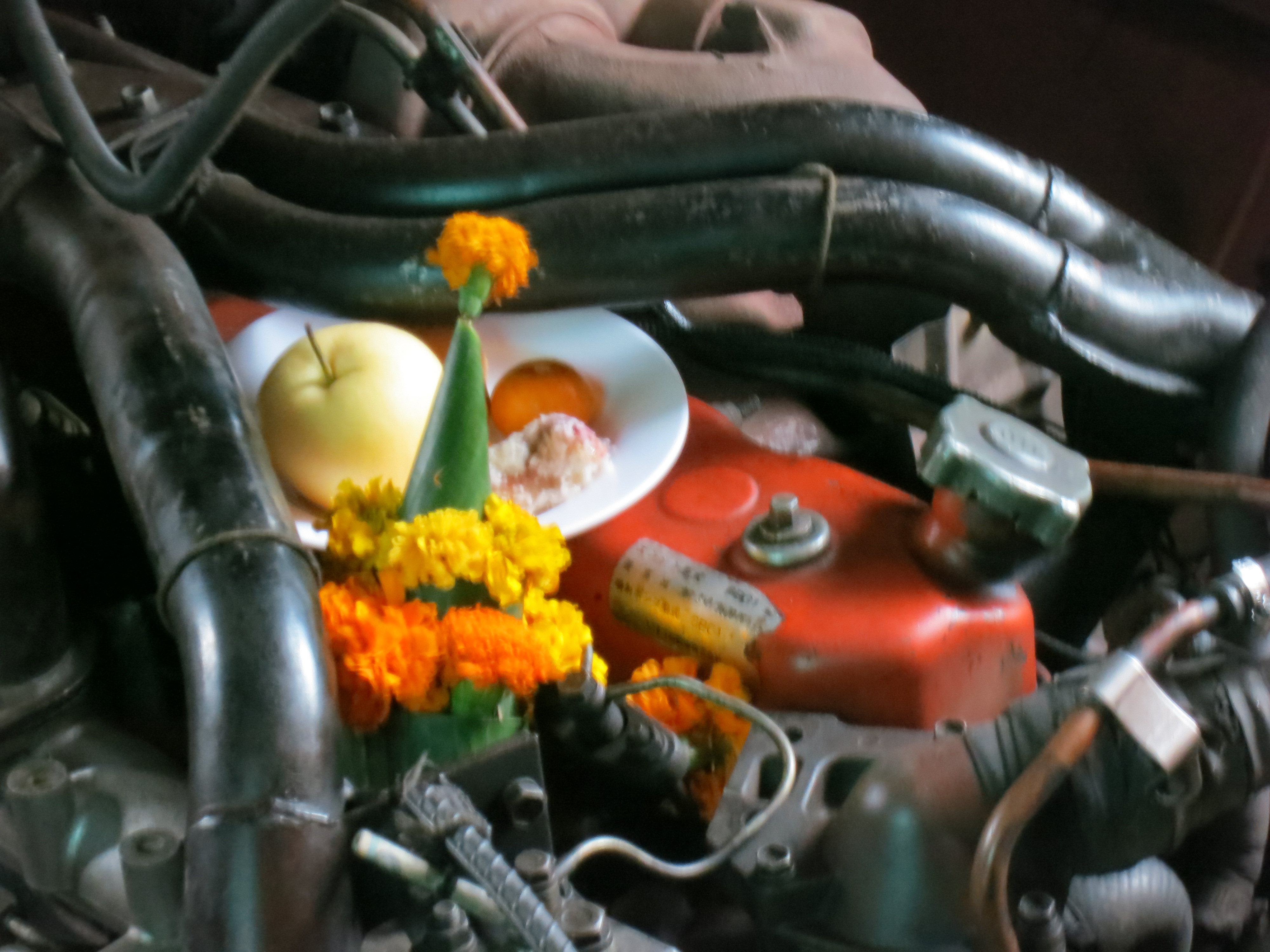
Offerings on the engine for a safe journey (blame the blurriness on rumble of the engine)
And once we were off, that was it. There was no loud music, no group activity, nothing to demand my attention. I could take a nap, read a book, chat with my neighbors, or spend hours watching the beautiful scenery gliding by. I went for a combination of all these. It was wonderful to just sit and do nothing, in this stunning setting.

Packed
It wasn’t all sunshine and roses, of course. I almost didn’t make the boat, because the people I bought the ticket from refused to take me to the dock before 11:30—but the boat was meant to leave at 11:30. Finally, I started walking up to the main road to find my own tuk-tuk, and with an exasperated sigh the ticket seller led me to a tuk-tuk that got to the dock at 11:33, and I was literally the last person on board the boat. I’ve never been that person before, but here I was scooting down the aisle with my bags in tow, all eyes on me as I searched in vain for a seat. I ended up on a bench behind the engine room, which was big enough to stretch out in. But it was also incredibly hot back there, because we weren’t getting the same breezes they had up front, and the motor made a constant, deafening noise. On the second day, I got a seat near the front of the boat, so it was much quieter but we all basically sat on each other’s laps. The days were pretty cloudy, and we had a little rain on the first day. Getting up to go to the toilet was an exercise in acrobatics, and the toilet itself wasn’t exactly pleasant. I’d read that plenty of locals come by in their boats to sell food during the ride, but that didn’t happen once when I was there, and the bar had only a few packets of chips, so I was glad I’d bought one of the sandwiches from the many food vendors in both Huay Xai and Pakbeng.

Lunch
But really, it hardly mattered. I read on a blog somewhere that the slow boat is the best trip they’ll never do again, and that about sums it up. It’s too uncomfortable to make it a regular mode of transport, but it’s too beautiful and (for us modernized Westerners) too unusual not to enjoy.
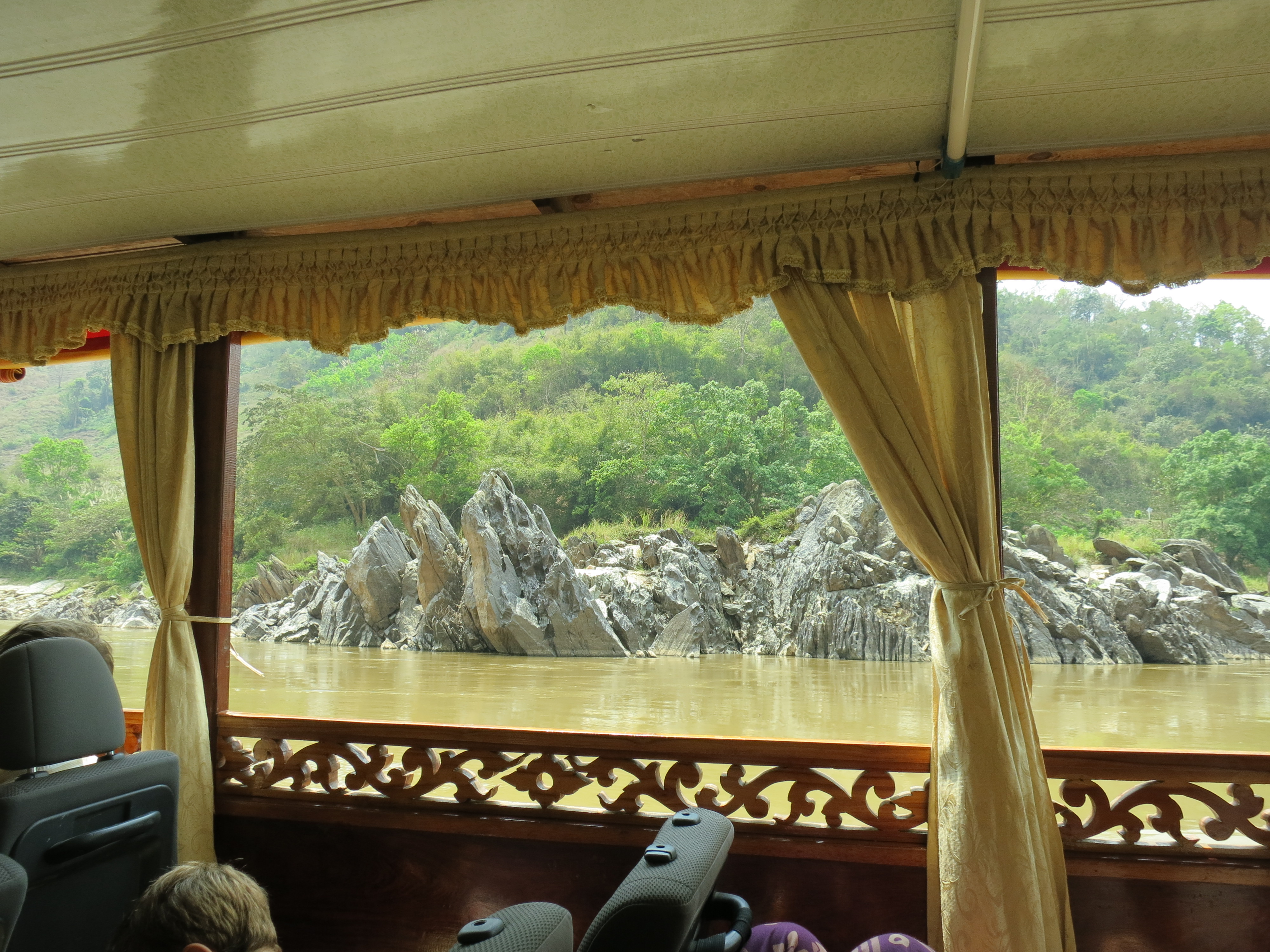
Decorative touches
The family running the boat on the first day included two brothers several years apart (the older one tormenting the younger one, much to the younger one’s delight), and an adorable toddler with her hair up in three bouncy pigtails. They were friendly with a lot of the customers they met at the stops along the way; we picked up a few passengers at the tiny villages we passed, but mostly we loaded and unloaded goods that needed moving.

The banks of the river were hilly, covered in green grasses and trees, the occasional palm, some brown shrubs, a few patches of slash-and-burned forest, and clumps of what looked like birch trees with maybe three brown leaves each. For the most part it was pretty calm, but we did pass little whirlpools often, like the current was so overwhelmed with the size of the river that it couldn’t decide which way to go. The banks often had sand, and it was the fine white-brown sand of a lake or ocean beach, not what I’d expect to find on a river bank. Large gray rocks collected along the edge, many glittering in the sun in a way that made it seem like there must be shiny minerals in there.
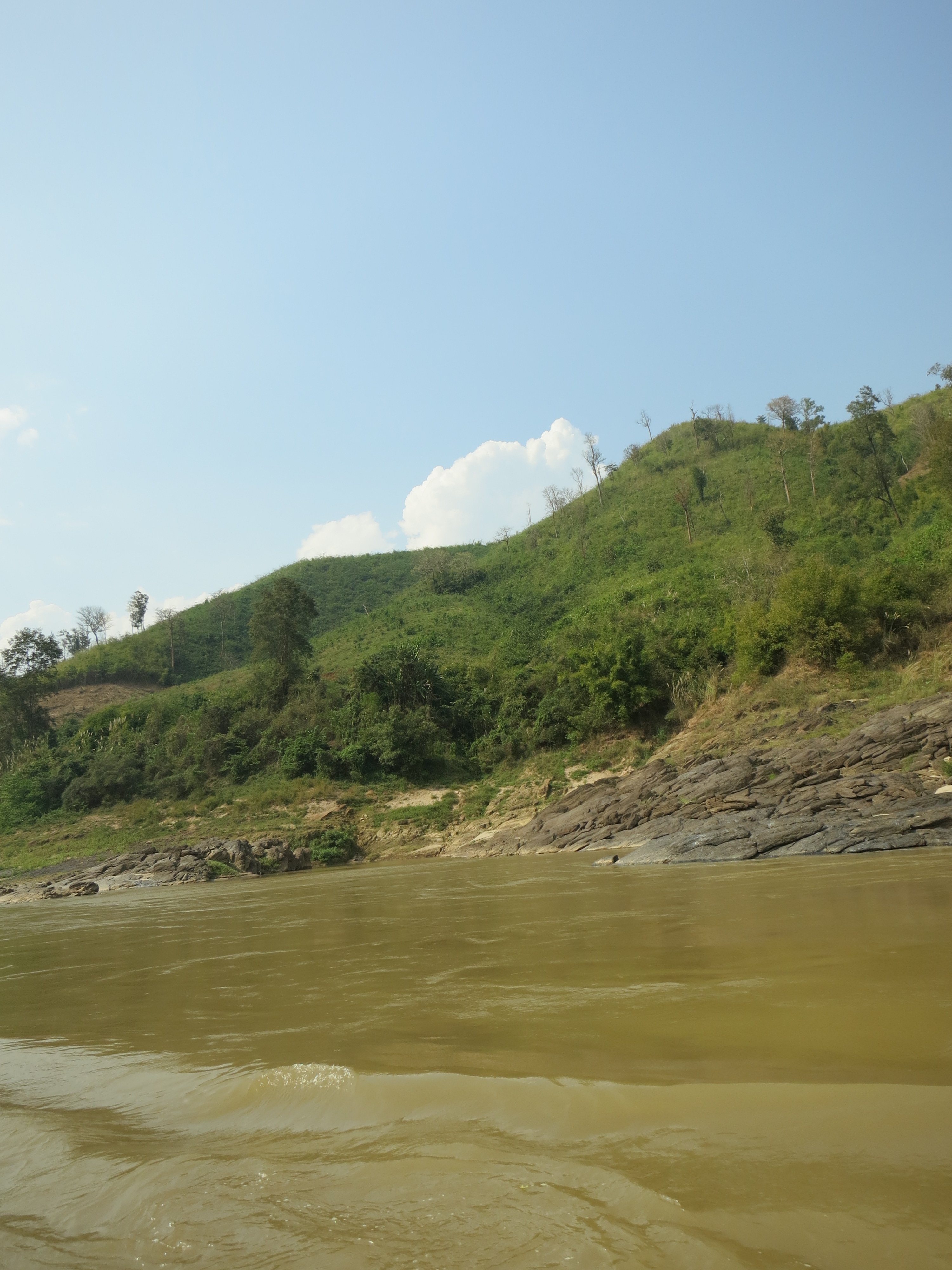
We passed villages up on the hills, and depending on how big the village was (12-30 buildings), there was a dirt path up the hill or a set of stairs carved into it and bolstered by logs, or sometimes cement stairs. All the villages had houseboats looking just like ours tied up by them; many of them had orange satellite dishes on top of them. Also lots of little skiffs, the long, skinny boats no more than a butt’s width across. All the boats are painted blues and greens, no plain wood.

A village
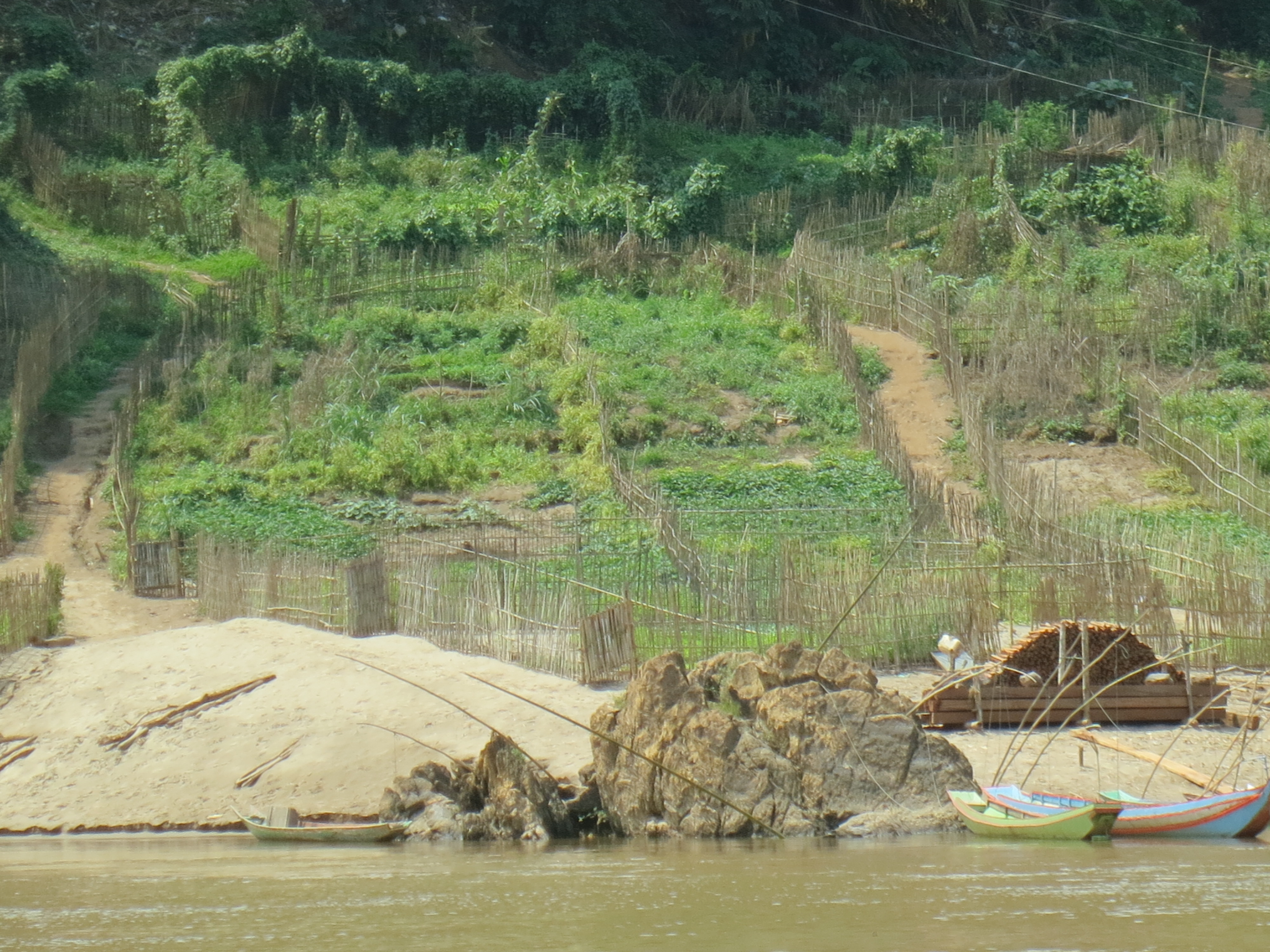
Gardens
There were often people along the bank when we went past. Some were children, the girls in traditional long wrap skirts and t-shirts, the boys in t-shirts and shorts, or sometimes naked. Some kids waved at us, some stared. The men and women pulled in fishing nets—sometimes men dozed on the rocks, dozing next to their fishing poles, which are long bamboo poles with a line or net dipping into the water. There were plots of land fenced off with something growing inside, maybe lettuce? These little gardens ran down almost to the river.

Fishing poles
On my second day, away from the engine, I could hear the constant rush of the water as we slid through it. I could smell the vegetation from the banks (and also, unfortunately, the cigarette smoke from the many, many Europeans lighting up around me). The uniformly brown river was pretty free of trash. Butterflies were everywhere, mostly white ones flittering around the whirlpools and off across the water. It was colder than expected on the second day. After bathing in my own sweat back by the engine (and in the tropics in general), I was surprised to find that I needed my long-sleeved shirt up front, as I might have done on a boat ride anywhere else.

View from dinner
On our stopover in Pakbeng, the main street had no electricity for several hours, and this was before the terrific thunderstorm that started up during my delicious Indian dinner. Candlelit dinner quickly turned into flashes of lightning dinner, and I stared out over the hill at this magnificent storm along the surging river as my beer grew warm. Luckily, the electricity came back later that night, because the A/C I’d paid extra for was definitely necessary.

Climbing up to Pakbeng
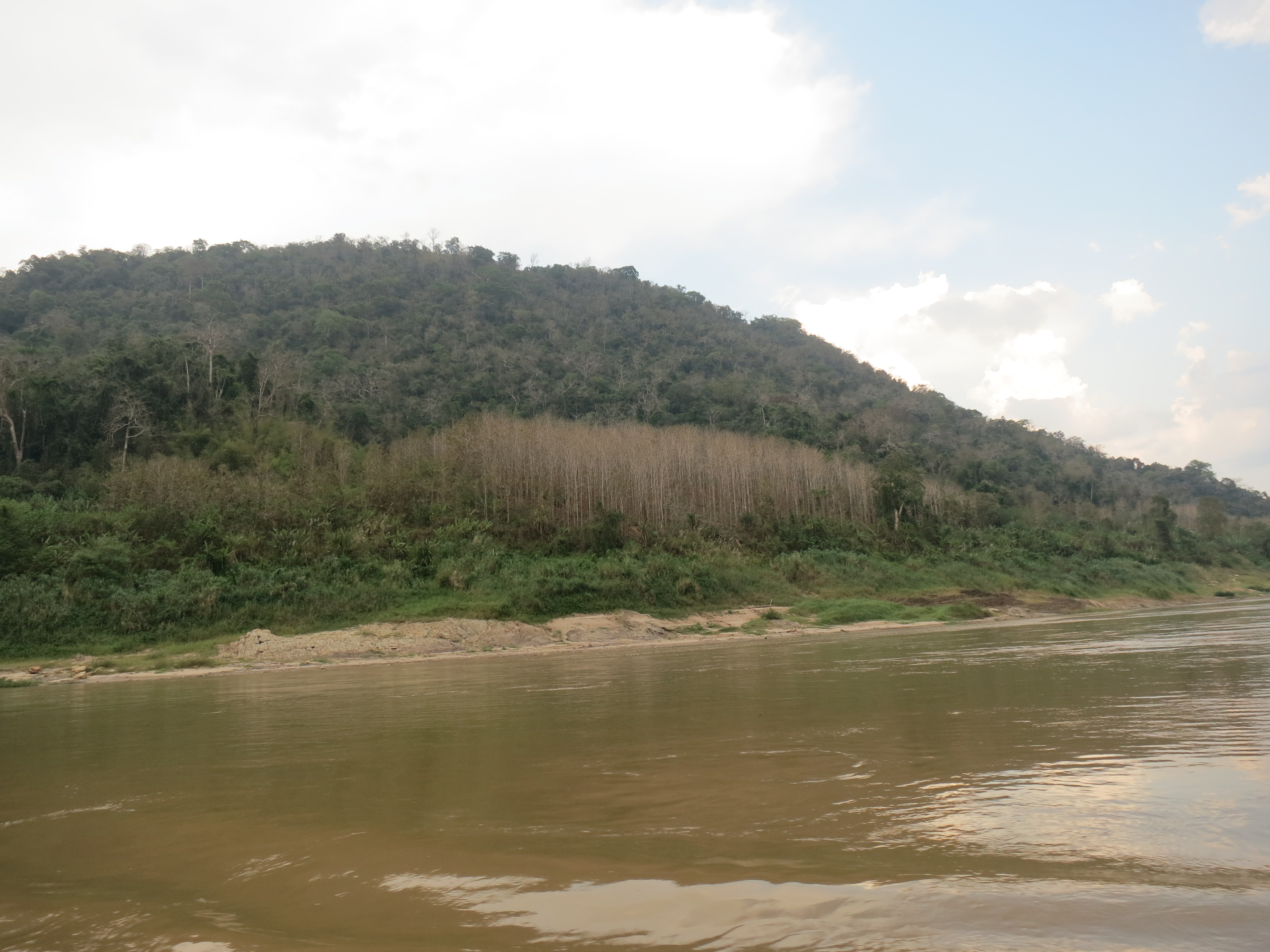
If you’re headed to Luang Prabang from Thailand, or vice versa, and you have the time and the patience for it, I’d recommend the slow boat. If you need to be forced into relaxation, this is the ride for you. If you’re already lazy like me, these are the two days you’ve been looking for.


