
Posadas, Argentina; June 12, 2014

Posadas, Argentina; June 12, 2014
It took til midsummer, but I finally got to my first festival of this year. Brockwell Park, in southwest London, has hosted the Lambeth Country Show for the last forty years. It’s a big ol’ party, with a large music tent, a crafts area, booths for various charities, tons of food stalls, and a farm and livestock area. People from all over the district come to have a day out in the country in the middle of London.

That’s an English place–bouncy castles and church spires

Tasty meatballs stand

Fuuuun!
The excellent Liz, who along with her flatmates is hosting me in London this summer, was working at the Bee Urban tent. Bee Urban keeps bees at a lodge in the city, and it educates people on how to plant flowers that will attract bees. I helped out at their candle-rolling station, showing five-year-olds how to press the wick into the wax and carefully roll it up and stick it with a pin to keep it all in place. The kids were all adorable, and so pleased with what they created.

Let’s make candles
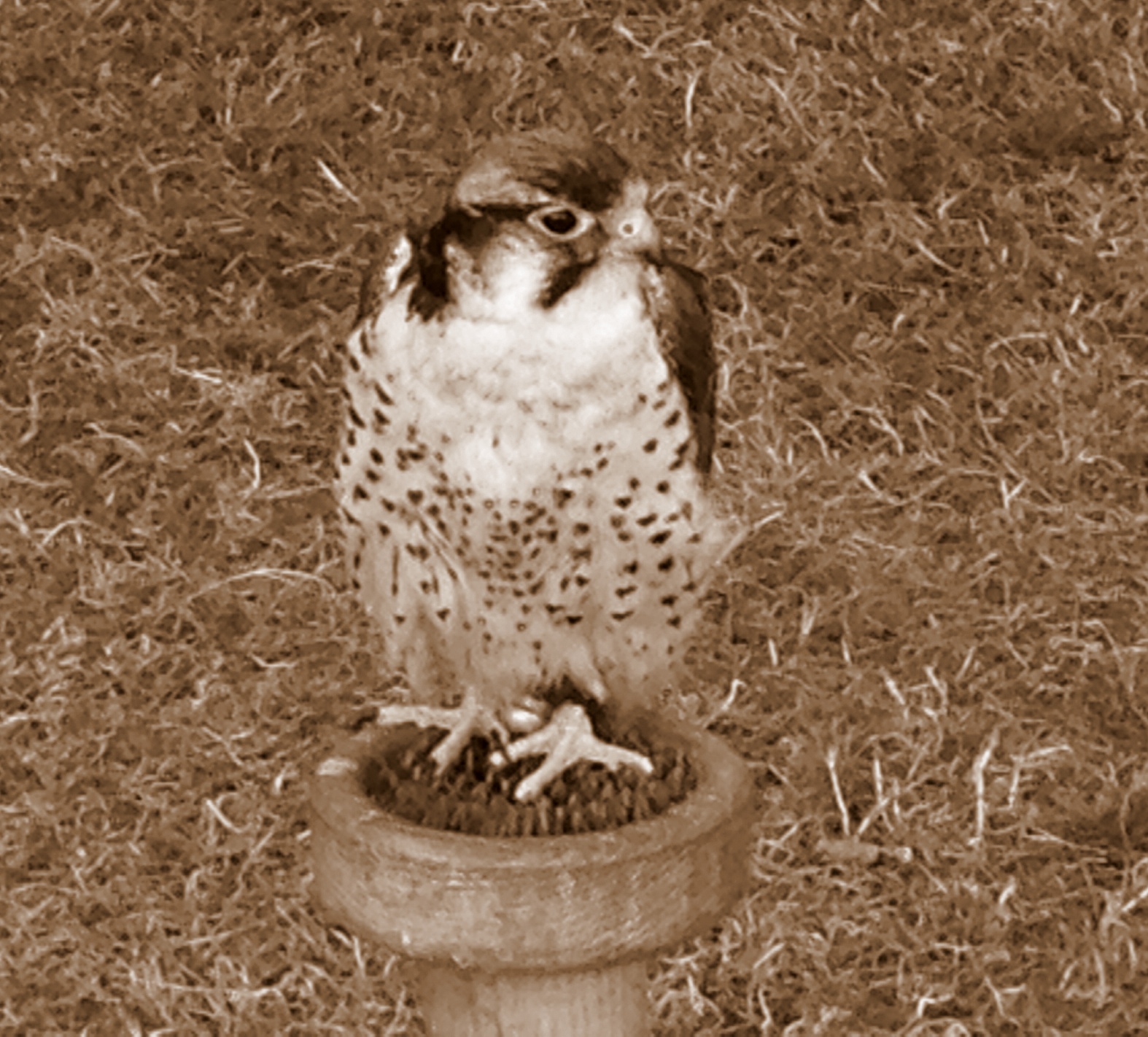
Various tents had falcons, geese, and owls
Naturally, when we heard there was camel racing, we had to go see that. The announcer was great, nonstop chatter about the camels and their jockeys. Her favorite camel was Bertie, the youngest of them all, with the longest legs, which shows promise for speed in the future, but for now, Bertie hardly knew what to do with them. He galloped like kids do when they’re pretending to be horses–galump, galump–not the smoother pace of the older camels. Maybe next year he’ll be a winner.

The race started when the four camels were more or less facing the same direction
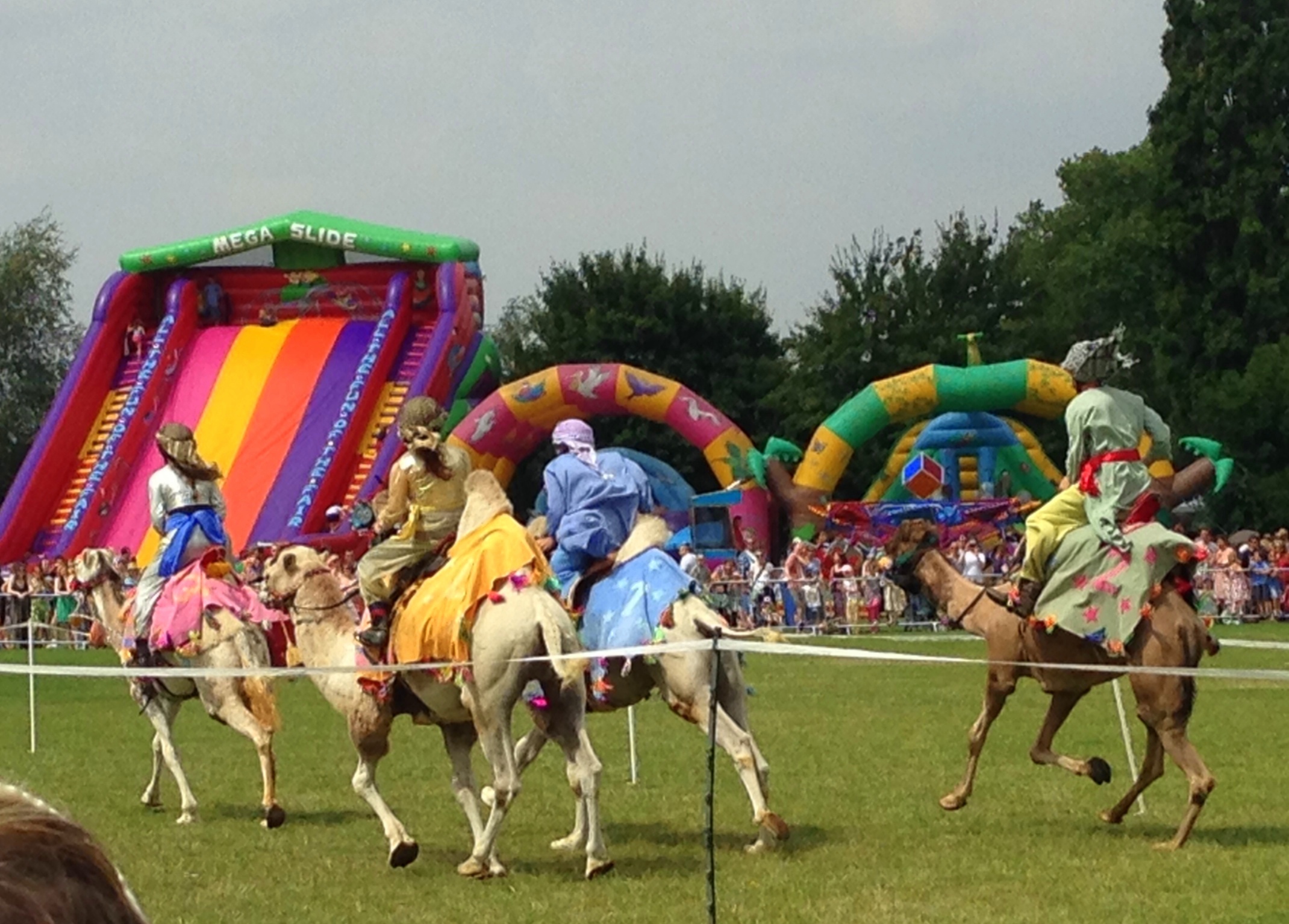
For once, Bertie was not last
I ate a pork-and-stuffing-and-applesauce sandwich (delicious), lay on the grass in the summer sun and listened to classic reggae (blissful), and watched dozens of kids running around gleefully, their faces painted and their hands sticky with sweets (beyond adorable). It was a perfect festival day, right up until the point the skies opened up and drenched everyone in rain so torrential that the fair was closed only about twenty minutes later. Even that is kind of part of the full festival experience, though, isn’t it?

We took shelter under the sweets tent when the rain started; not a bad way to pass the time
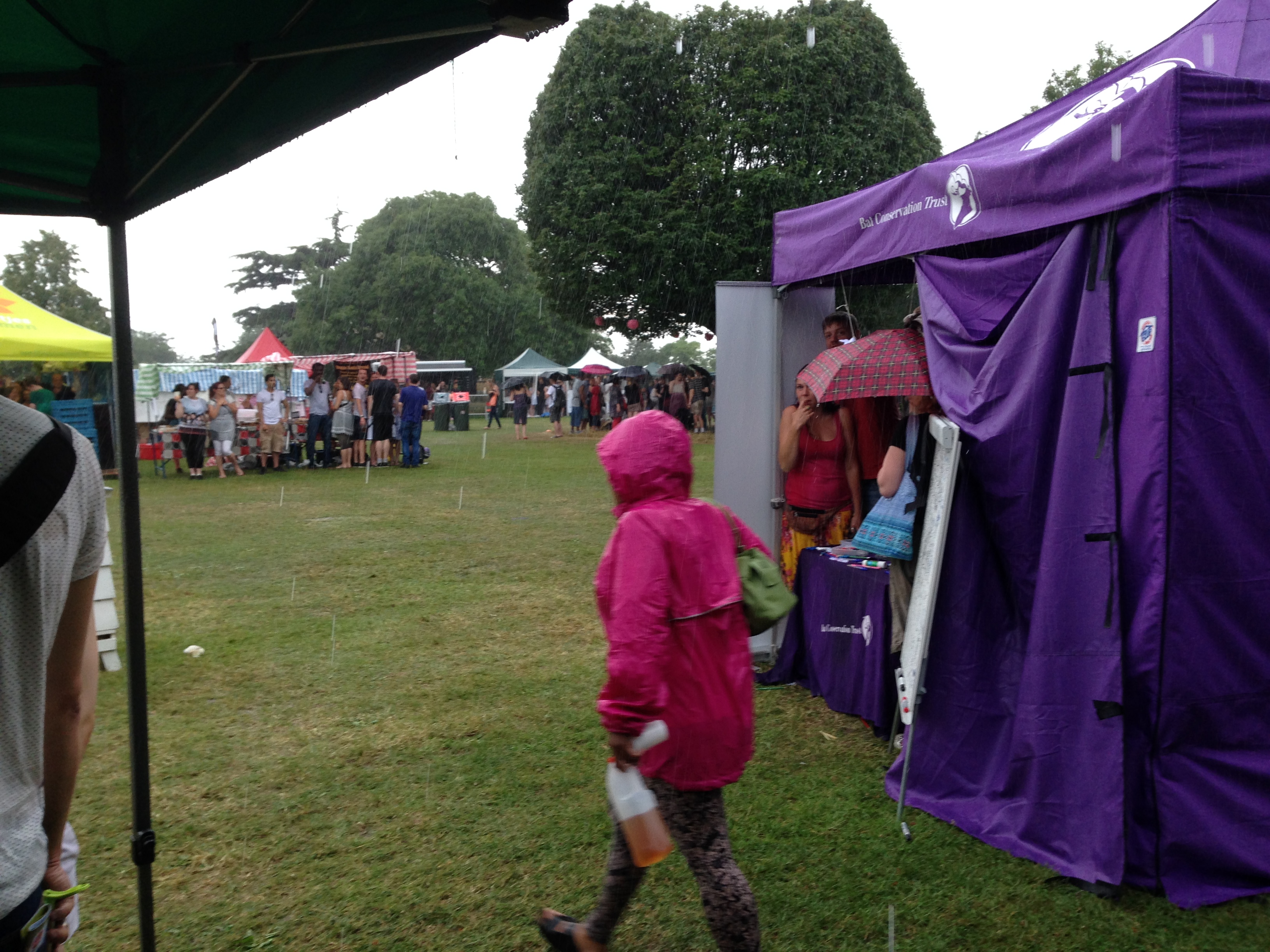
Luckily, we’d brought towels in case we went swimming, so we got warm during the downpour
I found a baggie of British coins in my things when I was packing at my parents’ house a week ago, and I put the whole thing in my backpack, figuring I’d use it all up when I got to England. It made my bag noticeably heavier, but no matter, it’ll all be gone soon, right?
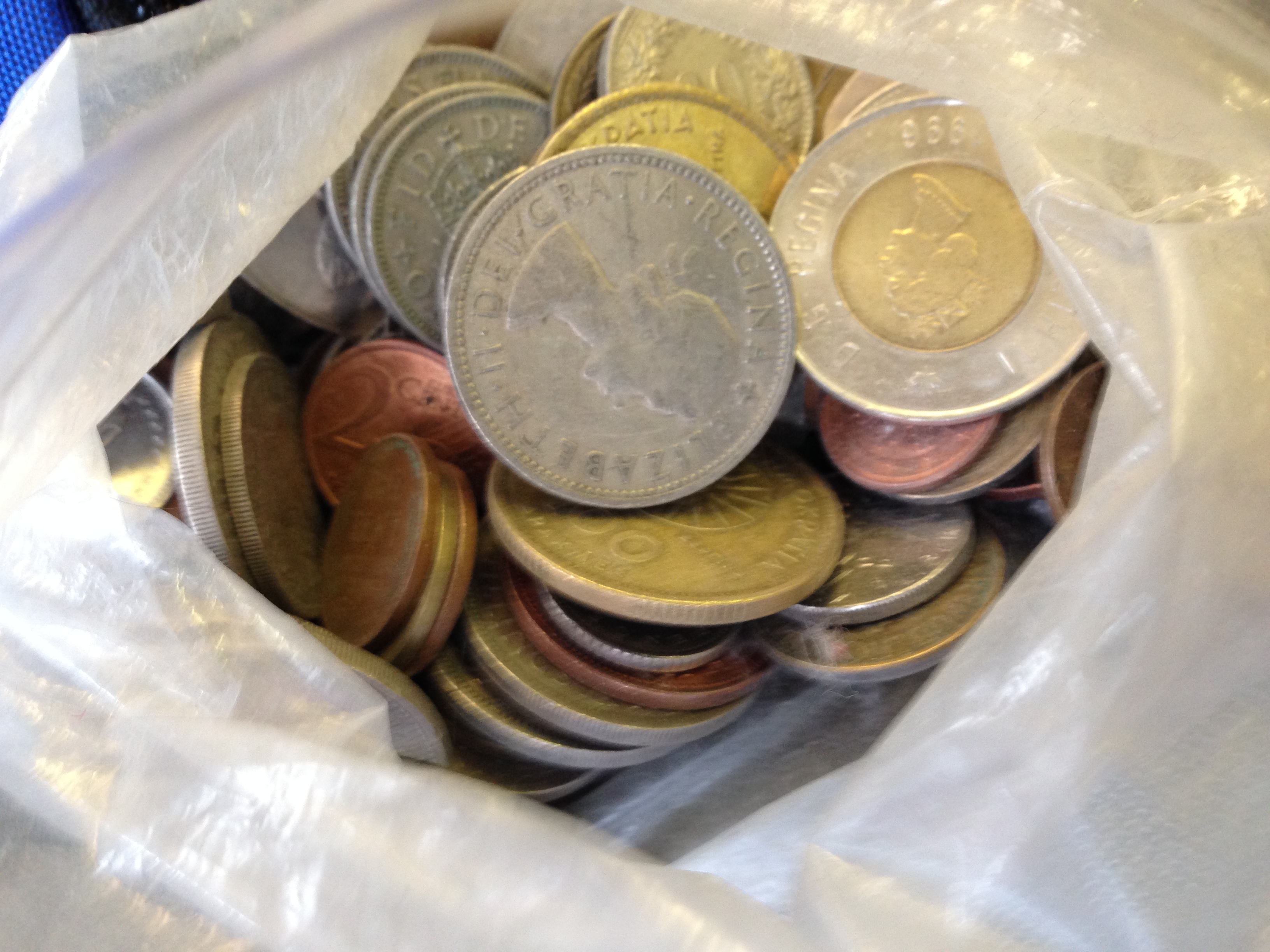
Several pounds’ worth of pounds–get it?!
When I opened up the bag on the train into London, to count how much I had, I found that about two-thirds of the coins were from my first solo trip, when I collected coins from different European countries before the euro went into effect. Oops, that’s a lot of dead weight I’m carrying around.

Sunset, Somewhere over Chile or Peru

San Ignacio Mission, Argentina; June 17, 2014
The port town of Guayaquil is the largest city in Ecuador, and it’s one of the oldest cities as well. It’s been the site of many a battle through the years, including skirmishes with pirates and fights for independence from Spain. This contributes to the rough and ready reputation the city and its citizens have, and most people I met there were half-proud, half-sheepish about that reputation. Sure, it doesn’t have the polish of Cuenca or the political importance of Quito, but people from Guayaquil wouldn’t want to be from anywhere else.

Official seal
El malecon is a revamped stretch of waterfront, a long, rather sterile boardwalk containing statues of past leaders, a botanic garden, a children’s play area, a couple restaurants, and a large clock tower. I liked the part of the walkway built to resemble sails of a ship, and the odd sculptures representing the four elements. The climate of Guayaquil is perfect for the botanic gardens, which sagged with the weight of giant green leaves and bright flowers in the humid heat.
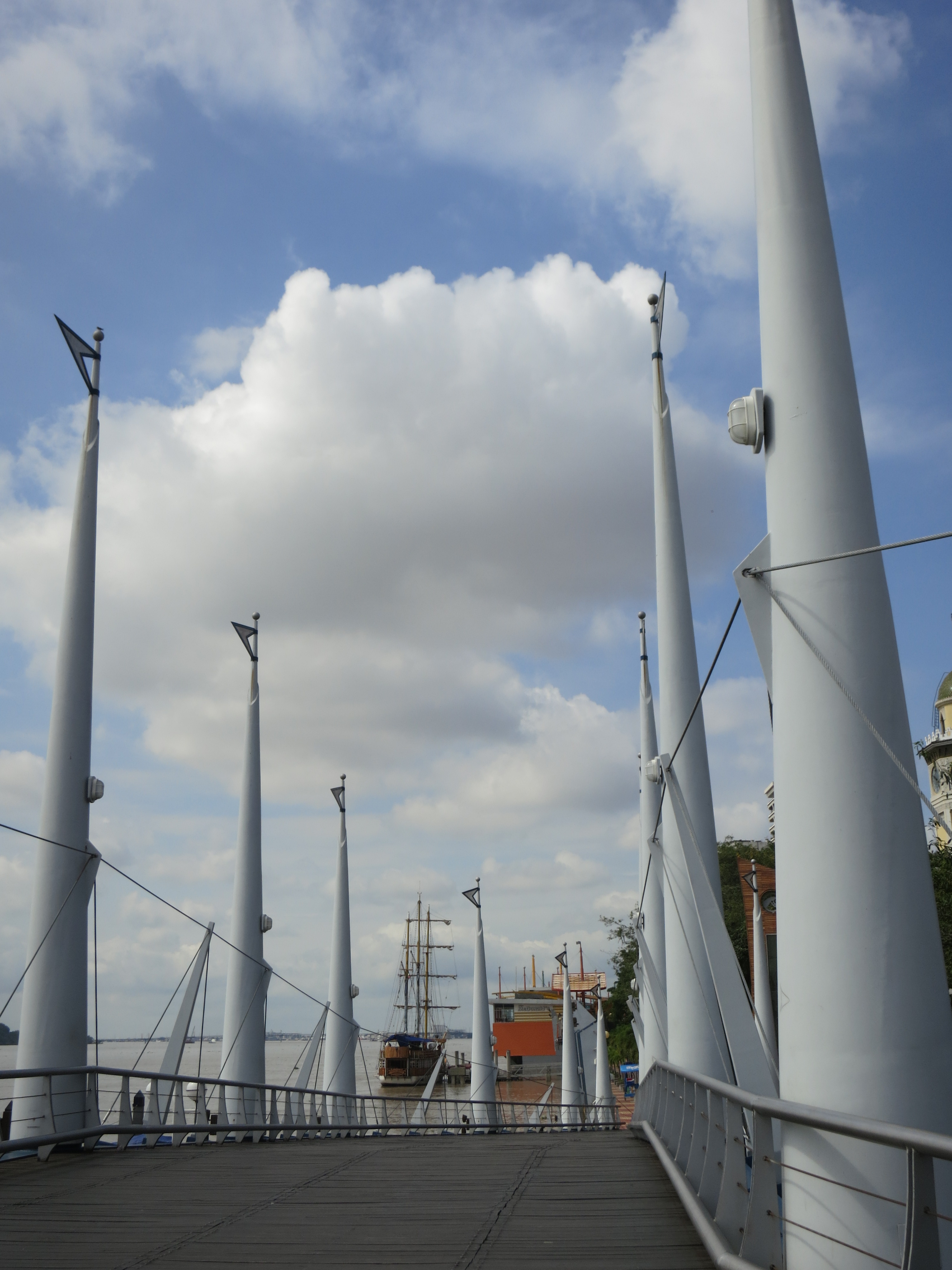
Masts along the walkway
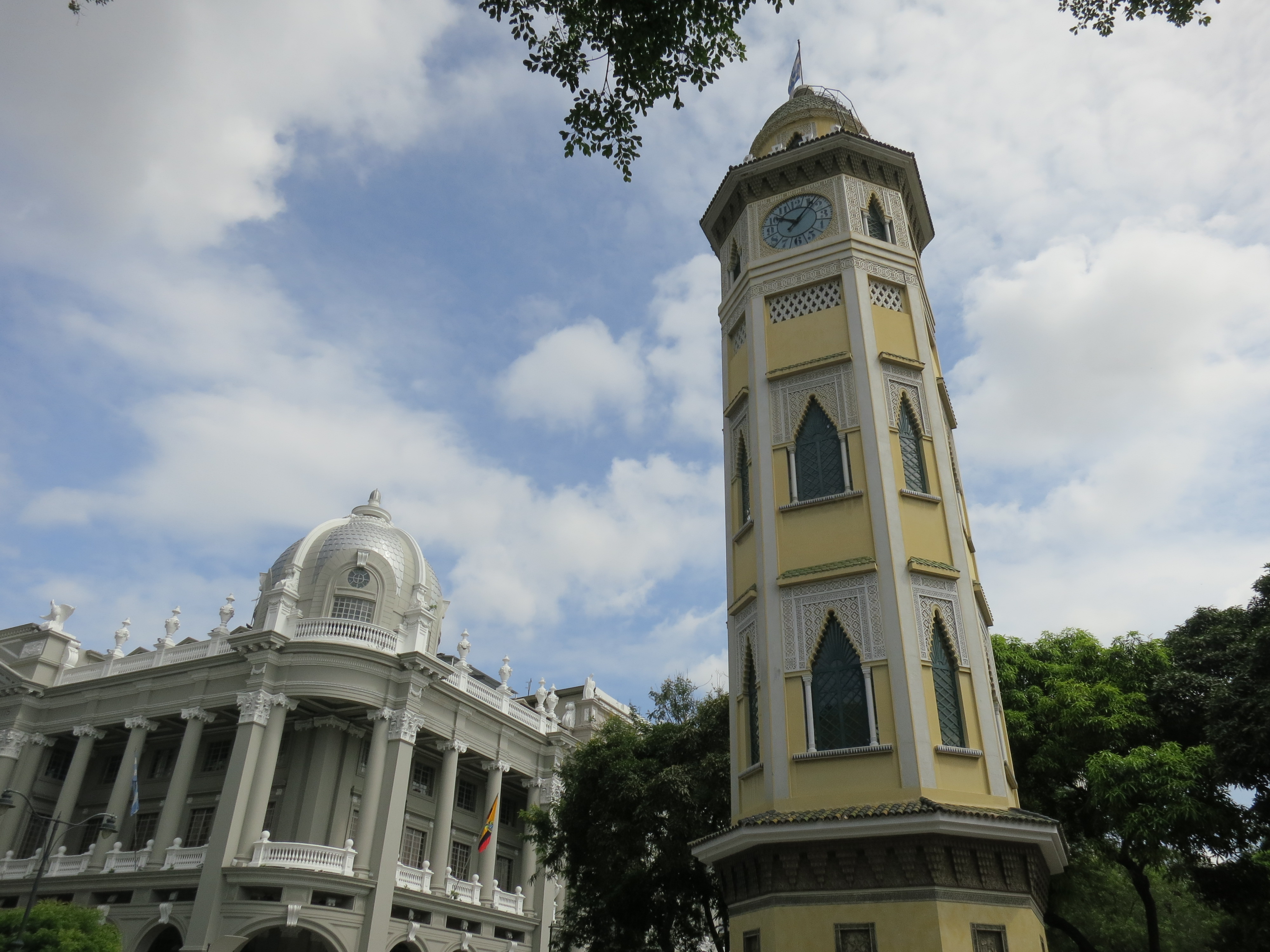
Clock tower, and across the road, an attractive government building

Botanic garden
Over a hundred years ago, some iguanas made the plaza in front of the cathedral their home, and since then, it’s unofficially been known as the iguana plaza. There are signs everywhere asking people not to touch the animals, which were roundly ignored by most visitors to the plaza. I did have to watch my step in there–most of the iguanas lounge on the fenced-off areas, but a few decide to leisurely move to another grassy knoll, usually stopping in the middle of the pathway for reasons known only to them. I’m used to seeing pigeons or squirrels take over a public area, but this was the first time I’d seen reptiles be the local pest.


My friend Andy, a native of the city, took me to the Parque Historical, which is a combination outdoor museum and zoo. The zoo area was closed when we visited (the animals are given a day of rest every week, which I think is great), but we were able to see the outside of the hacienda and the reconstructed villagers’ house on stilts. Behind the stilt house, we watched pigs rooting around in their feed and ducks splashing in water. Andy showed me the cocoa beans, which have to be dried in the sun before they’re ground up and used for chocolate. He identified a lot of plants for me, which I always find impressive, as I can maybe name five plants native to my home.

All aboard

Finally, I spent a little time in Las Peñas. This is the oldest part of the city, a collection of colorful buildings on a hilltop at the end of el malecon. As is true in formerly rough waterfront areas in just about every city I’ve been to, the city leaders have put a lot of money into cleaning it up and bringing tourists in. I didn’t get to experience the nightlife there, but it’s meant to be really fun. As it was, I bought some souvenirs at the large artisan’s market and walked down the oldest street in town (cobblestoned, of course).
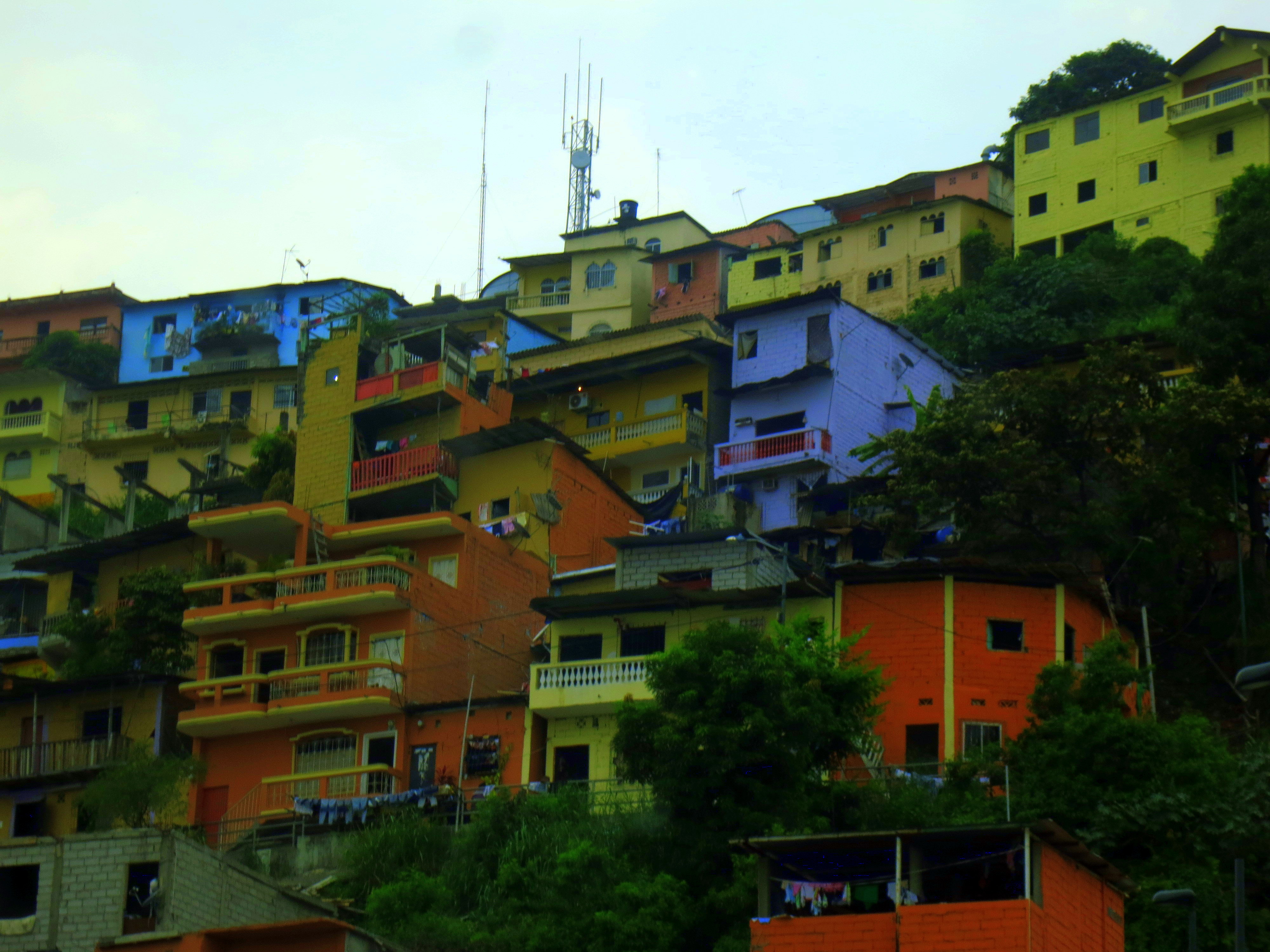
Las Peñas
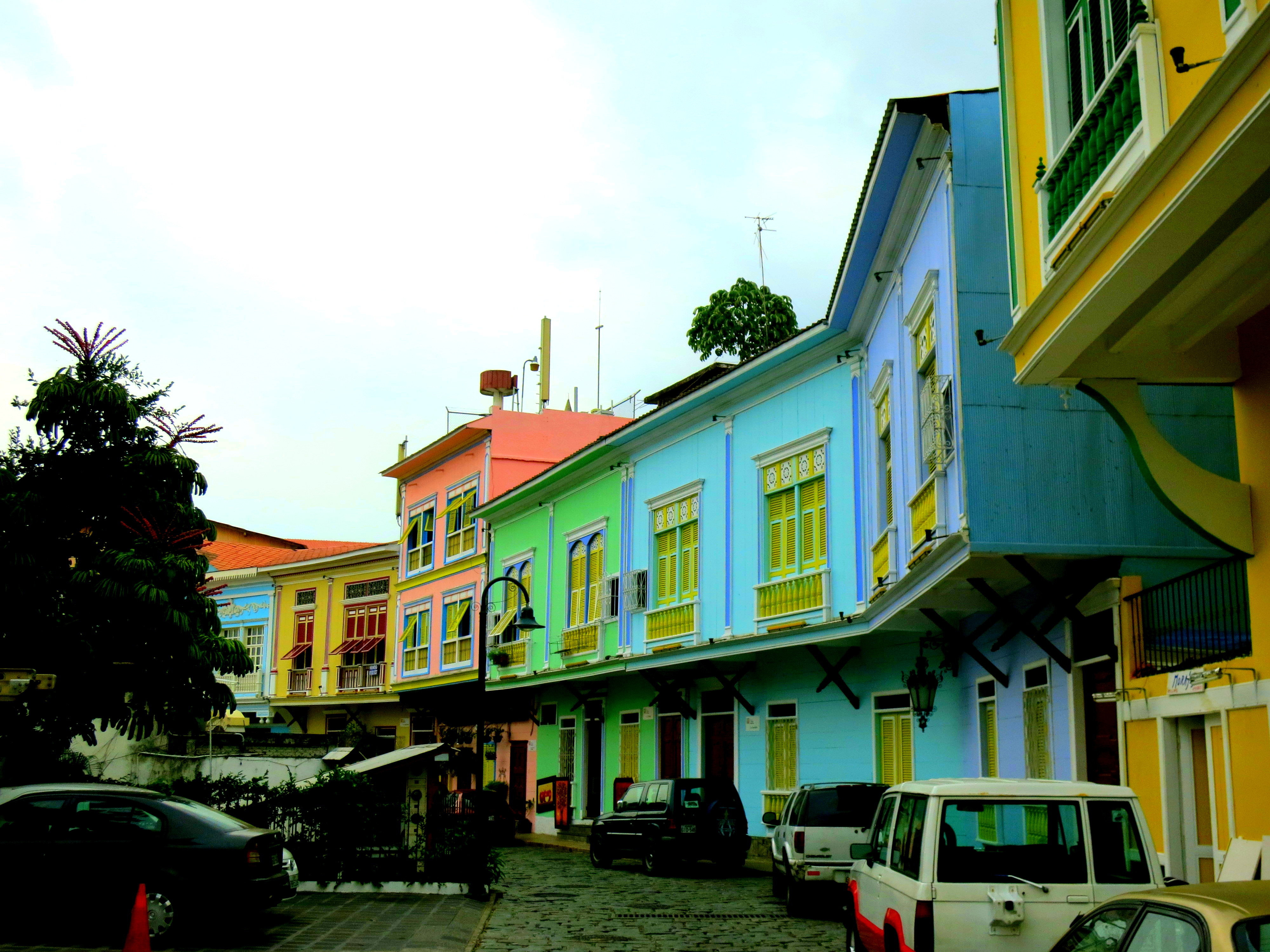
A lot of people, myself included, use Guayaquil as just a stopover on their way to other places, but from what I’ve seen, it’s worth spending more time there and exploring the place that claims so many proud residents–not to mention noble iguanas.

A statue of Bolivar and San Martin shaking hands after agreeing to let Guayaquil stay with Ecuador rather than be annexed to Peru after liberation from Spain
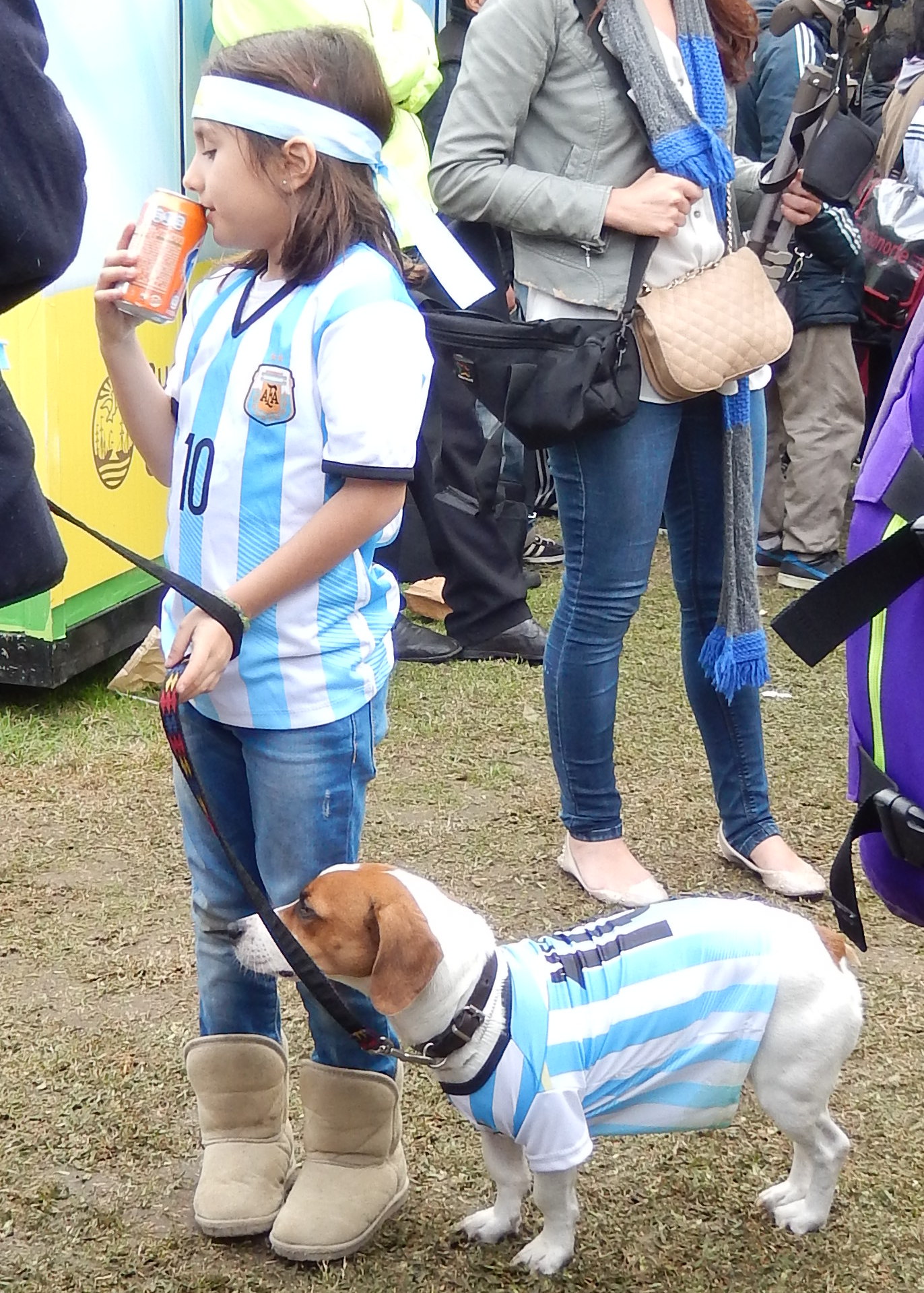
Buenos Aires, Argentina; June 25, 2014
VAMOS ARGENTINA!
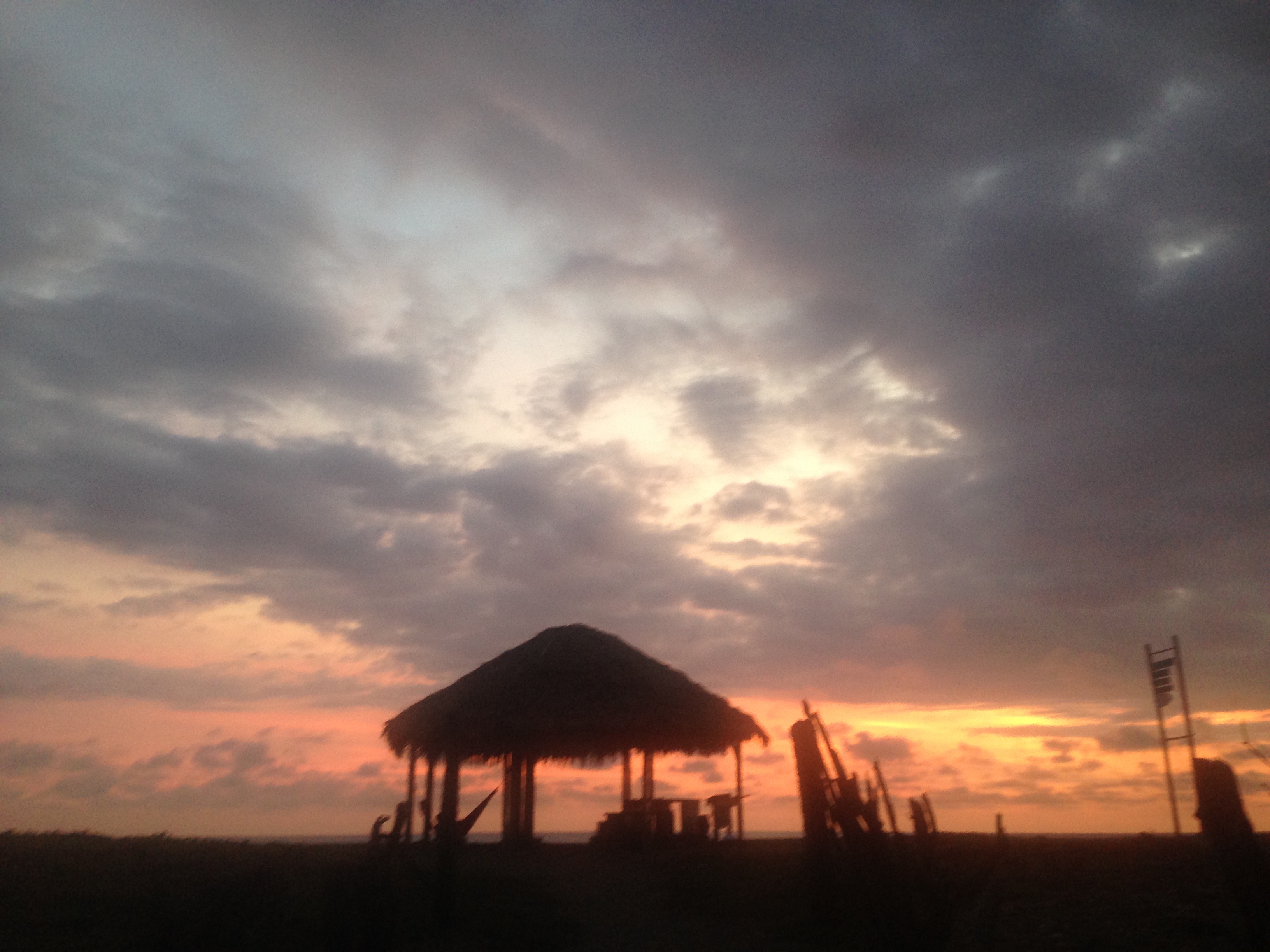
Sunset, Las Tunas, Ecuador

Sucre, Bolivia; June 25, 2014

Sunset, between Puerto Iguazu and Buenos Aires, Argentina
 Stowaway Travel Writing & Editorial Services