Tourist Hot Spots in Taupo

Bad wordplay in the title! Liz and I did go to a lot of tourist spots in Taupo, and they’re hot because like Rotorua, Taupo sits on a lot of thermal activity and it’s even near some volcanoes. In fact, we had to get up early the morning we were leaving town, because the woman we stayed with had to catch a flight up to the nearby volcano to study its latest rumblings.
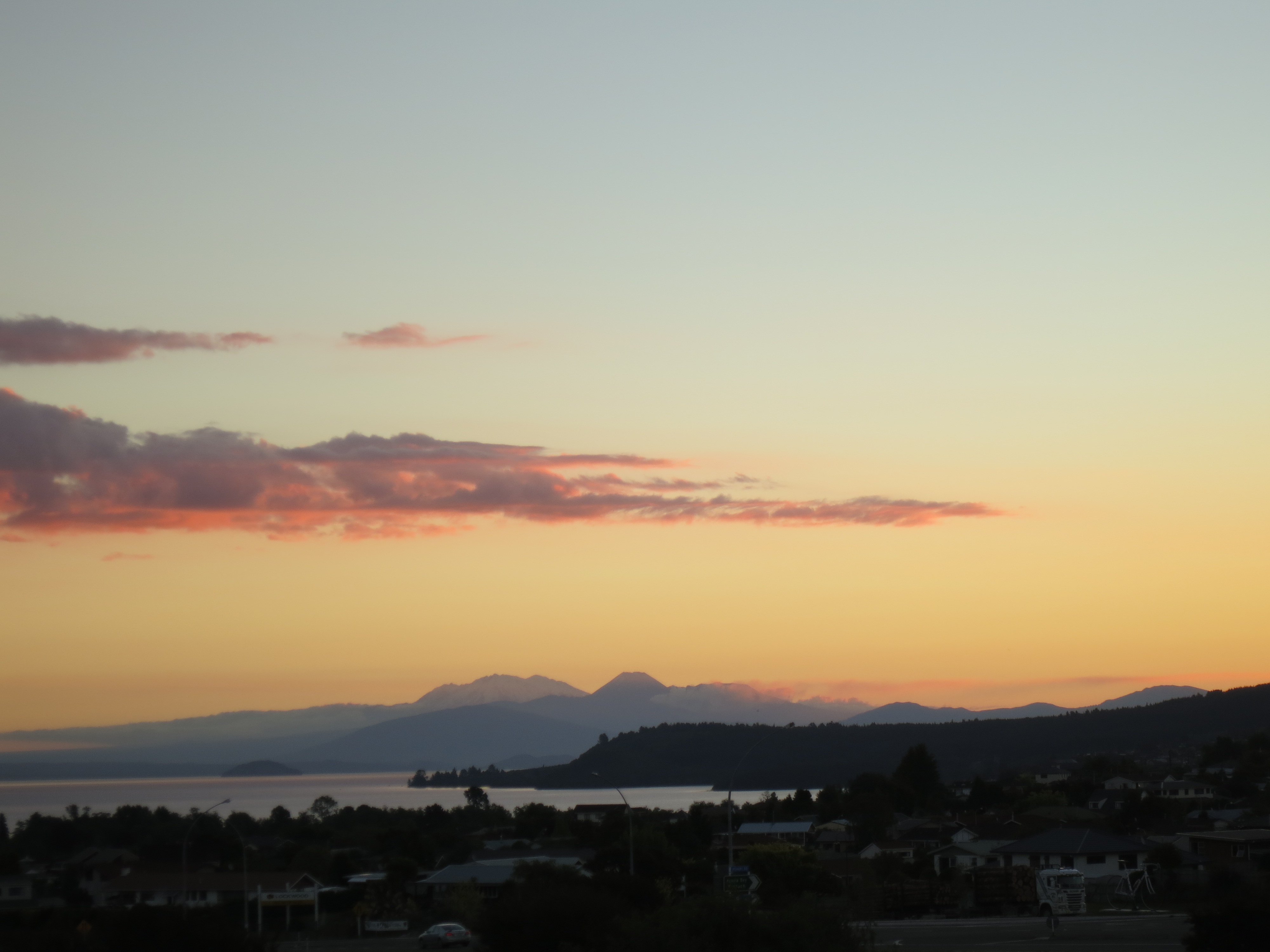
Volcanoes in the distance from a Taupo lookout point

Volcanoes in the distance from a Taupo lookout point

The main tourist places in Taupo are all clustered along the same road, so Liz and I just worked our way down the road until it was time for dinner. First, we stopped by Huka Falls, which is one of the most visited places in New Zealand; its incredibly easy access probably has something to do with that–cross the parking lot and walk 20 feet to the bridge that spans the narrow chute of water rushing through and turning the most wonderful shade of blue. Apparently the air bubbles caused by the rapidly moving water (the river narrows from 100 meters to 15 meters across for this little bit, and then empties into almost 100 meters again) intensify the effect of the clear water reflecting blue light, and voila, a waterfall the color of a swimming pool. It was gorgeous to look at.
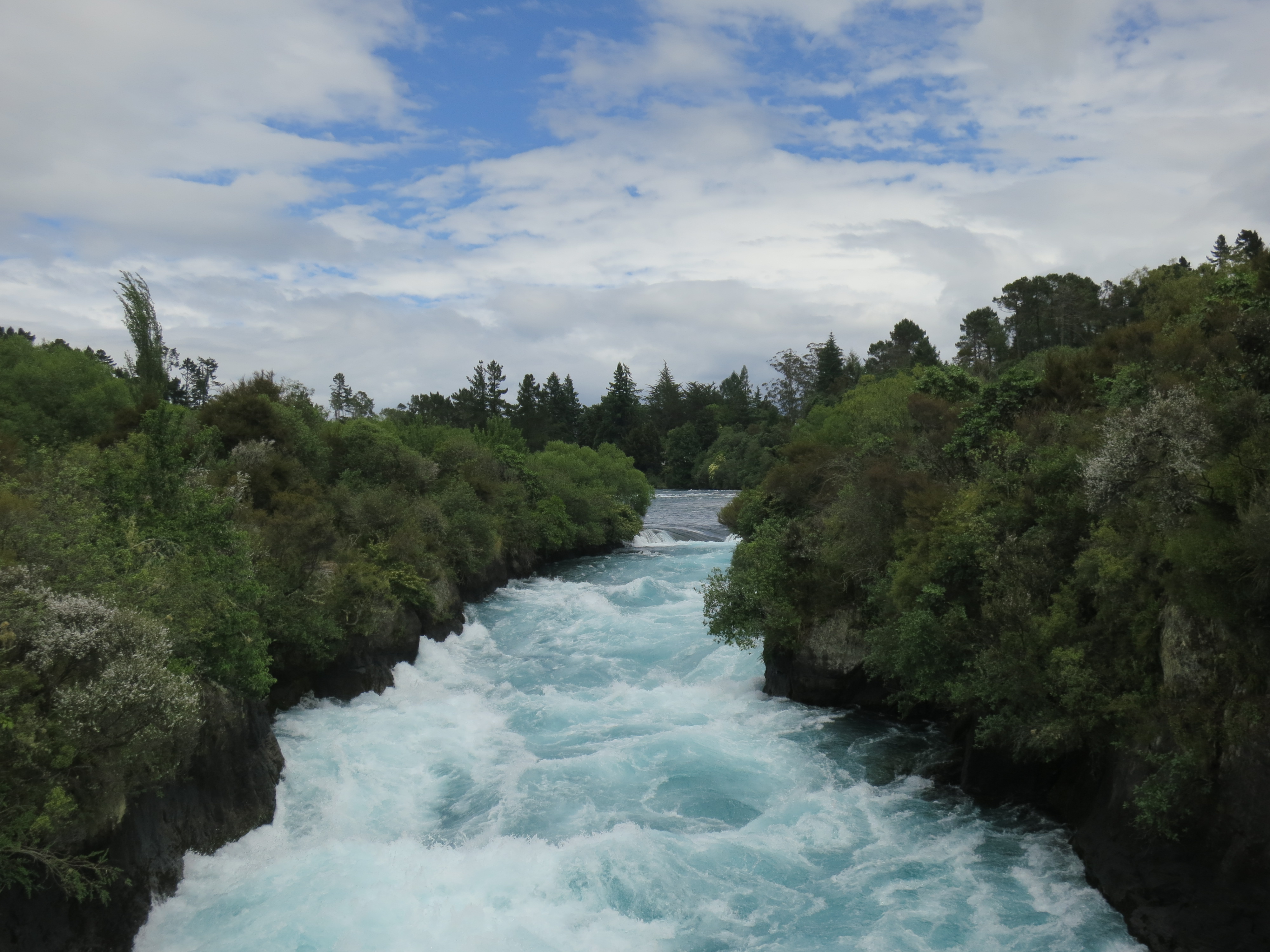
Not photoshopped

Not photoshopped

We drove for five minutes and stopped in at Craters of the Moon. There are indeed several craters here, but many hardy plants cover the land between the craters, so it’s much greener than I understand the moon to be. It was still a little otherworldly to stroll along the boardwalk around the park, though. Steam rose from the ground in a steady stream from various vents, and yellow signs warned us that steam burns, which was awfully thoughtful. The earth in the craters was gray and cracked, mud that had dried in the extreme heat. One of the craters had a little bit of mud bubbling at one end of it, and I kept waiting for an ancient lizard to crawl out of the ooze. Maybe that’s what the park was like, actually–prehistoric.
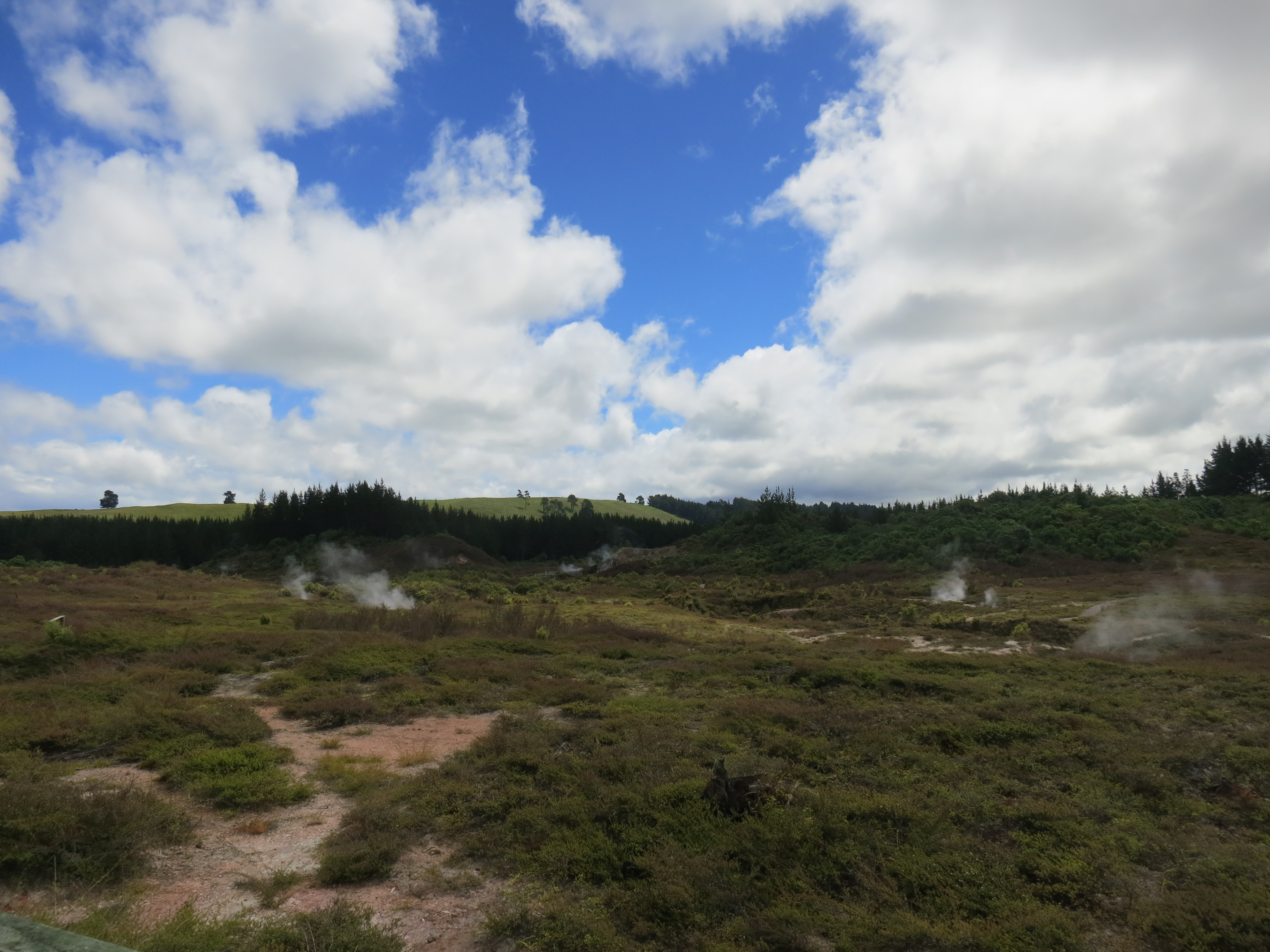
A grassy moonscape

A grassy moonscape

We decided to extend the walk a little bit and hike up the small hill at one end to get a view of the whole park, and as we started out I saw Liz check her watch, which I’d noticed she’d been doing throughout the walk. Turns out that her wilderness adventuring instincts are strong, and she always times how long it takes to do any kind of walk, a precaution necessary when hiking up mountains so you can estimate how long it will take you to go back down again. And here I’d been dawdling along the boardwalk at my usual slow pace! She laughed and said it didn’t actually matter how long it took, and we continued on our way, each a little more knowledgeable of the other, the way you get when you travel with someone.
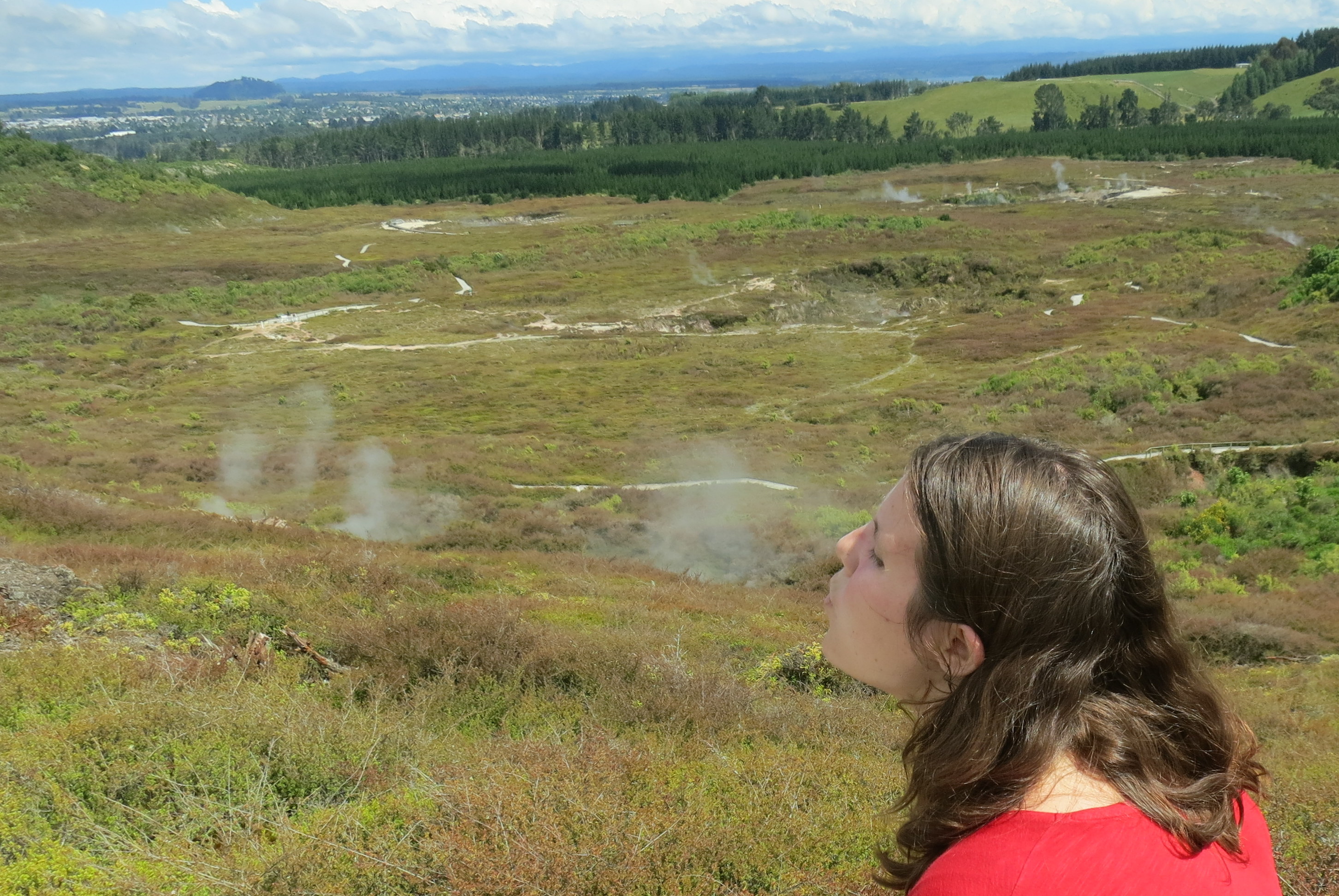
And then I turned into a fire-breathing dragon

And then I turned into a fire-breathing dragon

Our last stop of the day before finding our host’s home was at the most blatant cash grab of our trip so far. We went to the Honey Hive, which is a large showroom of honey products of all kinds–soaps, lotions, liqueurs, ice creams, chocolates, etc. Manuka honey, made from the manuka tree’s beautiful flower, is a big deal in New Zealand, and I bought some small gifts for my hosts further on down the line. We sampled the liqueurs, had an ice cream, and squeezed ourselves into a spot made for 8-year-olds for a silly photo.
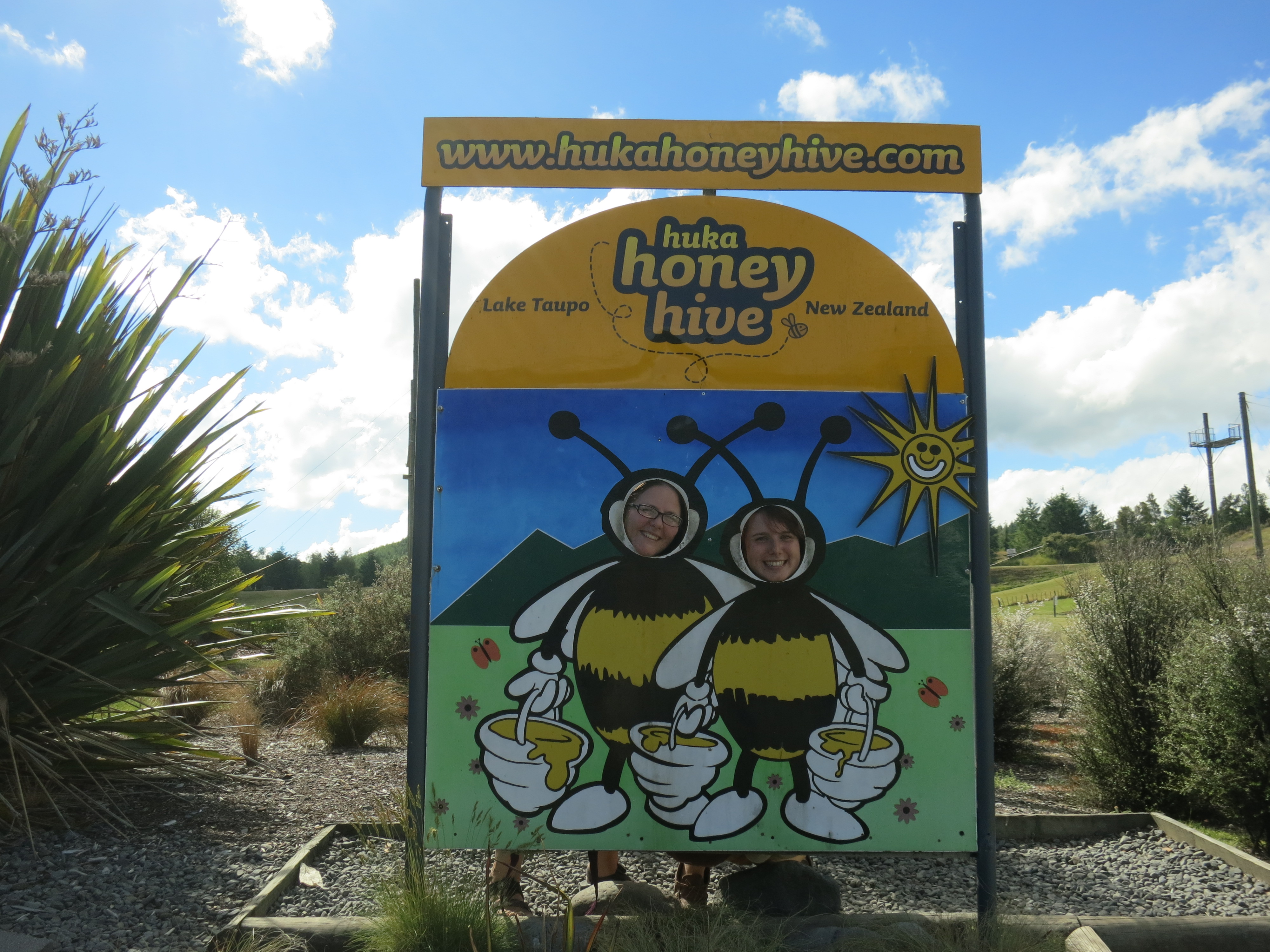
Bzzzt travel buddies! (Apologies)

Bzzzt travel buddies! (Apologies)

The next morning, our host told us about a free hot springs nearby, and after our success with the free spot in Rotorua, we were eager to try this one out. Spa Park is a big park with different sections. One area had a playground, and evidently some kind of event was taking place, because it was crawling with more kids and parents than usual. A short walk down a hill takes you to the banks of the Waikato River. If you cross the little wooden bridge there and keep walking for an hour or so, you come to Huka Falls. We stopped at the wooden bridge and ducked under it to sit in the tiny little pools created by tiny little waterfalls there. It was super hot and we had to move between the little pools and the main river to regulate our body temperature. We’d passed a few people on their way out on our way in, but when we got there at around 9 in the morning it was just us, the clear blue sky, and the free spa of the hot springs.

Smiles you can only find on vacationers who've just found a free spa along a river

Smiles you can only find on vacationers who’ve just found hot springs along a river

We did get out eventually, and by the looks of our lobster-red legs, not a moment too soon! We drove out of town to a sky dive place, where I sat in the shade and watched Liz leap from a plane at 15,000 feet and float back down to the earth. We didn’t know, it but it was the last good weather we’d have for several days; our final impression of the area was a calm blue lake reflecting a clear blue sky caught in our rearview mirror.

Til next time, Taupo

Til next time, Taupo
The Second Letdown of the Trip: Waitomo Caves

The first letdown, of course, was the very mixed bag that was the trip to Fraser Island in Australia. The fact that I’ve only had two disappointing tourist experiences in the first four months of travel strikes me as a really good record. Waitomo Caves is a major tourist attraction in the Waikato region of New Zealand, and it’s an efficient operation. But the tour I took wasn’t really worth what I paid for it.

Exiting the Waitomo Caves

Exiting the Waitomo Caves

The caves were known to the Maori of the area for years, but it wasn’t until a Pakeha and his Maori guide saw the caves in 1887 that tours started arriving. There have been tours here pretty much ever since. There are several different tours to take, and a couple different cave systems with different kinds of formations. I went on the main tour, although there are three to choose from, and you can combine them in different packages. (You can also go on a black water tour, which involves spelunking, floating, and abseiling. That’s the one Liz went on, and she loved it, but I’m too unfit and claustrophobic to attempt it.)

My tour went down to the caves with a quiet older Maori man, and he took us through the caves, which are a lovely white-ish color. (Photos weren’t allowed in the caves at all until just as we were leaving.) He showed us different stalagmites and stalactites, and pointed out the ones that looked like animals and pipe organs. He stood us in the center of the cave and sang us an old Maori song. The acoustics right there are perfect; they’ve held opera concerts there.

Next, he showed us some glowworms in a corner of the cave and talked about their lifecycle, how the shimmery blue color we see is the long, sticky line of the nesting larva, so it can feed. The larva grows for nine months before entering the pupa stage, emerging, mating, and then, of course, dying, as insects do.

Finally, we walked down some steps and entered a dark part of the cave. Here, we were told to keep as quiet as we could, to preserve the mystery of the boat ride. Our guide stood at the bow and moved the boat slowly around the cave by pulling on guide cables strung from the ceiling. The glowworms were lovely, and the cave ceiling was a starry sky of bright blue.

It’s just, well, it was rather small, and the ride was rather short. The ads all showed pictures of a much larger cave, which frankly would have just been more magnificent. It was a smaller, shorter experience than I was expecting, and I suppose that’s the main part of it: expectations. I’d expected something a little different, and I’d paid almost $50, and I was disappointed when expectations didn’t match reality. It happens all the time, although as I said, not too much to me on this trip. Still, all that said, it was a beautiful sight, and gliding through the dark in a boat was a wonderful way to experience the luminescence.

Road Tripping Through Rotorua

I was lucky to go on several excellent road trips in New Zealand. After the Coromandel, I met up with a woman I met via a rideshare posting in Couchsurfing, and luckily for us, we hit it off right away. We would only end up traveling together for about nine days, but we packed a lot of fun and adventure into those nine days.

The Waikato countryside in New Zealand

The Waikato countryside in New Zealand

Liz is a 21-year-old from the Canadian side of Sault Ste Marie, and she had a few weeks of travel time before starting a job running outdoor education treks near Christchurch. She’d rented a car, and I joined her on the North Island before Christmas, and on the South Island afterward. I joined her in Rotorua, and right away we headed for the sights.

New Zealand is one of the newer land forms on Earth, and as such it’s still growing–earthquakes cracking up the land, thermal energy pulsing underneath the ground, the mud bubbling up and steam breathing through vents. The towns of Rotorua and Taupo are in the center of all the thermal action, and Rotorua in particular is a popular place for spa getaways in hot pools, and also for viewing an Old Faithful-esque geyser erupt every morning.
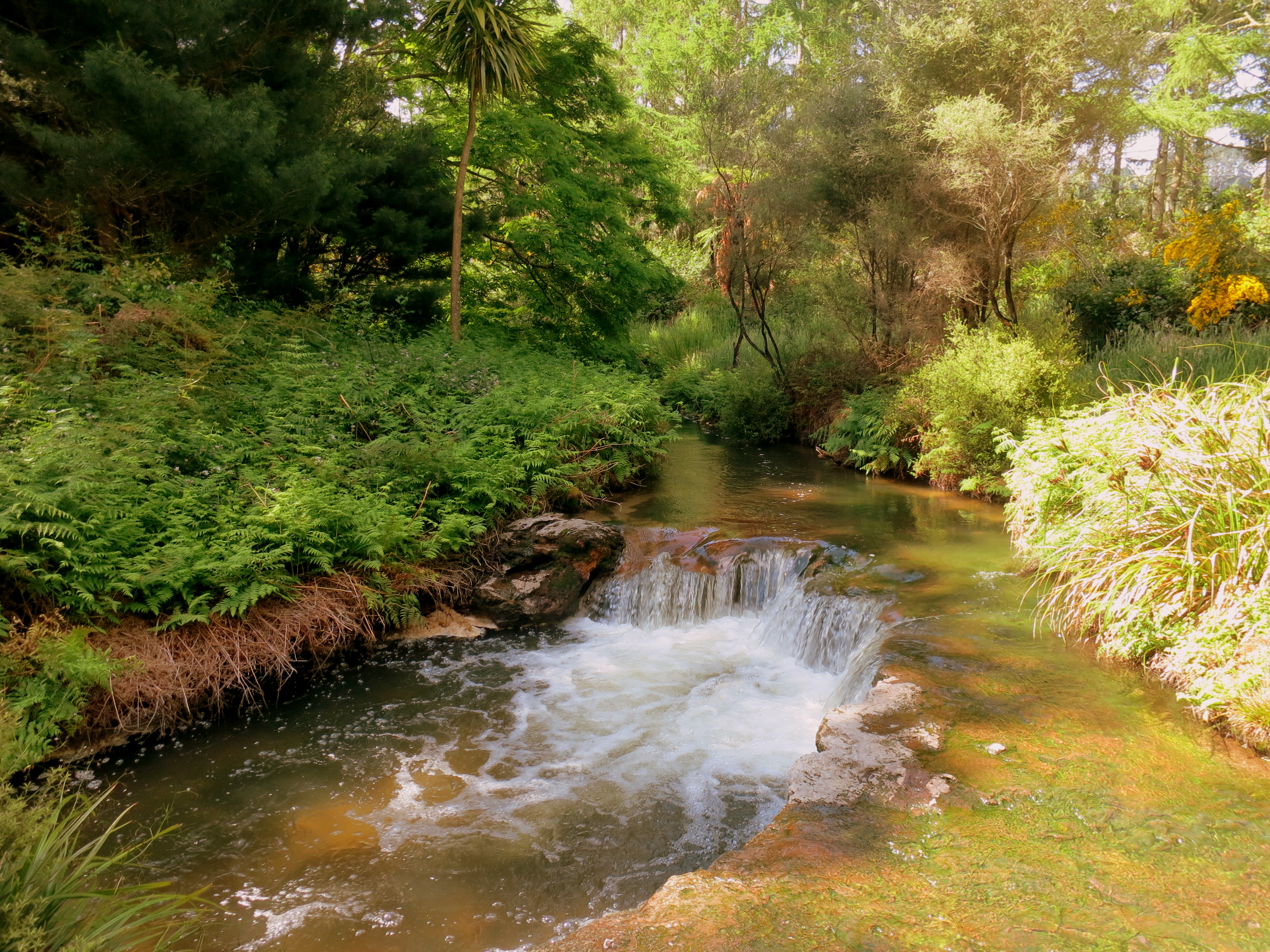
Kerosine Creek

Kerosine Creek

Of course, most of those places charge fees, but I’d heard from friends about a free place a little outside of town. We got directions from a local and pointed our car toward Kerosine Creek (I would’ve thought you’d spell it “Kerosene” but the sign said otherwise). Off the main road, we took an unsealed road (gravel roads are all over New Zealand) to a makeshift parking lot with about six other cars in it. We didn’t find signs pointing out the way, and the path was hard to find, but it turned out to be a short walk to the creek, which tripped along as merrily as any other creek, but when we dipped our toes in, that water was almost hot. We lounged in the water for awhile and then headed off to set up camp.

IMG_3830Lake Okareka has a very basic campground–so basic that there aren’t any spots as such. There’s a long driveway you can turn around in, and a sheltered picnic table, and non-flush toilets. Then some grass, a tiny strip of sand, and then this:

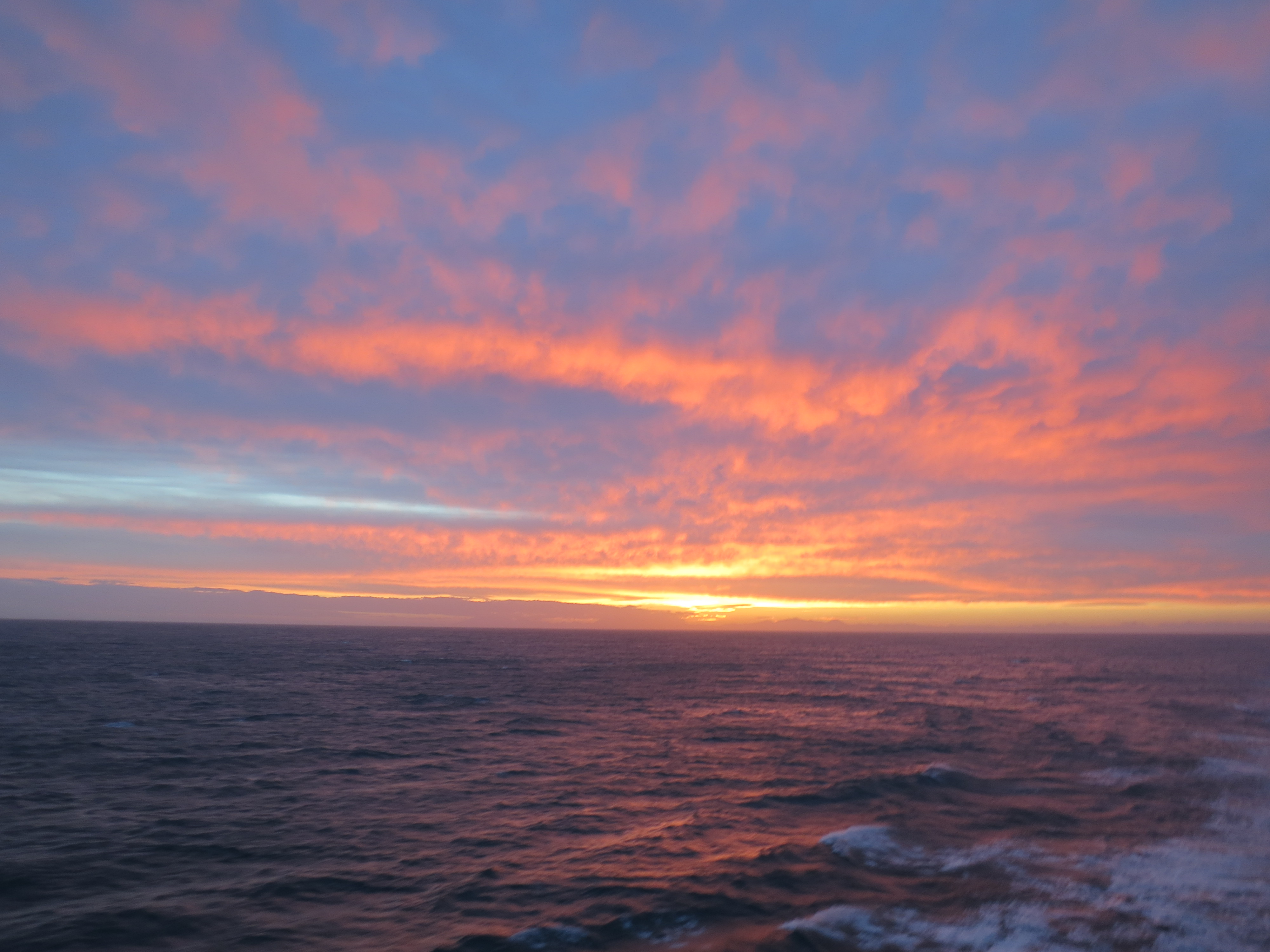
Sunset at Lake Orekara

Sunset at Lake Okareka

That sunset almost made up for the fact that I did not sleep at all that night. I swear I used to be a pretty good camper–we used to go most summers when I was growing up–but I’ve lost the ability to get comfortable on the hard ground, and I never was good with tiny two-person tents. Ah well, I dozed a bit in the morning while Liz productively ate breakfast and journaled, and after we returned the sleeping bag I’d bought the day before, we were back on the tourist track.

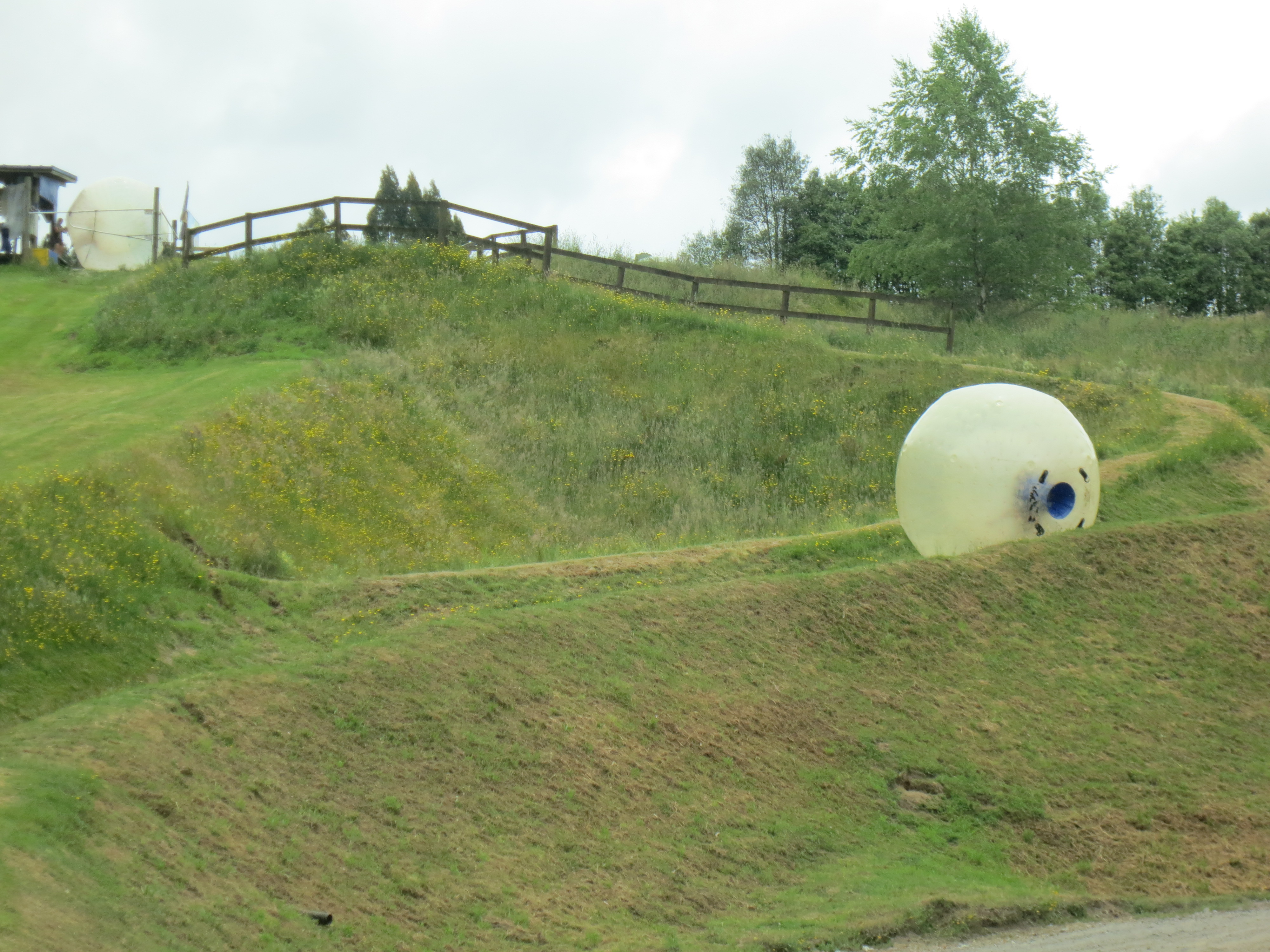
Zorbing!

Zorbing!

We totally touristed it up that second day in Rotorua. First, Liz went zorbing, which involves climbing into a giant plastic ball and getting pushed down a hill. Variations include a zig-zag path and a ball full of water to splash around in. I thought zorbing sounded like a lot of fun, but since I was walking around with a concussion, I thought maybe I’d better just watch.

Bringing the sheep in for the show

Bringing the sheep in for the show

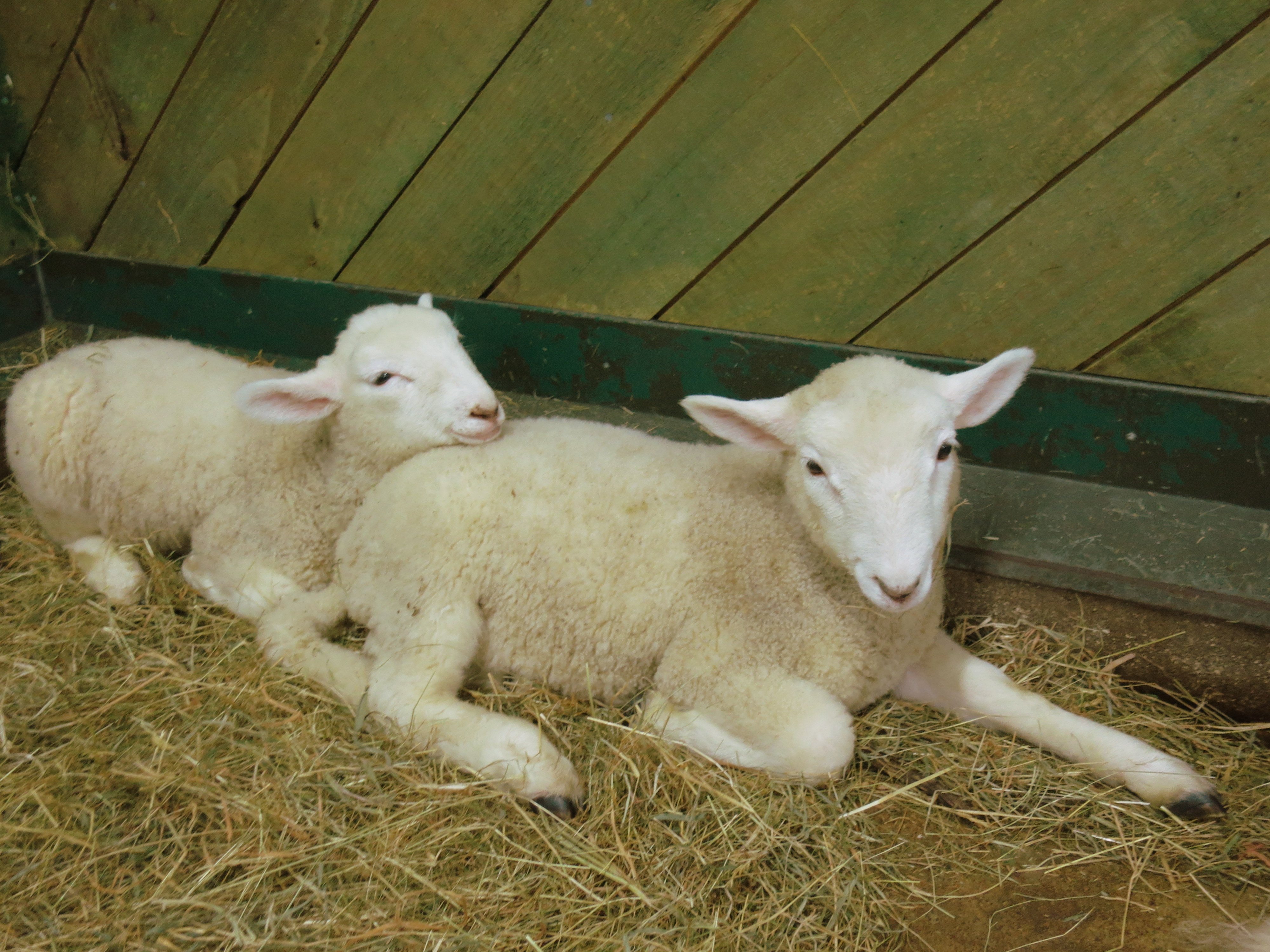
After a short picnic lunch, we drove a bit down the road to the Agrodome, which bills itself as the place for “famous farm fun!” I couldn’t not go to a place like that. First, we went into the baby petting zoo section of the building, and just about passed out from all the cuteness. Baby sheep, baby pigs, baby ducklings, baby rabbits… We recovered ourselves and had a little chat with the sheep patiently waiting for their star turns on stage during the show.

Can I make a bad pun here? "Lambs, ewe are so cute," or the like? No? Okay, but they are.

Can I make a bad pun here? “Lambs, ewe are so cute,” or the like? No? Okay, but they are.

The room was filled with long benches that reminded me of pews–The Church of Agriculture–and soon those benches were filled with tourists, most of whom carried headsets that they plugged into the little boxes dotting the benches. They could tune in and hear translations in seven different languages! I think they do the translating based on who’s in the crowd, because I only saw two translators in the back; either that or the guides of the tour groups serve as translators themselves, not sure.

Liz chatting with a sheep

Liz chatting with a sheep

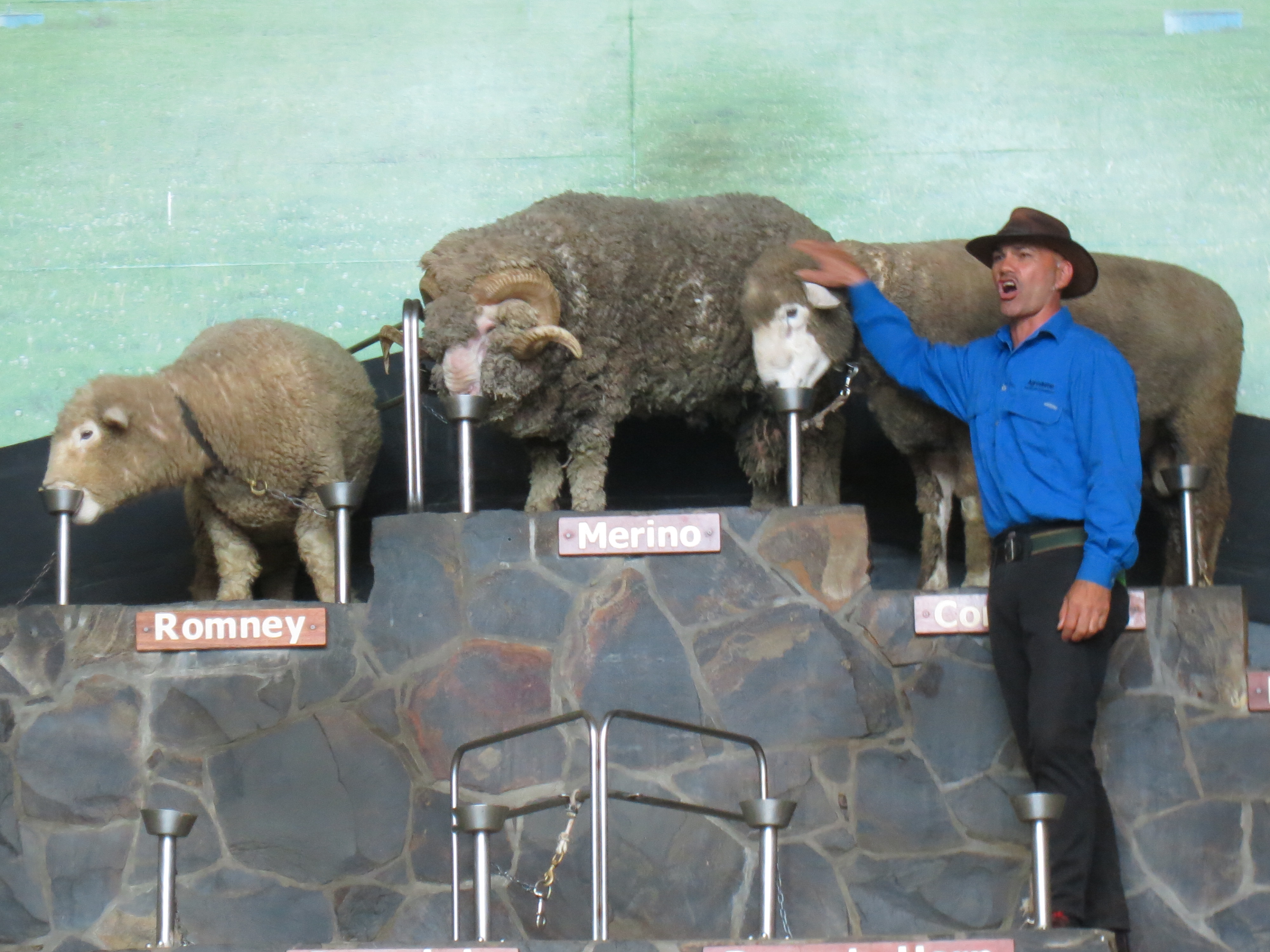
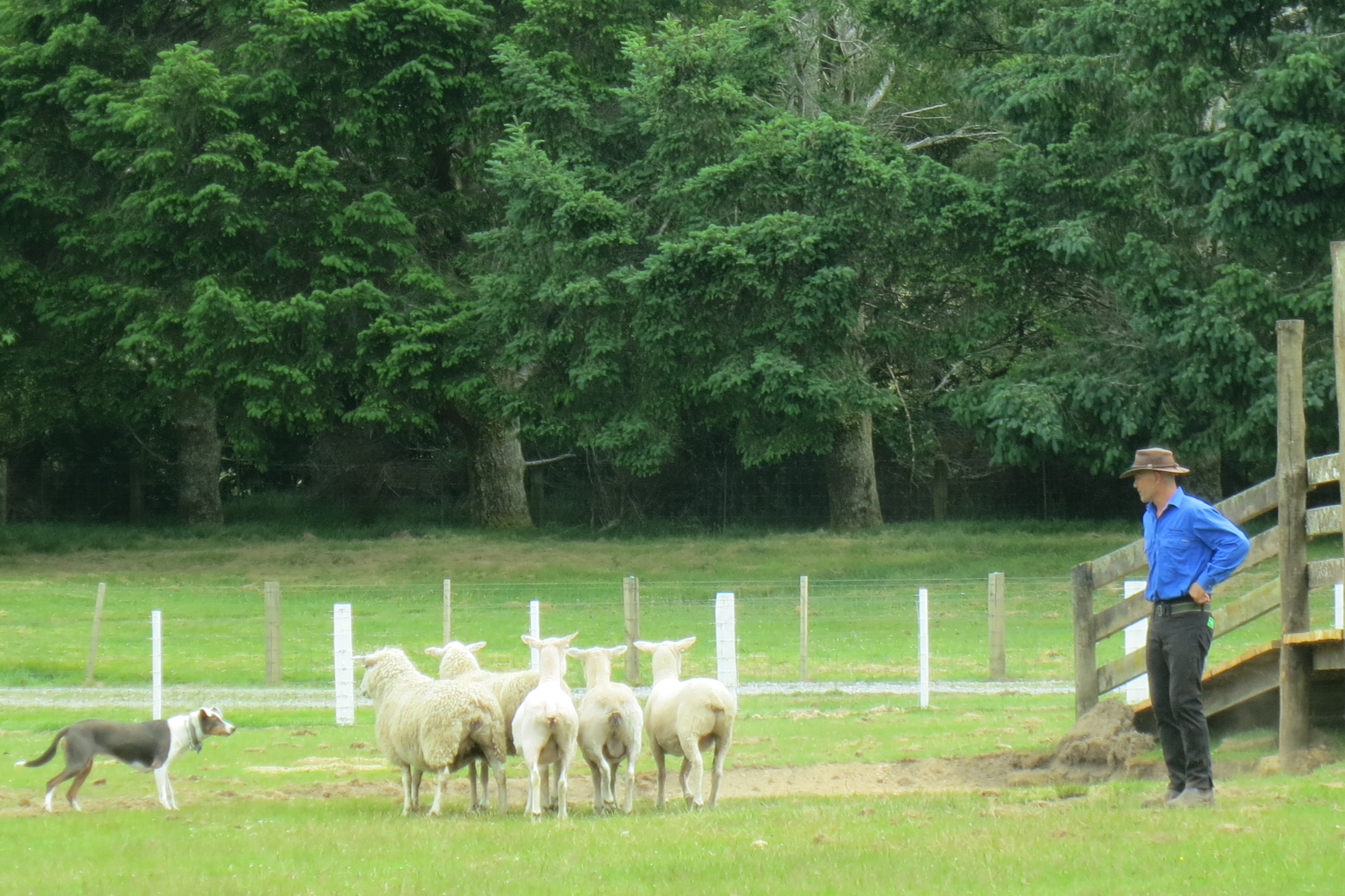
The show featured an absurdly well-toned Kiwi, who led us through the paces at a good clip, with plenty of groan-worthy jokes that we all dutifully chuckled at. His assistant led the sheep up on stage, and hooked their leads to the feed trays so the sheep would stay on display. He brought some kids up on stage and let them feed some lambs from bottles. A sheepdog came out and attempted to herd some geese, although these flapped off the stage and ran around the audience for a bit, and based on the shepherd’s increasingly agitated calls to the dog, this wasn’t part of the show.

Putting them up on a pedestal

Putting them up on a pedestal

But my favorite part of the show was the sheep shearing. A sheep trotted on to stage, and the shepherd held her by her head and front legs, told us facts about who holds records for fastest shearing with motorized clippers and manual ones, and shaved all the wool off the sheep in three minutes. Sheep shearing! It’s even fun to say.

We got a short display of sheepherding outside. The shepherd uses vocal commands with the dog, and the dog makes eye contact and uses body language to move the sheep--no nipping at their heels.

We got a short display of sheepherding outside. The shepherd uses vocal commands with the dog, and the dog makes eye contact and uses body language to move the sheep–no nipping at their heels.

That night, we stayed with some friends of Liz, sleeping on a dairy farm and briefly waking at 4am as they got up to do the first round of milking for the day, then going back to sleep til a more civilized hour to start another day.

Take the Wrong Turn for the Right Weekend in the Coromandel

Sometimes, things go wrong on a trip and it’s just terrible. (Contracting shingles of the eye comes to mind.) Sometimes, things go wrong in a funny way. And sometimes, things go wrong but it all works out well in the end. I went on a road trip to the Coromandel in New Zealand with four other women in a tiny rental car, and we passed through each of those scenarios and, lucky us, landed on the last one.

On the walk to Cathedral Cove

On the walk to Cathedral Cove

I met Vasha (from Oregon) and Rachel (from southwestern China) at a Couchsurfing event in Auckland my first week there. We got along so well that we met up again for a night out later on, and when I decided to rent a car and explore the much-touted Coromandel Peninsula, I went straight to them to see if they wanted to be road trip buddies. Rachel brought Natalia and Xi Xi too, and on a sunny Sunday morning in December we picked up the car in Auckland and set off.

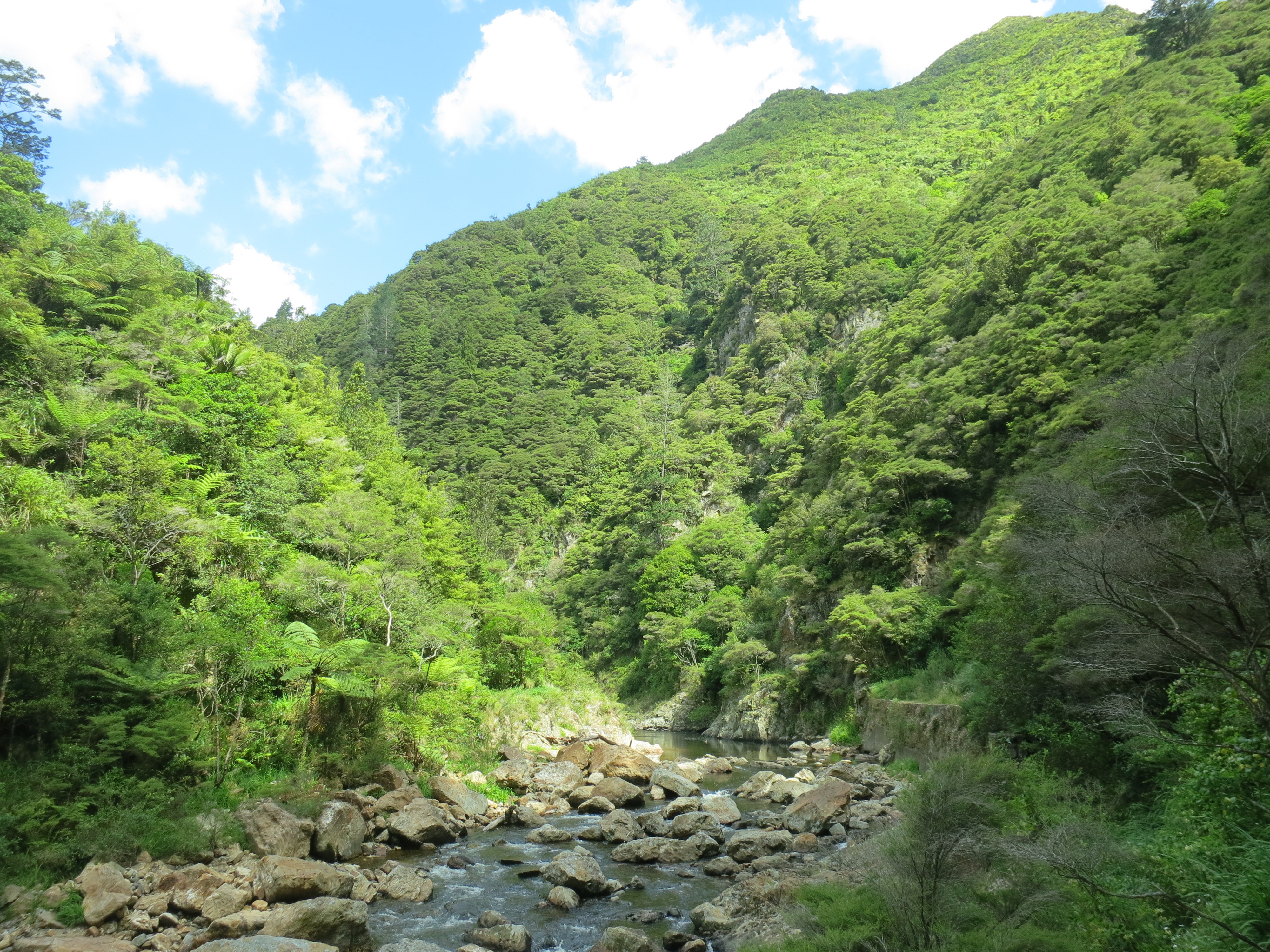
Karangahake Gorge

Karangahake Gorge

An hour and a half later, we had a flat tire. Cue the sad trombone music. Since it was a Sunday, all the mechanics were closed. We’d bought the insurance (phew), so I called the car company up while Vasha changed the tire to the donut from the trunk. The car company rep told me to drive 60 miles over the hilly terrain to Whitianga, and visit the Firestone store the next day to get a new tire. We got directions on the shortest route there, piled all five of us into the tiny car, and promptly took the wrong turn out of town.

a stunningly beautiful dayI’m not suggesting the flat tire was a good thing, or that the time wasted on changing the tire and talking to the car company was fun, but nothing bonds a group traveling together like a minor disaster soon fixed, and the wrong turn took us to one of my favorite walks in New Zealand.

Karangahape Gorge

Karangahake Gorge

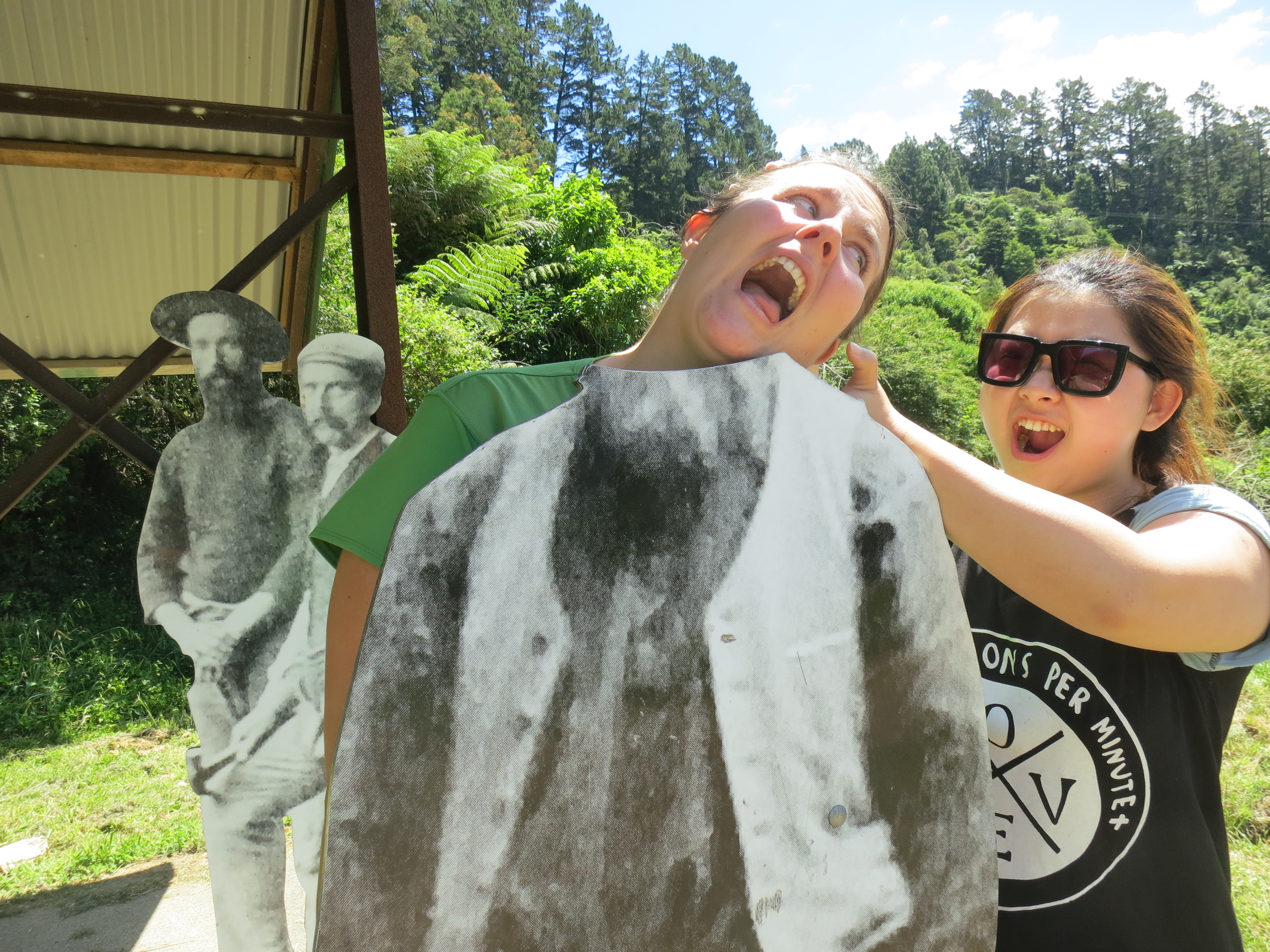
That walk was through Karangahake Gorge, which was once the site of a huge gold mining operation. After lunch at an adorable cafe across the road, we walked over the swing bridge spanning the river and took some silly photos with the obliging Olde Fashionede props.

Our table number was Tiger.

Our table number at lunch was Tiger.

The ghosts behind me are indifferent to my cruel fate at the hands of Xi Xi

The ghosts behind me are indifferent to my cruel fate at the hands of Xi Xi

There are several different trails to take, and we chose the one that takes you into the mining tunnels and along the ridge of the river. Disused machinery dots the trail, and the original train tracks still run through the woods and tunnels. We peeked through the windows cut into the tunnel–miners would chuck rock waste through them into the river below so that the carts on the tracks only had to carry gold.

IMG_3597

Gold!

Gold! (photo by Rachel)

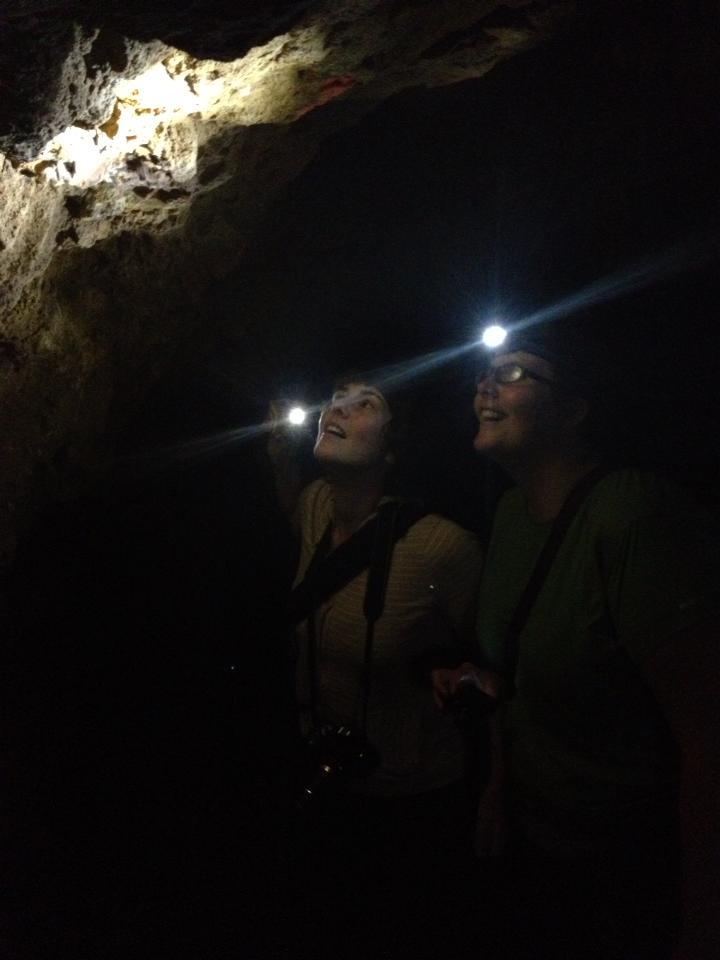
Deeper in the tunnels, using only our handsome head torches, we explored the pumphouse, separated from us by a tall metal gate. Dusty machinery rusted slowly in the damp cave, and overhead we saw the tiny blue-green pinpricks of the glowworms made famous by the Waitomo Caves farther south on the island. Eventually we went back outside and strolled along the river and over another swing bridge to get back to the car.

IMG_3625

Glowworms!

Glowworms!

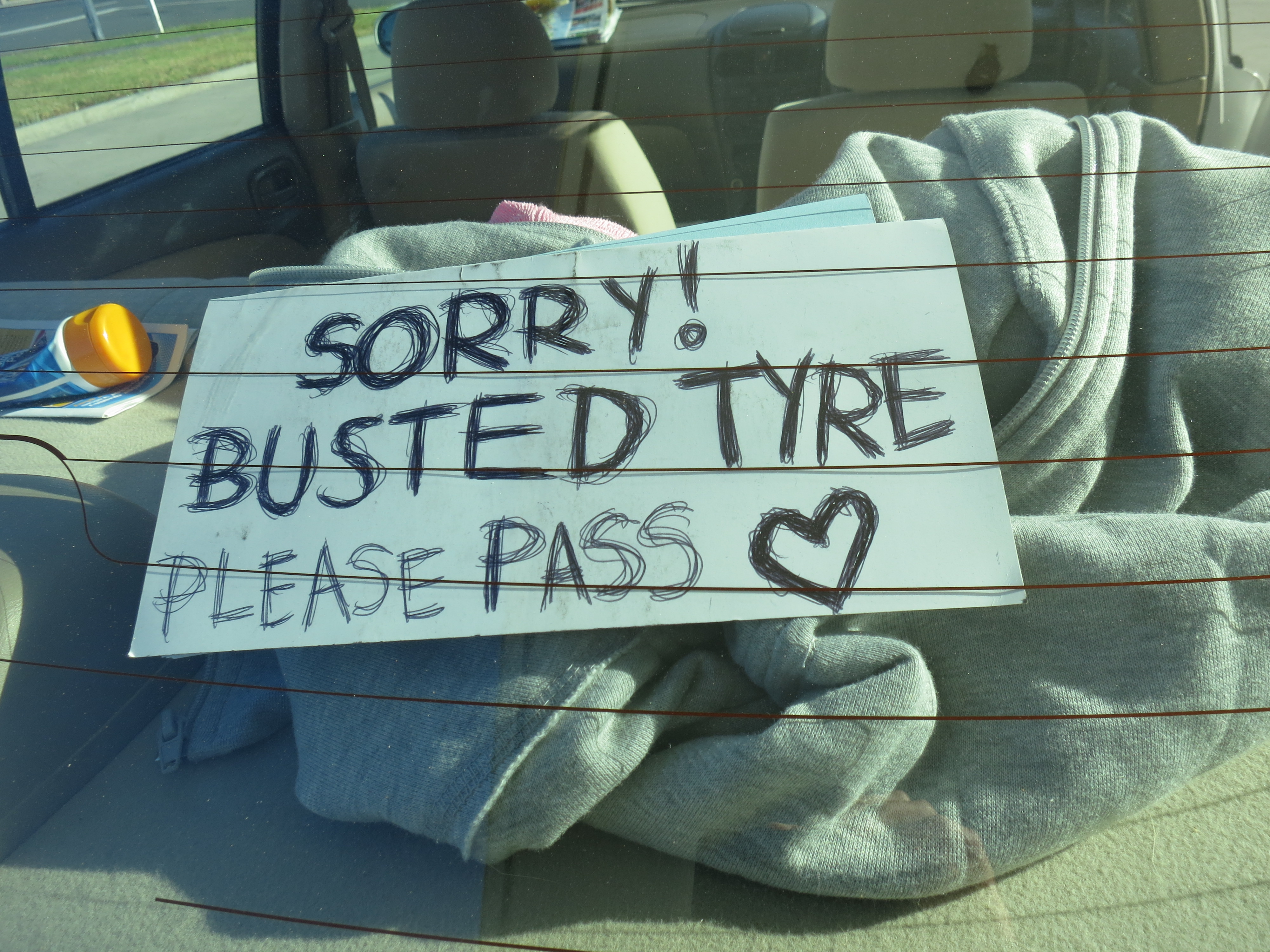
Driving the car was an adventure. It was a tiny Nissan Sunny, a white four-door made in Japan, barely big enough to fit all five of us and our bags. (This is a very popular rental model in New Zealand.) We didn’t want to go too fast on the spare tire, and anyway the twisty two-lane roads of the peninsula were a challenge. The Kiwi drivers behind us were very frustrated with our slow pace, until Vasha drew up a little sign saying “Busted tyre, please pass” (she even spelled “tire” the Kiwi way). After she put that in the back window, people were all smiles and sympathetic waves as they passed.

coromandel tire signVasha didn’t want to drive anymore after the tire busted when she was at the wheel, so of course I took over, but this was my first time driving on the other side of the road, on the other side of the car, and it was a full car, and it had proven itself rickety as all get out. It was a slightly stressful drive up the inland road to Whitianga, but we made it before dark, with enough time for dinner in town before crashing at the hostel.

The next day, we were up and at the Firestone just after it opened. The grumpy proprietor (likely not excited about doing work the insurance company probably took ages to to pay for) told us to come back in an hour, so we went across the street for a pastry breakfast while he worked. Vasha’s boyfriend Dar had joined us on his motorcycle, and once the tire was fixed, the two of them roared off on the bike looking very cool, and the rest of us piled back into the car, now with slightly improved balance, and beetled along down the road after them.

Hot Water Beach (photo by Rachel)

Hot Water Beach (photo by Rachel)

We met at Hot Water Beach, a stretch of sand that sits atop a thermal patch. The idea is that you show up with a shovel and dig yourself a hole to sit in, then watch the ocean waves while enjoying the warm waters of a natural spa. Little did we know that it’s not just “dig somewhere and you’ll find a hotspot.” It’s more “dig at random along the beachfront, think you find a spot, discover the water’s just lukewarm, and move on to another spot, while surrounded by other tourists doing the same thing.”

Vasha gets to work (photo by Rachel)

Vasha gets to work (photo by Rachel)

Eventually, two girls (who had got there much more on schedule with the tides than we had) decided they were done and offered us their spot. The water was a nice warm temperature in most of the little pool, but we stayed away from one corner, which had boiling hot water bubbling up from underneath. I think if we’d come for the night tide it might’ve been more relaxing, but as it was it was just an amusing experience I don’t need to do again.

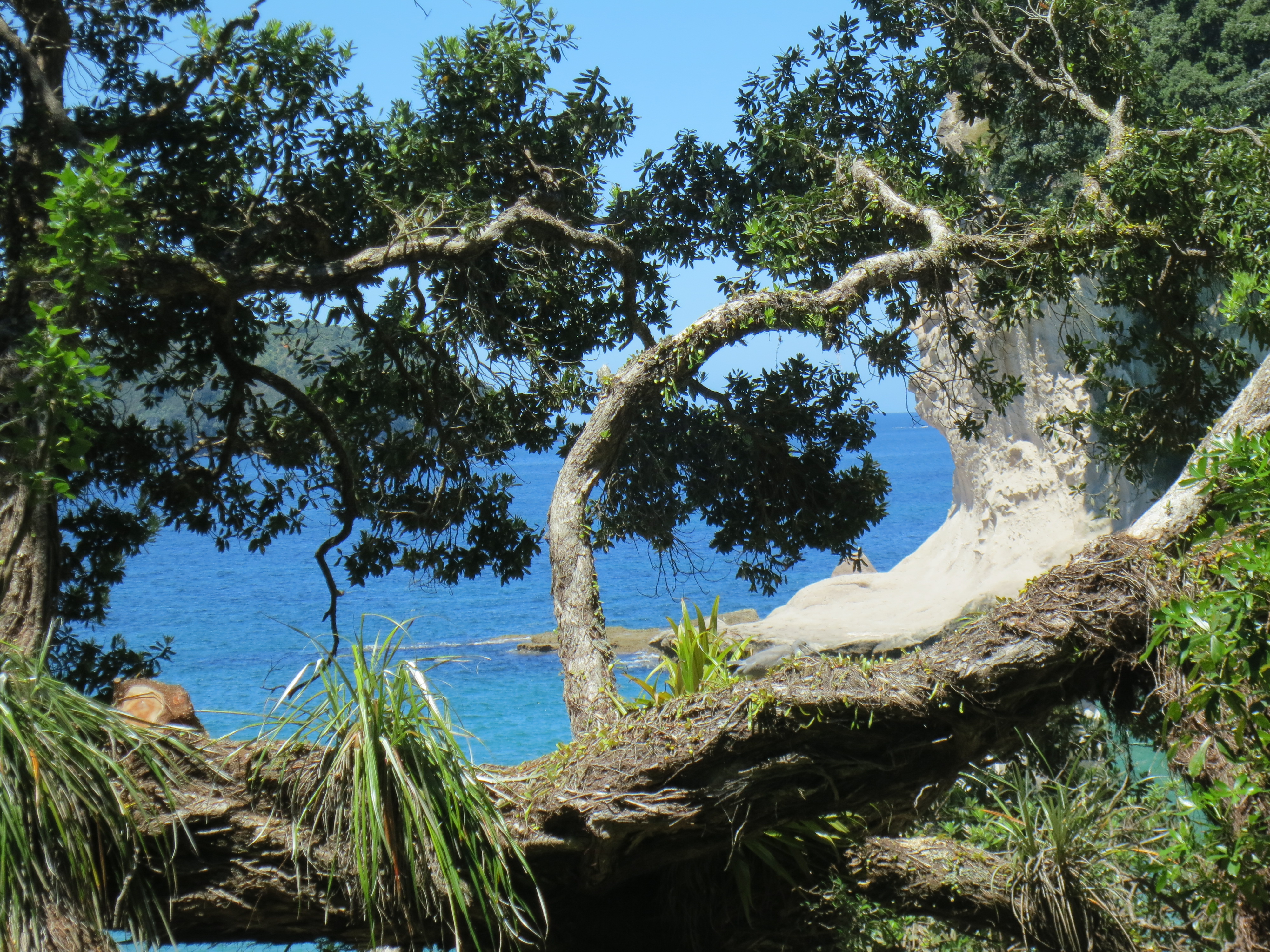
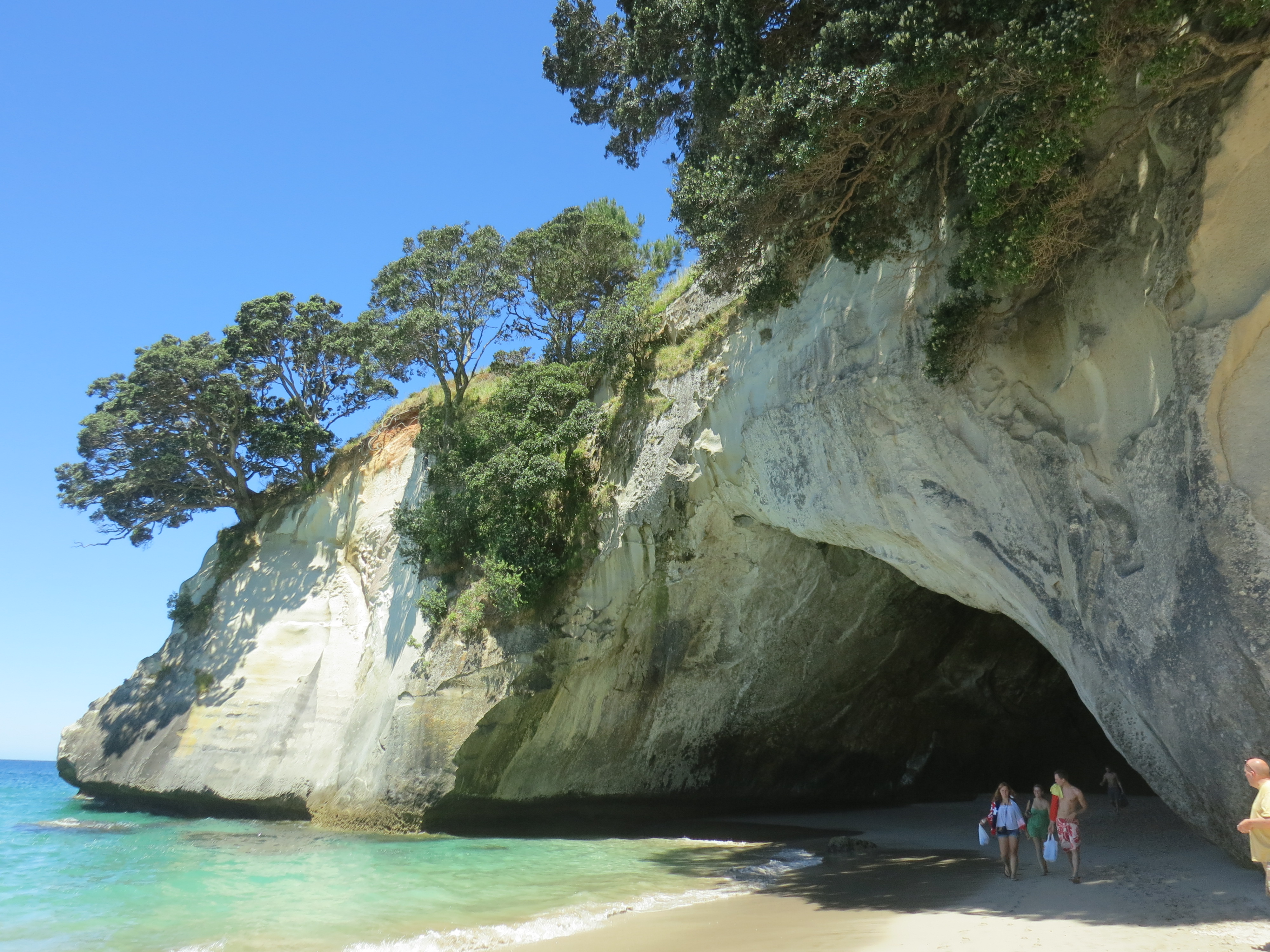
IMG_3723After buying scandalously overpriced food at the small general store the next town over, we parked high up on a cliff and began the walk down to Cathedral Cove. It’s a commitment–45 minutes to an hour down there, 30 to 45 minutes on the way back up. A steep walk down the cliff in the sun, then a wooded bit, up a hill, along a ridge, through a field, down steep stairs, a few more stairs, and there’s the beach. But the views along the way are stunning.

Like I said, stunning

Like I said, stunning

We were ravenous by the time we got there, and that picnic lunch was gone in no time. We spread out to variously nap in the shade, sunbathe on the sand, explore the arch that gives the beach its name, and swim in the Pacific. It was a lovely spot, but eventually we tore ourselves away so we’d have time to get back to Auckland.

A beautiful beach

A beautiful beach

coromandel cathedral cove

Cathedral Cove

Cathedral Cove

Taking the gravel road through the mountain pass may not have been our best collective driving decision, but by going no more than 30 km/hr and keeping up a steady chant of “oh shit another blind turn oh shit oh shit,” I got us through to the other side. Vasha took over so I could steady my nerves, and it was smooth sailing back to Auckland.

I had such a great time road tripping with these women. Learning “I love you” in Mandarin and Russian, snacking on tiny Rachel’s neverending supply of goodies, bonding with Vasha over driving disasters and US-specific jokes, giving Xi Xi about five new nicknames… Anyone who’s ever driven long distances with other people knows that a successful road trip is 30% scenery, 10% car and weather conditions, and 60% camaraderie. Even with a flat tire, the weekend still came in at 95%, and that’s an A–for awesome.

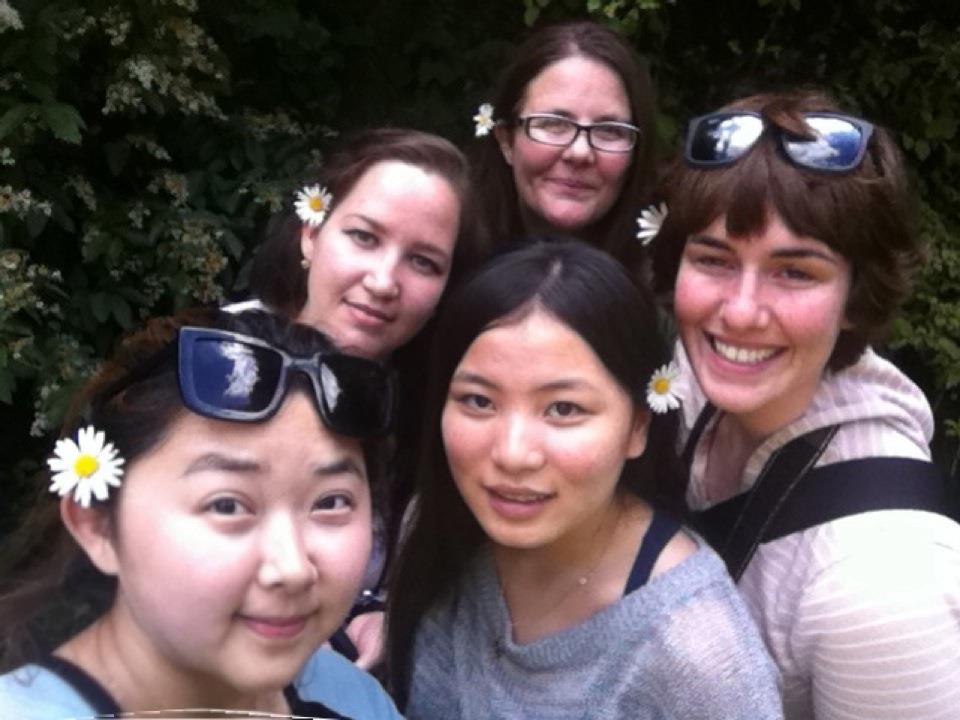
Thanks for the excellent road trip! (Xi Xi, Natalia, me, Rachel, Vasha; photo by Xi Xi)

Thanks for the excellent road trip! (Xi Xi, Natalia, me, Rachel, Vasha; photo by Xi Xi)

A Rainy Weekend Away in Paihia

Okay, let’s go way back to the first week of December. I’d landed in Auckland, New Zealand the last week of November, and hadn’t done much since. I decided to get out of town, so I took a bus up to Paihia, a holiday town on the eastern coast of the North Island. It rained the whole time I was there, so it wasn’t exactly a long weekend at the beach, but I had plenty of fun anyway.

Bay of Islands

Bay of Islands

Paihia is right on the Bay of Islands, a perhaps not terribly original name for an important area of New Zealand’s history. Just north of town is where the Treaty of Waitangi was signed. I touched on this a little in an ACAM post a couple years ago, but as a reminder, the treaty is still controversial, because the Maori translation has significant differences concerning sovereignty and ownership of property from the English version. I did not walk up there in the rain, but they’ve recently revamped the museum and it’s meant to be worth a visit.

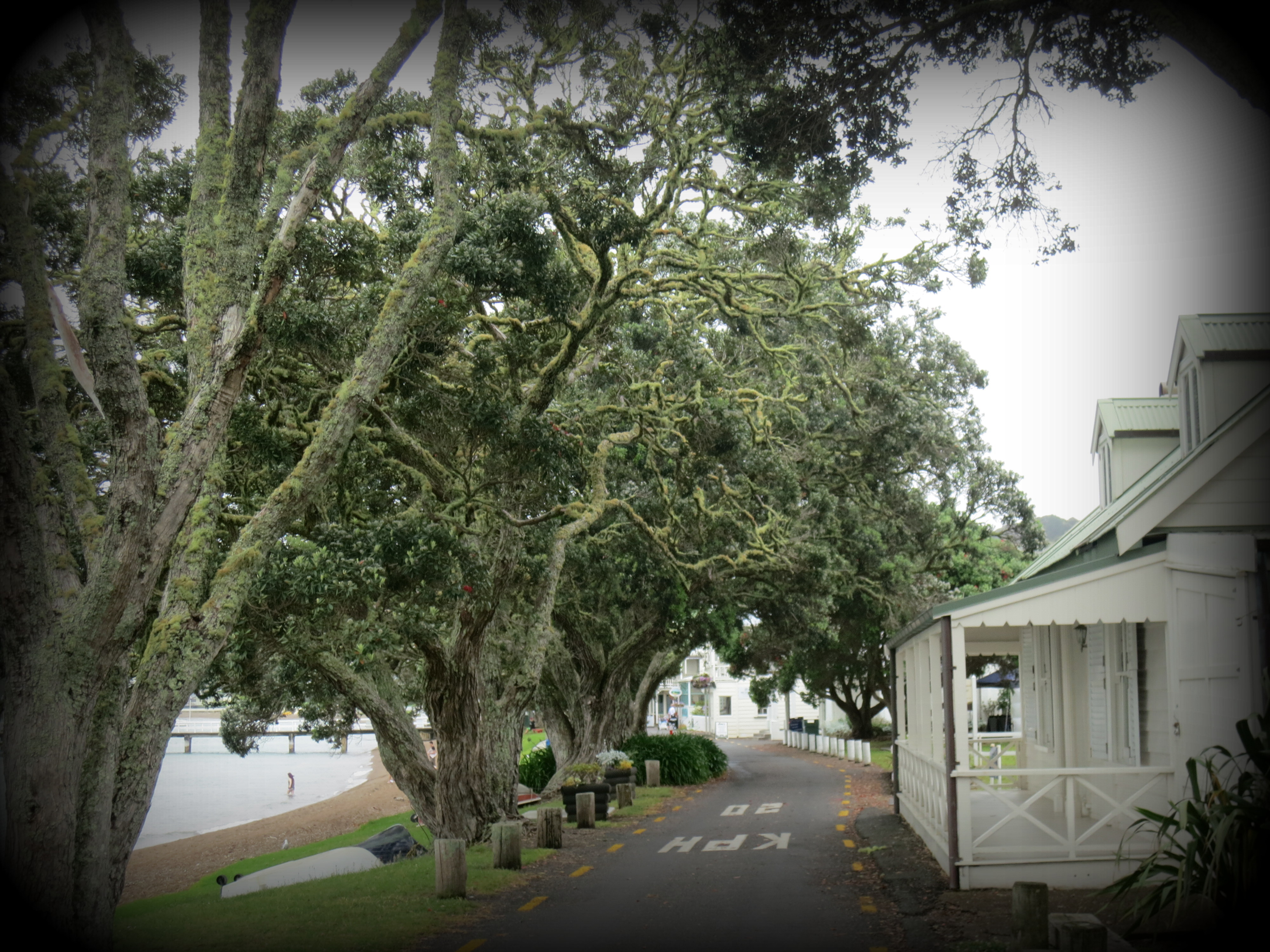
Lest we forget that though the buildings look European, we are not in Europe: palm trees

Lest we forget that though the buildings look European, we are not in Europe: palm trees

Across the bay from Paihia is the town of Russell, a quaint little town of clapboard houses and a picturesque church, that also happens to be the oldest Pakeha settlement in New Zealand once known as the Hellhole of the Pacific, back when it was a filthy town full of bars and brothels for rowdy whalers.

Southern Cross advent wreath in the church in Russell

Southern Cross advent wreath in the church in Russell

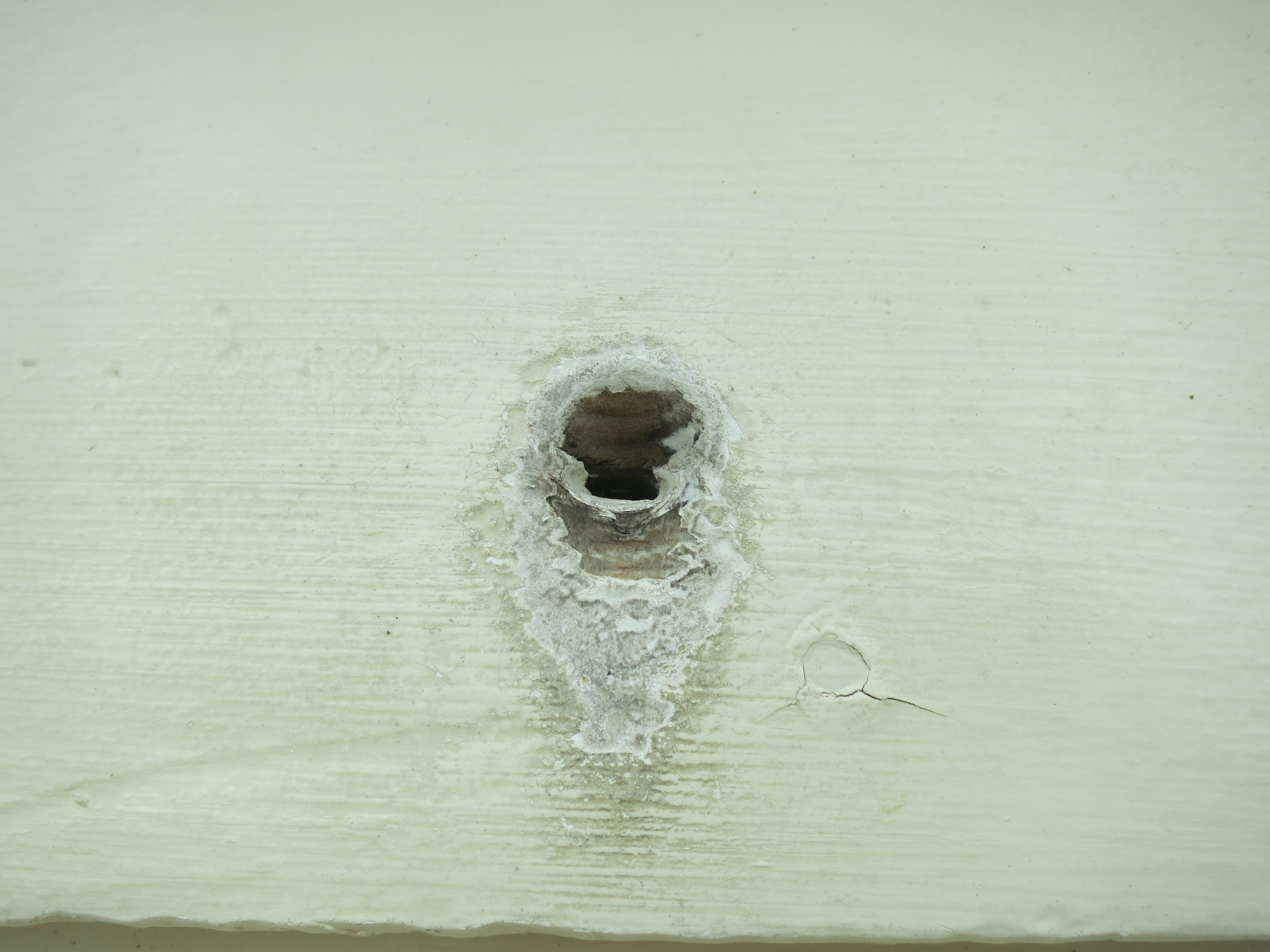
The church is the oldest existing one in New Zealand, and it’s seen a lot: in 1845, the Battle of Kororareka included skirmishing near the graveyard, and the side of the church still bears bullet holes from the fighting.

Bullet hole in the church

Bullet hole in the church

I visited Russell with Cora, a lovely woman from the States who manages the YHA in town. We were put in touch by a mutual friend, and we had fun wandering around the tiny town, eating lunch as the clouds rolled in, and getting back to Paihia just before the rains started up again. This is why I’m always asking people if they have friends in various places–they’re usually great people I’m happy to meet!

Russell looks almost like a small town in Louisiana from this perspective

Russell looks almost like a small town in Louisiana from this perspective

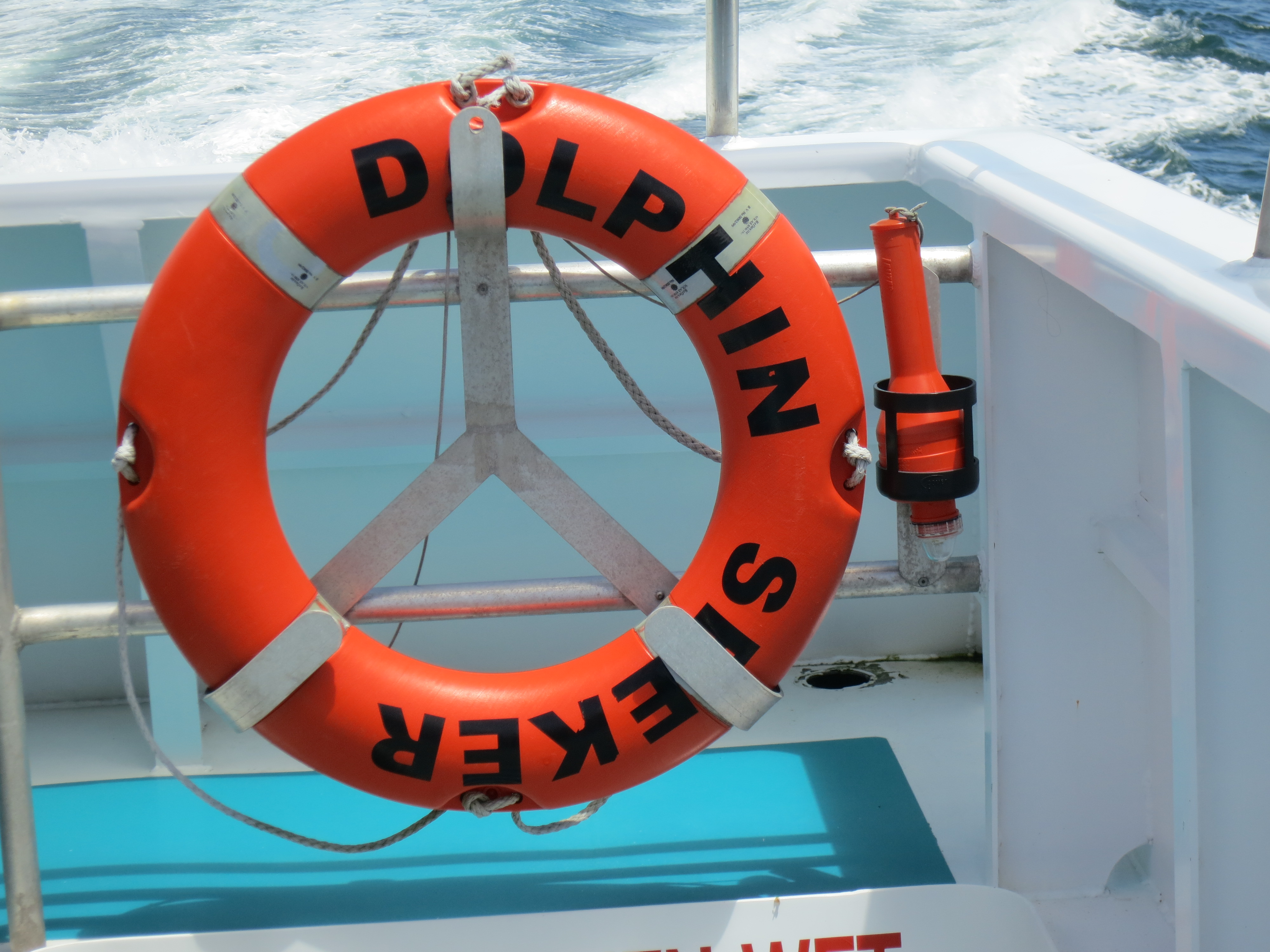
If you’re not visiting historical sites or trekking around waterfalls (again, nixed on this trip due to rain), the main activity you’re likely to take part in is dolphin watching. Common and bottlenose dolphins live in this area, and sometimes whales come through as well. I’d booked a tour but put it off twice due to rain. Finally, I had one last day to go on the tour before I left town, so I went out on a Fullers Great Sights tour.

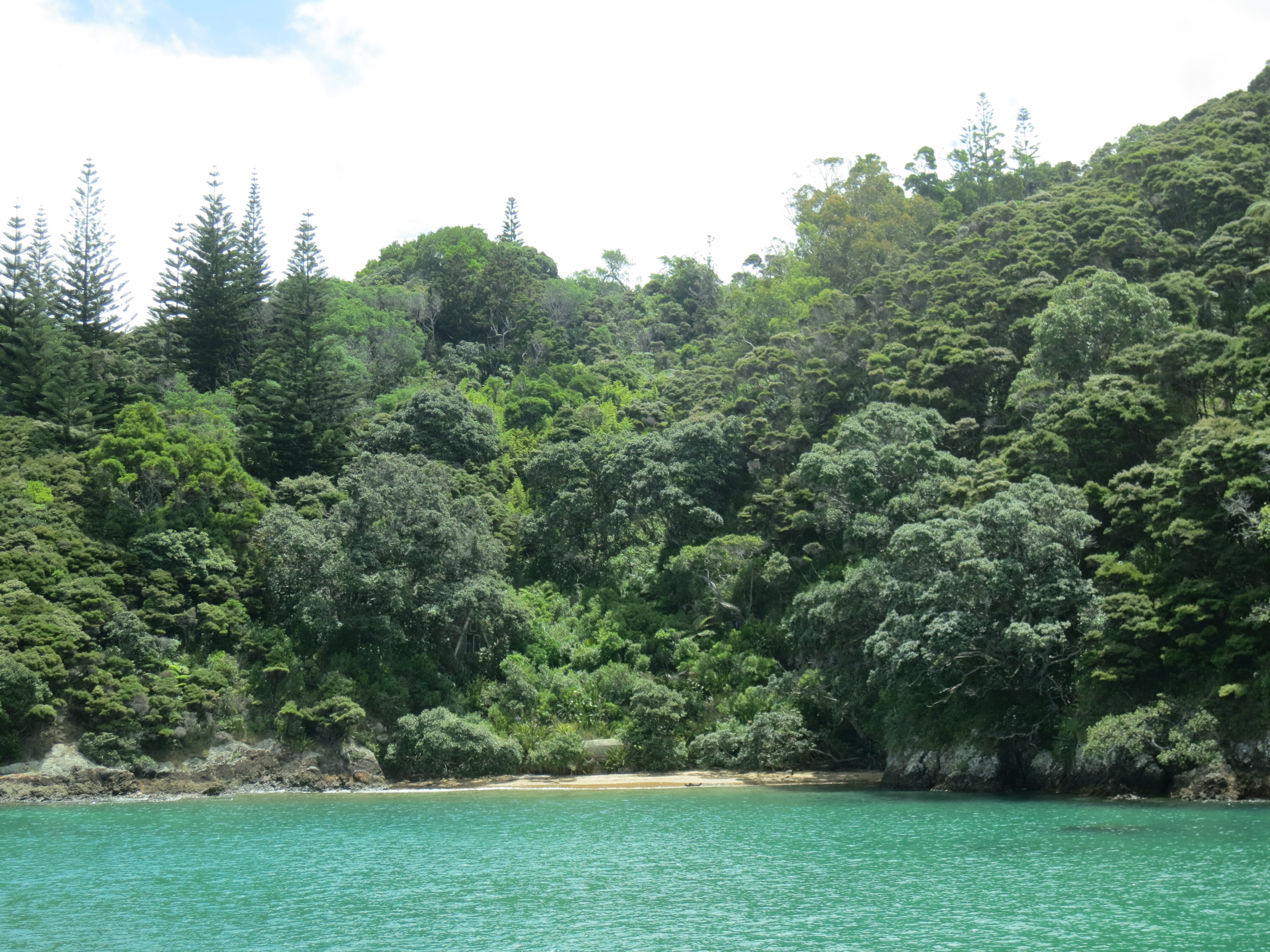
paihia nzTurns out, even though the rain had mostly subsided, the seas were still rough, so as we pulled away from the deck, the captain casually mentioned on the loudspeaker that this Hole in the Rock tour would not be going to the Hole in the Rock. Wait, what? Okay, so we skipped that landmark because it was too close to open sea, and instead spent more time tootling around the islands inside the bay. I was a little disappointed, but everything we saw was beautiful, so I couldn’t be too upset.

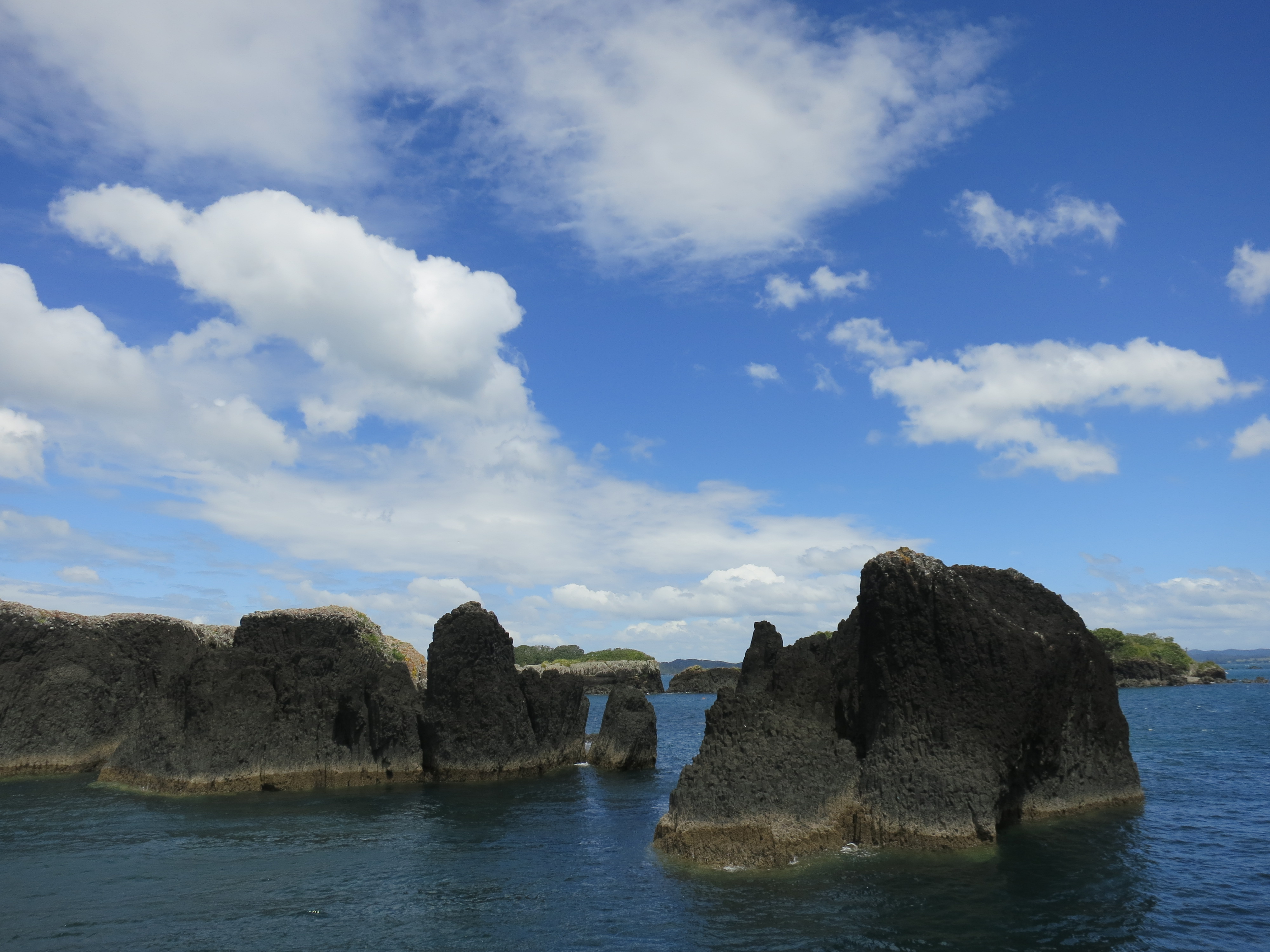
The Black Rocks

The Black Rocks

We went through straits with black rocks, the same kind of rock I saw on the Aran Islands in Ireland. Another boat radioed that they’d found some dolphins, so we sped over to Okahu and watched a couple dolphins frolic for a few minutes. I saw one speeding along just under the surface, but no one seemed to believe me when I pointed, and then a minute later it surfaced right where I’d been pointing, thankyouverymuch. Sorry, I didn’t get any decent photos of the dolphins–mostly splashes where they used to be.

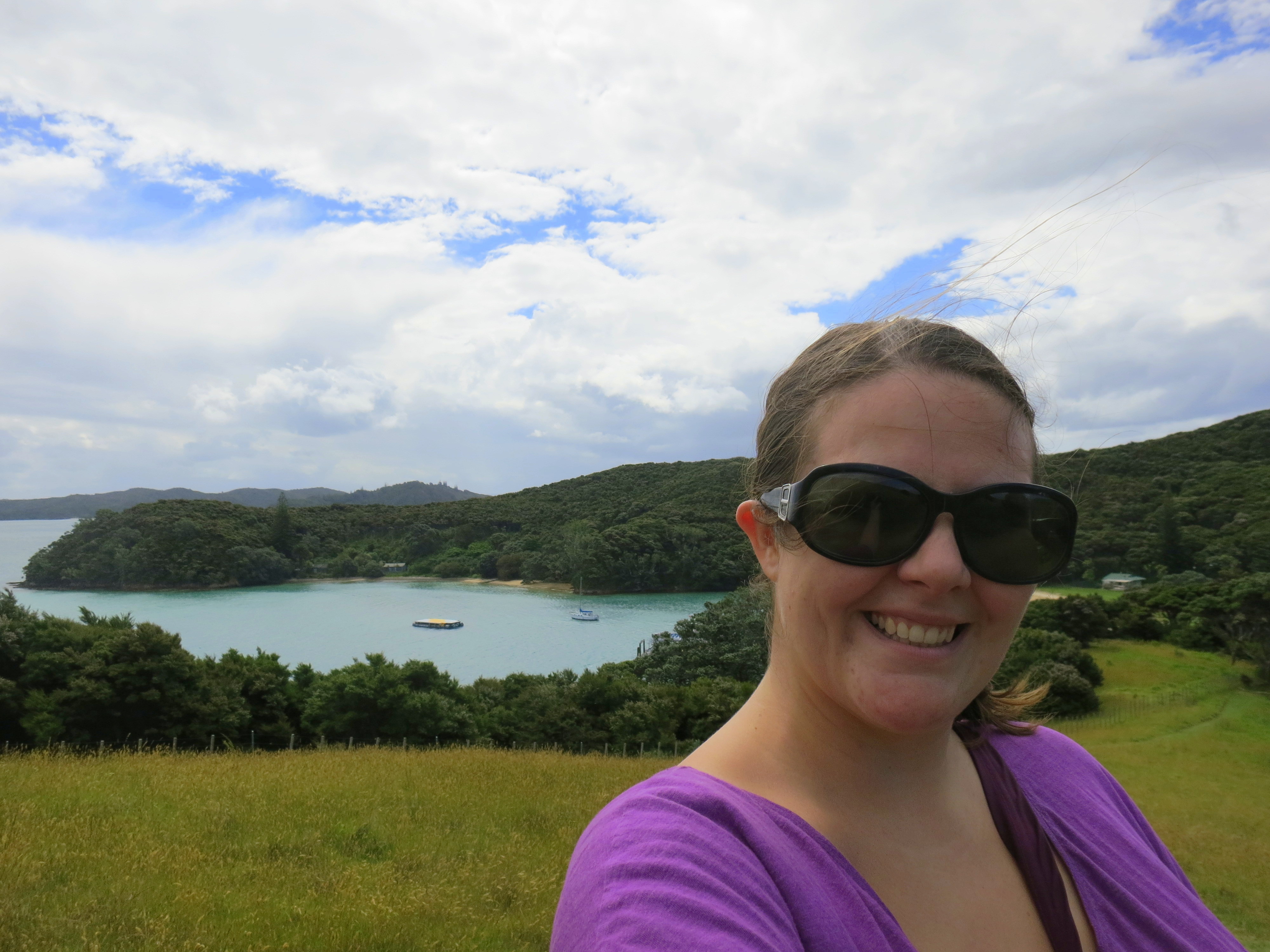
IMG_3405The dolphins tired of us pretty quickly and swam off for a quick bite or whatever it is dolphins do in the early afternoon. We docked at Urupukapuka, an island reserve. There was just enough time to follow the path mowed in the grass up the hill to the right, past a field of cows and beyond a small grove of trees, then steeply up to the hilltop. The views, as the captain promised, were incredible. For the first time in the four days I’d been in the area, the skies cleared completely, and each island was a brighter green and every wave a deeper blue than I’d seen before.

View from the hilltop on Urupukapuka

View from the hilltop on Urupukapuka

We made our way back, taking note of Captain Cook Bay at Motuarohia as we did so. (Captain Cook haunted my entire time Down Under–which, fair enough, he was the first European to chart both Australia and New Zealand.) I believe it was this island that was the site of a bloody battle between Maori and French back in the 1800s; today it hosts an expensive private home and not much else.

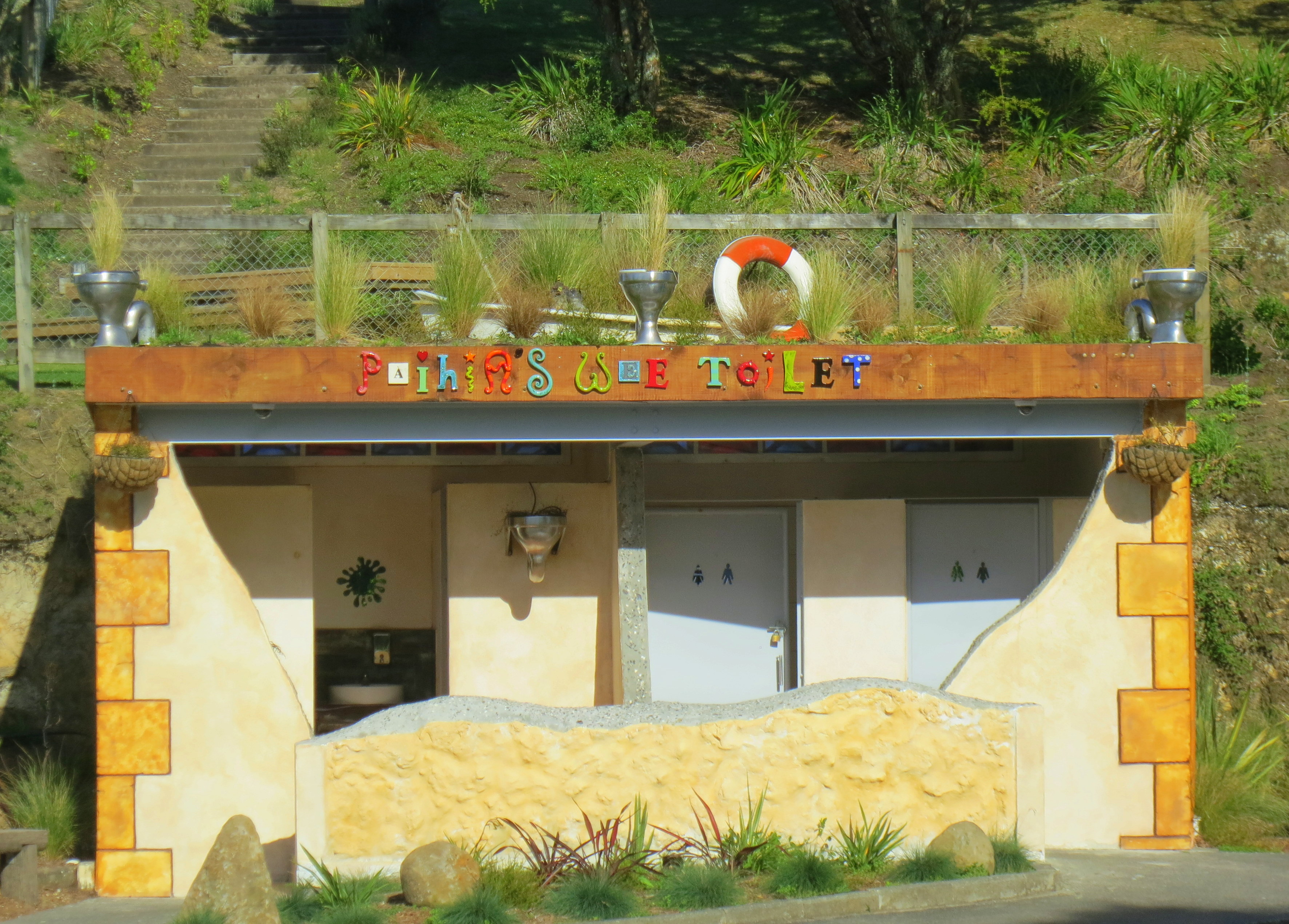
Paihia put a lot of money and apparently over a year into building this public toilet. Priorities?

Paihia put a lot of money and apparently over a year into building this public toilet. Priorities?

I had a good time in Paihia, and I can see how if the weather weren’t so consistently rainy, it could be even more fun. A lot of people use it as a jumping-off point to visit Cape Reinga (most northerly point in the country) and other places in the Northland. There are several little restaurants and bars of varying price ranges along the three streets that make up the town, and a weekly farmer’s market is held behind the library. Recommended if you’re on the North Island!