The Music Don’t Lie, Part 2

This time, it was a message of quityerbitchin. I was driving my it-probably-cost-more-to-fix-this-than-the-car-is-actually-worth-but-I-fixed-it-anyway car back to Chicago from Michigan, and I was late for a concert that I most definitely did not want to be late for. I’d had a wonderful, relaxing weekend, but the car costs and coming work week were creeping back into my consciousness. I’d run into two bouts of seriously bad traffic already and was coming up on another one, and I was shouting in frustration.

And then two in a row, courtesy of 97.1 The Drive: “Long Way Home” and “Take It Easy.” Okay, fine.

Turns out I was even early for the concert, and I sang along to the radio the whole way there.

Pitchfork Music Fest 2010

The Pitchfork Music Festival is in its fifth year, and I’ve been to four of them, so you could say that I’m pretty into it. I don’t actually read the main Pitchfork site all that much, since I can’t seem to get into the writing style of most of their critics, but every time I do head over there, I’m greeted with about 150 artists I’ve never heard of, about 40 of whom I’m likely to really enjoy. Those are some good numbers right there! Pitchfork is at the forefront of making music groups of all sizes and levels of fame more available to the Internet masses, and that’s a great service. These efforts culminate in the annual music fest, which takes place at Union Park in Chicago, IL over the course of three hot summer days.

I worked all day Friday and went straight to the park, just in time to hear the energizing opening chords of Robyn‘s set. This woman is fantastic! She writes or co-writes all her songs, and what songs! Upbeat, perfectly danceable love songs. I put one up yesterday (sorry, I didn’t realize the sound was so bad). Here’s another:

I chose these videos in particular because they’re from Friday’s performance; you can see how much joy she finds in dancing and singing and inviting everyone else to do the same. When she started those wide-flung arm movements, it looked like she took the dancing we do in front of the mirror and put it on stage, as if to say, “Look, just move your body any way you want!” I followed that suggestion so well that a photographer started snapping pictures of me, I suppose because I looked so into the music. But really, when you’re dancing and singing along wholeheartedly, you don’t exactly look photogenic; you look goofy. So if you see a photo out there of me looking like this…

hippie goofy dance

I wasn't even on anything (photo via http://www.picturehistory.com/product/id/13056)

…just move along.

After watching Michael Showalter‘s painful on-stage breakdown, I thought about going back to Broken Social Scene, but then Eugene Mirman came on and killed. I think my favorite part was that he was making pro-choice jokes that were actually funny. That’s exactly what we need, is someone reminding people that abortion is something you can talk about and even make jokes about, because hey, it’s a real thing in this world and not just a political flashpoint. (Does my choice of the word “killed” earlier ring a little untasteful in this context? Oops. Oh well, I’m keeping it. Oops, there, I did it again!)

I wandered in late on Saturday, but I was in time to see Wolf Parade rock out most wonderfully. I like on-stage banter if it’s done well, but sometimes I just want to hear the music. Spencer Krug seems to feel the same way; after their first song or two, he said, “We’re not going to talk much, we’re just going to play as much music as we can in the hour they gave us.” Worked for me. Similarly, LCD Soundsystem barely paused between songs but just played one driving beat after another, while James Murphy wailed melodically on top. I didn’t stop moving for over an hour.

And finally, Sunday, which was definitely the most humid of these very hot and humid days. So it was with great pleasure that I laid back and listened to two bands perfectly suited to a lazy summer day — Girls and Beach House. Girls have a jangly sort of sound, and a singer who sounds like Elvis Costello and looks like Darryl Zero:

Bill Pullman as Darryl Zero

Bill Pullman as Darryl Zero (Zero Effect is a great movie, btw) (photo from http://www.billpullman.org/film/zero/z30.jpg)

I heard a bit of Surfer Blood and Local Natives both, but the crowd at that stage was packed tight, and it was simply too hot to hang around without passing out. I couldn’t get into the noise of Lightning Bolt, but it sure had some people in a frenzy. When I left the festival, it was with a grin on my face as Big Boi ripped through “Ghetto Musick” at top speed.

I saw other bands during the weekend, but the last one I’ll mention is the energetic Major Lazer. The hype man and two main dancers certainly had people going, and it was fun to dance to Diplo DJing, but I felt kind of uncomfortable the whole time. You’ve got this white guy, Diplo, presiding over the whole stage, while Skerrit Bwoy and two nameless women dancers, all dressed in very little, shake and scream and dagger below. Major Lazer is the brainchild of Diplo and Switch, two white DJs who decided Jamaican dancehall is where it’s at, and they needed to be in on it but had to have a cartoon black man as their front man. They get all this credit for being DJing geniuses and true to the Jamaican clubbing scene, but while I know that they’ve had a lot of black artists perform vocals on their recordings, it still feels a whole lot like appropriation. “Ooh, look, this is the authentic artistic scene! I will take it now!” It’s the ultimate hipster move.

Also, side note, Diplo’s an asshole. I don’t know if you heard about the M.I.A. interview with the New York Times Magazine last month, but basically, Lynn Hirschberg wrote a long feature article on how M.I.A. is politically naive, musically untalented, and a huge sellout. (Note, M.I.A.’s reaction to the article, Tweeting Hirschberg’s phone number, was not only wrong but dangerous — printing personal information opens people up to physical harm.) For the article, Hirschberg didn’t interview M.I.A.’s current boyfriend at all, but rather her ex, Diplo, who had quite a bit to say on how he basically made the best parts of M.I.A.’s records and she did nothing herself. As commenter Andy at comment 11 on this great Tiger Beatdown post notes, what kind of authority does Diplo have to make these kinds of statements as if they were facts? Why is his the last word as opposed to, I don’t know, M.I.A. herself? And she’s said more than once that she’s upset with Diplo getting all the credit for Kala, as if she weren’t heavily involved in its entire production. (If you’re interested, there are two more really great posts on this issue, one at Pitchfork and one at Change.org.) Diplo’s doing it again on M.I.A.’s latest (which he helped produce), distancing himself from it as it’s less successful than expected, and calling her unmotivated and untalented. Basically, I’d like Diplo to shut his asshole mouth and just make good beats.

Anyway! Pitchfork 2010! It was good times, and I had a lot of fun hanging out with friends, drinking my weight in water, and dancing along to music made for the joy of it. Check back next year to see who sounds good in 2011.

Tourist Traps That Don’t Suck

Ah, the tourist trap. A danger well-known to the savvy traveler, and one best avoided. It’s usually a cesspool of gaudy, overpriced trinkets, loud fellow tourists and shopkeepers, and somewhere in there, a pretty pitiful excuse for a landmark. Whether it’s a pit stop on a cross-country tour or a planned part of the itinerary, a tourist trap is, to those of us saving pennies and looking for more than plastic souvenirs, a hellish place.

Except when it’s not.

Hear me out, dearest fellow travelers! I’m certainly not saying that I’m planning my next vacation around a day at Wall Drug or an afternoon in Times Square, but the fact is that this is a pretty fantastic world we live in, and in even the most commercialized of places, there’s usually something of real value. Most of the time, this is because the people working the place have some interesting facts to share about it or a friendly perspective on the local culture. As we know, it’s the people who make the difference in where we go and what we see when we get there.

But sometimes it’s the place itself that’s worth seeing, honestly. My best example is Navy Pier. This is a giant pier originally built in 1916 to dock cargo boats and the like, as well as some pleasure boats. It has since grown into Chicago’s #1 tourist attraction, with a giant Ferris wheel (modeled after the first one ever, which debuted at the Chicago World’s Fair in 1893), several theaters, restaurants, bars, and docking for many pleasure boats. It is generally considered by most Chicagoans to be a hideous place, only visited when clueless relatives are in town. It has an indoor arcade of shop after cheap shop, a nasty little fast food court, and low ceilings lit by glaring fluorescence. In the summer especially, the entire pier is overrun with screaming children careening all over, drunk parents yelling after them, and slouching teenagers forming impassable knots on the throughways. Everything costs three times what it does in the rest of the city, the lines go on for miles, and it’s not like it’s even a famous or historical site.

Navy Pier

Navy Pier: Not So Bad! (photo via americanrail.com)

But! There’s a lot of good stuff going on at Navy Pier, underneath that hokey exterior. In the past few months alone, I’ve gone on a delightful brunch cruise, seen Taming of the Shrew at the Chicago Shakespeare Theater, and watched the acrobats of Cirque Shanghai tumble across the stage at sunset. Granted, these were all made considerably more enjoyable because they were free or nearly free (thank you, friends involved in theater). But the fact that they were there at all is impressive. Sure, the cruise had a cheesy DJ, but the brunch was tasty, and you can’t argue against a turn around the harbor on a bright summer day. The CST does some fantastic shows (even Shakespeare’s most blatantly misogynistic number was acted and costumed well), and the acrobatics of Cirque Shanghai are quite literally breathtaking. Each time I met up with friends to attend these events, I grumbled about getting all the way over there (it’s a two-bus destination) and dealing with the crowds, but once I got there, the crowds weren’t so bad, and the shows and rides were totally worth it.

There’s a lot of neat stuff packed onto that pier, and I’m now less likely to dismiss it as a whole. Some people might call that personal growth. I just call it application of advanced travel skills. You too can learn these skills of finding the fun and interesting wherever you go, and apply them to your own tourist traps.

So tell me, what tourist traps do you know of that don’t suck? Which ones have hidden gems and specific times to go? Which ones would you recommend (even with qualifications) to friends and visitors? Let everyone know in the comments!

Share the World: The Suggestions Page

Hello, dearest fellow travelers, and welcome to a short post that is INTERACTIVE. Exciting! In the 6+ years I’ve been planning this trip, I’ve received numerous suggestions from many people on specific places I should visit, restaurants I should eat at (or at least food to try), and bedbug-ridden hostels I should absolutely avoid. I welcome all of this advice; I’m fortunate to know so many people who’ve traveled and lived abroad and who have insight into what to do and where to go in places as diverse as Tibet and Cape Town. But it’d sure be helpful to have all that advice in one centralized spot.

Lucky for you and me both, I’m brilliant, so I’ve put together a couple tools to aid in this venture: the Suggestion Box and the Google Map. Head on over to the Suggestion Box (which is now the first tab at the top of the page, on any page on the blog) and leave a comment with tips on what to see, where to stay, etc., and then go to the Google Map and mark the spot. Now I can keep track of all these great suggestions, and when I actually go on my trip, I’m going to mark out my route on the map too, so you’ll be able to see where I go and how I get there in just about real time.

Here’s an example of what the map looks like so far:

See? It’s all bare and sad, with just a few sights and sites, and not a single eatery to be found. Don’t let this map continue in this way — adopt it today and shower it with love and helpful icons.

Suggestion Box: https://lisafindley.wordpress.com/suggestion-box/

Google Map: Lisa’s World Trip 2012-2014: http://maps.google.com/maps/ms?ie=UTF&msa=0&msid=110828102940815708391.00048a592ae072ccc0b8e

ACAM: Indonesia

The A Country a Month project continues apace. You may have noticed that we’ve stopped off in both Australia and New Zealand in various posts. Next up is Indonesia, a country I know nothing about. The lovely Sessily has helped me out by putting together a list of resources on Indonesia, which is below.

I’ve checked out two books from the library to get me started on my research: The Indonesia Reader: History, Culture, Politics, edited by Tineke Hellwig and Eric Tagliacozzo and A History of Modern Indonesia Since c.1200 by M.C. Ricklefs. Feel free to read along if you so desire. I’ll keep you updated on what I learn!

Indonesia

Nonfiction:

A History of Modern Indonesia, Adrian Vickers
The Indonesia Reader: History, Culture, Politics; ed. Tineke Hellwig and Eric Tagliacozzo
In the Time of Madness: Indonesia on the Edge of Chaos, Richard Lloyd Parry
The Dark Side of Paradise: Political Violence in Bali, Geoffrey Robinson
A History of Modern Indonesia Since c.1200, M.C. Ricklefs
Surviving Against the Odds: Village Industry in Indonesia, S Ann Dunham (grad thesis of Obama’s mother)
Gifts of Unknown Things, Lyall Watson (might be really new age-y)
Art in Indonesia: Continuities and Change, Claire Holt
Made in Indonesia: Indonesian Workers Since Suharto, Dan La Botz
Indonesia: Peoples and Histories, Jean Gelman Taylor
Eat Smart in Indonesia: How to Decipher the Menu, Know the Market Foods & Embark on a Tasting Adventure, Joan and David Peterson
One dollar a day: Poverty in Indonesia, Yong Ho Bang
Allah’s Torch: A Report From Behind the Scenes in Asia’s War on Terror, Tracy Dahlby

Fiction:

Pramoedya Ananta Toer:
The Girl from the Coast
Footsteps
The Fugitive
Child of all Nations
House of Glass
All That Is Gone
This Earth of Mankind
It’s Not An All Night Fair
The Mute’s Soliloquy: A Memoir
And the War is Over, Ismail Marahimin

Movies:

Eliana, Eliana (2002) (netflix)
Opera Jawa (2006) (retelling of “The Abduction of Sita” from the Ramayana, uses Javanese song, puppet theater, sacred court dance, gamelan music, and Mozart) (netflix)
Year of Living Dangerously (1982) (Australian movie about Indonesia) (not shot in Indonesia, according to wikipedia)

Music:

Indonesia (World Music Network)
Discover Indonesia: Music of Indonesia (Folkway Records)
Indonesia: Music from the Nonesuch Explorer Series (Nonesuch Records)

Guest Post: 3 Easy Steps to Becoming a World-Class Postcard Correspondent

Dearest fellow travelers, please join me in welcoming to these pages one of the great comic writers of our time, a dear friend of mine and world traveler in her own right, Mlle. O’Leary. She has lived in Venice, New York, Seoul, and northern Ohio, and she’s traveled all over, from Dublin to Tibet. She’s a skilled postcard writer and the perfect person to guide you all in that dying art. Here we go!


vintage postcard from Chicago

Postcards: mini works of art


You’ve set the itinerary, you’ve broken in the backpack, you’ve burned any necessary bridges and left for adventures in greener pastures. You’re doing amazing, interesting things every day. Or maybe you’re doing the same old shit only now you’re doing it abroad! There is one thing you should seriously do when you travel and rarely does anyone think to do it. You should send postcards. You don’t, do you. But you buy them right? Ask yourself this: do you hand your written postcards over to your friends after coming back home, maybe with their first name written in the address column? If you answered yes, you are a terrible person. Yes, you are. Your friends hate this and they just put up with three weeks of your mass-emails. Stop it.

This post is part appeal, part advice on the plight of the postcard.  It is easier and easier to send an email out to everyone at once telling them that you are still alive, now broke and loving life. So with the internet in a growing stage of ubiquity, postcards seem more and more like an afterthought. A hassle. But they aren’t. Postcards are fun. They are timeless. More to the point: they are quick, or at least they should be. There are five things you need to write and to send a postcard: a postcard, a stamp, a pen, an address, and a message. Of these five things, three hinder sending the most. Here is some troubleshooting advice:

1. I don’t have stamps/didn’t get them/don’t know where the post office is (and similar iterations)

Get your stamps immediately. Even if you’re going on a huge hike or a crazy long train ride you will be in a major city before and after. Yes, this will take a little effort on your part but that’s part of the fun (see below). Many airports have post offices within or just outside customs (I believe this is the case with Greece’s airport). Other countries have dual Bank & Post Offices, making it a great catch-all: grab some currency, buy some stamps, spend the rest on beer. Kiosks are a great place to inquire for stamps, if you really have an aversion to post offices after your cousin was shot by a mail carrier. By picking up stamps ASAP you can write and send your postcards out at whim, which is the whole essence of the postcard.

2. I forgot your address

You planned the trip, right? Make ‘addresses’ part of that to-do list. Get the ones you need and keep them handy at all times. Some write them all in the back of a travel journal. Others fold up loose-leaf paper and stash it in pockets or carry-on. Tattoo street names and zip codes on your partner’s arm (always ask first). I used the Contacts feature on my iPod while traveling. Find a method that works best for you. If this falls through, depending on your country of choice, you are bound to have internet access at some point. Send an email to your desired recipient. I would much rather receive that email than another link to your Flickr account (a photo’s worth a thousand words but that don’t mean I can cash in on it).

3. I don’t know what to write

It’s the size of an index card. What did you eat today? Cobb Salad? Was it good? Did you find it weird they serve Cobb Salad in Bangkok? There, you’ve used up all of the space without even remarking that maybe you should have ordered Pad Thai. Focus on one cool/weird thing and you’ll send your friends postcards without sentences like “the weather’s really great!” or “I’m really enjoying seeing everything.” Which means you’ll be sending your friends really wonderful postcards! See? Easy.

It all boils down to accessibility. Keep everything in reach, always: stamps, postcards, addresses, pens. This makes it easier, which makes it stress free, which makes it fun, which makes you do it more frequently, which makes it easier. And then your friends won’t think you’re a dick. They will know you’re a good person.

The fact is that postcards – and ­sending postcards from their place of origin – are invaluable to the travel experience. Postcards can be your MacGuffin to hilarious antics. They can force you to learn more than “Hello!” and “Bathroom?” They can push you off the major tourist circuits: rather than stopping by the souvenir stores around major sites, seek postcards out in old bookstores, quirky shops, even grocery stores. And then look around. Chat up the proprietor. You might make a friend. You might find your newest favorite place in the world. You might even walk out with better postcards. If you’re taking any excuse to seek out undiscovered places, why not the excuse to write to your friends?

Maybe you’re somewhere without a recognizable writing system. Or maybe you’re in a land that missed out on the Indo-European fad (Magyar, I’m looking at you!). “How much are stamps?” isn’t the first thing you’re going to learn in a new country, which will make you seem that much more impressive. Ask a local to teach you some phrases. Hell, go all out:

“Are those the most interesting stamps you have?”

“Who is that man? Why are you honoring him? Oh that isn’t an honor?”

Sure, you’re bound to screw up but you only stared learning the language at the airport. Give yourself a break and keep at it. Remember: English is becoming the dominant language across the world. These exchanges might be a dying breed if you don’t make the effort. Take advantage of every opportunity. Even by asking for postcards.

You will also LOOK COOL writing postcards. There is only so long you can spend looking pensive in front of your Moleskine and that’s twenty minutes. This is a great way to unwind, take some deserved downtime. If you’re traveling alone, bring them to dinner. And yes, you will look cooler with a stack of postcards in front of your meal than your diary. Come on.

There used to be a tactile sense to our correspondence. Now, hardly anyone writes letters. People write postcards if they write at all and as more people forget to write postcards, the intimacy that comes with physical mail becomes more endangered. But the postcard comes with its own type of intimacy: with its limited space, the postcard asks for a snapshot of the writer’s feelings and for that moment, that second, the writer thinks only of the recipient, with no expectation of receiving anything in return. Unlike a letter, a postcard is not expected to have a return address. There’s no room for it. There’s no immediate way to respond in kind. The postcard exists solely for the recipient’s pleasure. That is what makes postcard sending so beautiful. Go send a few today.

**********************************************************************************

Keen to start writing postcards? Not going anywhere for a while? Maxed out your friends’ patience? Try www.postcrossing.com. Get mail from strangers, but not like that.

Milwaukee = Beer. Also, It’s Pretty.

Let’s try something new. I’m going to write about visiting an actual place, not just the preparations to go there or the abstract ideas about going there. One of my goals with this blog is to produce travel writing that people actually want to read. Not just a dull recitation of facts or a trite realization that underneath our differences, we’re all the same. Or at least I won’t go that route unless totally necessary. Like, if everyone I visit takes off their human suit to show me their identical alien bodies, then maybe I will concede that underneath our differences, we’re all the same green Martians. But I hope it doesn’t come to that. Anyway. Milwaukee.

MILWAUKEE, WISCONSIN, USA

Length of Trip: 12 hours

Traveling Companions: Sessily, T & K

Method of Transportation: car, walking

Money Spent: brunch — $16, brewery tour — $7, gas money — $5, fancy pants dinner — $40, TOTAL — $68

Sites Visited: Pabst Mansion, Comet Cafe, Lakefront Brewery, lakefront and Milwaukee Art Museum, Roots Restaurant and Cellar

Unless you are heartbroken, good weather improves any situation. If you are heartbroken, good weather is only proof that the entire world is doing better than you are, and is happier for it. But if you are feeling grumpy, or frustrated, or even morose, a good dose of sunshine and blue skies will work away at your discontent until you give in to a more favorable outlook on the world around you. And if you are already happy, and with friends, and traveling to a new place, then good weather makes your friendship seem stronger and the visited city more hospitable. Directions are easier to follow, wait times seem shorter, and food tastes better.

How fortunate for us, then, that this past Saturday was absolutely gorgeous — 80 degrees and sunny. Milwaukee being on Lake Michigan, there was even a breeze floating through town that cut the heat just the right amount during the early afternoon. Milwaukee has a nice set-up along the lakefront, with a lot of wide paths, public art, and bikes and things for rent. T said he wanted to just look at the outside of the art museum, and I thought that seemed a bit pointless until we came upon it:

Milwaukee Art Museum -- the ship sailing into Lake Michigan

Milwaukee Art Museum -- the ship sailing into Lake Michigan

That art museum wants to go sailing on Lake Michigan, and I want to join it. How delightful would it be to cruise around the expanse of blue while touring the fourth largest collection of Georgia O’Keeffe paintings contained in one museum in the country? Answer: very. (See how I snuck in that fact there, despite previous promises to stay away from such things? But it’s a cool fact, you like having it, don’t lie.)

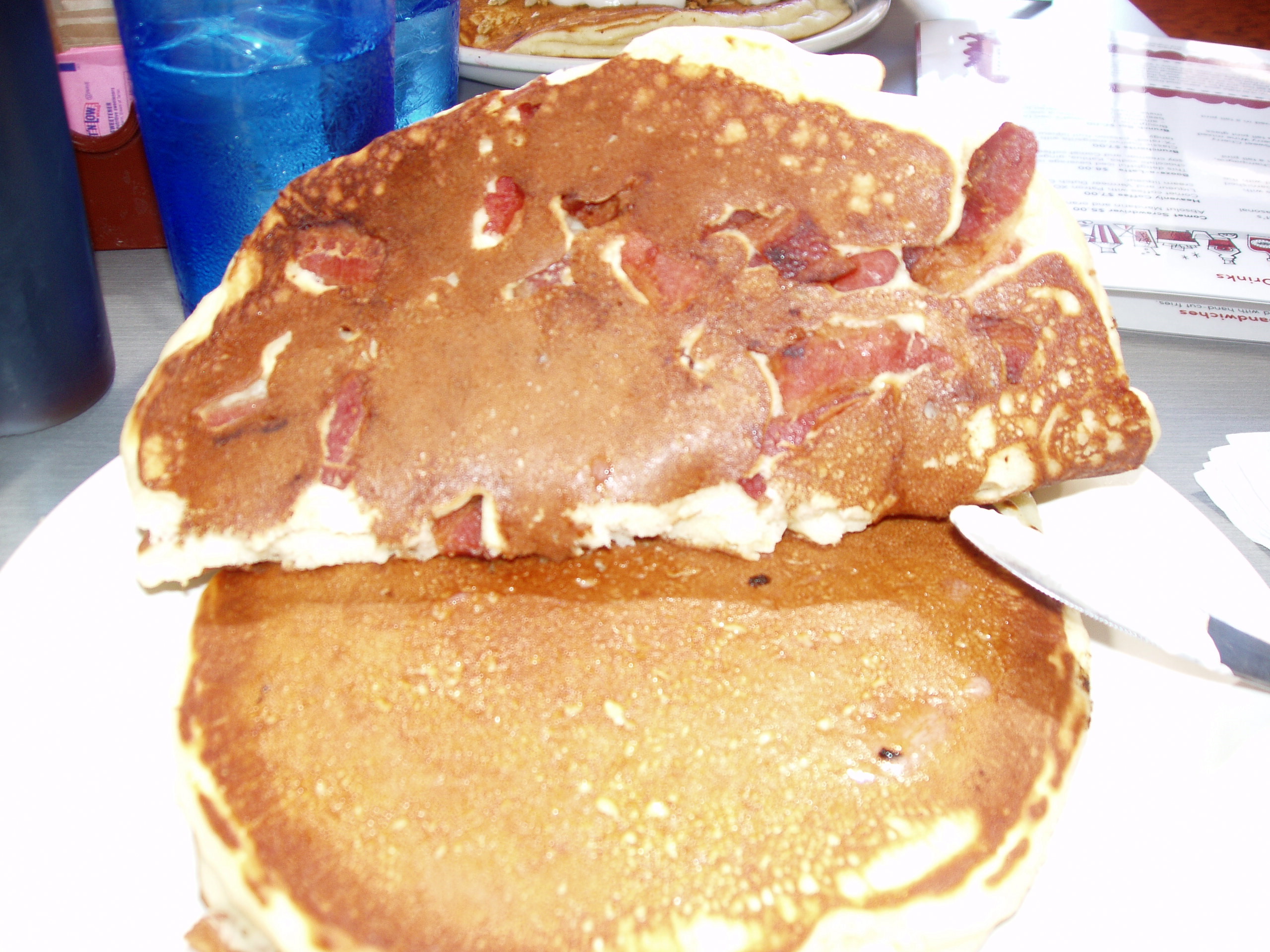
In the interest of full disclosure, I should inform you that the Milwaukee lakefront really is beautiful (just look at that photographic proof), and the day really was lovely, but that I possibly found them even more so due to the fact that I had a fair amount of alcohol throughout the day. In the city of PBR, Miller, Schlitz, Old Milwaukee, and several craft breweries, are you surprised? I accompanied my delicious brunch of BACON PANCAKES (yes, they mix the perfectly crisp and juicy bacon pieces into the pancake batter and it is as good as it sounds) with the equally delicious Brunch Box, a beermosa with amaretto and Guinness mixed in. Beermosa, you say? Why yes, mix up some orange juice with a white beer and you have yourself a fine drink. The other ingredients just perfected it. (Thanks to Nick at Comet for inventing this drink.)

BACON PANCAKES thank you, Comet

BACON PANCAKES + maple syrup = brilliant

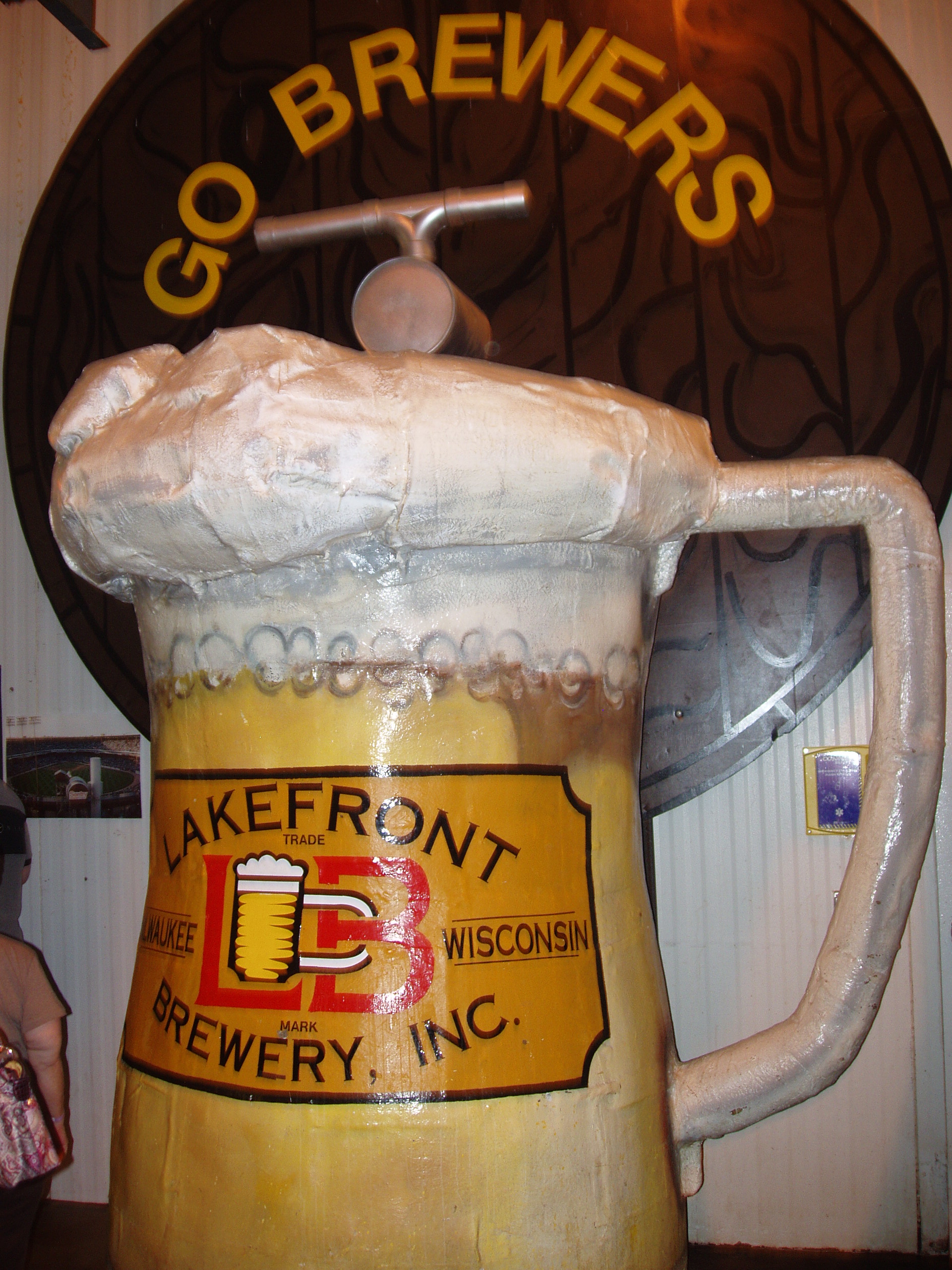
After this very good start, we went to Lakefront Brewery and got the best deal for my money in a long while. Seven bucks got us: a tour of the brewery, a souvenir glass, access to the riverfront deck, a coupon for a beer at participating bars in the area, and four 6 oz. pours of beer right there on the premises. I did learn a couple of things about the brewing process that I’d been curious about (what are hops? oh, that is the actual name of the plant that they take the flower from to add to the beer, etc.), which previous attempts to clarify by half-coherent friends at loud bars had not satisfied. We all made sure to try every beer available on tap, and shared our samples with each other. Everyone else enjoyed the Riverwest Amber, and while that was quite good, my favorites were the Fixed Gear (I guess the hipsters in my neighborhood affect me more than I thought) and the Rendezvous (a French Ale, they said, which seemed to mean close to a Belgian). The entire experience was only made better by the presence of a bachelorette party made up of women of all ages in the most ridiculous fancy dresses they could find. I’m talking 80s prom dresses, a Snow White/Belle from Beauty & the Beast hybrid, and a lot of tulle. I didn’t take any pictures of them, but here’s a picture of the giant beer mug that the Milwaukee Brewers mascot used to jump into (via slide from his game-watching balcony) every time the Brewers scored a home run. The mug is now housed at Lakefront Brewery:
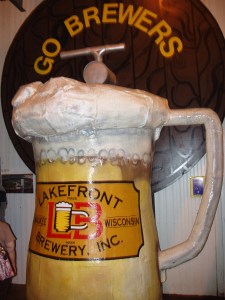
Brewers mug at Lakefront Brewery

have some beer

While on our 3rd pour of free beer, Sessily, T, K, and I got into a discussion of perception and reality. No, it wasn’t a faux-deep “we’re all just specks in the universe, man” conversation. T said that he couldn’t remember the last time he was surrounded by so few hipsters (we live in Logan Square, an area of Chicago pretty well known for its trendy bicyclists), and we all agreed that yes, our fellow brewery tour participants were far more likely to attend sporting events than art-noise concerts, shop at The Gap rather than thrift stores, and hold a steady 9-5 instead of a part-time cafe job. (Please enjoy today’s edition of Stereotypes: Making Your Point Faster Than Truth Can.) Anyway, I said that Milwaukee has been voted drunkest city in the nation, and it’s a city of industry besides, so it’s got a reputation for being coarse, a little rough and tumble. In fact, most of the Midwest is probably seen in those terms by outsiders, I said. K, who is from Portland, Oregon, countered that he’d never thought of the Midwest in those terms; rather, everyone on the West Coast assumes the Midwest is full of unfailingly polite, boring types. True, I said, outsiders have that mostly insulting view of rural Midwesterners, but if you mention Chicago, St. Louis, or Milwaukee, they’ll tell you to watch out, those are dangerous places. Sessily pointed out that rural Midwesterners contribute to this idea of the cities being especially dangerous and shady, so the cities get it from all sides. (Also, now that I think about it, I’m not sure why I lumped in Milwaukee with those other two — does anyone think of Milwaukee as dangerous? Probably not. Sorry, Milwaukee. Please continue to give me beer.) It was an interesting discussion of how we see ourselves, how others see us, and how those perceptions affect the actual place we live.

We only day tripped to Milwaukee, and there’s a lot more to see, so I plan to be back sometime this year. But I can already say that the parts of town I saw were lovely, and the people, yes, were friendly. My takeaway, though, comes back to that delicious barley-and-hops concoction, beer. I was passing through the brewery gift shop, and a woman was trying to trade in her plastic taster cup for the souvenir glass. “Not til you finish your drink,” the gift shop attendant said. The woman looked warily at her almost-full glass. In other cities, maybe she would have been shown mercy. Maybe other cities would offer her as much time as she liked to finish it. But this is Milwaukee. This is The Nation’s Watering Hole. This is beer. The woman’s friend turned to her and said:

“This is Milwaukee. Slam it.”
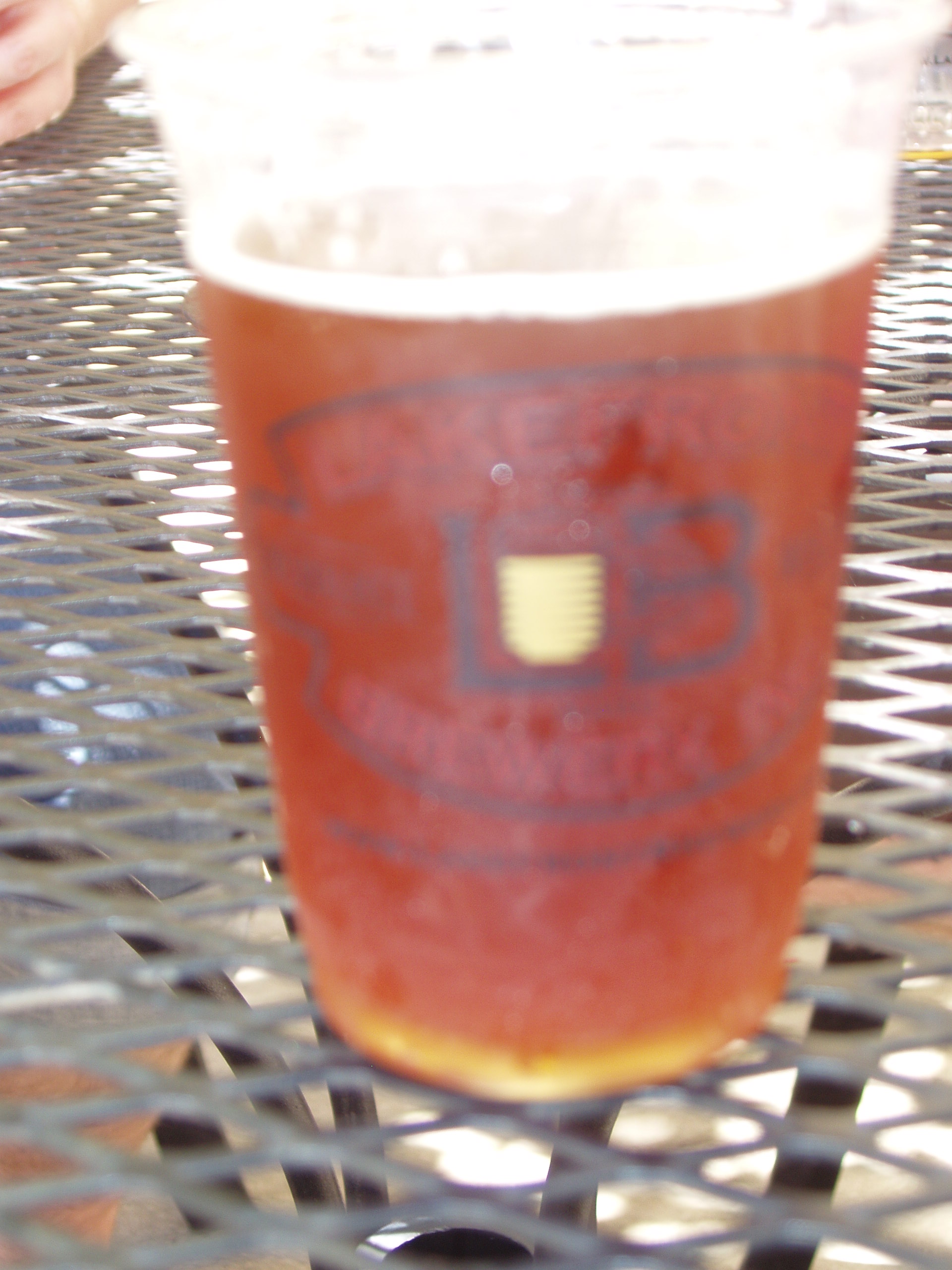
Lakefront beer

This is Milwaukee. Slam it.

Storytelling as Action

I don’t have much time today to expound on this, but here’s a fascinating excerpt from the book Telling Stories: Indigenous history and memory in Australia and New Zealand, edited by Bain Attwood and Fiona Magowan (Allen & Unwin, 2001). In the entry “The saga of Captain Cook: Remembrance and morality,” Deborah Bird Rose relates the story of Captain Cook as told by Hobbles Danaiyarri, who is an Aborigine living in Yarralin in the Northern Territory of Australia. His story is told in a mix of past and present tenses, and relates the injustices his people suffered at the hands of Captain Cook and other Europeans. After reprinting Danaiyarri’s remembrance, Rose explains how history and morality are tied up in Aboriginal thinking, explaining that this remembrance is a saga as opposed to a Dreaming myth:

…the saga is set in a time frame that is conceptualised as part of the present (ordinary time), whereas Dreaming myths are set in a time frame conceptualised both as the past and as a concurrent present. The latter are source of moral principles, and moral action is judged by reference to these principles, which are deemed to be permanent rather than subject to change and negotiation. Captain Cook’s law, by contrast, is seen as immoral, and this presents Danaiyarri and others with a problem: how to account for immoral action that is reproduced through time and thus appears to endure, just as Dreaming law endures. I contend that Yarralin people’s logic requires that the Captain Cook saga be kept in ordinary time — that it not be allowed to become part of the Dreaming past. (p. 70)

Moral action is seen to endure, and actions that do not fit the moral frame of reference cannot be part of the same timeline as moral actions. So these immoral actions are framed in the present, in ordinary time, as a current problem, even if they happened hundreds of years ago. By viewing morality and history as intertwined in this way, wrongs can be addressed in the present day, even if a linear timeframe would see those wrongs as too far in the past to warrant redressing. The very act of telling these stories is a move for social justice, keeping history literally alive in the general consciousness and demanding recognition and action. As Rose concludes, “far from being the consolation of the powerless, remembrance is an active force for social change” (p. 79).

What a powerful way of viewing history, storytelling, and collective action! What do you think? What stories should we be telling in “ordinary time”?

Go Blackhawks! Now Change that Mascot!

Congrats, Blackhawks! Now get rid of that mascot. Not a single other team in the NHL is named after Native Americans. There are plenty in other major sports leagues, but in hockey, none. There is not a single other NHL team that takes an entire group of people and packages them into a mute mascot.

Read this great post on why Native American mascots aren’t harmless traditions: http://nativeappropriations.blogspot.com/2010/06/thanks-for-severed-head-youve-proved-my.html#more

One of the best parts of it points out that these mascots and their attendant imagery as bloodthirsty savages has a devastating effect on the psyche of Native American youth across the country. I know the majority population of the States tends to think of Native Americans as wiped out a century ago, but they are alive and well. If ever there were a time to actually think of the children instead of doing useless hand-wringing, this is a good one.

My dad went to University of Illinois, and I know he has a lot of fond memories of attending Illini games, wearing the Chief insignia on his shirts, doing the Illini chant. But those are memories anyone can have with their college sports team; K College students got pretty excited about a giant hornet. You don’t need to appropriate an entire group of people, their history, their culture, their stereotyped image, and make them into a symbol of how fierce, tough, and primitively warrior-like your sports team is. Use an eagle or something.

So Blackhawks, congratulations on your historic win. How about you make more history and change your mascot? Heck, you could even change your name to the Hawks; it’s what everyone calls you anyway. It’s not like you’ll lose your winning reputation — your name will always be more intimidating than the Pittsburgh Penguins.

ETA: I had a conversation with my coworker Branden about this post, and he pointed out how important Black Hawk is to the history of Illinois. I tried to clarify:

“The thing is (which maybe I need to be clearer about) is that there are a lot of things that are important to one group’s history, but that doesn’t mean that that group should be allowed to claim those things for everyone’s history. For example, the Confederate flag is important to a lot of white southerners as a symbol of independence and regional pride. It’s also a symbol of brutal violence, humiliation, and slavery to a lot of black southerners. Claiming the Confederate flag for Georgia, for example, on the state courthouse or whatever, is claiming it for all Georgians, and basically saying, ‘The independence/pride part is more important than the violence/humiliation/slavery part.’ Which is just wrong.

“Black Hawk is an important symbol to some, but to others is part of a long line of mascots that remind Native Americans that they are just symbols of savagery for major league sports teams. You can balance the legacy of Black Hawk with the pride of a sports team without doing that.”

Branden replied: “I wonder what the Sauk tribe thinks about it — I don’t know. They’d be the ones I’d primarily want to hear from. And if they find it offensive, then shoot, call the team the Hawks, like you said. They already have a badass Hawk logo they can use.”

And then he provided this awesome link: http://2.bp.blogspot.com/_r8tWGVHrjGI/SHPrp67Fv8I/AAAAAAAAE1I/DwFl7Nff5SY/s320/chicagologo.png