Guayaquil: Ecuador’s Overlooked City

The port town of Guayaquil is the largest city in Ecuador, and it’s one of the oldest cities as well. It’s been the site of many a battle through the years, including skirmishes with pirates and fights for independence from Spain. This contributes to the rough and ready reputation the city and its citizens have, and most people I met there were half-proud, half-sheepish about that reputation. Sure, it doesn’t have the polish of Cuenca or the political importance of Quito, but people from Guayaquil wouldn’t want to be from anywhere else.

Official seal, topped by an unofficial iguana

Official seal

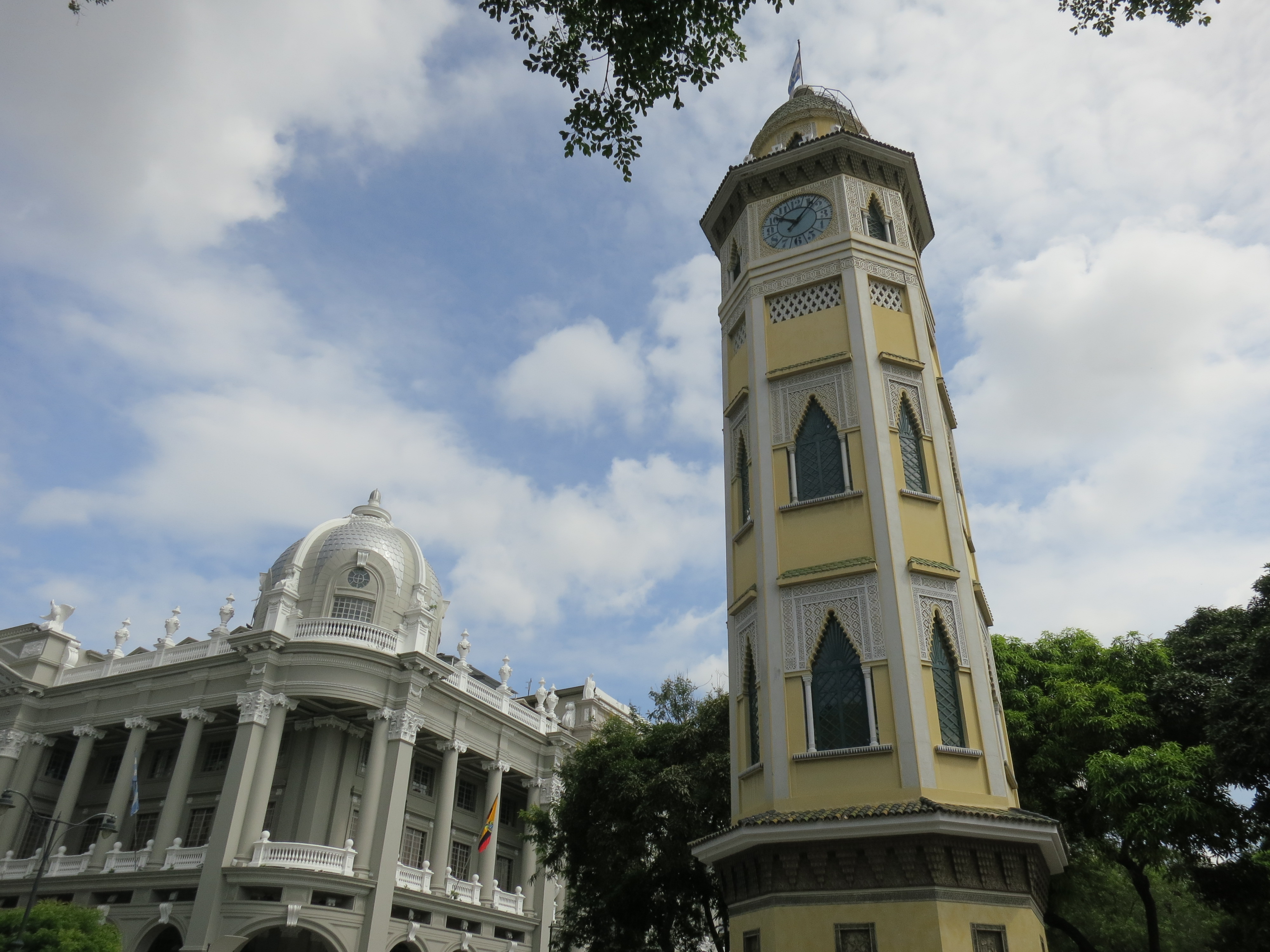
El malecon is a revamped stretch of waterfront, a long, rather sterile boardwalk containing statues of past leaders, a botanic garden, a children’s play area, a couple restaurants, and a large clock tower. I liked the part of the walkway built to resemble sails of a ship, and the odd sculptures representing the four elements. The climate of Guayaquil is perfect for the botanic gardens, which sagged with the weight of giant green leaves and bright flowers in the humid heat.
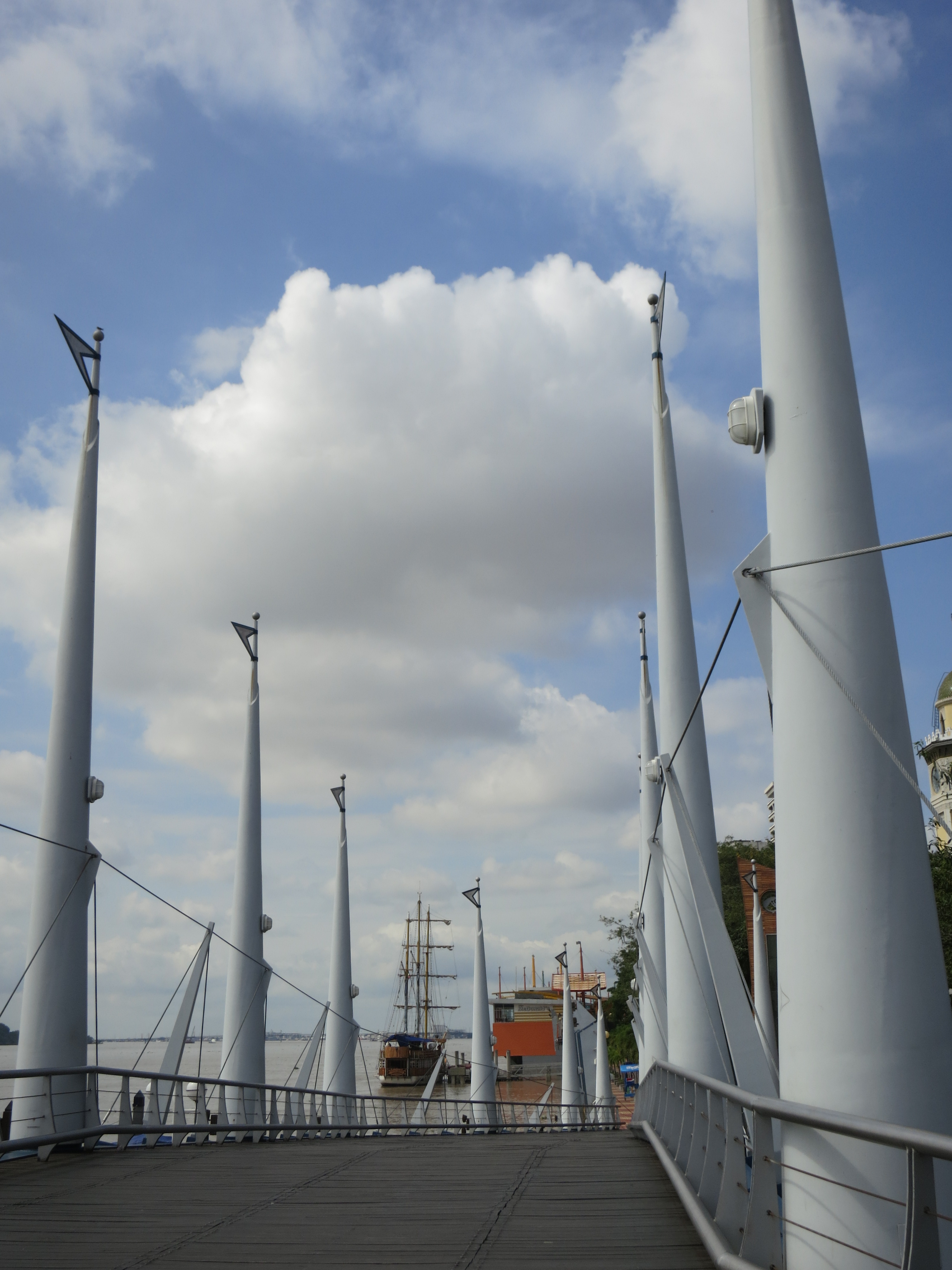
Masts along the walkway
Masts along the walkway

Clock tower, and across the road, an attractive government building

Clock tower, and across the road, an attractive government building

Botanic garden

Botanic garden

Over a hundred years ago, some iguanas made the plaza in front of the cathedral their home, and since then, it’s unofficially been known as the iguana plaza. There are signs everywhere asking people not to touch the animals, which were roundly ignored by most visitors to the plaza. I did have to watch my step in there–most of the iguanas lounge on the fenced-off areas, but a few decide to leisurely move to another grassy knoll, usually stopping in the middle of the pathway for reasons known only to them. I’m used to seeing pigeons or squirrels take over a public area, but this was the first time I’d seen reptiles be the local pest.

IMG_4064 IMG_4057

My friend Andy, a native of the city, took me to the Parque Historical, which is a combination outdoor museum and zoo. The zoo area was closed when we visited (the animals are given a day of rest every week, which I think is great), but we were able to see the outside of the hacienda and the reconstructed villagers’ house on stilts. Behind the stilt house, we watched pigs rooting around in their feed and ducks splashing in water. Andy showed me the cocoa beans, which have to be dried in the sun before they’re ground up and used for chocolate. He identified a lot of plants for me, which I always find impressive, as I can maybe name five plants native to my home.

All aboard

All aboard

guayaquil

Finally, I spent a little time in Las Peñas. This is the oldest part of the city, a collection of colorful buildings on a hilltop at the end of el malecon. As is true in formerly rough waterfront areas in just about every city I’ve been to, the city leaders have put a lot of money into cleaning it up and bringing tourists in. I didn’t get to experience the nightlife there, but it’s meant to be really fun. As it was, I bought some souvenirs at the large artisan’s market and walked down the oldest street in town (cobblestoned, of course).
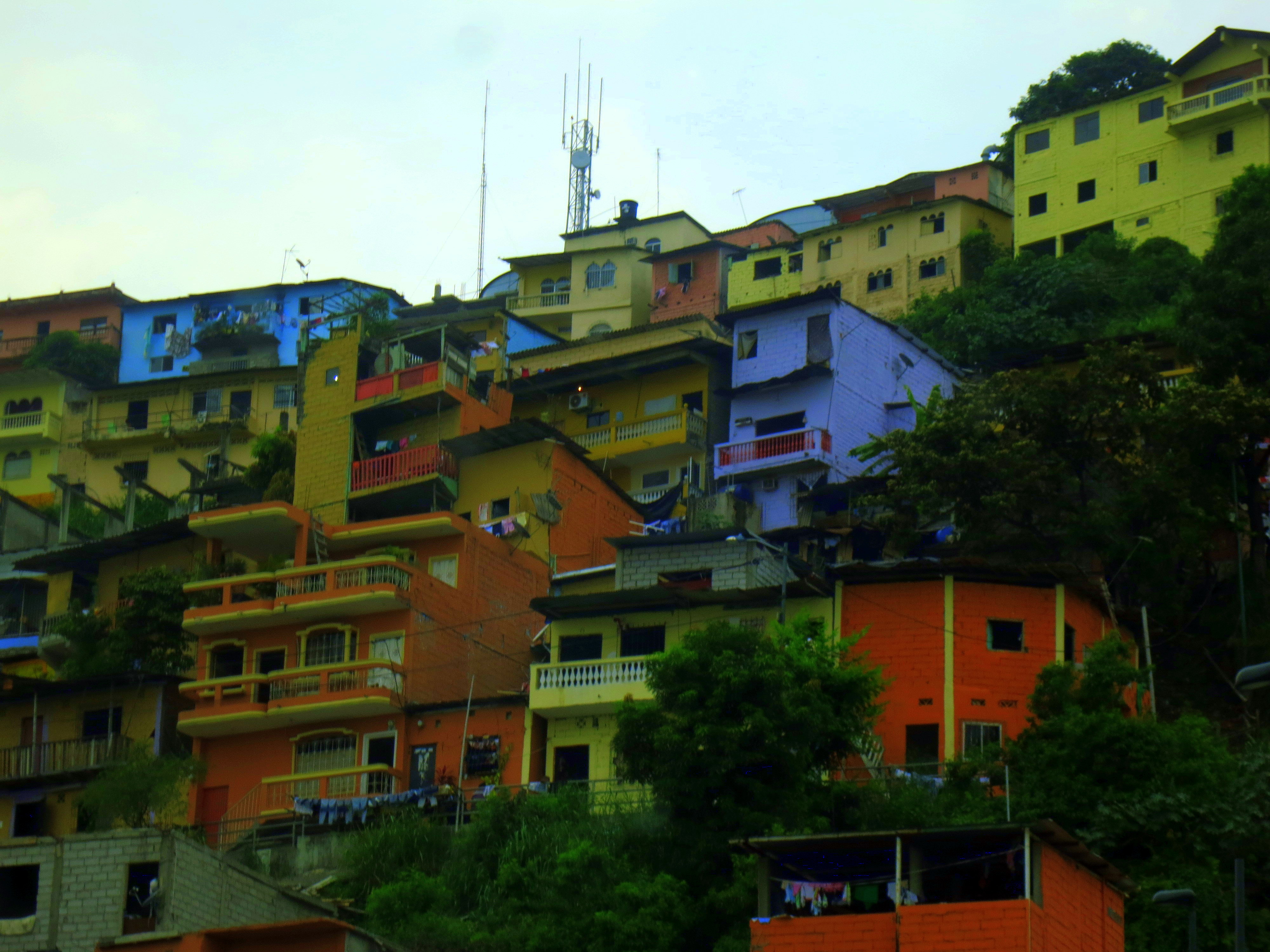
Las Peñas
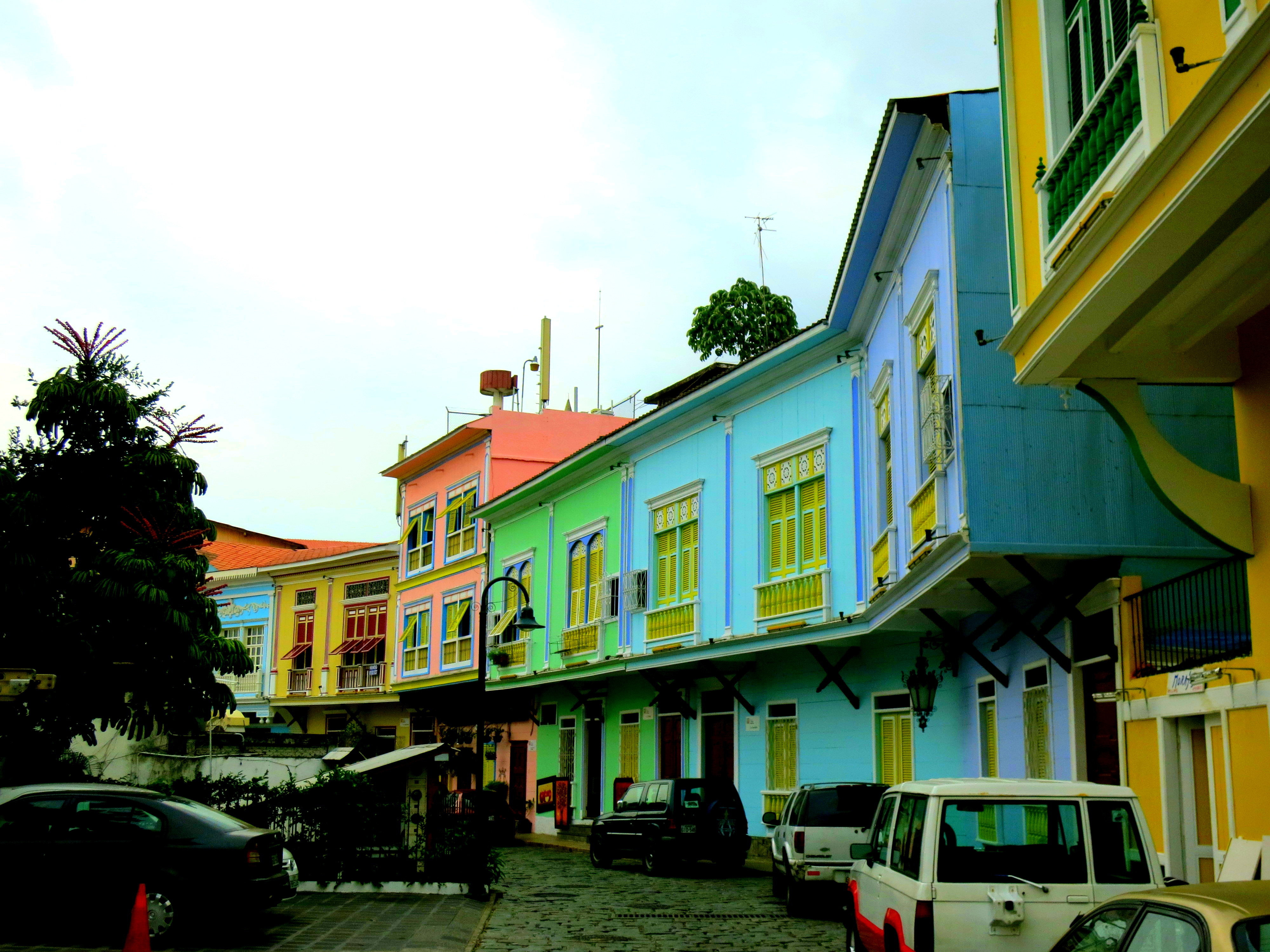
Las Peñas

guayaquil

A lot of people, myself included, use Guayaquil as just a stopover on their way to other places, but from what I’ve seen, it’s worth spending more time there and exploring the place that claims so many proud residents–not to mention noble iguanas.

These two leaders set upaadlfkj

A statue of Bolivar and San Martin shaking hands after agreeing to let Guayaquil stay with Ecuador rather than be annexed to Peru after liberation from Spain

Too Old for Hostels

Matador has a great post up about how you know you’re too old to stay at hostels. Just about every one of those applies to me, except I don’t think about telling people to shut the hell up after 1:30am, I actually say that to them.

Most cities have non-party hostels, so those are the ones I usually stay at, thus bypassing many of the problems mentioned in the Matador post (party boats, etc.). And in Southeast Asia, a private hotel room with attached bathroom was so cheap, I usually went with those.

But some of the things they mention–rolling your eyes any time someone talks about “just living,” stereotyping Australians–well, those apply anywhere.

The Things I Left Behind

Apparently, the latest travel advice is to take your grungiest underwear and t-shirts with you, wear them out over the course of the vacation, and then buy new ones to take home. I see the benefits of that, but when you’re traveling for longer than two weeks, it’s trickier. I take only one of just about everything–jeans, warm top, jacket, etc.–so it has to be able to last the whole trip. A lot of people do buy new clothes on their travels, especially in Southeast Asia and South America, where everything is cheaper, but I usually can’t find anything close to my size, so I can’t depend on that.

My Chacos lasted me over three years of hard use

My Chacos lasted me over three years of hard use

So it’s not surprising that a lot of things don’t make it home with me. On this last trip, my bag came home considerably lighter than it had left. Here’s what I left behind in the hostel trash in Buenos Aires:

  • one pair of Chacos, right shoe’s strap dangling
  • one pair of ripped-up yoga pants
  • one pair of destroyed leggings
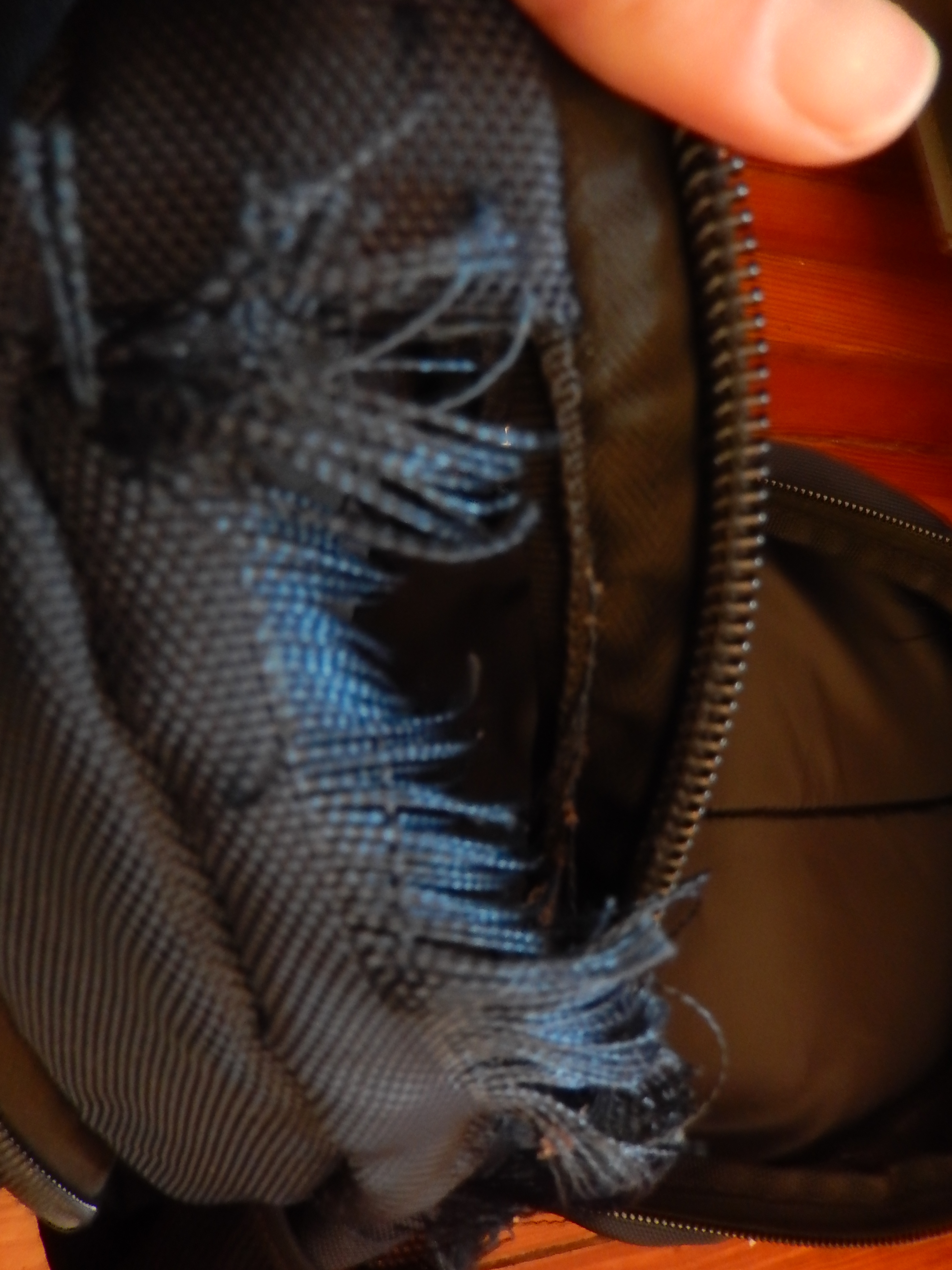
  • one small backpack, strap dangling and hole near zipper growing more giant by the hour
  • at least a kilo of paper–notes from Spanish class, receipts, tickets, scribbled tips from other travelers about what to do in various cities

The backpack broke as I started out on my second day at Iguazu, so I spent the day carrying it around like a particularly cumbersome purse. The shoe broke in the last hour of my time at the falls that same day, so I flapped around the trails and switched to flip flops as soon as I got back to the hostel. Could’ve been worse.

Literally the moment I boarded the bus to the Brazilian side of Iguazu Falls, the strap on this backpack broke

Literally the moment I boarded the bus to the Brazilian side of Iguazu Falls, the strap on this backpack broke

Then there are the things I lost:

  • my purse and everything in it, stolen in Cusco
  • the scarf I bought to replace the scarf that was stolen
  • one charger, for the mp3 player I bought to replace the music on my stolen iPhone
  • one headlamp
  • one fleece, so warm and desperately needed (I bought a new one online before I even returned home, is how necessary a fleece is to my travels)

Material possessions take on a dual meaning when you’re traveling for a long time. On one hand, of course they don’t matter as much–you’re living a different kind of life from the one you lived when you were in one place, and you just need less stuff. On the other hand, you only have one of everything, so if something breaks or goes missing, you’re missing something that you considered crucial enough to carry around on your back for five months. You don’t need much, but what you do need, you generally really need.

Still, it’s all replaceable. Which reminds me, I’d better go shopping before I leave again.

The hole appeared one day, and three days later, there was hardly any point to having a zipper

The hole appeared one day, and three days later, there was hardly any point to having a zipper