
Lake Titicaca, Peru; May 8, 2014
Lake Titicaca, Peru; May 8, 2014
As promised in yesterday’s post, here are a bunch of animals I saw while gliding along the Yacuma River in the Bolivian pampas. We also saw a couple river snakes and capuchin monkeys, but they moved too fast for me to photograph.
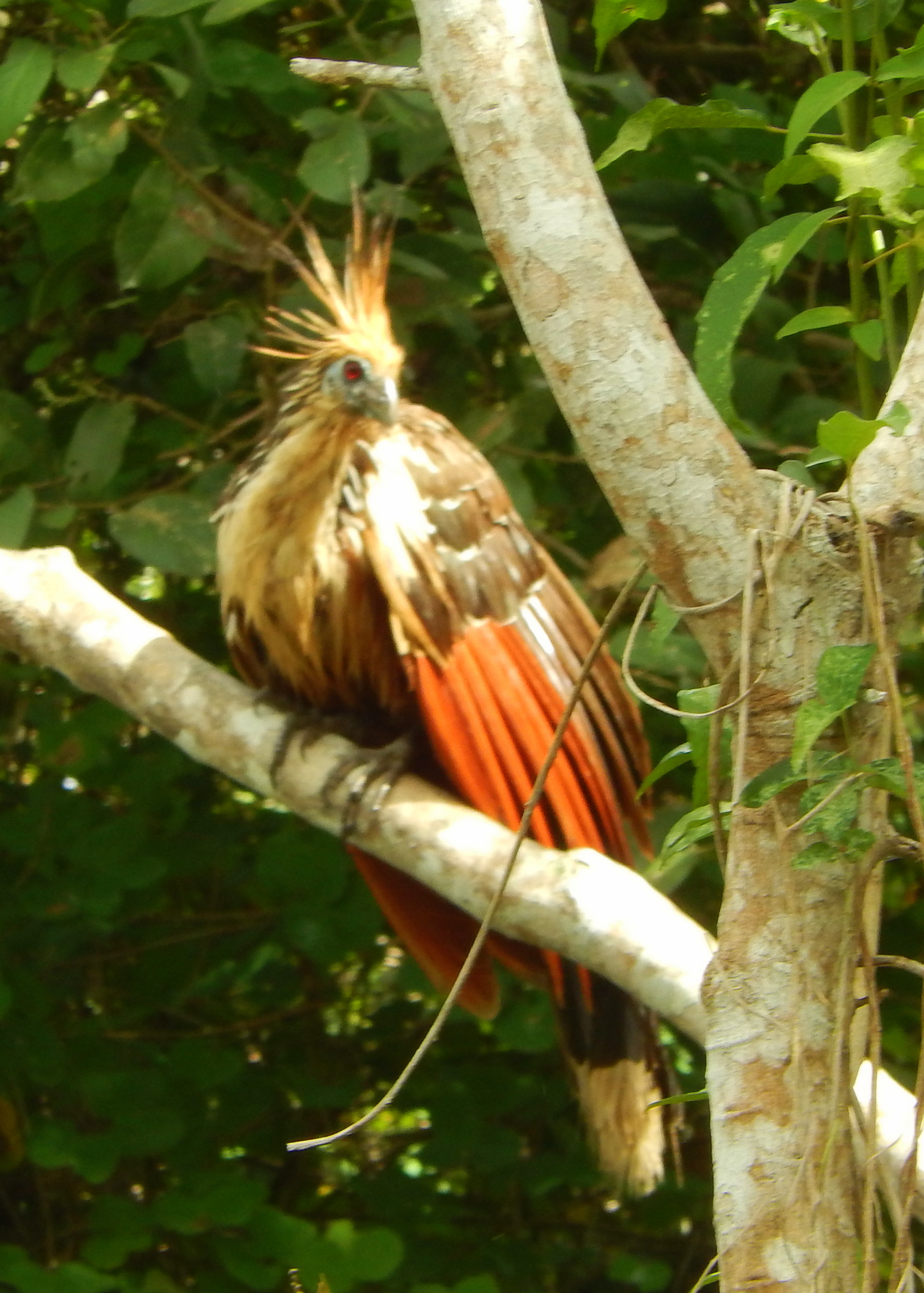
Bird of paradise
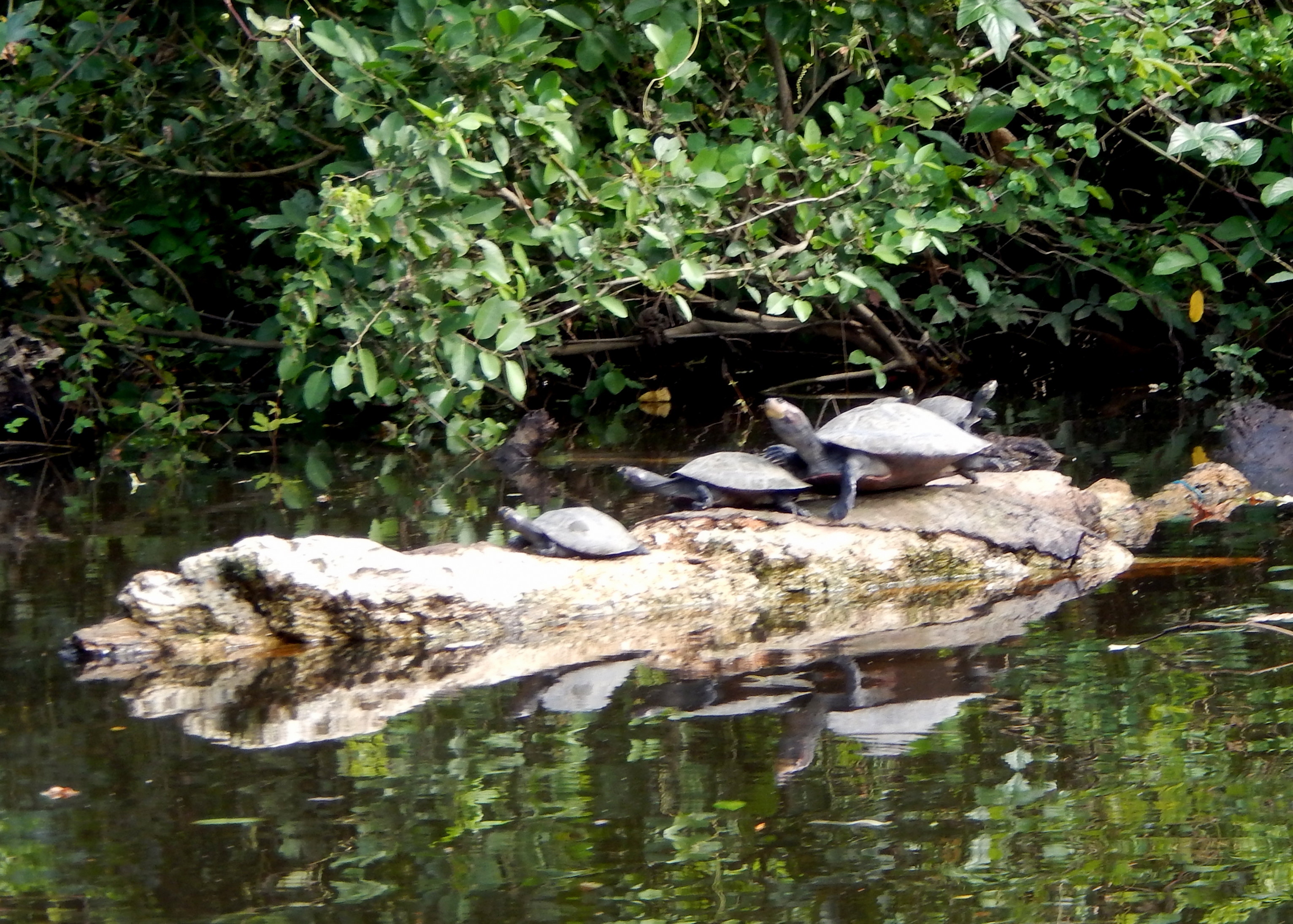
Sunbathing turtles–every single one moved surprisingly fast for a turtle, diving into the water when they heard our boat approaching

Capybara, the largest rodent in South America
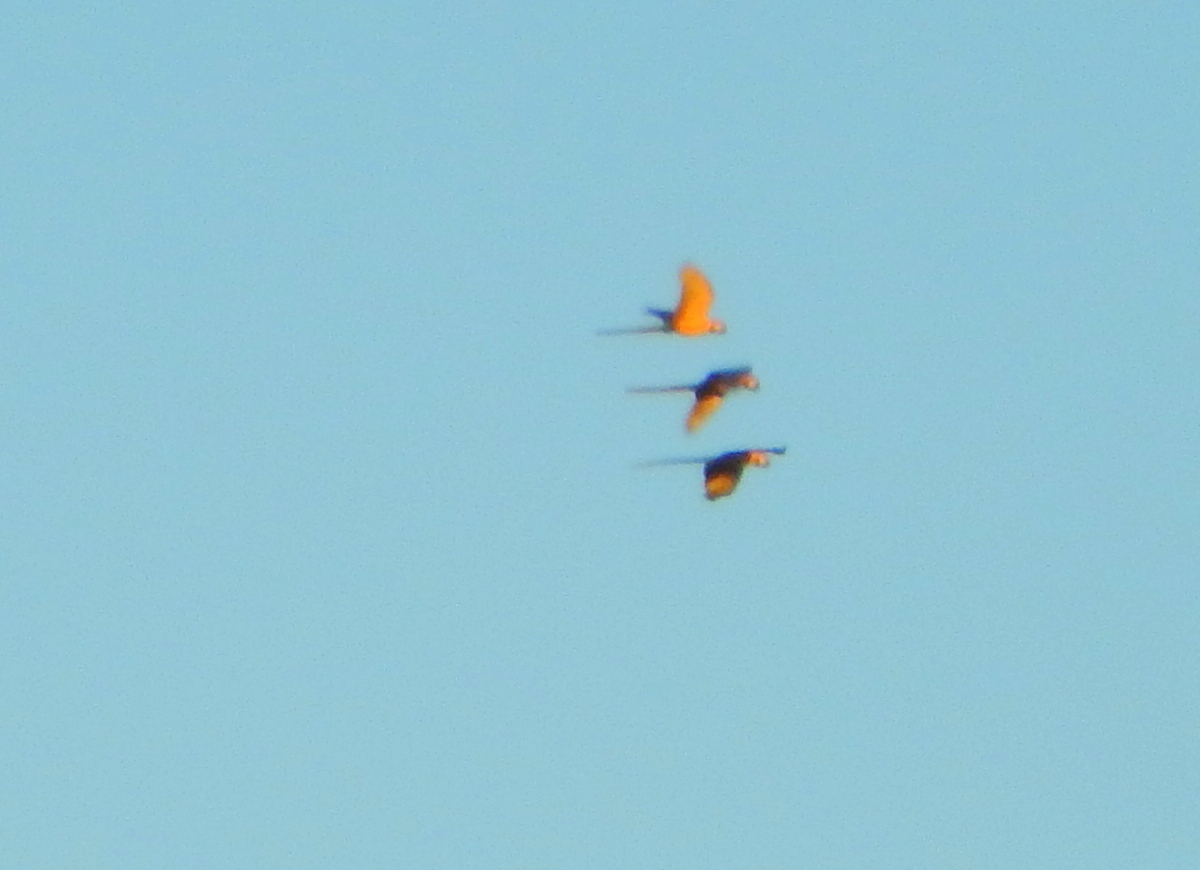
Blue and yellow macaws–we only ever saw them in rapid flight, in groups of three to six

Cormorants

I can’t remember–a type of stork? Any of my birdwatching friends want to help out?

Savanna hawk

Egrets in flight
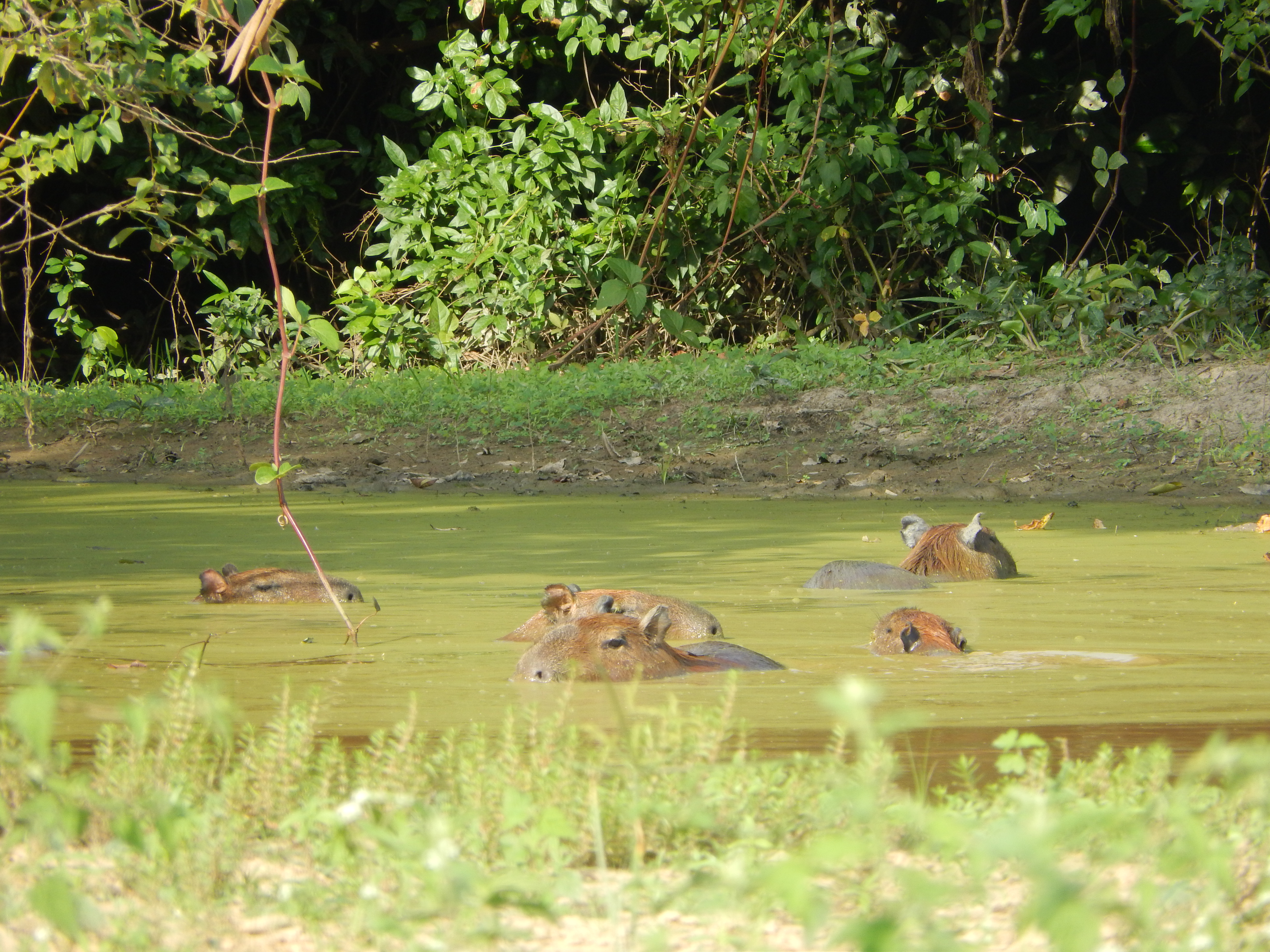
Cooling off

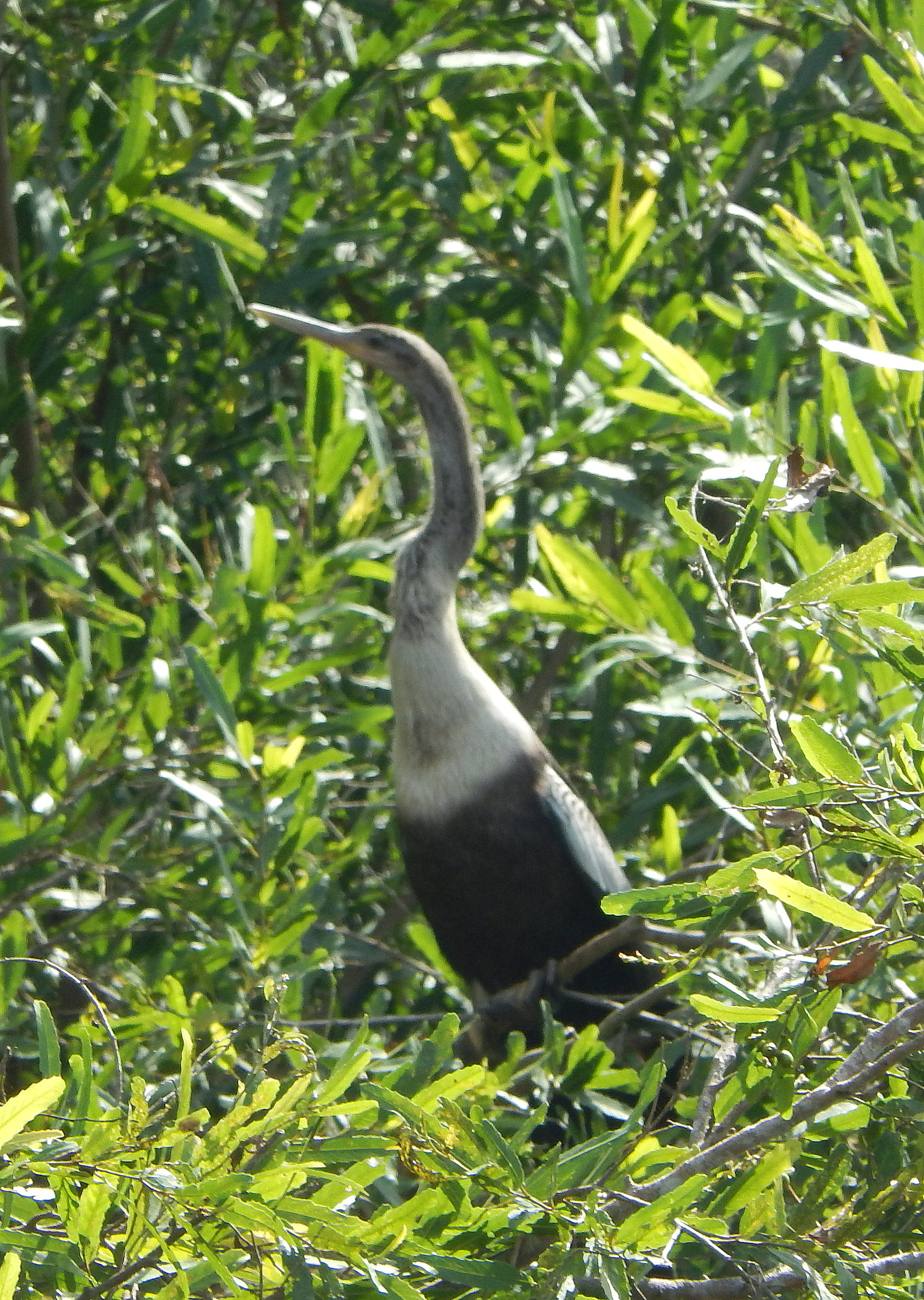
Not sure what type of bird this is

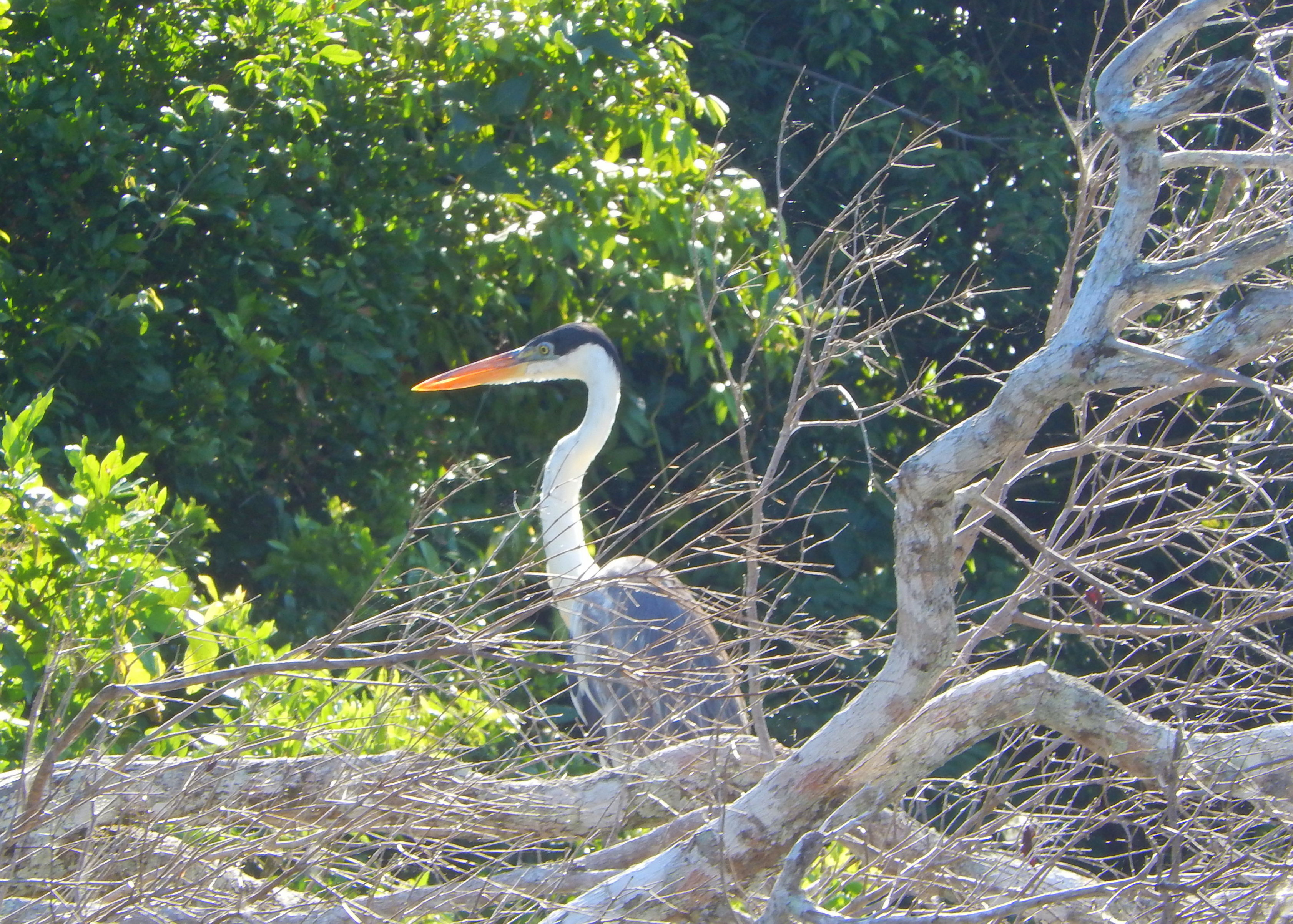
Egret
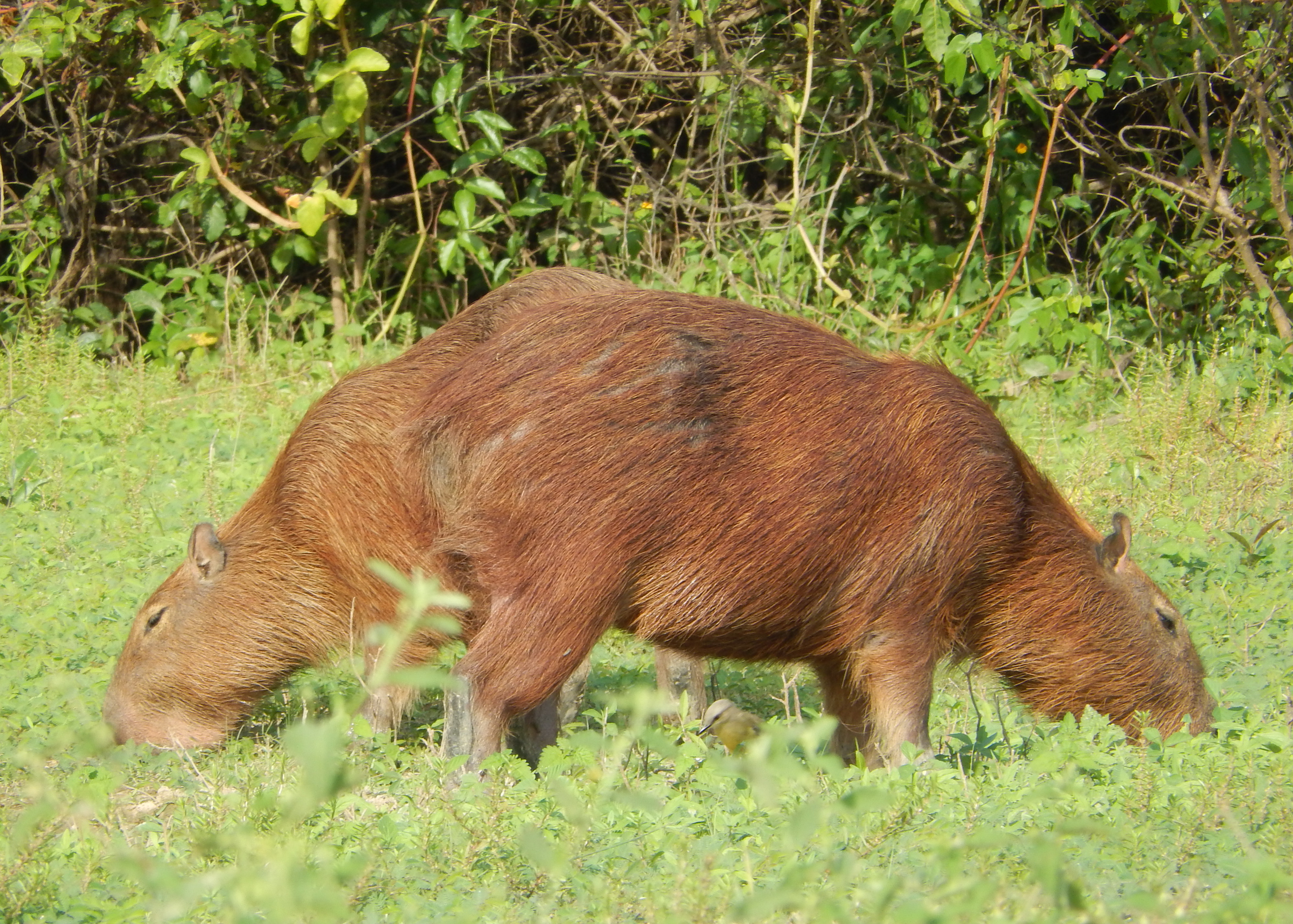
A pushme-pullyu! (Or two capybaras grazing near each other)
Someday I’ll take a weeklong sail down the Amazon River deep into Brazil, immersing myself in the jungle. But that is an expensive option for another day. This trip, I decided the advantages of a Bolivian exploration of the Amazon basin were worth it: there’s no malaria risk in this part of the country, it’s a lot cheaper, and if you go to the pampas rather than the jungle, you are much more likely to spot wildlife. I had a wonderful, relaxing time, and I had some firsts.
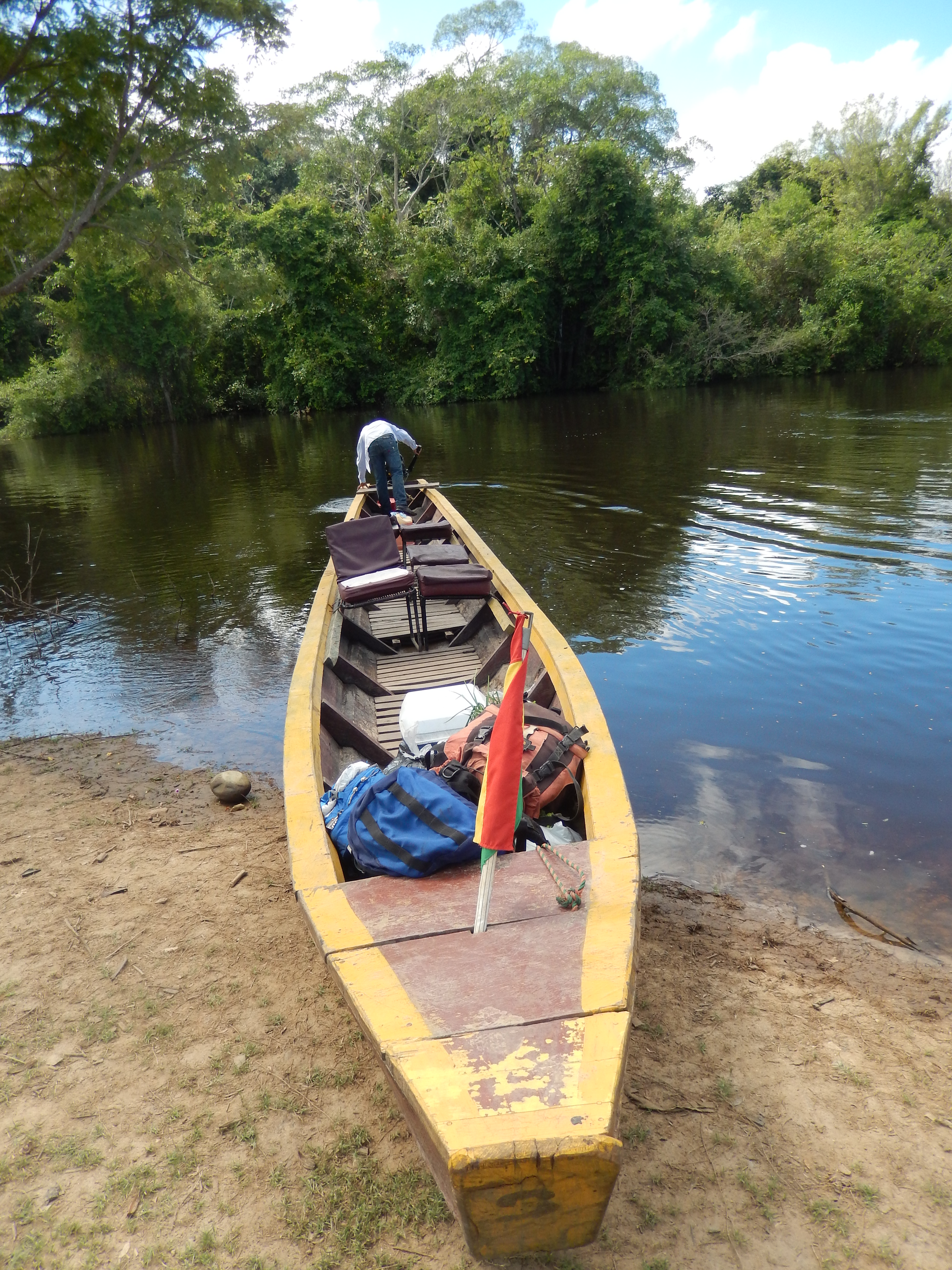
Basically my home for a couple days
1. Flying in a 19-seat plane

Tiny plane, big mountains to cross
I was not super excited about this one, but this was the flight that was available, so this was the flight I took. There wasn’t even a curtain between us and the two pilots in the cockpit, so we could hear every ominous beep and blip from the navigation system. But the views of the mountains surrounding La Paz giving way to the dense jungle outside Rurrenabaque were wonderful.

Great views
2. Fishing for piranhas
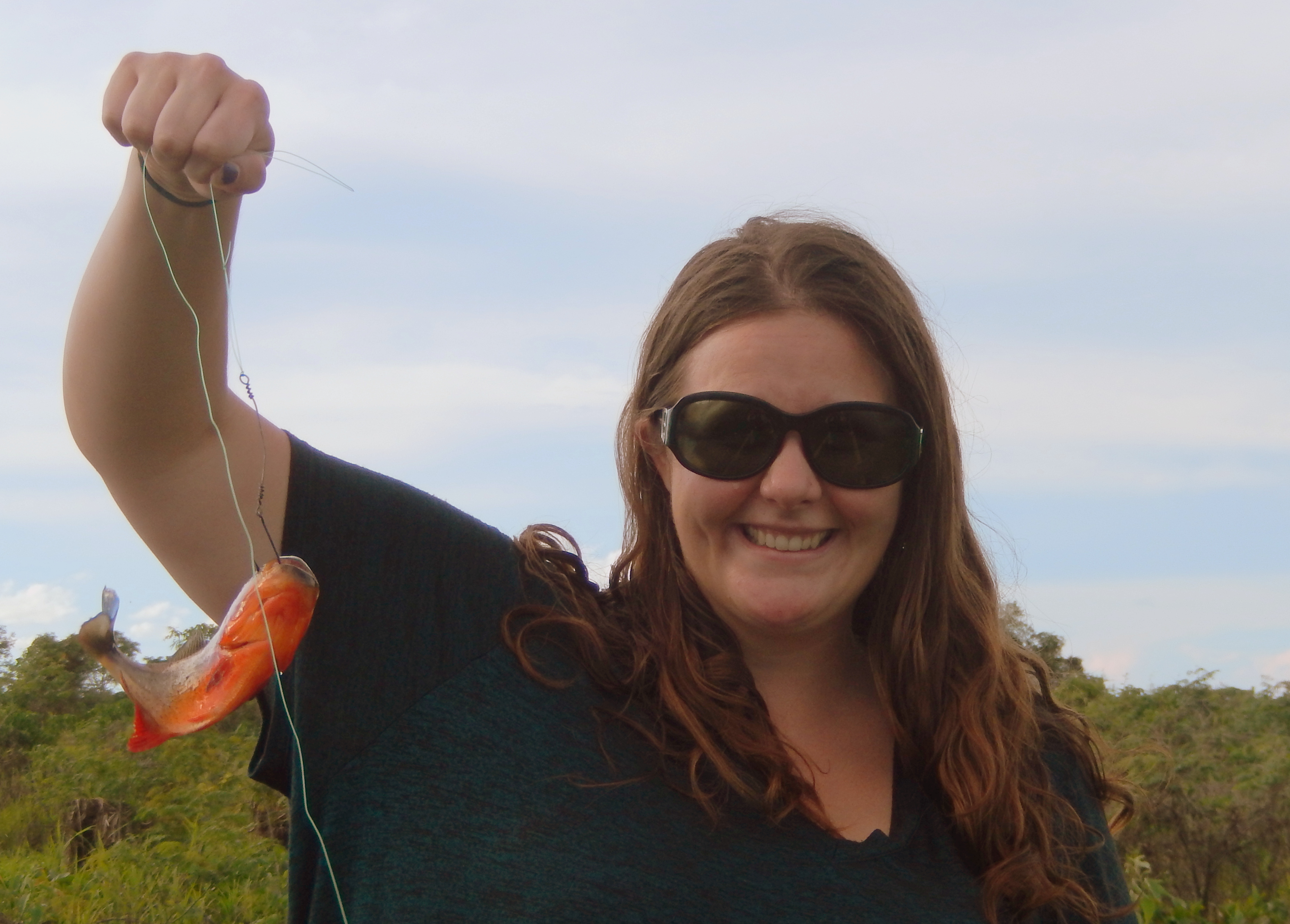
I caught dinner
I caught one! I haven’t been fishing in probably 20 years, but our great guide, Eloy, took us to a spot he says he always has luck with, and we all caught a piranha within five minutes of throwing our line overboard. When I pulled the fish out of the water, he fought like crazy, and those sharp teeth are no joke (Eloy still has a cut from three weeks ago when a piranha caught him off-guard). We all had piranha that night (it’s not that flavorful and there isn’t much meat, turns out), and at the end of the meal, the other woman in my group pulled apart the mouth and we all felt the teeth. Super sharp.
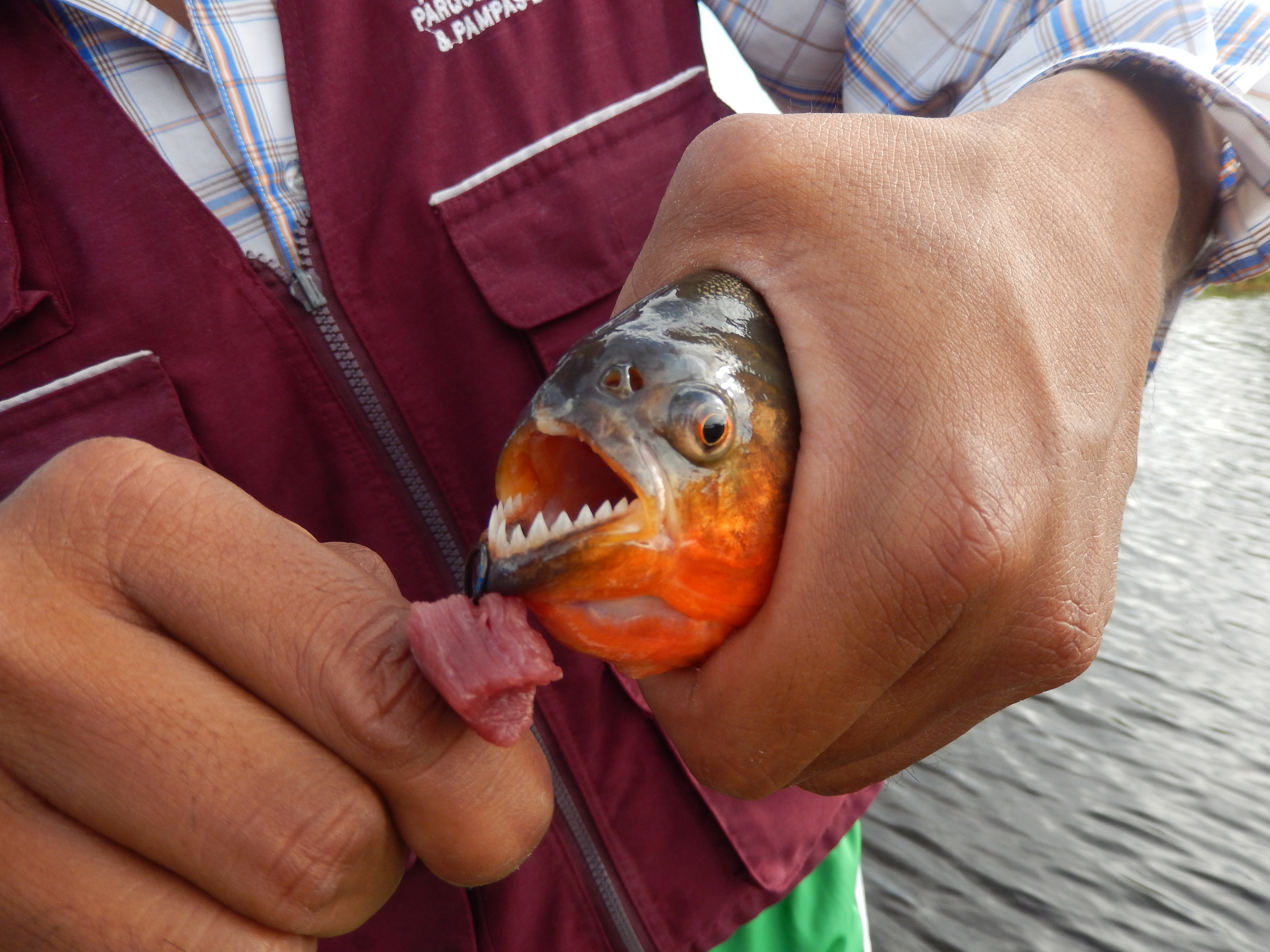
TEETH–and yes, that’s beef that we used for bait
3. Swimming with river dolphins

The only interfering we did with animals was to toss the dolphins this ball; they seemed to have fun grabbing it in their mouths and swimming around with it
Speaking of teeth… The Yacuma River is populated by a species of pink dolphins, and like everything else in the area, apparently, they are armed with teeth. One of the much-touted activities of all the pampas tours is swimming with the river dolphins. What they neglect to mention is that the dolphins’ idea of fun is to swim up below you and gnaw on your feet. You can’t see them coming, because the water is a murky brown, and as someone who has never seen Jaws because that would make it difficult for me to enjoy swimming in open water as much as I do, I found this really freaky. A few times, a dolphin swam up to me so that its rubbery skin was right under my feet, but mostly it was biting. Sure, you’re supposed to remain calm because flailing just makes it worse, but that’s not easy. I liked seeing the dolphins (and they surfaced often, making a whooshing noise like a horse sighing), and it was cool to have them swim right by me, but I didn’t like the biting.
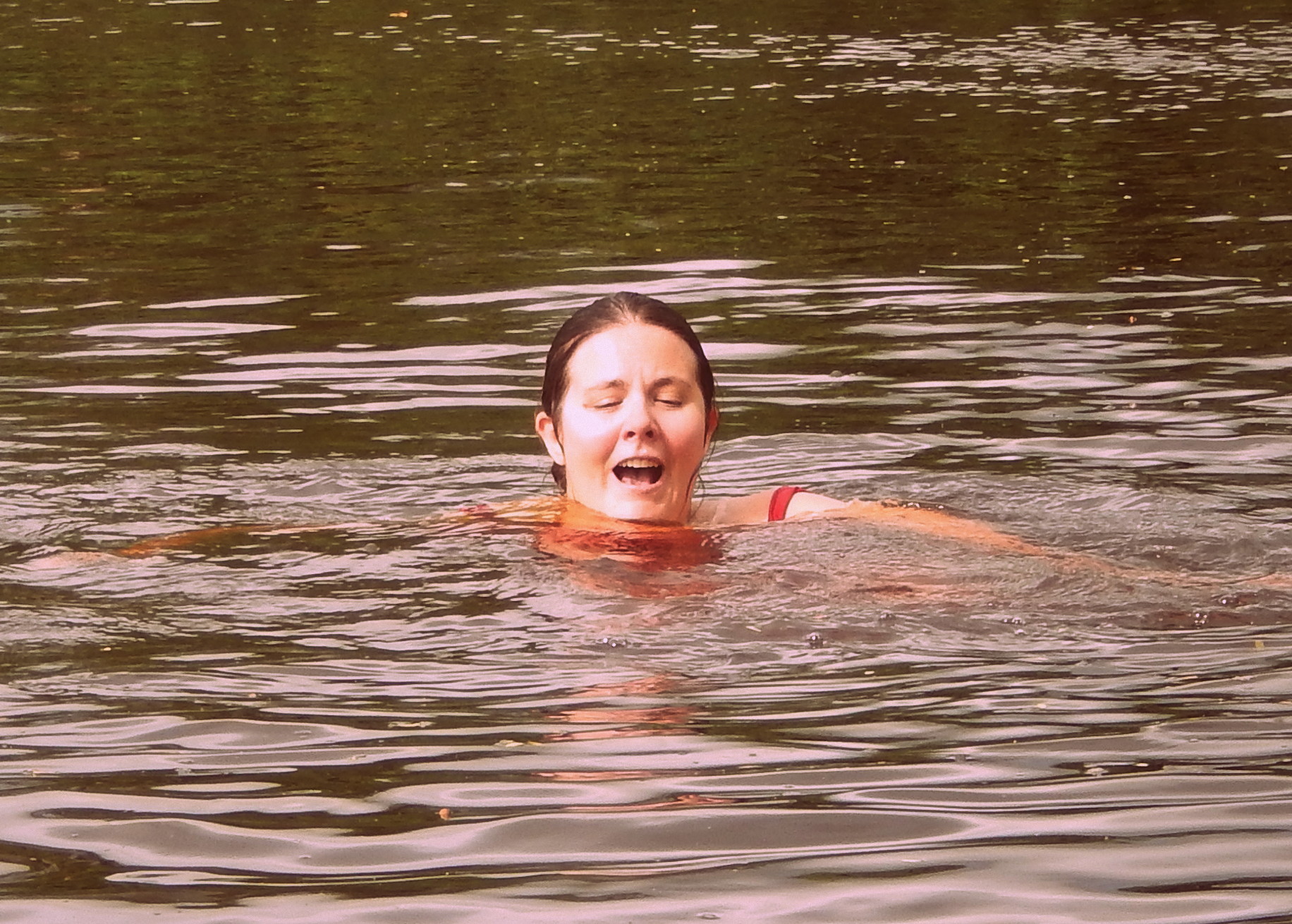
That is the face of someone whose feet have just been eaten by dolphins
4. Chasing the eerie call of howler monkeys
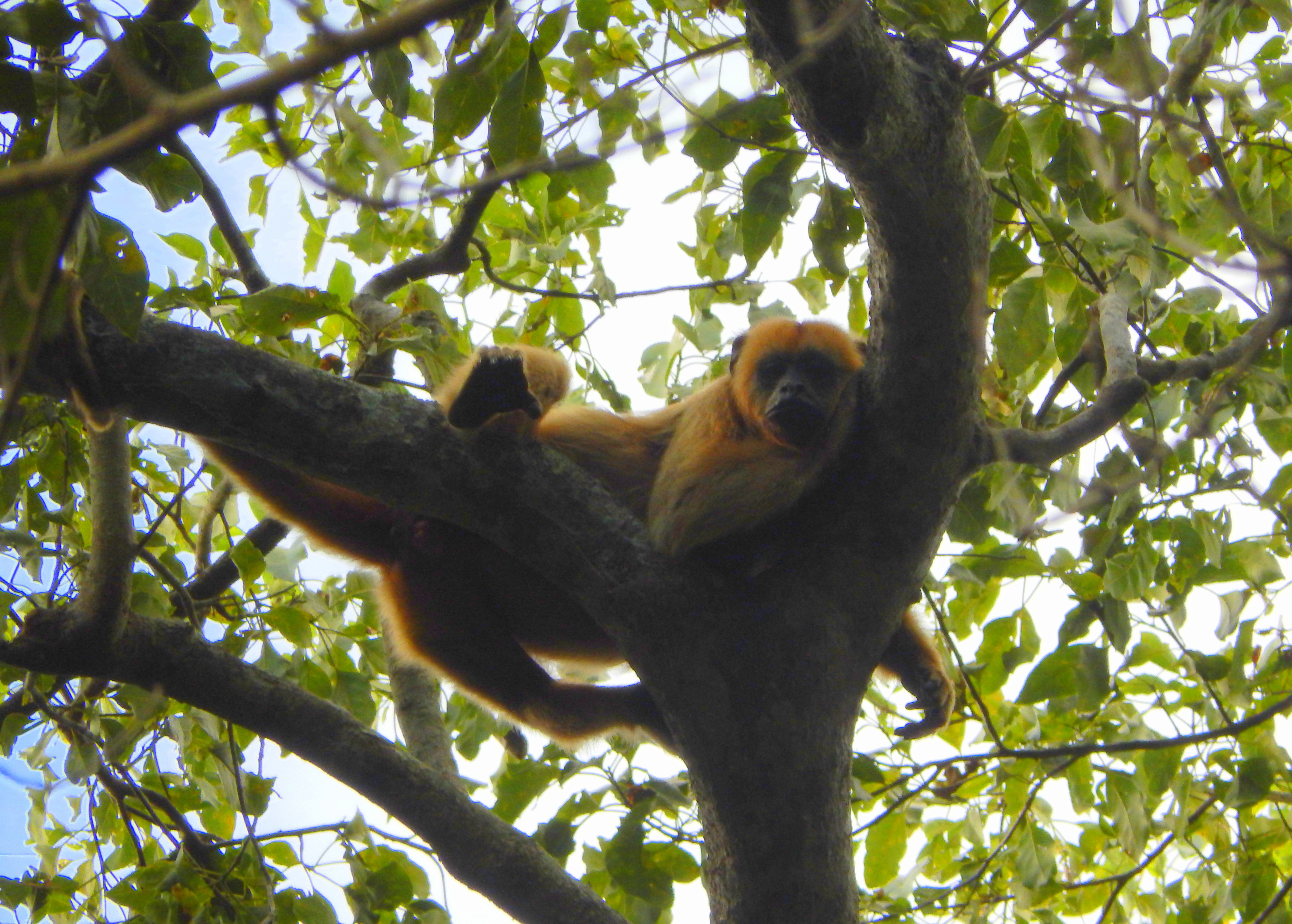
Female howler monkey, just hanging out
I loved chasing after the howler monkeys. We heard the males calling to each other, in what Eloy said was a territory dispute, and we walked as quickly as we could in the direction of the sound. It was loud, and every time we thought we were right there because the noise was so loud, we had further to walk. The sound isn’t howling so much as it’s a guttural groaning, or that noise you make when you mess around with glass bottles–it echoed, too. This part of the pampas was very open, as forests go, but we saw no animals or birds on our quick-step toward the noise. Just tall, leafy trees, and empty space filled with the groaning and growling of howler monkeys. It was eerie and cool.

The male howler monkeys were harder to see, but very easy to hear
5. Stargazing from a boat while simultaneously looking for caimans

A sunbathing caiman
The stars out here, oh man. I got a crick in my neck from looking up; Eloy pointed out the Southern Cross and I hummed Crosby, Stills, and Nash to myself as I picked out an upside-down Big Dipper and the hazy glow of the Milky Way. I would’ve been content to float silently down the river looking up, but we were on a mission to see caimans. Caimans are in the alligator family, and at night you can see their eyes glowing red as they hunt their prey. We saw a couple sets of red eyes, glowing spookily in the dark night, and we even heard bones crunching as one ate his meal. The beauty and the brutality of the pampas in one short night ride.

Those are the eyes we saw at night
I also saw a couple beautiful sunsets and many elegant birds. I dozed in a hammock under a palm tree. I ate well and went to bed early; the generator only ran from 6-10, so lights out was a literal thing. I loved the river boat rides, gliding along while the motor purred behind me and the scenery drifted by. I’ll get to the true jungle someday, but in the meantime, this was an excellent alternative.
Check out tomorrow’s post for photos of birds, turtles, and capybaras in the pampas.
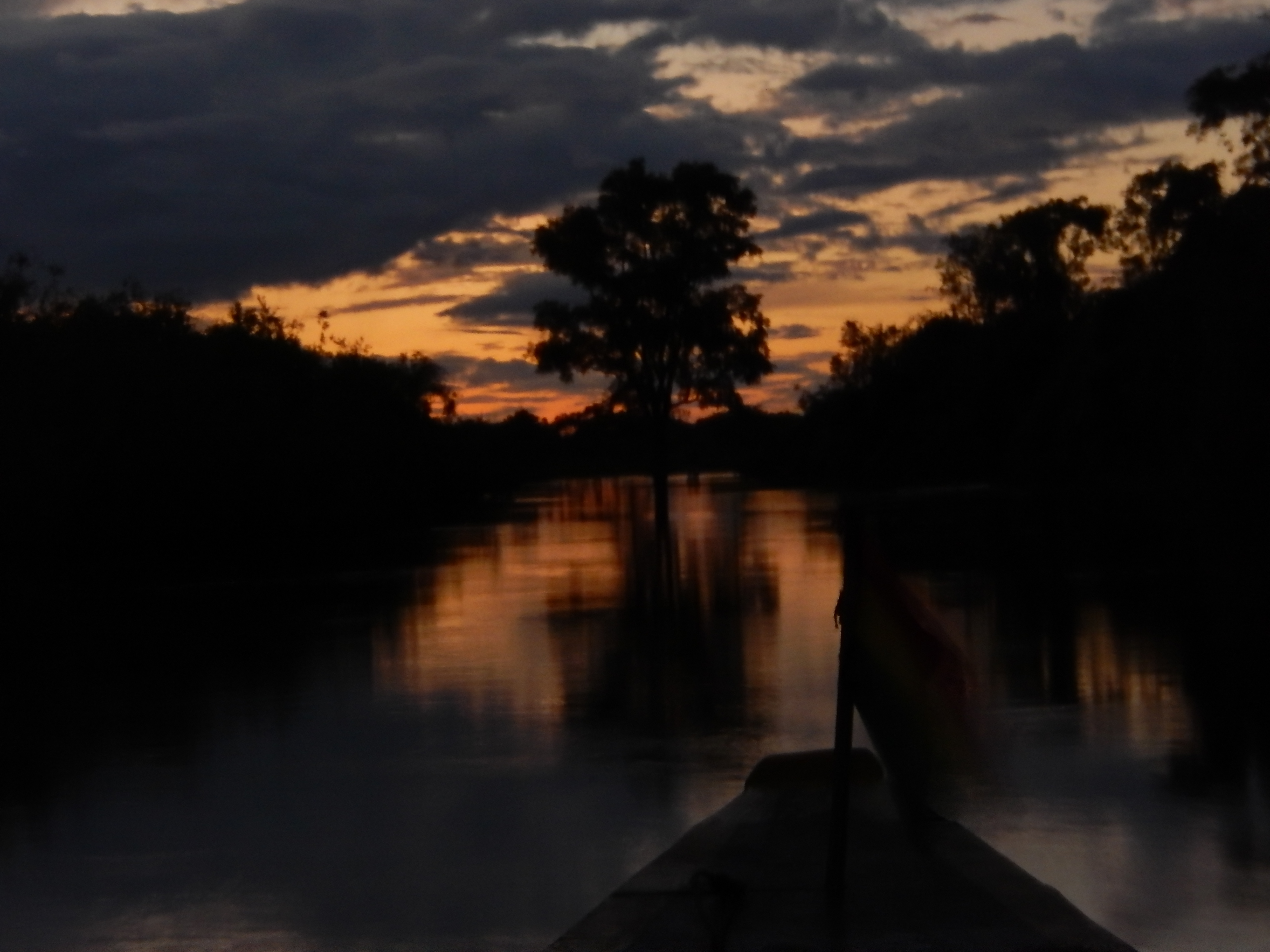
Sunset on the Yacuma River

Sunset, the pampas of the Bolivian Amazon
Copacabana, Bolivia; May 10, 2014
Machu Picchu. Such a well-known name, such a well-known image; just saying it to myself as I booked my tickets was like a mantra or an incantation, conjuring up one specific picture, and a vague idea of a lost civilization. It’s a spell any of us can cast, so firmly is the Inca ruin established in the popular mind. And I can say, without irony or embarrassment, that Machu Picchu is a magical place to be.

That’s the picture we can all conjure up

I made it!
Forget the hassle of deciding which convoluted route to take from Cusco to the ruins (bus-train-bus, bus-walk-bus, bus-walk-walk, train-bus, etc.), forget the 5am alarm, forget the massive line and hordes of fellow tourists. Standing on the ledge overlooking the ruins, surrounded by craggy mountains floating in the gray morning mist, I was transported.
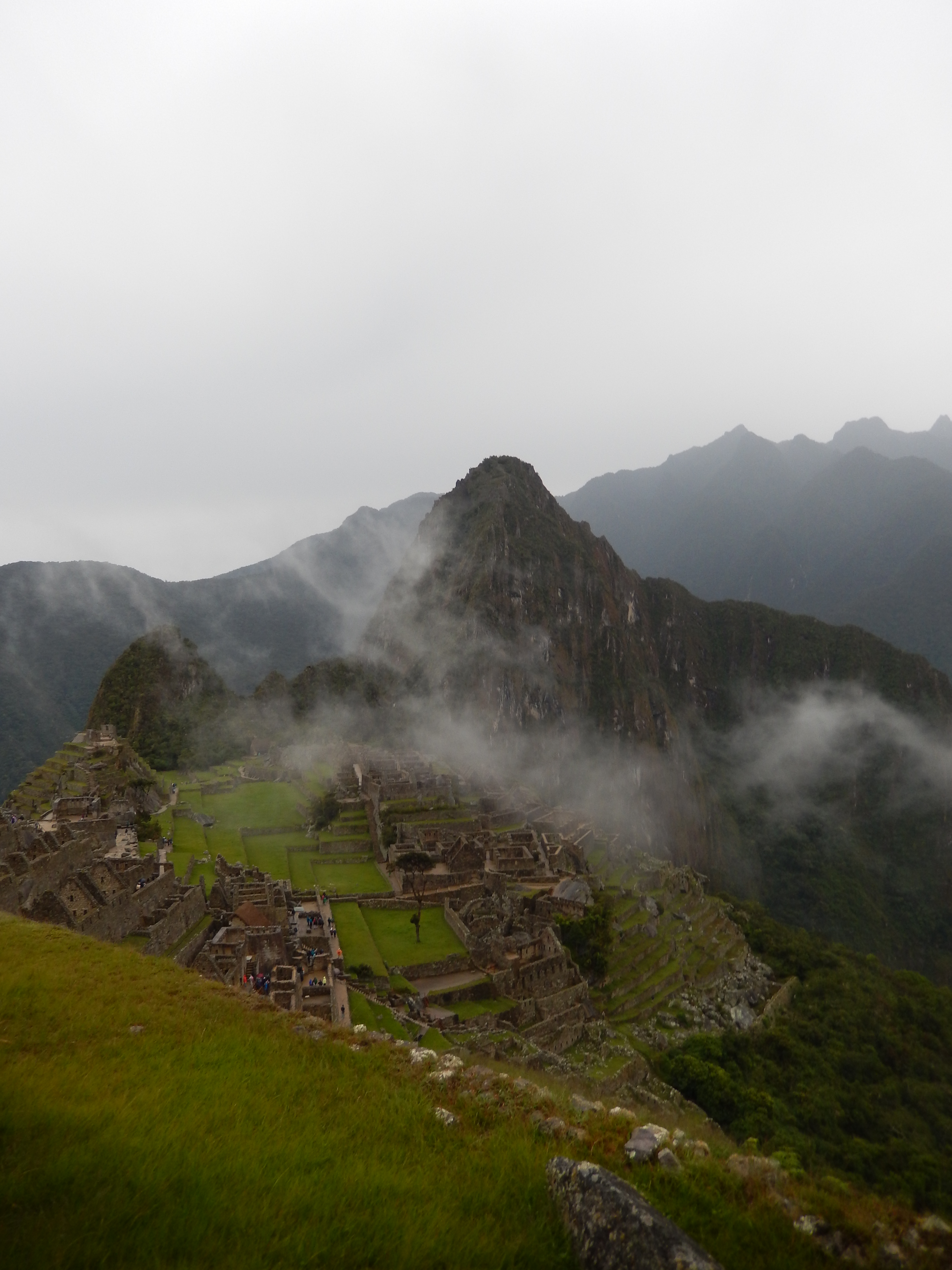
Machu Picchu in the morning mist
This was otherworldly, in the simple sense that it was unlike the world I know. It was grander, and despite the crowds, quieter, as if the mountains absorbed any unnecessary sounds and left only my rasping as I breathed heavily after my climb in the high altitude. Even the rasping reminded me that I was breathing, that I was alive in a place long ago left to ghosts and sacred spirits.
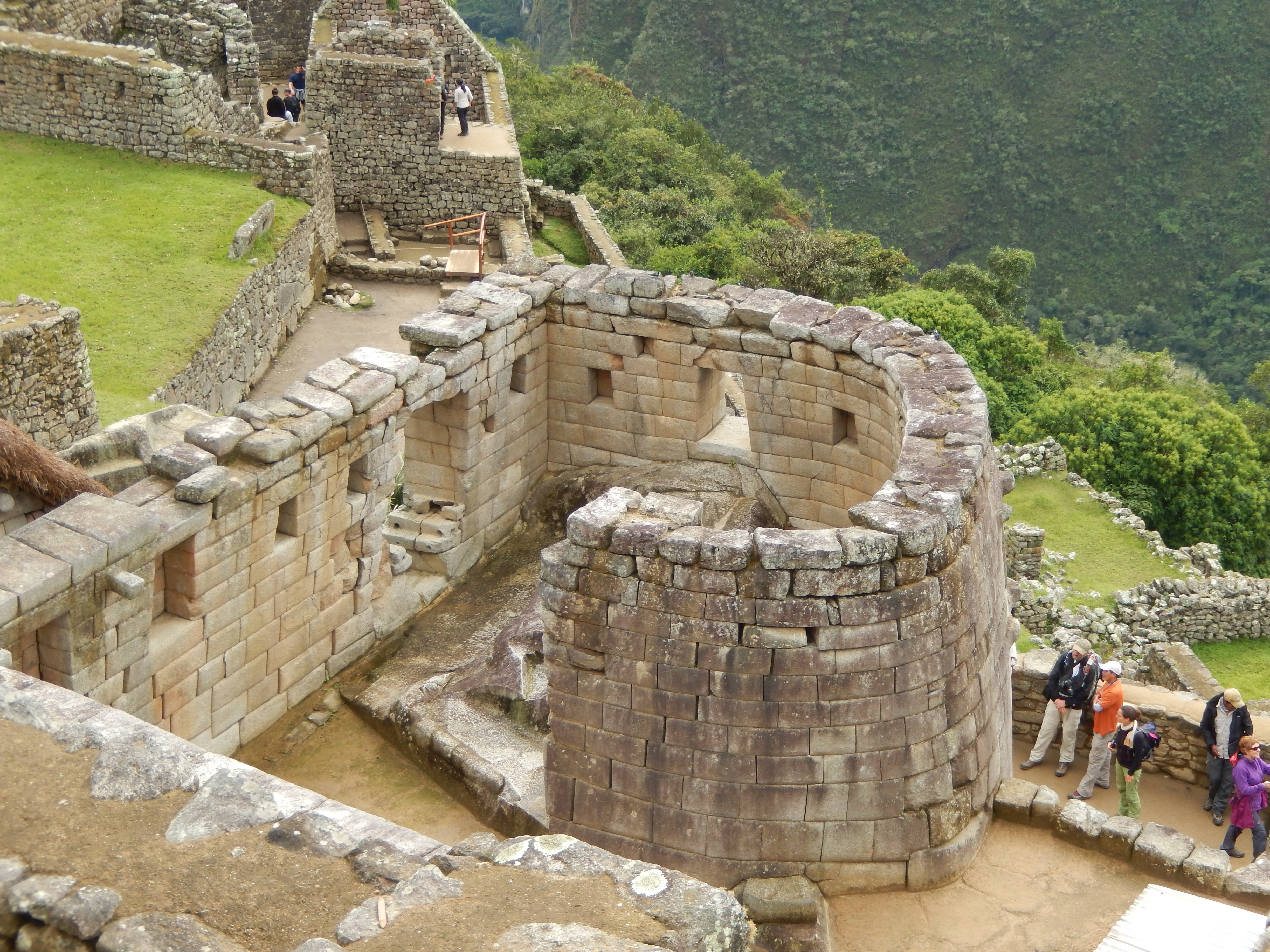
The Temple of the Sun
Because at least part of this place was sacred to the Incas who built here. Archaeologists have several theories about what, exactly, the buildings on Machu Picchu were for. Machu Picchu itself simply means “old mountain” and was not the Quechua name for the small town–that has been lost to history along with the function of the town. The most widely accepted theory is that it was a royal retreat for Emperor Pachacuti, and that the many religious structures and the orientation of the town itself can be explained by the fact that royalty resided here. The town is built on a precise axis in relation to several sacred mountains, and on solstices, the sun slices right through the center of the Sun Temple. Perhaps one section of town housed virgins dedicated to the gods. Perhaps one strategically placed rock was used as a solar calendar.

The Condor Temple (if you squint, you can see the beak on the ground, and two raised wings in the rocks above)

Much of the mountaintop is covered in the narrow terraces that make up the farmland of the Incas. One theory suggests that in addition to growing the usual crops, the Incas experimented with different types of plants here, as the steep terraces caused micro-climates that could imitate different climates throughout the empire. On the large, flat area in the middle of the buildings, llamas graze, keeping the lawn neat as they did 500 years ago.

Hard at work

I watched a bird build a nest

My guided tour of the complex was uninspired, and most of what I heard I had already read in guidebooks: The Spanish never found Machu Picchu, which is one of the main reasons it is so celebrated, because they didn’t have a chance to strip it of all its valuables and rip apart the ingeniously constructed buildings, as they did everywhere else in the former Inca Empire.
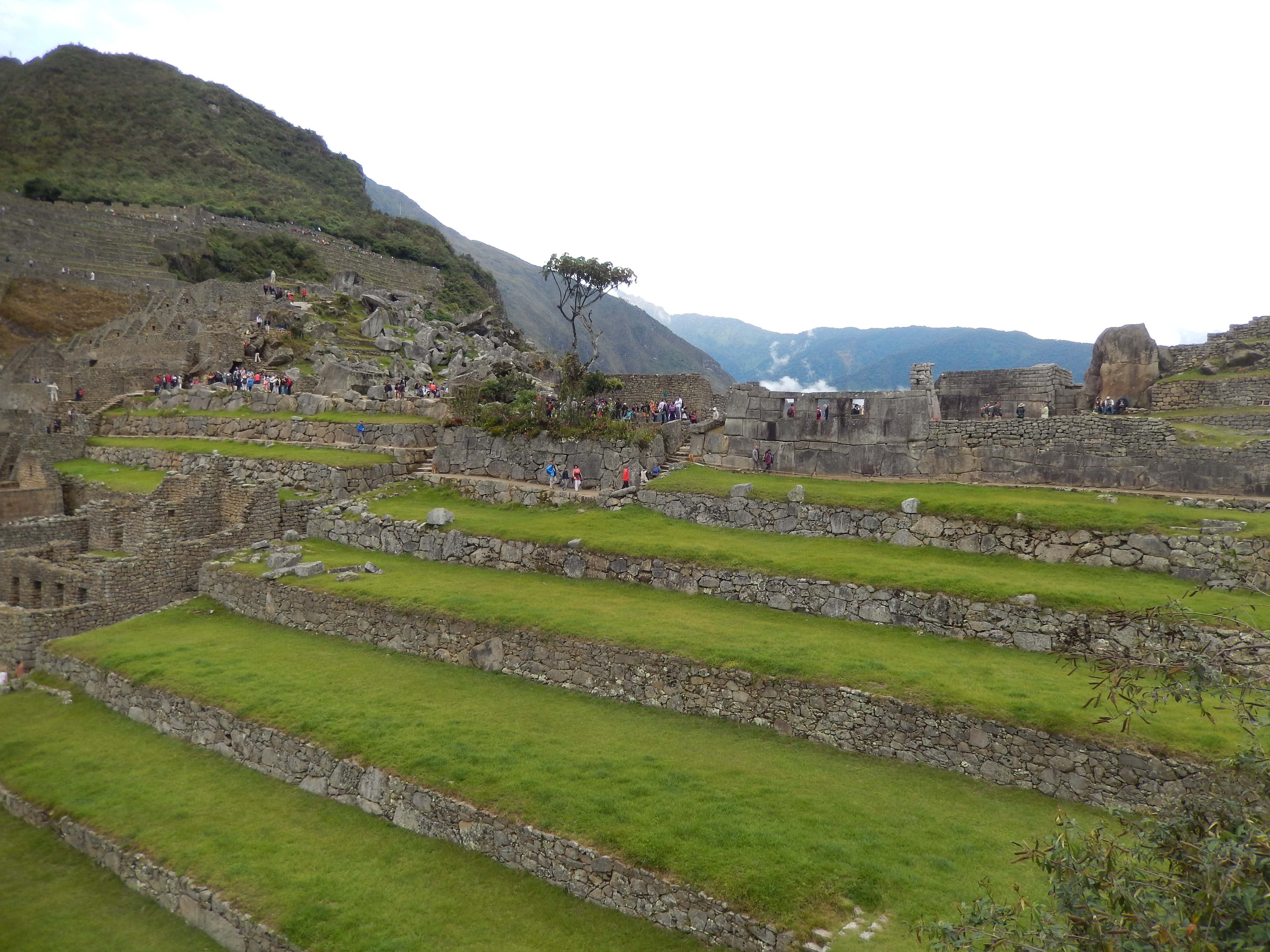
Terrace upon terrace

Trapezoidal windows
Locals always knew of it, but it wasn’t until 1911 that the rest of the world learned about it. Hiram Bingham, in his search for the lost capital city of the Incas, was led to this spot by a local Quechua boy. He hired a team to clear away the vegetation that had overgrown the ruins, and in the meantime, he managed to clear away several important artifacts, which he took to his employer, Yale University. (Peru finally got all the artifacts back in 2012.)
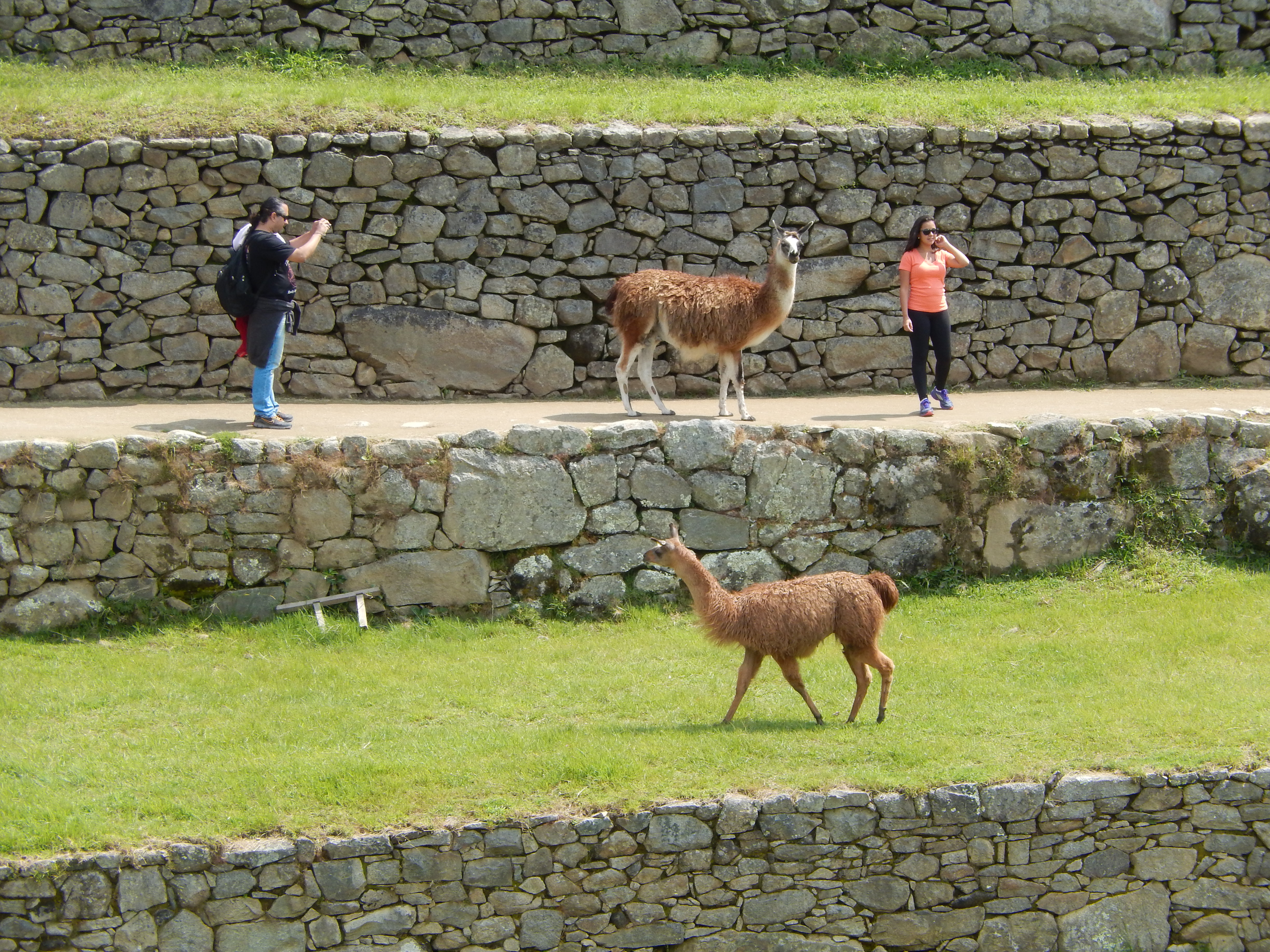
Llamas have right of way

Part of the reconstruction
At least 30% of what we see today is a reconstruction based on archaeological evidence. Unfinished stairs and roughly hewn rocks indicate that the complex was likely abandoned in the face of the Spanish and/or a smallpox epidemic before it was finished.
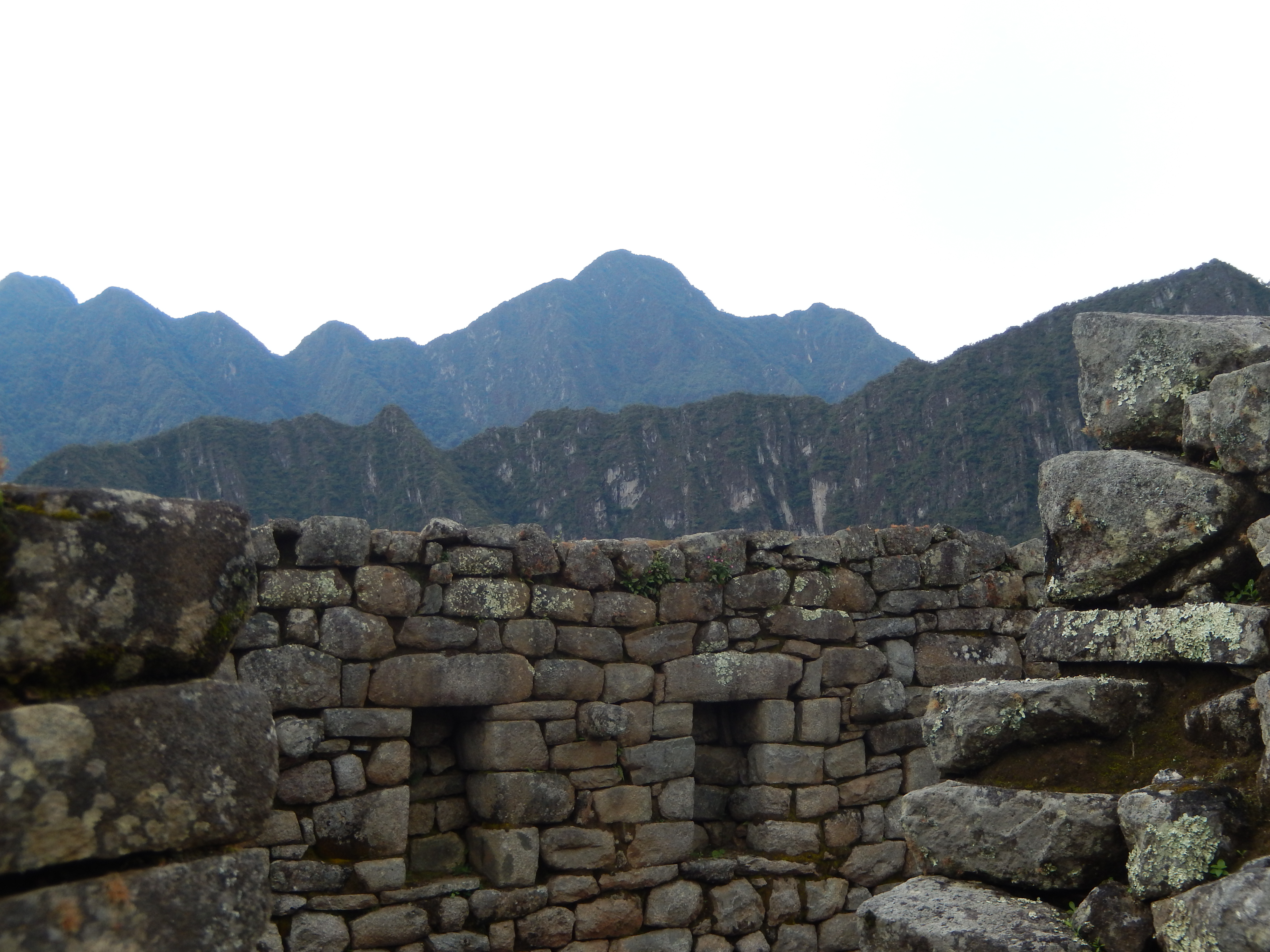
After my tour, I found a quiet spot on the eastern side of the complex, and I watched the rainclouds drift away and the noonday sun take over. I lay back on a large, uncarved rock and took a nap. I awoke to a guard sitting nearby, overlooking tourists on the terrace below and singing a traditional tune in a reedy voice. He smiled at me and apparently didn’t mind that I’d just lightly snored on one of the Seven Modern Wonders of the World. After all, as magical as these ruins in the mountains are, they were once inhabited by humans.

That, for me, is what appeals to me the most about places like Angkor Wat and Machu Picchu: they are perfectly in tune with the magnificent nature surrounding them, but they were put there by the hard work and imagination of humans. They’re proof that we can have monuments to human ingenuity that celebrate, rather than diminish, the natural world. We can have both. That’s the magic.
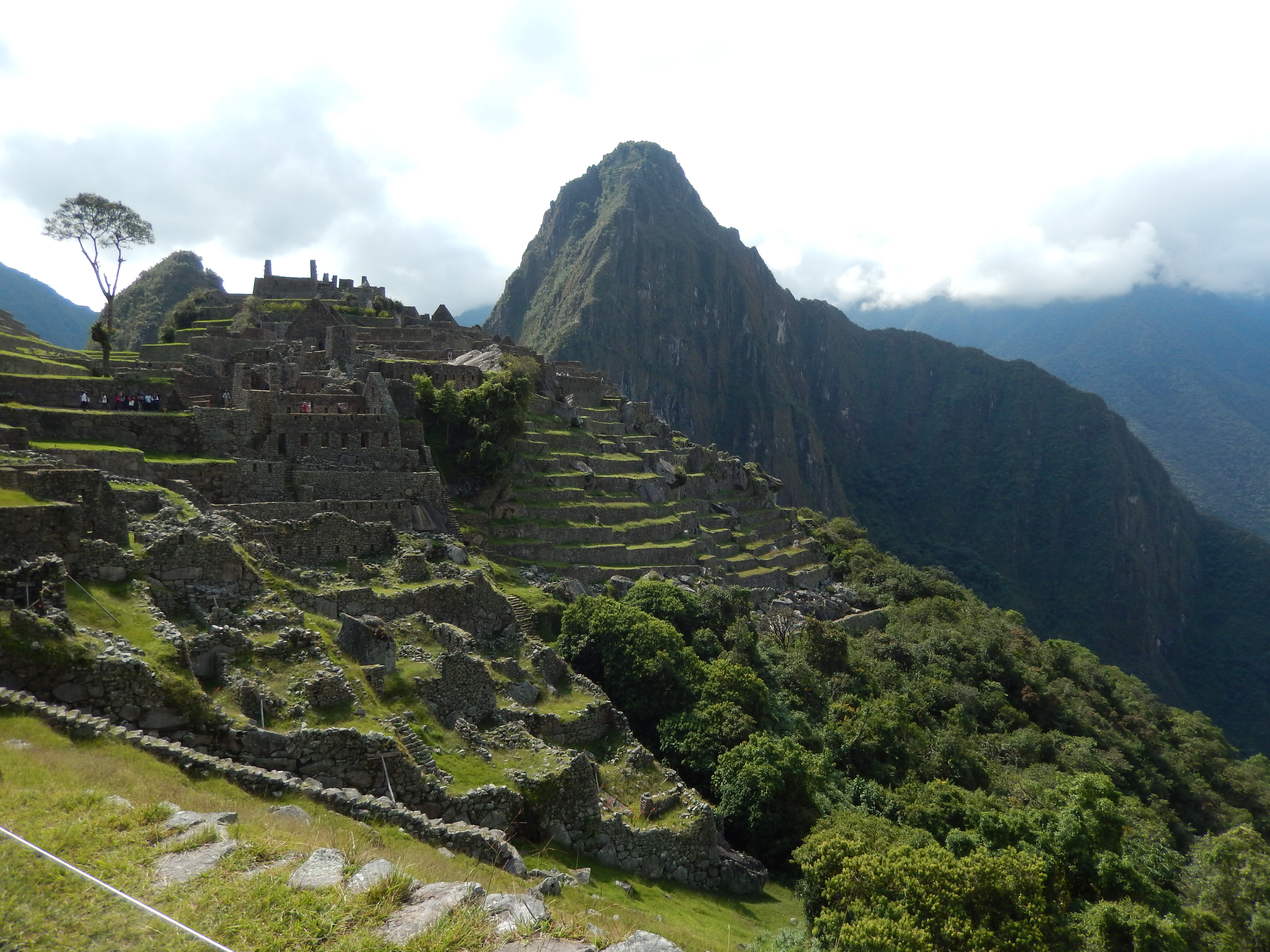
My final view
Many, many thanks to Meredith Mann, Ted and Dana Calhoon, and Rog and Anne Findley, who generously donated to the Stowaway Fund and made my trip to Machu Picchu possible. I am extremely grateful.
Check out my piece about getting robbed abroad over at The Billfold! (You read about it briefly here.) It was a strange and mostly unpleasant experience, but it makes for a decent story. Here’s an excerpt:
I looked over to check the time, and my purse wasn’t there. My brain couldn’t quite process this. I checked behind me, in case it had fallen over. There was nothing. My brain started to catch up. I leapt to my feet and looked around frantically, but my purse was nowhere to be found….
I couldn’t believe it, I still can’t believe it; this couldn’t happen to me, but it did. I’m mad at myself for being careless. I’m furious at the thief. I’m ready to leave town.
Feel free to leave comments at The Billfold and spread the story around!
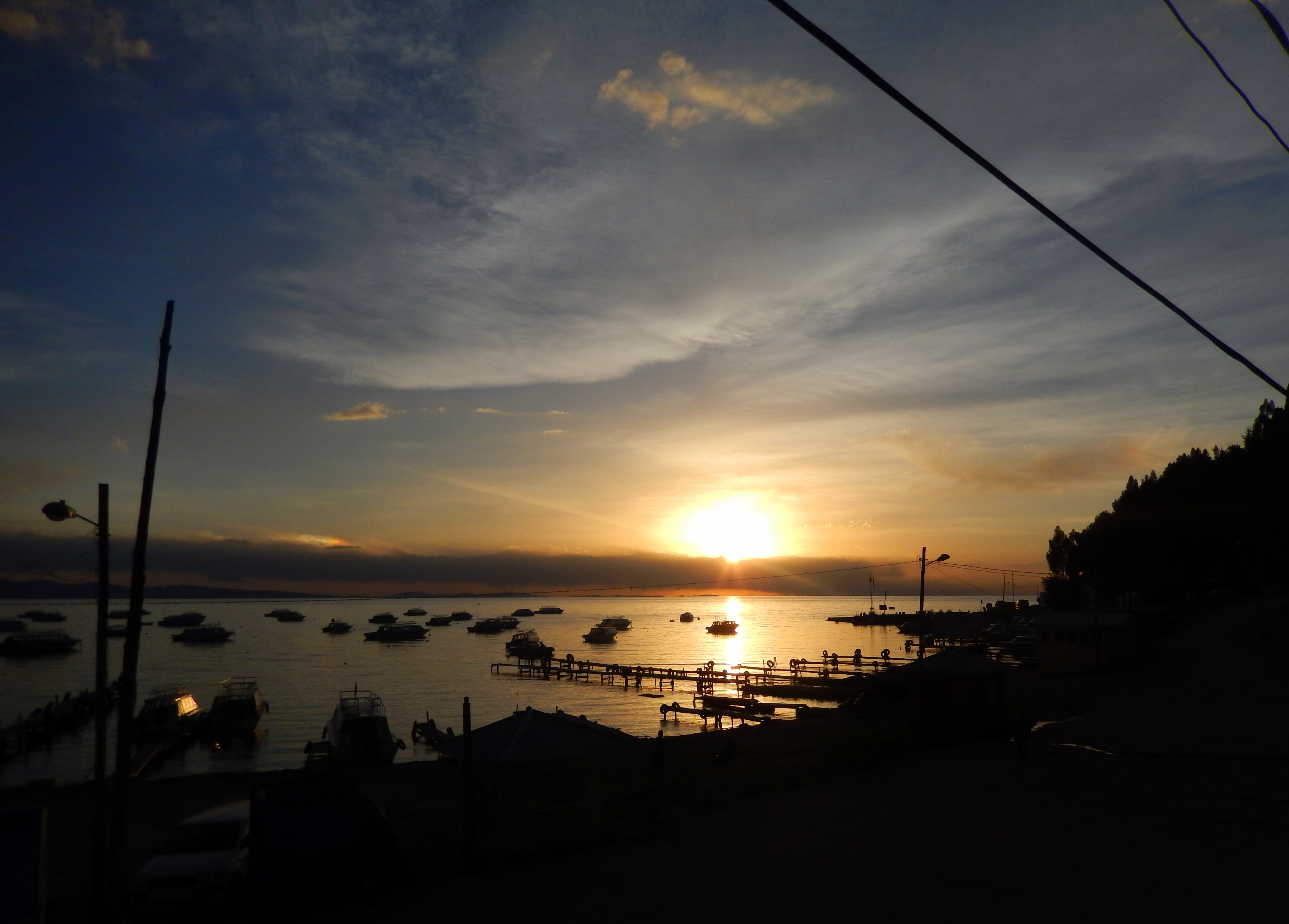
Sunset, Copacabana, Bolivia
“El Panecillo,” which means “the little bread loaf,” is the wonderful nickname given to the small hill that rises above downtown Quito. In pre-Inca times, it was the site of a temple to the sun god, and in 1822 it was one of the last stands in a battle between the indigenous people and the Spanish.
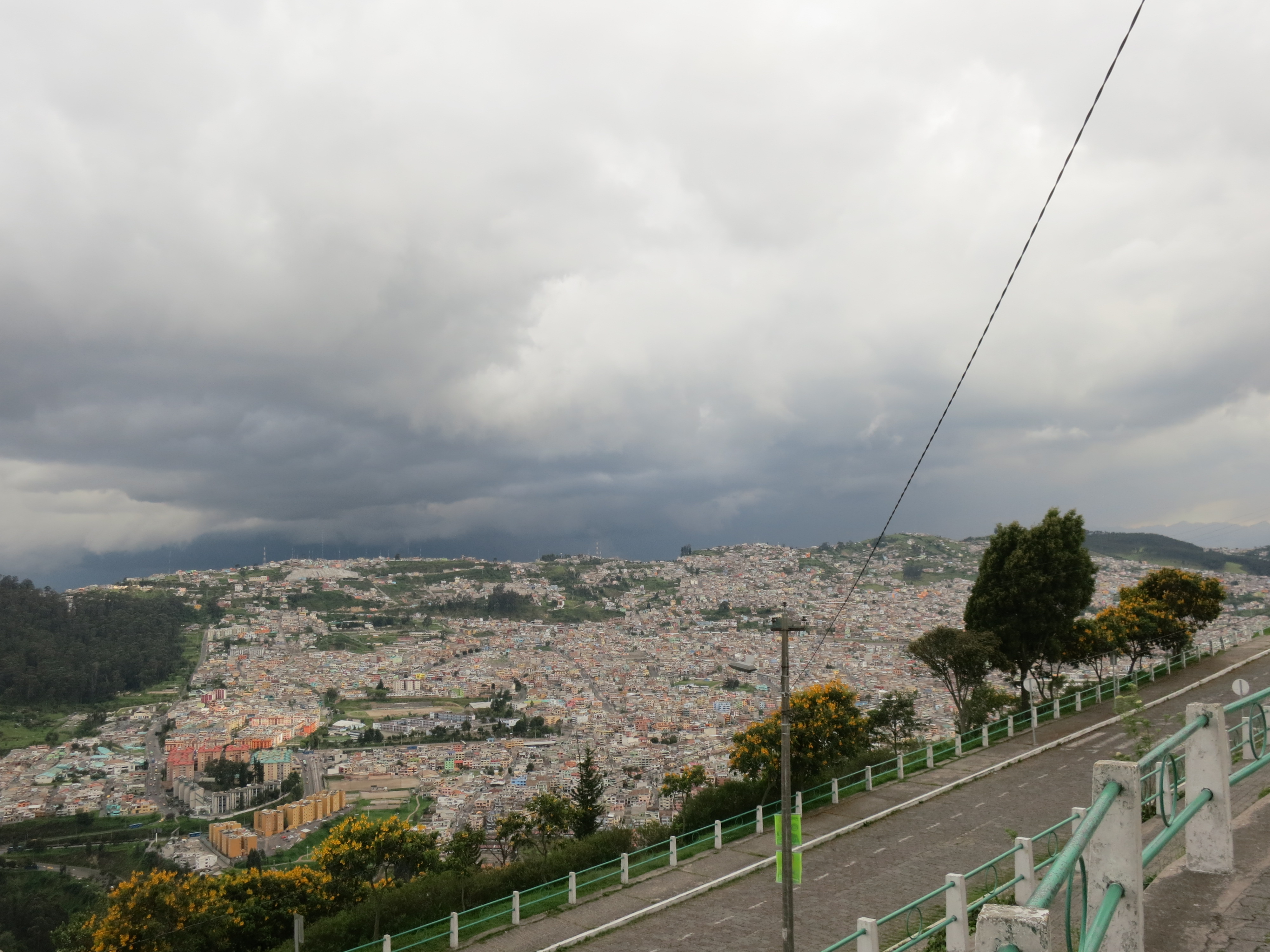
Quito
In 1976, Augustín de la Herrán Matorras was commissioned to build a giant statue of the Virgin Mary of the Apocalypse to look out over the city. The statue is based on one from the 18th century by Bernardo de Legarda. She has wings like an angel and a crown of stars, and she is standing on top of a globe with a serpent. Unlike almost every other representation of the Virgin, she’s not standing still with her hands demurely folded; she has a hand up and she’s almost dancing.

Guarding the city

Overlooking Quito
My friends and I took a cab up the hill and wandered around, admiring the views of the city, which runs down the narrow valley and out of sight over the Andes Mountains. The first impression I got from up there is just how big Quito is, and the next thing I noticed was how colorful so many of the buildings were. The churches and official government buildings downtown were all severe gray stone, but the houses running up the hill are a marvelous mix of bright reds, blues, yellows, and oranges.

She’s made of aluminum

Colorful city
After we looked around up there, we took a cab ride to the Itchimbia hill, which overlooks downtown and El Panecillo both. We went to Café Mosaico and had a drink while we watched the sun go down over the colorful city, and the lights go up.
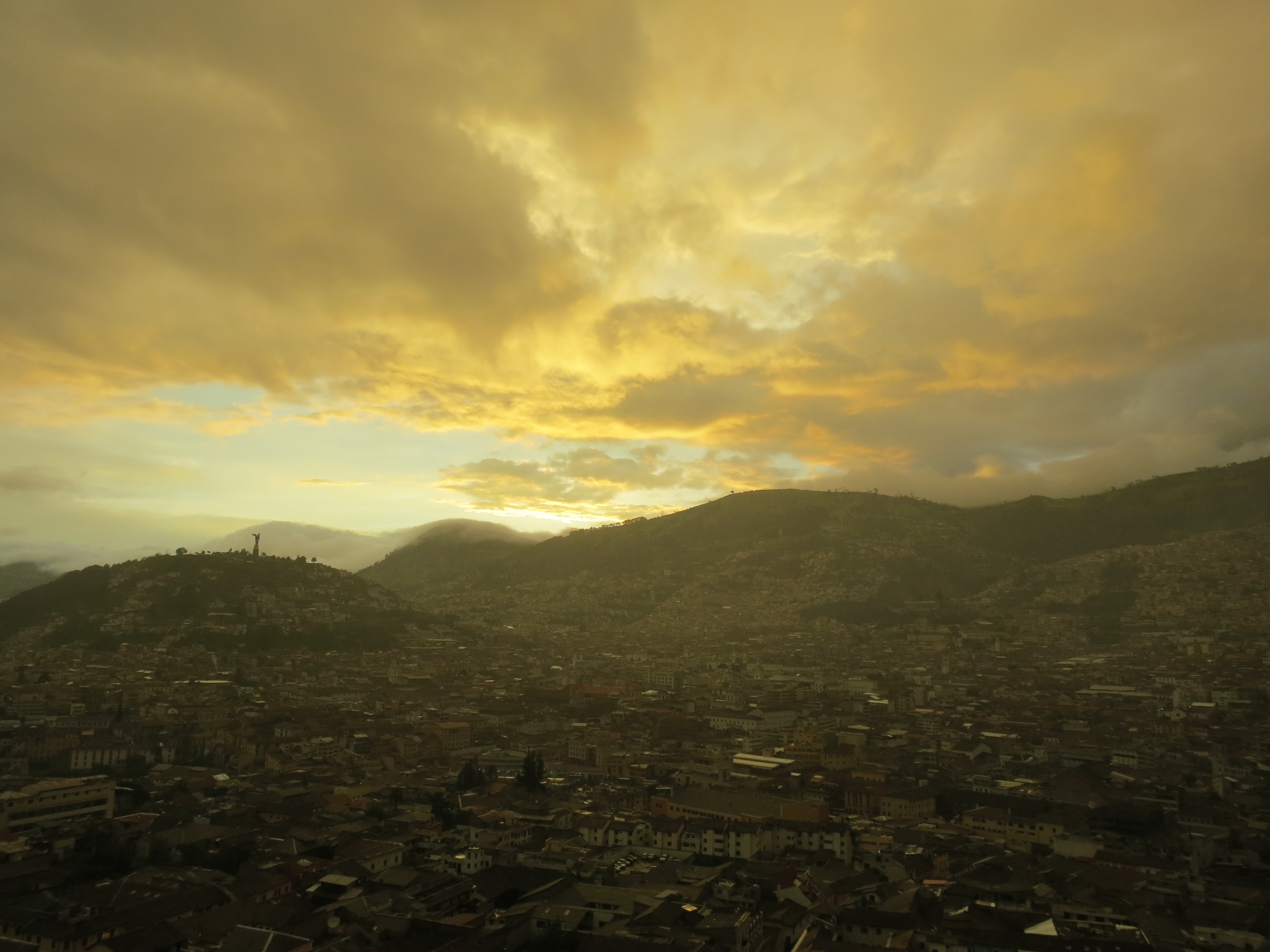
Stunning sunset

City views from Cafe Mosaico

The city by night

Machu Picchu, Peru; April 22, 2014
 Stowaway Travel Writing & Editorial Services