Working in a Coal Mine, Going Down Down

It’s hard to overstate the importance of coal mining and iron production in the history of Wales. With these, Great Britain mined and smelted and powered its way into the Industrial Revolution, and the world has never been the same.

The Big Pit

The Big Pit

Blaenavon Ironworks

One of the most important places in the world for iron production was Blaenavon Ironworks, a massive blast furnace built in the hills of southeastern Wales in 1789 and in use until 1900. It was such an important part of human history, in fact, and is well preserved enough, that it’s on the World Heritage List. Liz and I made it our first stop after Cardiff last May.

Blaenavon Ironworks

Blaenavon Ironworks

Remains of the furnace, with the company housing in the background

Remains of the furnace, with the company housing in the background

There were half-hidden stands with audio guides scattered across the complex, and when we were able to find them, we learned a little about how the furnaces worked–workers shoveled coal like fury at the top of the hill, fueling the steam-powered furnaces that turned iron ore into usable iron. A tall water-balance tower was used as a counterbalance when lifting the tons of metal. Eventually a railway was built to get materials to and from the site faster, although I didn’t see remnants of that.

Newsprint of the 1830s-40s covered the walls. Fascinating stuff!

Newsprint of the 1830s-40s covered the walls. Fascinating stuff!

Strict rules at the company store
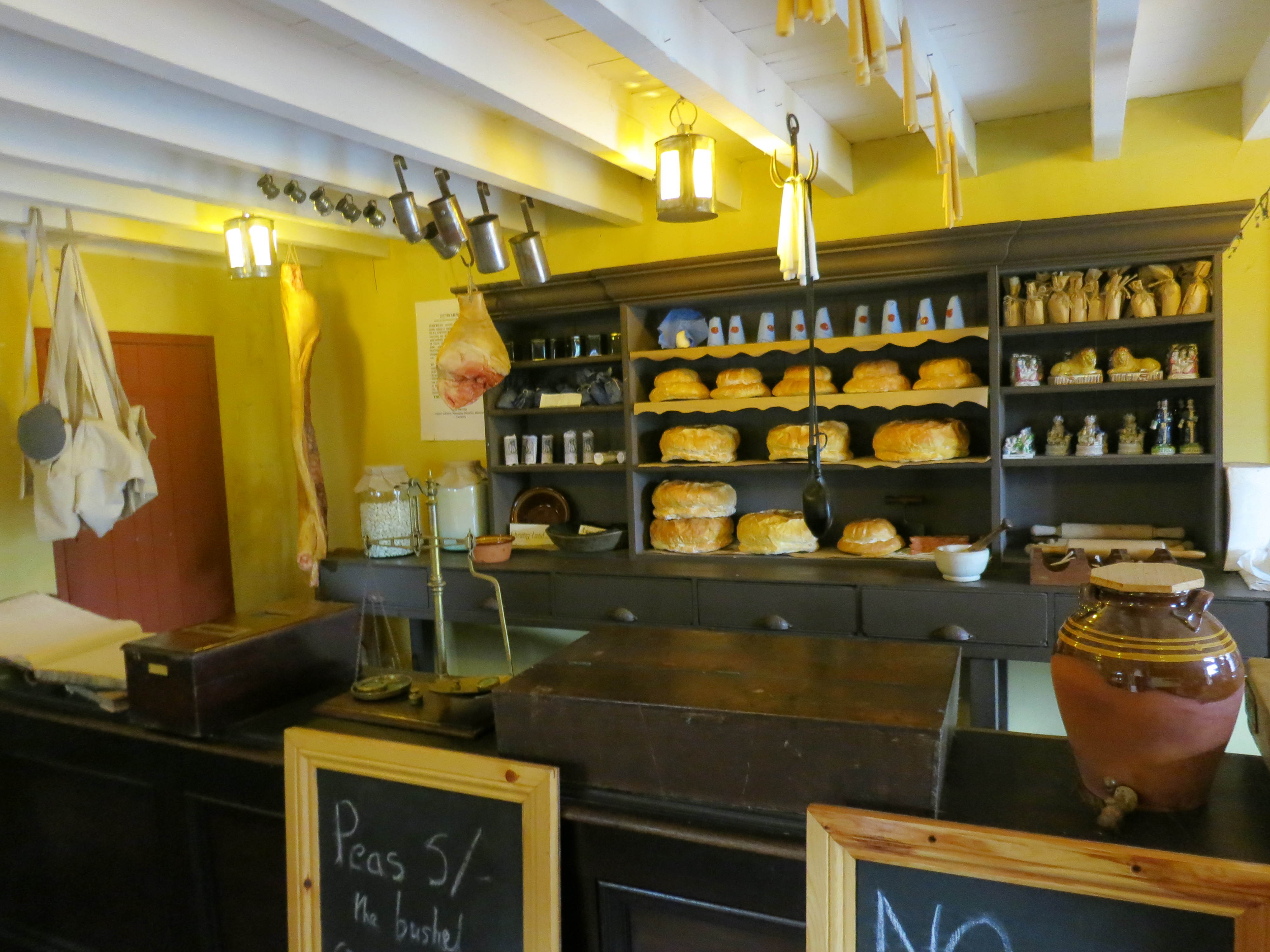
Strict rules at the company store

The company store, which, like all company stores everywhere, overcharged

The company store, which, like all company stores everywhere, overcharged

Right next to the remains of the furnace was a small collection of buildings, which is where workers were housed for at least a century. The tiny rowhouses have been turned into museum sites. One set of rooms showed what it likely looked like early on, around 1790, when the company-provided accommodation was used by generally well-paid employees, who were maybe a little higher up on the chain. Another set of rooms showed how the houses were used about fifty years later, when the better-paid employees moved into the growing town of Blaenavon, and only people too poor to move out lived in the tiny rooms on site. In the first set of rooms, maybe a middle-aged couple lived, but in the second, a family of seven or eight crowded into the same small space. Apparently the BBC shot a popular series here, so yet another set of rooms was done up to look like it did in the 1960s.

The tidy 18th century version of company housing
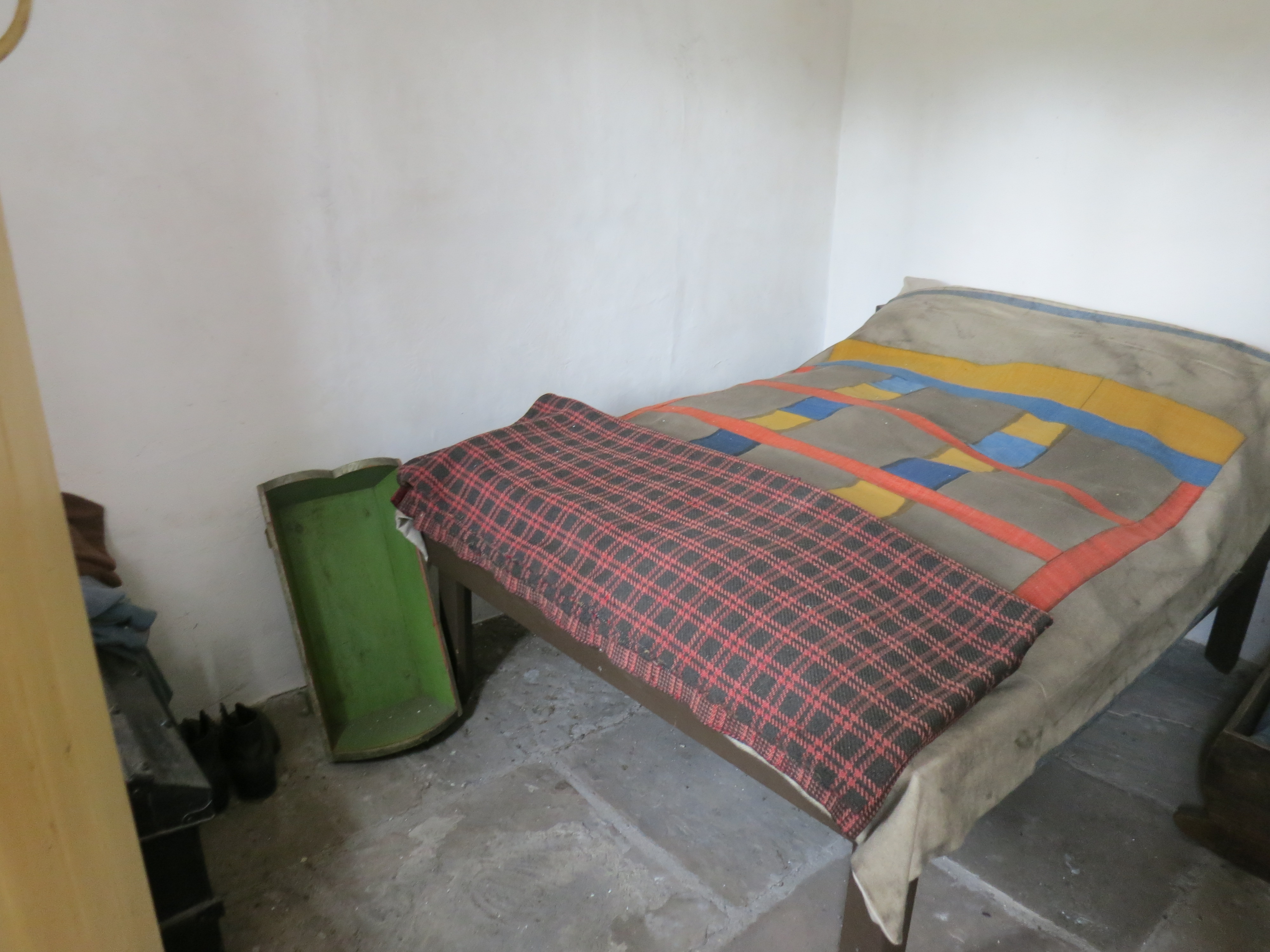
The tidy 18th century version of company housing

Times were harder fifty years later
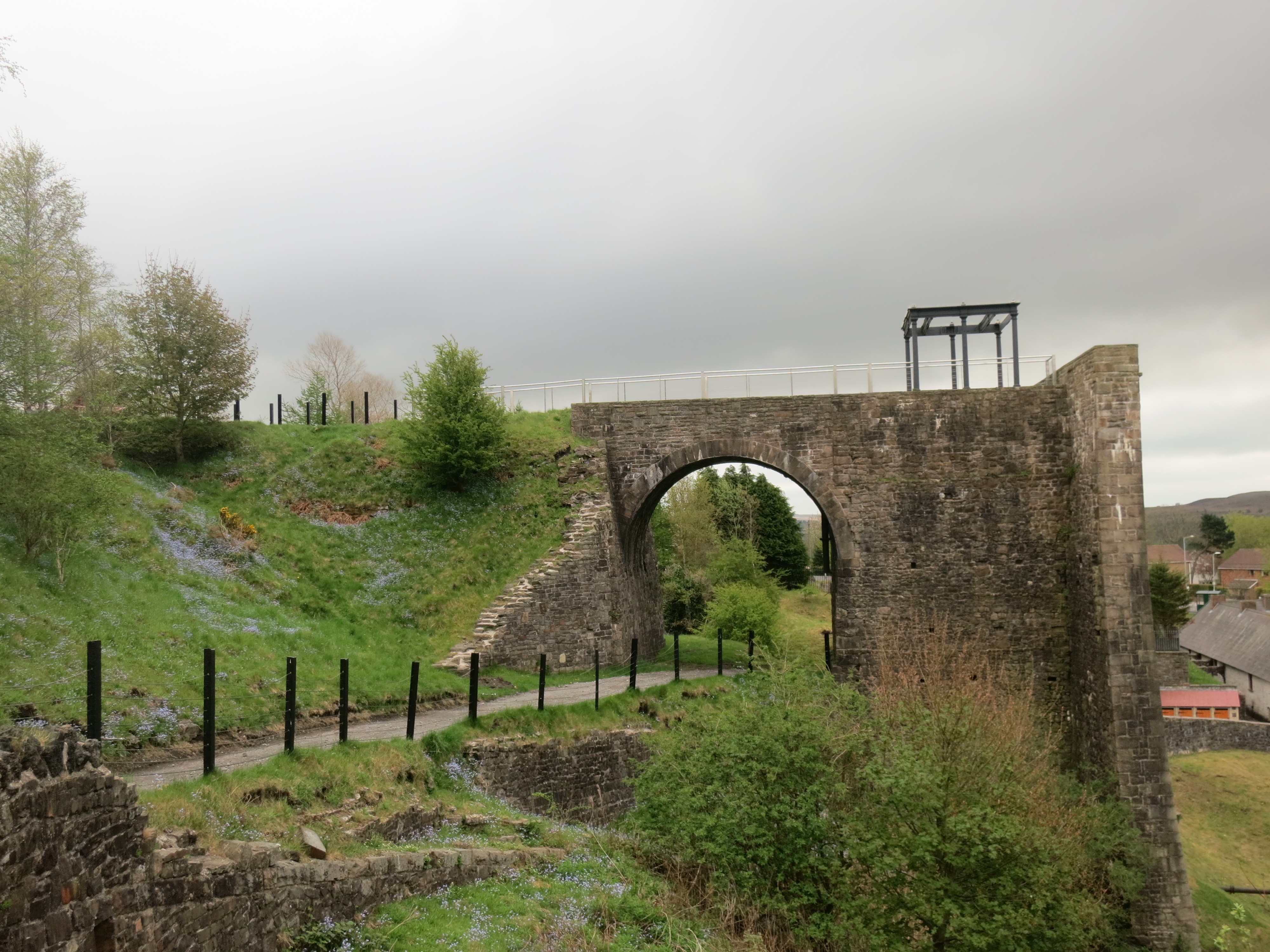
Times were harder fifty years later

Nature's creeping back in on the site

Nature’s creeping back in on the site

The Big Pit

The Big Pit is the splendidly named coal mine just a few miles from the ironworks, and included as part of the World Heritage site, as together they show the full cycle of mining, smelting, forging, and shipping out metals that built up the country and the world.

Big Pit elevator

Big Pit elevator

The mine was operational up til 1980, and it re-opened as a museum in 1983. Before you go down in the pit, you have to remove anything metallic, anything at all, because some of the conditions that made it dangerous to mine down there make it still dangerous today. Yes, we’re not chopping away at the walls to get at coal, and we’re not carrying lamps all over, but there’s still a lot of flammable methane gas down there, and metal creates sparks. So off came watches, jewelry, belts with metal buckles, and of course cameras, and they were all put into lockers with many jokes from the former miners about selling it all on eBay while we were gone. (I did note that they let those of us with glasses keep them on, though, and my plastic glasses definitely have metal hinges. But I wasn’t going to say anything.)
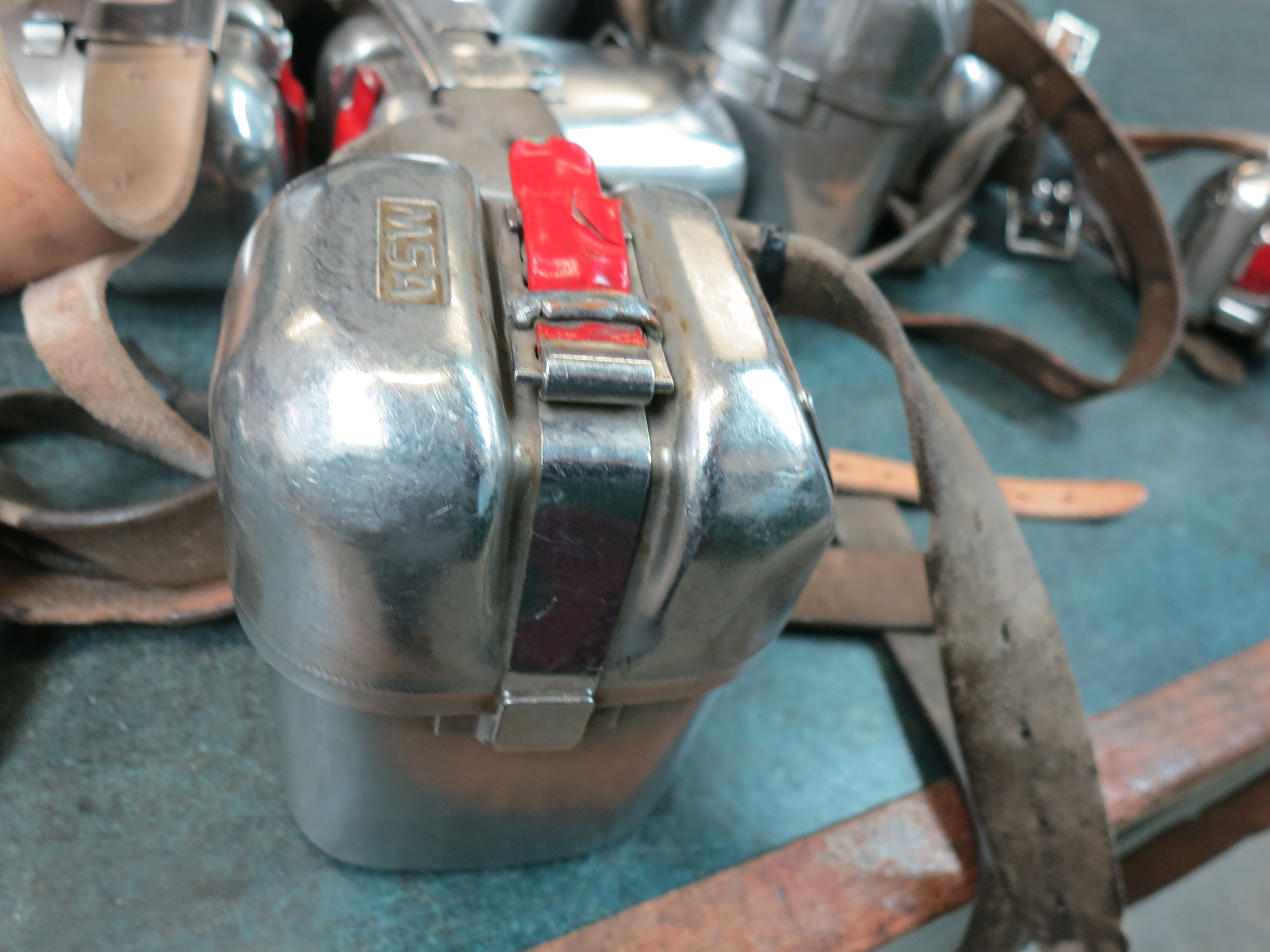
Methane monitor

Methane monitor

Our guide mined in the Big Pit right up until it closed, and you could tell he missed parts of it, though maybe not others. He showed us where the horses who pulled the carts of coal and debris lived, and told us how once they were brought underground, they were never brought back to the surface for the rest of their lives, until sometime in the 20th century, when they were allowed a two-week vacation aboveground every year. Yikes.
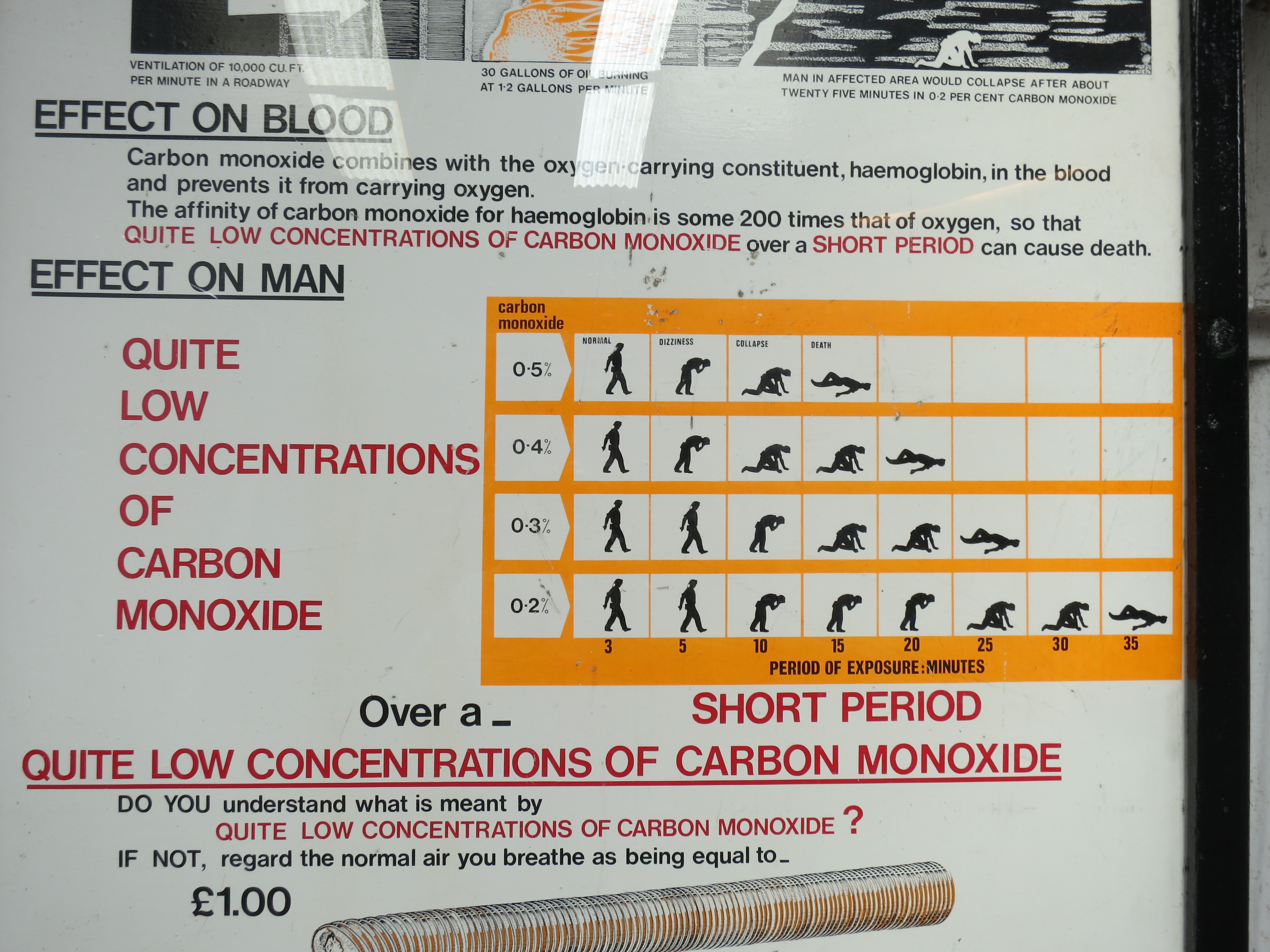
I like the graphic. No messing around.

I like the graphic. No messing around.

We had to duck our heads as we walked from section to section, and one older gentleman could never seem to remember to do that, so we heard him hit his head at least 10 times. As someone who regularly gives herself concussions, I sympathized. Our guide was a joker, keeping us entertained with jabs at Americans (that’s fine) and eyebrow-waggling innuendos. But he was always deadly serious when he talked about how dangerous mining is, and the many precautions they took to keep their workers safe down in the mines. We all carried methane detectors on the belts they strapped around us aboveground, along with the battery packs for our headlamps, but our guide said that most miners still prefer the reliability of that poor little bird, the canary in the mine.

Liz and I are ready to go down the mines

Liz and I are ready to go down the mines
The Magnificent Churches of Quito

I haven’t spent much time in Spain, so I haven’t seen the churches that inspired those built in Latin American countries. The churches I saw in Quito were very different from the English, French, and North American ones I’m familiar with; much more elaborate decoration, the Virgin Mary featured more prominently, less emphasis on stonework and more on paintwork. I love the cathedrals of Chartres and Salisbury, but La Compañia and San Francisco were magnificent in their own right.
Iglesia de San Francisco

Iglesia de San Francisco

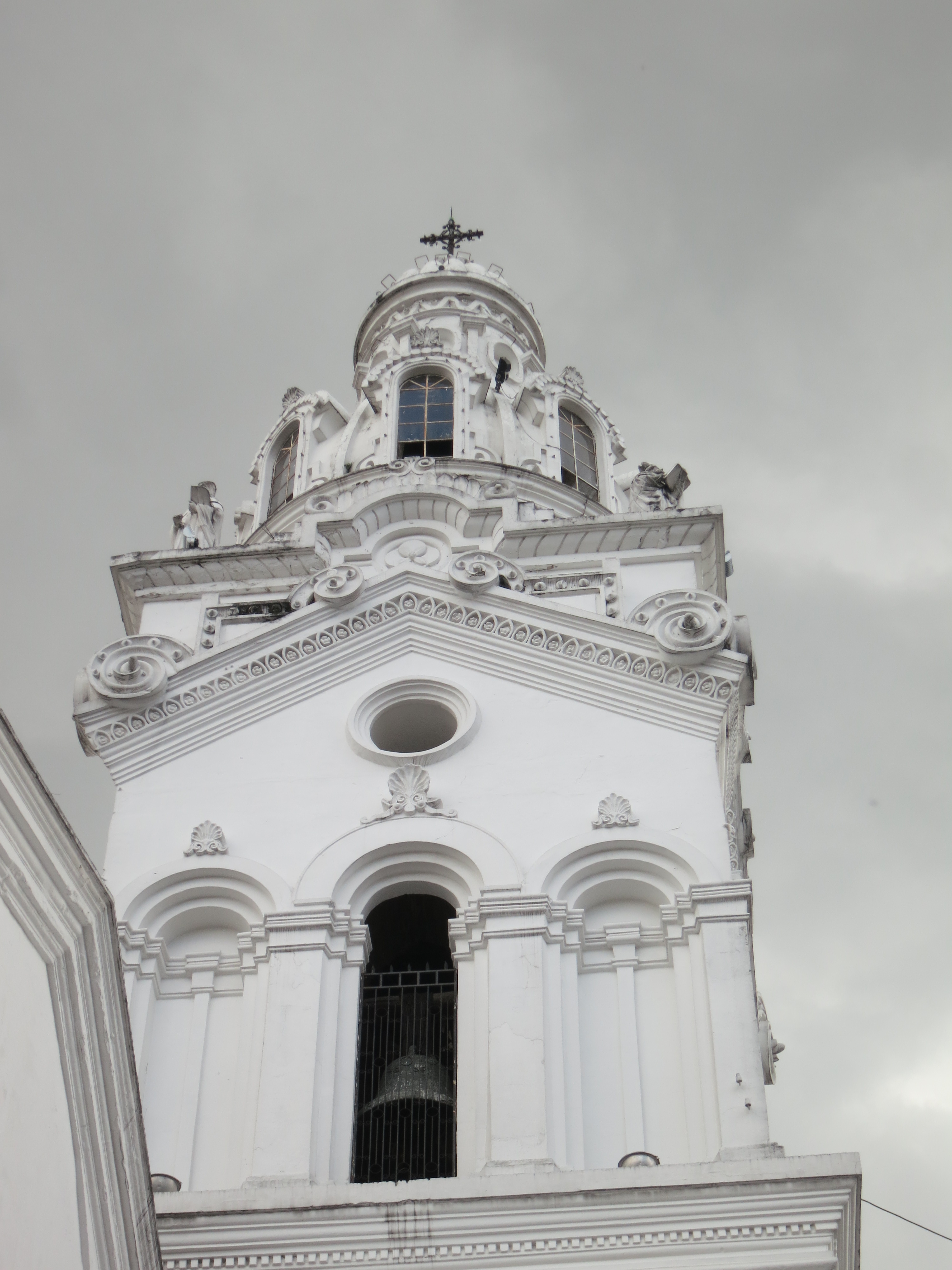
The bell tower of the cathedral

The bell tower of the cathedral

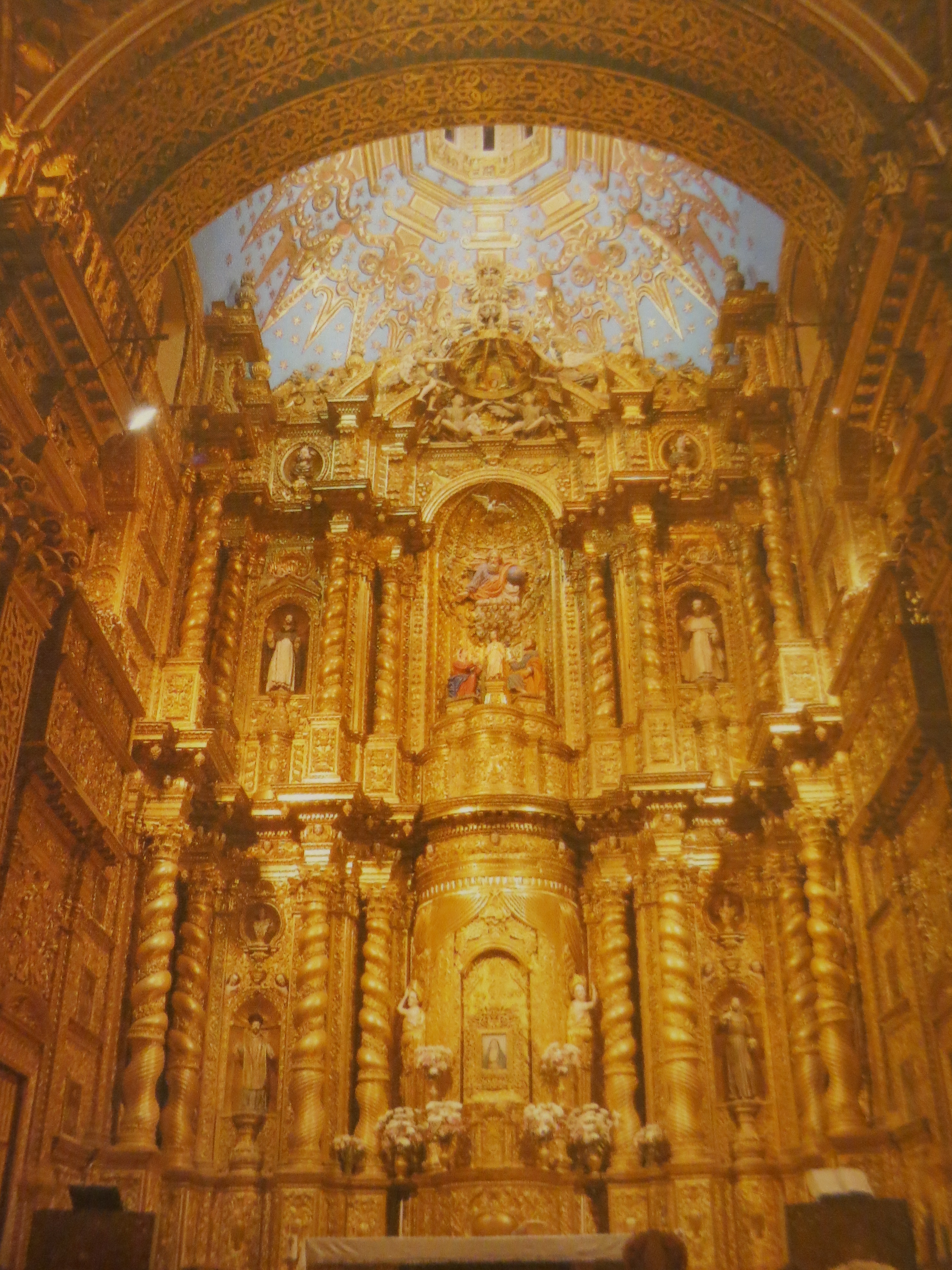
My guidebook described the Iglesia de la Compañia de Jesus as gaudy, but I loved it. Every square inch was covered in gleaming gold–the ceiling, the walls, the giant columns lining the aisles, the baroque columns framing the paintings. Some other colors crept in here and there, in the paintings and altar pieces, and okay, the pews were made of wood and the floors were a mix of stone and wood, but everything else was gold. It was stunning. They were really strict about not taking photos, but I snuck a couple.

La Compañia

La Compañia

The doors

The golden doors of the golden church

Inside

I wonder how bright it was in here before the age of electric light. I bet it’s actually more brilliant now.

lkj

Crystal on the sides? I’m not sure

Detailed ceiling

Detailed ceiling

sldkfj

Loved it

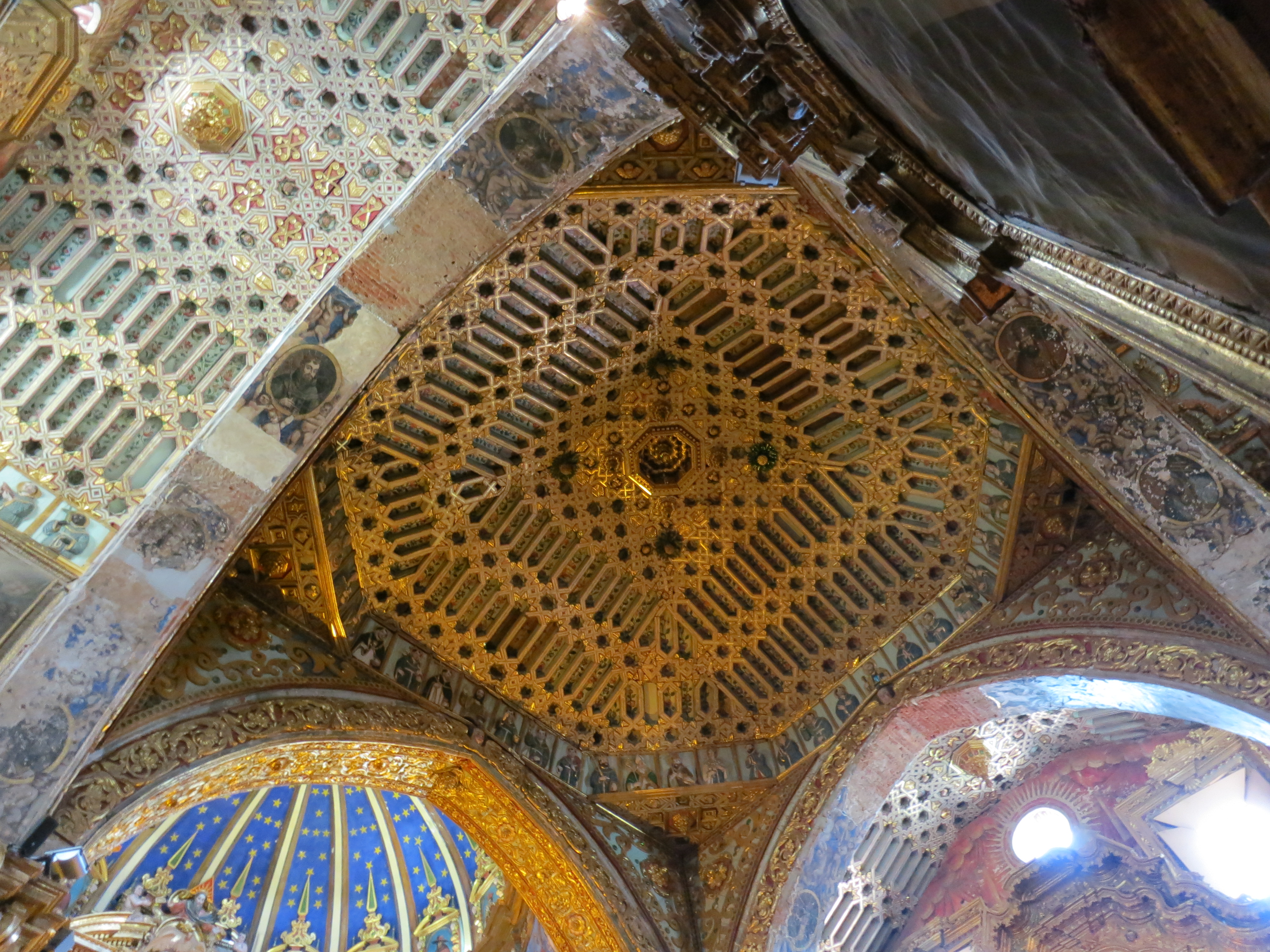
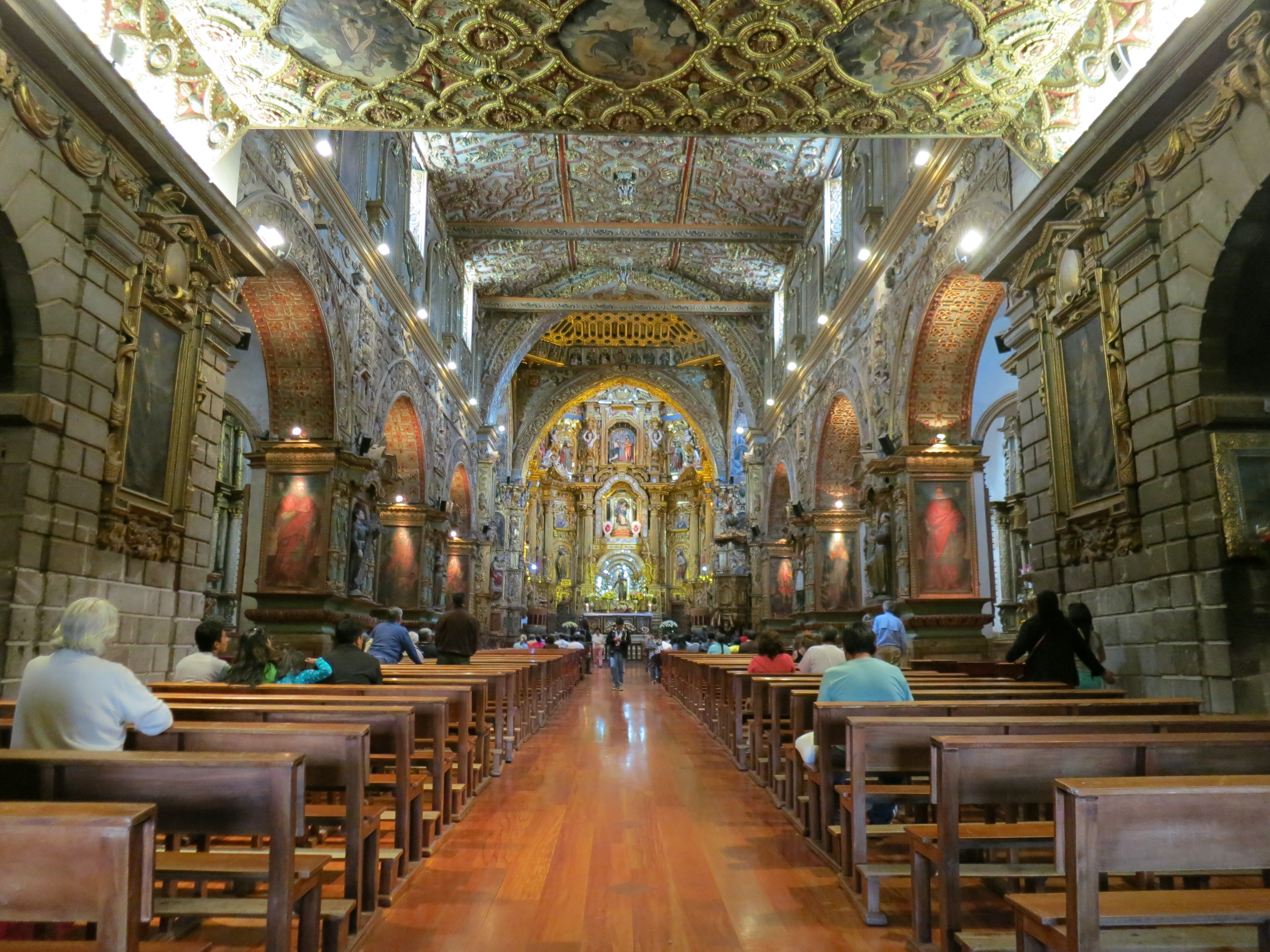
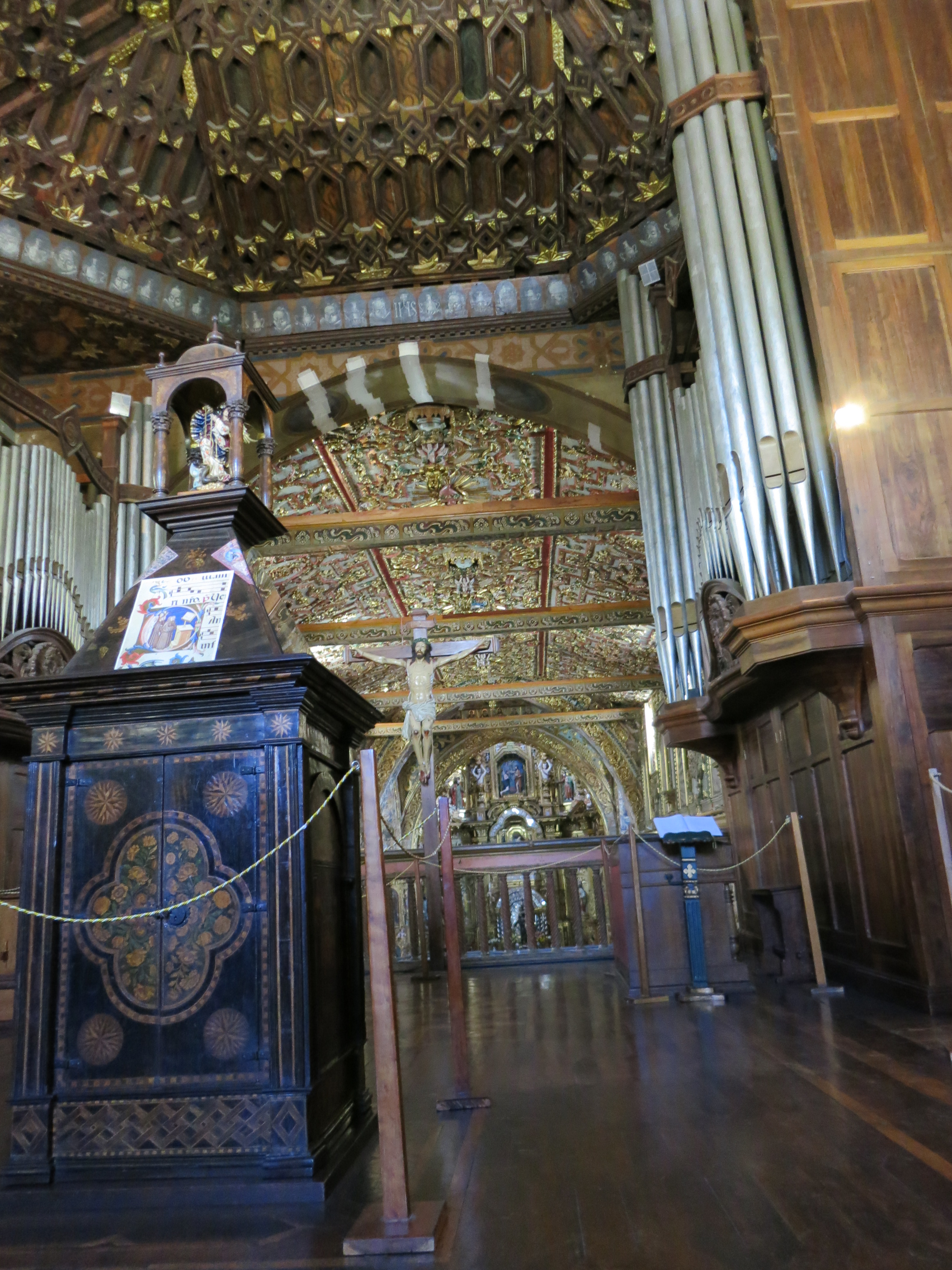
The San Franciscan order of monks was the first to settle in the area, and the church and monastery they built here is now the largest religious complex in South America. The church is elaborately decorated, with paintings and an interlocking pattern on the ceiling. Saints form a semicircle around the altar, and the ceiling above is a deep blue and gold. The choir is made up of intricate wood carvings, and it affords a good view over the nave.

SF ceiling

The ceiling of Iglesia de San Francisco

Interior of Iglesia de San Francisco

Interior of Iglesia de San Francisco

The altar of San Francisco

The altar of San Francisco

The ceiling of the choir at San Francisco

The ceiling of the choir at San Francisco

A shoddy, secret shot of the choir at San Francisco

A shoddy, secret shot of the choir at San Francisco

Birds in flight

Birds in flight

The attached museum contains sculptures and paintings done in the Quito style (one of the four main schools of art in the colonial period in South America). One of the halls was filled with figures carried during religious parades, like Carnaval and Holy Week, including a wooden bed for carrying statues. I tagged along on an English-speaking tour of the museum, learning about how the position of the statue on El Panecillo is a specific form that is found in statues elsewhere (like a couple in the museum), and how Santo Domingo is always depicted with a devoted dog at his feet.

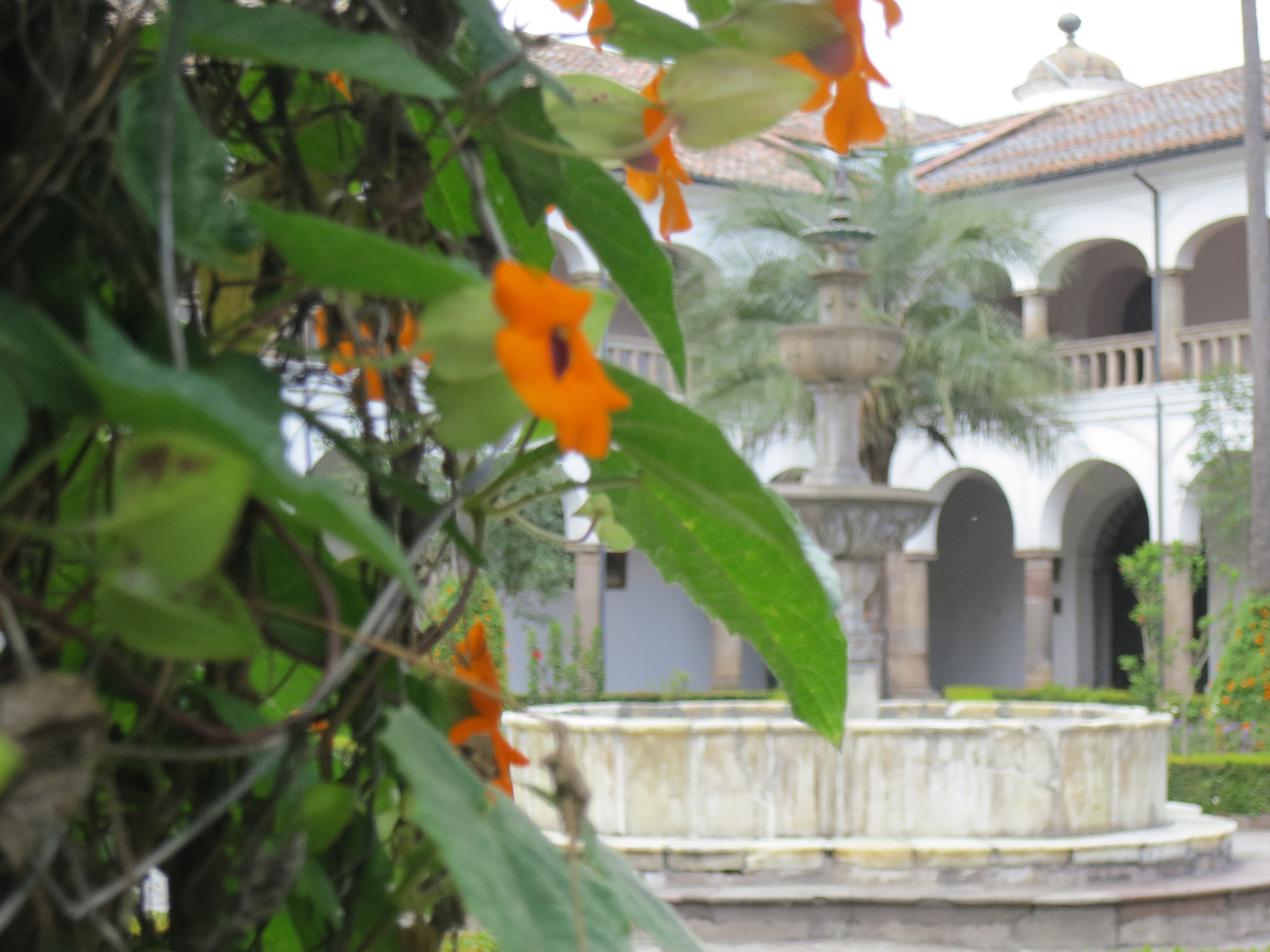
In the courtyard of the convent at San Francisco

In the courtyard of the convent at San Francisco

The specific pose for the Virgin of the Apocalypse (she has wings, and vanquishes a dragon)

The specific pose for the Virgin of the Apocalypse (she has wings, and vanquishes a snake) — also found in the statue of El Panecillo

For religious processions

For religious processions

The cathedral that forms one side of the main plaza has a stark exterior and a lovely interior, sky blue patterned with gold and pink, transporting you into the heavens as soon as you walk inside. They were starting a service when I ducked in there, so I didn’t spend much time.

The austere exterior of the cathedral

The austere exterior of the cathedral

The cathedral

Walking into heaven

The cathedral

Sky blue

postcards

A postcard of the Compañia

Compania postcards

Another postcard (to get at least one good shot since the no-photos-please people were hawk-eyed)

Modern Cardiff: A Revitalized Waterfront and Plans Gone Awry

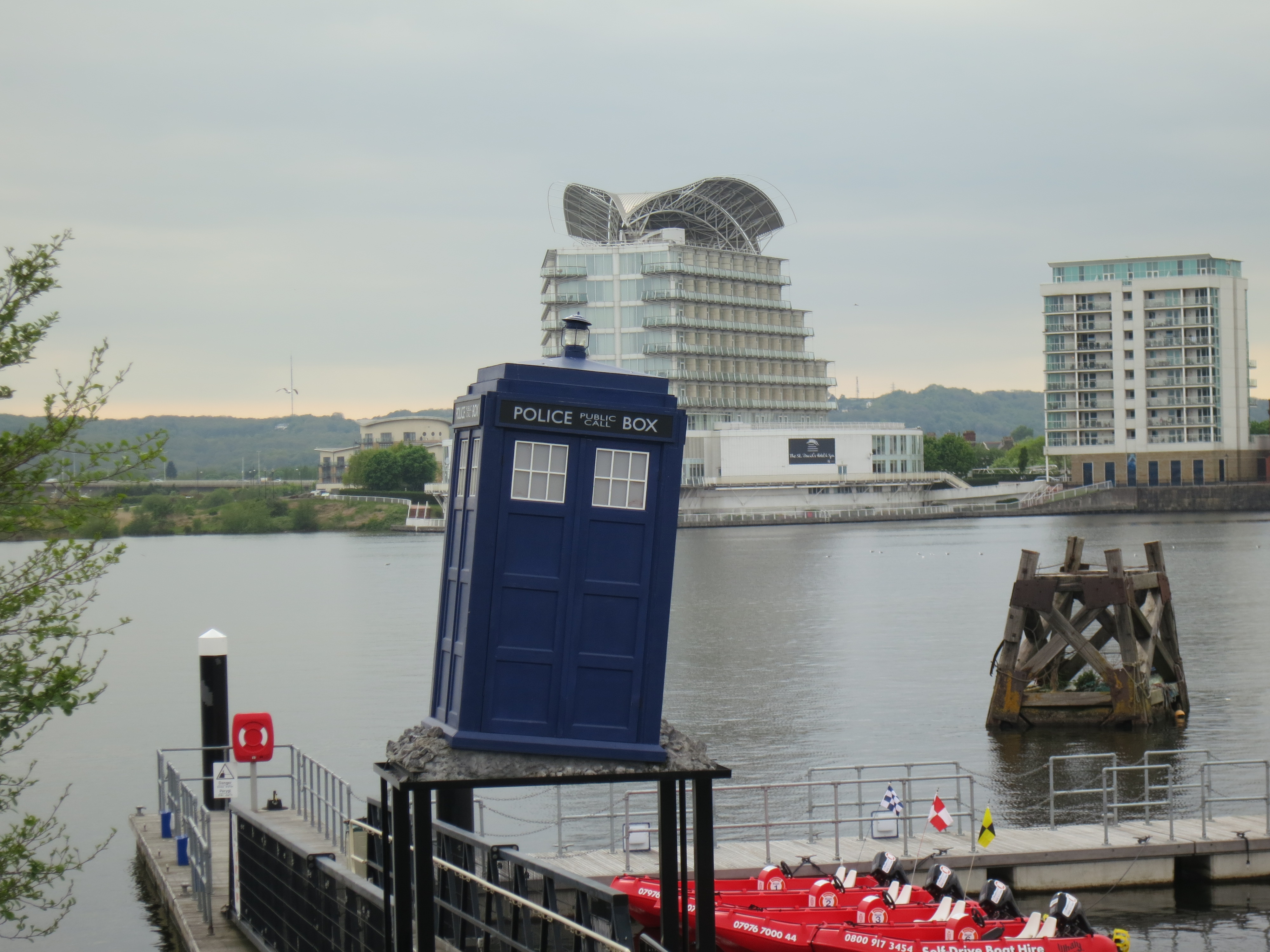
My friend Liz and I didn’t have much time in Cardiff, so we knew we could only do a couple things. I wanted to see the castle and the Doctor Who exhibit. We saw the castle, but we had laughably bad luck with the exhibit. At least we saw a lot of Cardiff on our way to the Tardis that wouldn’t let us in.

Another ace landing by The Doctor

Another ace landing by The Doctor

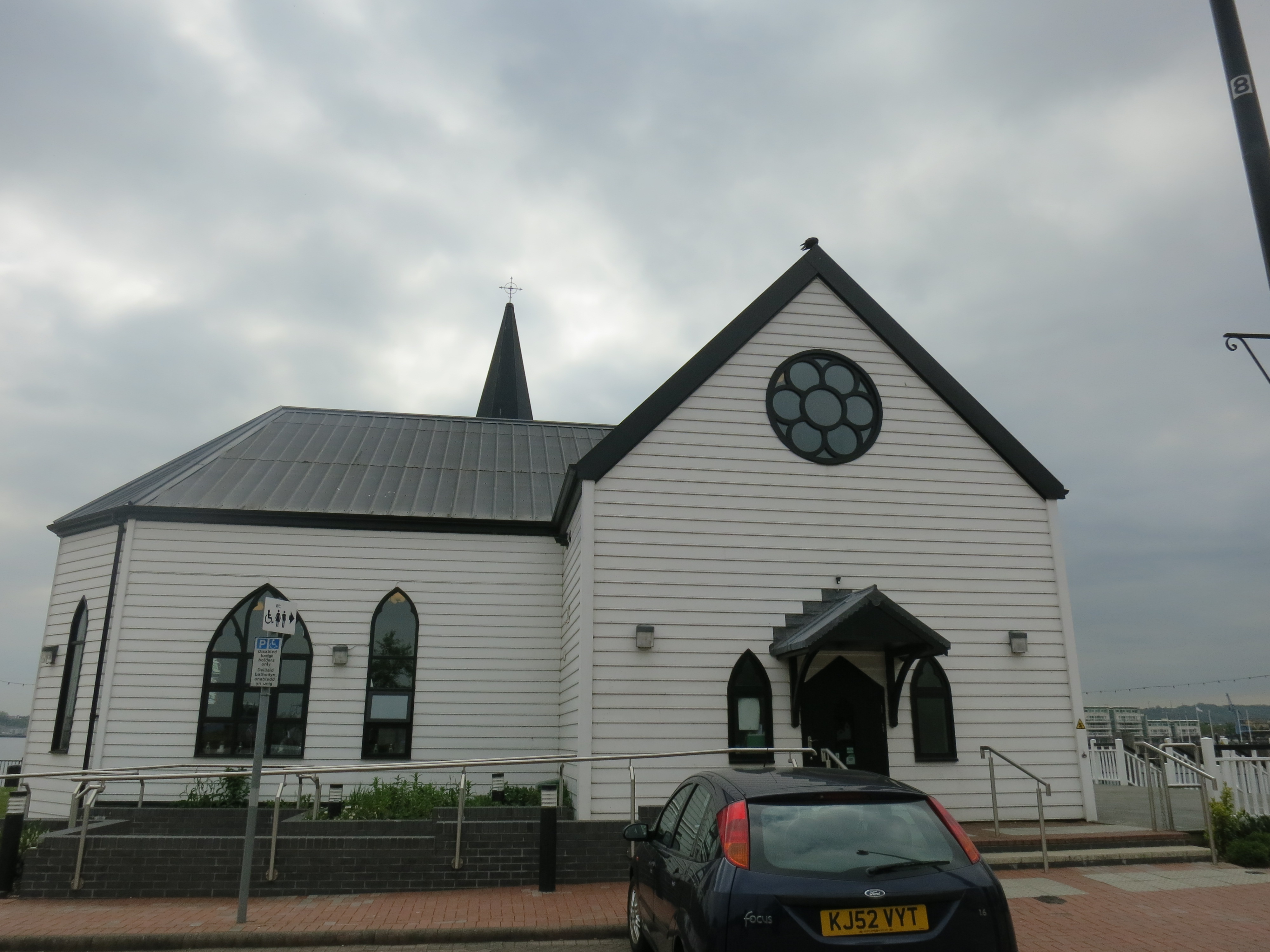
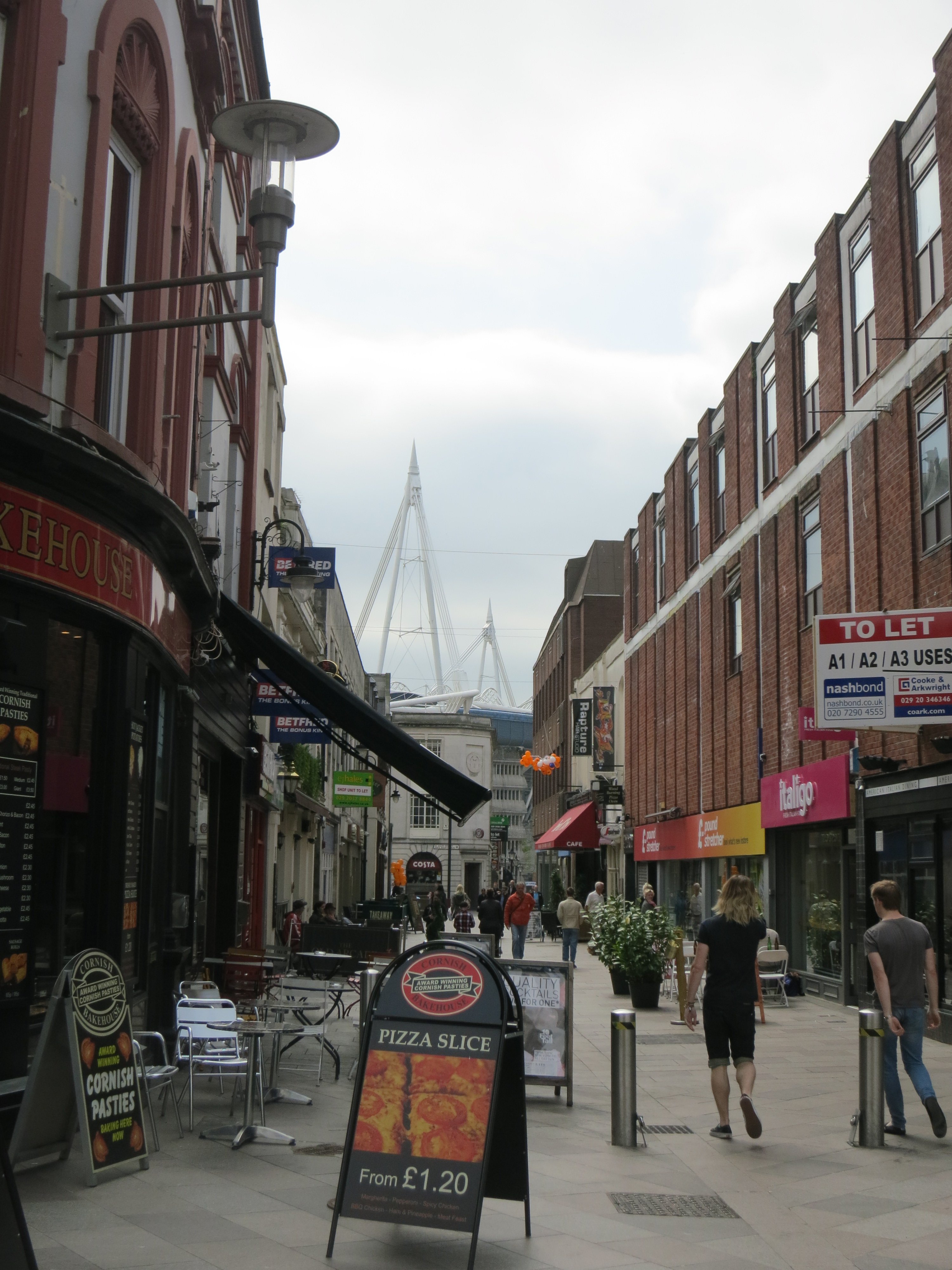
We walked from downtown, with its pedestrian-only streets, covered arcades, and huge department stores, along the main road to the harbor. The waterfront underwent a transformation in the last 15 years, following the same pattern as so many formerly working-class neighborhoods, going from underfunded zone to respectable tourist destination with the backing of a lot of government and private money. I didn’t find it to be all that interesting a space, except for a few structures: the Millennium Centre, the towers of Roald Dahl Plass (which I know from Torchwood), and the small Norwegian church that Dahl attended as a child.

Norwegian church

Norwegian church

The Millennium Centre houses the Welsh Opera, and the words on the front reflect this; the English words are “In these stones horizons sing,” and the Welsh words, “Creu Gwir fel gwydr o ffwrnais awen,” translate to “Creating truth like glass from the furnace of inspiration.” Roald Dahl Plass itself wasn’t terrible interesting–it’s a large, empty oval, with nothing of the imagination of the man it’s named for, which is disappointing. But there are enough things around there–the Welsh government building, a carousel, the shops of Mermaid Quay–to keep you occupied.

I think both phrases are lovely, especially for an opera house

I think both phrases are lovely, especially for an opera house

We actually hadn’t intended to go all the way to the waterfront. Our guidebook said the Doctor Who exhibit was in a shopping center a little bit inland, but when we went in there, we found nothing but shops and a few between-meals restaurants. We wandered around for awhile, almost as if we’d hear that wheezing brakes sound and the Tardis would reveal itself to us. Since this was reality and not a BBC program, this did not happen, and we asked some waiters on a cigarette break where it was. They explained that the exhibit hadn’t been in this location in years, and we’d have to walk along the waterfront to just about as far as it goes. So we found all these sights along the way, and then finally we saw the big “Doctor Who Experience” sign looming in the distance, hurrah!

One of the churches in the town center

One of the churches in the town center

Walking downtown

Walking downtown

Oh but it wasn’t going to happen, as it turned out. I was not going to battle a Dalek and zip across space and time with a wacky Time Lord. We arrived at a little after 4pm, to find that only the gift shop was open. Apparently tours are only 10am til 3pm, and you have to reserve them ahead of time. Okay, can we reserve for tomorrow morning, before we leave town? No, tomorrow is Tuesday, the only day the exhibit is closed. I mean, if ever there were signs that something was not meant to be, these were those signs.

Wreaths for fallen soldiers

Wreaths for fallen soldiers

By that point, we’d walked miles and I was more than ready to take the bus back to the hostel. We waited for 20 minutes, optimistically believing the screen giving us updates on when the next bus would arrive–5 minutes, 2 minutes, arriving–until it became clear it was a system of lies. It was almost as bad as waiting for a Chicago bus. Though maybe not as cold.

The Water Tower, ready to take you down to Torchwood HQ

The Water Tower, ready to take you down to Torchwood HQ

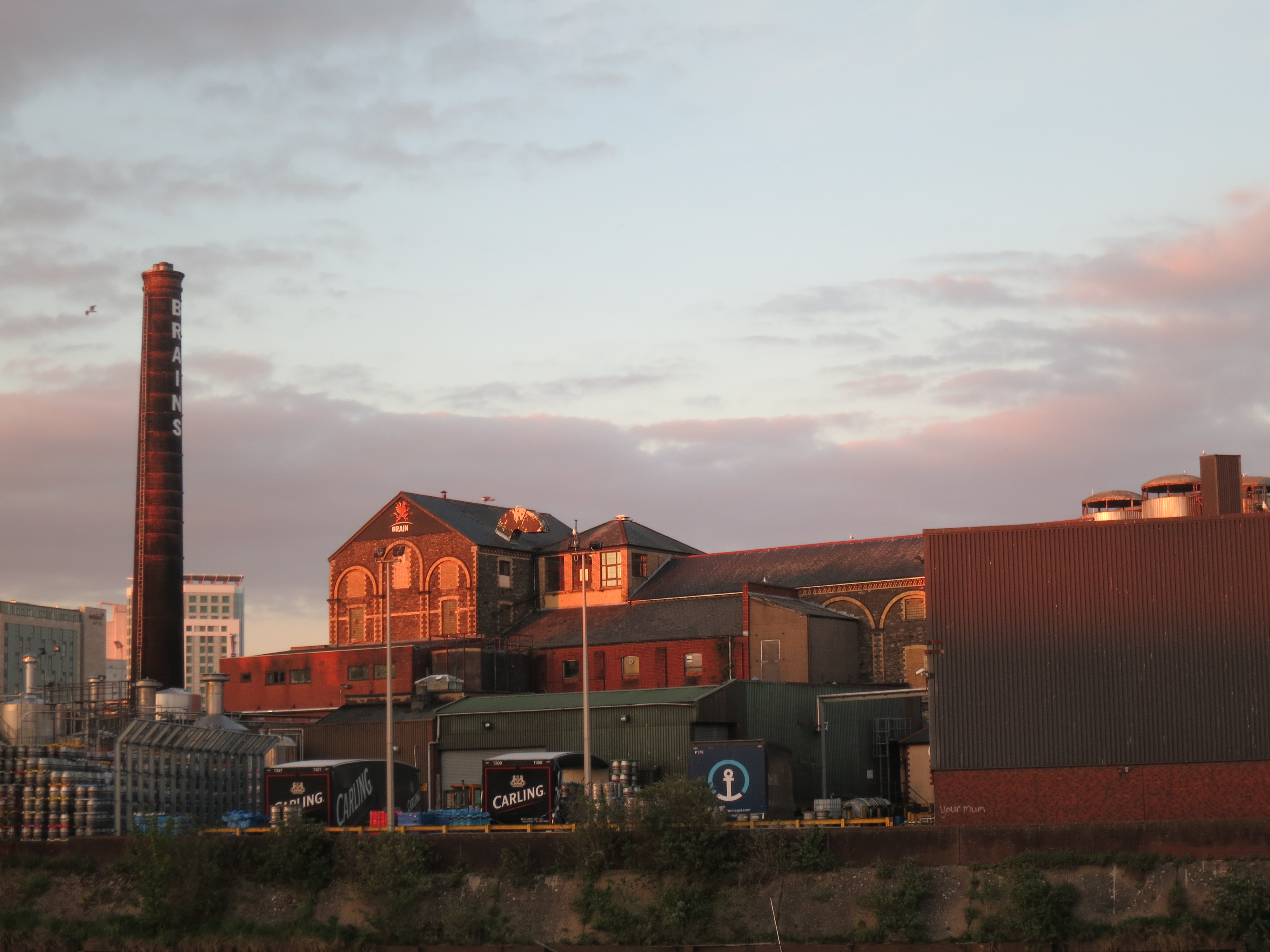
Back at the hostel, we consoled ourselves on our ill-fated journey with a local Brains beer, and we marveled at the fact that we hadn’t even thought to check the internet to confirm what our guidebook (only a few years old) was saying. We concluded that actually it hadn’t been so bad. We hadn’t spent any money (tickets are £15, or about $25), and we’d seen a lot of Cardiff along the way. A budget traveler’s happy mistake!

Brains Brewery

Brains Brewery

Our view along the river for our last drink in Cardiff

Our view along the river for our last drink in Cardiff

Cardiff Castle: Fortress and Children’s Playground

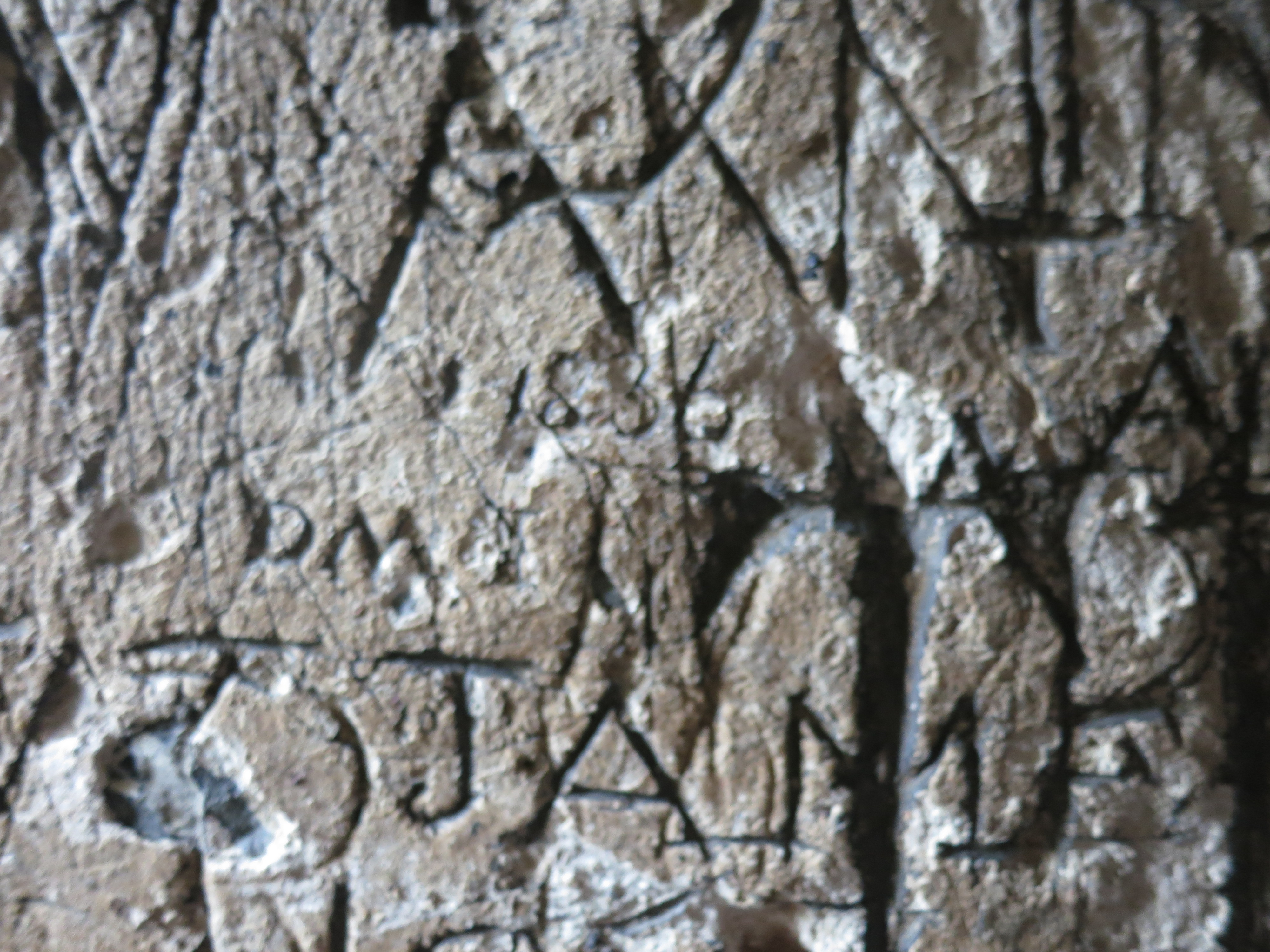
I was already inclined to like Cardiff Castle when Liz and I walked across the large courtyard; the guy handing out the audio guides was incredibly cute and taught us how to say “thank you” in Welsh (a phrase which has nearly double the amount of vowels found in most Welsh words). But then we found falcons, and centuries-old graffiti, and a group of schoolchildren dressed in paper crowns, and we really liked it.

What's left of the keep of Cardiff Castle in Wales

What’s left of the keep of Cardiff Castle in Wales

Looking out over my domain

Surveying my domain

The castle was built by Norman invaders, on the site of an old Roman fort. So it was never a site owned by the native Celts. Cardiff Castle was part of the Marcher territory, a strip of land that acted as sort of a buffer between England and Wales from the 12th to the early 16th centuries. Marcher lords had almost total autonomy, though they were tasked by the English king with keeping the border secure for England, and they used a lot of Welsh laws in administering justice. A fascinating in-between kind of place, the kind of place where each motte-and-bailey castle matters immensely.

The first thing you see when you enter the castle walls

The first thing you see when you enter the castle walls

Looking out from the inside

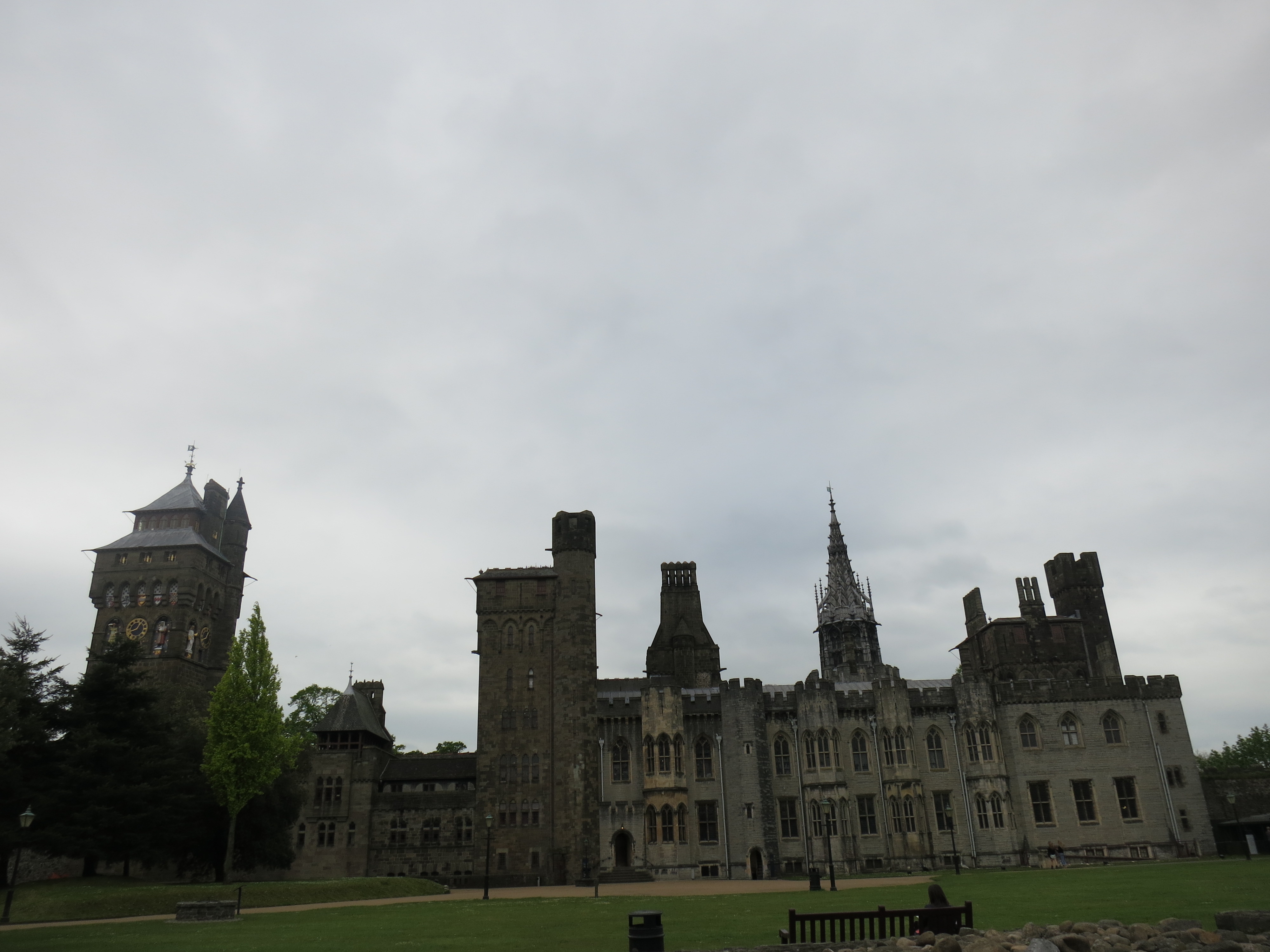
Bell tower on the left and main range on the right

Once England firmly and finally took hold of Wales, the Marcher lords lost their far-reaching powers, and the castles lost their importance as defensive bastions. In the 18th and 19th centuries, the Marquesses of Bute changed the castle grounds to be more of a residence and less of a fortress. They employed the marvelously named Capability Brown to make the changes, which mostly involved knocking a lot of stuff down and updating the main range (main house) to be fashionable for 1776.

Inside the keep

Inside the keep

Graffiti

Graffiti

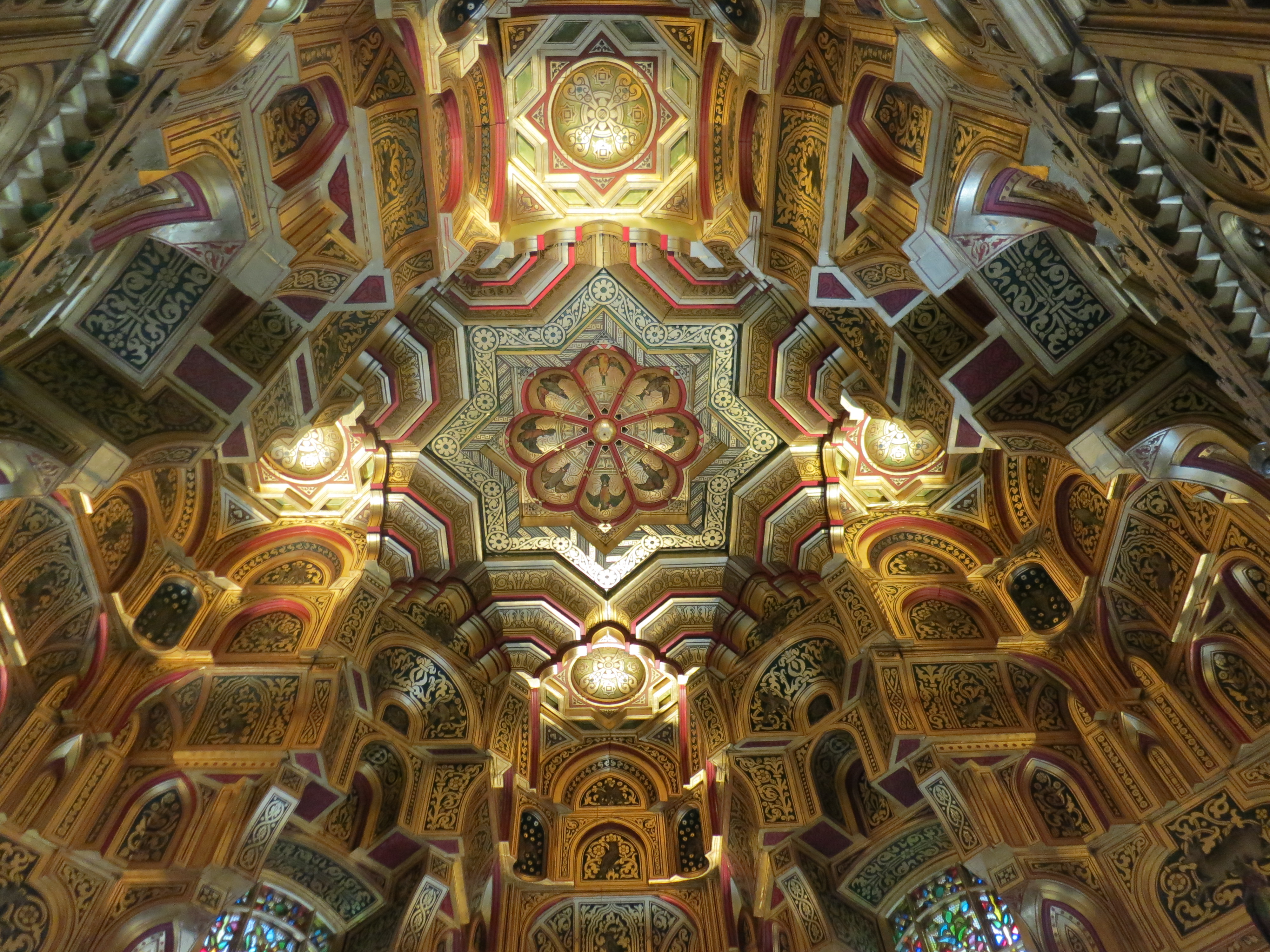
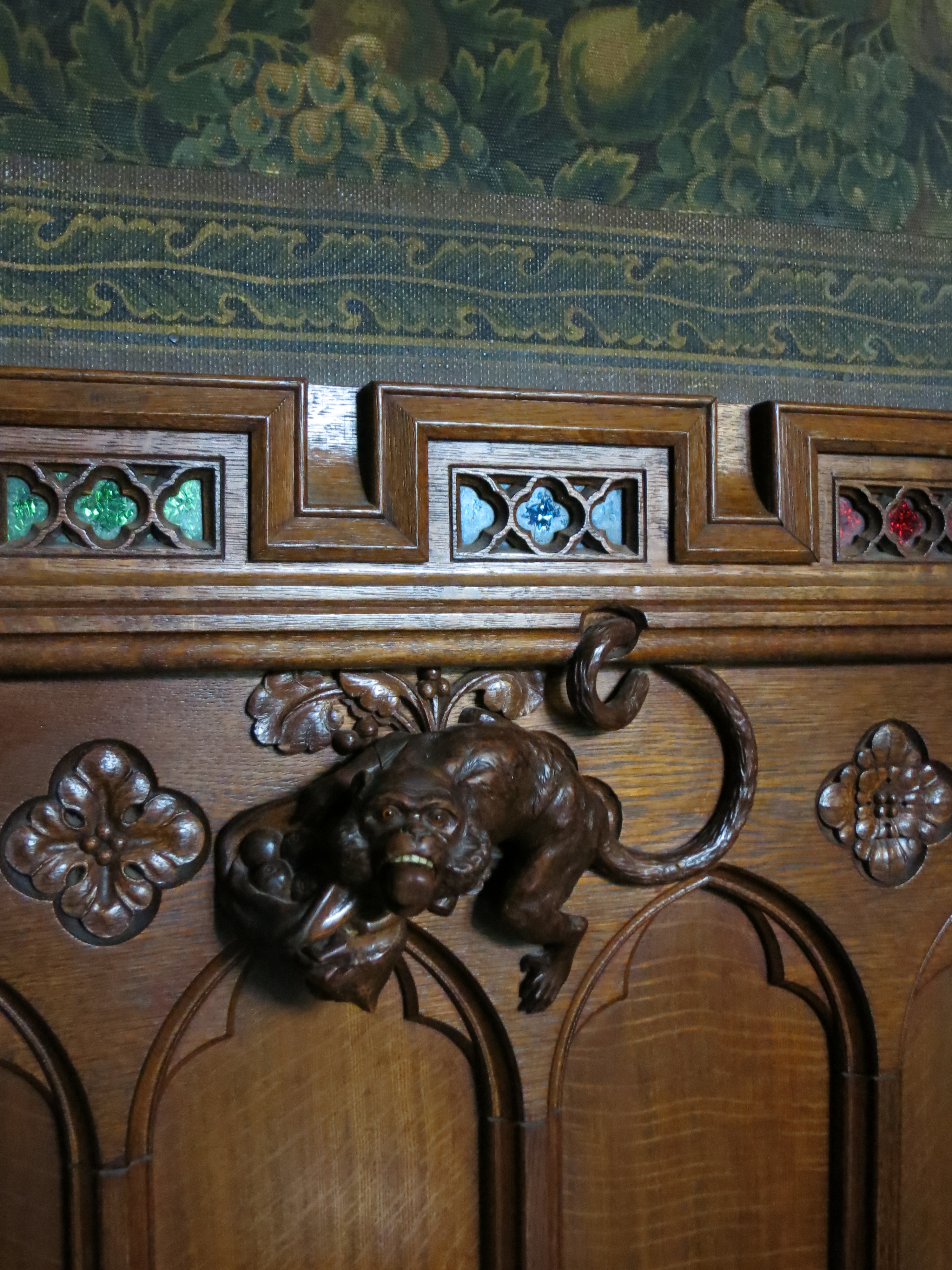
The Arab Room in the main range was easily my favorite (the name, I know). The geometric shapes and deep colors were mesmerizing. It even had a crystal in the stained-glass window, the better to refract light even more. The dining hall was impressive, as was the long library and its massive fireplace. Apparently one of the family was fond of monkeys, and they can be found as little flourishes throughout the house; one is the bell-pull next to a fireplace in a corner room.

The ceiling of the Arab Room

The ceiling of the Arab Room

Monkey bell-pull

Monkey bell-pull

Nice little library

Nice little library

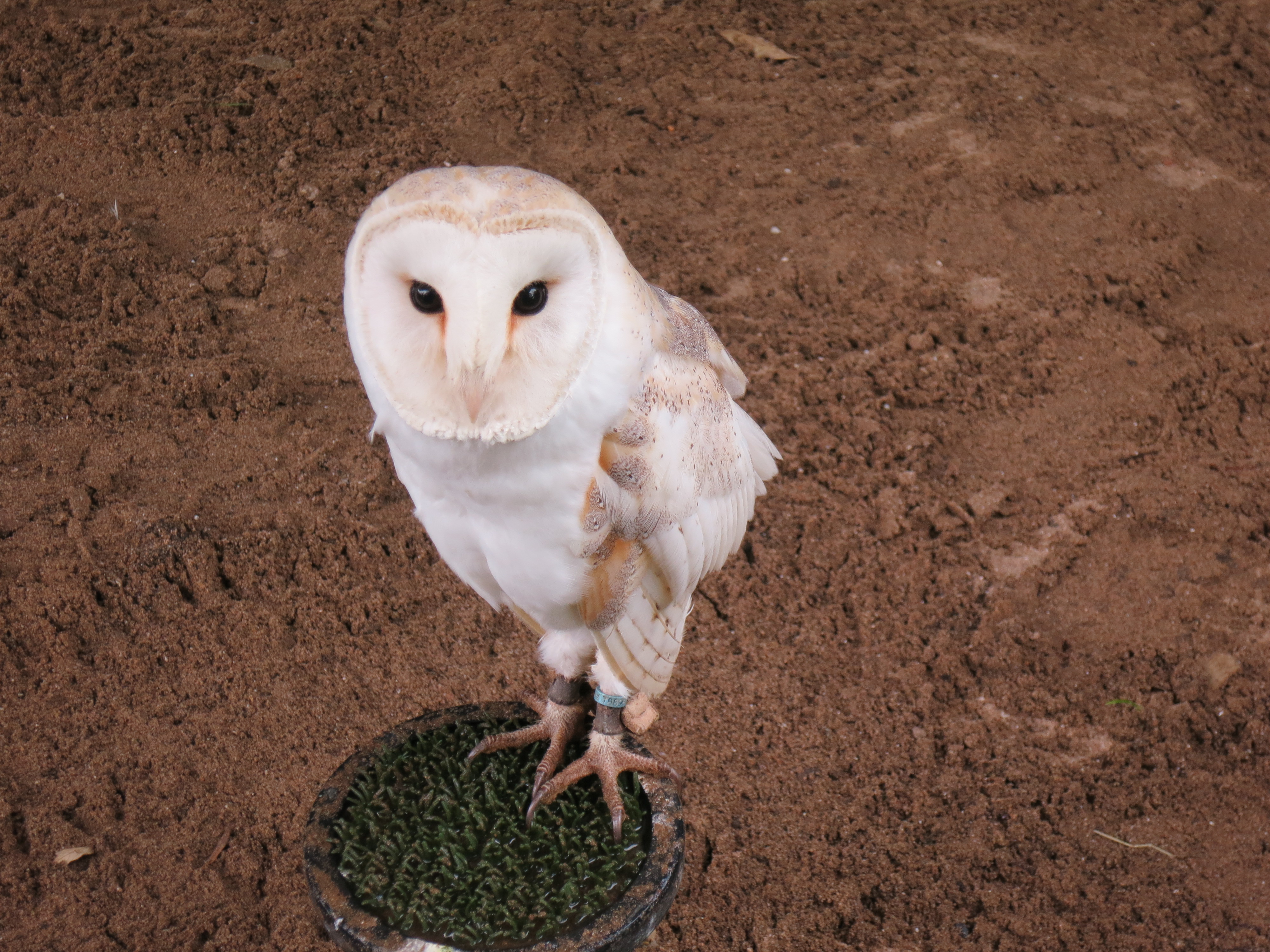
In a little hut next to the main house, falcons and an owl fluttered and swiveled on their perches. Outside the hut, peacocks stalked the grass, secure in the knowledge that they owned this place. A group of about 30 schoolchildren dressed in paper crowns and too-long tunics giggled on the green, and some of them got close to the peacocks before shrieking and running away again. From fortress to children’s playground in just under 1000 years.

Hedwig of Harry Potter, is that you?

Hedwig of Harry Potter, is that you?

Mid-ruffle

Mid-ruffle

The peacocks were surprisingly undisturbed by masses of costumed children chasing after them

The peacocks were surprisingly undisturbed by masses of costumed children chasing after them