Goodbye to 2013, and Hello 2014!

As I wrote in my Thanksgiving Day piece: “I’ve spent seven months of this year on a trip around the world, gone to the weddings of some of my most beloved people, celebrated my grandmother’s 80th birthday with the whole clan, and published a piece on a major website. It really has been a terrific year, and I’m grateful for every day of it. Can’t wait to see what 2014 brings.”

I don’t have much to add to that except to say that my New Year’s resolution for 2013 was to post five times a week for the whole year–and I did it! Every Monday through Friday, I posted something from my travels–a photo, a diary entry, a reflection on travel, and only occasionally a “ahh I am too busy to come up with anything today, but I haven’t forgotten you” post. People who work in media have to generate content (that’s the key phrase) all the time, but this is not my job, it is a side project and labor of love. Thus, the challenge of my New Year’s resolution, and my happiness in meeting it.

I won’t be posting every day Monday through Friday for 2014 like I did for 2013, but I will post often. I can’t say what the new year will bring, but plans include: traveling to South America, meeting up with my goddaughter somewhere this summer, posting at least twice a week on Stowaway, gaining more freelance editing clients, and writing for more publications. It’s going to be a good year.

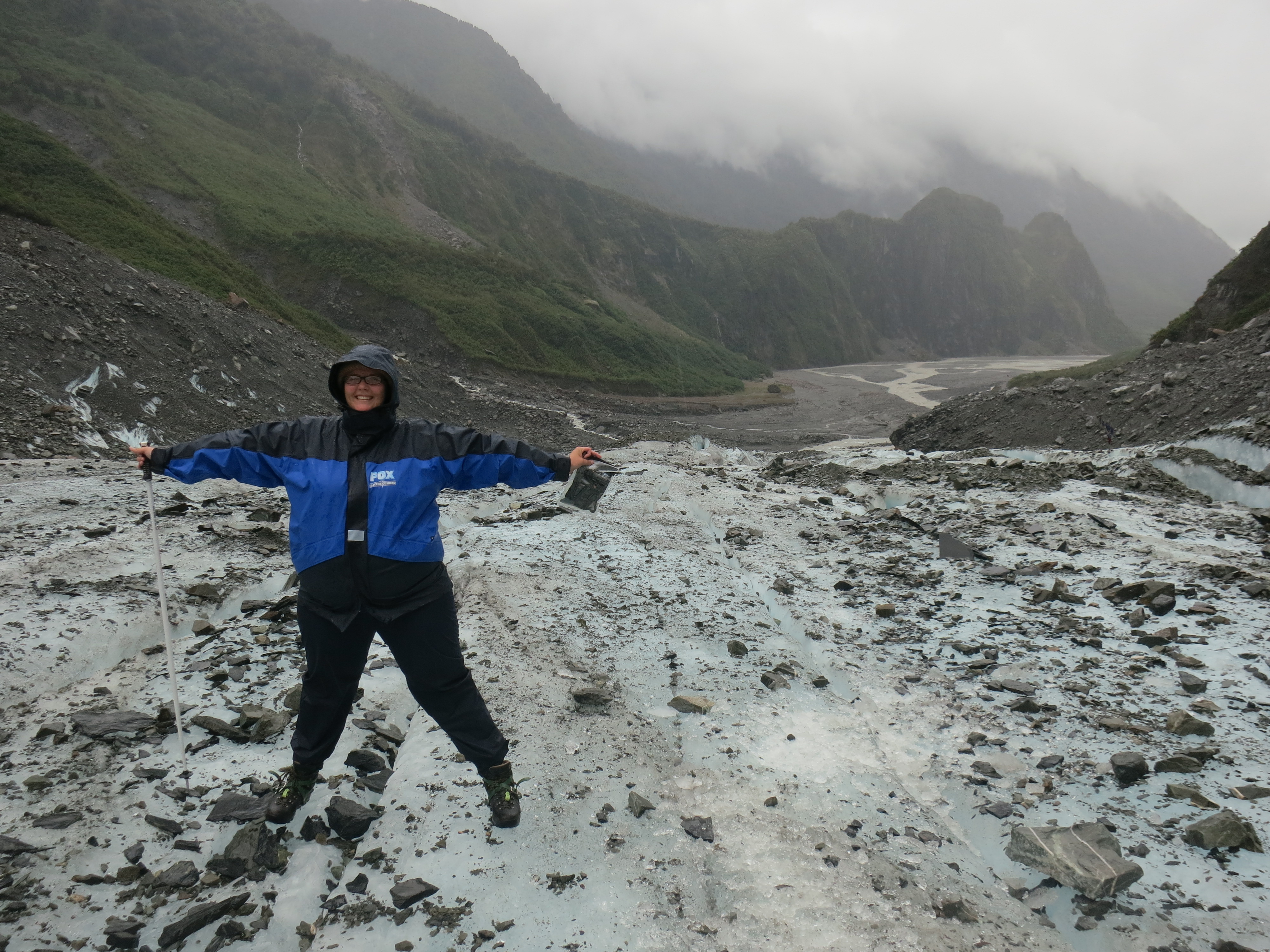
Joy on Fox Glacier, New Zealand

Climbing literal mountains in 2014. Happy New Year!

A Tea Ceremony and Geisha Dance in Kyoto

It rained most of the time I was in Kyoto, which was too bad for seeing the temples, but perfect for attending a tea ceremony and a dance performance one afternoon. Kyoto is famous for temples and geisha, but all these traditional elements are fit into a large, modern city. So I took a bus downtown and then walked down an alley to get to the theater for the dance.

Lamps in the lobby

Lamps in the lobby

Doors to the theater

Doors to the theater

The theater presents shows seasonally, and I was lucky to be there for the spring show by the maiko (geisha in training) and geisha. Kabuki is performed by an all-male cast, and near as I could tell, this show was all women. The first half was a full play, and again I was struck by how stylized every movement was, as it had been at the kabuki show. There was no English translation or program provided here, though, so I couldn’t really follow the story, but it involved thwarted love and I’m pretty sure mass suicide at the end.

A sneak photo before the show

A sneak photo before the show

Beautiful screens

Beautiful screens

After a short intermission, they performed a series of dances, mostly in small groups, with some individuals coming forward for a few moves. All very graceful, small movements, all set to live music from stage right. It was like a ballet in its wordlessness and gracefulness, and it was beautiful to watch.

After the show

After the show

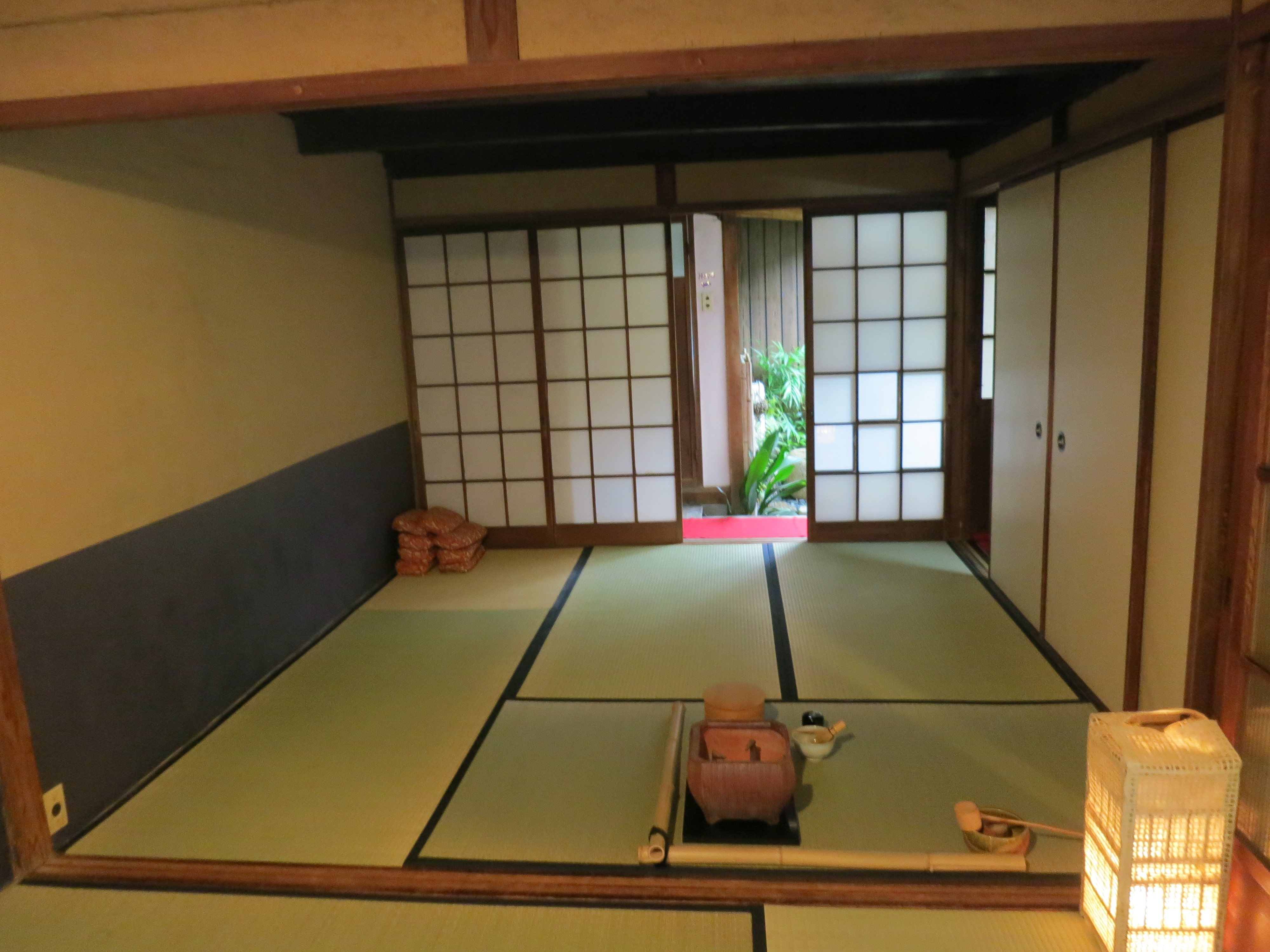
There are several ways to attend a tea ceremony in Kyoto. I went to the one recommended to me by my hostel; I was the only one who attended this session, so after a short introductory conversation with the host, I sat on the tatami floor for instruction. She explained what a few implements were–the whisk, the serving bowl, the scoop–then said, “Now I will begin,” and walked out of the room.

A simple layout

A simple layout

Everything for the next 15 minutes was silence, as she re-entered and performed the ceremony with precision and grace. She folded a red cloth a certain way and wiped the tea bowl with it, then refolded it and wiped the wooden tea scoop. Water from a small hot coals stove, tea whisked with a bamboo whisk. She bowed when serving me the tea, and I lifted my bowl in respect, turned the bowl a quarter turn, and then sipped.

Tea ceremony rooms

Tea ceremony rooms

After she served me the tea, she left the room briefly. When she came back in, she explained some of the symbolism behind it all and had me whisk green tea on my own. The four qualities necessary to any tea ceremony, she said, are respect, harmony, purity, and tranquility. Each quality follows from the other–harmony from respect, etc. I found the ceremony the perfect end to the afternoon, a quiet, lovely time to reflect.

Have Yourself an Icy Little Christmas

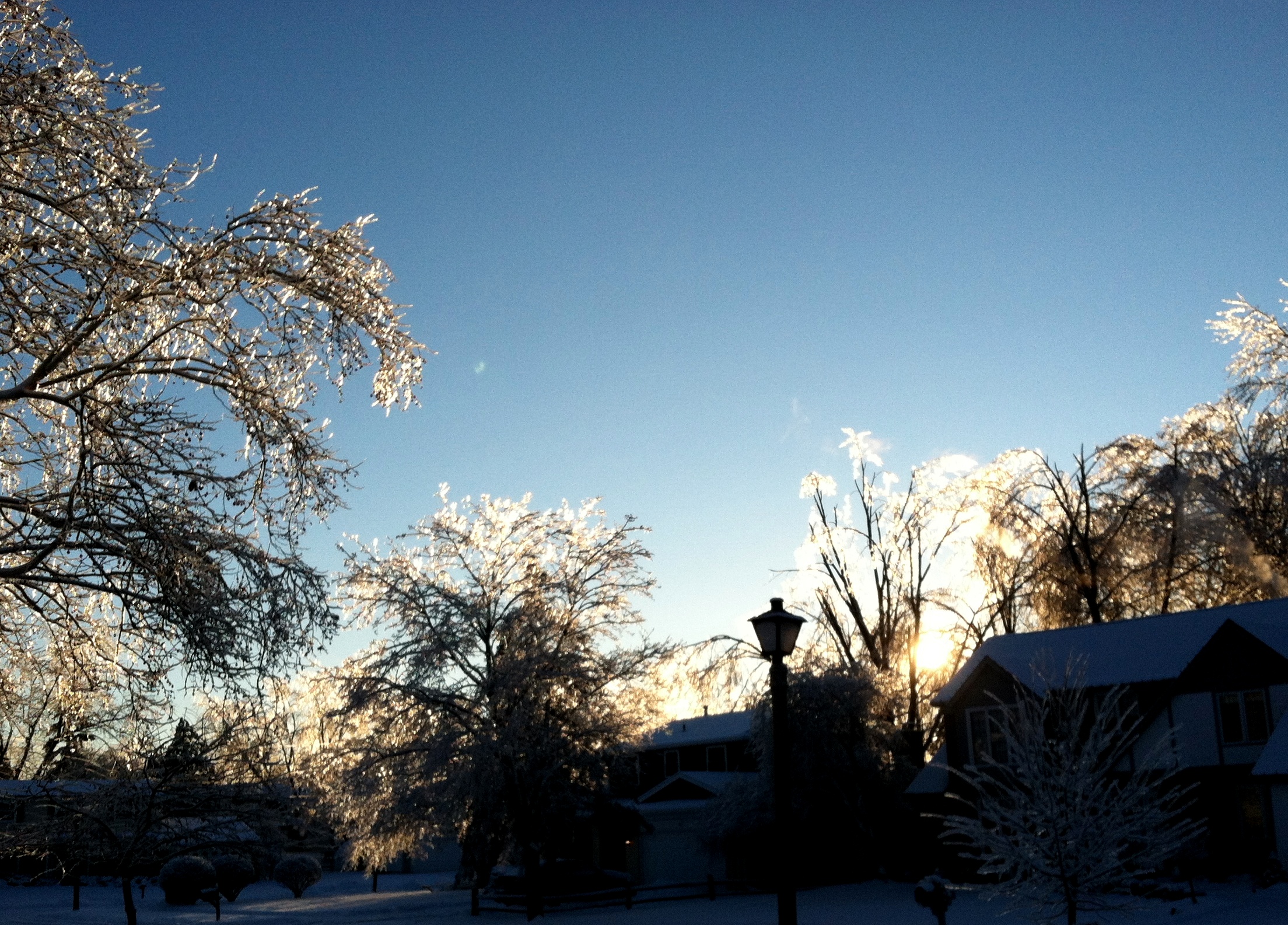
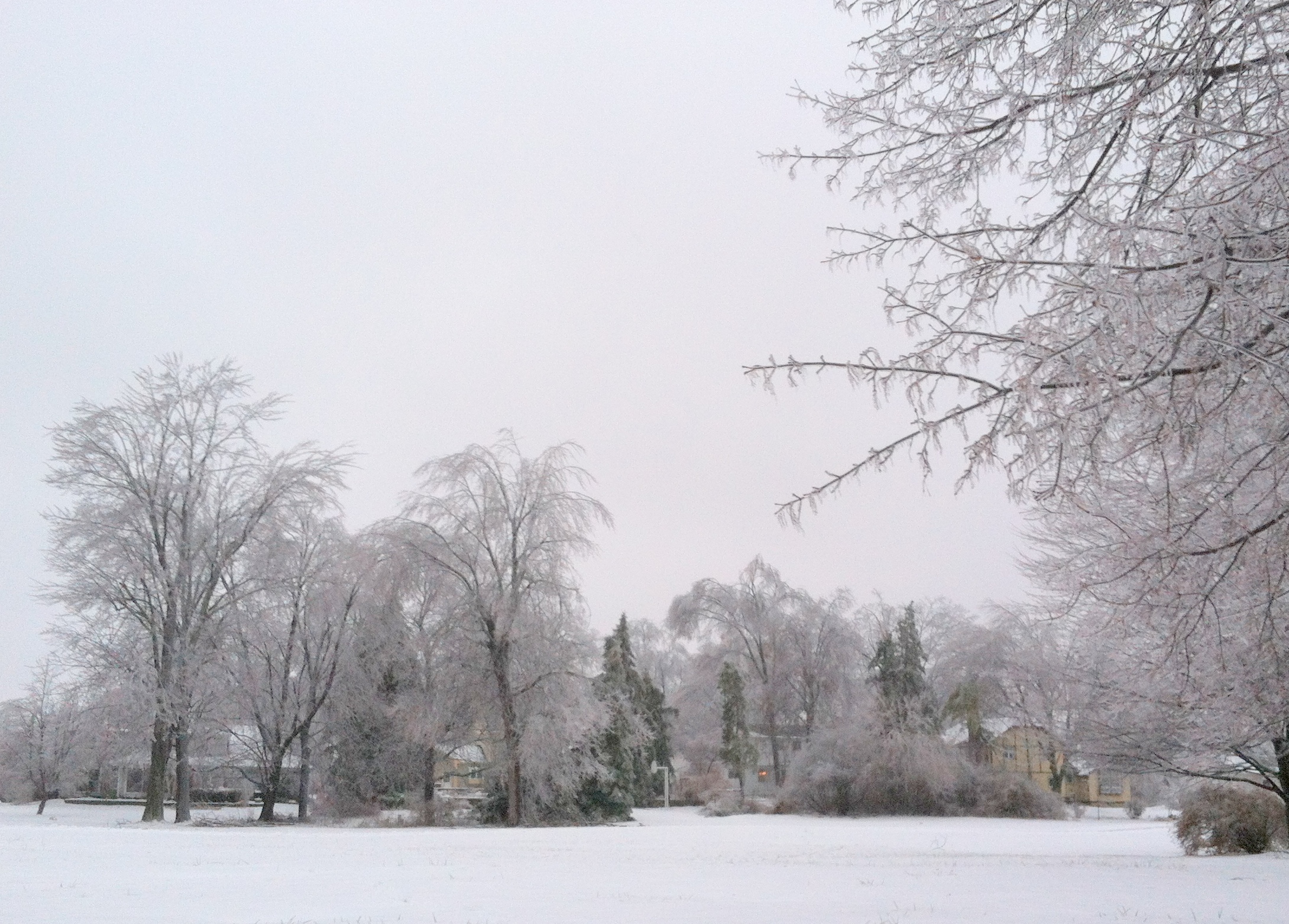
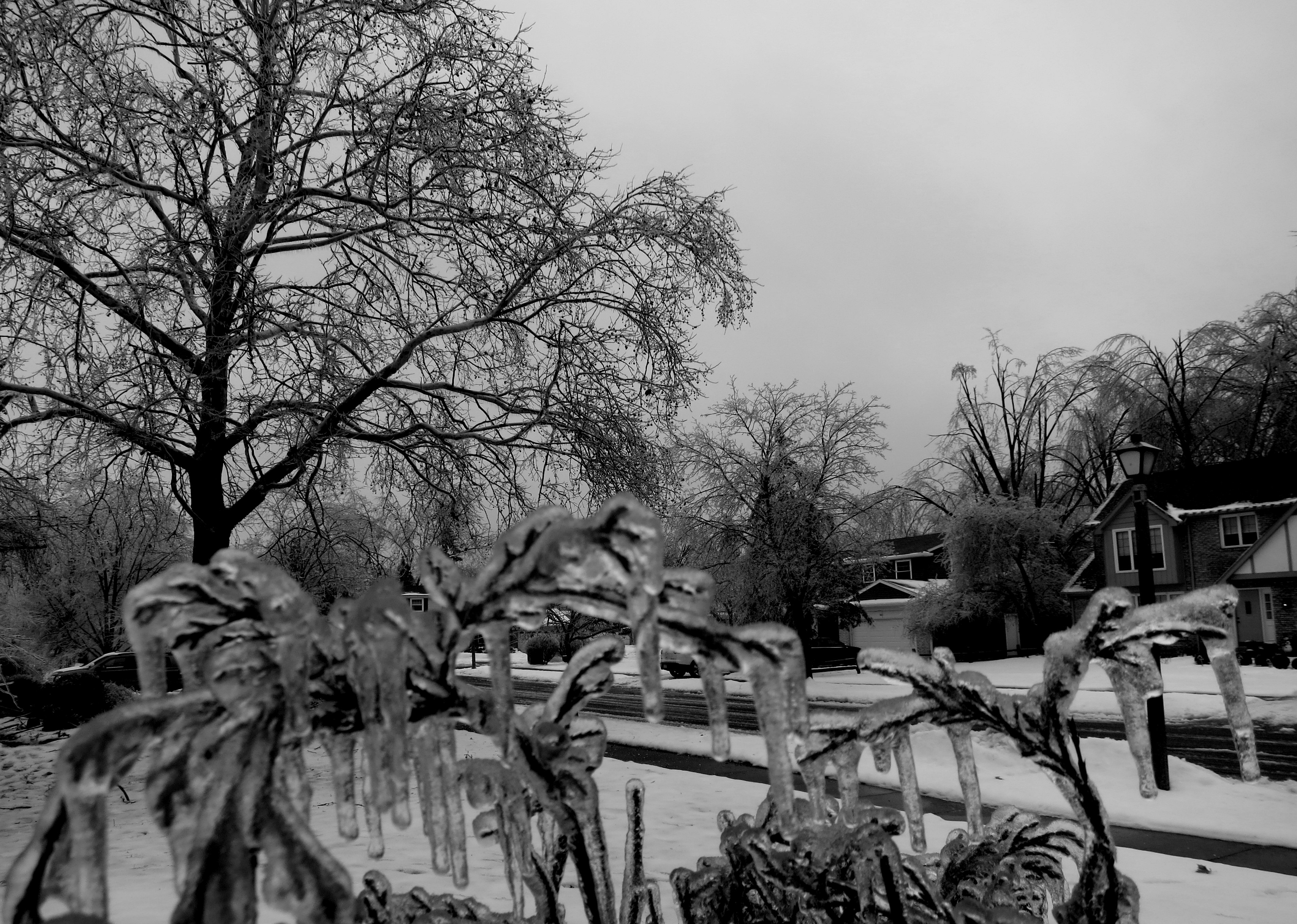
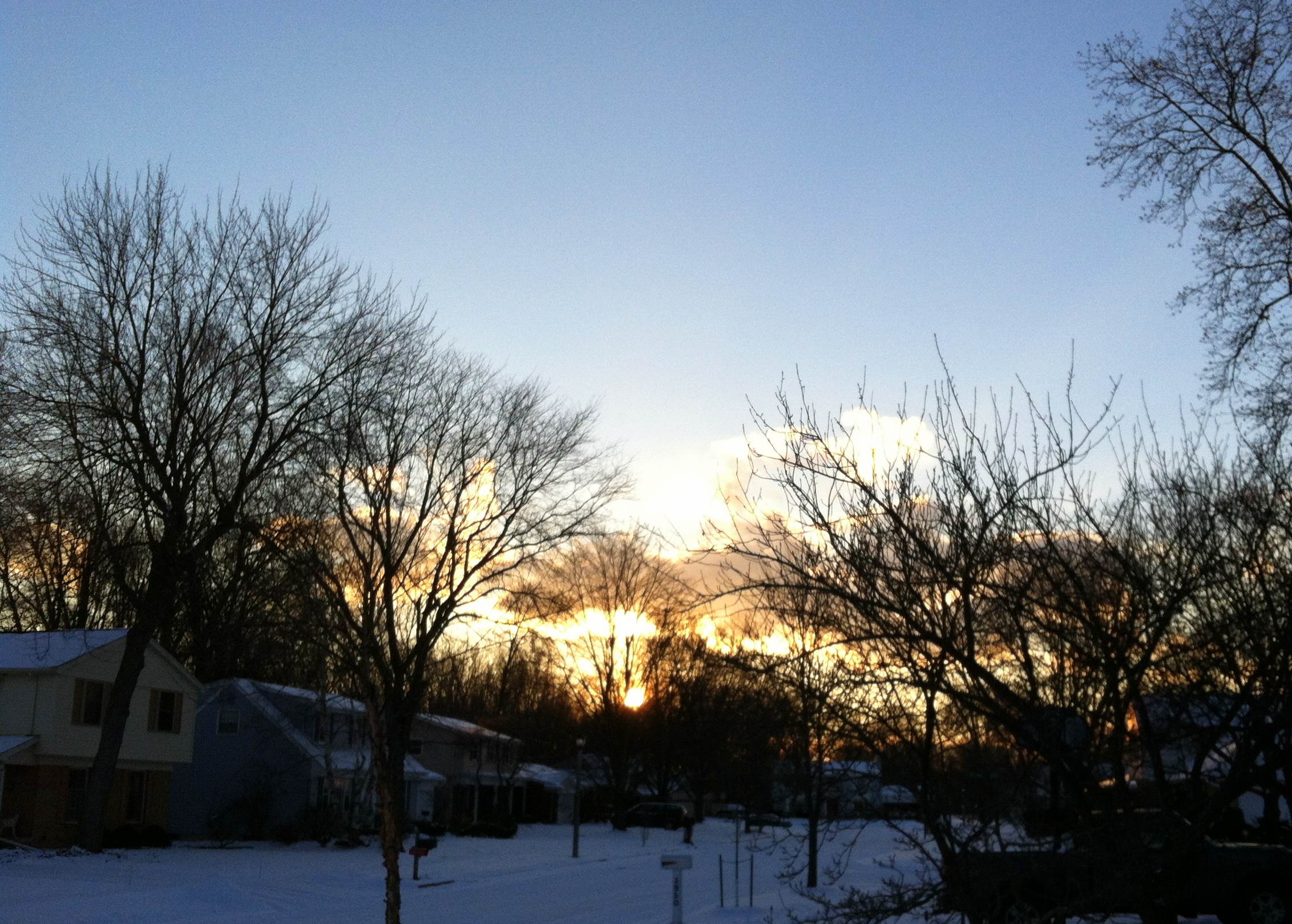
On Saturday night, we had an ice storm in mid-Michigan. The next day, everything was covered in ice. Every twig, every blade of grass, was perfectly encased in frozen water. A lot of people lost power, but we were fortunate, so I walked around taking some pictures and then retreated to the warm house to decorate a Christmas tree. I hope everyone was able to stay warm and gets their power back soon. In the meantime, some photos from after the storm:

Backyard

Backyard

michigan winter christmas ice

Silent neighborhood

Silent neighborhood

Every blade of grass

Every blade of grass

The park near my house

The park near my house

Low branches on the road

Low branches on the road

michigan winter christmas ice

michigan winter christmas ice

An icy Christmas

An icy Christmas

Kamakura: Shrines and a Giant Bronze Buddha

Kamakura was the seat of a powerful shogunate in the 13th and 14th centuries, and it has the impressive number of shrines and temples to show for it. It’s a popular tourist destination for Japanese and foreign tourists alike, and it was bustling when I went there in April. I made it to three of the famous sights, which isn’t bad for a day trip.
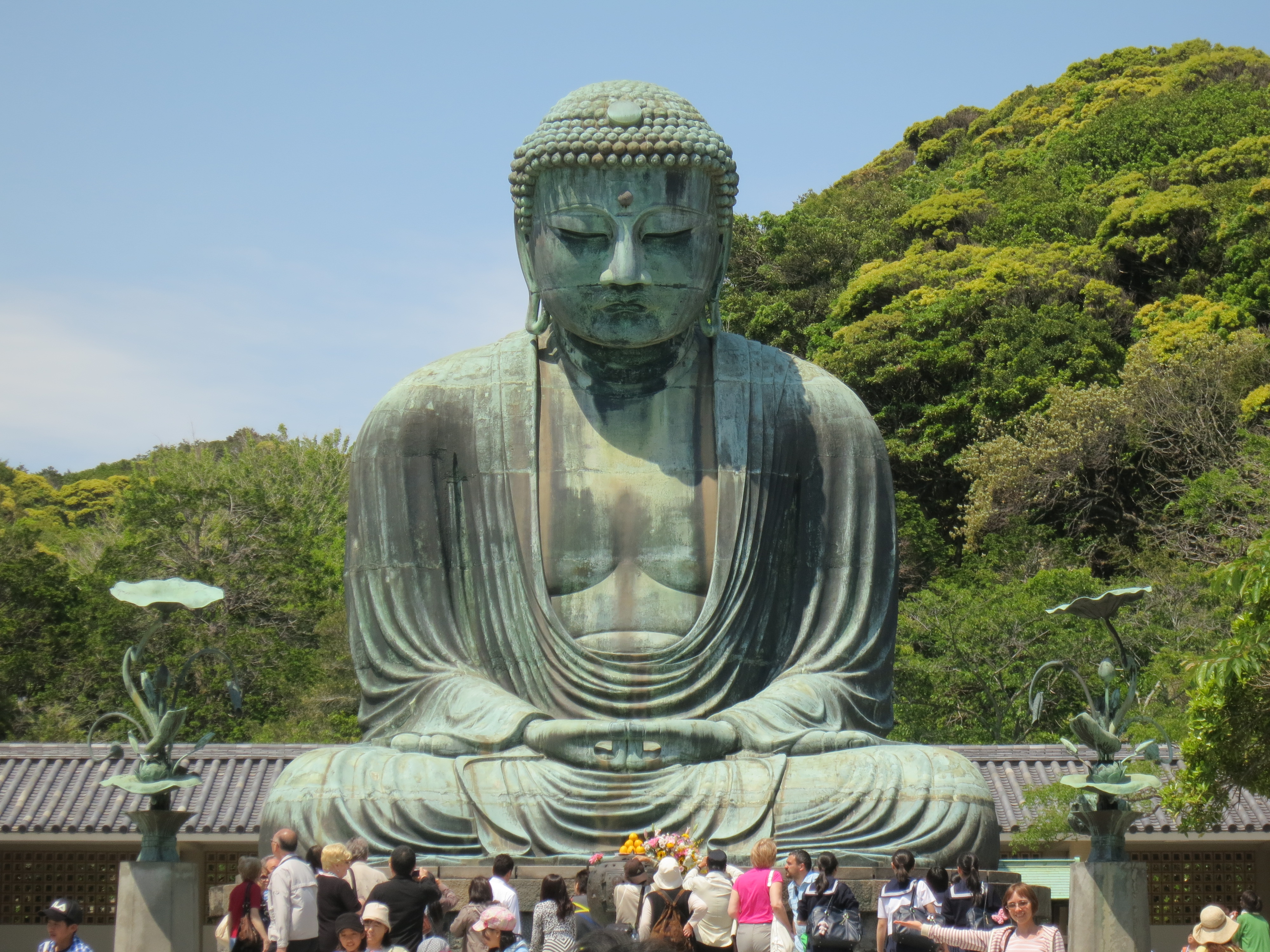
The Great Buddha in Kamakura

The Great Buddha in Kamakura

A shogun built the approach to Tsurugaoka Hachimangu Shrine for his son; quite the birthday present. It’s a straight path up from the sea, lined with cherry trees. It leads to a giant torii (main gate), which opens up to a small bridge crossing a manmade pond, and a long gravel path to a large courtyard.
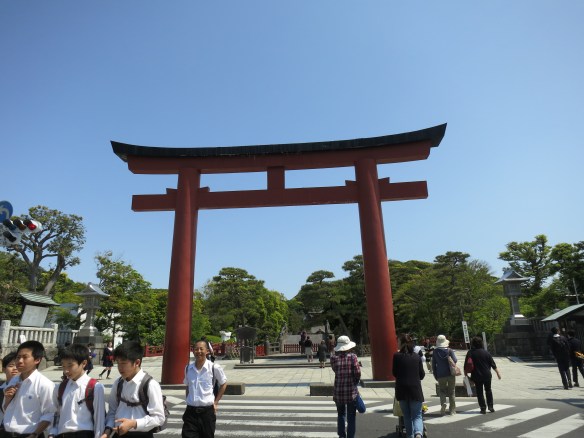
Tsurugaoka Hachimangu

Tsurugaoka Hachimangu

Banners at the shrine

Banners at the shrine

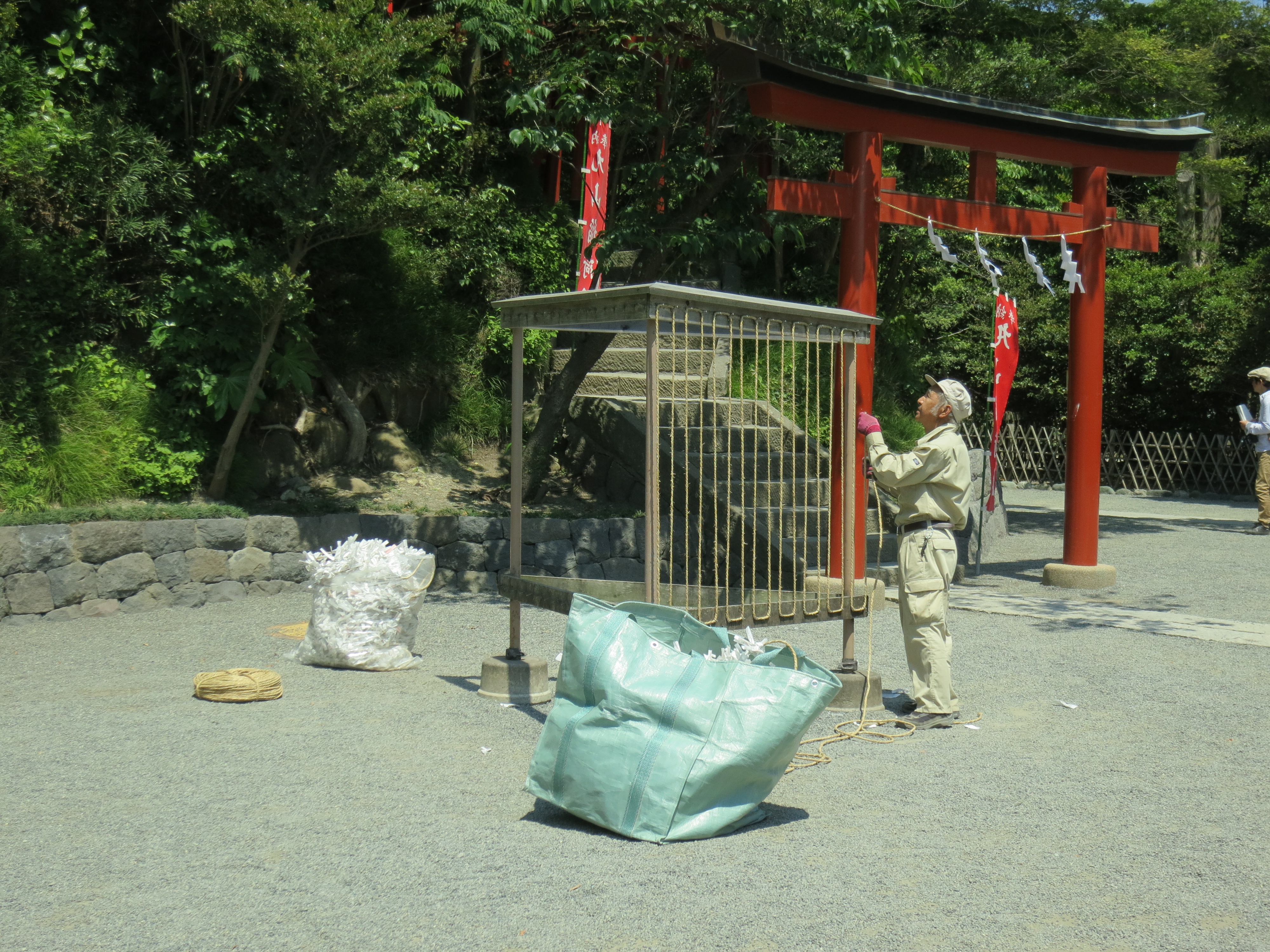
To the left of the stairs that lead up to the shrine stands what remains of the giant gingko tree that figures in legends of the shrine. The tree was struck by lightning several years ago, but people still pose for photos in front of the massive stump left behind. Behind the shrine is a small museum of treasures–calligraphy scrolls, suits of armor, some painted screens–which I admired but didn’t photograph, since there were lots of “No photos allowed” signs.

All those fortunes tied to the wires have to go somewhere

All those fortunes tied to the wires have to go somewhere

The stump of the 1000-year-old gingko tree

The stump of the 1000-year-old gingko tree

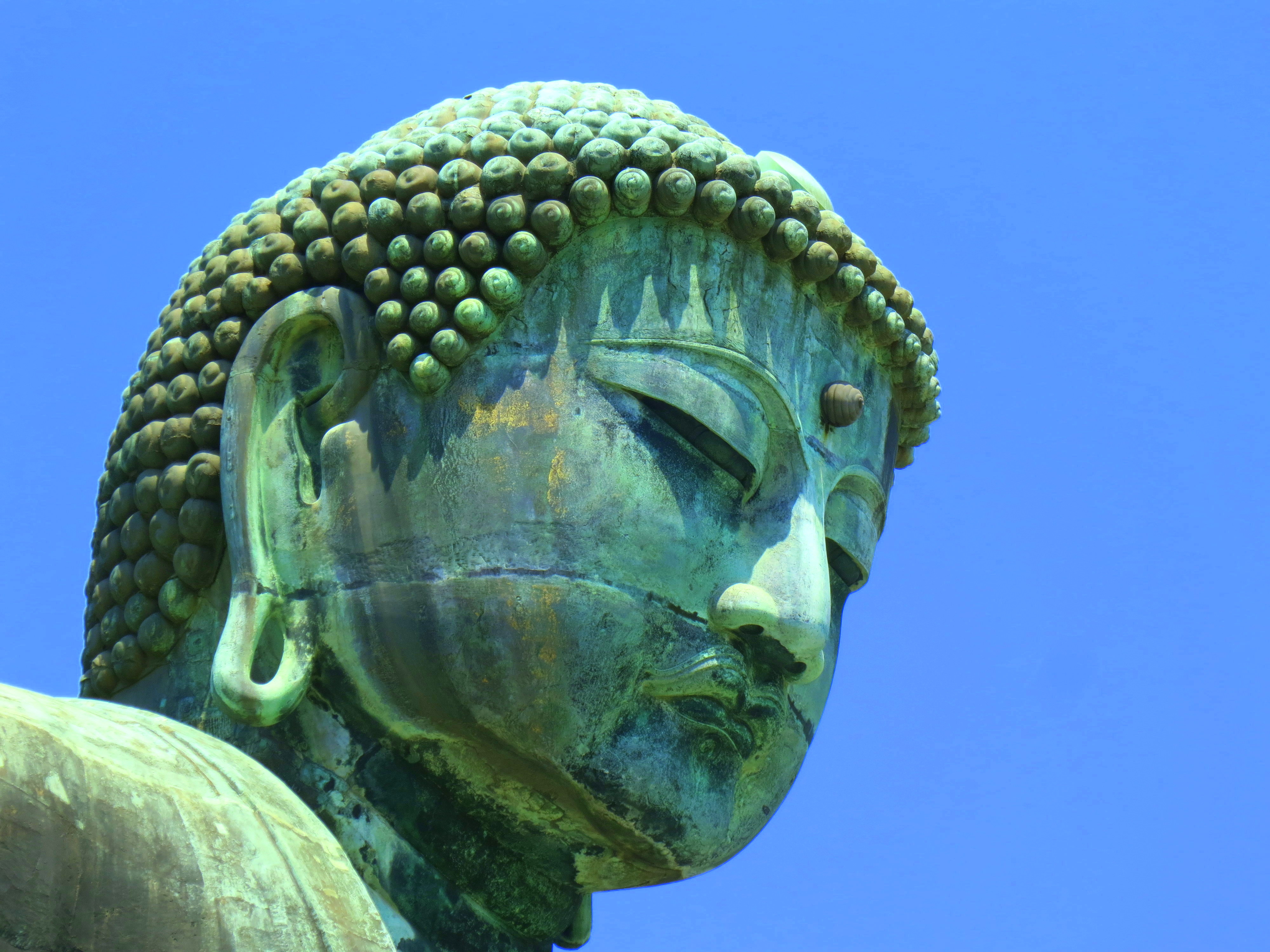
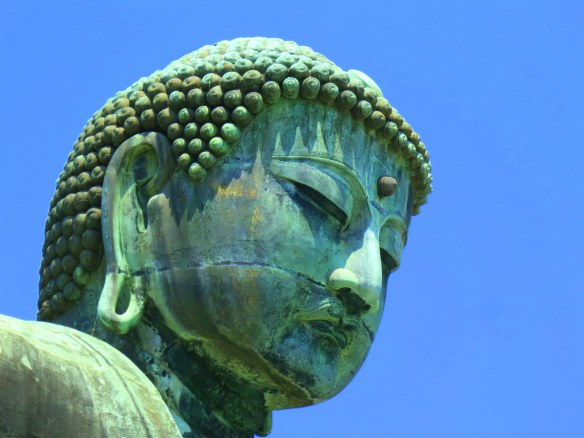
Possibly the biggest attraction in Kamakura is the Great Buddha. (Pun intended!) The bronze statue was cast in 1252 and has stood in the open air since 1495. The size did not disappoint; this is one large buddha. It’s also hollow, and you can go inside the base. That was cool, to touch the inside of a statue built 700 years ago.

The Great Buddha

The Great Buddha

Inside the Great Buddha

Inside the Great Buddha

Glamour shot with the kids after their school assignment

Photo shoot with the kids after their school assignment

The best part of visiting the buddha statue was all the schoolkids. They were there on a field trip, and they clearly had assignments to accost every foreigner they saw, because as I sat and admired the buddha, no fewer than three groups of 10-to-15-year-olds came up and asked to talk with me. Each person in the groups (made up of 6 to 8 kids) had to ask a question, and I answered “what is your favorite color?” “what sports do you like?” and “what is your favorite food from Japan?” many times. After I answered, they thanked me and gave me colorful little origami that they’d made, which was sweet, even if it was part of the assignment. The last group wanted to take a photo with me, so I got one on my camera too. Peace signs for everyone!

Hasedera Temple, housing the giant statue of Kannon

Hasedera Temple, housing the giant statue of Kannon

The final shrine I made it to was Hasedera Temple. It had a beautiful garden, and a giant gold-covered wood statue of Kannon, god/dess (has been seen as both) of mercy. The statue was not allowed to be photographed, and it was clearly an important focus for religious reflection. While I was there, a group of men and women in white half-robes were led in chant while they gazed at the statue, which was lovely to witness.

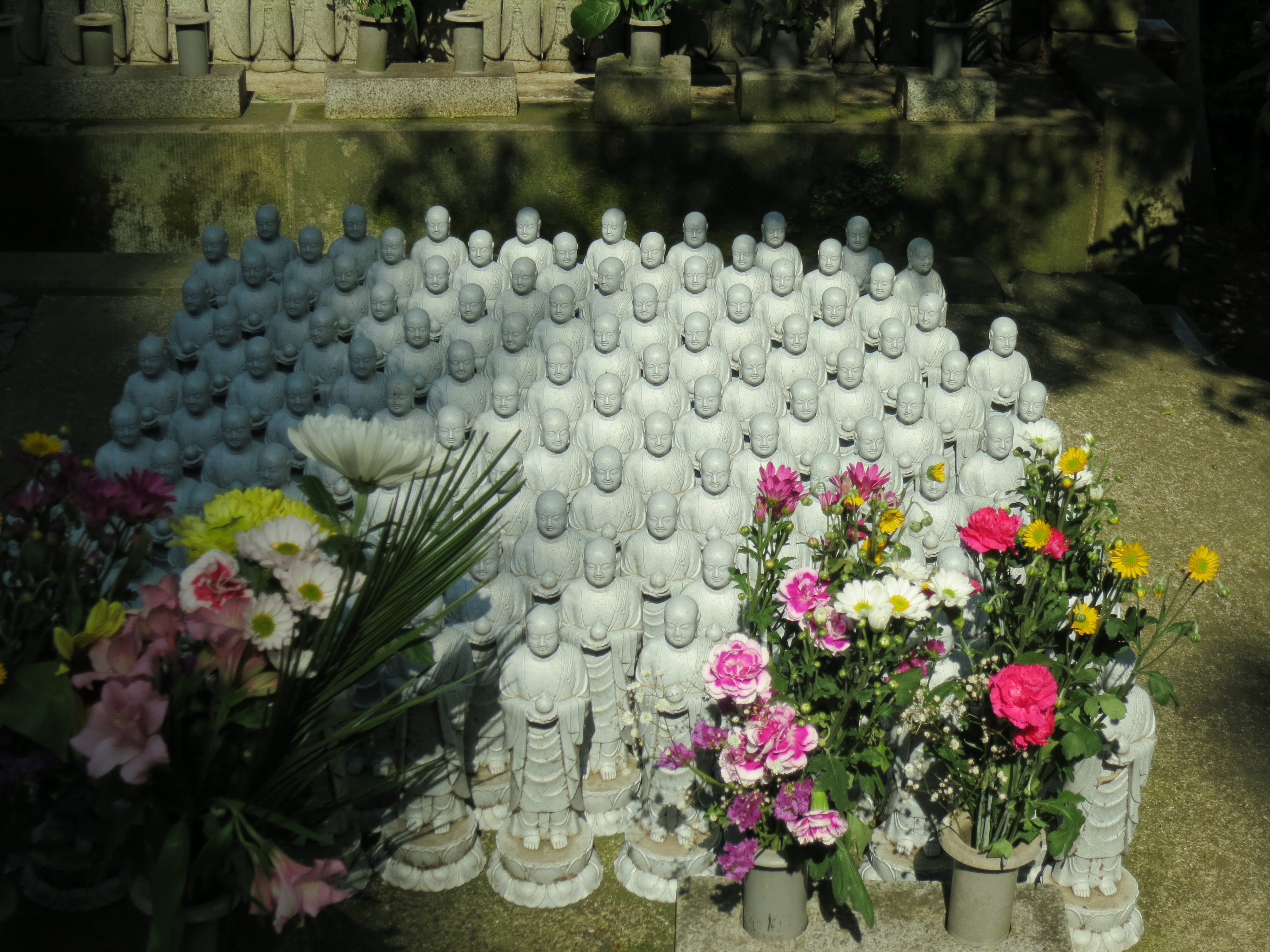
One section of Hasedera Temple has become a place where people remember their stillborn children
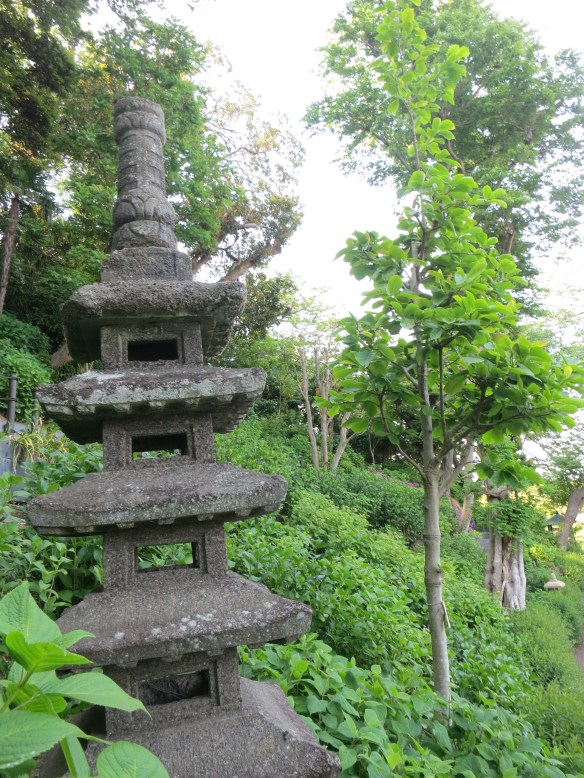
One section of Hasedera Temple has become a place where people remember their stillborn children

On a path to a view of the sea
On a path to a view of the sea

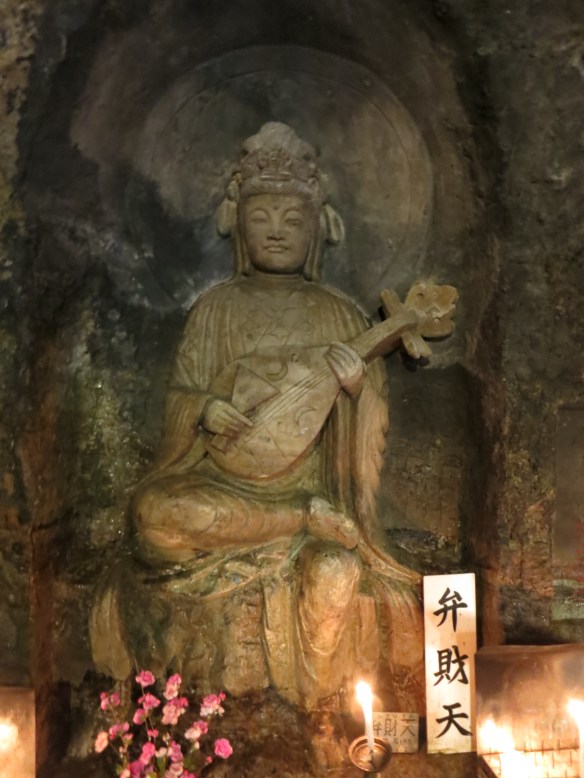
One of the minor gods serving Benzaiten, goddess of beauty and wealth

One of the minor gods serving Benzaiten, goddess of beauty and wealth

The temple grounds included a shrine that has become a sort of pilgrimage site for women remembering miscarriages and stillborn babies, a walk to an overlook on the sea, and a cave containing images of various goddesses. It was a large, lovely temple complex.