I mean, at a barbecue joint called “Meat,” you don’t expect many non-carnivore items, but still, I’ve never seen it spelled out like this before.

Vegetarian Options

I mean, at a barbecue joint called “Meat,” you don’t expect many non-carnivore items, but still, I’ve never seen it spelled out like this before.
Vegetarian Options

Sunset, Charlotte, Michigan
East Lansing, Michigan; October 10, 2013
On my second day in Hirosaki, I looked at more cherry blossoms and some non-sakura things in town, and I made a new friend. The city itself isn’t much; it’s a modern Japanese town, clean and neat but not architecturally interesting. I walked back to my Couchsurfing hosts’ home from the castle a couple times, but most of the time I made the two-mile trip on a shuttle bus from the castle’s east gate to the train station’s front doors, a $1 one-way trip set up specially for domestic and international tourists in town for the sakura.
Hello, flowers!
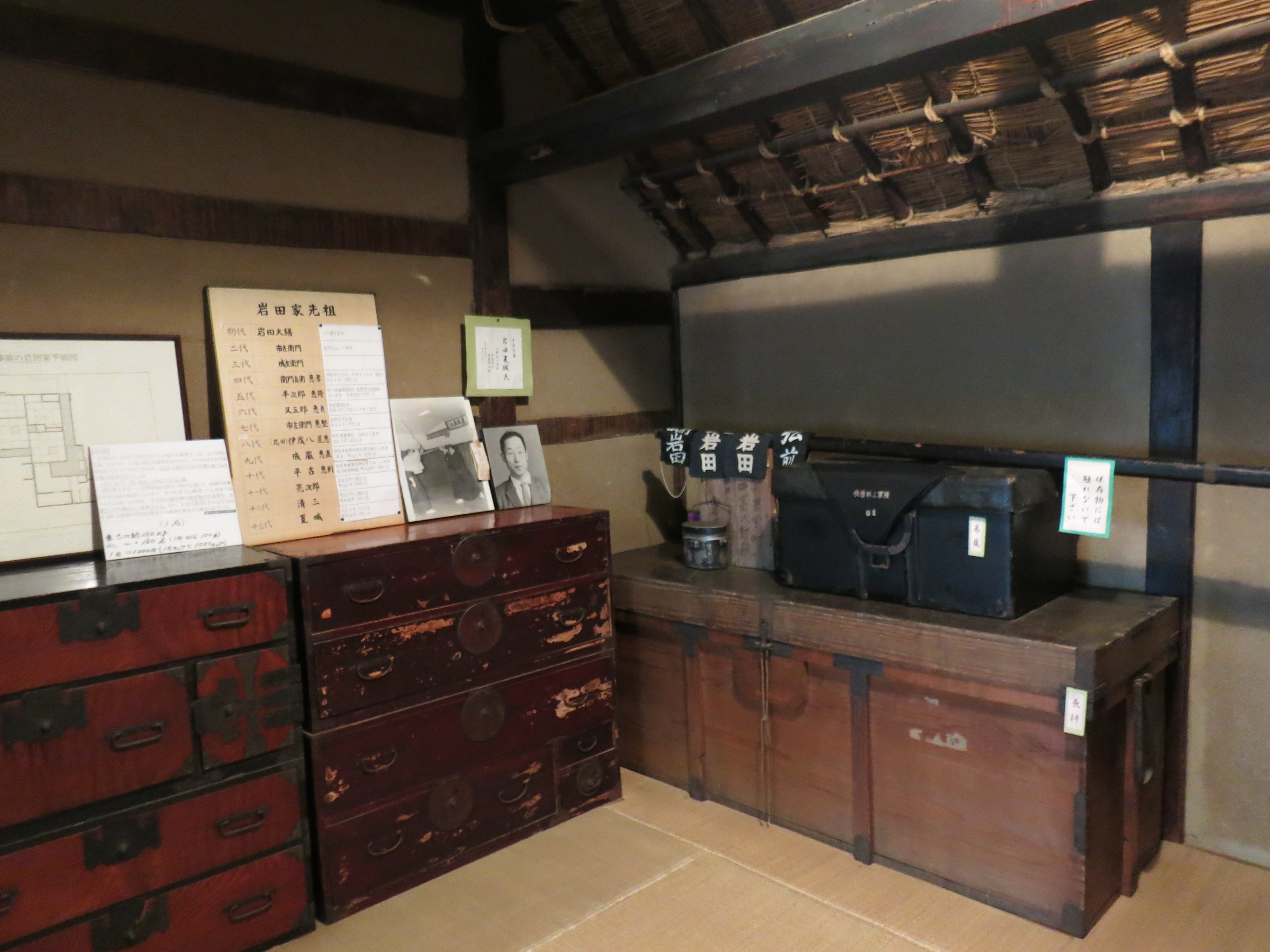
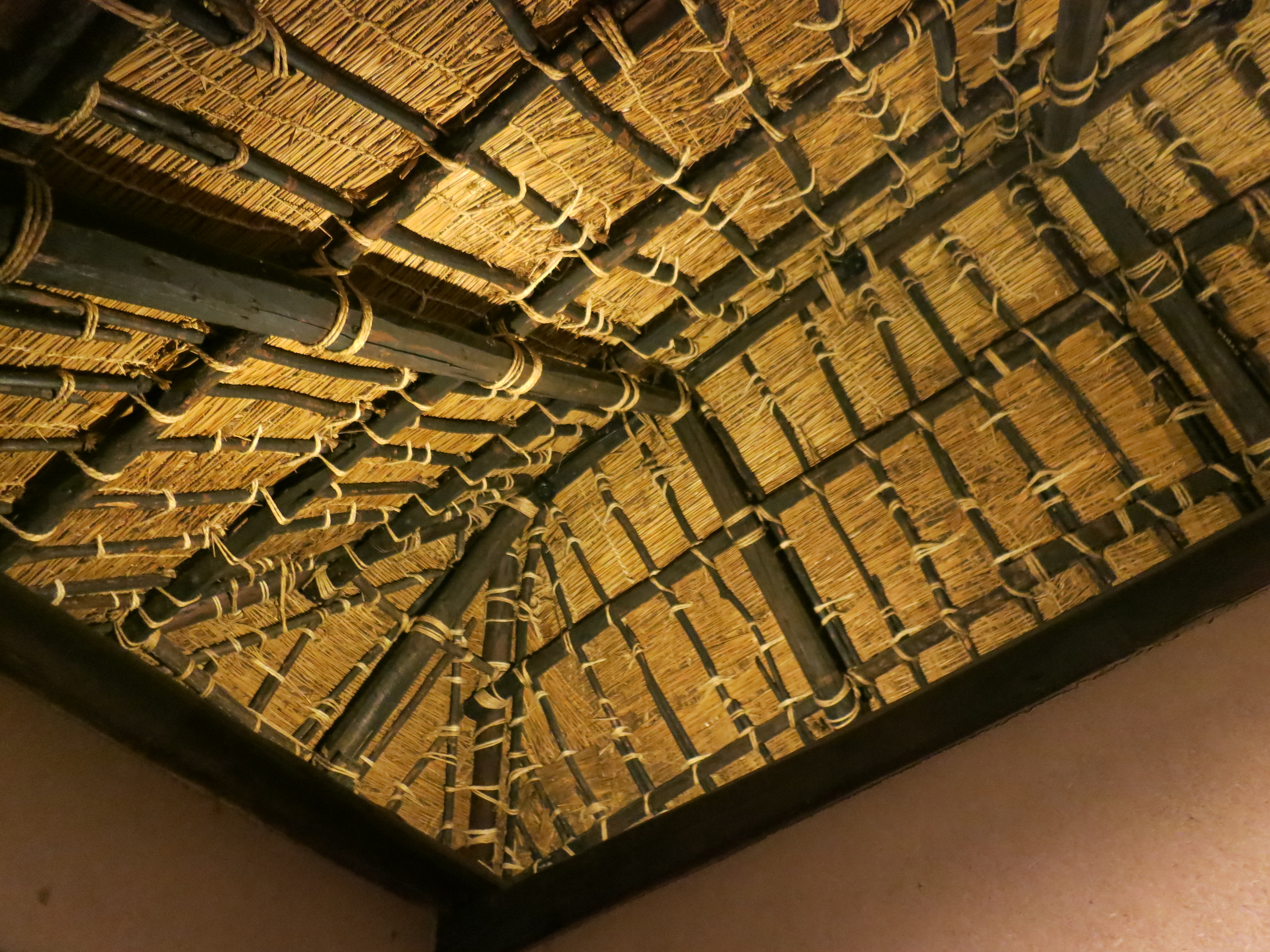
One part of town used to be known for indigo dyes, and some of that work is still done here, so I walked to the indigo shop by the northern castle wall. Everything was a little pricey for me, but I did admire the deep blues and near purples of the dyed cloths. Then I took a side road to the streets behind, which my map claimed were lined with Edo-period samurai houses. I had trouble finding any, but finally stumbled upon one. I found it similar in layout to the Shirotas’ home in Shinrin-koen, set in an elaborate little garden. I apologized to a middle-aged Japanese woman who wanted to get past me on her way out of the house, but when she heard me speak in English, she struck up a conversation.

In the indigo dye shop

The samurai house
Some of the treasures of the house
Thatched roof
Her name was Kazumi, and she wanted to chat with me and show me the town. She lived close to Tokyo, but was visiting a friend here. Her friend was busy during the day, so she was taking in the sakura, although she was disappointed by how few trees were in bloom. She insisted I walk to the other side of the castle with her to look at a certain garden, and I was happy to comply.
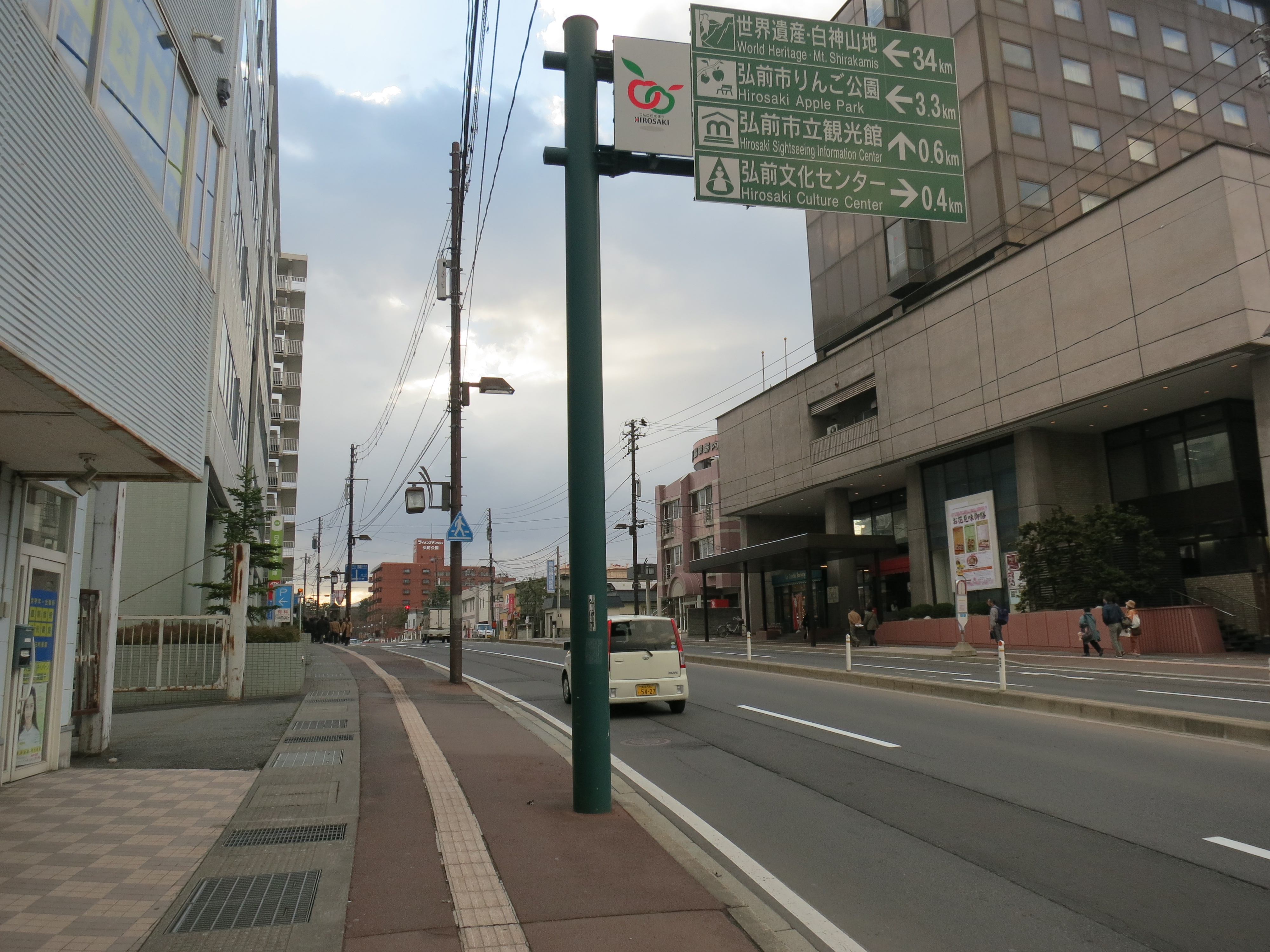
The clean, uninteresting streets of the non-castle part of town
Kazumi is married and has one grown child. Her husband travels a lot for business, and he used to take her with him on trips. She’d found it difficult to understand tour guides, and her husband had urged her to learn English, but she’d resisted. Then, twelve years ago, at the age of 49, she decided she wanted to learn, and here she was, a few idioms away from fluency. I was impressed, and once again embarrassed by my pathetic “I find learning languages difficult” excuse for my mono-linguistic ways.
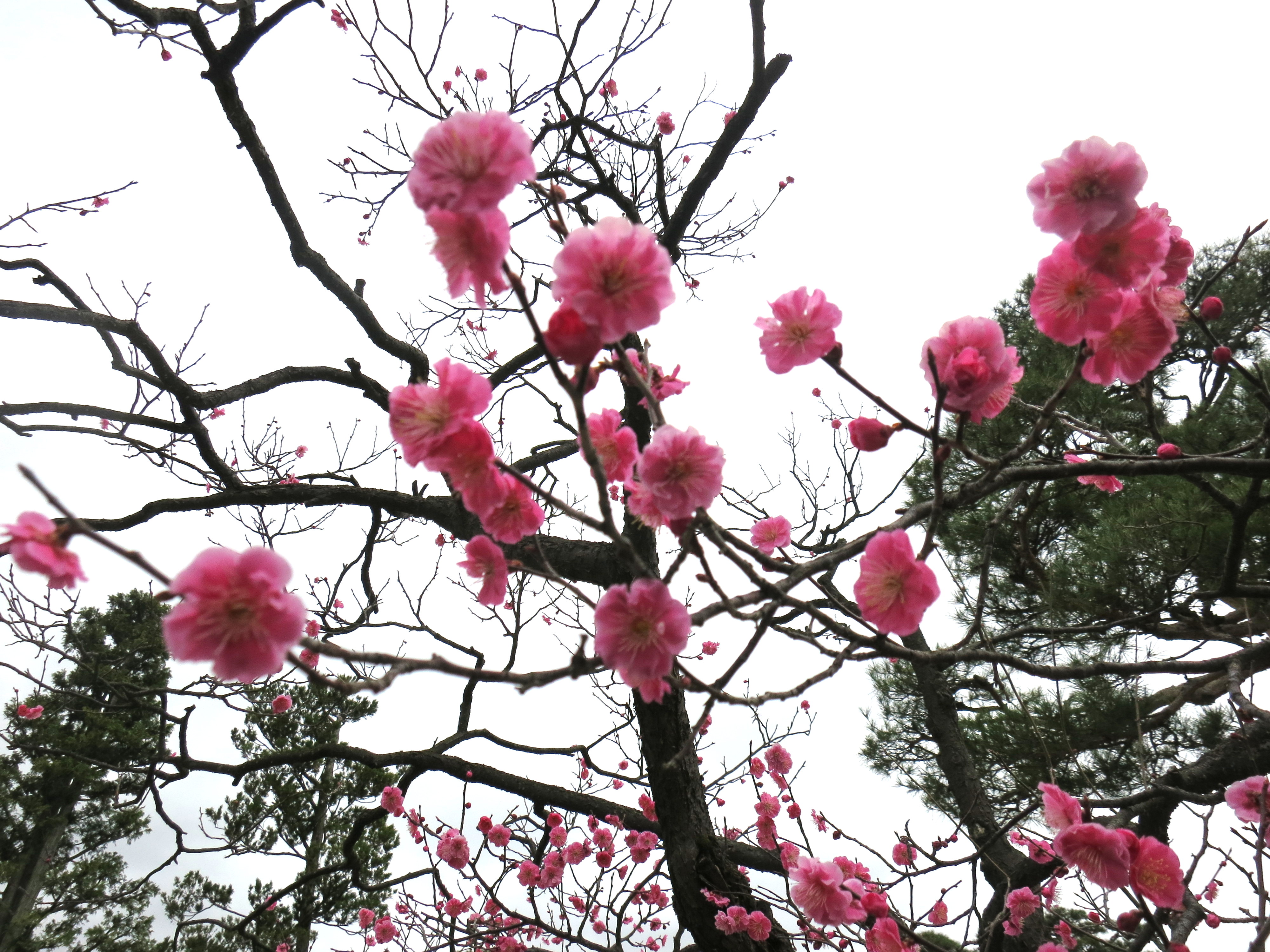
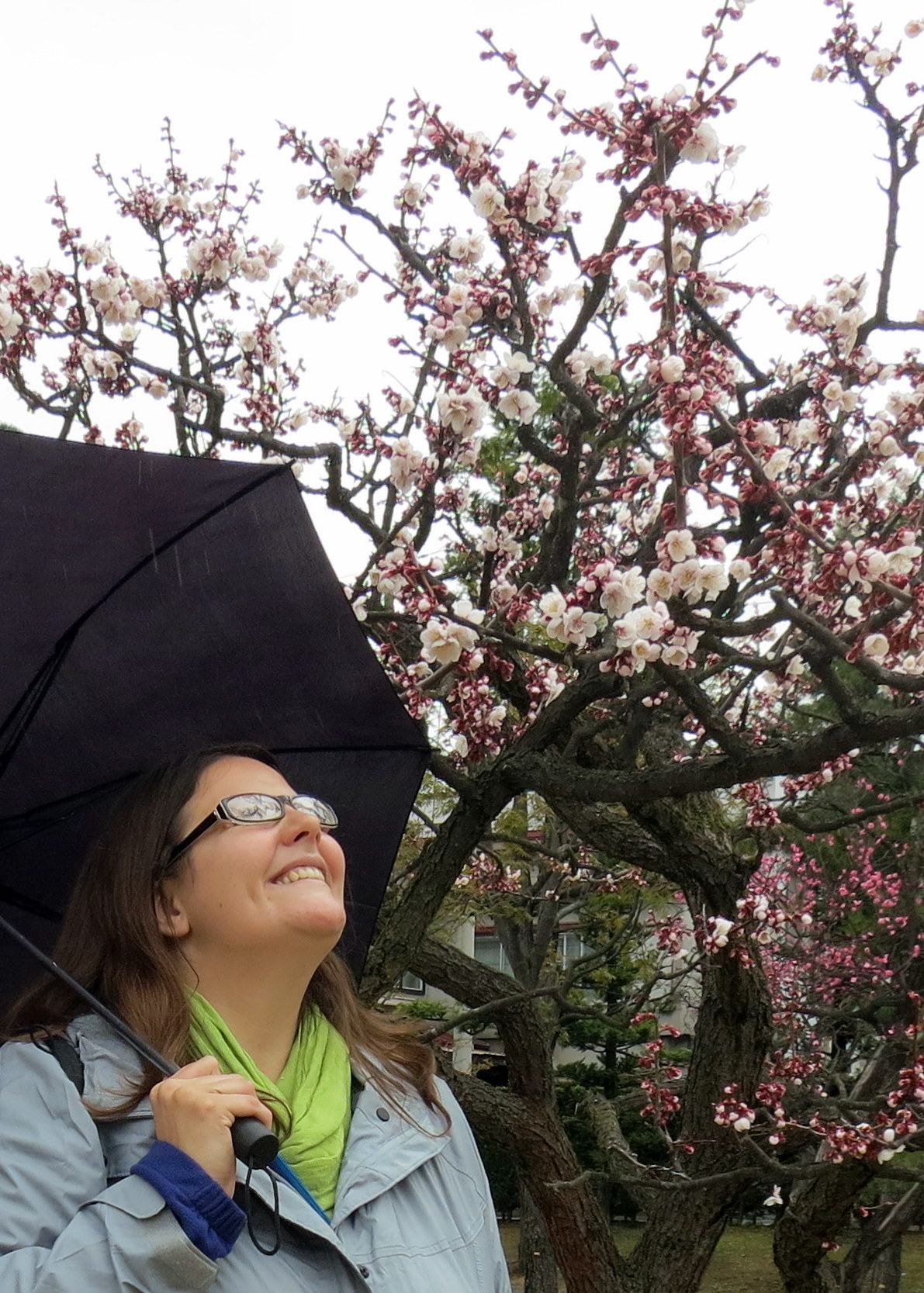
Plum blossoms
The garden she took me to was Fujita Memorial Garden, south of the castle. It was beautifully conceived, another meticulously laid out, peaceful place with a little waterfall and a red bridge (like all the red bridges around the castle) and a koi pond. I could see how it would be glorious in summer. Kazumi told me about the different plants I was seeing, including the plum trees in bloom. Usually, the plum trees bloom in early March, before the cherry trees, but because it’s colder than usual this spring, some plum trees were still in bloom while the cherry trees were just peeking out. The plum blossoms were a bright and beautiful pink, a lovely contrast to the white and pale pink of the cherry trees.
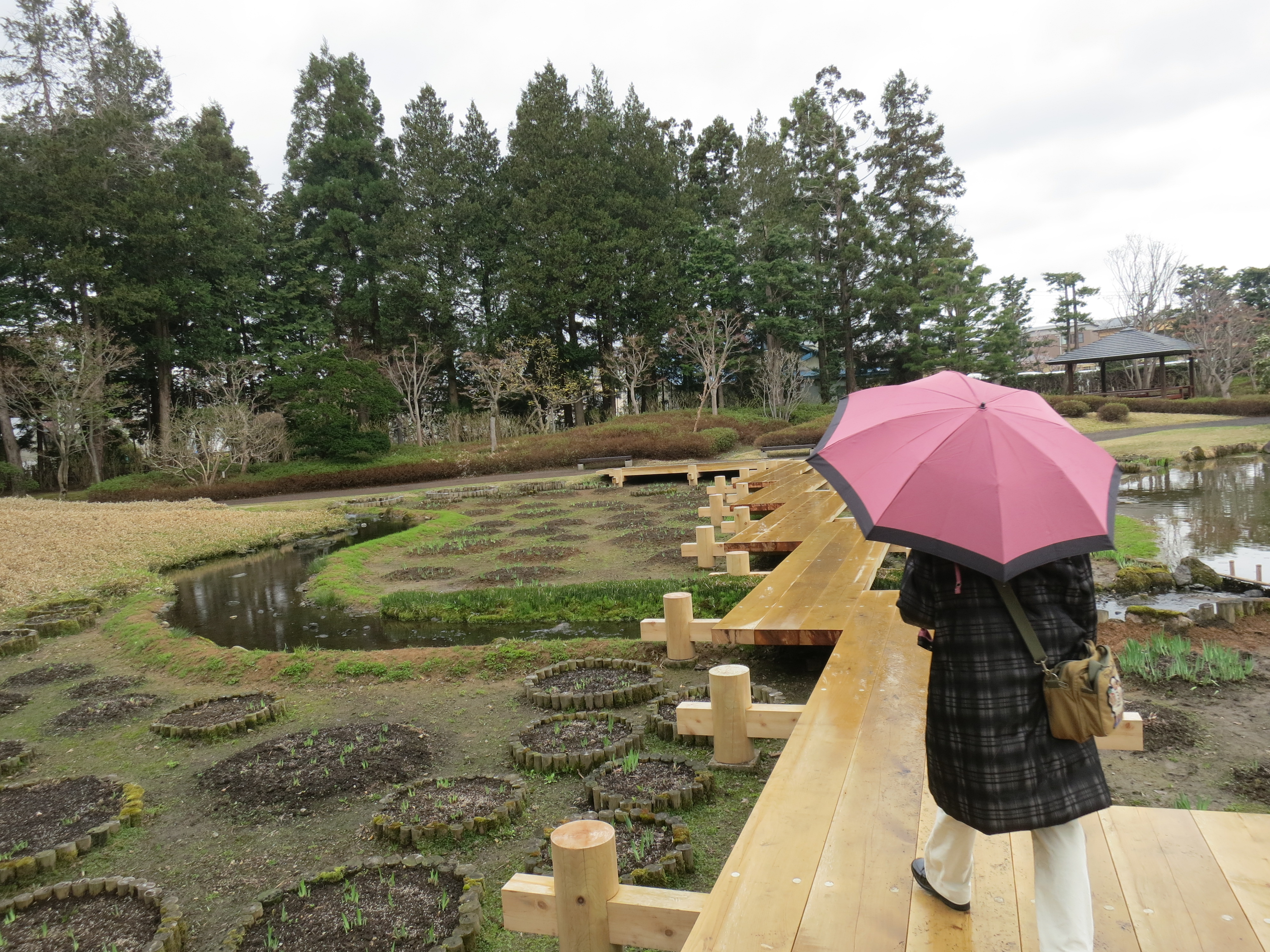
Following Kazumi through Fujita Memorial Garden. Kazumi set a fairly brisk pace.
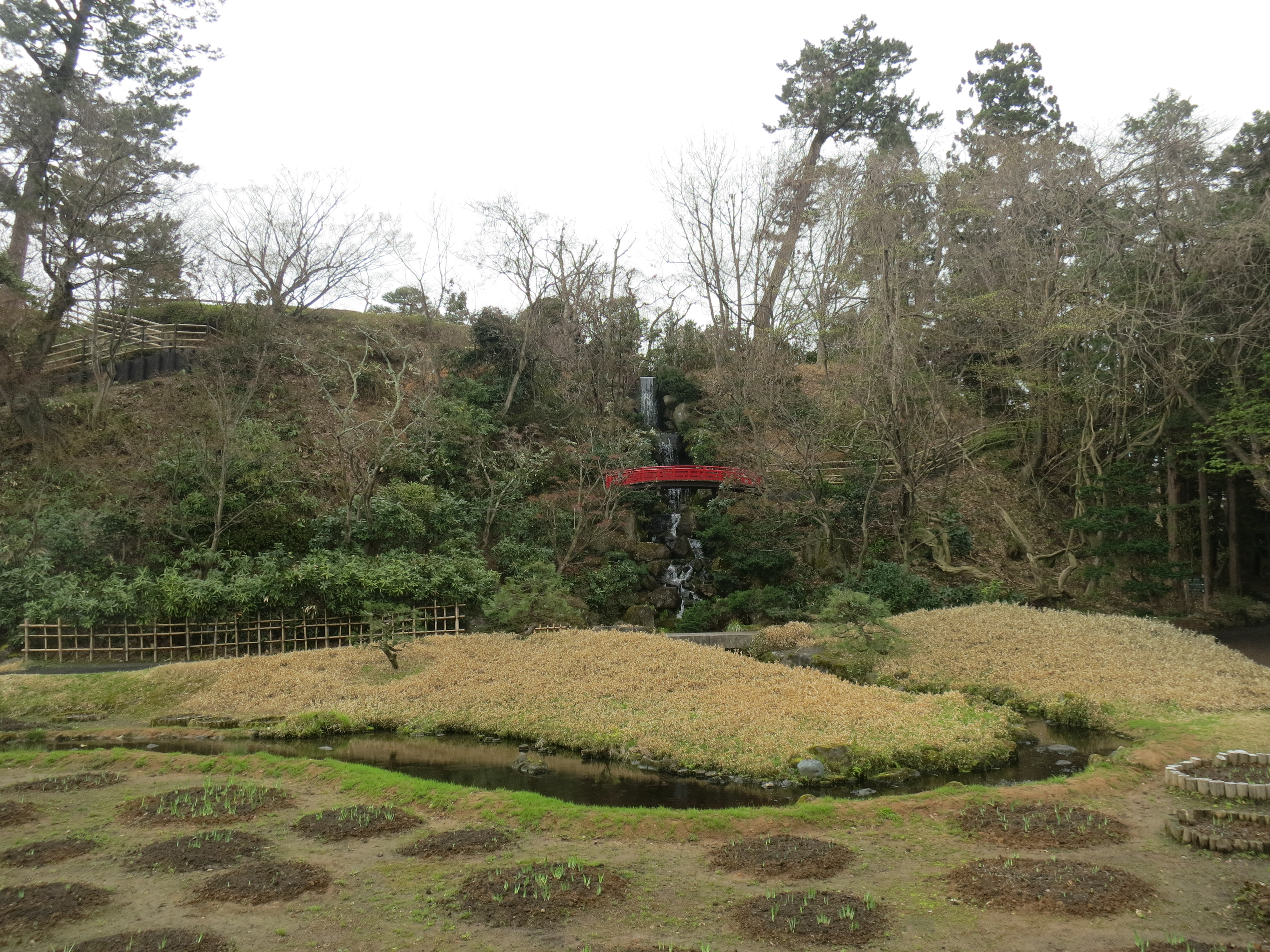
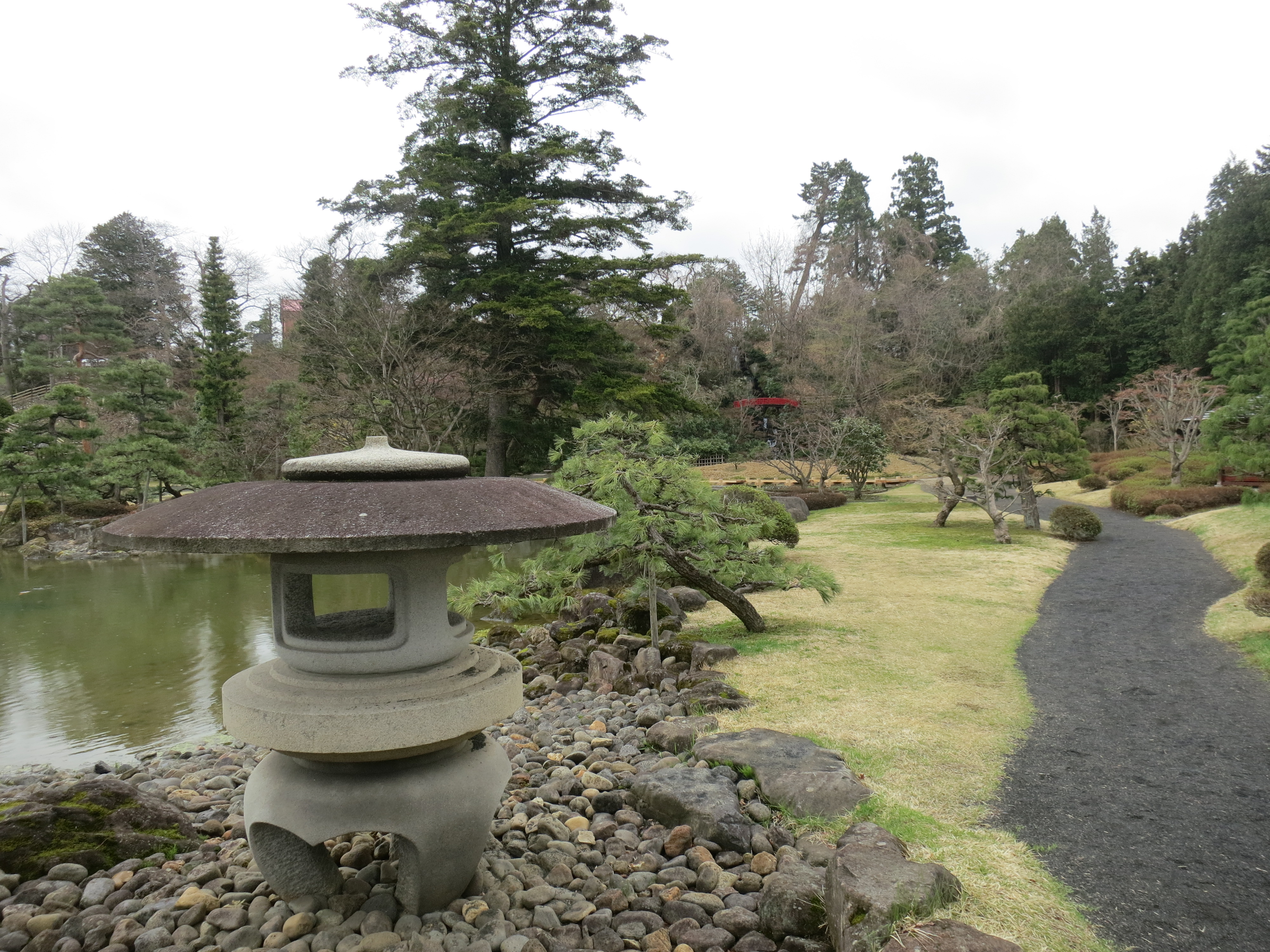

One of the many plants Kazumi identified for me. I can’t remember its name, but I know it’s a mountain flower native to Japan.

The castle grounds and surrounding areas were dotted with signs like this. Apparently, there’s a popular TV melodrama with scenes set here, and the signs showed exactly where they were, so you could re-enact them or just point excitedly.
After we’d walked around the garden, Kazumi treated me to tea. We went to the little tea room overlooking a large weeping cherry tree and sat at a table laid with a white tablecloth. Kazumi ordered for us both: apple tea and an apple tart each. Hirosaki produces a lot of Fuji apples, and it becomes a tourist destination again in autumn, when apples are in season (and again in winter, when the nearby mountain is taken over by skiers and snowboarders). There was a live xylophone concert in the room next door, which we couldn’t see, only hear. We sat in a glassed-off porch, talking quietly about our travels, while a round, ringing sound reverberated throughout the room. It was lovely.
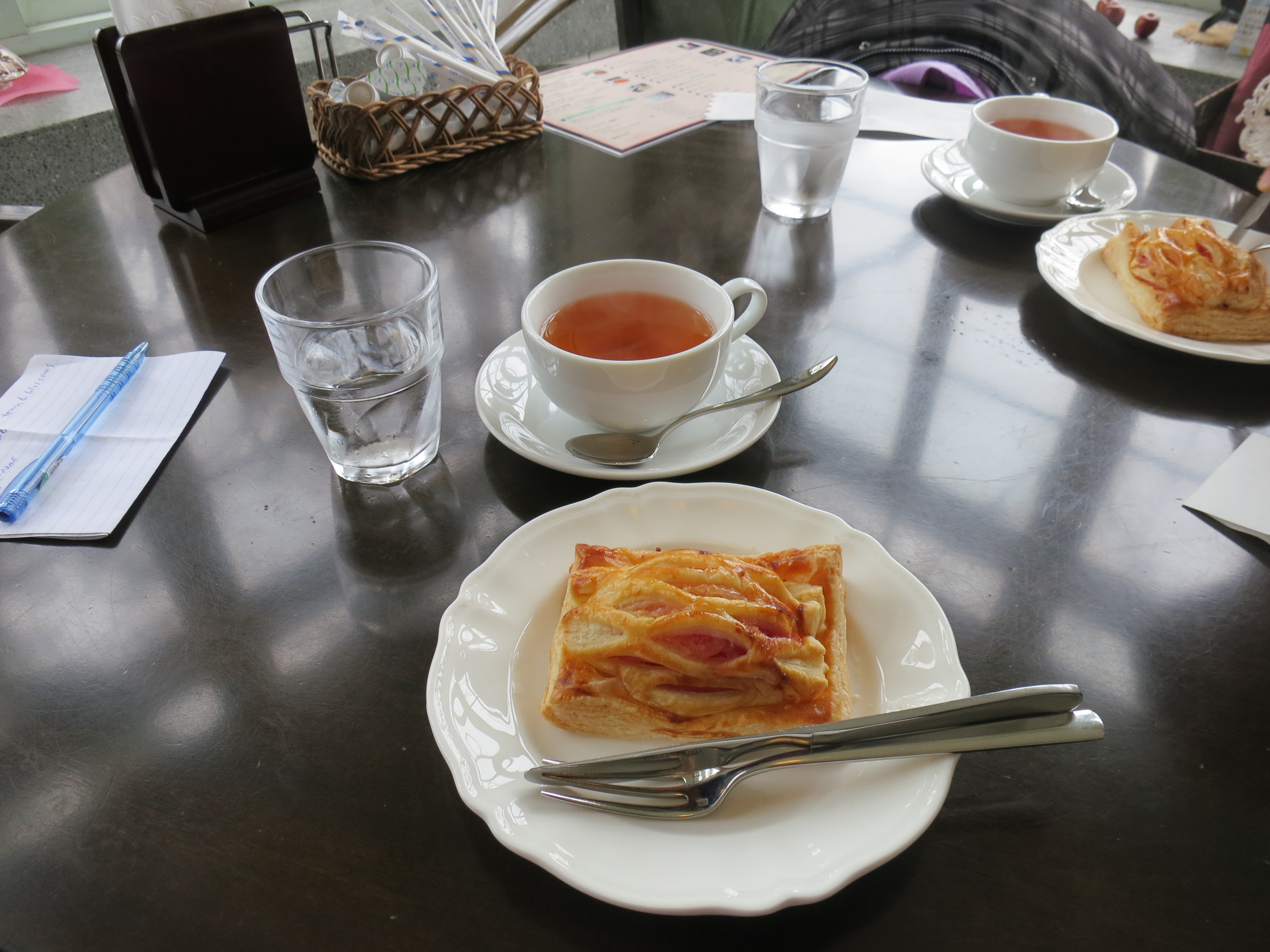
Apple tea & tart
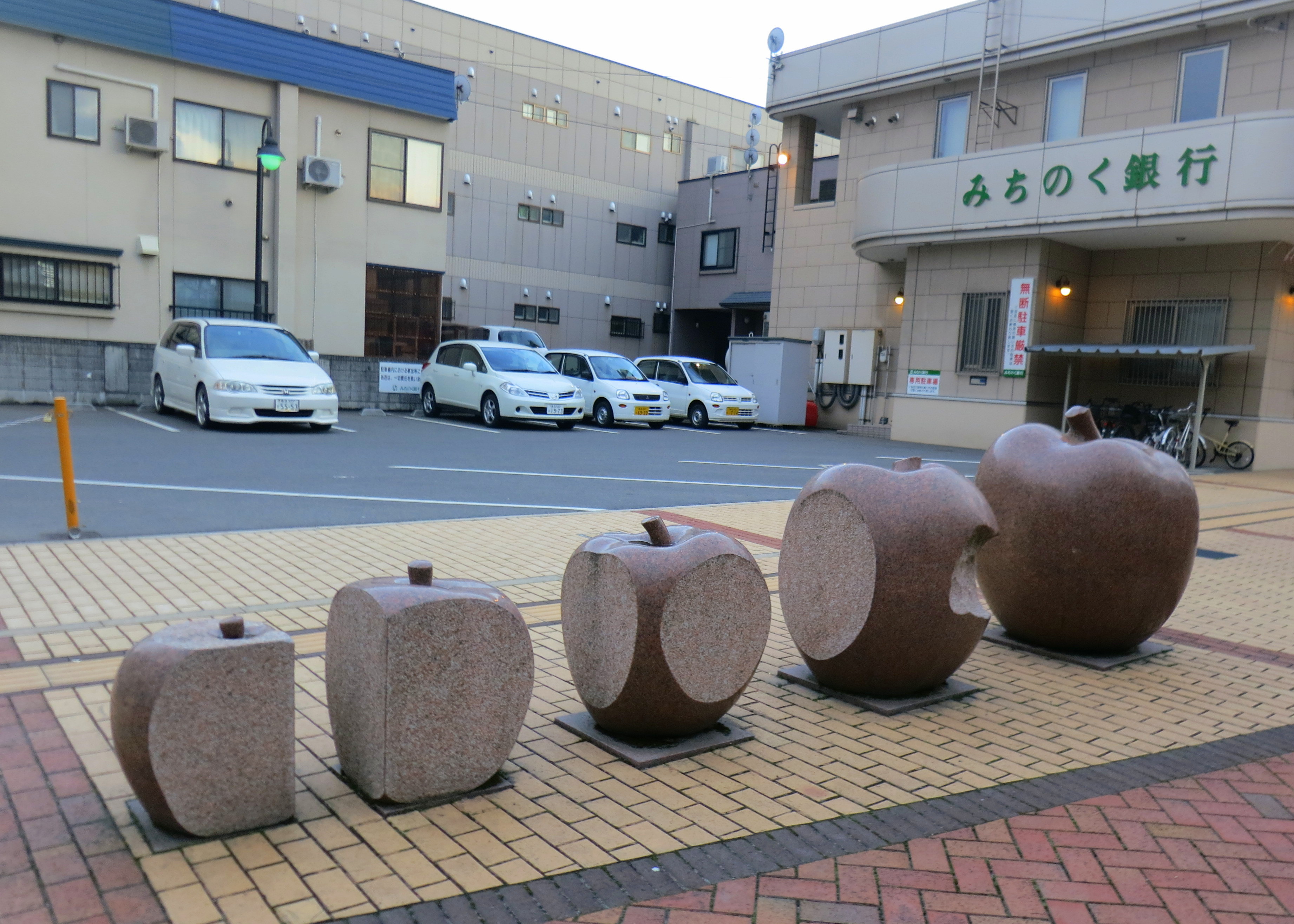
Apples are so important that they’re made into public art
Kazumi was clearly a kind, generous person, but she also had clear ideas of how things should be, and she was eager to share those ideas; she had opinions on almost every arrangement of plants in the garden, and everything she said came with a note of authority. One of the first things she said to me, when we met at the samurai house, was, “This is just a middle or lower class samurai house, not very high.” It might be because she’s rich–she inherited three houses from her mother and her husband bought two more, and she goes to a Thai villa every spring for a vacation. Or it might be a cultural difference that I didn’t pick up from the other Japanese people I met. Either way, I didn’t necessarily agree with her on everything she said, or understand where she was coming from, but it didn’t matter. We were two women, fond of beautiful gardens and meeting new people, sharing tea and apple tarts in a room echoing with music.
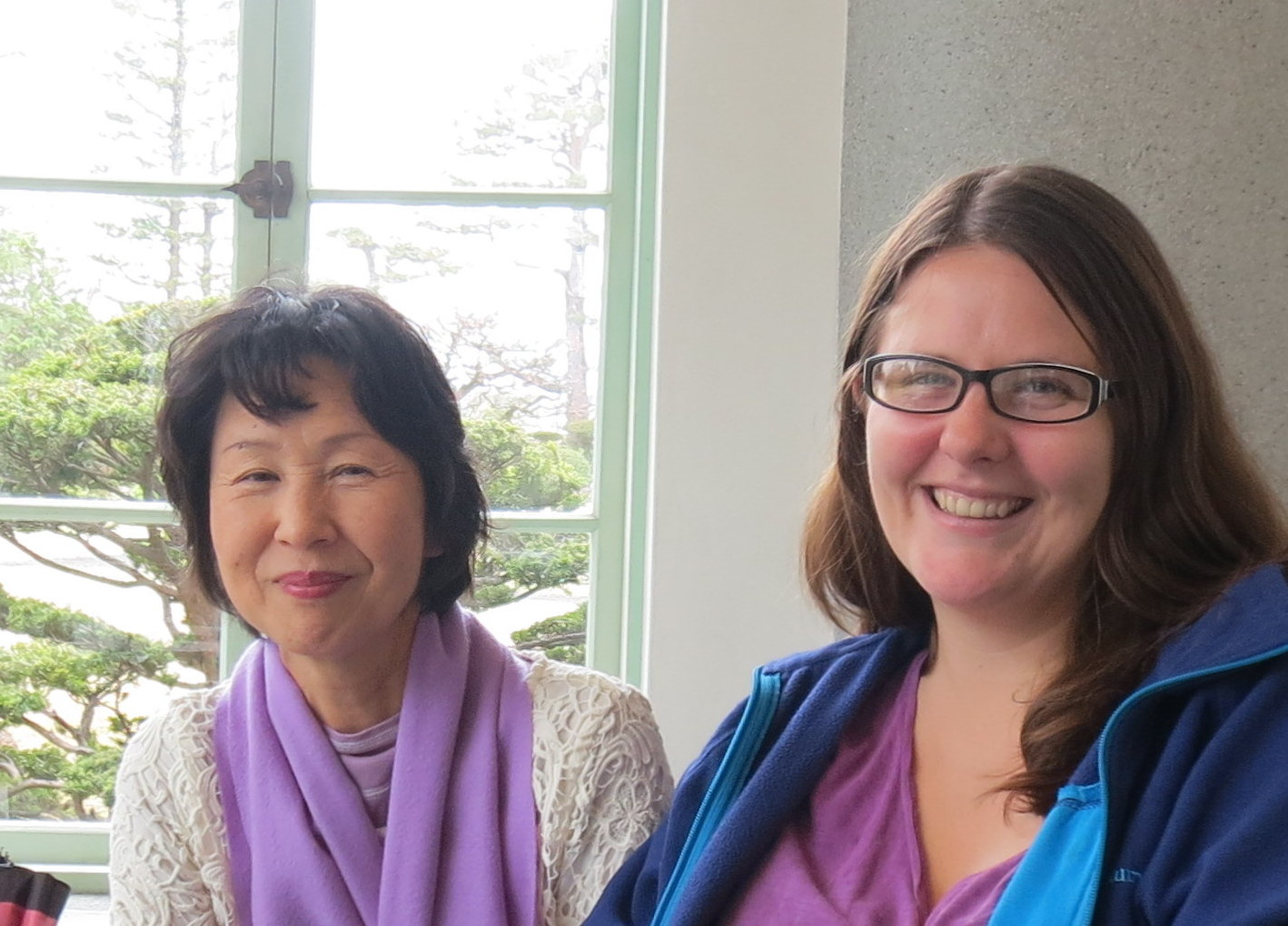
Kazumi and me in the tea room
Hanami celebrates the ephemeral nature of life and the beauty of friendship and the natural world, but this year the few people I saw engaging in the custom were also celebrating hardiness and perseverance, whether they meant to or not. Hanami is the Japanese custom of having a picnic with friends under the blooming cherry trees in spring, but it was an especially cold and rainy spring in Hirosaki this year, so I was impressed by the few groups of people I saw laying out plastic sheeting and blankets, bundled as they were in raincoats and scarves.

Celebrating hanami despite the gloomy weather
I wasn’t upholding a national custom or family tradition by visiting Hirosaki for the sakura (cherry blossoms), but I did rearrange my schedule and endure the cold and rain for it. I was as determined as those chilly revelers to admire the beauty of the sakura in weather that did its best to mask it.
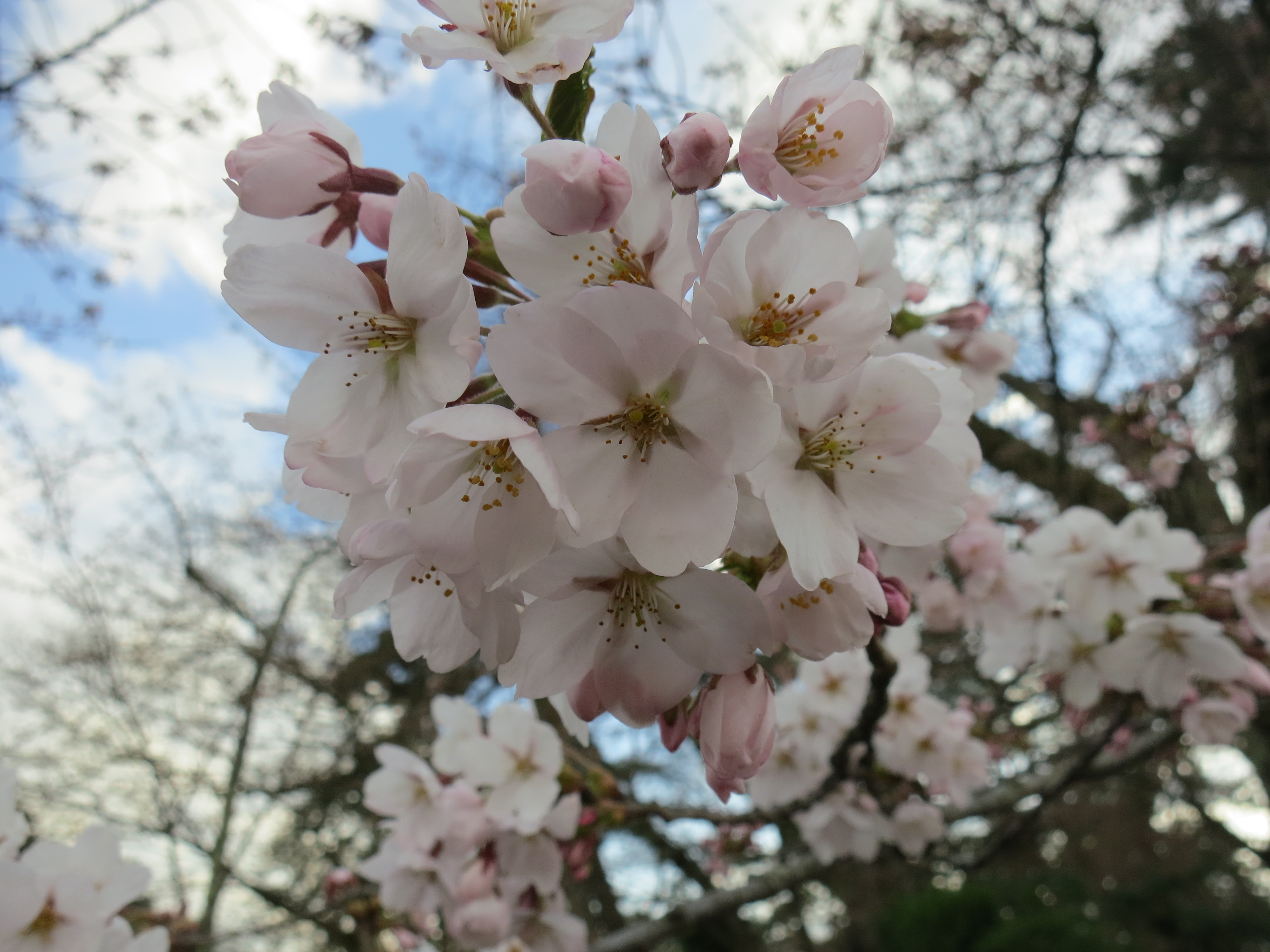
Sakura in bloom
Hirosaki is in Aomori Prefecture, the northernmost district on the main island of Japan. It’s 400 miles northwest of Tokyo, and part of my journey there was spent on the Shinkansen (bullet train). As expected, the trains were clean, comfortable, and on time. I covered 400 miles in about 5 hours, including changing trains. I’ll repeat what every American who’s ever traveled this way has likely said: Why aren’t we doing this in the States? They love cars in Japan, too, but they still put money, research, and time into the train infrastructure.
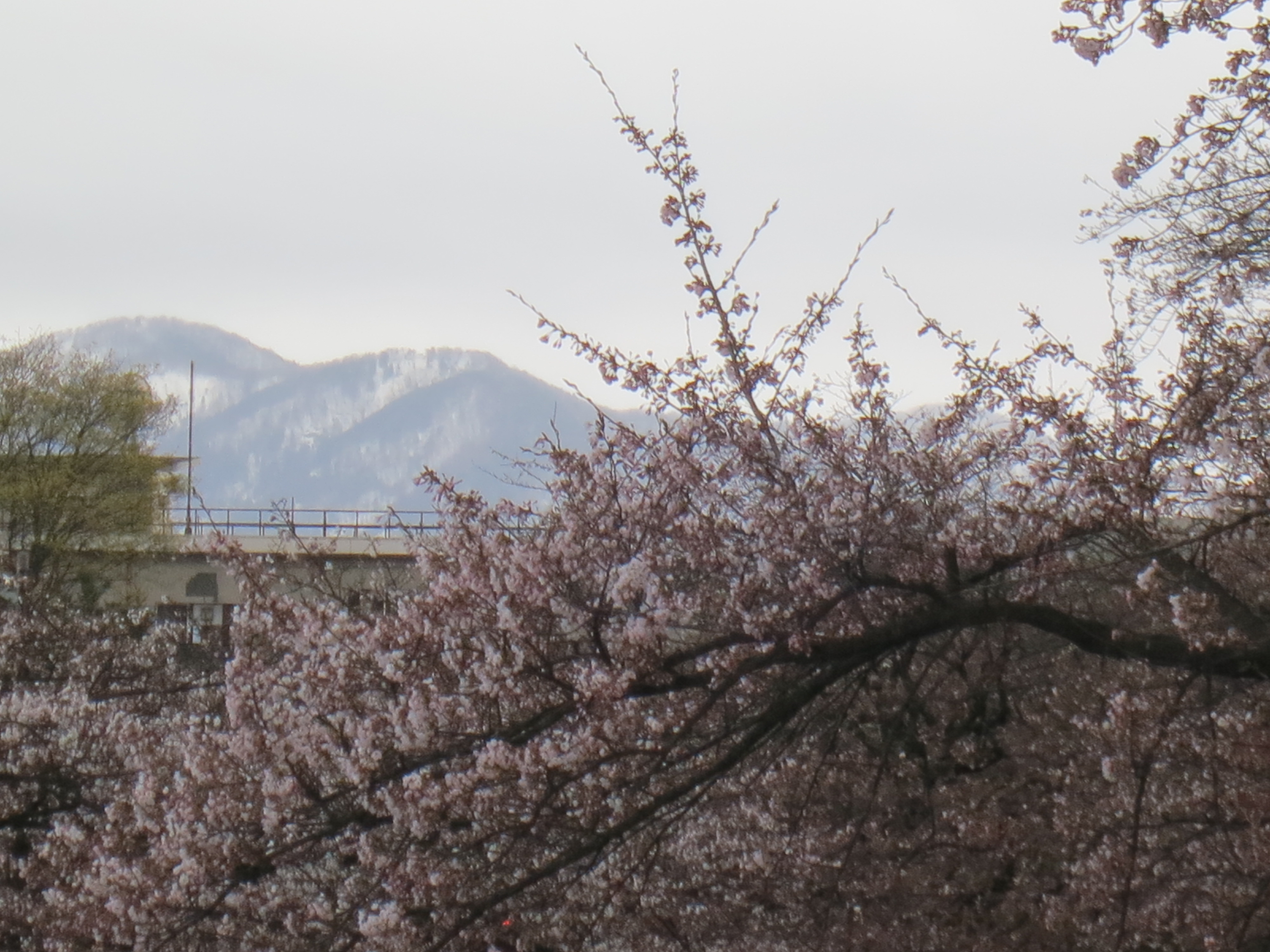
The nearby mountain is popular for winter sports
Anyway, sakura season was already over in most of the country by the time I arrived in Japan in late April, but I’d done my research and I knew that I could still catch the fleeting beauties if I went north. I saw patches of snow on the hills the closer the train got to Hirosaki, the first snow I’d seen since March of the previous year. Except for a few sunny hours the day I arrived, it was cold and rainy the whole three days I was in town, so I went everywhere in my fleece, raincoat, and scarf. It felt like New Zealand all over again.
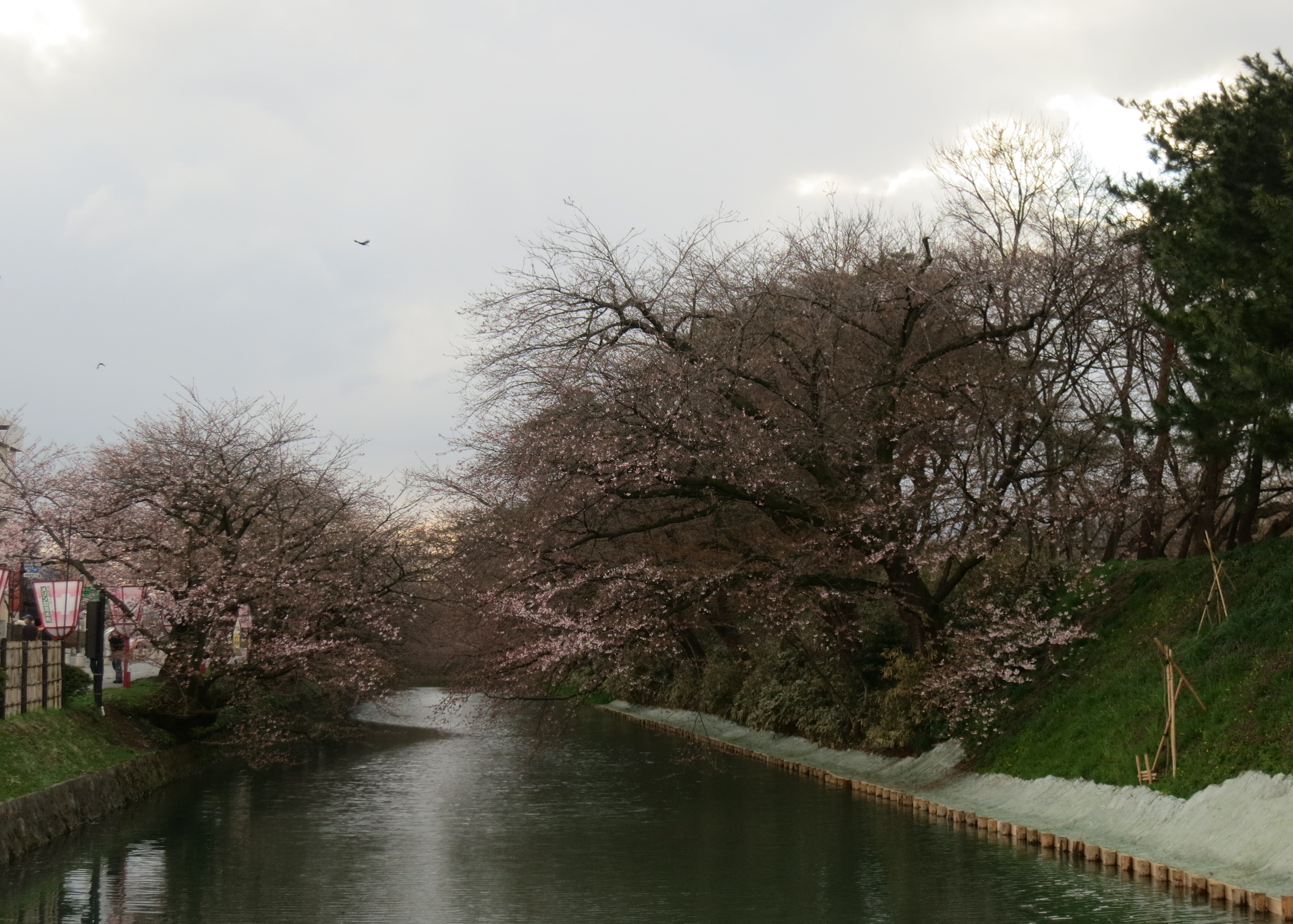
Snow on the ground, blossoms in the trees
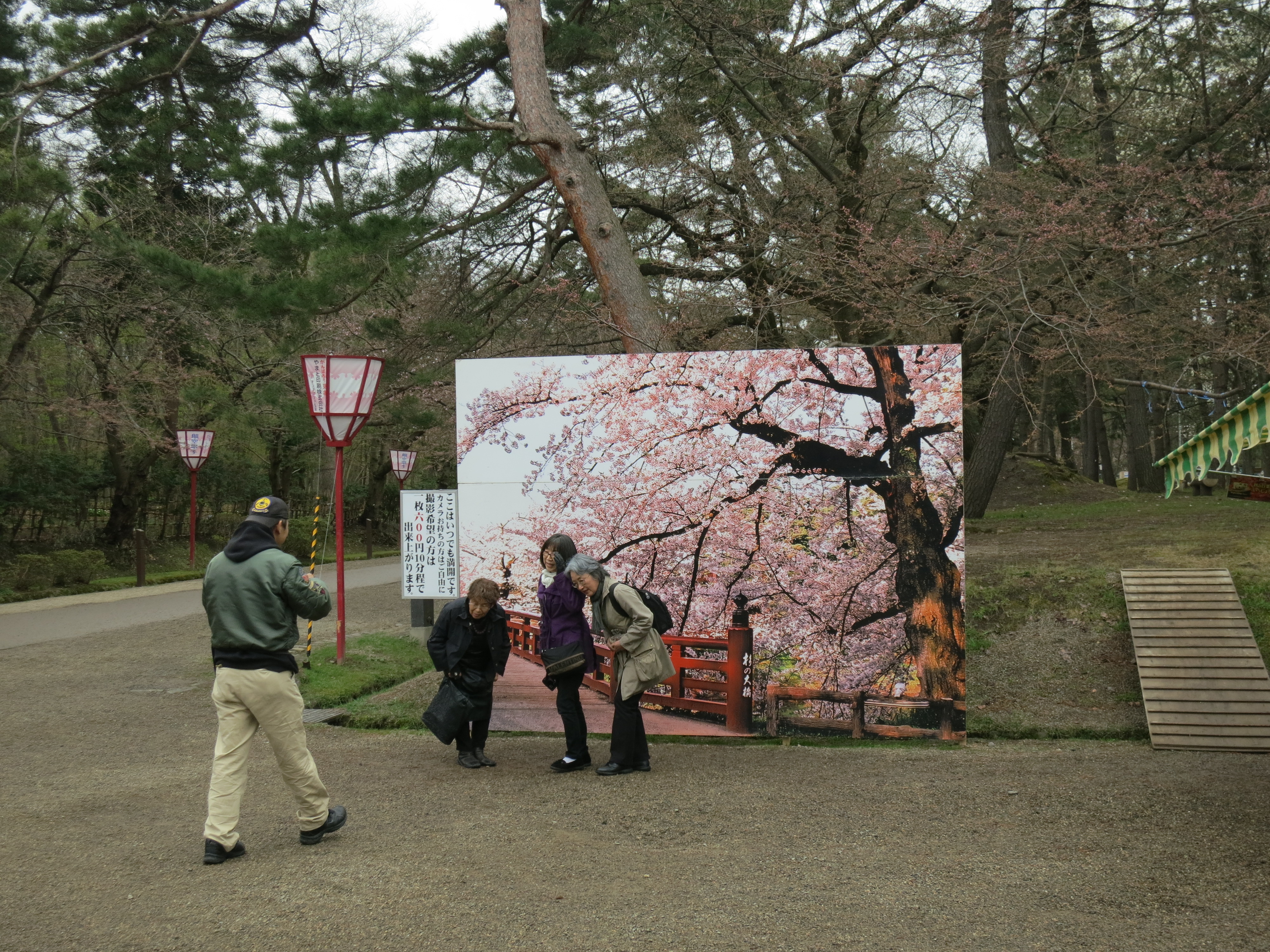
The park provided a couple of backgrounds like this, so you could take your picture with the sakura even if they weren’t actually in bloom.
Part of the appeal of the sakura is the setting, and Japanese towns go all out in creating the right atmosphere. In Hirosaki, it’s easy, because there used to be a castle there. One of the guard towers of the inner castle still remains, and there are some stone foundations and impressions in the grass that show where other parts of the castle used to be. It’s free to cross the moat and enter the outer walls of the castle, and then to cross the inner moat.

Foundations of a guard house in the inner castle grounds

The outer moat

Some concessions for English-language tourists
They only charge to enter the inner castle area and the guard tower. My excellent Couchsurfing hosts told me to save my money on the entrance fee, but I spent the $6 anyway. They were right about the guard tower. Steep stairs, half-hearted displays of samurai weaponry, unimpressive views through tiny windows more suited to the arrows of warriors past than the cameras of today’s tourists. But there was a gigantic weeping cherry tree in the courtyard, more in bloom than most of the non-weeping varieties outside, that I was glad I saw.

View from the guard tower of Hirosaki Castle

Another view from the guard tower
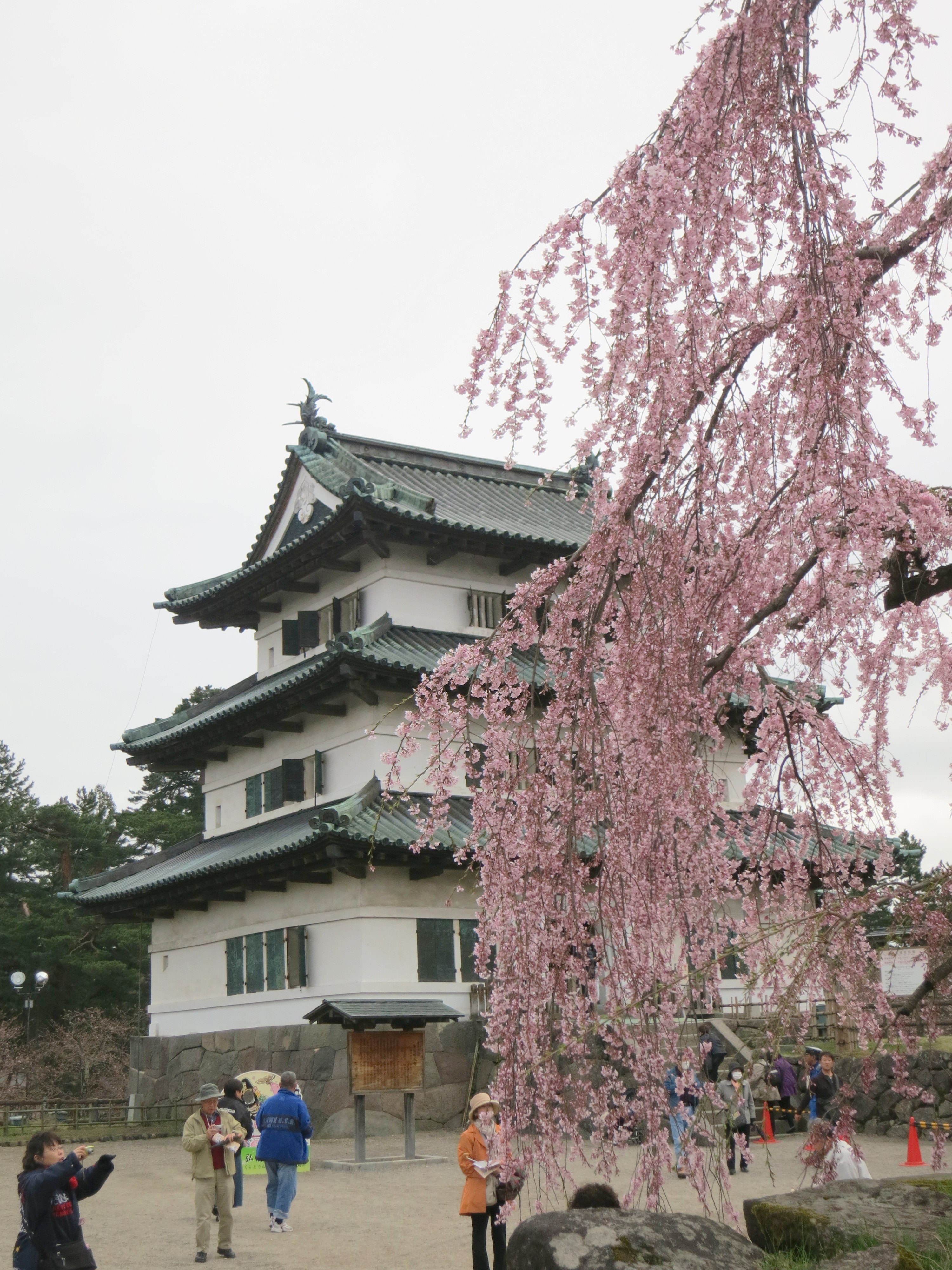
This weeping cherry tree, in front of the inner guard tower, is over 100 years old
The grounds are large, and several paths are lined with food and souvenir vendors. I had a pork bun, a sausage on a stick, a chocolate-dipped banana, and a donut that at first struck me as dry and only vaguely sweet, like communion bread, but about halfway through I realized it was delicious, and I wished I’d bought two! Do with that what you will for metaphors about trying new things, sticking it out, etc.
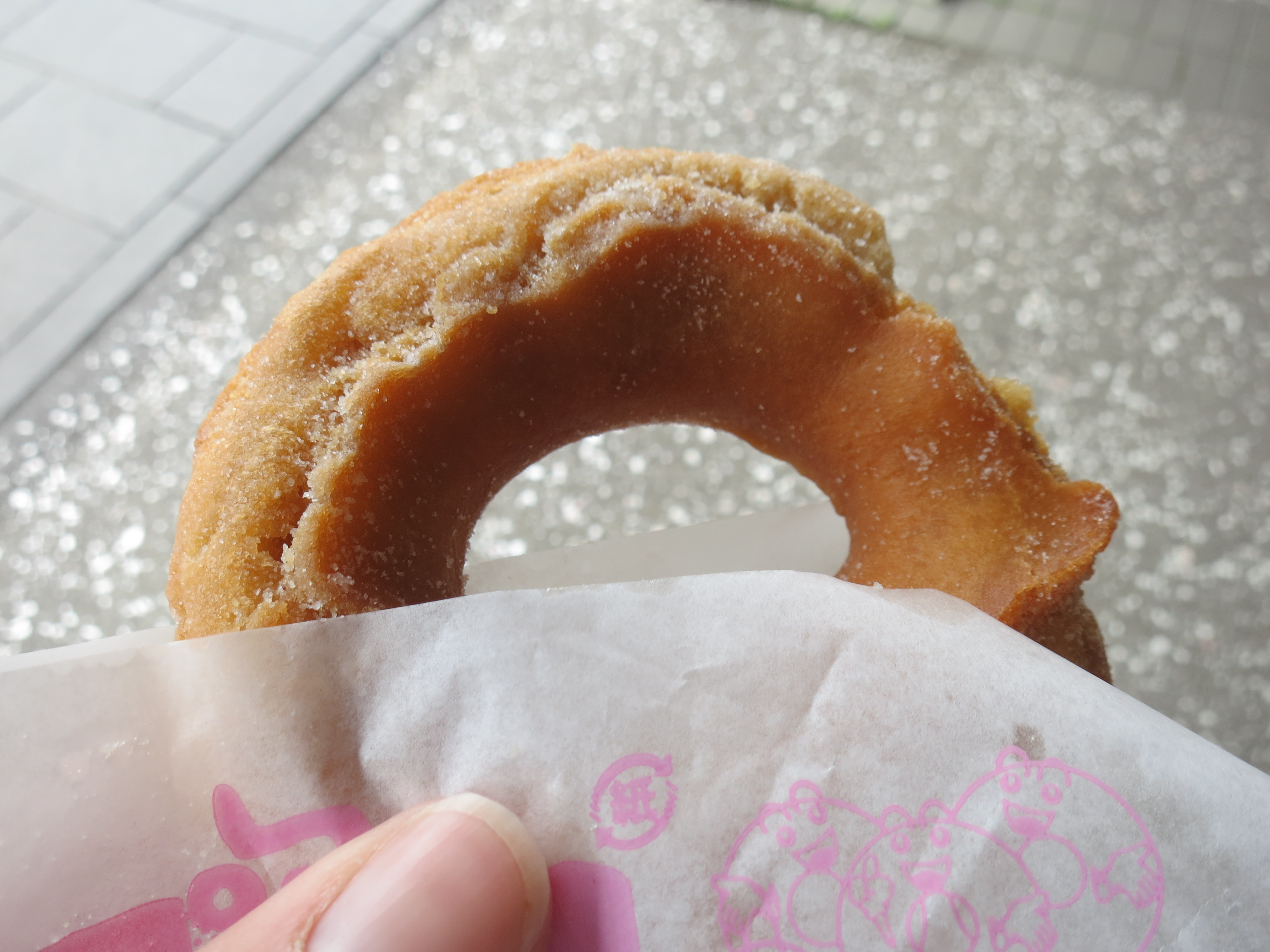
The donut of metaphors

These fences were actually made of hard plastic–it’s the most convincing fake wood fence I’ve ever seen!
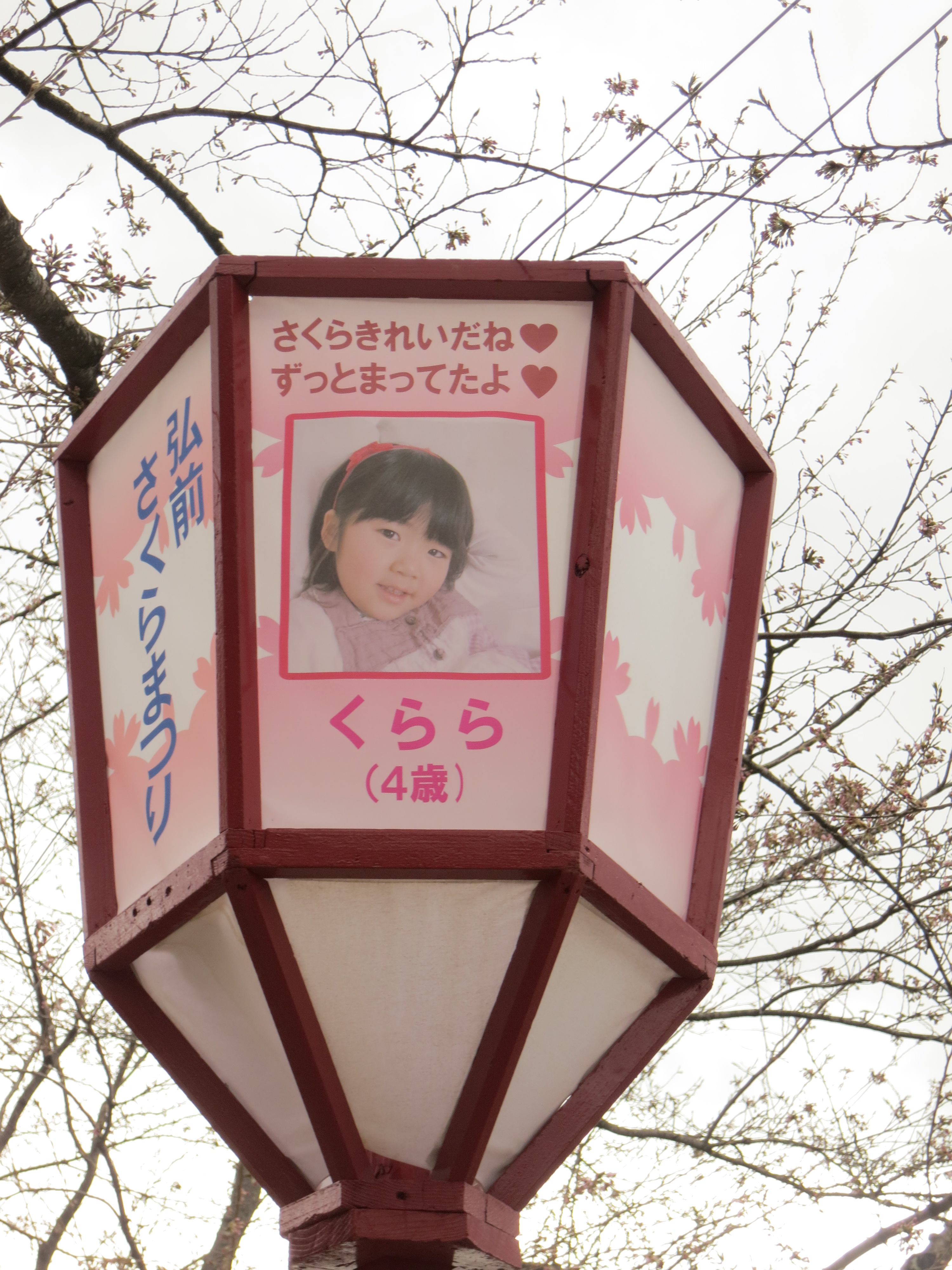
The lamps along the paths were mostly photos of adorable children, like this one. Looks like people could buy the space to show off photos of their kids and support lighting the castle grounds.

Not everyone chose to put their kids’ photos up.
The blossoms were at 10% when I arrived, and maybe 30% when I left (the government issues sakura updates, so you can see what percentage of “open” the blooms are in which areas of the country–that’s how big a deal the sakura and accompanying hanami celebrations are).

My first day in Hirosaki–the trees are just starting to bloom
The trees exploded in bloom a few days after I left, but that’s how it goes sometimes. The admiration the Japanese have for the sakura is their perfect, delicate beauty and the fact that such beauty is only on display for a short time every year. Cherish the beauty you see in the world, and accept that it’s ephemeral.
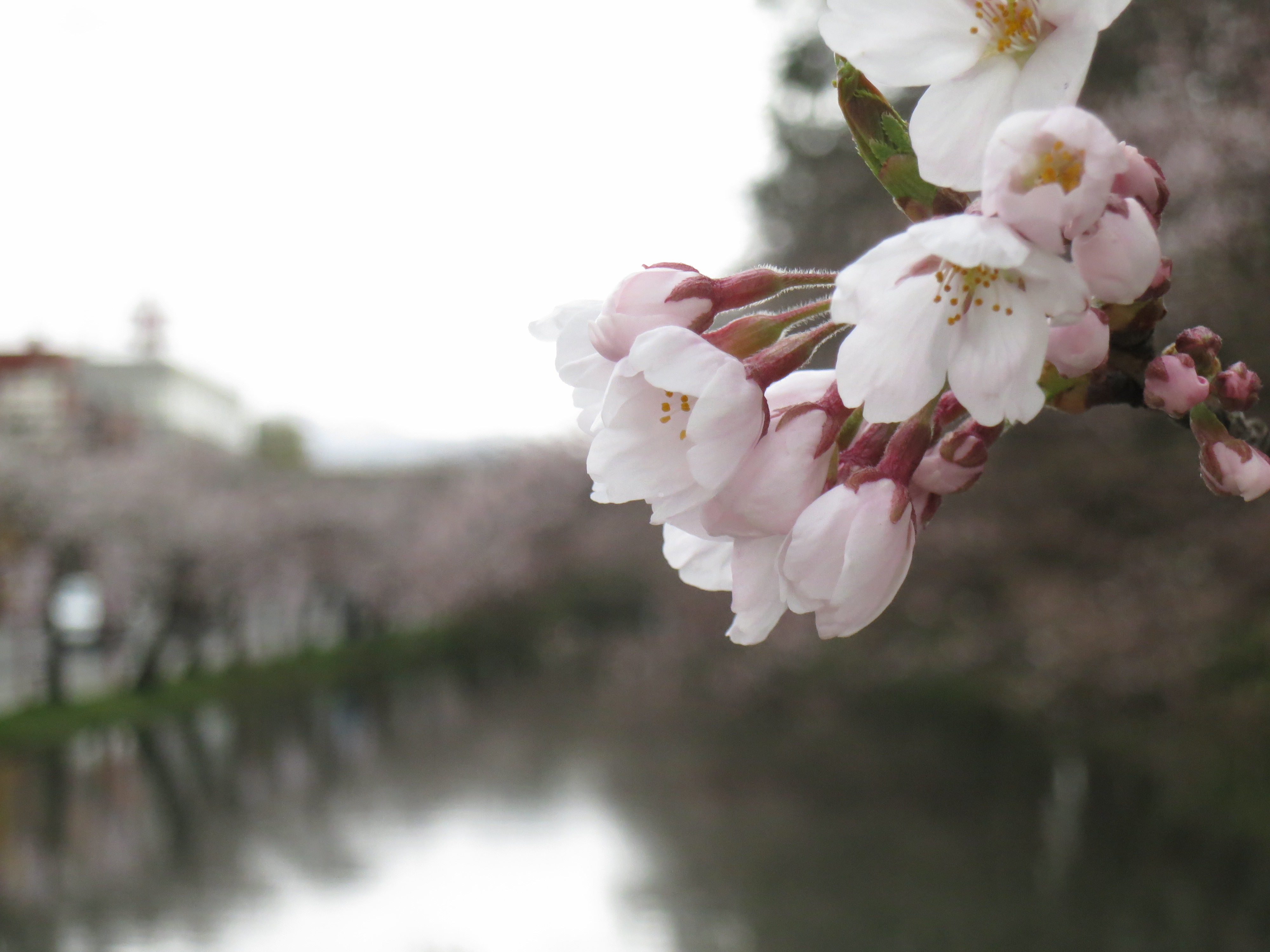
My last day in Hirosaki–more blossoms
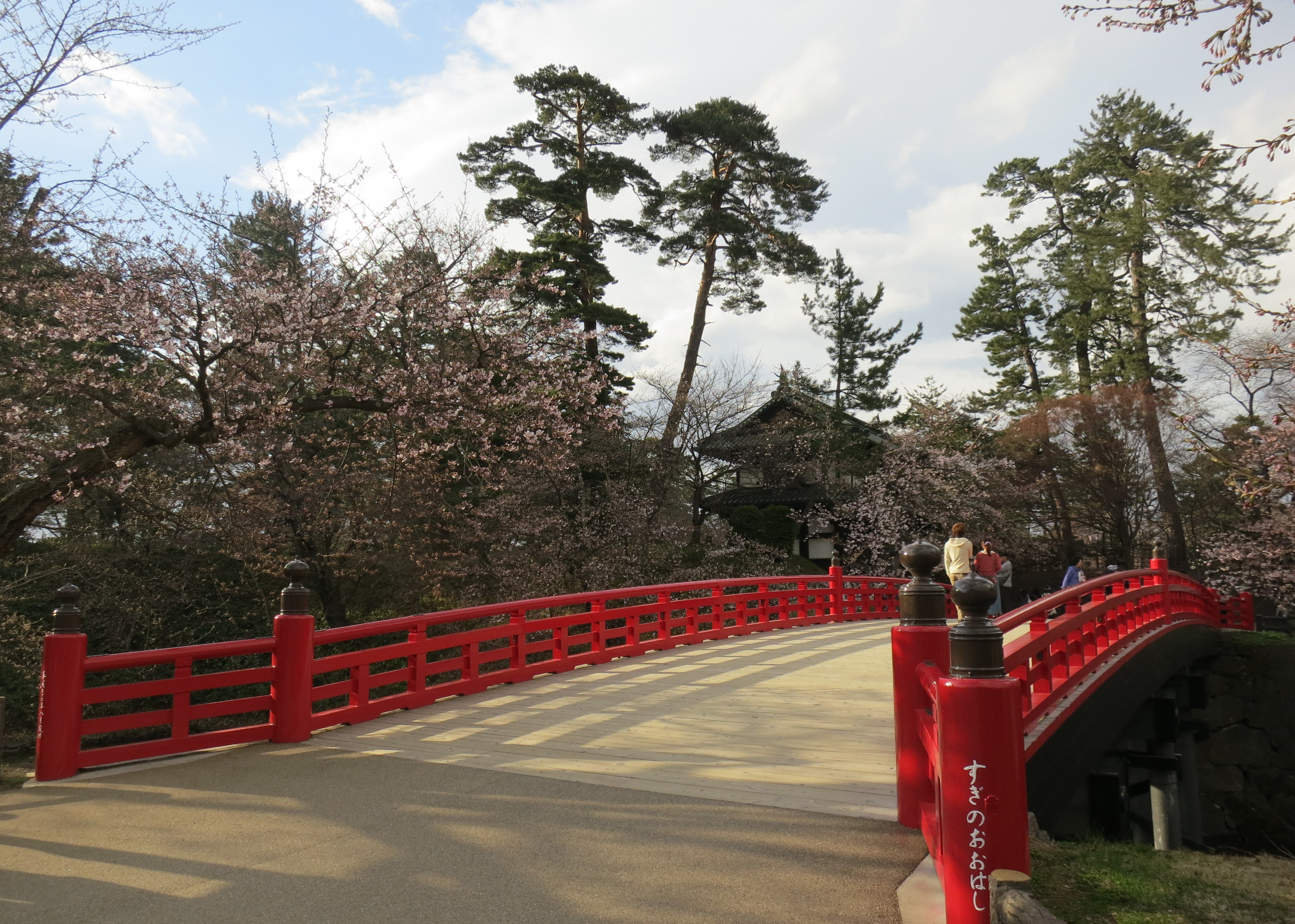
One of the serene bridges of the castle grounds
Seeing cherry blossoms hang over a red bridge reflected with a castle tower in placid water was still worth it, even if the blossoms were only barely open, even if rain drizzled down the back of my neck and my toes slowly numbed throughout the day, even if I spent a lot of extra money to travel north just for this rather than stay south. The weather did its best to dampen my spirits and dull the bright white blooms of the cherry trees. Nice try, weather, but the blossoms were still beautiful to behold, and I’m glad I went out of my way to see them.
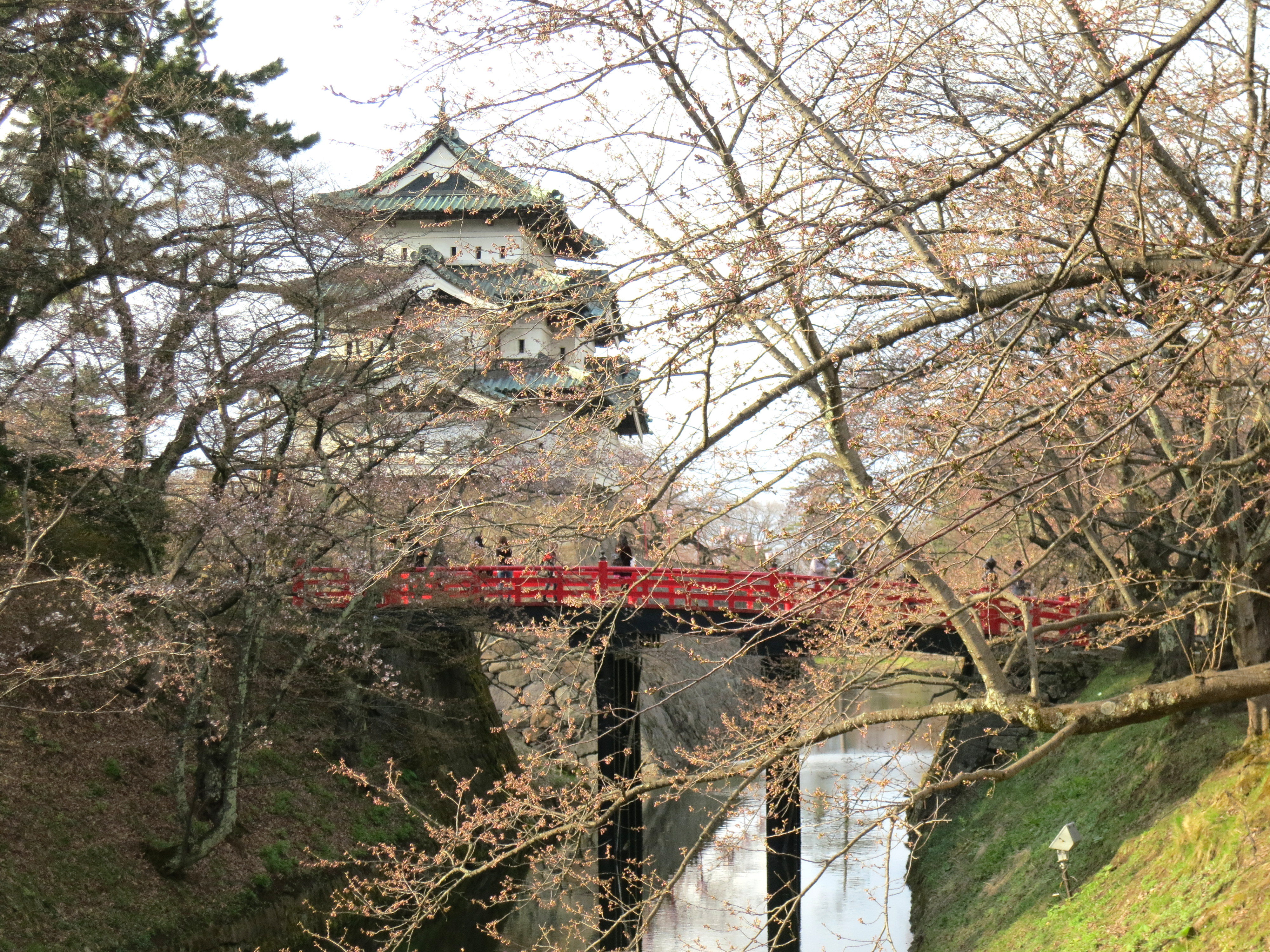
Aesthetically pleasing
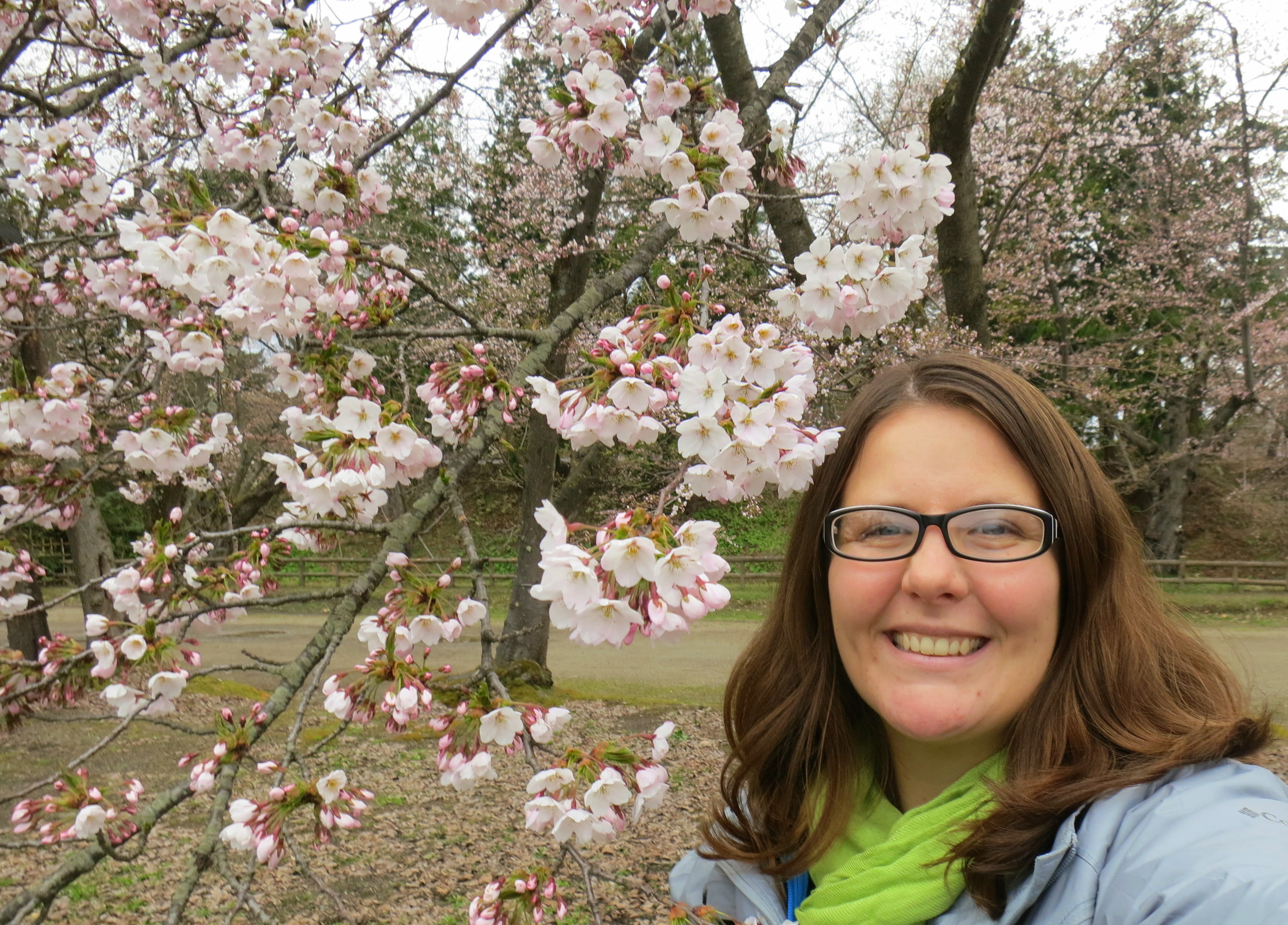
I was so happy to see these little flowers in this setting
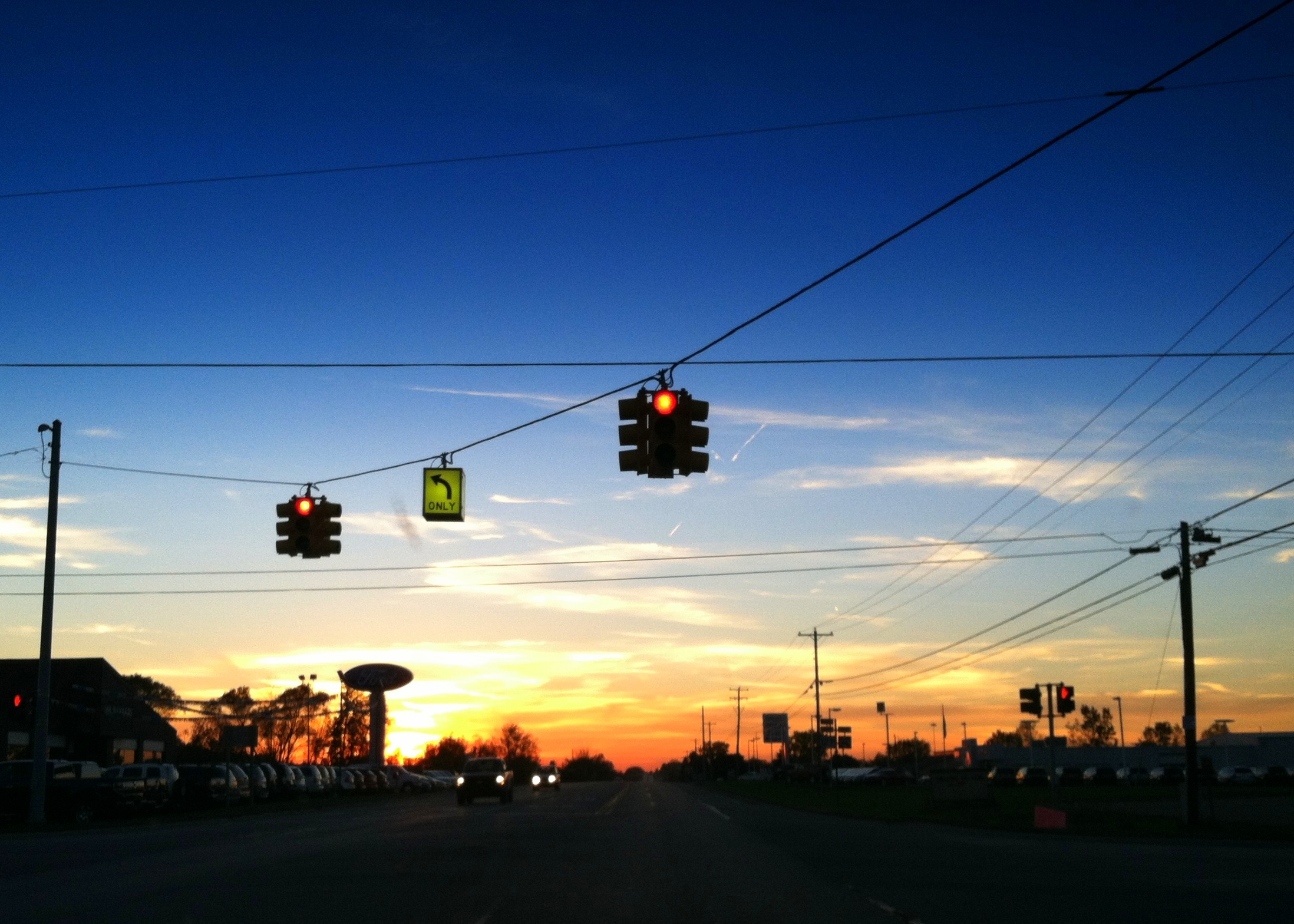
Sunset, Saint Louis, Michigan
My day trip to Kawagoe was the first time I saw the historical side of Japan alongside the modern. I got a map and directions at the train station, and followed the crowds past a shopping mall, down a walking street full of people shopping at Golden Week sidewalk sales. My favorite booth was one that held a man, his dog, and jars of what looked like honey. People paid money to sit with the dog on their lap, and the man took pictures of them. I’m not sure where the honey entered into it.

Golden Weekers on parade

The modern side of town

My favorite booth
Colorful fish windsocks hung from wires strung zig-zag style across the street; these were put up in celebration of Children’s Day, a national holiday celebrating the children of Japan. (It was originally Boys’ Day, and some Japanese people I met still referred to it as such, but officially it’s now for boys and girls.) The flags fluttered in the wind, wiggling the fish bodies so they looked like they were swimming in the air.

Fun fish for Children’s Day
I stopped briefly at a small shrine, and watched people pay their respects. People used wooden dippers to ritually wash their hands, they rang a bell at a central structure and clapped their hands, and walked in sock feet on the pebbled path leading up to the main area. It felt like a carnival atmosphere to me; everyone was happy and talking in normal voices, not the hushed tones of temple interiors or church altars, and everyone rotated through the various activities under colorful banners.

Hand washing at the shrine

A diagram of the foot to the side of this walkway made me wonder if this was for meditative or massage purposes. Or both?

The fortune ring toss
I admit that what probably put “carnival atmosphere” in my head, though, was the ring toss. I think the idea was that you toss the ring to reach the peg, and if you’re successful, you select a slip of paper with a fortune on it from a box to the side. (I can’t find confirmation that the ring toss and the fortunes were connected activities; please correct me if you have better information.)

The first Edo period building I saw
I expected to leave one walking street for another when I reached the old part of town, where the Edo-period buildings were, but strangely, these major attractions were on a busy main road. They were also mixed in with contemporary buildings. Crowds streamed down the sidewalks, often spilling into the street, but the most the drivers ever responded with was a polite “beep beep.” No cussing or laying on the horn. Welcome to Japan.
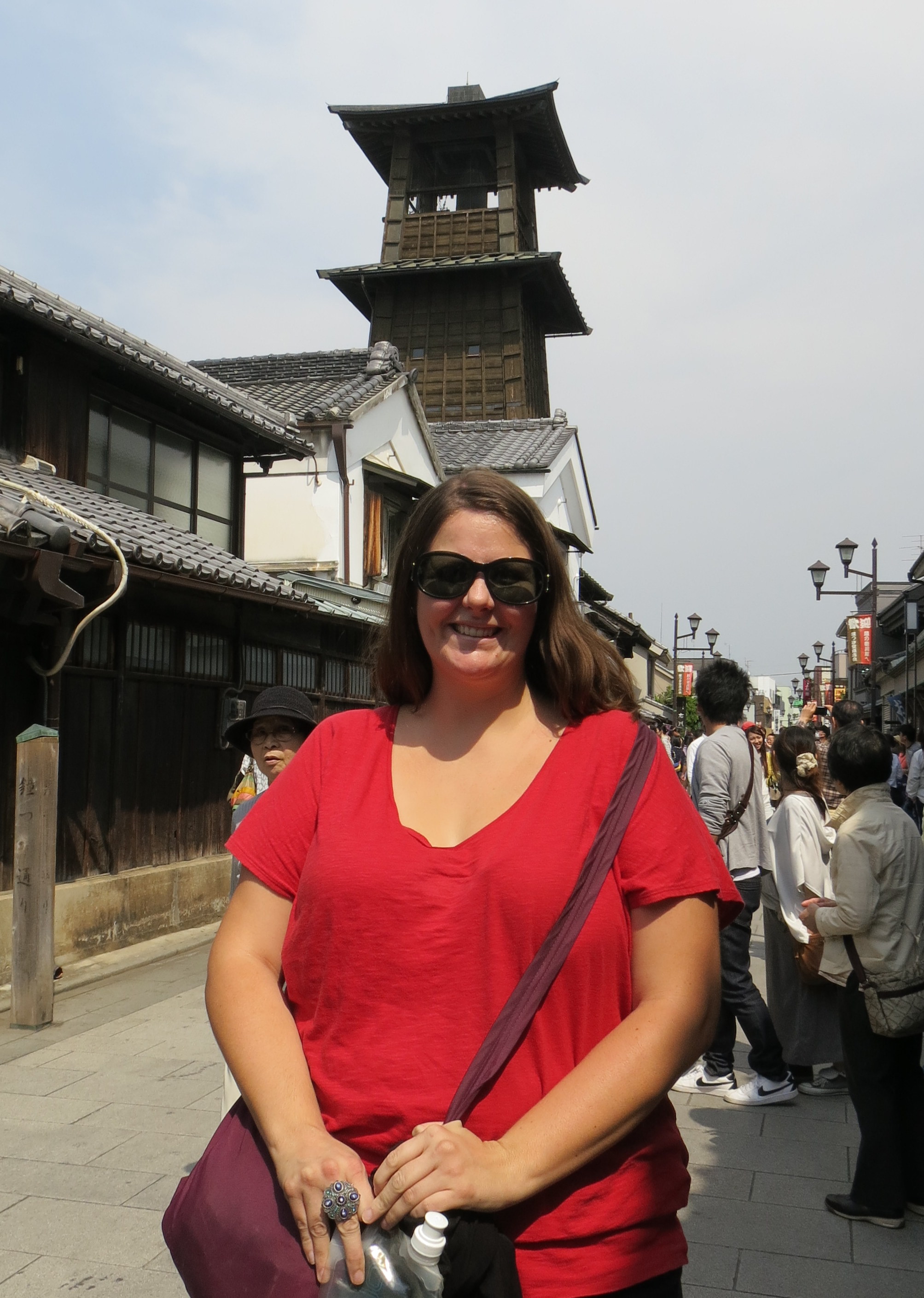
In front of the clock tower, waiting to hear one of the 100 most beautiful sounds in Japan
The Edo period is a 265-year span named after Edo, the city that later became known as Tokyo. The warehouses and shops in this area of Kawagoe are from that time; in fact, Kawagoe is sometimes called “Little Edo.” The clock tower that stands on a side street today was rebuilt in 1894, after a fire demolished an earlier structure. It’s still considered to be the clock tower, though, as if the essence of the clock tower matters more than the wood beams and bell ropes. According to the sign by the tower, the bell that rings four times a day is considered one of the 100 most beautiful sounds in Japan, and is officially recognized as such by the government. I love that!

Sweet potato and vanilla, a surprisingly delicious ice cream
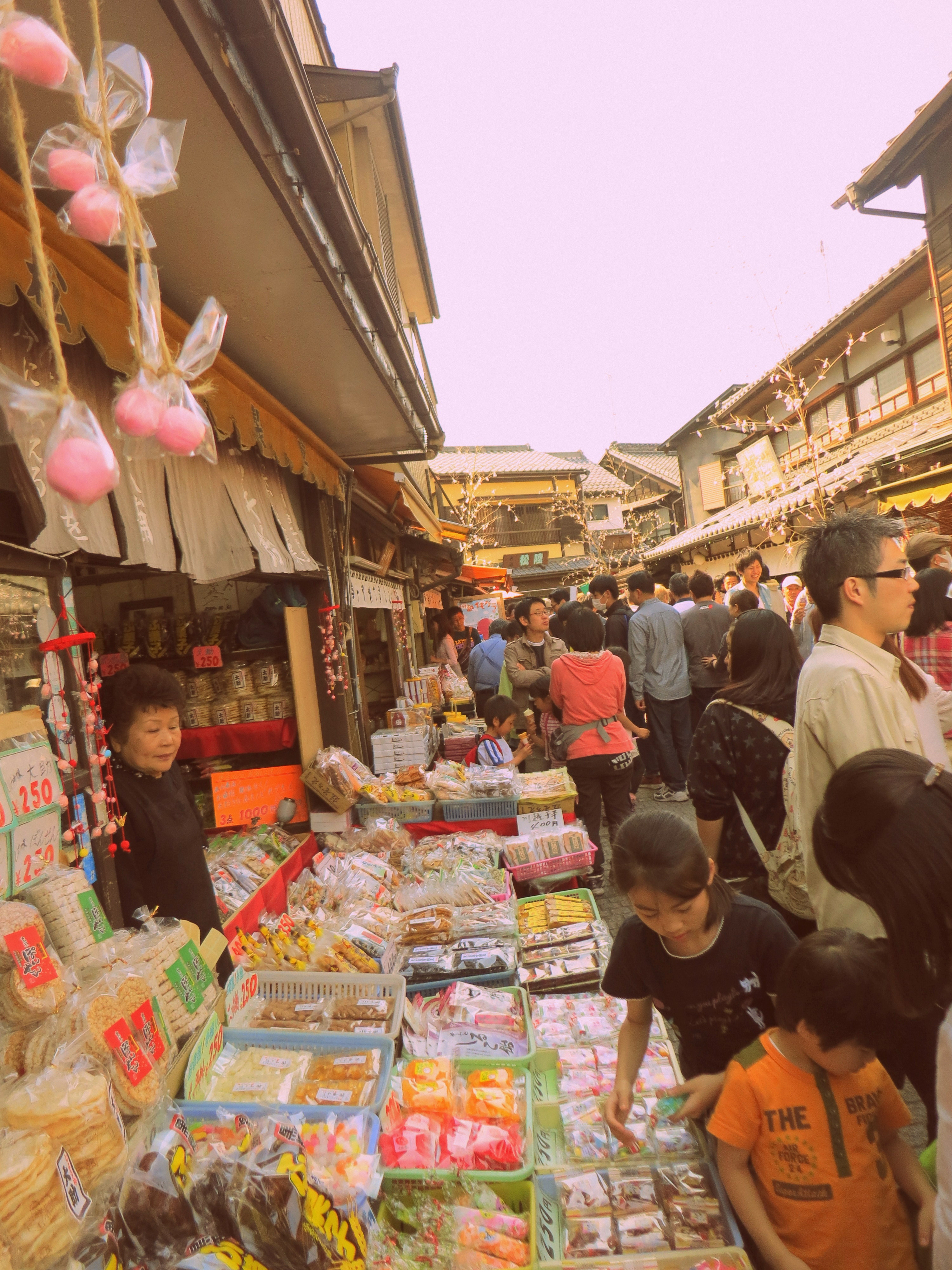
Sweets as far as the eye can see on the penny candy street
I followed the lead of the Japanese enjoying their stroll through town, and ate a lot of snack foods and desserts in Kawagoe. Grilled balls of what I think were tofu; red bean paste mochi; a waffle in the shape of a fish, stuffed with custard; sweet potato and vanilla soft serve ice cream (the area is famous for sweet potatoes); and, about a million sweet treats found on a street my map labeled the “penny candy lane.”
Everywhere I looked, people were stuffing their faces with yummy treats I’d never encountered before, and admiring the buildings of an earlier era. I happily joined them.

Near Milford Sound, New Zealand; January 5, 2013
I bought the Fodor’s Japan e-book while I was in Vietnam, to get ready for the next country on my trip. The author of the guidebook spent many pages rhapsodizing about the ryokan, a traditional Japanese inn. Ryokan are a simpler form of accommodation than modern hotels, with no amenities like mini-bars, TVs in the rooms, or wifi. Instead, the emphasis is on a peaceful, introspective stay. The tatami (rice straw) floors, futon beds, sliding doors, private garden views, and expertly cooked food are consistent features from place to place, and you can expect to pay at least $100 per night. But I stayed at a top-notch ryokan in Shinrin-koen, and I didn’t pay a cent.
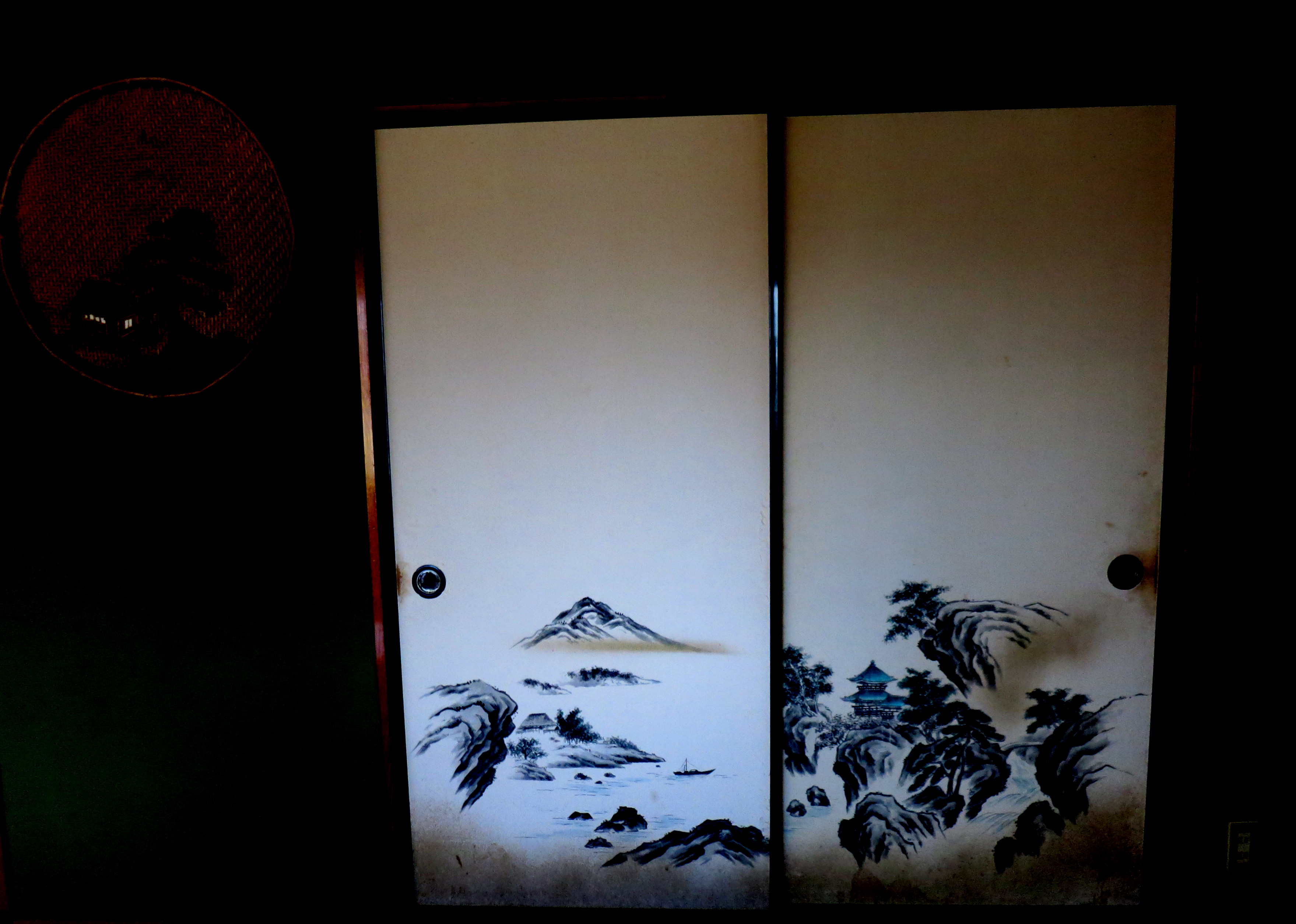
Painted screen doors in the traditional home I stayed in, in Shinrin-koen, Japan
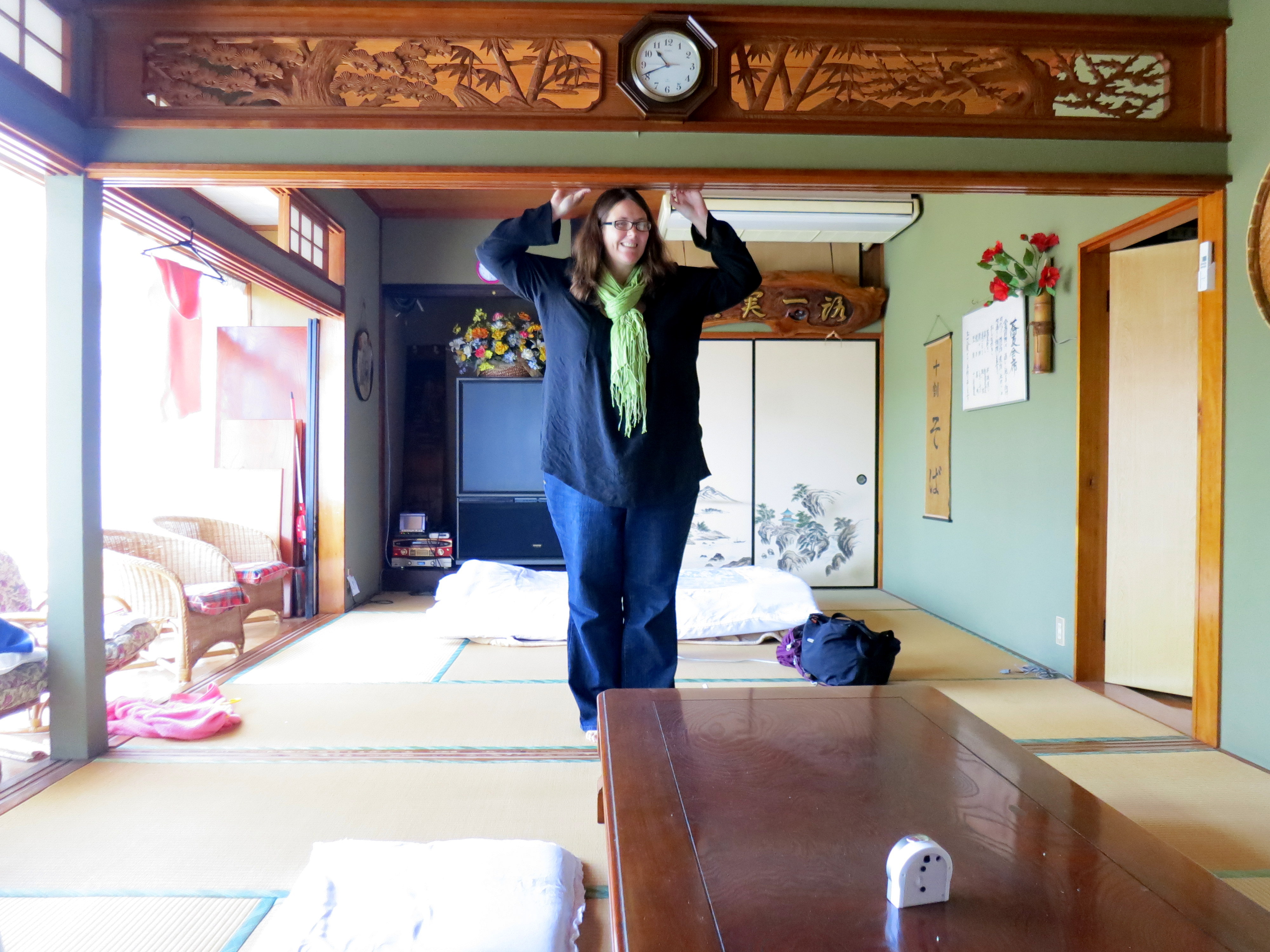
Giantess in the ryokan
The secret is to know incredibly generous people, so I cannot flog this as a general travel tip. Too bad, because I want everyone to meet the Shirotas, who put me up and fed me for five days. The assistant rector of my parents’ church is from Shinrin-koen, a small town in the Saitama province, about forty minutes northwest of Tokyo. When he heard I was going to Japan, he put me in touch with his parents and assured me they’d be happy to host.

Blossoms in the garden

I quickly learned to wear slippers as soon as I walked in the door
Kuni and Kimi run a restaurant that’s attached to their house, so it was no surprise that everything I ate was delicious. They spoke very little English, and I spoke no Japanese, so we used Google Translate to bridge the gap. That is a very imperfect tool, I am here to tell you. We had some delightful misunderstandings, all taken in stride by the three of us, and everything smoothed over with the smiles permanently on our faces. I was grateful to be taken care of after months of looking out for number one, and touched by their generosity. They were pleased to host and chuckle with a young person who couldn’t ever seem to remember how to say “good night,” no matter how many times they pronounced it. They were the sweetest hosts, so my permanent smile wasn’t just a tool for cross-cultural communication. It was the real thing.

Kuni and Kimi, my gracious and generous hosts
And although their home isn’t really an inn (except for once a year, when they host several international travelers who come to town for a famous multi-day walk), it was the real thing, too.
The room had tatami mats and a low table:
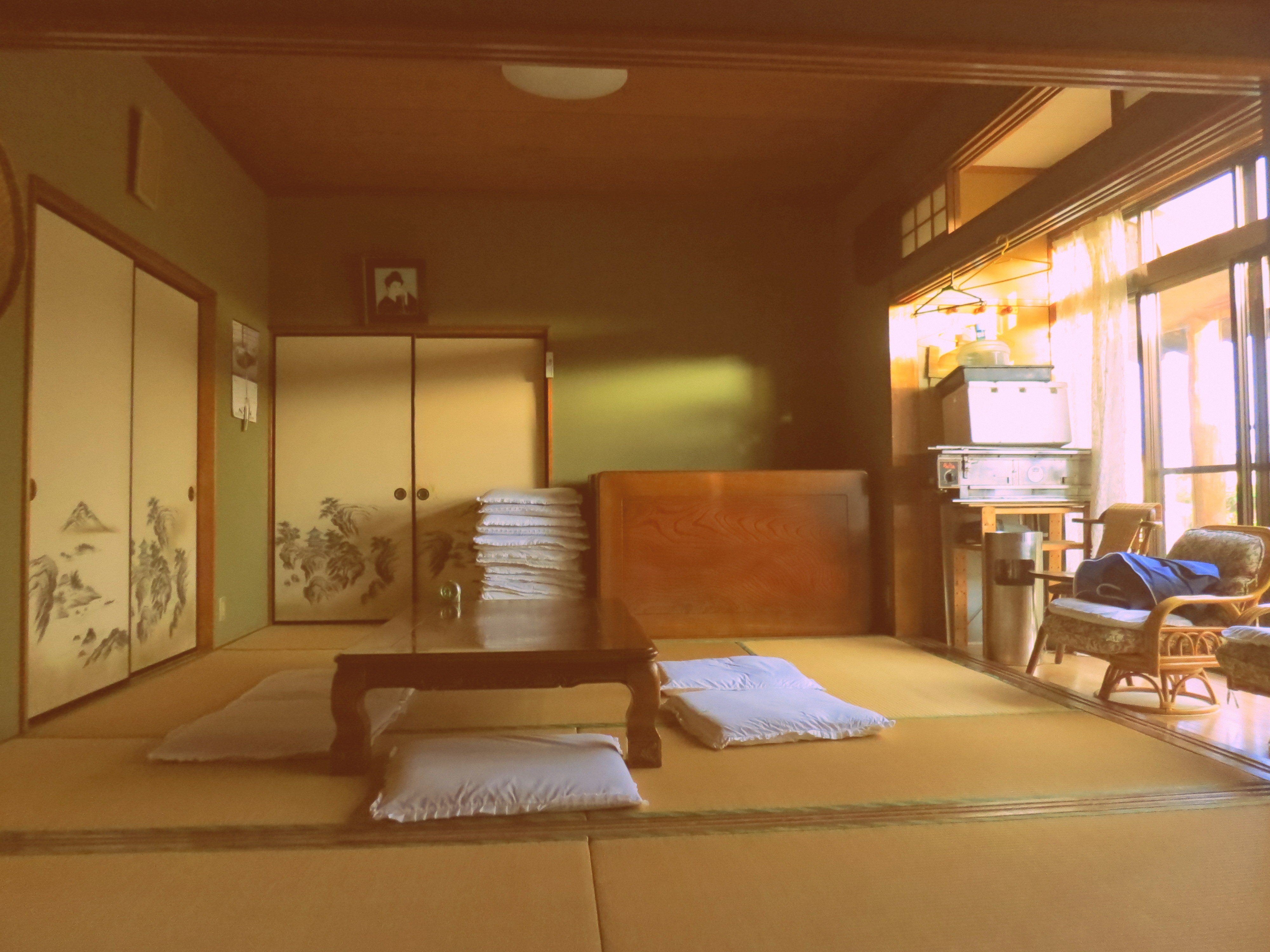
Traditional table and tatami mats
And a futon rolled out on the floor:
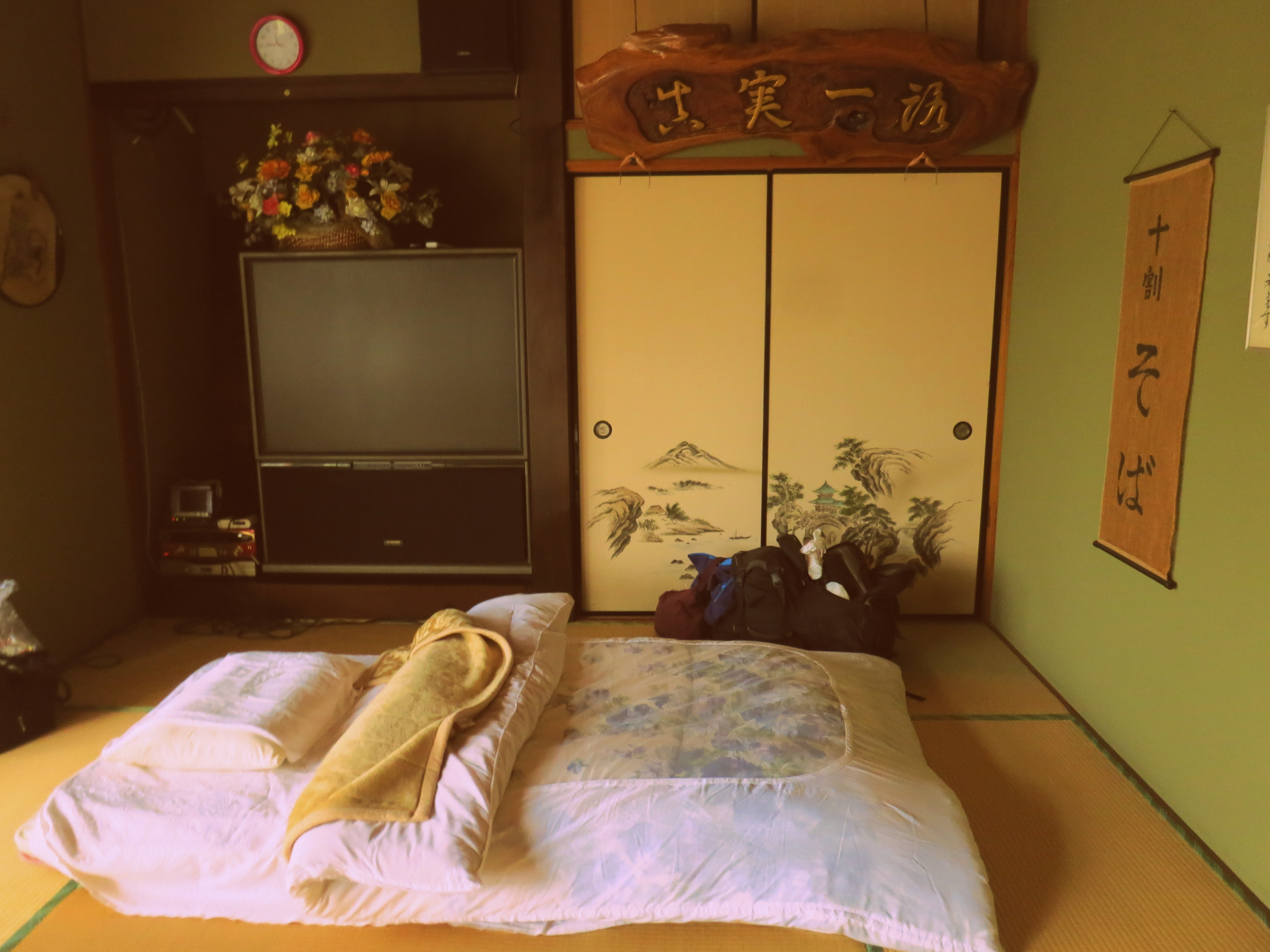
Super comfortable. I had some of the best sleep of my trip here.
My room looked out on a small, lovely garden:

Peaceful work station (and yes, they had wifi, which was handy for blogging)
And I ate very, very well:

Handmade soba noodles

Beautiful presentation, every time
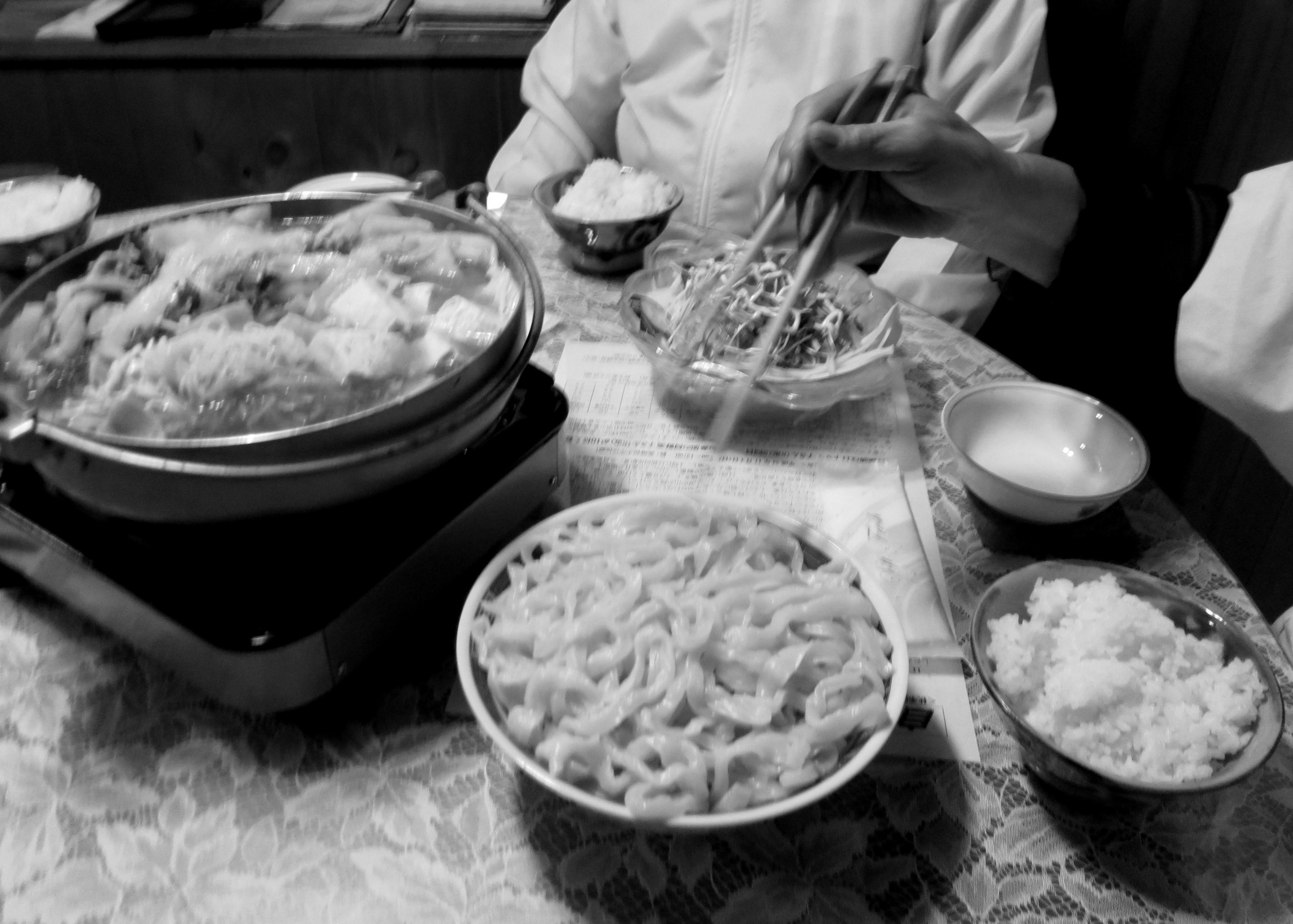
Delicious
I knew as soon as I met Kuni and Kimi that they were going to be wonderful hosts, and that I’d love staying at their home. Thanks to my guidebook, I also knew how lucky I was to have a ryokan experience without the expense.
I had no winter this year, but I still gloried in spring. It’s amazing the psychological effect a fresh breeze and budding flowers can have, even when you aren’t thawing from a long, cold winter. I’d been melting in the tropics, and as gorgeous as the flora and fauna of Southeast Asia were, it was a relief for this Midwesterner to be back in temperate climes just as everything was starting to warm.

Amongst the flowers at the national park in Shinrin-koen

I went to the national park at Shinrin-koen in the Saitama region, one fine Saturday afternoon. It’s a sprawling park, and every inch of it is carefully manicured. There was no wildness at all there, so it felt more like a garden than what I think of when I think “national park.” It was a garden of wonders, one of the best-planned parks I’ve ever been to.

Hi kiddos!
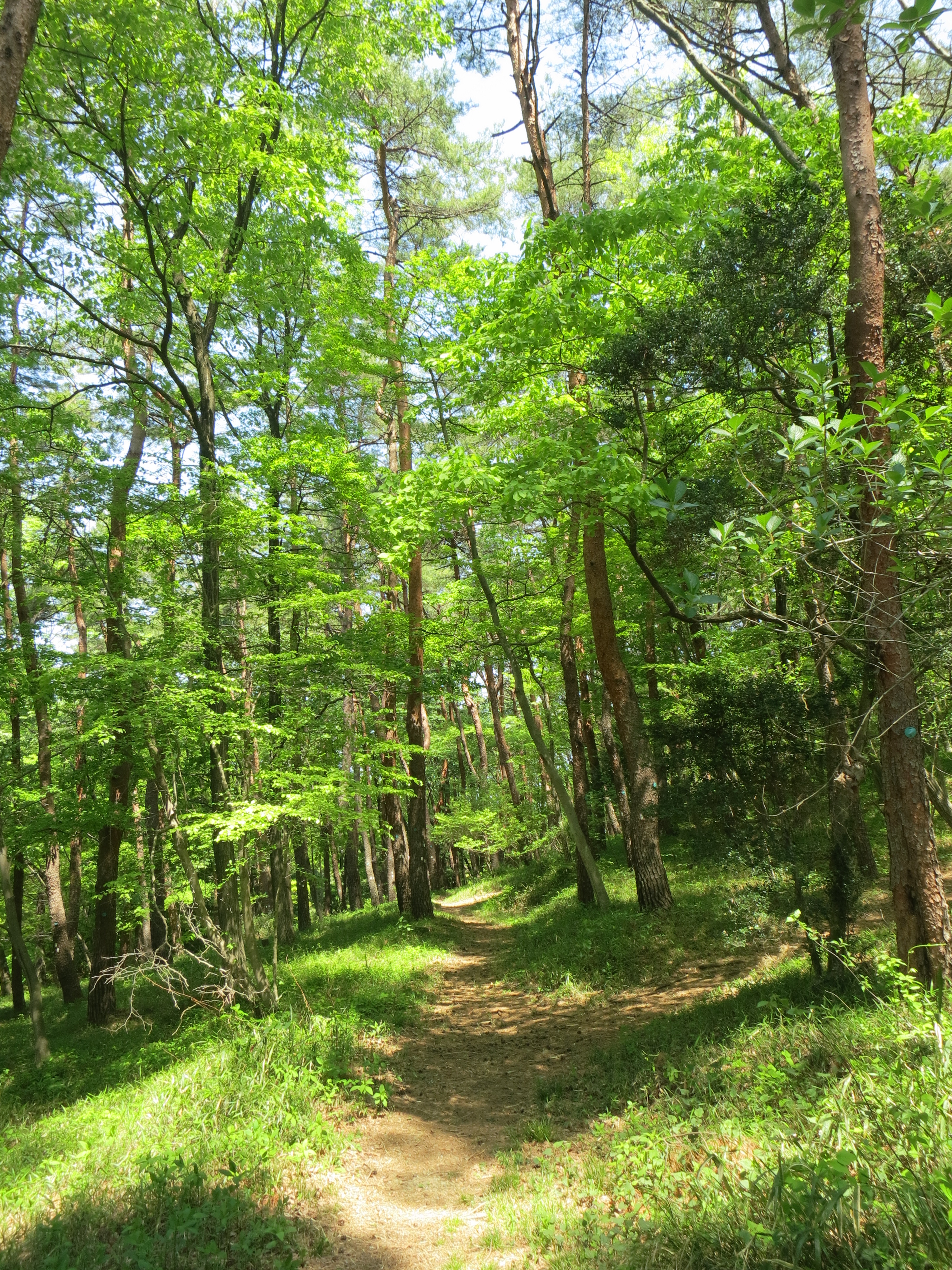
A walk near the castle ruins

Straight off, giant plush mascots greeted families as they entered the park, and posed for photos with children. This set the stage for the rest of the park, which was packed with frolicking kids and relaxed parents. This was a sunny weekend at the beginning of Golden Week, the biggest holiday week in the country, so it was no wonder it was full of families. Still, it was a big enough park that I was able to find my own patch of grass in a quiet corner and read a book for an hour.
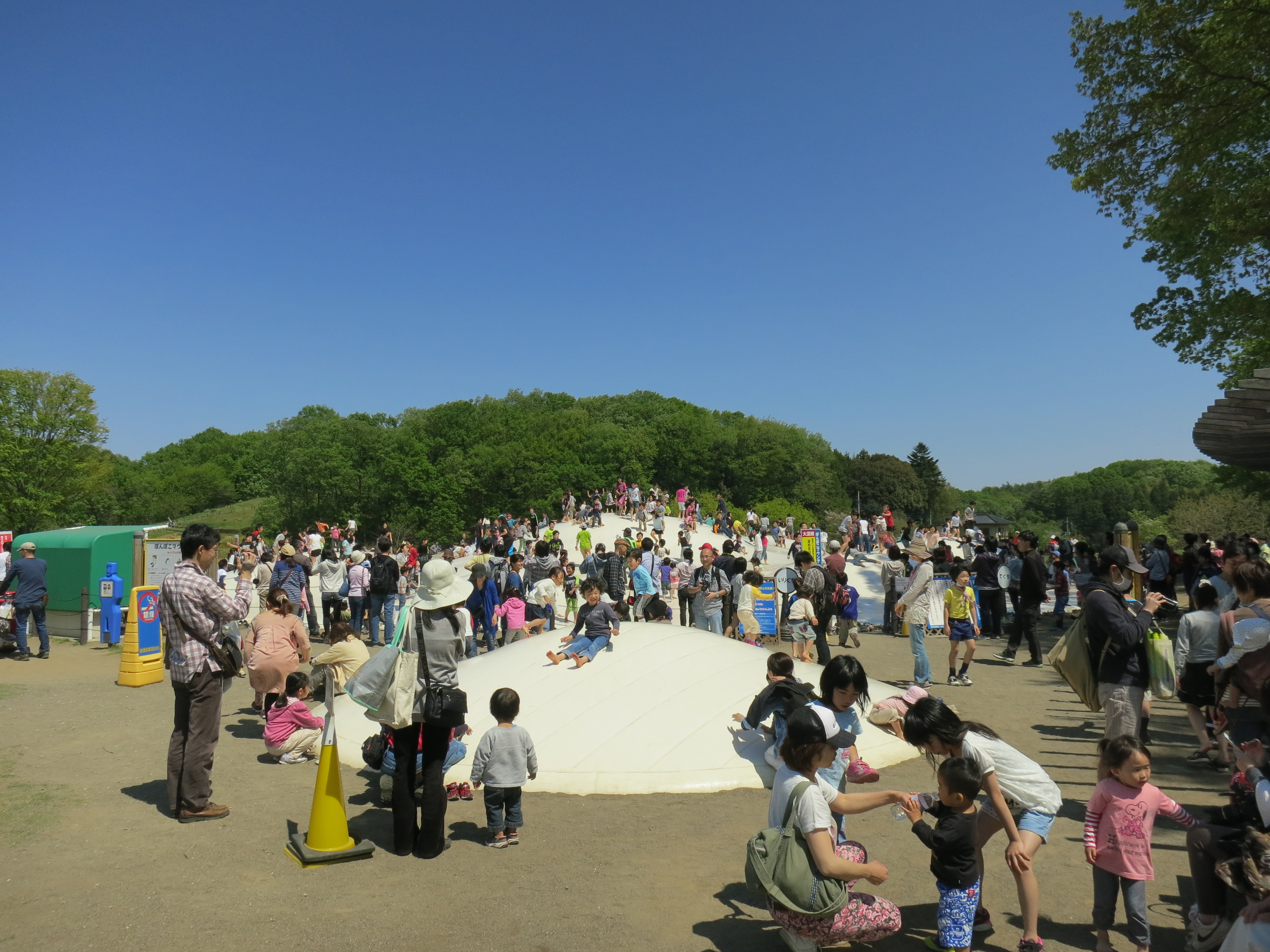
Giant trampoline

Playing catch with artwork
I walked on broad, paved paths, while cyclists zipped by on separate paths (brilliant move). You can rent bicycles at several of the entrances to the park, or of course, bring your own. There was a motorized train you could pay to get from one end of the park to the other, since it was so large. Signs were placed throughout the park reminding visitors not to remove plants or animals. Most signs were in both Japanese and English, and I got an English map at the park entrance, which was very helpful.

I can’t remember what this is a memorial to
The park was made up of lots of different areas–sculpture garden, performance pavilion, cherry tree grove, barbecue grills, giant trampoline, tulip garden, pony rides, lake dotted with water fowl, snack shack, play structure, and a lot of other places I didn’t get to in the three hours I was there. I walked over what a sign said were the ruins of a castle, although by this point they were just indentations in the earth.
The giant trampoline was more like a white dome of soft, bouncy material, and kids from toddler age on up to about ten were having great fun jumping around and sliding down to the ground, then clambering up again. I had my first Japanese soft-serve ice cream, which I found out later was a majorly popular treat throughout the country. Vanilla and rose flavor, delicious.
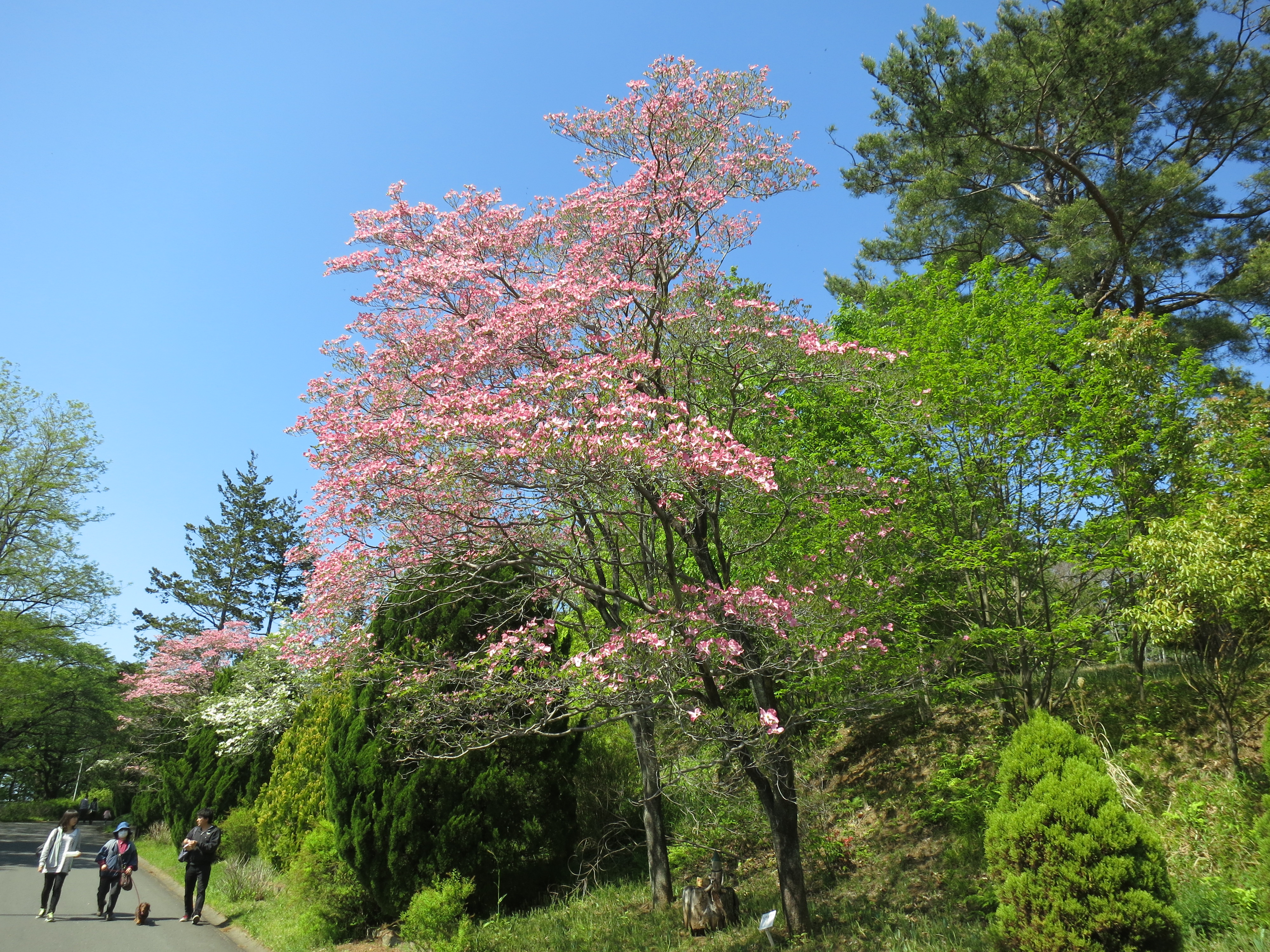
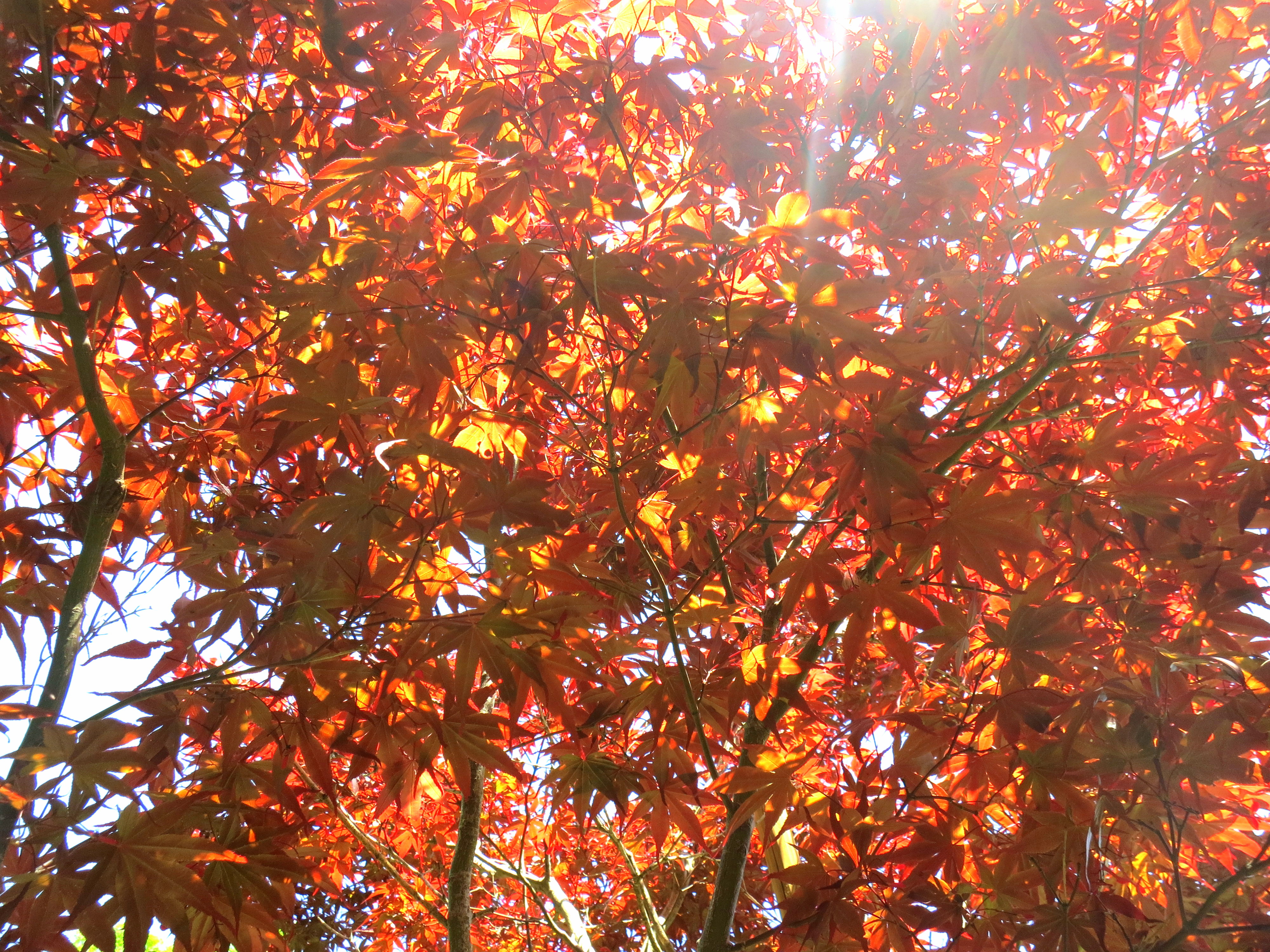
I posed for photos in front of various trees and flowers, and smiled at all the kids throwing up peace signs in their photos. It was a lovely day for a walk in the park, and if I’m ever in the area again, I’ll go back.
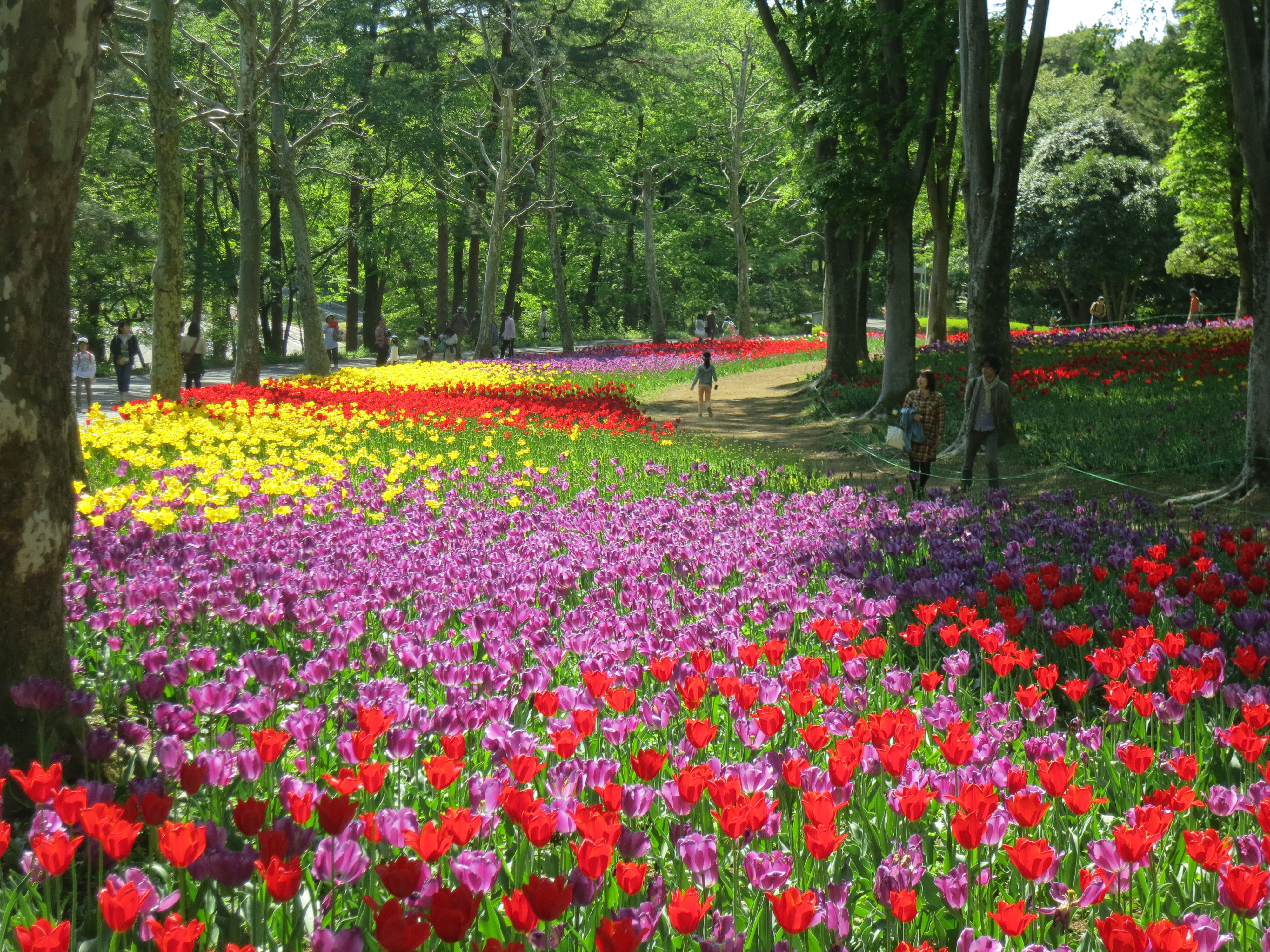
Tiptoeing through the tulips
 Stowaway Travel Writing & Editorial Services