Beyond the Facts: Visiting the War Remnants Museum in Vietnam

No museum is a mere collection of facts. It’s not possible to display information completely objectively; there’s always a point of view taken, a lesson to impart, an agenda to push. This is true even for museums that aren’t at all political; for example, the Laura Ingalls Wilder Historic House & Museum promotes not just Wilder’s writing, but the idea that her values and way of living are worth emulating. Museums only exist because somebody thought the topic was worthy of further study and wider knowledge by the general public. Just by building a museum, you’re taking a position. But I have to say, I have never been to a more baldly biased museum than the War Remnants Museum in Ho Chi Minh City.

The War Remnants Museum in Ho Chi Minh City, Vietnam

The War Remnants Museum in Ho Chi Minh City, Vietnam

Unlike a lot of museums, this one makes no bones about its purpose: it is there to tell the story of the Viet Cong during the Vietnamese-American War, and it is there as a corrective to the American narrative of the war. Every single poster and placard called it the American War of Aggression. Any time the war was called “the Vietnam War,” the phrase was placed in quotes. South Vietnam was called the “so-called Republic of Vietnam.”

Protests around the world

Protests around the world

When the USSR or China were mentioned, the war was called a “struggle for national salvation,” to be more aligned with Communist vocabulary. One placard showed Australians protesting their government sending troops to aid the Americans, and the placard said they were protesting the agreement between the Australians and US to “force Australian youths to become field targets in the US battles in Vietnam.” The whole museum was a master course in semantics. (Which is not to say it was false–you can put a lot of gloss on a base of facts.)

Some veterans from the US have sent in their medals and fatigues to the museum, with notes of apology

Some veterans from the US have sent in their medals and fatigues to the museum, with notes of apology

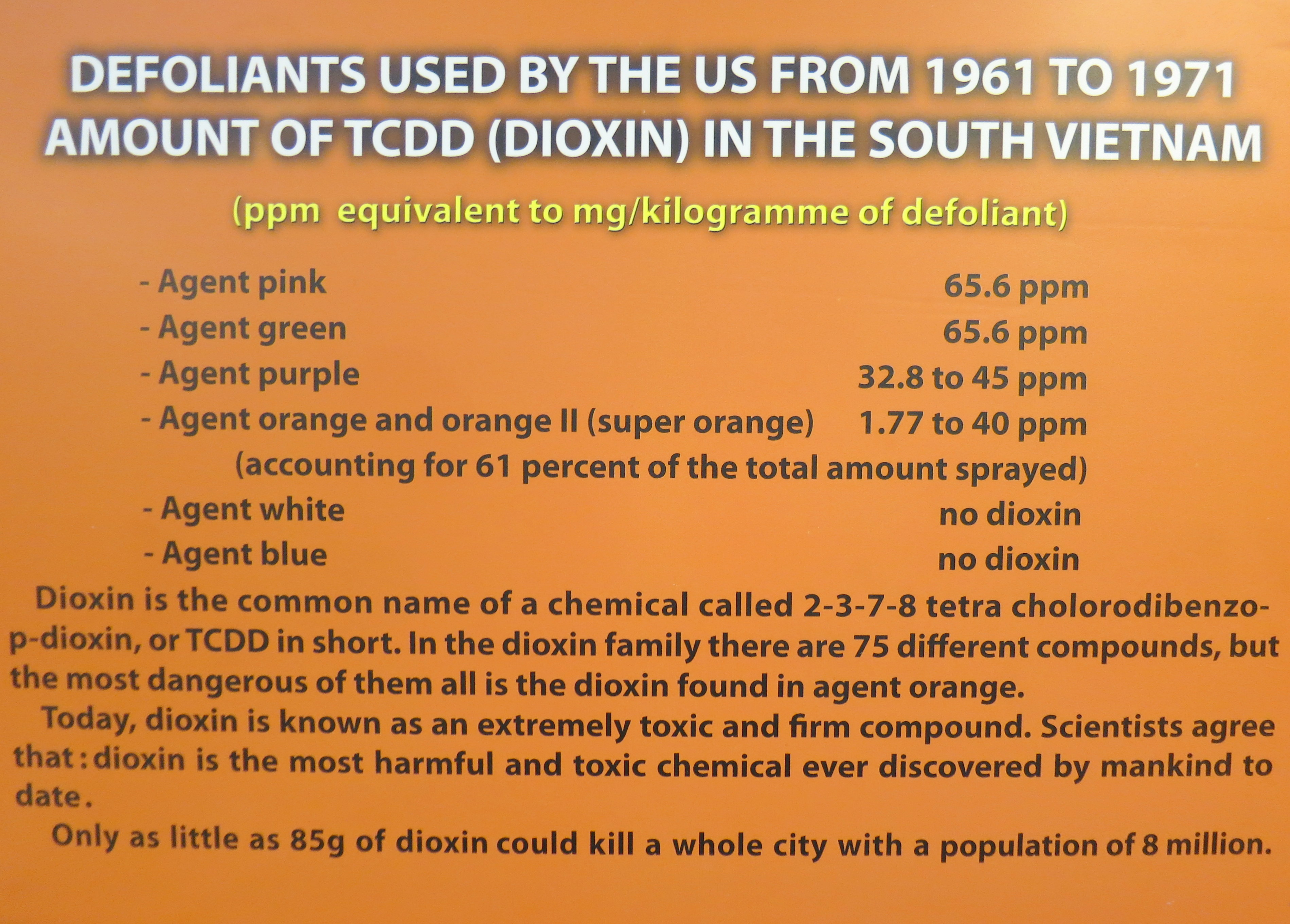
It was also extremely difficult to visit, because the anger and loss on display was so raw and so recent. An entire room was devoted to photos of children suffering from painful and debilitating birth defects, which they got because their parents were exposed to the dioxin in Agent Orange. Did you know that this was only one of the toxins sprayed over forests and farmlands? The museum showed posters of the various “colors” of toxins used by the US. The posters looked a lot like our terrorist threat level posters today, only guess who was the threat?
Yikes
Yikes

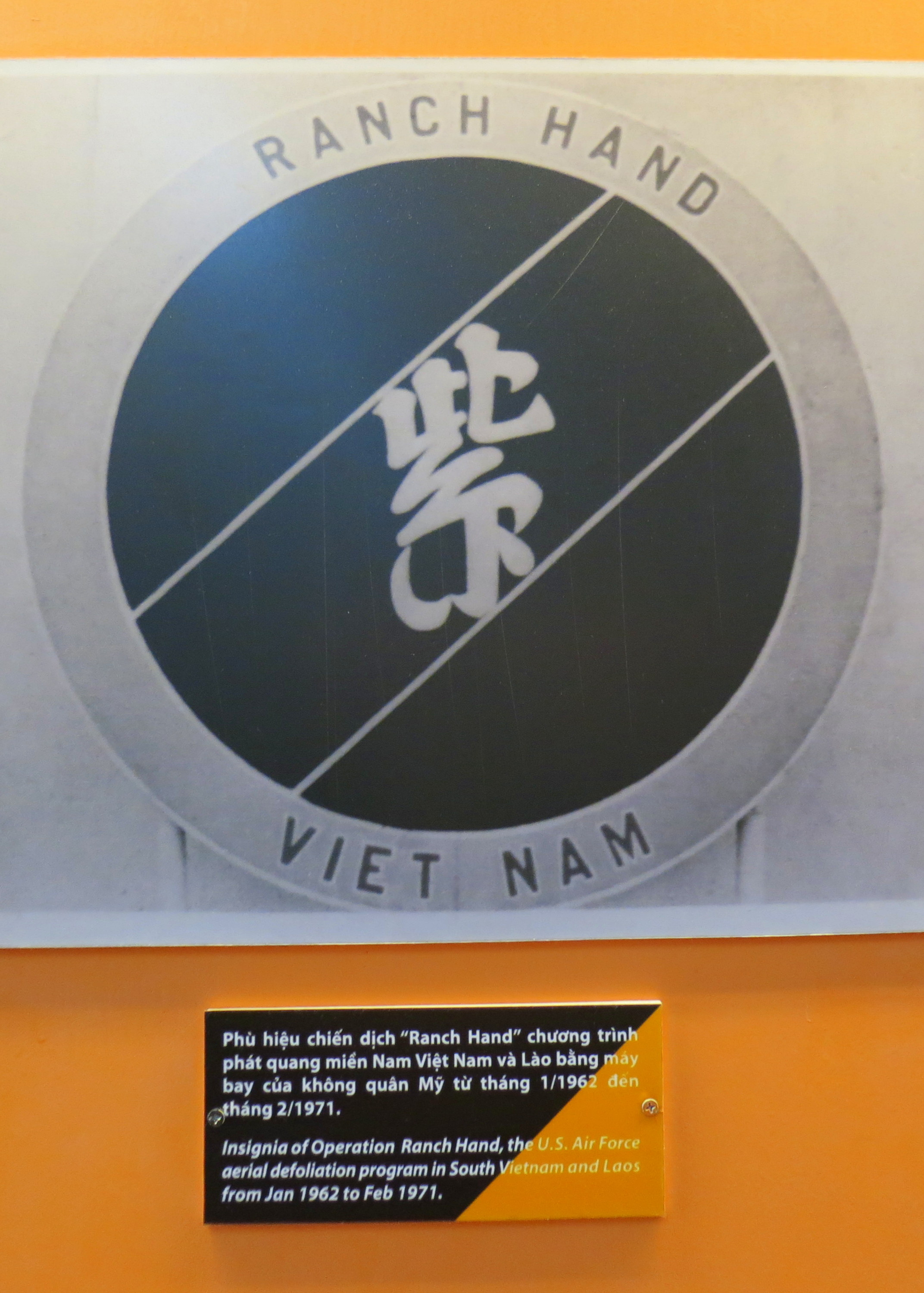
Ranch Hand: the name of the operation that sprayed various chemicals over the farmlands and forests of Vietnam from 1962 to 1971

Ranch Hand: the name of the operation that sprayed various chemicals over the farmlands and forests of Vietnam from 1962 to 1971

Research since the 1960s has shown that even just one parent exposed to dioxin could affect the DNA of the child, resulting in spina bifida, diabetes, various cancers, twisted or missing limbs, developmental disabilities, and other defects and diseases. So it’s not just the people who survived the war who developed health problems, but their children did, too. (Of course, this has been a big issue in the States, too, as the military has slowly agreed to compensate some US veterans for the health problems they and their children suffer as a result of being exposed to Agent Orange. We hurt ourselves when we hurt others.)

A whole room of these images, difficult to see, harder to contemplate.

A whole room of these images, difficult to see, harder to contemplate.

The Aggression War Crimes and Historical Truths sections, in addition to containing the Agent Orange room, included displays on the My Lai massacre, the founding of the National Front for Liberation (what we know as the Viet Cong), the bombings in Laos and Cambodia, and the airlift of Americans in Saigon in 1975.
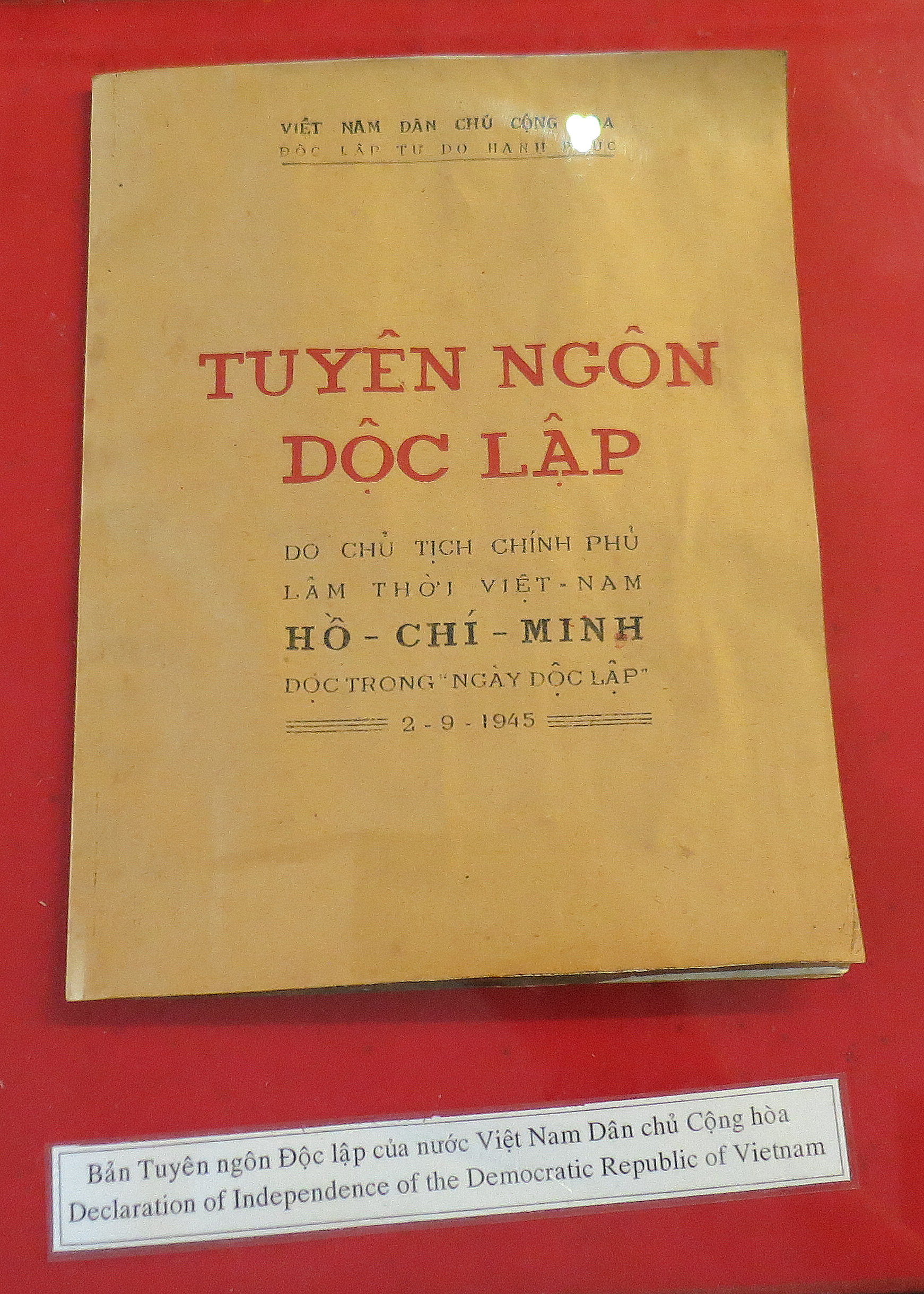
The Declaration of Independence

The Declaration of Independence of the Democratic Republic of Vietnam

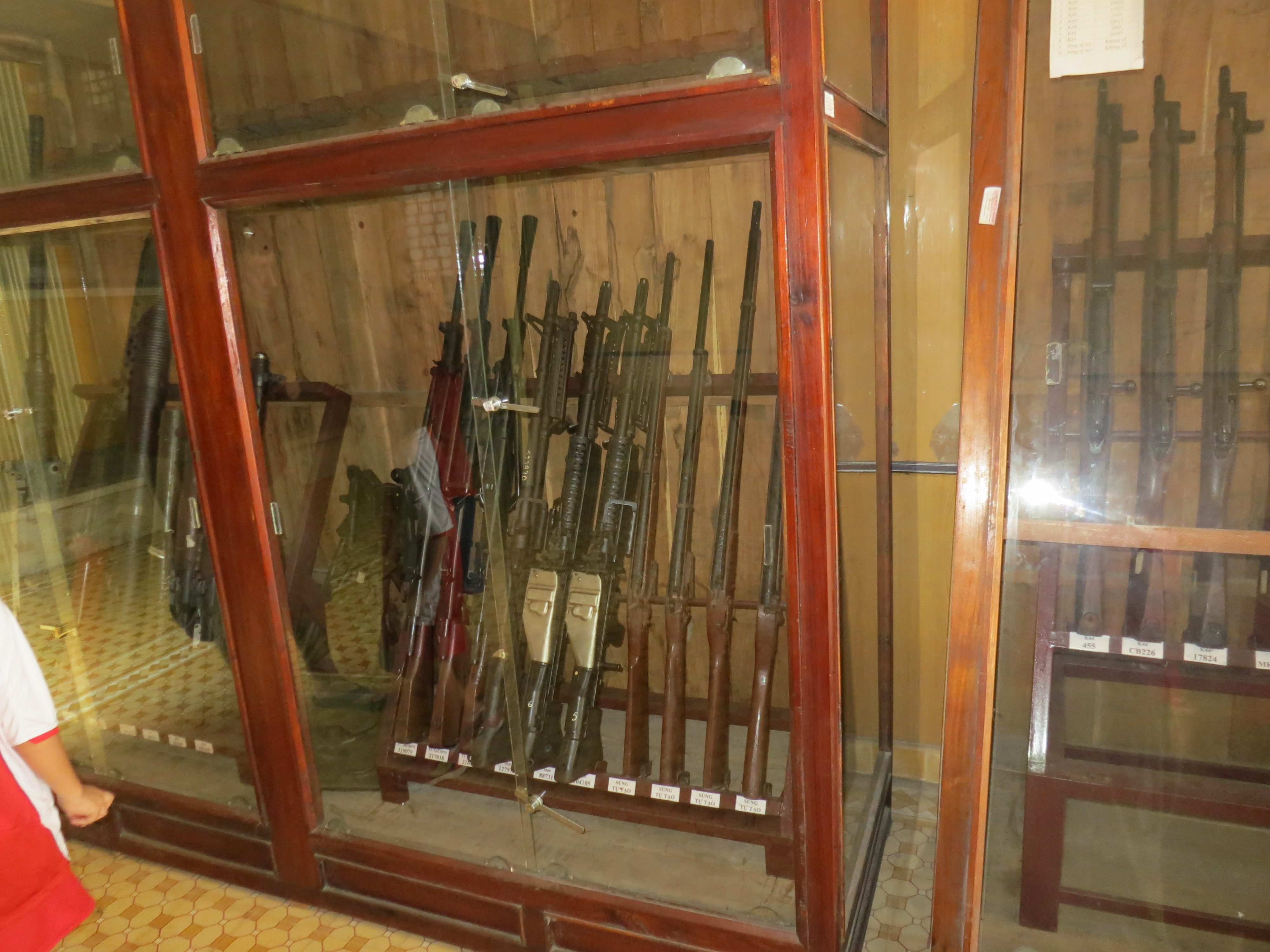
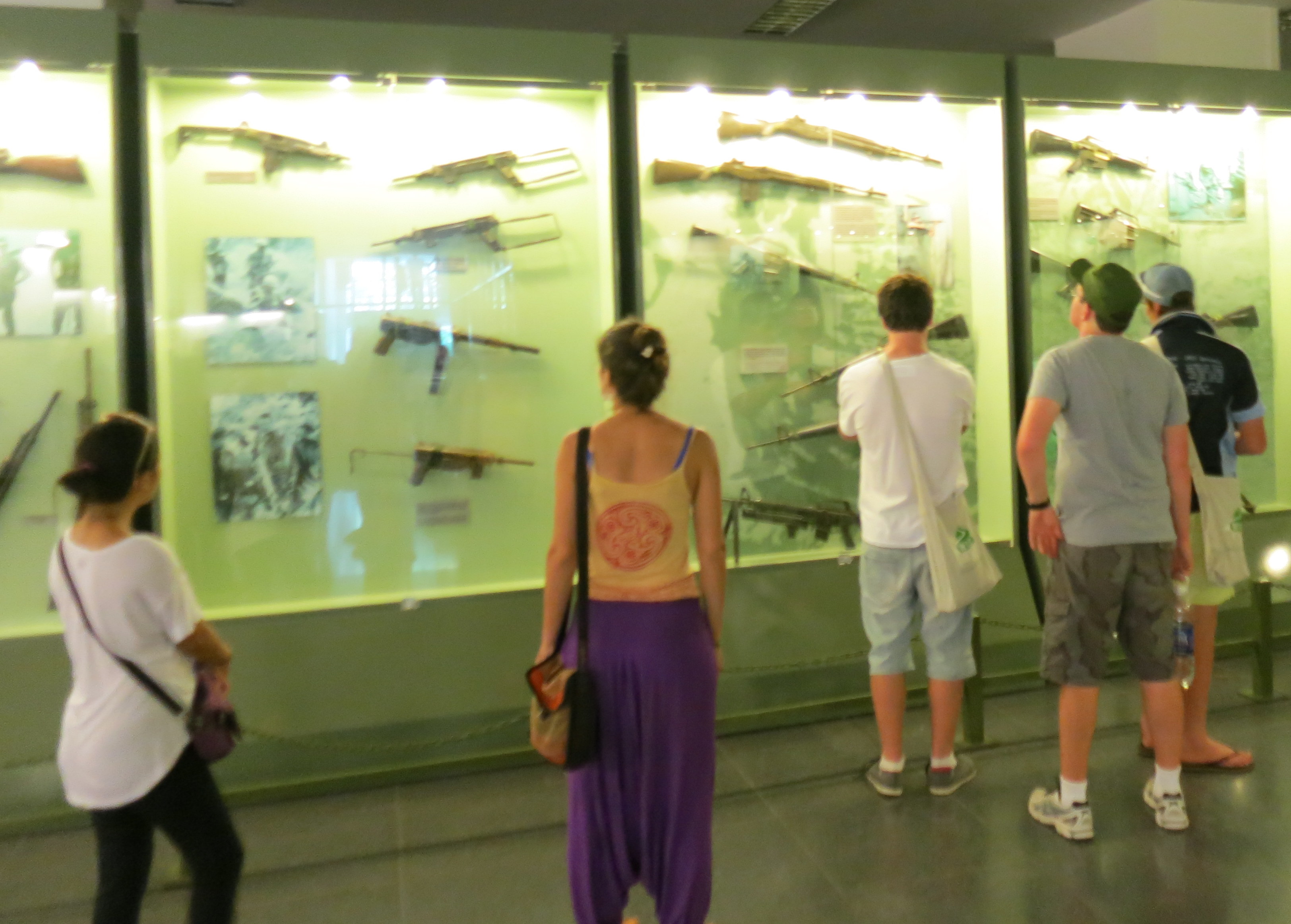
There was a special display on photographers of the war, especially American and French photographers who trained their cameras on the atrocities the Vietnamese suffered at the hands of the American troops. A couple rooms held displays of shell fragments, different kinds of guns, and in a display on the total destruction of villages in Son My, pots and baskets to show what the lives of the villagers were like before the attack.
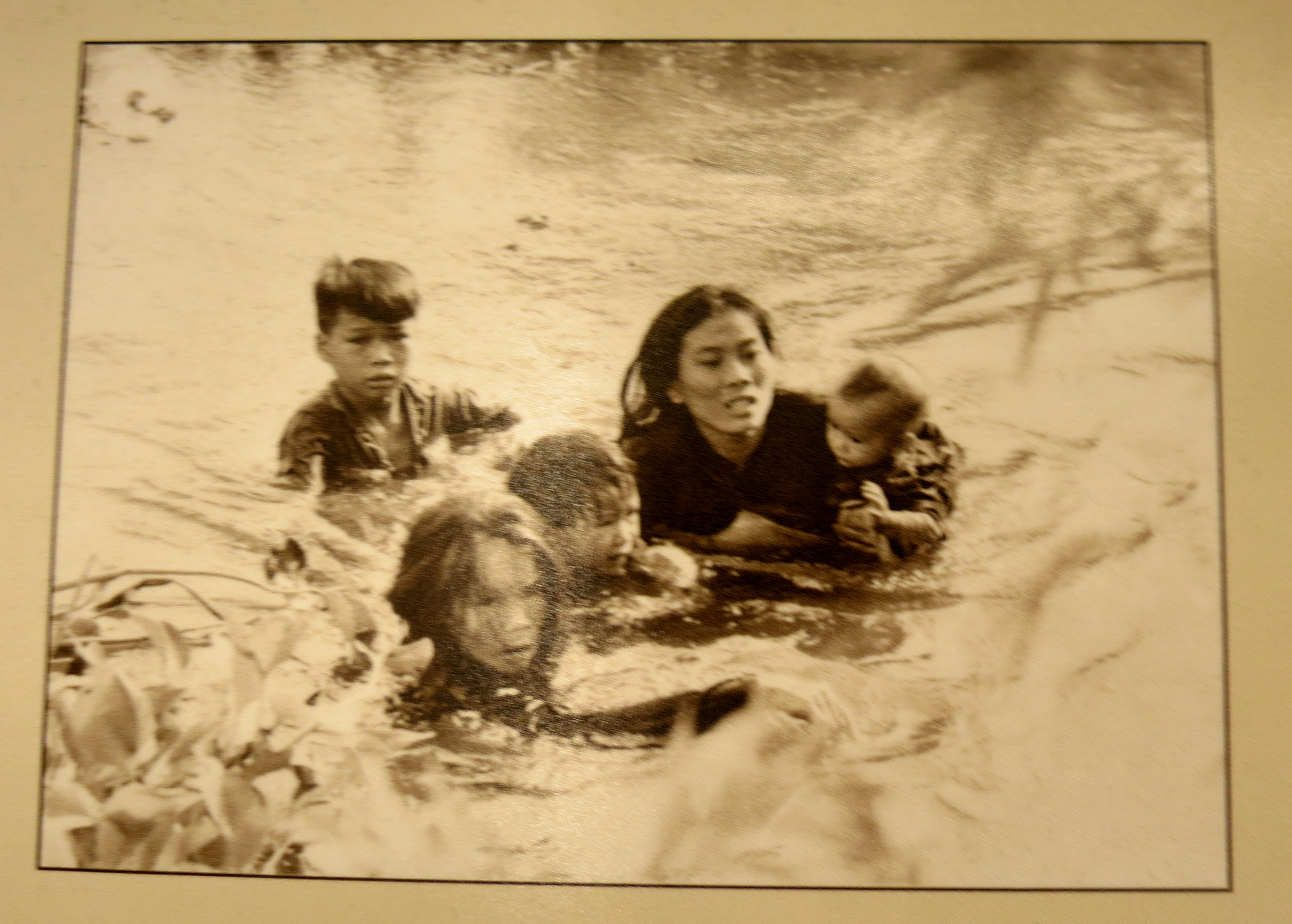
Part of the Photographers of the War exhibit

Part of the Photographers of the War exhibit

war remnants museum hcmc

Pottery from the Son My massacre. We know it as the My Lai massacre, but that was just one of several villages in the area that was destroyed, and the Vietnamese call it the Son My massacre.
Pottery from the Son My massacre. We know it as the My Lai massacre, but that was just one of several villages in the area that was destroyed, and the Vietnamese call it the Son My massacre.

Visitors look at the guns on display

Visitors look at the guns on display

The first floor was split between two displays: one on the education the young Vietnamese received under the Viet Cong during the war, and one on the worldwide anti-war protests held during the ’60s and ’70s. The education display was dated, a magazine spread for people to read during the war. It showed children in obvious poses, smiles plastered on their faces as they shouted dedication to “Uncle Ho,” with captions like “Children tried to study well and work hard to make the contribution to the people’s movement defeating American aggressors.” I don’t mean to undermine the importance of the teachers during this time, though; they taught children in tunnels if they needed to, never sure of where or when the next bomb might go off.
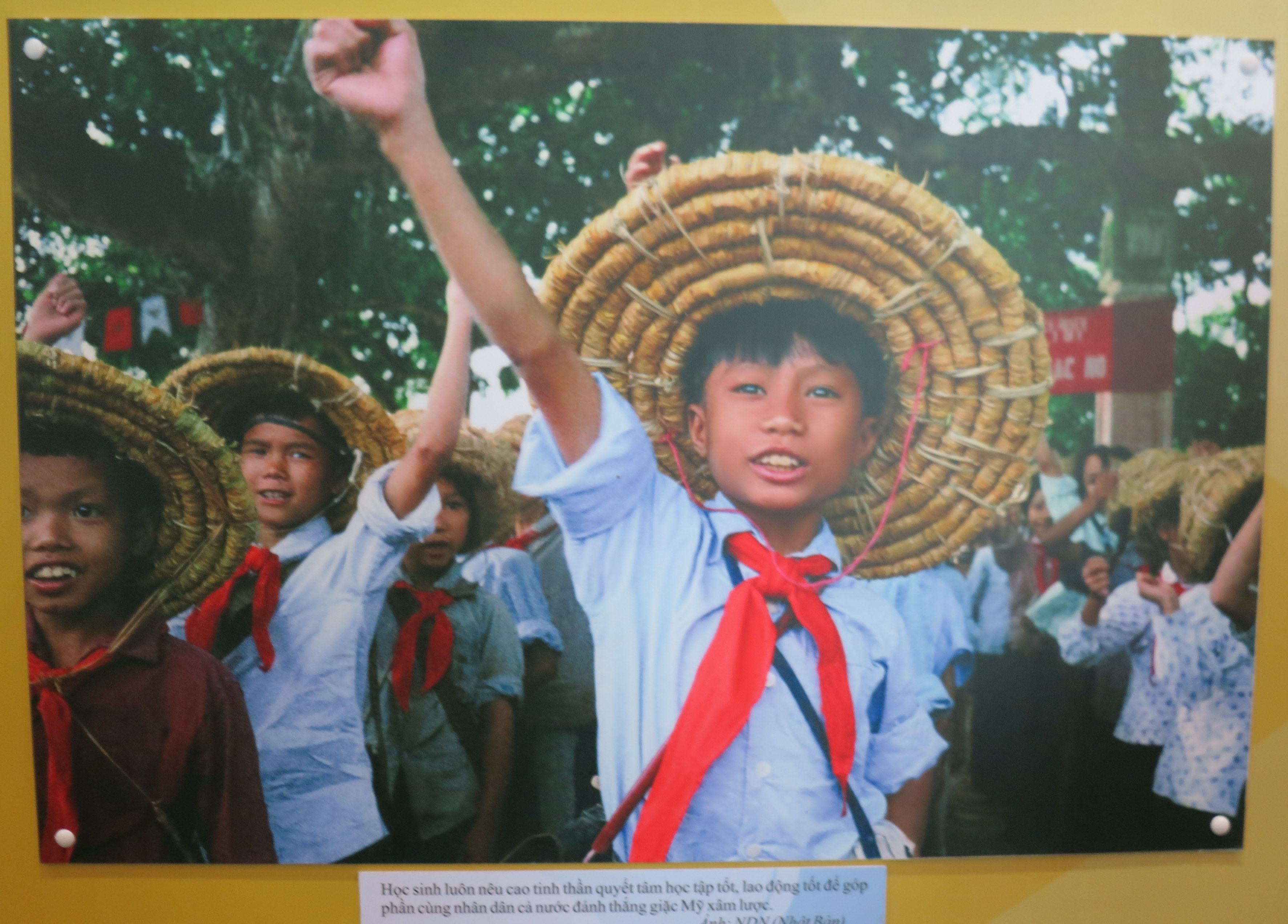
Part of the "Children During War" exhibit

Part of the “Children During War” exhibit

The anti-war display was the opposite of dated; seeing the accumulation of anti-war and pro-Vietnam support from all those different countries, over many years, brought home how much this war meant to people around the world. People were not only concerned for the lives damaged and lost on both sides of the war, but also for what this kind of unofficial but all too real war meant for the world they lived in, and how it might affect their future. Seeing large posters declaring “Solidarity with Vietnam” in German, only 20 years after the end of World War II, was affecting. A man in Japan wore a sign saying “US Withdraw from Vietnam” during his commute, every day for 8 years. Several tribunals were convened on the “war crimes of the US” in Norway and Sweden. Thousands of people in South America, Africa, and Europe signed letters denouncing US intervention in Vietnam. Massive protests were held on every continent.

Before and after the war, from places around Vietnam
Before and after the war, from places around Vietnam

war remnants museum hcmc

I’m so used to the American version of the story, even the anti-war story, that I was surprised by these global actions against the war. I’d let myself be insulated, seeing everything through a particular lens, and it was good to be reminded how narrow that view is. Especially in light of the anti-war protests in 2003–those didn’t come from nowhere, they have a lot of historical precedent.

Let there be peace

Let there be peace

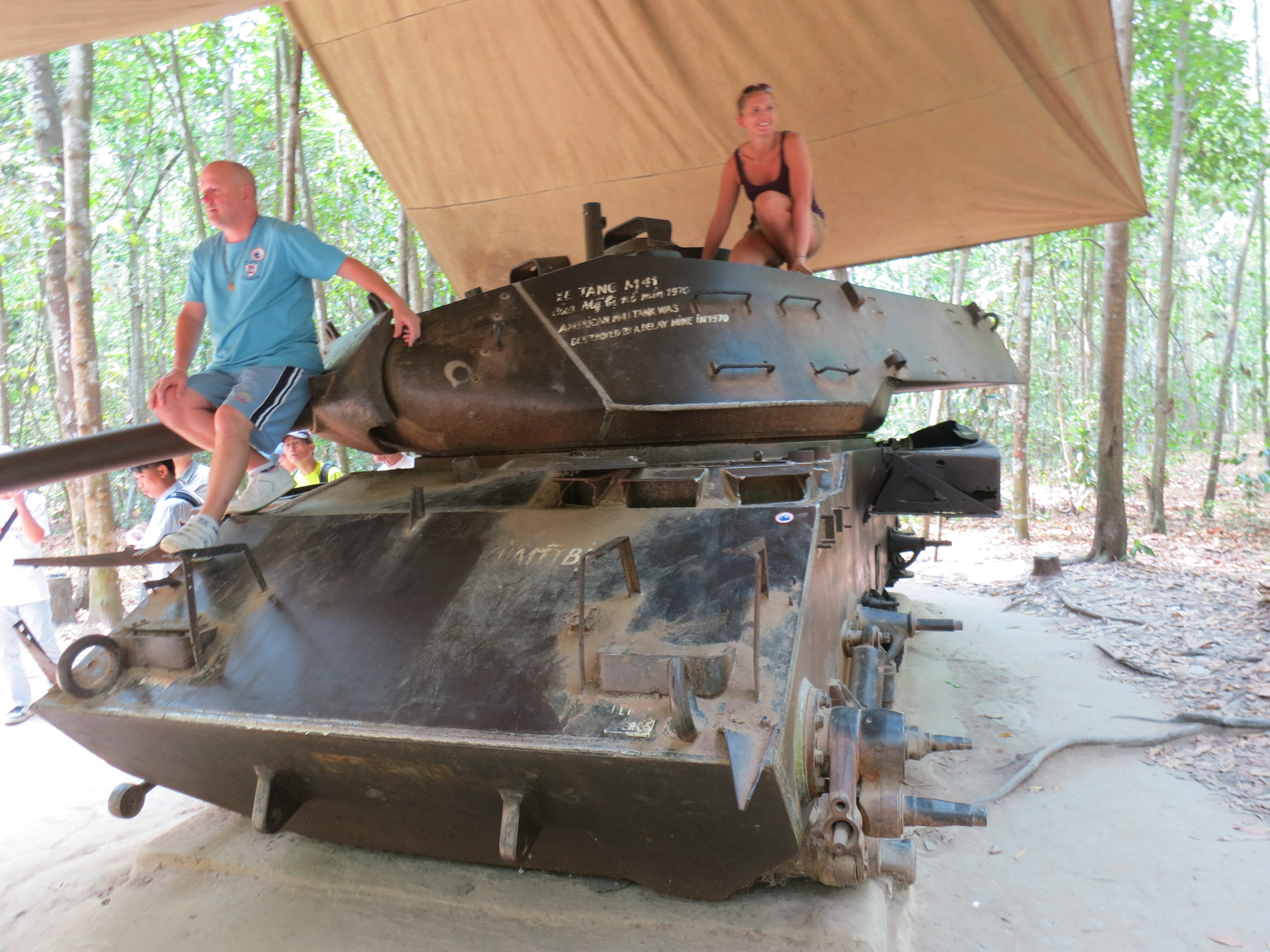
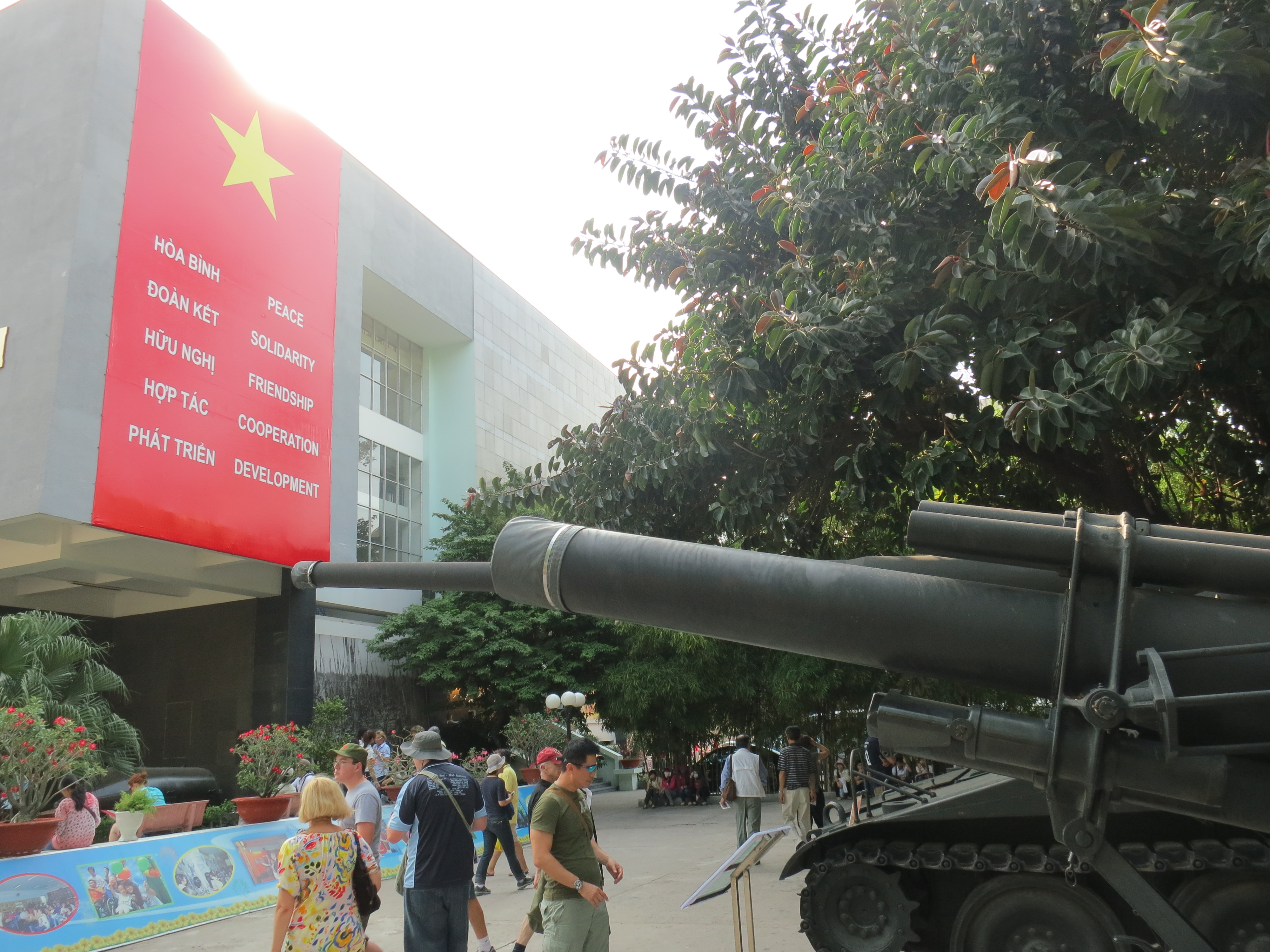
Outside the museum, captured American tanks, heavy artillery, and a bomber plane were on display in the sunshine. A group of children deformed by Agent Orange played musical instruments for a growing crowd of Vietnamese tourists. I stuck a flower in the gun of a tank, smiled and flashed a peace sign, consciously re-creating several historical photos of hope reaching out into violence. Behind me, the band struck up a folk song, and the gathered Vietnamese began to sing.
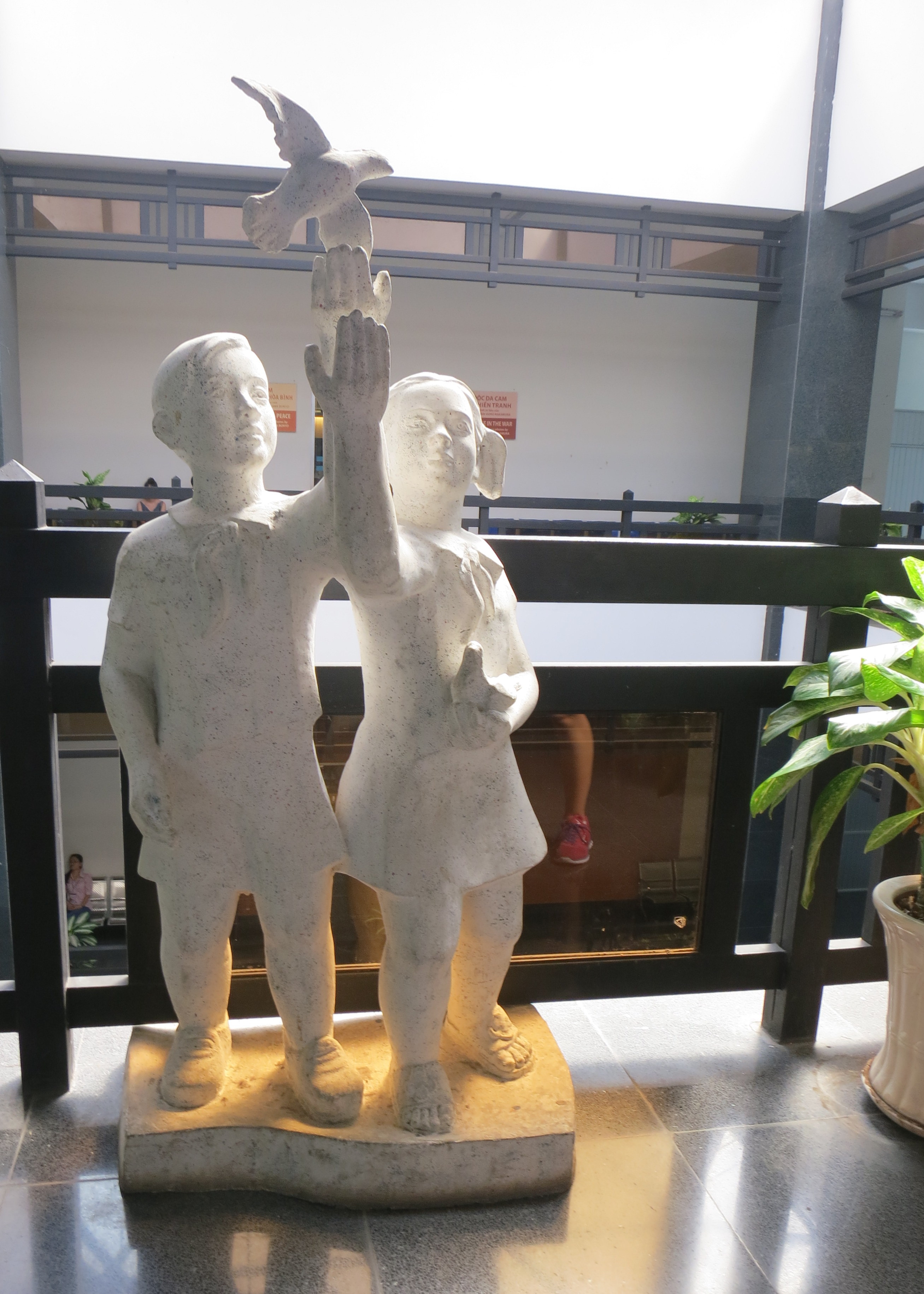
Outside the Peace Room
Outside the Peace Room

Going Underground at the Cu Chi Tunnels

I was nervous about visiting Vietnam, nervous because of how excited I was to see the places that stood out in my memory from my teenage years (when I was mildly obsessed with what we call the Vietnam War), and nervous for whether that excitement made me an insensitive visitor.

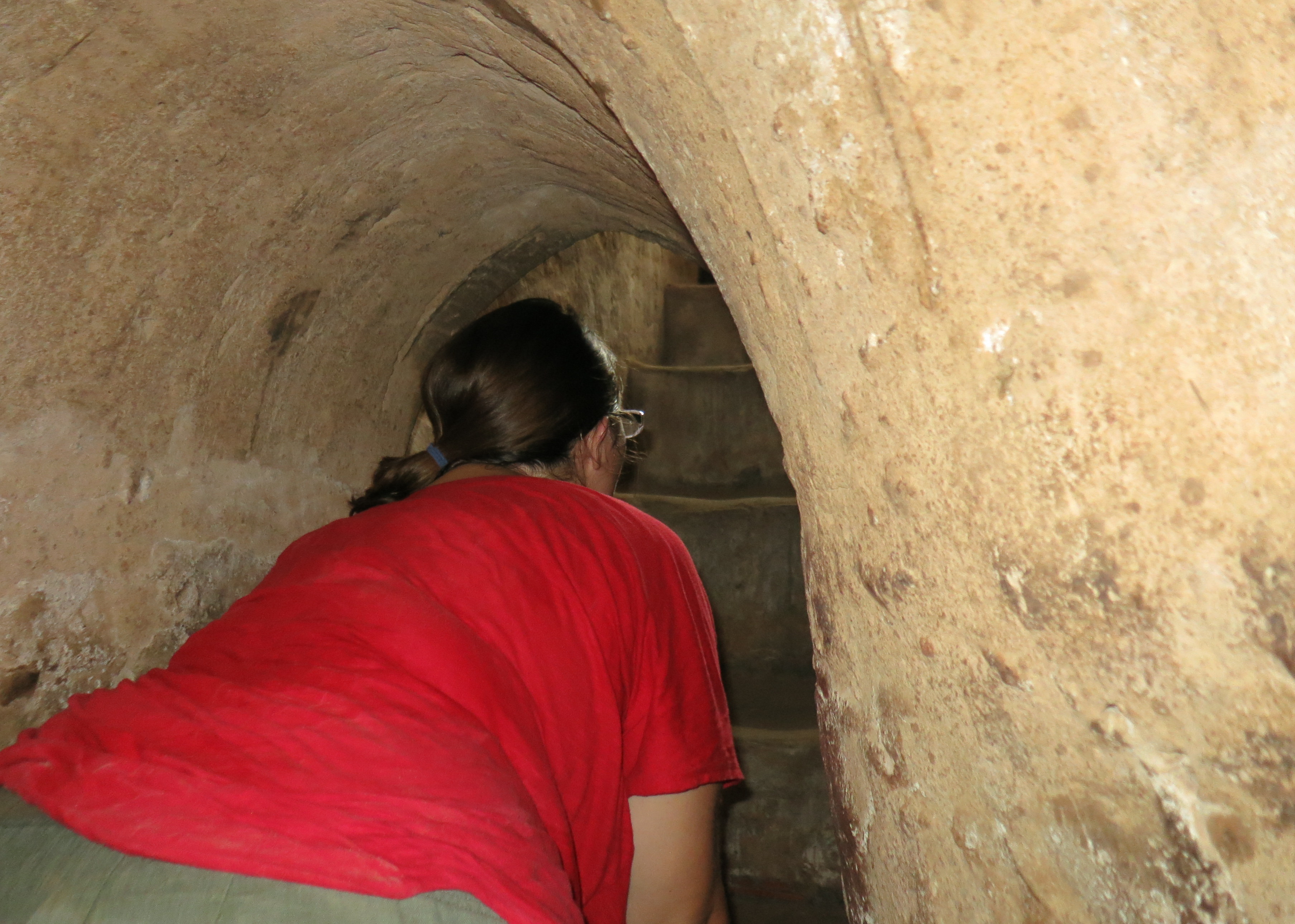
The enlarged tunnels didn't feel large at all

The enlarged tunnels didn’t feel large at all

Turns out that asking those kinds of questions is kind of like asking, “am I being a good parent?”–the mere fact of asking means you’re on the right track. On my group tour of the Cu Chi Tunnels just outside Saigon, I saw people clamber on captured American war tanks, shooting finger guns and grinning. I saw people line up at the shooting range at one end of the park, paying by the bullet to shoot Uzis and M-21s. I saw a ten-year-old walking around with his family, totally oblivious in an American flag t-shirt.

Ahh, tourists

Ahh, tourists

The tunnels are part of an extensive network the Viet Cong built throughout the Saigon area during the war with the United States. They even managed to get under the American base, which rankled the US Army to no end. The Viet Cong lived in those tunnels; women cooked in them, men ran around in them on missions, children had lessons in there. The tunnels were tiny, perfectly sized for the Vietnamese, and far too small for the “tunnel rat” soldiers the Americans sent in to try to dismantle them. They never managed it, and the tunnels were a large part of the Viet Cong’s success in the war.

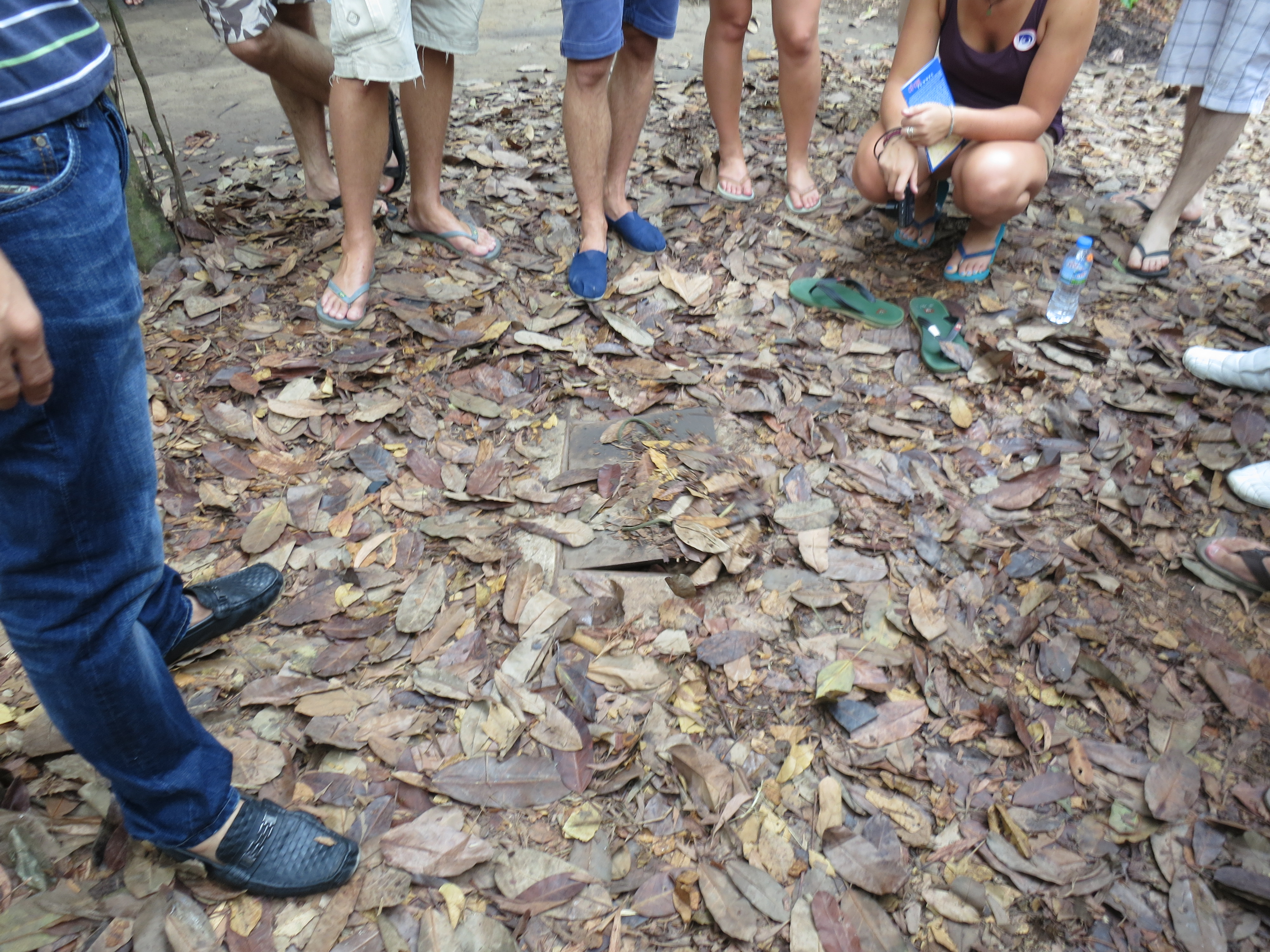
A nearly invisible tunnel entrance

A nearly invisible tunnel entrance

The tiny entrance to the tunnel

The tiny entrance to the tunnel

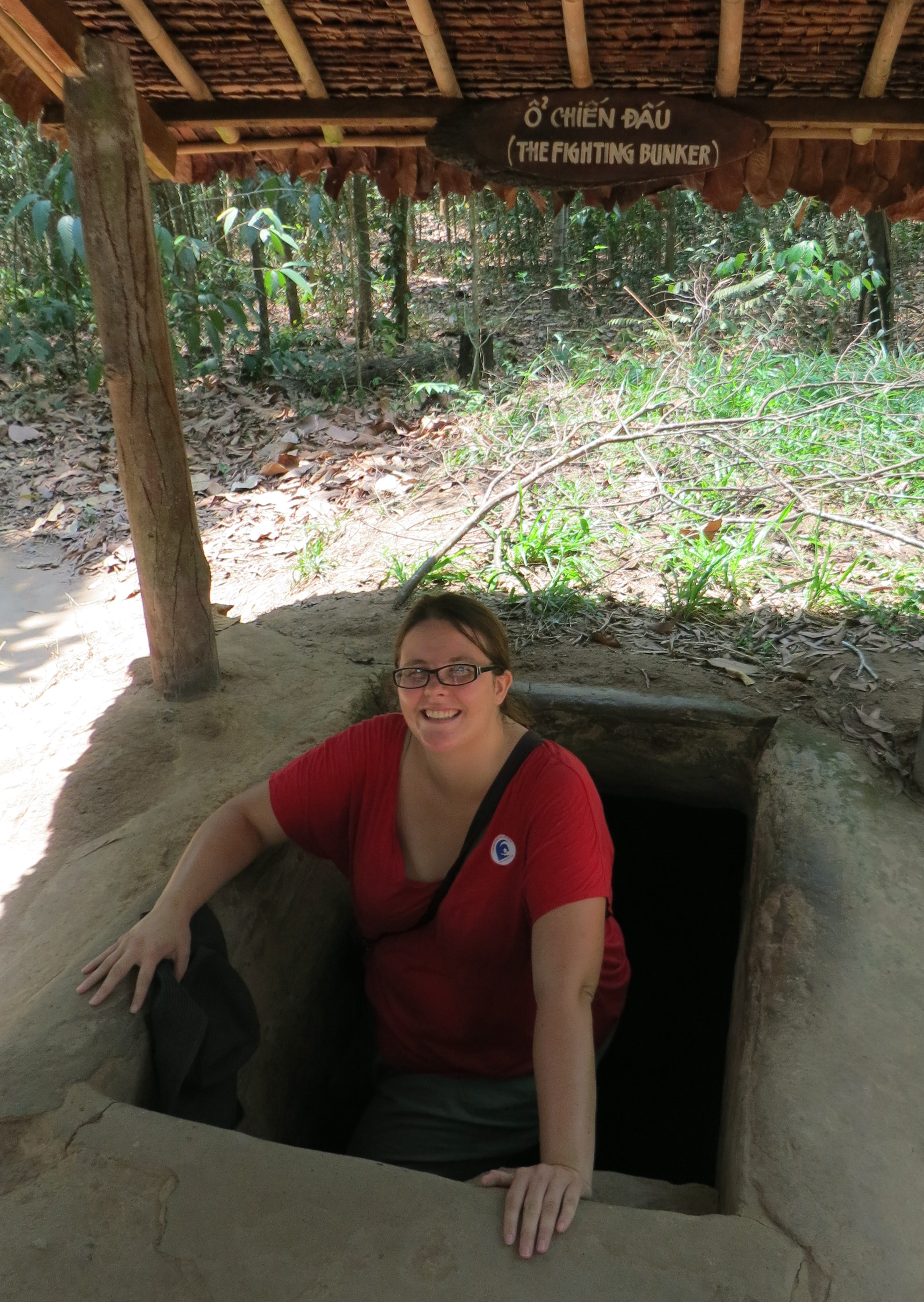
We saw the tiny entrance holes to the tunnels, which were so small that the soldiers had to go in feet first, holding the cover over their heads because the entrances were too narrow to fit their shoulders. We saw the small mounds that hid the holes the kitchen smoke escaped from; the mounds were many meters from the kitchens, so even if the Americans bombed where they saw smoke, they wouldn’t hit the actual kitchens.

An eerie kind of ambiance at the Cu Chi Tunnels

An eerie kind of ambiance at the Cu Chi Tunnels

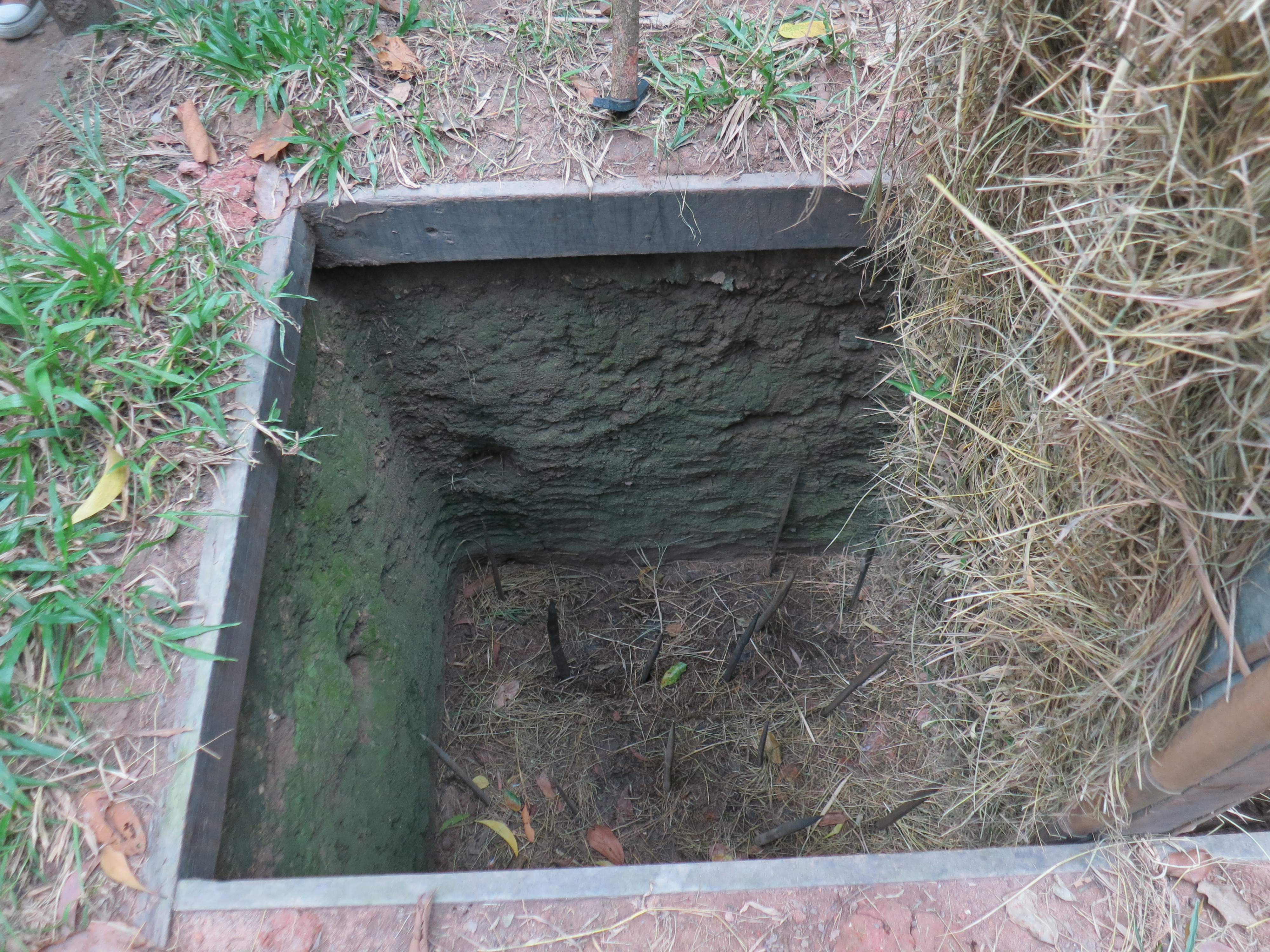
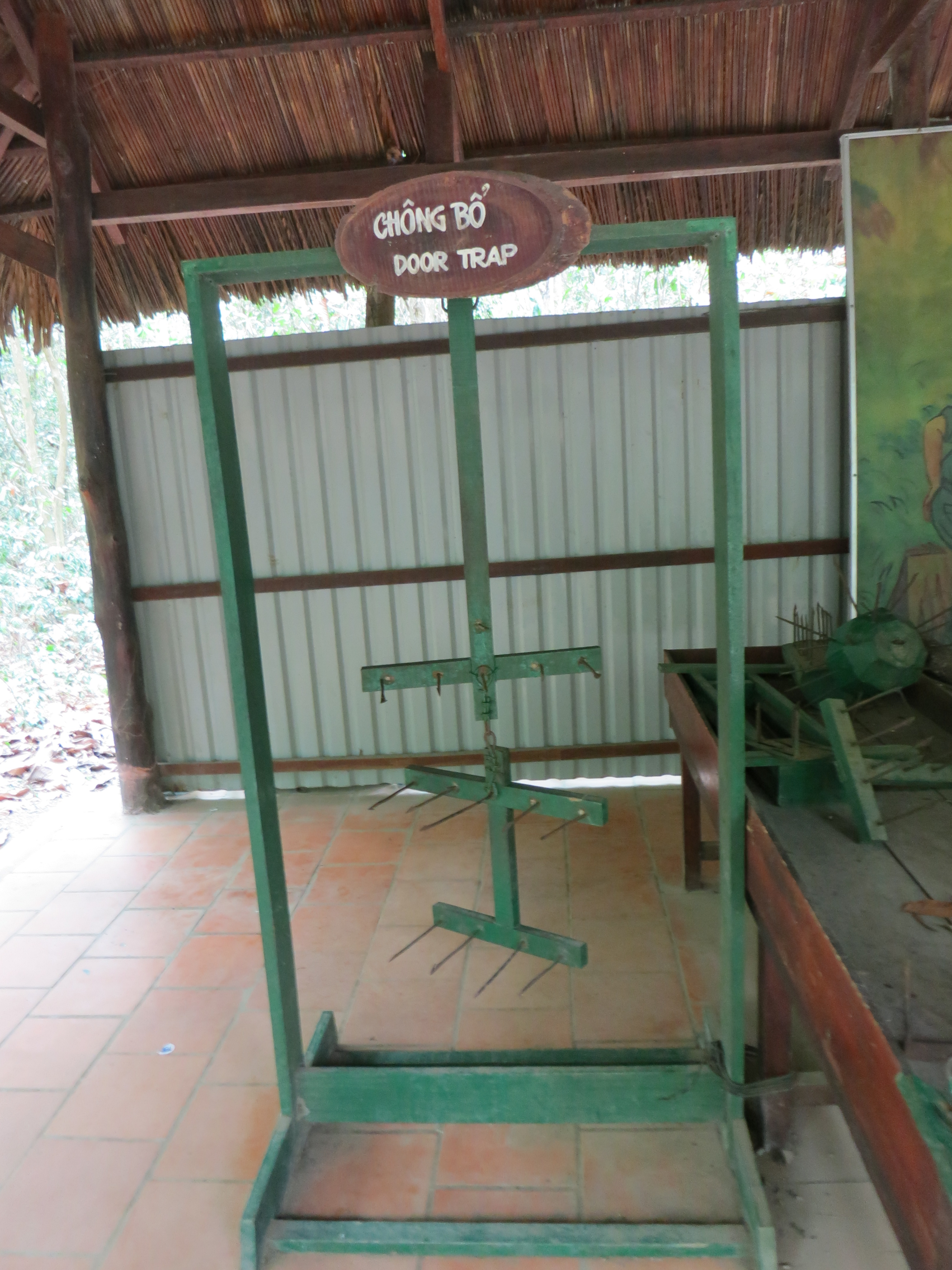
The Viet Cong set up many traps in the area–tiger traps armed with sharpened bamboo sticks, door traps studded with iron spikes, swinging traps to take a man’s leg off. At the park today, they have a row of the traps set up, and park employees walk solemnly down the row, poking at each trap with a long pole to set it off. We heard the bang! bang! from the shooting range nearly the whole time we were on the tour, which was disconcerting but I suppose actually gave some sense of realism for what it was like.

A tiger trap

A tiger trap

Used on doors in the area: US troops would kick in the door, and this would swing out at them, stabbing them with spikes

Used on doors in the area: US troops would kick in the door, and this would swing out at them, stabbing them with spikes

The original tunnels were too small for Westerners, so they’ve built enlarged tunnels for visitors, but our guide warned us that even these are too small for some. I could go down, he told me, but come out at the first exit; the tunnel gets progressively smaller and I’d be stuck if I tried to go to the third exit. With that cheery news in mind, I descended. I’m mildly claustrophobic, so I considered not going down at all, but I wanted to see what it was like, even for a little.

I'm smiling because I haven't gone underground yet

I’m smiling because I haven’t gone underground yet

The tunnels keep going down

The tunnels keep going down

What it was like was scary. I started crouched down and walking, but that was too constricting, so I ended up crawling. The walls were tight and there was a little light at either end, and I could hardly imagine it half its size, immersed in total darkness. Not to mention the vermin and insects that lived down there with the soldiers and families. I still shudder thinking about being down there.

A lot of weapons on display at the end of the tour

A lot of weapons on display at the end of the tour

At the end of the tour of the park, there was a video, more like a work of art in the field of propaganda actually, on the tunnels and the Vietnamese who dug them, cooked in them, slept in them, ran dangerous missions in them, and made them their home for as long as it took until it was safe to come aboveground again.

Down in the Mekong Delta

The Mekong River is long and wide, starting in Tibet and flowing out to the South China Sea. I traveled on it by boat in Laos, which is about the midway point, and again in Vietnam, in the massive Mekong Delta where the river meets the ocean. The Delta is a huge area, a totally different landscape from farther north; it’s flat and steeped in water. I took an overnight trip to the Delta from Ho Chi Minh City, with a tour group of about forty people.

The flatlands of the delta

The flatlands of the delta

The bus ride took several hours, out of the city and into the watery flatlands, and our guide, Mr. Ky, spoke to us for the first half hour, telling us about the foods grown in the region. Our first stop was in the canals off the river. We listened to a few songs performed by musicians who must do this for at least ten different tour groups a day, so it’s not surprising that they sounded a little tired. We ate a few fruits and then followed Mr. Ky down the concrete paths between canals to a little spit of land used as a dock. While we waited for our boat, Mr. Ky told us how the rivers and canals flood up to two meters every year, which is essential for the rice the delta produces–90% of the country’s rice export.

The canals of the Mekong Delta

The canals of the Mekong Delta

Family gravesites in the canals

Family gravesites in the canals

Then came my favorite part of the day; we climbed into tiny boats in groups of four, and drifted down the estuary. The boats were piloted by men and women standing up in the back, using long poles to propel us gently along. Unlike everywhere else I’d go in Vietnam, it was almost silent here. I could hear some traffic in the distance, but mostly it was quiet and peaceful, floating along the brown river, surrounded by bright green foliage and the occasional chirp of a hidden bird.

On a peaceful boat ride

On a peaceful boat ride

At the end of our far too short ride, we watched villagers making coconut candy, which involved putting it through a grinding machine, then stirring it into a thick paste over a wood-burning fire, and finally cooling, stretching, and cutting it on long tables. It was a lot like the process I’ve seen at fairs, to make caramel.

Cooking up coconut candy

Cooking up coconut candy

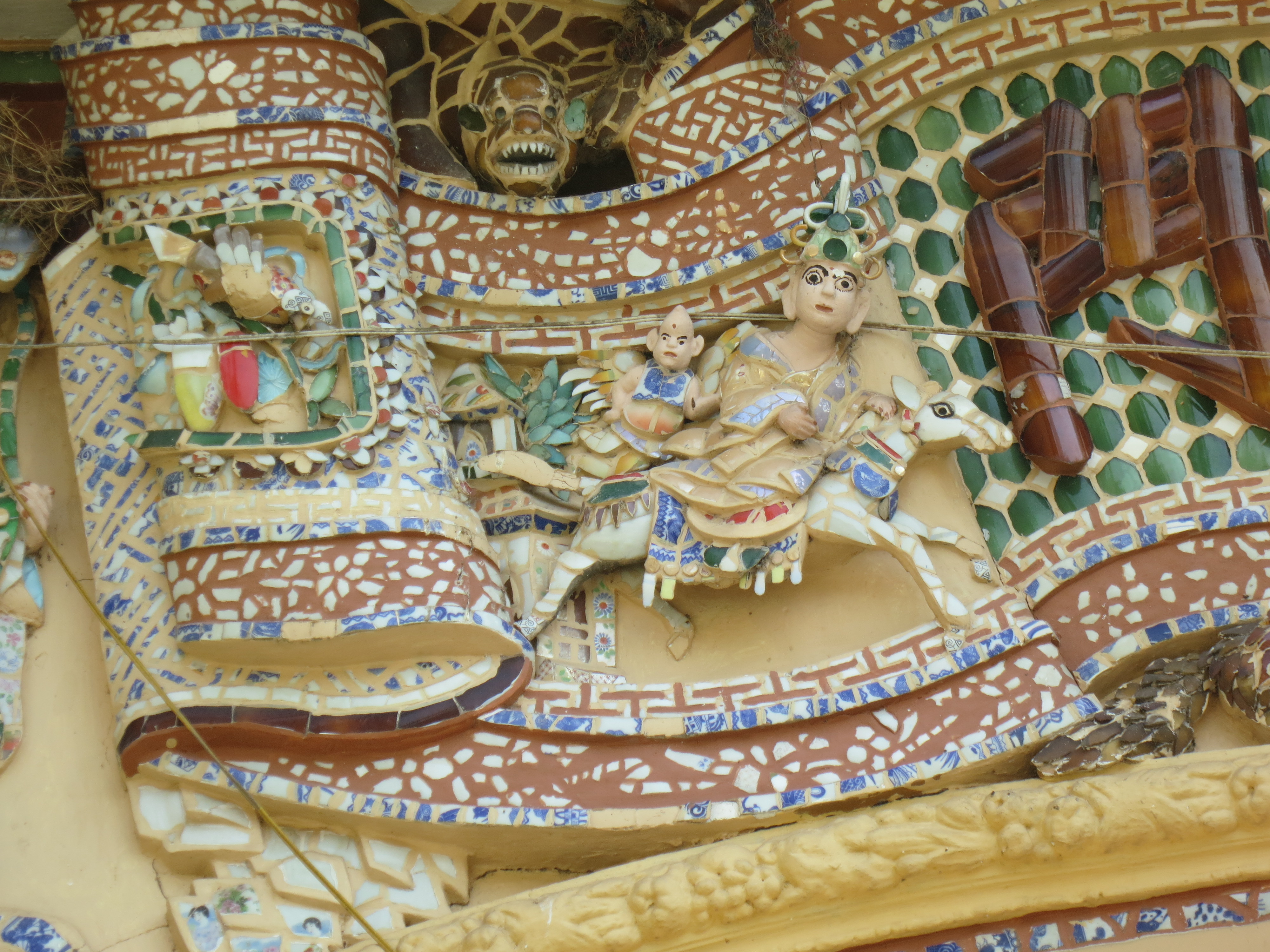
After a boat ride along the Mekong, we had some lunch, then stopped off at a temple for a few minutes. Huge buddhas in various states of repose loomed over ornate buildings and blooming bougainvillea. Shards of pottery were made into mosaics on the gateways.

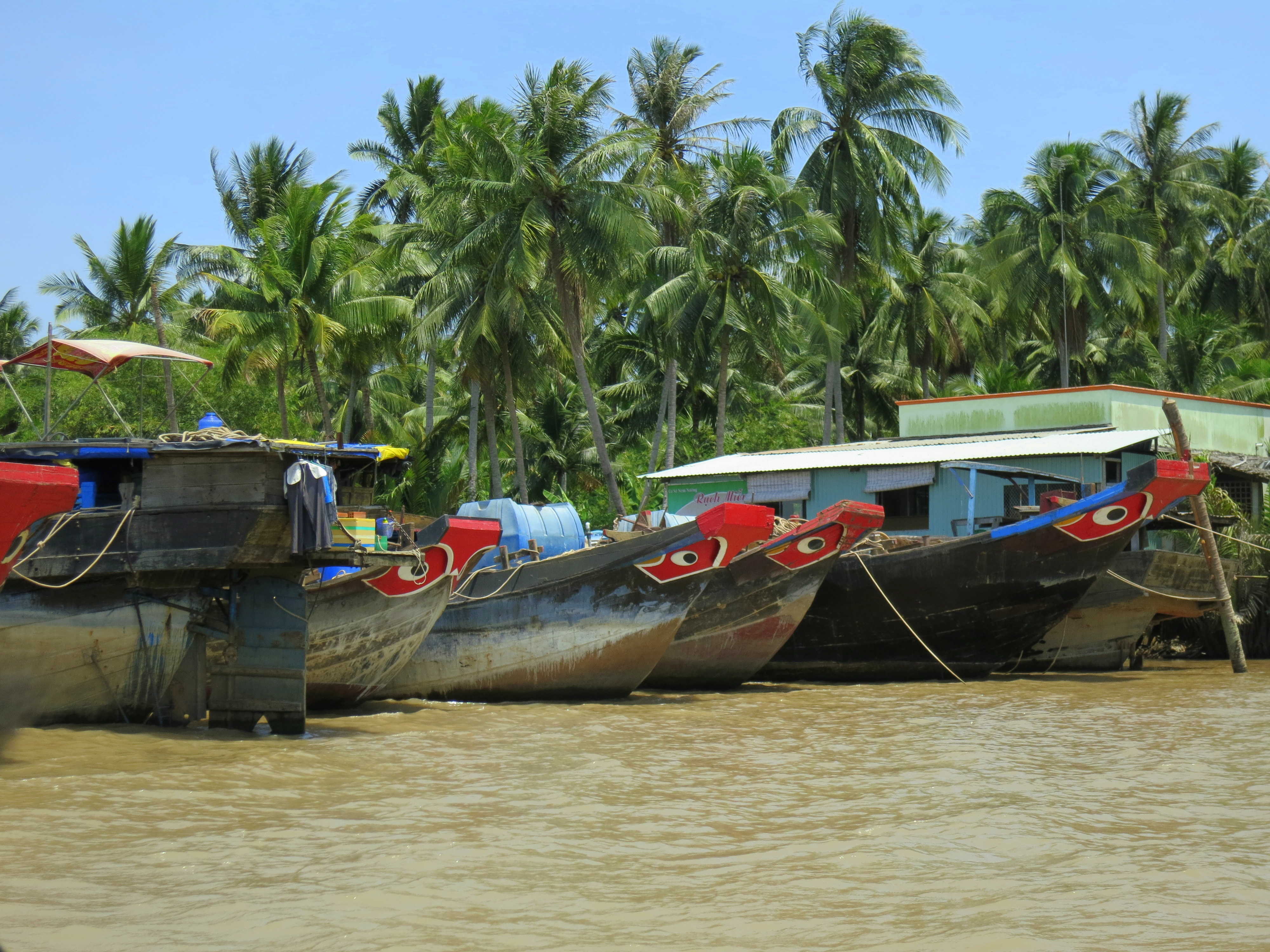
Painted houseboats of the Mighty Mekong

Painted houseboats of the Mighty Mekong

Reclining buddha

Reclining buddha

The mosaics were small but lovely

The mosaics were small but lovely

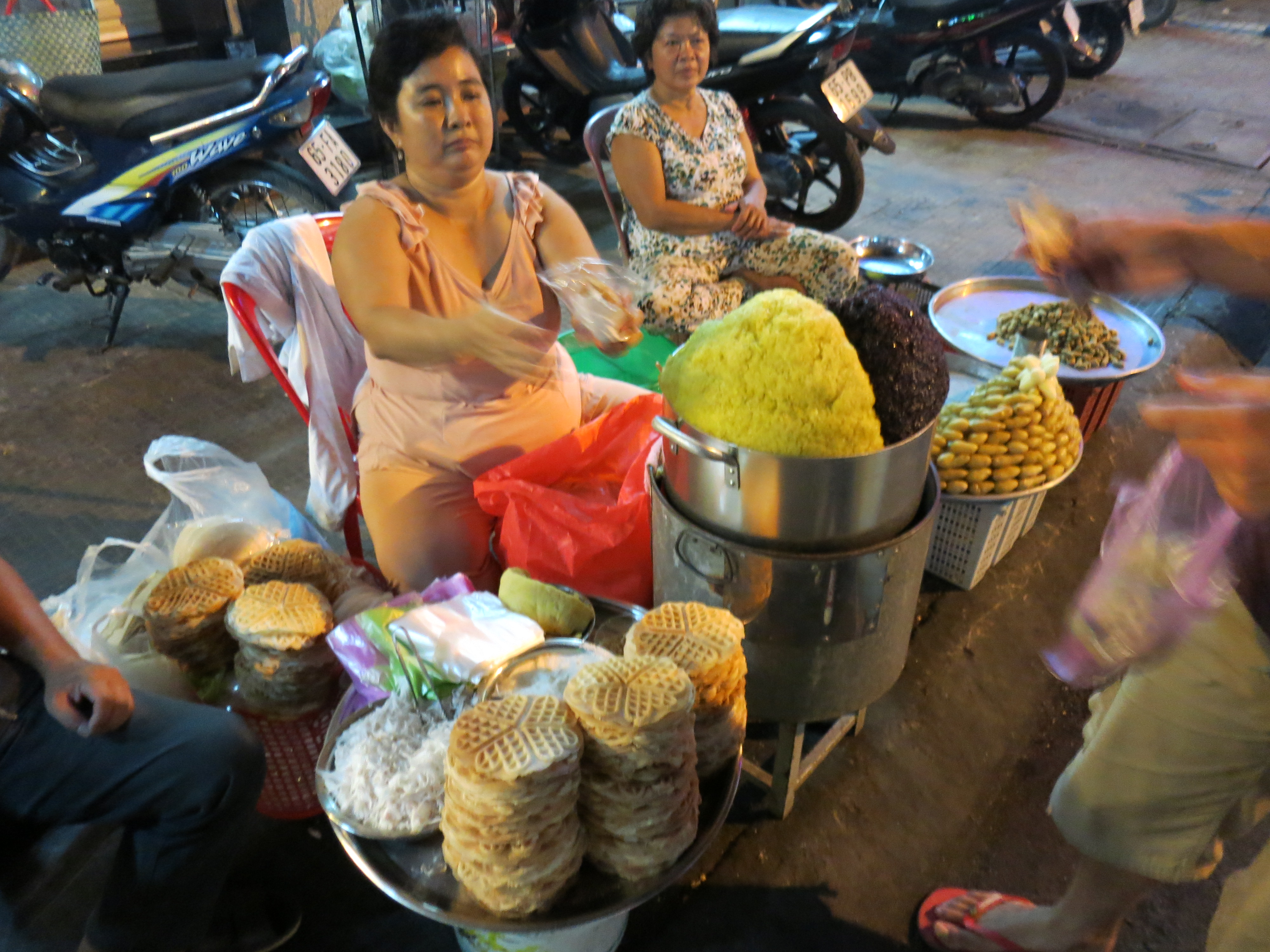
That night, I had dinner with a couple on the tour. Chrissy’s from Germany and Nicolas is from France. They were doing almost my exact itinerary, in reverse, so we shared a lot of tips with each other on what to do and where to go. We wandered around the food market, checking out the many different kinds of seafood on display, and purchasing palm juice for our walk. We had some pho and an elaborate, delicious dessert assembled by a woman who laughed when we came back for seconds because we liked it so much.

Showing off some fruit we bought together--me, Chrissy, and Nicolas

Showing off some fruit we bought together–me, Chrissy, and Nicolas

They look so cool

They look so cool

Anyone know the name of this dessert? It involved a waffle, bean paste, and several other tasty ingredients.

Anyone know the name of this dessert? It involved a waffle, bean paste, and several other tasty ingredients.

The next morning, we went to the floating markets of Cai Rang. There are other floating markets in the delta, and I think those other ones are what most of us were expecting to see. We thought we’d see lots of small boats, propelled by those same poles used in the estuary the day before, filled with people selling fruits and vegetables to one another in the pre-dawn light.

Housing along the river

Housing along the river

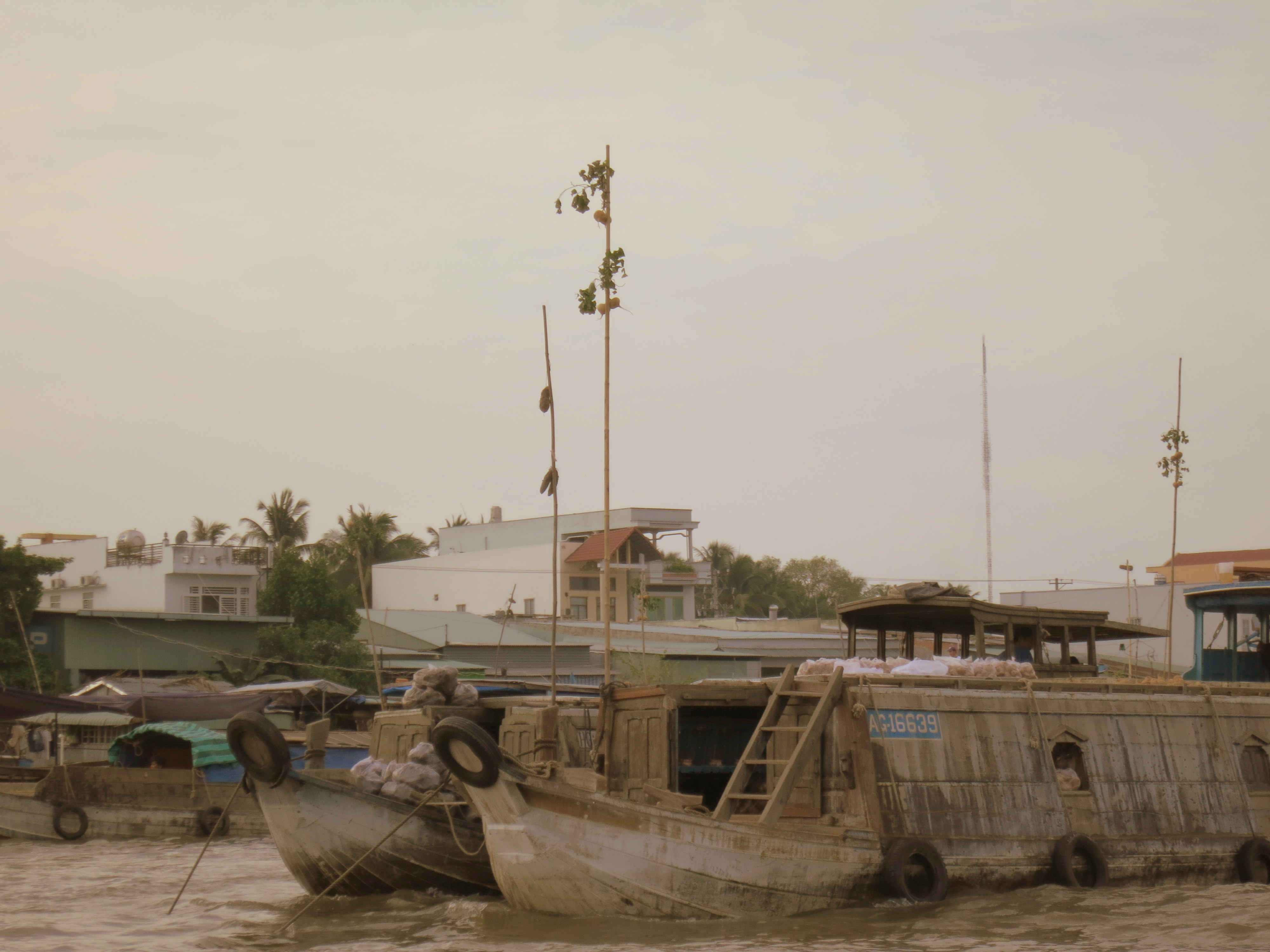
Fly your fruit flag

Fly your fruit flag

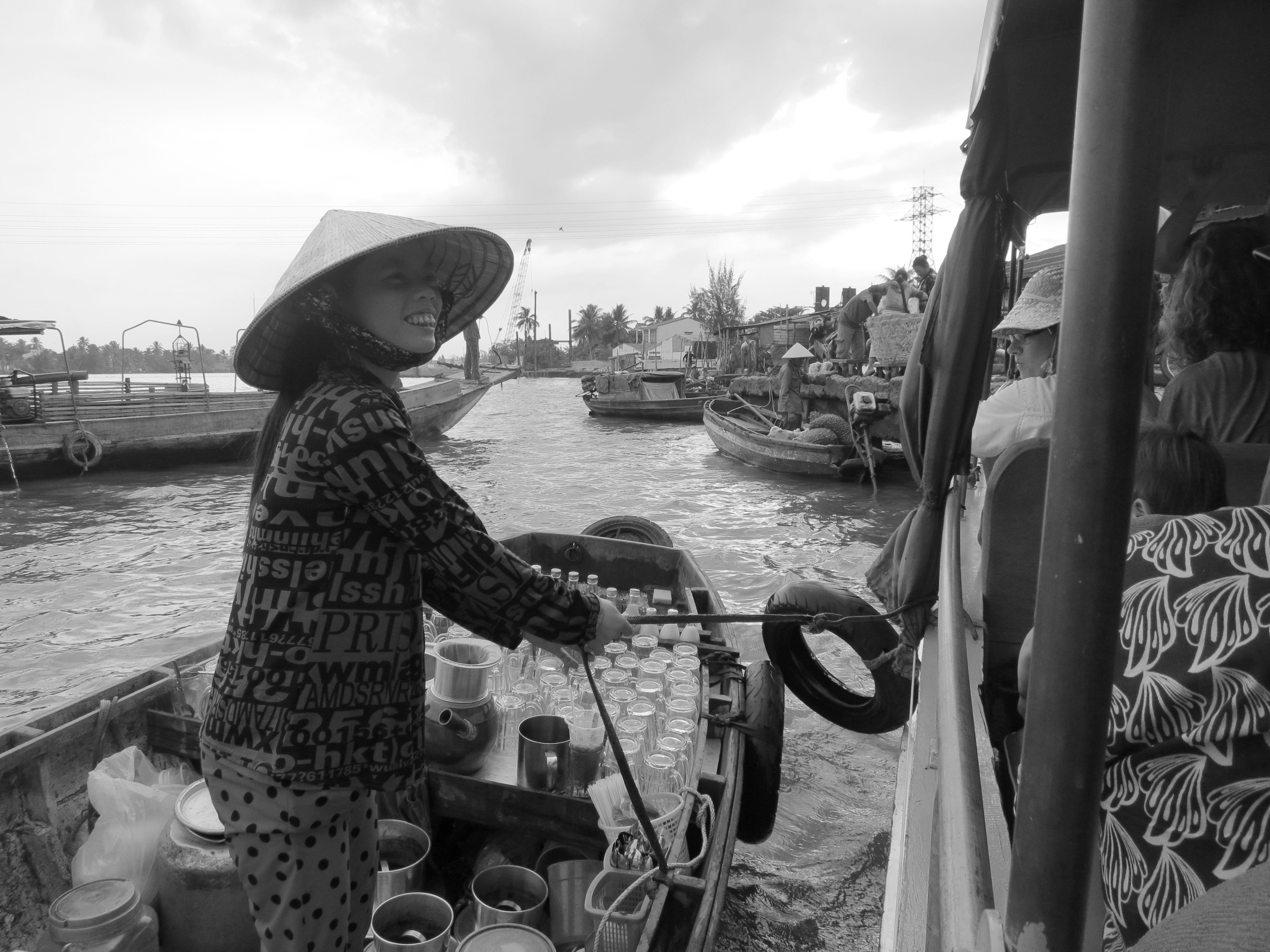
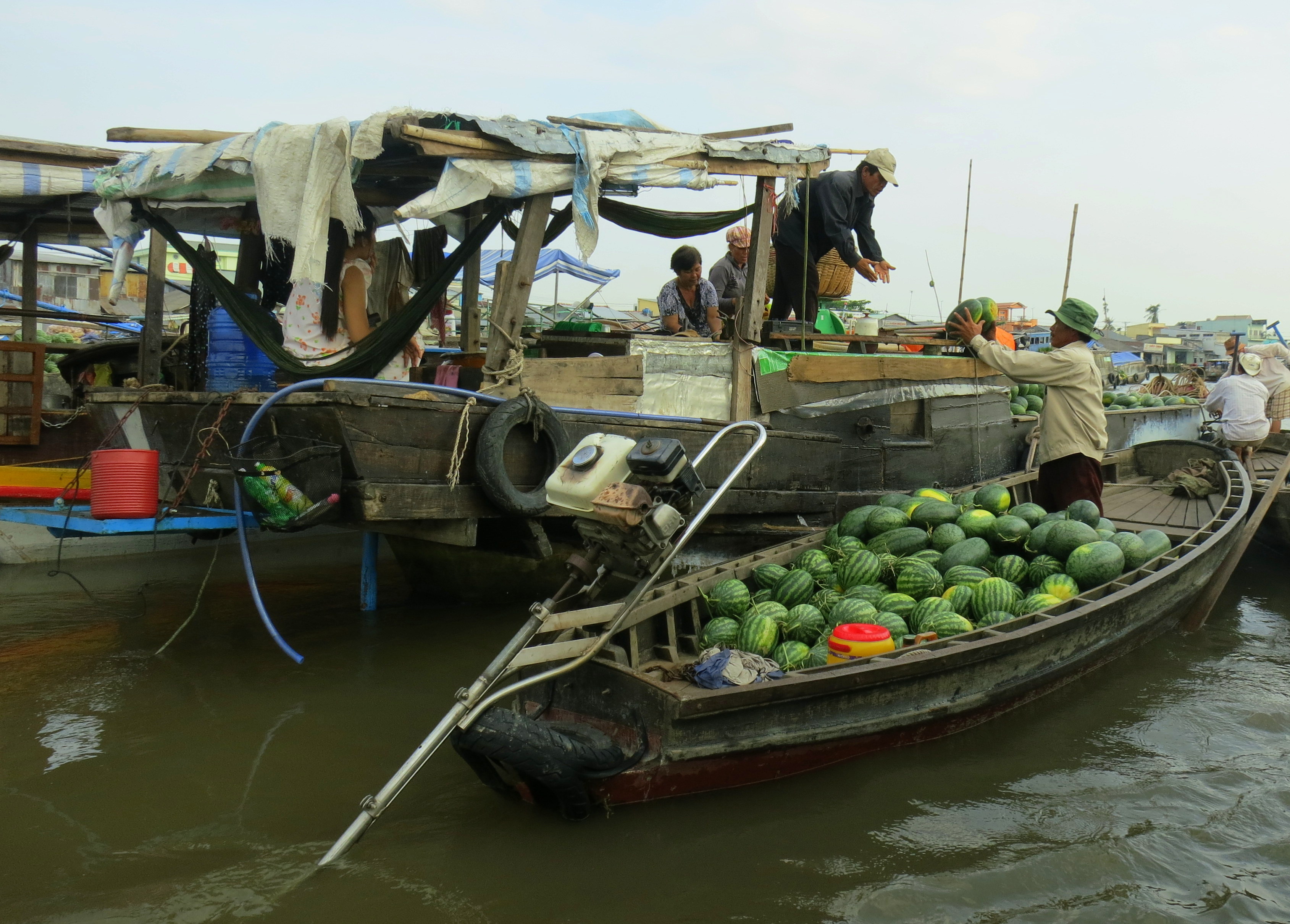
Instead, we saw lots of little boats come up alongside much larger motorboats, and exchanged dozens of fruits. The large boats put up huge poles topped with the fruit they had for sale, so that you could tell from a distance which boat to pilot to your small boat to. Many longtail small boats pulled up alongside ours with people hawking lottery tickets, flat pop, and snacks.

Coffee service on the river

Coffee service on the river

Business completed before 6am

Business completed before 6am

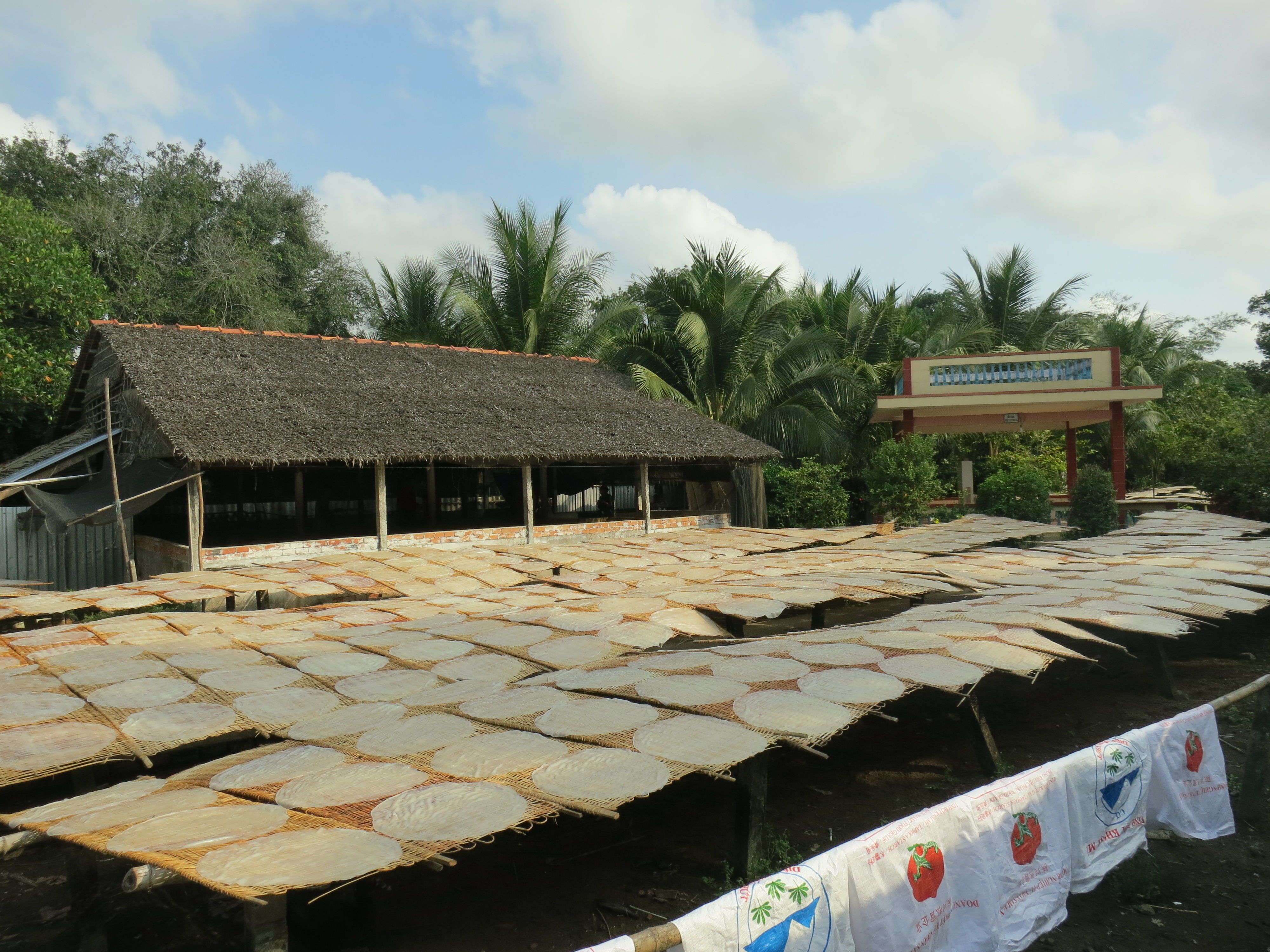
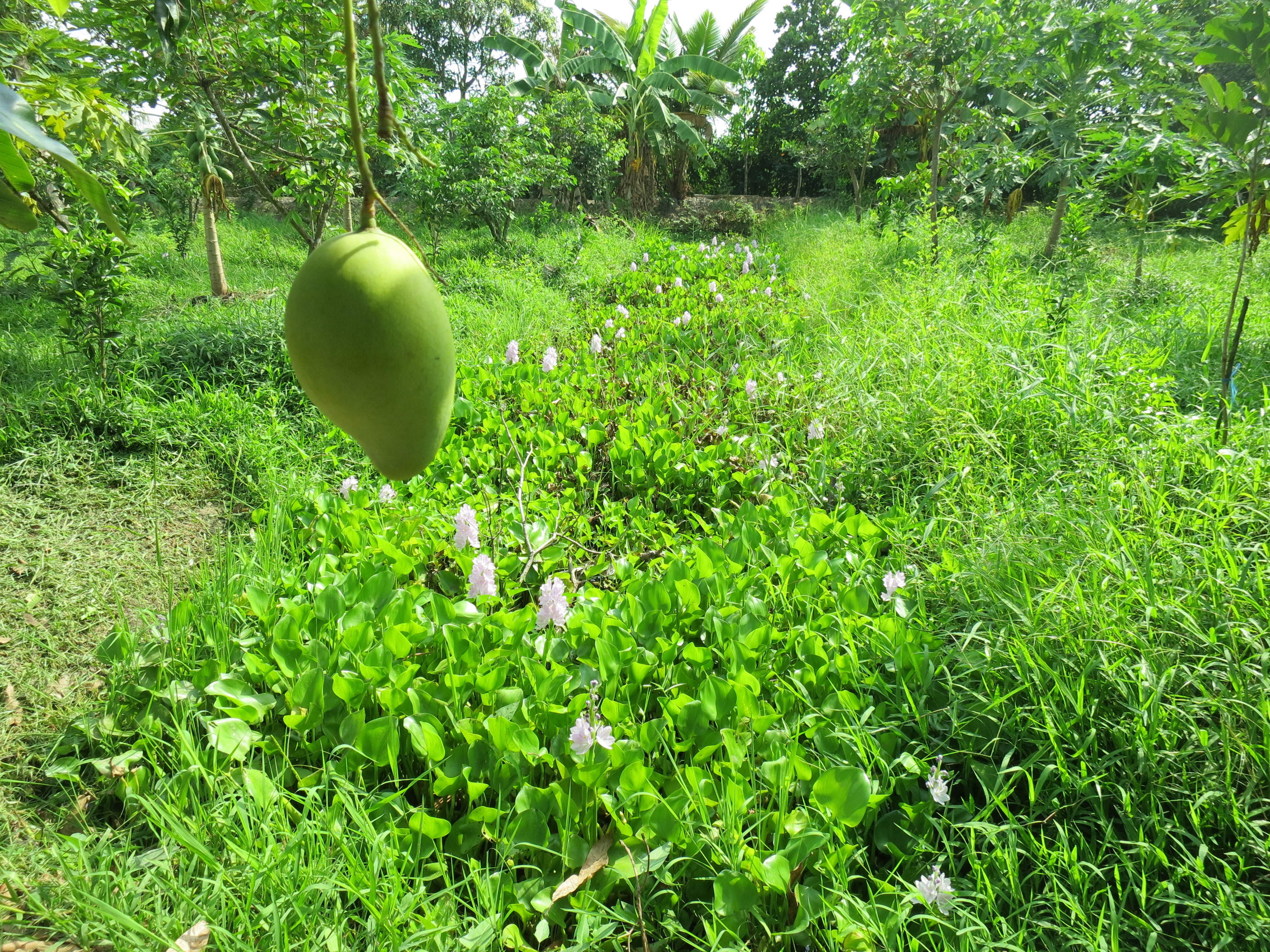
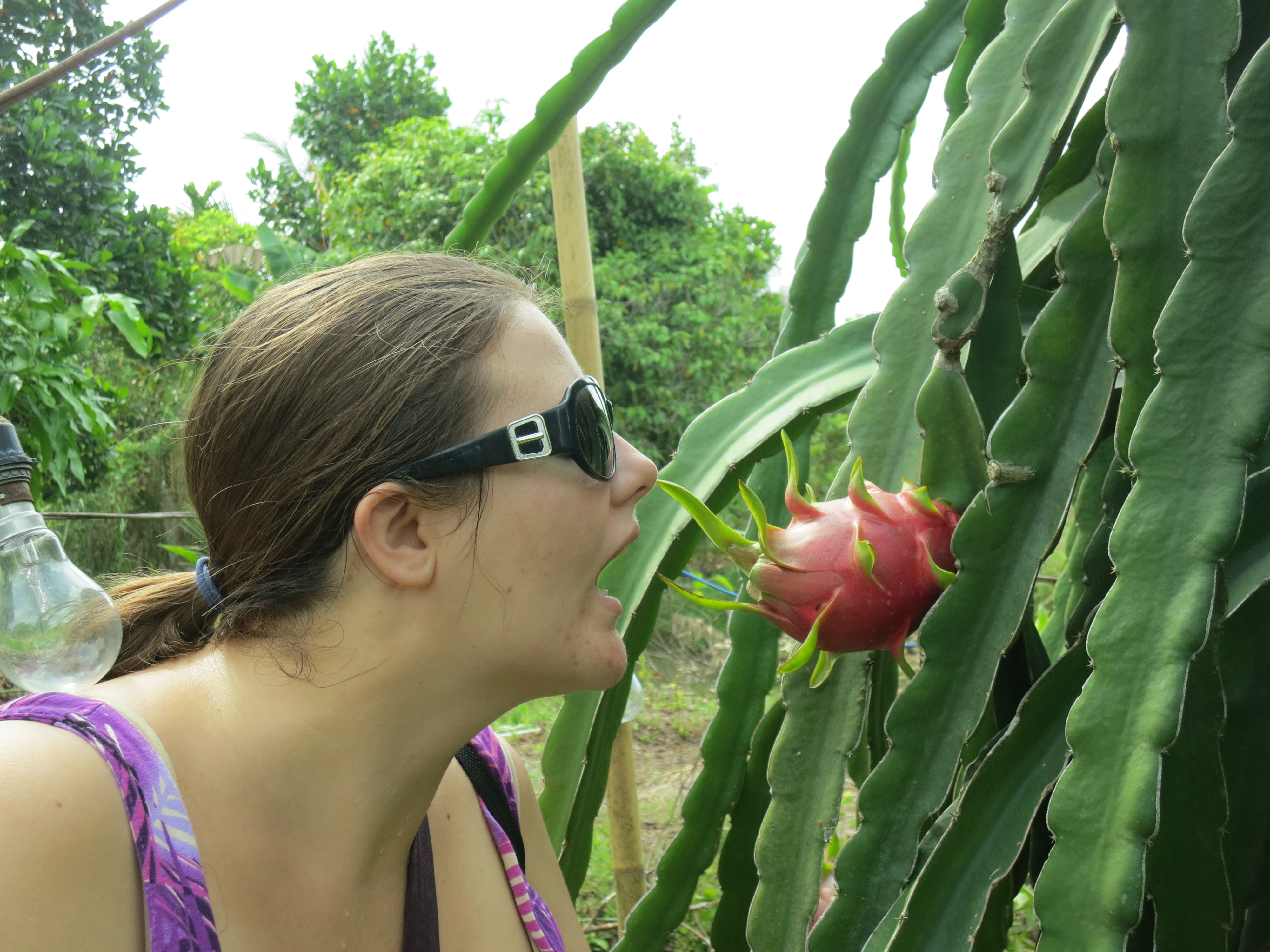
Mr. Ky then took us to a small operation where people made thin, stiff rice paper. Afterward, we went to a fruit farm, where we saw all sorts of delicious things growing: mangosteens, jackfruit, rose apples, pineapples, dragon fruit. Fines for picking the fruit were severe, since this was a working farm, but I won’t say it wasn’t tempting.

Rice paper drying

Rice paper drying

Fruit farm

Fruit farm

I did not eat that fruit right then

I did not eat that fruit right then

The tour was a little too managed and a little too big for my taste, so next time I’ll do more research and probably pay more to hire a guide and take more time meeting people. Still, I’m glad I went.

A Wedding Day Photo

As Em and Lizzie, my sibling and new sister-in-law, said many times this weekend, it’s been a magical few days. I stood up at the wedding, DJ’ed the reception, partied with family and friends, and constantly felt the love of everyone assembled. You can see lots of photos of the big day if you search #mcfinwedding on social media. Here’s one Em took with my phone in the car on the way to the ceremony. Look at the excitement in his eyes!

The best day

The best day

It was an honor and a joy to be at this wedding, and it’ll be days yet before the glow wears off. Apologies for the late post today, but you can see where I might be delayed in the day-to-day at the moment. Back on track tomorrow!

Strolling Along the High Line

Monday after I visited the New York Public Library, I walked along the High Line. It’s an old freight train line that was converted into a walking path in 2004. I was surprised by how much the bustle and noise of the city faded away only a little above the streets. It was busy up there, and it was quite narrow in places so it was pretty crowded, but it was still a quieter world.

View from the High Line

View from the High Line

Plants in the train tracks

Plants in the train tracks

There were plenty of places to sit, and several spots where the path branched off in an outlook over the avenues. Near 14th Street, there were a bunch of food carts set up overlooking the Hudson River, and benches set up like deck chairs where people were sunning themselves in the late afternoon light.

An old black-and-white bursts into color

An old black-and-white bursts into color

Art on a rooftop

Art on a rooftop

I saw lots of different artworks up there, and a guy making counter-cultural miniature paintings on cardboard, and a kid who tried to pet each blade of grass he came across. It was a lovely mile-long walk on a beautiful September day.

On the West Side

On the West Side

nyc nyc

A Good Looking Library in New York

The 5th Avenue branch of the New York Public Library is famous enough to make it on some tourist itineraries, including mine. When I stopped by yesterday, I went to the “cameras allowed” section of the reading room and tried to stay out of people’s photos in the rotunda on the third floor, and I watched in amusement as actual New Yorkers tried to actually use their library amid all this.

The New York Public Library

The New York Public Library

The Reading Room

The Reading Room

Apparently the library still uses pneumatic tubes to shuttle call slips around when people are searching for books in the vast catalog, which I find delightful. They have one of the 48 surviving copies of the original Gutenberg Bible, which showed still-vibrant black ink, a few lovely illuminated letters, and what looked like notes scribbled in the margins.

It was an impressive building, and a fine place to pass an hour.

The Map Room of the New York Public Library

The Map Room of the New York Public Library

Me and the globe

Me and the globe

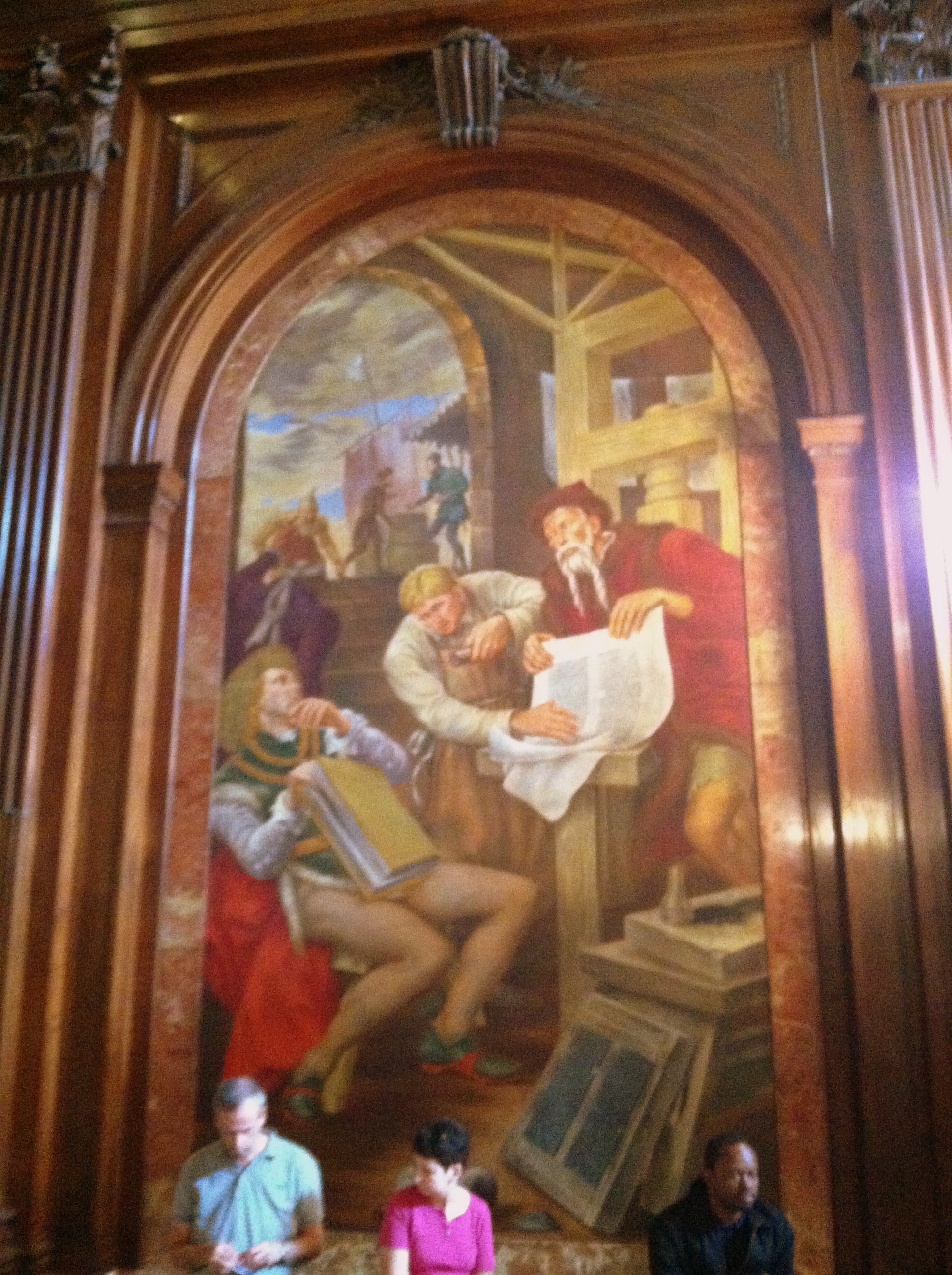
One of four panels showing the history of books in Western civilization--one guy is rocking jorts and the other guy decided pants weren't necessary at all. That is what I took from this.

One of four panels showing the history of books in Western civilization–one guy is rocking jorts and the other guy decided pants weren’t necessary at all. That is what I took from this.