
Joy on Fox Glacier, New Zealand
Happy New Year from New Zealand!
May this year be full of peace and joy.
Joy on Fox Glacier, New Zealand
Happy New Year from New Zealand!
May this year be full of peace and joy.

Tinseled up for Christmas at a thermal waterfall in Taupo, New Zealand
Wishing you happy holidays and a joyous new year from the other side of the world!
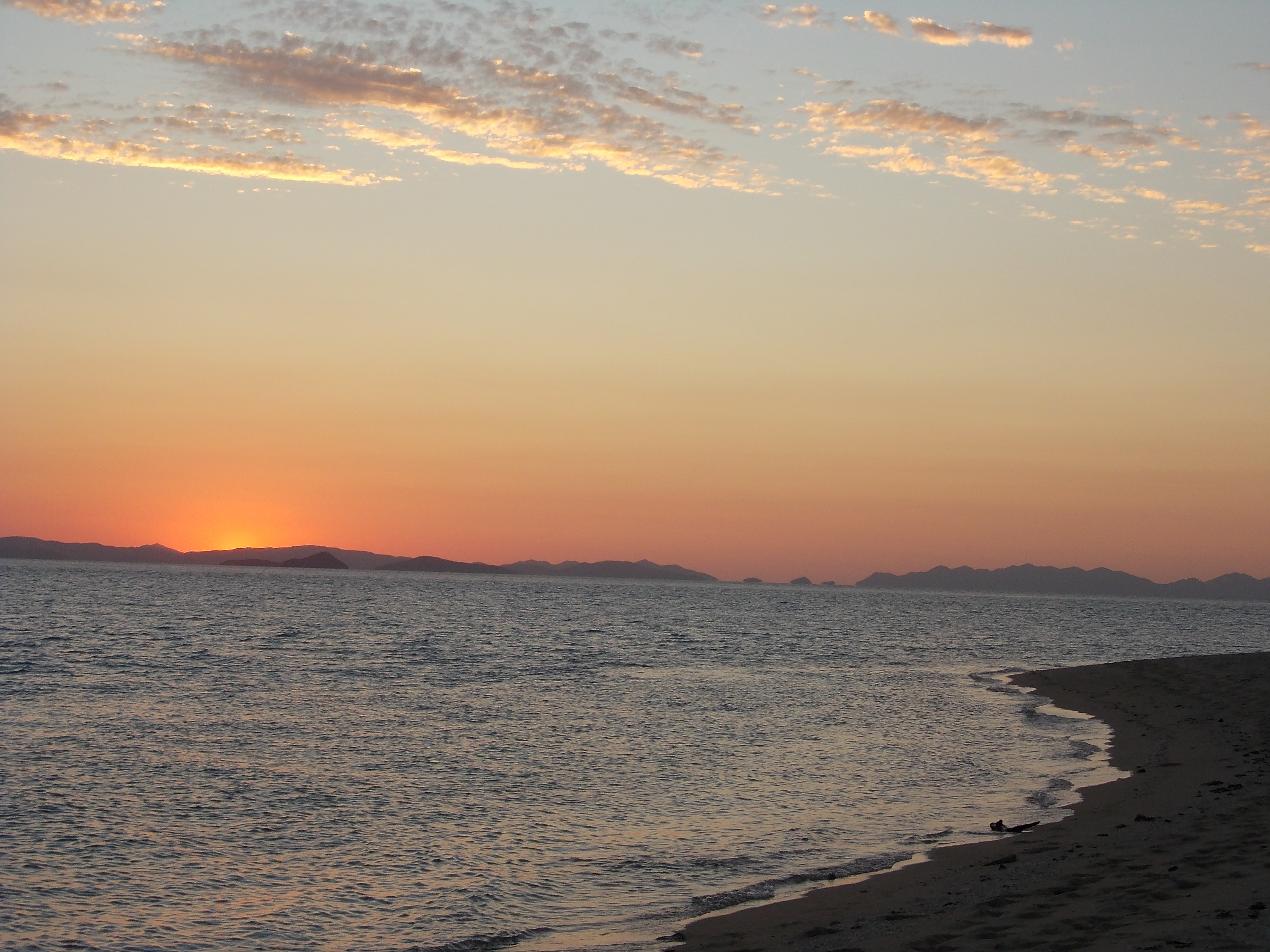
Sunset, Whitsundays, Australia

Auckland, New Zealand; November 28, 2012
I’m sure you can find the full video clip of the “Middle Earth” safety video Air New Zealand plays on its flights, but here are some shots I took while giggling on the plane from Melbourne to Auckland.


Being underwater isn’t just like being in another world–it’s like being in your own world. Sounds are muffled, movements are fluid and languid. Gestures are obscured by bubbles. Shadows are at once more menacing and more enticing. Other people might swim into view, but the space between you and them is heavier than on land, and it takes just a little longer to recognize them. Everything is more beautiful and mysterious underwater, and we can explore and interpret that world however we choose; we literally can’t hear what someone else might say about it, when we’re below the water line. No wonder the mermaid myth has remained popular through the centuries. It’s alluring to imagine ourselves belonging there.
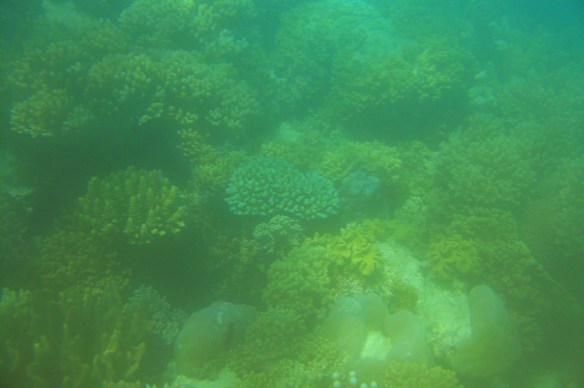
Even being underwater with 70 other tourists didn’t detract from the magic of the morning for me. I took a boat named, hilariously, Passions of Paradise (doesn’t that sound like a C-list celebrity’s perfume line?). I’d felt ill for most of the two-hour boat ride from Cairns to Paradise Reef, but I felt better as soon as we stopped and looked out from the boat deck at the dark patches in the water that indicated coral. It was a little weird, looking around at open ocean with nothing but gently rolling waves out to the horizon, and then clownshoe-ing over to the edge of the boat in my flippers and slipping into the water and seeing just how much life there was under those gently rolling waves.
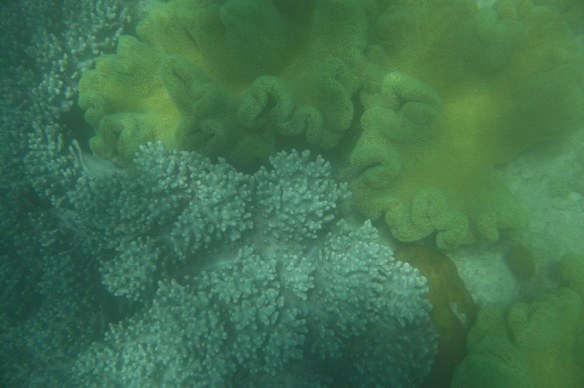
I wish I had been able to take pictures that showed how vibrant the colors were and how graceful the swaying coral was. Unfortunately, the camera I borrowed from Heather chose that morning to inexplicably fog up, and as a result all I have are some dark, dim photos. (I know, my camera luck has been amazing on this trip.) I’ll share a few anyway, but please see these to get a glimpse of what I saw down there.
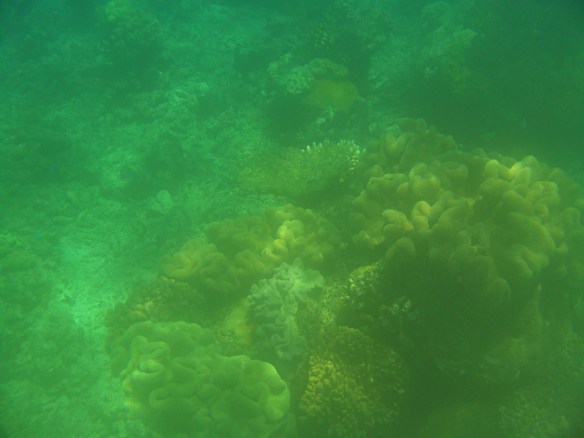
greened-out coral
People spread out as soon as we got in the water, so it was just me, and the coral, and the fish. I slowly waved my flippers up and down, and followed a fish from one patch of coral to another, then whipped my whole body around as a school of fish whirled past, and finally I just floated and watched the coral sway back and forth. There’s a philosophy to be found in the way the coral smoothly followed whichever direction the currents were flowing, but I will just note that this natural movement was beautiful to watch. Something caught in my peripheral vision, and I saw that my hand was emulating the coral, calmly swishing one way and then the other.
I saw a large school of fish gliding in the other direction, and I followed them to the edge of the reef. Since I know people will make Finding Nemo comparisons anyway, let me say that this was the part that most reminded me of that movie. When Nemo swims to the edge of the reef and they all peer over into the dark abyss beyond, and they’re all terrified. That’s what this was like. Remember that this is the open ocean, and what’s beyond that reef is thousands of meters of dangers known and unknown, in water that gets so dark it might as well be night. I hung out on the edge for a bit, drawn to that dark, silent place, but then I paddled back to the safety of the reef.
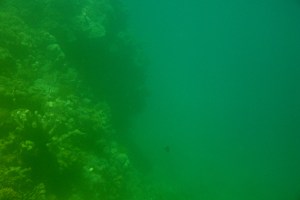
This sort of shows how sudden and steep the drop-off was.
I was one of the last ones out of the water, and then we went to Michaelmas Cay, which is a little strip of land used as a resting area for thousands of migrating birds each year. People chased sea turtles and walked on the beach. I floated on my back and watched the birds in sudden flight. Then I flipped over and watched some huge fish swim figure eights under the boat.

The birds of Michaelmas Cay

Sorry, random fellow snorkeler. I need to keep you in here to show how huge the fish was.
This time, I was the very last one out of the water, and they had to call out three times before I heard them. I had been watching a purple clamshell-shaped coral open and close its “mouth” as tiny yellow fish darted past. The coral and the fish were crystal clear, and everything else was indistinct. I eventually heard the crew’s calls, sounding like the teachers in Charlie Brown cartoons, and I surfaced.

One of the best days of my life
But the other thing about being underwater is that if you stay long enough, and you feel immersed enough in the beauty of it, then you can take a little of it with you when you leave. Now there will always be a part of my mind that can see the bright colors, the calm swaying, and the deep abyss.

Sunset, Sydney, Australia
When I told my mom I planned to go to Alice Springs as a starting point for my trip to Uluru, she recommended I read A Town Like Alice by Nevil Shute. It’s historical fiction set during and just after World War II, and the second half tells the story of a man and woman slowly building a life together in the harsh eastern Outback of Australia, and of their attempts to make the town as sweet a spot as Alice Springs.
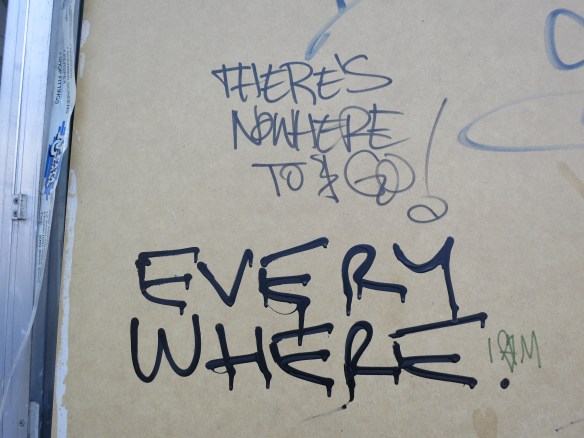
Graffiti in Alice Springs
In the book, Alice is an oasis of civilization and comfort in a desert that went on for days. Much was made of the ice cream parlor and hair salon and swimming pool–modern marvels in a land of stockmen and cattle. Nowadays, I don’t think anyone’s setting out to build a town like Alice. It’s seen more as a pit stop on the north-south highway than as an oasis.
To a person, everyone I met in Sydney who heard I was going up to Alice made a face and said something like, “well, watch yourself” or “that’s not a great place, don’t judge Australia by it.” They were referring to the high crime rate, specifically the often violent muggings of white people by gangs of aboriginal people. You don’t walk around by yourself, or even in a group of less than four, after dark.
I’m not being glib when I say that I’m from Chicago, the most segregated city in the States, and I am all too familiar with the idea that there are entire neighborhoods you don’t go if you’re white, and entire neighborhoods you avoid if you’re black. But that’s in a city that’s spread out over several miles; Alice Springs is a small town with about a five-block square of downtown, and then surrounding residential areas. I didn’t expect to see the same sort of separation and mistrust there.
Of course, it isn’t the same. It’s an atmosphere specific to Australia, and to the history that produced it. The area has a complicated history of alcoholism among aboriginals, land grabs by white people, and resentment between the two groups. My understanding, when I was there, was that this had eased in the last twenty to thirty years. There was a sizable aboriginal community hall in the center of town, which banned liquor within its boundaries and encouraged pride in the accomplishments of the community. The town has a pretty big population of (mostly white) artists who come here from all over the world to create art in the desert, and their presence is differently felt than that of the businessmen and cattle ranchers. Still, all is not tranquility and goodwill here, and I did feel that somewhat as I walked around town.

Sunday morning market
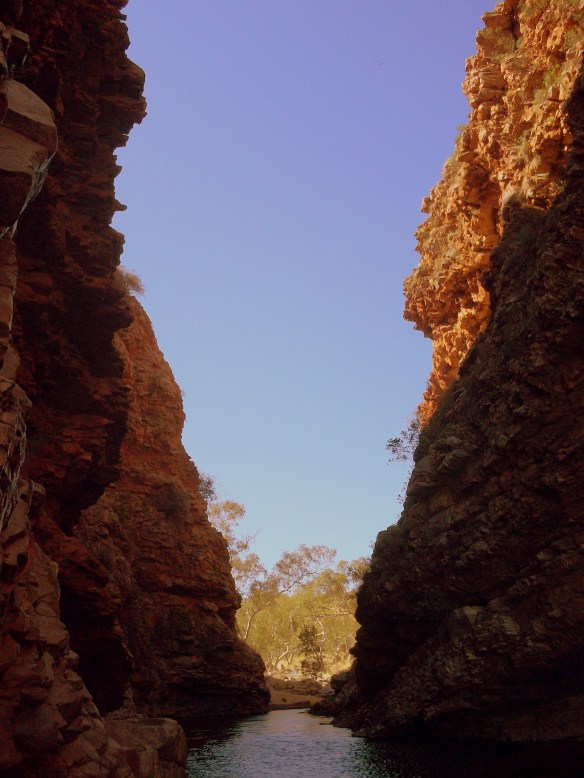
Simpsons Gap in the West Macs
I went to the market on Sunday morning, which was a fun mix of food stalls and crafts for sale. I walked along the dry riverbed for a bit on my way back to my wonderful Couchsurfing host’s home. I went on a short walk in the West MacDonnell Ranges. I had a good time during my short stay in town.
But I never did go out after dark in Alice.
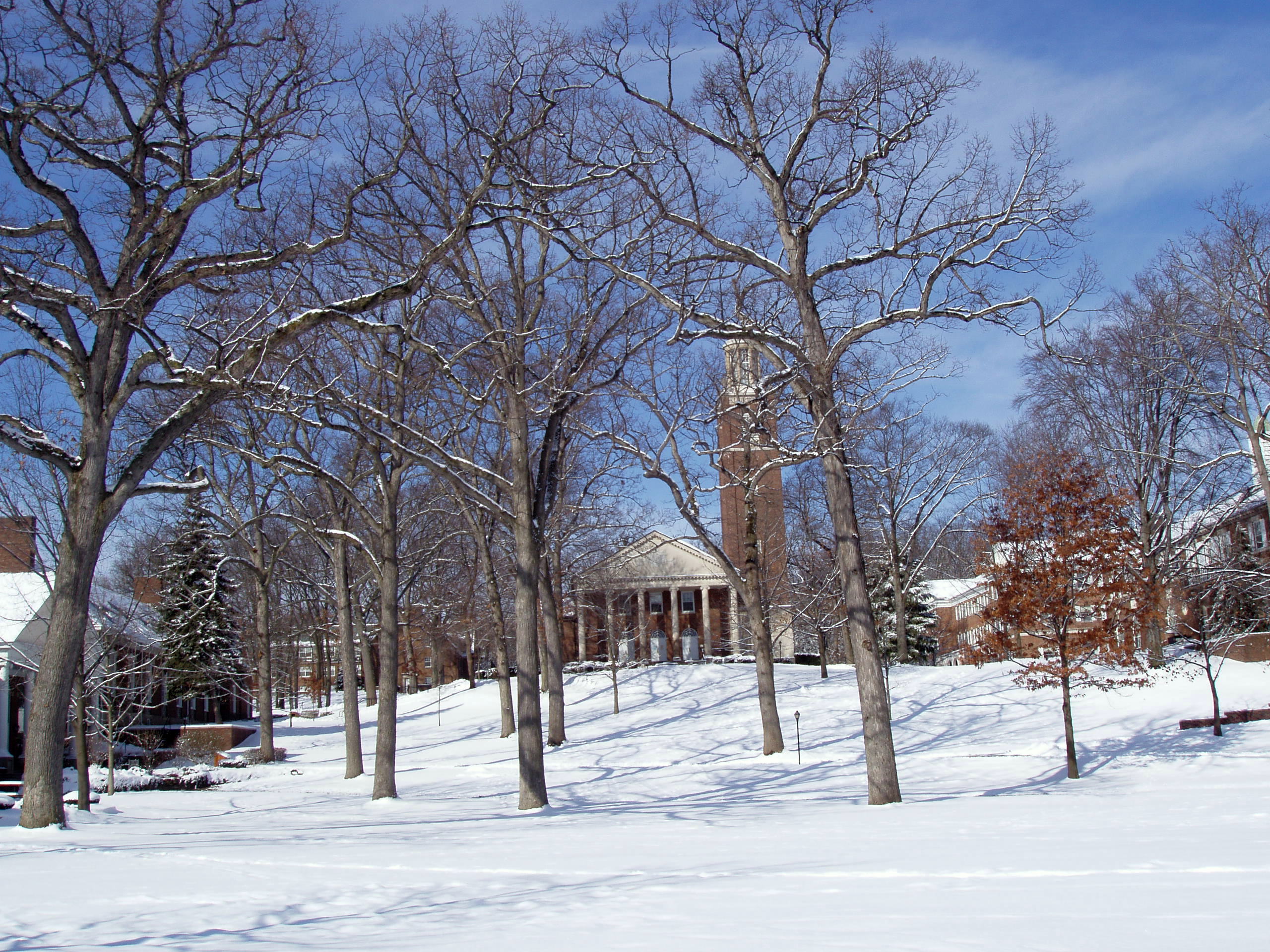
The Quad, Kalamazoo College, Kalamazoo, MI, February 2005
I haven’t actually heard anyone use the phrase “tis the season” here in New Zealand, but that doesn’t mean the country isn’t ready for the Christmas season. Queen Street, the main drag in Auckland, is strung with glittery decorations, shops ring out with pop versions of carols, and one of the department stores has its windows set up with a story of a sheep having adventures with Santa. The first Saturday of the month, the city kicked off the season with a tree lighting and street party, and I went to see what it was like.
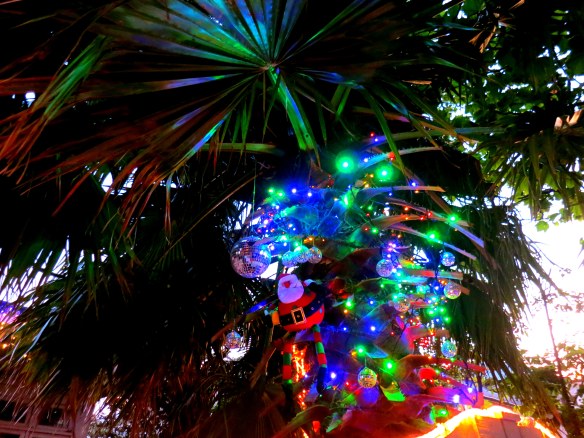
Decked-out palm on Franklin Street in Auckland
Franklin Street is a road in the Freemans Bay neighborhood of Auckland that dresses up for Christmas. In the States, we’re used to most neighborhoods decorating their houses in lights for the month of December, but that’s less common here, so the fact that most of Franklin Street does it is notable. The first weekend of December, they throw themselves a street party, and this year it got more notice in the paper and people from all over the city joined in.
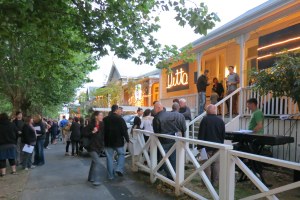
Street party
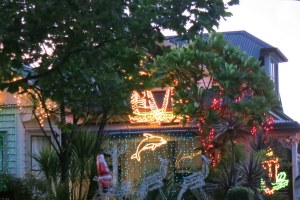
Region-specific decorations
I walked down the street (a giant hill, as most streets in Auckland seem to be), and watched as neighbors mingled on one another’s lawns, drinking glasses of wine and chatting. Families strolled by, the kids oohing and ahhing at the different set-ups. At one point, I stopped to listen to a women’s choir sing a carol, and then joined in for a couple verses of “O Come All Ye Faithful.”
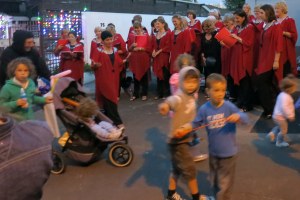
choir + children = Christmas
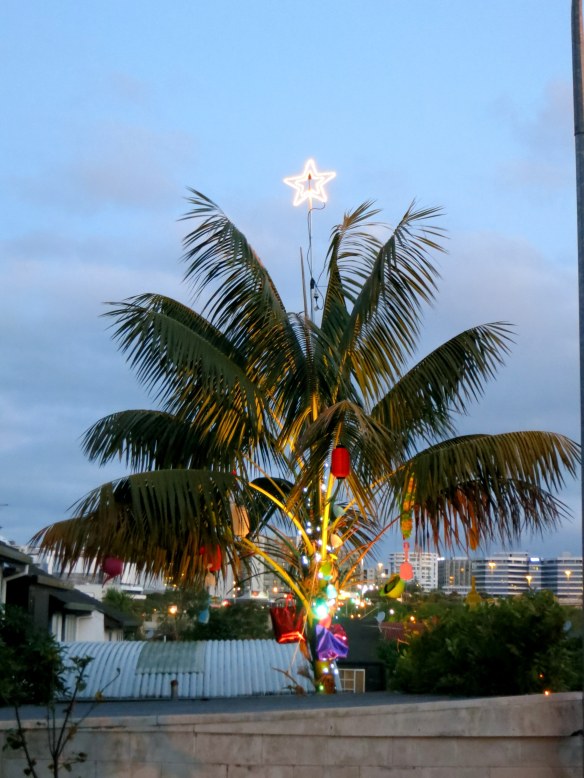
I can’t get over the tropical Christmas thing
By the time I reached Victoria Park, I was in a festive mood. I joined a group of people I’d met at a CouchSurfing event earlier in the week, and we settled in to watch the tree lighting ceremony. When I say “tree,” I don’t mean anything that you’d find in a forest. Strings of lights come together in the form of a giant pine, and the Telecom sponsors put on a little show to turn the lights on. It was strange to be at an event that was so clearly corporate sponsored, but I guess it does separate church and state more than the city-sponsored tree lighting ceremonies in the States.
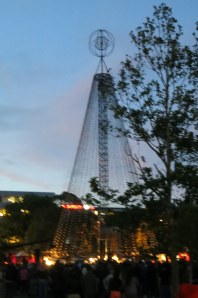
Titanium performed their hit song ‘Come on Home.’ Oh, you don’t know Titanium? They’re only Auckland’s biggest boy band! It was great fun watching the tweens in the crowd go crazy for them, even during their insipid version of “Rockin’ Around the Christmas Tree.” While they performed, little kids ran into the old English-style phone booths stationed around the tree, which were labeled “Santa Line,” and called Santa personally, presumably to relay some very specific instructions.

Direct to the North Pole
Then the emcee stepped up on stage, bizarrely clad entirely in Raiders paraphernalia. He informed the crowd that even though this was the fifth year of the Telecom tree, they still hadn’t figured out how to turn the lights on. Kids yelled out practical suggestions like “hit the button” and “try the lever,” but no, no, those wouldn’t do. We’d have to call Santa on the Santa Line and see if he could help. When the emcee informed him that one of the suggestions to turn the tree on had been “get more kids,” Santa said, “well, that could take some time”—naughty Santa! He then informed us that this particular tree operated only on the laughter of children, and just our luck, he’d been practicing some jokes. So he told us some terrible jokes and the audience groaned, and finally the emcee cut him off rather unceremoniously and suggested we all just say “ho ho ho.” It took a few tries, of course, because we had to build suspense, but eventually a bunch of kids piled up on stage, directly under the tree, and shouted “ho ho ho” into it, and it lit right up.
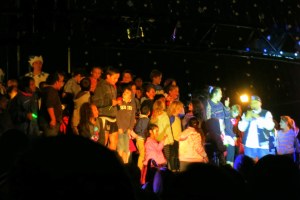
Maybe a whole crowd of kids will make it work
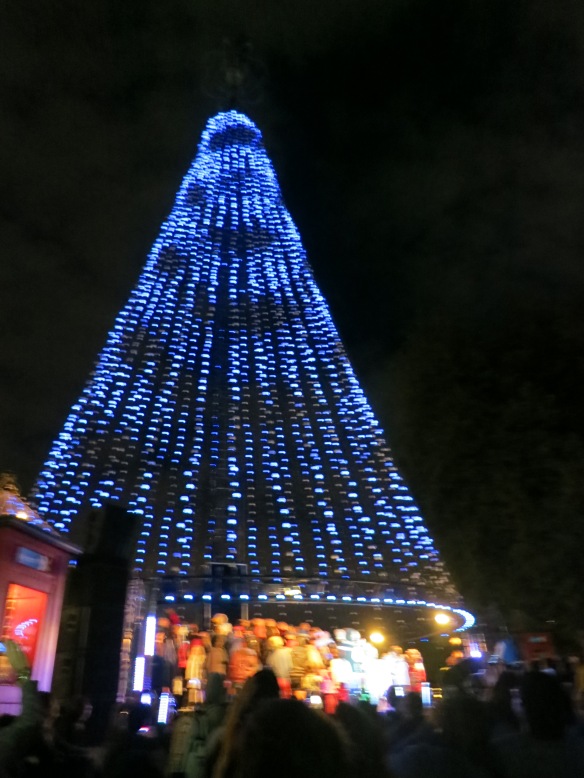
Good job, kids
I hadn’t been to anything so cheesy or family focused in a long while, and I enjoyed it immensely. The kids in the crowd were adorable, and the whole affair was charmingly ramshackle, despite this being a major city. I’m used to the crushing crowds of wintry Chicago during December, and it was refreshing to see this little city’s relaxed approach to the holiday season.
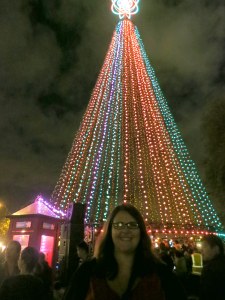
Hurrah for cheesy holiday outings
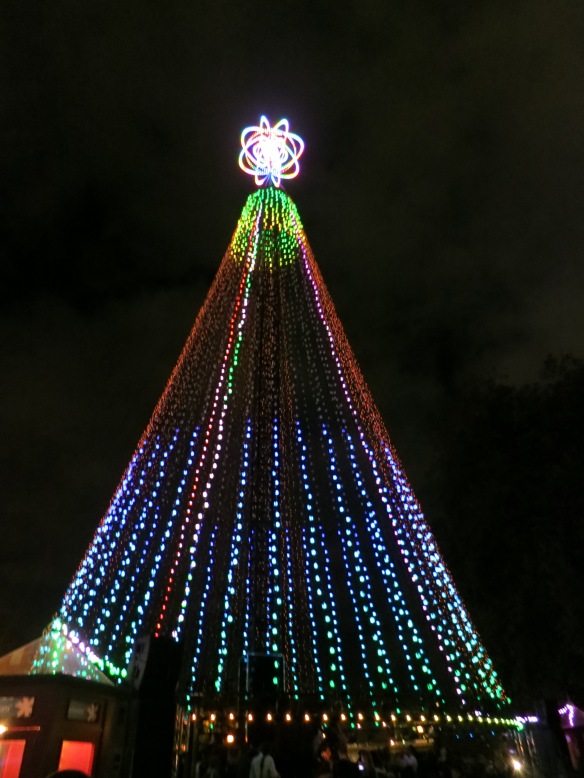
A rainbow of Christmas cheer
 Stowaway Travel Writing & Editorial Services