Remains of a Cultural Capital in Hue

Hue was once the site of Chinese authority, the outside force with the most influence on the cultural development of Vietnam. Starting from the 16th century, the Nguyen family of Vietnam reigned here, and in 1802 they became the imperial family of the country, with Hue as the official capital. The Nguyens were backed by the French, then ruled by the French when Vietnam was a protectorate, then ousted in 1945 during the French Indochina War.
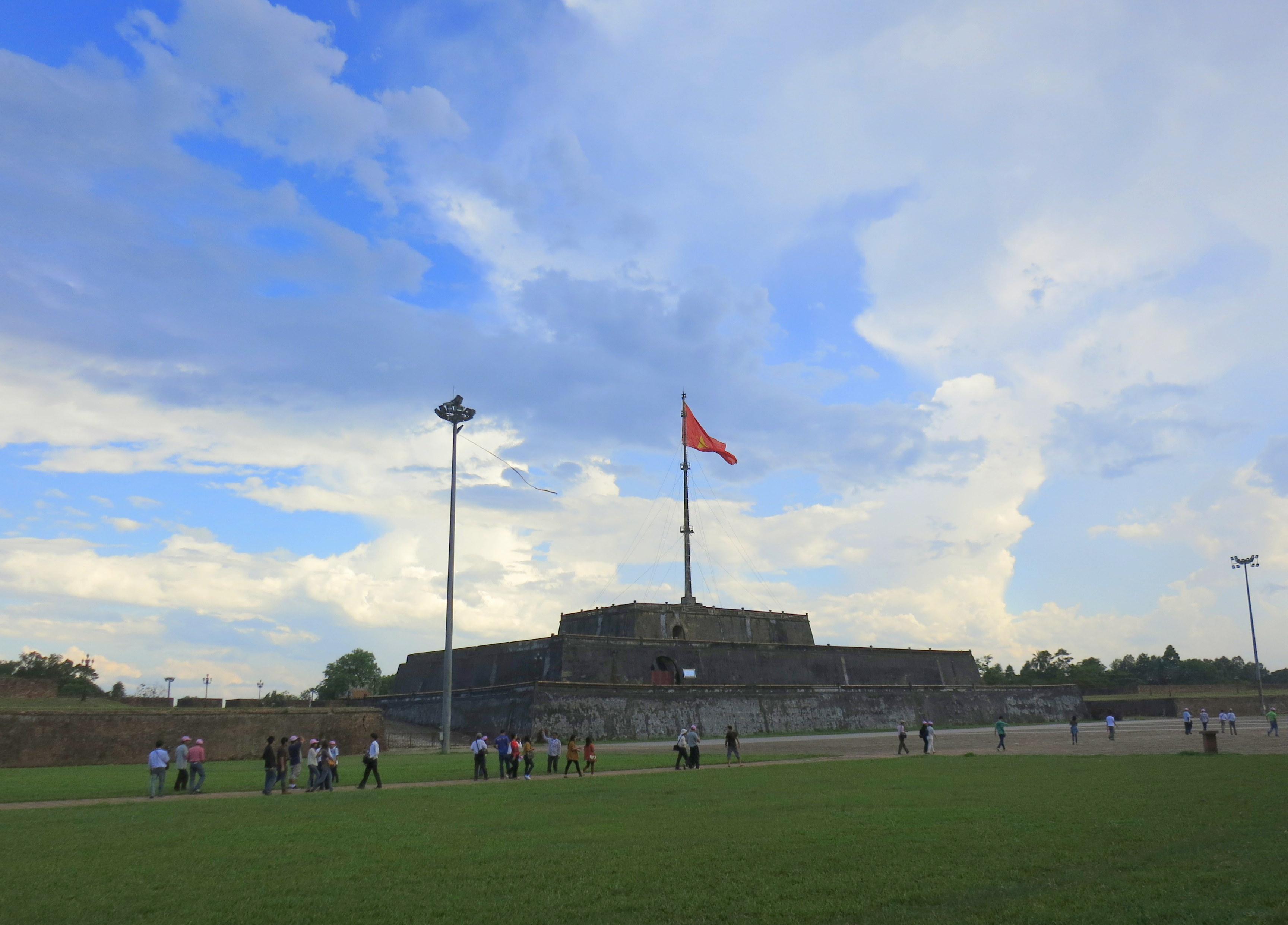
The citadel in Hue

The citadel in Hue

The southern entrance

The southern entrance

The capital of the country moved to Saigon and later to Hanoi, and Hue’s been of secondary importance for decades, at least politically. Culturally, it’s been seen by many Vietnamese as the seat of learning, religion, art, and cuisine. Part of the struggle over the city during the Tet Offensive of 1968 was its geographic position at almost the exact center of the country, just miles from the Demilitarized Zone (DMZ), but part of it was a symbolic struggle for the heart of Vietnam.

Restored artwork in the palace

Restored artwork in the palace

hue citadel

The imperial city, behind the walls of the citadel, is about 2.5 kilometers along the perimeter. It used to house the main palace, in the Forbidden Purple City, but that was destroyed by the French in 1947. Apparently, the American and South Vietnamese forces were instructed not to touch the historically important citadel during the Vietnamese-American War, but as the Battle of Hue in 1968 dragged on, the restrictions were eased, and eventually many buildings were damaged or destroyed. Bullet holes can still be seen on many of the remaining structures.

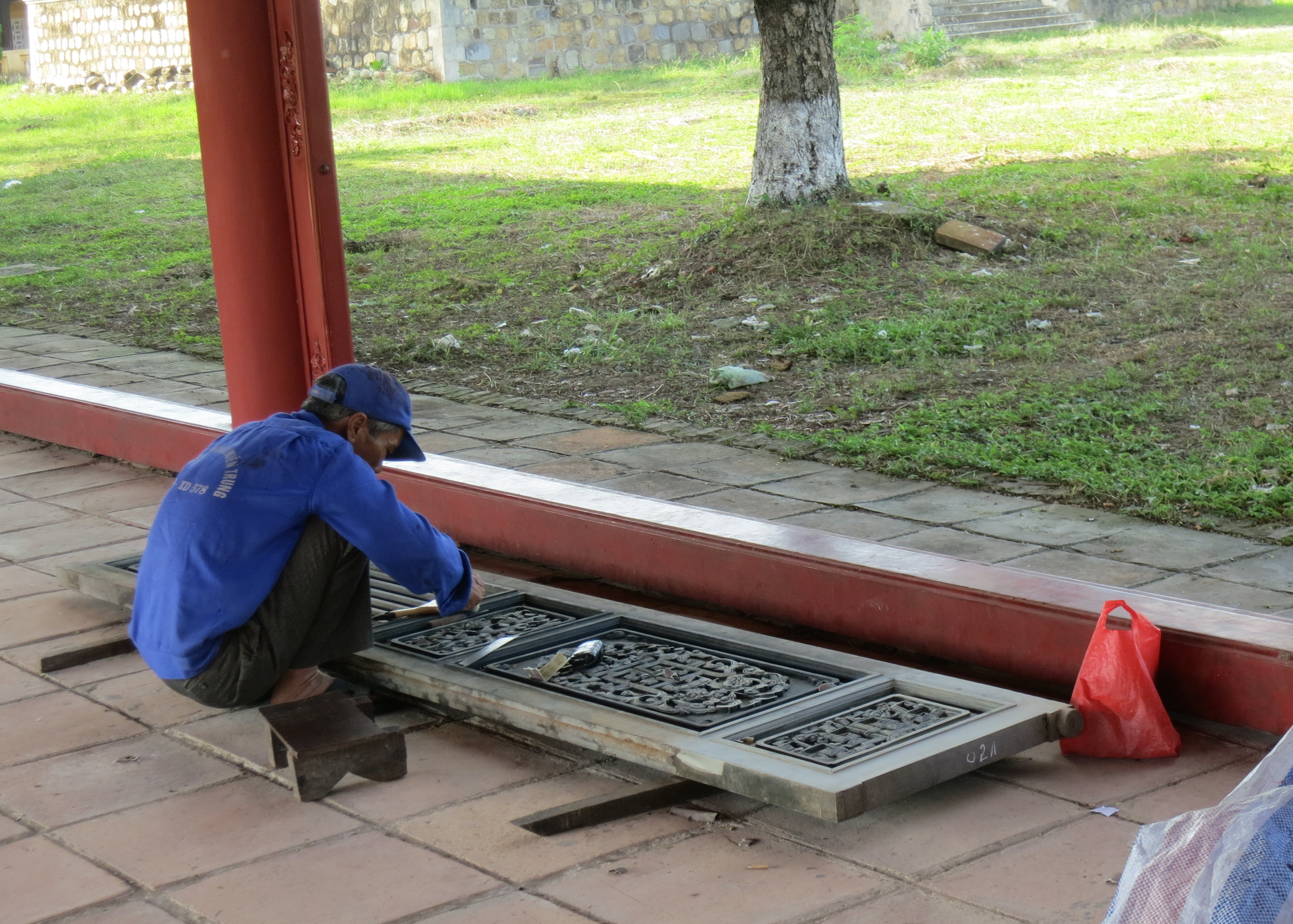
In 1996, the communist government of Vietnam, which had not previously prioritized rebuilding a symbol of imperialism, realized the tourist dollars a reconstructed city could bring in, and it committed to a 15-year plan to rebuild it. When I was there, I saw the project in action, as craftsmen sawed and carved wooden doors to hang along the long halls of the interior palace. (Also, it’s not just foreigners who bring in the money here–only a little under half of the tourists in Hue are from out of the country.)

Possibly where the emperor used to sit, who knows

Possibly where the emperor used to sit, who knows

The flag tower of the citadel looms on the north side of the Perfume River. Beyond the citadel are the walls of the palace grounds, and once you buy your ticket, you pass through the gates and find the Hall of Supreme Harmony, fronted by a broad tiled pavilion and two fish ponds. You can’t take photos inside the hall, but it was gorgeous in there. A crab shell-style roof covered a long, empty hall; the pillars were carved with dreamy cloud and dragon combinations, and the beams of the ceiling displayed poems written in Chinese characters. In the back, a video played on loop, using digital reconstructions to show what the whole palace complex looked like in its glory days.

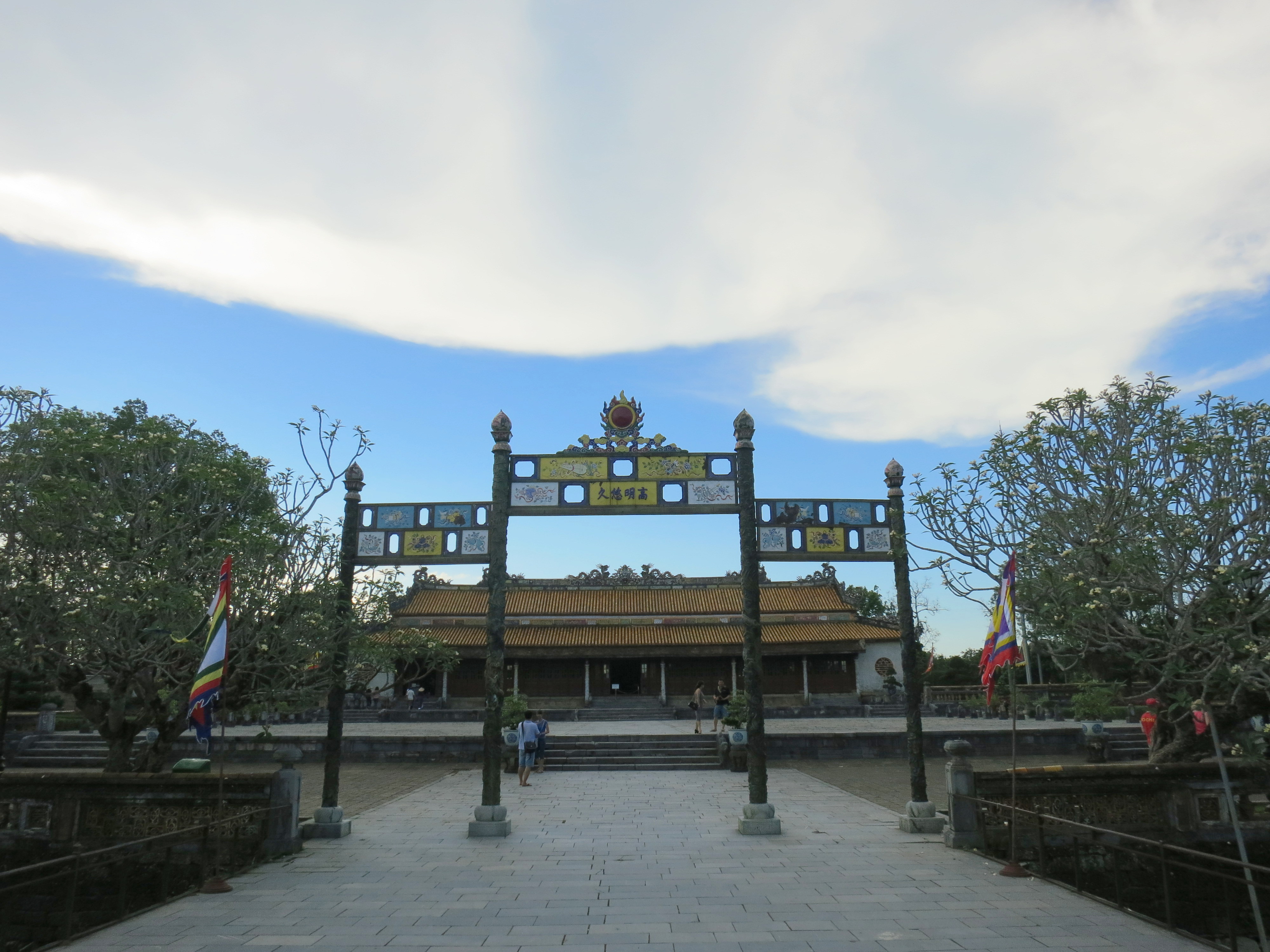
hue citadel

Hall of Supreme Harmony

Hall of Supreme Harmony

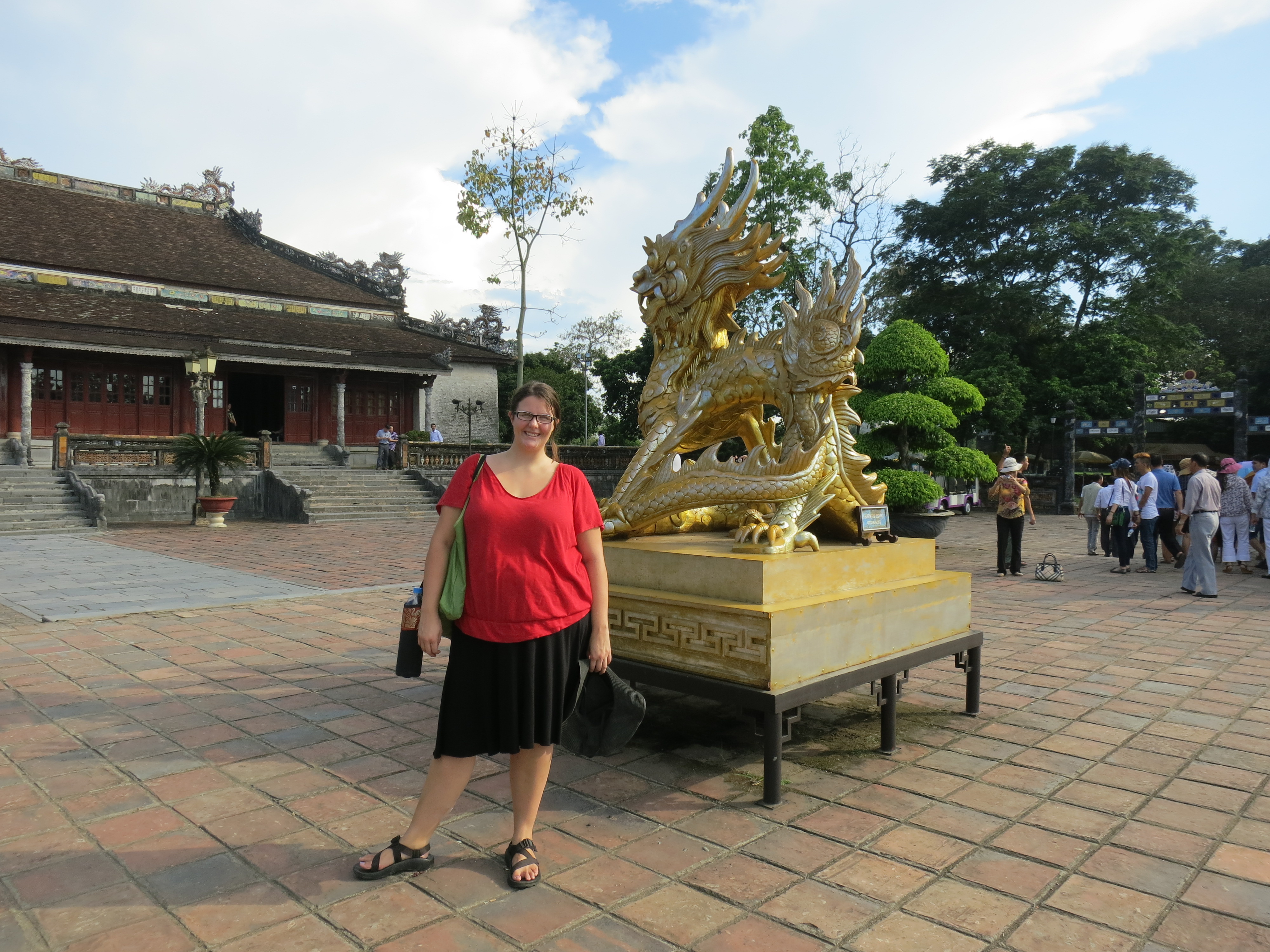
Hangin' with a gold dragon

Hangin’ with a gold dragon

Behind the hall, I posed with a giant golden dragon, like you do, and then walked down one of the side halls of what remained of the interior palace. The side halls started out in magnificent style, double rows of red pillars, long lines of tall doors opening out onto the side gardens, but as I walked closer and closer to what used to be the center of the palace, the doors disappeared, the columns were unpainted, scaffolding appeared. What was once land so rarefied only the emperor could walk on it, was now flat stone foundations and trimmed green grass, barely the memory of a palace.

A totally reconstructed hallway

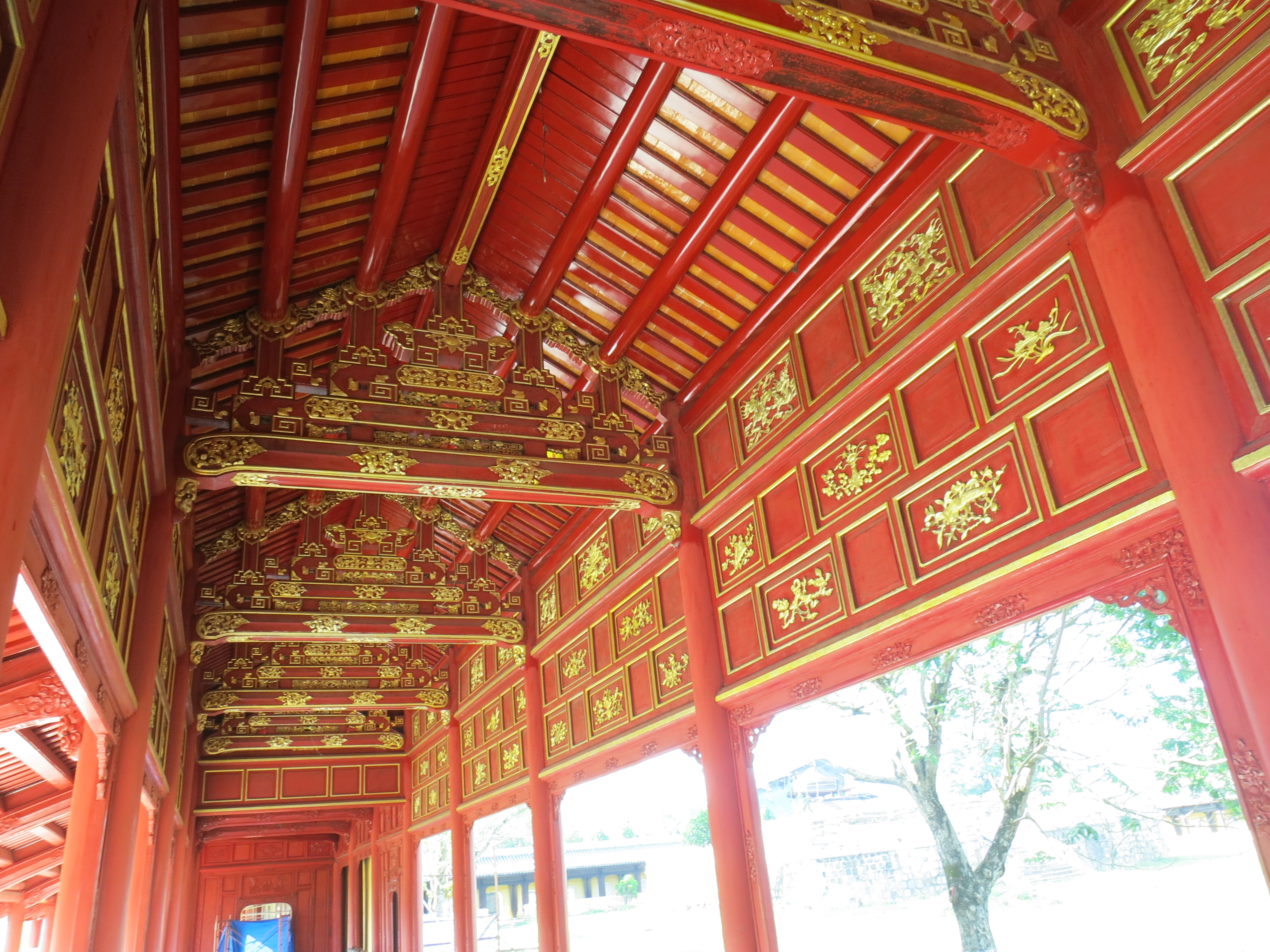
A totally reconstructed hallway

hue citadel

I loved these passageways

I loved these passageways

Restoring one of the doors

Restoring one of the doors

Looking out over the few remains of the innermost palace

Looking out over the few remains of the innermost palace

I then walked to the Dien Tho Residence, where the queen mother lived in the later years of the palace’s use. This had its own three-arched gateway, a couple lotus ponds, and long, low buildings (which I couldn’t take photos in).

Gateway to the residence

Gateway to the Dien Tho Residence

hue citadel

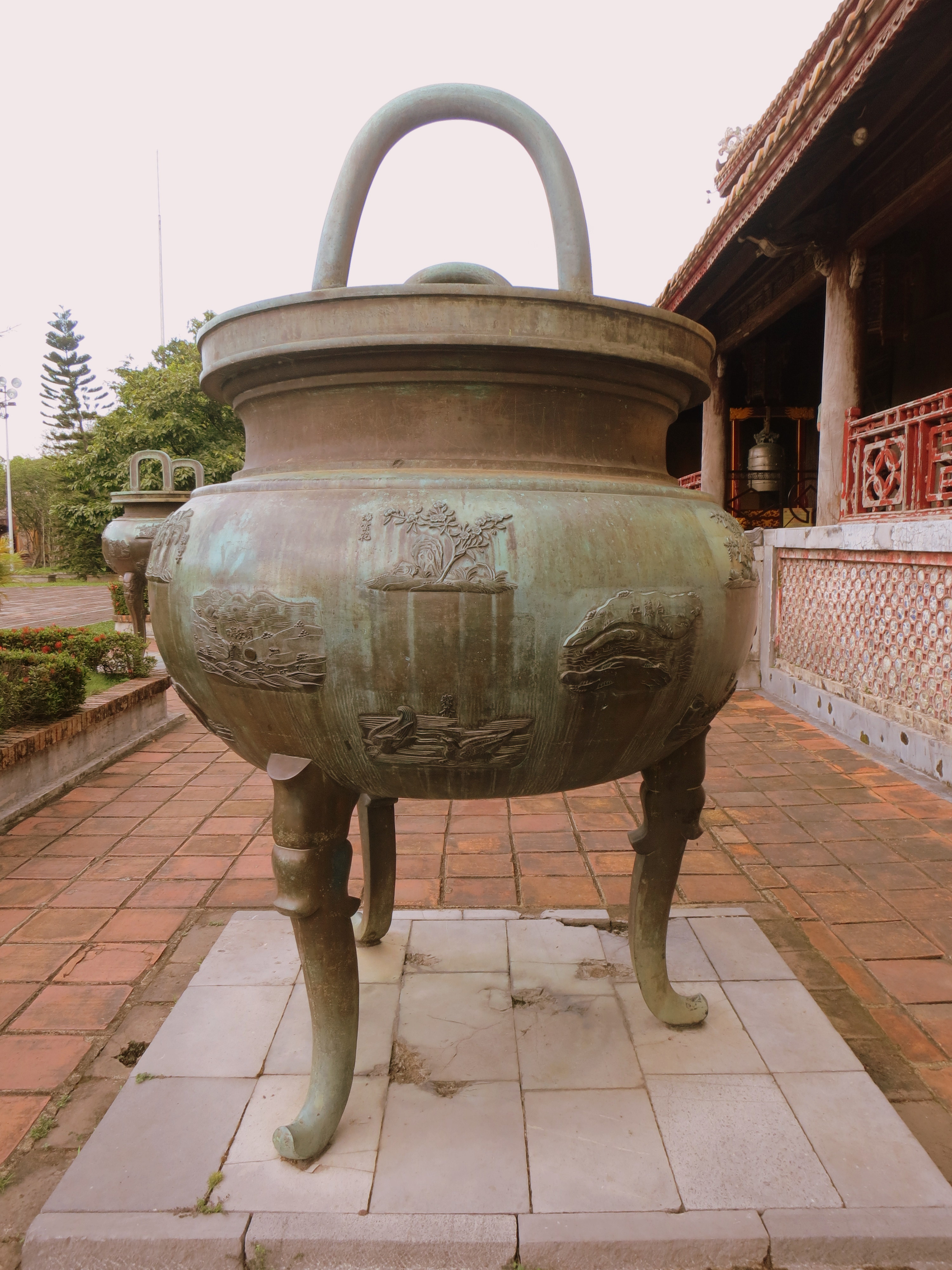
Finally, I visited the Hien Lam Pavilion, which has the The Mieu Temple on one end, and nine dynastic urns on the other. The temple is richly decorated, showcasing portraits of emperors and queens. The urns are lined up outside, giant bronze castings carved with scenes of natural beauty, each urn named after an emperor of the Nguyen dynasty.

The ?? Pavilion

The Hien Lam Pavilion

One of the nine dynastic urns of the ?? Pavilion

One of the nine dynastic urns of the Hien Lam Pavilion

On one of the nine urns

On one of the nine urns

Walking away as the palace closed for the day, I left the swirls of clouds and curves of trees on the urns, passed the rows of flowers along the path and the sun setting behind the citadel walls, and strolled back into the city.
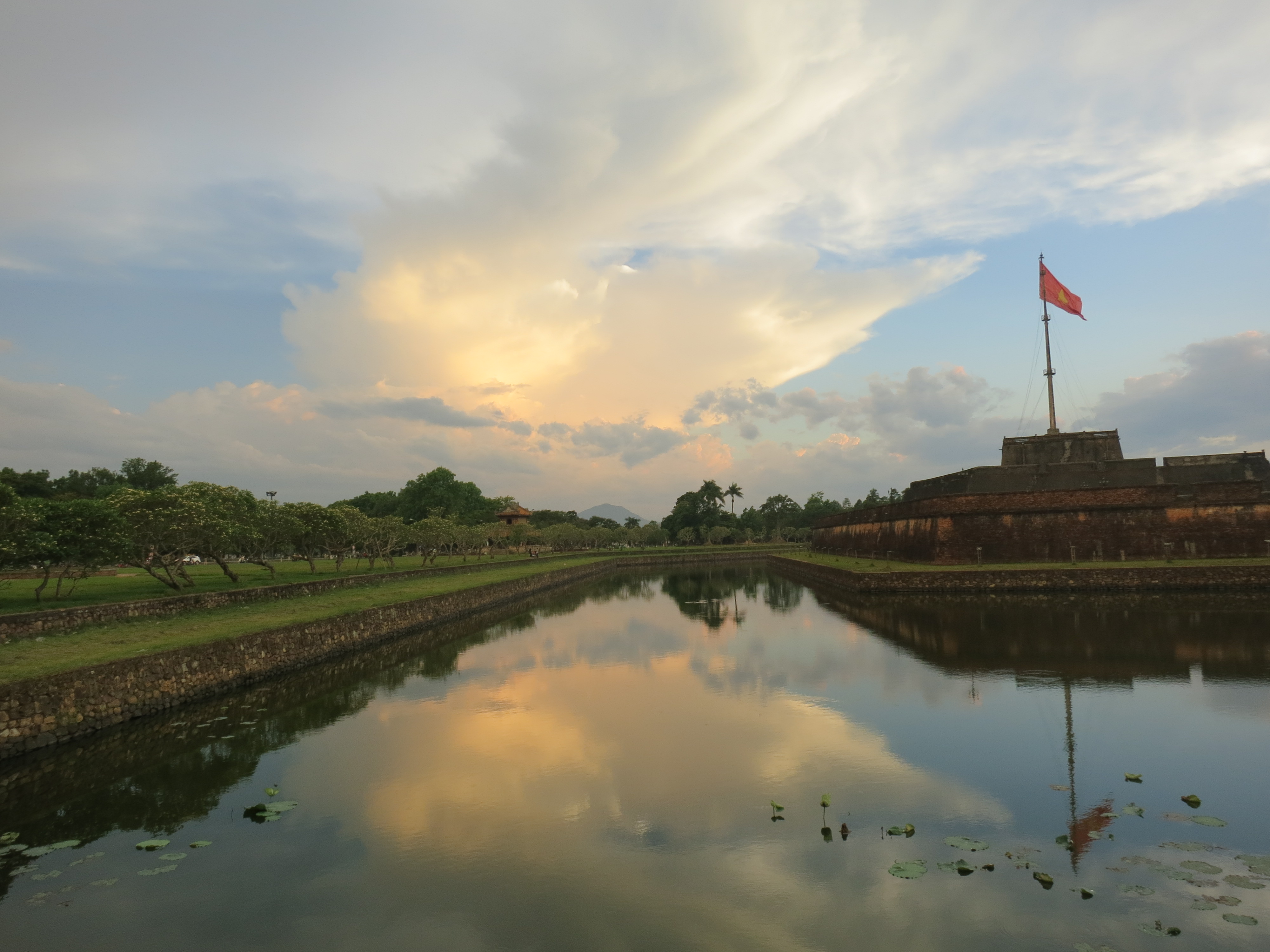
Sunset outside the palace
Sunset outside the palace
Hoi An: A Town Suspended in Amber

World Heritage sites are meant to protect and preserve sites of cultural and natural beauty around the world–that’s a given. But I was surprised by Hoi An, a city near the coast of the middle part of Vietnam, whose old town is a World Heritage site. Although people live and work there–bustling about selling food and trinkets, ushering tour groups through historical houses, calling out to children down the street–I somehow still felt as if the place was stopped in time, like an insect suspended in amber, mid-flight.

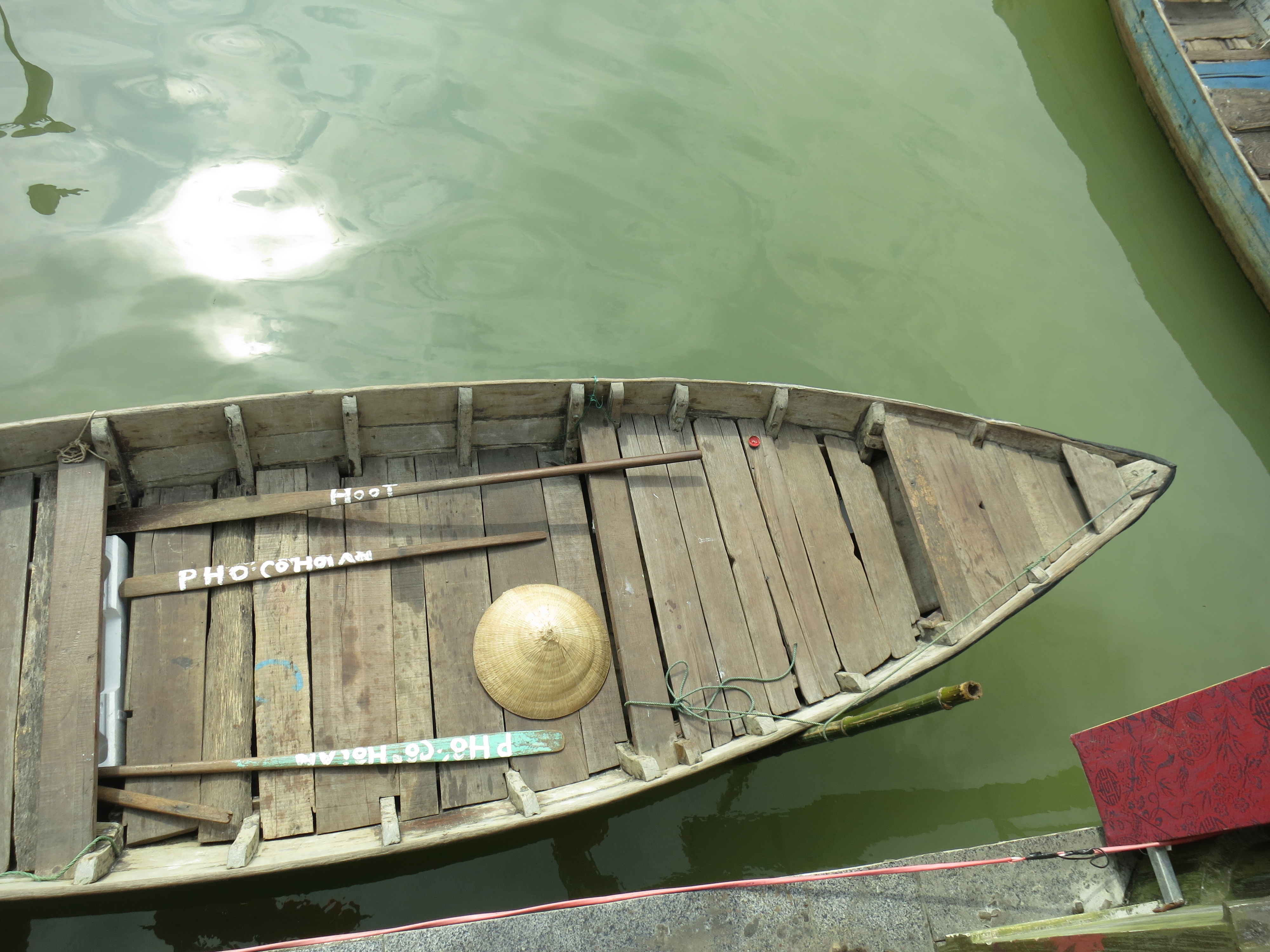
Boat rides in Hoi An

Boat rides in Hoi An

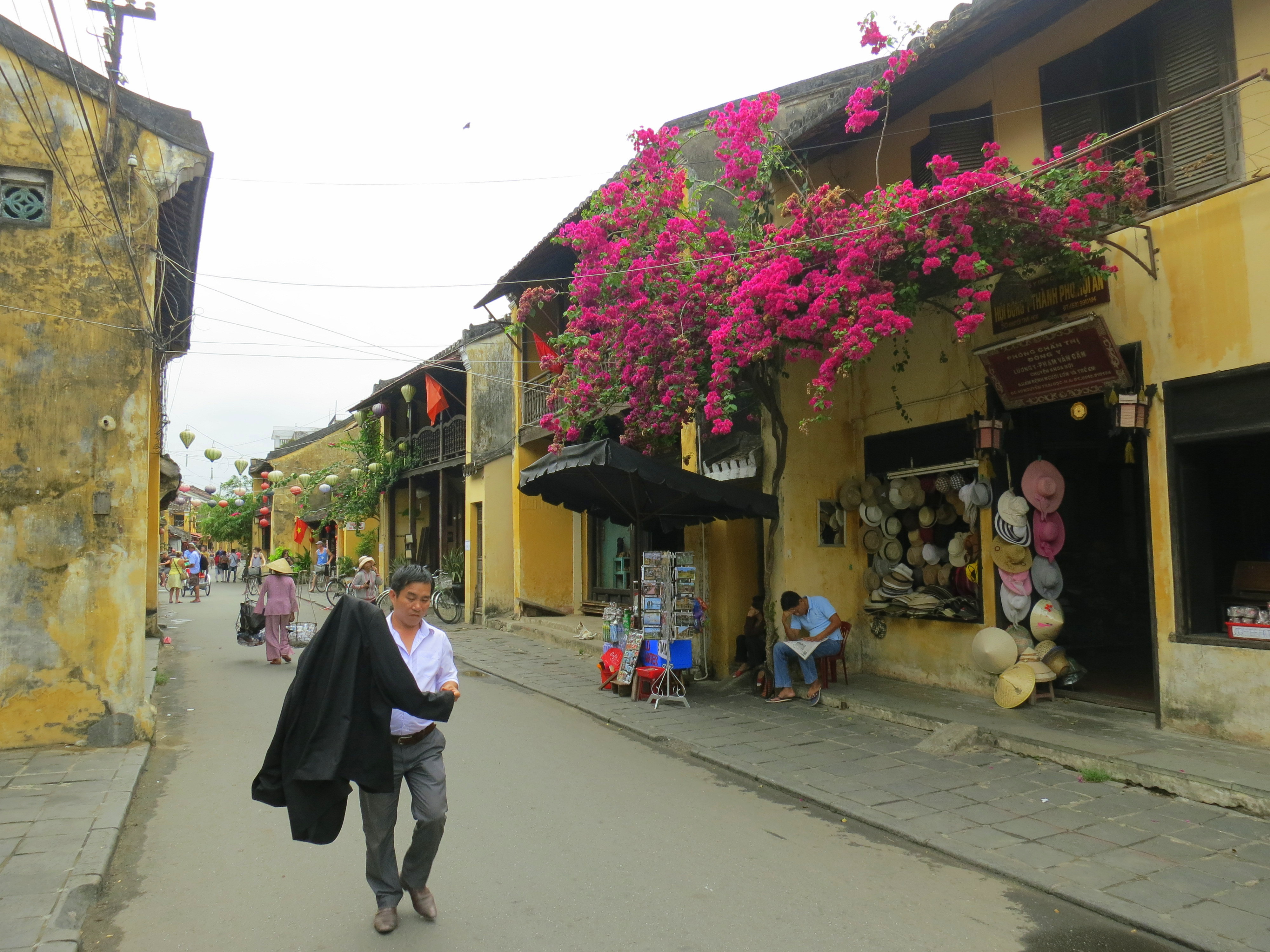
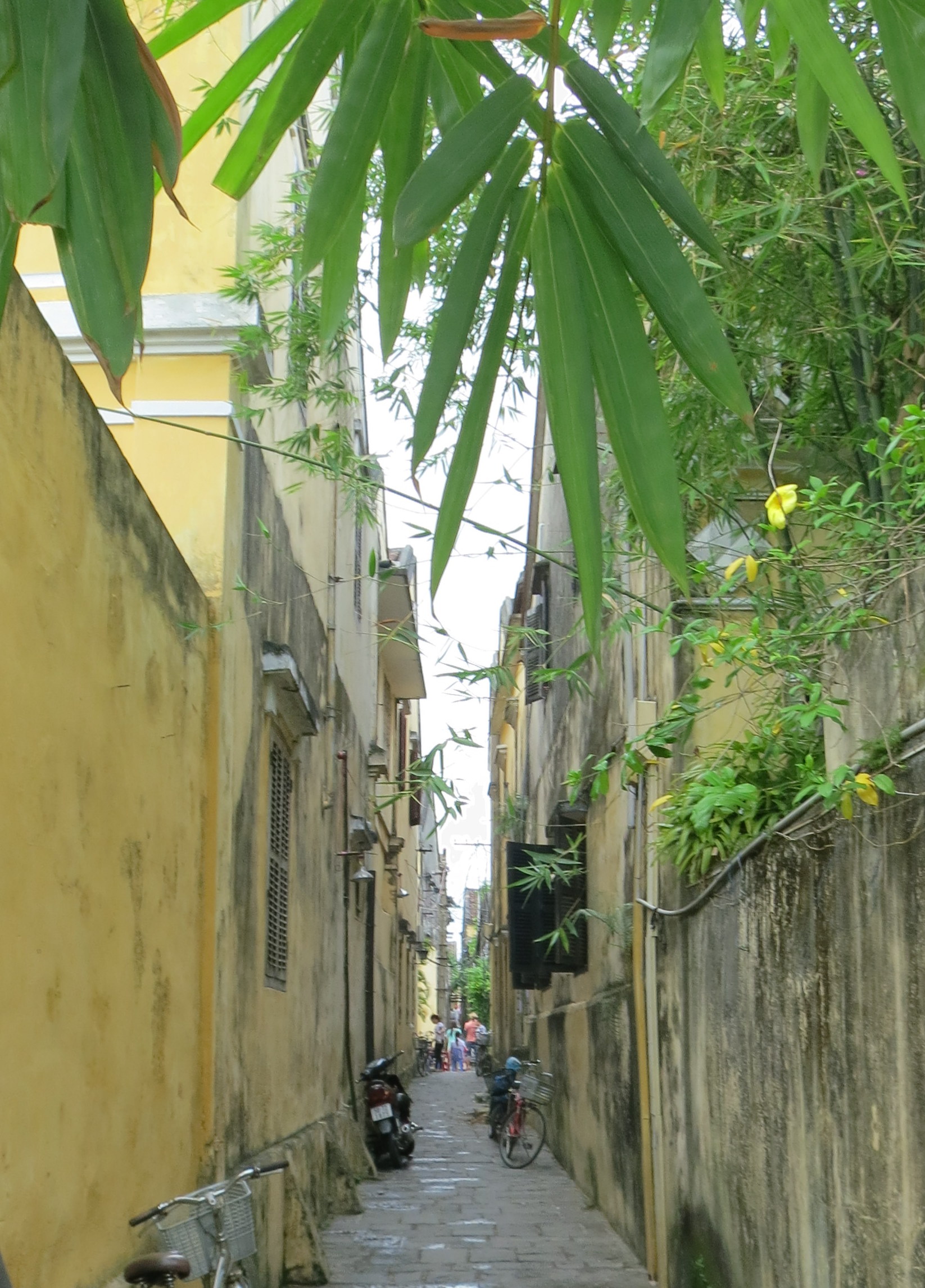
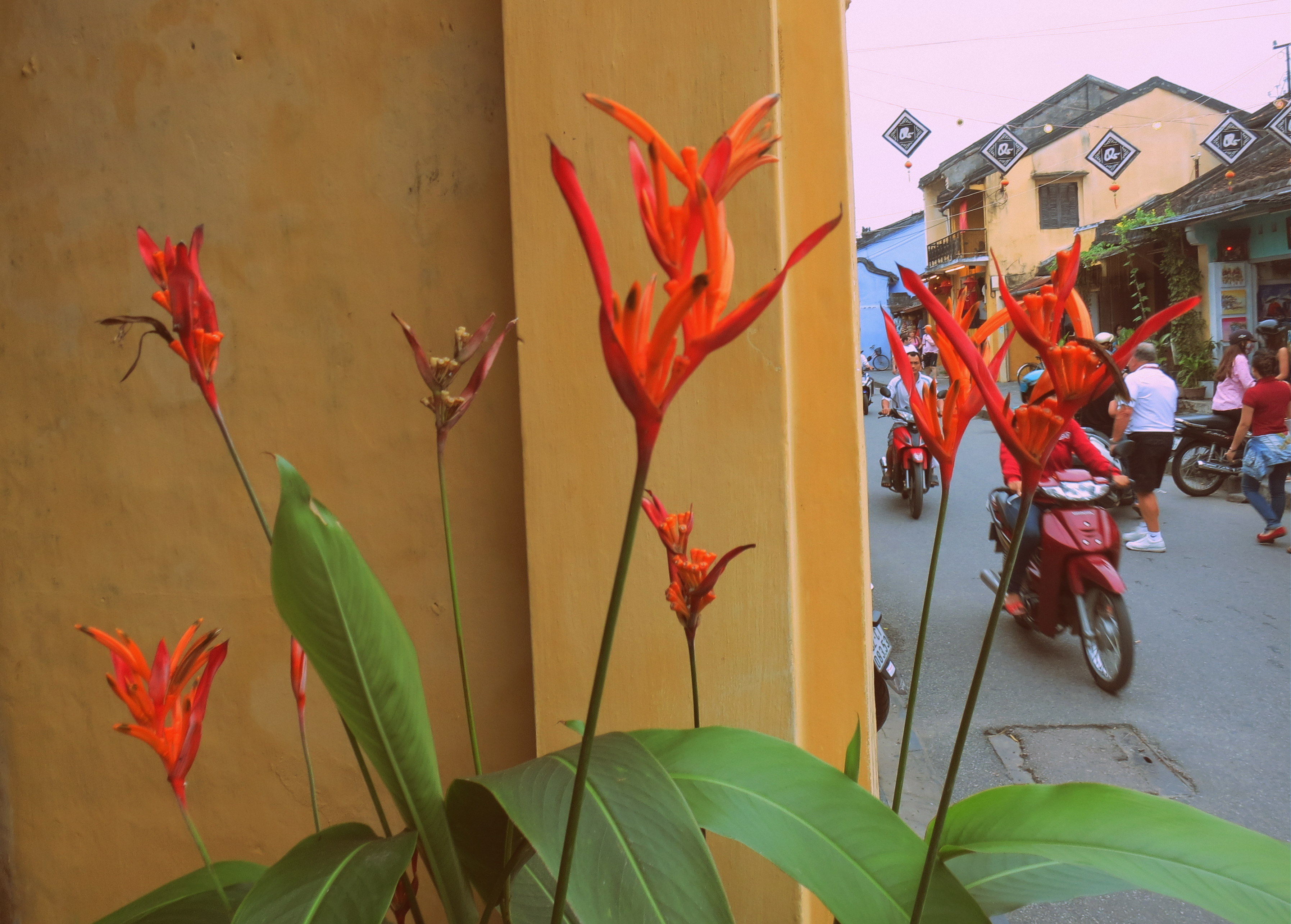
The buildings are a combination of Chinese-style shophouses and French colonials. Almost every single one is painted a bright yellow, decorated with hanging lanterns, the occasional flowering vine, and not much else. Simplicity seems to be the decorating byword here, and it works really well. Everyone took photos against the backdrops of yellow houses and magenta flowers, sometimes with an old-fashioned bicycle as a prop. I’m no exception.

hoi an

I won't wear shoes that are anything less than a dozen Franklins

I won’t wear shoes that are anything less than a dozen Franklins

But that’s what the whole “ancient town” felt like–a prop. My mom asked me if a town that was so carefully preserved felt like a display at Disneyland, and it kind of did. Part of that was due to the restrictions on vehicles; only human-powered vehicles were allowed, so the usual crush of motos, cars, and buses was missing, and only cyclos (bicycle taxis), bicycles, and handcarts rolled through the streets. This made me less fearful for my life, but it also made it eerily quiet. There was so much space; although the buildings were all full of businesses, somehow the streets weren’t as full of people visiting them as they were just a few streets away, on the other side of the UNESCO sign.

Most of those businesses seemed to be for tourists only, and I guess that’s the basic point: I’ve never been anywhere else that’s had such a sharp tourist/local divide, where locals only venture to make some money off tourists. Except for maybe Navy Pier in Chicago.

Which is not to say the houses and their contents weren’t beautiful, or historical, or worth preserving. They were all of those things. But the liveliness that surely accompanied the building and decorating of those houses had faded away.

Carrying different loads--the locals and the tourists

Carrying different loads–the locals and the tourists

The beautiful, but oddly empty, streets of Hoi An

The beautiful, but oddly empty, streets of Hoi An

The Japanese Bridge

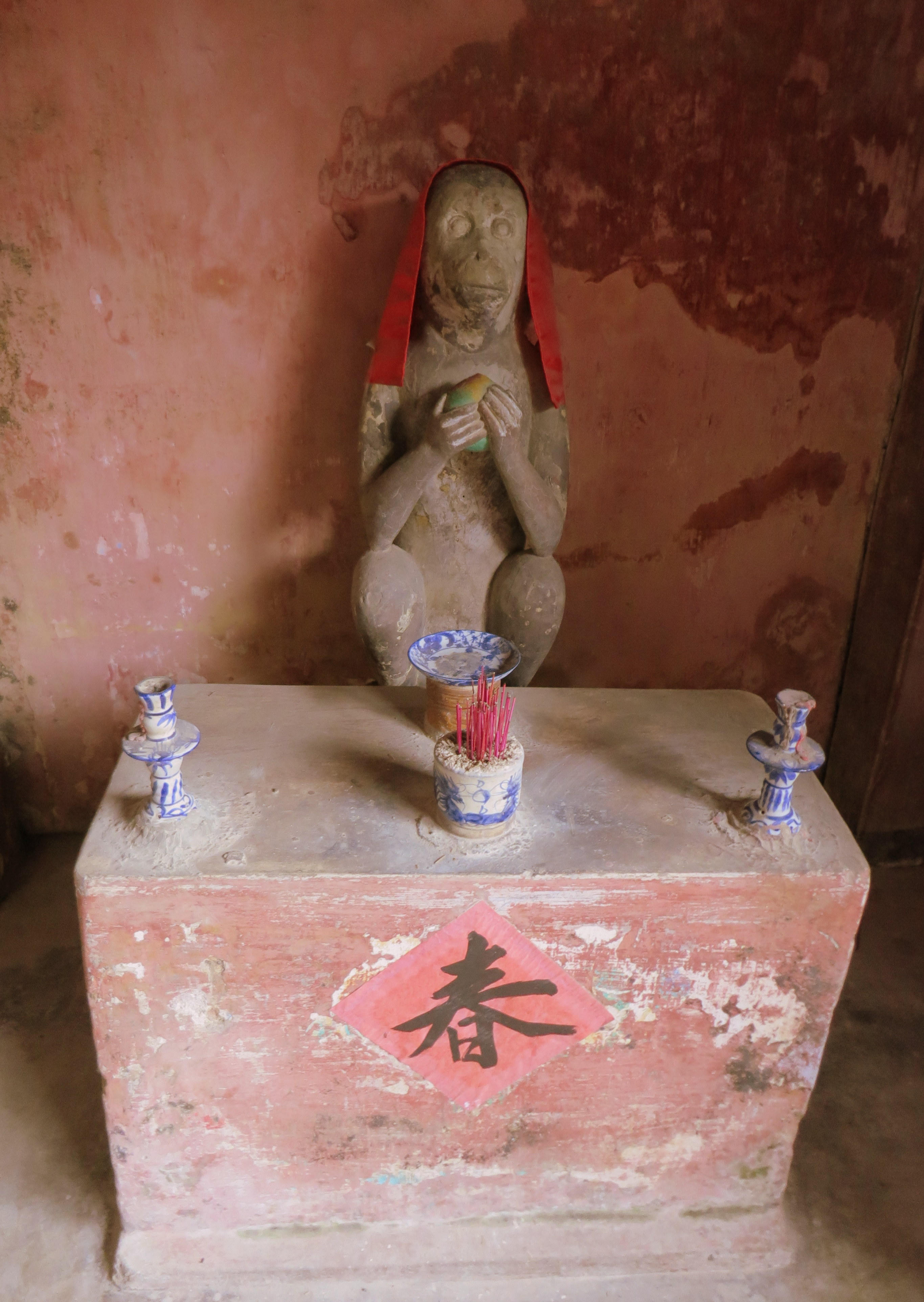
Hoi An was a trading town for centuries, and both Chinese and Japanese merchants settled here and had a large influence. One of the main sights of the town is the small, lovely covered Japanese bridge over one of the estuaries of the river. It was built centuries ago, connecting parts of town where different ethnicities lived, and for a while was called the Friendship Bridge. You can pay to see the tiny altar in the center of the bridge, or you can just walk on the wooden structure, admiring the curlicued beams above and the solemn dog and monkey altar statues below.

At the Japanese Bridge in Hoi An Ancient Town

At the Japanese Bridge in Hoi An Ancient Town

A small shrine on the Japanese Bridge

A small shrine on the Japanese Bridge

A collections box

A collections box

A war memorial

A war memorial

I lucked out on the first day I went down to the old town. You have to buy a multi-ticket packet and use one ticket per attraction. I wasn’t sure where to buy a ticket when I got down there, so I asked a couple of Canadian women outside the Tran Family Chapel where to go, and they said, “oh actually, we’re done for the day, take the rest of our tickets.” Excellent!

The Tran Family Chapel

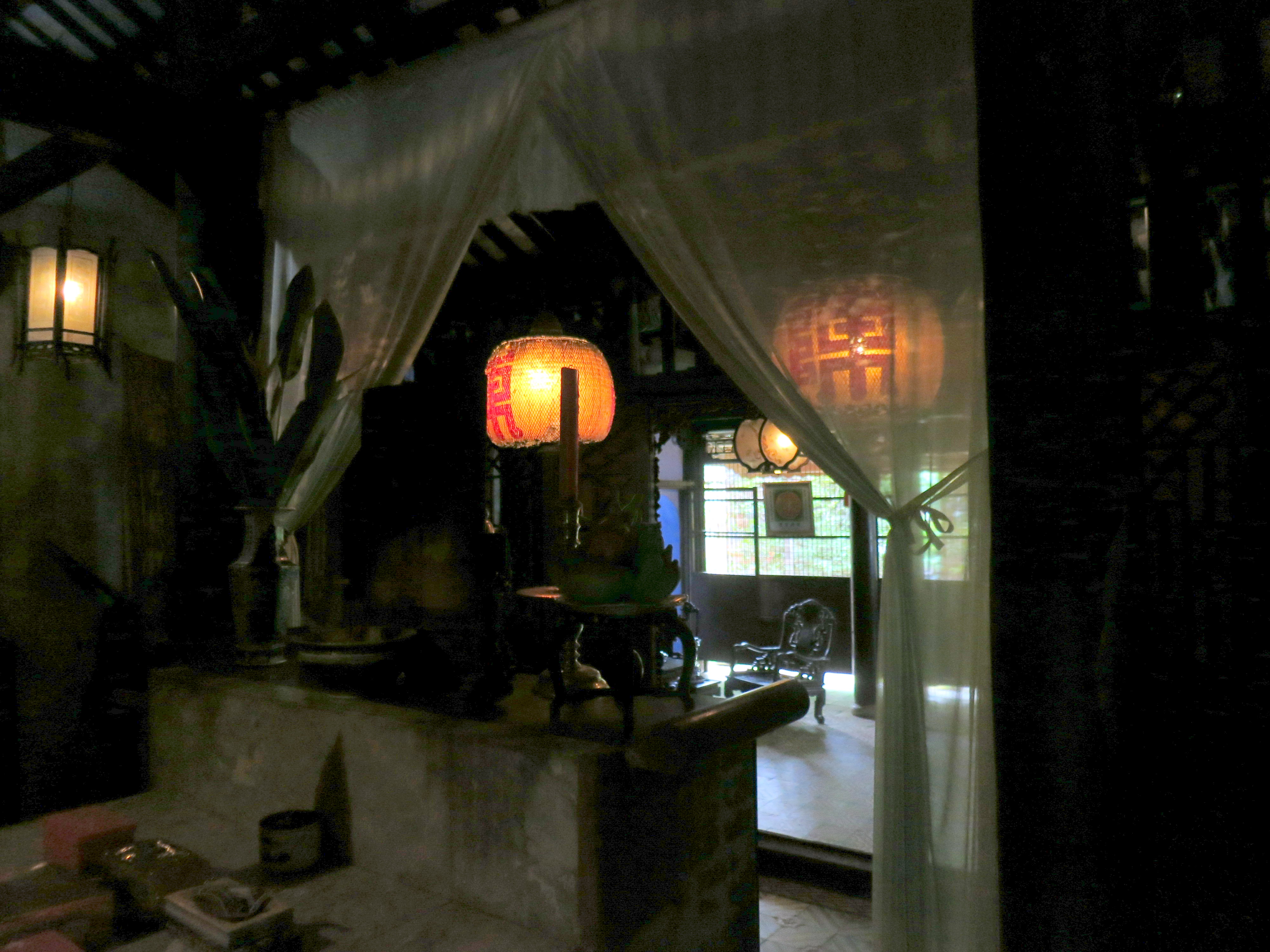
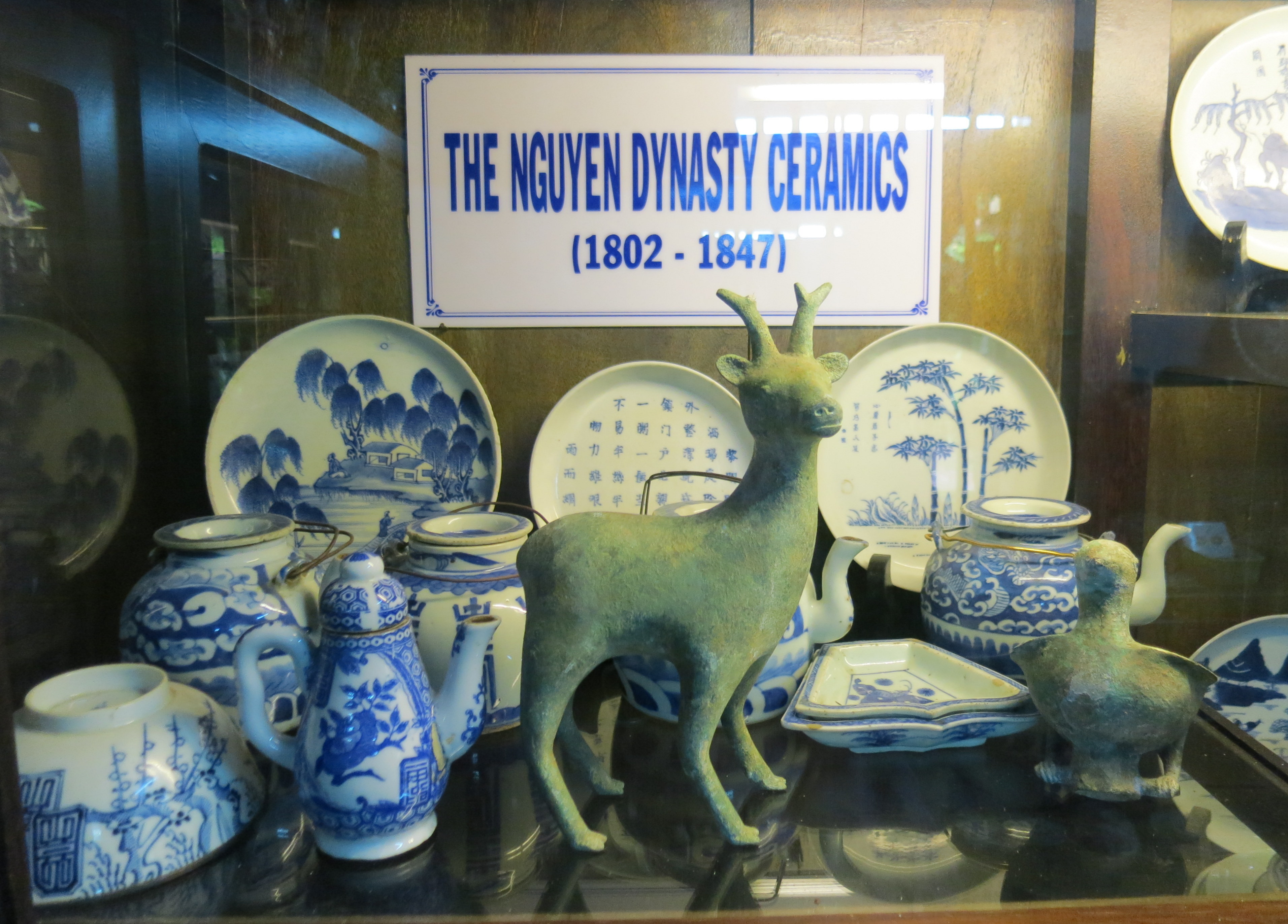
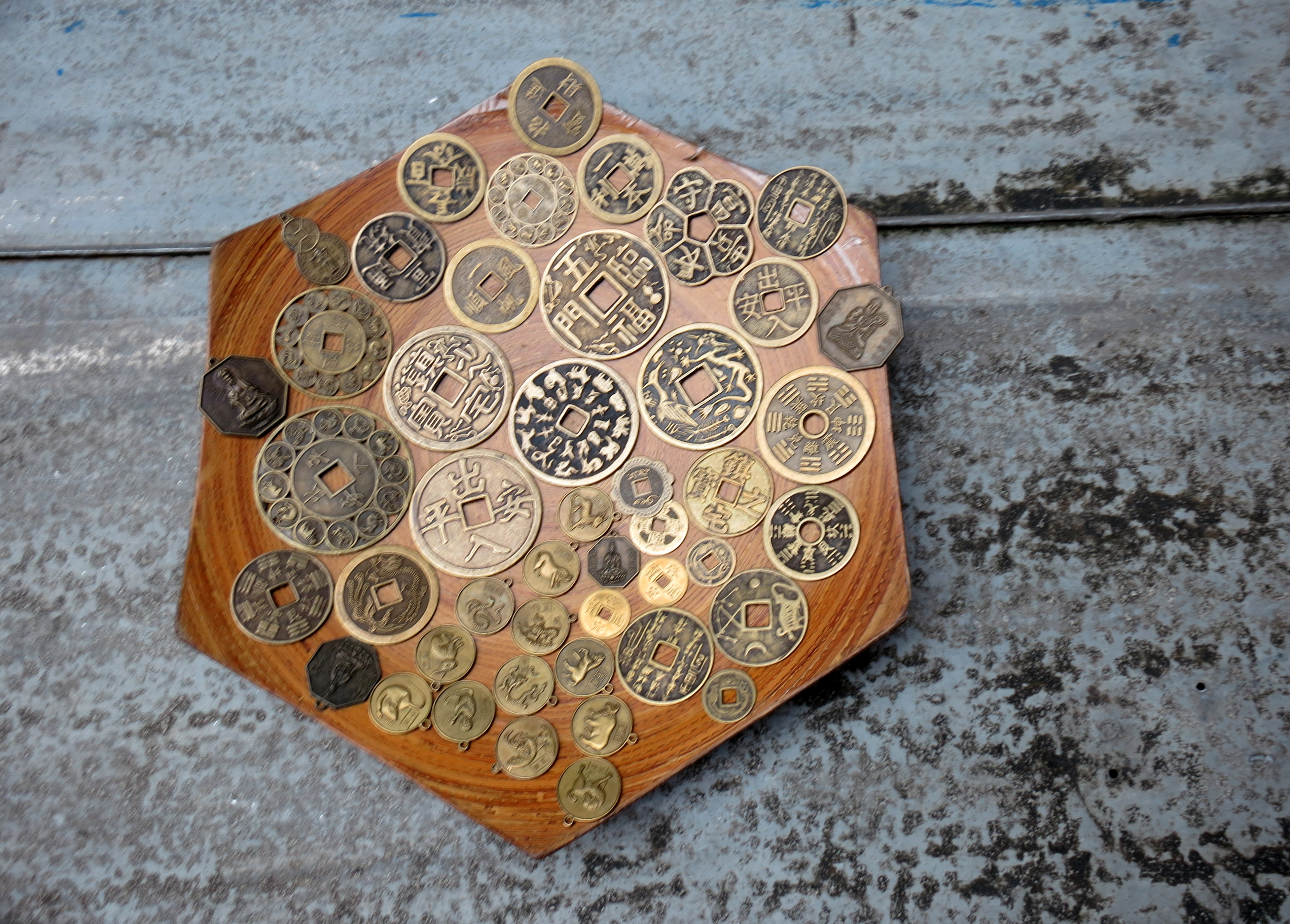
The Tran Family Chapel is one of the names for this 200-year-old building, constructed in the style of a Vietnamese garden house. The central entrance was only used on very high holidays, and normally men and women enter from different side entrances. The altar was surrounded by small, thin boxes that I believe contained the ashes, or perhaps the mementos of deceased members of the family. You can’t walk through the place by yourself; a guide gives a short speech on the architecture of the building (Japanese-style three-tiered wooden beams; a door sill that trips you up if you’re not careful, so you are forced to look down when crossing it, thus showing respect for the ancestors as you cross into their space) and then brings you into the back room, which is full of ceramics, coins, and trinkets you can buy as souvenirs. It wasn’t too hard a sell, happily.

Tran Family Chapel

Tran Family Chapel

Tran Family Chapel waiting room

Tran Family Chapel waiting room

Part of the large collection of ceramics, coins, and statuary for sale

Part of the large collection of ceramics, coins, and statuary for sale

hoi an

The Tan Ky House

Mother-of-pearl inlay in the Tan Ky House

Mother-of-pearl inlay in the Tan Ky House

The Tan Ky House is the most visited Chinese house in Hoi An. It’s over 200 years old, and it’s been owned by the same family that whole time. An older woman, sixth generation of that family, handed out tea to visitors and smiled serenely as each tour leader pointed out her importance.

hoi an

One of the major reasons the town is a World Heritage sites, these old houses are all built in the same way: doorway, opening foyer with altar, outdoor courtyard, back room/kitchen. Sometimes beds were set up in the back, but it looked like most bedrooms were upstairs (we were only permitted to see the downstairs in each place). Guides pointed out the Chinese elements (the writing, the shophouse layout), the Japanese elements (the three-tiered wooden beams in the foyer), and the Vietnamese elements (the building materials and particular family touches) that appear in each house.

Markings of how high the floodwaters rose over the years

Markings of how high the floodwaters rose over the years

The river has flooded many times over the last few decades, and one wall of the Tan Ky house was chalked up with how high the waters rose during various floods. The houses looked good for how many times they’ve been submerged.

Coins for the future

Coins for the future

The lacquered woodwork found in the Tan Ky house and the Quan Thang house (another place I visited), and mother-of-pearl inlay in the former, were beautiful. The inlay looked like calligraphy, and some of it even made Chinese characters out of “brush strokes” in the shapes of birds, which was just lovely. The woodwork in all the houses shines from polishing, revealing pastoral scenes of flowers, animals, and twisting plants.

Old House of Quan Thang

Old House of Quan Thang

Lacquer woodwork

Lacquer woodwork

Fukien Assembly Hall

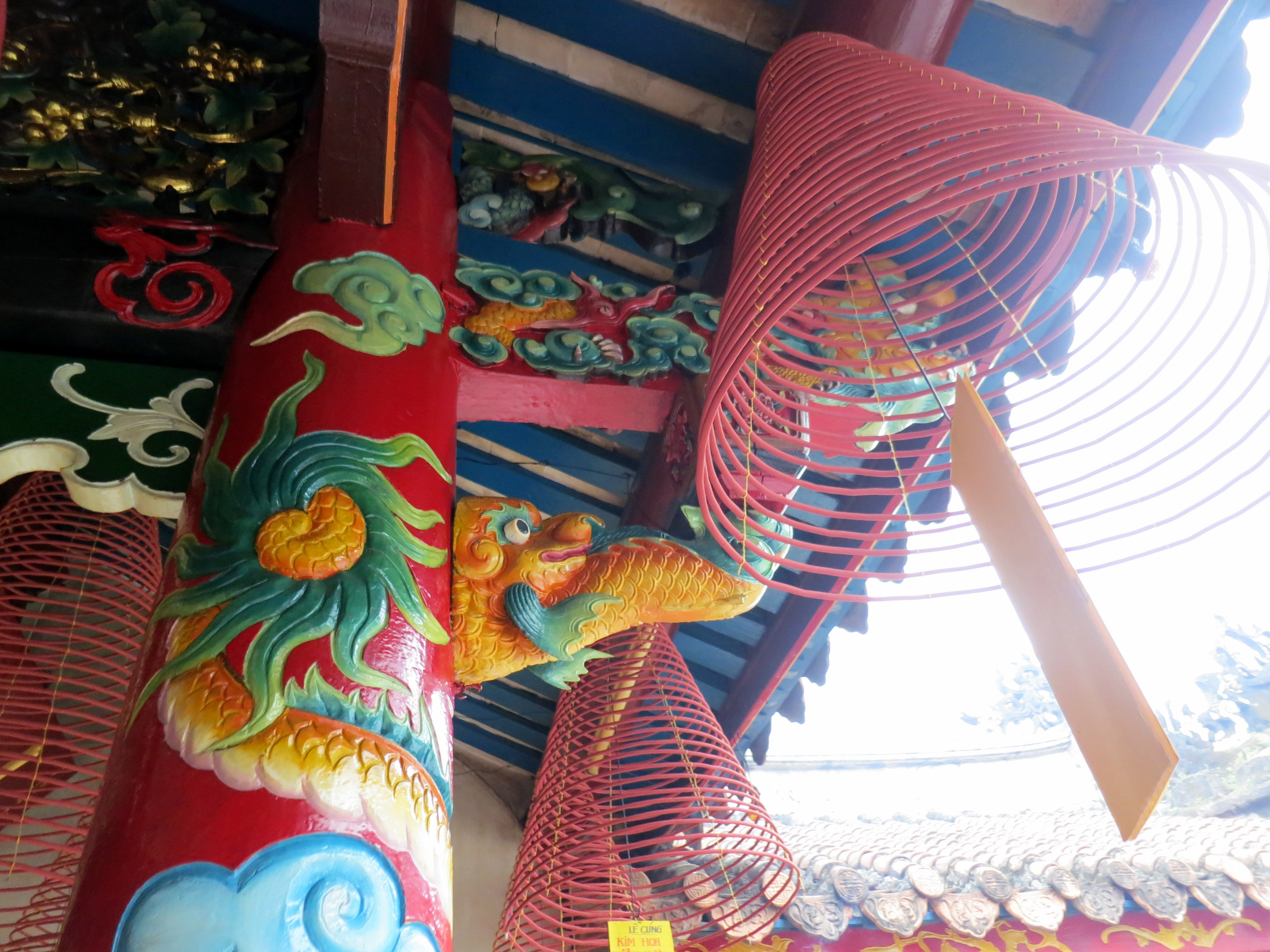
The Fukien Assembly Hall was built in the 17th century as a temple and was also used as a gathering place for the Fukien Chinese people who built it. It’s a long approach, past a fountain and through a triple gate, past two large paintings depicting heroic stories, through the open courtyard hung with giant prayer coils, red and smoking, and finally into the main room containing the large altar and another small pond. The altar room had some beautifully carved and painted pillars, and a feast laid out for the ancestors and gods on the altar. This was a great reminder of the huge Chinese influence in Vietnam, and how strong that influence still is.

Fukien Assembly Hall

Fukien Assembly Hall

Offerings at the altar

Offerings at the altar

hoi an

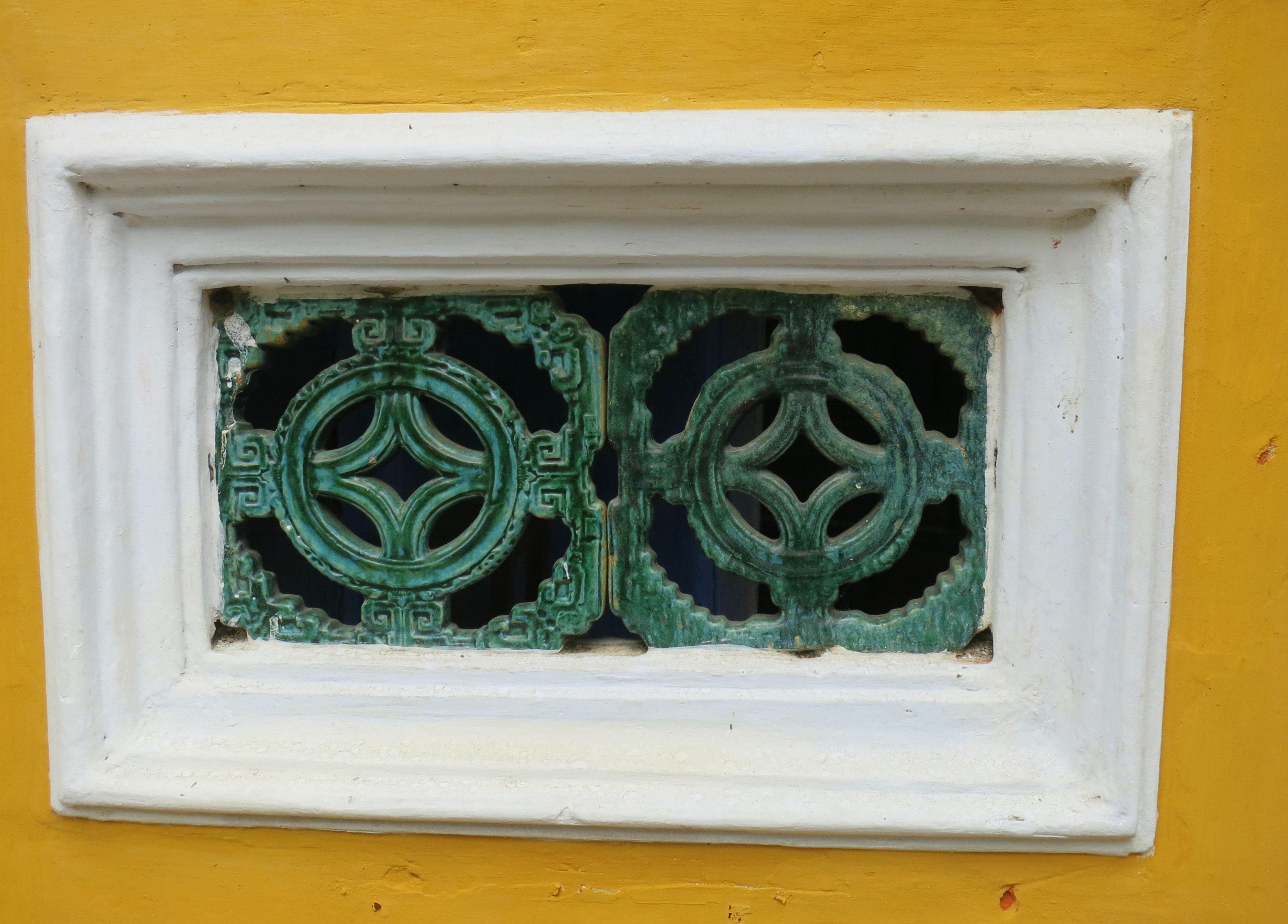
Lovely detail

Lovely detail

Tailors

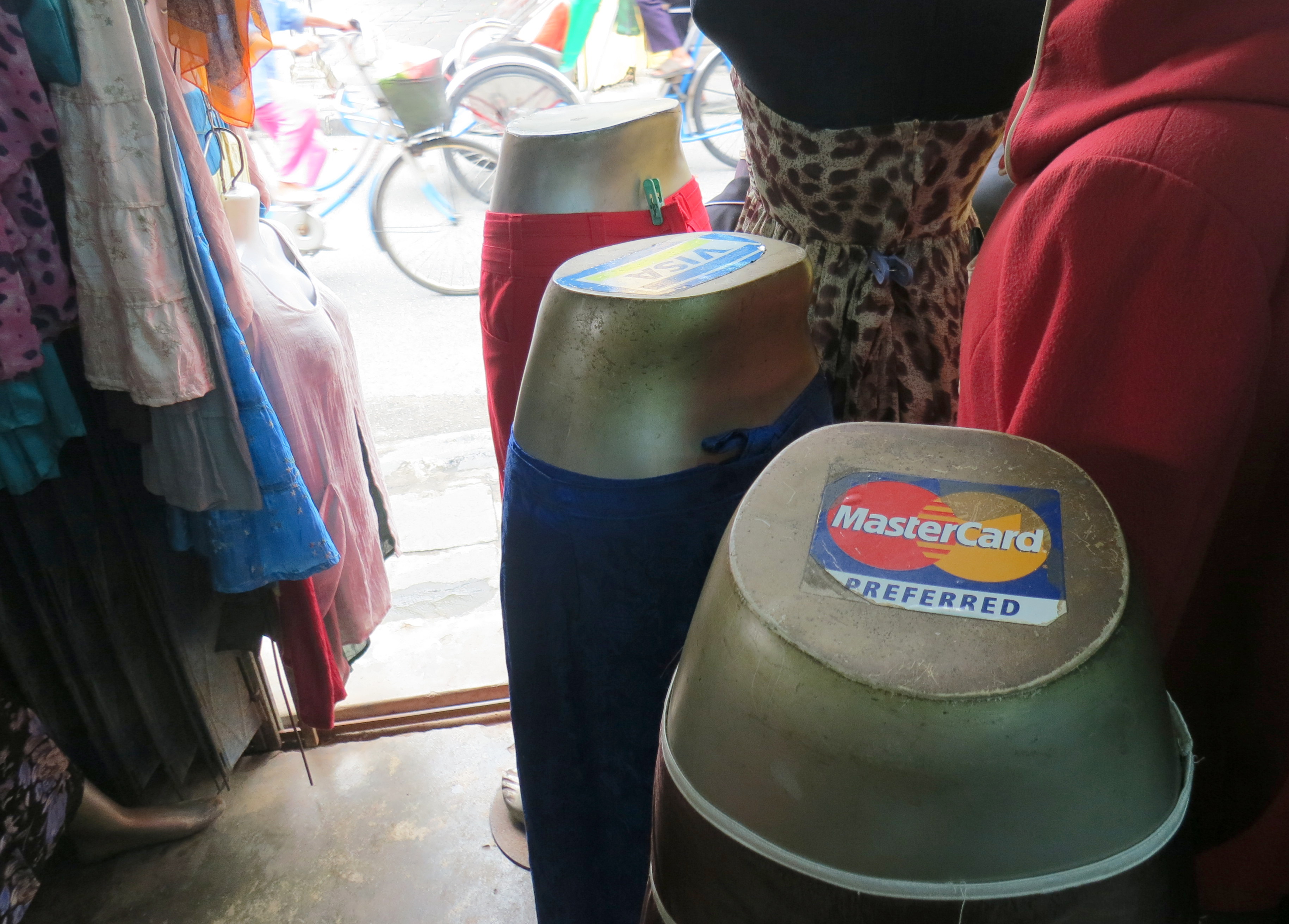
Hoi An is the main tailoring hot spot in Vietnam. I am not exaggerating when I say that out of eight storefronts on one street, seven of them were tailor shops. I had some silk I’d bought in Thailand, and I had it made into a skirt for my cousin, which turned out beautifully. I had almost decided not buy any clothes for myself, but I succumbed to a different shop owner’s persuasions. She made a long-sleeved black linen/cotton shirt, which I generally like although it can be a little shapeless, and a pair of cream linen pants, which pilled after two wearings, and which she hemmed too short. I should’ve stuck with my original plan!

In the tailor shop

In the tailor shop

Plumeria

Plumeria

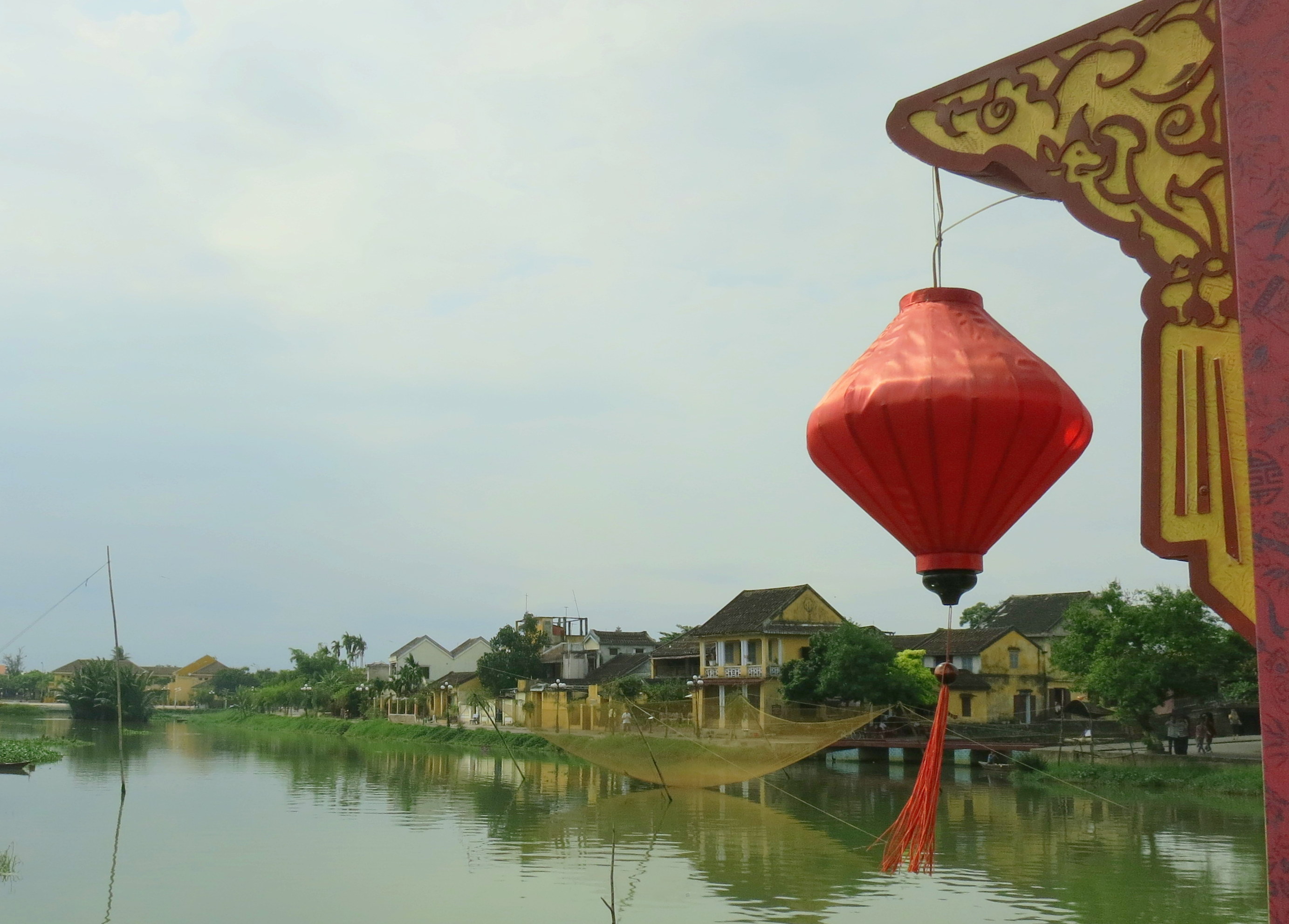
Along the river in Hoi An

Along the river in Hoi An

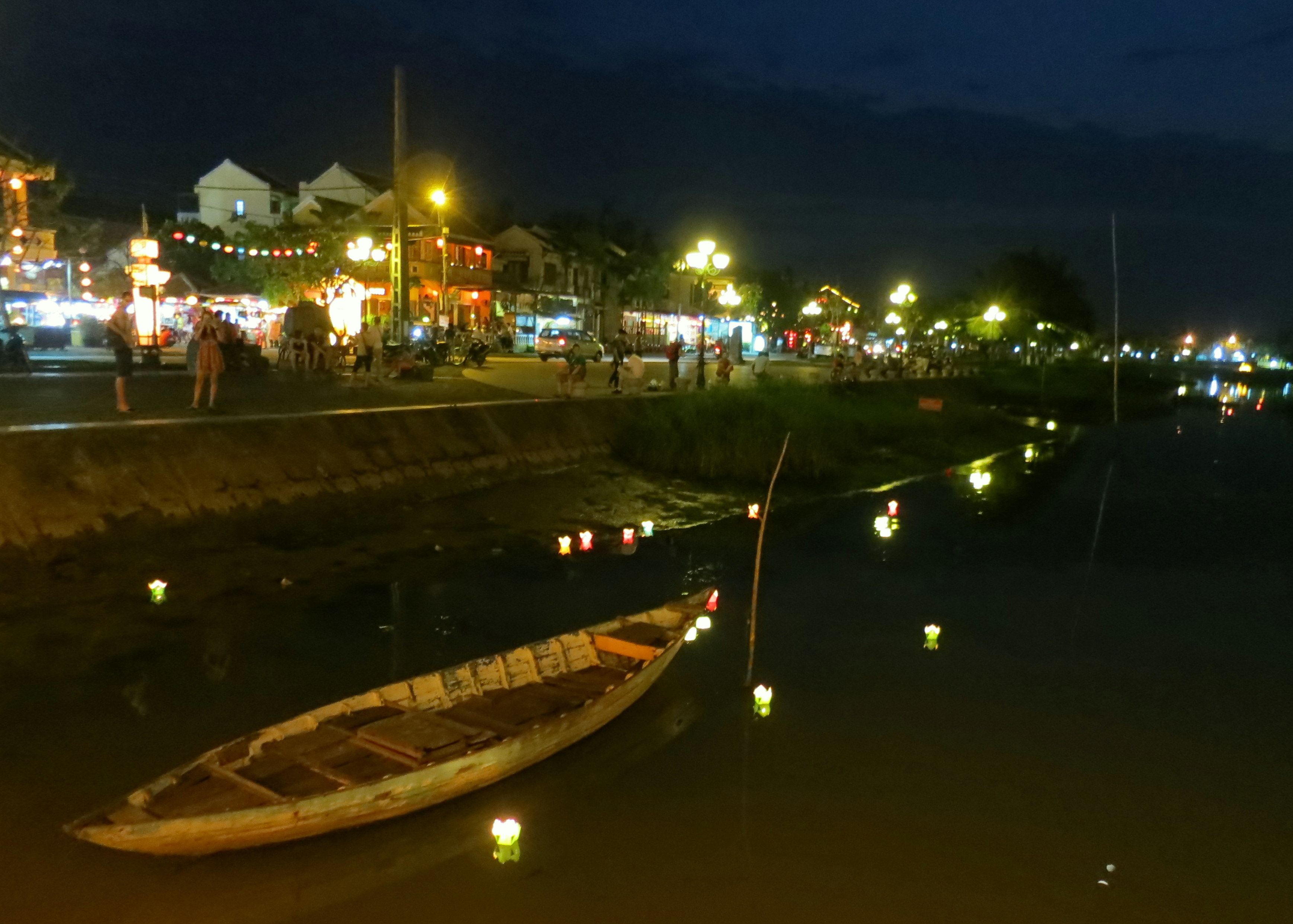
Hoi An was picturesque as any town I’ve been to, and it was a relief to walk around in a mostly pedestrian-only area for awhile, relaxing into the bright colors and quiet atmosphere, eating cao lau noodles and running my hands over rich fabrics in the shops. But even though I wandered at night under the lanterns strung across the streets, a part of me still thinks that maybe they shut the whole set down overnight, then open up this peculiar theme park again the next day.

hoi an

Hoi An by night

Hoi An by night

hoi an

Oh yeah, I took model shots

Oh yeah, I took model shots

A Short Visit to Nha Trang in Low Season

I didn’t intend to go to Nha Trang, a coastal city in southern Vietnam, and the way things turned out, I wish I hadn’t. But it was a good midpoint stop on the way from Ho Chi Minh City to Hoi An, and my friend’s dad had described it as a “the Riviera of Vietnam,” so I thought I’d stay a couple days to lay out before moving on. As it turned out, I got hit by a car my first full day in town, and I never made it as far as the beach.

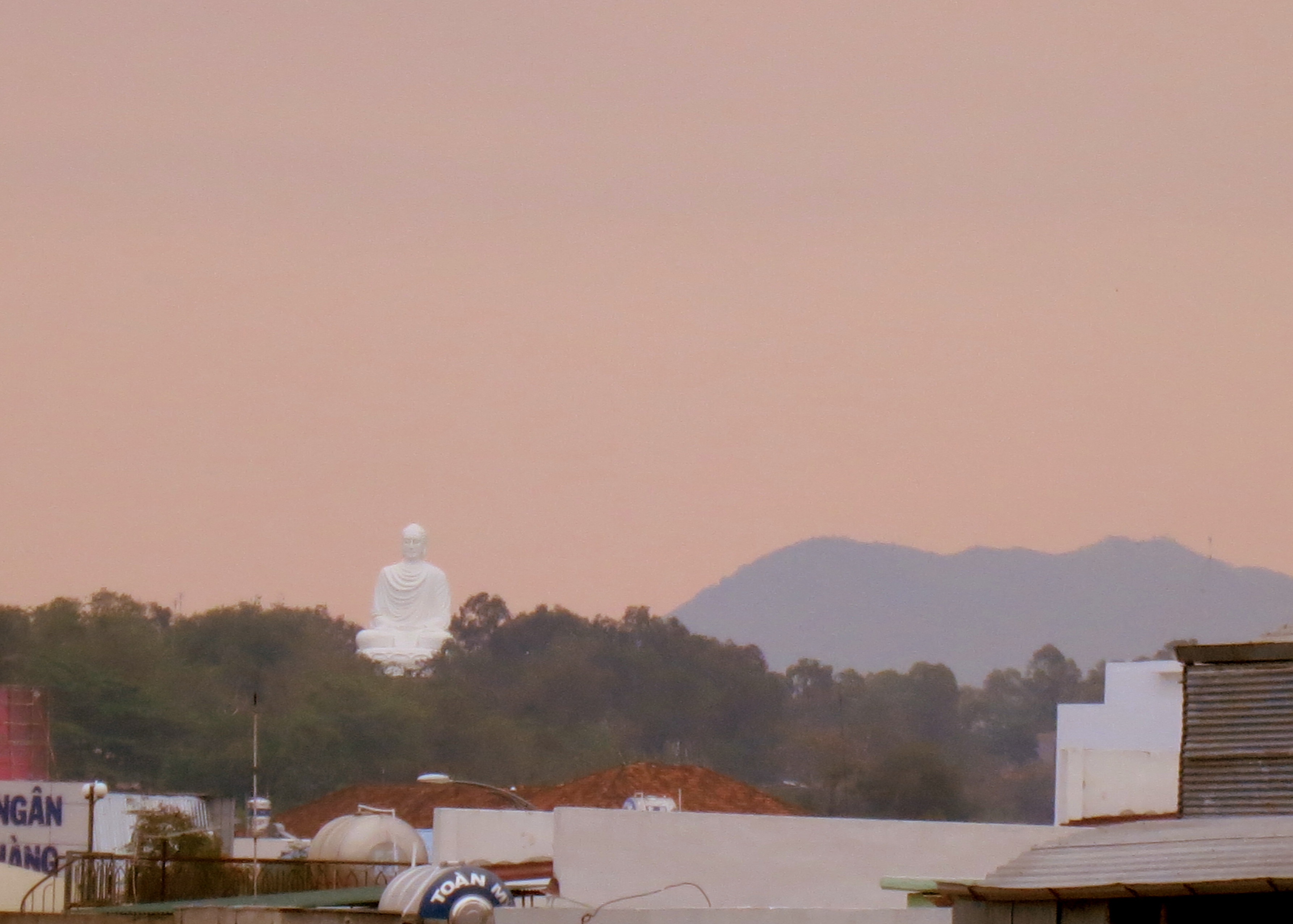
Buddha in the distance

Buddha in the distance

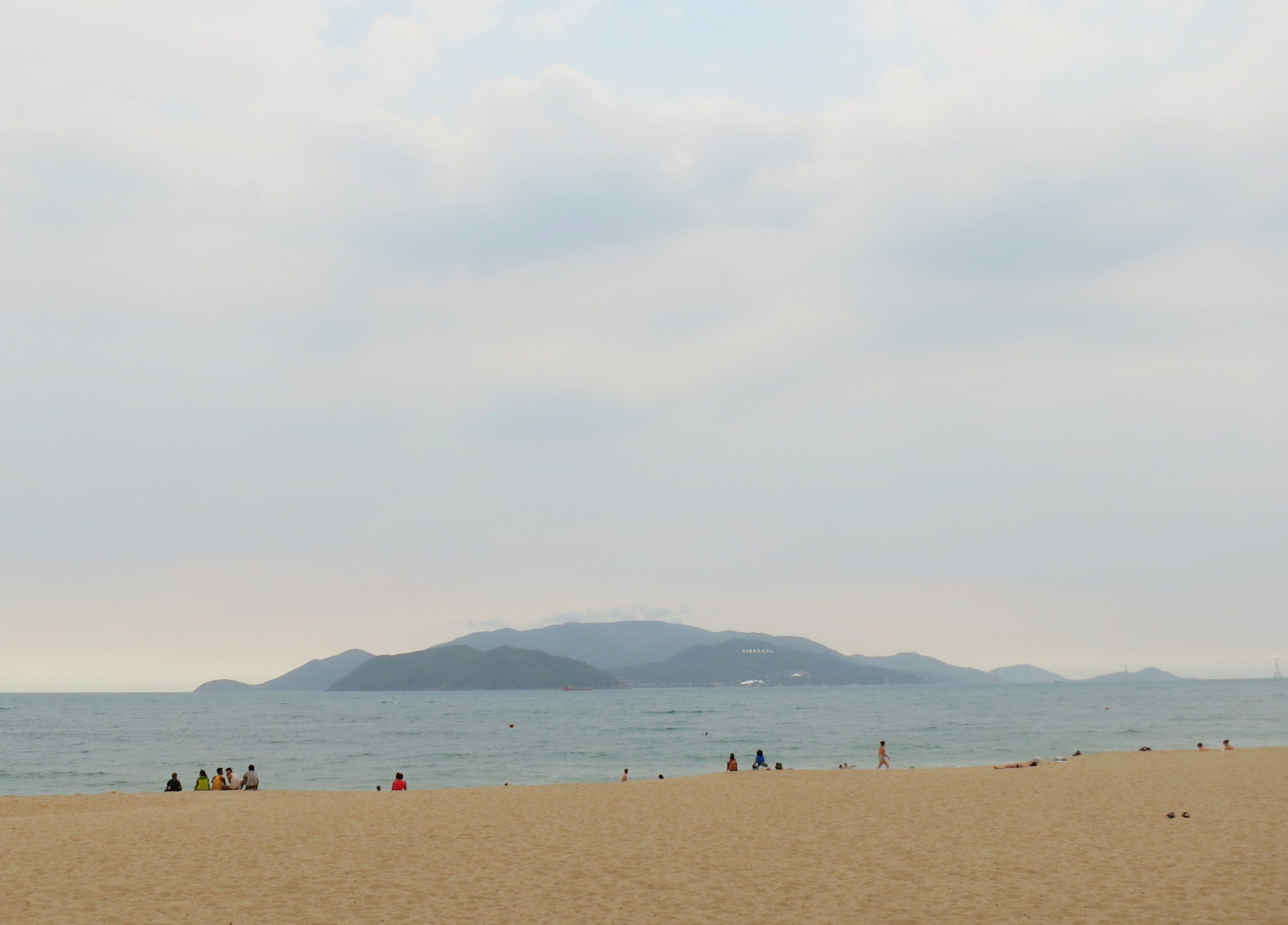
The “hit by a car” story is one for another day, but suffice it to say I didn’t explore too much of the town after that. (Yes, I’m fine now, and it’s a funny story in retrospect, so watch this space.) Nha Trang was in low season, anyway; most tourists come during the summer. The weather was warm, of course, but overcast and sticky. Not great for laying out or even working up the energy to go swimming. I saw maybe a couple kids in the water when I took a walk to the edge of the beach. But the wide expanse of sand and the view of hilly islands in the distance hinted at what a nice place this would be in the sunshine.

The beach at Nha Trang

The beach at Nha Trang

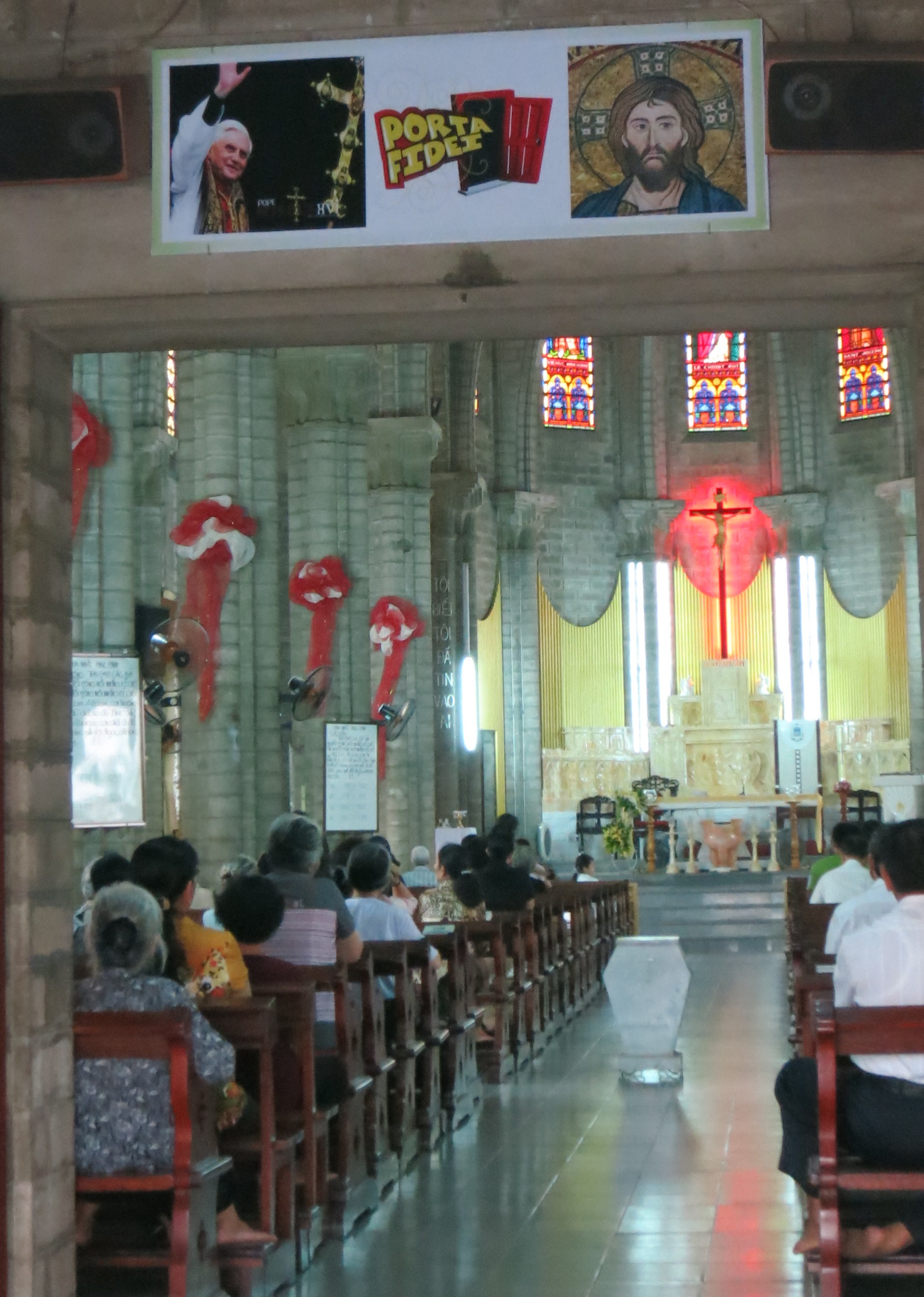
I walked up to the Roman Catholic cathedral, which was a strange sight after the many temples I’d seen throughout Southeast Asia. Services were being held when I got there, so I didn’t go in for a good look around, but I did glimpse the neon red cross blazing over the altar. I had to step aside for several elderly ladies zooming up the hill on their motorbikes to attend church.

Nha Trang Cathedral

Nha Trang Cathedral

Neon Jesus

Neon Jesus

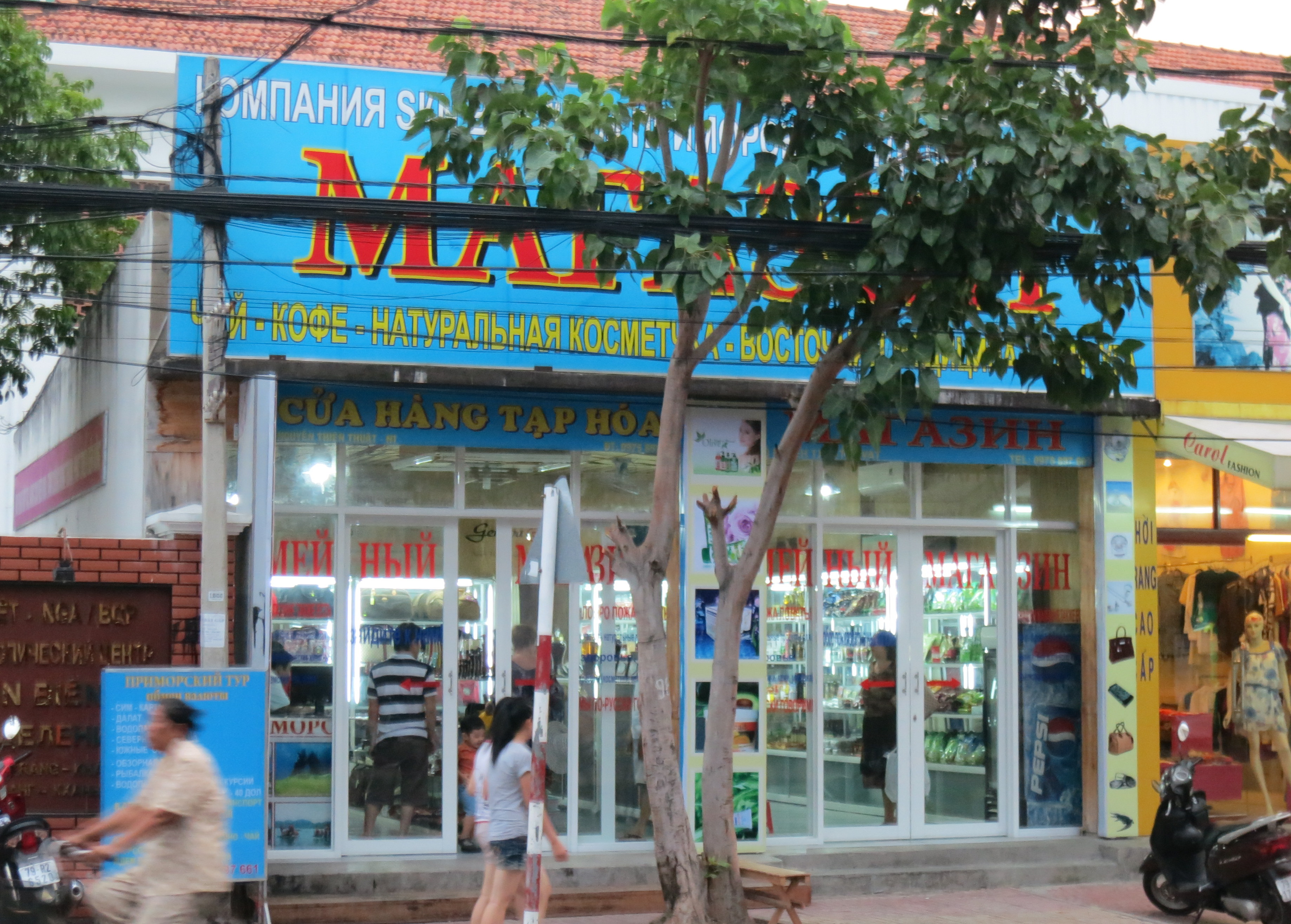
nha trangI got lost on the walk back to my hostel, which was great, because I walked through a couple different neighborhoods and got an idea of what the town is like. I walked through an entirely Vietnamese neighborhood, where I smiled at the behind-the-hand giggles my size and whiteness prompted. I then passed through a tourist area filled almost entirely with Russians; this is a popular resort town for people from the eastern part of Russia. Finally, I got within blocks of the beach, an area that mixed English and Russian signage and was entirely populated by Vietnamese tourist businesses and their customers.

I'm not sure why I didn't take any better photos of the Russian signage in town--it was striking to see Vietnamese, Russian, and English all on one storefront

I’m not sure why I didn’t take any better photos of the Russian signage in town–it was striking to see Vietnamese, Russian, and English all on one storefront

Cycle taxis in Nha Trang

Cycle taxis

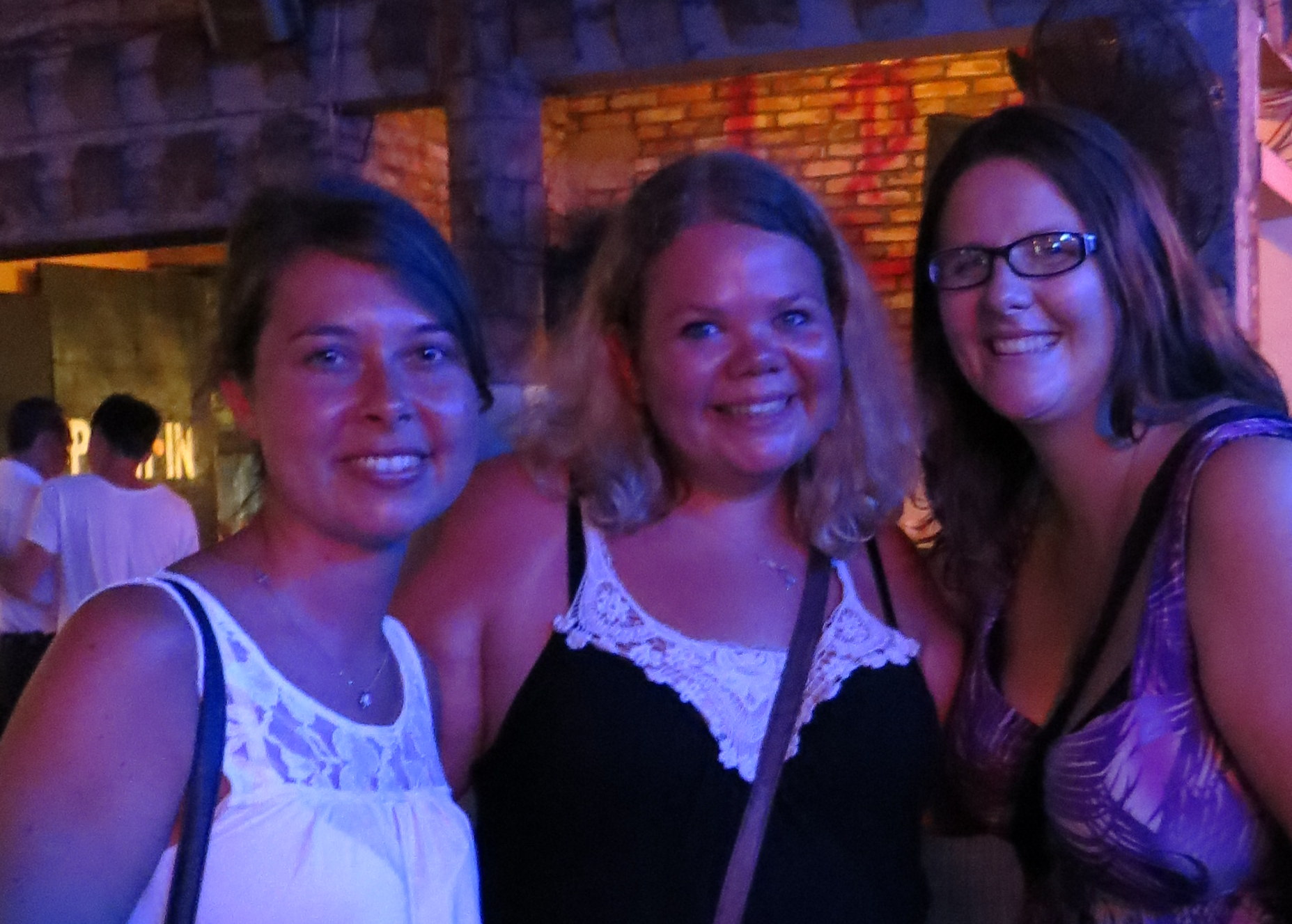
I’d met a couple of lovely women on the train over from Ho Chi Minh City, and we met up for dinner and drinks at one of the many tourist-and-expat bars in town. Laura and Kate cheered me up immensely after my scrape with a 3,000-pound metal bully, and we danced the night away at an establishment that guaranteed “Free Headache Included” at the bottom of its drinks list. Kind of a fitting end to my brief, strange visit to Nha Trang.

Kate, Laura, and me

Kate, Laura, and me

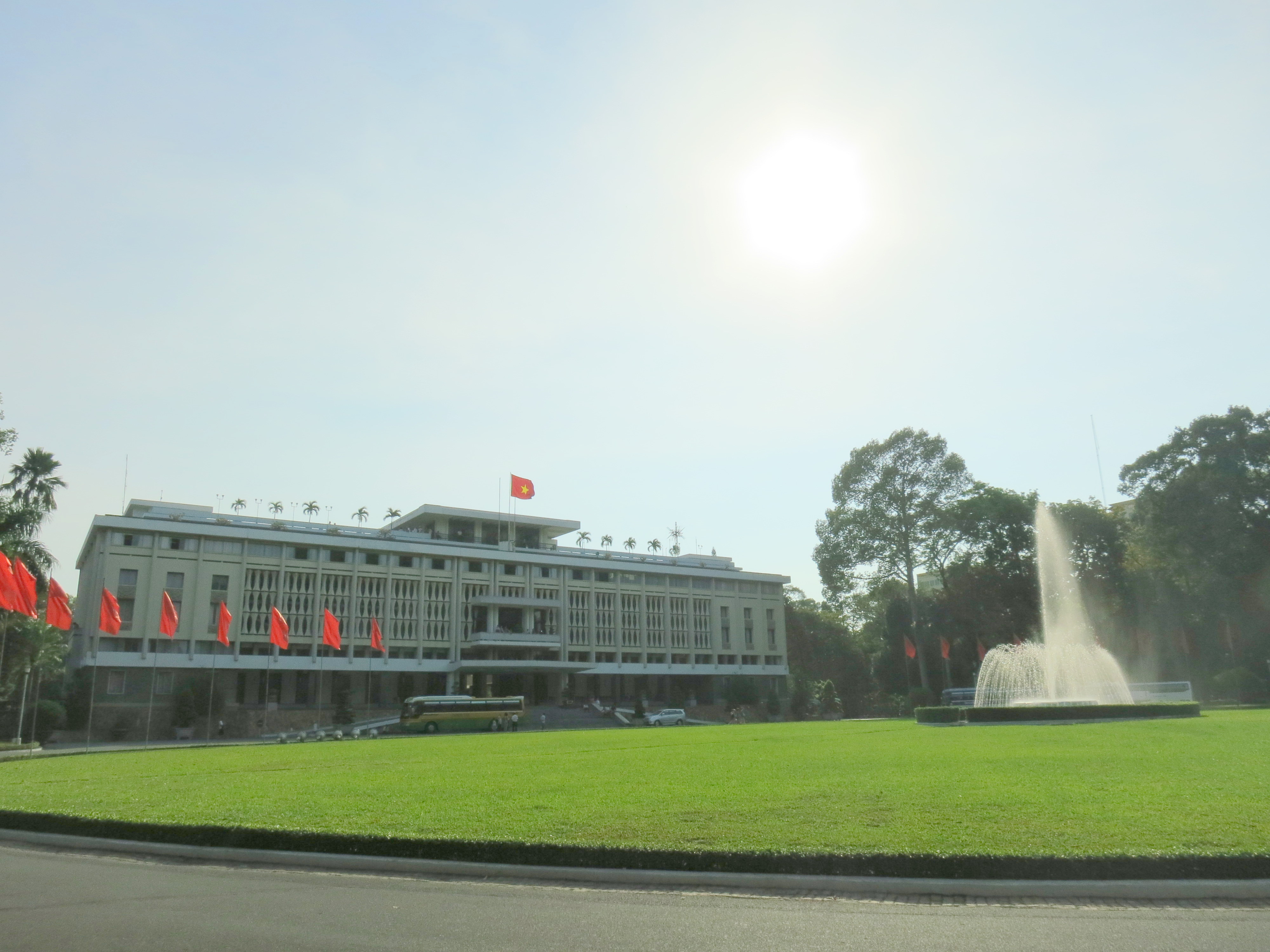
The Glamour of Vietnam’s Reunification Palace

I went to Reunification Palace right after going to the War Remnants Museum, and the change was jarring. I had an emotional experience in the museum, and it was strange to walk away from the troubling rooms of the museum into the perfectly manicured halls of the palace.

Reunification Palace, Ho Chi Minh City

Reunification Palace, Ho Chi Minh City

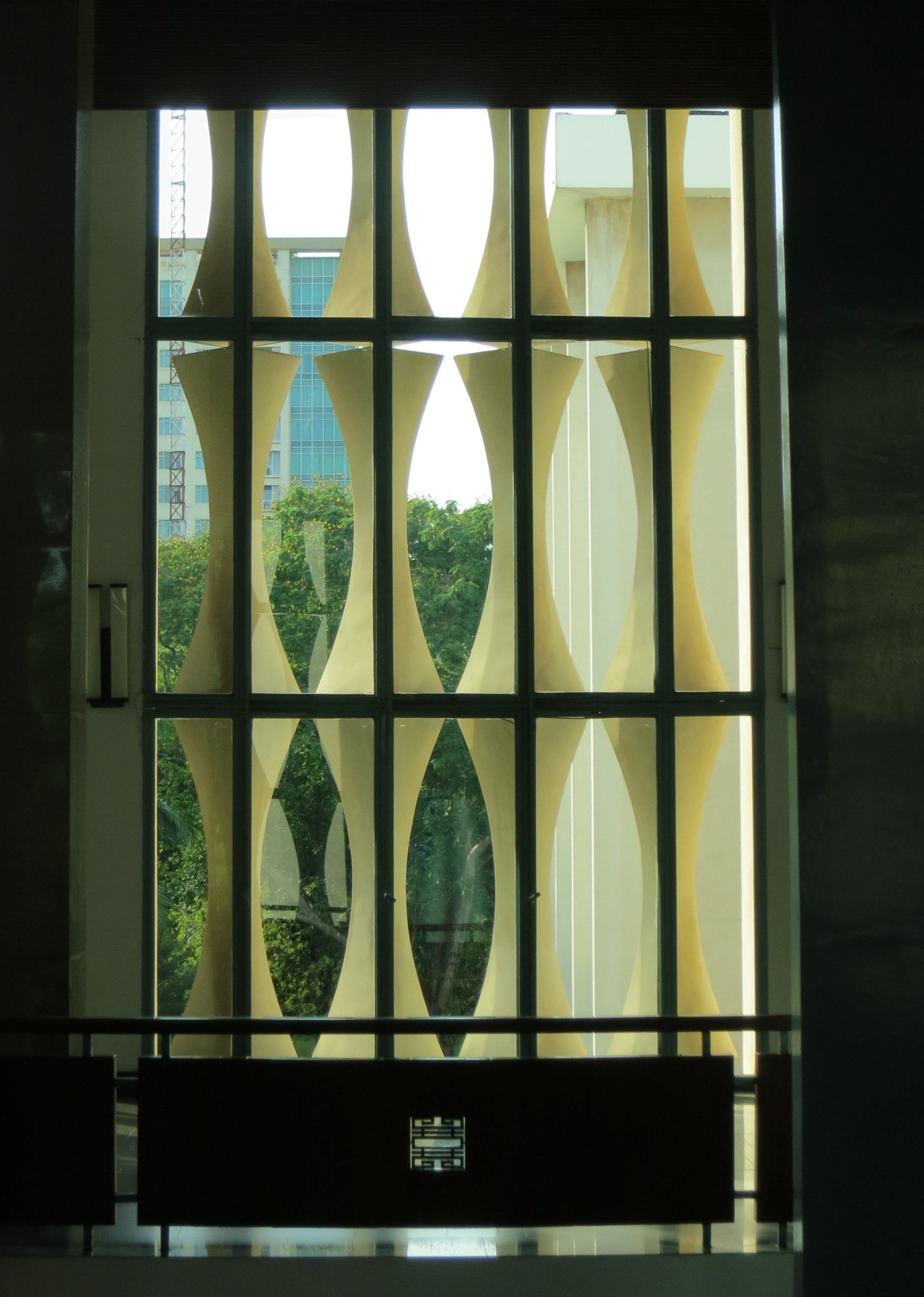
I caught a tour midway through, and learned a little about the building. The French had built a mansion on the site back in the 19th century, but it was bombed in 1962 in an assassination attempt on President Diem. The damage was so extensive that Diem ordered the building razed and rebuilt, which is why it’s entirely built and decorated in the modern style of the mid-1960s. 

I often dislike these types of windows, because they're usually done in a heavy concrete, but here they seemed much lighter

I often dislike these types of windows, because they’re usually done in a heavy concrete, but here they seemed much lighter

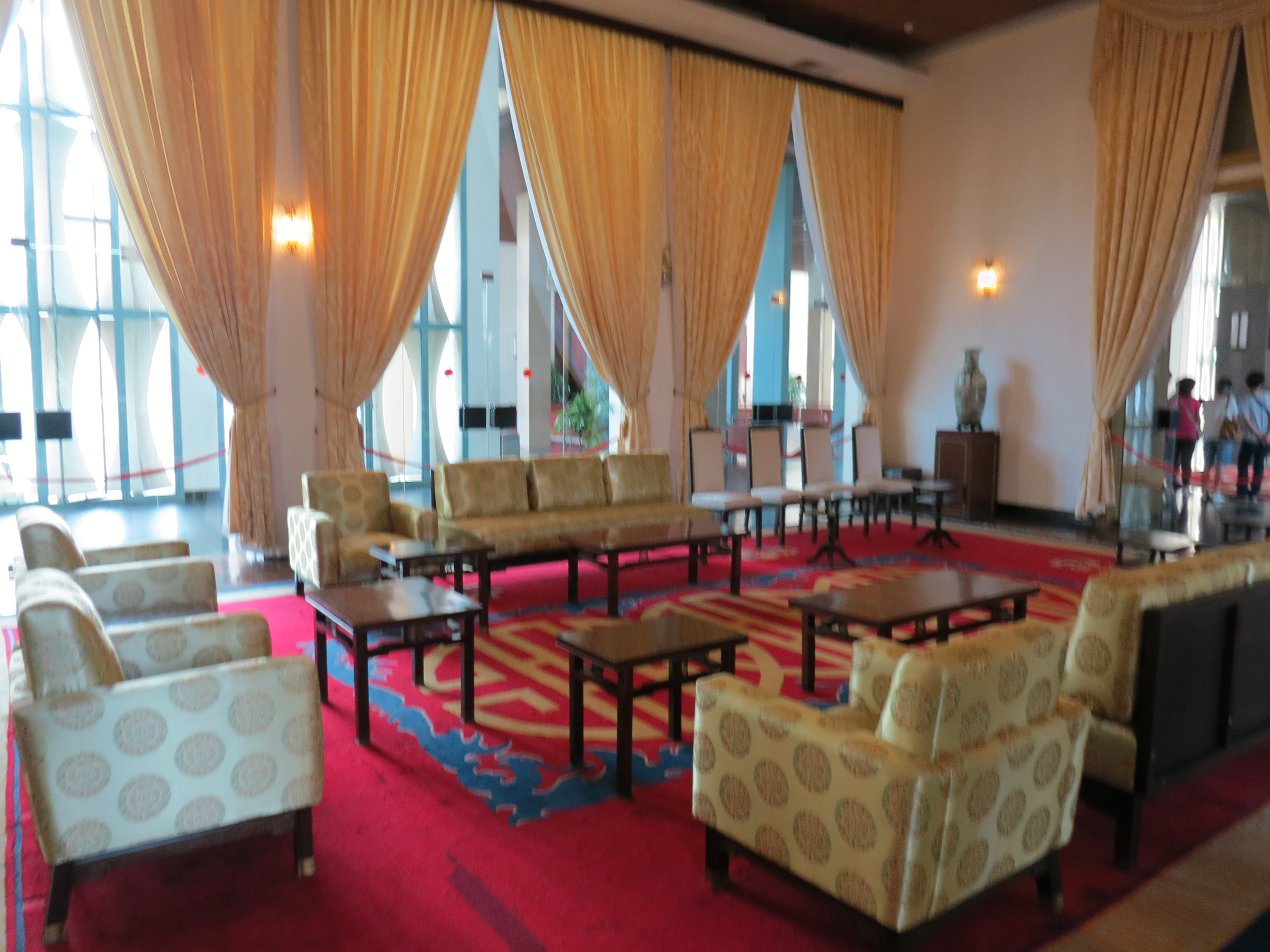
One of the reception rooms

One of the reception rooms

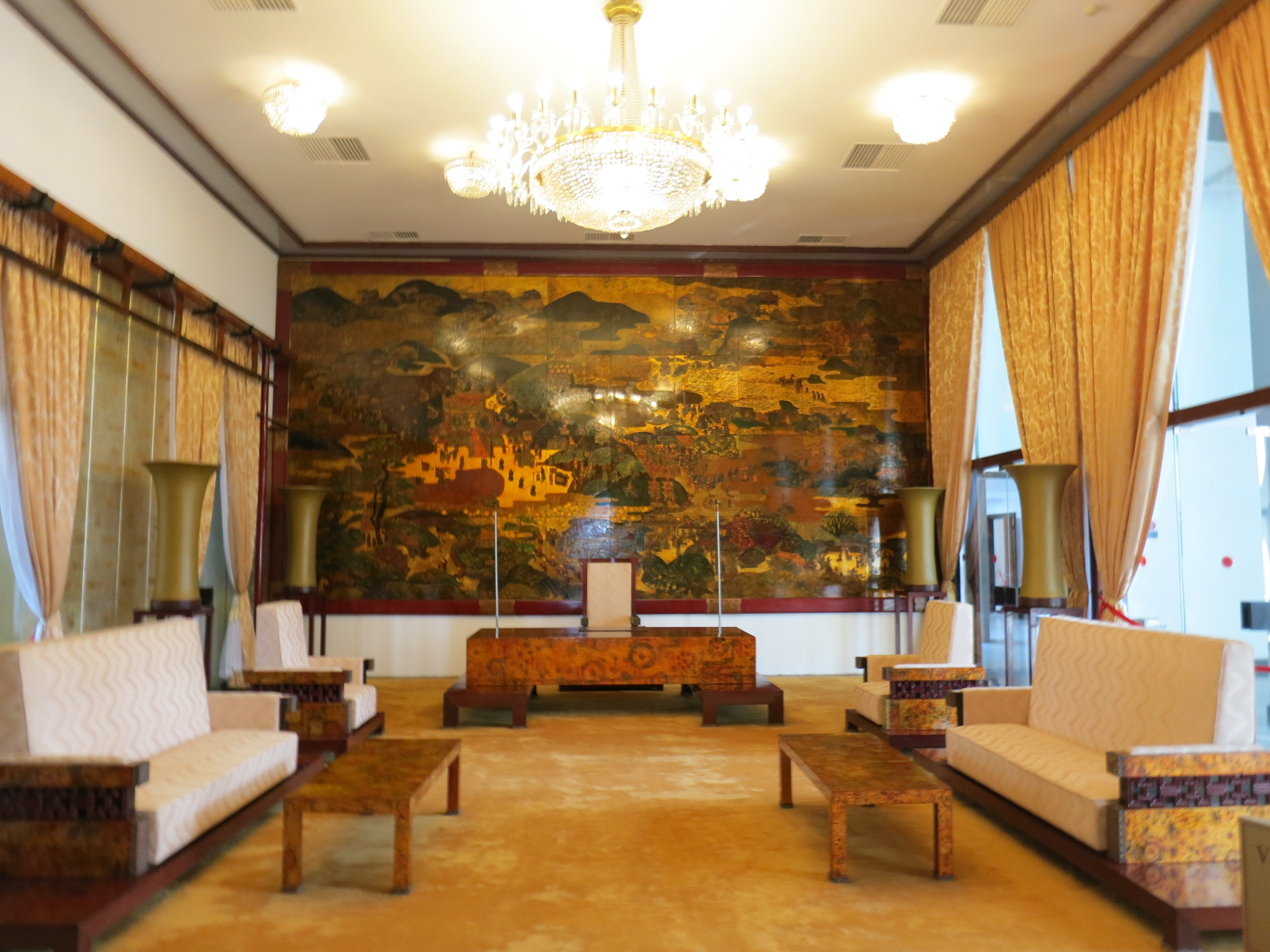
It was like stepping on the set of Mad Men, except where I find the dark browns of that show uninspiring, the bright colors and rich materials of the palace were a sight to behold. I think a lot of that had to do with Vietnamese-born, French-trained architect Ngo Viet Thu, who purposely used fabrics, rugs, and paintings showing Sino-Vietnamese designs. Everything was sleek lines, symmetrical layouts, long rooms filled with matching furniture. One room held a painting that represented the north, middle, and south of Vietnam. The president’s main reception room incorporated traditional Vietnamese designs, and the lacquer on a painting in another meeting room was stunning.
Check out that lacquer

Check out that lacquer

From left to right: the north, middle, and south of Vietnam

From left to right: the north, middle, and south of Vietnam

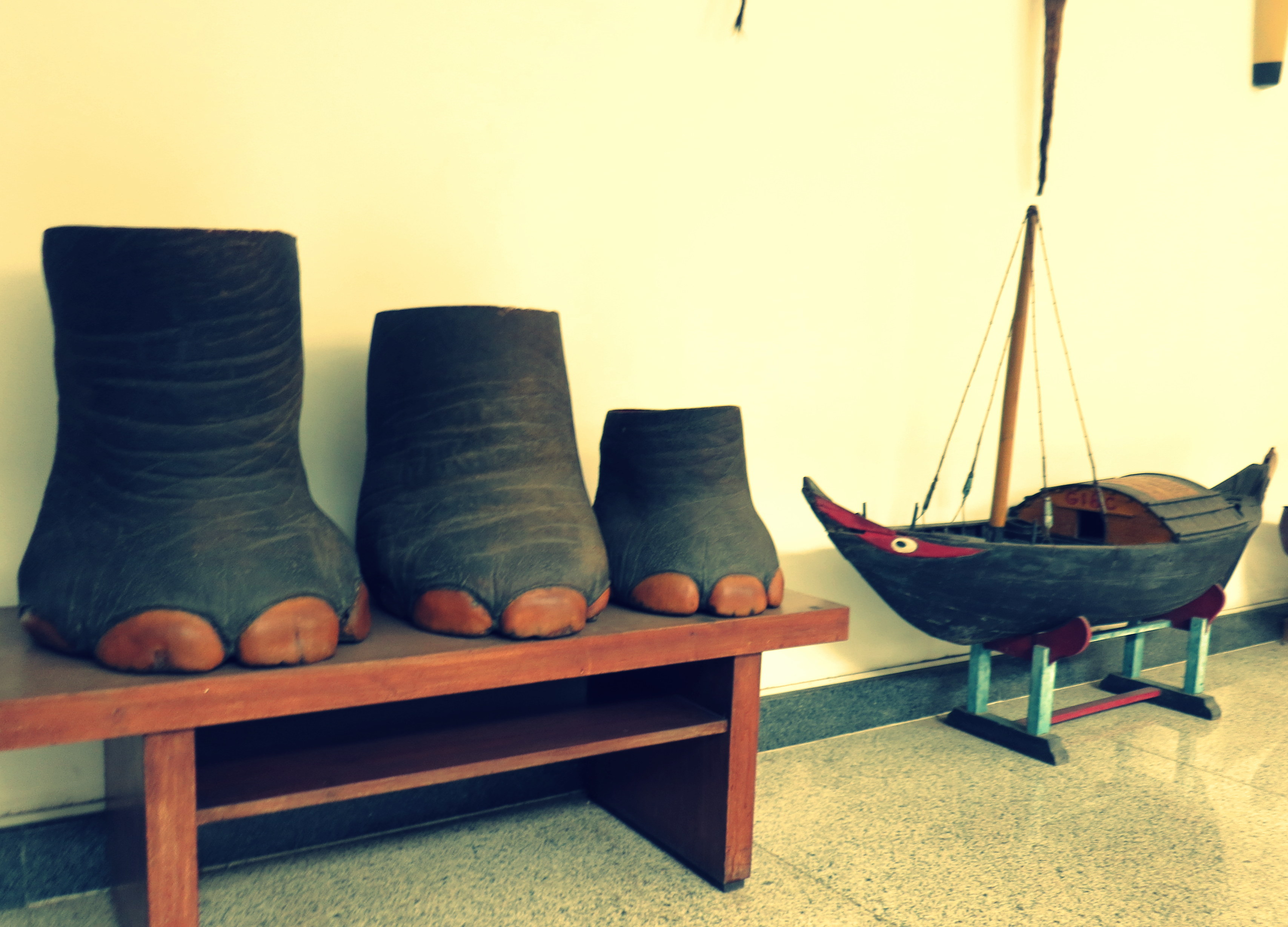
The residential quarters were emptier, nearly bleak, compared to the dressed to impress public rooms. The courtyard of the residential quarters contained the preserved legs of elephants, a miniature ship, and a Chinese ceramic dog, which seemed an odd assemblage.

The relatively bare residential quarters

The relatively bare residential quarters

Odd mementoes

Odd mementoes

The palace includes a movie theater, a gambling room, and my favorite–a rooftop ballroom. There’s a dance floor, bar, and grand piano up there in the center of the roof, and space on either side to drift away to for conversations romantic or political, or maybe both.

Tables were set up for mahjong and blackjack

Tables were set up for mahjong and blackjack

Dancing on the rooftop

Dancing on the rooftop

Down in the basement is the war strategy room, several small offices, a small cell for the president to hide in during combat, the kitchens, and the Mercedes used by the last president of South Vietnam.

The door to the movie theater

The door to the movie theater

Strategy room underground

Strategy room underground

One of the views from one of the balconies

A view from one of the balconies

Diem was killed before he could ever live in the palace, but two of his successors lived there. On April 30, 1975, a tank crashed through the gate of the palace during the fall of Saigon, and the war officially ended. What had been called Independence Palace was renamed Reunification Palace by the Communist government, and it has remained pretty much untouched ever since. Sometimes official meetings are held there, but mostly it’s a strange museum piece, a building barely used for its intended purpose, a monument to the decadence of a former regime.
Adding the traditional to the new building

Adding the traditional to a new building

Beyond the Facts: Visiting the War Remnants Museum in Vietnam

No museum is a mere collection of facts. It’s not possible to display information completely objectively; there’s always a point of view taken, a lesson to impart, an agenda to push. This is true even for museums that aren’t at all political; for example, the Laura Ingalls Wilder Historic House & Museum promotes not just Wilder’s writing, but the idea that her values and way of living are worth emulating. Museums only exist because somebody thought the topic was worthy of further study and wider knowledge by the general public. Just by building a museum, you’re taking a position. But I have to say, I have never been to a more baldly biased museum than the War Remnants Museum in Ho Chi Minh City.

The War Remnants Museum in Ho Chi Minh City, Vietnam

The War Remnants Museum in Ho Chi Minh City, Vietnam

Unlike a lot of museums, this one makes no bones about its purpose: it is there to tell the story of the Viet Cong during the Vietnamese-American War, and it is there as a corrective to the American narrative of the war. Every single poster and placard called it the American War of Aggression. Any time the war was called “the Vietnam War,” the phrase was placed in quotes. South Vietnam was called the “so-called Republic of Vietnam.”

Protests around the world

Protests around the world

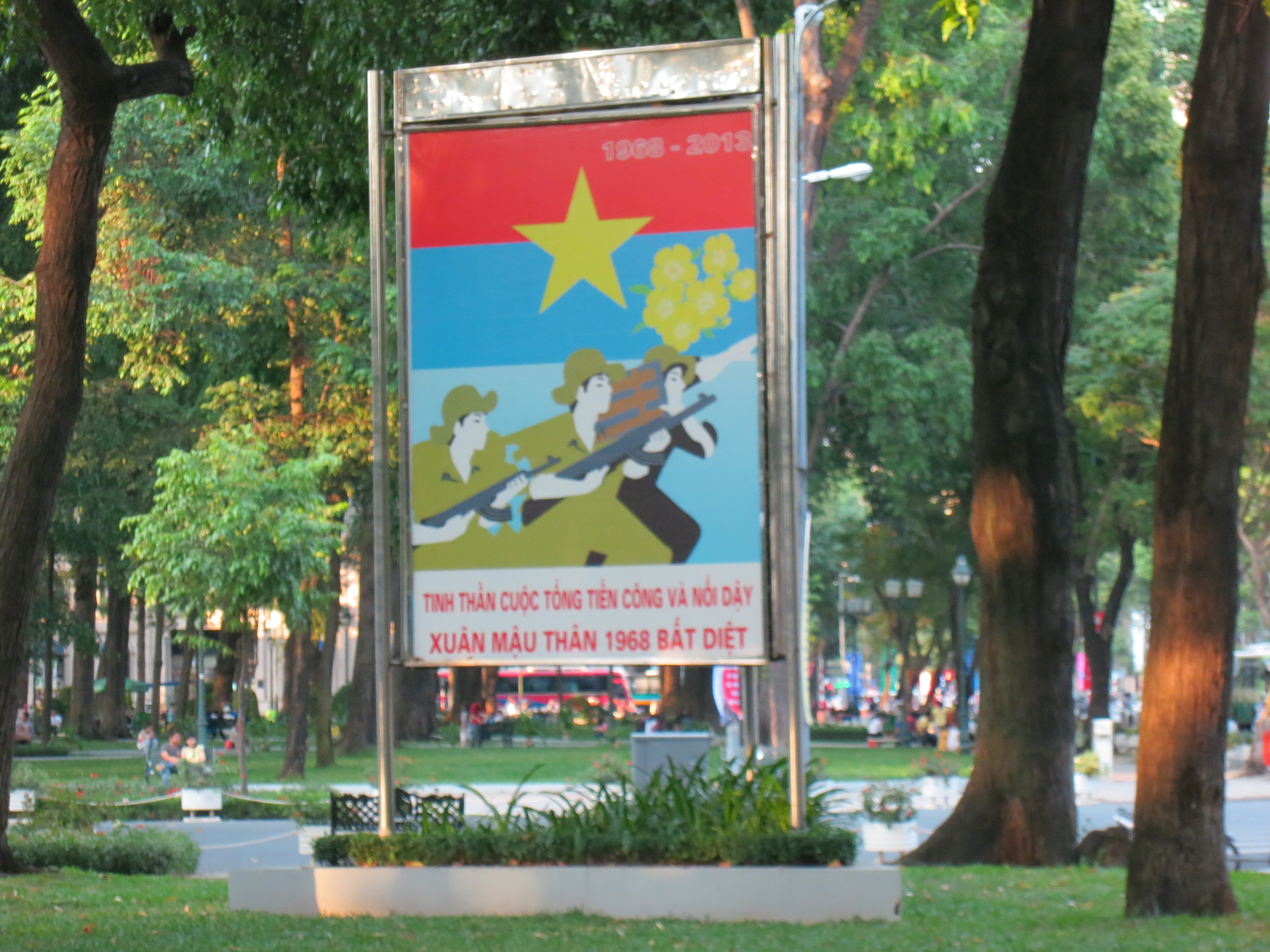
When the USSR or China were mentioned, the war was called a “struggle for national salvation,” to be more aligned with Communist vocabulary. One placard showed Australians protesting their government sending troops to aid the Americans, and the placard said they were protesting the agreement between the Australians and US to “force Australian youths to become field targets in the US battles in Vietnam.” The whole museum was a master course in semantics. (Which is not to say it was false–you can put a lot of gloss on a base of facts.)

Some veterans from the US have sent in their medals and fatigues to the museum, with notes of apology

Some veterans from the US have sent in their medals and fatigues to the museum, with notes of apology

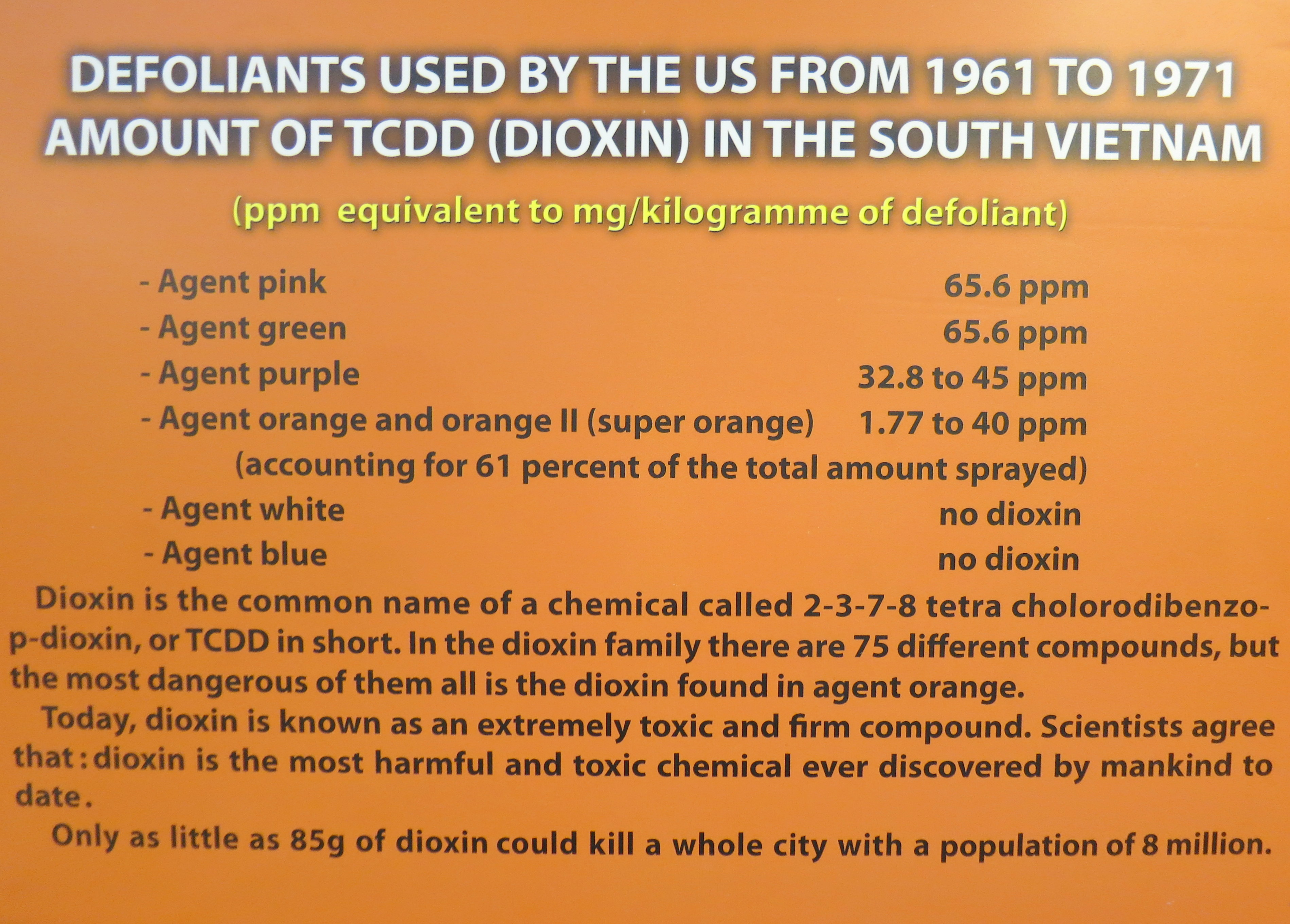
It was also extremely difficult to visit, because the anger and loss on display was so raw and so recent. An entire room was devoted to photos of children suffering from painful and debilitating birth defects, which they got because their parents were exposed to the dioxin in Agent Orange. Did you know that this was only one of the toxins sprayed over forests and farmlands? The museum showed posters of the various “colors” of toxins used by the US. The posters looked a lot like our terrorist threat level posters today, only guess who was the threat?

Yikes

Yikes

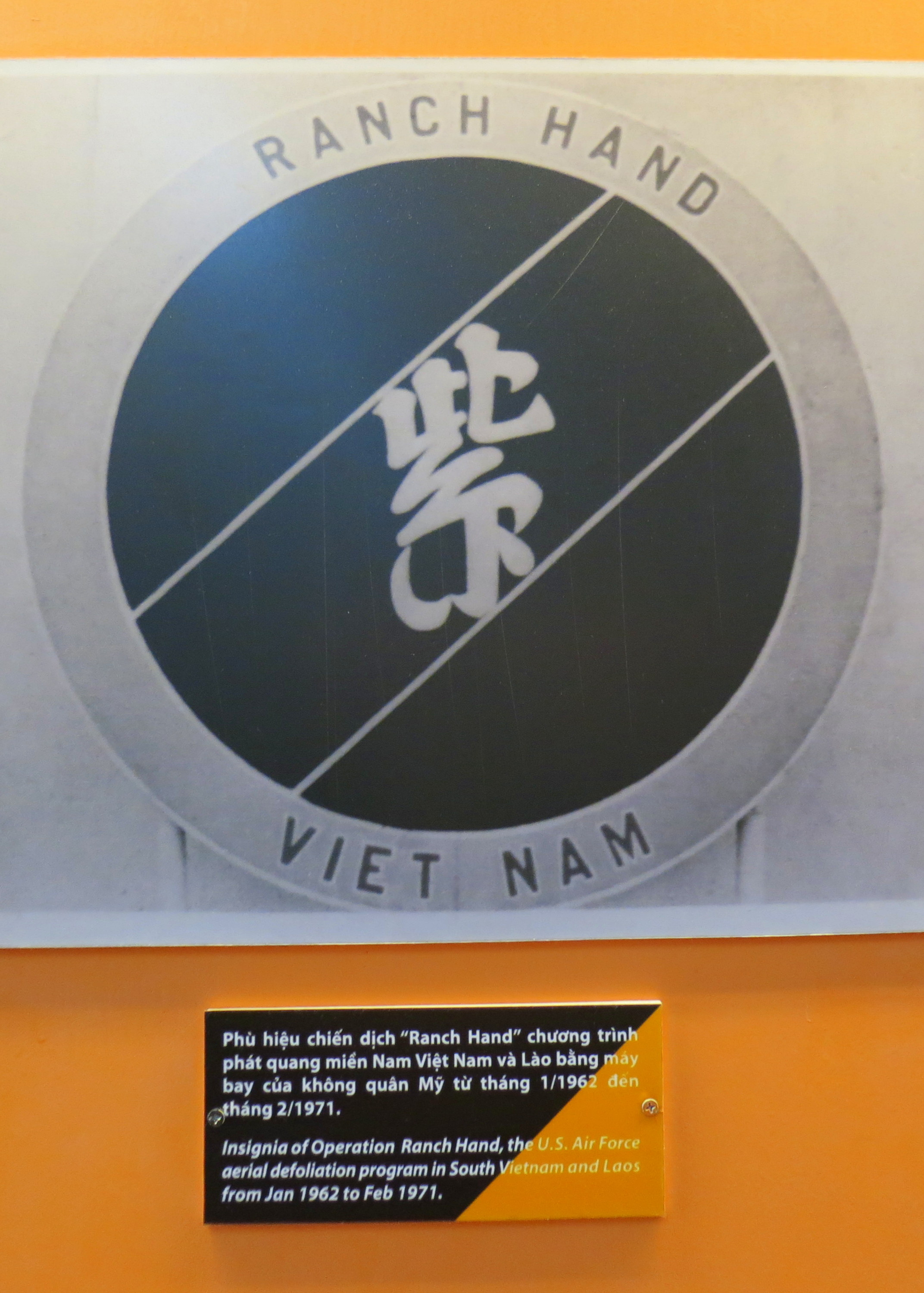
Ranch Hand: the name of the operation that sprayed various chemicals over the farmlands and forests of Vietnam from 1962 to 1971

Ranch Hand: the name of the operation that sprayed various chemicals over the farmlands and forests of Vietnam from 1962 to 1971

Research since the 1960s has shown that even just one parent exposed to dioxin could affect the DNA of the child, resulting in spina bifida, diabetes, various cancers, twisted or missing limbs, developmental disabilities, and other defects and diseases. So it’s not just the people who survived the war who developed health problems, but their children did, too. (Of course, this has been a big issue in the States, too, as the military has slowly agreed to compensate some US veterans for the health problems they and their children suffer as a result of being exposed to Agent Orange. We hurt ourselves when we hurt others.)

A whole room of these images, difficult to see, harder to contemplate.

A whole room of these images, difficult to see, harder to contemplate.

The Aggression War Crimes and Historical Truths sections, in addition to containing the Agent Orange room, included displays on the My Lai massacre, the founding of the National Front for Liberation (what we know as the Viet Cong), the bombings in Laos and Cambodia, and the airlift of Americans in Saigon in 1975.

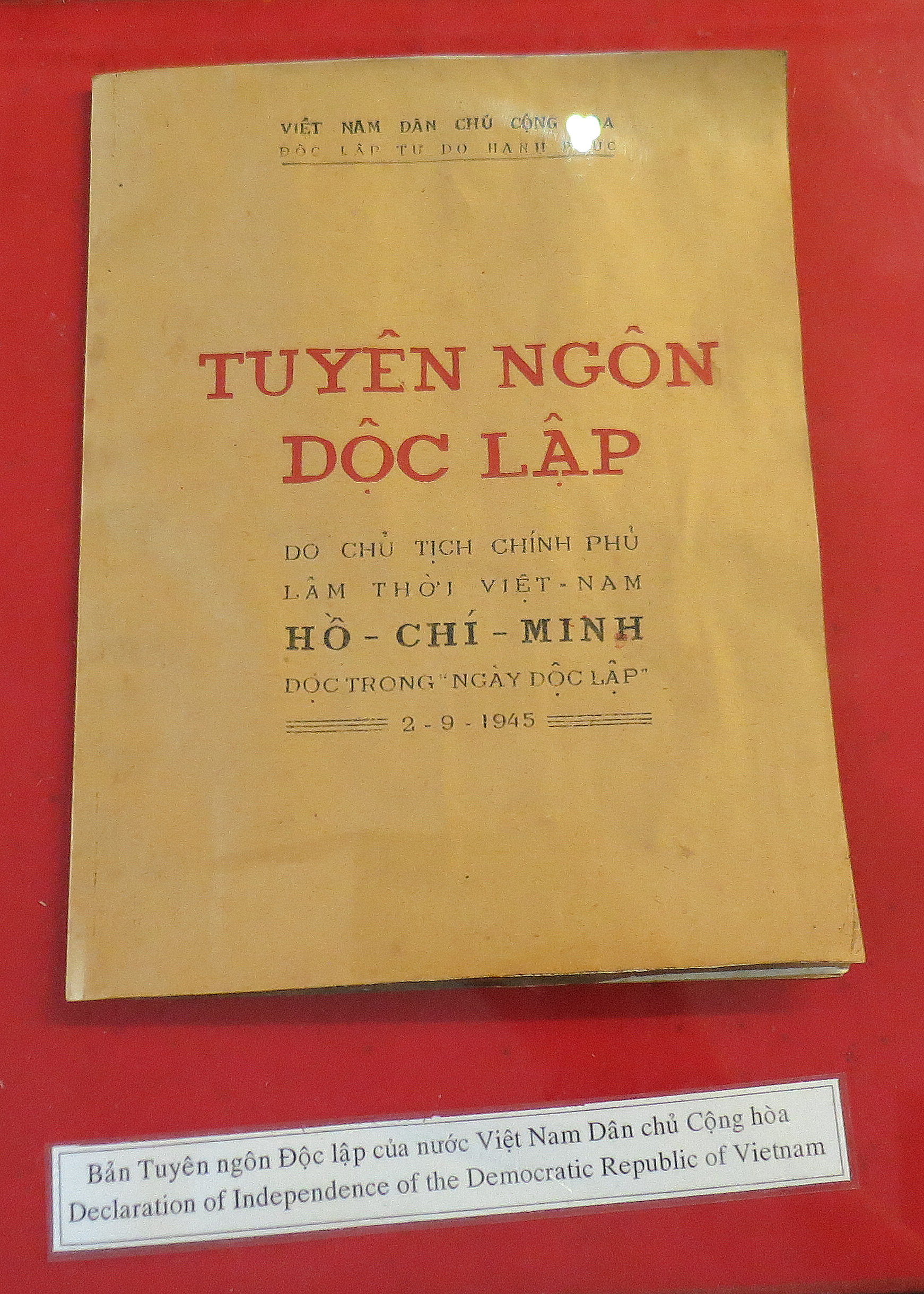
The Declaration of Independence

The Declaration of Independence of the Democratic Republic of Vietnam

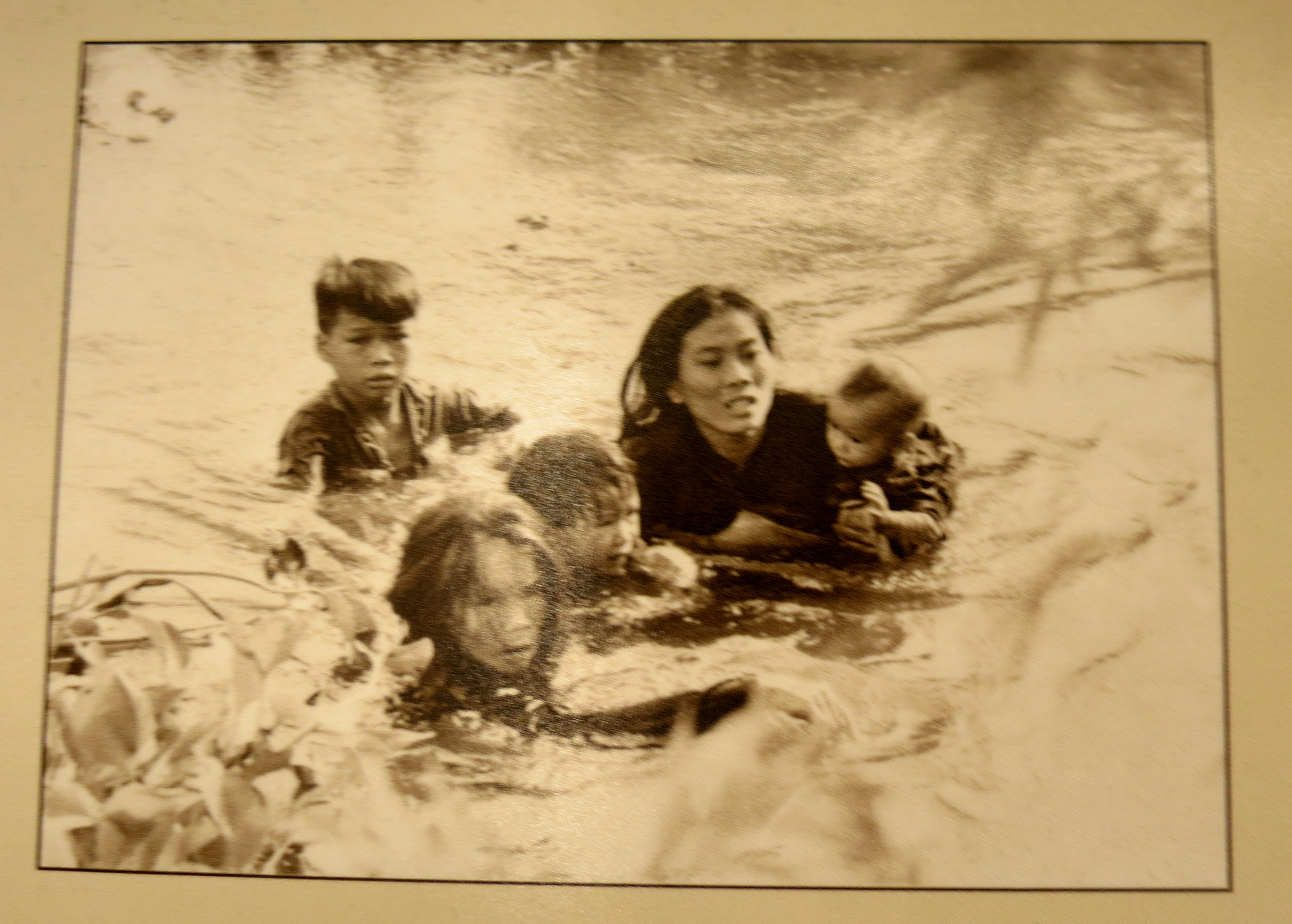
There was a special display on photographers of the war, especially American and French photographers who trained their cameras on the atrocities the Vietnamese suffered at the hands of the American troops. A couple rooms held displays of shell fragments, different kinds of guns, and in a display on the total destruction of villages in Son My, pots and baskets to show what the lives of the villagers were like before the attack.

Part of the Photographers of the War exhibit

Part of the Photographers of the War exhibit

war remnants museum hcmc

Pottery from the Son My massacre. We know it as the My Lai massacre, but that was just one of several villages in the area that was destroyed, and the Vietnamese call it the Son My massacre.

Pottery from the Son My massacre. We know it as the My Lai massacre, but that was just one of several villages in the area that was destroyed, and the Vietnamese call it the Son My massacre.

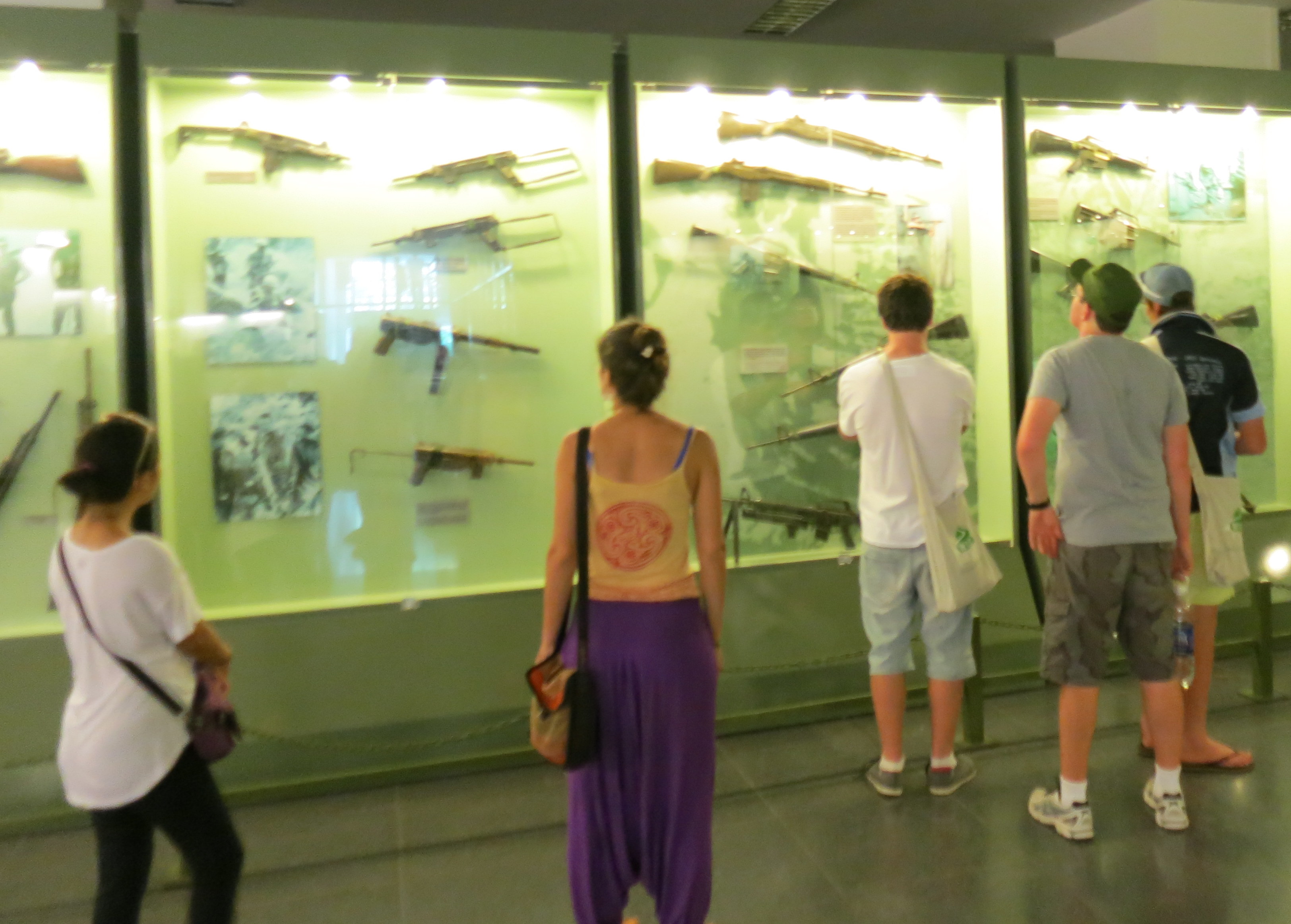
Visitors look at the guns on display

Visitors look at the guns on display

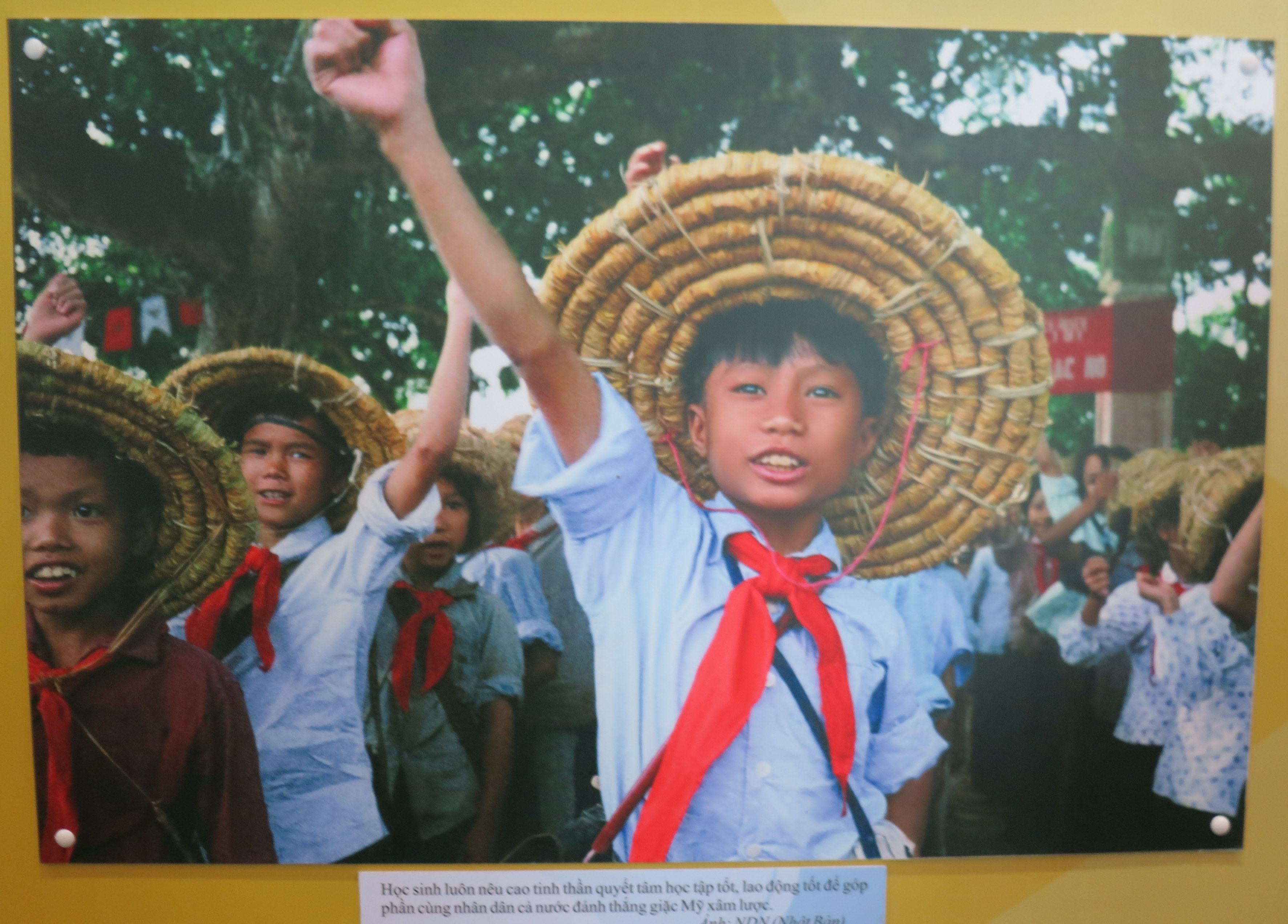
The first floor was split between two displays: one on the education the young Vietnamese received under the Viet Cong during the war, and one on the worldwide anti-war protests held during the ’60s and ’70s. The education display was dated, a magazine spread for people to read during the war. It showed children in obvious poses, smiles plastered on their faces as they shouted dedication to “Uncle Ho,” with captions like “Children tried to study well and work hard to make the contribution to the people’s movement defeating American aggressors.” I don’t mean to undermine the importance of the teachers during this time, though; they taught children in tunnels if they needed to, never sure of where or when the next bomb might go off.

Part of the "Children During War" exhibit

Part of the “Children During War” exhibit

The anti-war display was the opposite of dated; seeing the accumulation of anti-war and pro-Vietnam support from all those different countries, over many years, brought home how much this war meant to people around the world. People were not only concerned for the lives damaged and lost on both sides of the war, but also for what this kind of unofficial but all too real war meant for the world they lived in, and how it might affect their future. Seeing large posters declaring “Solidarity with Vietnam” in German, only 20 years after the end of World War II, was affecting. A man in Japan wore a sign saying “US Withdraw from Vietnam” during his commute, every day for 8 years. Several tribunals were convened on the “war crimes of the US” in Norway and Sweden. Thousands of people in South America, Africa, and Europe signed letters denouncing US intervention in Vietnam. Massive protests were held on every continent.

Before and after the war, from places around Vietnam

Before and after the war, from places around Vietnam

war remnants museum hcmc

I’m so used to the American version of the story, even the anti-war story, that I was surprised by these global actions against the war. I’d let myself be insulated, seeing everything through a particular lens, and it was good to be reminded how narrow that view is. Especially in light of the anti-war protests in 2003–those didn’t come from nowhere, they have a lot of historical precedent.

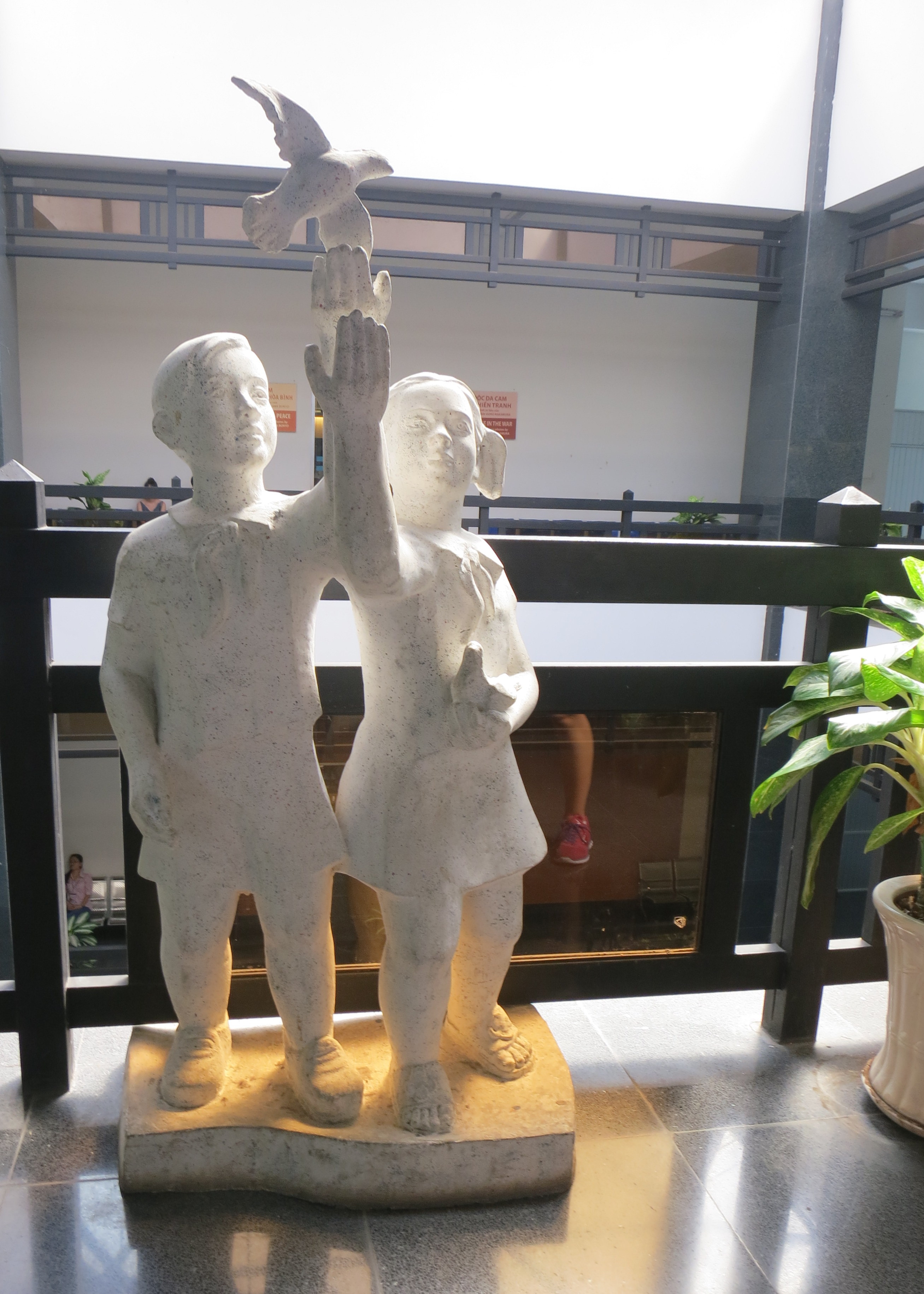
Let there be peace

Let there be peace
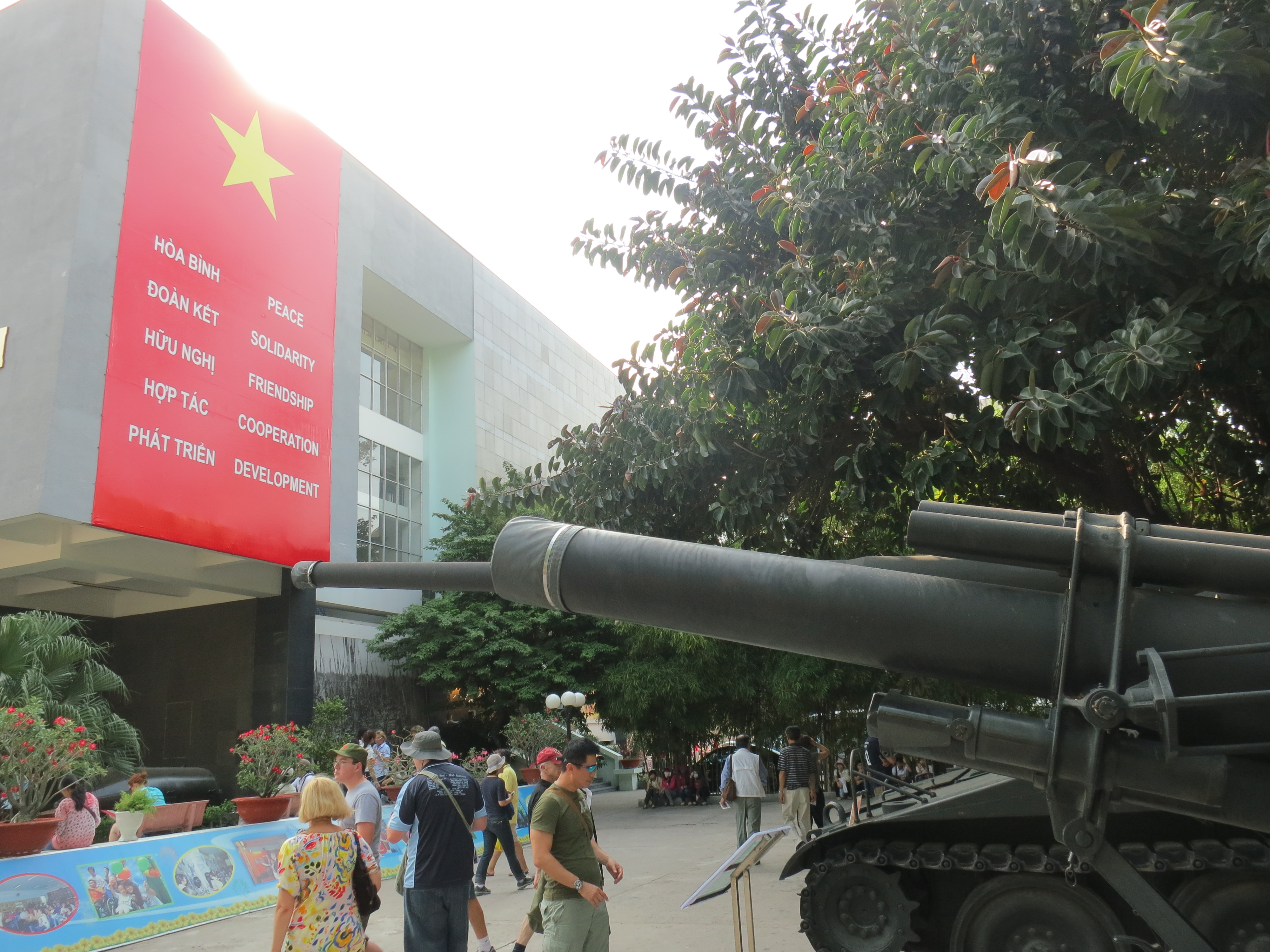
Outside the museum, captured American tanks, heavy artillery, and a bomber plane were on display in the sunshine. A group of children deformed by Agent Orange played musical instruments for a growing crowd of Vietnamese tourists. I stuck a flower in the gun of a tank, smiled and flashed a peace sign, consciously re-creating several historical photos of hope reaching out into violence. Behind me, the band struck up a folk song, and the gathered Vietnamese began to sing.
Outside the Peace Room
Outside the Peace Room
Going Underground at the Cu Chi Tunnels

I was nervous about visiting Vietnam, nervous because of how excited I was to see the places that stood out in my memory from my teenage years (when I was mildly obsessed with what we call the Vietnam War), and nervous for whether that excitement made me an insensitive visitor.

The enlarged tunnels didn't feel large at all

The enlarged tunnels didn’t feel large at all

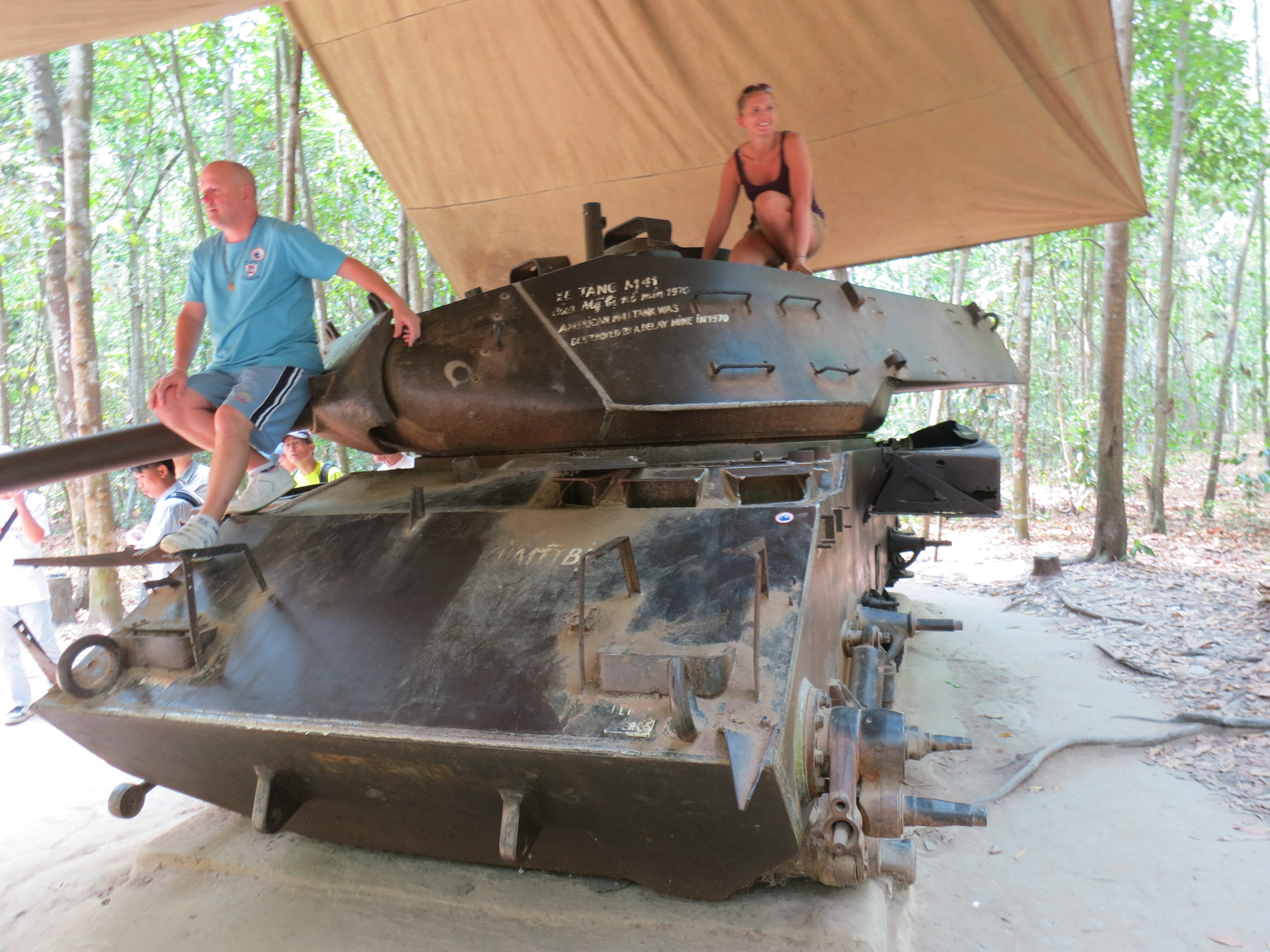
Turns out that asking those kinds of questions is kind of like asking, “am I being a good parent?”–the mere fact of asking means you’re on the right track. On my group tour of the Cu Chi Tunnels just outside Saigon, I saw people clamber on captured American war tanks, shooting finger guns and grinning. I saw people line up at the shooting range at one end of the park, paying by the bullet to shoot Uzis and M-21s. I saw a ten-year-old walking around with his family, totally oblivious in an American flag t-shirt.

Ahh, tourists

Ahh, tourists

The tunnels are part of an extensive network the Viet Cong built throughout the Saigon area during the war with the United States. They even managed to get under the American base, which rankled the US Army to no end. The Viet Cong lived in those tunnels; women cooked in them, men ran around in them on missions, children had lessons in there. The tunnels were tiny, perfectly sized for the Vietnamese, and far too small for the “tunnel rat” soldiers the Americans sent in to try to dismantle them. They never managed it, and the tunnels were a large part of the Viet Cong’s success in the war.

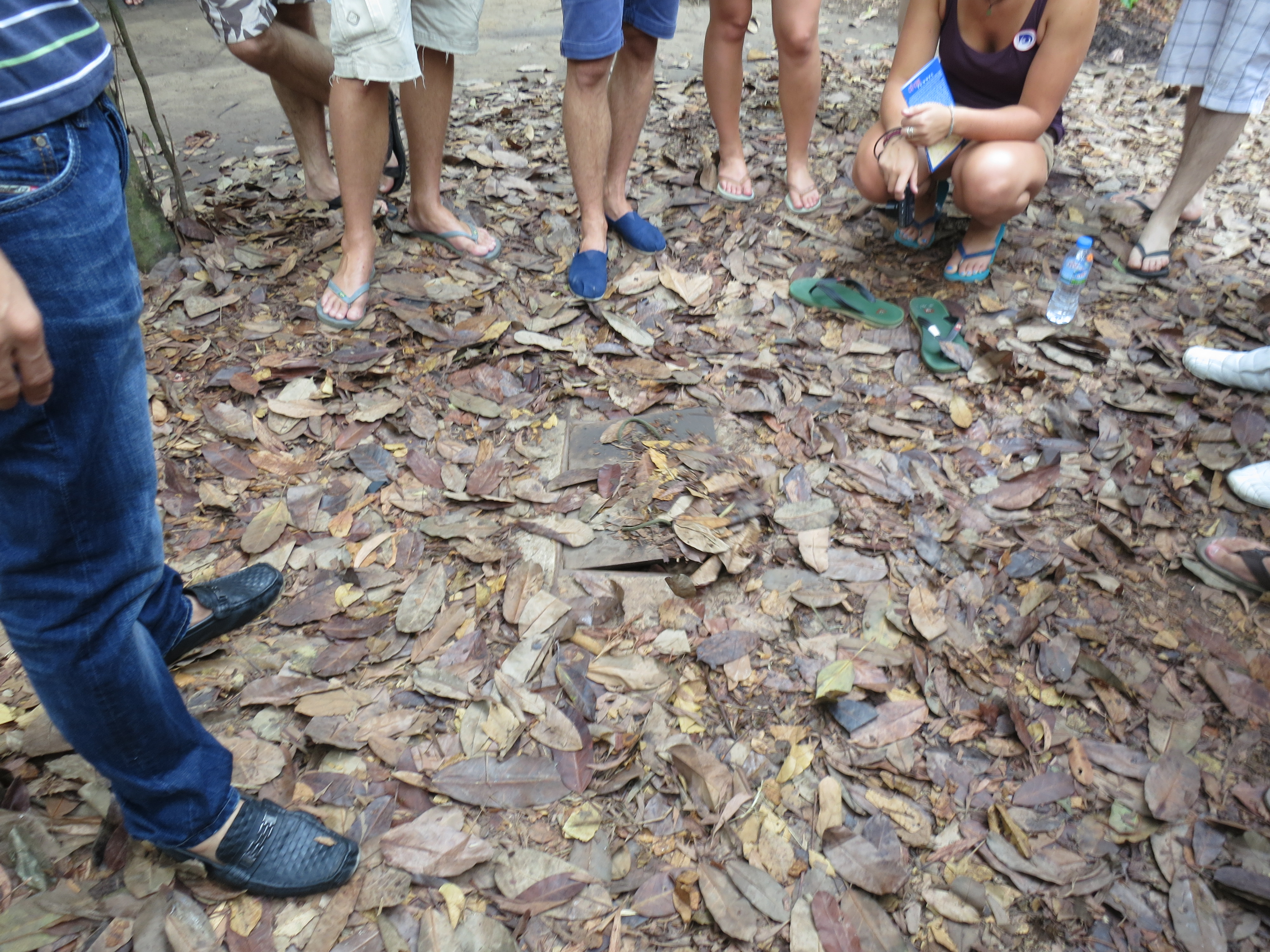
A nearly invisible tunnel entrance

A nearly invisible tunnel entrance

The tiny entrance to the tunnel

The tiny entrance to the tunnel

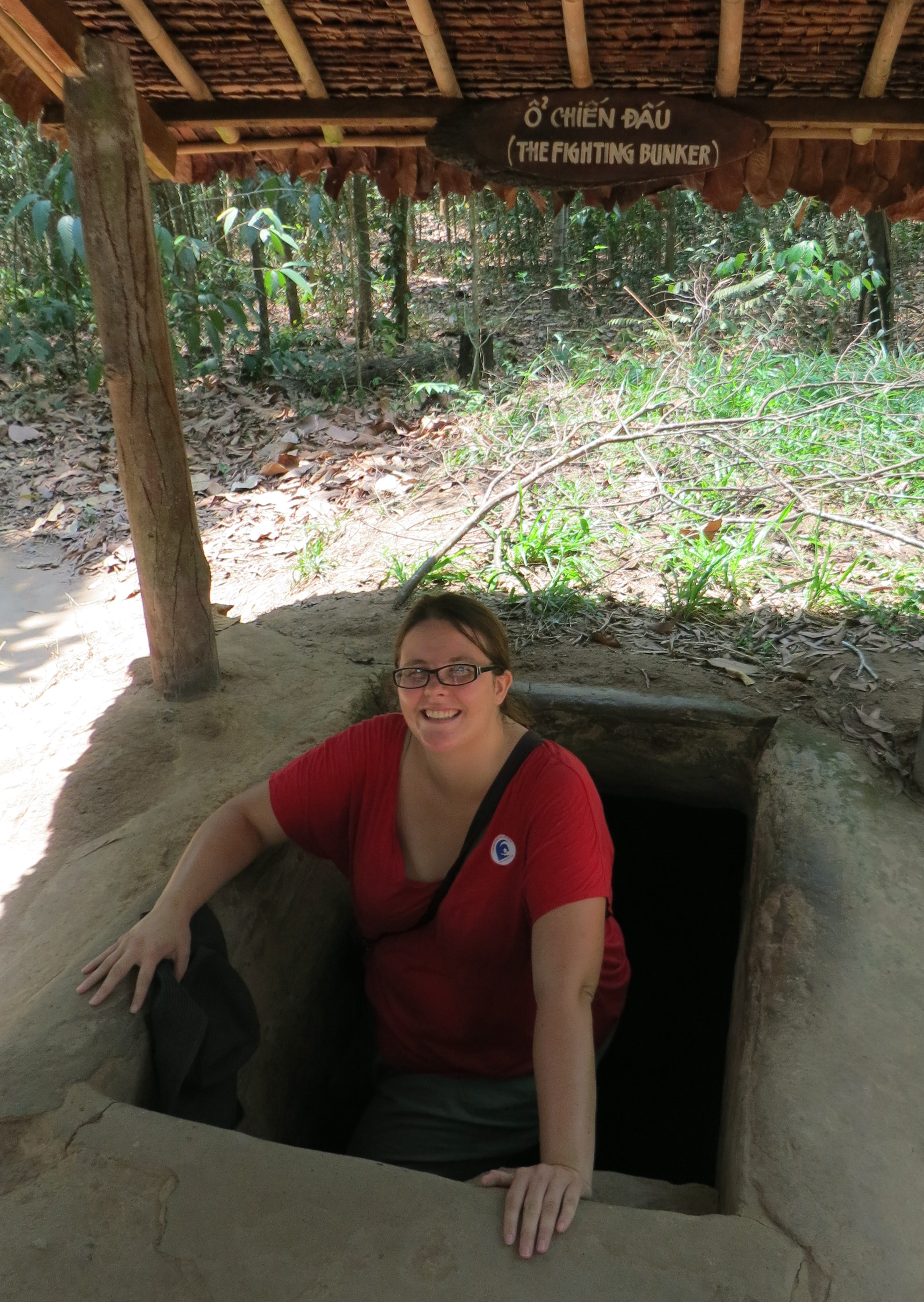
We saw the tiny entrance holes to the tunnels, which were so small that the soldiers had to go in feet first, holding the cover over their heads because the entrances were too narrow to fit their shoulders. We saw the small mounds that hid the holes the kitchen smoke escaped from; the mounds were many meters from the kitchens, so even if the Americans bombed where they saw smoke, they wouldn’t hit the actual kitchens.

An eerie kind of ambiance at the Cu Chi Tunnels

An eerie kind of ambiance at the Cu Chi Tunnels

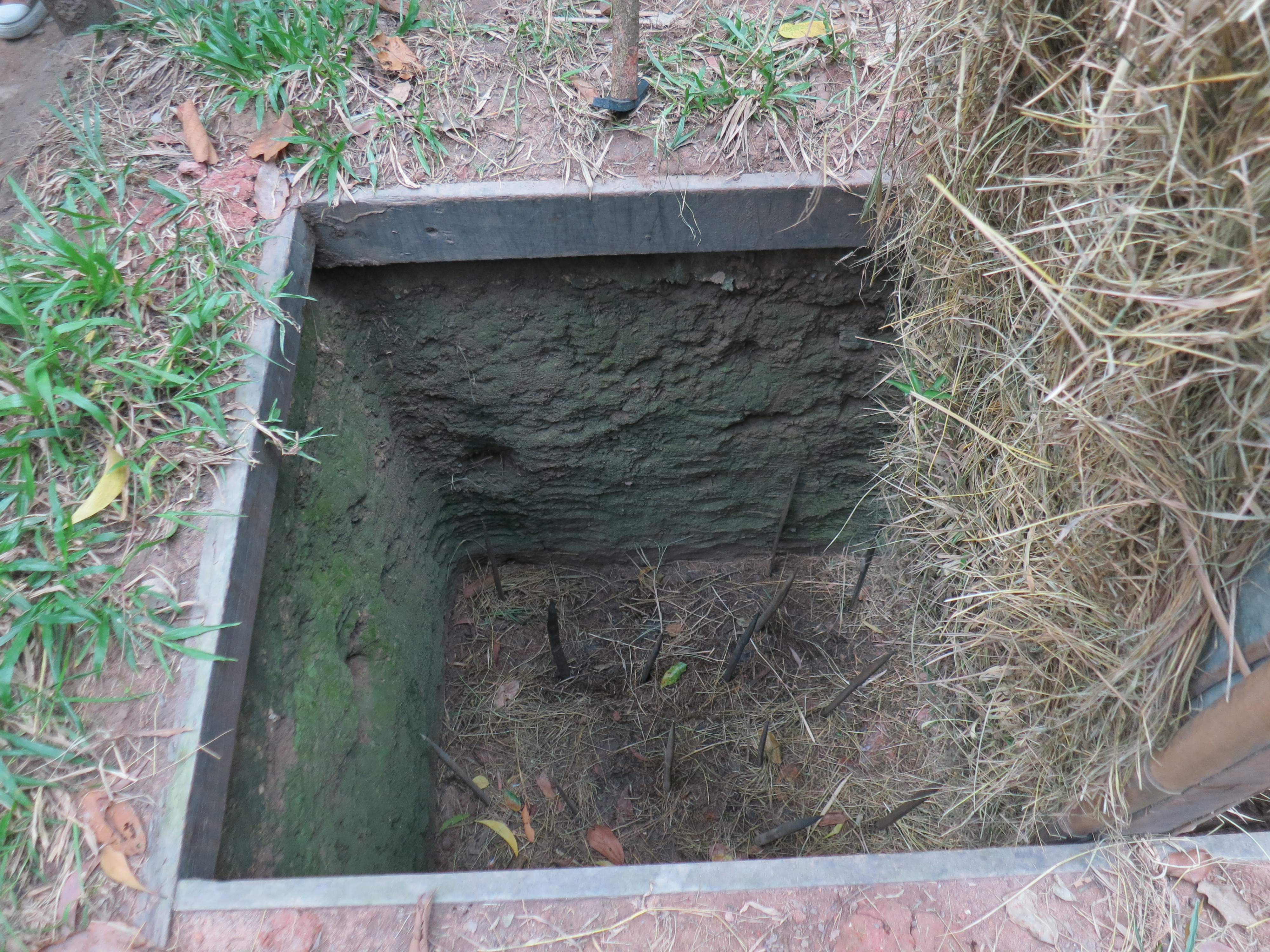
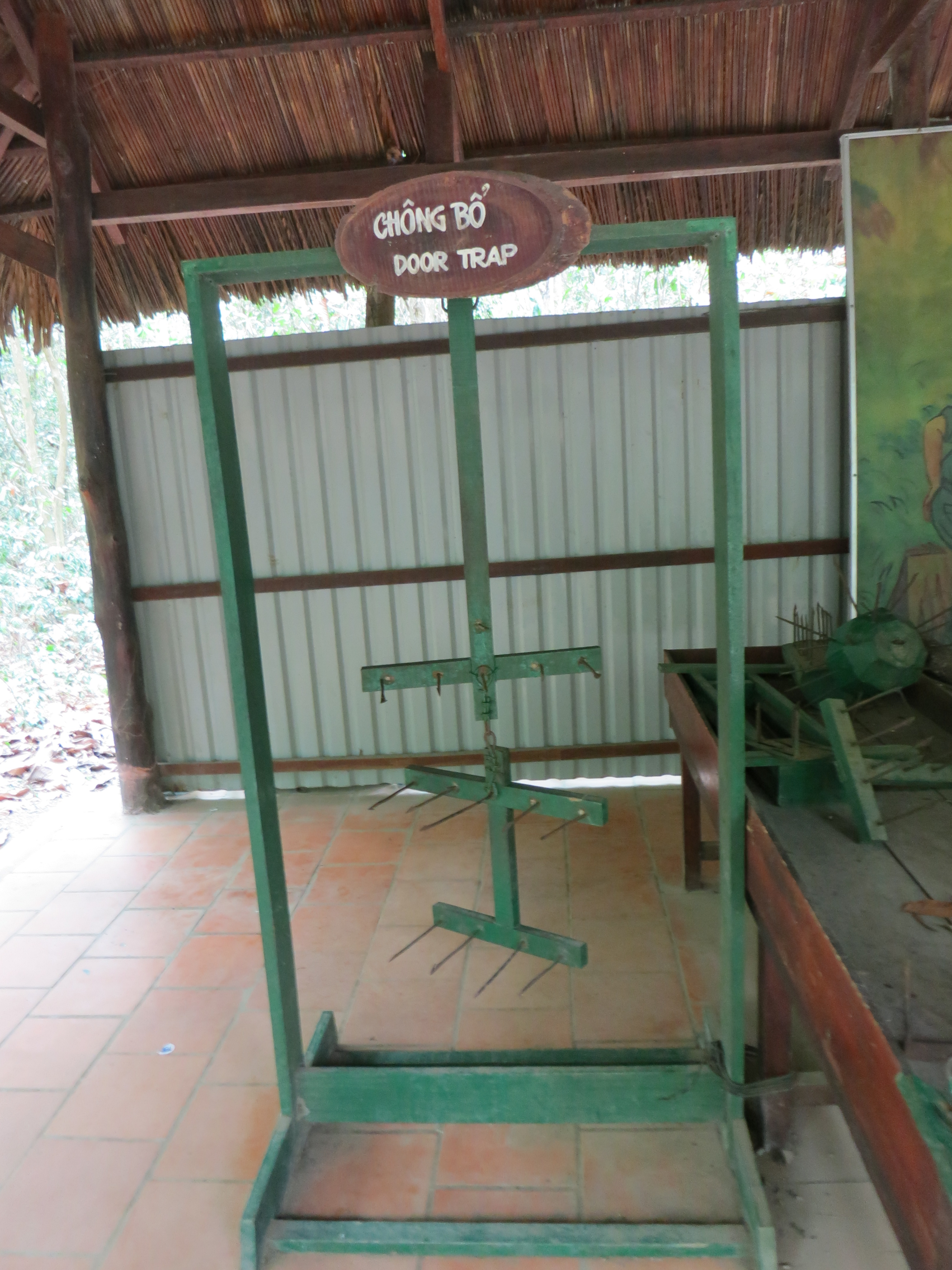
The Viet Cong set up many traps in the area–tiger traps armed with sharpened bamboo sticks, door traps studded with iron spikes, swinging traps to take a man’s leg off. At the park today, they have a row of the traps set up, and park employees walk solemnly down the row, poking at each trap with a long pole to set it off. We heard the bang! bang! from the shooting range nearly the whole time we were on the tour, which was disconcerting but I suppose actually gave some sense of realism for what it was like.

A tiger trap

A tiger trap

Used on doors in the area: US troops would kick in the door, and this would swing out at them, stabbing them with spikes

Used on doors in the area: US troops would kick in the door, and this would swing out at them, stabbing them with spikes

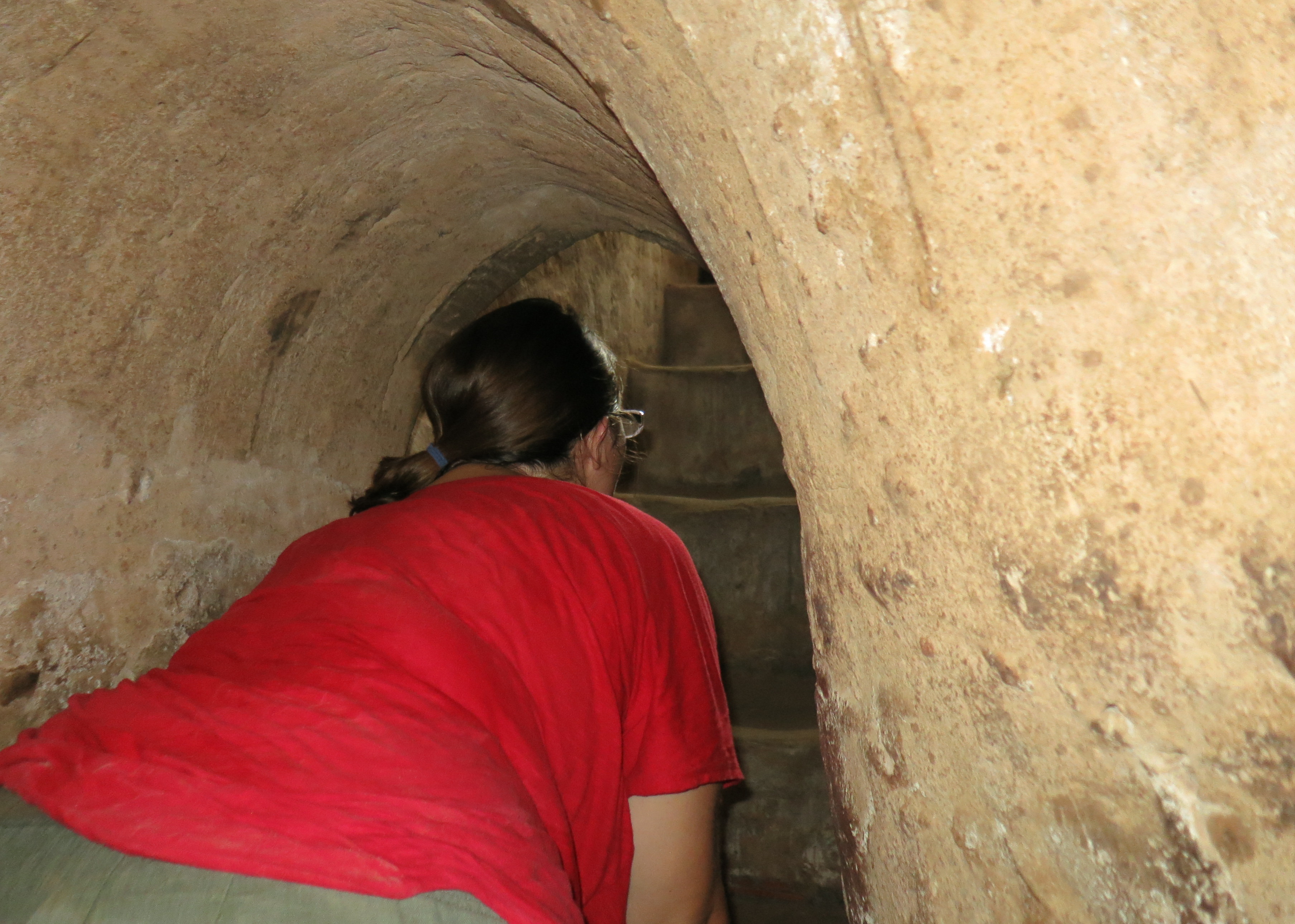
The original tunnels were too small for Westerners, so they’ve built enlarged tunnels for visitors, but our guide warned us that even these are too small for some. I could go down, he told me, but come out at the first exit; the tunnel gets progressively smaller and I’d be stuck if I tried to go to the third exit. With that cheery news in mind, I descended. I’m mildly claustrophobic, so I considered not going down at all, but I wanted to see what it was like, even for a little.

I'm smiling because I haven't gone underground yet

I’m smiling because I haven’t gone underground yet

The tunnels keep going down

The tunnels keep going down

What it was like was scary. I started crouched down and walking, but that was too constricting, so I ended up crawling. The walls were tight and there was a little light at either end, and I could hardly imagine it half its size, immersed in total darkness. Not to mention the vermin and insects that lived down there with the soldiers and families. I still shudder thinking about being down there.

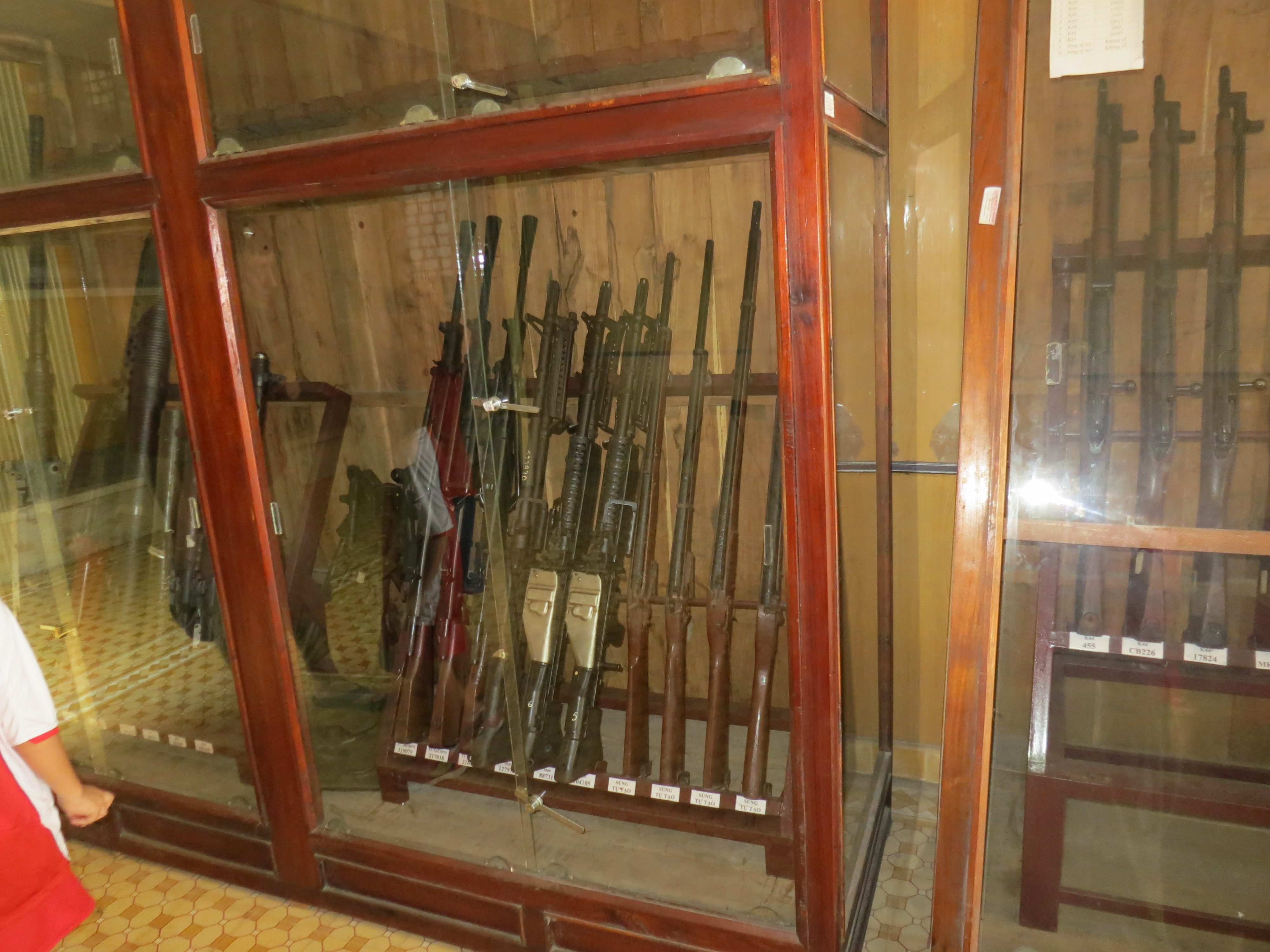
A lot of weapons on display at the end of the tour

A lot of weapons on display at the end of the tour

At the end of the tour of the park, there was a video, more like a work of art in the field of propaganda actually, on the tunnels and the Vietnamese who dug them, cooked in them, slept in them, ran dangerous missions in them, and made them their home for as long as it took until it was safe to come aboveground again.

Down in the Mekong Delta

The Mekong River is long and wide, starting in Tibet and flowing out to the South China Sea. I traveled on it by boat in Laos, which is about the midway point, and again in Vietnam, in the massive Mekong Delta where the river meets the ocean. The Delta is a huge area, a totally different landscape from farther north; it’s flat and steeped in water. I took an overnight trip to the Delta from Ho Chi Minh City, with a tour group of about forty people.

The flatlands of the delta

The flatlands of the delta

The bus ride took several hours, out of the city and into the watery flatlands, and our guide, Mr. Ky, spoke to us for the first half hour, telling us about the foods grown in the region. Our first stop was in the canals off the river. We listened to a few songs performed by musicians who must do this for at least ten different tour groups a day, so it’s not surprising that they sounded a little tired. We ate a few fruits and then followed Mr. Ky down the concrete paths between canals to a little spit of land used as a dock. While we waited for our boat, Mr. Ky told us how the rivers and canals flood up to two meters every year, which is essential for the rice the delta produces–90% of the country’s rice export.

The canals of the Mekong Delta

The canals of the Mekong Delta

Family gravesites in the canals

Family gravesites in the canals

Then came my favorite part of the day; we climbed into tiny boats in groups of four, and drifted down the estuary. The boats were piloted by men and women standing up in the back, using long poles to propel us gently along. Unlike everywhere else I’d go in Vietnam, it was almost silent here. I could hear some traffic in the distance, but mostly it was quiet and peaceful, floating along the brown river, surrounded by bright green foliage and the occasional chirp of a hidden bird.

On a peaceful boat ride

On a peaceful boat ride

At the end of our far too short ride, we watched villagers making coconut candy, which involved putting it through a grinding machine, then stirring it into a thick paste over a wood-burning fire, and finally cooling, stretching, and cutting it on long tables. It was a lot like the process I’ve seen at fairs, to make caramel.

Cooking up coconut candy

Cooking up coconut candy

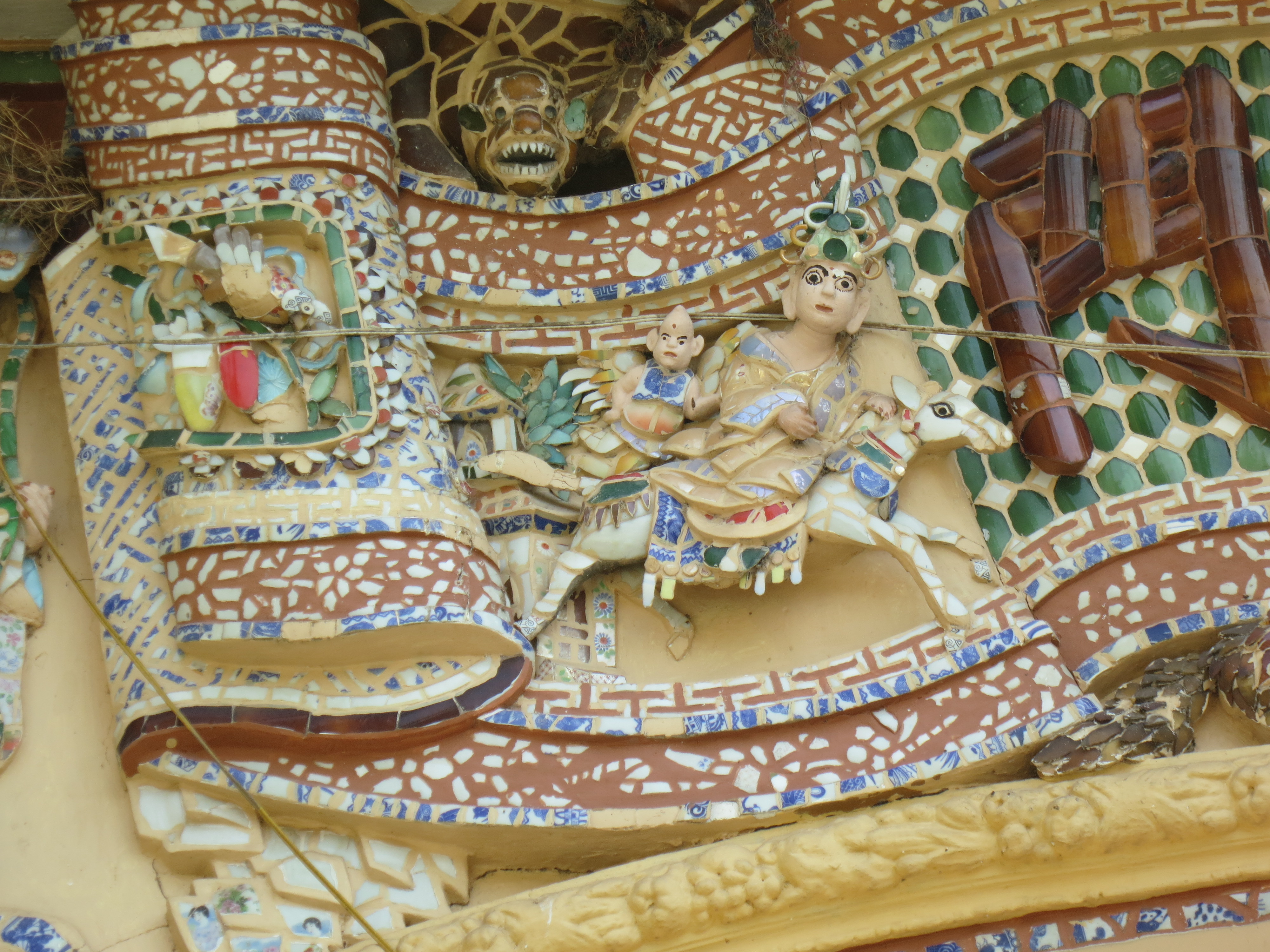
After a boat ride along the Mekong, we had some lunch, then stopped off at a temple for a few minutes. Huge buddhas in various states of repose loomed over ornate buildings and blooming bougainvillea. Shards of pottery were made into mosaics on the gateways.

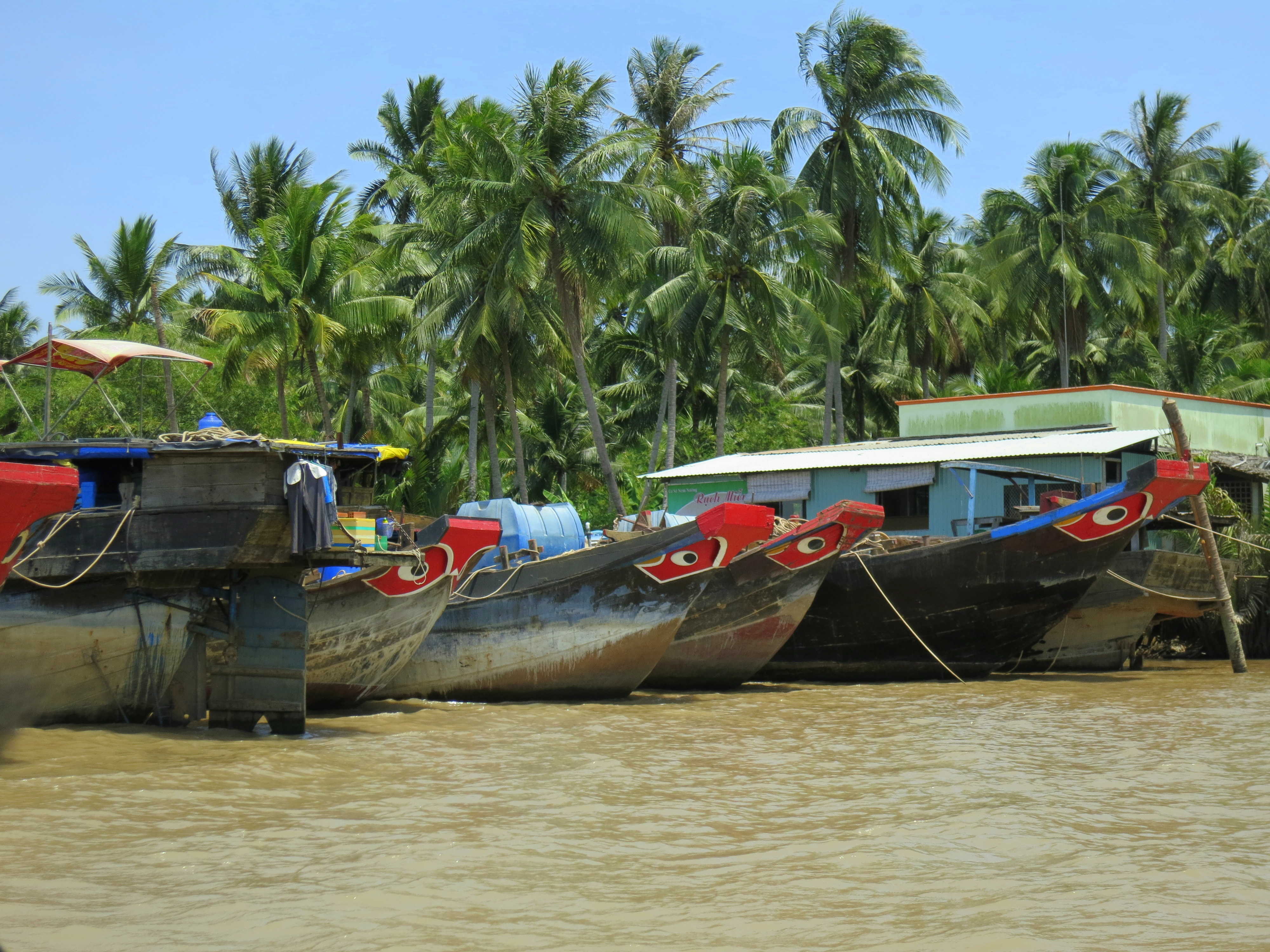
Painted houseboats of the Mighty Mekong

Painted houseboats of the Mighty Mekong

Reclining buddha

Reclining buddha

The mosaics were small but lovely

The mosaics were small but lovely

That night, I had dinner with a couple on the tour. Chrissy’s from Germany and Nicolas is from France. They were doing almost my exact itinerary, in reverse, so we shared a lot of tips with each other on what to do and where to go. We wandered around the food market, checking out the many different kinds of seafood on display, and purchasing palm juice for our walk. We had some pho and an elaborate, delicious dessert assembled by a woman who laughed when we came back for seconds because we liked it so much.

Showing off some fruit we bought together--me, Chrissy, and Nicolas

Showing off some fruit we bought together–me, Chrissy, and Nicolas

They look so cool

They look so cool

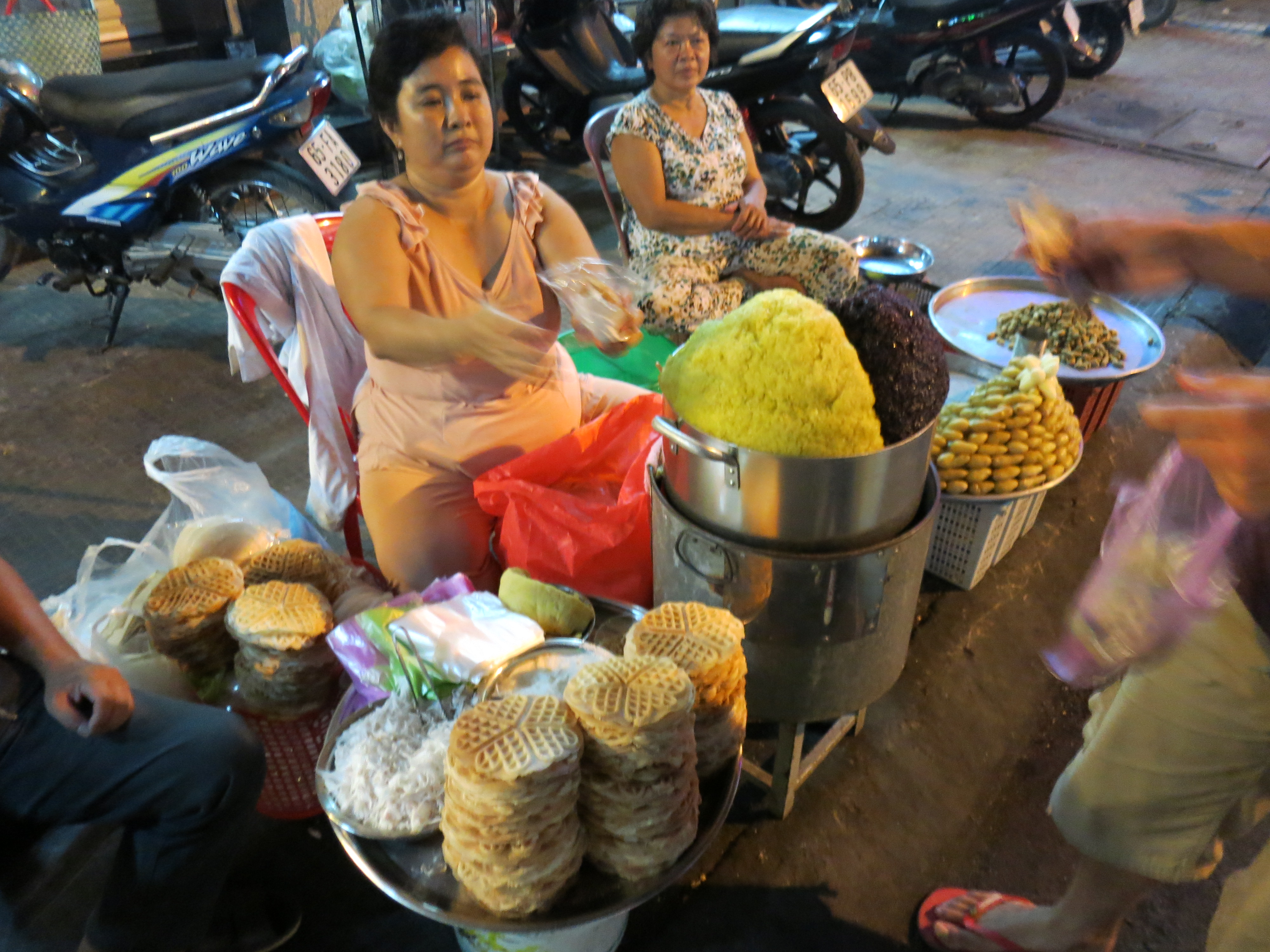
Anyone know the name of this dessert? It involved a waffle, bean paste, and several other tasty ingredients.

Anyone know the name of this dessert? It involved a waffle, bean paste, and several other tasty ingredients.

The next morning, we went to the floating markets of Cai Rang. There are other floating markets in the delta, and I think those other ones are what most of us were expecting to see. We thought we’d see lots of small boats, propelled by those same poles used in the estuary the day before, filled with people selling fruits and vegetables to one another in the pre-dawn light.

Housing along the river

Housing along the river

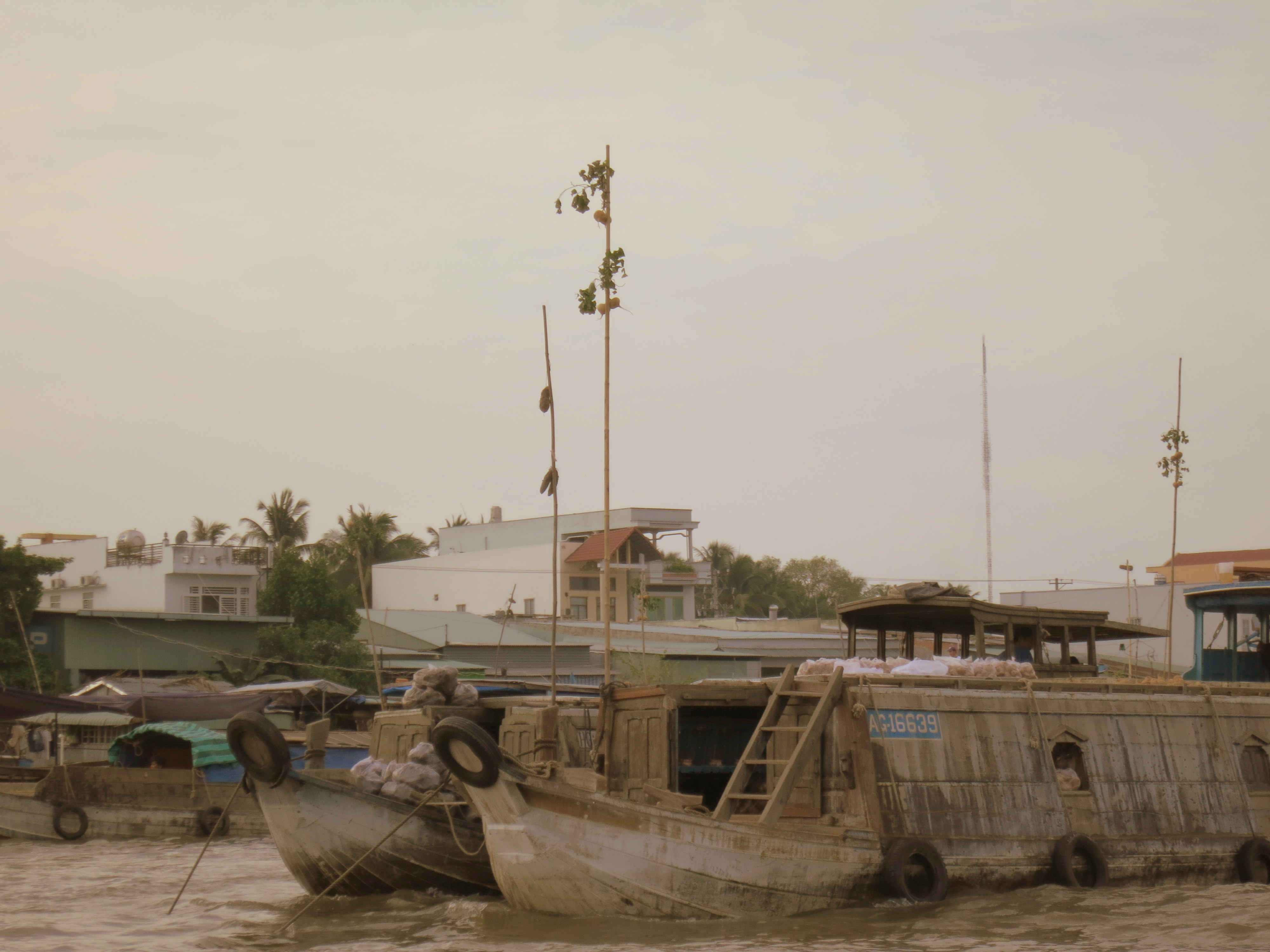
Fly your fruit flag

Fly your fruit flag

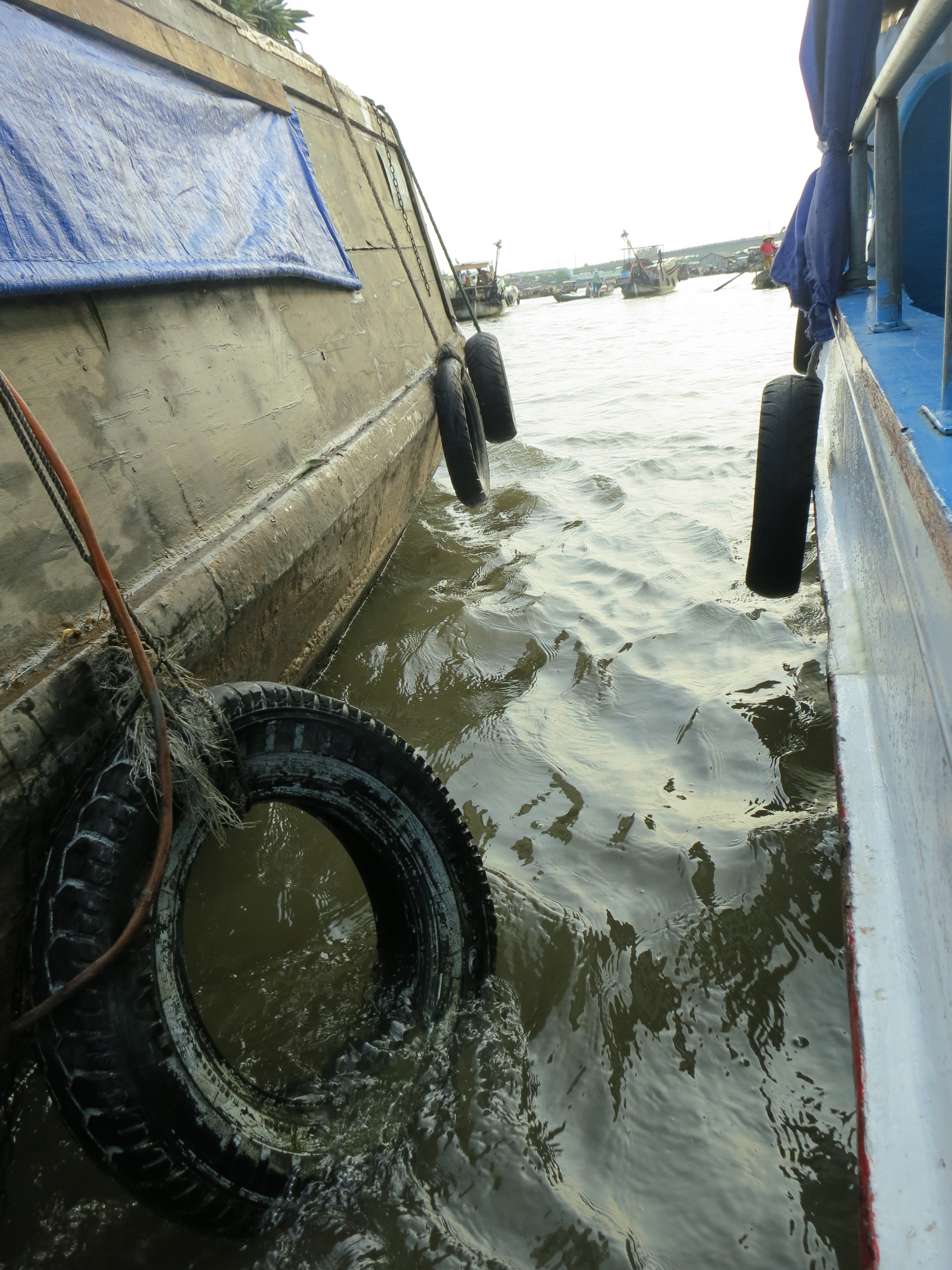
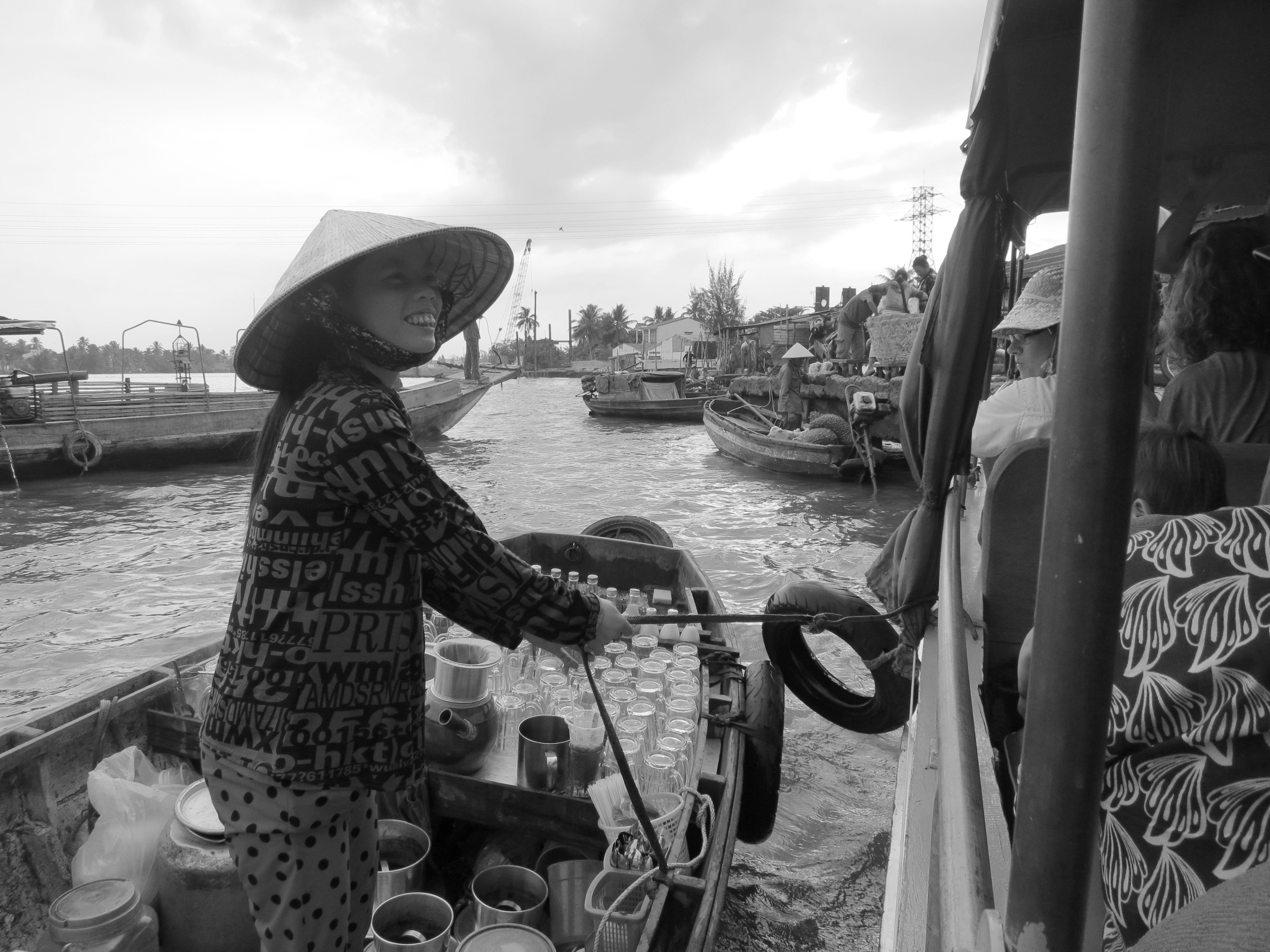
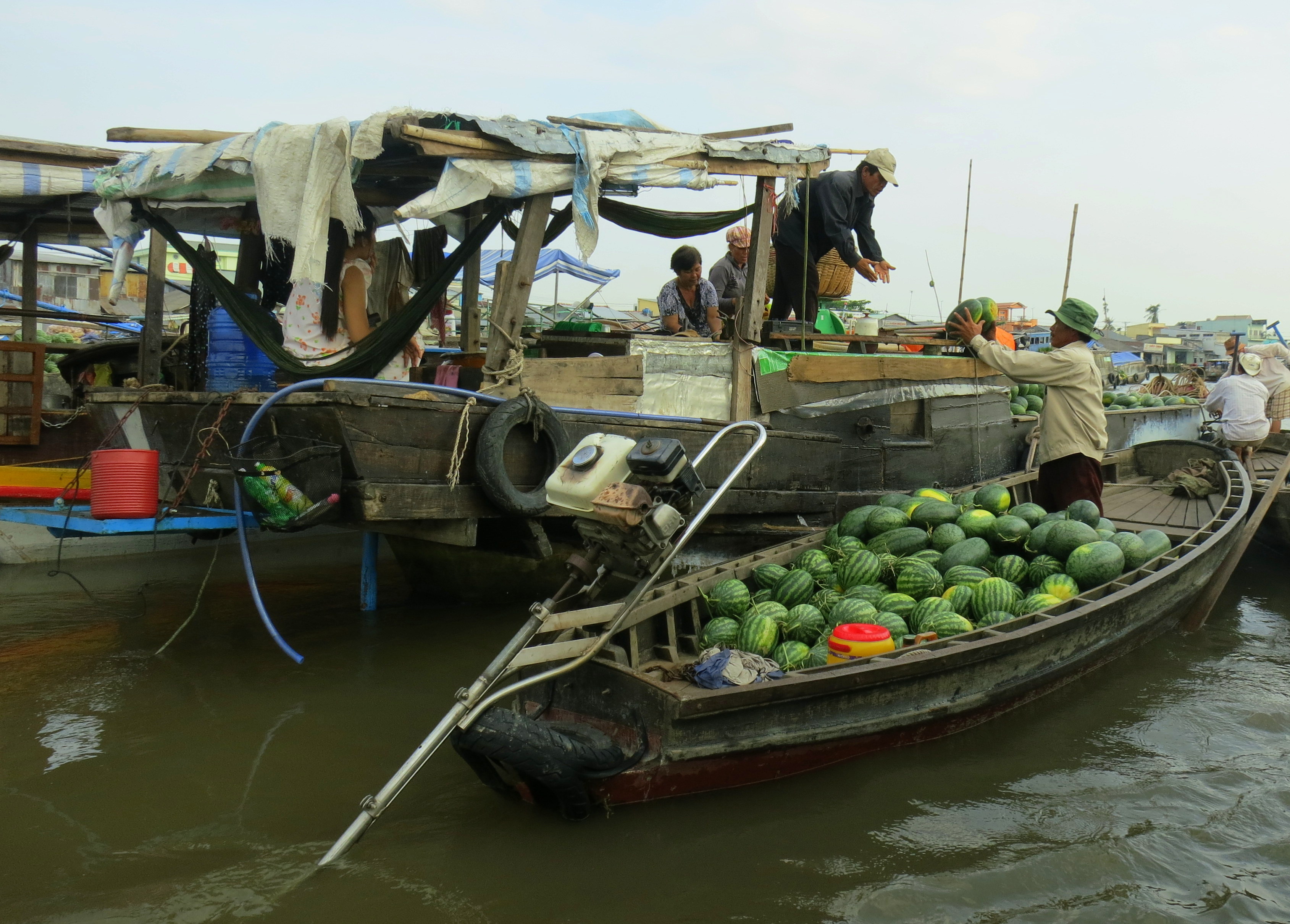
Instead, we saw lots of little boats come up alongside much larger motorboats, and exchanged dozens of fruits. The large boats put up huge poles topped with the fruit they had for sale, so that you could tell from a distance which boat to pilot to your small boat to. Many longtail small boats pulled up alongside ours with people hawking lottery tickets, flat pop, and snacks.

Coffee service on the river

Coffee service on the river

Business completed before 6am

Business completed before 6am

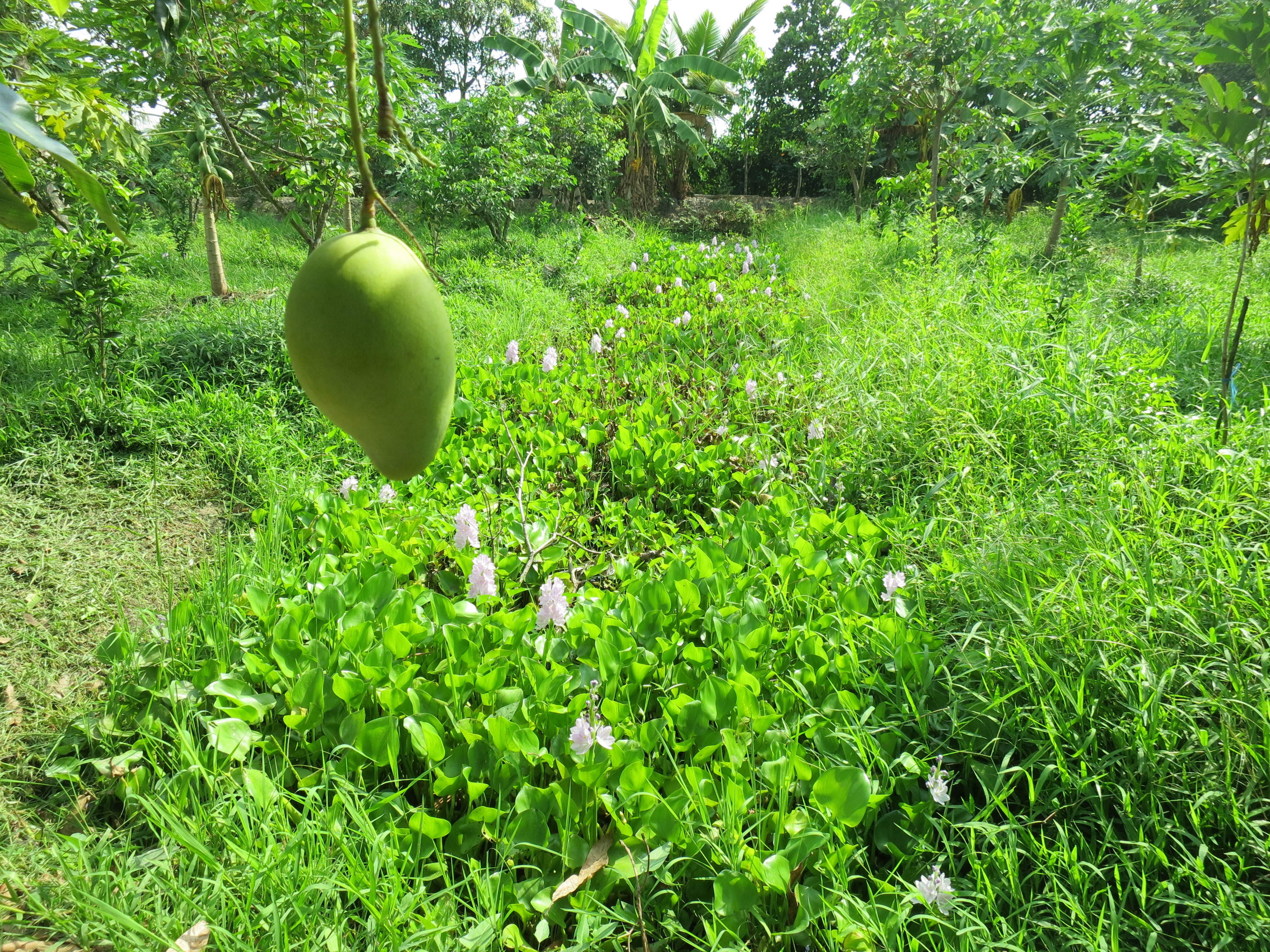
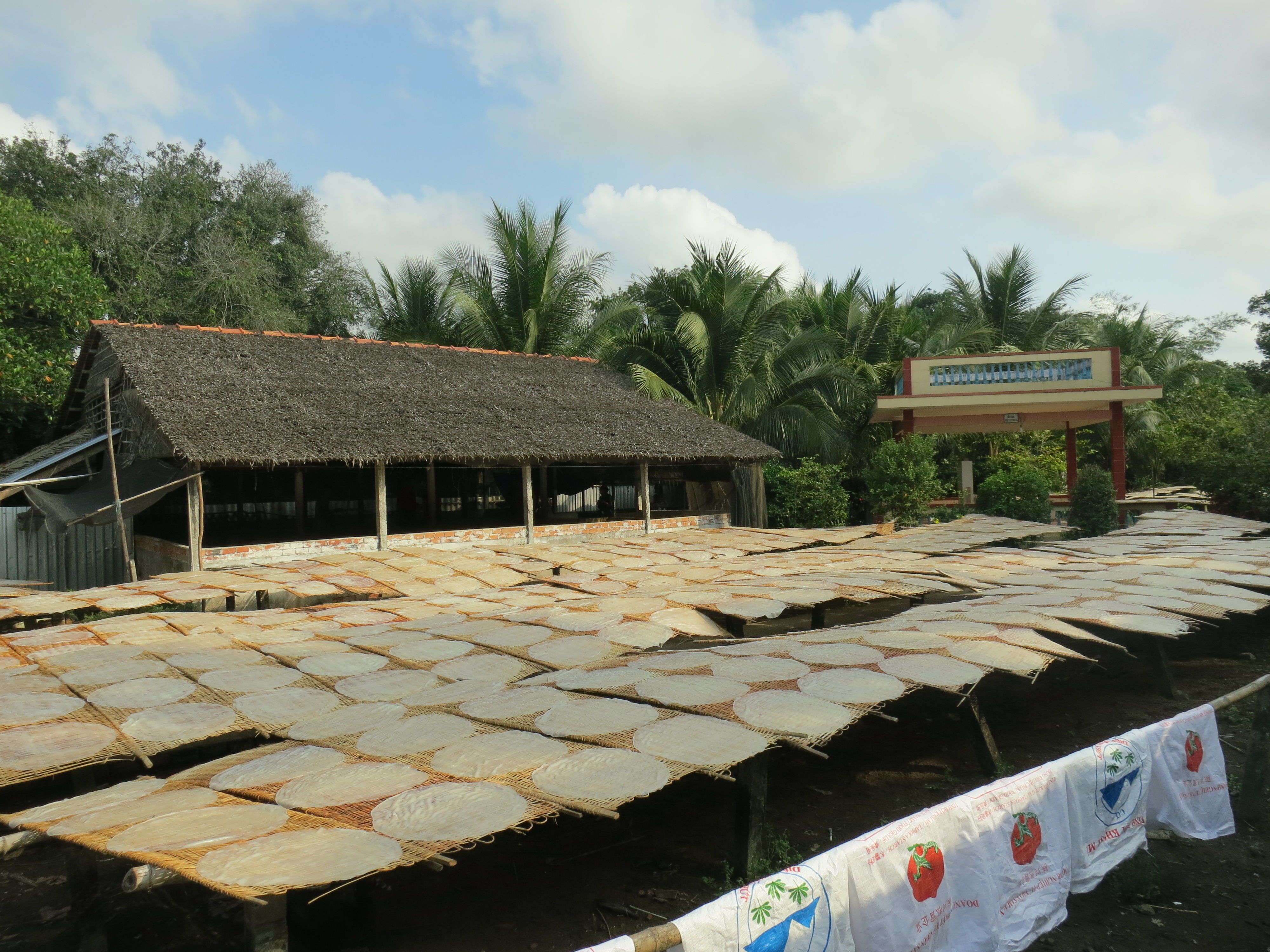
Mr. Ky then took us to a small operation where people made thin, stiff rice paper. Afterward, we went to a fruit farm, where we saw all sorts of delicious things growing: mangosteens, jackfruit, rose apples, pineapples, dragon fruit. Fines for picking the fruit were severe, since this was a working farm, but I won’t say it wasn’t tempting.

Rice paper drying

Rice paper drying

Fruit farm

Fruit farm

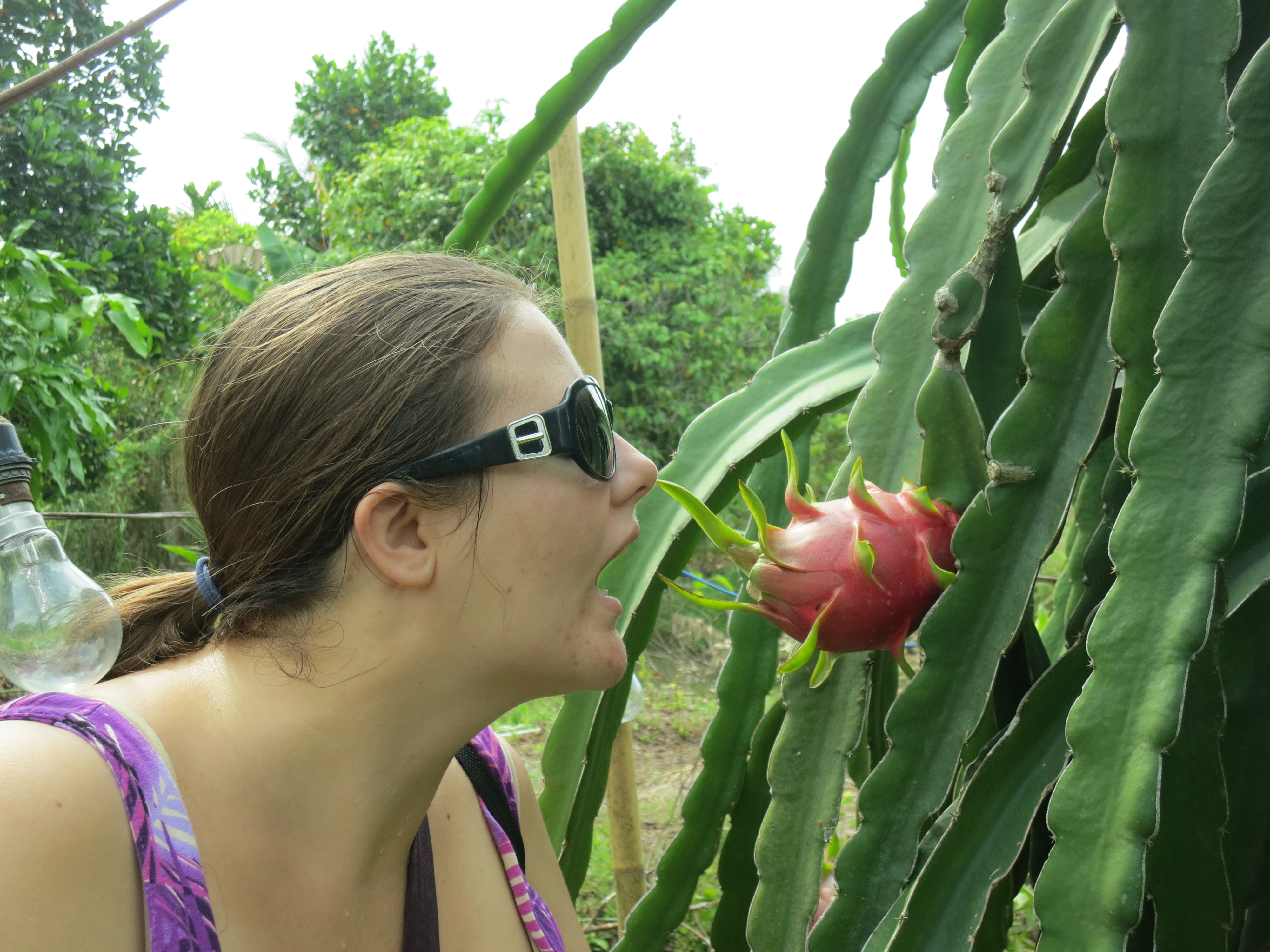
I did not eat that fruit right then

I did not eat that fruit right then

The tour was a little too managed and a little too big for my taste, so next time I’ll do more research and probably pay more to hire a guide and take more time meeting people. Still, I’m glad I went.

Goodbye Saigon, Hello Ho Chi Minh City

I liked Saigon. I’d heard a lot about about moto thieves and grime and crowds, so I was wary. But the streets were wide, and there were several big green spaces I could walk to from my hostel in District 1, and the buildings were colorfully painted. They’re all very narrow, tall buildings, and the ones along the canal remind me of Amsterdam, but brighter. The boulevards and main streets were wide, but as soon as I ducked down any alley, I found myself in a narrow passageway packed with people, goods for sale, tiny stools to perch on while eating, bicycles and motorbikes. These alleys are the main entrances to the homes of the 9 million people who live here; the main streets are lined with shops and eateries. 

Alleyway in Ho Chi Minh City Alleyway in Ho Chi Minh City

Every time I left the guesthouse, the employees would implore me to hold on to my purse, not just let it hang by my side. I met up with a friend of a friend, a Vietnamese woman born and raised in Ho Chi Minh City, and she looked concerned when I showed up by myself–did I walk here alone? Did I feel safe? I never witnessed any muggings, but one of my friends from the elephant camp had her bag snatched as she crossed the street. A motorbike zipped by, the driver pushed her down and pulled at her bag, and next thing she knew, she had a bruise and no phone or wallet. So it’s not all good news there, but I was fortunate and only saw the good side of the city.

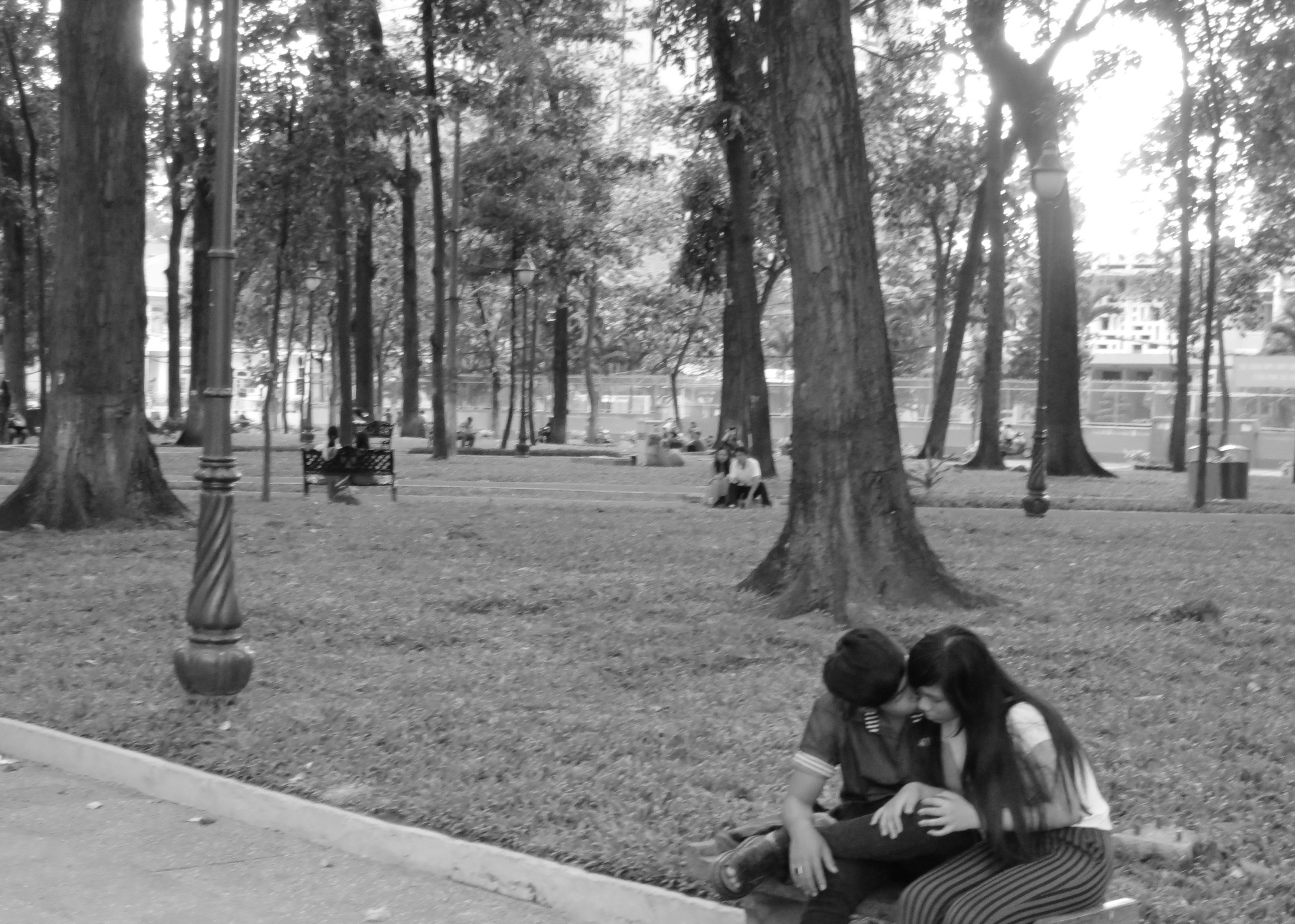
Intimate moments in large parks Intimate moments in large parks

What’s with the name change, you might be wondering. The city was called Sài Gòn, part of Gia Định district, and when the French invaded in the 19th century, they Westernized the name to Saigon. It was known as Saigon until 1975, when the last American forces left the country and the new government branded this stronghold of Western influence with the name of the late Ho Chi Minh, the late communist leader. However you feel about the politics of the war, that was a canny and cutting move. The central part of the city is still called Saigon by most residents.

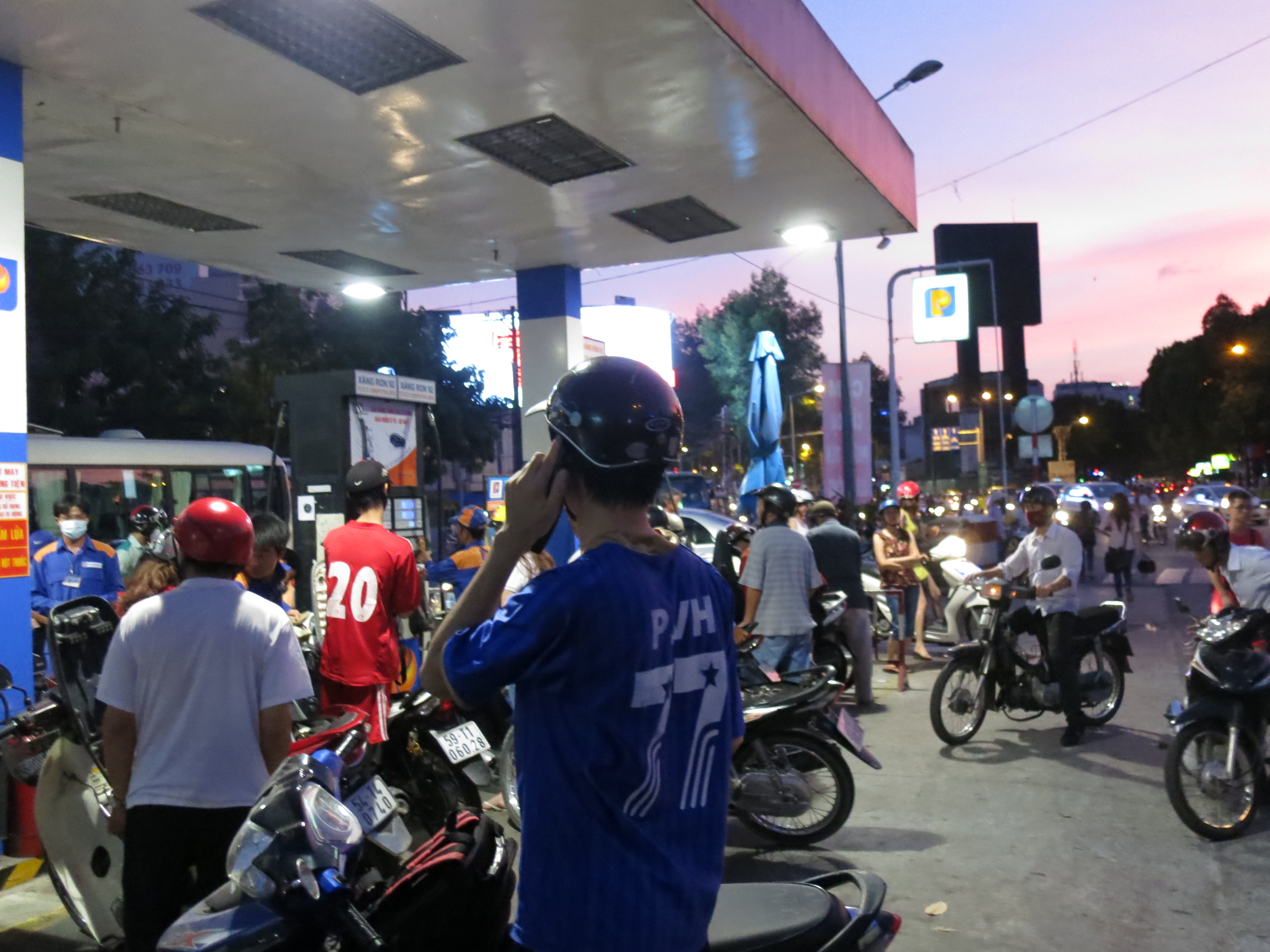
A swarmed gas station A very busy gas station

The Cinemax TV channel I got in my guesthouse advertised all the movies it would play in Southeast Asia in the month of April, with a note that The Hunger Games wouldn’t play in Vietnam. I wonder if that’s because the areas of Ho Chi Minh City are split into district numbers, and there are districts in the movie; or if the anti-government sentiment of the film is too much for the Vietnamese government to condone (although there wasn’t nearly enough of the book’s anger in the movie, I thought); or if it’s a more prosaic reason, like a distribution rights issue. You do start to notice the tiny things after a while on the road, I suppose!

A wall in the Catholic cathedral of Ho Chi Minh City, which I saw on Easter Sunday A wall in the Catholic cathedral of Ho Chi Minh City, which I saw on Easter Sunday

Mostly I spent my time in Saigon visiting museums and sites about the Vietnamese-American War (which I’ll write about next week), but I also found time to have a feast of a meal with my friend’s friend at Mon Hue, and bia hoi with a new friend from my guesthouse.

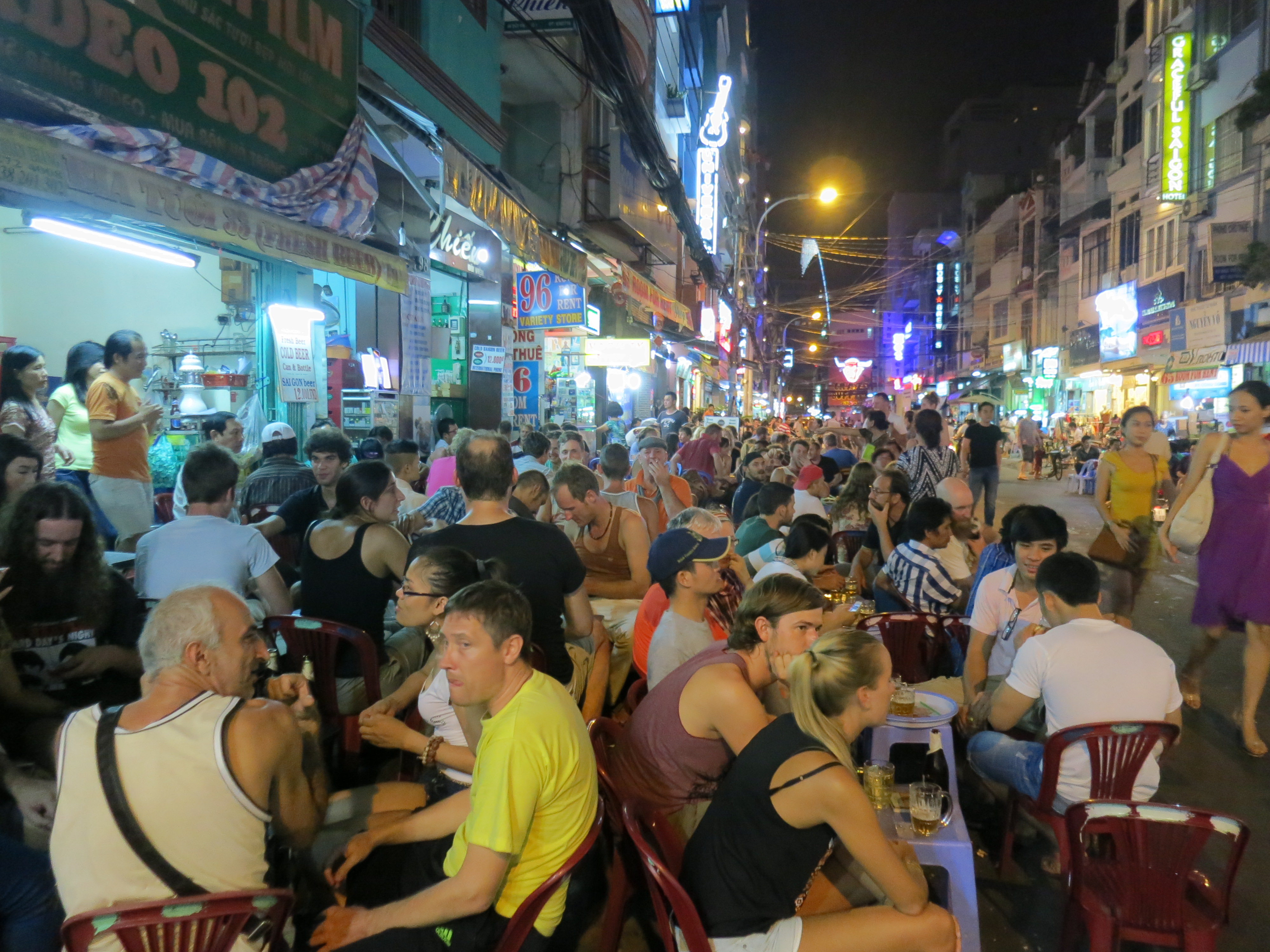
Bia hoi Bia hoi

Bia hoi is the beer that’s brewed daily at many places throughout Vietnam. There’s a “beer corner” in Hanoi that’s become a tourist destination, but there are plenty of places in District 1 of HCMC that sell the stuff too. It wasn’t great beer, but that’s not the point. We sat on tiny red plastic chairs on the sidewalk, surrounded by others spilling out onto the street, and we watched food hawkers and fellow tourists wander by in the noisy neon night. When I was ready for bed, I went back down the alley to my room, where it was several decibels quieter.