
Kaminarimon Gate swarmed with people. The gods of wind and thunder who guard the entrance to Sensoji Shrine looked fierce in the afternoon sun, and all the Golden Week visitors snapped photos under the red lantern that takes its name from those wooden guardians. Kaminarimon, or Thunder, Gate is in the heart of Asakusa, a district in Tokyo on the Sumida River.
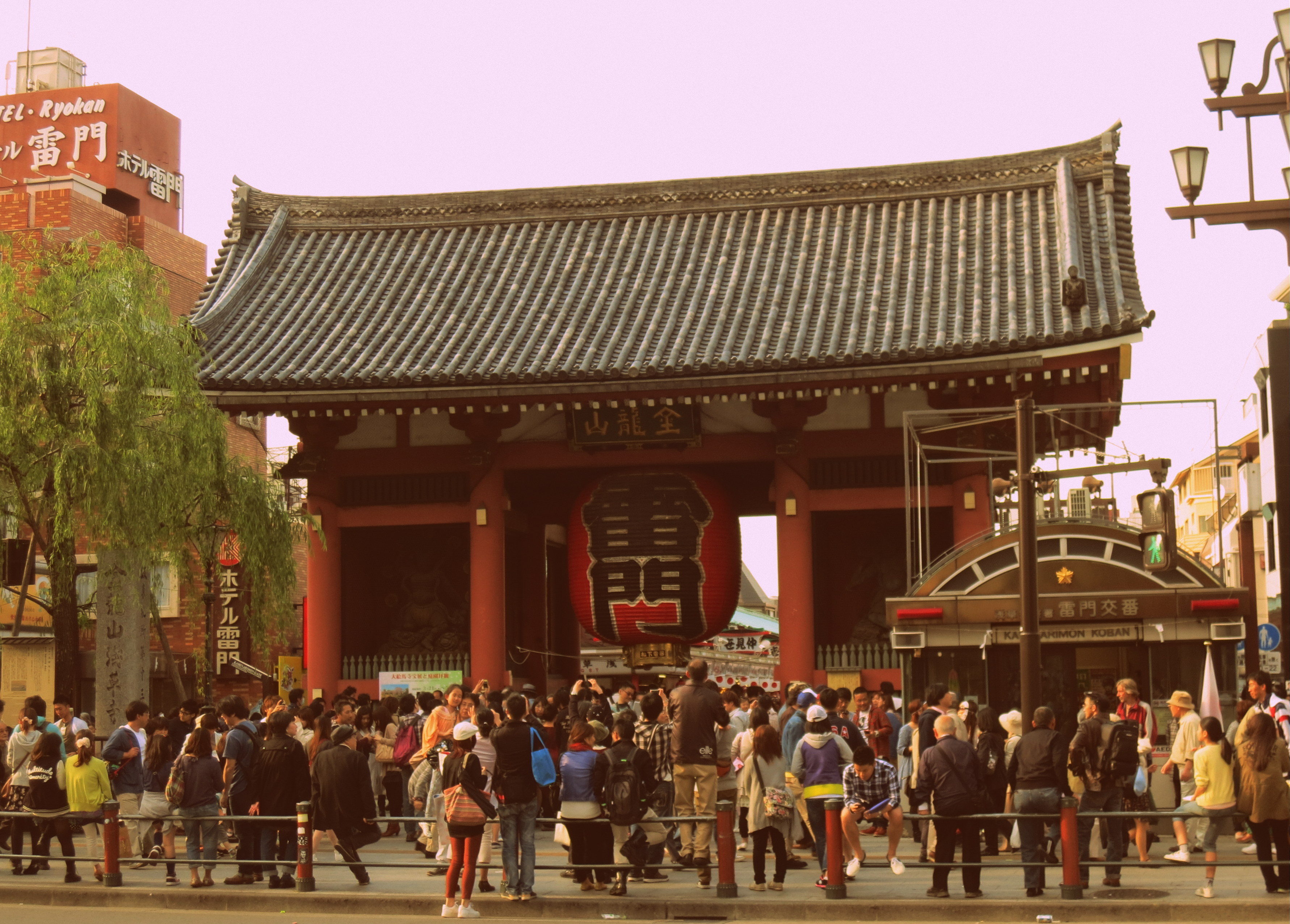
Kamariniron Gate


The lantern at Thunder Gate
I sailed up the river on a packed tourist boat and followed the crowds past the rickshaw drivers, under the gate of thunder, and down Nakamise-dori, a walking street selling snacks and souvenirs. I had some mochi and admired the five-story pagoda at the end of the street.

Rickshaw rides

Nakamise-dori, a walking street of souvenirs and snacks leading from the gate to the shrine
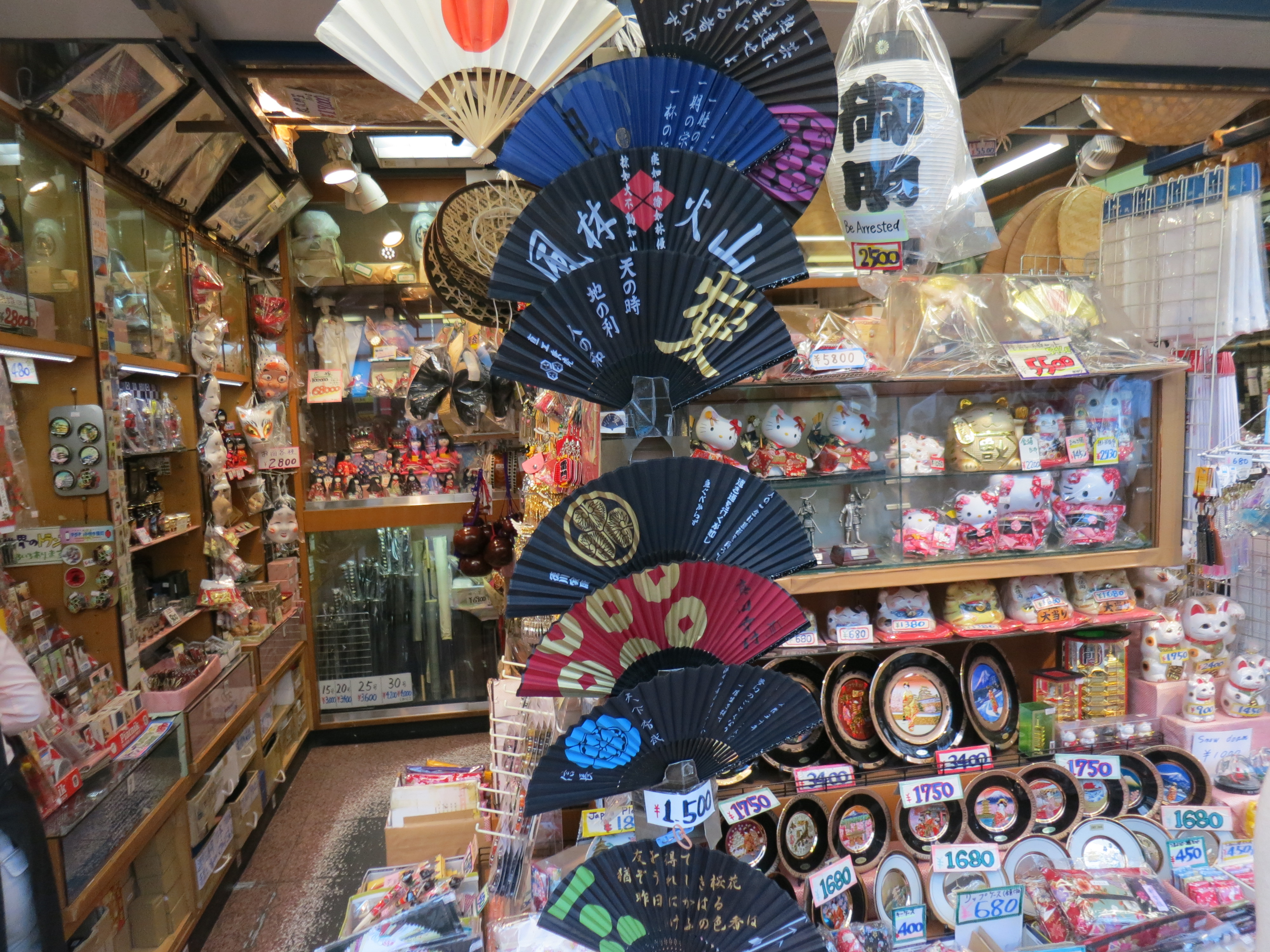
Souvenirs
Rows of drawers filled with paper fortunes lined the approach to the shrine, and people tied fortunes they didn’t want to a fence in one corner of the pavilion. I joined in others who stood at the fire in front of the shrine, waving purifying smoke toward my face while wishing for luck.
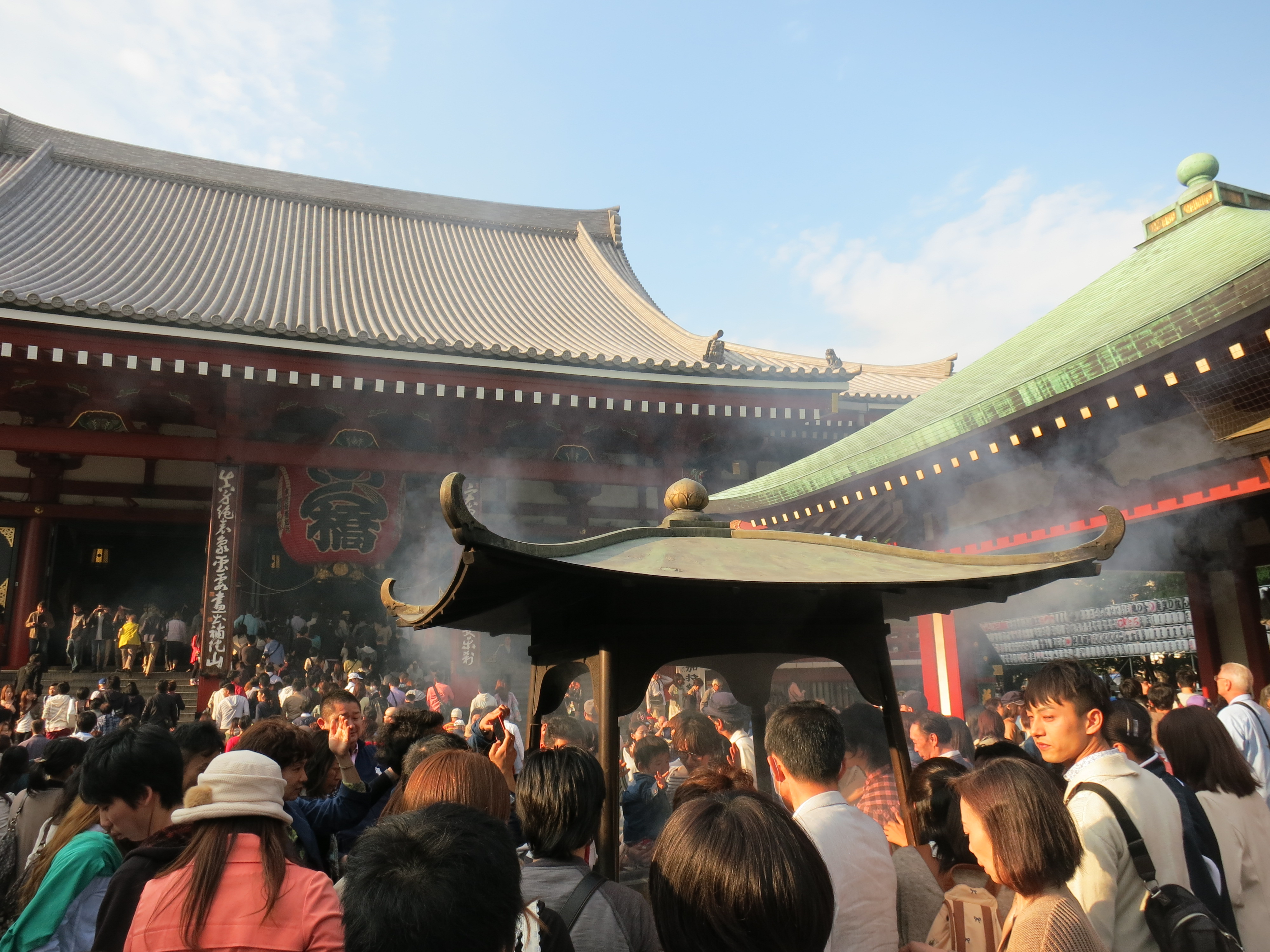
Purifying smoke

Discarded fortunes
I climbed the red steps to the shrine and took a couple photos before I saw the sign requesting that people turn off their cameras. So I won’t show those photos, but I’ll tell you that the altars were an ornate gold, fronted by rows of flowers, and the ceilings were painted with scenes of sinuous dragons and elegant women.

Leading up to the shrine

The five-story pagoda
Asakusa used to be the main entertainment district of Tokyo. Shinjuku and Shibuya have taken over as the nightlife areas of the city, but sites like the Kaminarimon Gate and the Sensoji Shrine keep it a central part of the city’s identity.
 Stowaway Travel Writing & Editorial Services