A lot of people assume that my year-long trip is one giant vacation, that I drift from day to day with a cocktail and no agenda. Actually, I’m doing something pretty much all the time. If I’m not sightseeing or meeting locals and other travelers, I’m writing this blog or keeping in touch with loved ones, and if I’m not doing that, I’m looking up where to go next and how to get there, or moving funds around and cursing the slow internet connection. I’ve read more books in the last nine months than I did while I had a job, but not as many as I’d hoped, and I get way behind on my journal with some regularity. So you can imagine how much I appreciated the abrupt change in pace when I got on the slow boat to Laos.

The slow boat
Boats used to be the main mode of travel in Laos, but in the last 20 years the country has undertaken huge road projects, and increasingly buses and cars are the way to get around. There are still a few boat routes in use, however, and one of the more popular ones for backpackers is from the Thai border at the town of Huay Xai, down the Mekong River to Luang Prabang. The journey takes two days, with about 7 hours of boat travel each day, and a night’s rest in Pakbeng.

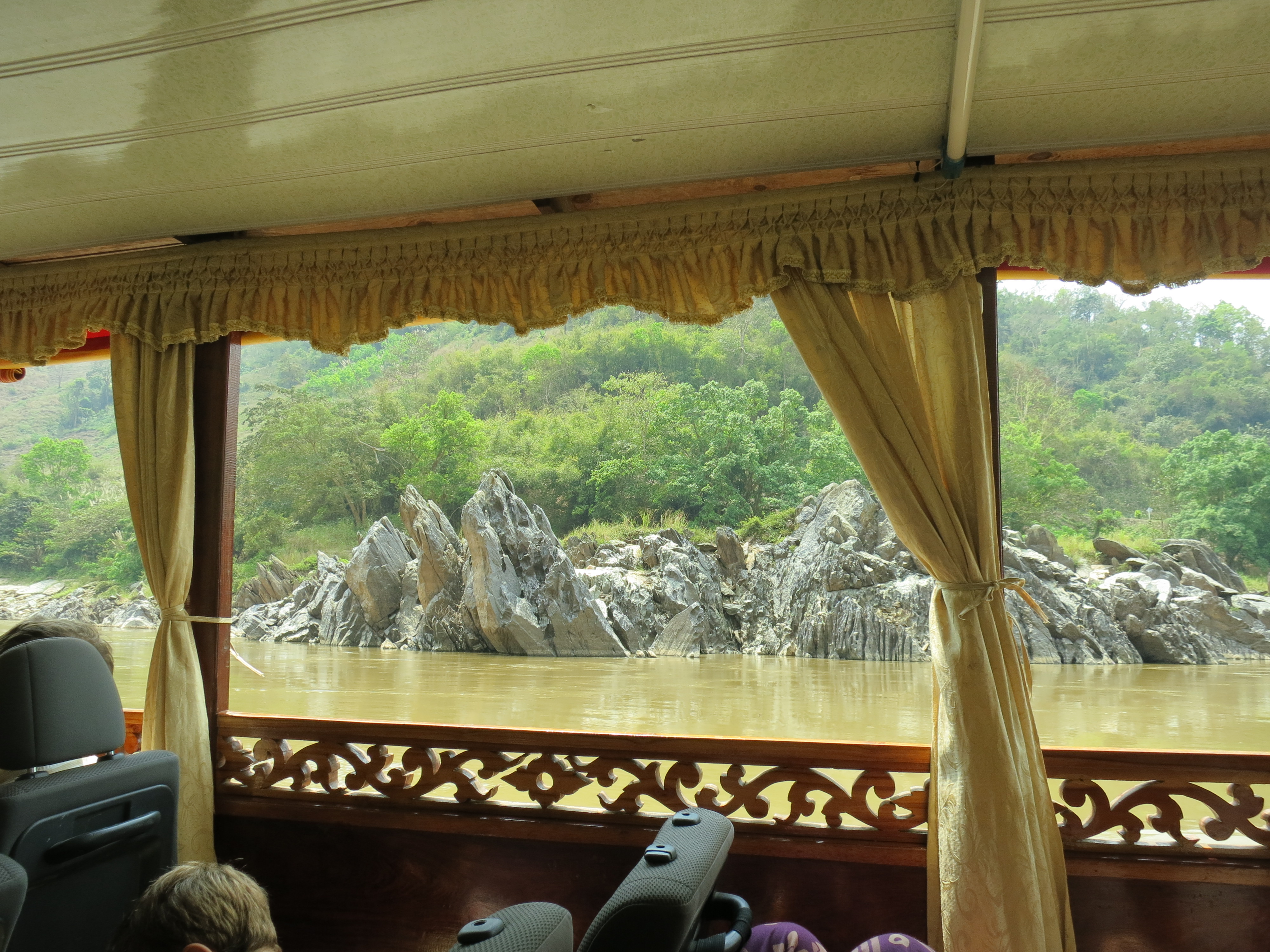
The view
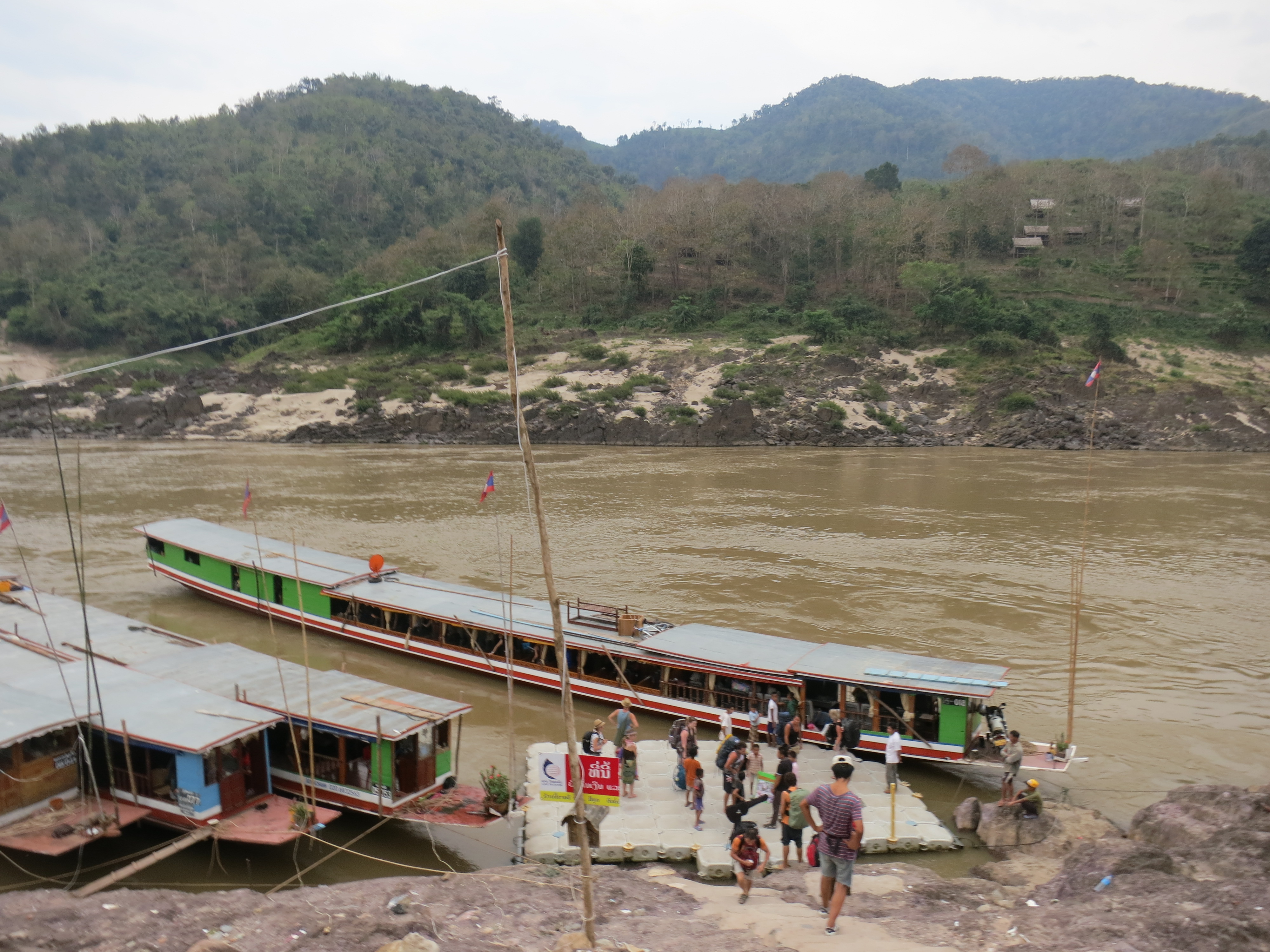
It is literally a slow boat—a long, low houseboat with a roof overhead and a small engine room in the back. We took a different boat each day, but the setup was pretty much the same. A few two-seat wooden benches, and then rows of minivan seats lining the narrowing prow, with a “bar” in the back selling some beers and a few bags of chips. Bags are stowed below the floor, with a few in the back near the engine. As in the rest of Southeast Asia, no one makes safety announcements or points out the life jackets; you just sit and wait for the magical moment when it’s deemed time to go, and suddenly you’re moving down the Mekong.

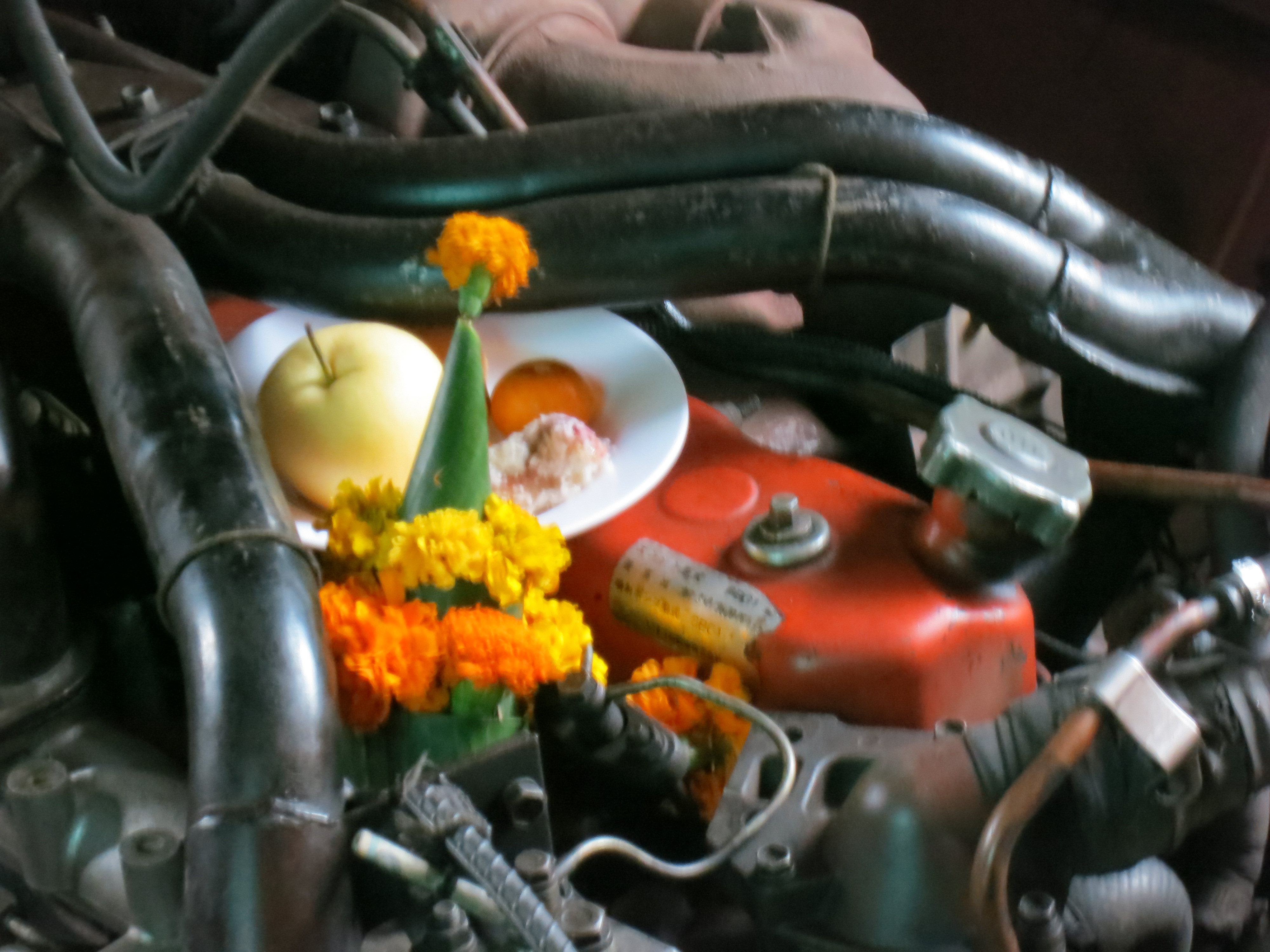
Offerings on the engine for a safe journey (blame the blurriness on rumble of the engine)
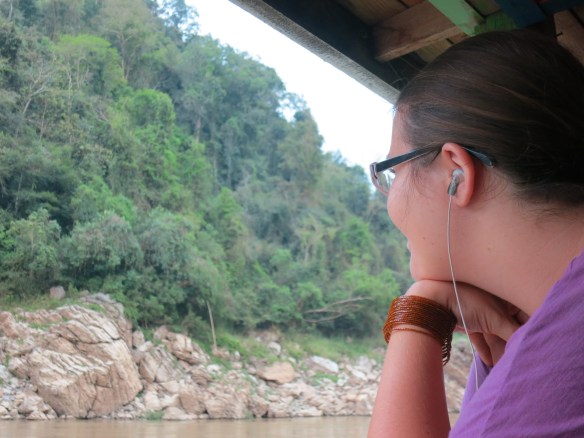
And once we were off, that was it. There was no loud music, no group activity, nothing to demand my attention. I could take a nap, read a book, chat with my neighbors, or spend hours watching the beautiful scenery gliding by. I went for a combination of all these. It was wonderful to just sit and do nothing, in this stunning setting.

Packed
It wasn’t all sunshine and roses, of course. I almost didn’t make the boat, because the people I bought the ticket from refused to take me to the dock before 11:30—but the boat was meant to leave at 11:30. Finally, I started walking up to the main road to find my own tuk-tuk, and with an exasperated sigh the ticket seller led me to a tuk-tuk that got to the dock at 11:33, and I was literally the last person on board the boat. I’ve never been that person before, but here I was scooting down the aisle with my bags in tow, all eyes on me as I searched in vain for a seat. I ended up on a bench behind the engine room, which was big enough to stretch out in. But it was also incredibly hot back there, because we weren’t getting the same breezes they had up front, and the motor made a constant, deafening noise. On the second day, I got a seat near the front of the boat, so it was much quieter but we all basically sat on each other’s laps. The days were pretty cloudy, and we had a little rain on the first day. Getting up to go to the toilet was an exercise in acrobatics, and the toilet itself wasn’t exactly pleasant. I’d read that plenty of locals come by in their boats to sell food during the ride, but that didn’t happen once when I was there, and the bar had only a few packets of chips, so I was glad I’d bought one of the sandwiches from the many food vendors in both Huay Xai and Pakbeng.

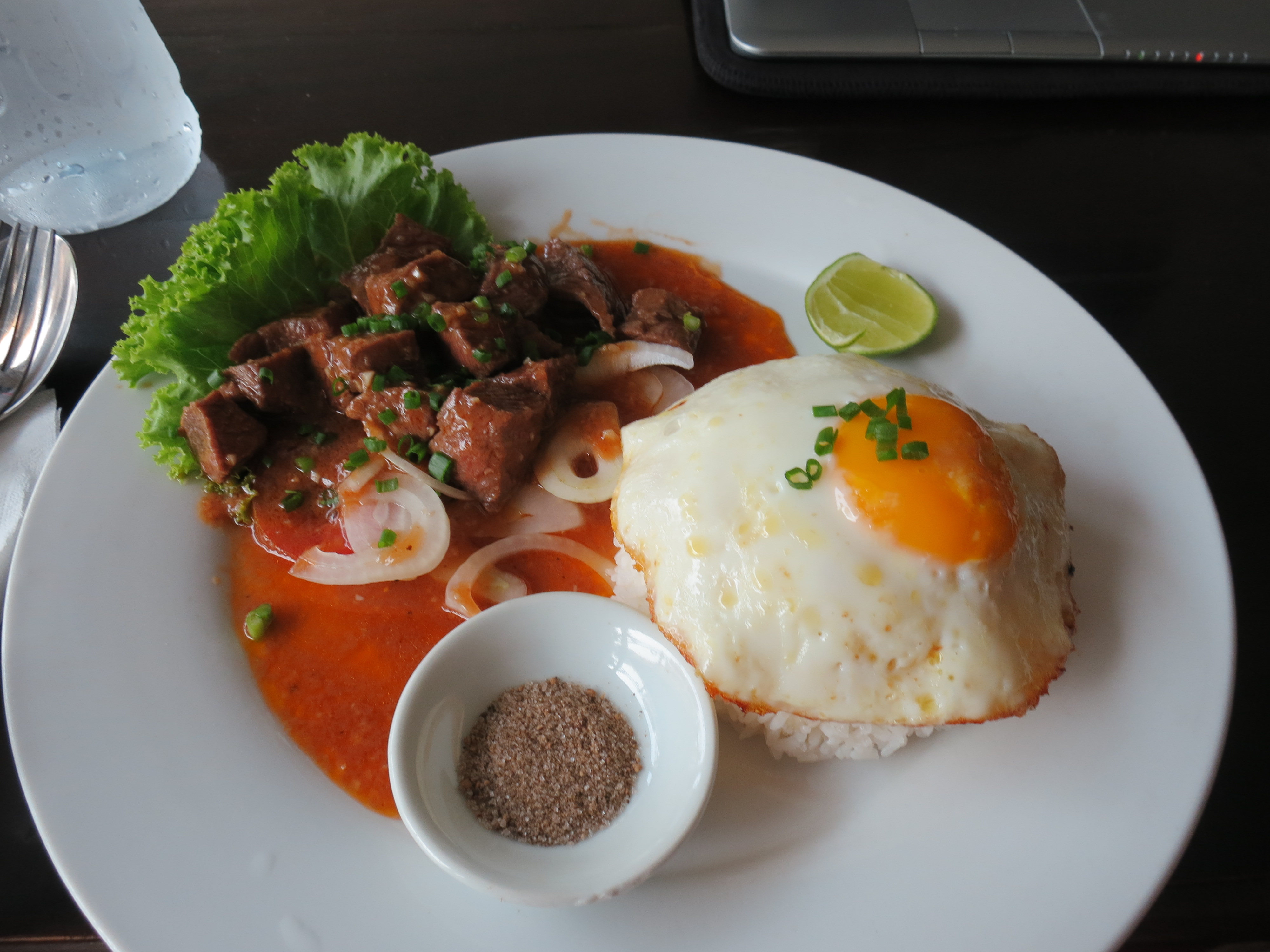
Lunch
But really, it hardly mattered. I read on a blog somewhere that the slow boat is the best trip they’ll never do again, and that about sums it up. It’s too uncomfortable to make it a regular mode of transport, but it’s too beautiful and (for us modernized Westerners) too unusual not to enjoy.

Decorative touches
The family running the boat on the first day included two brothers several years apart (the older one tormenting the younger one, much to the younger one’s delight), and an adorable toddler with her hair up in three bouncy pigtails. They were friendly with a lot of the customers they met at the stops along the way; we picked up a few passengers at the tiny villages we passed, but mostly we loaded and unloaded goods that needed moving.
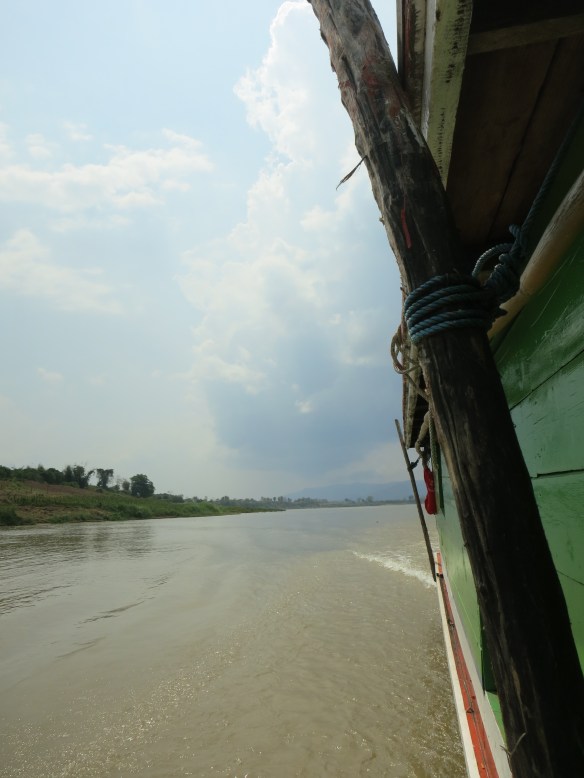
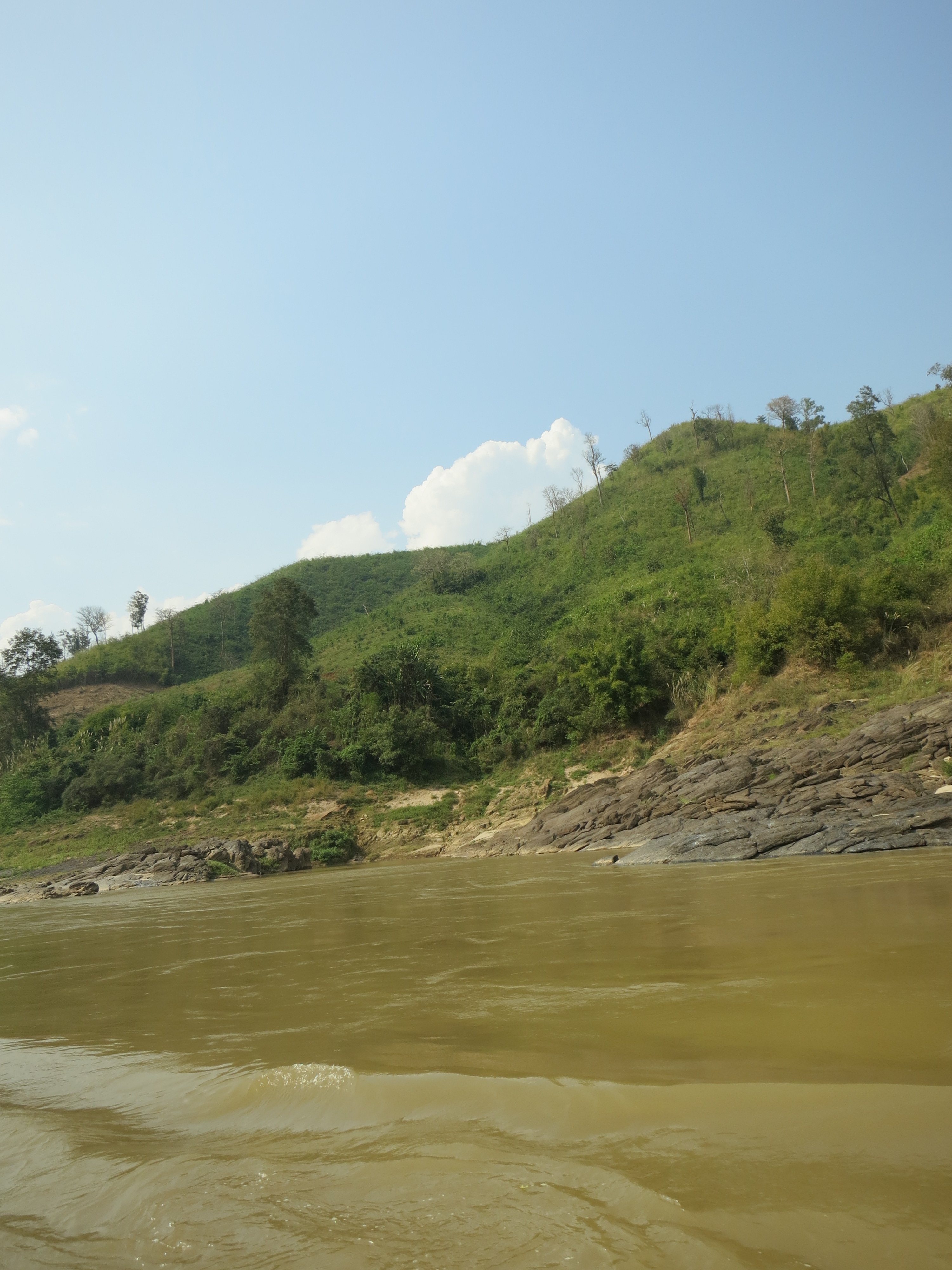
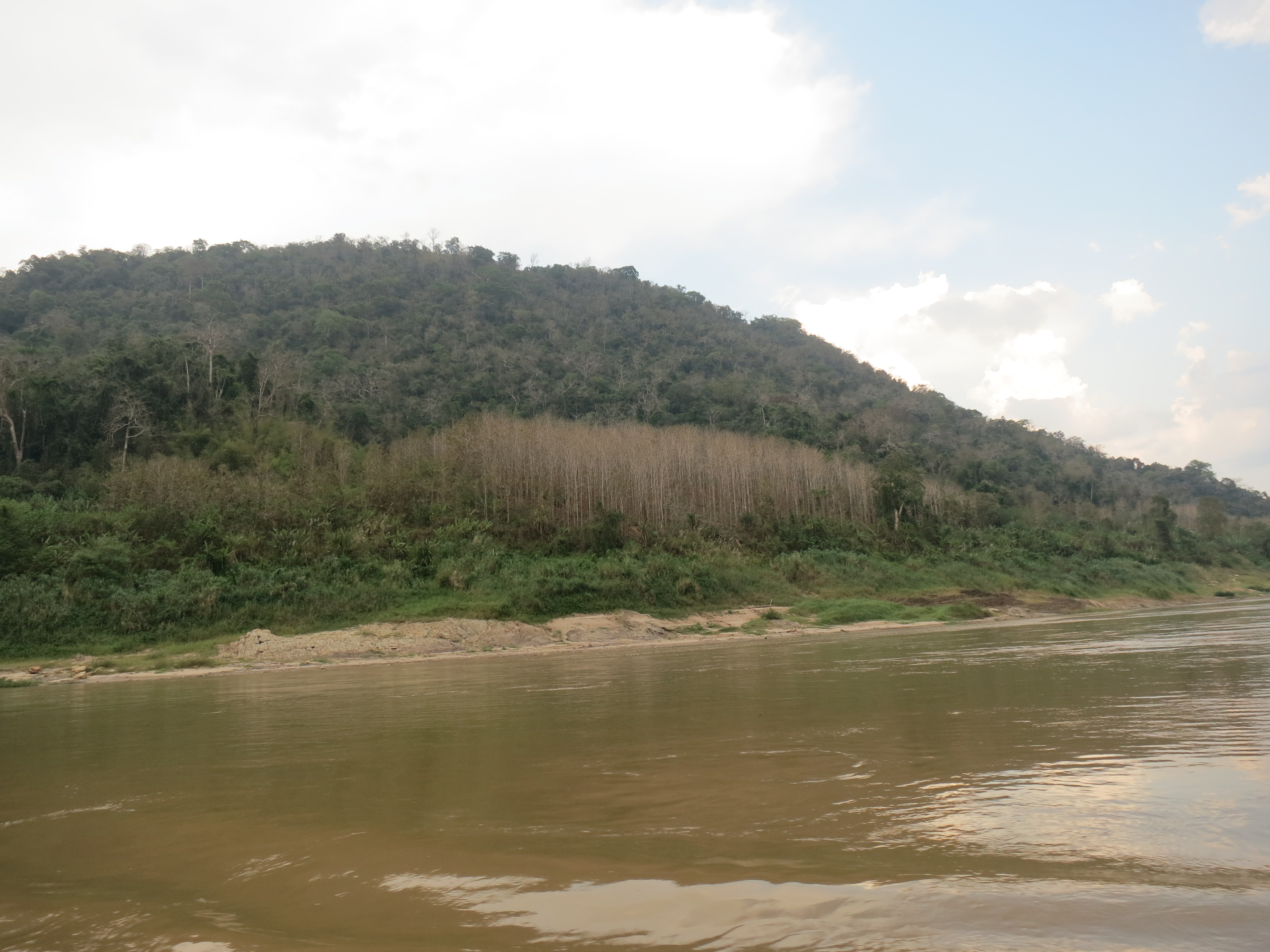
The banks of the river were hilly, covered in green grasses and trees, the occasional palm, some brown shrubs, a few patches of slash-and-burned forest, and clumps of what looked like birch trees with maybe three brown leaves each. For the most part it was pretty calm, but we did pass little whirlpools often, like the current was so overwhelmed with the size of the river that it couldn’t decide which way to go. The banks often had sand, and it was the fine white-brown sand of a lake or ocean beach, not what I’d expect to find on a river bank. Large gray rocks collected along the edge, many glittering in the sun in a way that made it seem like there must be shiny minerals in there.
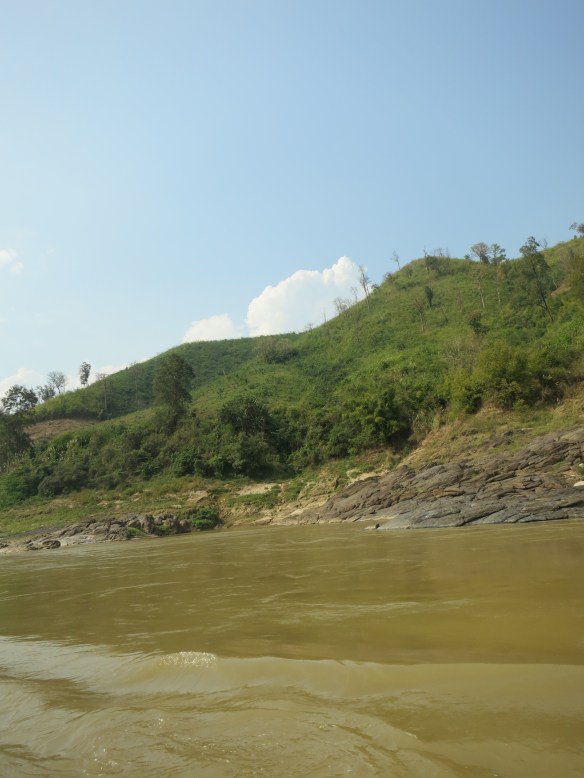
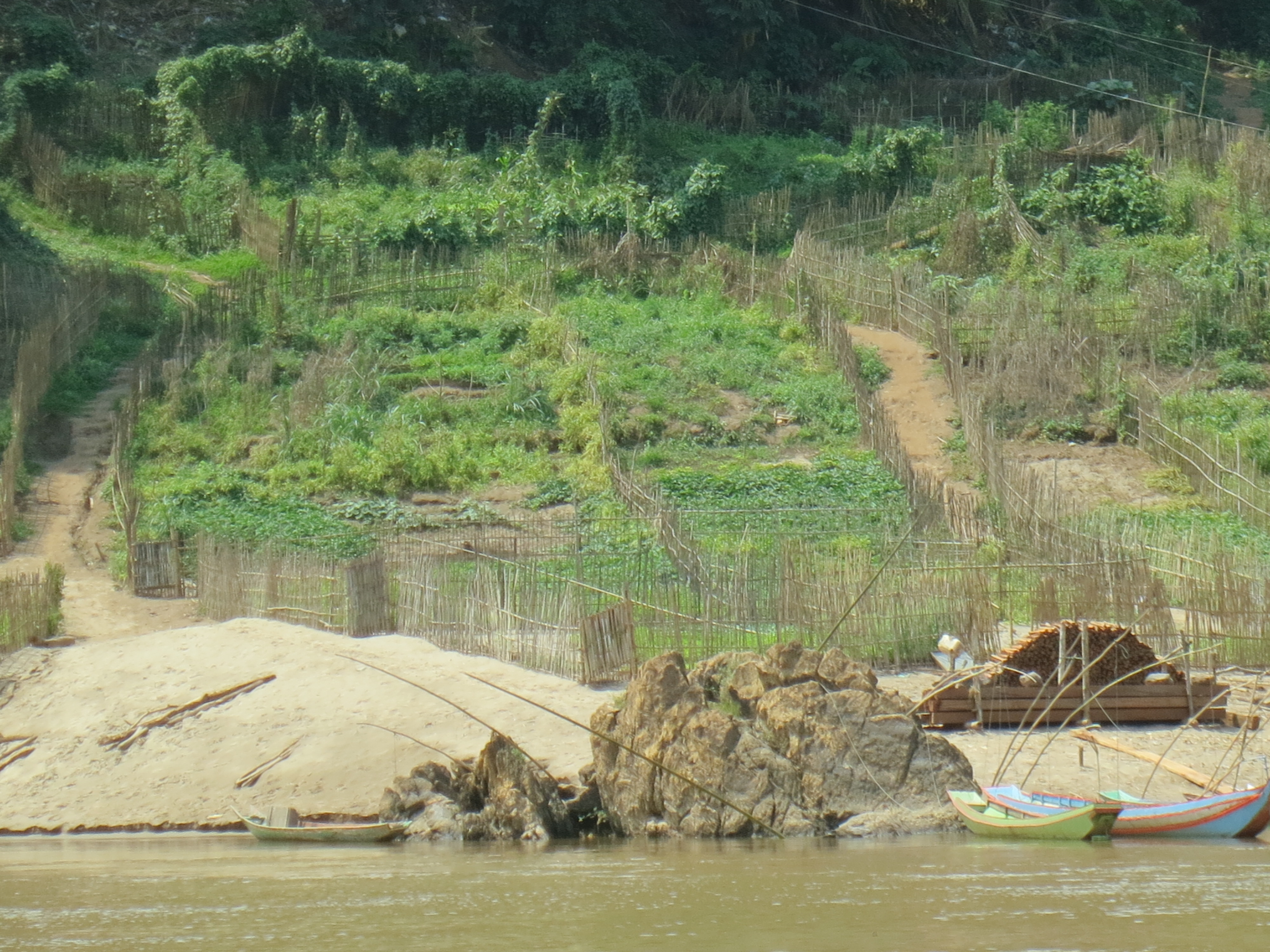
We passed villages up on the hills, and depending on how big the village was (12-30 buildings), there was a dirt path up the hill or a set of stairs carved into it and bolstered by logs, or sometimes cement stairs. All the villages had houseboats looking just like ours tied up by them; many of them had orange satellite dishes on top of them. Also lots of little skiffs, the long, skinny boats no more than a butt’s width across. All the boats are painted blues and greens, no plain wood.

A village

Gardens
There were often people along the bank when we went past. Some were children, the girls in traditional long wrap skirts and t-shirts, the boys in t-shirts and shorts, or sometimes naked. Some kids waved at us, some stared. The men and women pulled in fishing nets—sometimes men dozed on the rocks, dozing next to their fishing poles, which are long bamboo poles with a line or net dipping into the water. There were plots of land fenced off with something growing inside, maybe lettuce? These little gardens ran down almost to the river.

Fishing poles
On my second day, away from the engine, I could hear the constant rush of the water as we slid through it. I could smell the vegetation from the banks (and also, unfortunately, the cigarette smoke from the many, many Europeans lighting up around me). The uniformly brown river was pretty free of trash. Butterflies were everywhere, mostly white ones flittering around the whirlpools and off across the water. It was colder than expected on the second day. After bathing in my own sweat back by the engine (and in the tropics in general), I was surprised to find that I needed my long-sleeved shirt up front, as I might have done on a boat ride anywhere else.

View from dinner
On our stopover in Pakbeng, the main street had no electricity for several hours, and this was before the terrific thunderstorm that started up during my delicious Indian dinner. Candlelit dinner quickly turned into flashes of lightning dinner, and I stared out over the hill at this magnificent storm along the surging river as my beer grew warm. Luckily, the electricity came back later that night, because the A/C I’d paid extra for was definitely necessary.

Climbing up to Pakbeng

If you’re headed to Luang Prabang from Thailand, or vice versa, and you have the time and the patience for it, I’d recommend the slow boat. If you need to be forced into relaxation, this is the ride for you. If you’re already lazy like me, these are the two days you’ve been looking for.











 Stowaway Travel Writing & Editorial Services