Queenstown, New Zealand; January 2, 2013

Queenstown, New Zealand; January 2, 2013
Beautiful. Stunning. Jaw-dropping. All the superlatives apply to Milford Sound in New Zealand. Of the twelve sounds that Maori legend Tu-te-raki-whanoa carved from the rock of the southwestern coastline, he’d deemed this one the most perfect. Fog hugs the mountaintops, fur seals snooze on the rocks, waterfalls cascade down the steep cliffs. I visited on a sunny day, and was astonished by the clarity of light, the sharp beauty of everything I saw.

On Milford Sound
Milford is remote enough that you can only sleep out there on the extreme ends of the income scale–in the one hotel at the pier, or in a tent in the hills, as part of a multi-day trek. Most people take day trips out there, and it can be exhausting. I heeded the warnings to not go from Queenstown and back again in the same day, because it was too much time on a bus and not enough time enjoying the sights. Instead, I used Te Anau, the town about halfway between Queenstown and Milford, as my starting and ending point for the day. This was the right decision. I was so much more enthralled by the scenery than I would have been if I’d spent an extra four hours on a bus.
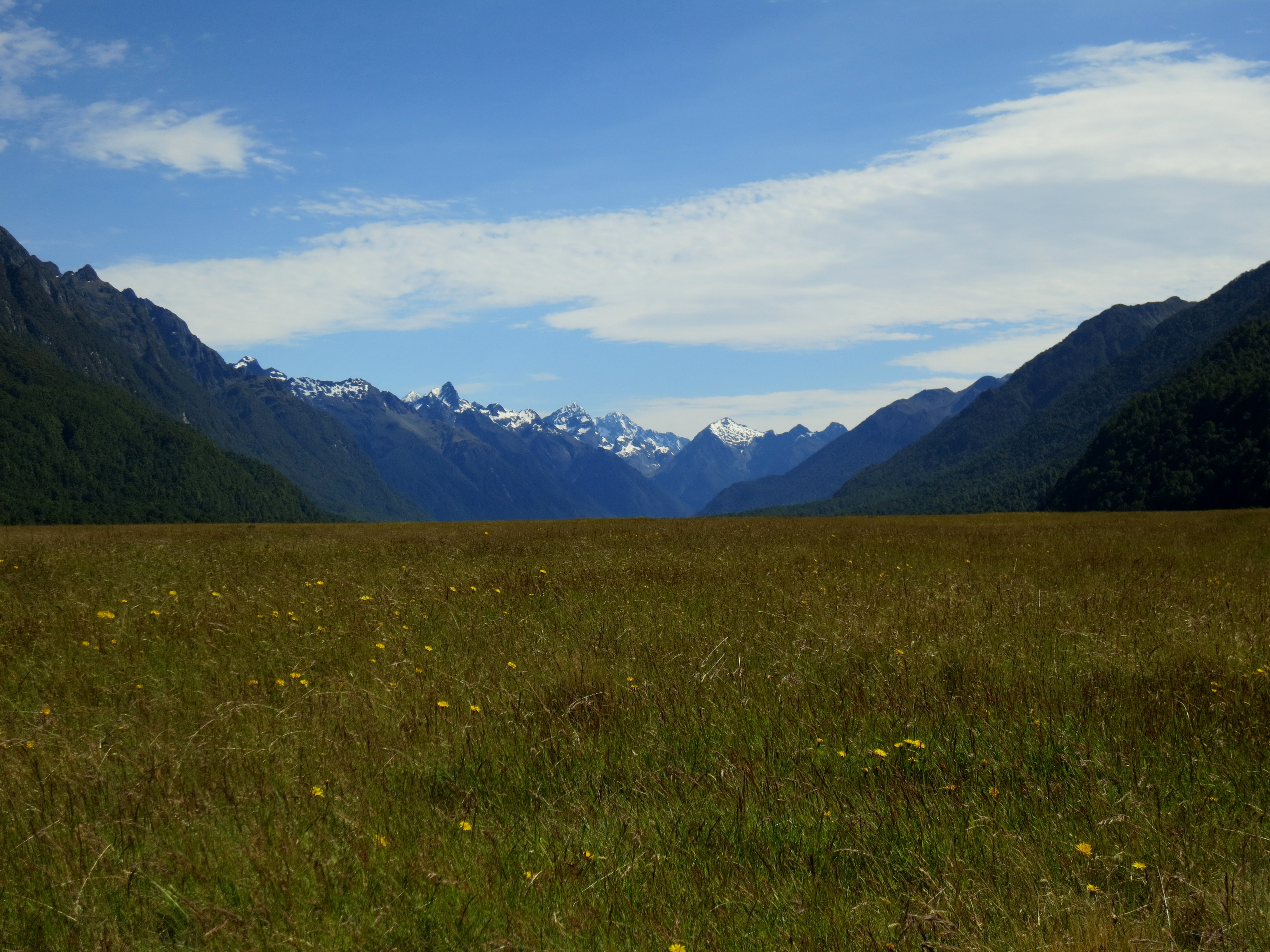
You could easily pull a Julie Andrews here.

Mirror Lakes
This area of New Zealand is known as Fiordland, and most of that is part of Fiordlands National Park, a mountainous area with no industry other than tourism and a few dairy farms on the outskirts. When I visited, there was talk of bringing the west coast highway down through the mountains to connect to Milford. A lot of people are against it, since that would cut through some of the more remote parts of the wilderness and significantly alter the landscape and its accessibility. For now, there’s just the one road, coming in from Te Anau. It’s closed when it’s too wet or snowy. The park department triggers avalanches during winter, like planned fires in forests, so that they know when they’re going to happen and people won’t be caught in them.


Dennis Moore’s dream field (Monty Python joke)
The drive out to the sound is gorgeous as well. The bus driver gave us a few facts and figures as we wended our way through fields of invasive lupins, and I tried to pay attention to what he was saying as I stared out the windows. We made a few stops, at the Mirror Lakes and at a large field with a view of the mountains we were driving into. We drove through Homer Tunnel, the only part of the road built by blasting through solid rock. Once we were on the other side, I felt just how far from everything we were. The open spaces of the meadows were gone, and in their place jagged rocks stretched in the rare blue sky.

The road after Homer Tunnel
I boarded a Southern Discoveries boat with about 50 other people, and we set off into the wide ellipse of the sound. Or rather, the fiord. All the English names for the ragged inlets in the area are geographically incorrect; sounds are formed when a river valley is flooded, whereas fiords (or fjords, both spellings are correct) are formed by glaciers cutting out the rock of the surrounding mountains and melting to fill up the resultant valley. Both the bus driver and the guide on the boat relayed this information, so I guess it’s an important distinction, but I have to say that when you’re on a boat in the middle of Milford, it doesn’t matter if it’s a sound or a fiord, it’s just lovely.

Mitre Peak, shrouded in clouds
It had rained pretty heavily the days before my visit, so the waterfalls that ring the fiord were full. We slowed down near most of them so we could get a good look, but for a couple, the captain piloted the boat right up under the falls so the prow–and anyone on it–got soaked in the spray. Further proof that anywhere you go in New Zealand, you should bring a raincoat.

One of the many waterfalls at Milford

A refreshing drink
Fur seals sunned themselves on rocks in a couple places, and at one point I even saw a baby snuggled up next to its mother. The boat went out almost to the mouth of the fiord, and we squinted out to the Tasman Sea and pretended to be able to see Australia. Then we circled round on the other side, looking at the treevalanches and mossy cliffs.
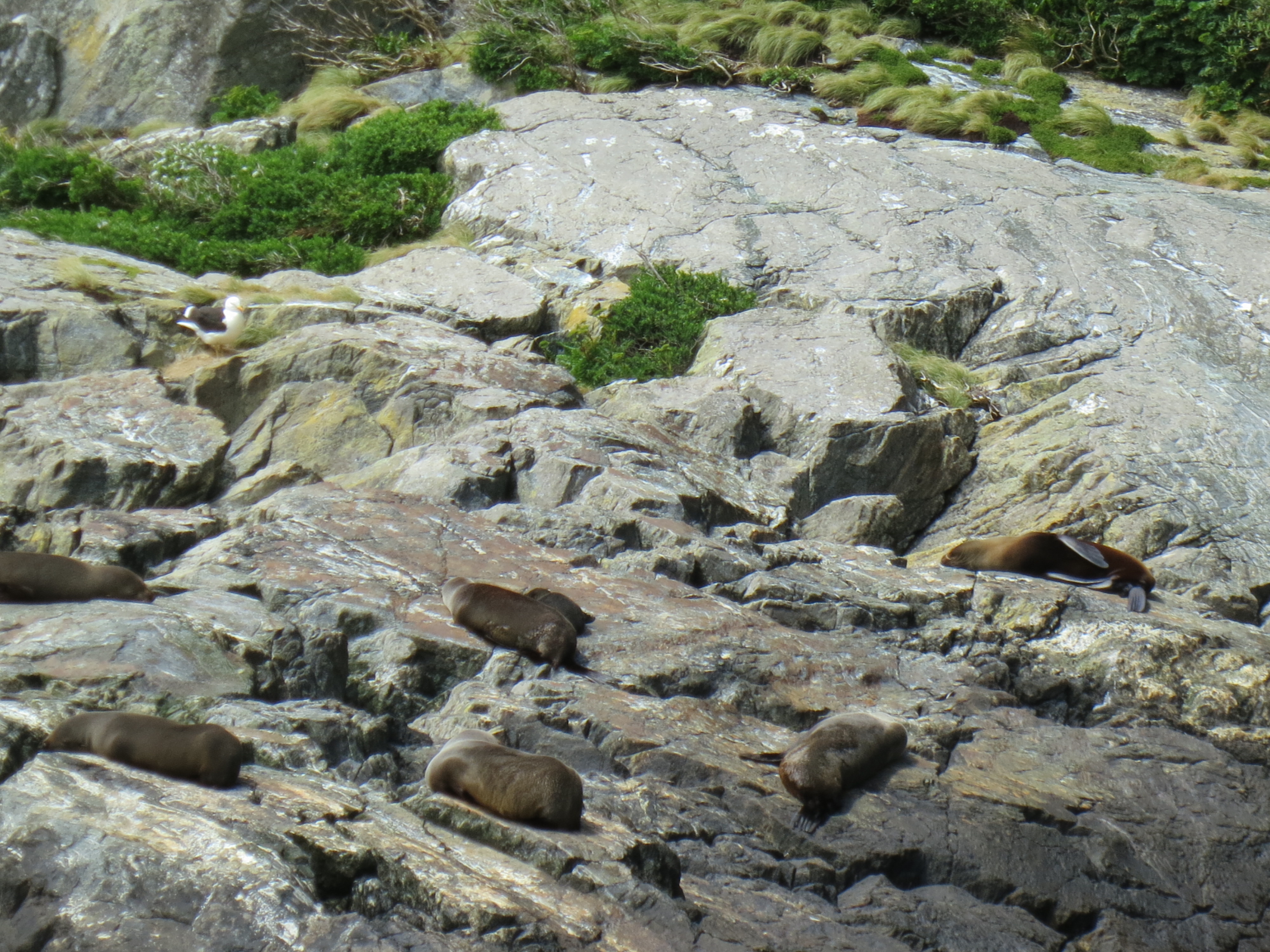
Spot the baby fur seal

The hillside starts to recover from a treevalanche
We passed Lady Bowen Falls on the way back into harbor, and with one last glance back at Mitre Peak, which had only just emerged from the fog, the boat trip was over.


Lady Bowen Falls
Milford was certainly full of tourists, but we were all so spread out that it didn’t feel crowded. Even the occasional helicopter tour overhead couldn’t do much to detract from the beauty and peace of the day. I’ve heard that Doubtful Sound is just as stunning and less crowded, which makes sense since it’s more remote and difficult to reach, so I’ll simply add that to the list of places I’ve missed on this trip and want to see on the next go-round. In the meantime, Milford is firmly on the list of highlights of this trip.

How do you top an end-of-year high note like climbing a glacier? You don’t. You stay inside and get a lot of reading and journaling done while it rains steadily for 48 straight hours. Yes, the rain that we’d had off and on for the last few days turned into a nonstop downpour that took out the hostel’s power for several minutes, not to mention the bridge on the main highway just north of us.
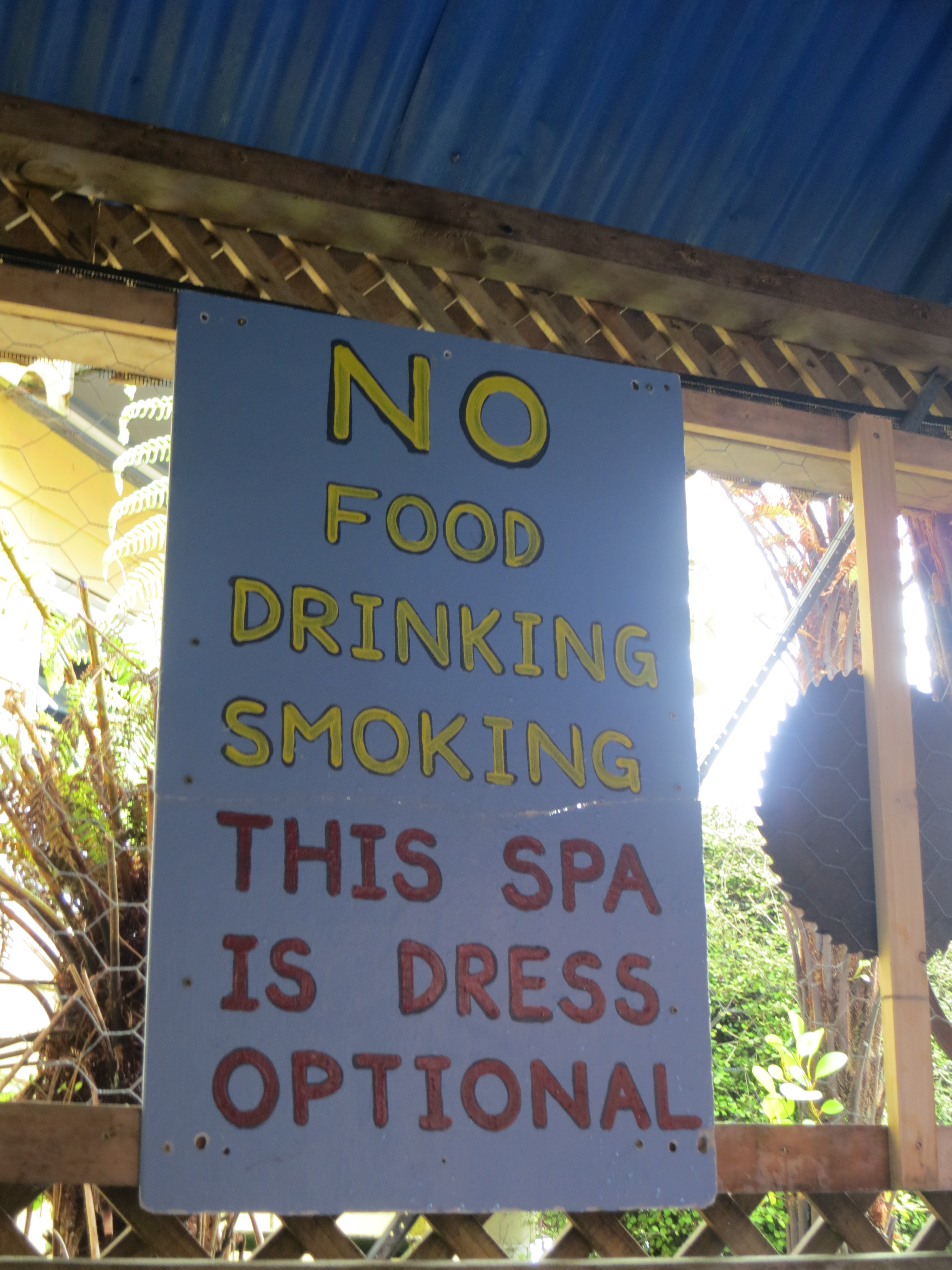
A hot tub featured prominently in recovering from the cold. Despite the sign, I ate a candy bar and opted to wear a swimsuit.
The last day of the year was also the last day of my travels with Liz. She was moving on at a faster pace, in order to make it to her Christchurch job on time in a few days. It was hard to say goodbye to such a fast friend and great road trip partner, so after her car crossed the horizon I ate my feelings in the form of some Tim Tams and planned out the next few days to cheer myself up.

The bees loved this plant–as did I
I celebrated New Year’s with other guests at the hostel. We chatted in the warmth of the common area, and then foolishly decided to venture out in the rain to find a party. We went to a bar that promised retro tunes, but when we got there it was all LMFAO and overpriced drinks, so I went back into the inclement weather to see what was happening on the other side of town (a town consisting of five streets).
A wonderfully local event, that’s what. Taos (pronounced like “chaos”) was playing the local gym/auditorium/cavernous indoor gathering space. When I got there, it felt just like a school dance or church event–too much space for the number of people there, a few people enthusiastically dancing, older folks watching from the sidelines, a table in the back with a couple kegs of beer (ok that part was unlike either the school dances or church events I’ve attended). Most people were barefoot, and I soon abandoned my flip flops and danced along on the wet gym floor. Or I tried to dance, anyway; I find reggae inherently un-danceable. The band was so into their set that they only realized it was near midnight at the last minute. The lead singer held up his smartphone to lead us all in a countdown, and that seemed a fitting way to do things as we cheered in 2013.

We stopped by Thunder Creek Falls on the road to Queenstown. The heavy rains made for a spectacular falls.
On the second day of the new year, I went on a long bus ride down the coast and into the heart of the mountains, to Queenstown. I stayed with the friend of a friend, children’s singer Craig Smith. Craig is big on the Couchsurfing scene, and he invited CSers to his birthday party on my second night there, so I got to chat with travelers while admiring the breathtaking view from Craig’s porch.

The view from the Queenstown living room I slept in
I didn’t do any of the adventure activities that Queenstown is known for. Indeed, mine was probably one of the more sedate visits a Queenstown tourist has experienced. I walked around the gardens near the harbor and read in the shadow of a small stone church. I bought a new quick-dry towel to replace the one I’d accidentally left behind in Greymouth (the first of two things I’ve lost on this trip–so far). I booked the next portion of my trip. I enjoyed the sunshine while it lasted. I ordered a giant hot chocolate that missed some essential chocolatey-ness. After a couple days, I moved on to Te Anau, and from there to another magnificent stop, Milford Sound.
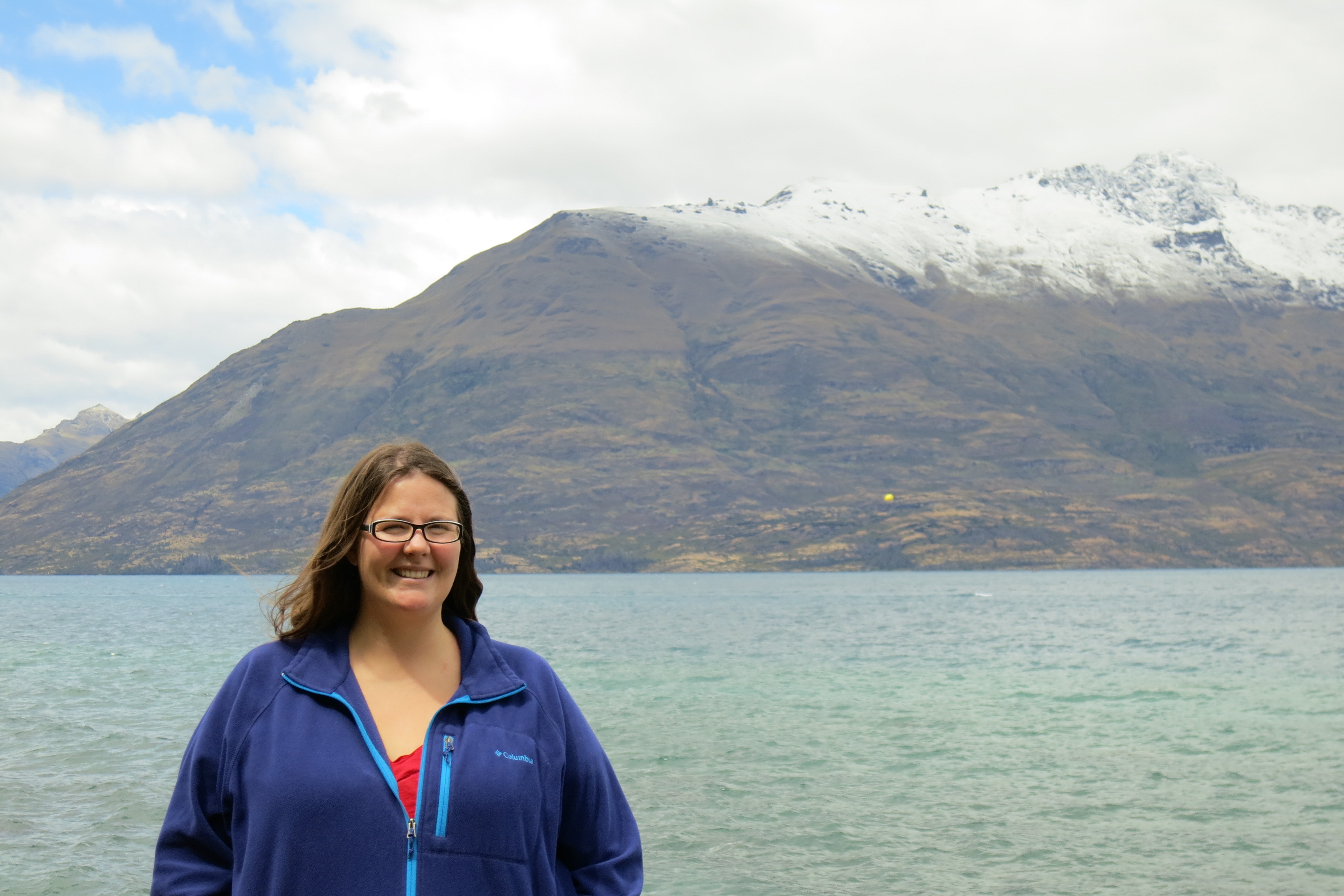
With Lake Wakatipu and a mountain behind me. Snow in January is unheard of down here, so all the locals were excited that I got to see the mountains dusted white with it. They were beautiful!
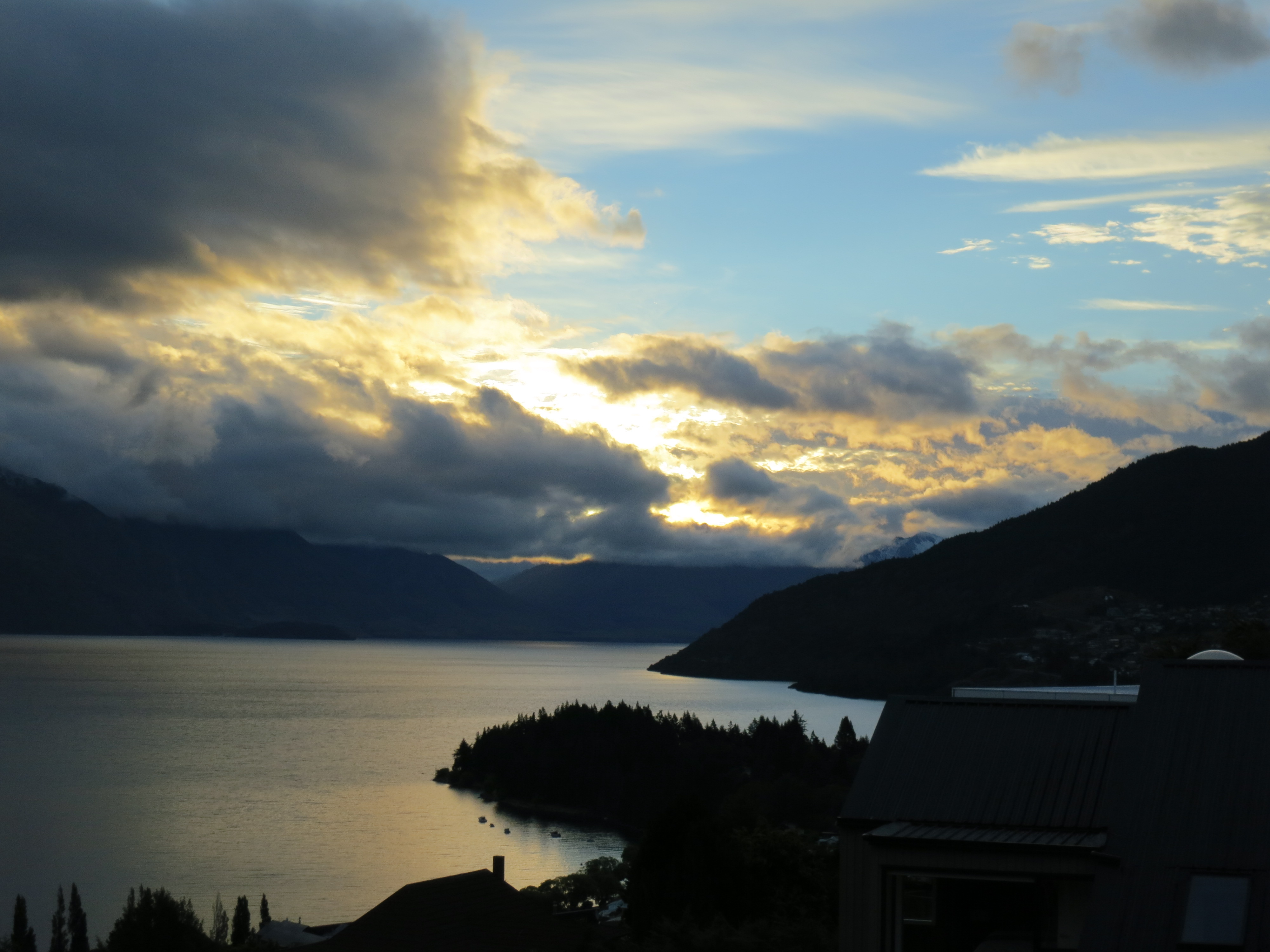
Sunset, Queenstown, New Zealand
I researched this trip before I started it, but the more I travel, the more I realize I didn’t research nearly enough. I mean, I didn’t even know there was a rainforest in Australia, much less that it’s the oldest one in the world! The Daintree Rainforest is estimated to be 180 million years old, which puts it back at the time of dinosaurs. Plants grow here that were previously only found in fossilized form. And as a bonus, the main section of the rainforest visited by tourists is evocatively named Cape Tribulation.

Cape Tribulation, Daintree Rainforest
The phrase that all the promo materials repeat is “where the rainforest meets the reef,” because it’s the only place in the world where a rainforest comes right down to an ocean reef. It will not surprise you to learn that there is a large concentration of World Heritage Sites going on here.
Long walks on the beach
I took a two-day trip to Cape Trib (remember, this is Australia, so you must shorten as many multi-syllabic words as possible) with Active Tropics Explorer. Our driver was a loquacious middle-aged man, who told us as much about his diving prowess as he did about the natural wonders we passed. That was only mildly annoying, but he crossed a line when he described what he wears while diving, and said he doesn’t wear the tight-fitting bodysuits because that makes him “look gay.” Way to live up to nasty stereotypes about bigoted outdoorsy Australians, dude.

Sugar cane is huge industry here. The companies built a railway just to transport the sugar cane–the gauge is too small for passenger or other freight trains. You’ll see tiny little tracks all over Queensland, made to carry sugar cane trains.
Aside from that, he was a pretty good guide. He clearly loves the area, and it’s always nice to be shown around by someone with such a passion for the place. We started out in Cairns, and he drove us north on the extremely windy Captain Cook Highway. We didn’t stop for any pictures on this picturesque drive, which was too bad, but we all got our cameras out at the second stop: a crocodile tour on the Daintree River.

Croc wrasslin’
We piled into a long, flat-bottomed boat, which puttered down the river slowly. Everyone scoured the banks for logs that might actually be reptiles, and the boat captain told us about saltwater crocodiles, which trickily live in both fresh and salt water, and which kill at least one person per year in Australia, so quickly that it’s hard to know what’s happening until you’re snapped up in their massive, powerful jaws. Crocodiles haven’t changed much since they lurked in primeval waters, and their dispassionate stare and long, deadly bodies give me the creeps. Probably just as well we didn’t see any.
What’s lurking in those mangroves?
Instead, we heard fun facts about the many species of mangrove that line the river bank, and then crossed to the other side of the river, where our driver/guide was waiting for us. We went on even more winding and steep roads, and heard about the activists who protested the government bulldozing through the rainforest to build this road. The road was eventually built anyway, but the international attention the activists gained helped ensure that the rainforest–previously unprotected–was given the protection afforded by a World Heritage listing. See now, that is why you stage protests. They’re rarely the final say in a public debate, but they’re often the necessary catalyst to get those debates on the right track.
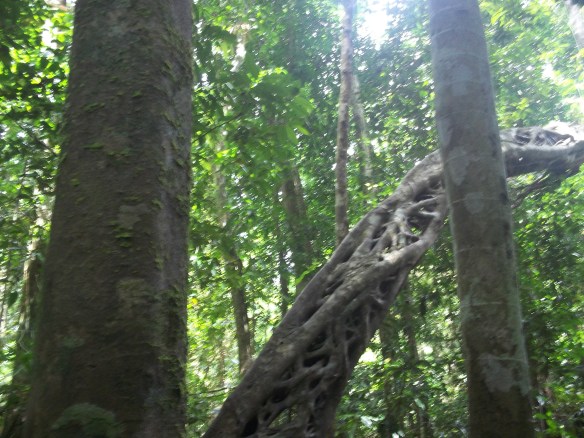
Intricate latticework on this tree
We stopped for a short walk on the Maardja Botanical boardwalk. We inspected basket ferns (which look like Mother Nature’s hanging baskets), cane vines (which are made into cane furniture), ferns with sharp spikes all along the edges of their leaves, and mud pits with trees poking their knobby-kneed roots in the air.

Walking the boardwalk
About halfway through the walk, our guide picked up an ant that was marching along the guardrail. As the ant squirmed in his fingers, our guide said, “Anyone got some tequila on them? Maybe some salt?” And then he licked the ant’s butt. “Lime!” he exclaimed. The green ant, which looks slightly irradiated, has an acidic taste to it that reminds some people of lime. Our guide found another ant and held it out to guys in the group, and one by one they all turned him down and walked away. He turned to me jokingly, but I am not one to turn down silly, harmless antics, so I said, “sure!”
And then I licked the ant’s butt. It did, indeed, taste a bit like lime. Not something I’d add to my margarita, but it was fun to do.

I don’t have any pictures of me tasting this ant, but trust me, it happened. (Blurry quality because these guys are small and fast.)
Cape Tribulation is so named because Captain Cook hit a reef on his way along the shore, then hit it again on his attempt to find deeper waters. That’s like hitting the concrete curb on your way into a parking stop, and hitting a car as you back out of it. If you look out at the ocean from the beach here, you won’t see any signs of a reef, so I suppose I can see how he made the mistake–the first time, anyway.
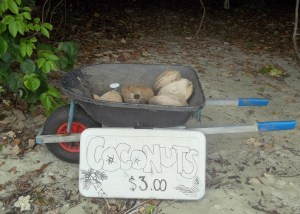
Our guide dropped us off at one of the hippest YHAs I’ve stayed in, and then we had an afternoon to do with as we pleased. Stinger season had just started–because why have crocodiles as the only danger when ocean swimming in Australia, when you could also have invisible jellyfish to take you down with one sting?–so I did not go in the water. Besides, it was a rainy day in the rainforest. I waited til it was mostly clear, then took a walk along the beach to a lookout on the cape. I passed coconuts in their hairy husks and a heron who tried to give me the slip with the most comical evasive maneuvers I’ve seen in a bird. I skirted mangroves and inspected pockets of tiny balls of sand, which look like someone made Dippin’ Dots out of sand. I still have no idea how they come to be.

The crop circles of the beach
On my walk to dinner, I passed a bird walking along the path and excitedly took a picture. Then I saw about 10 more of them in the next hour, and was informed that this is the brush or bush turkey, a very common Australian bird (which showed up in my Thanksgiving post). An uncommon bird found in these parts is the cassowary, which looks a bit like an emu with a bump on its head. I didn’t see one, but that’s not too unusual.

Cautionary art–the cassowary above, the speed bump below (turned into dead cassowary, should you go too fast)
The next day, after a leisurely breakfast, we piled back into the bus with a new driver/guide. She was the opposite of the first guy in so many ways–a hippie who spoke frequently and seriously about “the good vibrations of this special place” and the karmic complications of getting what you wish for (as illustrated by the story of a tourist who saw a croc and poked it with a stick to get a good action shot on his camera–and got his leg nearly bitten off).
We went to the Daintree Ice Cream Company, which grows all its non-dairy ingredients onsite. Each day they offer four flavors in one cup for $6, so we all bought a serving and ate our apricot, raspberry, macadamia nut, and wattleseed on the bus. (The apricot was delicious, the wattleseed a bit sharp but nice.) Afterward, we drove to Alexandra Range Lookout, so we could see the river flowing into the sea and some cockatoos squawking overhead.

View from Alexandra Lookout–weather was nice as I was leaving!
We drove out to Mossman Gorge for a short meeting with a representative of the local aboriginal group, the Kuku Yalanji. He talked about learning from his uncle about when to hunt, when to move to the seaside for a few months, and so forth, all based on traditions dating back thousands of years. He showed us some of the white body paint that you may have seen in photos of aboriginal people, and explained that for his people, this was used when meeting people from other groups (the word “tribes” is inaccurate in regards to groups of aboriginal people of Australia).

Artifacts used in the presentation
Next, we went to the Mossman River and walked along the path there. I liked this path a lot, because it was dotted with signs that didn’t just describe the natural sights around us, but also explained how human efforts to help the environment directly helped preserve those natural sights–like “your recycled milk bottles built this boardwalk,” etc.

Mossman Gorge
People gathered at a little rocky beach, and some brave souls got in the cold water. After a little dithering, I decided what was my Michigan upbringing for if not to prepare me for all types of swimming conditions, and I got in too. It was great! Fish swished by my ankles, the current carried me rapidly downstream, and for the first time all weekend, the sun shone.

This, as they say, is the life
The Daintree is the first example on my trip of the advantages of listening to tour company employees when they recommend sights. Sure, they’re selling you something, but sometimes that something is totally worth it. It may be the first example, but happily, it isn’t the last. More to come!
 Stowaway Travel Writing & Editorial Services