No museum is a mere collection of facts. It’s not possible to display information completely objectively; there’s always a point of view taken, a lesson to impart, an agenda to push. This is true even for museums that aren’t at all political; for example, the Laura Ingalls Wilder Historic House & Museum promotes not just Wilder’s writing, but the idea that her values and way of living are worth emulating. Museums only exist because somebody thought the topic was worthy of further study and wider knowledge by the general public. Just by building a museum, you’re taking a position. But I have to say, I have never been to a more baldly biased museum than the War Remnants Museum in Ho Chi Minh City.

The War Remnants Museum in Ho Chi Minh City, Vietnam
Unlike a lot of museums, this one makes no bones about its purpose: it is there to tell the story of the Viet Cong during the Vietnamese-American War, and it is there as a corrective to the American narrative of the war. Every single poster and placard called it the American War of Aggression. Any time the war was called “the Vietnam War,” the phrase was placed in quotes. South Vietnam was called the “so-called Republic of Vietnam.”

Protests around the world
When the USSR or China were mentioned, the war was called a “struggle for national salvation,” to be more aligned with Communist vocabulary. One placard showed Australians protesting their government sending troops to aid the Americans, and the placard said they were protesting the agreement between the Australians and US to “force Australian youths to become field targets in the US battles in Vietnam.” The whole museum was a master course in semantics. (Which is not to say it was false–you can put a lot of gloss on a base of facts.)

Some veterans from the US have sent in their medals and fatigues to the museum, with notes of apology
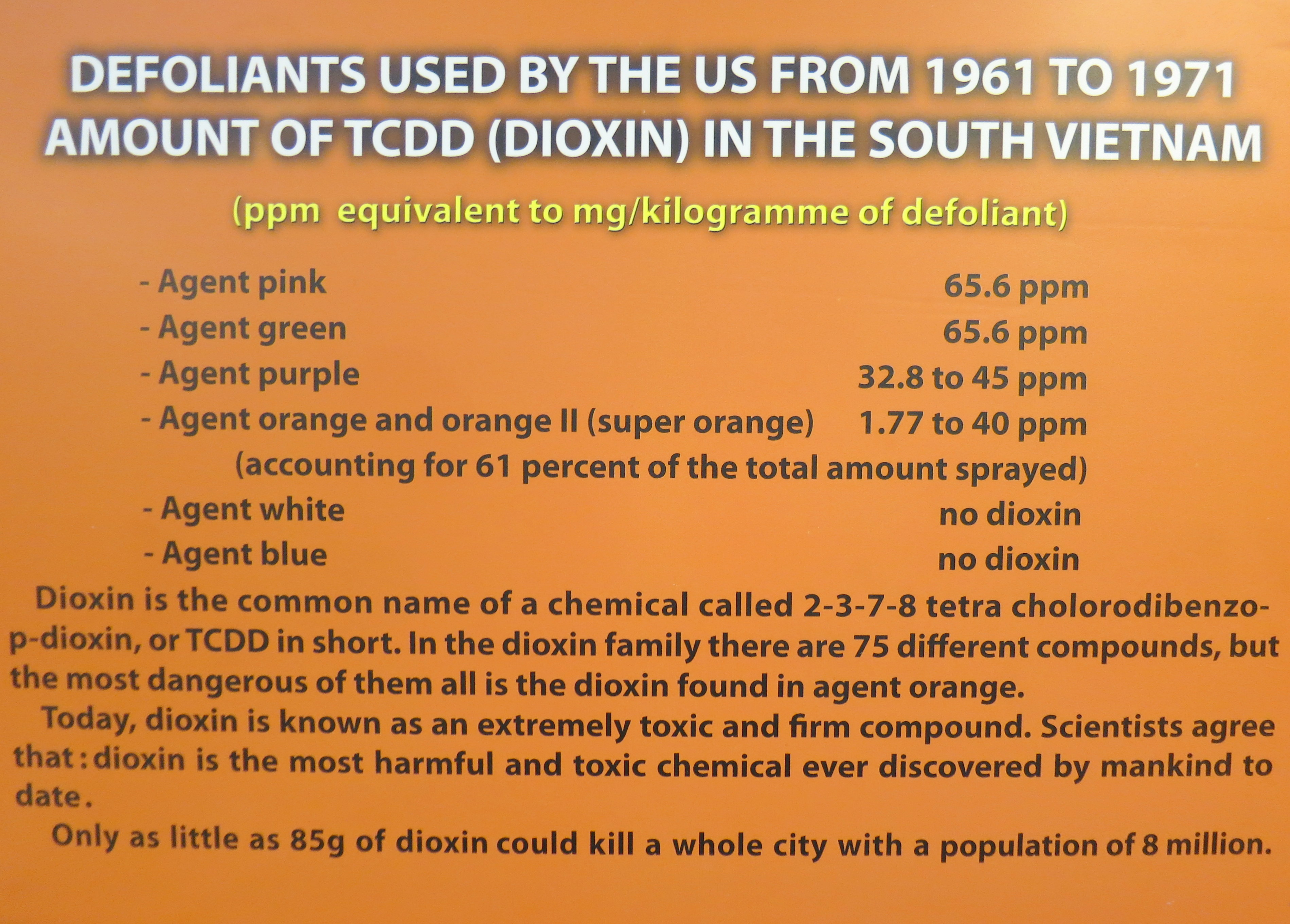
It was also extremely difficult to visit, because the anger and loss on display was so raw and so recent. An entire room was devoted to photos of children suffering from painful and debilitating birth defects, which they got because their parents were exposed to the dioxin in Agent Orange. Did you know that this was only one of the toxins sprayed over forests and farmlands? The museum showed posters of the various “colors” of toxins used by the US. The posters looked a lot like our terrorist threat level posters today, only guess who was the threat?
Yikes
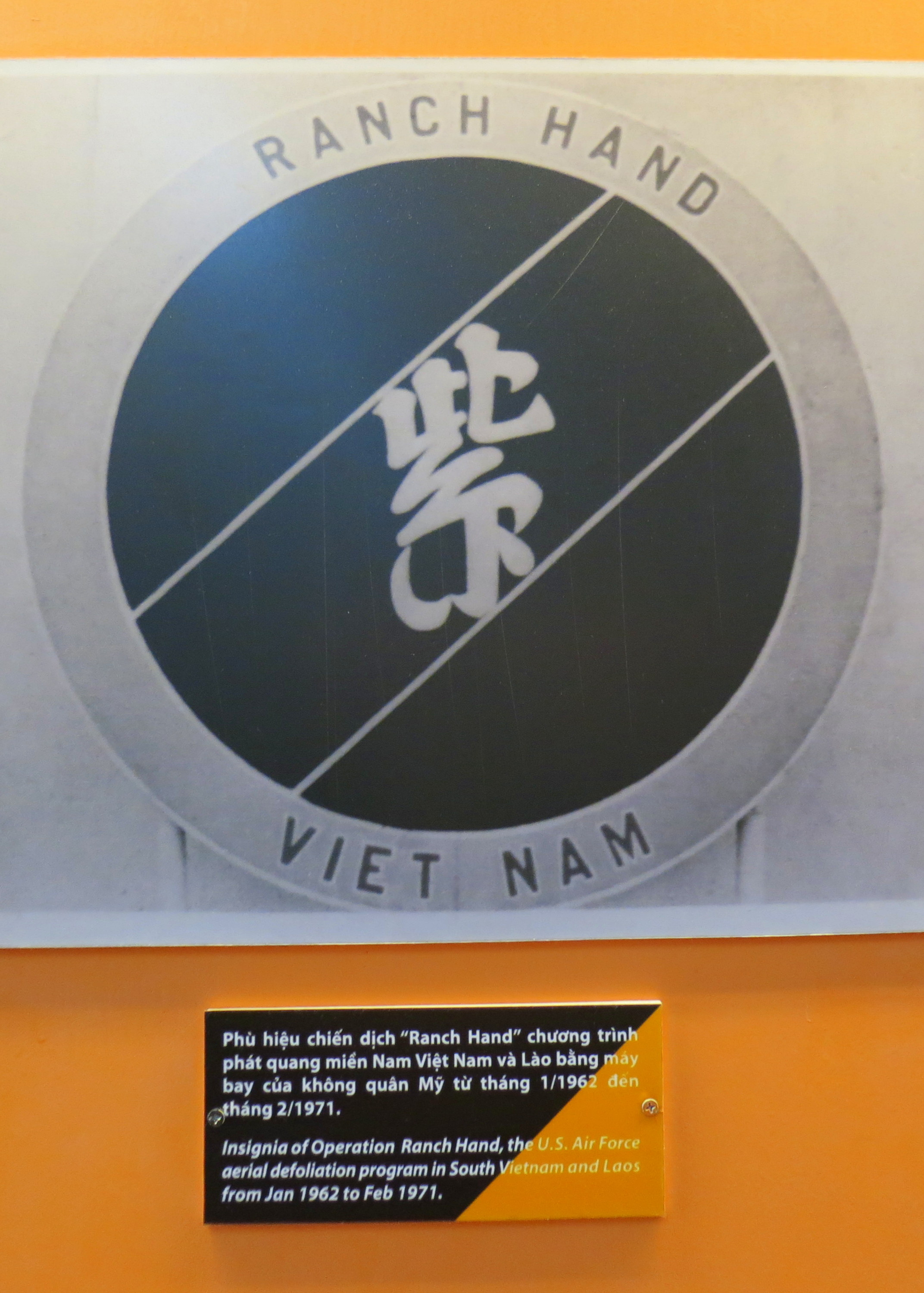
Ranch Hand: the name of the operation that sprayed various chemicals over the farmlands and forests of Vietnam from 1962 to 1971
Research since the 1960s has shown that even just one parent exposed to dioxin could affect the DNA of the child, resulting in spina bifida, diabetes, various cancers, twisted or missing limbs, developmental disabilities, and other defects and diseases. So it’s not just the people who survived the war who developed health problems, but their children did, too. (Of course, this has been a big issue in the States, too, as the military has slowly agreed to compensate some US veterans for the health problems they and their children suffer as a result of being exposed to Agent Orange. We hurt ourselves when we hurt others.)

A whole room of these images, difficult to see, harder to contemplate.
The Aggression War Crimes and Historical Truths sections, in addition to containing the Agent Orange room, included displays on the My Lai massacre, the founding of the National Front for Liberation (what we know as the Viet Cong), the bombings in Laos and Cambodia, and the airlift of Americans in Saigon in 1975.
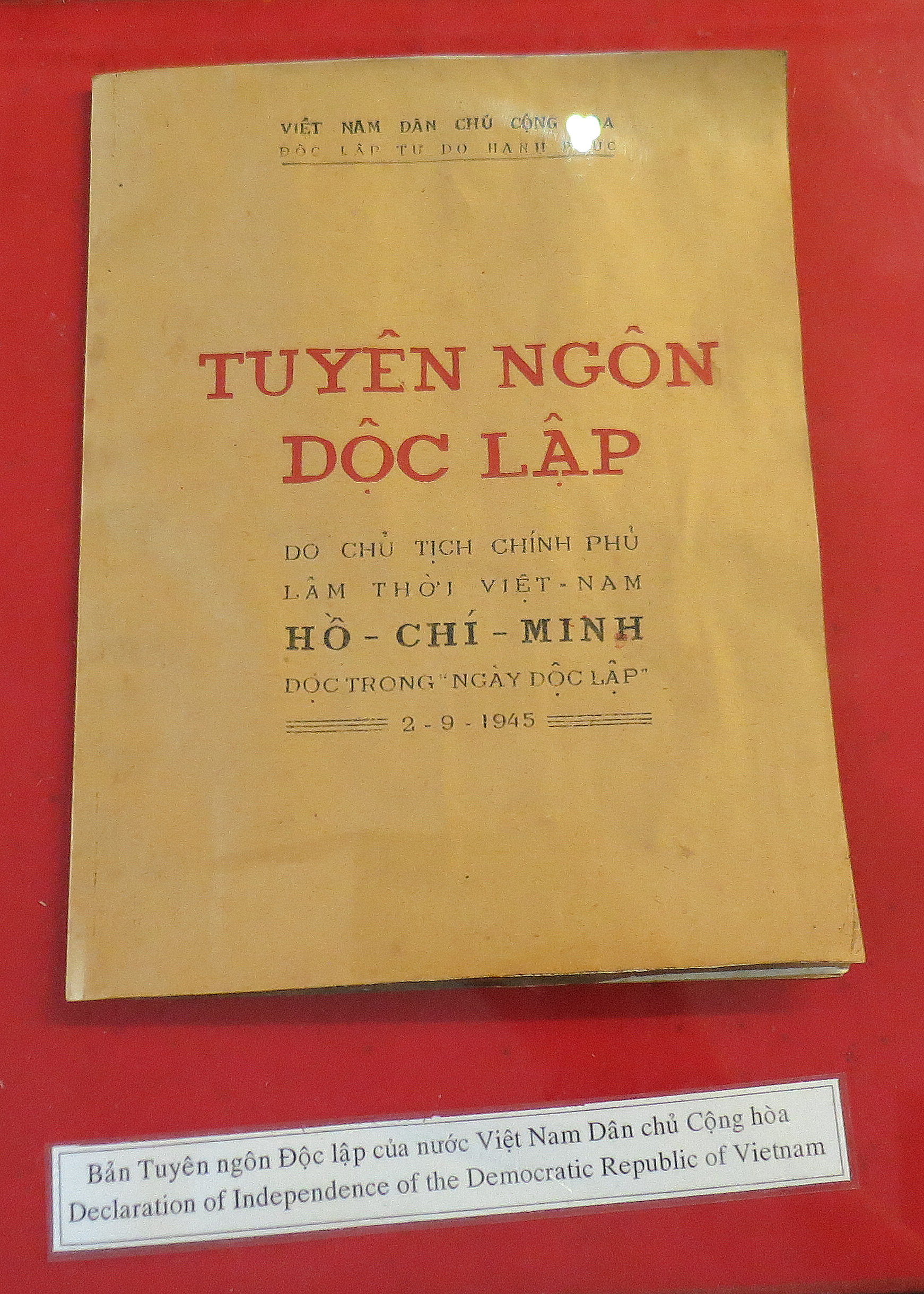
The Declaration of Independence of the Democratic Republic of Vietnam
There was a special display on photographers of the war, especially American and French photographers who trained their cameras on the atrocities the Vietnamese suffered at the hands of the American troops. A couple rooms held displays of shell fragments, different kinds of guns, and in a display on the total destruction of villages in Son My, pots and baskets to show what the lives of the villagers were like before the attack.
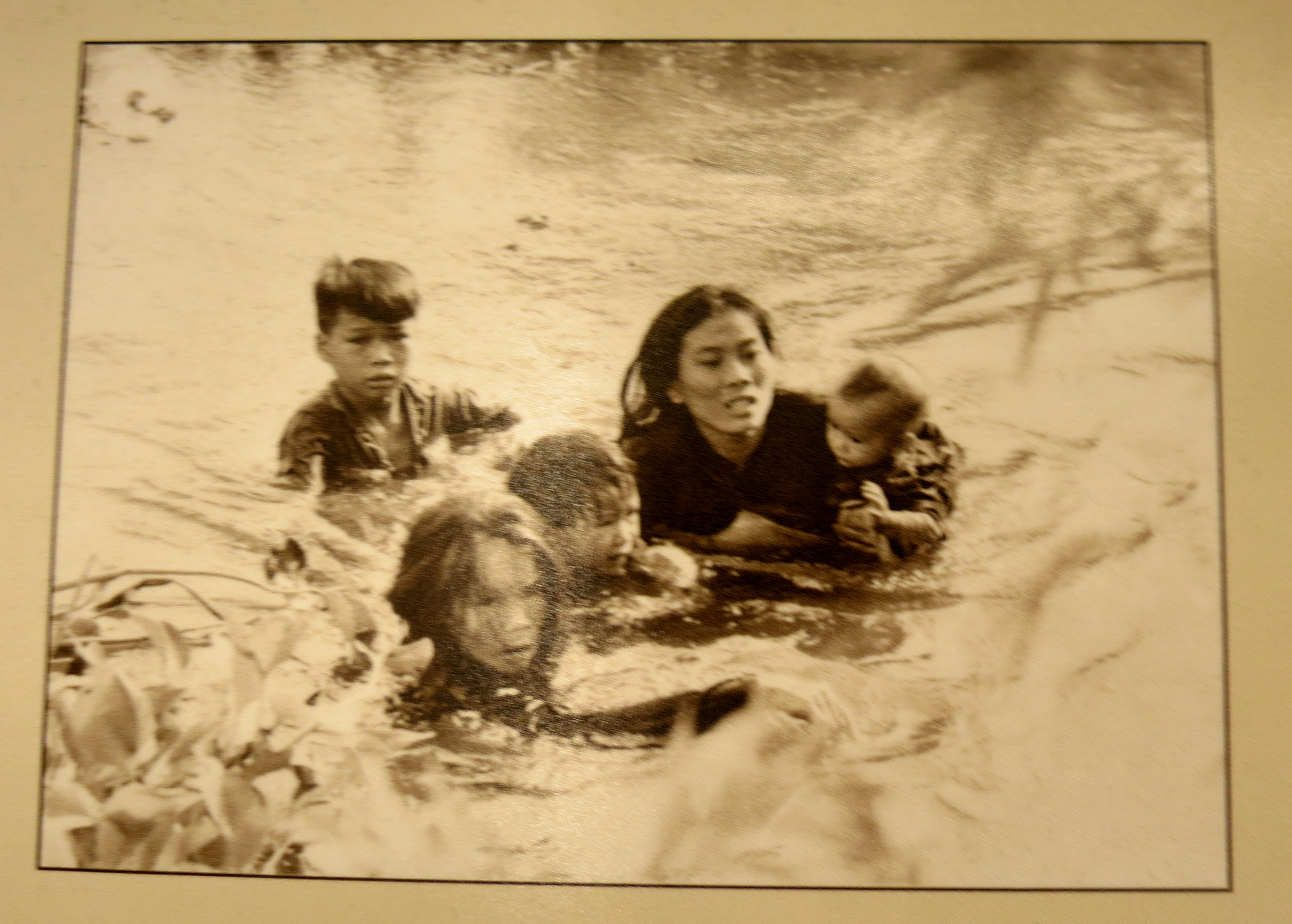
Part of the Photographers of the War exhibit


Pottery from the Son My massacre. We know it as the My Lai massacre, but that was just one of several villages in the area that was destroyed, and the Vietnamese call it the Son My massacre.
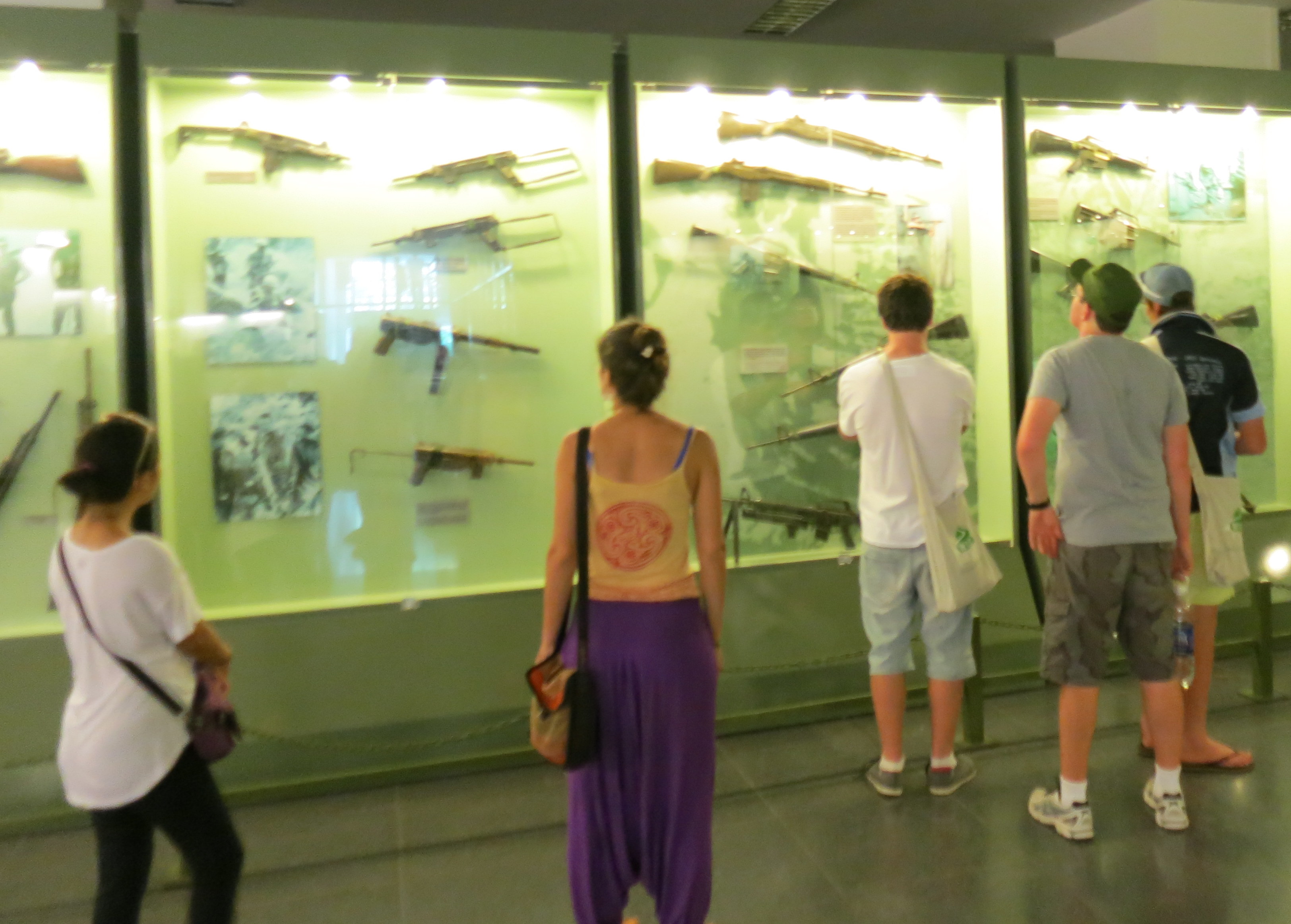
Visitors look at the guns on display
The first floor was split between two displays: one on the education the young Vietnamese received under the Viet Cong during the war, and one on the worldwide anti-war protests held during the ’60s and ’70s. The education display was dated, a magazine spread for people to read during the war. It showed children in obvious poses, smiles plastered on their faces as they shouted dedication to “Uncle Ho,” with captions like “Children tried to study well and work hard to make the contribution to the people’s movement defeating American aggressors.” I don’t mean to undermine the importance of the teachers during this time, though; they taught children in tunnels if they needed to, never sure of where or when the next bomb might go off.
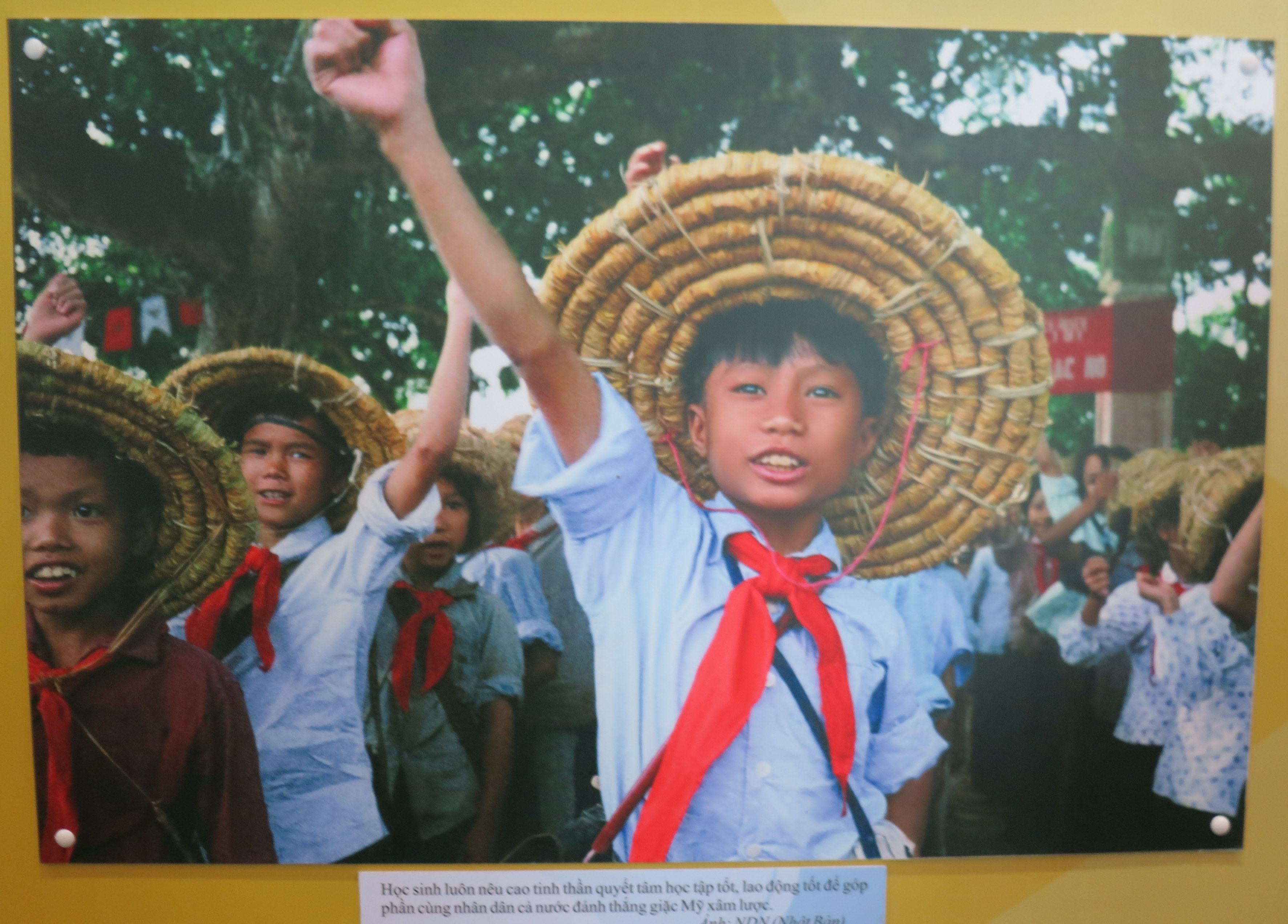
Part of the “Children During War” exhibit
The anti-war display was the opposite of dated; seeing the accumulation of anti-war and pro-Vietnam support from all those different countries, over many years, brought home how much this war meant to people around the world. People were not only concerned for the lives damaged and lost on both sides of the war, but also for what this kind of unofficial but all too real war meant for the world they lived in, and how it might affect their future. Seeing large posters declaring “Solidarity with Vietnam” in German, only 20 years after the end of World War II, was affecting. A man in Japan wore a sign saying “US Withdraw from Vietnam” during his commute, every day for 8 years. Several tribunals were convened on the “war crimes of the US” in Norway and Sweden. Thousands of people in South America, Africa, and Europe signed letters denouncing US intervention in Vietnam. Massive protests were held on every continent.

Before and after the war, from places around Vietnam
I’m so used to the American version of the story, even the anti-war story, that I was surprised by these global actions against the war. I’d let myself be insulated, seeing everything through a particular lens, and it was good to be reminded how narrow that view is. Especially in light of the anti-war protests in 2003–those didn’t come from nowhere, they have a lot of historical precedent.

Let there be peace
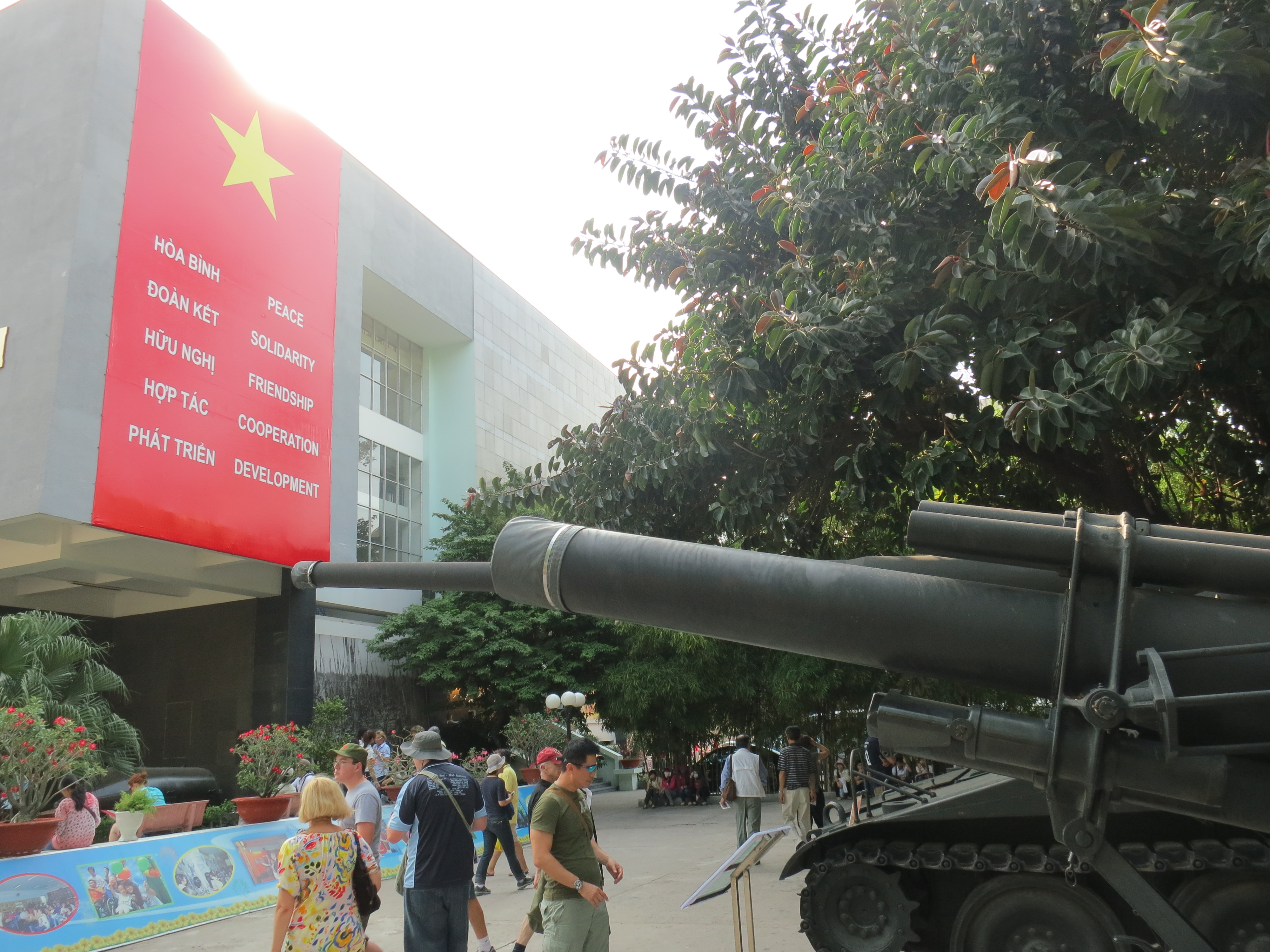
Outside the museum, captured American tanks, heavy artillery, and a bomber plane were on display in the sunshine. A group of children deformed by Agent Orange played musical instruments for a growing crowd of Vietnamese tourists. I stuck a flower in the gun of a tank, smiled and flashed a peace sign, consciously re-creating several historical photos of hope reaching out into violence. Behind me, the band struck up a folk song, and the gathered Vietnamese began to sing.
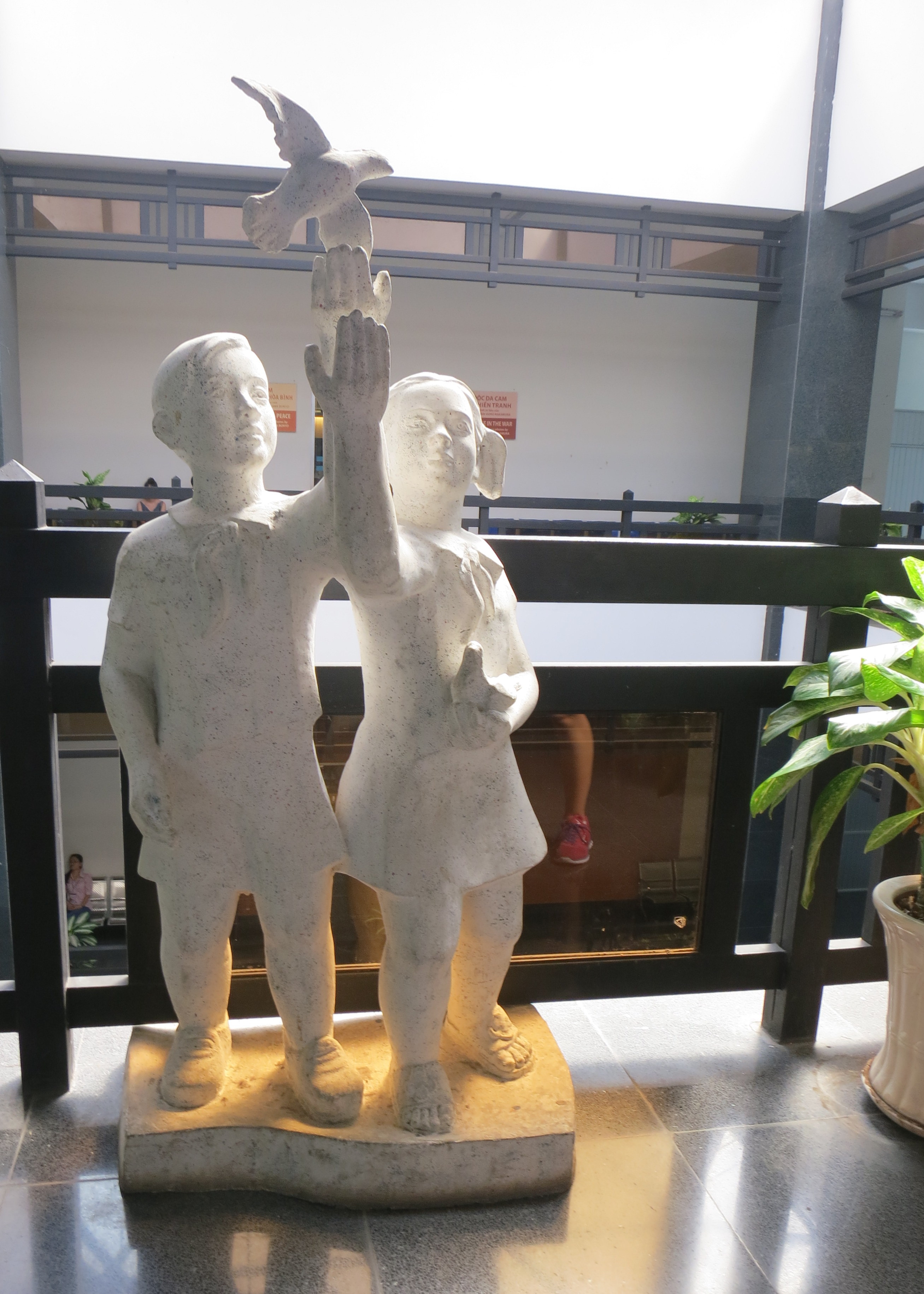
Outside the Peace Room

 Stowaway Travel Writing & Editorial Services