Screaming Seals and Preening Penguins: Driving through the Catlins, Day 1

One of my favorite things about traveling in New Zealand was that, no matter how popular the tourist spot, it never felt truly overcrowded. Locals told me that tourism has been down in the last few years, ever since the economic crash, but it’s back on the upswing now. Still, you can visit the most stunning natural places without thousands of people jostling for space to get a good shot on their iPhones. Then there are places like the Catlins, in the southeastern part of the South Island, which are even less visited than Milford and Rotorua, and all the more beautiful for being quieter.

A 1998 memorial of the Glencoe Massacre in Scotland--which happened in 1692. Now that's what I call holding a grudge.

Spotted near Glencoe, on the drive east: A 1998 memorial of the Glencoe Massacre in Scotland–which happened in 1692. Now that’s what I call holding a grudge.

I drove through the empty farmlands of the Southland when crossing from west to east, and spent the night in Kaka Point, at a hostel set up on a hill over the small town. The tiny cabin I stayed in used to be a family summer retreat, and now the elderly woman who inherited it runs it as a hostel during the summer season. The decorations hadn’t been changed since the mid-1960s, and it was so similar to the cabins I’ve been to in northern Michigan that I expected my mom to come in at any moment to tell me to hurry up and get down to the lake.
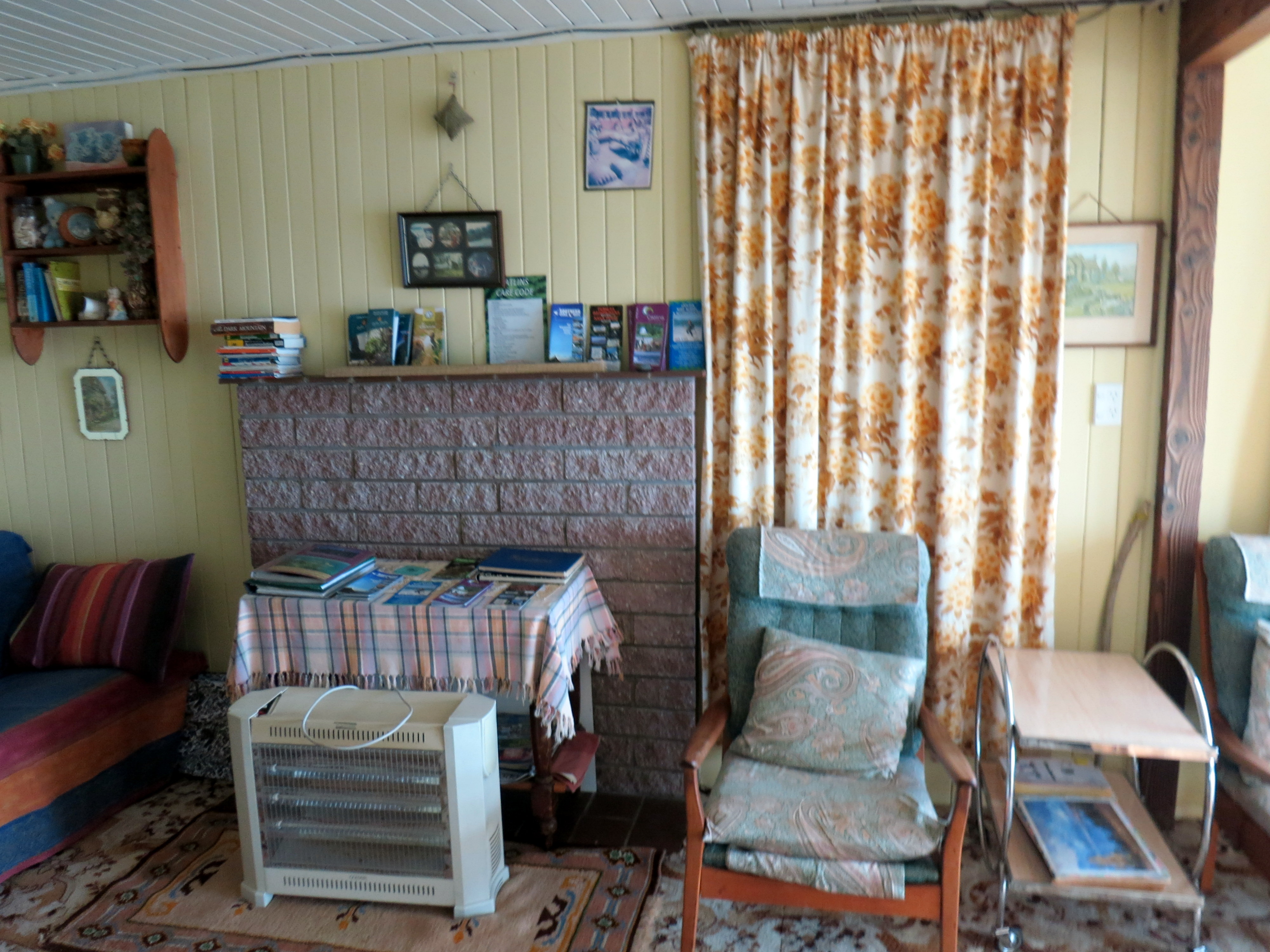
Stepping back in time for an evening at Fernlea Backpackers
Stepping back in time for an evening at Fernlea Backpackers

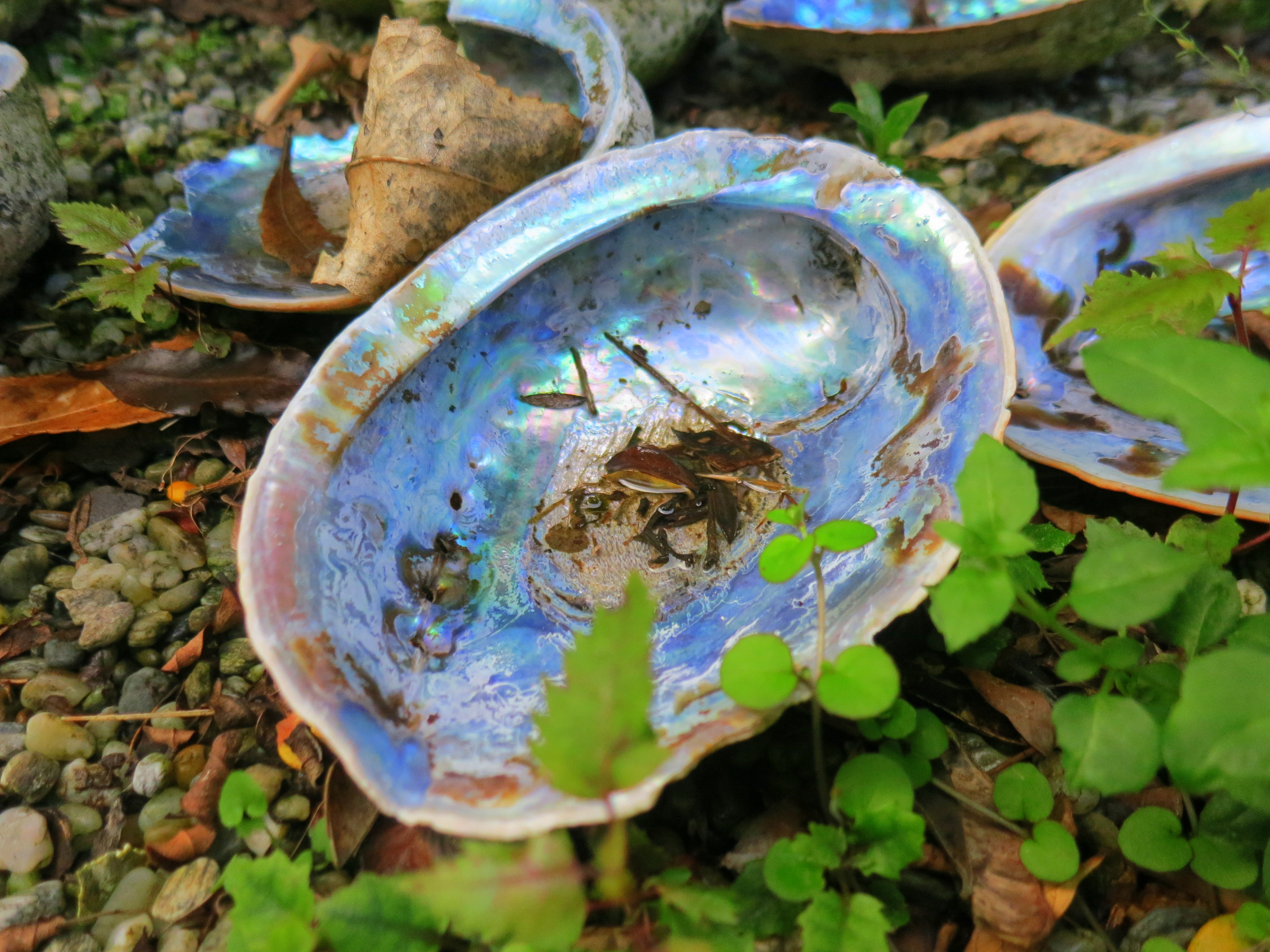
Paua shells are commonly found on the Otago coast--pretty, aren't they?

Paua shells are commonly found on the Otago coast–pretty, aren’t they?

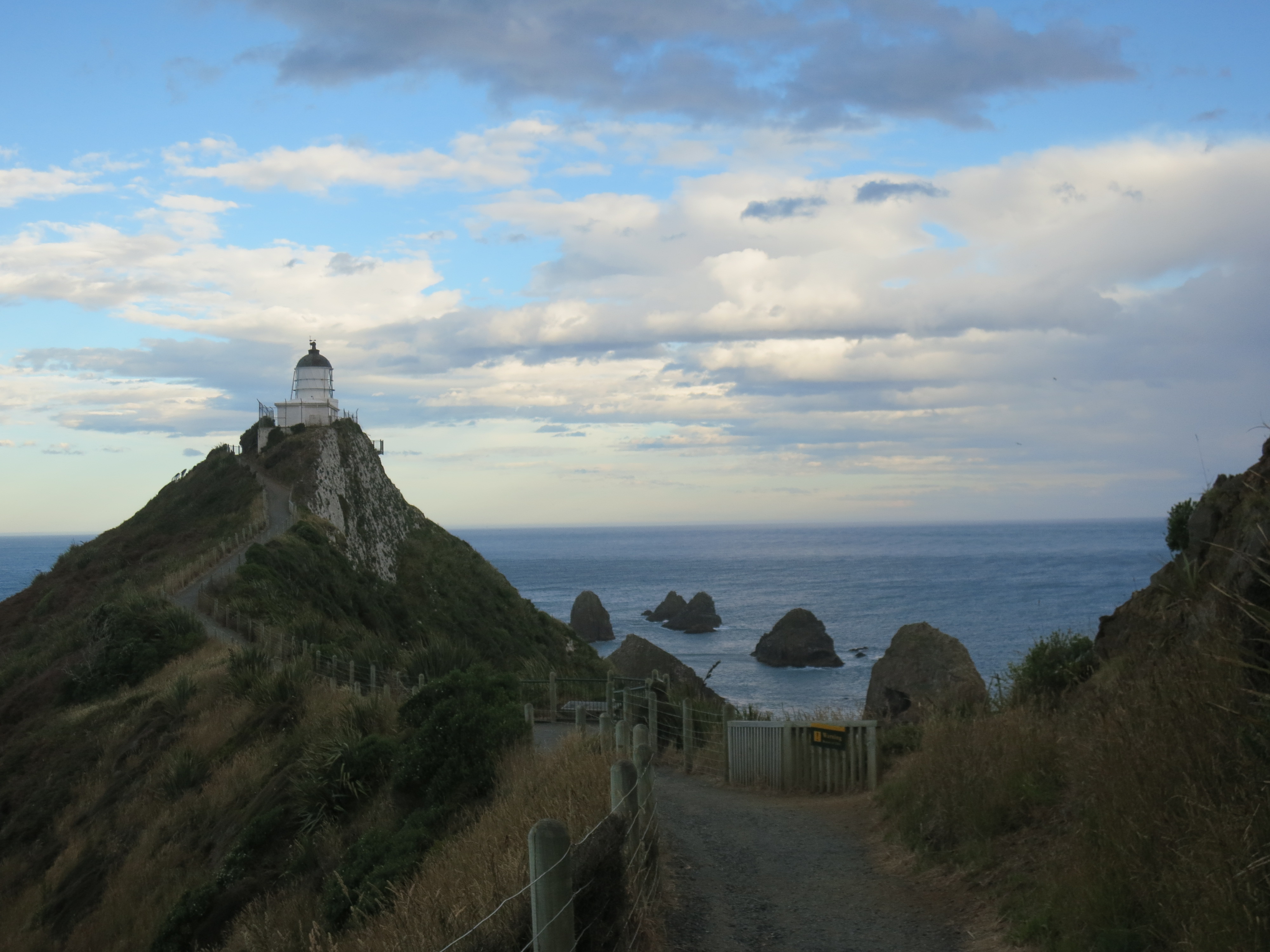
I hurried up and drove to Nugget Point before sunset. After navigating more jaw-clenching unsealed roads, I arrived at the parking lot. The skies were threatening rain again, but what else was new, so I put my raincoat on and started the walk out to the lighthouse. Naturally, it started to rain, so I moved a little faster, but not too much, since there’s no guardrail here and a steep drop to the rocks below. I only passed three people on my walk out to the lighthouse, and just four on the way back; I loved admiring the scenery in total peace and solitude.
Nugget Point Lighthouse

Nugget Point Lighthouse

The rain stopped after about 10 minutes, and in another 10 I was at the lighthouse, a standard white structure built in 1870 and automated in the late 1980s. Just beyond the lighthouse lie the rocks that give the point its name. I believe these are just tiny rock islands, and not rock stacks formed by crumbling arches, like those at the Twelve Apostles.
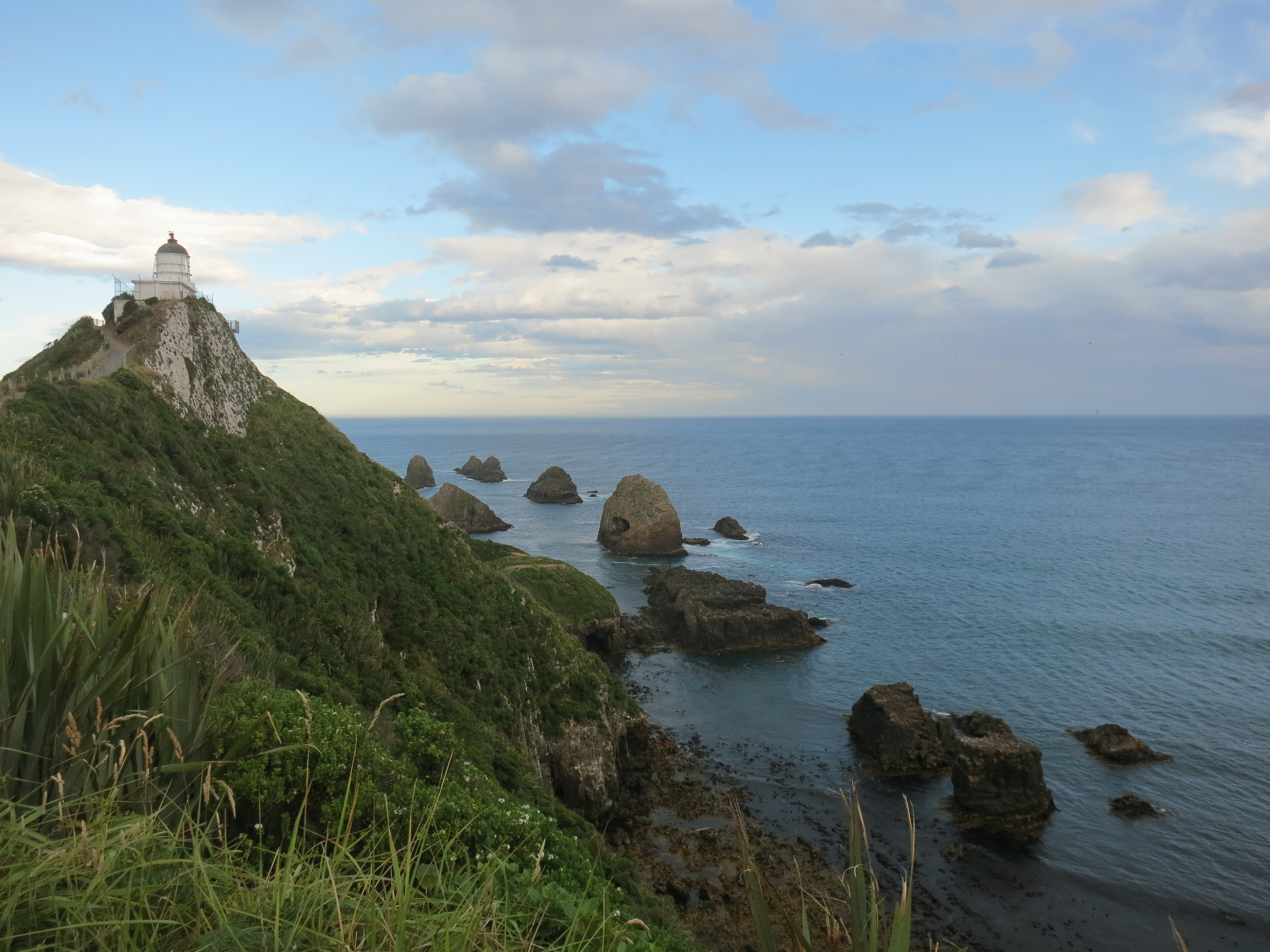
Nugget Point Lighthouse

Plaques of ridiculous poetry lined the walk out there

Plaques of ridiculous poetry lined the walk out there

I watched seagulls swoop and dive, and noted the chalky white cliffs that reminded me a little of Dover. On my walk back, I realized that the screaming I was hearing wasn’t the screeching of a seagull; it was a different kind of piercing sound. I looked down the cliffs and saw fur seals on the rocks below! One was making an awful racket while a couple others splashed around in a little pool formed by the tide. I’d read that fur seals like to spend time around here, but I never expected to find them by their call. (Important note: These might actually be sea lions. I have no idea how to tell them apart, and apparently they both make screaming noises, and both can be found at Nugget Point. If you can tell from the photo what I’m looking at, let me know!)

Fur seals frolicking after a long day at sea

Fur seals frolicking after a long day at sea

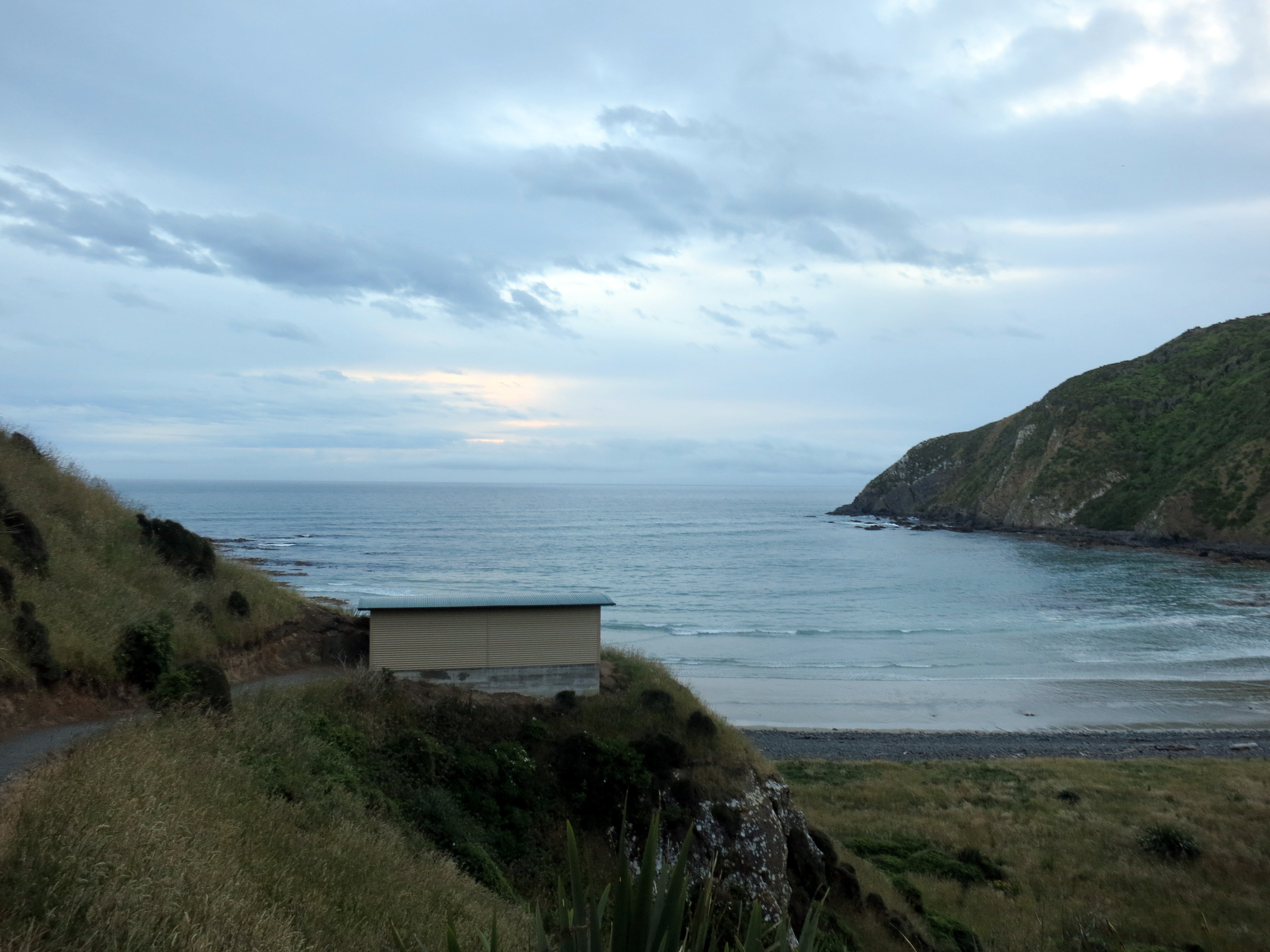
I drove just a short way down the road to another parking bay, and walked down the steep path to Roaring Bay. It was a lovely spot for the beginning of the sunset. To the left, the Department of Conservation (DOC) had built a viewing structure so that you can watch the famous yellow-eyed penguins without disturbing them–they’re nervous creatures. Some idiots still climbed outside the structure and leaned over to flash their cameras at the penguins, of course, but mostly people stayed in the little bunker and watched from a distance.

Yellow-eyed penguins coming in for the night

Yellow-eyed penguins coming in for the night (with a seagull in the middle)

I’d seen one penguin waddling up from the ocean when I was farther up on the path, and I’d rushed to take super-zoomed photos before he disappeared. I needn’t have worried, though. He was still there when I got to the viewing structure, and he was still there when I left half an hour later. He was a preener, that penguin. He waddled a few feet, stopped, combed his left side with his beak, shook his head, combed his right side with his beak, flapped his wings a little, reached around to get his back with his beak. Repeat. It was funny to watch, and a little mesmerizing. He was a fine looking fellow, and maybe deserved to preen a bit.

Worthy preener

Worthy preener

(I have no idea what the sex of the penguin was. Also, I know that they need to proceed up the beach very cautiously, as this one was doing, in order to be aware of predators lurking in the rocks.)
The viewing bunker at Roaring Bay

The viewing bunker at Roaring Bay

I saw another penguin on the sand at a little distance from the first, and when I asked the couple next to me if they saw any more, they pointed out another one huddling in the rocks. I also spotted a lone fur seal up the beach; whether it was contemplating penguin dinner or just enjoying the sunset, I don’t know.
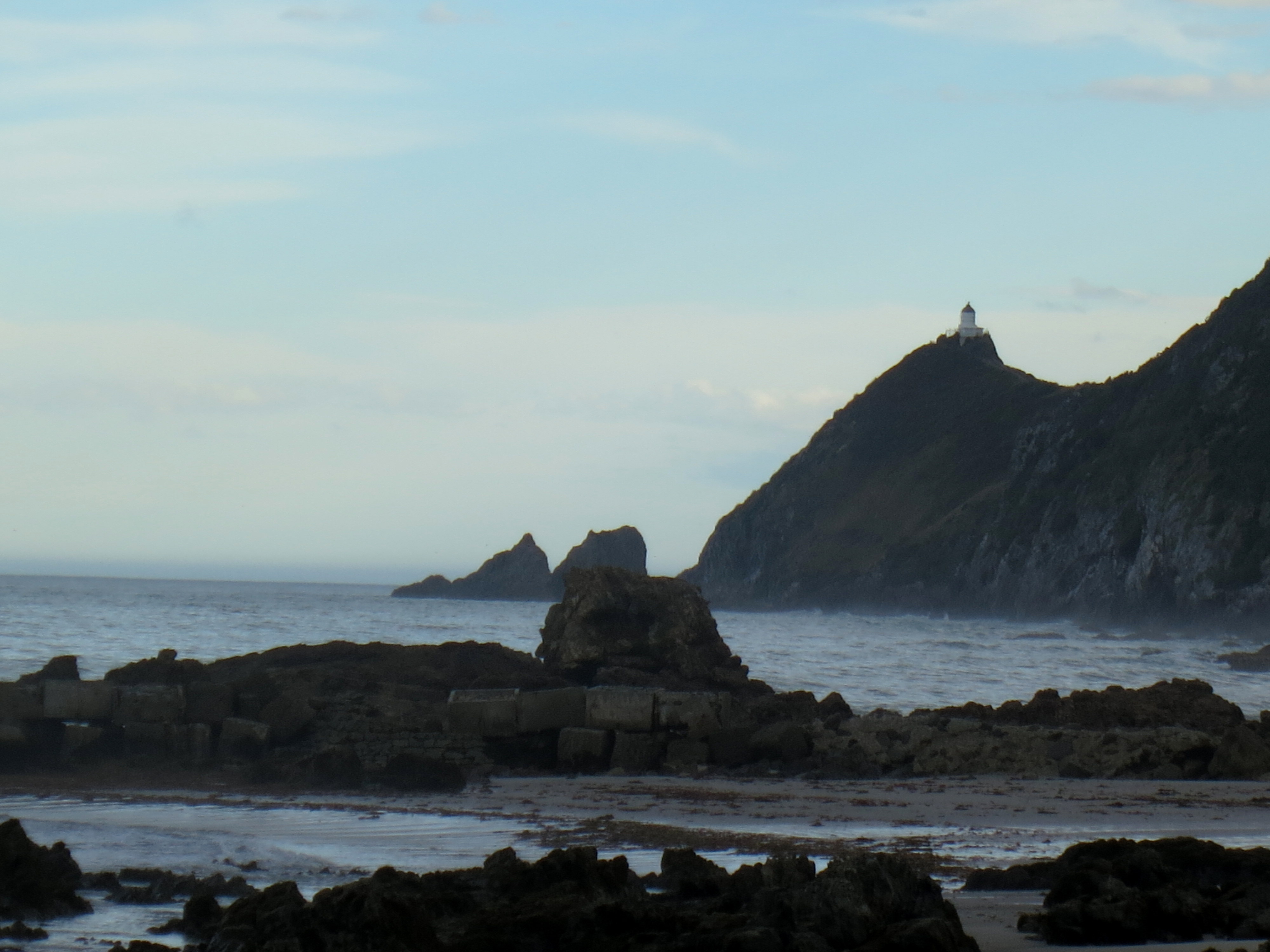
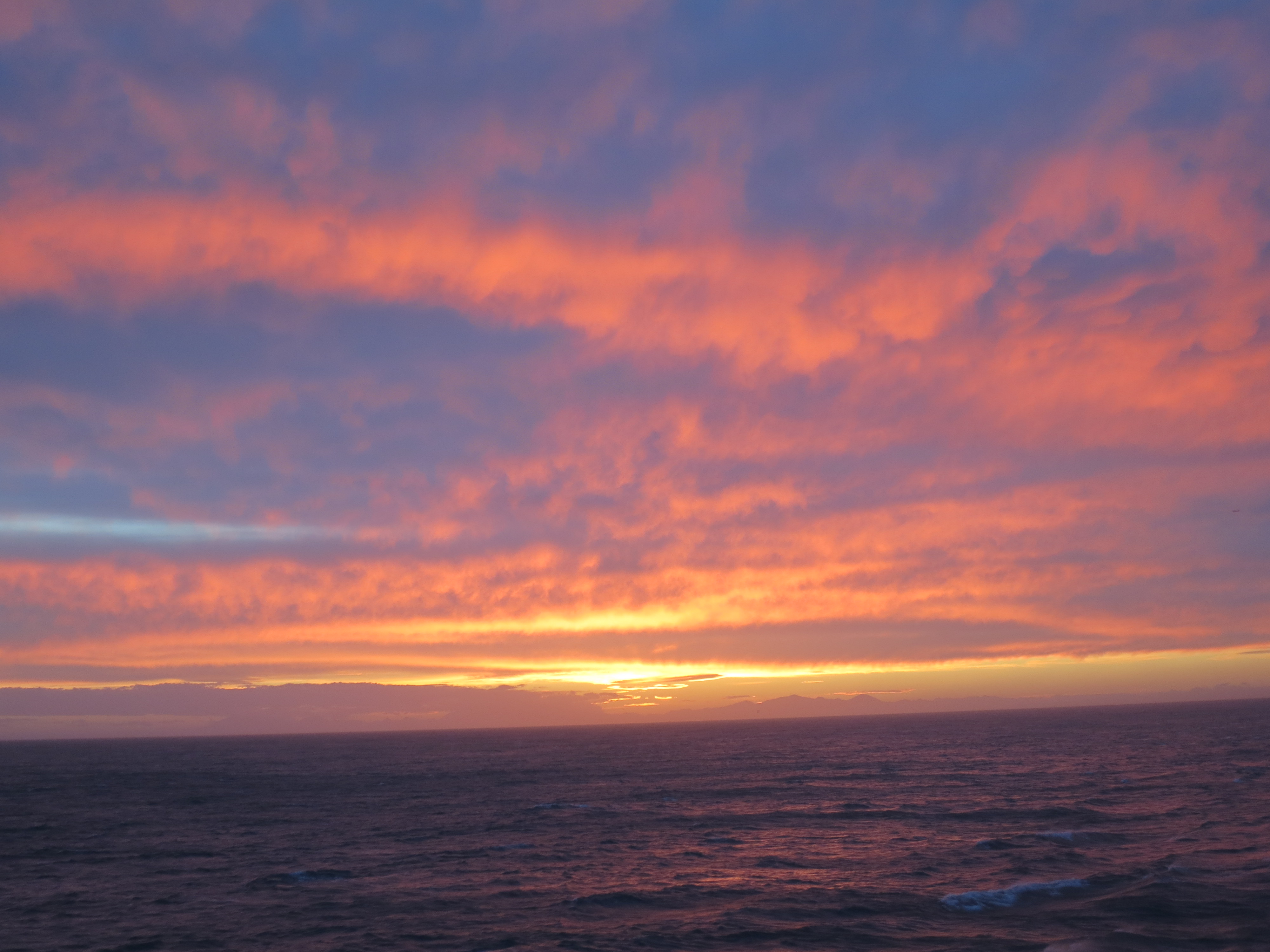
nugget point lighthouse catlinsI didn’t want to drive that gravel road in the dark, so I started back, and watched the sky turn gorgeous colors out the passenger side as I drove. I had a quiet night in before seeing more natural splendor the next day.
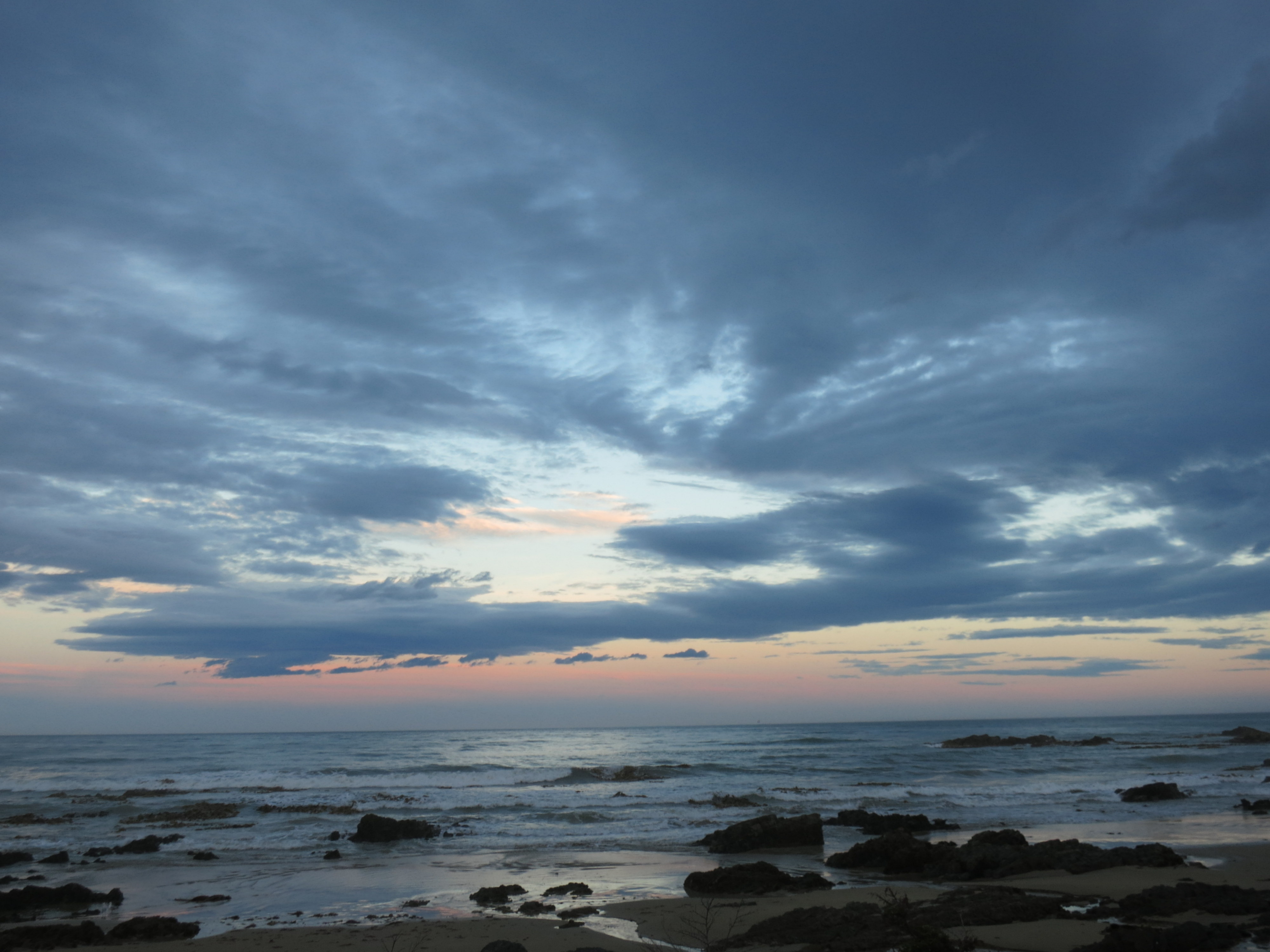
Good night

Good night

Southland in the Summertime

The Southland of New Zealand is some of the flattest part of the South Island, which meant that when I took a bus down to Invercargill, there were no hills to block the wind blowing in straight from Antarctica. It was cold, is what I’m saying. And raining. But by that time, I’d grown to expect that of New Zealand, although I can’t say I ever got excited about it. So I went ahead with my plans to rent a car and explore the Southland.

The gathering storm on the Southern Scenic Route

The gathering storm on the Southern Scenic Route

Like any good American, I got in my car and headed west. I drove along the Southern Scenic Route, which hugs the coast from Dunedin down to Invercargill and then next to the mountains up to Queenstown. The road reminded me of the Pacific Coast Highway in California for the obvious reasons–coastal road, lots of twists and turns–but also because the towns I drove through were small, laid-back, usually boasting one tourist spot or small picnic area to break up the journey with.

An idyllic beach scene, three minutes after a storm

An idyllic beach scene, three minutes after a storm

I stopped next to a large statue of a whale in Riverton to look at the sea, but it started to rain pretty hard, so I got back in and drove for no more than three minutes, just to the other side of the small bay, where the rain had stopped and puffy white clouds scudded across the blue sky. What was going on? I don’t know, but this sudden stop/start pattern repeated a few times throughout the day. I think the Southland was showing off.

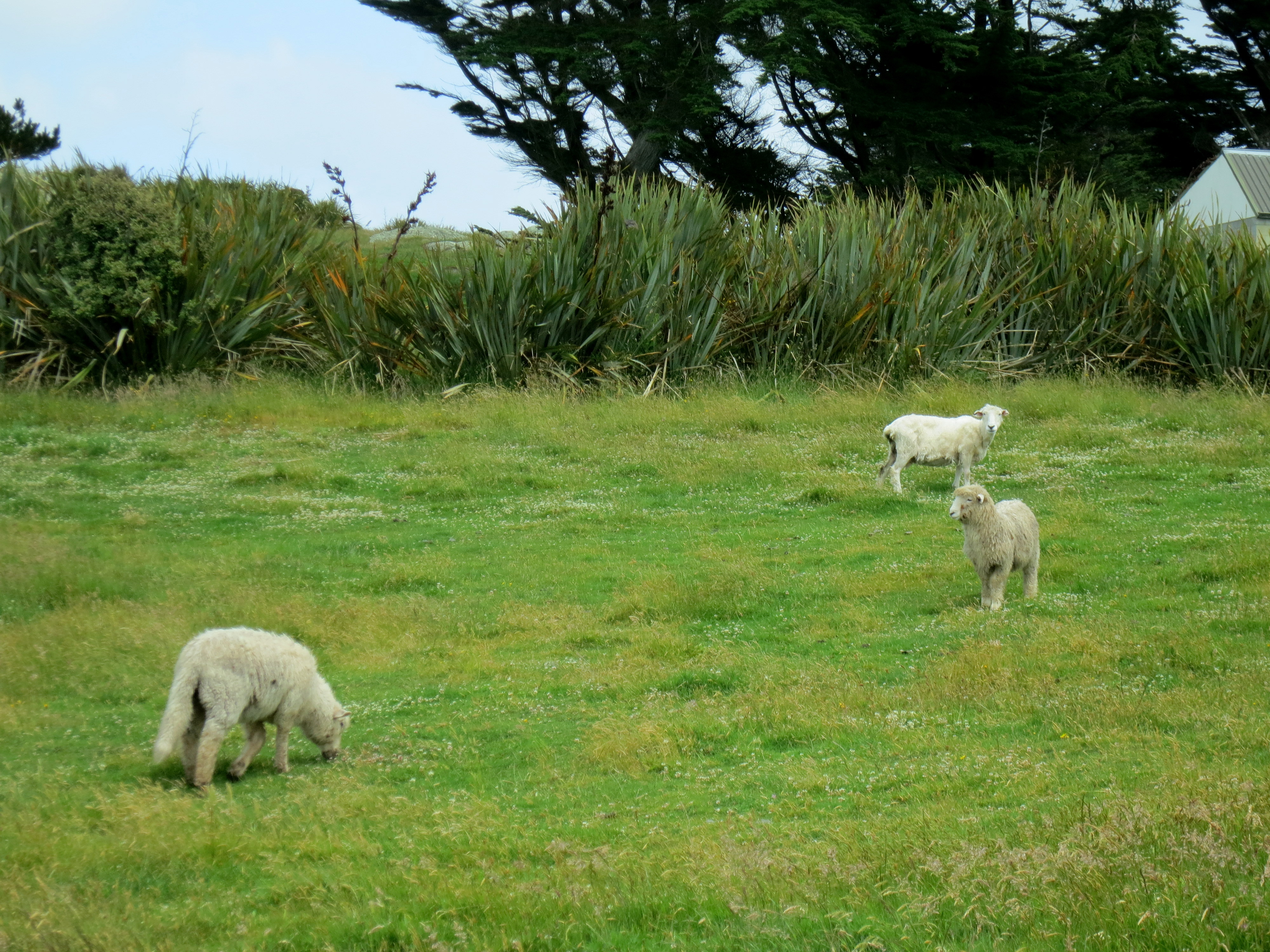
That sheep still has its tail attached; I'd never realized sheep even have long tails until my Couchsurfing hosts saw the picture and commented that this one hadn't had its tail removed.

That sheep still has its tail attached; I’d never realized sheep even have long tails until my Couchsurfing hosts saw the picture and commented that this one hadn’t had its tail removed.

hatchback southland

My little hatchback for five days.

Colac Bay is a popular surfing spot, and a crude statue of a dude riding a cresting wave marks the beach, but the rain was back at that point, so I moved on down the road. This was a different experience from my Coromandel adventure; I had only myself in the car, there were fewer cars on the road and fewer twists and turns, and I wasn’t driving on a busted tire. Like a good American, I enjoyed the certain kind of cheerful freedom that only a road trip can bring.

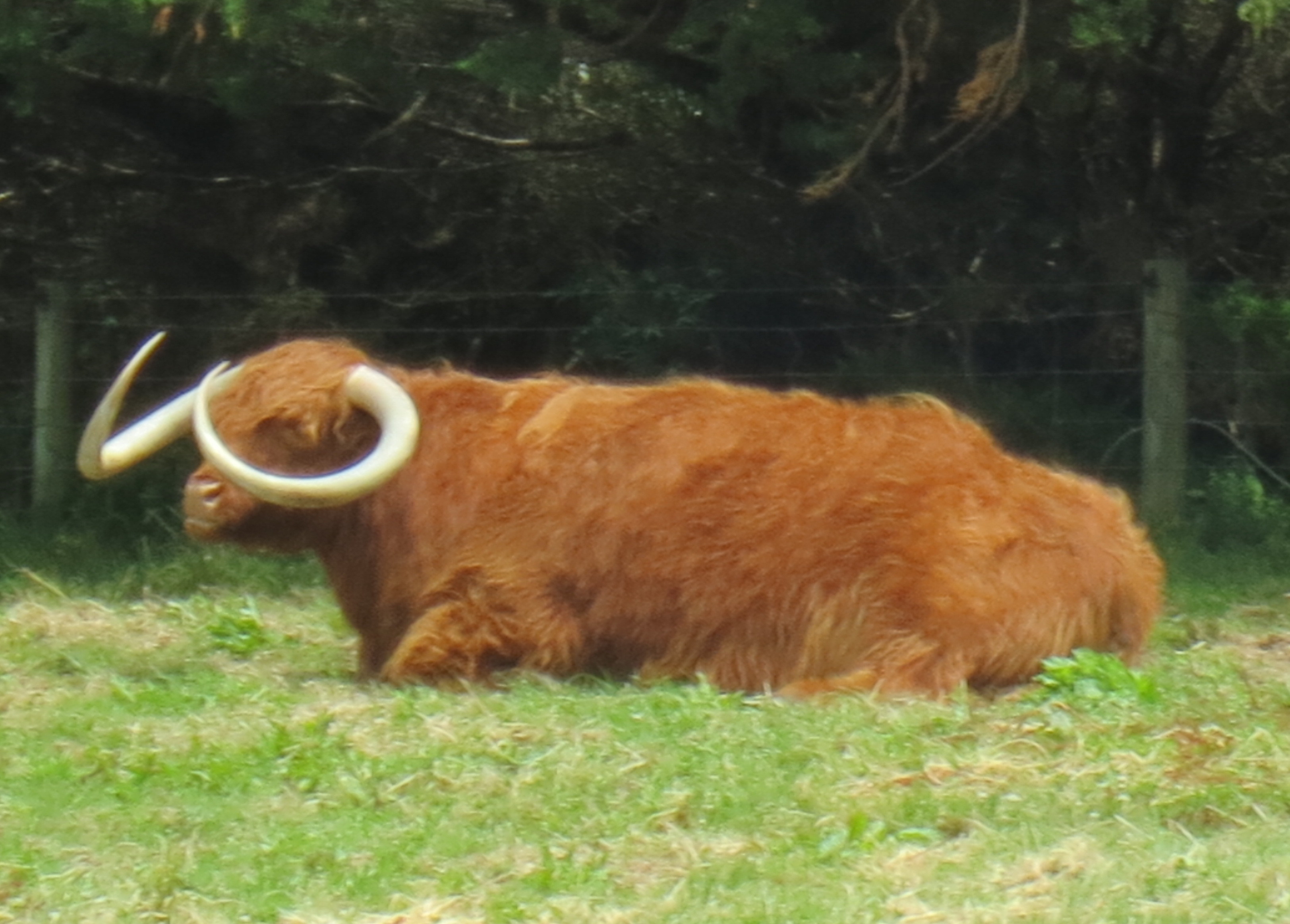
highland coo! southlandI followed the signs for Cosy Nook, a little bay with some houses from the 1800s, when Pakeha set up a fishing village close to a Maori fishing village. (Faded signs informed me that where I stood was technically part of Mullet Bay, named for a bay in Scotland, and the real Cosy Nook was around the corner; more correcting of names, like Milford Sound/Fiord.) Looking at the gray skies and small, clapboard houses, I had strong flashbacks to visiting the town of Gloucester, Massachusetts during spring break in high school.

Cosy Nook--I mean, Mullet Bay

Cosy Nook–I mean, Mullet Bay

Back to gorgeous weather at a lookout showing Steward Island in the distance, and then I was in Tuatapere. (I still have a hard time saying the name, but I think it’s close to “Too-ah-TIP-ery.”) Tuatapere is the most southwestern town in New Zealand–or “the last NZ town to see the summer sun set,” as the town sign poetically put it–and it also bills itself as the sausage capital of the country. I had a dinner of sausages bought from a local butcher, and they were indeed tasty.

Claims to fame

Claims to fame

I stayed with a lovely couple I met on Couchsurfing. They’d moved down from Auckland for a change of pace, and were happily settled in to the small-town life. It’s a very small town–my directions to the house included turning right at the woodpile, and left on the road parallel to the railroad. I checked out the antiques museum/tearoom and the charity shop, and I peered in the windows of the closed toy library. (Are toy libraries a thing in rural America? I’d never heard of them before, but they’re a brilliant idea. Apparently, they’re big in rural Canada too.)

Antiques in Tuatapere

Antiques in Tuatapere

Leonie, my host, had time off on my second day in town, so she took me around to see the sights. We went to Lake Hauroko, which is the deepest lake in New Zealand (462 meters at the deepest point). Part of the path was flooded when we went, so we just did a short walk along a path lined with ferns in various states of unfurling.

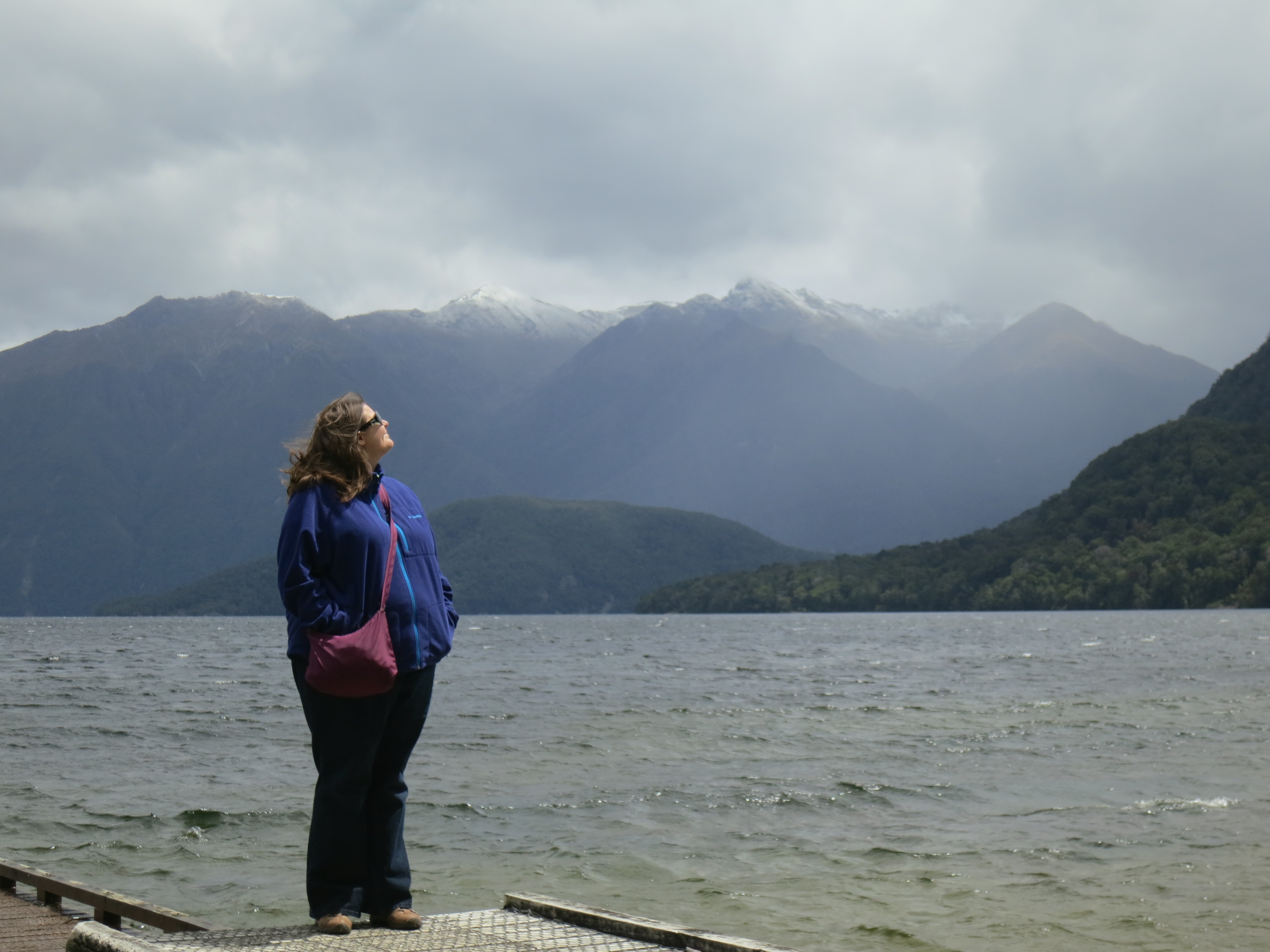
Lake ?

Lake Hauroko

ferns southland

Next we went to the Clifden suspension bridge, where a tiny kitten appeared out of nowhere and followed us around for awhile. A couple of women had parked their campervan next to the bridge, taking advantage of the remote location to do some free camping. Free camping–camping wherever you find a spot–is possible in a lot of New Zealand, but there are restrictions, and information booths will usually give you a map of places that are off limits, so you don’t incur a fine.

Watch out

Watch out

Clifden Suspension Bridge

Clifden Suspension Bridge

We ended the drive at Bluecliffs Beach, which I never could have visited on my own because you need a 4WD to get down there. We braced ourselves against the wind and admired the sea, and then Leonie noticed the seagulls to our right were behaving oddly. We looked closer, and they’d made their own water park! A tiny stream of water had branched off from a river and cut through the sand to the sea. Just above the tide line, the seagulls were climbing into the stream and letting the fast current carry them down to sea. Then they’d flap back up the short distance to what they’d apparently decided was the starting point, and did it all over again. It was so fun to watch.

It's hard to tell, but look at the guys to the far left and far right--they're on the Bluecliffs Beach Water Park Thrill Ride

It’s hard to tell, but look at the guys to the far left and far right–they’re on the Bluecliffs Beach Water Park Thrill Ride

After our day in the brisk air, Leonie and I went back to her house and promptly made tea. I don’t like the taste of coffee so I never drink it, and I’ve never thought much of tea, but being in New Zealand changed my habits a little. Literally everyone I met who invited me into their home offered to make a cup of tea–British roots showing, I think–and it’s rude to refuse. I became a bit more discerning than “whatever you’re having” and now I know I prefer black teas with just a little milk, no sugar. You never know what you’ll pick up on your travels–the fantastic and the mundane.

Leaving Tuatapere

Leaving Tuatapere

A Perfect Day in Milford Sound

Beautiful. Stunning. Jaw-dropping. All the superlatives apply to Milford Sound in New Zealand. Of the twelve sounds that Maori legend Tu-te-raki-whanoa carved from the rock of the southwestern coastline, he’d deemed this one the most perfect. Fog hugs the mountaintops, fur seals snooze on the rocks, waterfalls cascade down the steep cliffs. I visited on a sunny day, and was astonished by the clarity of light, the sharp beauty of everything I saw.

On Milford Sound

On Milford Sound

Milford is remote enough that you can only sleep out there on the extreme ends of the income scale–in the one hotel at the pier, or in a tent in the hills, as part of a multi-day trek. Most people take day trips out there, and it can be exhausting. I heeded the warnings to not go from Queenstown and back again in the same day, because it was too much time on a bus and not enough time enjoying the sights. Instead, I used Te Anau, the town about halfway between Queenstown and Milford, as my starting and ending point for the day. This was the right decision. I was so much more enthralled by the scenery than I would have been if I’d spent an extra four hours on a bus.

You could easily pull a Julie Andrews here.

You could easily pull a Julie Andrews here.

Mirror Lakes

Mirror Lakes

This area of New Zealand is known as Fiordland, and most of that is part of Fiordlands National Park, a mountainous area with no industry other than tourism and a few dairy farms on the outskirts. When I visited, there was talk of bringing the west coast highway down through the mountains to connect to Milford. A lot of people are against it, since that would cut through some of the more remote parts of the wilderness and significantly alter the landscape and its accessibility. For now, there’s just the one road, coming in from Te Anau. It’s closed when it’s too wet or snowy. The park department triggers avalanches during winter, like planned fires in forests, so that they know when they’re going to happen and people won’t be caught in them.

drive to milford

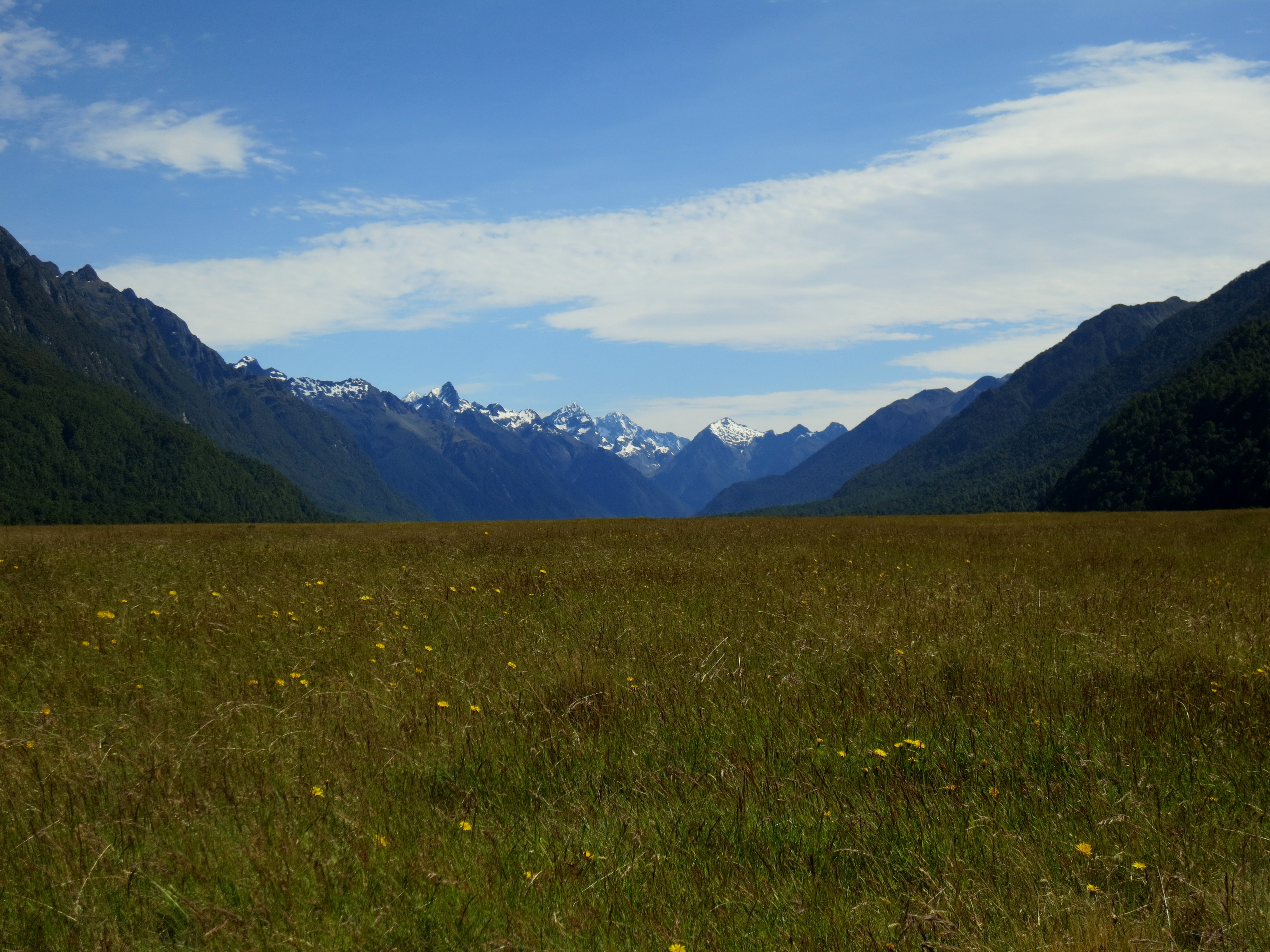
Dennis Moore's dream field (Monty Python joke)

Dennis Moore’s dream field (Monty Python joke)

The drive out to the sound is gorgeous as well. The bus driver gave us a few facts and figures as we wended our way through fields of invasive lupins, and I tried to pay attention to what he was saying as I stared out the windows. We made a few stops, at the Mirror Lakes and at a large field with a view of the mountains we were driving into. We drove through Homer Tunnel, the only part of the road built by blasting through solid rock. Once we were on the other side, I felt just how far from everything we were. The open spaces of the meadows were gone, and in their place jagged rocks stretched in the rare blue sky.

The road after Homer Tunnel

The road after Homer Tunnel

I boarded a Southern Discoveries boat with about 50 other people, and we set off into the wide ellipse of the sound. Or rather, the fiord. All the English names for the ragged inlets in the area are geographically incorrect; sounds are formed when a river valley is flooded, whereas fiords (or fjords, both spellings are correct) are formed by glaciers cutting out the rock of the surrounding mountains and melting to fill up the resultant valley. Both the bus driver and the guide on the boat relayed this information, so I guess it’s an important distinction, but I have to say that when you’re on a boat in the middle of Milford, it doesn’t matter if it’s a sound or a fiord, it’s just lovely.

Mitre Peak, shrouded in clouds

Mitre Peak, shrouded in clouds

It had rained pretty heavily the days before my visit, so the waterfalls that ring the fiord were full. We slowed down near most of them so we could get a good look, but for a couple, the captain piloted the boat right up under the falls so the prow–and anyone on it–got soaked in the spray. Further proof that anywhere you go in New Zealand, you should bring a raincoat.

One of the many waterfalls at Milford

One of the many waterfalls at Milford

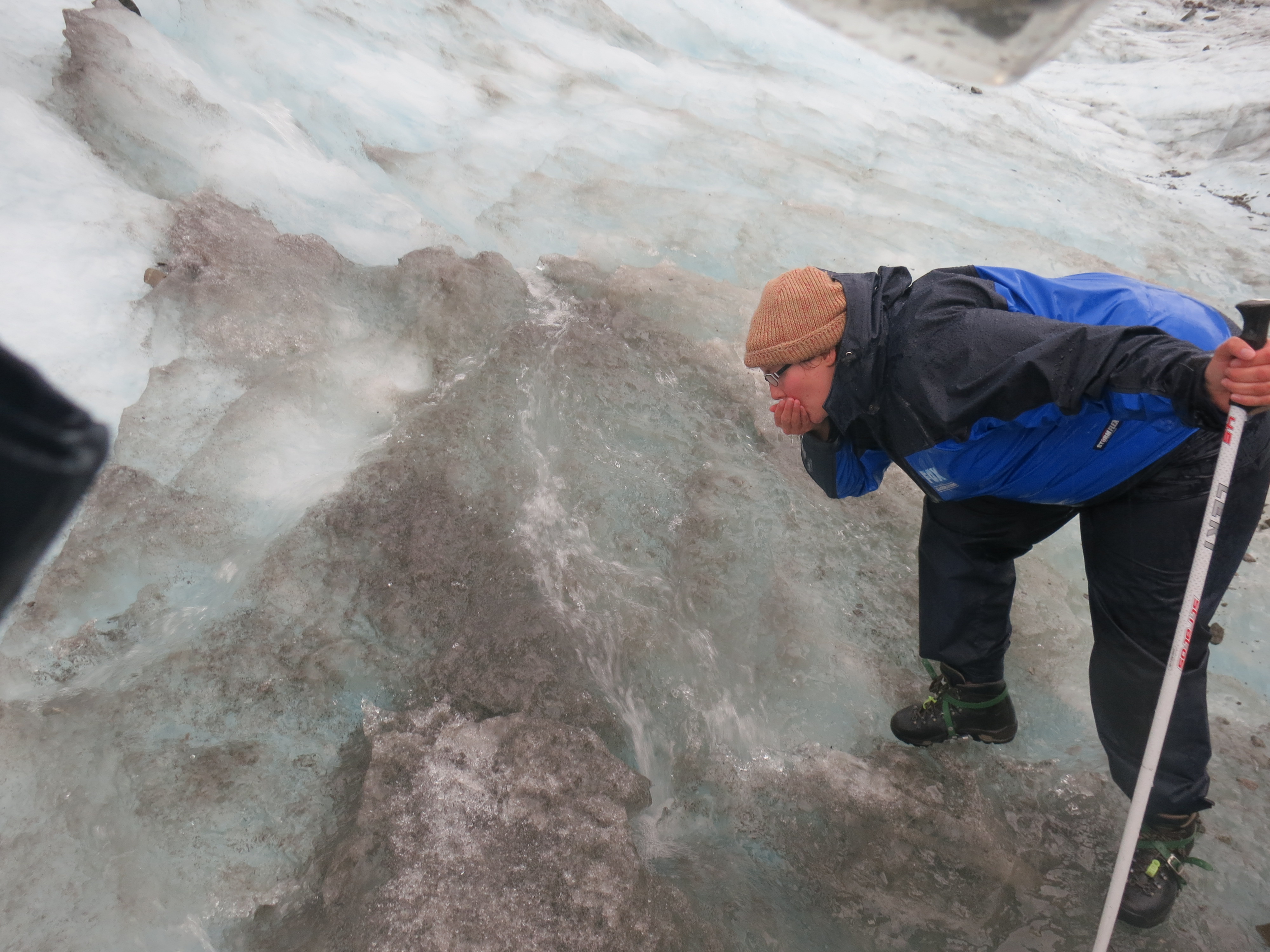
A refreshing drink

A refreshing drink

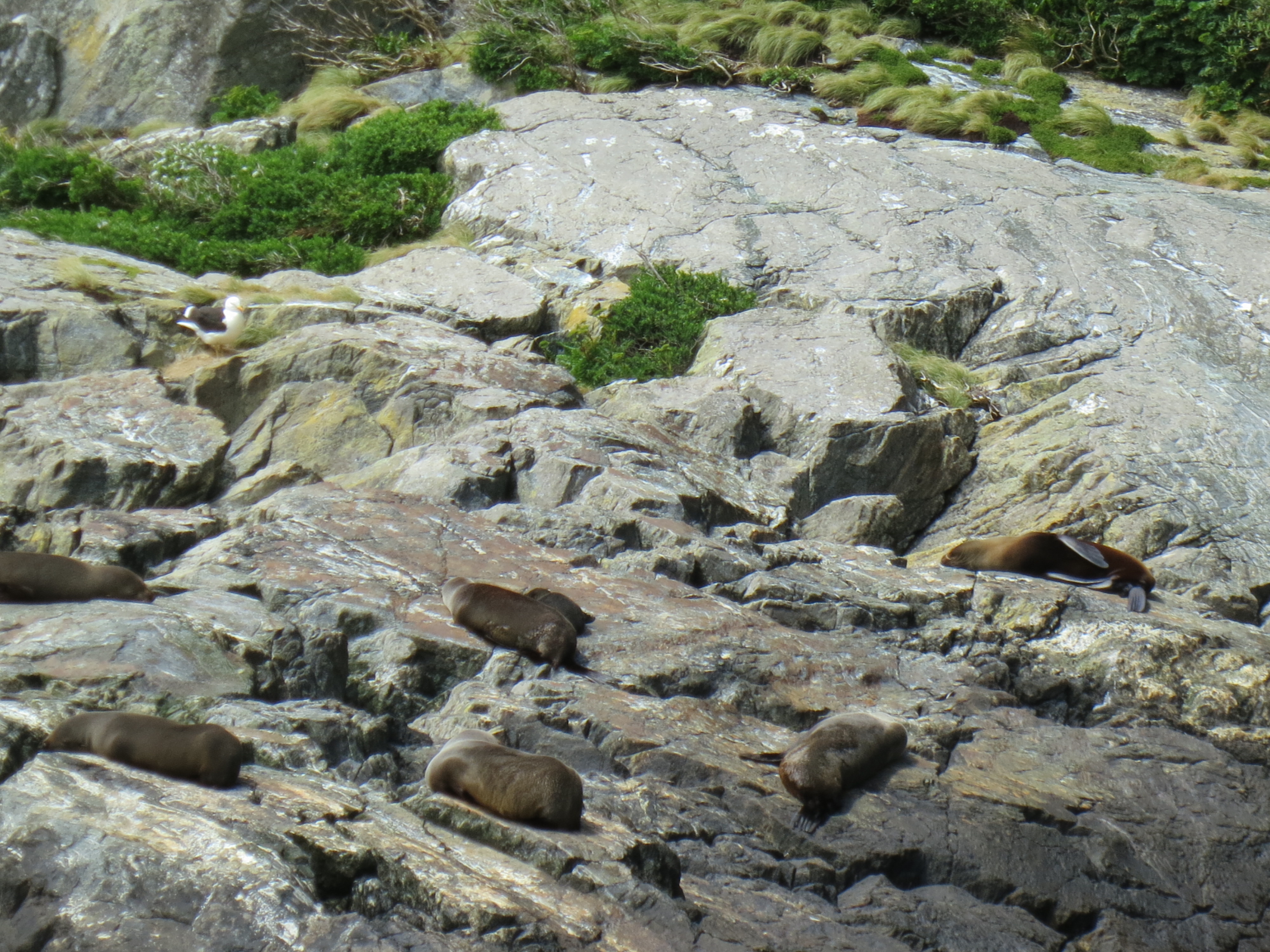
Fur seals sunned themselves on rocks in a couple places, and at one point I even saw a baby snuggled up next to its mother. The boat went out almost to the mouth of the fiord, and we squinted out to the Tasman Sea and pretended to be able to see Australia. Then we circled round on the other side, looking at the treevalanches and mossy cliffs.

Spot the baby fur seal

Spot the baby fur seal

The hillside starts to recover from a treevalanche

The hillside starts to recover from a treevalanche

We passed Lady Bowen Falls on the way back into harbor, and with one last glance back at Mitre Peak, which had only just emerged from the fog, the boat trip was over.

IMG_5481

Lady Bowen Falls

Lady Bowen Falls

Milford was certainly full of tourists, but we were all so spread out that it didn’t feel crowded. Even the occasional helicopter tour overhead couldn’t do much to detract from the beauty and peace of the day. I’ve heard that Doubtful Sound is just as stunning and less crowded, which makes sense since it’s more remote and difficult to reach, so I’ll simply add that to the list of places I’ve missed on this trip and want to see on the next go-round. In the meantime, Milford is firmly on the list of highlights of this trip.

milford blues

A Rainstorm on Ice: Climbing Fox Glacier in New Zealand

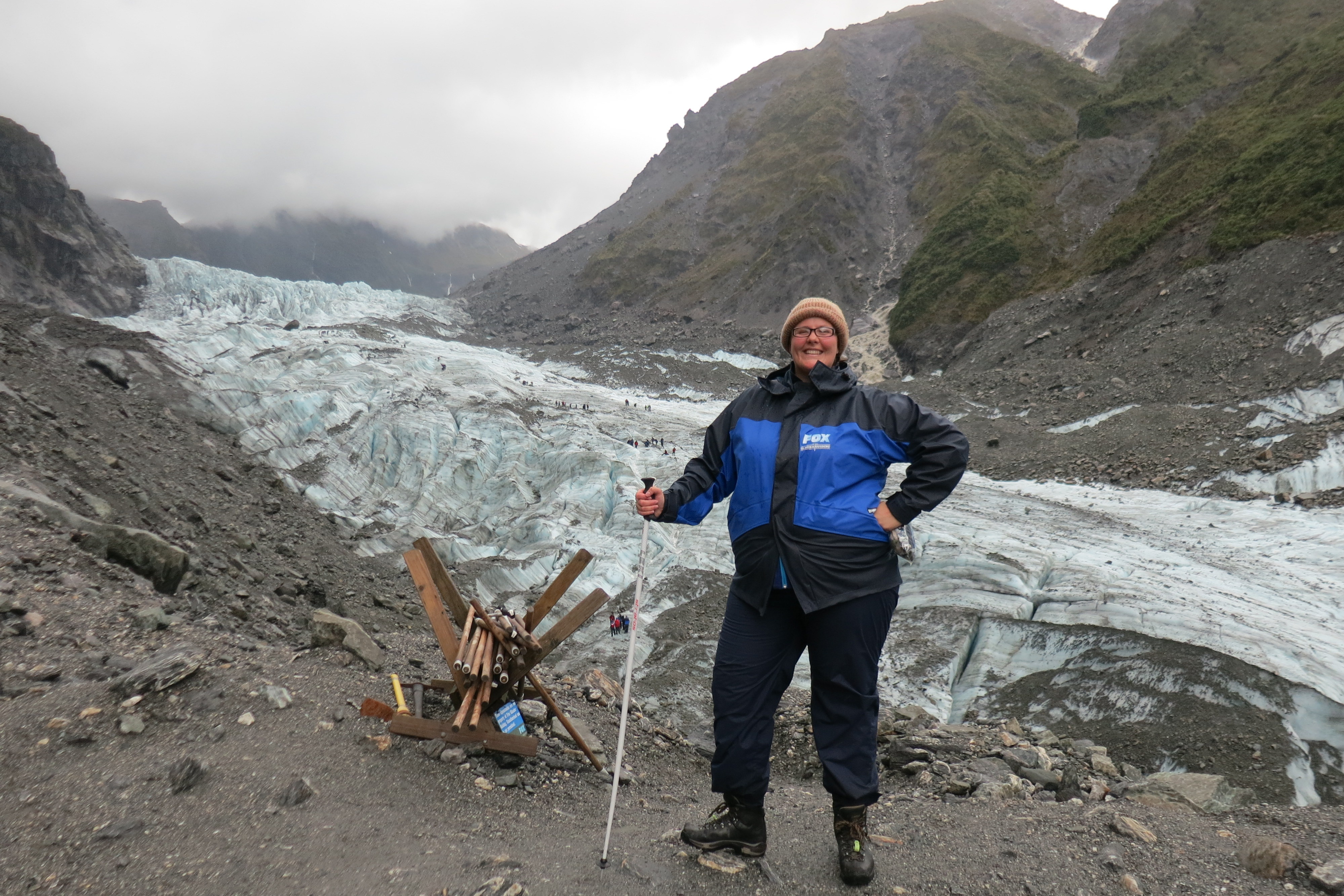
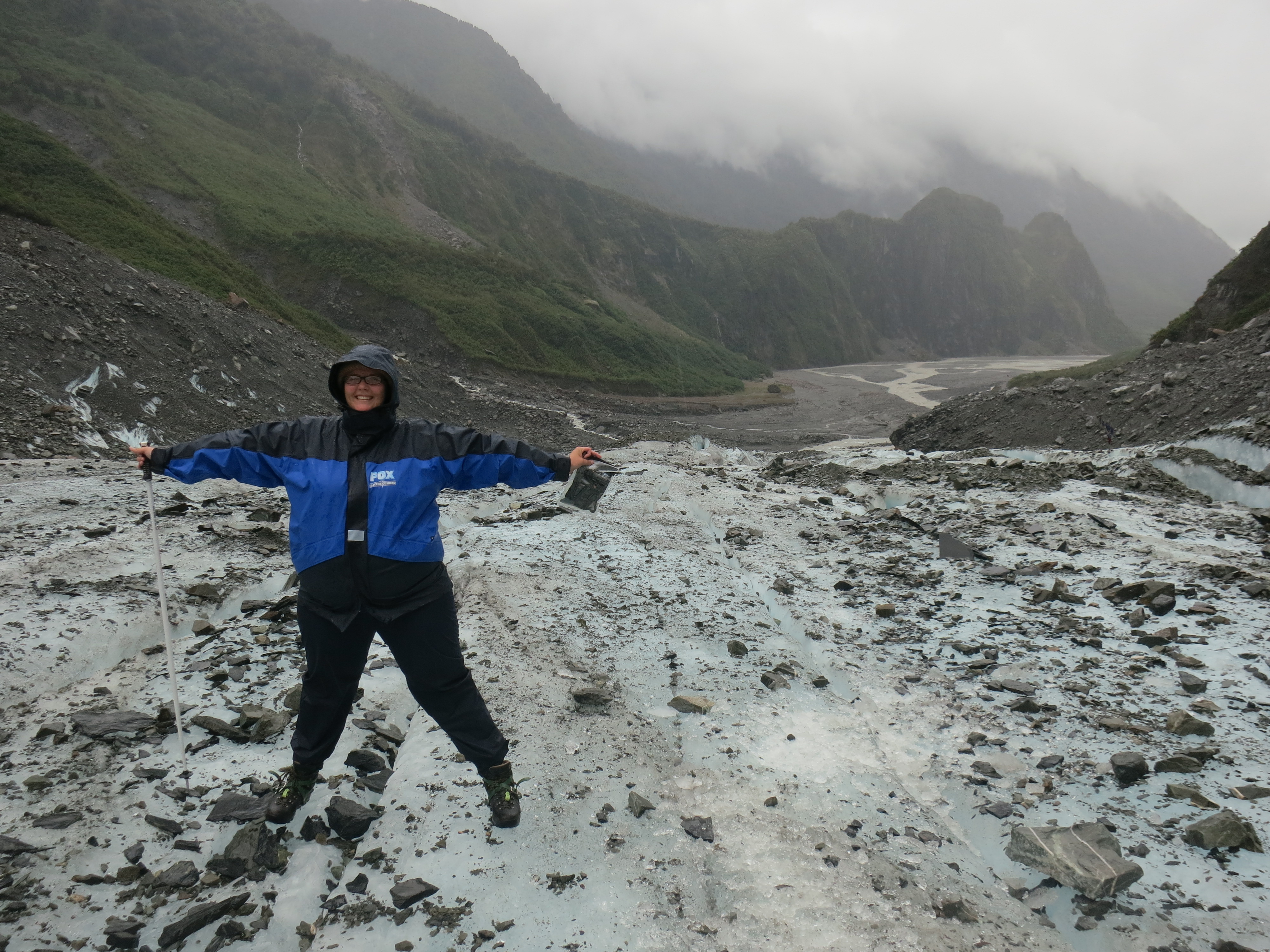
I ended the year 2012 by climbing up a glacier. What better way to celebrate the midpoint of a trip I’ve dreamed of for years, than to challenge myself to go a little further? It was difficult, and it rained almost the whole time, and it was amazing.

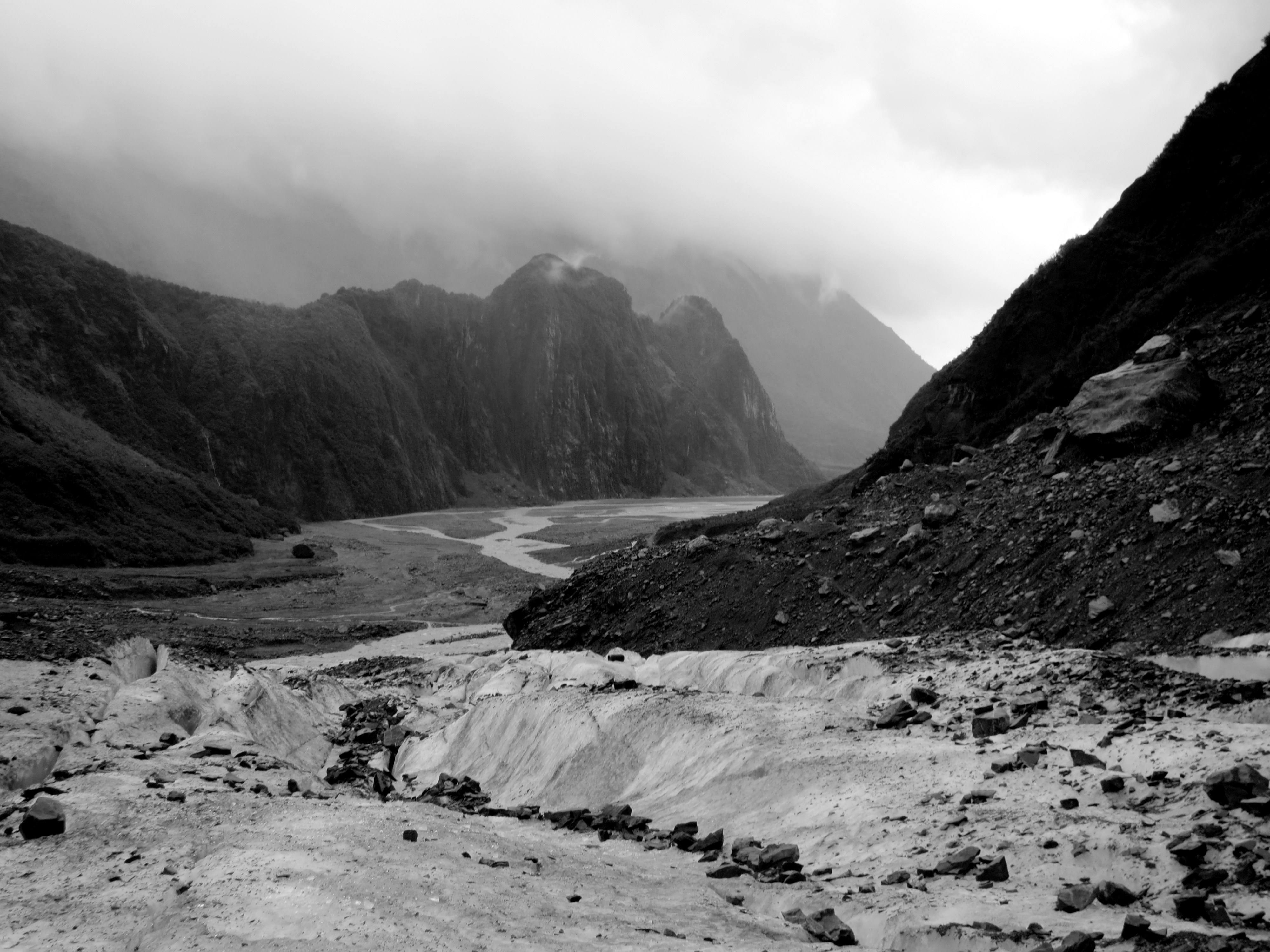
Looking out to the river from Fox Glacier

Looking out to the river from Fox Glacier

There are many glaciers on the west coast of New Zealand, and two of them are easy to visit–Franz Josef and Fox. When Liz and I booked accommodation, we thought we’d check out the Franz Josef glacier, so we reserved a hostel in that town. But when we read up on the glaciers, we found that the walk to the base of the glacier at Fox is shorter, cheaper, and less steep. So we ended up staying in Franz Josef, and driving the short but treacherous road to Fox the next morning for our climb.

Feeling more exhilarated and less worried

Ready to go

There’s only one game in town, Fox Glacier Guides. When we showed up at the shop at 8am, the place was buzzing. Climbers ordered breakfast, shrugged into raincoats, tugged on boots. Employees checked names off lists and called out instructions. Liz and I wandered around in a daze, picking up rain clothes and boots and crampons, signing waiver forms (“We don’t blame the company if we die on this sheet of ice”), and stuffing snacks and cameras into Liz’s backpack.

Quick water break

Quick water break

By the time we were on the bus, listening to our guide’s description of the glacier and surrounding rainforest in prehistoric times, I was geared up but nervous. The fitness level for this hike is moderate, which is a term you would use to describe me only if you were feeling particularly generous with its definition. Everyone in our group seemed to be fit and ready to go, including a 10-year-old boy clearly used to adventuring with his family. I didn’t want to hold the group back.

climbingOf course, I was the slowest person in the group, but they only ever had to wait a few minutes while I caught up. Since our guide only gave us two short breaks to take photos and the rest of the time we had to squeeze them in as best we could on the walk, I think the group treated the delays as photo ops. (My photos aren’t so awesome on this post because I took the less good camera due to rain, and also the rain and brief stops made it hard to get good shots.)

fox glacierIt rained for almost the whole three hours we hiked, so while the coat and pants kept the rain off my arms and legs, my hands and face were completely soaked. Loui, our guide, pointed out that the rain washed away the dirt that accumulates on the glacier, so it looked cleaner and whiter than if it hadn’t rained. Also, the little streams that trickle down the mountain had turned into rivers, which were fun to straddle as we clomped over the ice. So although it wasn’t the most comfortable I’ve ever been, and my glasses were constantly fogged, it wasn’t too bad. Also, it rains more than it doesn’t, out there, so it’s not exactly surprising that it wasn’t a clear day.

Attaching metal spikes to my feet

Attaching metal spikes to my feet

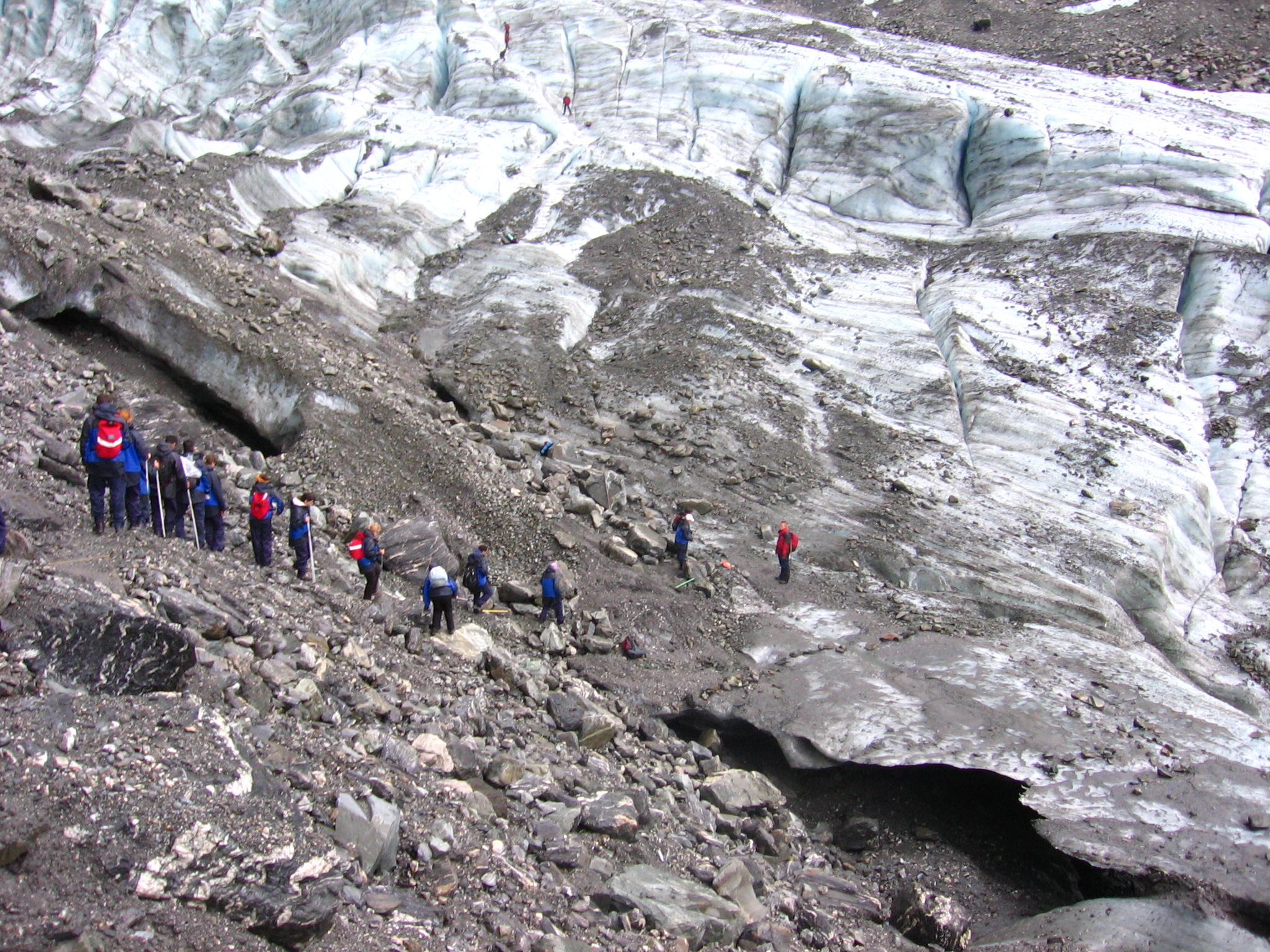
Our path was fairly narrow for much of the way: down on a boardwalk along the river, then a strenuous climb up and over some boulders, a stop to put on crampons and grab some alpines, then up the ice on stairs that employees dug out just steps ahead of us. We mostly walked single file, and stopped occasionally to learn about the ancient geographical wonder we walked on.

Huge chunks of ice swept down off the glacier and into the Fox River during the storms

Huge chunks of ice swept down off the glacier and into the Fox River during the storms

My favorite thing to learn was how often and how quickly the ice moved. I mean, I know that glaciers are always on the move, but the shifts here are incredible. It advances and retreats at a rate of a meter a week, and it changes so quickly that from year to year the features of the glacier face can change. Loui pointed out a spot that until a year or two ago was the main trail, until the ice shifted and made it impassable.

Three hours of hiking ahead of us

Three hours of hiking ahead of us

It’s not just the ice that moves; avalanches and what Loui called “treevalanches” are possible too. We saw a rock the size of a mobile home that had roared down the hill just the year before, and a few sections of pine trees with bites taken out of them, their green needles spit out in the river below.

In the crevasses

In the crevasses

Now, unlike Mary Musgrove, I’m not a terribly good walker; I’m always tripping over pebbles and spraining my ankles (yes, both, multiple times). This lack of natural grace was another reason I was nervous about the walk, but my exaggerated caution up and over the boulders kept me safe, and I found walking on the ice more fun than scary. The way to walk in crampons is to stomp. None of this civilized heel-to-toe action we practice on normal surfaces; it’s far too easy to slip that way. Just go all Abominable Snowman on the ice and firmly plant your foot with each step. A little roaring and waving of arms may or may not be appreciated by your fellow tourists.

See, not a very good walker.

See, not a very good walker.

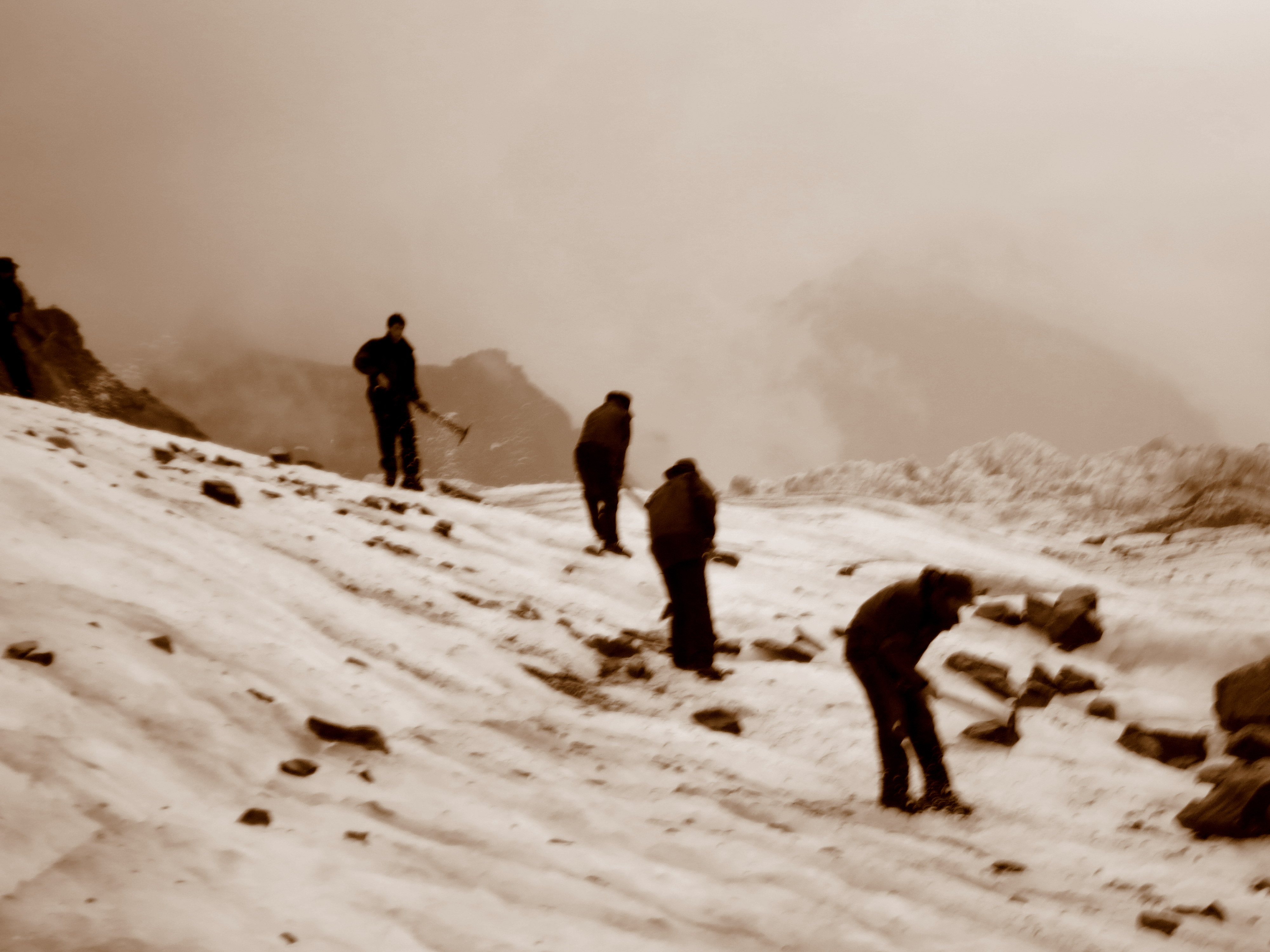
We stomped around the ice just behind men in red jackets, employees of Fox Glacier Guides who used ice picks to hack out uneven stairs for us to climb up and down again. What a job! Seeing them up there in their broad-brimmed hats, swinging their ice picks up in the air and back down in a broad arc, I was reminded of sepia daguerreotypes of men building the railroad through the Rockies. It’s still a wild and rugged world, in some places.

Archival photo, c. 1853?

Archival photo, c. 1853? No, it’s a blurry Nikon shot from 2012.

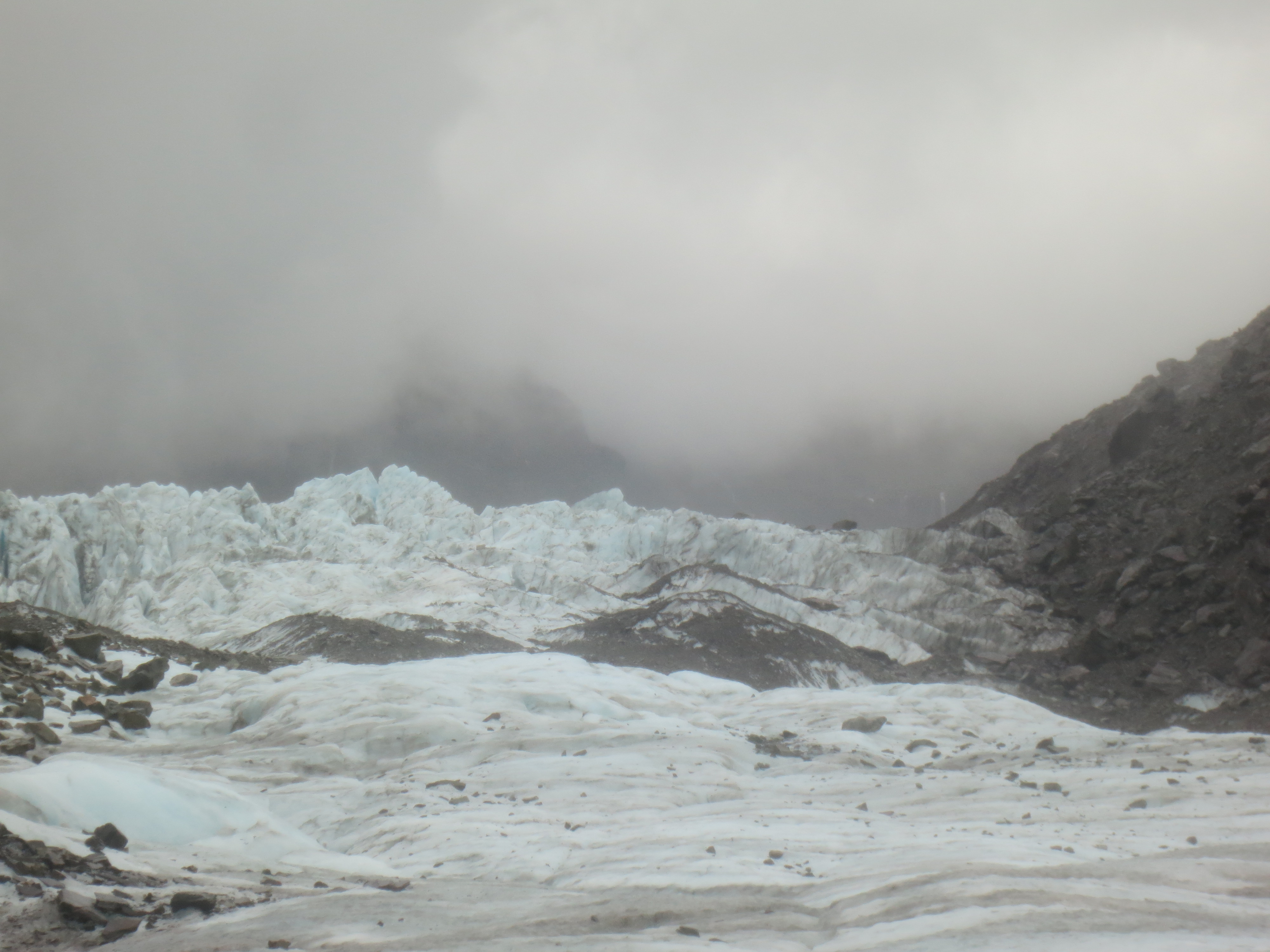
We were on the ice for what felt like far too short a time, briefly admiring the sheer cliff in the distance, the craggy rocks on either side, the swollen river below. It was raw and beautiful up there. As we started down again, slipping a little on the rain-slicked ice and scrambling through a crevasse, I felt absolutely thrilled.

The ice is always moving, even if you can't feel it

The ice is always moving, even if you can’t feel it

I’d strapped metal spikes to my feet and teetered out onto a glacier. I’d walked three hours in the rain and could feel every muscle in my legs. I’d nudged myself out of my comfort zone, and enjoyed it. I’d seen a spectacular natural wonder up close, and marveled at its beauty. I’d sipped cold water from a river flowing down the face of a glacier, and I’d touched the smooth ice with my bare hand. I’ve done a lot of things on this trip that I’d never done before, but this was one of the biggest and the best. It was a very happy end to 2012.

Joy on Fox Glacier, New Zealand

Joy on Fox Glacier, New Zealand

Gray Skies and Guard Cows on the West Coast of New Zealand

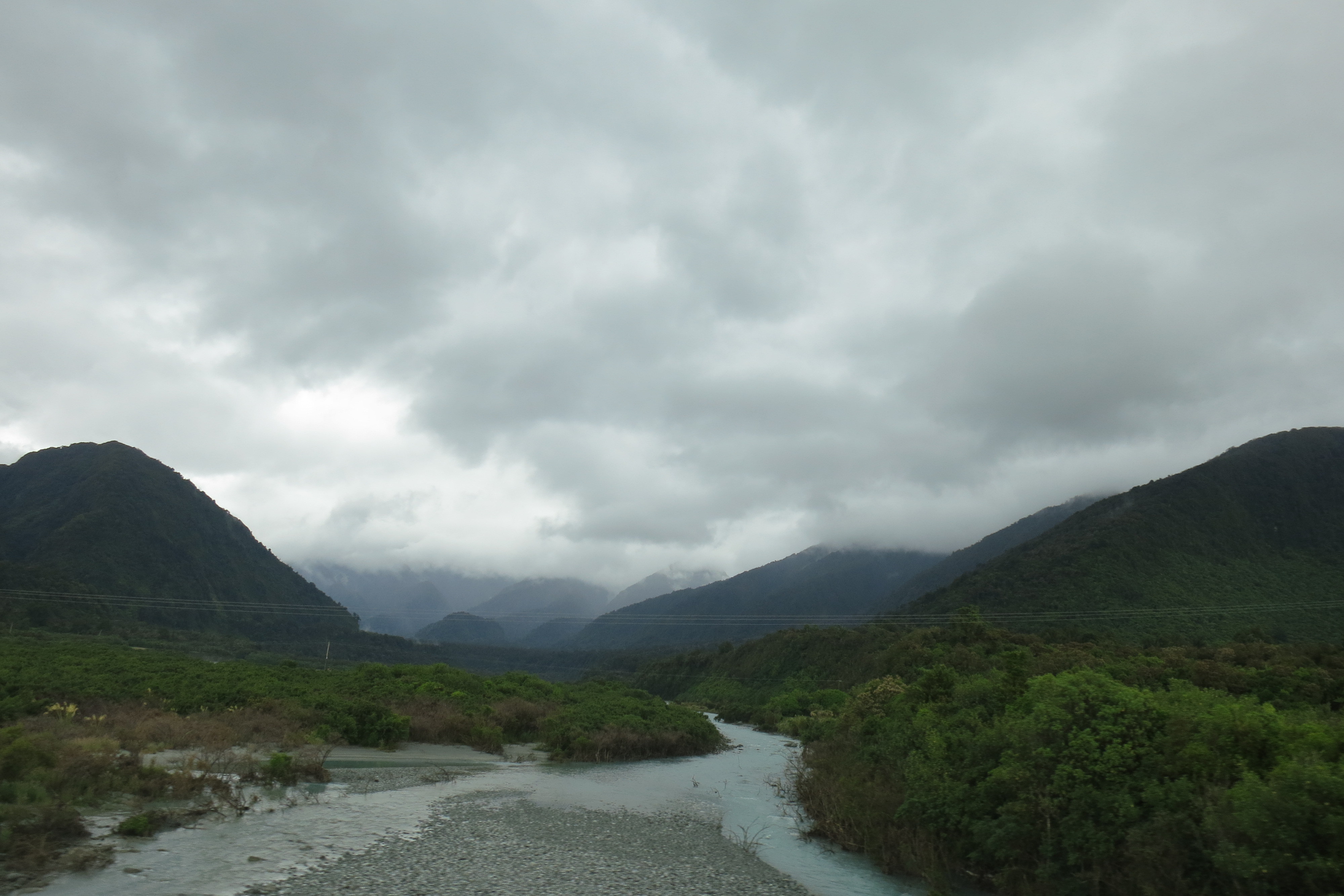
The west coast of New Zealand’s South Island is often called the “wet coast,” and it certainly rained enough while I was there to convince me that this is no casual nickname. The west coast is a narrow piece of land with the Pacific on one side and the mountains on the other, with one highway running the length of the island and just a few mountain passes crossing over to the calmer fields of the east coast. That’s a pretty isolated position when you think about it, as a lot of travelers discovered when the rains around New Year’s took out a section of bridge near Harihari, and they all had to scramble to go north or south in very roundabout ways.

The storm clouds gather on the west coast

The storm clouds gather on the west coast

Happily, Liz and I made our way west and south before the heavy rains started, so we were able to see a little of the area. We drove through the mountains for most of the day, then stayed at a brightly decorated hostel in Greymouth. The next morning, we followed the hostel receptionist’s directions to the beach. Well, “beach.” It was a gray strip of land covered in small gray rocks, with a green-gray sea lapping up against it, under a blue-gray sky. You can’t accuse the city of false advertising.

A peaceful morning

A peaceful morning

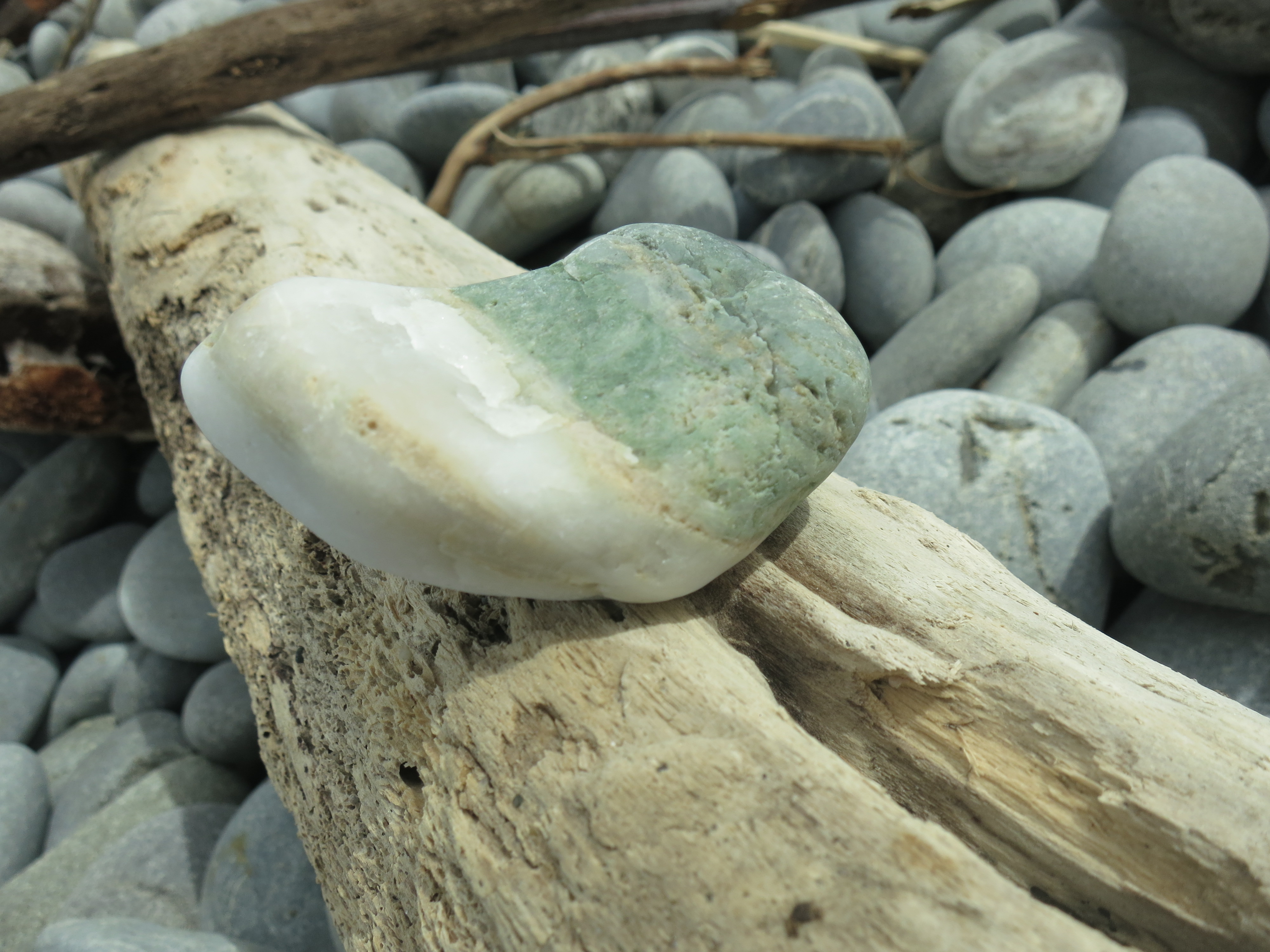
But it was actually a peaceful spot to spend an hour. We hunted for jade among the rocks, and found that the more we looked, the more green we found among the gray there. (We never found actual jade, but that is a common stone here, the “greenstone” as the Maori call it, and it’s found in a lot of necklaces and artwork.) Also, every time a wave washed ashore, it made a wonderful rattling, wooshing sound as it retreated back to the sea. It was like turning a rainstick over, to the rhythms of the tides.

IMG_4590

IMG_4601We drove to Hokitika, a charming town with a few tourist spots and a helpful iSite worker who booked our Fox Glacier tickets for the next day. We took a picnic lunch out to Hokitika Gorge, and saw again the startling turquoise blue of Huka Falls (although there was no rushing water this time, so I’m not sure how that squares with the supposed reason for the color being lots of bubbles).

The sky doesn't even try to match the river's blue

The sky doesn’t even try to match the river’s blue

The walk from the carpark only takes ten minutes, through lush green forest, down to a swingbridge that everyone clung uneasily to as they made their way out to the center. We admired the views and then scrambled back to the car before the storm clouds overhead broke loose.

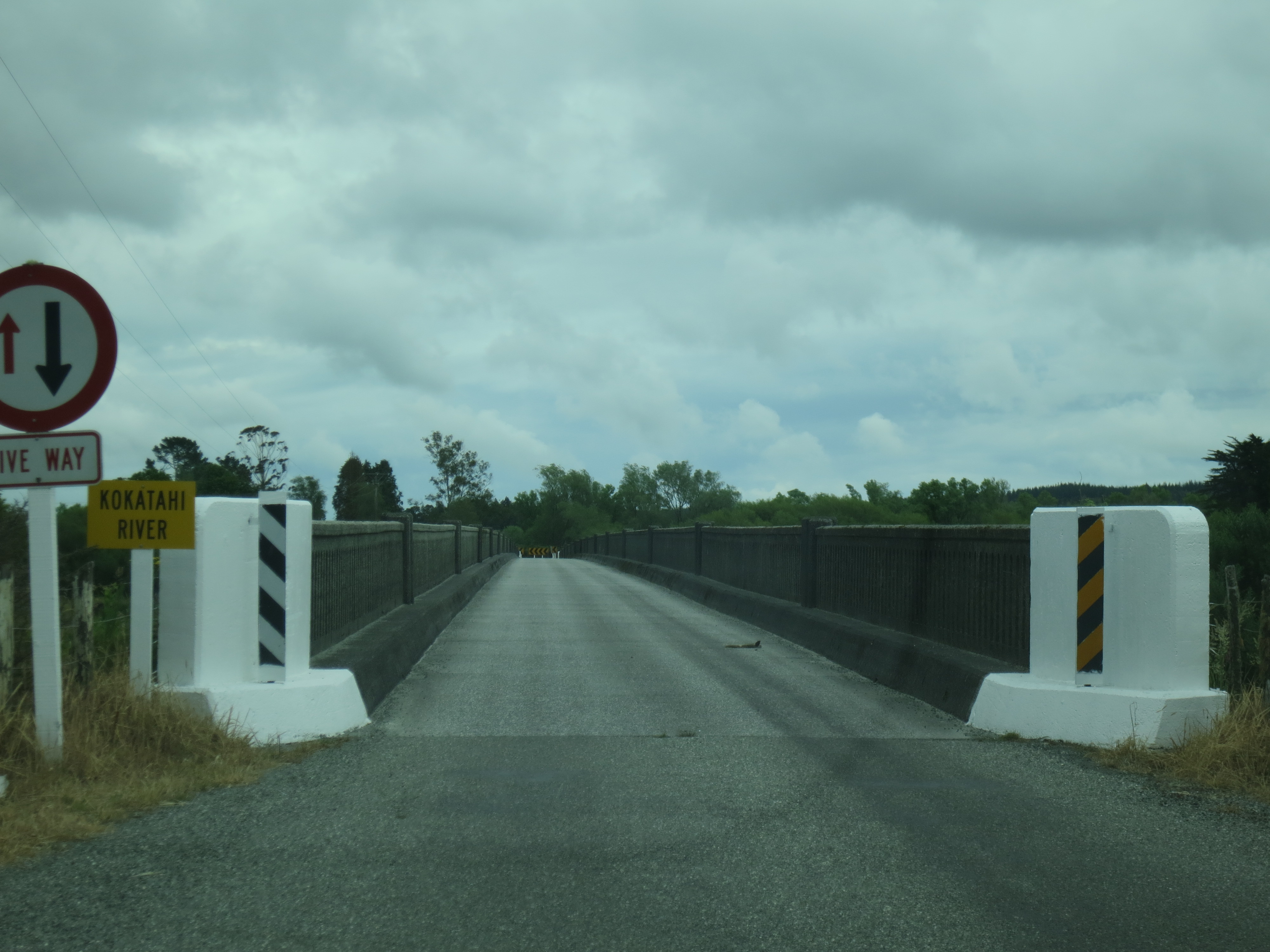
One-lane bridges: sometimes you can't even see the other end to make sure no one's coming your way

One-lane bridges: sometimes you can’t even see the other end to make sure no one’s coming your way

That makes it sound simple, but actually we had to get past a formidable obstacle both on the way in and the way out of the gorge. Guard cows! On our way in, we were held up just before we crossed over our millionth one-lane bridge. (Why does New Zealand have two-lane roads but only one-lane bridges? No one has explained this mystery to me.)

You shall not pass

None shall pass

Suddenly, a cow appeared to our right. She had got out of the field somehow, and was walking along, unconcerned, until she noticed our car. Then she became alarmed and walked right in front of the car. Liz gave the car horn a beep, and the cow started trotting, and then we noticed cows in the field to our left started trotting as well, apparently giving the rogue cow encouragement. She eventually moved over to the left enough that we could get by. A cow guarding the entrance to the gorge–what’s the usual entrance fee in that case?

Cow crossing--what can ya do?

Cow crossing–what can ya do?

On our way back to Highway 6, zipping down the relatively flat lanes of the Westland countryside, we had to stop for a good ten minutes. It was milking time, and the dairy farmers had opened up the gates on both sides of the road, and a stream of cows moved from the field over to the barn. One the farmers stood in work boots and watched, and the other sat in her ATV and kept a lookout for the few cows that strayed down the road. Rush hour on country roads is a lot like rush hour in the city in that way; nothing for it but to sit it out.

Twenty kilometers later, the rain started in earnest, and it wouldn’t let up for days, in what the owner of the hostel I stayed in called one of the worst downpours he’d seen in years. Not that this stopped Liz and me from climbing a glacier in the middle of it. Stay tuned for that story next time!

The storm clouds let loose

The storm clouds let loose

The Interislander Ferry Crossing

According to Maori legend, the hero Maui went fishing one day and pulled up the North Island, and his canoe became the South Island. Ever since 1962, the Interislander Ferry has acted as the fishing line between canoe and fish, carrying passengers and their cars from Wellington to Picton and back again. After Christmas, I took the ferry over to Picton to meet back up with Liz for a few days (Picton is mostly west and only a little south of Wellington, because of the way the South Island skews to the left).

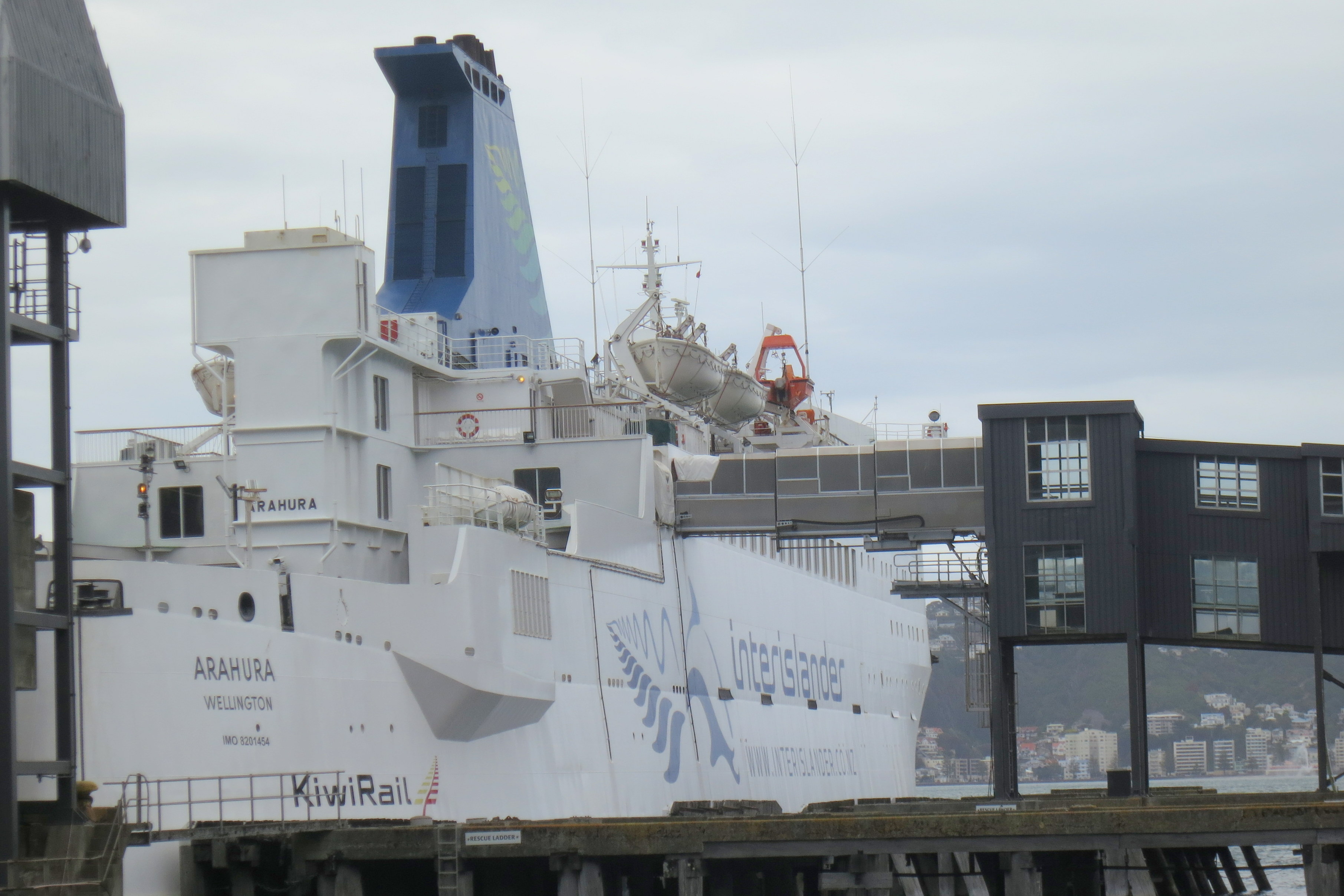
An imposing Interislander Ferry

An imposing Interislander Ferry

If you’re taking your car across, you check in quite early and get it loaded on board. If you’re just taking yourself, you can show up 45 minutes ahead of time and check your bag like you do at the airport. There are no assigned seats, and there don’t seem to be seats for everyone (at least on one of the boats I took; different models make up the fleet). I set myself up in one of the airplane-type seats, plugged in my computer, and got some writing done.

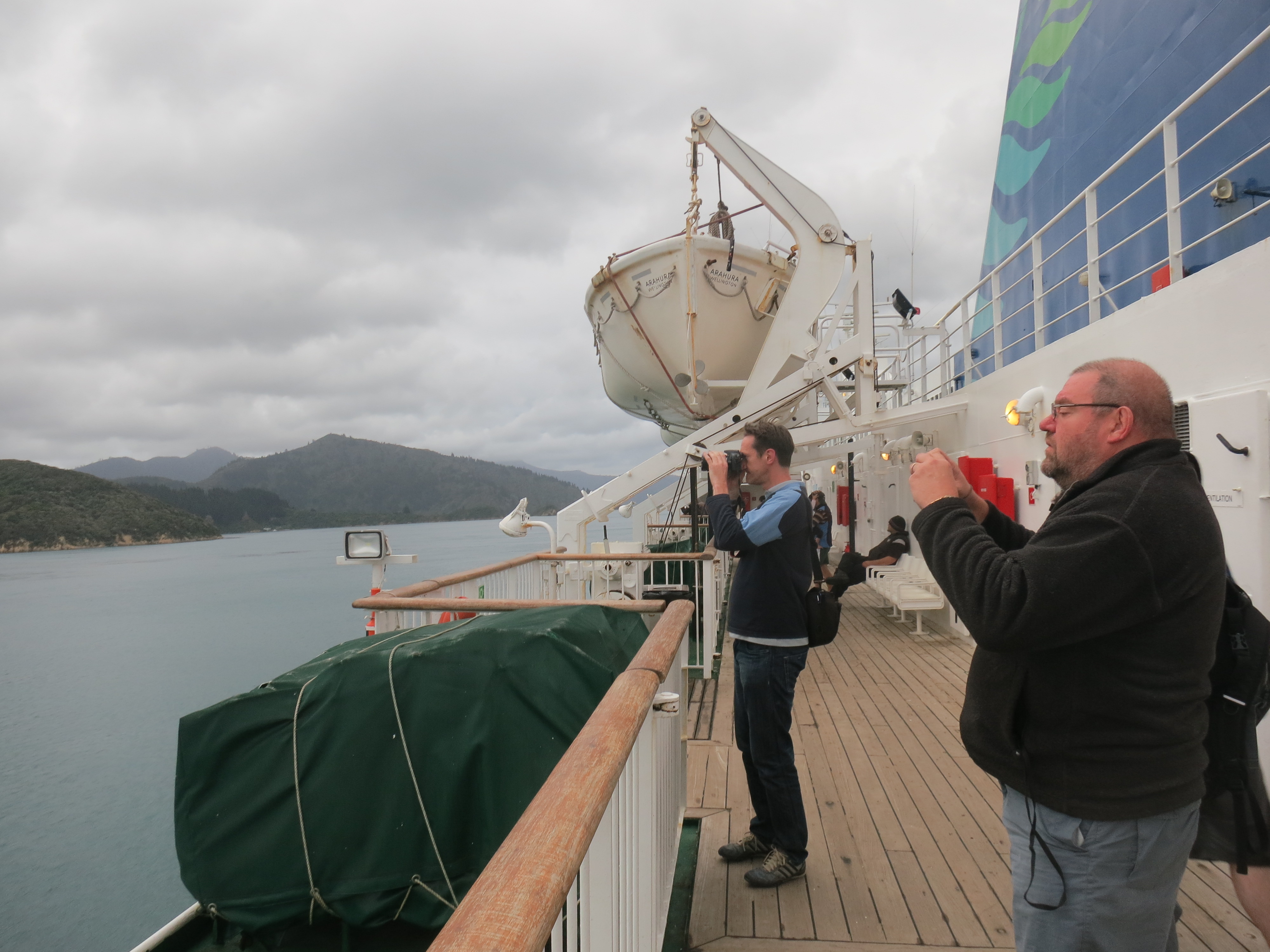
IMG_4451After a bit, I went out on the deck to watch the sunset as we sliced through the open ocean waters, and later I went back out to watch the craggy hills of the South Island rise up on either side of us. The outer decks are very basic; just a few benches line the inner ring, and smokers huddle against the cold by the railings.

Emergency instructions by labelmaker

Emergency instructions by labelmaker

Inside, there’s more comfort, with a bar, a pricy snack shop, a movie theater, and a children’s play area. On my second ferry trip, I found myself near a TV that played a five-minute ad about the history of the Interislander on a continuous loop for the entire journey. That was too much, but I did like the vintage posters for the ferry lining the halls as you disembark.

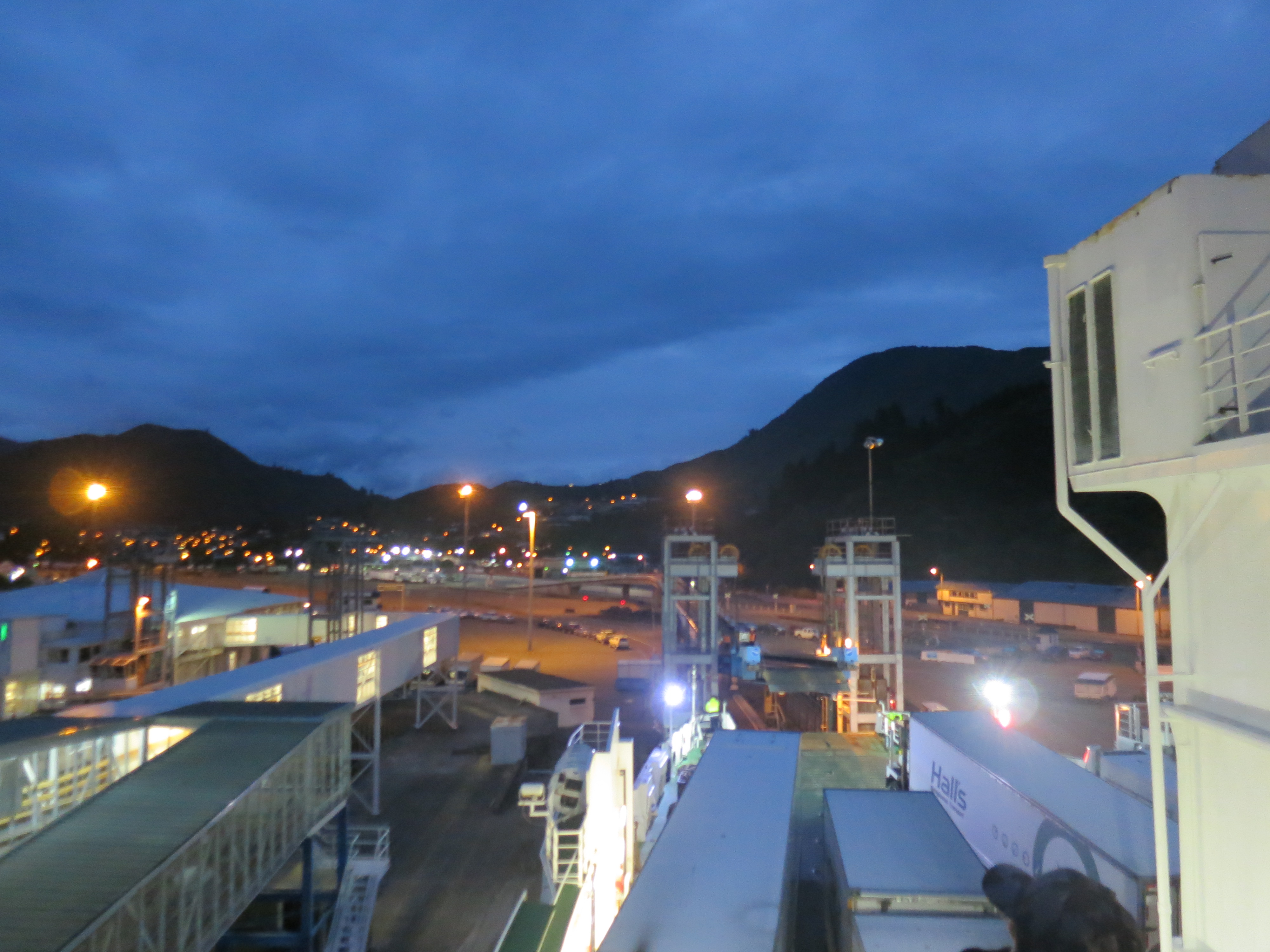
IMG_4475Once you get to Picton, it’s an easy walk down the main road to hostels, a bus pick-up, the rail station, etc. It looked harder to find your way to the city in Wellington, but happily for me, my Couchsurfing host picked me up when I arrived, so I didn’t have to figure it out.

Picton

Picton

Taking the Interislander ferry isn’t quite the sunny holiday frolic depicted in the ads, but it is a serene three hours out there on the water.

IMG_6398

Christmas on the Beach

After Liz and I left the central part of the North Island, we stopped off at National Park (yes, that’s the actual name of the town) so that Liz could hike the Tongariro Crossing and I could bundle up against the cold and damp of the mountains while reading a good book.

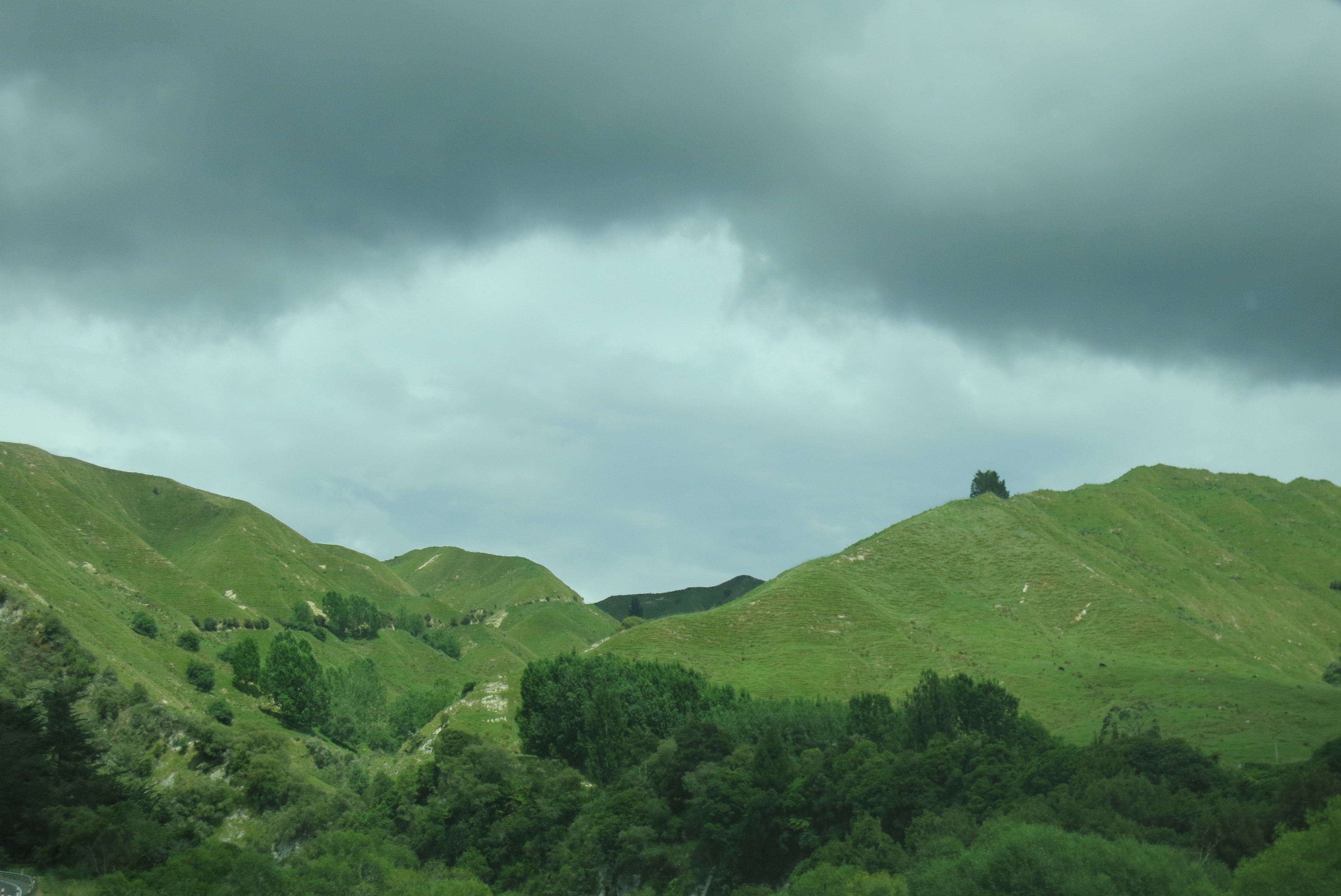
I have a lot of photos of the hills and mountains of New Zealand. They are just too dramatically beautiful not to gaze at longingly mile after mile.

I have a lot of photos of the hills and mountains of New Zealand. They are just too dramatically beautiful not to gaze at longingly mile after mile.

A couple days later, we drove south, and once the mountains were in our rearview mirror, the weather improved immediately. We got more than one radio station, we saw other cars on the road, and we started passing through towns. We must be getting closer to Wellington.

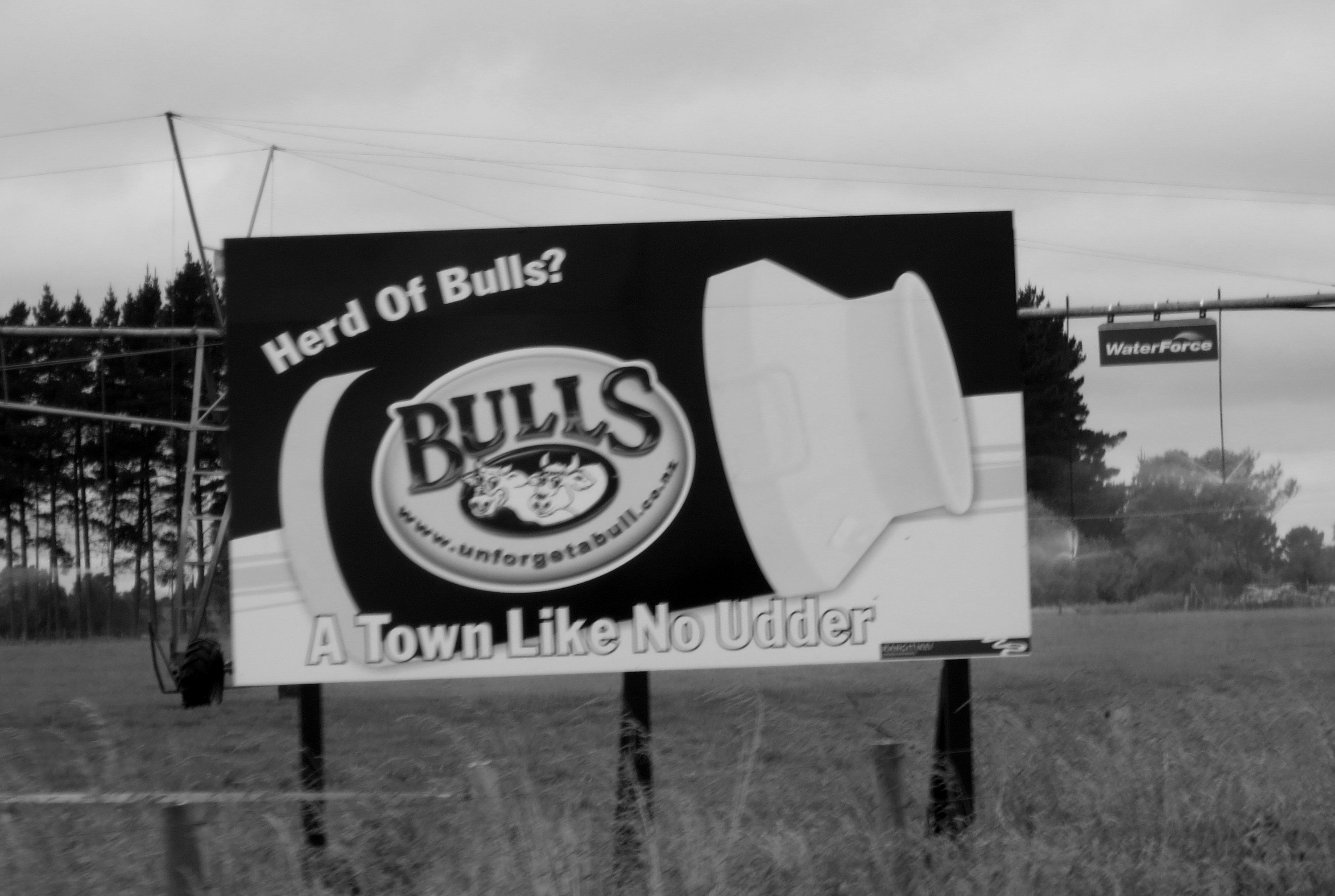
The town of Bulls delivered pun after pun as we drove through it. I also liked the "Afford-a-Bulls" $2 shop.

The town of Bulls delivered pun after pun as we drove through it. I also liked the “Afford-a-Bulls” $2 shop.

About 40 minutes outside of the capital city, we pulled off the highway to a town called Waikanae Beach. Liz dropped me off at my friends’ home and she carried on to Wellington for a few days. We’d meet up later in the week on the South Island. In the meantime, I’d see how the Kiwis celebrate Christmas. Spoiler: in the sun. They celebrate the (northern hemisphere’s) midwinter solstice in the sun.

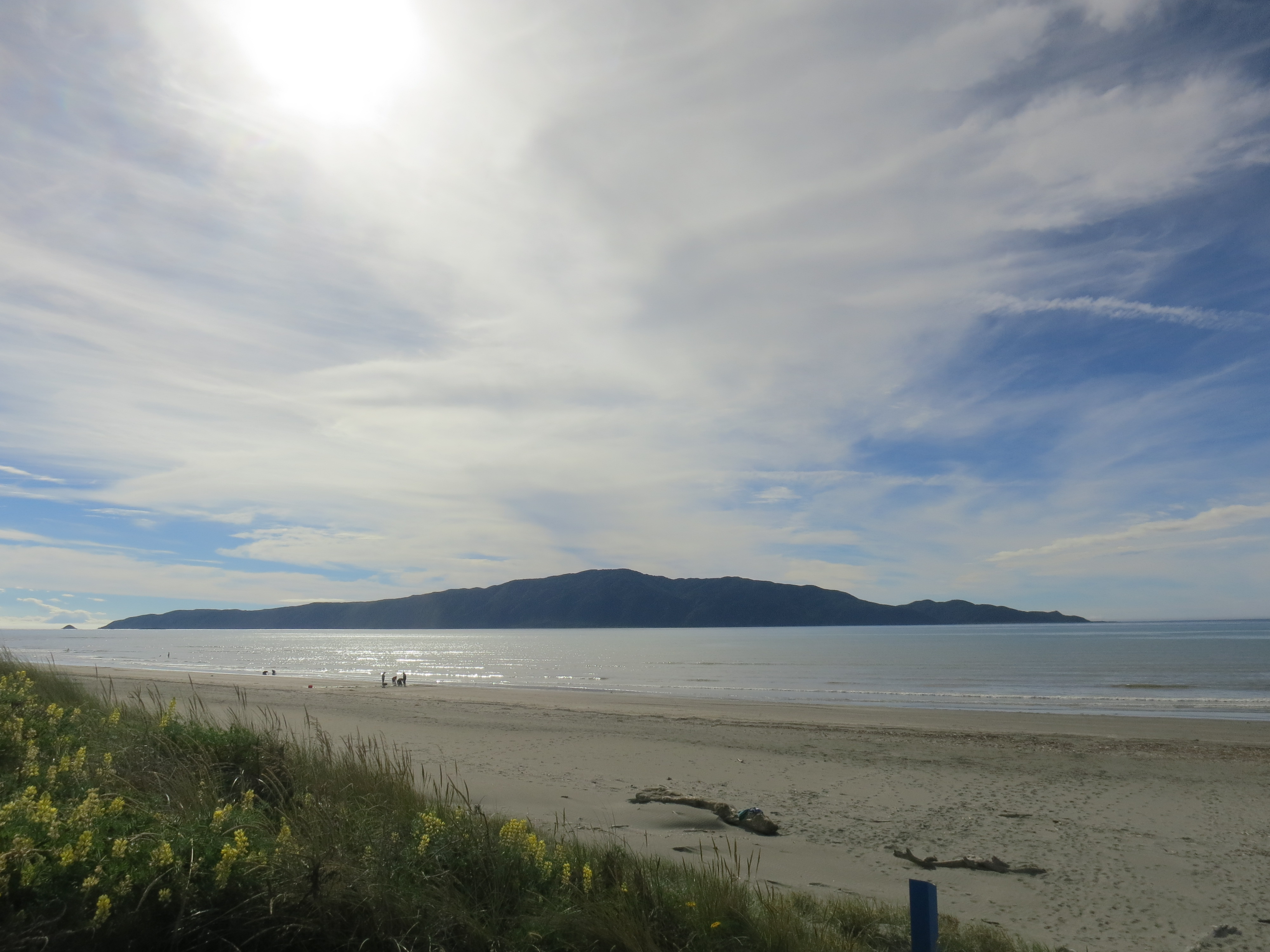
Kapiti Island off the coast

Kapiti Island off the coast

We went to the most laid-back church service I’ve ever been to (the pastor was in shorts and sandals) and sang a few carols. The words were projected on a screen at the front of the sanctuary and a guitarist led us in song. At the end of the service, ushers handed out Christingles, which are apparently common in the Church of England, though I’d not heard of them before. It’s an orange (the world), wrapped in a red ribbon (Christ’s blood), stuck with four toothpicks holding fruit and candy (the four seasons and the fruits of the earth or the sweetness of Christ’s love), and containing a candle in the center (Jesus, the light of the world). It was fun to watch the kids of the congregation mumble “Silent Night” with the rest of us while sneaking the candies off their Christingles with varying levels of surreptitiousness.

Turns out the orange wasn't that tasty

Turns out the orange wasn’t that tasty

I had a lot of fun with the 9-year-old of the house, a smart, sweet kid who explained to me all about the various things he’s collecting and which Horrible Histories episodes he likes best. We played in the ocean together, and on Christmas day we put together some of his Legos and smashed down an Angry Birds Star Wars imperial ship. We tried to out-weird each other in our Mad Libs choices, and we both dozed off after a big Christmas dinner. Such fun!

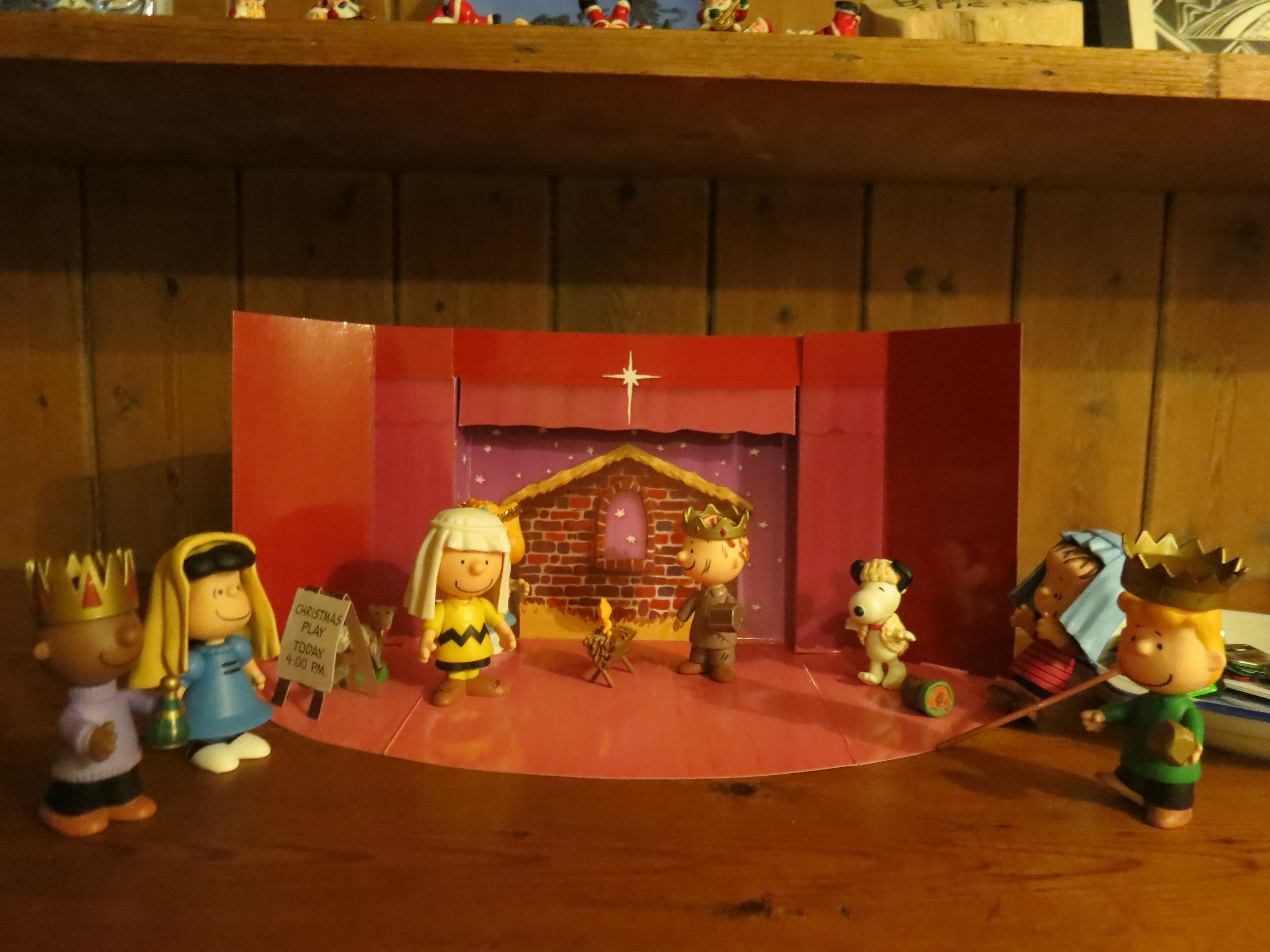
Best nativity scene

Best nativity scene

Dinner was a massive collection of food, and also delicious. Then came dessert, which also took up a whole dining table, and was also delicious. I had my first taste of pavlova; a light, tasty meringue and fruit dish. New Zealanders and Australians argue about who invented it, but they agree it is their favorite dessert.

The Kapiti coast is a popular place for Kiwis to retire; its positioned east of Kapiti Island and north of the tip of the South Island, so it’s more protected than many other parts of the North Island, and while my hosts said that Christmas was especially hot this year, they also said they always spend at least part of Christmas on the beach. What a great tradition!

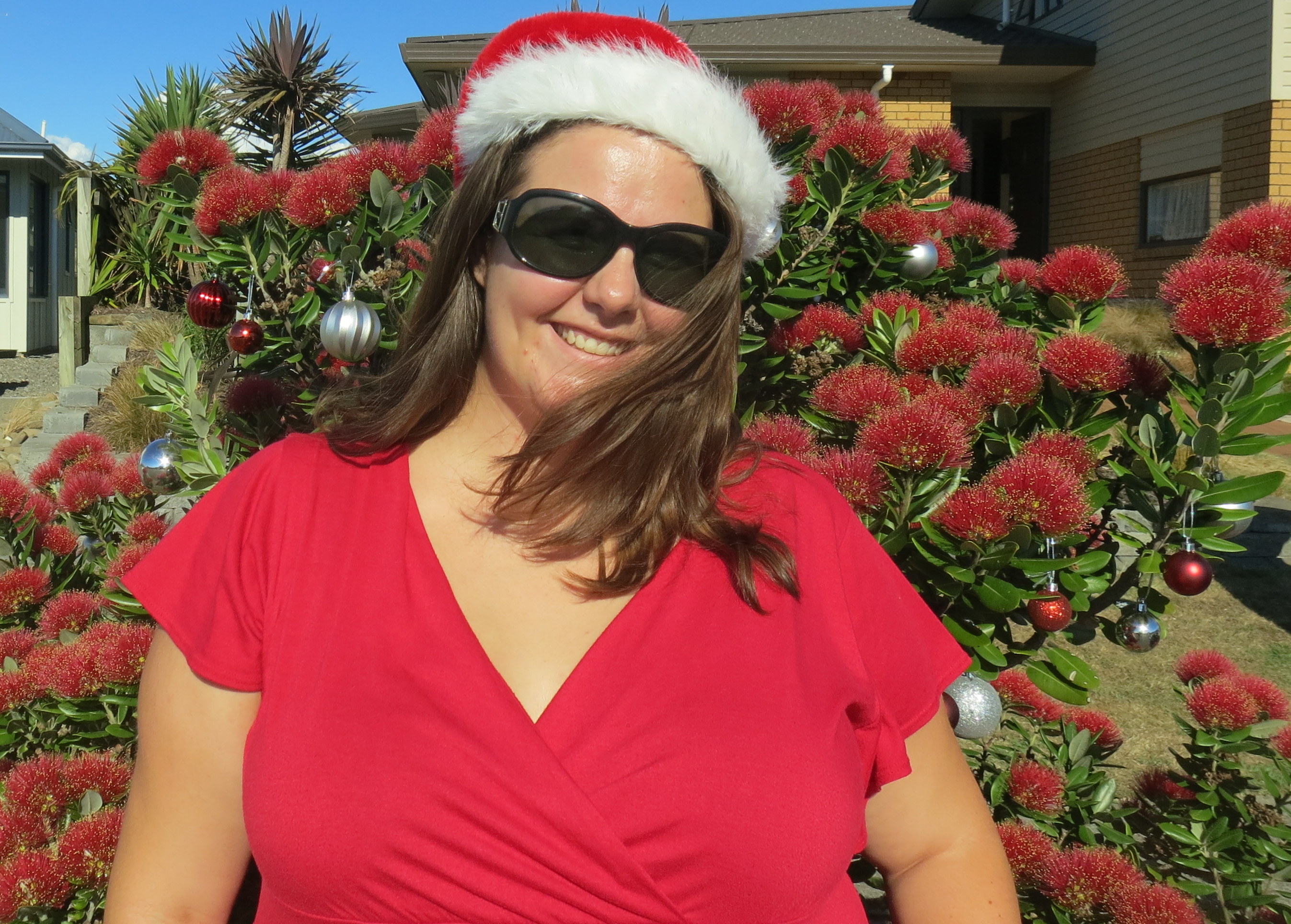
Merry Christmas!

In front of a pohutukawa bush, the “New Zealand Christmas tree” because it blooms right around that time of year

On the Road in New Zealand

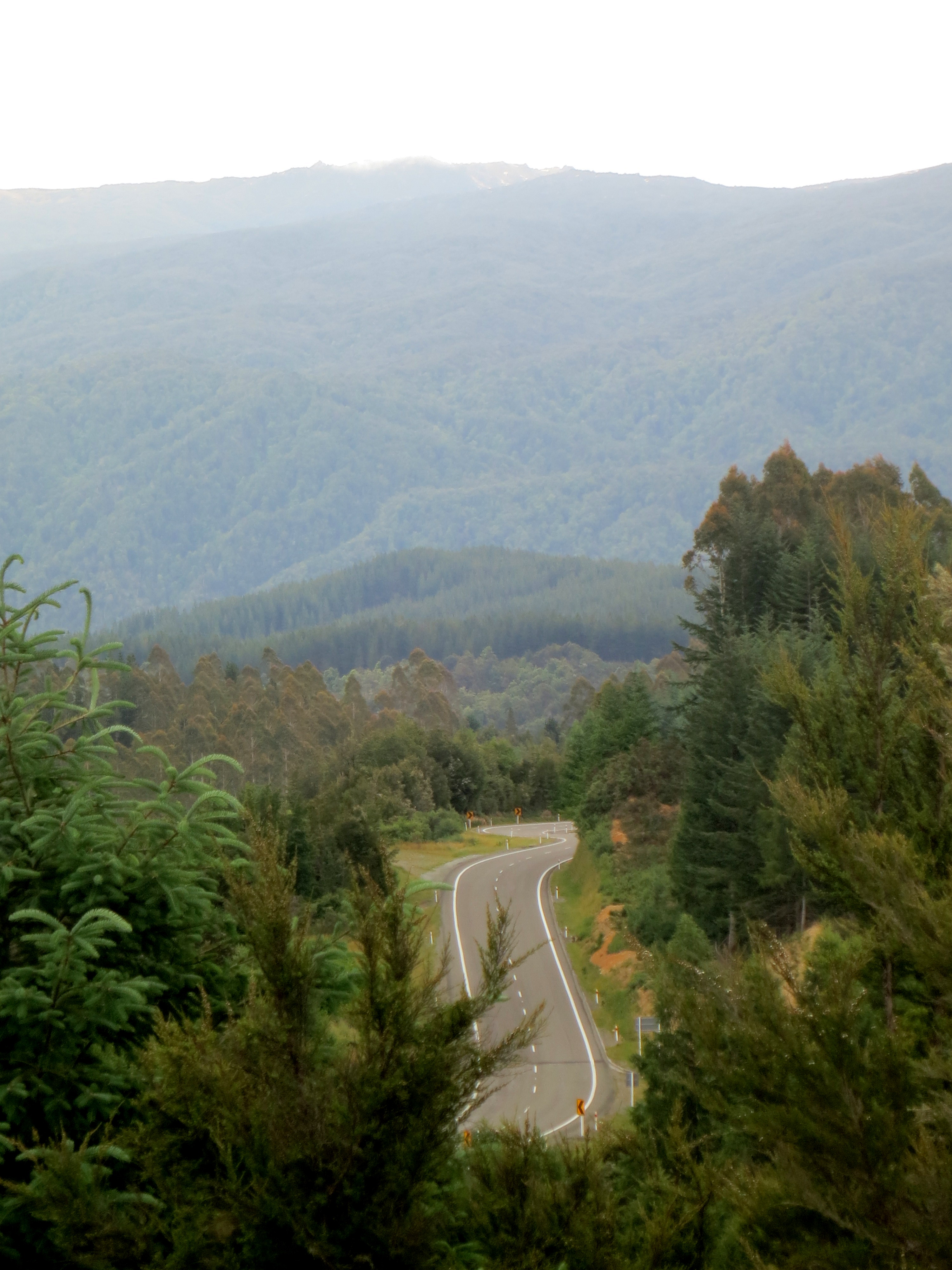
I’ve already mentioned how fortunate I was to have Liz as a road trip buddy in New Zealand, but I’ll say it again: I had so much fun traveling with her. We laughed a lot—both at funny things we said and ridiculous situations we found ourselves in, like leaving a camera on the hood of the car and driving for ten feet before realizing it. We made a good driving/navigating team—she drove, I squinted at a map and made my best guess, which only resulted in turning around about half the time. We even sang Christmas carols together on the drive through the Taupo Volcanic Zone, two sopranos belting out the first verse of just about every hymn we could think of as we hurtled down the first straight road we’d seen in the whole country.

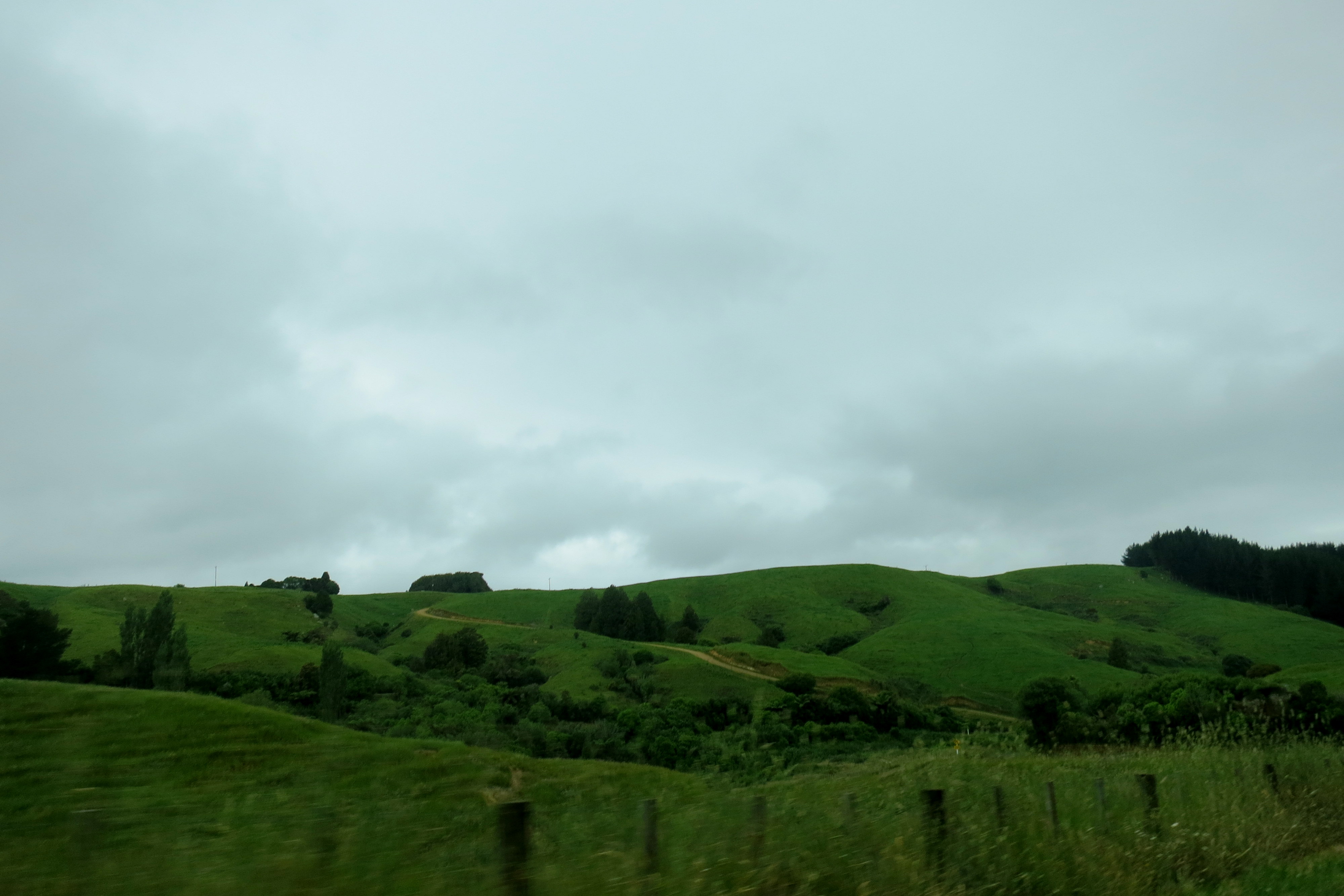
The green hills of the central North Island

The gray skies and green hills of central North Island

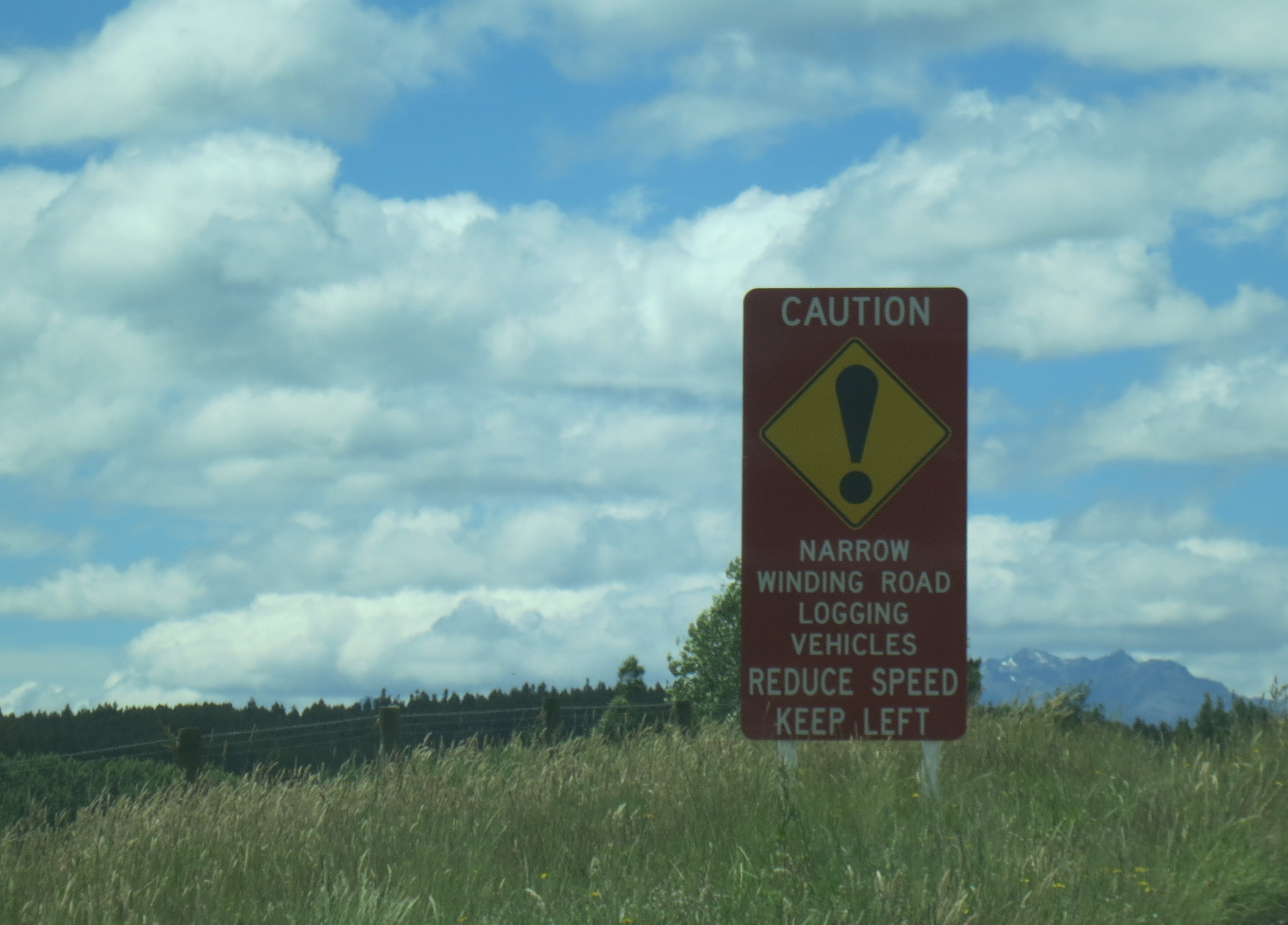
Liz was a little more used to the roads in New Zealand than I, considering she’s from northern Ontario, and many Canadian roads are similarly unsealed (read: teeth-rattling gravel). What neither of us was really prepared for was how small the roads were (major highways were two-lanes just about everywhere except around Auckland and Wellington), how much they twisted and turned (we never quite got used to turning a blind corner and hoping we didn’t meet anyone crossing the center line coming the other way), or how un-signed they’d be.

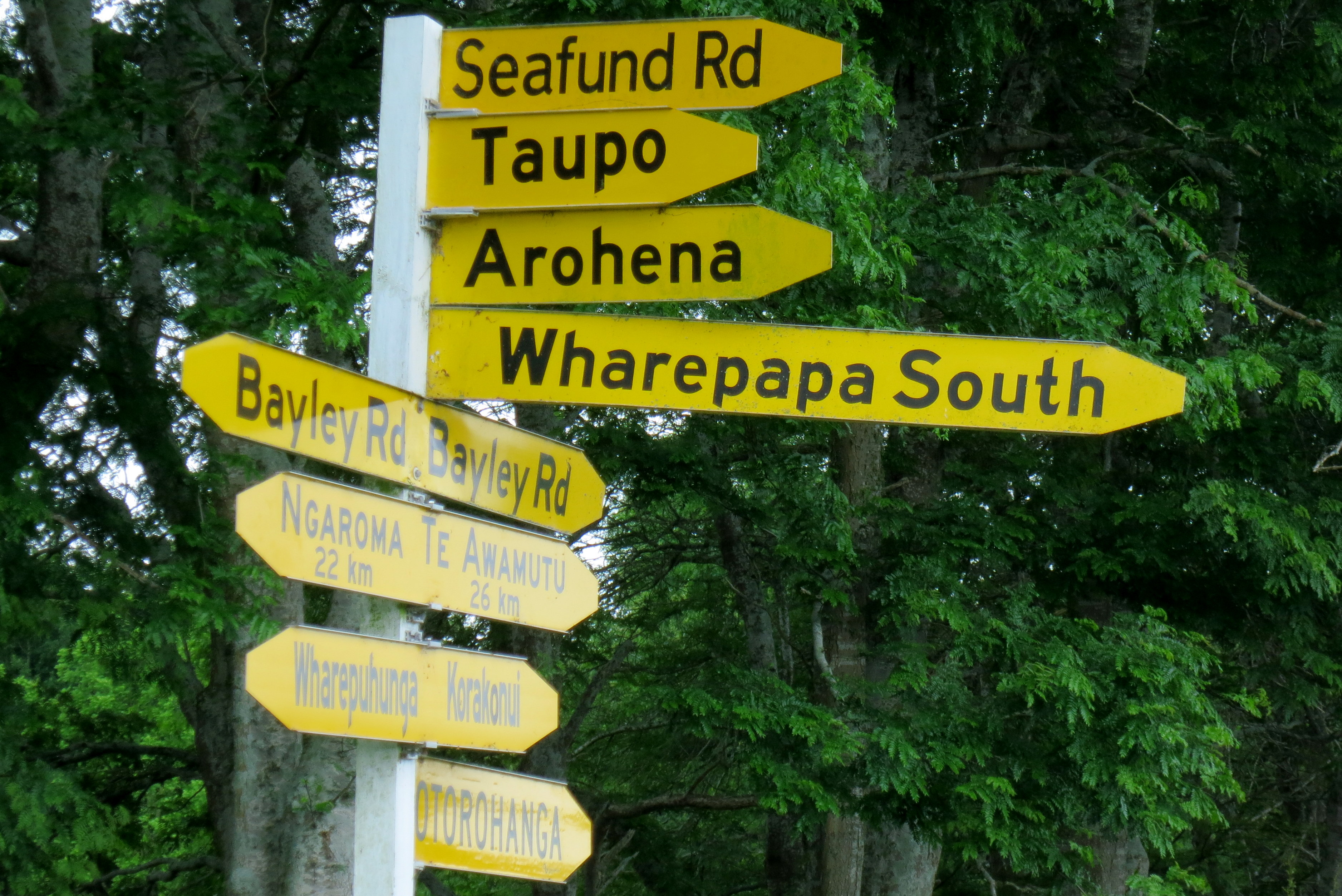
Putting a lot of signs all at once doesn't make up for the lack of signage in a thirty-kilometer radius, NZ.

Putting a lot of signs all at once doesn’t make up for the lack of signage in a thirty-kilometer radius, NZ.

I should say, we’d see signs sometimes, but the road might have changed names somewhere along the way, and if our map wasn’t detailed enough, it wouldn’t show the name change, so we couldn’t be sure we were on the right road. Also, road signs would point out what town we were eventually heading toward, but in the same manner as if that were the next town over, so we’d see a town name with an arrow and think “ah we’re here” but then no town would materialize and twenty minutes later we’d finally be there.

IMG_4040

Getting around the dairy country where Liz’s friends lived was particularly bewildering. The landscape was all similar—large hills with turf that look like it had been molded into many tiny ridges, the occasional collection of black rocks, and lots and lots of cows. Liz knew the area a little since she’d worked there for a few weeks, but she’d only ever driven one route. As soon as we deviated from that route, we were lost. On the day we drove to Waitomo, we borrowed the GPS from Liz’s friends, but even the GPS got turned around in the labyrinth that was central Waikato roads. The best was when the GPS had us turn right when we should have turned left, and it took us a good 40 minutes to sort out the mistake.

IMG_4297

All this backtracking and second-guessing was mostly just fun, until it rained. And it rains a lot in New Zealand. Our worst rainy drive was probably the twenty kilometers between Franz Josef and Fox Glacier. It was 7 in the morning, Liz had been rained out of her tent the night before, and we were climbing a mountain road in the pouring rain to make it to our tour on time. Many kudos to Liz for getting us there alive; all I could do was say over and over, “It’ll be fine, we’ll get there in time.” (Since I alternated this with “I don’t know if I can do this hike” and Liz then had to reassure me, I think I wasn’t actually that helpful.)
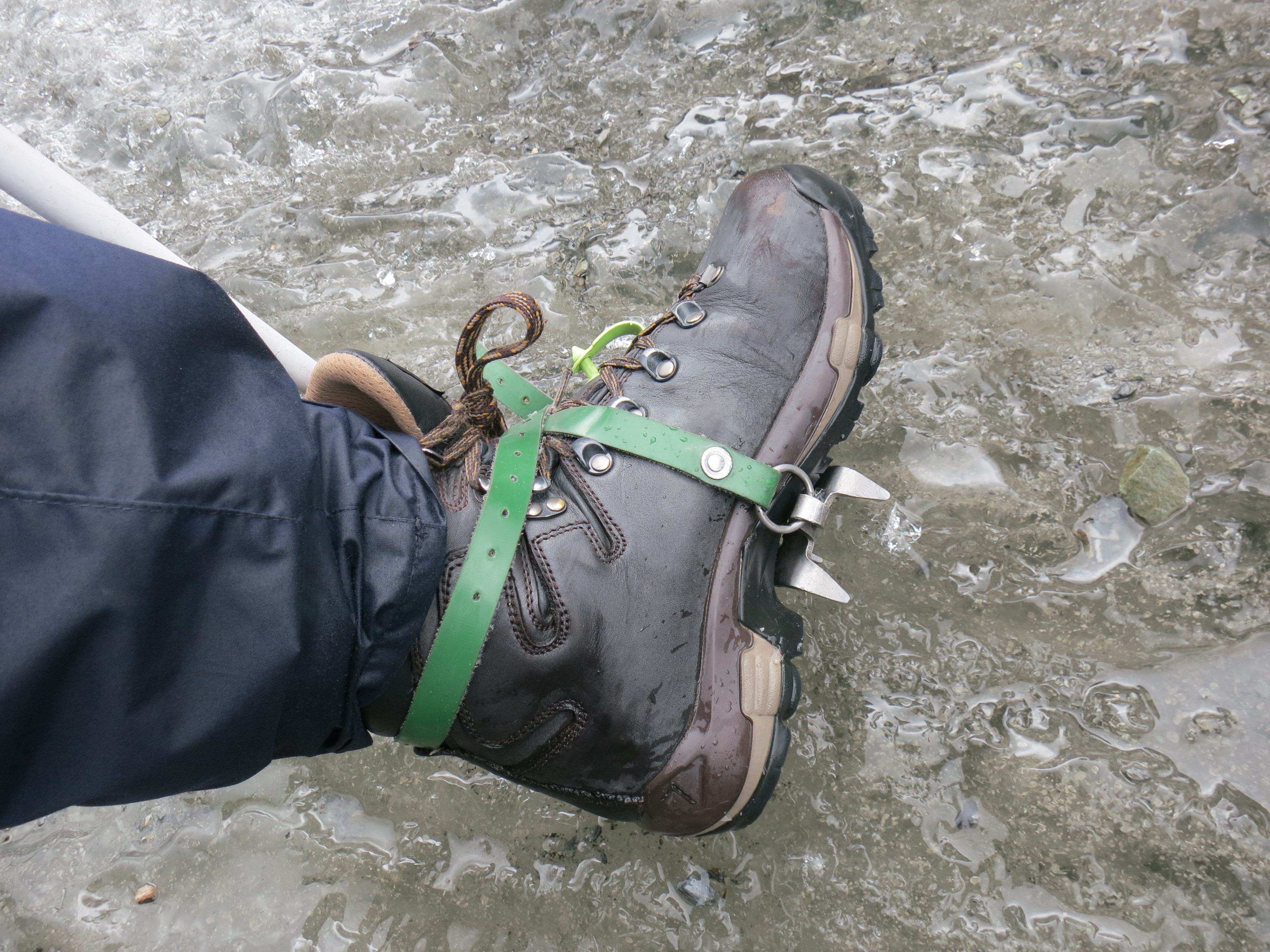
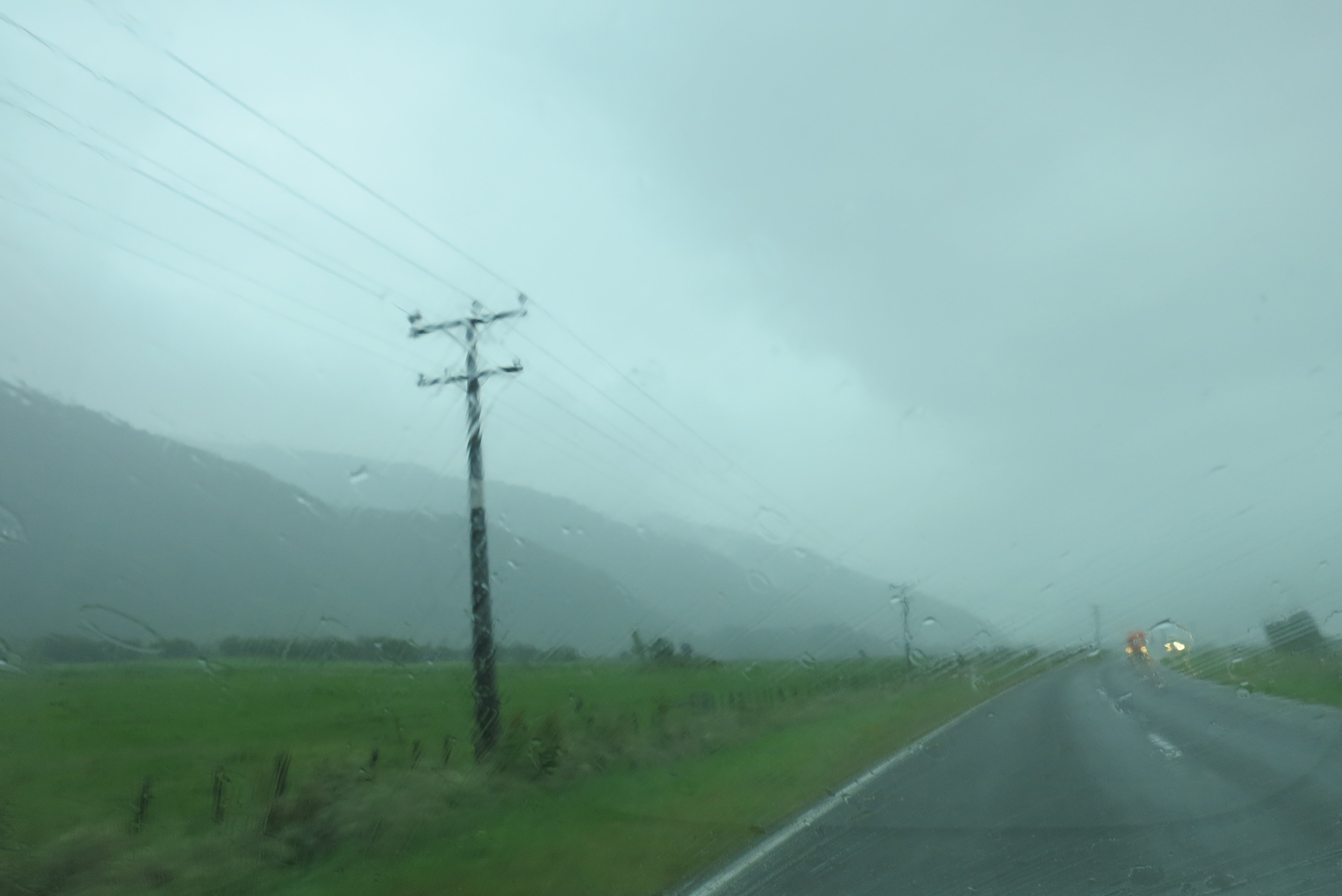
An ominous start to an awesome day

An ominous start to an awesome day

At home, driving in sketchy conditions with poor signage can be helped with a boost from the radio, but our little Nissan Sunny rental only had a range of 78-86FM, and for the most part, we could only get one station, if any. Those mountains really did the job on scrambling any signal we might have got. Our radio was hung up on 84.0—any time we hit scan, the numbers would zoom past, 83.183.283.383.483.583.683.783.883.984.0. Boom. There it would stay, desperately trying to transmit something no doubt awesome—rock n roll, lotta soul, cosmic jive?—but not actually giving us so much as a faint crackle of static. Good thing we had lots to talk about, and the occasional song to belt from memory. When the radio did come to life, it was oh so good. The occasional Maori tune, some current New Zealand pop songs, and then the most amazing array of ‘90s Top 40 hits. Ace of Base, Backstreet Boys, Alanis, Enrique… wonderful for a nostalgic singalong or two, horrible if it’s all you could get for years!

On the way to Greymouth

On the way to Greymouth

This doesn’t even get to one-way bridges and cow rush hour, but that’s a post for another day. Basically, everything about road tripping in New Zealand was familiar enough to be comfortable and strange enough to be fun and funny—an ideal combination, especially when you’re sharing it with someone who feels the same way.

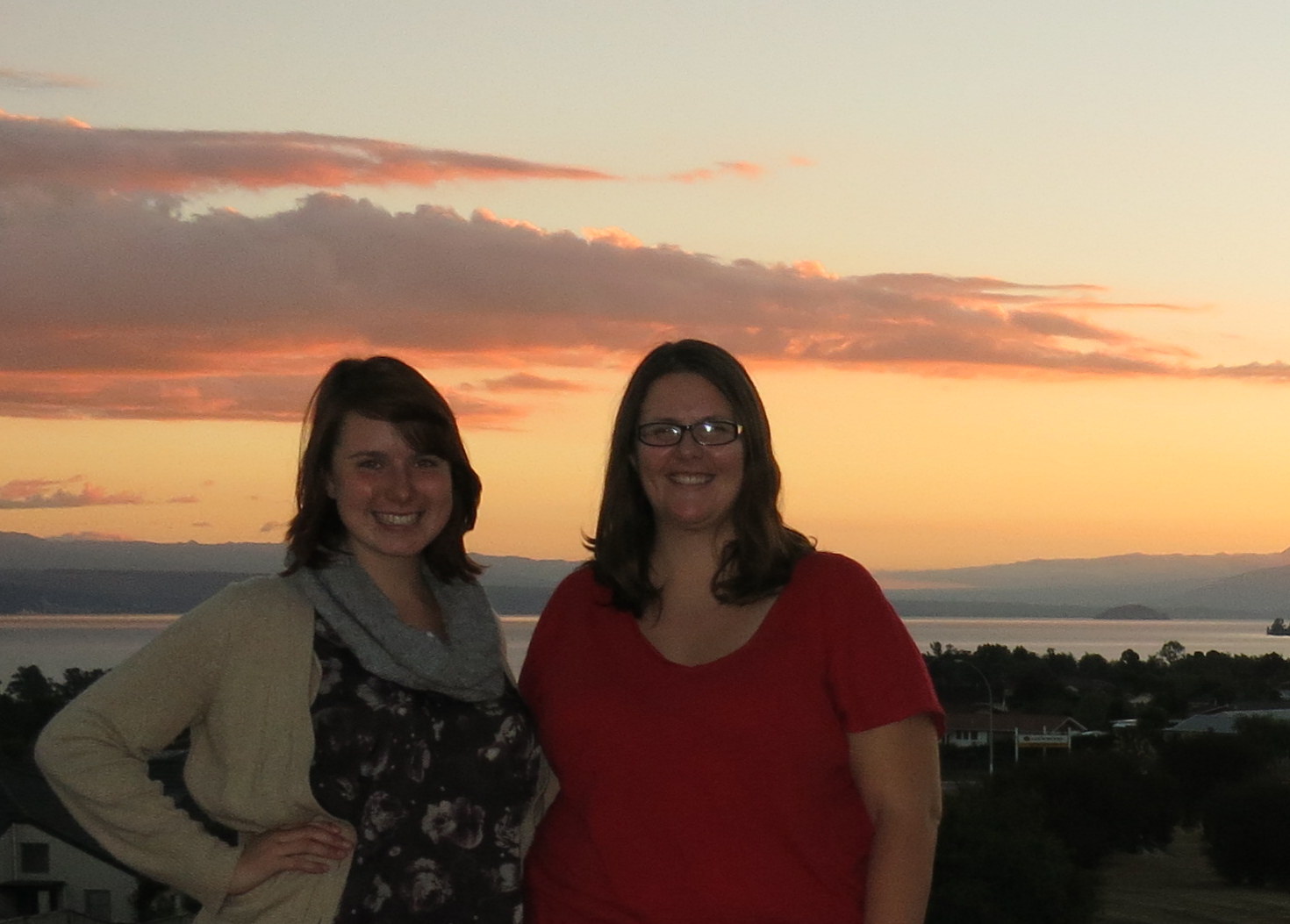
Liz and me in Taupo

Liz and me in Taupo

Tourist Hot Spots in Taupo

Bad wordplay in the title! Liz and I did go to a lot of tourist spots in Taupo, and they’re hot because like Rotorua, Taupo sits on a lot of thermal activity and it’s even near some volcanoes. In fact, we had to get up early the morning we were leaving town, because the woman we stayed with had to catch a flight up to the nearby volcano to study its latest rumblings.
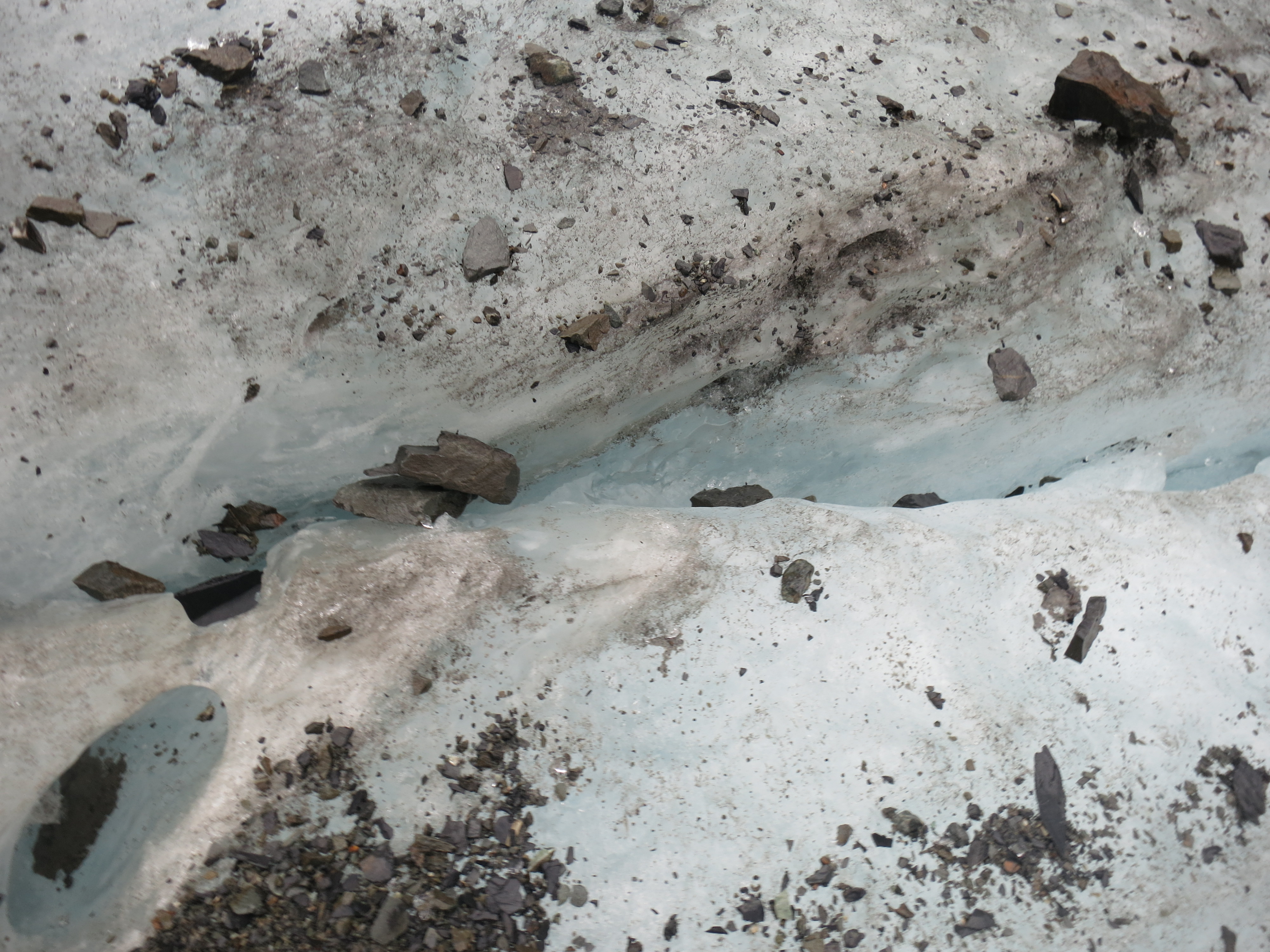
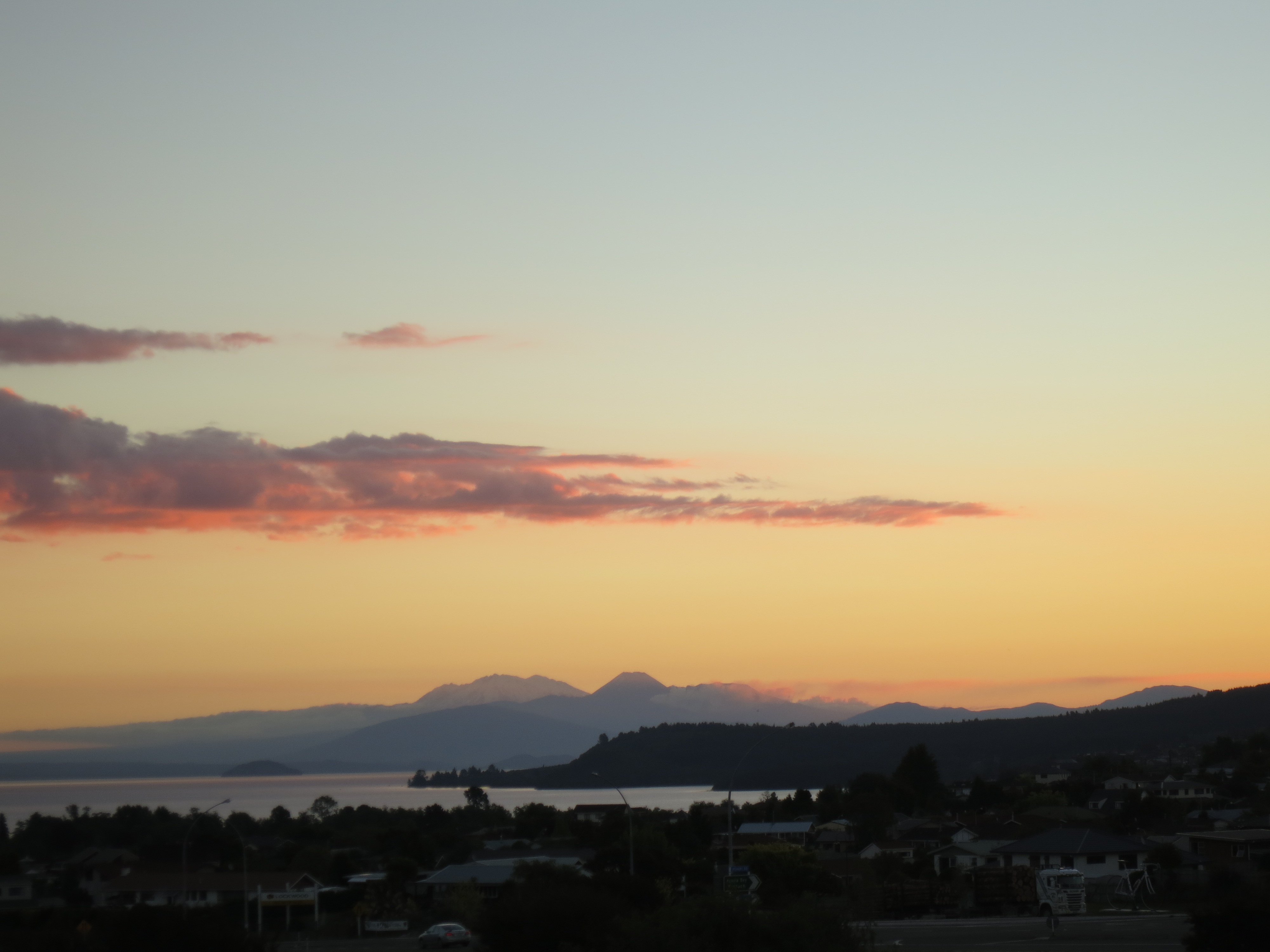
Volcanoes in the distance from a Taupo lookout point

Volcanoes in the distance from a Taupo lookout point

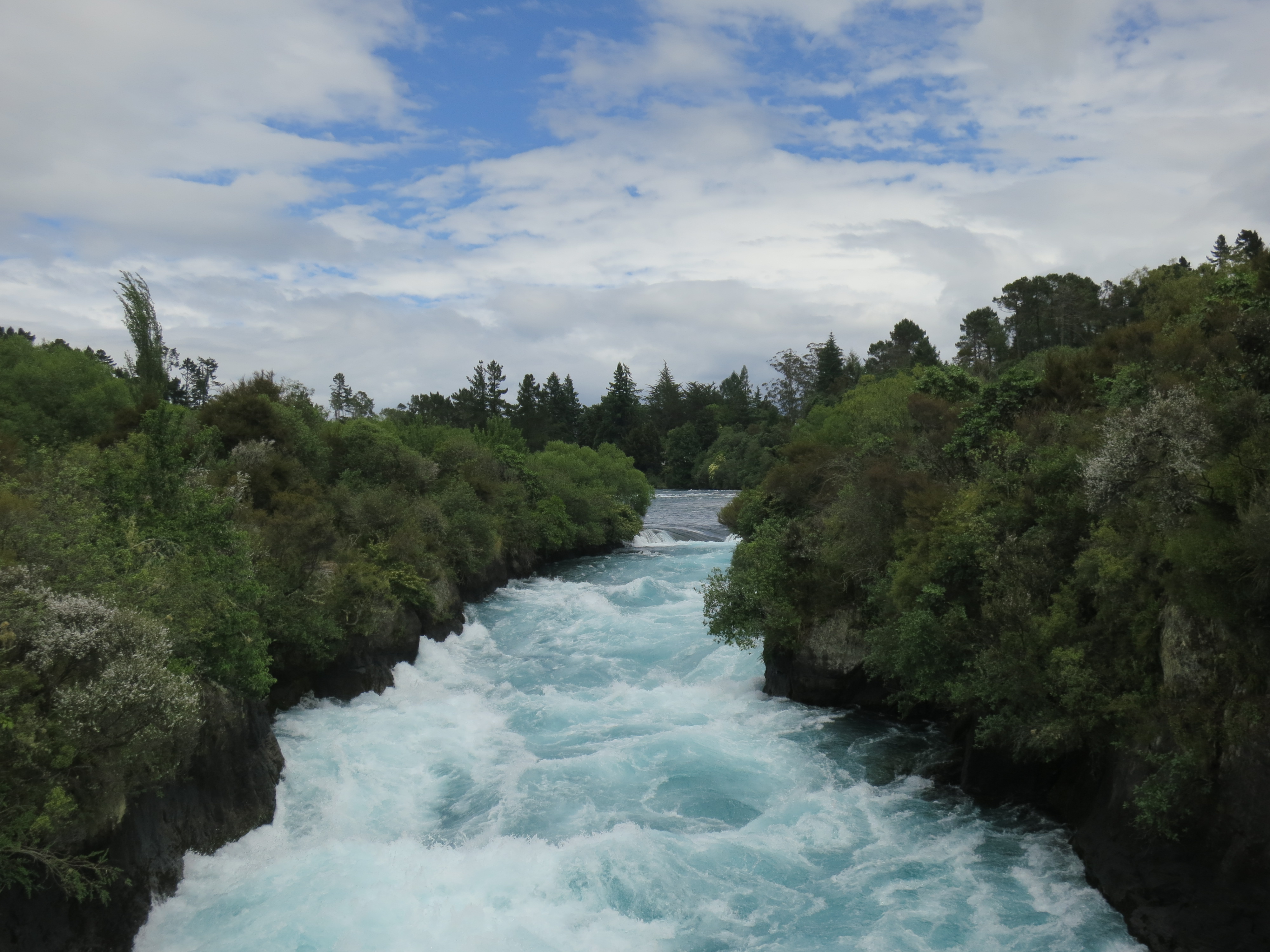
The main tourist places in Taupo are all clustered along the same road, so Liz and I just worked our way down the road until it was time for dinner. First, we stopped by Huka Falls, which is one of the most visited places in New Zealand; its incredibly easy access probably has something to do with that–cross the parking lot and walk 20 feet to the bridge that spans the narrow chute of water rushing through and turning the most wonderful shade of blue. Apparently the air bubbles caused by the rapidly moving water (the river narrows from 100 meters to 15 meters across for this little bit, and then empties into almost 100 meters again) intensify the effect of the clear water reflecting blue light, and voila, a waterfall the color of a swimming pool. It was gorgeous to look at.

Not photoshopped

Not photoshopped

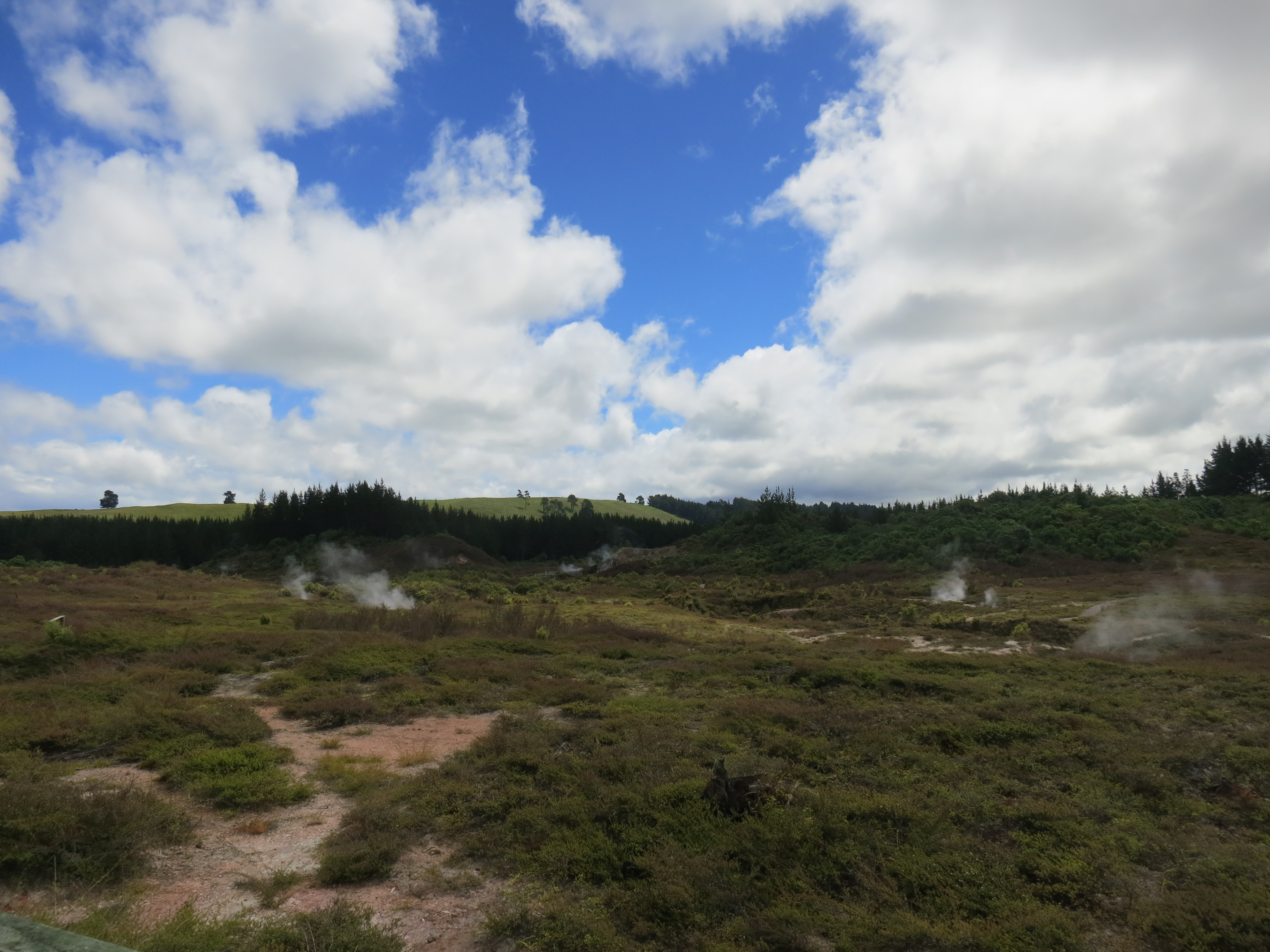
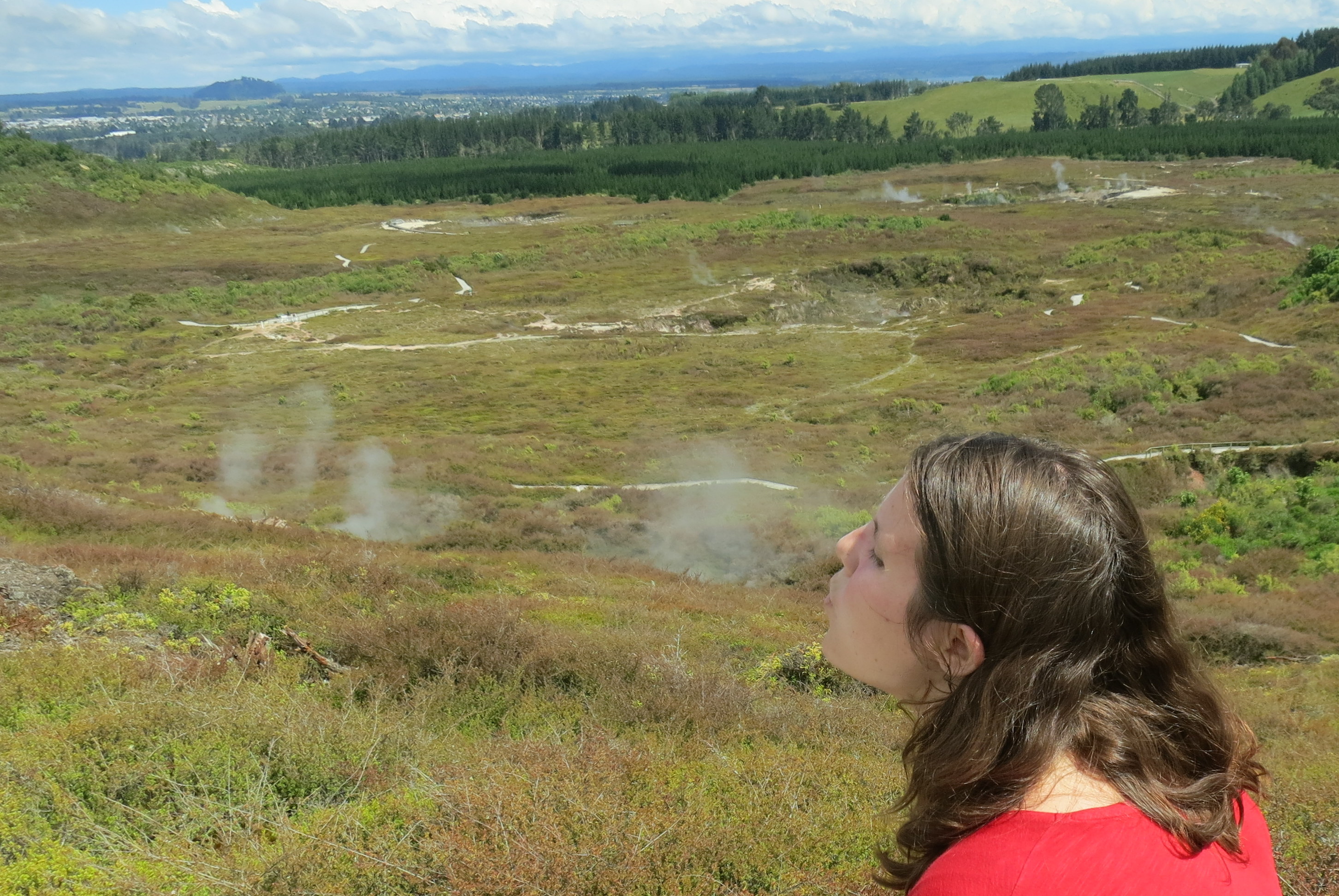
We drove for five minutes and stopped in at Craters of the Moon. There are indeed several craters here, but many hardy plants cover the land between the craters, so it’s much greener than I understand the moon to be. It was still a little otherworldly to stroll along the boardwalk around the park, though. Steam rose from the ground in a steady stream from various vents, and yellow signs warned us that steam burns, which was awfully thoughtful. The earth in the craters was gray and cracked, mud that had dried in the extreme heat. One of the craters had a little bit of mud bubbling at one end of it, and I kept waiting for an ancient lizard to crawl out of the ooze. Maybe that’s what the park was like, actually–prehistoric.

A grassy moonscape

A grassy moonscape

We decided to extend the walk a little bit and hike up the small hill at one end to get a view of the whole park, and as we started out I saw Liz check her watch, which I’d noticed she’d been doing throughout the walk. Turns out that her wilderness adventuring instincts are strong, and she always times how long it takes to do any kind of walk, a precaution necessary when hiking up mountains so you can estimate how long it will take you to go back down again. And here I’d been dawdling along the boardwalk at my usual slow pace! She laughed and said it didn’t actually matter how long it took, and we continued on our way, each a little more knowledgeable of the other, the way you get when you travel with someone.

And then I turned into a fire-breathing dragon

And then I turned into a fire-breathing dragon

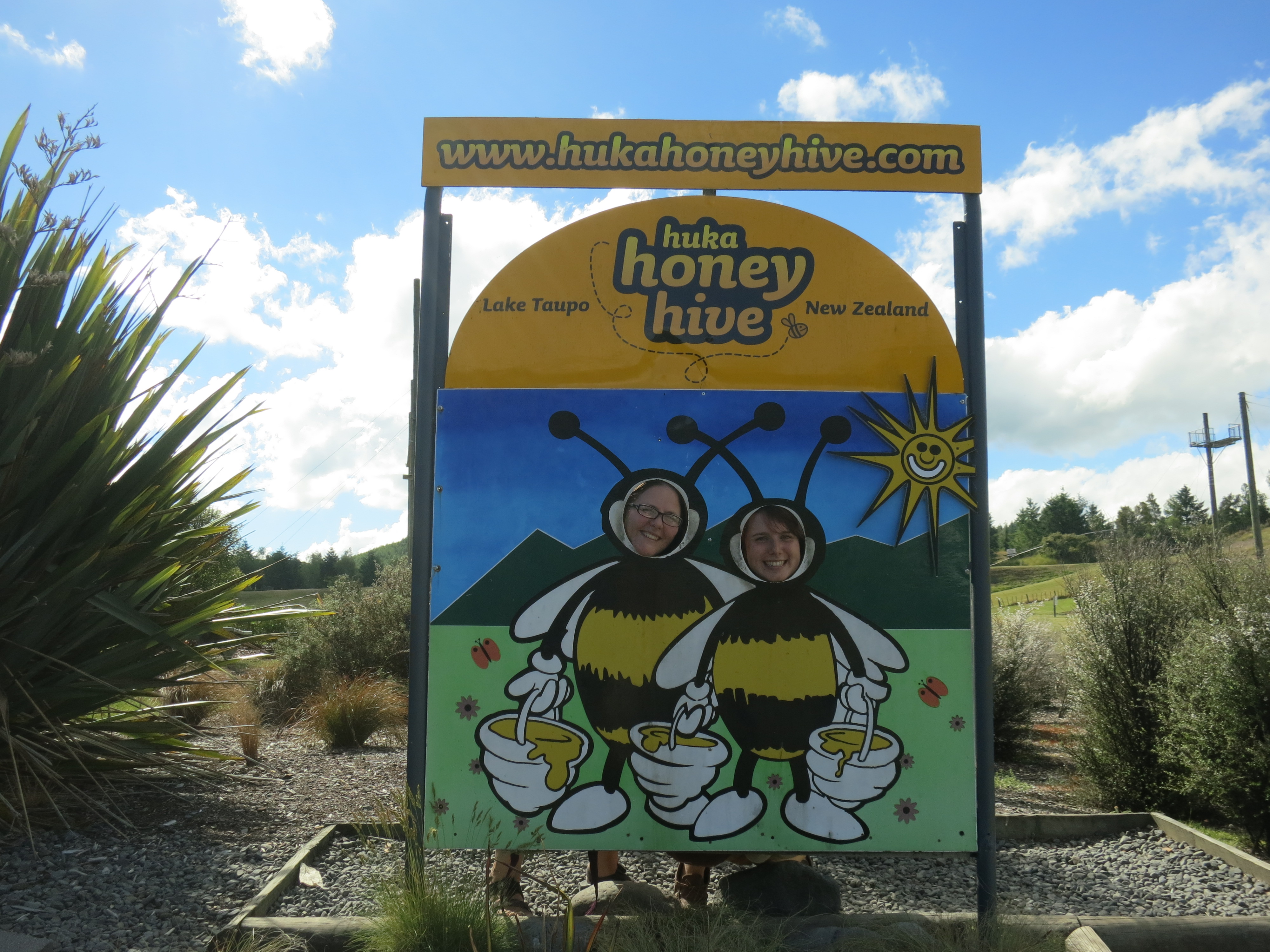
Our last stop of the day before finding our host’s home was at the most blatant cash grab of our trip so far. We went to the Honey Hive, which is a large showroom of honey products of all kinds–soaps, lotions, liqueurs, ice creams, chocolates, etc. Manuka honey, made from the manuka tree’s beautiful flower, is a big deal in New Zealand, and I bought some small gifts for my hosts further on down the line. We sampled the liqueurs, had an ice cream, and squeezed ourselves into a spot made for 8-year-olds for a silly photo.
Bzzzt travel buddies! (Apologies)

Bzzzt travel buddies! (Apologies)

The next morning, our host told us about a free hot springs nearby, and after our success with the free spot in Rotorua, we were eager to try this one out. Spa Park is a big park with different sections. One area had a playground, and evidently some kind of event was taking place, because it was crawling with more kids and parents than usual. A short walk down a hill takes you to the banks of the Waikato River. If you cross the little wooden bridge there and keep walking for an hour or so, you come to Huka Falls. We stopped at the wooden bridge and ducked under it to sit in the tiny little pools created by tiny little waterfalls there. It was super hot and we had to move between the little pools and the main river to regulate our body temperature. We’d passed a few people on their way out on our way in, but when we got there at around 9 in the morning it was just us, the clear blue sky, and the free spa of the hot springs.

Smiles you can only find on vacationers who've just found a free spa along a river

Smiles you can only find on vacationers who’ve just found hot springs along a river

We did get out eventually, and by the looks of our lobster-red legs, not a moment too soon! We drove out of town to a sky dive place, where I sat in the shade and watched Liz leap from a plane at 15,000 feet and float back down to the earth. We didn’t know, it but it was the last good weather we’d have for several days; our final impression of the area was a calm blue lake reflecting a clear blue sky caught in our rearview mirror.

Til next time, Taupo

Til next time, Taupo

The Second Letdown of the Trip: Waitomo Caves

The first letdown, of course, was the very mixed bag that was the trip to Fraser Island in Australia. The fact that I’ve only had two disappointing tourist experiences in the first four months of travel strikes me as a really good record. Waitomo Caves is a major tourist attraction in the Waikato region of New Zealand, and it’s an efficient operation. But the tour I took wasn’t really worth what I paid for it.

Exiting the Waitomo Caves

Exiting the Waitomo Caves

The caves were known to the Maori of the area for years, but it wasn’t until a Pakeha and his Maori guide saw the caves in 1887 that tours started arriving. There have been tours here pretty much ever since. There are several different tours to take, and a couple different cave systems with different kinds of formations. I went on the main tour, although there are three to choose from, and you can combine them in different packages. (You can also go on a black water tour, which involves spelunking, floating, and abseiling. That’s the one Liz went on, and she loved it, but I’m too unfit and claustrophobic to attempt it.)

My tour went down to the caves with a quiet older Maori man, and he took us through the caves, which are a lovely white-ish color. (Photos weren’t allowed in the caves at all until just as we were leaving.) He showed us different stalagmites and stalactites, and pointed out the ones that looked like animals and pipe organs. He stood us in the center of the cave and sang us an old Maori song. The acoustics right there are perfect; they’ve held opera concerts there.

Next, he showed us some glowworms in a corner of the cave and talked about their lifecycle, how the shimmery blue color we see is the long, sticky line of the nesting larva, so it can feed. The larva grows for nine months before entering the pupa stage, emerging, mating, and then, of course, dying, as insects do.

Finally, we walked down some steps and entered a dark part of the cave. Here, we were told to keep as quiet as we could, to preserve the mystery of the boat ride. Our guide stood at the bow and moved the boat slowly around the cave by pulling on guide cables strung from the ceiling. The glowworms were lovely, and the cave ceiling was a starry sky of bright blue.

It’s just, well, it was rather small, and the ride was rather short. The ads all showed pictures of a much larger cave, which frankly would have just been more magnificent. It was a smaller, shorter experience than I was expecting, and I suppose that’s the main part of it: expectations. I’d expected something a little different, and I’d paid almost $50, and I was disappointed when expectations didn’t match reality. It happens all the time, although as I said, not too much to me on this trip. Still, all that said, it was a beautiful sight, and gliding through the dark in a boat was a wonderful way to experience the luminescence.