Beautiful Britain: Berrington Hall

I’m visiting my grandmother in Worcestershire this weekend, so I decided it was probably time to post about my visit to her in February, when she took me to Berrington Hall for the afternoon. Created as “the perfect house in the perfect setting,” according to the National Trust, Berrington Hall is a Georgian house built on grounds designed by famed landscape architect Capability Brown. It’s one of the many great houses dotting the English landscape, and I have to say, I’m still not tired of visiting these places.

The severe facade of Berrington Hall (with grandmother for scale)

The severe facade of Berrington Hall (with grandmother for scale)

The National Trust decided to set up the house as it might have looked in its early days, and they’re aided in this by the 18th-century furniture filling the house. None of it is original, because as is the case so often with aristocrats, the family eventually had more debts than money, and most things were sold off. But it’s a collection from the same Georgian period, so you can get an idea of what it looked like then. What it looked like was elegant. If you’ve ever seen an Austen adaptation, then you know what to expect: clean lines, delicate colors, neoclassical geometry. I much prefer it to the overstuffed ostentation of later Victorian decorations. (For some reason, I took a lot of mediocre to bad photos from this visit, so, sorry about that.)

Elegance in the hallway
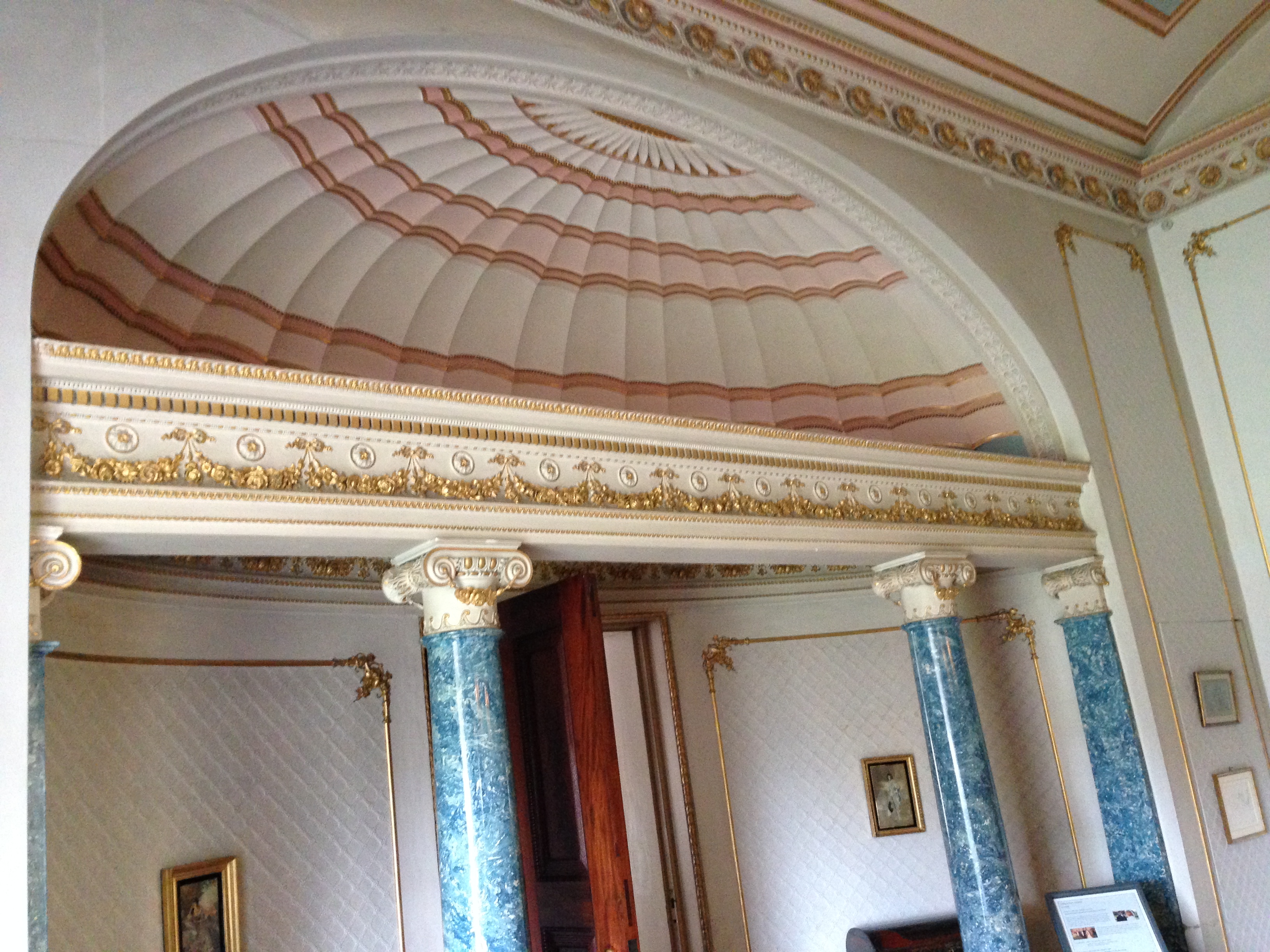
Elegance in the hallway

berrington hall

When my grandmother and I arrived at the estate on the last day of February, it had started to drizzle. A very eager volunteer offered to take us from the parking lot to the front door in her golf cart, stopping at the triumphal arch so we could buy our tickets and then zipping along to the main hall. My grandmother had merely brought her walking stick with her, and voila!–instant assistance. If you needed more reasons to visit your elderly relatives, how about this kind of VIP treatment?

The library

The library

Each room contained a volunteer docent, and all but one of those docents very much wanted to share their knowledge of the place with us. We learned about the family who built the house after making a tidy fortune, the family who married in and many years later gambled away that fortune and lost the house, and the family who bought the house and kept it until the National Trust took over in the ’50s.

Can you tell your Newton from your Addison?

Can you tell your Newton from your Addison?

Complemented by a battle scene on the other side of the room

Complemented by a battle scene on the other side of the room

The ceiling of the library had bas-reliefs of famous artists and scientists, and our docent reeled off their names and claims to fame. The dining room held a couple impressive naval paintings, and my grandmother and the docent discussed the uses of various arcane silver dishes on the massive dining table.

berrington hall

I love that the ceilings were considered another canvas for art back in the day--no need for them to just be plain

I love that the ceilings were considered another canvas for art back in the day–no need for them to just be plain

Upstairs, some old military uniforms were on display, and one of the rooms–which was in the shape of an oval, for some reason–focused on the sons of the house who died in the First World War. Other oddities here and there, like the Georgian need for symmetry throughout the house, which went so far as to lead to some false doors being included, just to balance out real doors on the other side of the room; or the telegram from the queen congratulating the lady of the house on reaching her hundredth birthday.

Dressing room for the man of the house

Dressing room for the man of the house

The oval room created some odd closet spaces in the other rooms
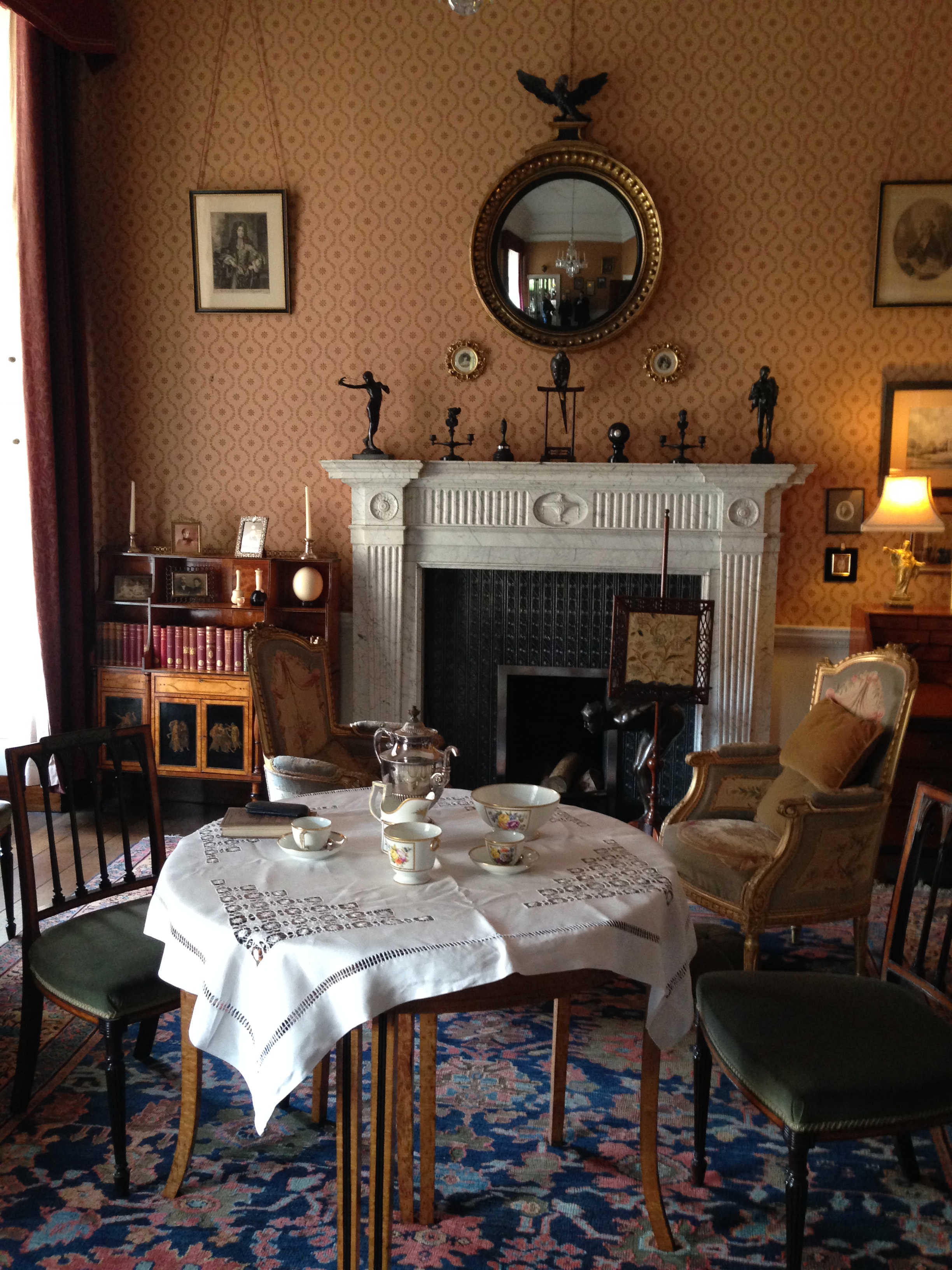
The oval room created some odd closet spaces in the other rooms

Lady Cawley's room

Lady Cawley’s room

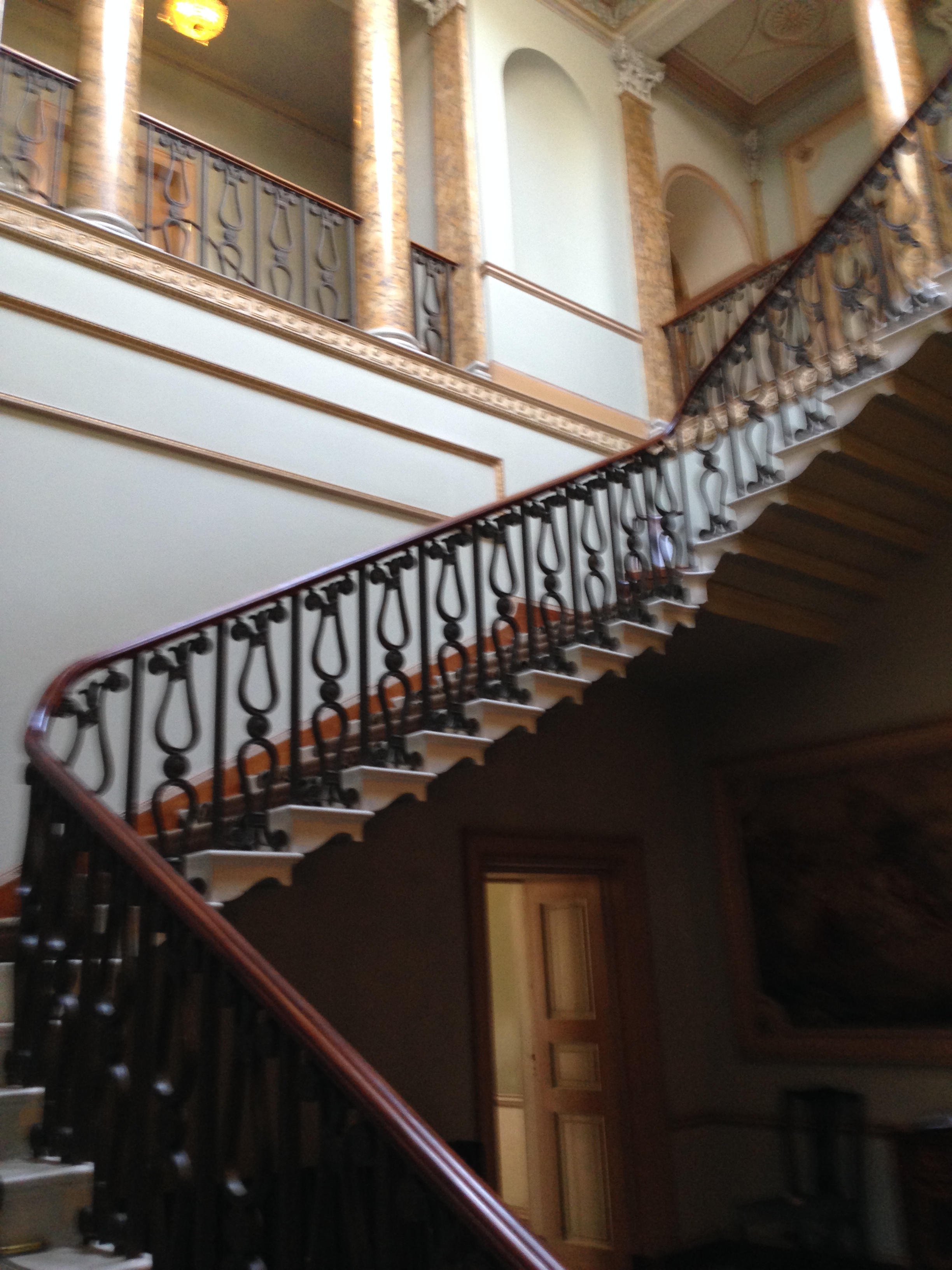
Grand staircase

Grand staircase

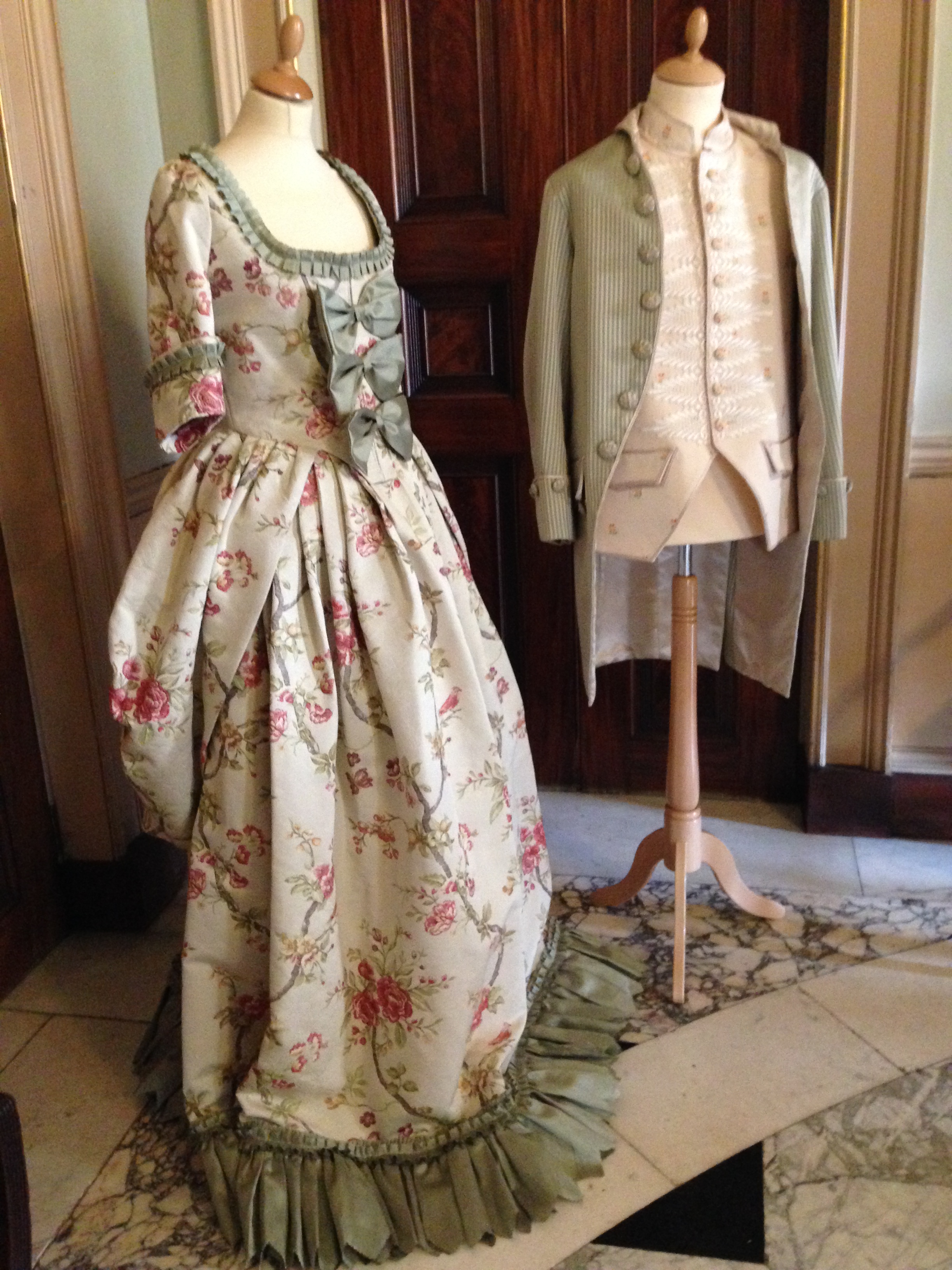
Throughout the house were mannequins displaying costumes from various BBC productions of Austen novels, including the outfits Emma Thompson and Hugh Grant were wearing when Edward finally proposes to Elinor, so that was a little thrill. My main takeaway from the costumes, other than how thin these actresses really are, is how short everyone is. Maybe Tom Cruise doesn’t look so short in his films because all of Hollywood is actually 5’5″.

Elinor & Edward costumes
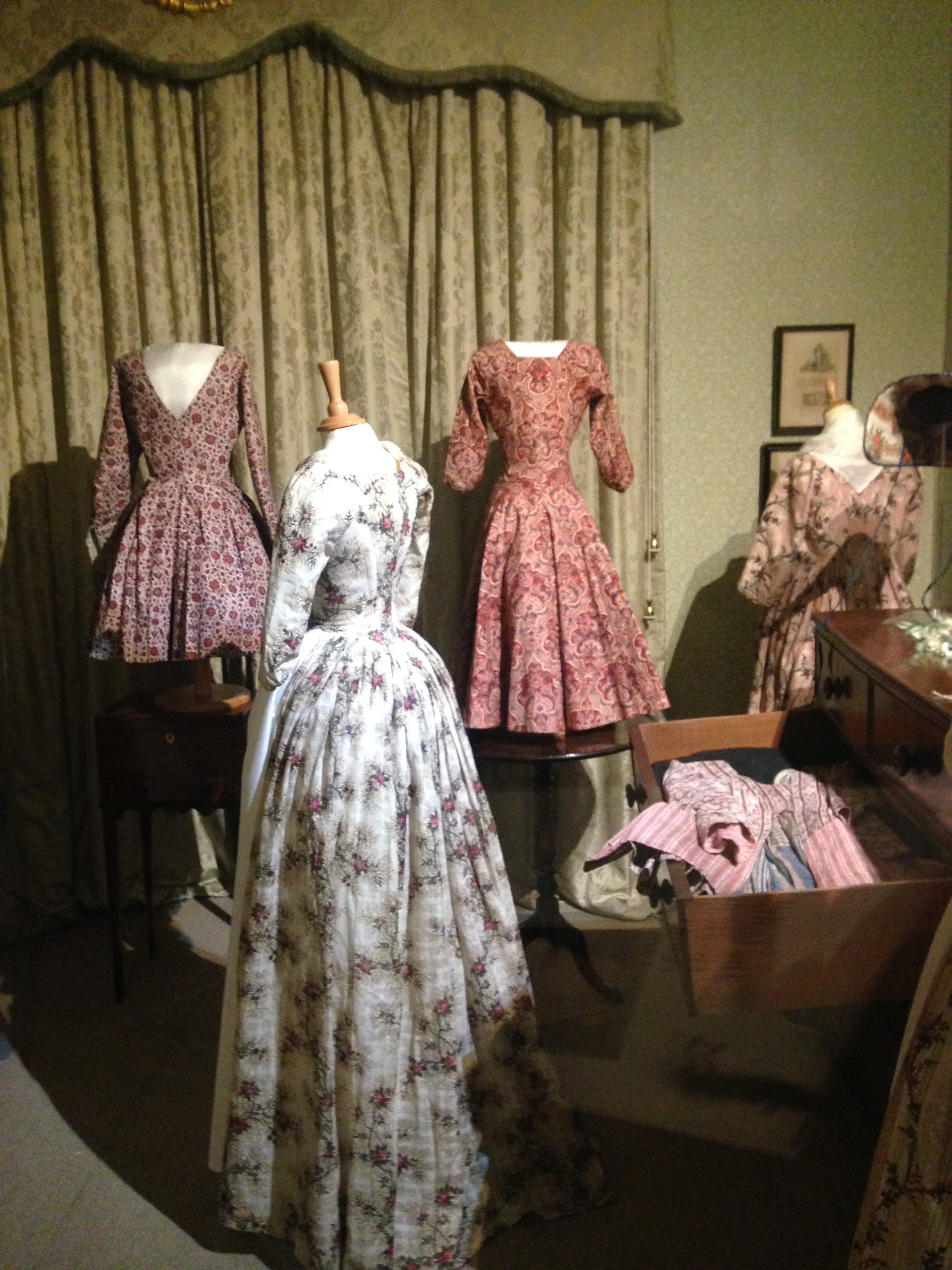
Elinor & Edward costumes

Costumes from a national collection

Costumes from the Charles Paget Wade Collection
berrington hall

The lady's boudoir

The lady’s boudoir

Museums trying to shake their fusty image, with a few hands-on items on display

Museums trying to shake their fusty image, with a few hands-on items on display

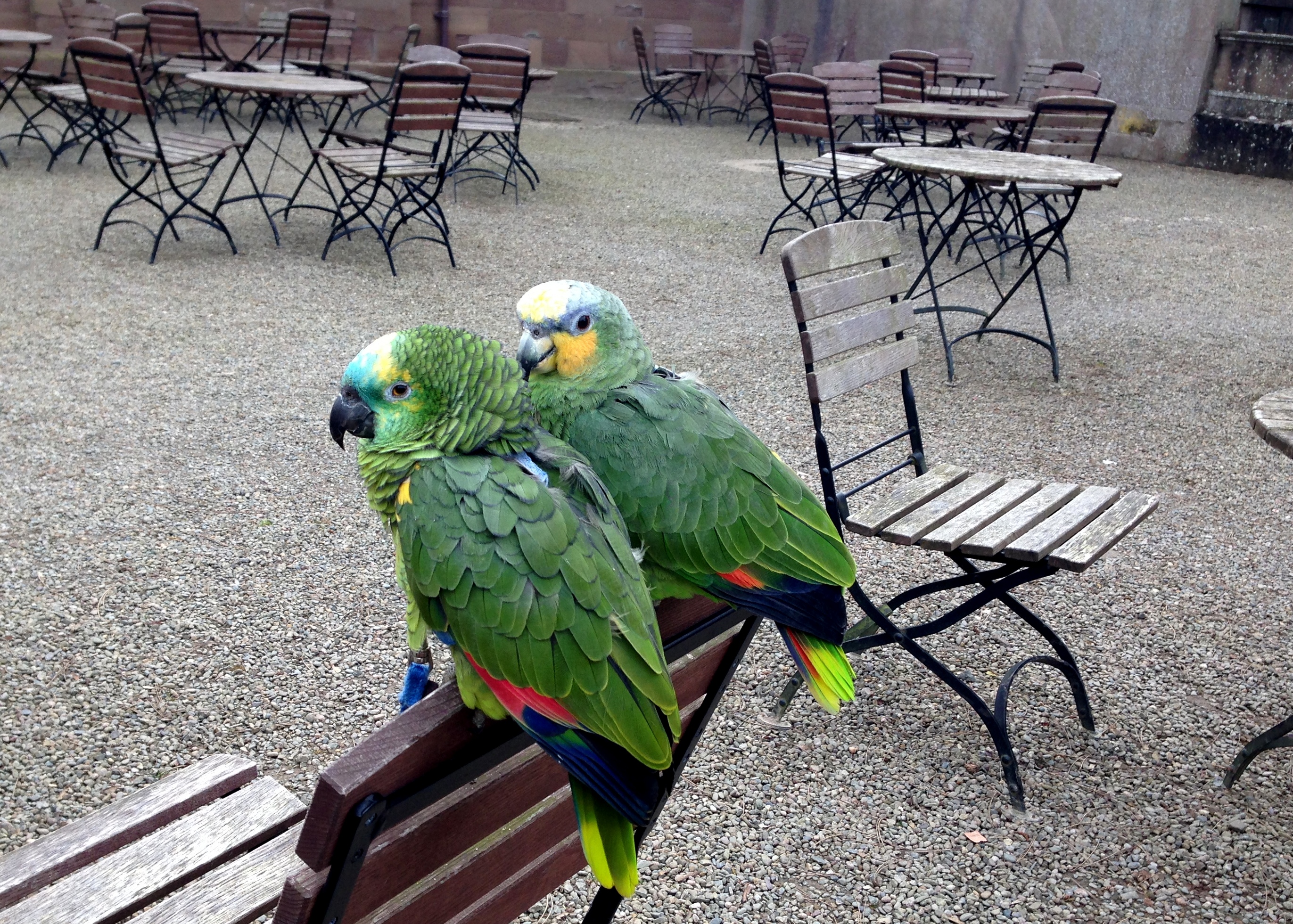
After looking at the terrifying laundry room (so many heavy machines! so much hot work!), we had a nice lunch in the tea room, which used to be the servants’ dining hall. We walked past some parrots, which a couple had brought with them on their visit to the hall, sure okay, why not; we peeked in the dairy; we walked around the gardens and my grandmother pointed out plants that all looked the same to me, because I am a city-bred cretin.

Laundry used to be way harder
Laundry used to be way harder

Oh hey there, birds

Oh hey there, birds

Entrance to the gardens

Entrance to the gardens

The dairy

The dairy

Finally, we walked a bit of the grounds. There is a great view out to the Brecon Beacons from the house, and a long expanse of grass leads down to a man-made pond with woods along the back. To get to the meadow, we had to walk across a bridge that spanned the ha-ha. The what now? The ha-ha, which is the actual name given to a sort of moat construction that keeps a landscape looking unspoilt from a distance, and then as you get closer you see, “haha!” that there is a ditch and a wall separating the grounds from the main area of the house. The purpose of this was to keep the animals, who grazed around the meadow, from wandering too close to the house.

From Capability Brown's landscape

From Capability Brown’s landscape

Quite a lawn

Quite a lawn

The ha-ha up close

The ha-ha up close

If you’re out in the western part of the Midlands, you’d be hard-pressed to find a more pleasant or representative great house than Berrington Hall.

Berrington Hall

Berrington Hall

Beautiful Britain is the title I settled on for posts about the British adventures I’m having while living in London. It covers London and non-London locations alike. 
Architecture and Austen in Bath

I hope we shall be in Bath in the winter; but remember, Papa, if we do go, we must be in a good situation. (Persuasion, p. 29)

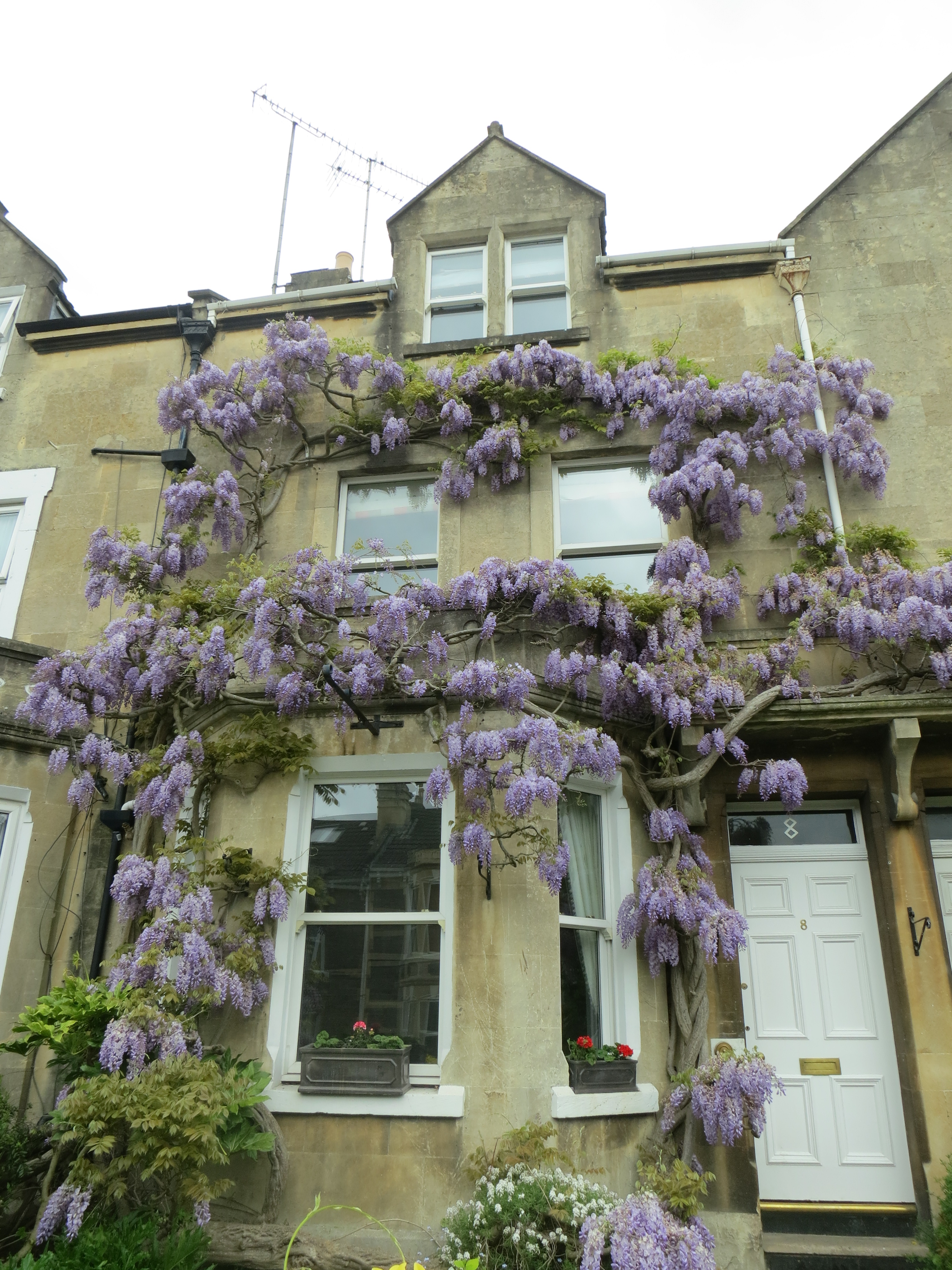
I hadn’t seen my parents in nine months of travel, so I was excited to meet up with them in Bath last May. We were in a very good situation–they’d found a great bed and breakfast for us to stay in, and I settled gratefully into my own bedroom with en suite bathroom after months of shared dorms and bathrooms down the hall. I mean, the woman who owned the house we were staying in made her own soaps. I was using handcrafted soaps in Bath, which actually fits my image of that town perfectly.

Well situated, indeed

Well situated, indeed


In Jane Austen’s time, it was a playground for the rich, a place for fashion, gossip, and soaking in the thermal baths that give the town its name. Today, it mostly trades in tourism, for the baths themselves and for the Georgian architecture that dominates downtown. It’s not the fashionable spot that it once was, but it’s still pretty expensive.

The abbey, as watched by a warrior at the Roman baths

The abbey, as watched by a warrior at the Roman baths

The Roman Baths

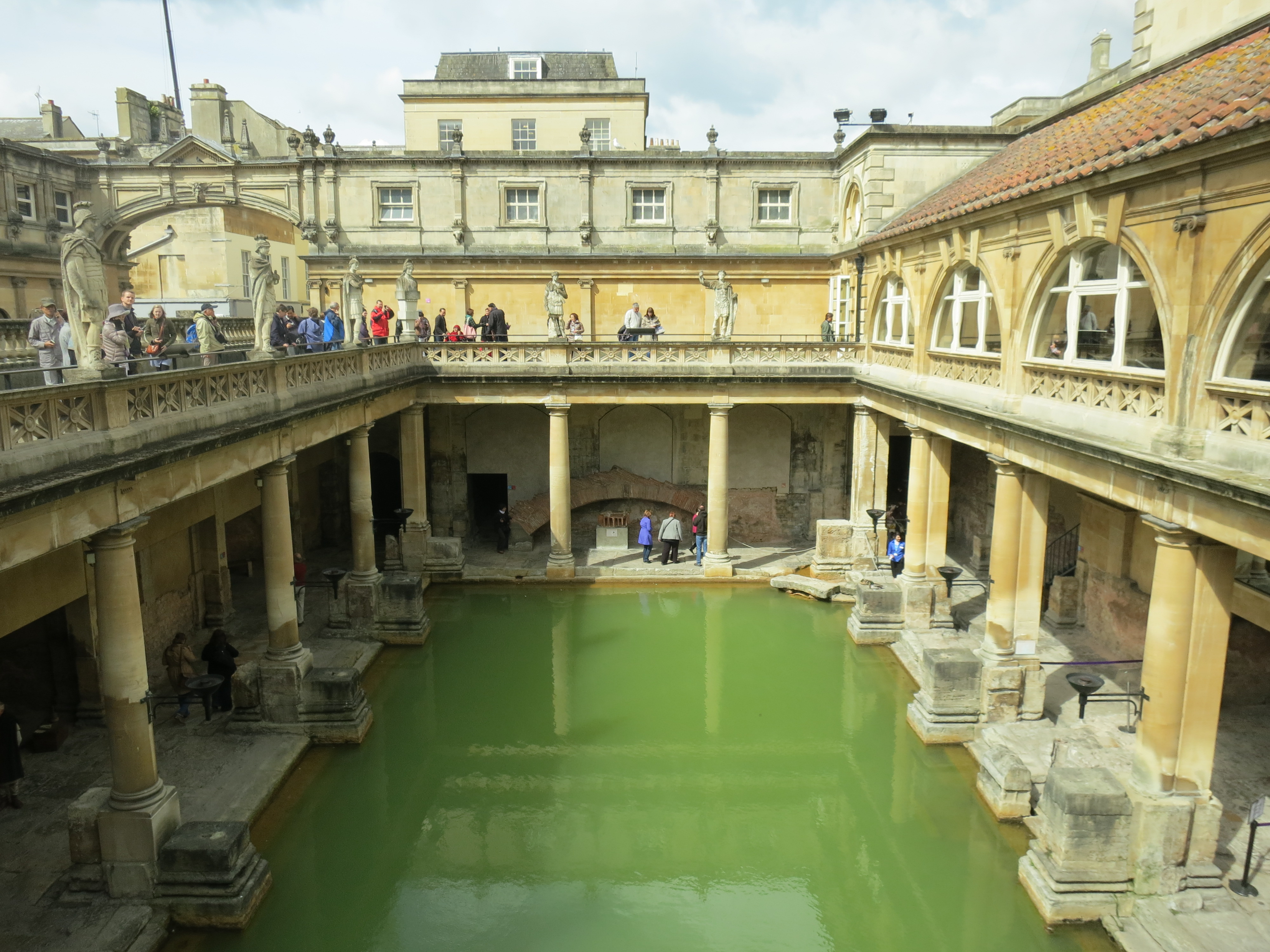
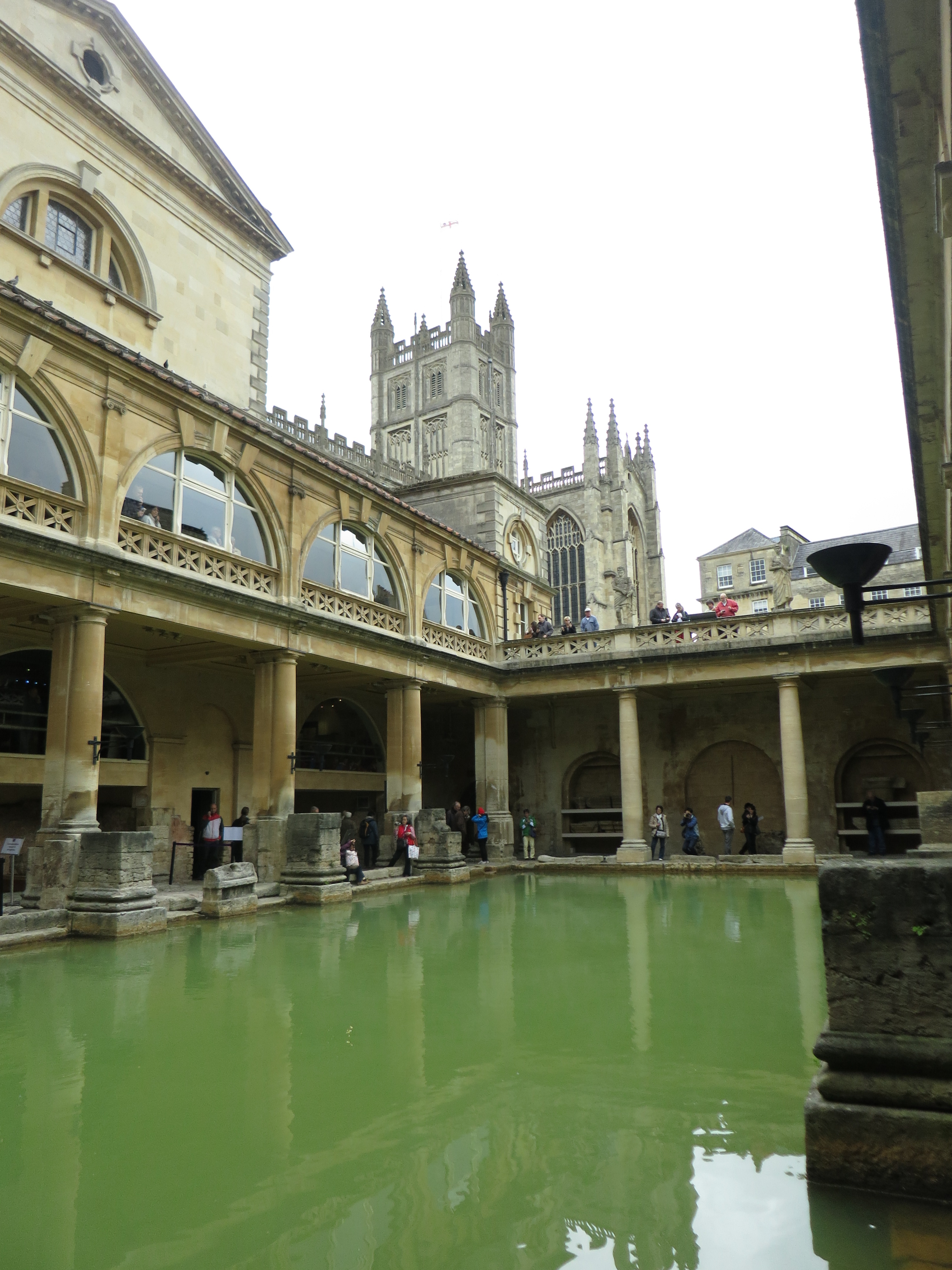
We visited the Roman baths on a blustery day, but the surface of the large green pool barely rippled in the wind. This seemed right to me, because for all their atrocious laws and conquest-hungry power moves, the ancient Romans were fine architects, and they built things to last. Why shouldn’t the very water of the place be as still as the columns and statues surrounding it?

The baths of Bath

The baths of Bath

Of course, as with most things the Romans stumbled upon, the local people had been aware of the baths for hundreds of years. The Celts built a shrine to local goddess Sulis, and when the Romans built up baths here in about 60 CE, they folded her into their conception of the place, and dedicated the baths to Sulis Minerva. The audio guide and educational texts posted around the baths emphasized that taking the waters was a religious experience for the Romans and locals. They were immersing themselves in sacred waters overseen by a wise and stern goddess.

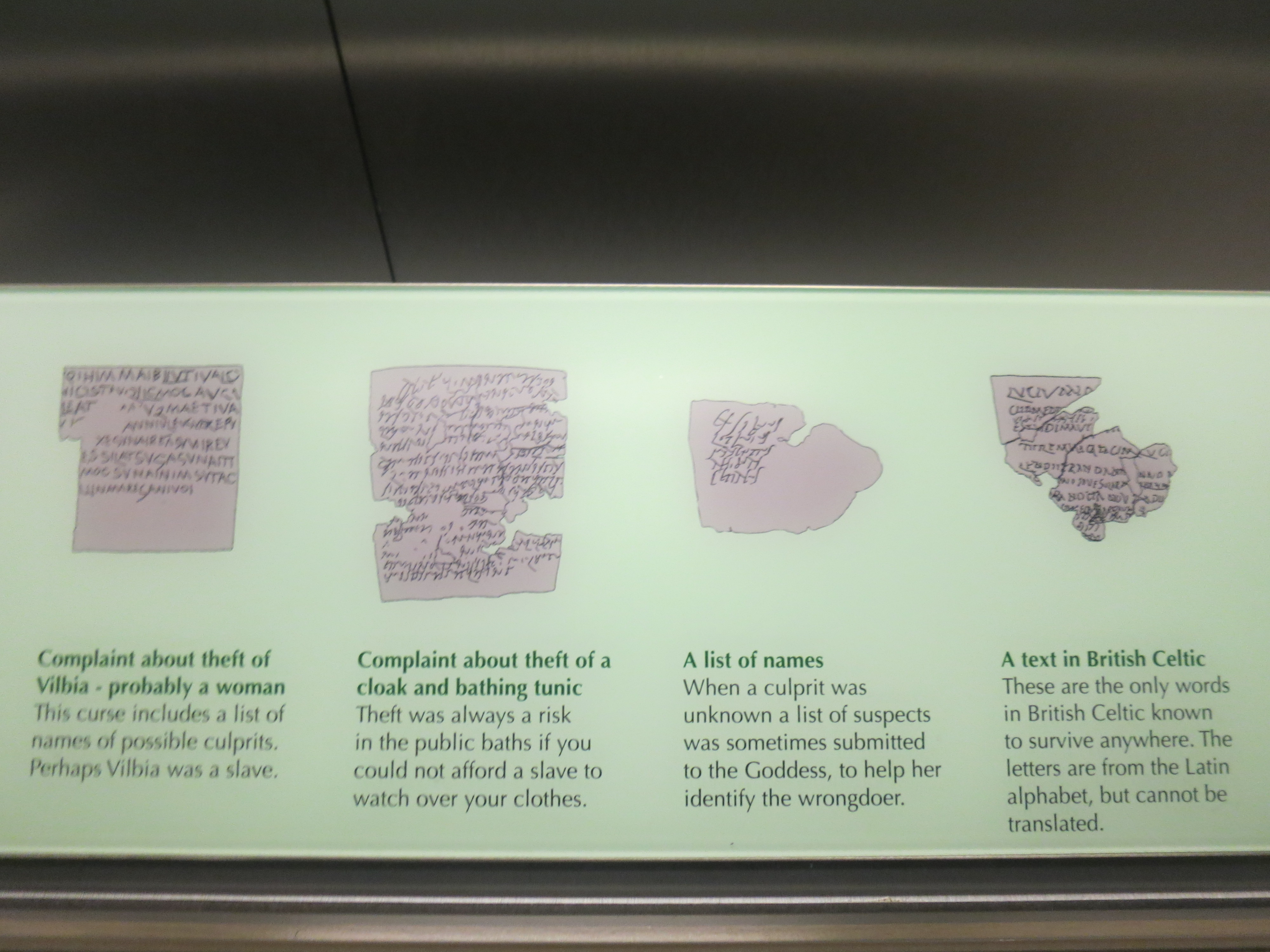
Some of the curses in the baths

Some of the curses in the baths

That doesn’t mean very human concerns didn’t have their place here. The museum displays dozens of curse tablets that were unearthed here–mostly requests for the goddess to inflict severe pain upon whoever stole the supplicant’s clothes while they were in the baths. Some people even helpfully provided a list of names of possible culprits, an extra step which I’m sure the goddess appreciated.

Coins from earliest Britannia

Coins from earliest Britannia

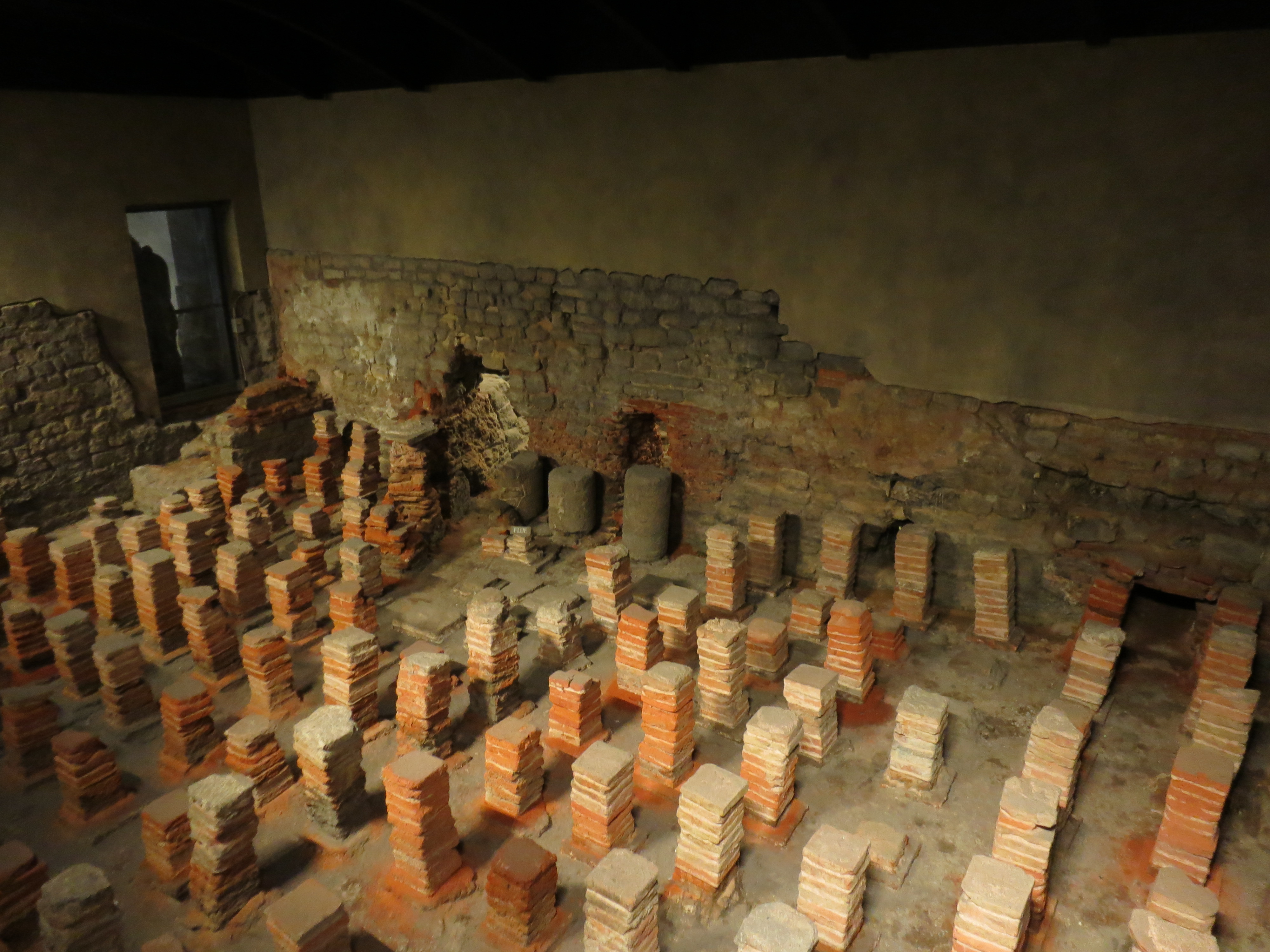
The baths were a marvel of construction, of course; there were steam rooms and smaller pools in addition to the great pool, and an elaborate system of pipes and drains underneath kept it all in working order. No one uses these pools to bathe in anymore, although there are pricey places in town you can visit if you want to take the waters. Apparently people even drink the water sometimes, in an attempt to access those healing powers the sulfuric stuff is known for. I had a sip at the museum and can’t recommend it.

Foundations from one of the steam rooms

Foundations from one of the steam rooms

Jane Austen

She disliked Bath, and did not think it agreed with her; and Bath was to be her home. (ibid, p. 9)

Jane Austen could have been writing about herself with that line. She disliked the bustle of Bath, but she had to live there a couple different times in her life. I’m willing to call it ironic that the center dedicated to study and appreciation of Austen’s works is based in the town she loathed. Ah well, she might appreciate that irony if she knew.

The ceiling of the abbey--I love that design

The ceiling of the abbey–I love that design

The Jane Austen Centre is just up the street from Queen Square, so that’s where Mom and I left Dad when we went in to see the exhibition (my dad is an enlightened modern man, but we still haven’t convinced him to like Austen yet). We were ushered upstairs and sat in a Regency-period drawing room, where we listened to a college student in costume give us a few quick facts about Austen’s life in general, and her time in Bath in particular. Then he fielded questions, which was a little tricky, as the audience ranged from people who have only seen the Pride and Prejudice movie, to amateur experts with very particular questions.

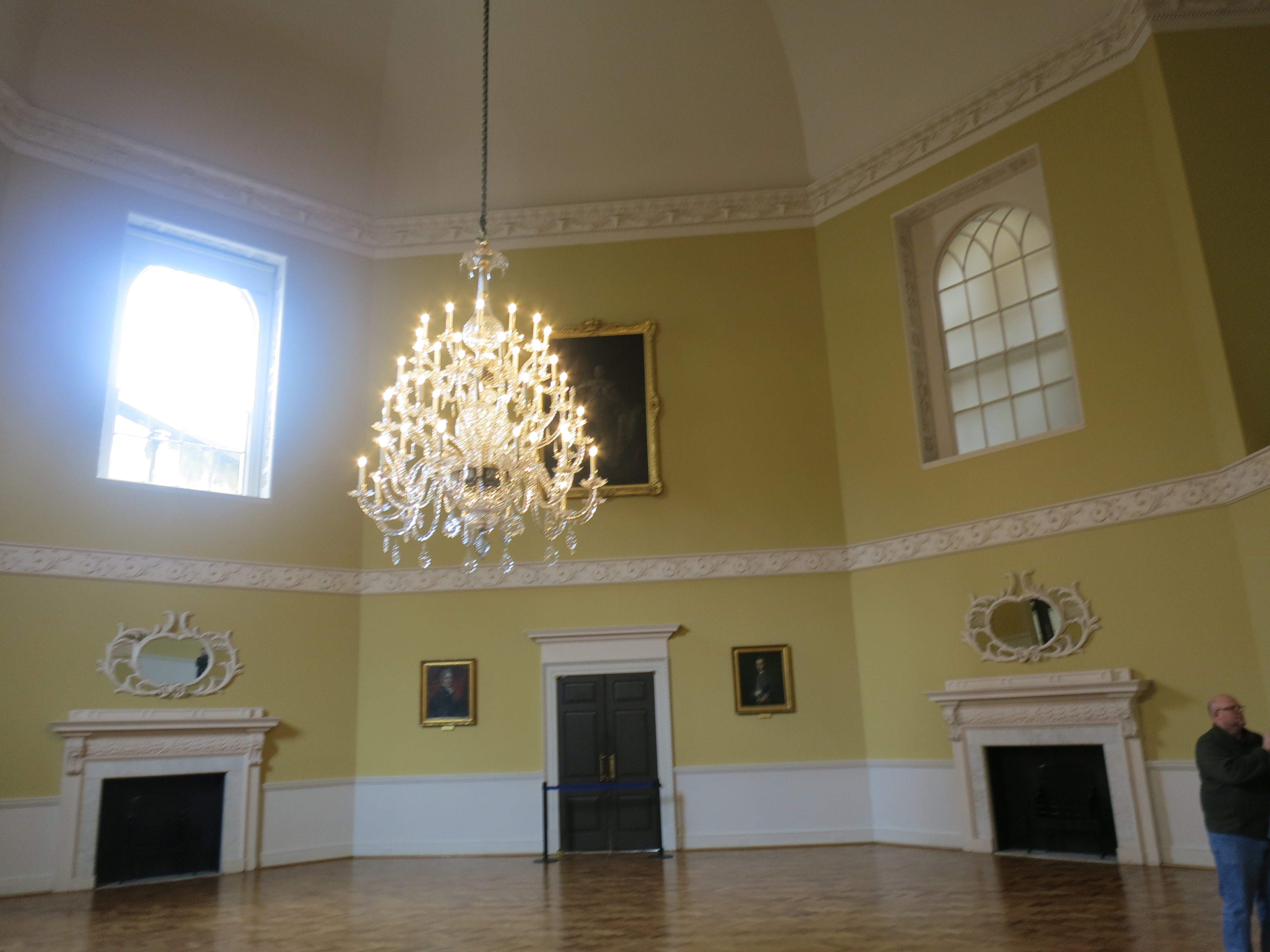
The Assembly Rooms; I did geek out a little about standing in the same place as one of my favorite fictional characters

The Assembly Rooms; I did geek out a little about standing in the same place as one of my favorite fictional characters

The next stop was a too-crowded set of rooms downstairs, which acted as museum display. Our guide said he’d be available for questions, but I didn’t see him again. The focus in these rooms was on Austen’s life in Bath, and on the bits about Bath that appear in her novels. One corner contained a rack of dresses and a box of hats and fans; I have never played dress-up at a museum for adults before, but it was kinda fun.

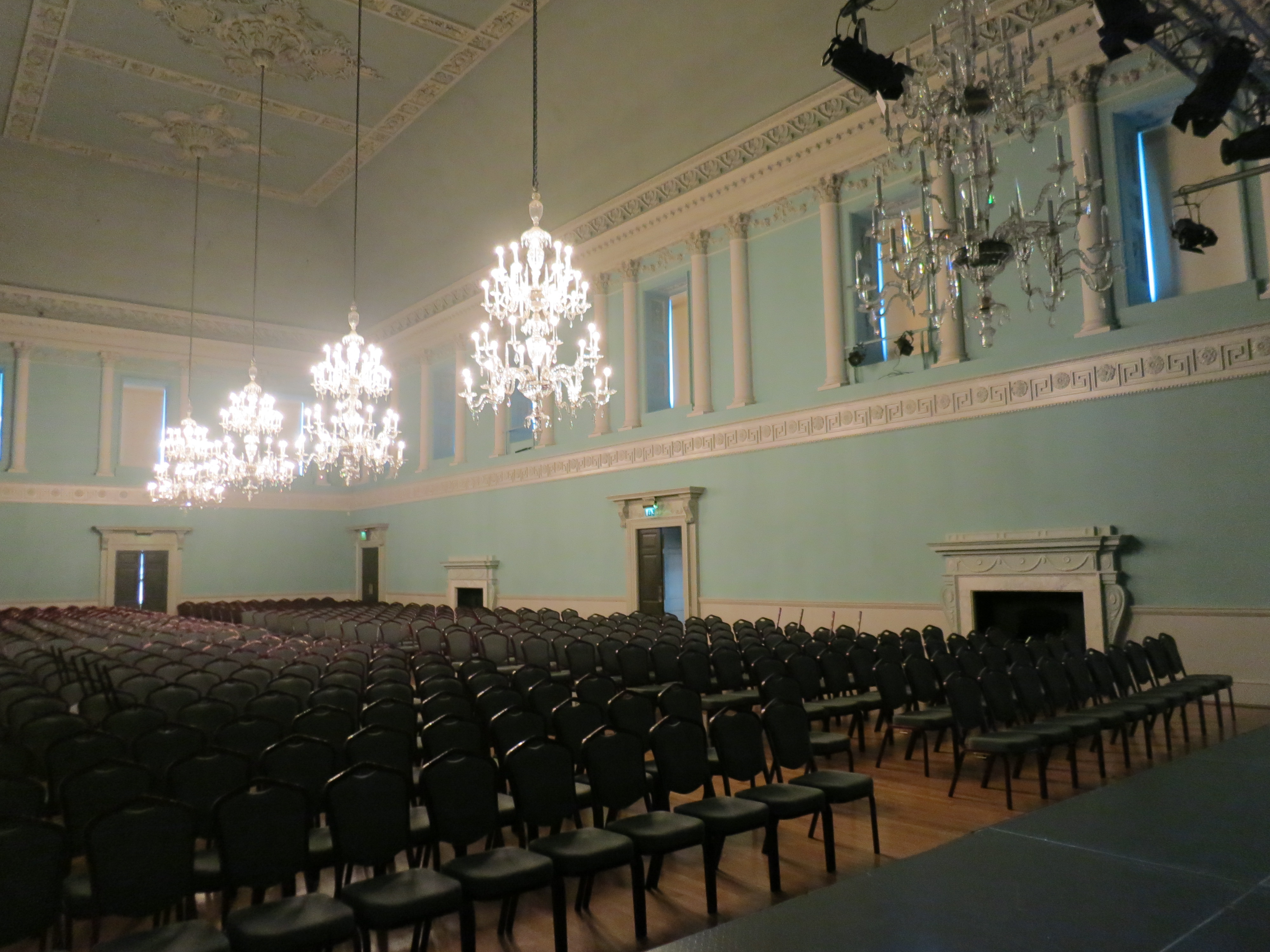
The music room of the Assembly Rooms, ready for a concert that night

The music room of the Assembly Rooms, ready for a concert that night

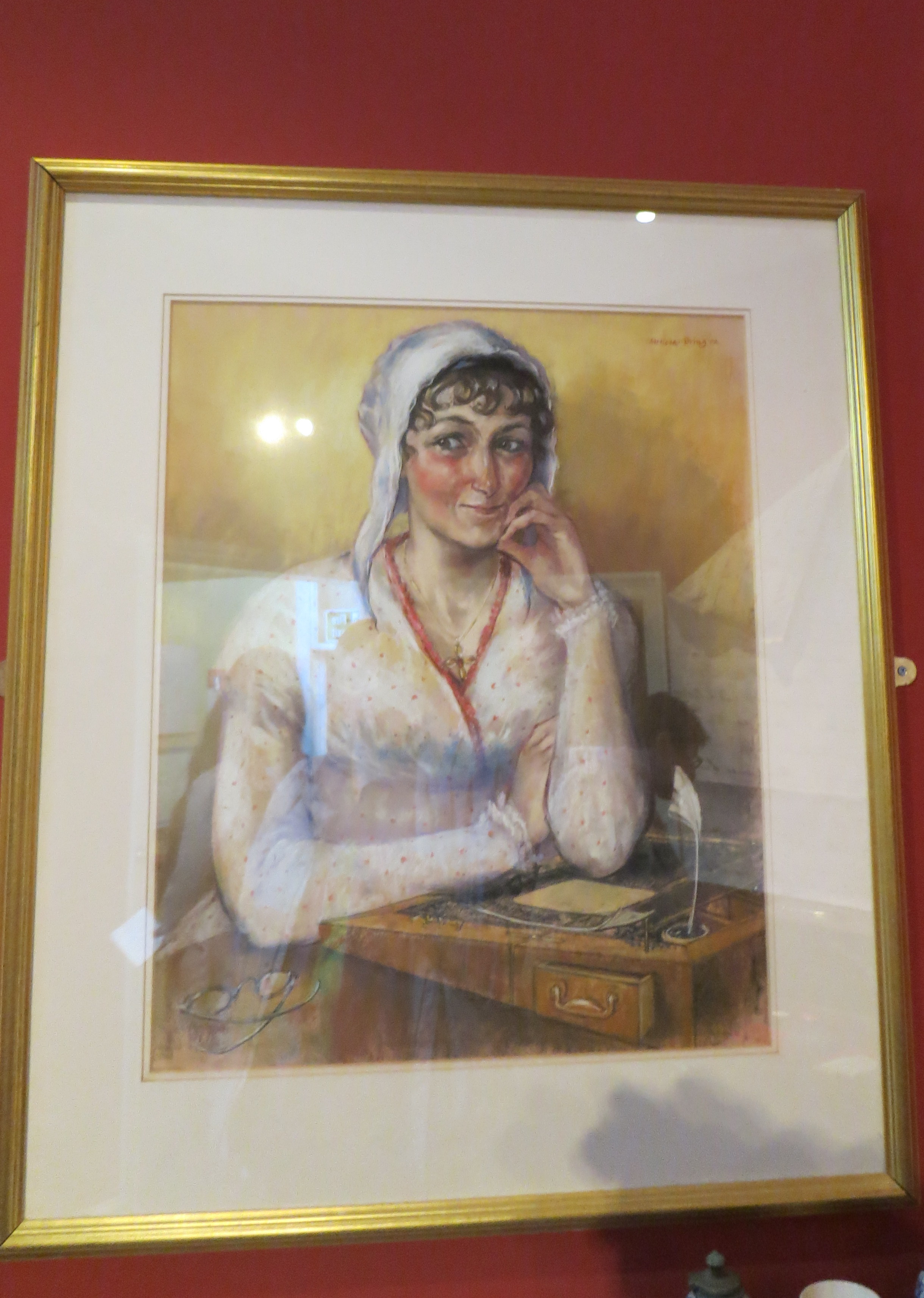
I liked the last couple rooms the best; in one, the only known painting of Austen was hung, and right next to it, a modern painting, taken from descriptions in letters and journals. The official portrait (by Austen’s beloved sister Cassandra) is, frankly, ugly, and the artist who made the new one justified it by pointing to letters from Austen’s relatives who complained that Cassandra’s portrait didn’t capture Austen’s liveliness or prettiness.

Melissa Dring's portrait of Jane Austen

Melissa Dring’s portrait of Jane Austen


The last room holds some photos from the movie version of Sense and Sensibility, and a charming handwritten letter from Emma Thompson. Also, an inkstand and paper so you can try writing like they did back then. It is hard. You have to write in the tiny, cramped script you always see in original documents; writing any larger just dries the ink out of the quill and leaves a mess.

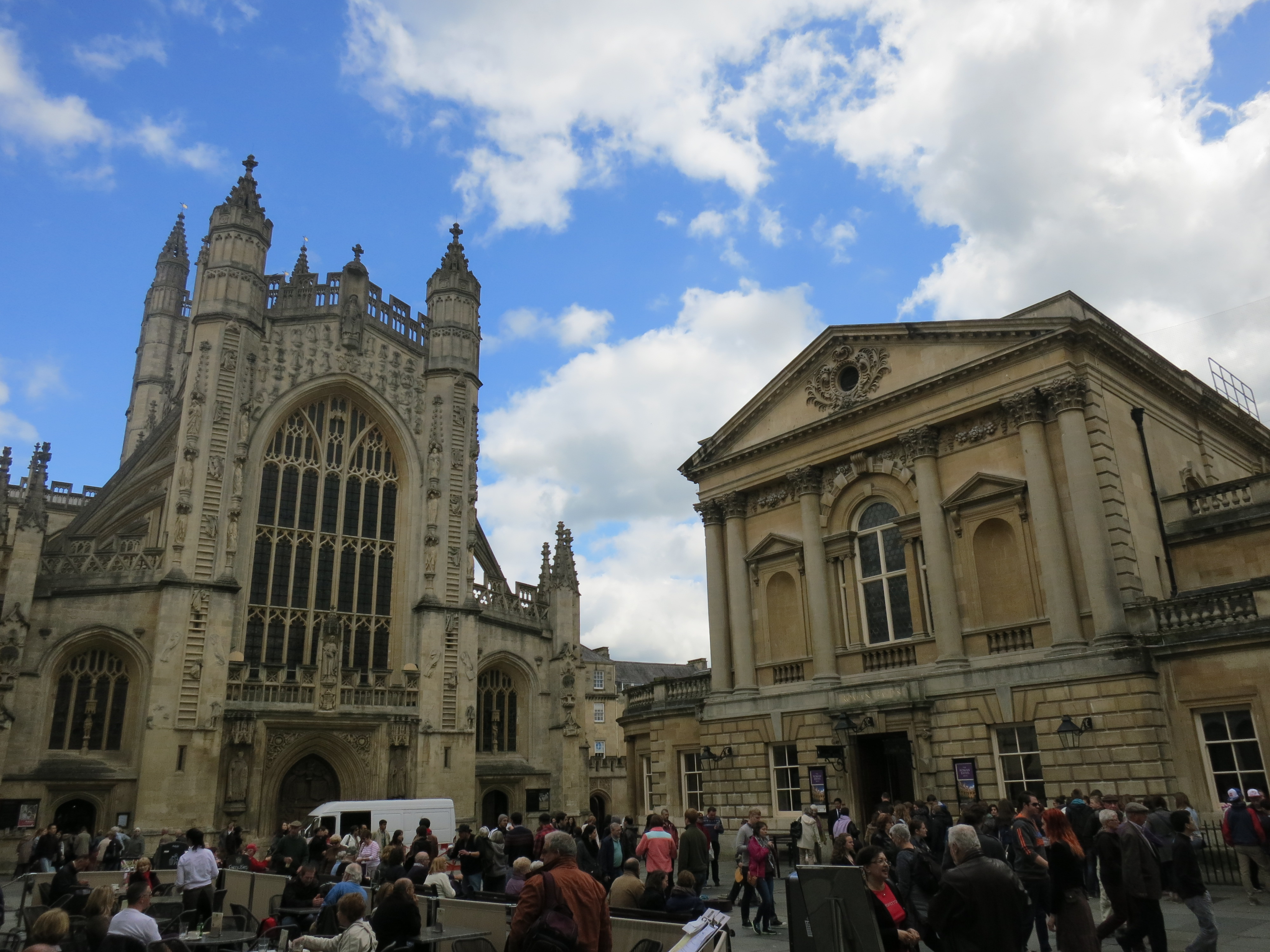
The abbey and entrance to the baths

The abbey and entrance to the baths

Georgian Architecture

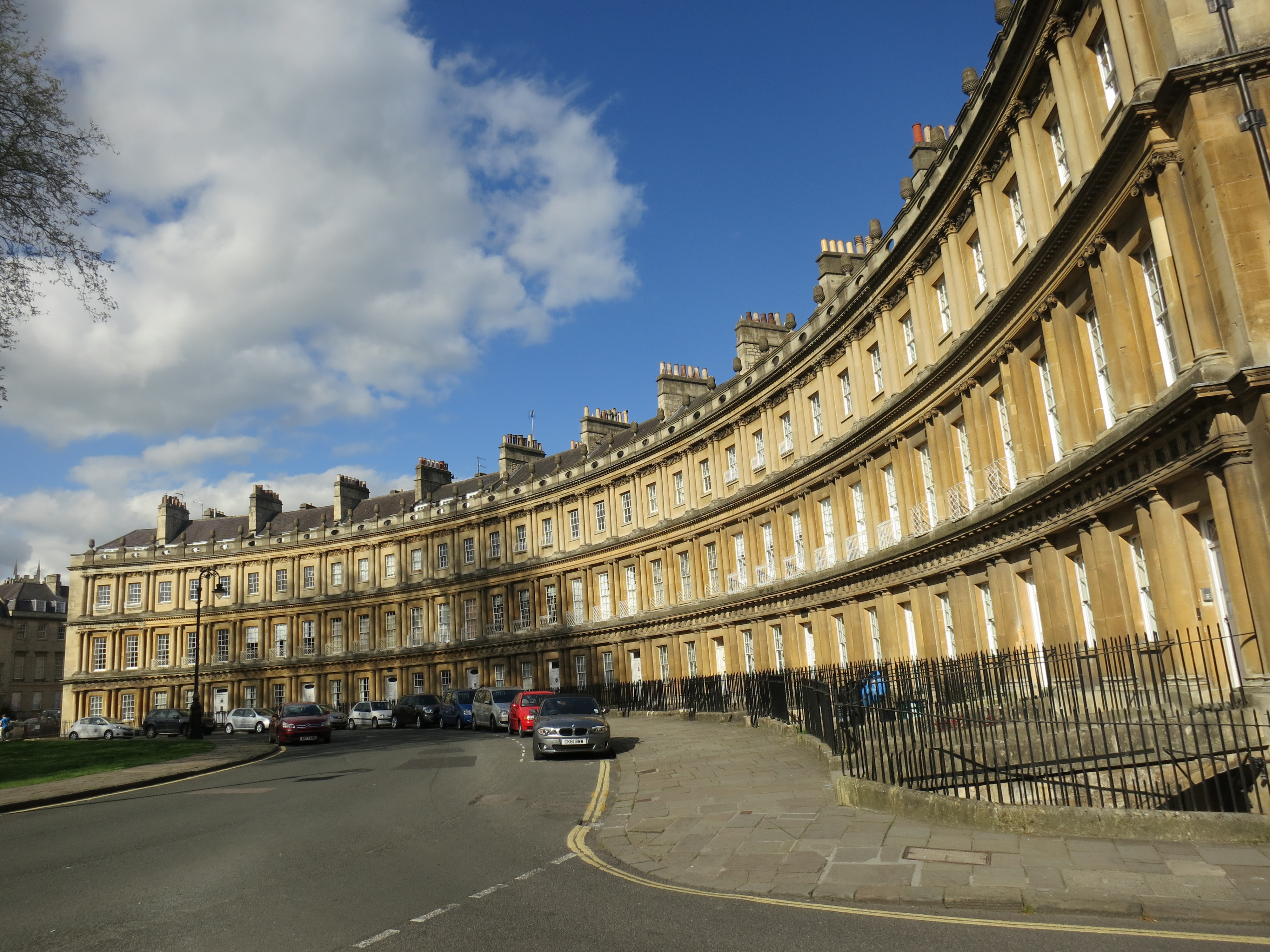
There are a few independently designed places in Bath–Robert Adam’s Pulteney Bridge and the 16th-century abbey in the center of town come to mind–but for the rest of the city, it’s all John Wood. John Wood the Elder and John Wood the Younger, a father-son team of architects who designed the Royal Crescent, The Circus, and other grand residential places in a neoclassical style. (Apparently, the correct term is Palladian, after a particular architect who revived Greek and Roman styles in the 18th century. The more you know.)

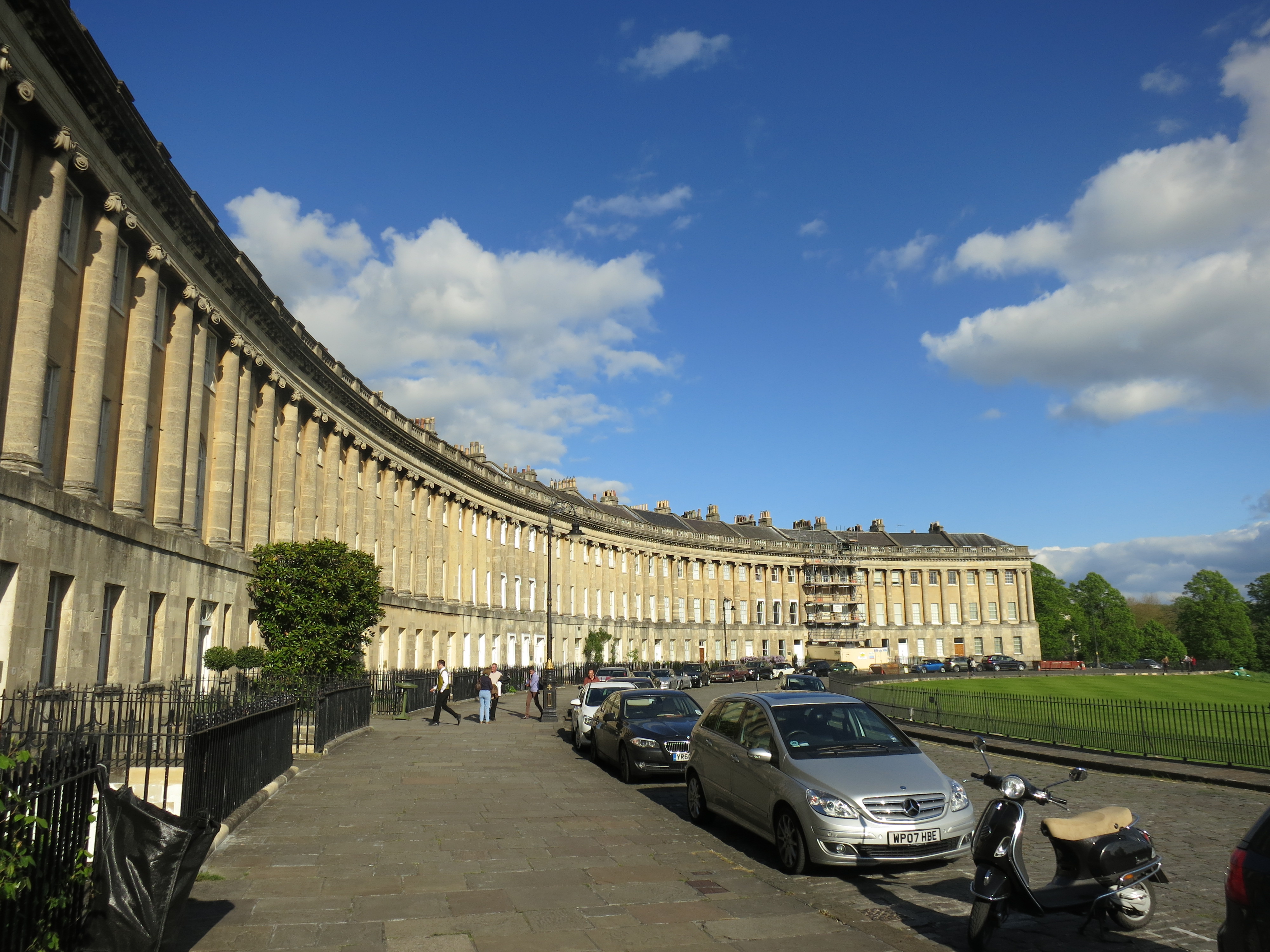
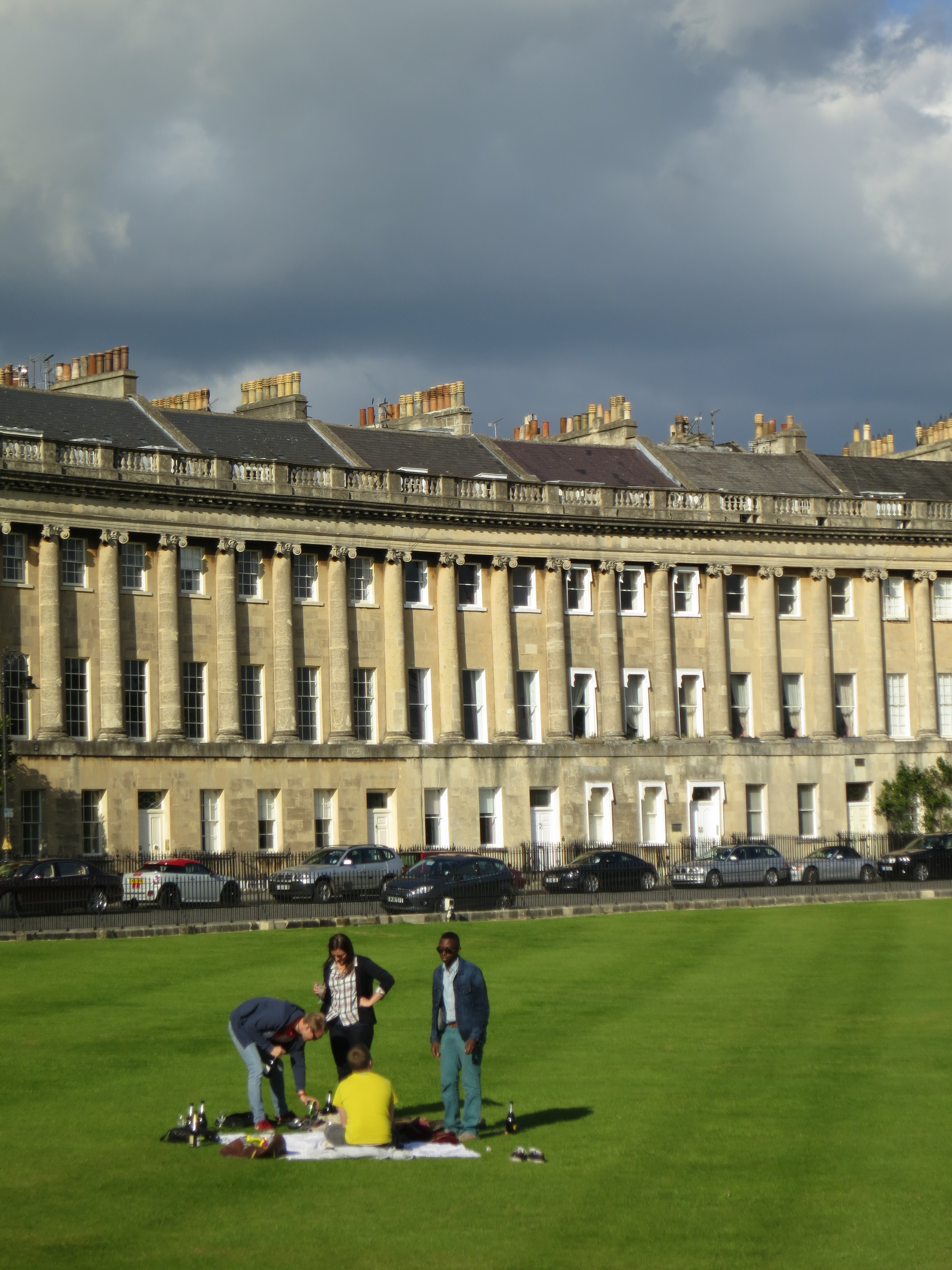
Royal Crescent, which looks out over a large park

Royal Crescent, which looks out over a large park

In what had to be a parody of rich kids, these teenagers stumbled out of one of the Royal Crescent apartments, jumped the fence to their private lawn, and started glugging champagne in the afternoon sun.

In what had to be a parody of rich kids, these teenagers stumbled out of one of the Royal Crescent apartments, jumped the fence to their private lawn, and started glugging champagne in the afternoon sun.

It’s this consistency of design that got Bath listed on the UNESCO World Heritage list, and while I think I would go a bit crazy if I had to live in a town this uniform in style, it is striking to see, and I can appreciate the harmony of the local yellow stone forming row after row of columns. After all this uniformity, it was all the more surprising to see two front doors on the Royal Crescent painted a different color than all the other front doors. Surely there’s a fine for such an affront to the 250-year-old look!

The Circus, created so that wherever your front door was, you always saw houses just like yours when you stepped out

The Circus, created so that wherever your front door was, you always saw houses just like yours when you stepped out

The ? Bridge, apparently based on rejected plans for the Rialto in Venice

The Pulteney Bridge, apparently based on rejected plans for the Rialto in Venice


Upon my word, I shall be pretty well off, when you are all gone to be happy at Bath! (ibid, p. 29)

Yes, Mary, we were all very happy at Bath, indeed.

IMG_7222

The Good, The Bad, and The Silly

The Good

Did you all see how one of the Wisconsin Republican state senators up for recall has been outed by his wife as living with his mistress? Family values! And his wife is signing the recall petition.

Here’s a great, short video of young people standing up for Planned Parenthood. You can hide your head in the sand, America, but young folks have sex, so you might as well teach them to do it safely.

The Bad

Our thoughts are all with the earthquake and tsunami victims in Japan, and I do hope the nuclear power plants are out of crisis soon. If you’re looking for an organization to donate money to, Doctors Without Borders is doing important work.

There was a lot of coverage this week in the feminist blogs about the New York Times‘ reporting on the November 2010 gang rape of an 11-year-old girl in a small Texas town. The NYT eventually issued a sort-of apology. But I’m most interested in Akiba Solomon’s two pieces on the issue, which delve into the complexities of race and community involved.

Charlie Sheen’s public breakdown may be funny, but his frequent history of domestic violence is anything but. Anna Holmes suggests that maybe Sheen’s exes aren’t “nice” enough for the general public to care about their abuse.

Michigan! Cut it out. Allowing a governor to take over entire towns at his whim is not good policy.

Wondering where we’re supposed to get the money to keep NPR, Planned Parenthood, and the like? Here’s a great graphic representation of just how many tax breaks large corporations get that could be applied to essential public programs instead, and fix the budget in one fell swoop.

The battle in Wisconsin is still going strong, and Abe Sauer at The Awl is doing a terrific job reporting on not just the immediate events, but the full backstory of the main players and what’s at stake. I recommend these highly, but be warned, you will be upset after reading them, because damn people do some shady things.

The Silly

Jane Austen Drinking Game! The video is funny, too. Do I hear “Saturday night fun times”?

The Good, The Bad, and The Silly

The Good:

That’s right, Alaska, you use conservatives’ logic (and word choice) against them in the abortion debate! (Too bad it didn’t work and the damn parental notification law got passed anyway, but still. This is a thought for future fights.)

“Step Up. Step Back.” — the way for men to be feminist allies. (And also whites to be anti-racist allies, straights to be LGBT allies, etc.) (Via.)

The Bad:

Farmworkers are denied basic human rights, such as one day off a week, in New York and California. (Via.)

Bloomberg’s staff deliberately misconstrues the Seneca Indian Nation’s protest of his offensive shoot-em-up comments; whether the cigarettes should be taxed or not is not the issue when a high-profile government official states that another US government official should “get a shotgun” and say “the law of the land is this, and we’re going to enforce the law” to a tribe of people who have been at the wrong end of a shotgun courtesy of the US government too many times to count over hundreds of years. (Via.)

The Silly:

Possibly you’ve already seen this, but somebody decided to make a trailer for a fake movie — and I want to see the full-length. Jane Austen’s Fight Club! (Thanks to Sessily for the link.)

What have you seen/heard/read this week?

UPDATE: I just read this excellent piece by Timothy Egan, which breaks apart who is spreading what lies about Obama and why it matters. Wake the hell up, America; you’re better than this.