The Two Histories of the Hanoi Hilton

The Hoa Lo Prison in Hanoi combined the single-minded propaganda of the War Remnants Museum and the strange echoes of death sites felt at the Cu Chi Tunnels, resulting in a bizarre experience. A friend and I went together, and we were two of only about thirty or forty visitors in the mid-afternoon heat, so often we were the only people walking through rooms that were once packed full of prisoners, our voices swallowed up by the thick concrete walls.

Before it was the Hanoi Hilton, it was the Maison Centrale of Hoa Lo

Before it was the Hanoi Hilton, it was the Maison Centrale of Hoa Lo Prison

American prisoners of war nicknamed this place the “Hanoi Hilton” in a bitter jab at the conditions they endured. The official Vietnamese line is that the POWs were treated very well, and learned to empathize with the people they had previously only known as “the enemy.” However, multiple POWs have reported inhumane conditions, including substandard housing, insufficient food, and physical torture.
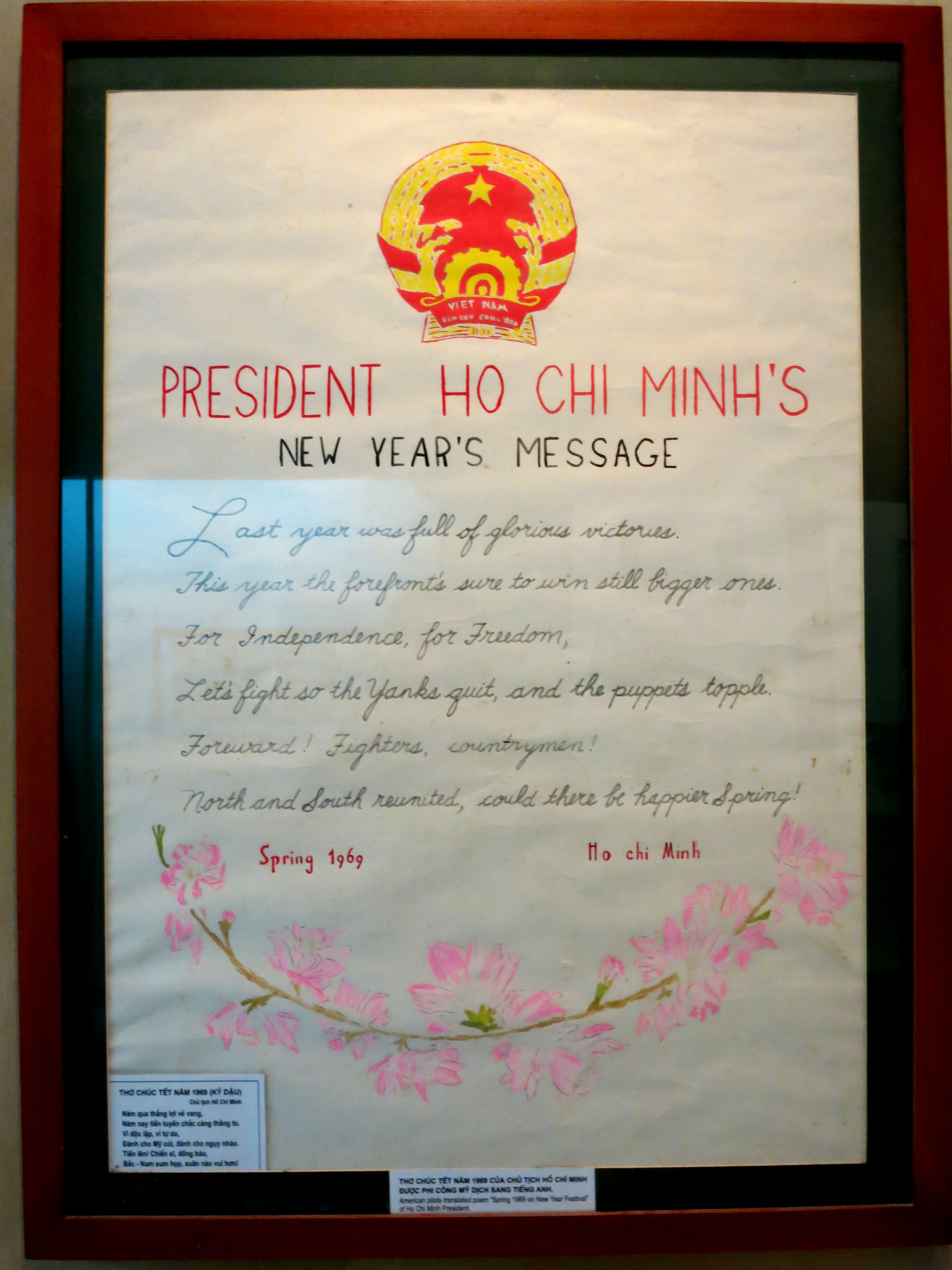
A 1969 New Year's message from Ho Chi Minh, wishing to eject "The Yanks" and reunite North and South

A 1969 New Year’s message from Ho Chi Minh, wishing to eject “The Yanks” and reunite North and South

But the first part of the museum doesn’t even mention Americans. The prison was built during French colonial times to house political prisoners, and the gatehouse that remains as the museum still has “Maison Centrale” arched over the doorway–the central house of the prison complex. Inside, there’s a mix of murals, glass cases filled with objects and scale models of the prison, and life-size sculptures of prisoners chained together and plotting revolution.

Before the 1880s, this part of the city sold stoves. This is part of the reason the prison is called "Hoa Lo"; it means "stove" and also "hell hole."

Before the 1880s, this part of the city sold stoves. This is part of the reason the prison is called “Hoa Lo”; it means “stove” and, supposedly, also “hell hole.”

Shackled statues

Shackled statues

The Vietnamese who were imprisoned by the French endured terrible conditions; the exhibits emphasized how resilient the prisoners were, and how they did everything they could to resist their imperial jailers, including gathering under an old almond tree in the courtyard to discuss resistance measures. The guillotine used to execute prisoners was on display, as were the solitary confinement cells, the piece of sewer pipe that 100 prisoners escaped through, and the room that held many more female prisoners than could comfortably fit.

Part of the sewer used as a means of escape by Vietnamese prisoners

Part of the sewer used as a means of escape by Vietnamese prisoners

Several prominent Communist leaders were imprisoned here, when it was under French control

Several prominent Communist leaders were imprisoned here, when it was under French control

The guillotine was used as one method of execution

The guillotine was used as one method of execution

There were just a few small rooms devoted to the prison’s use in the ’60s and ’70s. These held artifacts like John McCain’s flight suit, a bed used by the prisoners, and a guitar and badminton net from all the leisure activities the POWs were supposedly allowed.

John McCain's flight suit

John McCain’s flight suit

Supposed evidence of benevolence

Supposed evidence of benevolence

The two most striking things I saw in these small rooms were a video from the time of the war, and a document listing the regulations of the camp. That list started with:

American servicemen participating in the war of aggression by U.S. administration in Viet-Nam and caught in the act while perpetrating barbarous crimes against the Vietnamese land and people, should have been duly punished according to their criminal acts; but the Government and people of Viet-Nam, endowed with noble and humanitarian traditions, have given those captured American servicemen the opportunity to benefit a lenient and generous policy by affording them a normal life in the detention camps as practical conditions in Viet-Nam permit it and conforming to the situation in which the war is still on. [sic on everything]

The video was a marvel of propaganda. It alternated scenes of American POWs playing basketball and grinning at dinner with scenes of Vietnamese cowering from falling bombs and picking through the wreckage afterward. It was a genius video; who could watch it and not sympathize with the Vietnamese, who were so generous to the people who were daily trying to kill them? Of course the smiling the POWs did for the cameras was all done under duress, and it was sick to hold up these tortured men as examples of how beneficent their captors were. But just because the POW sequences were lies doesn’t mean the bomb and wreckage scenes were. It was a bloody, hateful war–as they all are.

Lots of propaganda photos, accompanied by text detailing the typical life of a POW here

Lots of propaganda photos, accompanied by text detailing the “typical” life of a POW here

My interest in the prison derived from my knowledge of the Vietnamese-American War, but once again, seeing the place in person showed me a side I wasn’t aware of–how significant the prison was to the Vietnamese as a place where they had been tortured and unjustly confined by French colonial forces. There wasn’t even a straight line drawn between the displays showing how badly the Vietnamese were treated, to displays showing how well the Americans were treated. That was a line you could draw, yes, but the way the museum was set up, it was more like it was a museum about the prison under the French, and the heroic Vietnamese prisoners who lived and died inside; and there were a few rooms about how the prison was later used.

It was fascinating, and sobering, and nothing like I’d expected.

A Puppet Show for Grown-Ups in Hanoi

I went to shows in different countries on this trip, seeing types of theater particular to the region, like kabuki in Japan and hula dancing in Hawaii. In Hanoi, that meant seeing water puppet theater, which started in the rice paddies of northern Vietnam in the 11th century, if not earlier. Farmers put on shows after the flooded paddies had been harvested. The shows were a way to celebrate the end of harvest, and also a way to honor the water spirits of the paddies. As with so many forms of entertainment, it eventually became something used to entertain wealthier people, and the show moved inside. Now there are several shows a day in a few different theaters in the capital city.

Dance!

Dance!

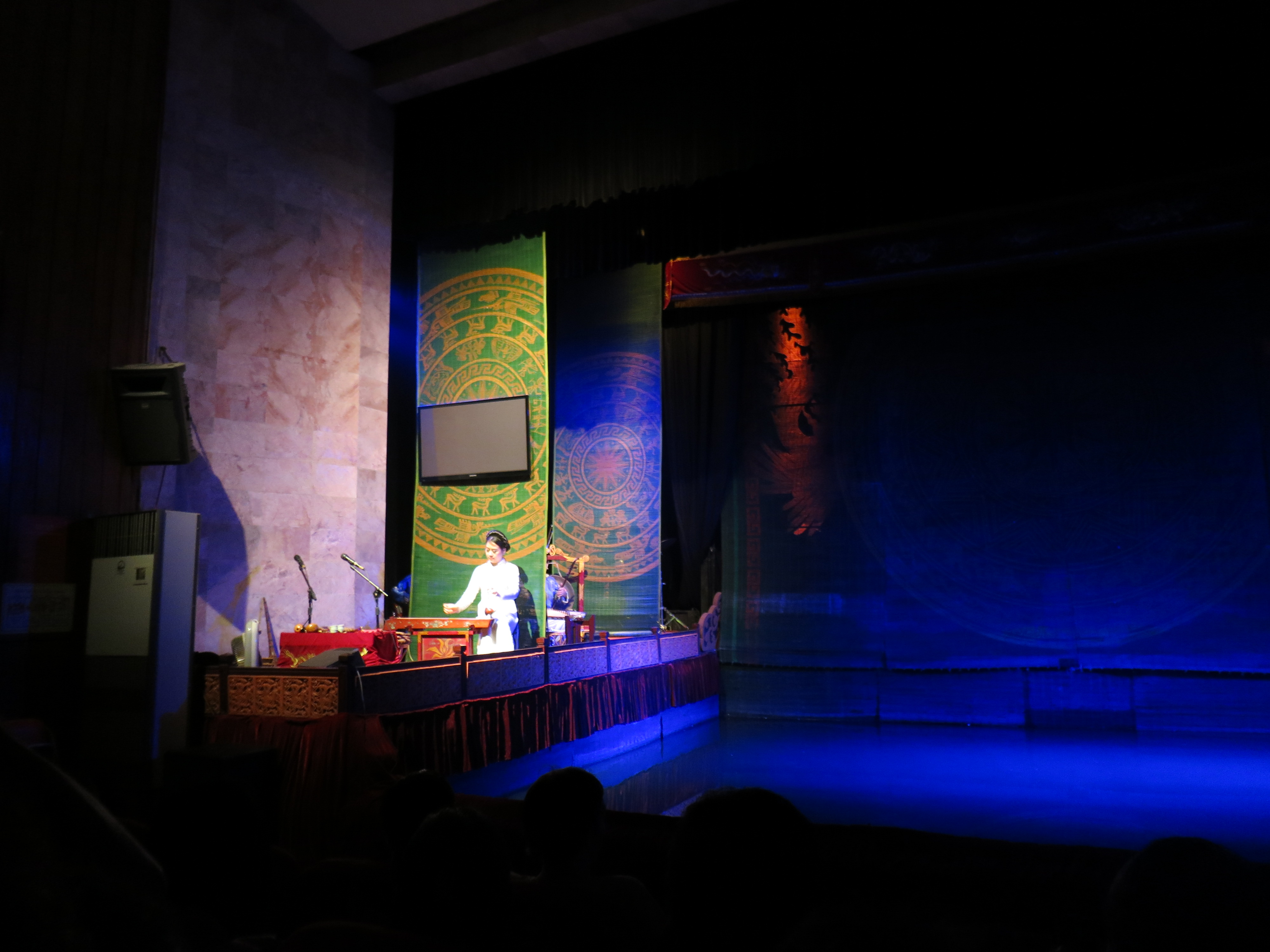
A live band played hidden behind screens stage right, and three women in traditional dress sat in front of the screens and narrated the show. They took turns talking, while TV screens showed English translations of what they said, and they sang during the performance. The stage was a large rectangle of water, and the puppeteers hid behind the large scrim and manipulated the puppets using long bamboo poles.

Narrator before the screen that hid the orchestra

Narrator in front of the screen that hid the orchestra

I caught them at a bad moment, but these were the singers and narrators

I caught them at a bad moment, but these were the singers and narrators

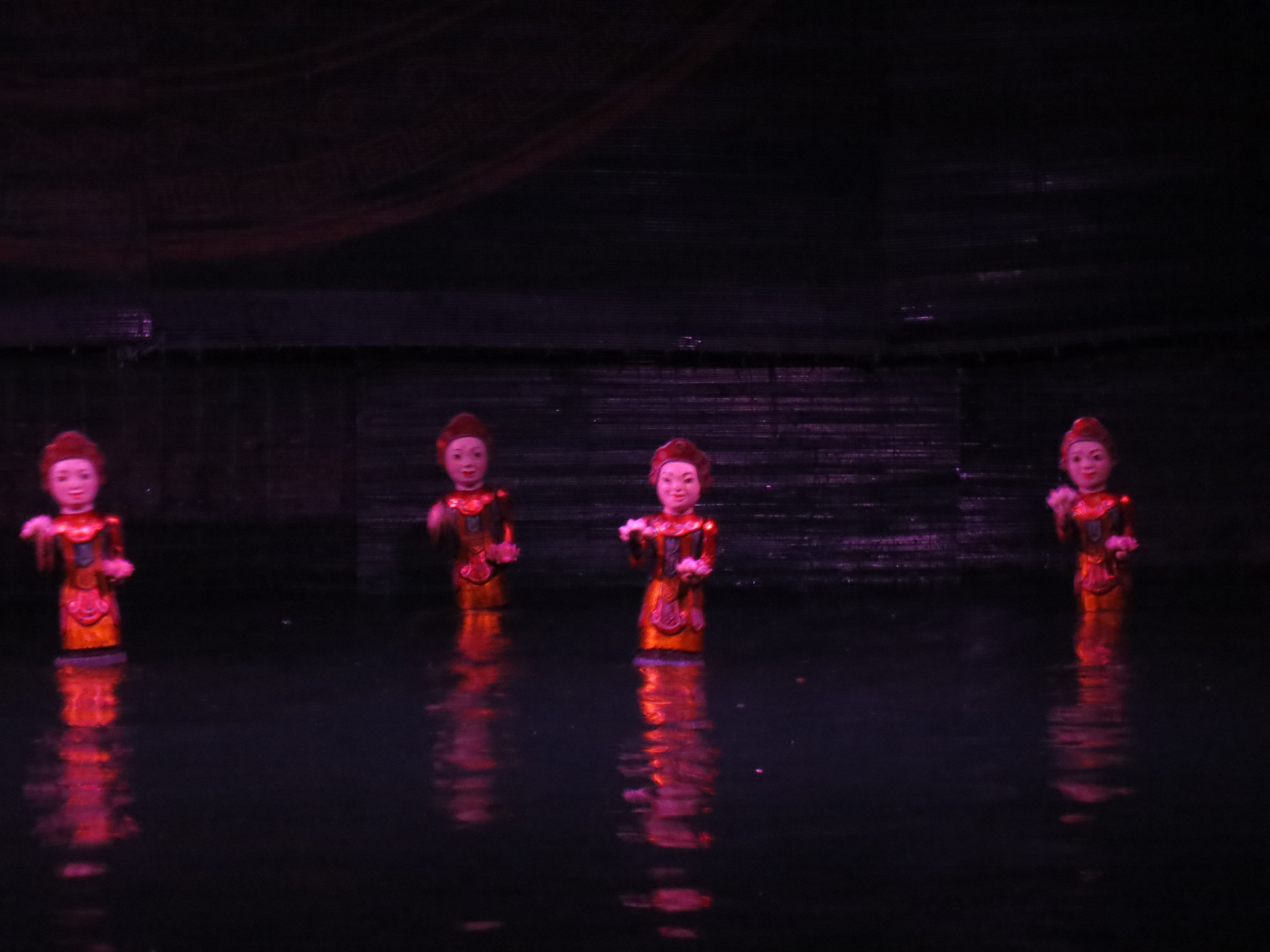
Demure lady puppets

Demure lady puppets

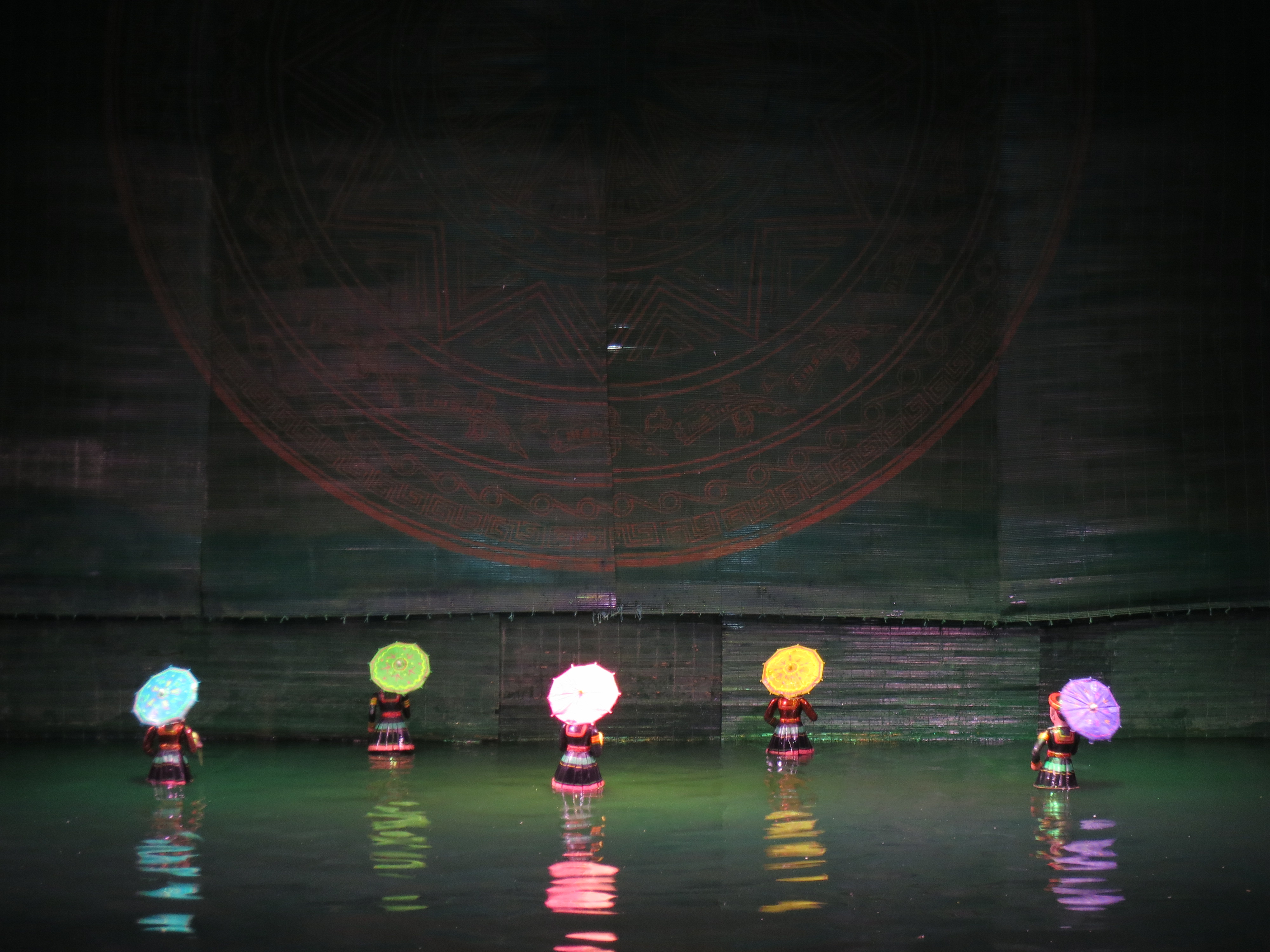
The puppets were small metal and wood creations, and they acted out love stories, country dances, and religious ceremonies. The narrators described each dance before it took place, and the TVs gave credit to the choreographers; this is an important art form here, and there are various awards to be won for choreography, story, and execution.

There were several battles and ceremonial displays

There were several battles and ceremonial displays

hanoi water puppets

To give you an idea of the size of the stage

To give you an idea of the size of the stage

It was fun to see, but I confess I didn’t get all the intricacies of the form. The puppets have jerky movements, as puppets do, which distracts me. Maybe their constant exposure to water made them rustier or slower than they would have otherwise been. I enjoyed watching them dance and spar, but puppets in general, not just ones in water, have never really captured my attention. Still, I’m glad I went.

The craftspeople behind the magic

The craftspeople behind the magic

They wear waist-high waders to protect them from the water

They wear waist-high waders to protect them from the water

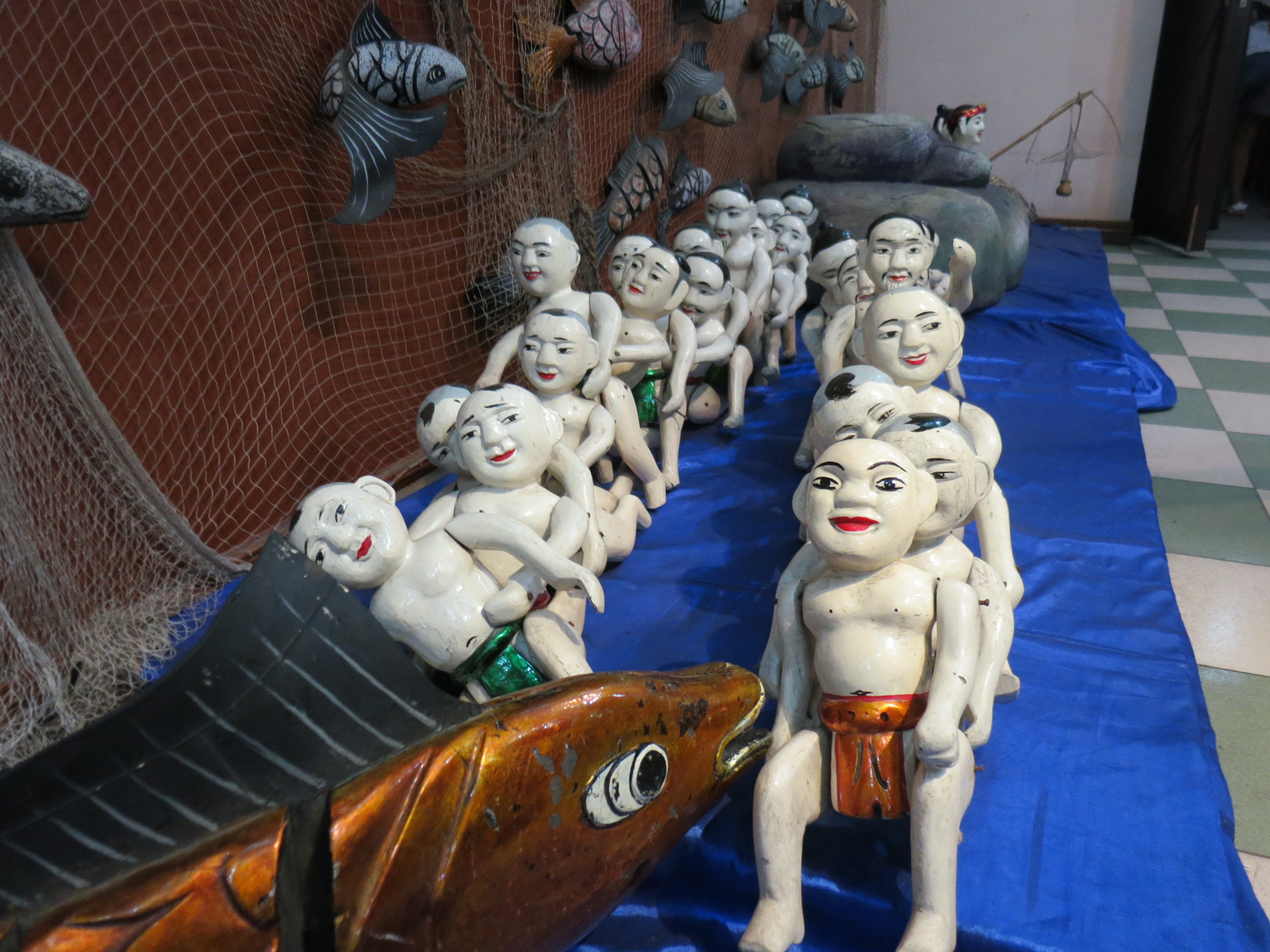
Puppets on display

Puppets on display

Temples to Ancestors and Learning in Hanoi

Temple of Literature

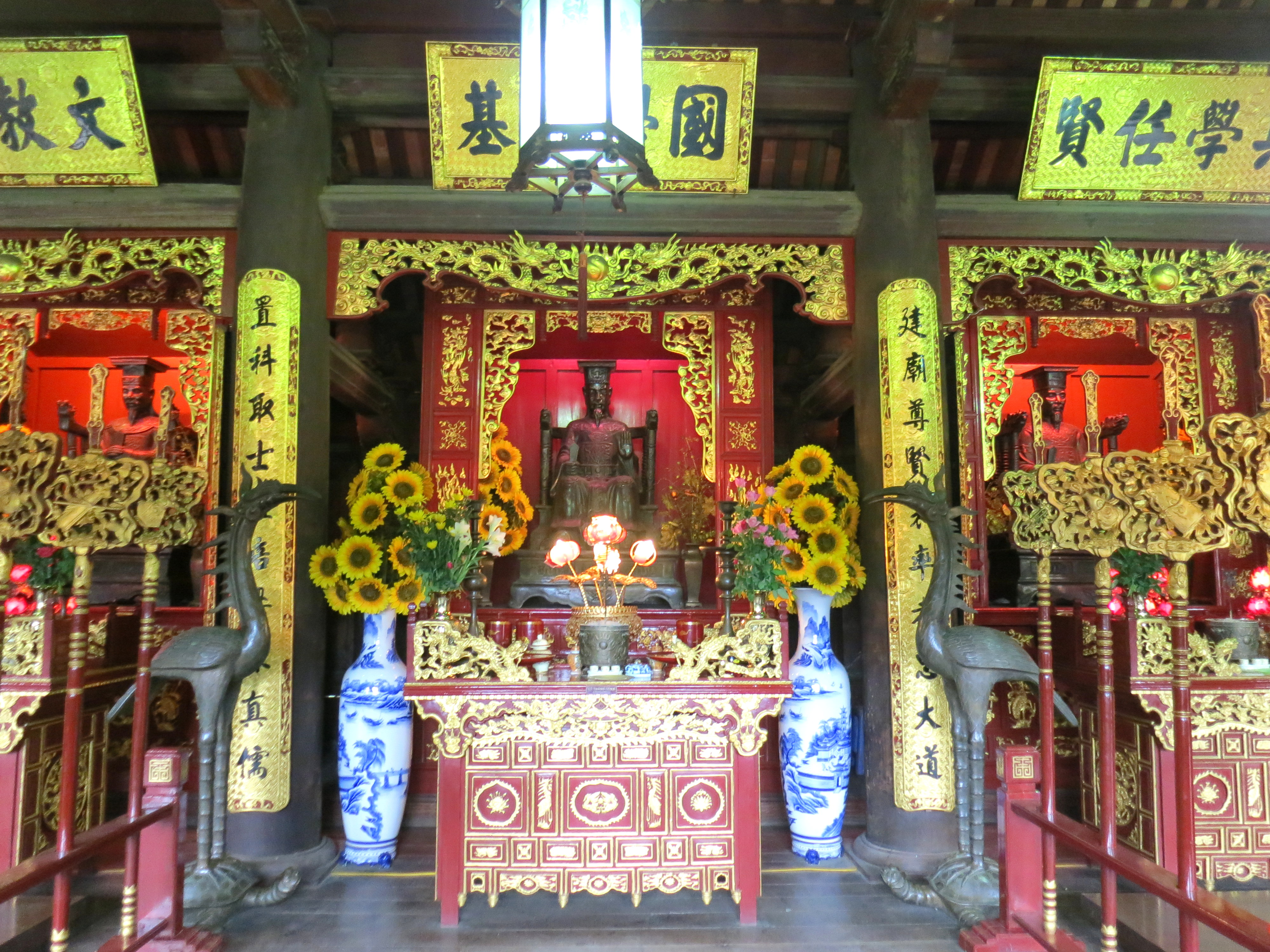
The Temple of Literature in Hanoi was the first place I’ve been to that literally makes a shrine to learning. When I visited, it was the end of the school year and dozens of schoolgirls congregated to pay their respects to ancestors and ask for success in the future. It was cool to see a specific place you could go to hope for academic success, a place that had been the seat of learning for almost 1,000 years.

Temple of Literature, Hanoi

Temple of Literature, Hanoi

This structure is so iconic that it's been made the symbol of Hanoi.

This structure is so iconic that it’s been made the symbol of Hanoi.

I met another American in line for tickets, and we split the cost of hiring a guide. Hanh, our guide, was a middle-aged woman who was thrilled to hear we were from the States. She related the facts about the temple, but mostly she wanted to talk about how proud she was of her daughter, who is at college in Nebraska. It was fitting to hear a running commentary on the benefits of education in a place devoted to the celebration of it.

This character says men should be reliable. I do not disagree. (Okay, so it's intended to represent a virtue that scholars should have, but they meant "men" when they said "scholars," so I took the easy joke.)

This character says men should be reliable. I do not disagree. (Okay, so it’s intended to represent a virtue that scholars should have, but they meant “men” when they said “scholars,” so I took the easy joke.)

There are 82 stelae inscribed with the names of those who passed the highest level of testing.

There are 82 stelae inscribed with the names of those who passed the highest level of testing.

The place was established as the Imperial University in 1070, and it only closed in 1779. By 1802, the Nguyen dynasty set up the university in Hue, and the Hanoi temple became less important. For a 300-year period, large stone stelae were inscribed with the names of those who passed the rigorous examinations to hold the highest titles of learning in the land. The stone slabs were set up on the backs of stone turtles, which represent longevity and appear in various guises around the temple grounds.
Altar in the temple

Altar in the temple

The Chinese influence in Vietnam was strong for many years, and Chinese was the language of learning for centuries, much in the same way that Latin was the language of learning in Europe until recently. So most of the writing and inscriptions were in Chinese characters, including the stelae and the planters lining the central path, which spelled out virtues learned scholars are expected to possess.

One of the students who posed for photographs for family and tourists alike.

One of the students who posed for photographs for family and tourists alike.

And then it got weird, with tourists hopping in to pose with the students, getting in the way of the students' own photos.

And then it got weird, with tourists hopping in to pose with the students, getting in the way of the students’ own photos.

Temple of the Jade Mountain

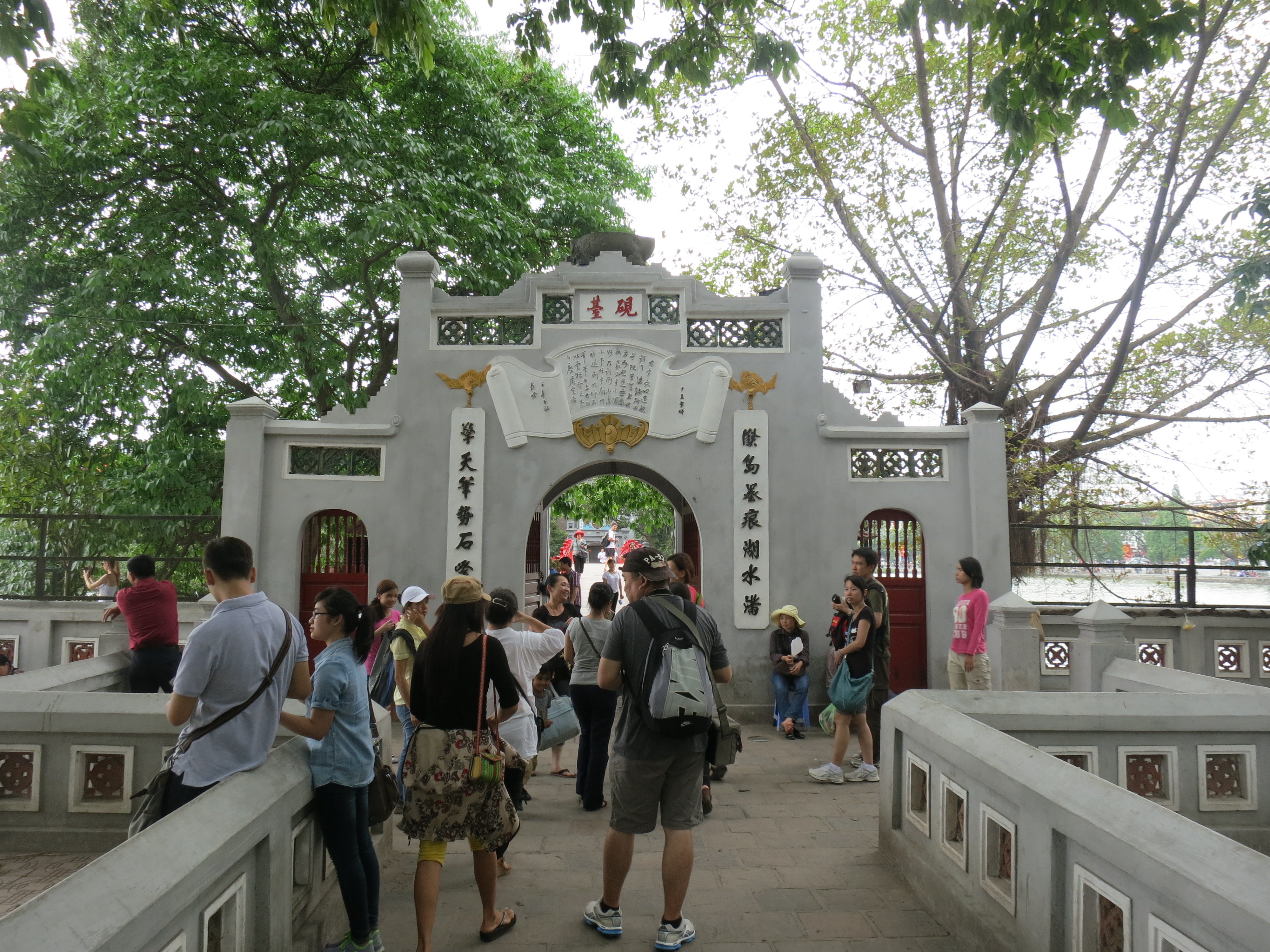
Hoan Kiem Lake is at the south end of the old town of Hanoi, and it’s a popular place with locals and tourists alike. I saw lots of Vietnamese relaxing by the shore on their lunch break or walking around the perimeter. There’s a tiny island of a shrine in the middle of it, and separately, there’s a Taoist temple, Temple of the Jade Mountain, accessed by a simple red bridge.

The approach to the red bridge (apparently called the Welcoming Morning Sunlight Bridge--it does go east-west)

The approach to the red bridge (apparently called the Welcoming Morning Sunlight Bridge–it does go east-west)

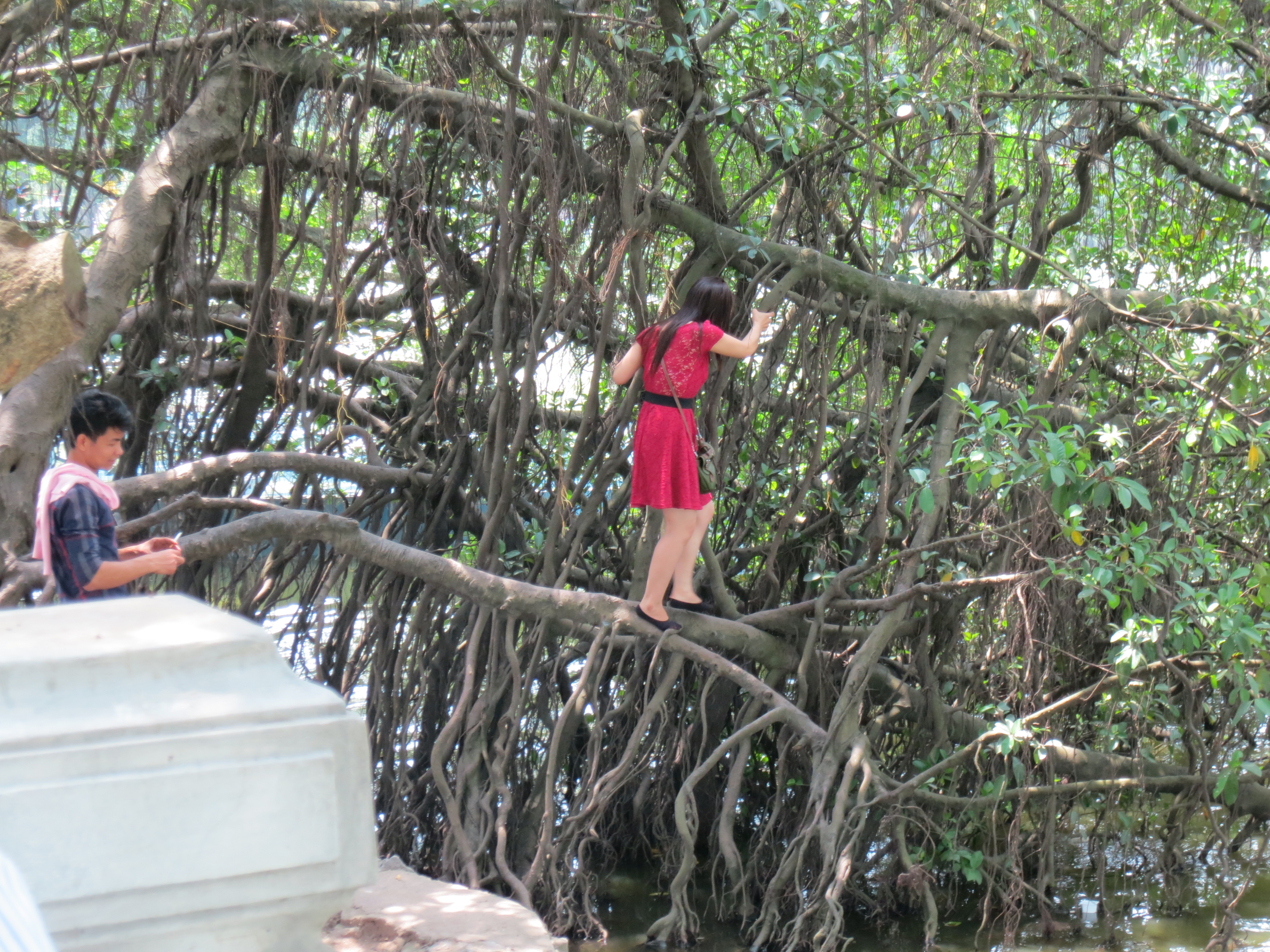
People will do a lot for a good photo

People will do a lot for a good photo

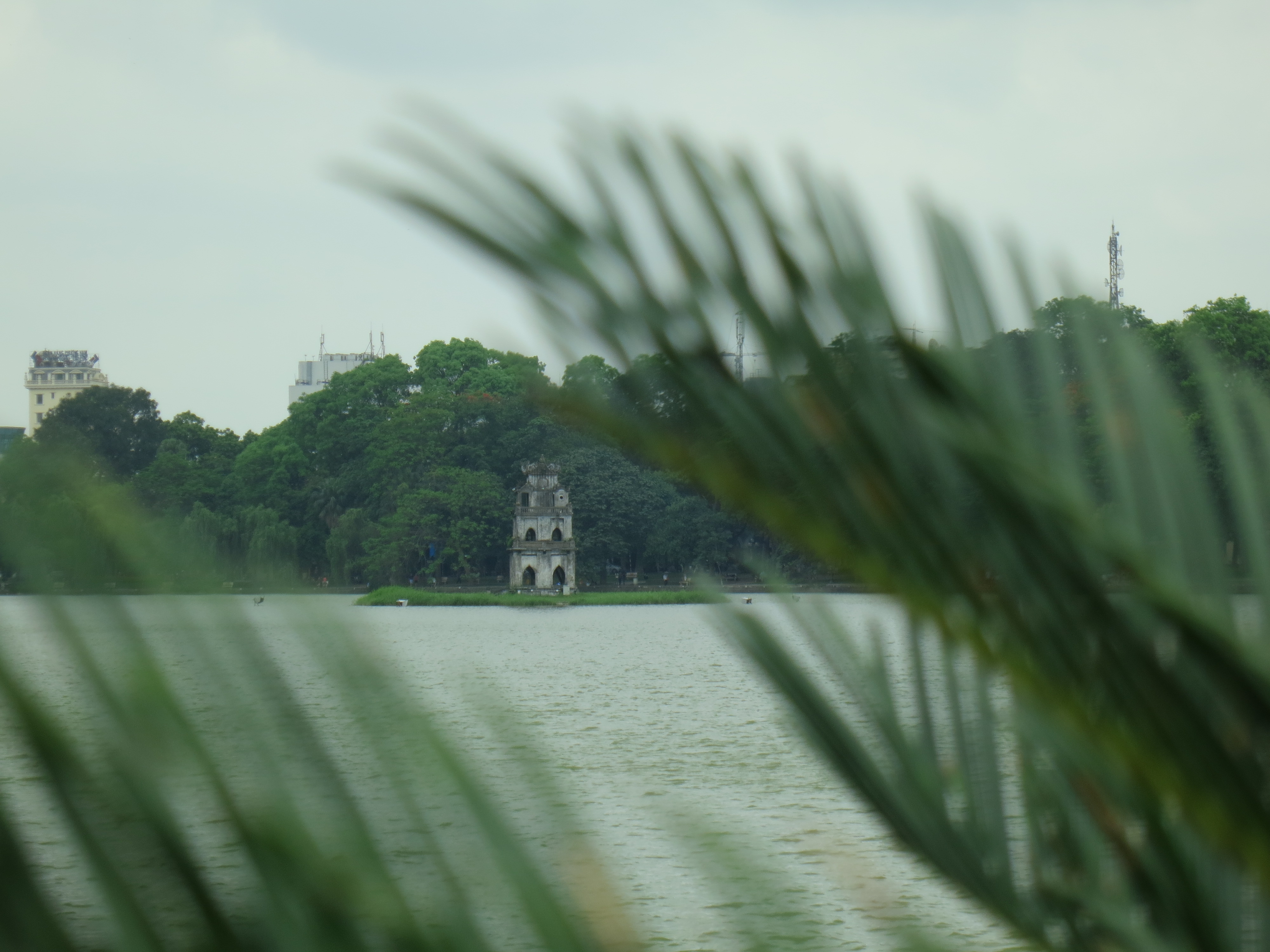
Somehow, I never got a picture of the bridge from a distance, which is too bad because it was pretty nice looking. Expand on this  photo in your imagination.

Somehow, I never got a picture of the bridge from a distance, which is too bad because it was pretty nice looking. Expand on this photo in your imagination.

I found it an odd temple once I crossed the bridge: a few cartoon-like paintings on the stucco gates, a garden of patchy grass, a couple dusty back rooms. But the altar was well-maintained, and the view of the shrine on the lake was nice, and there was the preserved body of a giant tortoise on display. Giant tortoises are something of a legend in this lake, not appearing very frequently but always happily received when they do. The one on display was one such adored specimen.

The famous tortoise

The famous tortoise

The place to burn the prayers you've written on a bit of paper, so they'll be taken up into the air

The place to burn the prayers you’ve written on a bit of paper, so they’ll be taken up into the air

Shrine in the distance

Shrine in the distance

Train Travel in Vietnam

I’d read that train travel in Vietnam was comfortable and cheap, and the best way to see the countryside if you didn’t have a lot of time. I found it somewhat comfortable and well priced, and a good way to see the countryside. It was also a chance to talk with other travelers.

Train ticket

Train ticket — about $13 for a 270 mile trip

I traveled from Ho Chi Minh City to Nha Trang on a nine-hour journey. I purposely chose a daytime trip, so that I could see the landscape as it rushed by. When I boarded the train, it looked like most of the Vietnamese weren’t really paying attention to their assigned seats, and they just sat wherever suited them best. The tourists, on the other hand, stuck with the number on their paper, so it was a funny mix of me stubbornly searching for the seat that matched my ticket while everyone around me negotiated with one another for favorite spots.

Full train to Nha Trang

Full train to Nha Trang

There were a few other tourists in the same car, and that’s how I met Laura, a lovely woman from London. She was traveling with a friend, Kate, whose seat was somehow several rows behind ours. Laura and I chatted most of the trip, and I hung out with her and Kate in Nha Trang, and later in Hue, when our paths crossed again. I probably should have just offered my seat to Kate so they could sit together, but I liked my window seat and didn’t want to break the rules. If I hadn’t stayed in my spot, I never would have met them and hit it off so well, so the moral of the story is that sometimes being uptight pays off!

hue to hanoi train

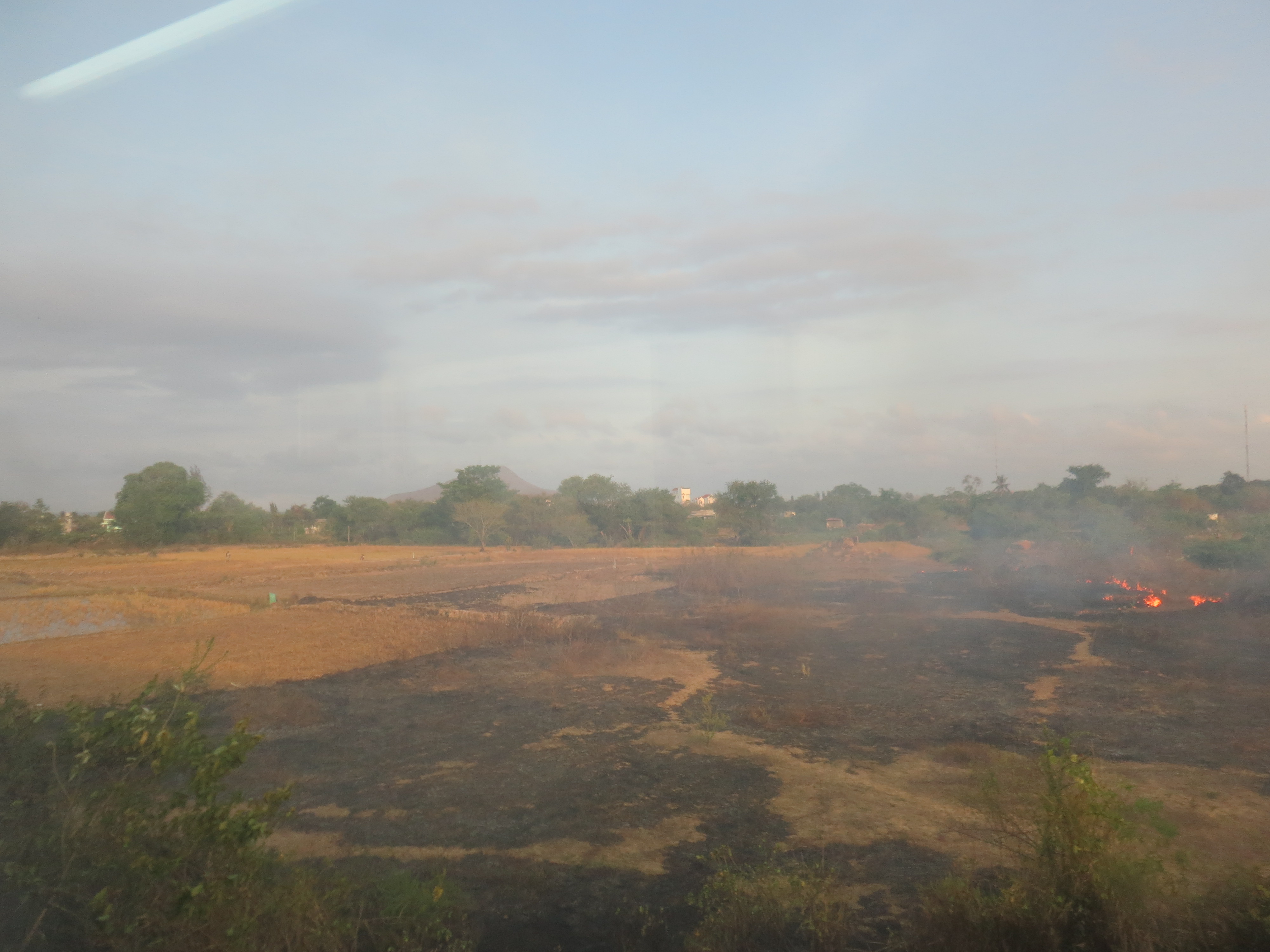
Burning in the fields

Burning in the fields

Scenery on the way from Saigon to Nha Trang

Scenery on the way from Saigon to Nha Trang

The train had a couple TVs on it, playing flashy ads and soap operas. Nearly all the coat hooks were being used to hold people’s bags of food. A cart came around a couple times, selling treats and drinks. At one point the train stopped longer than usual at a station, and Laura nudged me, pointing out the possible reason: a couple of men in official looking uniforms, arguing with a middle-aged woman in a seat six or seven rows in front of us. A couple stations later, the uniformed men led her off the train, carrying what looked like a toy machine gun. We’re guessing the toy was hers and it wasn’t allowed? We really hope it was just a toy. It remains a mystery.

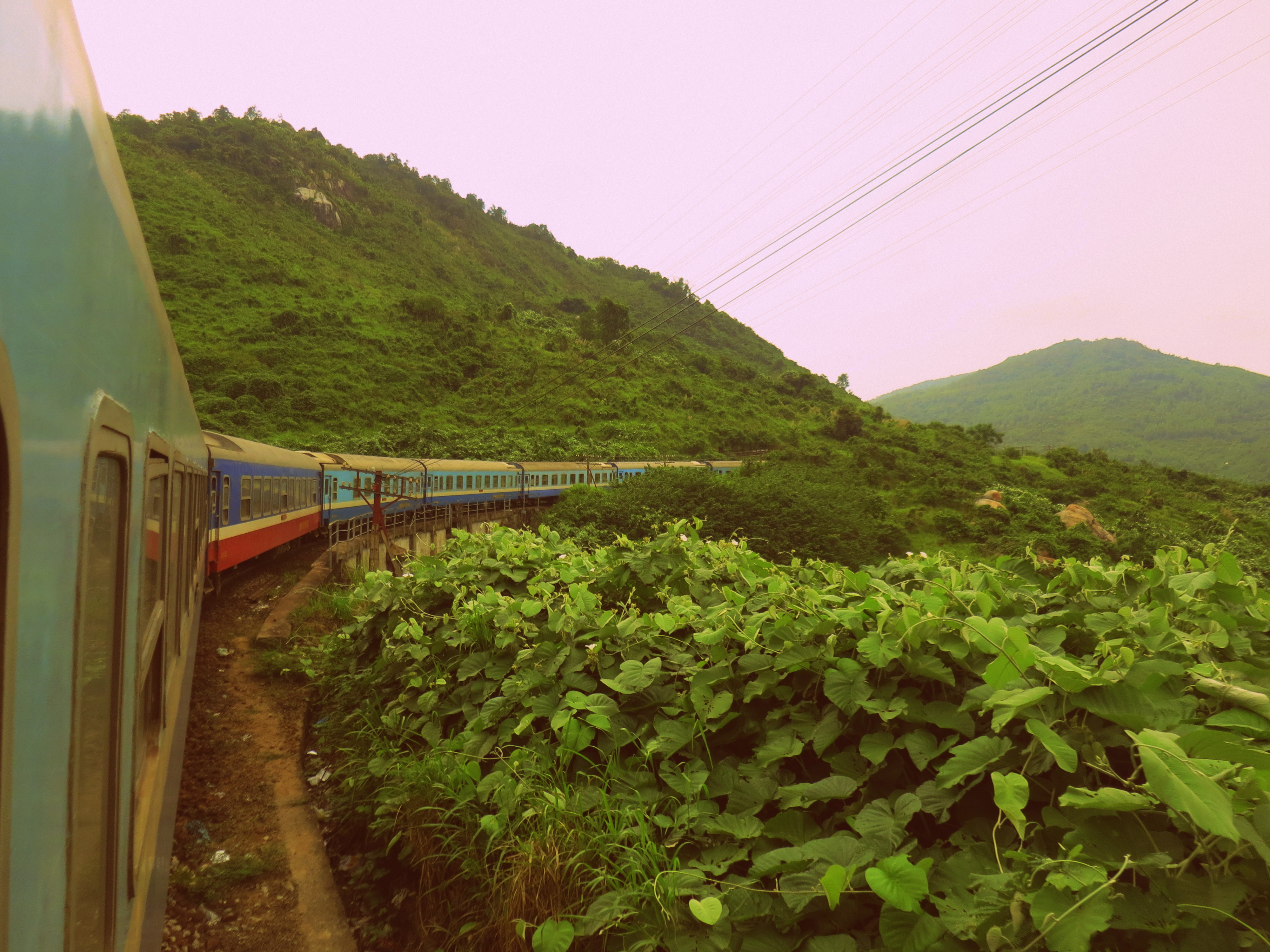
From Danang to Hue

From Danang to Hue

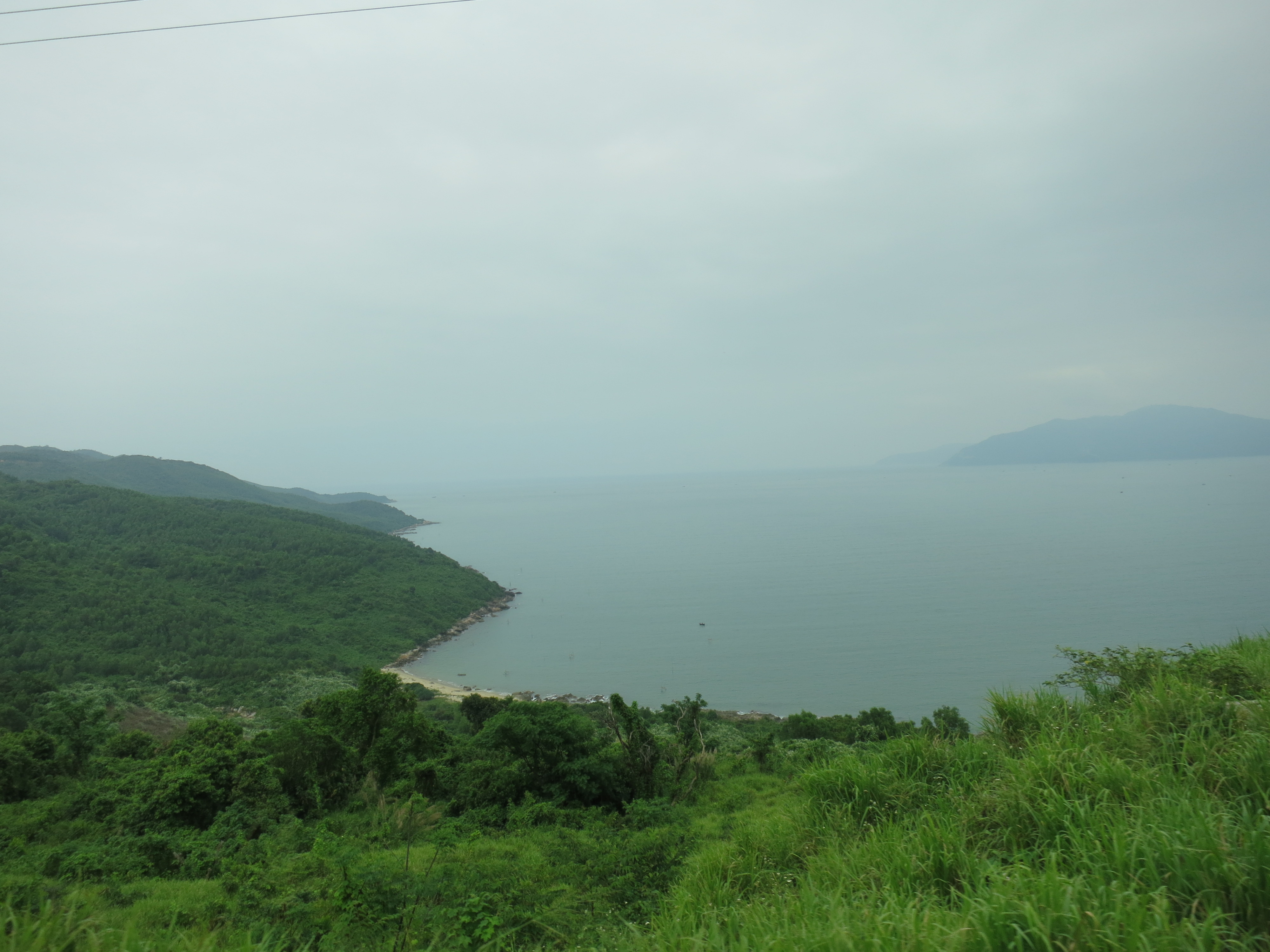
Misty coast

Misty coast

I took a train from Danang to Hue, and that was the prettiest train ride of my trip. The tracks followed the coast, and even though it was an overcast day, I saw plenty of lush tropical forest tumbling down the hills and into the ocean. This train was empty, so we all just picked which seats we liked best, which was good because the seat I was assigned seemed to have some springs poking out of it. This train was not as nice as the first one, but with scenery like that, who cares.

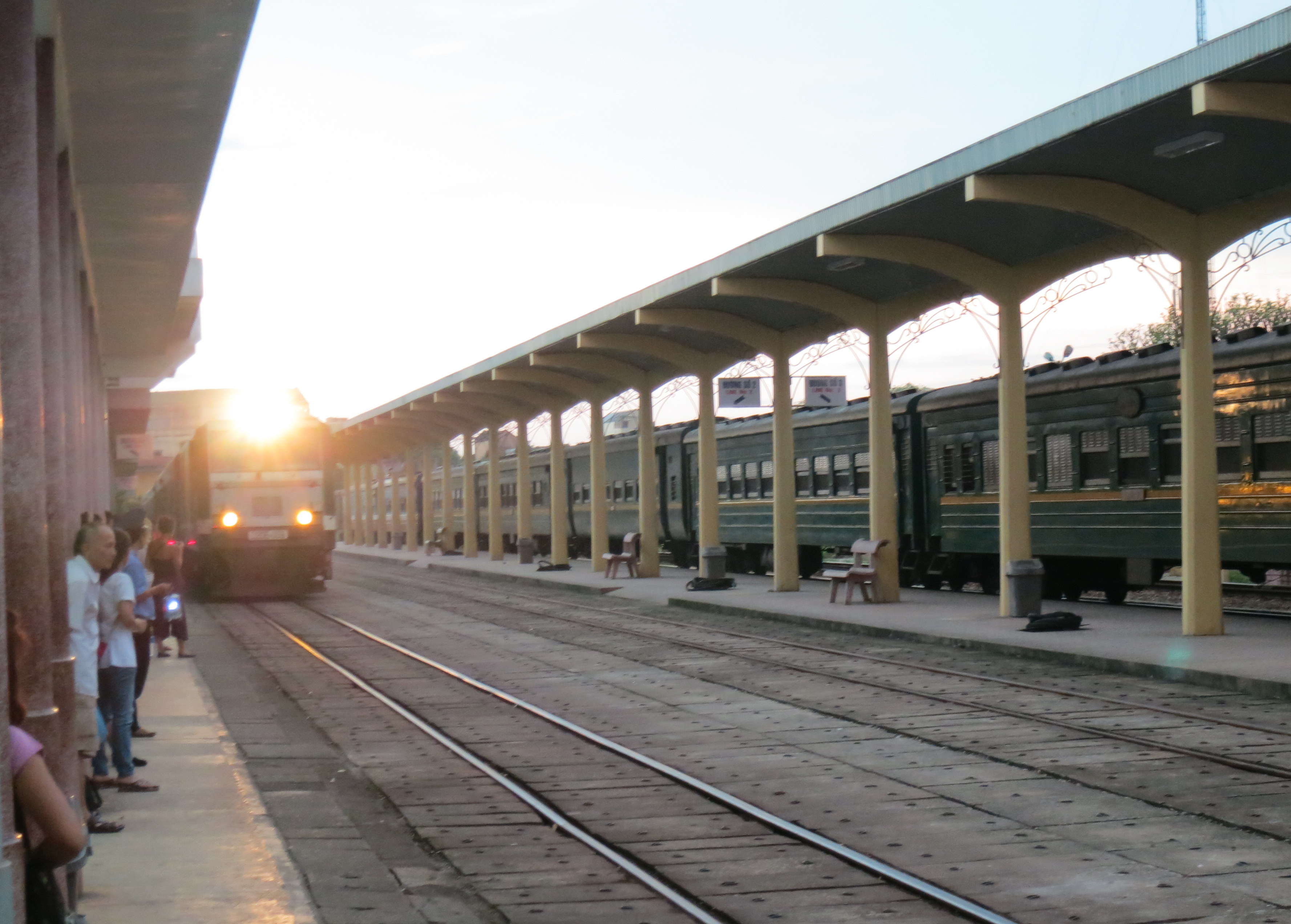
That sunset ride is pulling in

That sunset ride is pulling in

hue to hanoi train

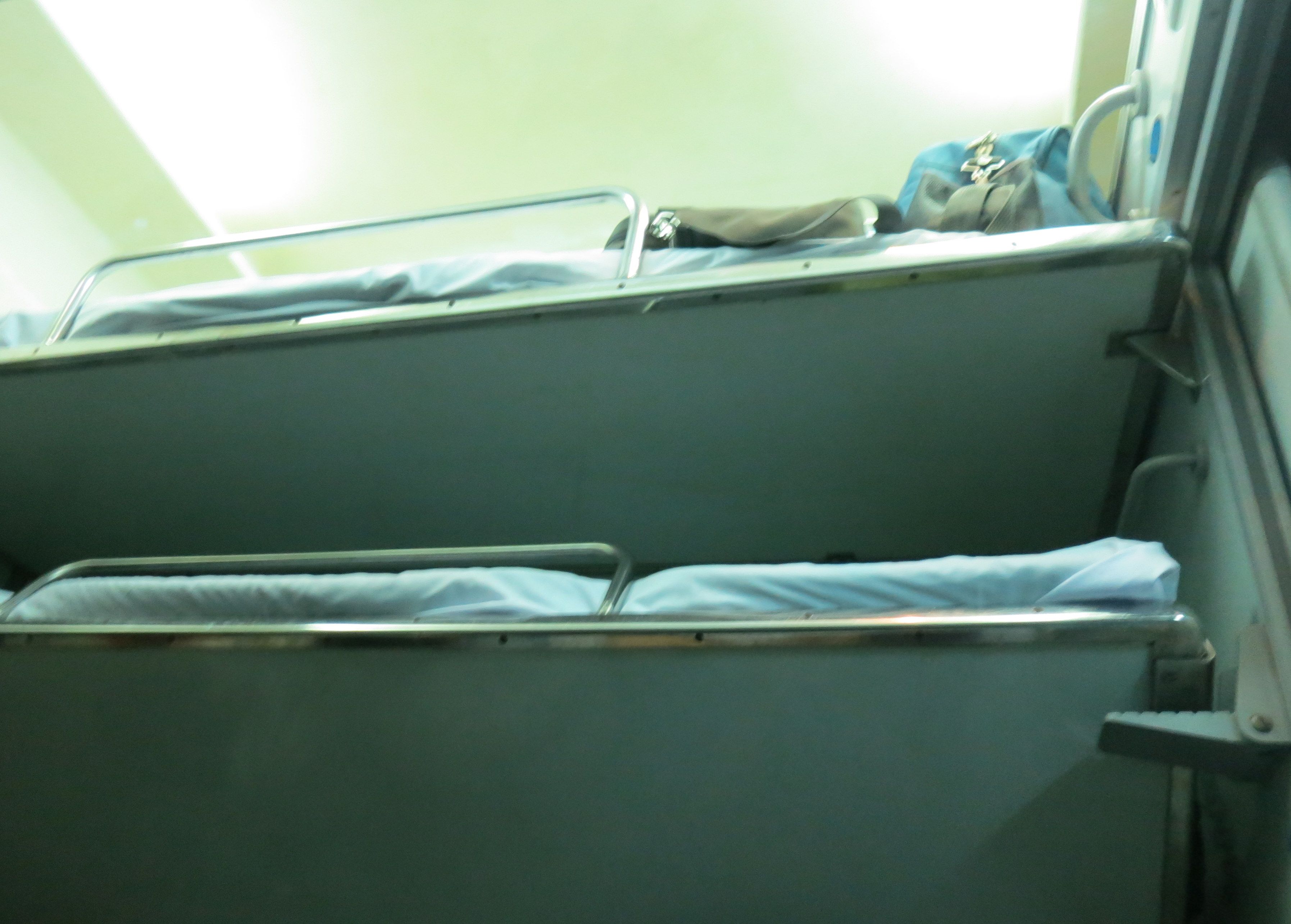
The last train I took in Vietnam was an overnighter from Hue to Hanoi. I was determined to be picky about my seat, since I’d paid extra for a bottom bunk in a six-bunk cabin. Imagine my surprise when I arrived in the cabin and found the pillow and blanket tossed to the side, and a man sitting on my bunk. Once I showed him my ticket proving it was my spot, he gave it up and sat on the other bunk with his friend and the woman whose bunk it was. I only meant he couldn’t sleep there, not that he couldn’t sit while we chatted, but that was just the first of a series of small misunderstandings. I fit my bags in around the five-gallon jar of homemade whiskey the guys were transporting, and then we faced each other and tried to talk. I had bought a small bag of sticky rice at the station and ate that while we talked, which the three of them found hilarious (I am not very good at chopsticks).

Bunks on the overnight from Hue to Hanoi

Bunks on the overnight from Hue to Hanoi

My bunk, with the homemade whiskey just visible in the corner there

My bunk, with the homemade whiskey just visible in that rucksack in the corner there

The two men had very limited English, and I only knew how to say “please” and “thank you” in Vietnamese, so it was a real struggle to talk. The most astonishing sunset was taking place outside the hall window, but every time I tried to peek out there, the guys pulled me back and tried to talk some more. There’s a lot to be said for cross-cultural communication, but when the language barrier is this huge, there’s really only so much that can be said. They would ask a question, and I would respond, and they’d smile, uncomprehending. Then I would ask a question, and they would respond, and I’d smile, uncomprehending. Any attempts to clarify what was said were met with more smiles and shrugged shoulders. I learned that their names were Tien Troung and Van Hien (they wrote their names for me in my notebook), and they were engineers on a work trip to Hue, returning home to Hanoi. They brought the homemade whiskey with them and were eager to return to their wives and children. Tien Truong showed me a photo of his six-month-old. That, at least, is universal. I congratulated him, and he grinned proudly.

Tien Truong and Van Hien

Tien Truong and Van Hien, who insisted on posing for photos and asked me to pose as well

Sleeping on that train was nearly impossible, since the guys played music on their phones and two other passengers climbed in the middle bunks midway through the night, and I had to use the bathroom twice, and tried to forget the experience each time because it was so disgusting that if I remembered how nasty it was, I’d never be able to go again.

hue to hanoi train

We arrived in the capital around 6am on Gio to Hung Vuong Day, a celebration of the Hung Kings, who founded Vietnam. I said farewell to my cabinmates, scooted my bags away from the whiskey jar, and left the train behind.

No Need for Panniers

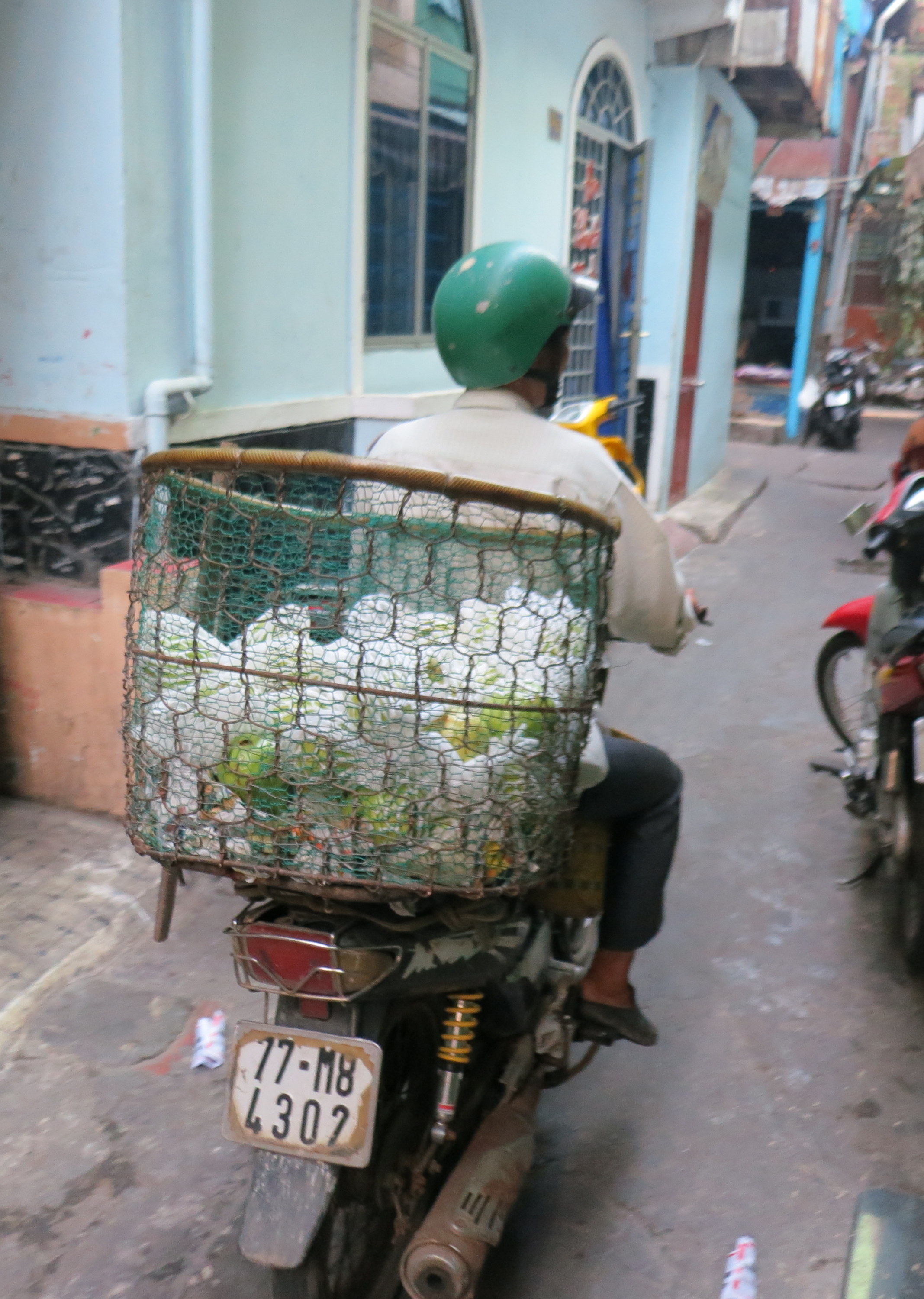
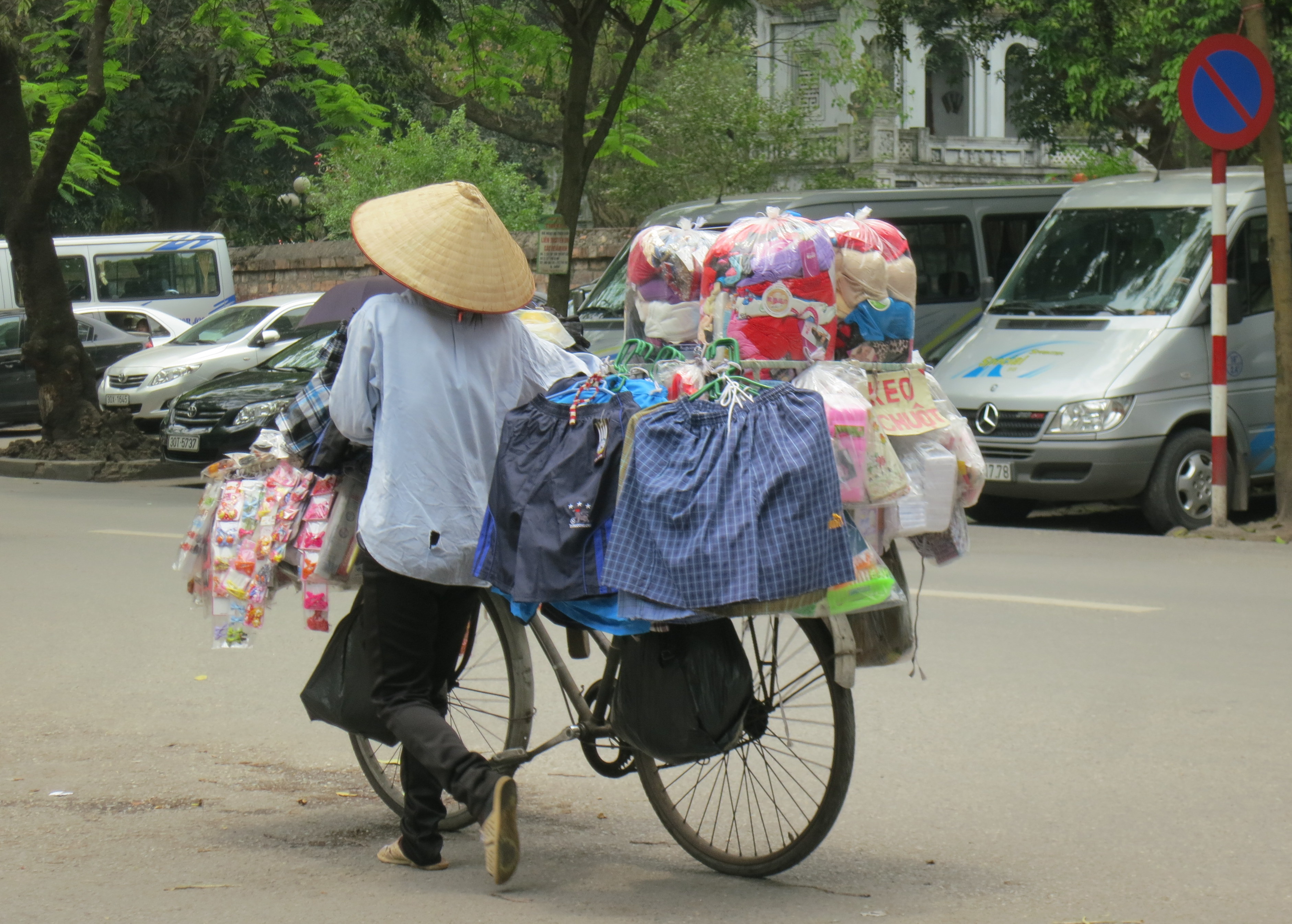
I know a lot of people who love to bike everywhere. I’m freaked out by the many distracted drivers out there–both in the city and in the suburbs–so I don’t really like to bike unless I’m on a path made for that purpose. But I admire the cyclists I know, especially the ones who use their bikes as their cars, carrying things in panniers hanging off the sides, or in adorable baskets on the front. But I gotta say, after seeing the massive loads teetering on the backs of bikes in Vietnam, maybe US cyclists need to step up their game!

Hue

Hue

Hoi An

Hoi An

Ho Chi Minh City

Ho Chi Minh City

Hanoi

Hanoi

Hanoi

Hanoi

Ho Chi Minh City

Ho Chi Minh City

Ho Chi Minh City

Ho Chi Minh City

Hue

Hue

ACAM: Vietnam — Where to Go, Part 1

Rounding up guidebook and Internet advice, here are some places to visit and things to see and do while I’m in Vietnam. Part 1 because I know commenters will have suggestions!

female puppets dance on the water

Do they break out in song? Do they dance?

See a show at Thang Long Water Puppet Theater in Hanoi, or some other water puppetry venue. Apparently this art form developed as a way of appeasing spirits and entertaining fellow workers in flooded rice fields. Today, puppeteers stand offstage and manipulate the puppets via bamboo poles and string, and the puppets appear to walk on water. The shows are usually comedic. Sounds like fun!

Yum

Eat a lot. Here are some foods I’ve been encouraged to sample: phở bò, bánh xèo, bún thịt nướng, cơm tấm, bánh mì, banh bao vac, lau, and French-influenced foods like croissants and duck. I think every single person who learns I’m going to Vietnam says a variation on “oh the food!” This is a promising start.

imposing, with a flag in front

Mlle. O'Leary has a souvenir t-shirt from here

Visit war memorials and museums. I have a longtime fascination with what we Americans call the Vietnam War, and I’m interested to see it presented from the other side. The Hanoi Hilton, the Ho Chi Minh Museum and his mausoleum, and the National Museum of Vietnamese History are all in Hanoi and should give a pretty comprehensive view of the struggle, and there’s also the Vietnam History Museum and War Remnants Museum in Ho Chi Minh City (Saigon).

Thien Mu Pagoda, Hue

Take a boat to Thien Mu Pagoda in Hue. It’s one of the oldest structures in Hue (a town midway between the two major cities of Vietnam, on the coast), and it’s still a working temple populated by monks.

Image 1. Image 2. Image 3. Image 4.