All the Grace it Contains: Swimming with Dolphins in Kaikoura

You’re supposed to sing to them, and dance. Slide into the cold water in a thin rubber suit and flap your finned feet until you’re beyond the noise of the people still on the boat. Fit your mask tightly to your face and dive in to the open ocean. Watch the world around you turn a cloudy blue, deeper than you expected or can really imagine. You are over a major oceanic trench that plunges toward the earth’s core, and that kind of depth is beyond imagination, or maybe at the borders of it, where krakens lurk.

Kaikoura, New Zealand

Kaikoura, New Zealand

Before the creatures of the deep can fully emerge in your mind, recall the instructions of the skipper to attract the animals you’re here to see: Make high-pitched noises, like singing, and move your body around in circles, like a dance. Be entertaining or they’ll tire of you quickly. This early-morning hour is neither feeding nor sleeping time for them; it is devoted wholly to play, so play with them. So you squeak a few times and wave your arms, and suddenly–it is so sudden you wonder how you could have not seen them before–there are six, seven, eight of them, swimming next to you.

Dusky dolphins glide past you, above you, below you. Your jaw drops and you sputter as the snorkel fills with water. You surface, drain, and dive back down, and you could easily believe that their open mouths mean they’re laughing at you, but you can’t blame them. They’re made for this world, their smooth skin the same blue-gray of the water, their sleek bodies small and flexible in the rough waves of the Pacific. You’re just visiting.

dolphins kaikouraYou hum tunelessly, a high soprano song that seems to entertain. A dolphin moves to your right in a tight circle around you, and you spin with it, making two full circles before you get dizzy and the dolphin swims off, laughing again. Another one immediately swishes up and moves to the left, and you’re off again. Don’t try to get too close, don’t try to touch something this wild and free. They’ll leave if you do.

dolphins kaikouraA dolphin swims directly toward you–you’re staring straight into its eyes as it rushes forward–and leaps to the side just before your noses touch. Grin widely as dolphins wriggle below your feet and barrel-roll near your torso and jump in the air above your head. You are surrounded by dolphins, enveloped in their joyous movement.

Feel entirely calm amid the flurry of activity, as if time hasn’t stopped so much as it has slowed enough for you to appreciate each fin-flick, each shimmer of gray-black skin. You hardly feel your own body, buoyant and smooth in the water. You make no wrong moves here as you do on land. Your body floats easily among the dolphins, in the blue-green-gray water, as if it belonged there, as you have always suspected it might.

dolphins kaikoura

Hum “Ave Maria,” one of the loveliest songs you know and also one with a lot of high notes. You float in what you know to be saltwater, but with Schubert thrumming in your head and evolution’s best moment swimming graceful circles around your swaying body, you could easily believe yourself transported somewhere not of this world, or maybe somewhere that distills the best parts of this world into perfect beauty and peace.

Physically touch your chest to feel your heart beating, to hold to your heart this moment and all the grace it contains. Your body sustains the vibrato of the hymn, your eyes fill with your own saltwater, and it is too much, and it is just enough, and you are sharply conscious of thinking, “I am happy to be alive.”

kaikoura sunrise

A Rainy Weekend Away in Paihia

Okay, let’s go way back to the first week of December. I’d landed in Auckland, New Zealand the last week of November, and hadn’t done much since. I decided to get out of town, so I took a bus up to Paihia, a holiday town on the eastern coast of the North Island. It rained the whole time I was there, so it wasn’t exactly a long weekend at the beach, but I had plenty of fun anyway.

Bay of Islands

Bay of Islands

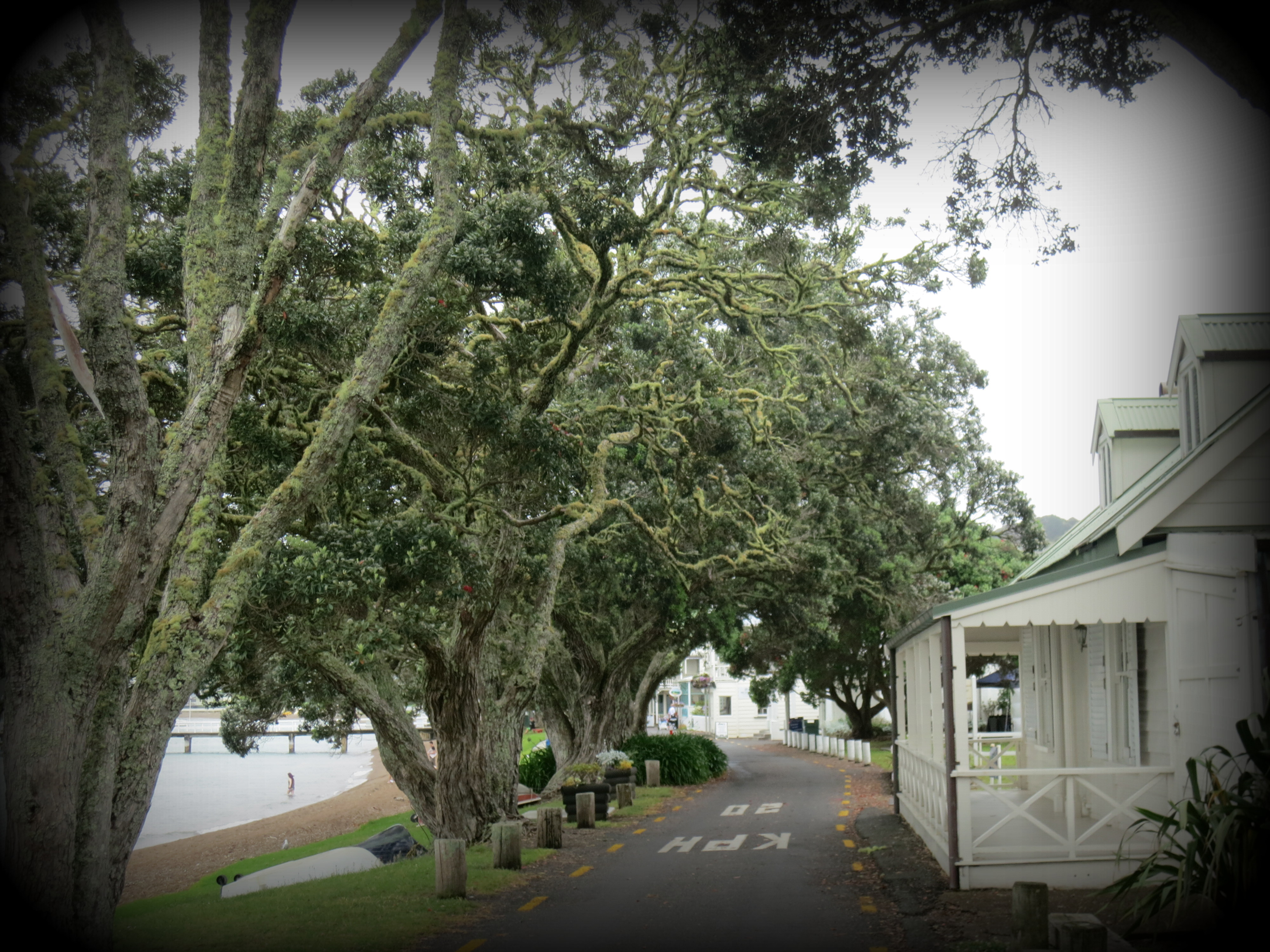
Paihia is right on the Bay of Islands, a perhaps not terribly original name for an important area of New Zealand’s history. Just north of town is where the Treaty of Waitangi was signed. I touched on this a little in an ACAM post a couple years ago, but as a reminder, the treaty is still controversial, because the Maori translation has significant differences concerning sovereignty and ownership of property from the English version. I did not walk up there in the rain, but they’ve recently revamped the museum and it’s meant to be worth a visit.

Lest we forget that though the buildings look European, we are not in Europe: palm trees

Lest we forget that though the buildings look European, we are not in Europe: palm trees

Across the bay from Paihia is the town of Russell, a quaint little town of clapboard houses and a picturesque church, that also happens to be the oldest Pakeha settlement in New Zealand once known as the Hellhole of the Pacific, back when it was a filthy town full of bars and brothels for rowdy whalers.

Southern Cross advent wreath in the church in Russell

Southern Cross advent wreath in the church in Russell

The church is the oldest existing one in New Zealand, and it’s seen a lot: in 1845, the Battle of Kororareka included skirmishing near the graveyard, and the side of the church still bears bullet holes from the fighting.

Bullet hole in the church

Bullet hole in the church

I visited Russell with Cora, a lovely woman from the States who manages the YHA in town. We were put in touch by a mutual friend, and we had fun wandering around the tiny town, eating lunch as the clouds rolled in, and getting back to Paihia just before the rains started up again. This is why I’m always asking people if they have friends in various places–they’re usually great people I’m happy to meet!

Russell looks almost like a small town in Louisiana from this perspective

Russell looks almost like a small town in Louisiana from this perspective

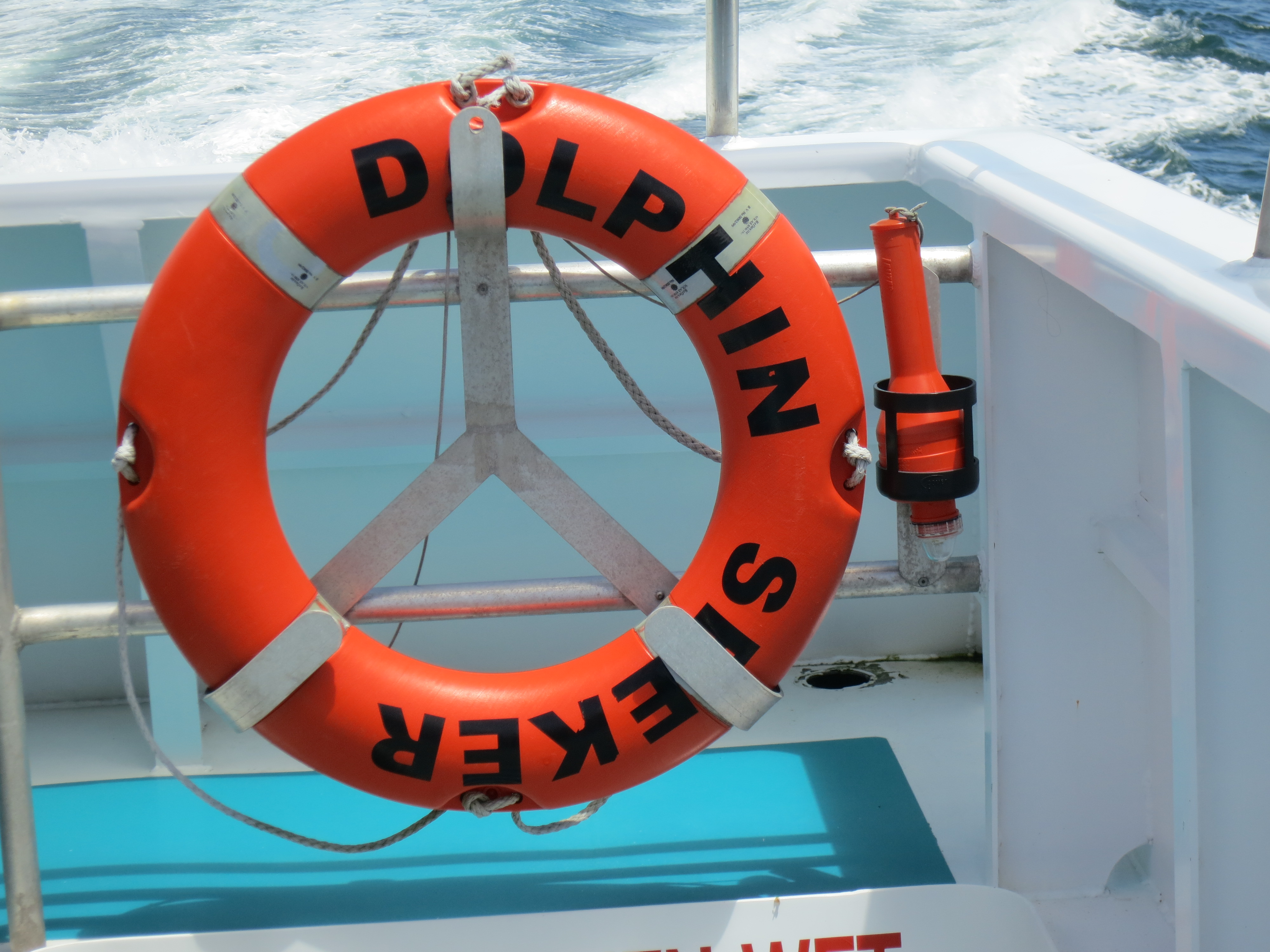
If you’re not visiting historical sites or trekking around waterfalls (again, nixed on this trip due to rain), the main activity you’re likely to take part in is dolphin watching. Common and bottlenose dolphins live in this area, and sometimes whales come through as well. I’d booked a tour but put it off twice due to rain. Finally, I had one last day to go on the tour before I left town, so I went out on a Fullers Great Sights tour.

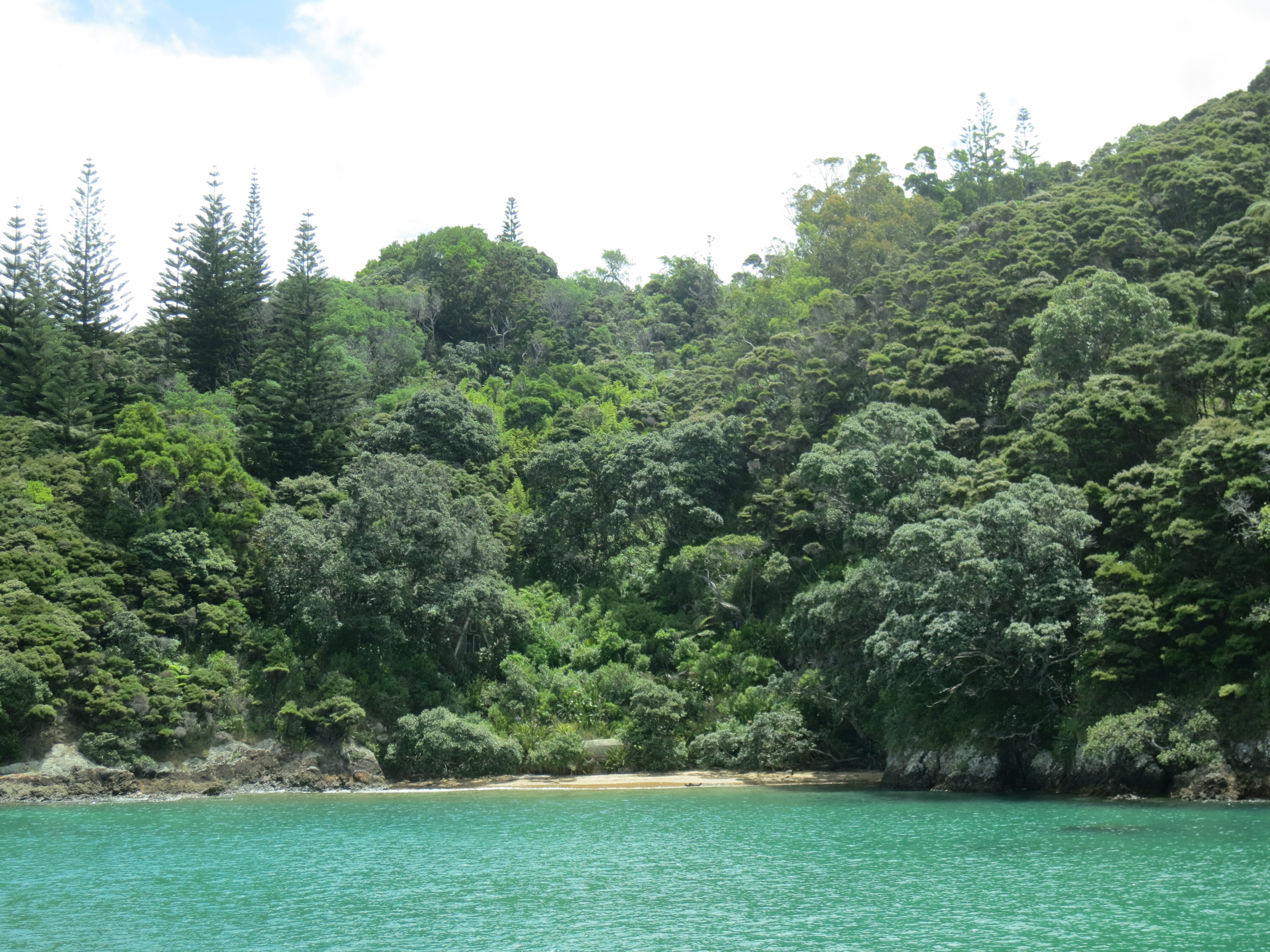
paihia nzTurns out, even though the rain had mostly subsided, the seas were still rough, so as we pulled away from the deck, the captain casually mentioned on the loudspeaker that this Hole in the Rock tour would not be going to the Hole in the Rock. Wait, what? Okay, so we skipped that landmark because it was too close to open sea, and instead spent more time tootling around the islands inside the bay. I was a little disappointed, but everything we saw was beautiful, so I couldn’t be too upset.

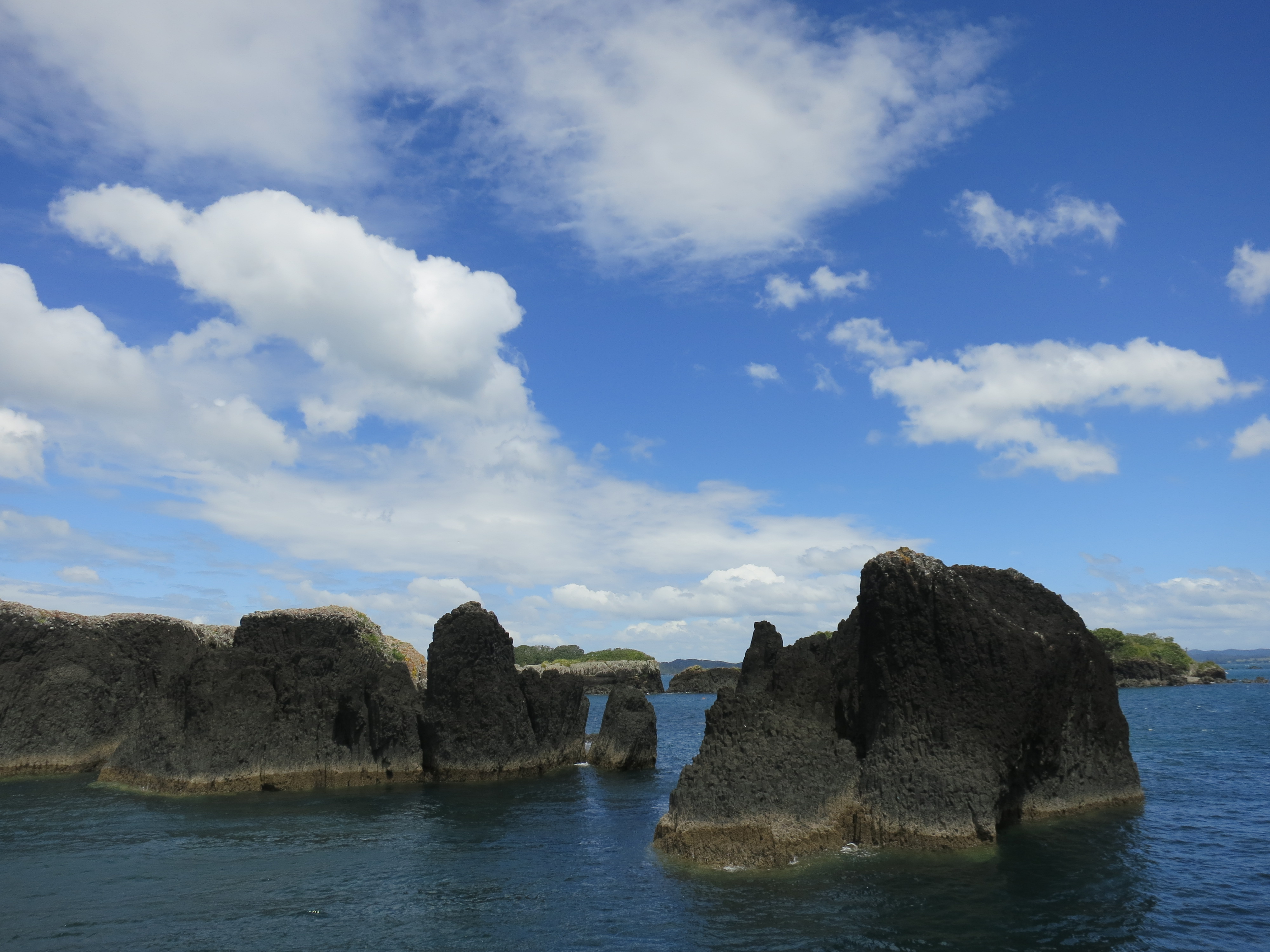
The Black Rocks

The Black Rocks

We went through straits with black rocks, the same kind of rock I saw on the Aran Islands in Ireland. Another boat radioed that they’d found some dolphins, so we sped over to Okahu and watched a couple dolphins frolic for a few minutes. I saw one speeding along just under the surface, but no one seemed to believe me when I pointed, and then a minute later it surfaced right where I’d been pointing, thankyouverymuch. Sorry, I didn’t get any decent photos of the dolphins–mostly splashes where they used to be.

IMG_3405The dolphins tired of us pretty quickly and swam off for a quick bite or whatever it is dolphins do in the early afternoon. We docked at Urupukapuka, an island reserve. There was just enough time to follow the path mowed in the grass up the hill to the right, past a field of cows and beyond a small grove of trees, then steeply up to the hilltop. The views, as the captain promised, were incredible. For the first time in the four days I’d been in the area, the skies cleared completely, and each island was a brighter green and every wave a deeper blue than I’d seen before.

View from the hilltop on Urupukapuka

View from the hilltop on Urupukapuka

We made our way back, taking note of Captain Cook Bay at Motuarohia as we did so. (Captain Cook haunted my entire time Down Under–which, fair enough, he was the first European to chart both Australia and New Zealand.) I believe it was this island that was the site of a bloody battle between Maori and French back in the 1800s; today it hosts an expensive private home and not much else.

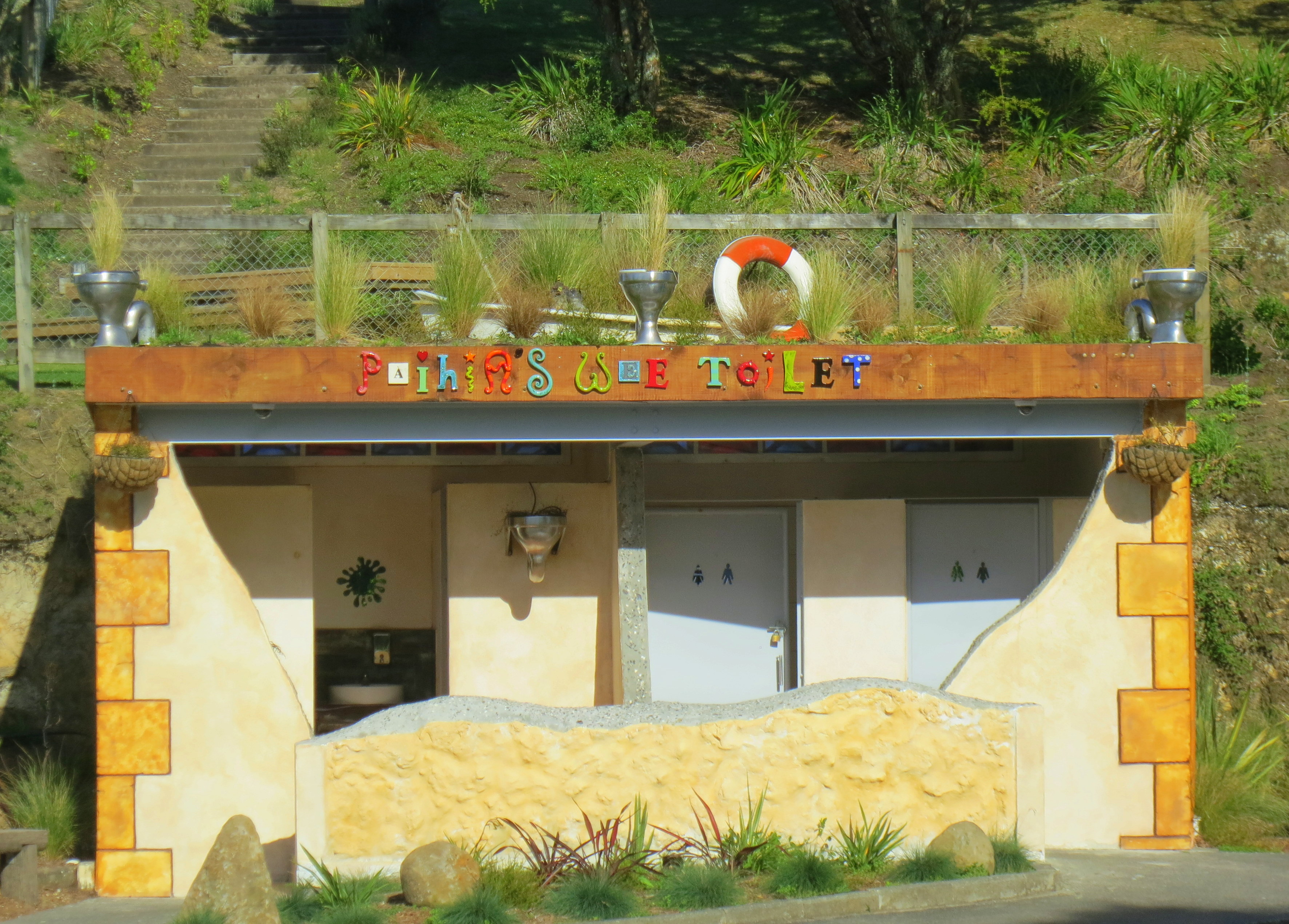
Paihia put a lot of money and apparently over a year into building this public toilet. Priorities?

Paihia put a lot of money and apparently over a year into building this public toilet. Priorities?

I had a good time in Paihia, and I can see how if the weather weren’t so consistently rainy, it could be even more fun. A lot of people use it as a jumping-off point to visit Cape Reinga (most northerly point in the country) and other places in the Northland. There are several little restaurants and bars of varying price ranges along the three streets that make up the town, and a weekly farmer’s market is held behind the library. Recommended if you’re on the North Island!