Beautiful and Damaged: Hong Island and Railay

I had a mixed experience in paradise. The islands of Thailand are gorgeous, no question, but they’re also woefully underprotected and poorly maintained. For as long as Thailand has been a vacation destination, you’d think there’d be more regulations in place to protect the delicate ecosystem that everyone’s excited to see. Unfortunately, that’s not the case. There are a few islands that are national parks, but those aren’t watched very carefully, and new (illegal) developments go up all the time.
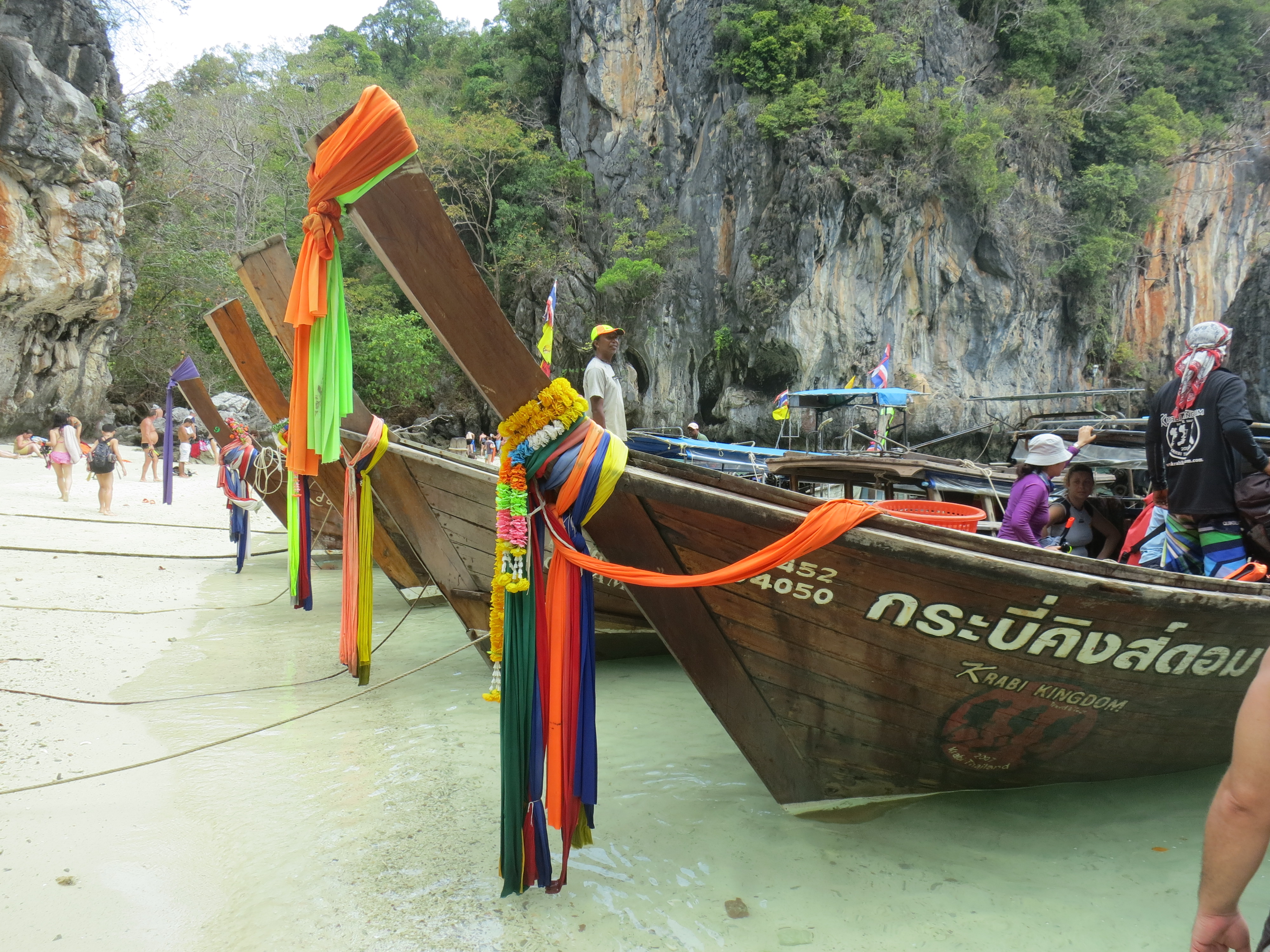
Longtail boats in Thailand

Longtail boats in Thailand

Tons of tours go out to the islands every day, and there aren’t enough trash cans or port-a-potties for the number of tourists that tear through there. Trash literally piles up on the beach. Pools of motor oil form in the bays as longtail boats maneuver in and out of the tight spaces. Snorkeling reveals little in many places, as the water’s cloudy with pollution. Way too many people amass on each tiny beach and spoil the view and the experience. And of course, as I was always aware, I was part of the problem, just by being there.
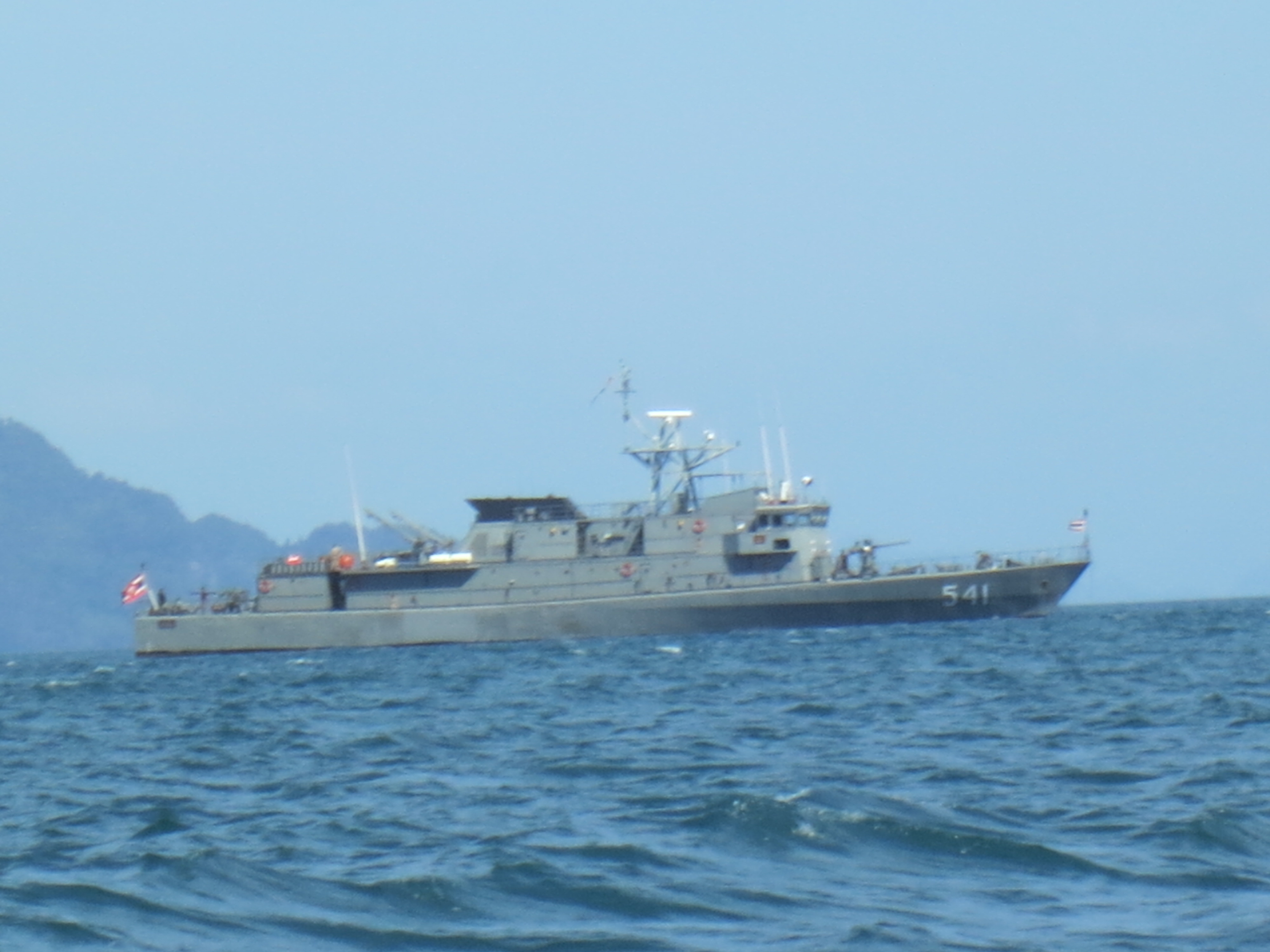
I saw at least four Navy ships guarding the perimeter of the waters near the royal residence--we'd be shot on sight if we got too close!

I saw at least four Navy ships guarding the perimeter of the waters near the royal residence–we’d be shot on sight if we got too close!

And yet, it’s still beautiful, worth visiting and admiring. I went on a tour to Hong Island, which included stops in the shallows of Deng Island and the bay of Paradise Island, and a detour past some ships guarding the princess’s summer residence. Probably about 40 of us piled on to a longtail boat with a driver and a guide (whose name I forget, unfortunately) and off we went into the bright sunshine.
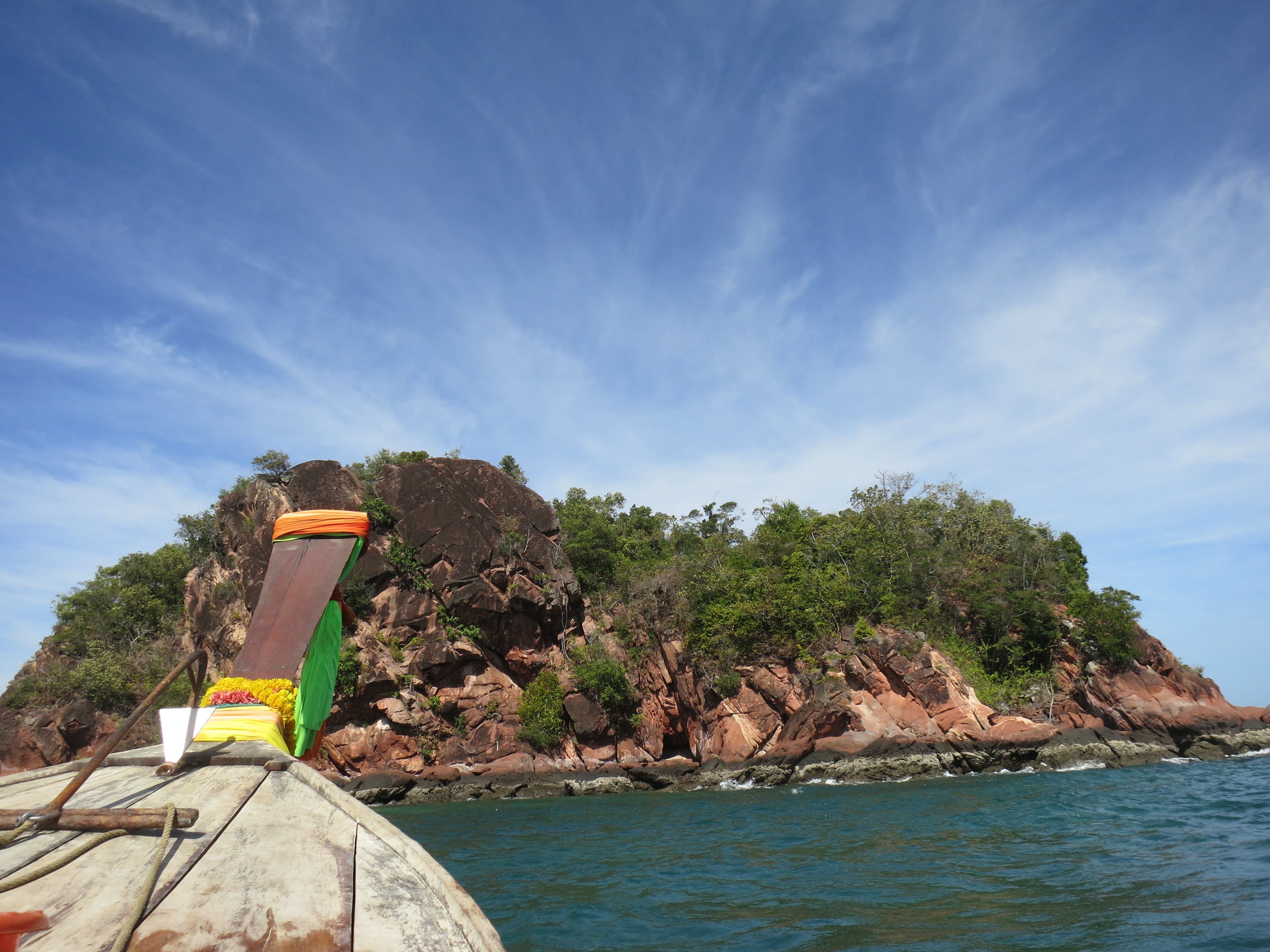
Tiny Deng Island

Tiny Deng Island

Deng Island was a tiny rock with some scrubby bush upon it, and we anchored next to it for a quick snorkeling session. But the sea was choppy and most people didn’t last long in the water. At one point, we heard a scream from a woman who, turns out, doesn’t know how to swim but had jumped in with her life jacket anyway; she found the rough waves too much to handle. Just before we got back in the boat, a huge school of yellow-white fish swirled up around us, causing everyone to exclaim that now would be a good time to snorkel. But when you’re on a tour you don’t have time to delay, so we carried on.
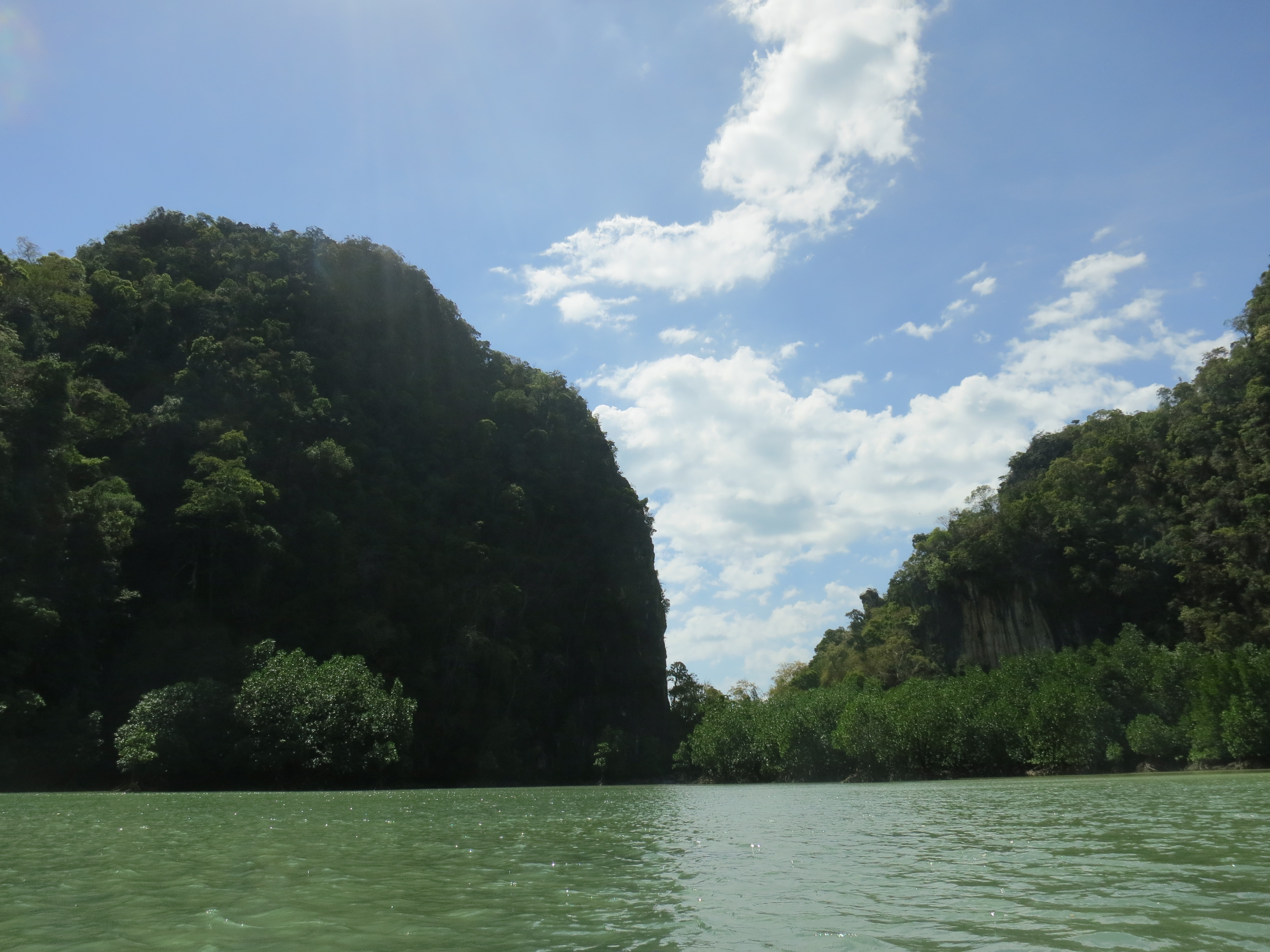
In the lagoon, pre-speedboats

In the lagoon at Hong Island, pre-speedboats

Paradise Island turned me off initially with the piles of trash not far from shore and the tourists sweating sunscreen into the water, but once I swam a little away from the crowd, I liked it much more. I snorkeled in the space between the island and the rock form next to it, and found lots of interesting colored coral–waving red ferns, shocks of purple stalks. It was a nice little stop, although I’m sure it’s vastly different from what it was even five years ago.
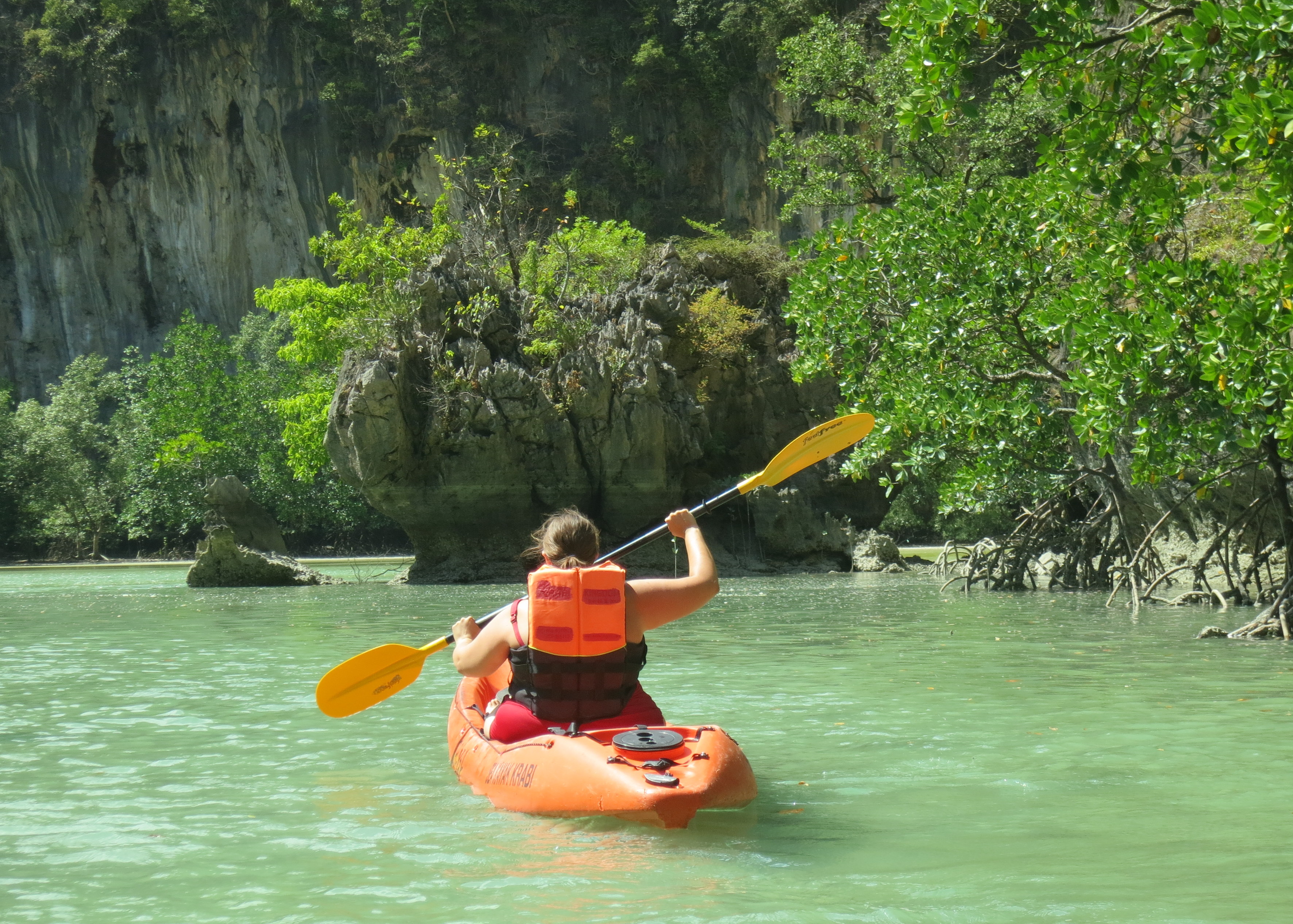
Here I go!

Here I go!

We had lunch at Hong Island and then split up; most people set up on the beach for some sunbathing, and about 15 of us who’d paid a bit extra got into kayaks. They were two-person kayaks, but the guide decided I was too heavy to share, so he had me sit in the middle and pilot one on my own. I could have shared no problem, but you do as your guide says. It was difficult to keep up, since I’ve never kayaked in the ocean before and I was doing the work of two people, but I’m proud to say I managed it. We followed the coast of the island around a couple of curves until we reached the lagoon on the other side. We paddled down a short, narrow passage that opened up into a large cove surrounded by limestone cliffs covered in foliage. The water was a bright, light green of the exact shade called “seafoam” on paint samples.

In the lagoon

In the lagoon

We were in maybe 2 feet of water, and our guide reached down to the sand and pulled up large white starfish to show us. It was an idyllic spot, but almost the whole time we were there the serenity of the moment was broken by the speedboats that forced their way into the lagoon, despite being far too large for the shallow water; they’d noisily move around the lagoon, then get stuck in the sand and make even more noise revving their engines to get unstuck.

West Railay Beach

West Railay Beach

My other day trip out of Krabi Town was a visit to Railay. To get there, I took a songthaew to Ao Nang Beach (a small, uninspiring beach backed by an unrelenting strip of shops–I wouldn’t recommend it if you’re looking for a place to base yourself in the area), then a longtail around the coast to West Railay Beach. I think my expectations were a little high, because I was disappointed. Everything at Railay was overpriced (water was four times what it was anywhere else I’d been in Thailand), and there seemed to be few places to set yourself up on the beach since so much space was taken up by longtails. Also, it was super crowded. I walked around to Pra Nang, which was a small beach boasting a cave full of lingams and a pile of rocks to scramble on, and I was overwhelmed by the number of people packed into that tiny space.

Yes, lingams are phallic representations--you are seeing dozens of penises

Yes, lingams are phallic representations–you are seeing dozens of penises

I’ve talked to people who stayed at Railay, and they had a much better time; they were able to find hidden areas to sunbathe and swim, so they could focus on the undeniable beauty of the limestone cliffs and calm blue-green water without getting distracted by crowds and a need to catch a boat back before prices went up at sunset.
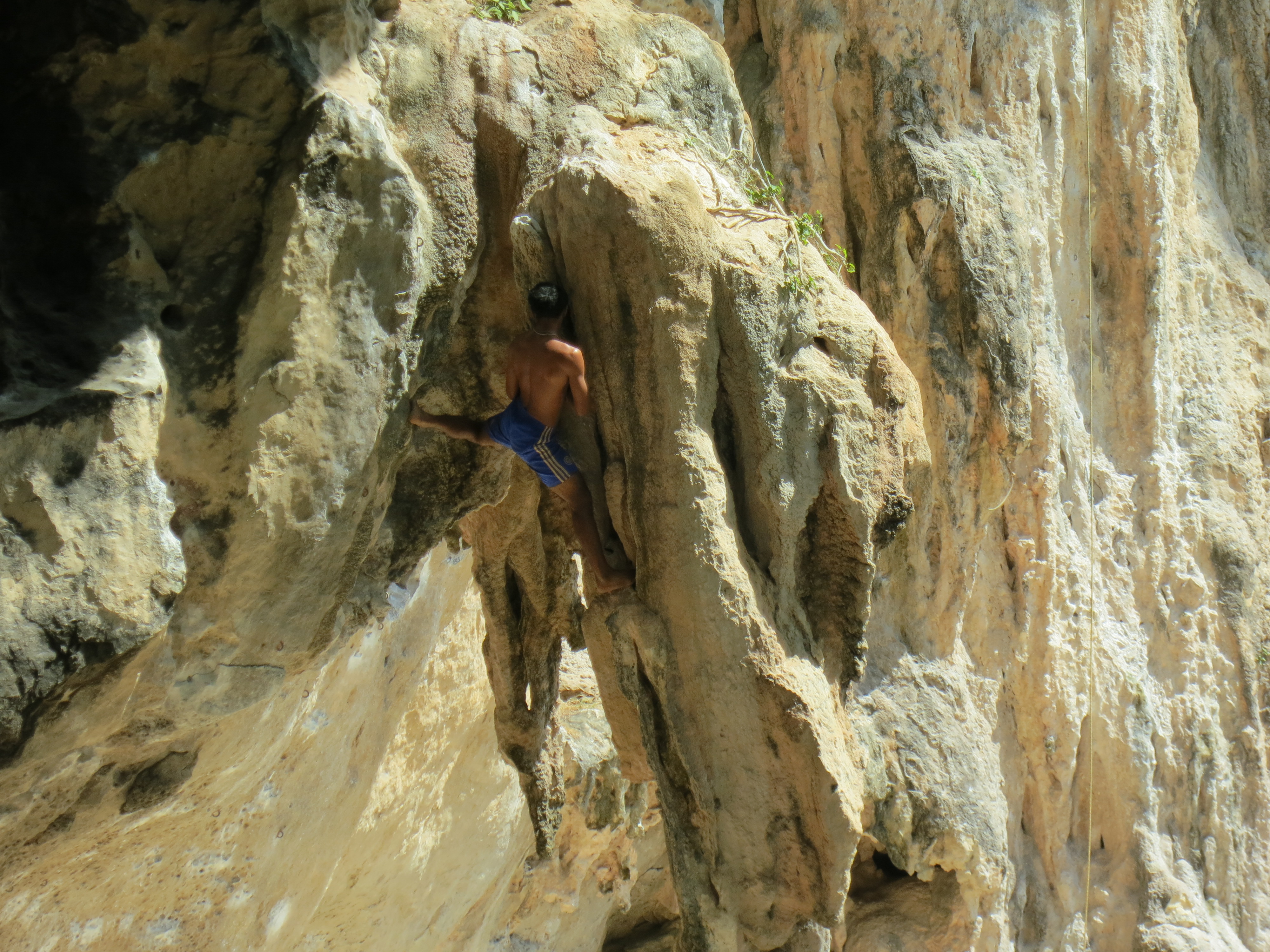
Impressive free climbing at Pra Nang Beach

Impressive free climbing at Pra Nang Beach

I did get to see some monkeys on my walk to and from Pra Nang, including a baby! I also stopped by Tonsai, a popular climbing spot, and watched several people clip in and maneuver up and down those sheer cliffs. It looked terrifying, but they had smiles on their faces, so well done them.

Baby monkey!

Baby monkey!

I’m not sure what the solution is for the conservation-minded tourist who wants to visit the Thai islands. There are some tour groups out there making an effort to be eco-conscious, so you can give your dollars to them. You can also go to more out-of-the-way islands, although those are becoming harder and harder to find, so you’re not adding to the overcrowding of the popular ones–but does that mean you’re just speeding up the exploitation of an otherwise untouched place? You could just not go at all, but missing out on the beauty of this part of the world would be a shame. I took a visitor survey at the airport and made a big deal about the lack of conservation efforts, so maybe if enough tourists do that it’ll catch a government official’s eye. I don’t know–what are your thoughts?

See, I still had fun
See, I still had fun

Koh Lanta and Krabi Town

After Phuket and Khao Lak, I took a ferry boat down to Koh Lanta. Let us not speak of that ferry ride, or at least not until a later post titled “Worst Transportation Experiences of the Trip.” Suffice it to say, when I arrived on Lanta Island (“koh”=”island” in Thai), I was soaking wet from ocean spray, my muscles were cramped from crouching on a crowded boat deck, and I was in no mood for the “island cleaning” charge I had to pay when I disembarked. Happily, things turned around once I got to my guesthouse, a stripped-down version of a hotel that populates all of Southeast Asia.

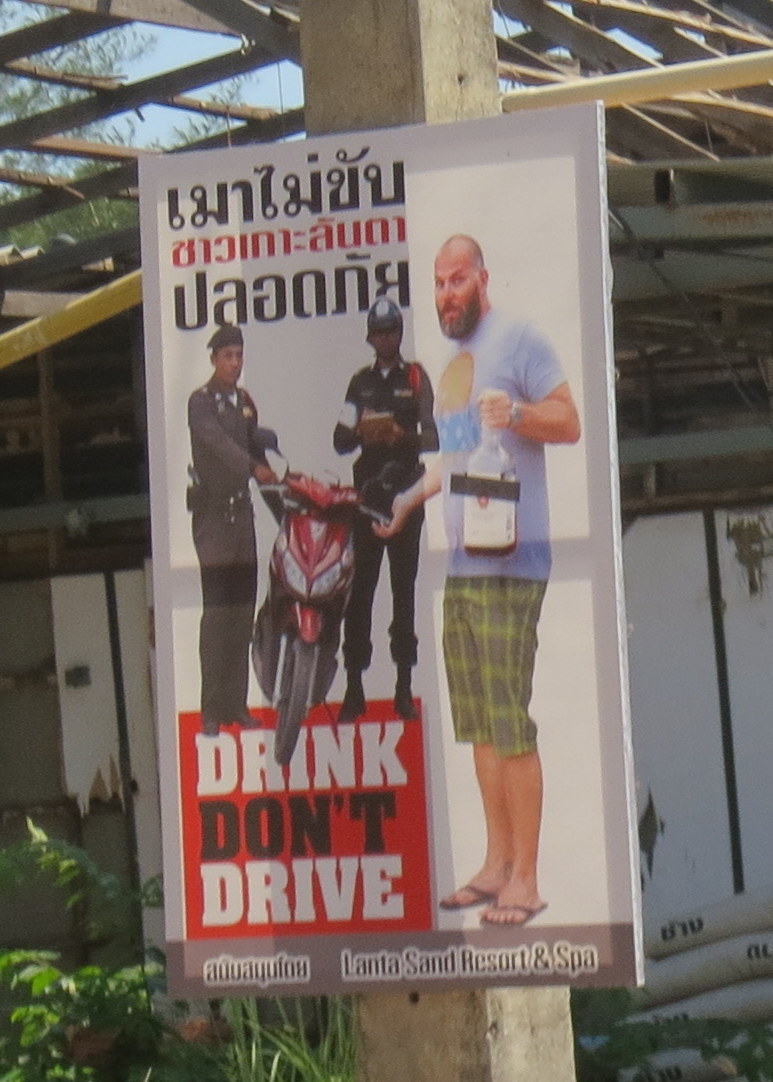
Best PSA, down to the black line through the brand name on the bottle of booze

Best PSA, down to the black line through the brand name on the bottle of booze

I repeated my formula from Khao Lak at Koh Lanta; I slept in, moseyed on down to the beach (more of a walk here than at Khao Lak, but that meant a six-minute walk instead of two), found food along the waterfront, read, sunbathed, floated in the ocean, found food along the water or up on the road, watched the English language titles on Thai TV (“Psych” and “Law and Order” seem to be popular), and slept. Foolproof formula. There’s more to see and do on Koh Lanta, and maybe on another visit I’ll work up the courage to rent a motorbike and take a tour, but this time, I was content to work on nothing but my tan.

Lazy days at Long Beach, Koh Lanta

Lazy days at Long Beach, Koh Lanta

Once again, this part of the world was very popular with vacationing Scandinavians. I invited myself to dinner with an older Norwegian lady so we’d both have company for the meal, and she chatted excitedly about all the places she’s visited with her daughter. The next night, I moved to a cheaper guesthouse, which wasn’t a good move in terms of sleep (the number of mosquitoes in that place was astonishing), but was a good move in terms of meeting people. A delightful Swedish couple invited me out to the porch for a drink and a chat, and we ended up staying out til 3.

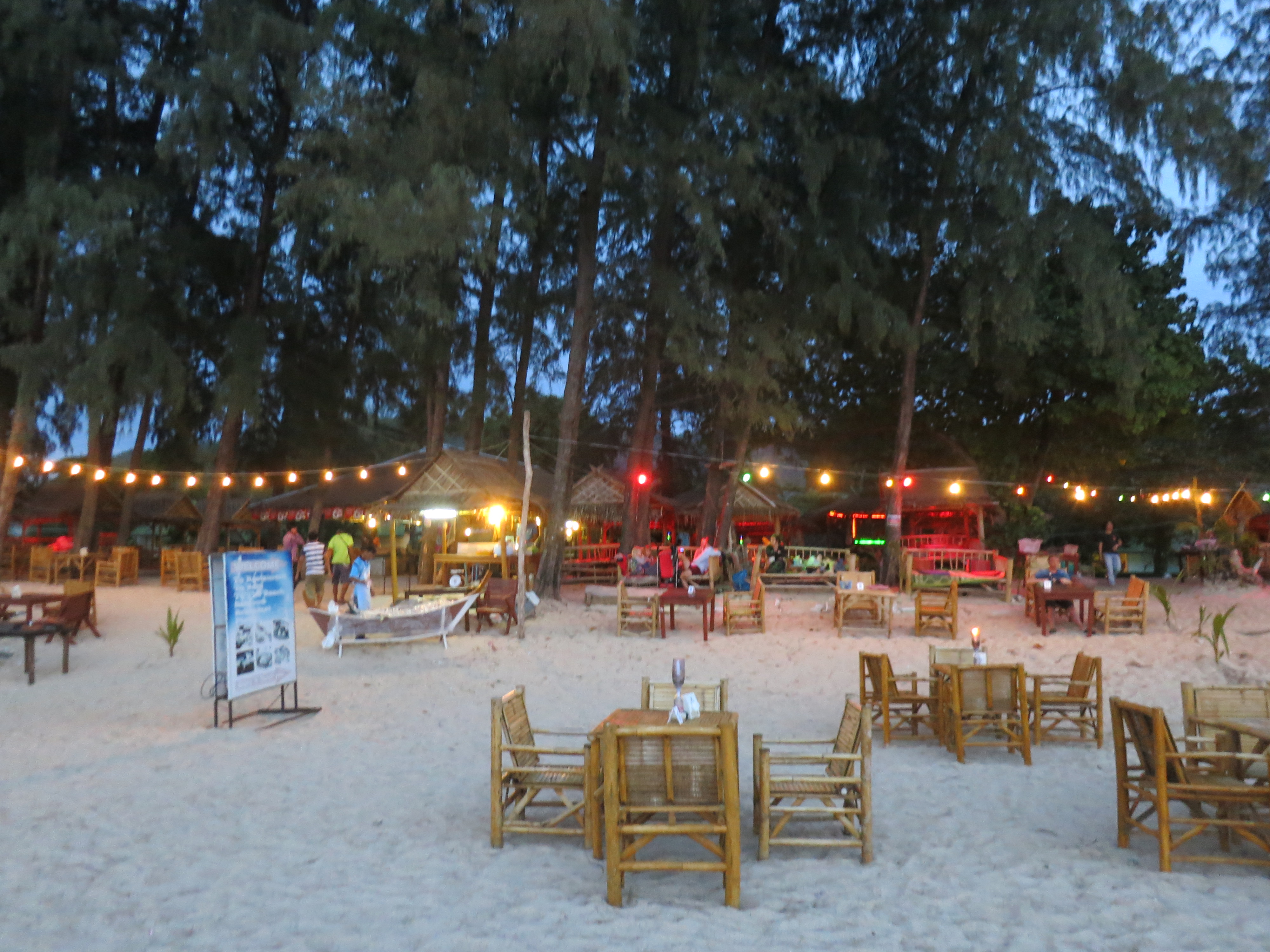
The restaurant scene on Koh Lanta

The restaurant scene on Koh Lanta

After a few days, I took a minibus up to Krabi Town (which, like Phuket Town, is part of a larger region known by dropping the “Town”). The minibus was cramped and at least an hour longer than I’d been told when I’d bought my ticket, but I made it in one piece. After a few weeks of hearing nothing but syrupy Thai ballads on the radio, I was pleased to find that my hostel was owned by a classic rock fan, and I registered to the sweet, sweet sounds of the Stones.

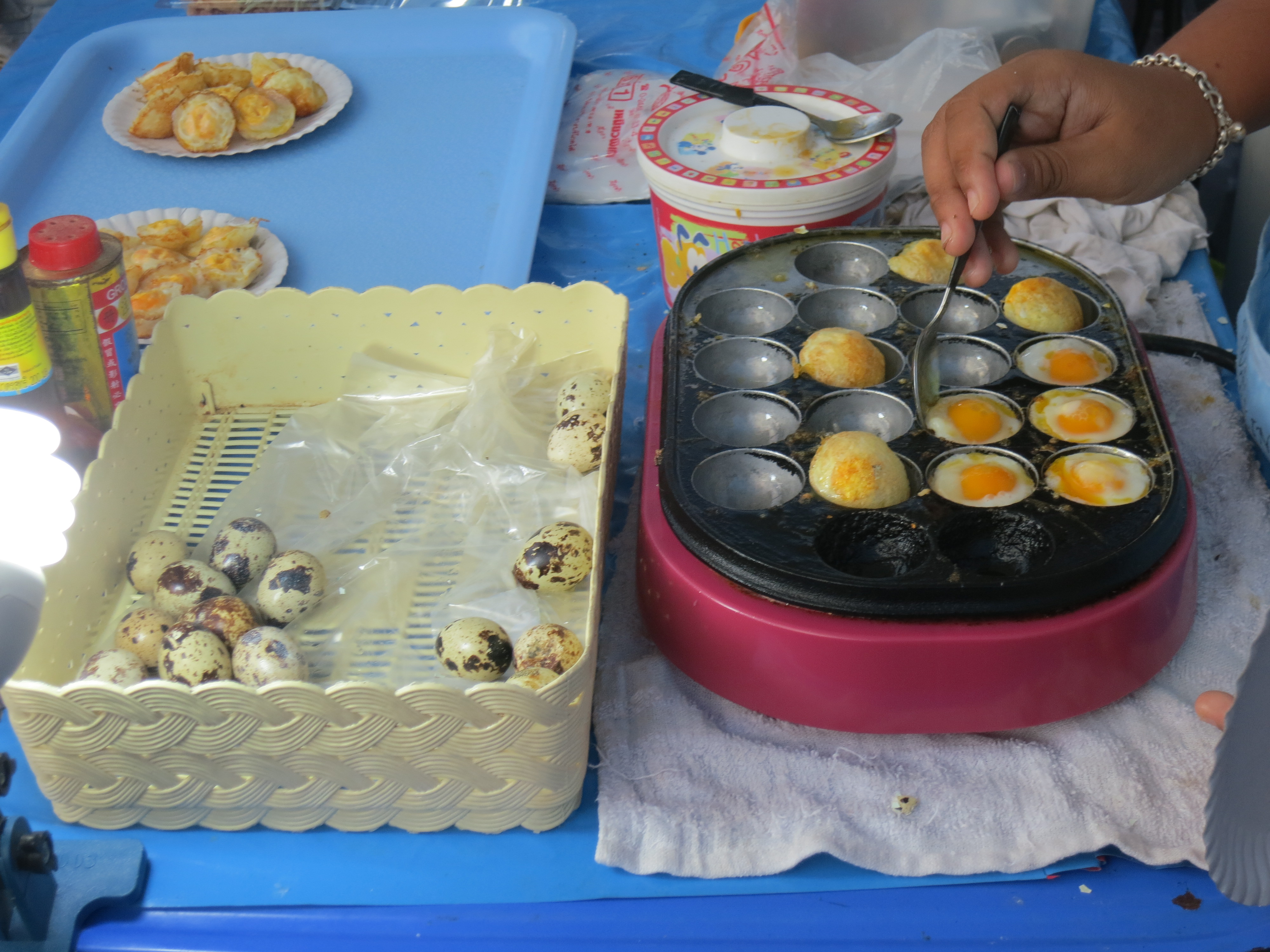
Cooking up quail eggs--which are then sprinkled with pepper and soy sauce, yum

Cooking up quail eggs–which are then sprinkled with pepper and soy sauce, yum

That evening, I went to the weekly night market just a few blocks away. I’d been shamefully unadventurous in my food choices down in the islands, so I sampled lots of street food here. Pork satay, quail eggs, crispy roti, and little sweet pancakes folded up with whipped cream and sprinkles inside.

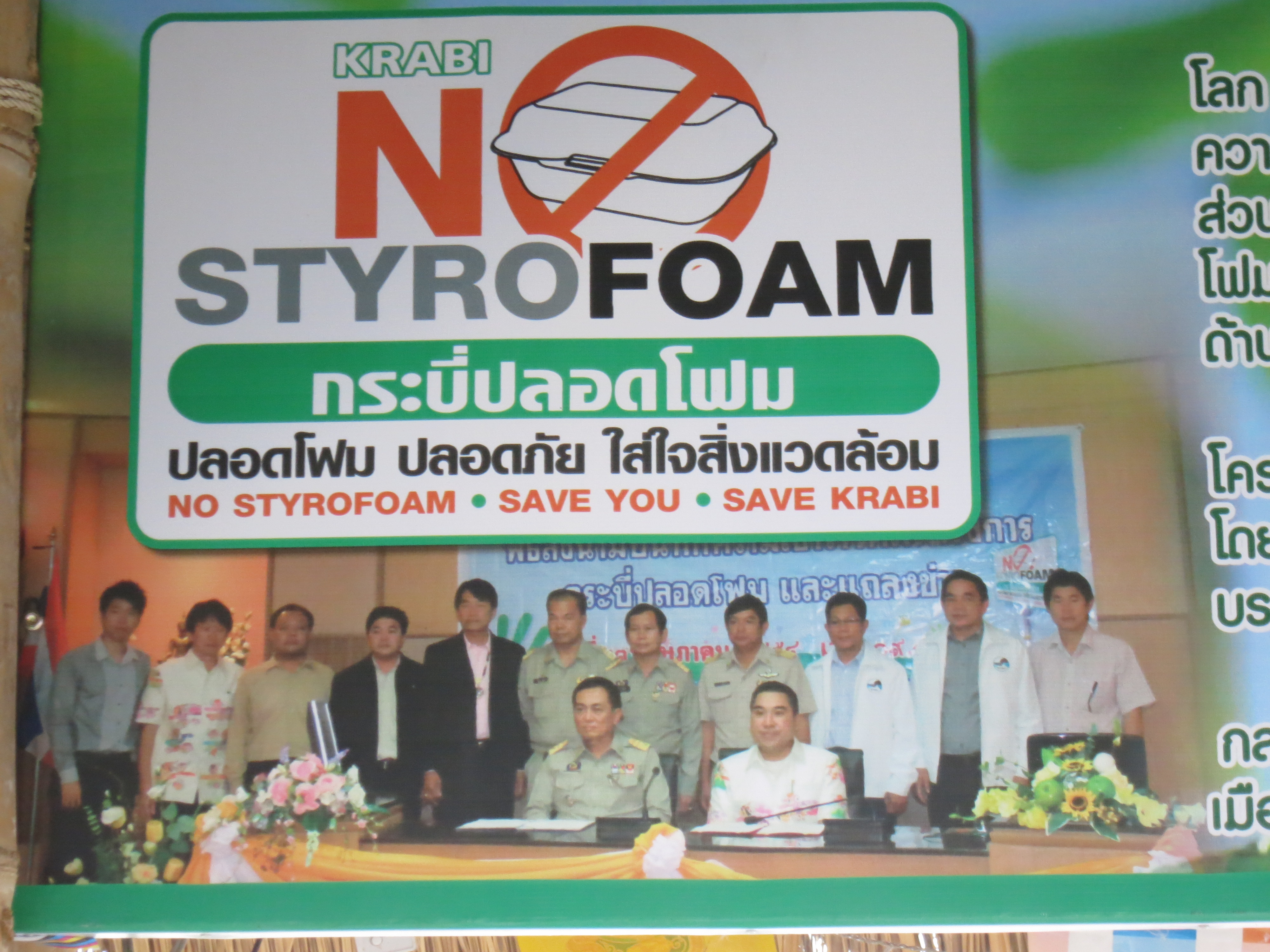
It was heartening to see this sign; Krabi is the only place I saw in all of Thailand that made a concerted effort not to use sytrofoam in its many street food stalls.

It was heartening to see this sign–Krabi is the only place I saw in all of Thailand that made a concerted effort not to use styrofoam in its many street food stalls.

I had my first real brush with Thai patriotism when the national anthem played over loudspeakers and every person stood still out of respect. A few people leaned over to slightly adjust their goods during the latter half of the song, but basically for the whole 45 seconds, anyone who was sitting got to their feet and anyone moving stopped in their tracks.

Wat K

Wat Kaew

The next day, I went to Wat Kaew, a newer Buddhist temple built in the center of town. (There’s a more famous “Tiger Temple” outside of town, which involves climbing a lot of stairs, that I chose to skip.) The exterior of Wat Kaew is mostly white, with no exterior murals.

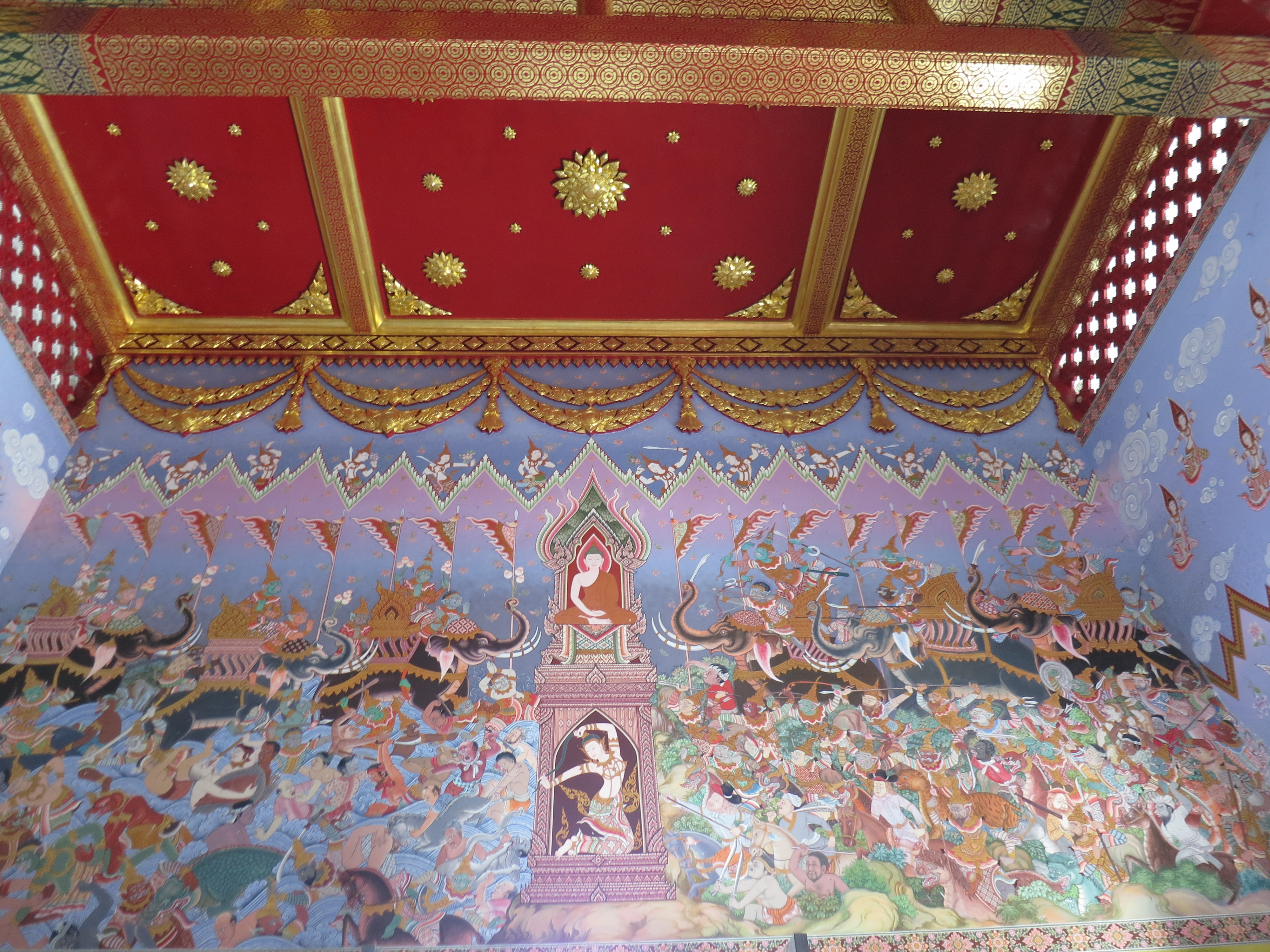
Spot the demons from different times and places.

Spot the demons from different times and places.

Inside, the painting on the back wall, around the door you just entered, depicts demons of all races engaged in battle using various weapons. The chaos of the battle takes place around a buddha seated serenely in the center. Apparently, this is meant to depict the battles we have within ourselves, against the desires that tie us to this world.There are also scenes of people engaged in daily life–lovers holding hands, friends sharing a laugh, monks holding out begging bowls, etc.

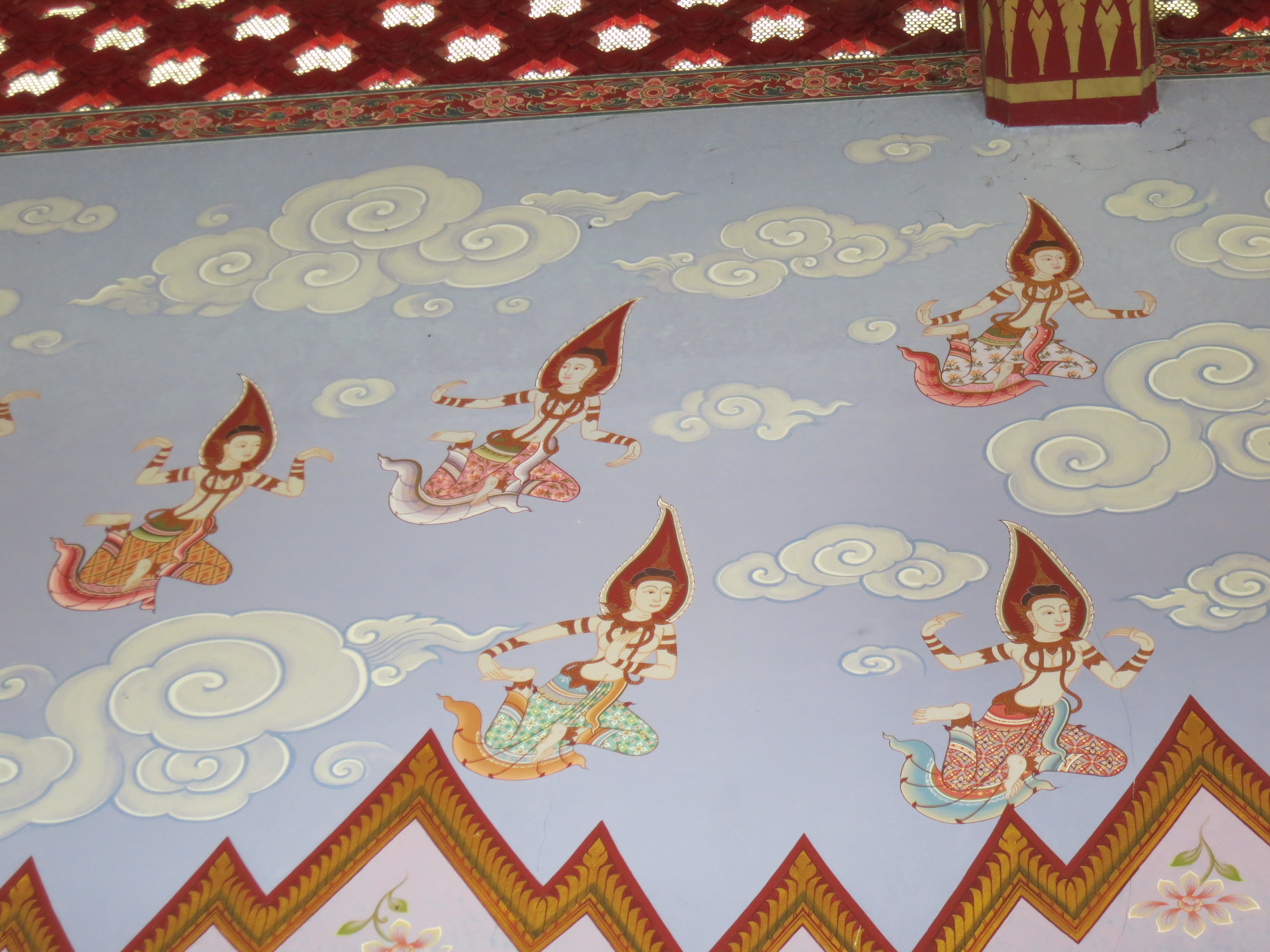
Asparas winging their way to the buddha up front

Asparas winging their way to the buddha up front

The side walls are lined with images of what I believe are asparas, dancing feminine spirits, who are meant to show your spirit’s improvement as you move toward enlightenment (and toward the altar). Finally, the wall behind the buddha’s altar contains images from the Buddha’s life (like the bodhi tree) and other religious symbols. This general progression of demons-asparas-buddhas is found in wats all over the country. (I hope I’m giving you the right basic idea on their significance; I’m cobbling together what I learned from memory, and my notoriously poor googling skills aren’t helping me any.)

Partially completed park

Partially completed park

The main feature of the wat that sticks out is the little park attached to it. The wat sits atop a hill, and down one side of it, they seem to be in the middle of building a small park. There’s a pond, a short path, and several wonderfully fake-looking statues of large wildlife, including an elephant and a cave full of a regal tiger and her suckling cubs. I saw a group of monks posing for photos by the elephant, their orange robes bright against the dull gray paint of the hollow statue. I tripped over garden hoses, two by fours, and a partially completed stone staircase that led me to conclude this park isn’t quite finished.

This sight surprised me as I rounded a corner

This sight surprised me as I rounded a corner

And that was it! I did spend a couple days exploring the beach areas of Krabi, and I’ll write about those in later posts, but for the most part my time in the Andaman Sea was delightfully lazy.