How Reading Disturbing YA Books Made Me a Better Person

The lit and library corner of the Internet was all aflutter last week over a Wall Street Journal article written by Meghan Cox Gurdon on the depravity of young adult (YA) literature today, and Sherman Alexie‘s response to that article. Gurdon tries to preempt those who would contradict her by saying they’re too interested in free speech and not interested enough in the well-being of teenagers who read books about truly horrible things like rape, abduction, drug use, and child abuse. She wants to protect young readers from being exposed to the horrors of the world, and I can understand a parent’s impulse to shelter children from bad things.

Lock up the children! It's a fantastic, truth-tellin' book!

Image from http://www.indiebound.org/book/9780316013697

But as Alexie points out in his response, it’s too late for too many young readers to be sheltered from those same horrors, because they’re experiencing them themselves. He lists several examples of teens who connected with characters in his books, who saw themselves and their dark secrets in the lives of his characters, and who found hope and redemption in the pages of those books. The people who wring their hands over the lost innocence of teens who read about tough realities are the same people who can’t or won’t acknowledge how rampant those problems are in the real world, and don’t help the teenagers who are living those tough realities every day. As Alexie says, “they are simply trying to protect their privileged notions of what literature is and should be. They are trying to protect privileged children.”

I was one of those privileged children, and I will say that some of the books I read as an adolescent were utterly surprising and terrifying to me. Books about war, and child abuse, and the sudden and inexplicable death of a friend scared and confused me. I’d never had to think about these things before, because I was fortunate enough to grow up in a family and an environment that had succeeded in protecting me from experiencing or even knowing about them. I had little in my life to compare to the lives of the characters in these books, except for that reliable adolescent feeling of isolation and fretful yearning that the best YA books capture so well.

The power of books, of course, is that we don’t have to be anything like the characters to relate to them, or to care about what happens them. Books are the purest gateway to new perspectives, and an ideal way to nurture empathy. The hope is that when those of us who were lucky enough to escape trauma in our young years encounter it later in life (and we all will, since that’s the nature of things), we will have a stronger sense of commonality gleaned from the pages of those disturbing, almost always redemptive novels of our youth.

I am positive that I am a better person for having read a wide range of books when I was growing up — from L.M. Montgomery to Cynthia Voigt, from Chris Crutcher to Lloyd Alexander. I wouldn’t want to read only books about depressing topics, but nor would I want to read only books about fairytale lives and happy endings. I found Dicey in Alanna, and Will Beech in Peter, and any number of characters and themes in various books, until I had a much more complete picture of the world than my own happy upbringing had given me (and let’s be clear, I am thrilled my childhood was so happy, and I don’t think my parents should have sat me down to tell me about bad things in the world in some big speech; reading them on my own allowed me to discover them at my own pace and ask questions as I needed). Reading was sometimes overwhelming in the new worlds it opened up, but I was never sorry that I’d learned more or considered a new point of view or felt closer to my fellow teens. It only made me determined to help end the bad things I could, and to endure those that I couldn’t.

“Books written in blood,” as Alexie puts it, are necessary for all adolescents; they’re lifesavers for those already bearing the scars of experience and for those whose wounds will come later, for those needing a guide out of a dark tunnel and for those who walk with them.

Film Club: Out of Africa


What a surprising movie, dearest fellow travelers! When the film started up, and Meryl Streep started in with yet another perfectly practiced accent telling tales from long-ago days while the camera swept over idyllic African vistas, I rolled my eyes and wondered why I’d let Netflix talk me into this. But it turned out to be an impressive film, a romance that investigates what it means to be a relationship, and a historical drama that doesn’t completely romanticize the rich white people’s experiences and their influence on the native black people.

one of many sweeping vistas

Image from http://www.dvdbeaver.com/film3/blu-ray_reviews51/out_of_africa_blu-ray.htm

Karen von Blixen-Finecke lived a pretty amazing life, marrying twice, growing coffee in the highlands of Kenya, building a school for Kikuyu children, writing a famous memoir, and making sweet, sweet love to Robert Redford. Okay, that last part is just what Meryl Streep gets to do in the film adaptation, but it’s based on real events with Karen’s lover Denys Finch Hatton. The movie’s PG, so we don’t see so much as a boob, but the steaminess of the romance is easily conveyed nonetheless.

My favorite part of the romance was how it was allowed to be a little rough-edged. Sure, there were plenty of scenes in which Karen and Denys share tender moments, or gaze deeply into one another’s eyes, but the conflict between the characters was never resolved to either party’s satisfaction. They were deeply in love, but Karen needed him to be home more often, creating a joint life with her on the farm and not jetting off to do safaris for months at a time, and Denys clung to his independence and his ideal of being able to love someone without possessing them or their time. The movie shows just a couple arguments about their differing needs, but they’re well-written and fair to each character. Karen could easily come across as a needy nag, and Denys could easily be a commitment-phobic cad, but we get to see the validity of both their positions, and the pain it causes them to be unable to compromise on their deeply held beliefs.

How often do you get a romance like that in the movies, one that doesn’t work out (not a big spoiler there; when the movie starts with a voiceover telling us that a man “gave the greatest gift” it’s no big leap to surmise that it ain’t gonna last and probably someone dies), but not because of outside forces like other lovers or an inconvenient death? One that doesn’t work out because love isn’t enough to sustain a relationship if other factors don’t line up like shared ideas about how relationships work and how to balance independence with commitment.

Karen's wedding outfit in "Out of Africa" -- 1913 fashion, yes please!

Image from http://pinoyfilmzealot.wordpress.com/2011/04/19/t500fc-369th-out-of-africa-sydney-pollack-1985/

The other major part of the movie, of course, is that this is a film set in colonial Kenya, a place ruled by a small group of upper-class British men who hardly considered their African “subjects” as anything more than servants and hunting guides. Now I know that Pollack was a sentimentalist, and there is definitely some unfortunate romanticizing and simplifying going on here, but there’s also a surprising amount of complexity and sensitivity. For example, Nairobi in 1913 was far from a homogeneous place but was rather  a multicultural hub, with Somalis, Indians, Kikuyu, and Europeans all interacting, and the movie shows that in tracking shots across the marketplace as well as in the background of many tête-a-têtes between main characters. Also, Karen’s  connection to the Kikuyu in her life is genuine, and her interest in improving their lives (treating wounds and illnesses in an informal hospital, securing land for her tenants when her farm fails) is real, and appreciated by the beneficiaries. The fact that she says she must get land for “her” Kikuyu, well, that’s paternalism for ya. (Ugh.)

Denys, unlike most of his fellow white men, admires the native Masai and Kikuyu people for having their own traditions, stories, and lifestyles. He still feels totally entitled to hire a local man to be his servant as he wanders the country shooting all the wildlife, of course, and that is an entitlement the film does not address. His admiration also too often veers into Noble Savage territory, but he still provides a welcome contrast to the boorish paternalism of the other members of the ruling elite in the film.

Malick Bowens, yes please

Image from http://www.imdb.com/media/rm3819084288/nm0100942

He also provides a great moment of real moral conflict for the audience to participate in, when he argues with Karen over whether the local children should be educated. Her view is that of course the children should learn how to read, as it will undoubtedly improve their lives and it is unfair to deprive them of it. Hard to argue with, except Denys points out that this will just create little Englishmen out of the children, and since they already have their own culture, do they really need the European one imposed on them? It’s hard to separate out the good of educating people from the harm of doing it by a colonial master’s mandate. Not to mention that it’s not like the Kikuyu children weren’t receiving an education already; it just wasn’t a traditionally European one involving books and schools. And all this swirled about in my head after watching a Hollywood romance! Not bad.

By the end of the (very long) film, I was totally engrossed in the life of this complicated, strong woman and the many people she comes to know and love during her time in Kenya. Apparently, the title for Blixen’s book came from a Latin saying, “Out of Africa, always something new,” and a few inevitable Hollywood clichés aside, this movie delivers on providing a few new ways of portraying love and colonialism on the silver screen.

Also, the cinematography makes me want to visit Kenya, like, yesterday.

ACAM: Singapore — Where to Go, Part 1

Thanks for all the fantastic suggestions on the last couple of posts, dearest fellow travelers! It feels good to have the main outline of the trip more clearly sketched out. I believe we left off ACAM in Indonesia, which means that now we turn to the city-state of Singapore.

Every time I look at a map of the world, I see the tiny dot of Singapore on the tip of Southeast Asia and assume it’s a small city perched at the end of Malaysia. In fact, it actually consists of 63 islands, and it’s not a small city, it’s rather large. It’s true that most of it consists of city, but there’s a surprisingly large swath of public park land to explore as well. An old friend recently visited Singapore, and the pictures of his trip make me even more excited to go there and see what else about it will surprise me.

Marina Bay Sands
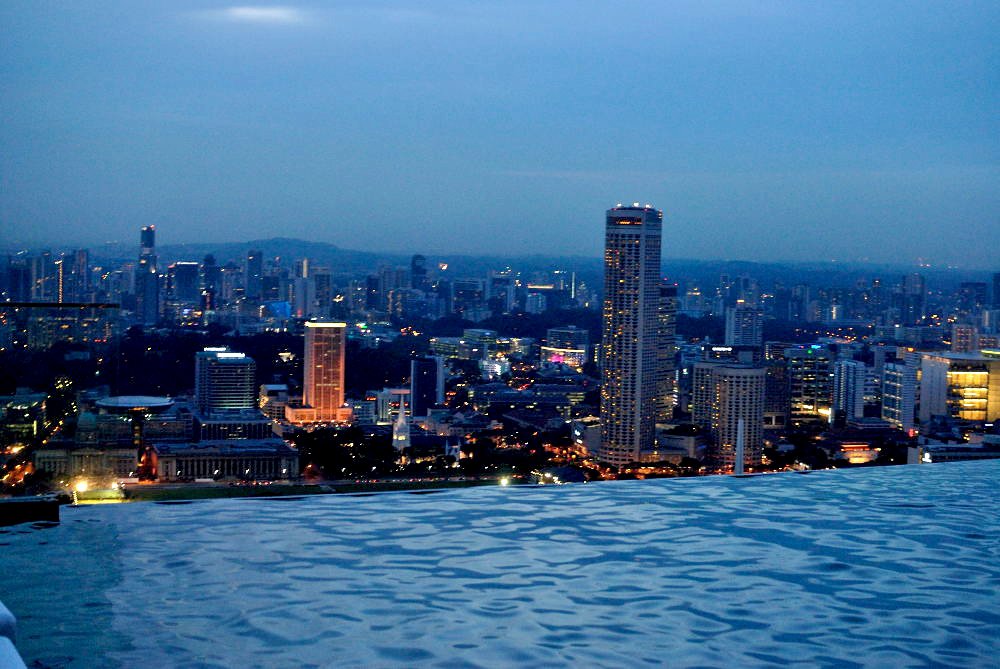
This hotel sounds sort of terrifying with its endless supply of luxury items and services. A hotel, shopping mall, casino, and even museum, it’s a monument to capitalism and aspirational living. I’m curious to see the place as a whole, but the main attraction is the infinity pool. Check out this photo!

over the edge

The infinity pool at Marina Bay Sands

Photo courtesy of Hale Cho.

It looks like you go right over the edge! The pool is totally secured there, but the water runs over it in such a way that it looks like a sheer dropoff, an edge to tumble over and a glittering city to fall into below. I am most definitely going in this pool and taking many heart-stopping photos of me “falling,” because if you can’t cause your parents heart palpitations from thousands of miles away, what kind of daughter are you?

The Southern Ridges
This is some of that unexpected parkland, and it looks delightful. There are all sorts of green spaces here, from meticulously planned gardens to a canopy walk through the tops of trees in the lush tropical forest. There’s also a famous bridge, the Henderson Waves, which gives the appearance of rolling gently through the air from one park to the next.

Look! Up in the air! It's an ocean! It's a bridge! It's... sightseeing!

Photo from http://www.nparks.gov.sg.

You can join guided tours through different parts of the park, learning about all the animals scampering about and the plants practically glowing their green at you. The canopy walk takes you right to a museum. Several different trails take you on different kinds of walks, with differing levels of difficulty. This kind of city/nature integration is a model I’d like Chicago to learn from, for sure.

So! There are a couple places I will definitely visit when I’m in Singapore. I’ve had a couple couchsurfers from Singapore, and I’m hoping I can stay with them each for a couple nights and catch up. In fact, one of my couchsurfers, the lovely Mindy, is a biology genius and a nature guide, so I might be able to snag a personal tour! Work your connections, people.

Running the Numbers: Where to Go

Hello, dearest fellow travelers! Sorry about the unannounced break; there were weddings and BBQs and many delightful things that kept me away, but now I’m back for our regular Tuesday/Thursday schedule. Today I’m introducing a new recurring feature called Running the Numbers. It’s time to get serious about budgeting for this world trip next year (NEXT YEAR JUMP BACK), so I’ll be working out what I can reasonably afford and sharing those insights with you so we can all furrow our brows in a shared nervousness about RTW budgets. Fun times, right? The budget I’m planning to work with is $30,000 over the course of a little under two years.

When I tell people I plan to travel around the world for about two years, the questions usually go: Really? By yourself? Is that safe? How can you afford it? To which I respond, yep, yep, as safe as living in a major American city, and I sure hope so! Since I plan to leave in 15 months, it’s time for me to get serious about that last part, and I’m starting to break down the budget and be judicious in which places I can realistically visit on that budget.

Every single blog written by world travelers contains at least one post on how much money the authors spent on their trip, so there’s a lot of info out there to analyze. I like the breakdowns on this blog and this one, although I do get dispirited when I see that our routes are different enough that they might not make the greatest basis for comparison. In fact, they go to many fewer countries than I had been planning to visit, so I’m starting to seriously considering pruning the itinerary. I don’t want to visit lots of places only to not have enough money to see all I want to see in each.

Currently I say I want to start in Australia and then see a lot of Asia, take the Trans-Siberian, and work my way down to some of Africa, then end in India. Looking at the phenomenal cost of visas ($80 to get into Kenya! $70 to visit India!), carefully plotting a course seems an even better idea.

So now I’m thinking my best course would look something like this:

Australia
New Zealand
Indonesia
Singapore
Thailand
Cambodia
Vietnam
China
Japan
South Korea
Russia
Poland
Hungary
Serbia
Turkey
Israel
Egypt
Morocco
Senegal
Kenya
Zimbabwe
South Africa
India

I’m sad to cut out Scandinavia, but those countries are super expensive and one of the main reasons I’d want to go, the aurora borealis, is never a certain sighting, so it’s smarter to come back another time when I can focus on patiently waiting for the lights to appear. I’m still not totally sure about each of the countries in Africa, because unlike in Asia they are much farther apart from one another and therefore they add quite a bit to transportation costs, but there are specific sights and cultures I want to experience in each of the countries listed, so I’m keeping them on for now.

Don’t forget that the plan is to return to the States after India, spend time with all the loved ones I missed, and save up a bit of money so I can go to Latin America (for those who are about to comment, “how can you not go to Peru/Argentina/Mexico?”).

Right then, dearest fellow travelers, what do you think? You’ll be reading about each of these places for the next several years, so chip in if you think I’m really missing out on a particular spot, or if you’re especially excited to hear about a place listed here.

Food for Thought

Food for Thought

Not a proper GBS, but here are a couple neat things I’ve found on the Internets lately:

Two easy-to-read infographics on why health care in the US costs more than any other developed nation. I think my favorite part is the angel halos around the “Truth!” bullets in that second one, and also the fact that they say outright that lack of regulation is what allows providers and insurance to charge more here than they would be able to in countries that keep that kind of thing in check.

The ever-brilliant Rebecca Traister has been watching and commenting on the last week of Oprah’s network talk show. This article is a great reminder of why Oprah matters so much — she started out with just about nothing and now is one of the most powerful women in the country. (Funny how she’s not often held up as the example of the American Dream by politicians and media pundits. I’m sure her gender and race have nothing to do with that.) Her departure will remind Americans of just how white and male the rest of the media landscape is, and what a loss that is for all of us.

Personal Notes

Also, thanks to all who have made suggestions for where the twins and I should vacation this fall! We’ve never had a sisters-only vacation before and we’re pretty psyched. I’ll keep you updated on what we choose.

Lastly, but perhaps most importantly, who is inviting me to their Memorial Day BBQ this Monday?? It promises to be a hot and sunny day, and I promise to bring tasty beverages. Let’s do it.

Travel Advice — From YOU!

Dearest fellow travelers, I need your advice. Yes, instead of me imparting pearls of wisdom to you, this time I’d like some insight from your fine selves. This fall, my sisters and I are going on a weeklong trip, but we have no idea where to go.

We were meant to meet up in Portland for an event and travel around for a bit, but the event got canceled, so now we’re not tied to any specific location and we’re thinking of going somewhere less expensive to get to. When we realized we had the whole US of A to choose from, we got a little overwhelmed. I’ve traveled to at least two places outside of my state every year since college, but on each of those occasions, I was visiting someone for at least part of the time. The last time I traveled anywhere just because it looked like fun, and not because I knew someone who lived there, was in 2002, when my boyfriend and I drove to New Orleans for spring break our freshman year of college. (Side note: we were so naive and law-abiding that we didn’t even try to buy alcohol, although clearly we could have walked down the street with a giant margarita in each hand and no one would have blinked.)

If you could go anywhere in the US east of the Mississippi for a vacation with beloved family members, where would it be and why? If you’ve already been to great places and have tips on why we should go there, share that too! Drop hints, links, places NOT to go, etc. in the comments below.

Here are the requirements:

  • Must not be more than $300 round-trip from Chicago, Michigan, or New York in late September.
  • Must be gay-friendly.
  • Must be east of the Mississippi River.
  • Must have a balance of city/country life within a couple of hours’ driving distance (we’re going to rent a car). We’ll need to be able to go to a sports bar, take a hike in some mountains or stroll around a big park, visit a museum or cultural attraction, and relax in a cheap but tasty restaurant. (We have many interests.)

And… GO! Thanks in advance for your help!

Mamet: Overrated and Half-Baked

I’ve more than once found myself in arguments at bars that start out as civilized discussions of theater and What It Means To Us Today, and quickly devolve into screaming matches like this:

Argument Partner: MAMET
Lisa: OVERRATED
AP: INCISIVE
L: BORING AND REPETITIVE
AP: GLENGARRRRRRRRY
L: UGH SAD MEN BEING SAD ABOUT BEING MEN

And then some cussing, to stay true to the playwright.

That pretty much sums up my feelings on Mamet, but in sentence form, here it is: David Mamet has a solid grasp of craft, and very often a witty turn of phrase or bitter monologue, but he doesn’t seem to like people very much, he has yet to conceive of a woman as a fully realized character, and his work leaves me exhausted and despondent. The message of his plays or movies generally seems to be, “Being a man is hard but instead of investigating why that might be or the different ways I might be a man and interact with others, I’m going to fuck up a lot and be angry about it.” Looking at it that way, he’s apparently Judd Apatow’s muse.

And now he’s come out as a cheerleader for Free Enterprise and an enemy of Higher Education. As Tom Scocca notes, Mamet’s new book on his conversion from indifferent Democrat to passionate Republican isn’t saying anything new that conservatives haven’t been saying for years, including the part where he doesn’t seem to have done much critical thinking (such as not recognizing that participating in a capitalist society doesn’t automatically preclude you from being able to oppose capitalism). His attacks on American universities are the same tripe you can hear on any conservative talk radio station–they make our children hate America! they actually prevent independent thinking!–and reveal a similarly disappointing investment in research, reflection, or dialogue with others.

Of course his liberal fans are going to be all torn up about this, because he’s a GENIUS who went to the OTHER SIDE, but it seems like a natural progression for me. Here’s a guy who saw that the world is very often fucked up, and that people do fucked up things to each other, but instead of investigating why this was so, or finding a solution, he just ranted and sulked. “Converting” to Republicanism just puts a political label on that kind of thinking.

Vote with Your Dollars! Go See “Bridesmaids”

I don’t know about y’all, but we’ve been having a miraculous week of warm weather and sunshine here in Chicago. Luckily, it’s going to be rainy and cold this weekend, lest we get too confused about where we’re living and start advertising the city as a spring break destination or something. This means that it’s a good weekend to see a movie without any feelings of guilt for not enjoying the outdoors! May I recommend you go see Bridesmaids in droves.

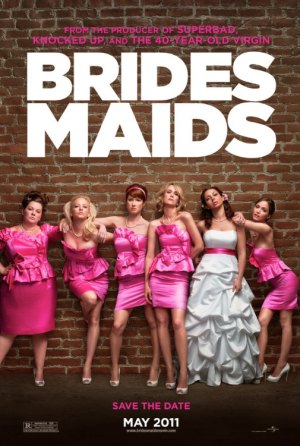
Bitchin' but not bitchy? It could happen.

I haven’t even seen the movie yet, but I’ve read all the build-up to it. And people are putting a whole lotta pressure on this movie; it’s supposed to be the one that proves that not only are women funny, but they’re bankable. Putting aside the inherent ridiculousness of even pretending that women aren’t funny and that no one wants to spend money watching them be funny in movies, and also putting aside the fact that it took a big-name male producer (Judd Apatow) and established male director (Paul Feig) to get this female-penned screenplay (Kristen Wiig, Annie Mumolo) made, I say that since the movie has already been built up as a litmus test for what kinds of comedies studios will be greenlighting for the next decade, it is worth it to speak up.

And how do we speak up in this country? If you guessed “vote in elections,” nice try! The correct answer is “with money, baby.” So vote with your dollars for a funny, raunchy movie written by and starring women. If you can make it, go see it this weekend, since studios rely heavily on opening-weekend box office numbers when they make decisions for future projects.

Many reviewers liked the movie, including Manohla Dargis at NYT, Dustin Rowles at Pajiba, Mary Elizabeth Williams at Salon, Dana Stevens at Slate, Scott Tobias at The AV Club, etc. I doubt the movie will show me a Headly Surprise, but it just might pass the Bechdel Test, and at the very least a movie about how exhausting weddings can be for single people is welcome in this, my year of seven and counting wedding invitations. And perhaps most importantly, this movie’s going to be hilarious.

UPDATE: It was hilarious!

Three Pro Tips on Writing

#1: Author Joanna Russ died on April 29th. She wrote science fiction and literary criticism, and I have The Female Man waiting in my Goodreads queue. Another one of her books had the best book cover:

It's sad and funny 'cause it's true

#2: Zadie Smith has shared the shortest, most to to the point, list of ten rules for writers at the Guardian:

1 When still a child, make sure you read a lot of books. Spend more time doing this than anything else.

2 When an adult, try to read your own work as a stranger would read it, or even better, as an enemy would.

3 Don’t romanticise your “vocation”. You can either write good sentences or you can’t. There is no “writer’s lifestyle”. All that matters is what you leave on the page.

So far I have #1 down! Excellent. (Read the rest here.)

#3: The Rejectionist has a delightful (as usual) post on using female characters’ deaths as plot devices:

Racking up the (hot, slutty, dismembered) Lady Character body count to prove just how Depraved your serial killer is: NOT APPROPRIATE

The Lady Character randomly kills herself/is murdered solely to add Dramatic Interest to a Conflict between two Gentlemen Characters (aka the “Christopher Nolan”): NOT APPROPRIATE

I love that she named that last one. (Read the rest here.)

For Mother’s Day: Choosing Love

Most Mother’s Day pieces talk about how inspiring and brave the mother in question is, and how the daughter wanted to be just like her when she grew up. Well, my mom visited most of the national parks west of the Mississippi on her own at age 19; she moved across an ocean to marry the man she loved and start a career; she went back to school fifteen years later and now is department chair of her college’s Department of Education. Together with the man she changed continents for, she’s raised three daughters and she is still happily married. So yes, my mother is damn inspiring and quite brave, and of course I want to be just like her when I grow up. (Good thing, if the inevitability of turning into your mother is to be believed.)
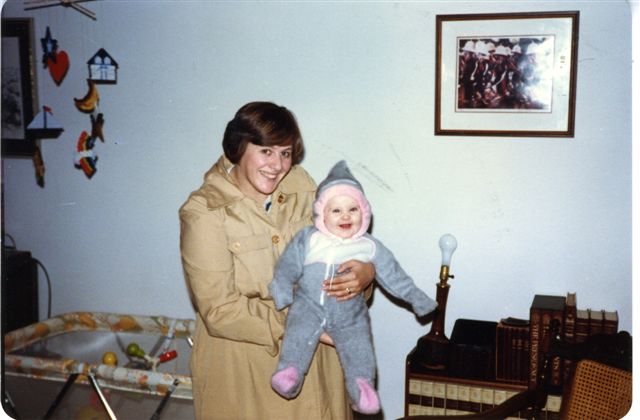
Look how delighted I was just to be held by her!

But when I was younger, rather than finding kinship in books with loving, caring mothers, three of my favorite books centered on absent, selfish, sometimes cruel mothers. I read Time Windows by Kathryn Reiss, A Solitary Blue by Cynthia Voigt, and Midnight Hour Encores by Bruce Brooks over and over. The details of each story differ, of course, but in each, the mother puts her own needs before those of her children, and the children suffer for it. In Time Windows, the mother feels trapped by domesticity and wants her own career (to be fair, it is 1904 and this was unheard of for white, middle-class women); in her anger, she locks her daughter in an attic as punishment for clumsiness. In A Solitary Blue, the mother leaves her much older husband for a bohemian lifestyle, and only returns to her son’s life when she needs money to fuel a drug scheme with her new lover. In Midnight Hour Encores, the hippie mother gives her daughter to the father within a week of the child’s birth, unable to face the huge responsibility of raising a child; years later, she gets her life together and becomes a successful businesswoman willing to set up a tentative friendship when her estranged daughter contacts her.

Why on earth would I want to read about these women? My own armchair self-analysis finds a few reasons: I wanted to see Bad Mothers punished in order to feel more secure with my Good Mother. I secretly feared my Good Mother might turn Bad and abandon me.

I think both of these are true. My mom was at home, insisting on breakfast every morning so I’d grow up strong, checking that I’d done my homework, wiping away my tears when the kids at school were mean to me. But when I was age 11 and devouring these books, she was also going to classes, doing her own homework, and writing her dissertation. In my confused adolescent mind, I saw her having a career (where before I hadn’t noticed one, since she’d taught at the school I attended so she seemingly extended her mother role to school just for me–ah, the utter narcissism of children!) and I freaked out. She’d never shown an interest in leaving home before, but what if Having a Job lured her away, as it seemed to for the mothers in these books? At age 11, I was just starting to see how taking care of my sisters and me might be a major pain in the ass, so I could easily see how she might chuck it all in to focus on her career and herself rather than on tending to our whiny needs.

But before I could get too into this strange fantasy of abandonment, the very books that led me down that path turned me right ’round again. The advantage of being an obsessive reader is that multiple meanings make themselves available on multiple readings. The protagonists of A Solitary Blue and Midnight Hour Encores start to see how their mothers had made difficult decisions when they’d left their kids. Not that this made them feel much better about how hurt they were to be left behind, but they did understand a little more how their mothers had their own interests that were separate from them, the kids, and how they’d pursued those interests instead.

Now, one of the things my mom has always said is how fortunate she feels that she was able to stay at home with us when we were little and then go back to school to continue her career, rather than having to do it all at the same time and missing out on my sisters’ and my young childhood. Unlike the mothers in these books, she didn’t have to make that hard choice. Here I was worrying about her doing something drastic, but she felt no need to do something drastic, because after those early broke years on the south side of Chicago, her husband was making a decent income that opened up possibilities.

But even if she’d had to choose, she would have chosen us. I asked her recently if she ever felt like putting us first meant putting herself last, and she said it never felt like that, because it was always about putting the family as a whole first. She didn’t see a divide between her interests and ours, because they were the same. Even when she decided to return to school and get her PhD, she saw how that had a benefit for us, too. After all, she wanted we three girls to grow into independent young women who were confident of their ability to do anything they desired, and making her own professional dreams come true was setting a good example for us.

Another good example she set, though of course it didn’t become clear to me until years later, when we’d all left the house, was that she never lost her sense of herself in us. She drove the twins to basketball practice, she listened to me practice scales on the piano, she bent over our math homework with us, she read stories aloud to us before bed, she commiserated with us on our tales of woe from school, she went to parent-teacher conferences, she joined the marching band boosters club, and so on ad infinitum. But she only came to basketball games, not practices; she didn’t sit through my piano lesson, just the recital; she only helped on homework we were stuck on, rather than checking each assignment to make sure we’d completed it. These are all things other parents do, other parents who perhaps do not have enough hobbies of their own or who don’t know what to do with the precious free time they find themselves with.

When I was growing up, this was simply the norm; from time to time, Mom had her dissertation to write, or a magazine to read, or a friend to chat with. If we were hurt or needed something or whatever, of course we could interrupt and she’d drop everything in a second. Otherwise, we could amuse ourselves, and she was not at our beck and call. Again, this was not just a good choice for her own sanity, but for our well-being and growth; we learned that everyone needs their space and that we could rely on ourselves for entertainment instead of needing someone else to feed it to us. She’s told me that she saw two dangers in losing yourself in your children: you either become resentful of the time and energy they take from you, or you expect something in return, like “I put my whole world into you, so why didn’t you turn out perfectly?” No one needs that kind of pressure, and no one ends up happy. I remember seeing Khalil Gibran’s The Prophet on her nightstand, with the “On Children” essay bookmarked. You know the one:

“Your children are not your children.
They are the sons and daughters of Life’s longing for itself.
They come through you but not from you,
And though they are with you yet they belong not to you.”

The astonishing thing to me then, that adolescent reader of books and dreamer of dire events, was that she was choosing us. The astonishing thing to me now, a single woman of 28, is that she chose us so consciously and conscientiously. She thought ever so carefully about every choice before making it, and she had good reasons for each parenting decision she made. (Note: none of this is to discount my dad, who is his own wonder but not the topic of this essay. The two of them were really big on making all parenting decisions together, and their united front was impenetrable.) She wasn’t on mothering autopilot, which is a relief to me now, since the idea of mothering is exciting but also terrifying, because how do you figure it out? By doing it, and doing it mindfully, as it turns out.

That’s the final message I got from these middle school books, too. Mothers aren’t just mothers whose only focus is their children; they’re people who have a vast array of interests, needs, and desires. That’s what was so scary to me. I was just starting to realize that mothers didn’t have to be as good as mine was, that they didn’t have to be there for us whenever we needed them, that they didn’t have to show their unconditional love on a daily basis.

I think my mom would say that she did have to do those things, that her love for us was so strong that she couldn’t imagine doing it any other way. But there were so many other ways she could have raised us, and she chose this way, the way of love, humor, strength, intelligence, curiosity, and kindness. That takes not just a good mother but a good person, and when I realized my mother was not just a good mother to me but a good person in the world, I saw more clearly why I wanted to be like her.

Happy Mother’s Day, Mom.
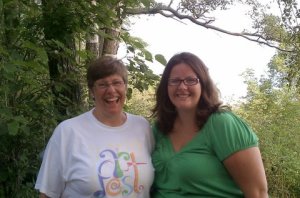
at Inspiration Point -- relevant, no?