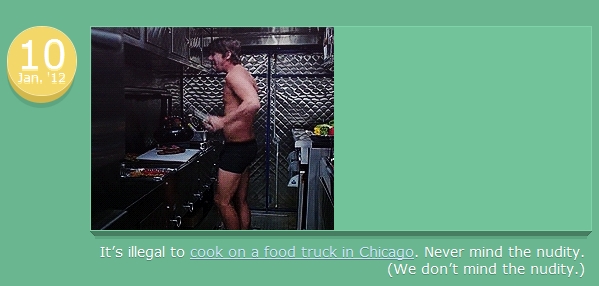
I started a very specific Tumblr last week: Crappy Editings, for fans of the TV show “Happy Endings” who just want the writers to at least Google some stuff if they’re going to pretend the show is set in Chicago.
Mlle. O’Leary and I enjoy the rapid-fire dialogue and ridiculous situations of this show, but it seems every time we talk about it, we find another aspect of Chicago life that the writers got wrong. Surely someone on staff must have lived in Chicago once upon a time? So many comedy writers and actors do start out here, after all. It’s such a great city! So many of us live here and are super defensive about it! Maybe just hire a fact checker now and again, or call up your cousin living in Lincoln Park to get just a hint of some local color.
Anyway, if you want to check it out, head on over. Screenshots and snarky text abound.
I can’t figure out how to put the Stop SOPA blackout page on this site today, but I’m not posting new material because I want to draw your attention to these terrible bills that the Senate and House are working on. Check out this site to get a quick rundown of why these bills are a terrible idea.
The kindest light to read them in is that legislators (and their powerful lobbyists like the Motion Picture Association of America and the Recording Industry Association of America) want to stop copyright violations. But the actual end result of the legislation as written is the ability of the government to shut down any part of the Internet it wants to. That’s right, any time it wants to, the government can just shut down a site and say it’s copyright violation — and they can do it without even allowing the affected site to defend itself. Also, no sites (like Google or Facebook or anything) will be able to direct traffic to the affected site.
Your own site disappeared by a government organization because someone doesn’t like it? Sounds like censorship to me.
Stop SOPA and PIPA. Write and call your senator and representative. Obama has come out against the bills as written, but that’s not stopping Congress from trying to push them through anyway. Take action!
Several months ago, the video “Stand by Me” went viral, and the eyes of many all over the world welled up with tears at the sight of musicians all over the world playing the same song, separated by distance but united by song. Turns out the organization that distributed that video, Playing for Change, has been busy making many more such videos, touring the United States with some of the featured musicians, and starting up a foundation to build music schools in communities worldwide. The snazzy website features some fun and some touching videos, like “One Love,” “La Tierra del Olvido,” “Satchita,” and “Gimme Shelter.” And at first I was a little wary of the whole operation.
“Good grief, Lisa, will you never just be satisfied with a good thing when you see it?” I hear you asking. And the answer is no, I will always want to look critically at an organization to find its shortcomings, so that I can 1) be fully aware of what efforts I’m supporting, and 2) be in a position to offer constructive criticism to that organization. Mostly, I saw the artists page, which looks like this:
And then I saw the crew page, which looks like this:
And I thought, “Uh oh, white people, what are you doing?”
Because we are so terrified of being called racists that we won’t even talk about racism in this country, white Americans are sorely uneducated about their own privilege and what they can do about it. This leads to a whole lot of nastiness on the more conservative side of the spectrum, and well-meaning condescension of the “let us tell you how to fix your life” variety on the liberal side. None of which goes very far toward mending race relations in the US.
Granted, the whole aim of this project is to go global, to not be confined to the United States. But look at that crew, and the founder, and the company that owns their for-profit arm; they’re all white folks who are likely living a pretty comfortable lifestyle. Contrast that with the artist pages, which shows many people of color in small, poor villages, and maybe you can see why I’m wary of the relationship.
But after I looked into the site more and saw more videos about the foundation, I’m happy to say I think there’s much more good than harm going on here.
Saving the world is a wonderful goal, of course, so long as you’re aware that you can’t do it on your own or all your way. Fortunately, PFC seems to get this. They hold a passionate belief that music is a uniting force that can and will bring peace to the world. They find musicians who share the same belief, and they work together to put the ideal into practice.
Their foundation came about from asking some of the musicians who came from poorer backgrounds, “What can we do to help?” Not “you should do this” — a crucial difference. It was the musicians who said they wanted to schools to teach the next generation how to make music and be a force for peace. The people of Kirina in Mali took the money and supplies provided and built their own school; no outsider crusaders doing it for them and expecting gratitude. This is the kind of assistance — monetary, material, non-invasive — that activists the world over consistently say is the best, most sustainable kind. Kudos to PFC for getting that right.
Everyone involved in the project is devoted to the idea that music can and must be a force for good in the world, that the act of creating music is a unifying one. I absolutely agree, and it’s encouraging to watch thousands of musicians, videographers, editors, villagers, and audience members from all corners of the earth enthusiastically supporting this idea. Check out the participation page on the PFC site to see how you can support an organization supporting the work of musicians and peacemakers all over the world.
Happy New Year! I hope this finds you all well and rested after the holiday festivities. It finds me recovering from a cold and nursing a minor head wound sustained from extreme clumsiness, but I’m still riding high on a happy Christmastime, so I’ll take what I can get.
Books are the MAP to my heart. Ba dum bum.
This year, I asked my family to not get me too many new things because I’m trying to focus on only obtaining material items that will be specifically useful on my trip, which as you all know starts in September. So rather than the usual books and CDs, I received some wonderful items off my REI wishlist, and a few fun surprises.
But normally, Christmas is a time for exchanging books and stocking up on new reads for the new year. Is this true for you? What new books have you acquired that you can’t wait to read? Is anyone switched over completely to e-readers and squirreling new books away there?
Only a few of my unread books are as old as these. Defoe, I shall tangle with you yet!
This year, I’ve made a change to my fiction bookshelf (there’s also a nonfiction/politics shelf, a plays/poetry shelf, and a YA shelf). I’ve found all the novels I own but haven’t read yet, and I’ve turned the books down so their tops stick out rather than their spines. Over the course of the next eight months, I’m going to read through as many of those as I can. I love using my local library, and I certainly love buying new books, but I think it makes sense to at least get through what I already own before acquiring more. Looks like about 45 titles — maybe I’ll make finishing half of those my goal?
Seems the ancient Roman tourist wanted statues and holy sites, but no million-dollar views. On the typical tourist of Imperial Roman times, as he ascends the Acropolis in Greece:
“The view was staggeringly beautiful, too, but the visitor was less inspired by that. Like the mountaintop, it was too grand and imposing, not the kind of sweet scenery he favoured. And since the gods, too, were thought to prefer intimate settings, there was nothing ‘divine’ about sweeping vistas–they just conveyed emptiness.”
— Maxine Feifer, Tourism in History: From Imperial Rome to the Present, 1985, page 18
 Mlle. O’Leary and I enjoy the rapid-fire dialogue and ridiculous situations of this show, but it seems every time we talk about it, we find another aspect of Chicago life that the writers got wrong. Surely someone on staff must have lived in Chicago once upon a time? So many comedy writers and actors do start out here, after all. It’s such a great city! So many of us live here and are super defensive about it! Maybe just hire a fact checker now and again, or call up your cousin living in Lincoln Park to get just a hint of some local color.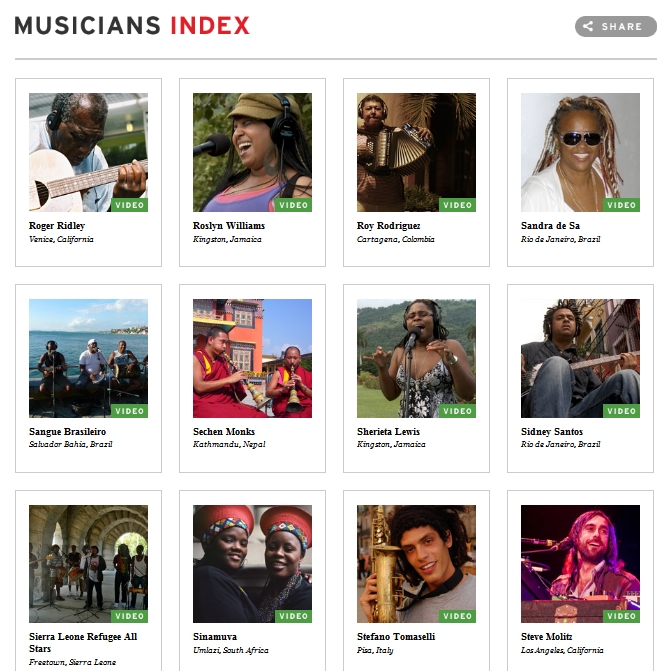



 Stowaway Travel Writing & Editorial Services