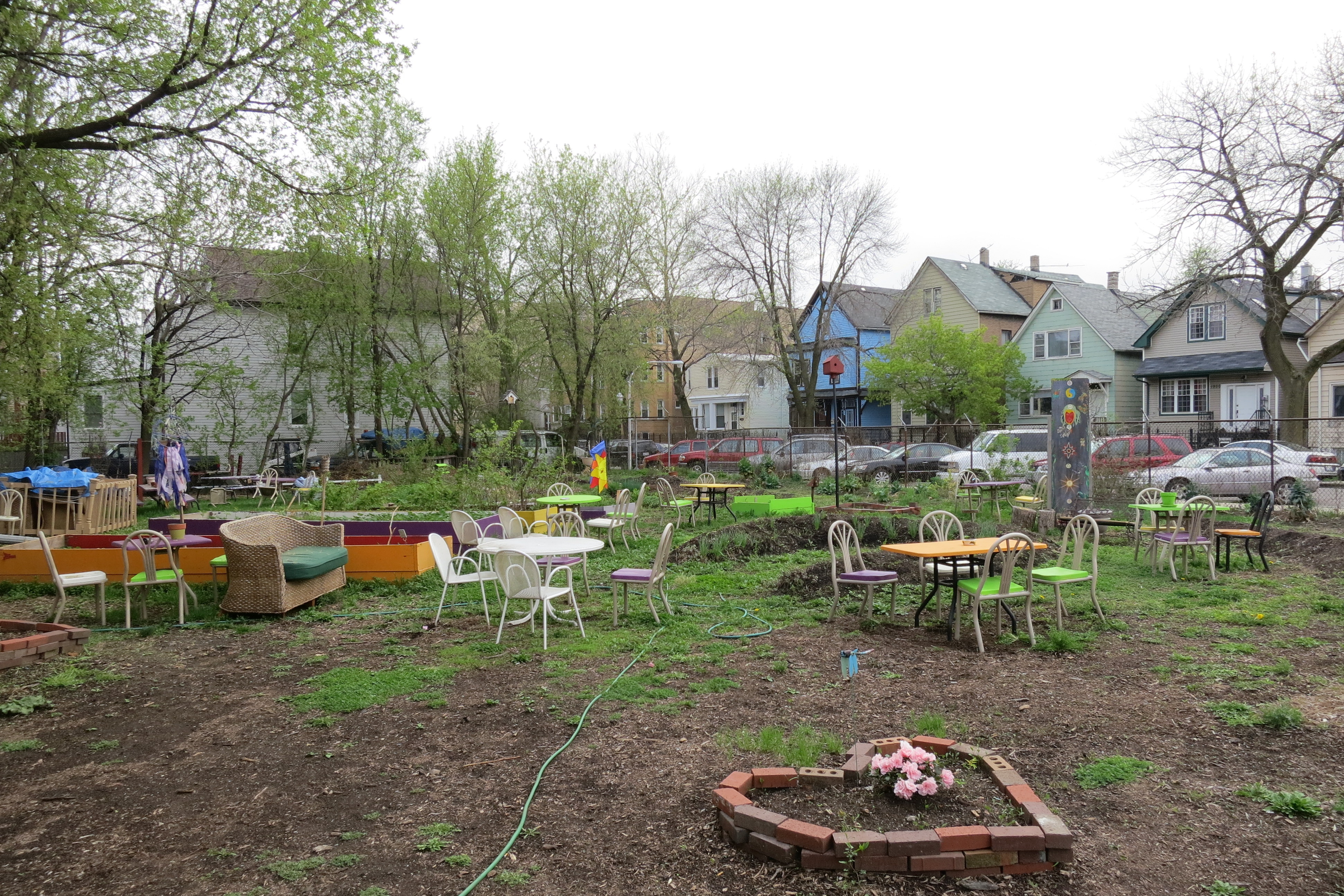
New Centerstage Review Up

Other than the obligatory college performance of a Beckett play, I haven’t really seen much avant-garde or absurdist theater, and I’ve only read a few plays in the style. Generally, I enjoy the heck out of the wit and wordplay, and get annoyed by the bleak outlook. That proved to be true of the latest play I saw for Centerstage, Trap Door Theatre’s Smartphones. Here’s an excerpt from my press release:

Amelia (Géraldine Dulex) and Barbany (Chris Popio) arrive minutes apart in the living room of an absent host’s house, and they immediately start arguing about whether either of them has a key to said house. In the middle of this argument, Chantal (Jodi Kingsley) and Dagobert (Antonio Brunetti) arrive attached at the hip, and another round of arguments begins, this time concerning the number of maids employed by their host, Fede. The rest of the play is an hour-long series of similarly petty arguments and minor revelations, but every moment is entertaining.

You can read the rest of the review here.

Trap Door is on the second floor of a restaurant in the east part of Bucktown. Right by the Clybourn Metra stop, it’s this little corner of a couple restaurants, a bar, a flower shop, and a cafe. It’s a nice place for a pre-show meal or post-show drink. Enjoy!

Hometown Tourist: Chicago Cultural Center

What’s that saying about the hidden gem of a city? I’ve found Chicago’s, and when I say “gem” I mean “it looks like a beautiful jewelbox on the inside.” The Chicago Cultural Center is a neoclassical building running the length of a city block on Michigan Avenue. Even though it’s across the street from Millennium Park, I’d never heard of it before a few of my friends went on a tour and urged me to visit. What an odd and lovely building it is.

Chicago Cultural Center

You start out at the Randolph Street entrance and the tour works its way up and across the building until you’re at the Washington Street entrance. We had a wonderful guide, a lifelong Chicagoan who used to come to the Reading Room back when the building was still the city library. She knew everything there was to know, and editorialized subtly enough that you could miss it if you were so inclined, or hear her little digs at Daley’s 1989 plan to turn the building into a mall and such.

Recessed ceilings, as the Romans did

Apparently, after the Great Fire of 1871, Queen Victoria helpfully sent over thousands of book to replenish the city’s library–except Chicago had never had a library to replenish. So a library board was formed, and after fighting over the land with the city and then with Civil War veterans who wanted that land for a museum, they finally agreed to share for awhile, and went over budget to finish building it in twice the allotted time. Chicago!

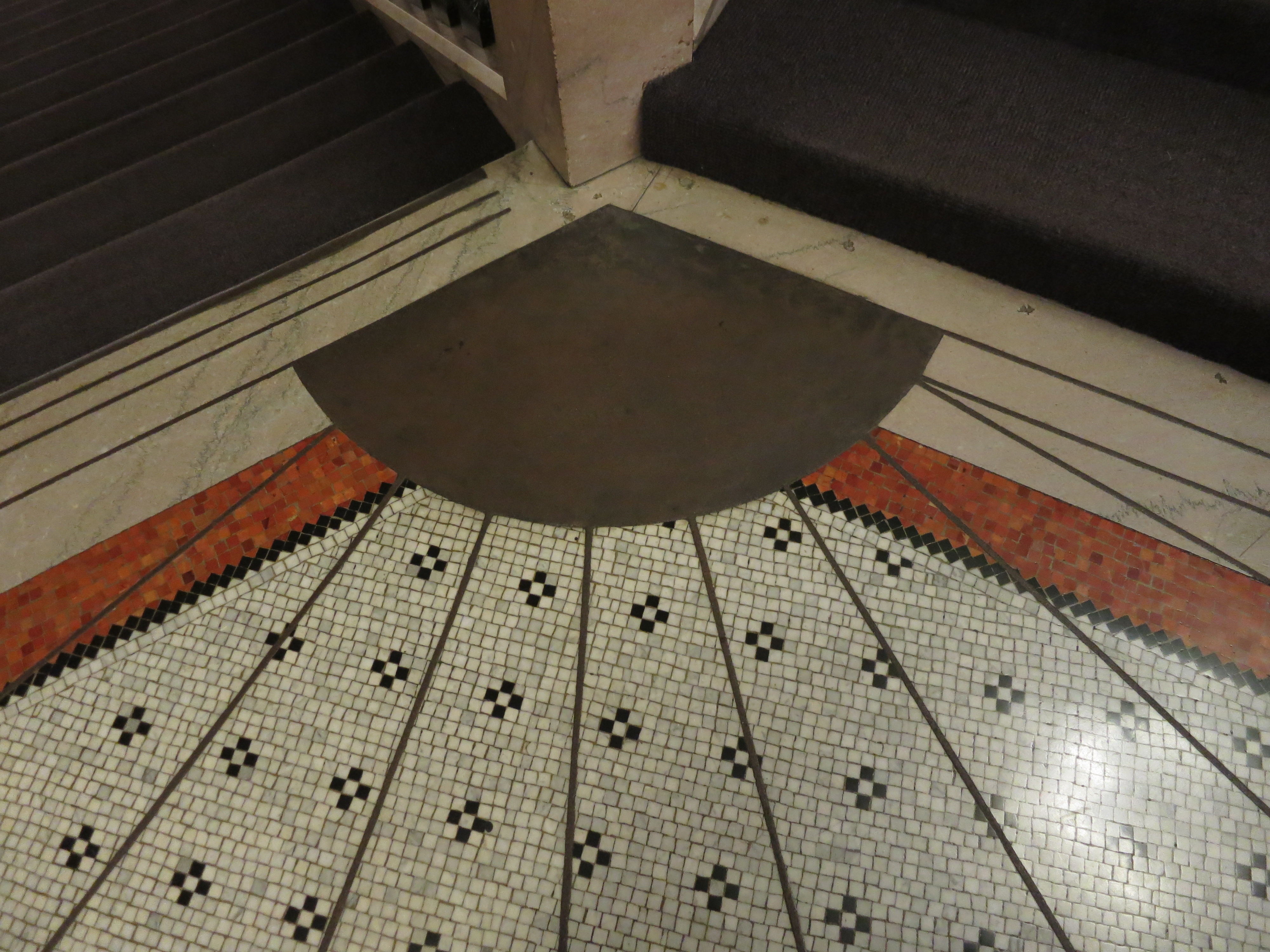
Sunburst on the stairs

Even when it was finished, it was an unusual thing. You can only go from one part of the building to another on the first and fourth floors, one side of the building has a fifth floor and one doesn’t, and the second floor isn’t even the same height all the way across the building. You’d never know this from looking at the building’s facade, and I’m still not clear on why it ended up this way, but it’s quite an adventure walking around inside. A guide definitely came in handy.
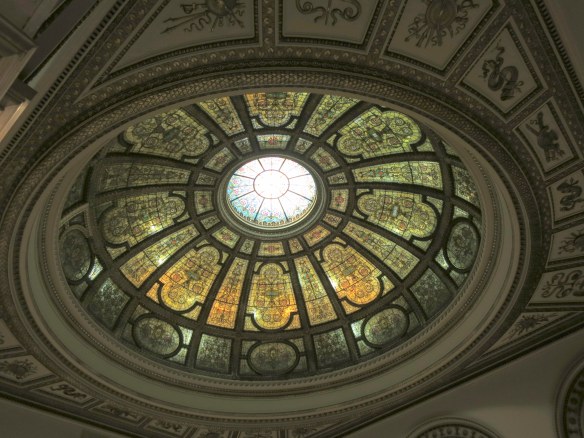
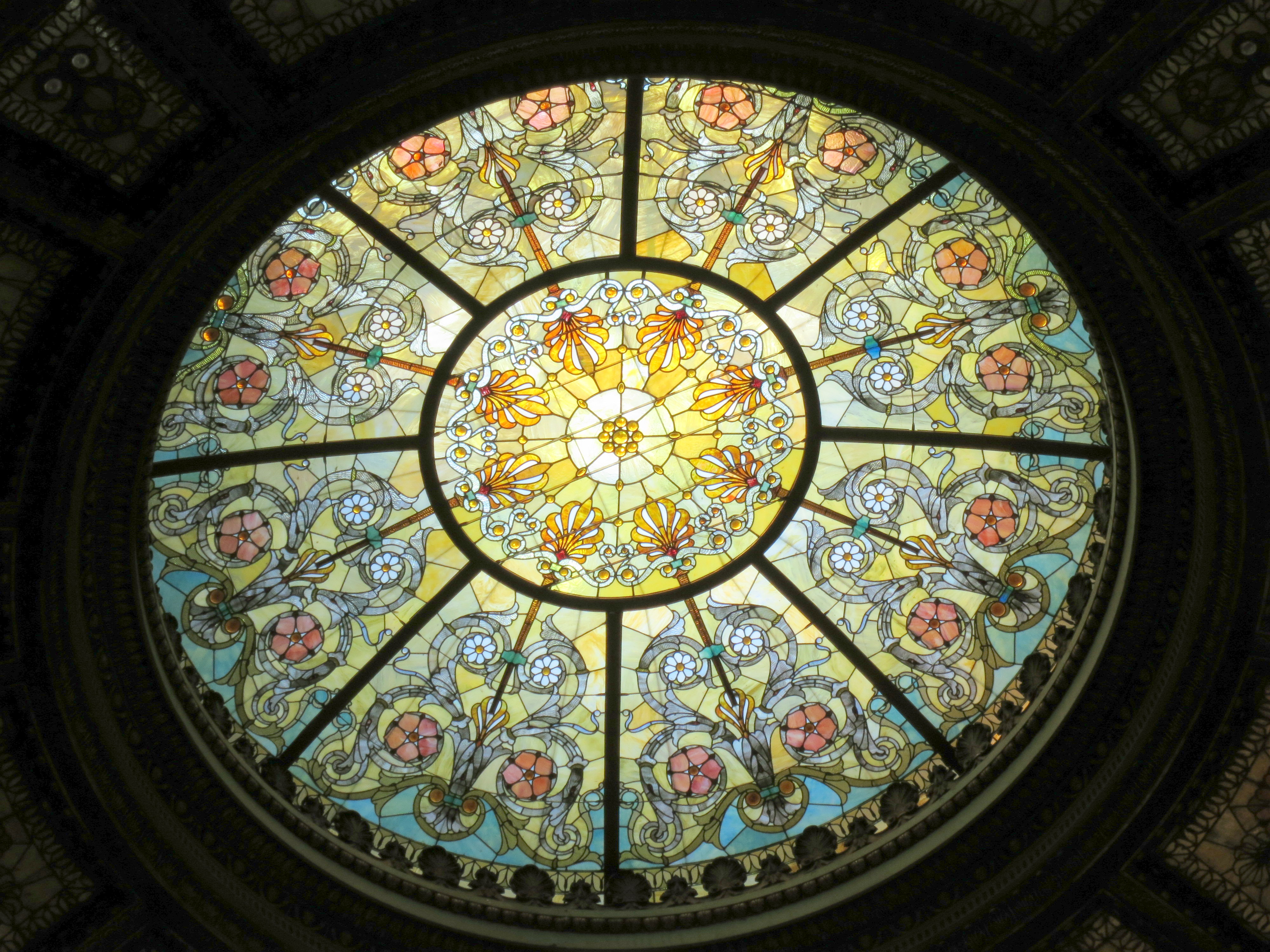
The dome in the Grand Army of the Republic Hall — they covered it up to protect it form the weather and it muted the colors.

The Randolph entrance is all delayed gratification: through hand-carved mahogany doors, under a recessed ceiling pained white and gold, through a lobby full of people escaping the heat under more recessed ceiling, and finally to the two-sided staircase. Everything is made of marble, one of many safeguards against fire. Marble walls, marble staircase, inlaid tile on the ceiling… I don’t think I would have noticed if our guide hadn’t pointed it out, but much of the building didn’t have any painted surface at all, because there was no plaster to paint over. Everything was just solid. And it looked great; I can see why emperors and rich folks are so fond of using it.

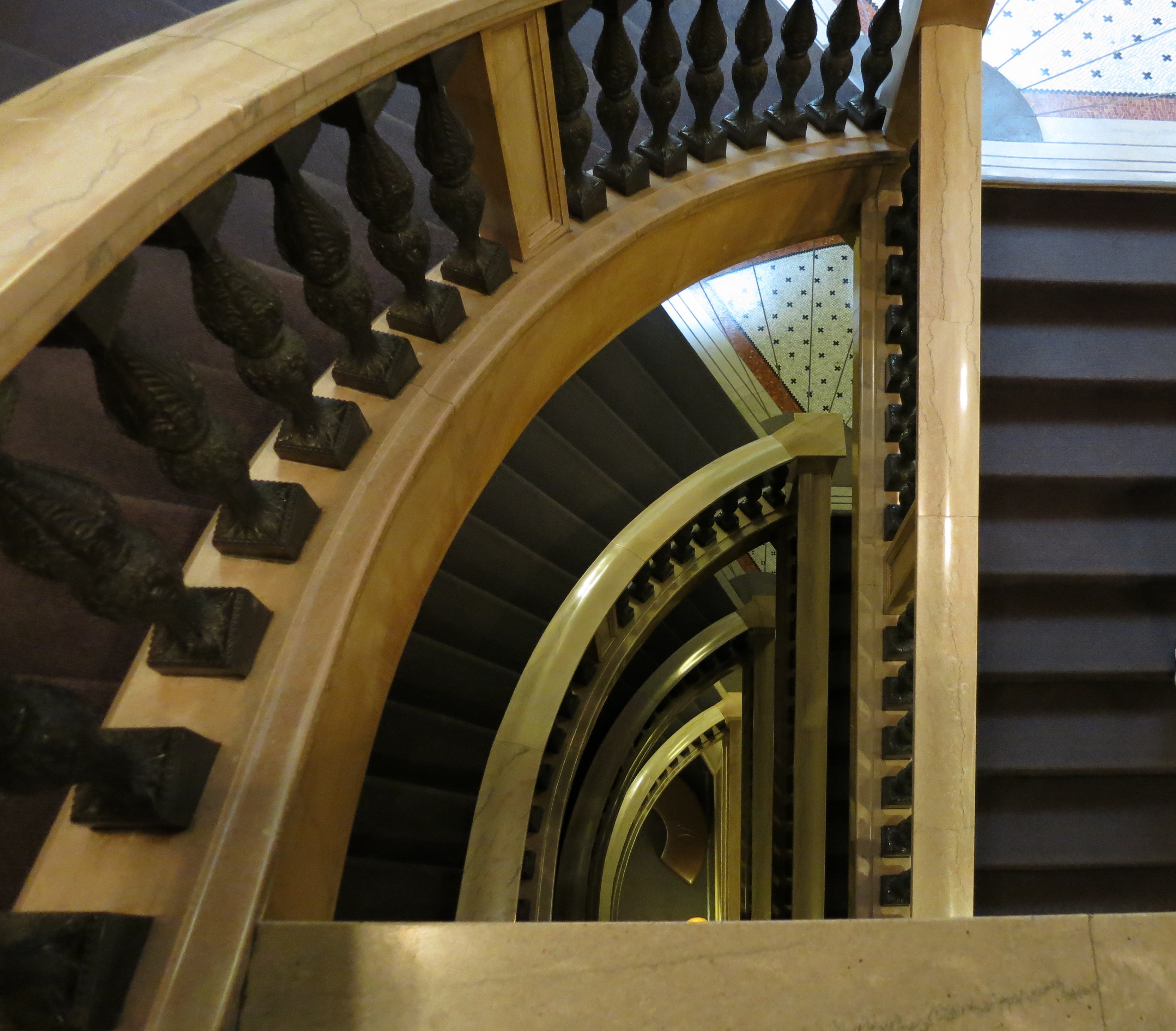
They carpeted over the marble — quel horreur!

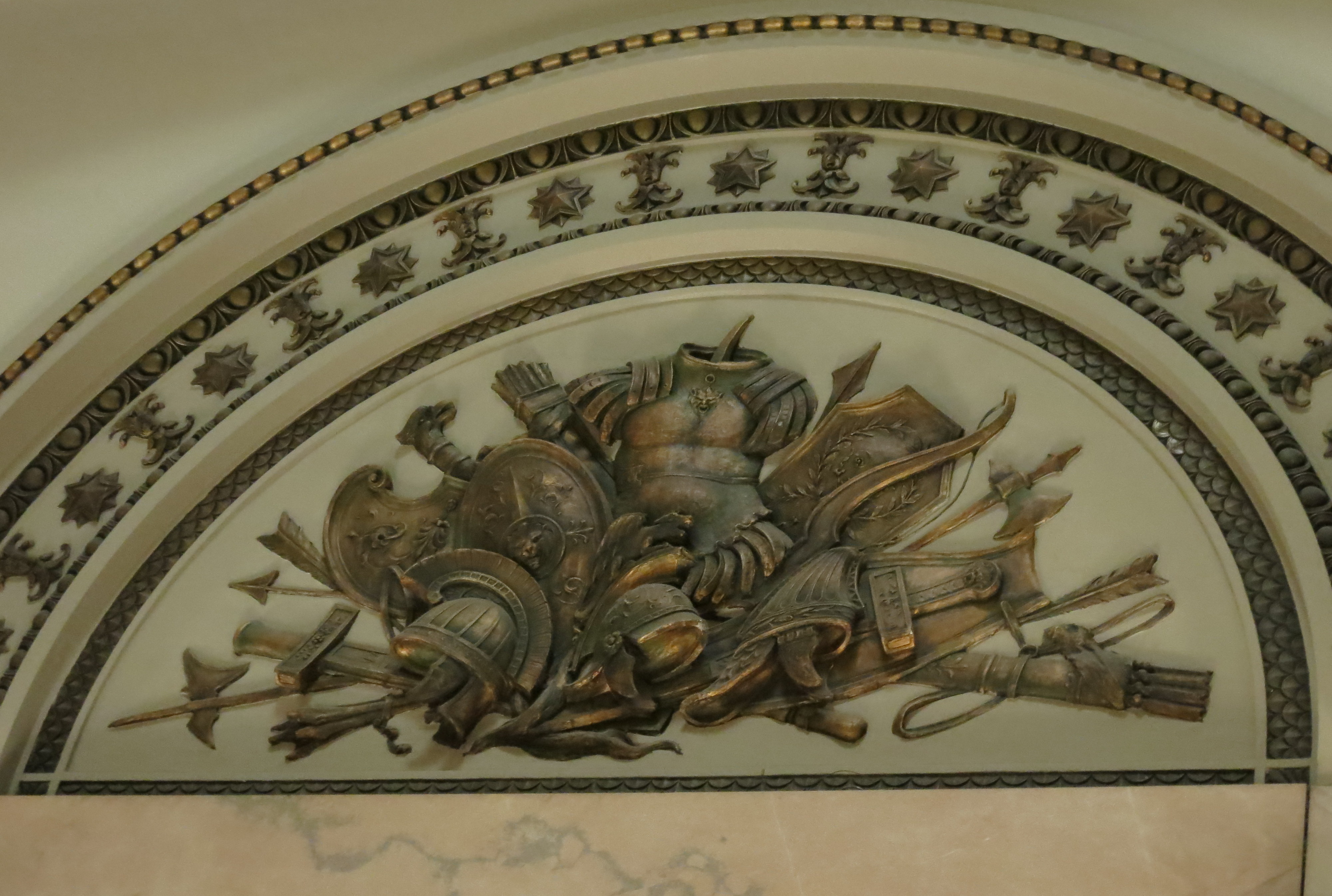
We looked at what was once the museum of the Grand Army of the Republic (those Civil War veterans from earlier). The view from that room is amazing, and they do $50 civil service weddings there every Saturday, in 15-minute increments. The walls under the dome of the GAR are decorated with brass bas-reliefs of piles of weapons. Just piles of them, haphazardly thrown together over archways. Very strange.
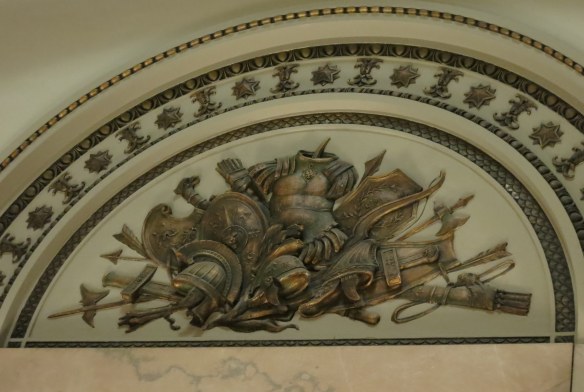
I like how the giant sword is sticking up through the top of the breastplate

They uncovered the cupola in the GAR dome a few years ago, and look at the difference!

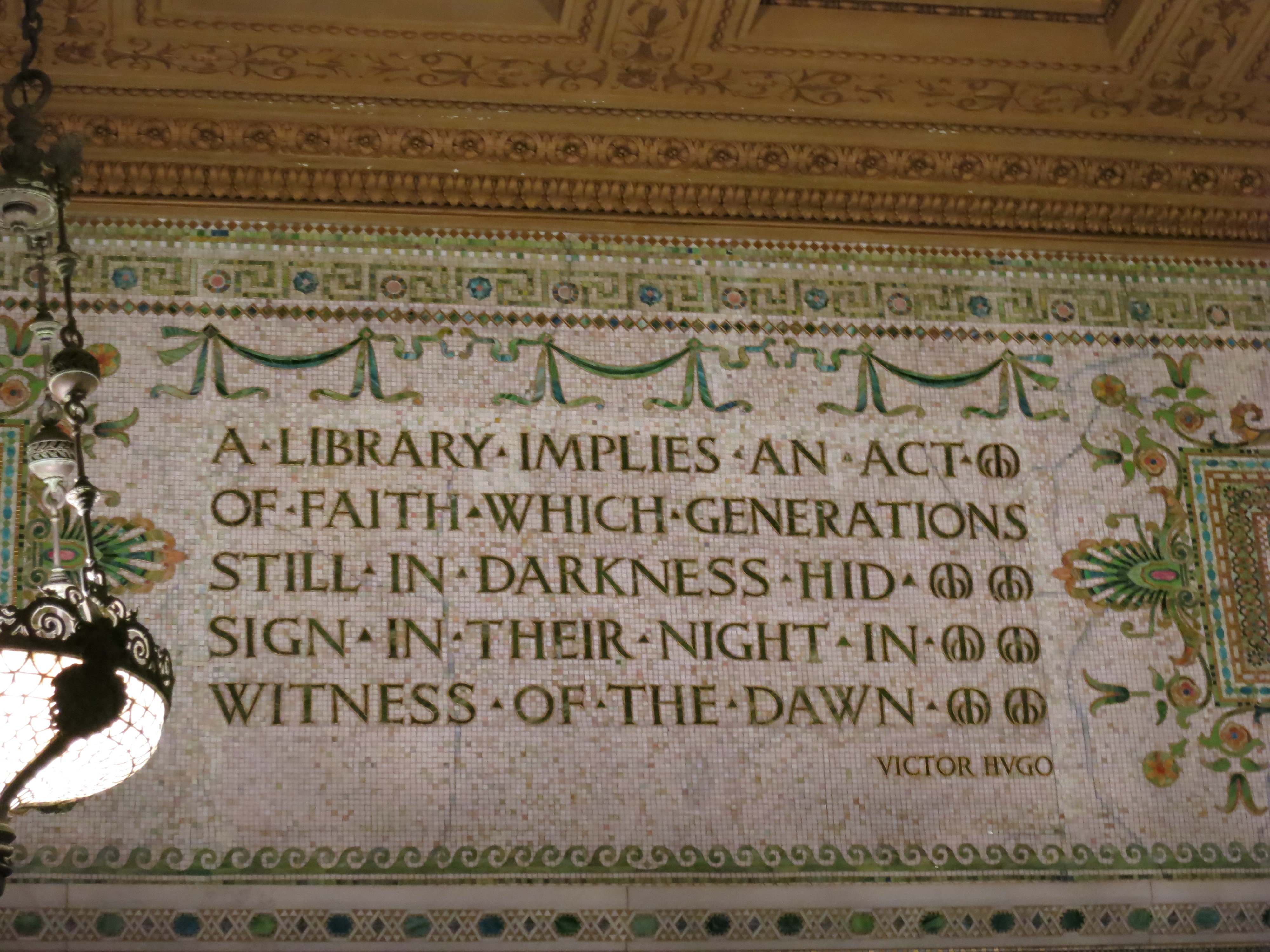
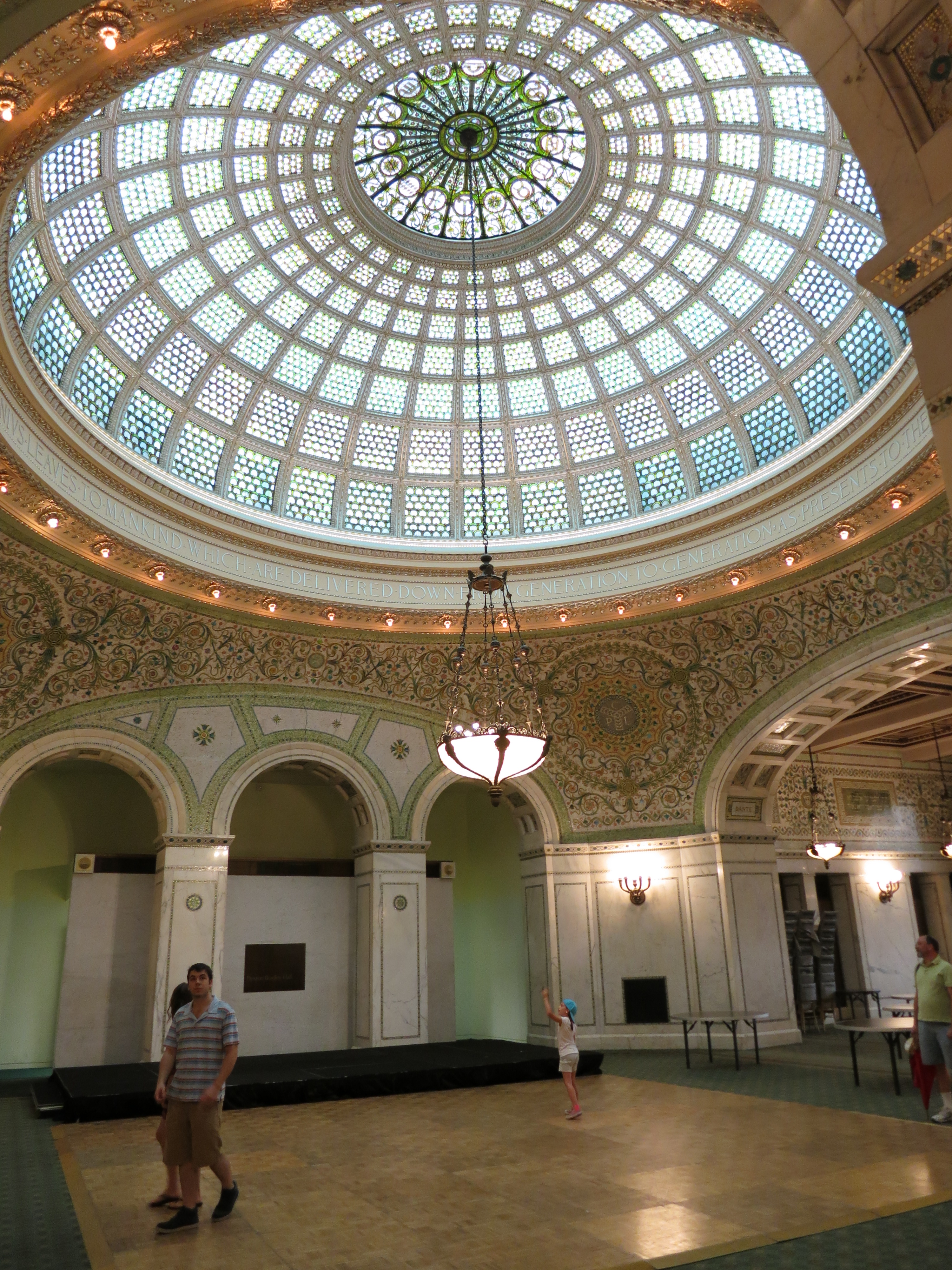
The other side of the building carries on the marble theme, but here it’s white marble from Italy, inlaid with brightly colored glass and gold leaf that glistens in the light, brightening up the whole area. There’s more inlaid tile here, too, in intricate patterns naming famous authors and spelling out quotes about literature in various languages. If you were to enter the building from this side, you’d be immediately struck with the size and beauty of the staircase leading up to the hall with the Tiffany dome. But I’m glad we came in from the side; we made a progression from impressive site to impressive site (we had to skip a couple rooms because they’re switching out the exhibitions, but those are meant to be lovely too), and then we walked down a rather dull and small corridor, rounded the corner, and voila! Stunning.

Quite an entrance
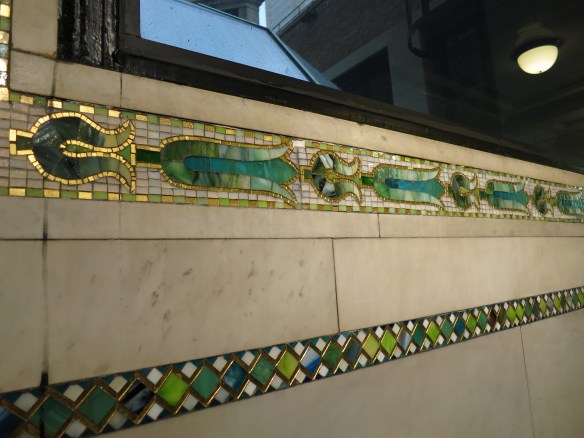
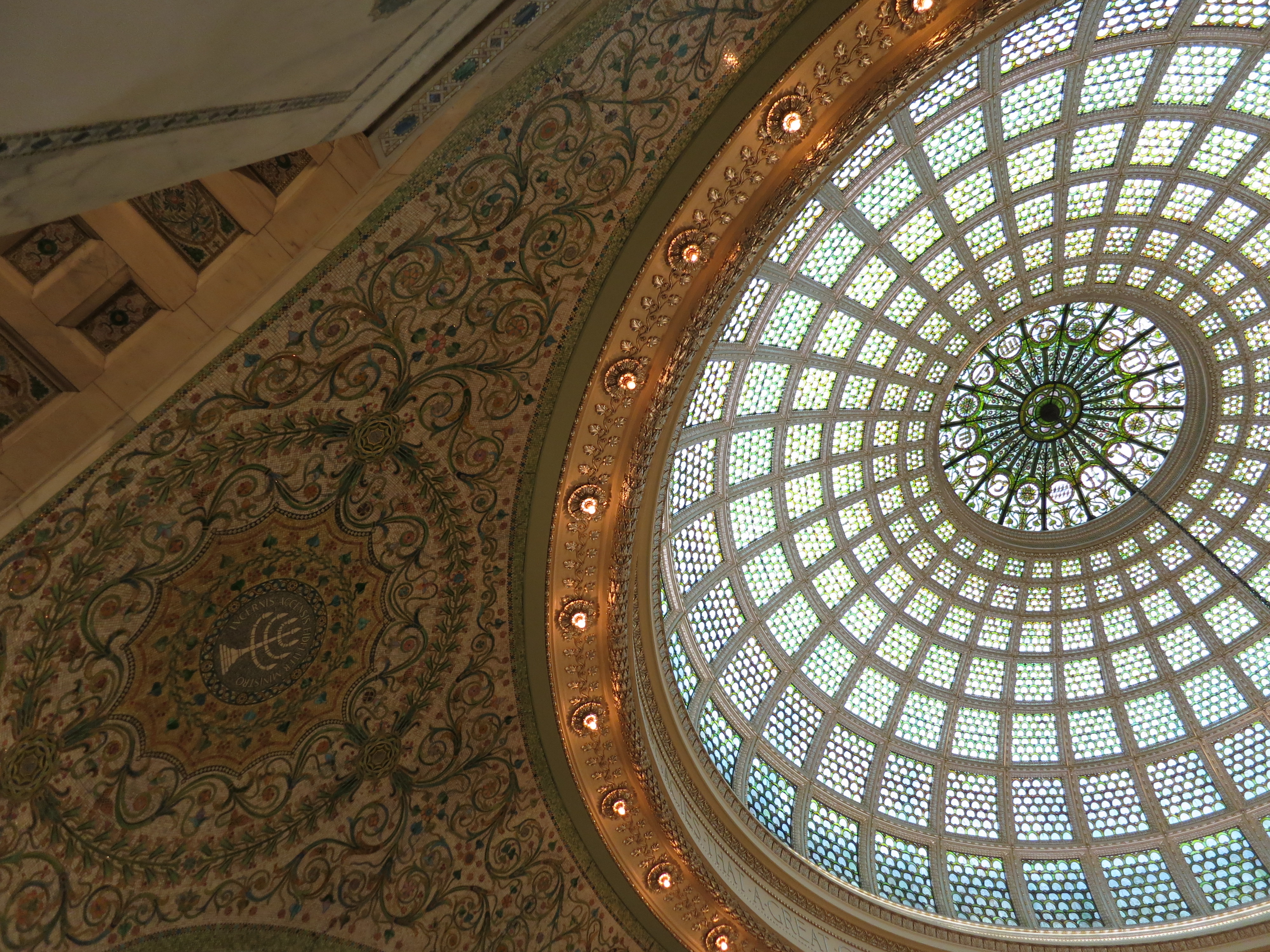
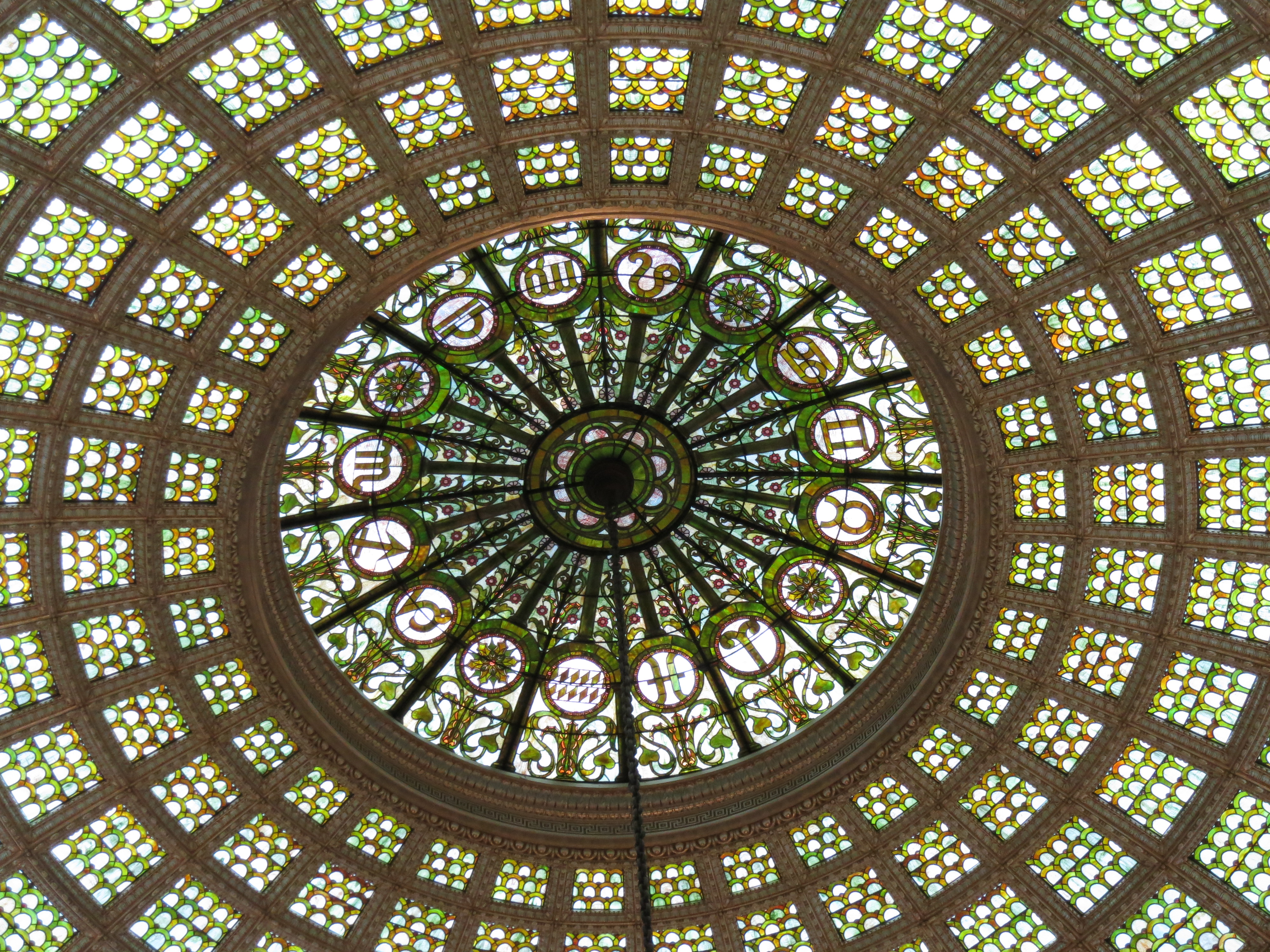
Preston Bradley Hall contains the largest Tiffany dome in the world, and the largest display of intricate inlaid tile in the country, outside of a church in St. Louis.
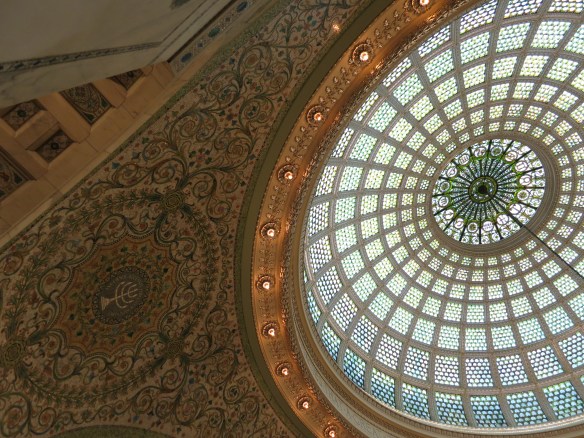
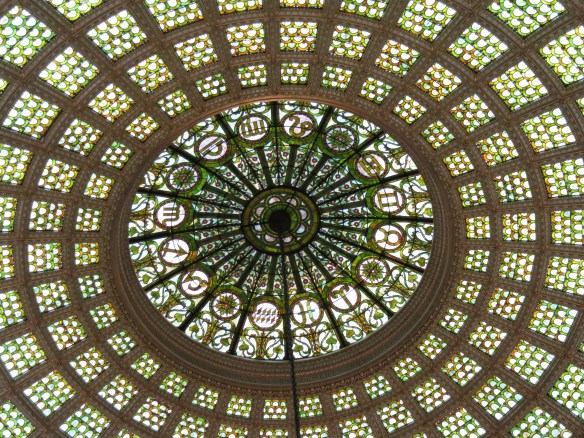
Are those symbols of the zodiac?

I found the Cultural Center to be a lovely surprise, and a place I wish I’d visited years ago. Get going!

Where it is: The official address is 78 E. Washington St., but if you go for the tour, you’ll enter on Randolph.

When to go: The free tours are Wednesdays, Fridays and Saturdays at 1:15 pm. They last about an hour and a half, and that time flies by.

What to see: The tour points out all the architectural features, but of course this is an active cultural center, so you can come here for concerts, art exhibitions, and lectures. You can visit the art studio and gallery for mentally and physically disabled artists on the first floor, and buy some of their artwork. You can use one of the lobby areas to relax, eat a lunch, use the wireless. You can duck into the Visitor Center and get some official info on touring Chicago. You can convince some rich friends to hold their reception in Preston Bradley Hall so you can dance under that Tiffany dome.

Cost: For the most part, free!

Image 1. All other images mine.
Hometown Tourist: Humboldt Park

Hometown Tourist is a series that hears that chipper tip, “be a tourist in your hometown!” and says, “Okay!” When friends come to visit, I like to show them a combination of standard tourist spots and the neighborhood places they’d never know to look for. Why not write about all those places? If you have suggestions on Chicago places you’d like to see covered for Hometown Tourist, add it in the comments.

I might never have started this blog were it not for Humboldt Park. Humboldt is bordered by North Ave, California, Kedzie, and Division, a vast expanse of green on the west side of Chicago. When I lived on California, I would walk the seven-tenths of a mile down the street and find a spot next to the lake to sit and read. In 2009, I’d been thinking of starting a blog (nothing like joining a trend a year or two late). On a few sunny September afternoons, feeling stifled and uncreative in my apartment, I walked down to Humboldt Park, sprawled out on the grass, and wrote. Surrounded by families barbequing and teenagers biking and old men fishing, I scrawled some ideas in a notebook and decided they would be enough to go on.

A typical summer day in Humboldt Park

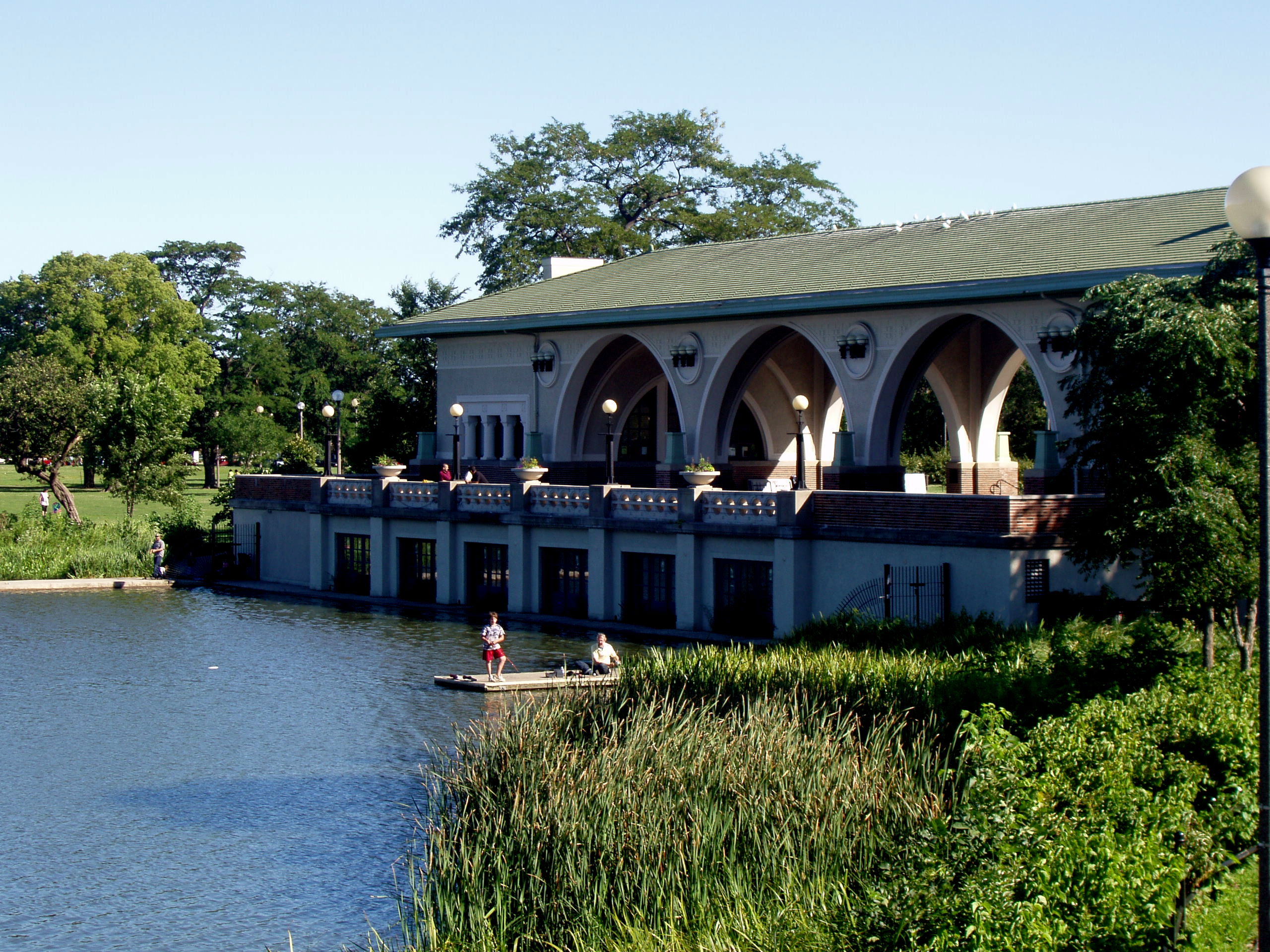
The manmade lake is stocked with fish, and the patient and hopeful find many places around the perimeter to set up their poles and see what they can catch. The boat house is basically a big pavilion covered by graceful arches, and I mostly look at it from afar, although it can give a nice view of the lake when you’re standing on it. Also, there are barebones bathrooms in there, which is useful.

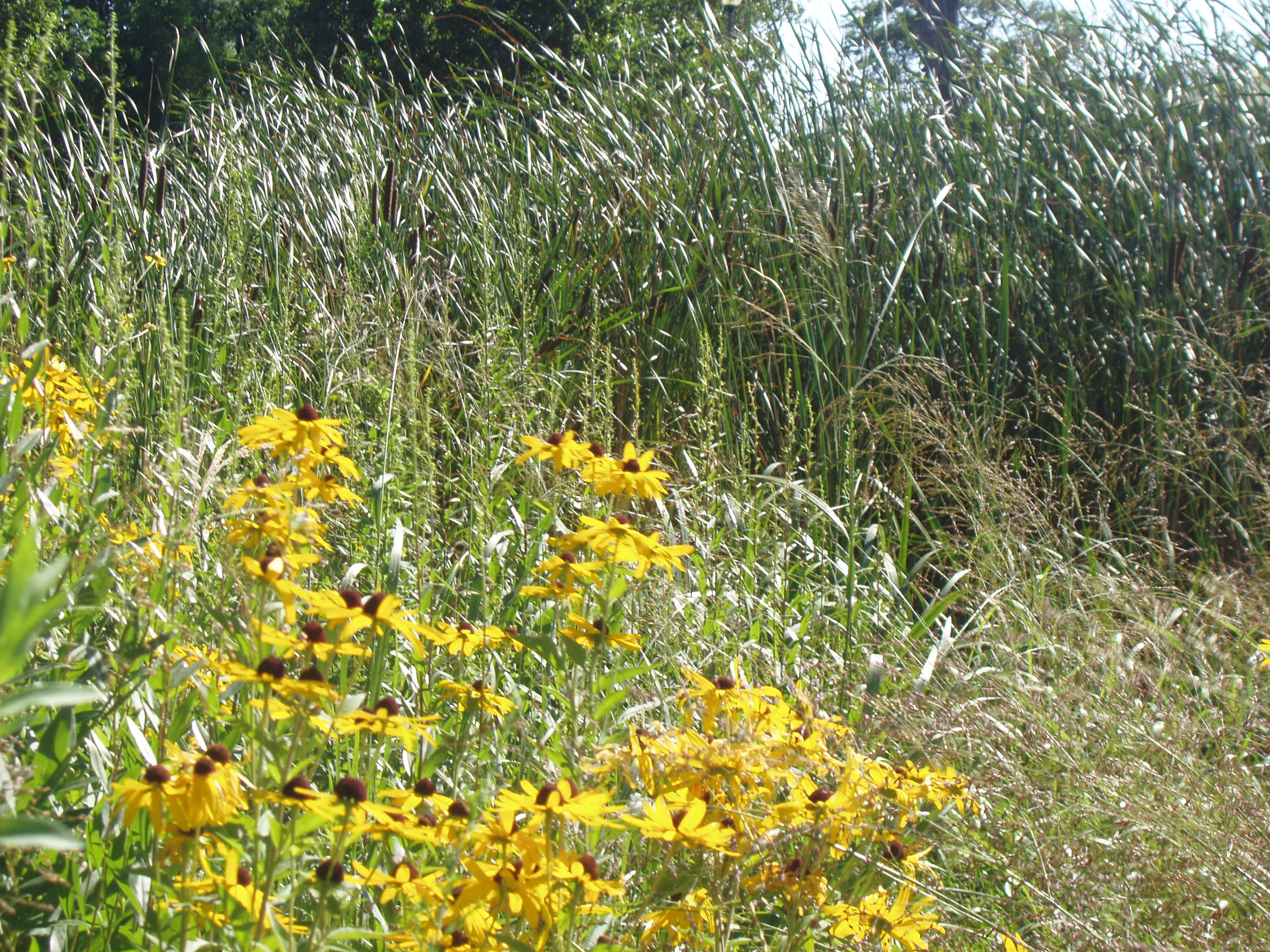
Native plants

The park was designed by Jens Jensen, who designed various other parks in Chicago and throughout the Midwest. One of Jensen’s main principles was using native plants in landscape design, rather than importing exotic plants. He believed that a space was most beautiful when it used the materials at hand, and looking at the prairie design of Humboldt, it’s easy to agree. I also think of my friend Matthew, who works for a parks department in Michigan and spends a large part of his time removing invasive plants and educating homeowners about the dangers of invasives and the benefits of natives. Looks like Jensen may have been ahead of his time on this one!

You can see the Sears Tower (or Willis, sure) in the distance

The park is so large that a road runs through it so cars aren’t inconvenienced. All the pictures here are ones I took in the eastern side of the park, but the western side has great stuff too: a fancy fieldhouse, a small lagoon with a sand beach (the only such beach in the city that’s not on Lake Michigan), and a little river flanked by benches sheltered by plants in just such a way as to make them perfect makeout spots. A bike path meanders through the whole park, baseball fields host games all summer, and the playground is almost always covered in children squealing with delight.

The boat house

Humboldt Park is the name of the surrounding neighborhood as well as the green space, and it’s a predominantly Puerto Rican neighborhood. Giant, metal Puerto Rican flags straddle two of the streets, and almost every other storefront is a restaurant with delicious foods. The city of Chicago hasn’t really caught up to the street food craze sweeping the nation, but there are several food huts and carts at the park with tasty jibaritos and alcapurrias for sale. In June of each year, the streets host an official parade and also an unofficial parade of jubilant, flag-waving people in slow-moving cars for the Fiestas Puertorriquenas. People sit out on their porches and grill food, bomba and salsa music blasts from stereos, and everyone’s in a great mood. All this is concentrated in the park, where a large carnival is set up and live music plays. It’s a good time, and a total change to the usually peaceful park.

In short, if you’re anywhere west of Western and north of the Eisenhower, stop by! It’s a lovely place to spend an afternoon.

Where it is: In the square created by North Ave, California Ave, Kedzie Ave, and Division Street

When to go: Whenever! Obviously, it’s not as active in the winter, although the scenery is just as beautiful as it is in the summer, if different.

What to see: The lake and boat house, the gardens tucked away in the shade, a baseball game at one of the diamonds, the shallow swimming lake on those hot summer days

Cost: Free