Island Indulgences on Oahu

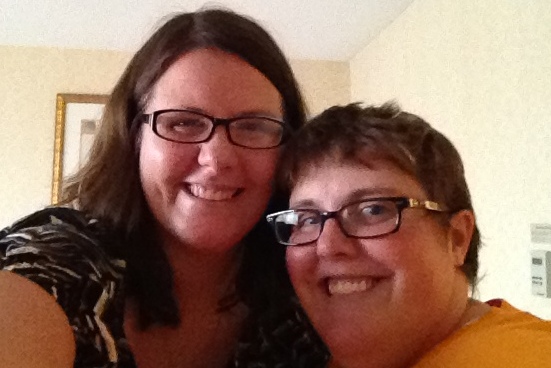
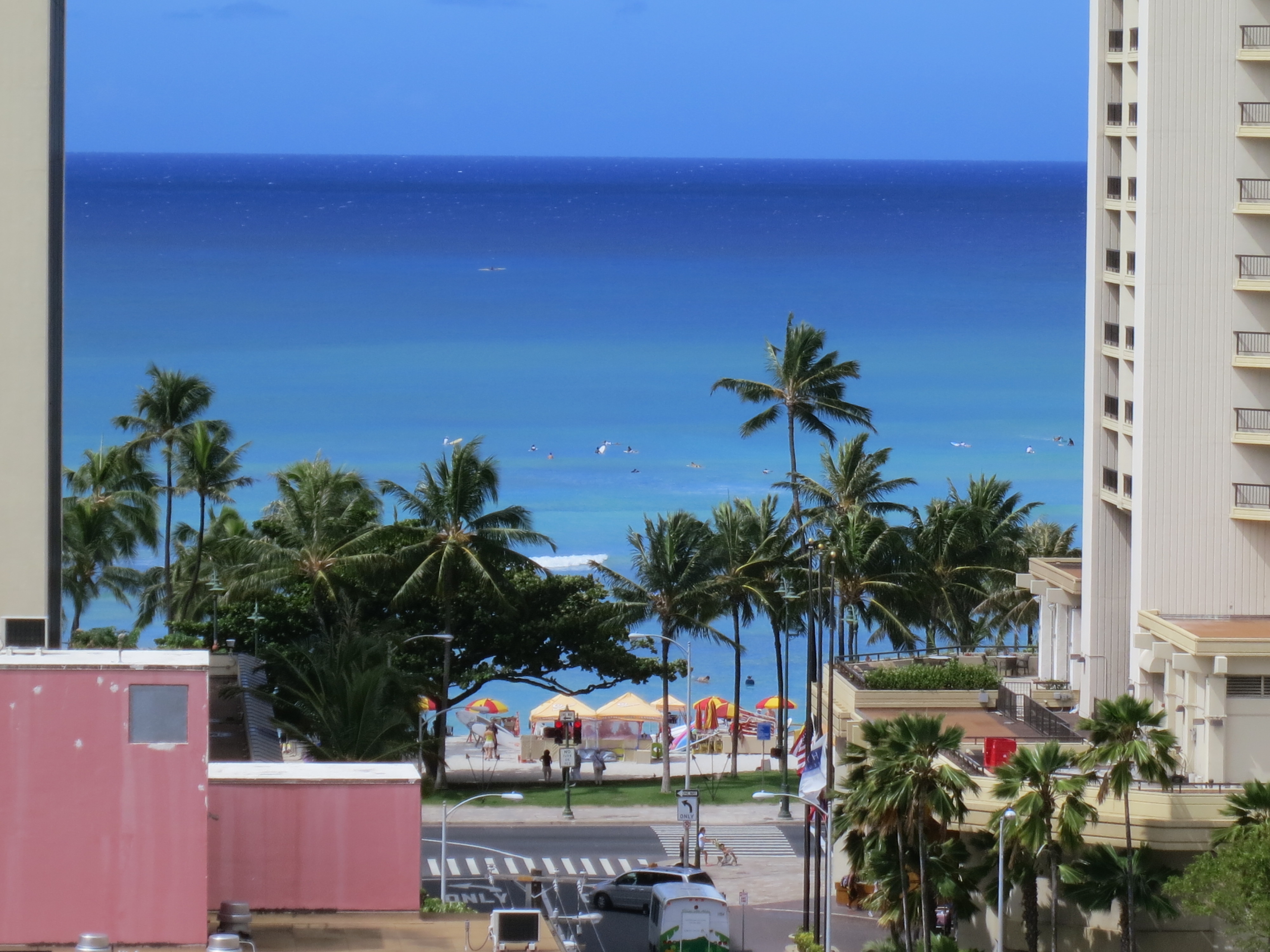
When Heather and I got back to Oahu from the Big Island, we didn’t have big plans. In fact, other than “visit Pearl Harbor,” we didn’t have any plans at all. We were perfectly content to sleep in, stroll to the beach to read and swim, walk around town, eat at the condo or out at a restaurant, and generally indulge in easy living. Here’s what that looked like:

The view from our condo rental

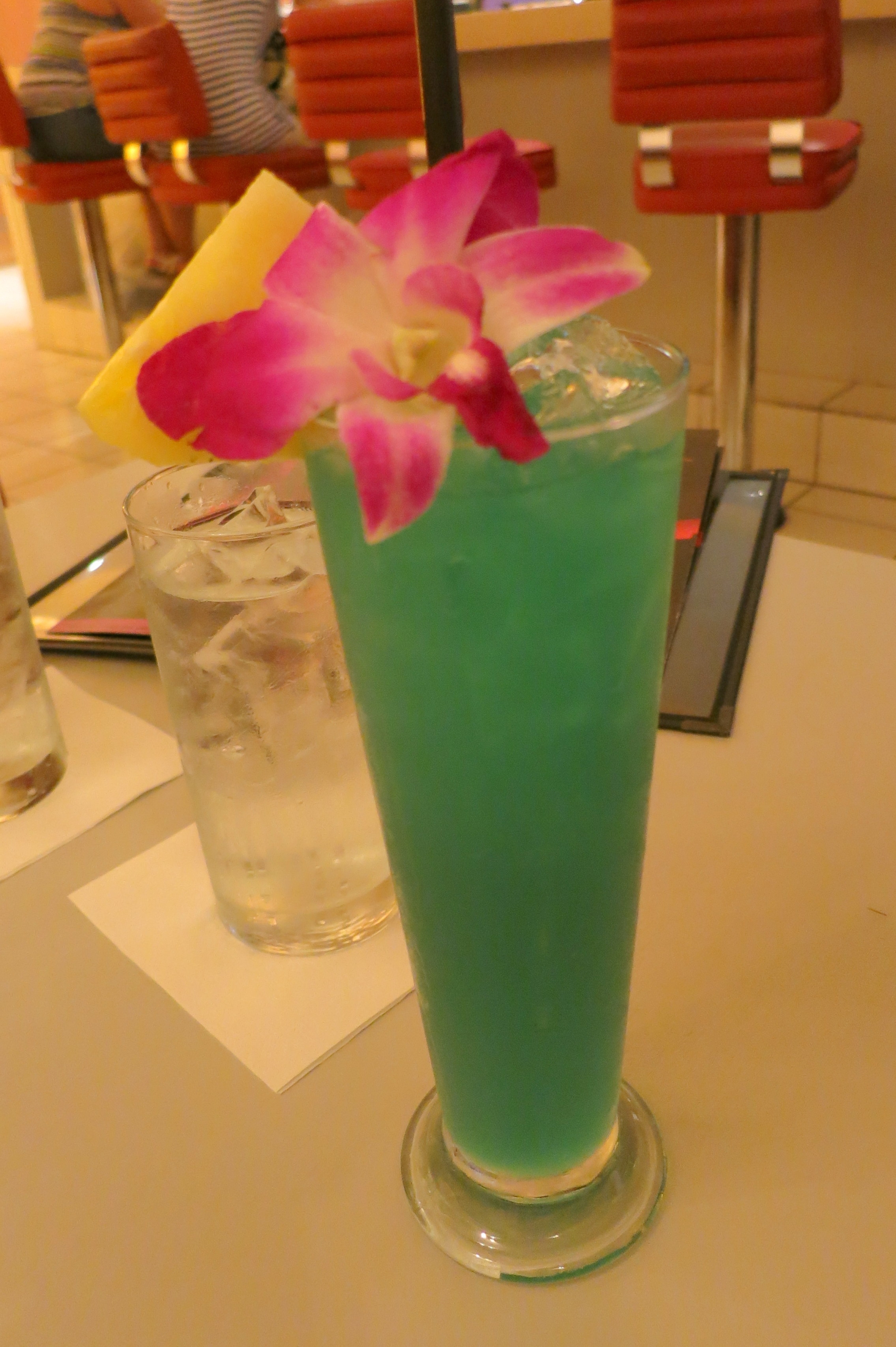
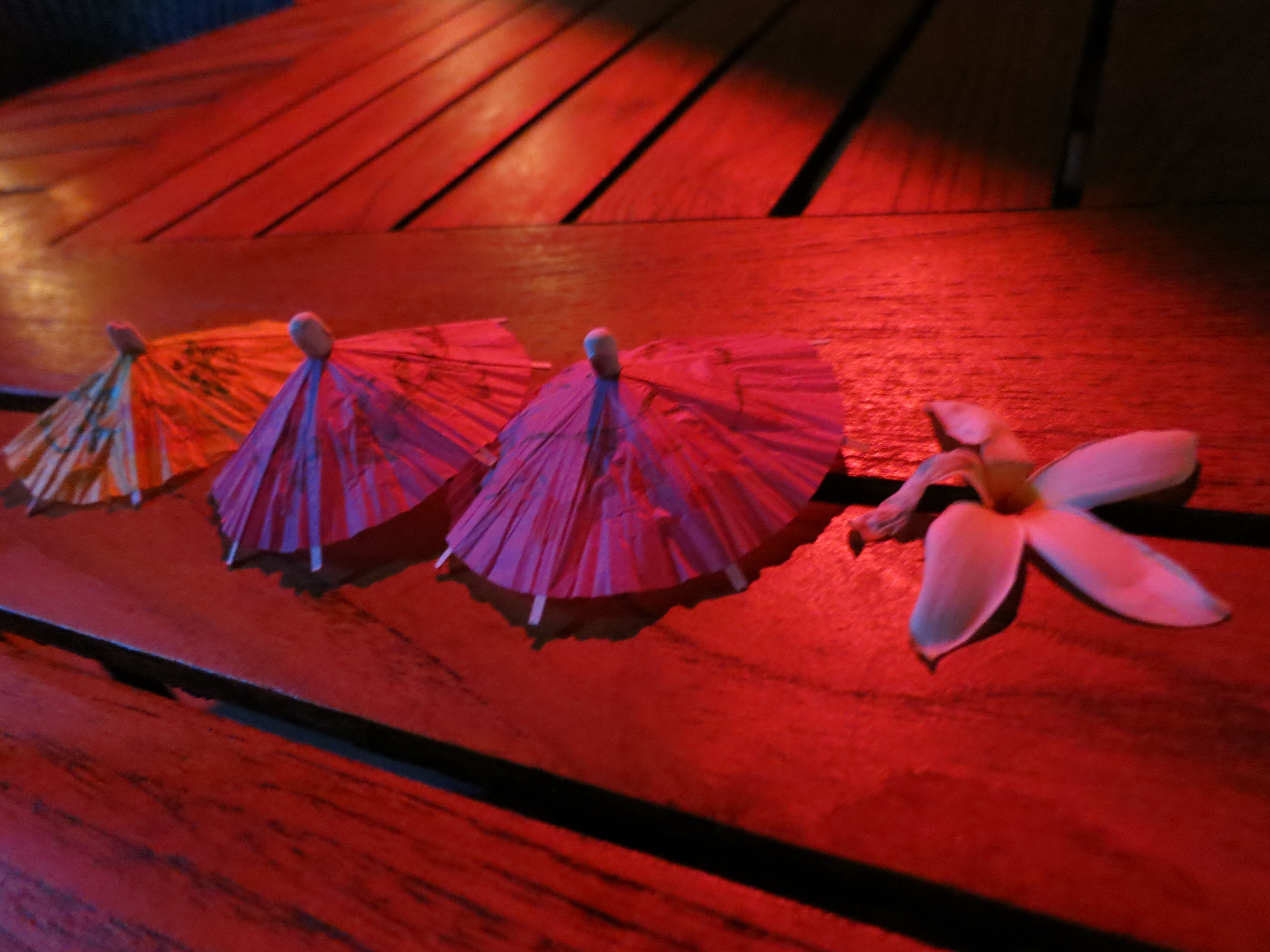
I want flowers in my drinks

Duke Kahanamoku statue at Waikiki Beach

some of the sidewalks around town had Hawaiian words and definitions in them

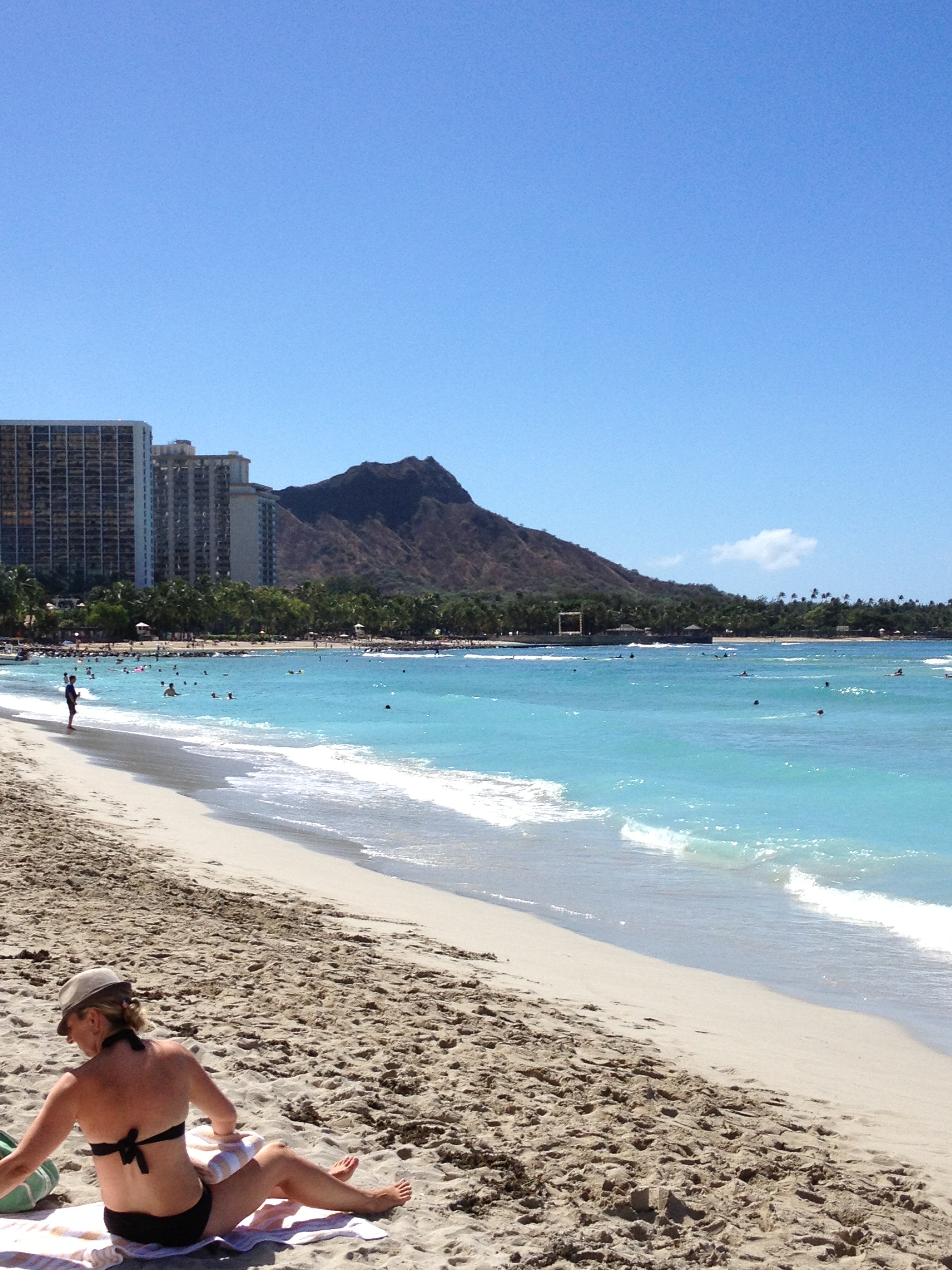
view of Diamond Head

Surprise Wednesday night fireworks, seen from our balcony

Somber and Conflicted at Pearl Harbor

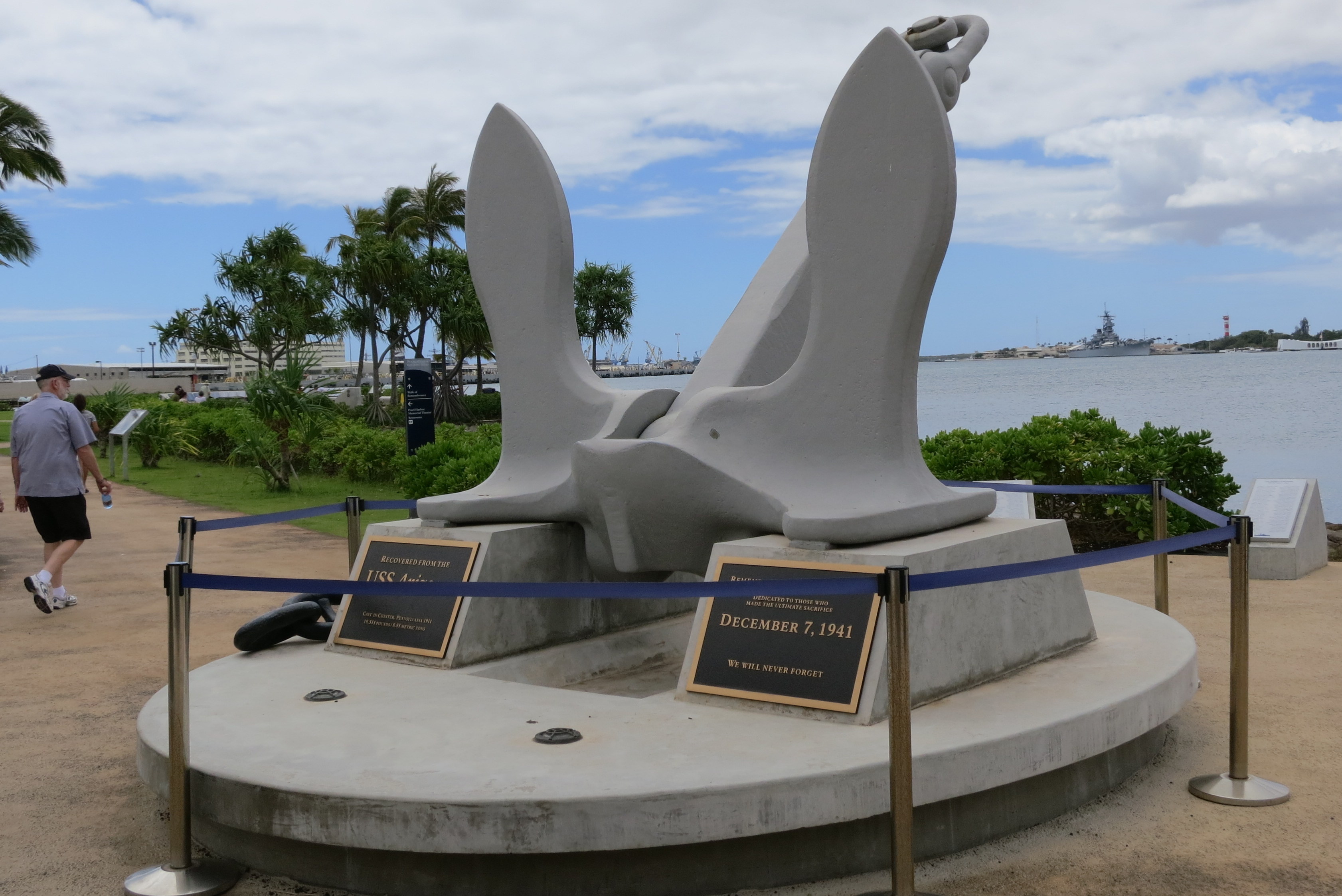
Pearl Harbor is the most popular tourist attraction on Oahu, but I felt uneasy the whole time I was there. It’s a massive monument to a successful military strike, as told from the losing side in that strike. It’s a memorial for over 1,100 people who didn’t even have time to register that they were dying before they were gone. It’s a collection of solemn displays and audio clips that plot out exactly what happened on December 7, 1941. It’s a narrative of how the tide turned and the USS Missouri, one of the attacked ships, became the site of the official surrender ceremony on September 2, 1945.

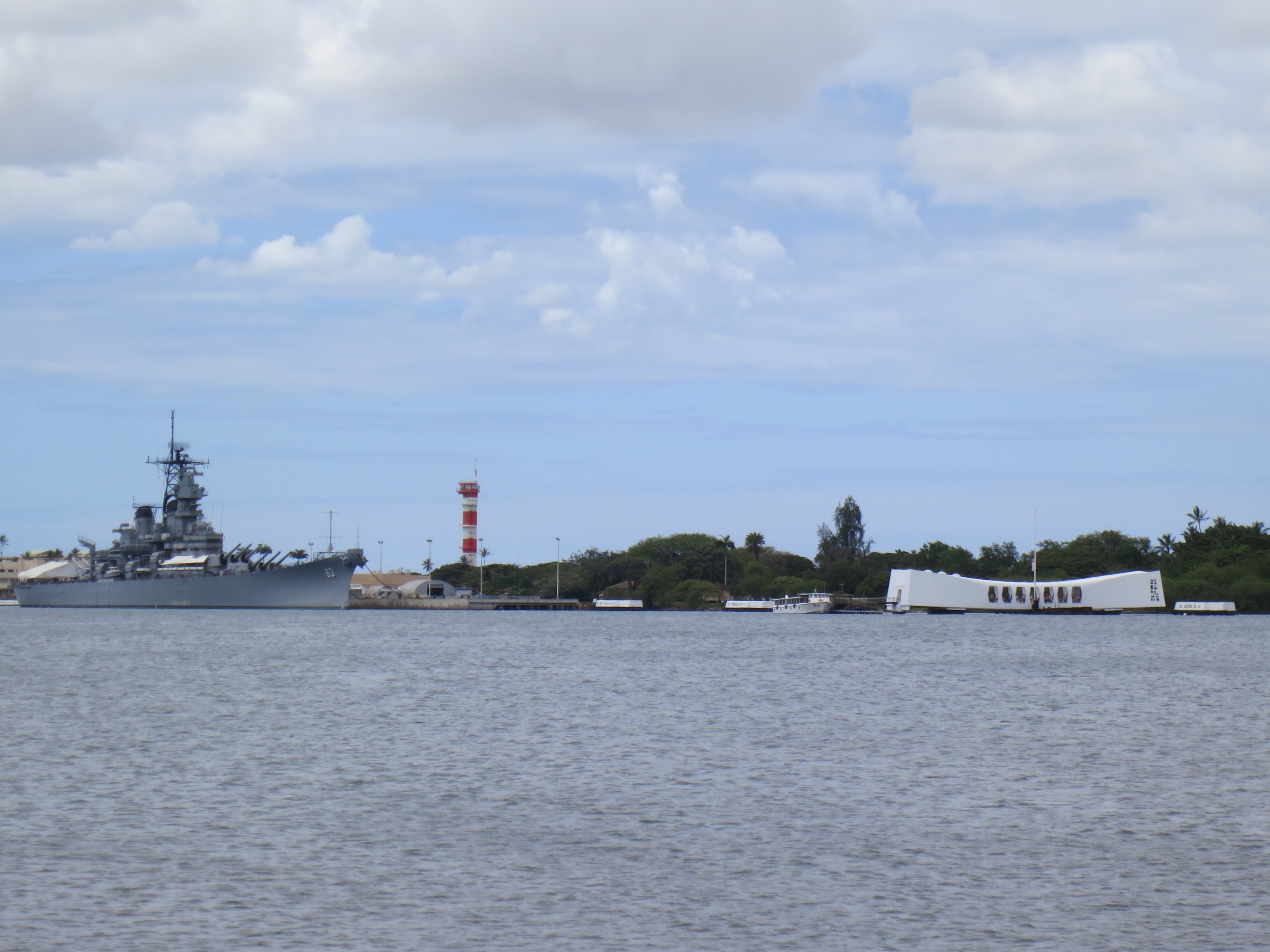
The USS Missouri and USS Arizona Memorial

There’s a strange mix of lax security and overblown alert levels at the World War II Valor in the Pacific National Monument. We had to check our bags and only carry in cameras and wallets, but then we breezed through the gates with hardly a glance from the security officer on duty. Tickets to see the USS Arizona Memorial are free, but you have to pick one up so that you can start the tour in a specific time block.

The political and military significance of Hawaii’s location was stressed again and again

First, you watch a video that attempts some historical context for the attack on Pearl Harbor, although it’s comically simplified and contradictory. For example, it mentioned the commercial interests the United States wanted to protect in various parts of Asia, and then condemned Japan for having similar interests. I mean, I know this isn’t an unbiased museum display or anything, but that did seem a bit odd. The website actually does a better job at telling the story, I think.

Half mast

The rest of the video drives home just how thorough the Japanese were in preparing and executing the strike, and how a bad bit of luck resulted in the Navy getting no warning. (The guy on radar was literally on his second day on the job, with minimal training, and they were expecting a block of B-17s that day anyway, so a large group of planes flying in didn’t alarm them as it should have.) The video then does a good job of emphasizing that the Arizona is now a graveyard and should be treated with respect and solemnity. It seems an odd thing to have to point out to people, but then once we got to the memorial, I saw a couple posing for smiling photographs in front of the wall inscribed with the names of the dead, so I guess it’s necessary.

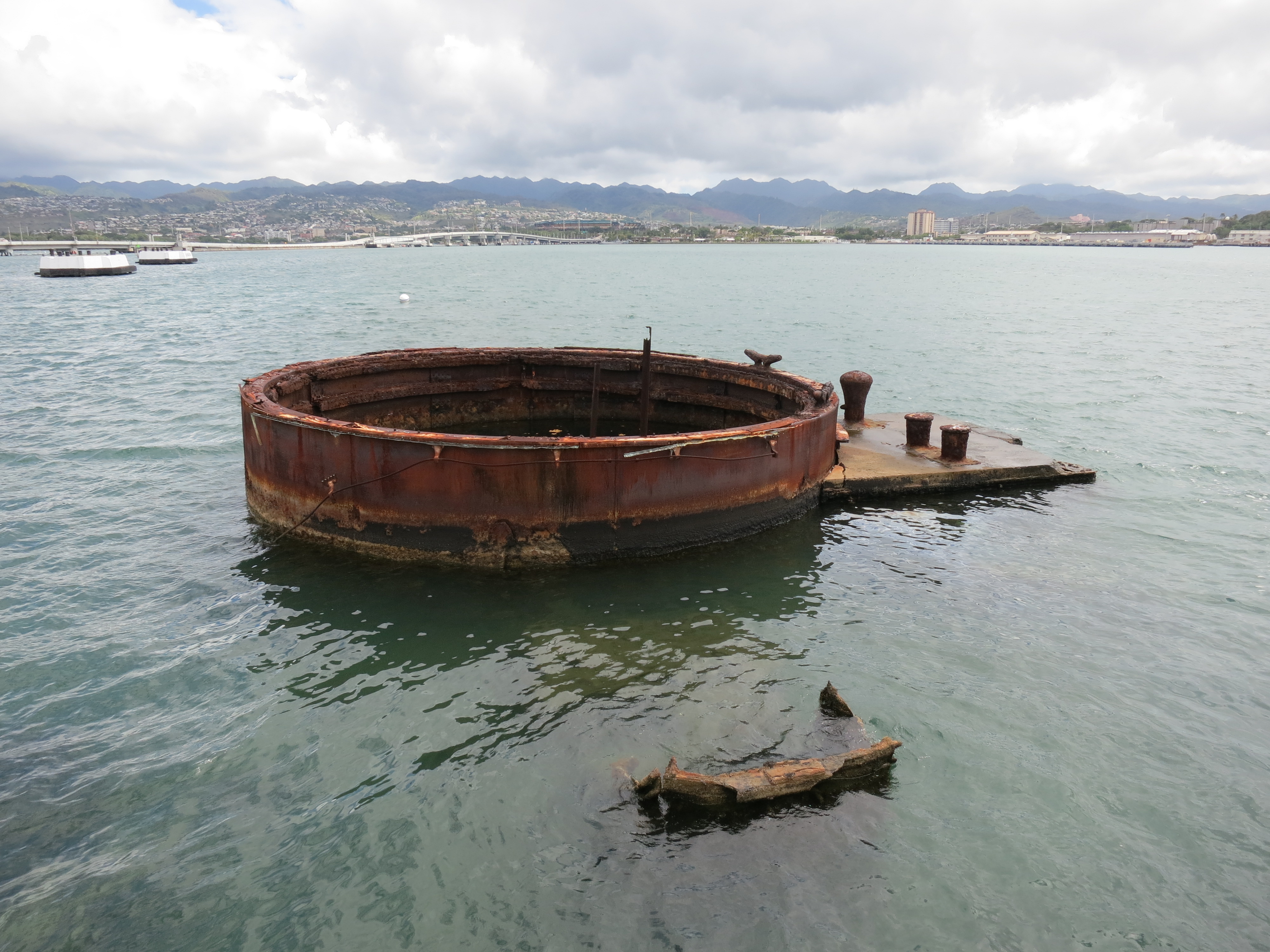
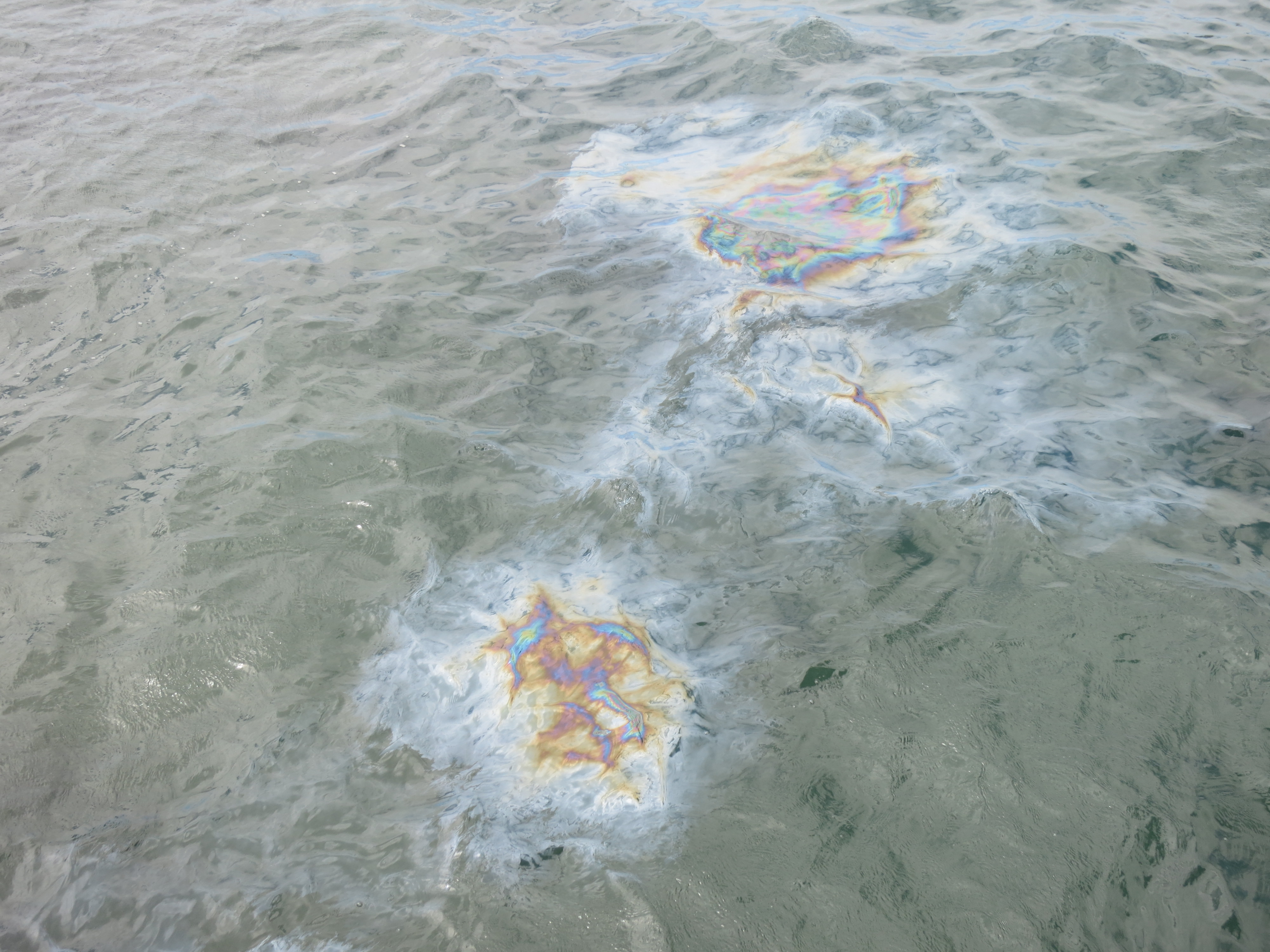
We took a short boat ride over to the memorial, which was built on top of the sunken wreckage of the ship. It’s a white building that sinks in the middle, which the architect said was to show how well the US was doing before the war, how low it felt after the attack, and how it emerged victorious at the end. The bridge-shaped building has been placed at a 90 degree angle to the ship, so that when you look out one window you can see a gun turret on one of the decks, and the “tears of the Arizona” leaking from beneath it. The National Park Service has decided it would disturb the dead too much to clean up the oil, so the remaining 500,000 gallons will continue to leak into the ocean for the foreseeable future.

USS Arizona gun turret

The tears of the Arizona

I liked the monument for its simplicity and focus. You can gaze at the Missouri across the harbor. You can look into a small hole in the floor of the memorial that shows flower petals floating in the water above the wreck. You can meditate on the flag flying at half mast. You can read the names of the dead on the wall of the shrine at the far end of the memorial. You can read the few plaques dotted about and listen to the audio tour, which features first-person accounts of being on the ship that day. That’s it. There is nothing else to do here, no gift shop to visit, no adjoining display to wander off to, not even any bathrooms to go to. When you are at the Arizona memorial, you are there to reflect on the lives lost on the day of infamy and in the war that followed.

Back at the museum, we listened to an audio tour narrated by Jamie Lee Curtis (her father was a WWII vet before he was a Hollywood star) and walked through an exhibit that got very detailed about battleships and 1940s military technology. Outside the building, there’s a path along the shoreline with quotes from people who survived the attack, and from people commending the valor of those who died.

The most heartbreaking plaque on the Walk of Remembrance

I do not mean to diminish the importance of the deaths of those who lost their lives in the attack, but I do not understand how it was a matter of valor for those who died almost instantaneously. Surely we should be commending the brave men who survived the initial bombing and fought back, and the civilians who rushed to the hospital to help the wounded? It seems to cheapen the whole idea of valor to apply it to people who were unfortunate enough to have been in the wrong place at the wrong time, even if that place was a military ship.

I also wondered what it was like for the Japanese tourists who were there, quietly walking along the same path as me and hearing the same audio about the vicious Japanese attack and seeing the same signs about defeating the Japanese. War tourism is a strange thing.

I feel strange in places that walk a fine line between memorializing the dead and celebrating the war that killed them, but overall, I’m glad I went to a site that looms so large in American history.

Big Times on the Big Island, Part 3

I might eventually write a piece on the many terrifying obstacles to smooth driving the Big Island presents, but I’m still too traumatized to attempt it. Suffice it to say I was relieved every time we passed something we wanted to photograph, because it was a chance to pull over and release my death grip on the steering wheel. Of course, there were a million such photo opportunities, because the Big Island is 4,028 square miles of visual perfection.

I mean, really

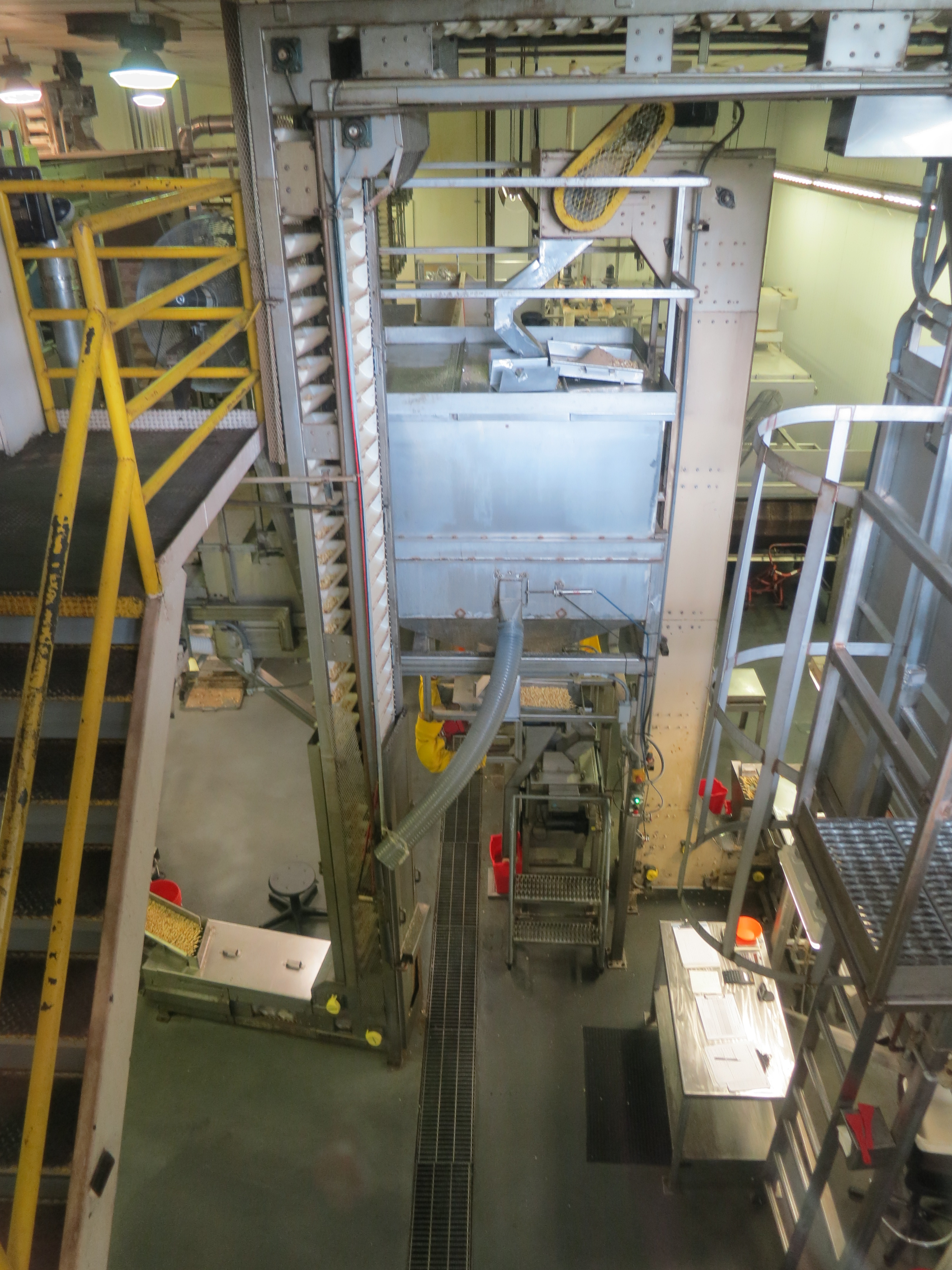
We were reluctant to leave Puna; the house was so lovely, and we hadn’t been to the hippie spa yet, or gone to one of the Wednesday night beach parties, or ventured onto the nude beach nearby. But we packed up on Sunday and drove through the drizzle to the Mauna Loa Macadamia Nut Factory. The factory is set three miles off the main road, and you drive through groves of nut trees dotted with Burma Shave-style signs to get there. After careful deliberation, we each chose a can of nuts to buy, and while the white chocolate covered nuts were good, the butter candy ones were deemed best after an extensive taste test later that evening. The factory building has a wall of windows on one side of it, so you can walk along and look inside as the nuts get sorted by machine and by hand, and then salted, and then packed up. We saw Mauna Loa nuts sold everywhere we went in Hawaii, so it was neat to see where they all start out.

On the factory floor

We drove through Hilo and up the coast, and this part of the drive was tough not so much for the road conditions as for the stunning valley views we passed every few minutes. I had to will myself to look at the road and not the deep crevasses of green spilling into the blue sea below. I put Heather on photo duty, and she made a valiant effort to get in-focus pictures while going 50 miles per hour.

Driving to Waimea

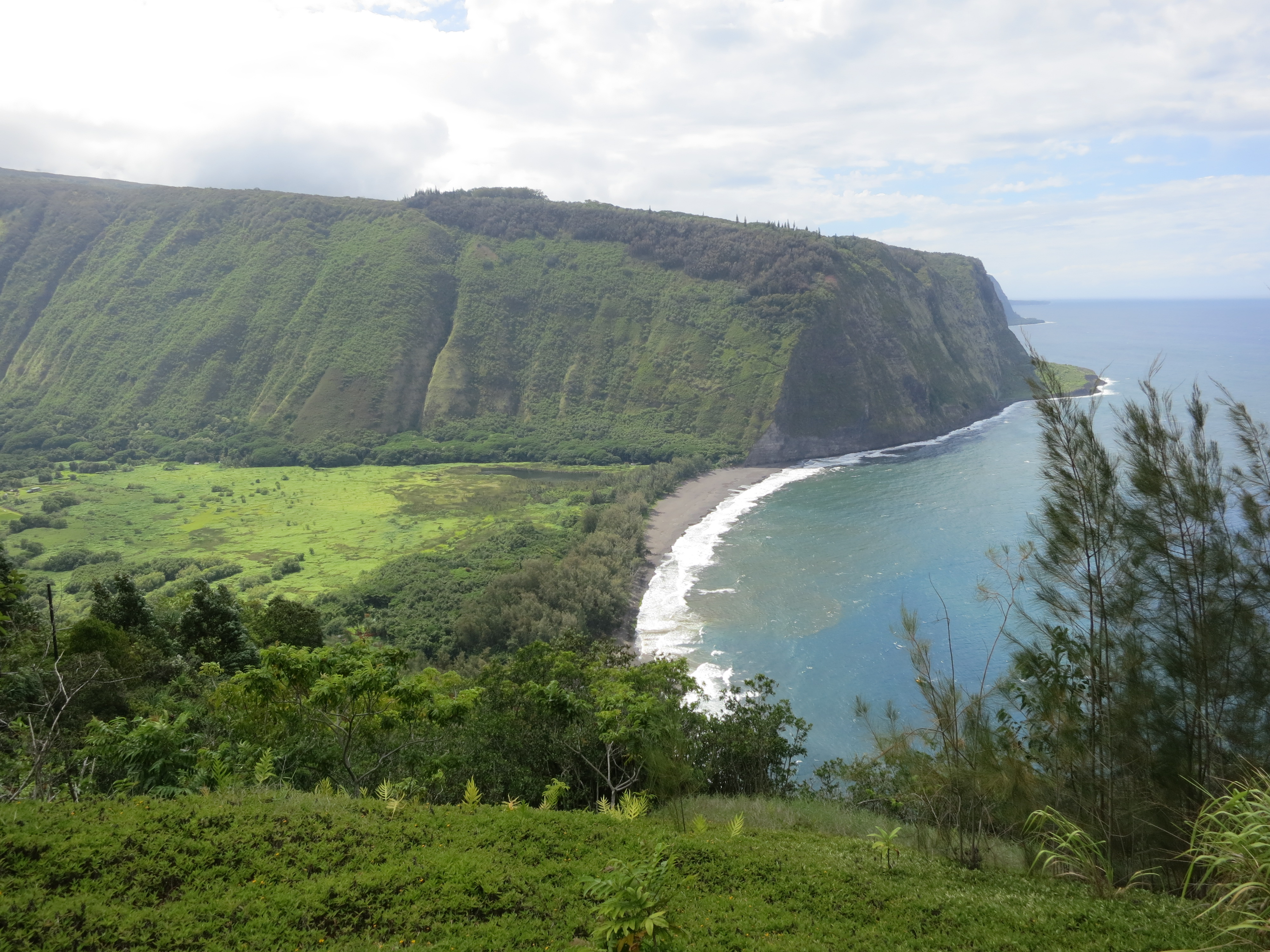
After a while, we passed into another ecosystem, a grassy area called Hamakua that’s been used for farming for centuries. We were passing into the region of the kings of Hawaii. Somehow, the hills got even bigger, and we passed fields of cows and horses as we climbed them. We eventually reached the Waipio lookout. I’d thought about hiking down into the valley, but it was even steeper than I’d expected, and there were several signs asking visitors to consider not descending, as this was a sacred area. So instead I stared out into the sliver of valley visible from the lookout, and saw why you’d establish this as the seat of your kingdom.

Waipio

We made a stop at a local souvenir shop, where Heather attempted to buy one of everything (lucky for her friends back home!), and then we drove on into yet another ecosystem. It didn’t take very long for us to pass out of lush farmland and waterfall central into a desert. I actually shook my head in amazement when I realized we were looking at something very similar to the American Southwest, mere minutes after seeing the Heartland.

I was driving across a burning desert…

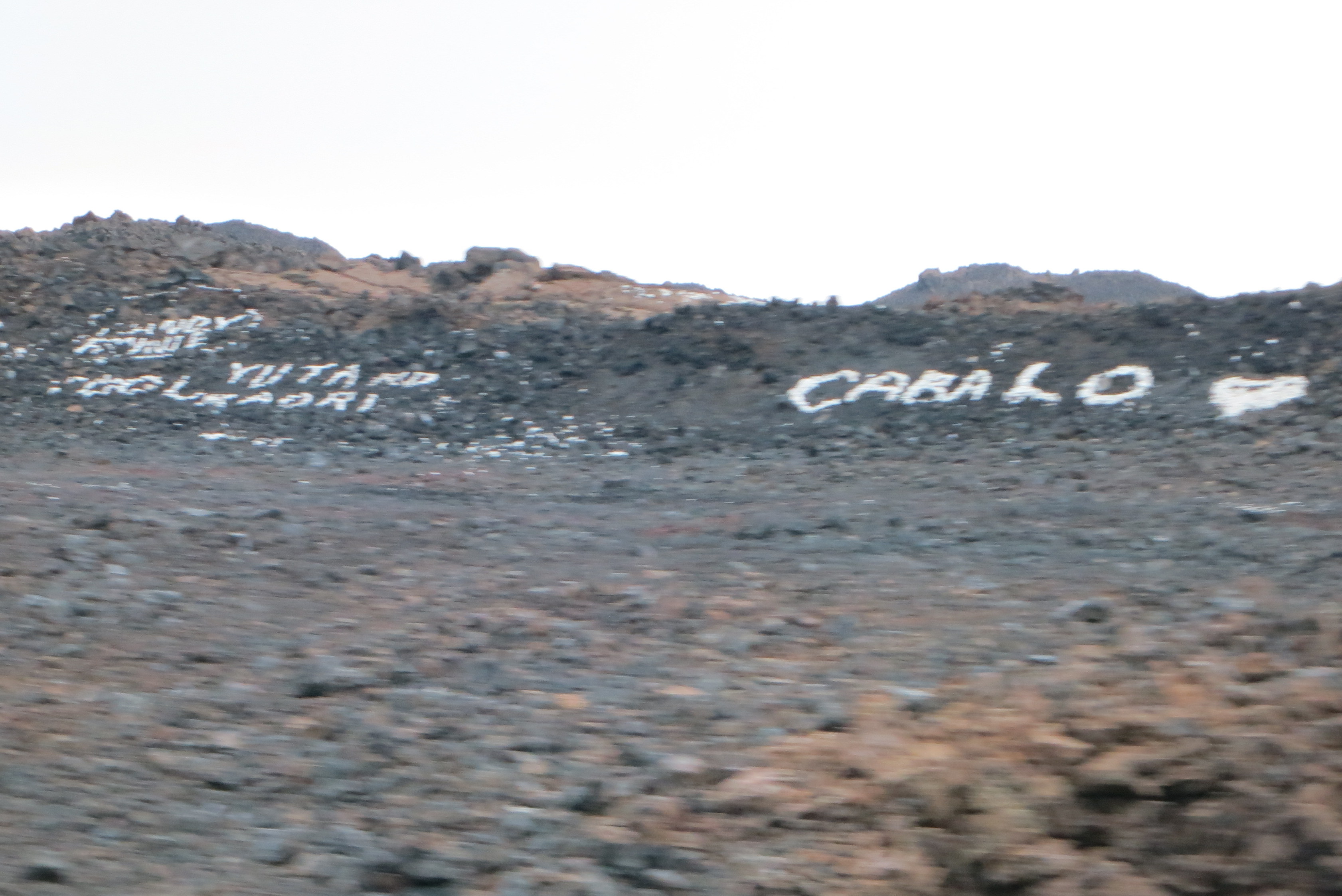
Kona coffee comes from this side of the island, although I’m not sure where in this dry place they grow it. We didn’t see evidence of coffee plantations, but we saw many signs of other people who’d driven through here before us. The ground was all a dark gray, and there were lots of little white rocks scattered around. People gathered them up and spelled out their names, big hearts, little messages to photograph and send back home. We’re so fond of leaving our mark.

Kailua Kona is a fun little beach town, and as we went down the main drag, we checked out the shops and restaurants to see where we might want to visit the next day. Monday morning, we went snorkeling, which you can read about here. It was so fun, and mesmerizing; it’s easy to spend hours at it without realizing how much time has passed.

That evening we strolled across the street to Huggo’s on the Rocks, a beachfront bar, and had cocktails and dinner. A couple guys played classic rock covers on acoustic guitars as the sun set, and Heather and I toasted each other with our pina coladas and mai tais. Later on, some girls from a nearby dance school did a little hula show, much to our delight.

Big night out on the Big Island

On Tuesday, we took it easy after snorkeling, so that we’d be all ready for our big night out. We’d ponied up the money for a luau, and at 4:30pm we lined up on the King Kamehameha Kona Beach Hotel lawn with about a hundred other smiling tourists. We bought leis—a flower one for me and a kona nut for Heather—and then wandered to the pre-dinner area. Heather got some tough tattoos, and I took a hula lesson. Everyone was laughing and scooping up more mai tais from the punch bowl, so it was a relaxed and happy group that sat down to dinner. Heather immediately made friends with the whole table, of course, so that was fun. We chatted with our neighbors as we ate poi, ono (which was ‘ono!), Hawaiian sweet potatoes, pork from the imu, and fruit.

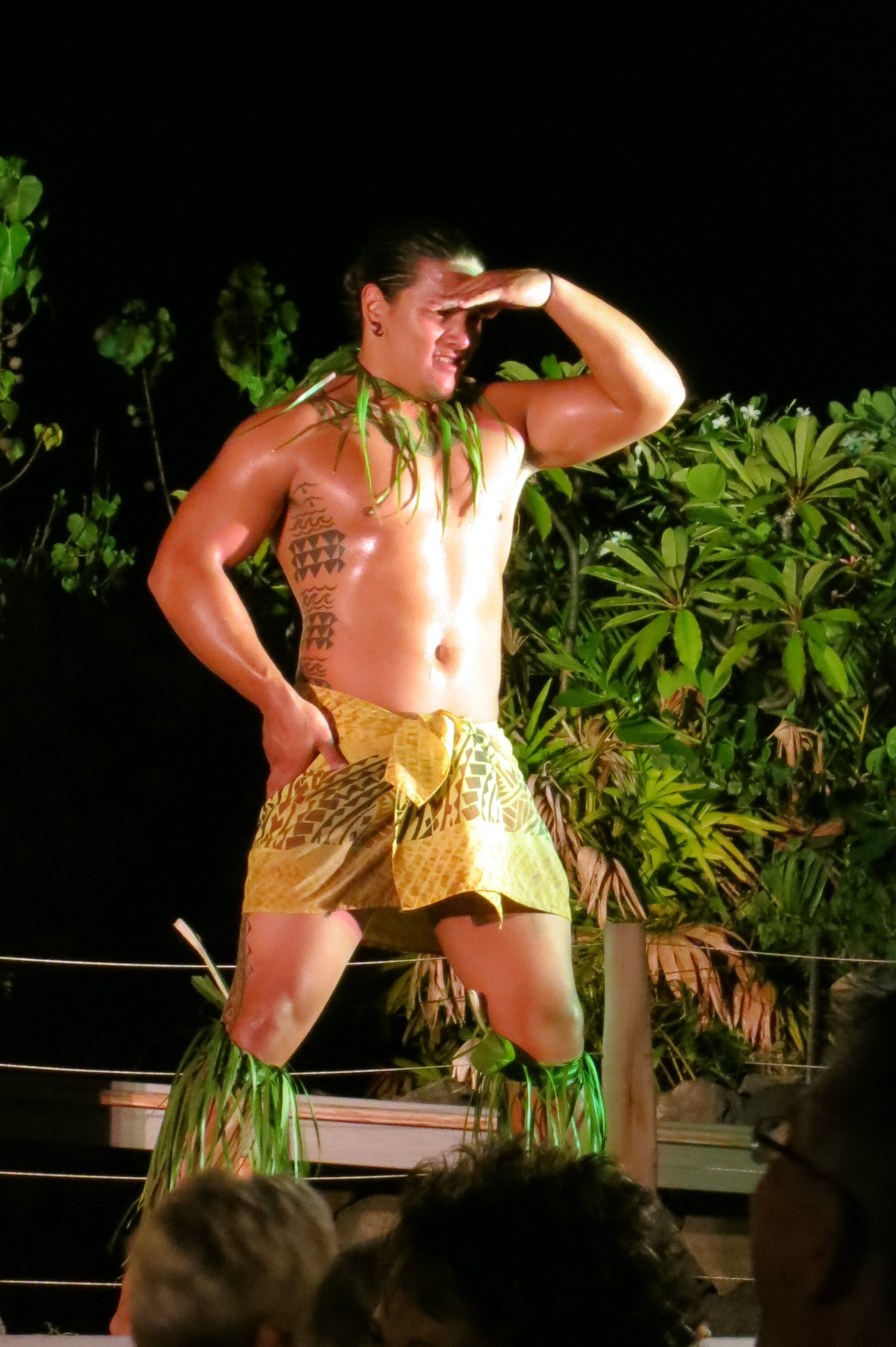
The royal court arrives

The entertainment featured the same 10 or so dancers going through various Polynesian styles of dance, while a live band played to the side. We had good seats right in the center, so we could fully appreciate the athletic jumping, shaking, stomping, and twirling of dances from Hawaii, Tahiti, Samoa, Fiji, and New Zealand. Apparently it’s normal to end with a fire dance. Since I’ve never been to a luau before, I don’t know what’s normal, but the fire dance was pretty great, and what a way to finish. Heather and I went back to the condo fully satisfied with our immersion in tourist country.

The next morning we drove back across the island to Hilo and caught a plane to Honolulu, for the last part of our vacation together. Tune in soon to read about Pearl Harbor and island living!

Big Times on the Big Island, Part 2

Before arriving at Hawai’i Volcanoes National Park, I thought the park’s name was misspelled. Surely they meant volcano, singular? But as we learned in Part 1, the island of Hawaii is made up of five volcanoes—one is extinct, one is dormant, and three are active. “Active” apparently means it’s erupted in the last 200 years, which seems like a long time to sit around doing nothing while still getting credit for being active, but who I am I to quibble logic with a force of nature.
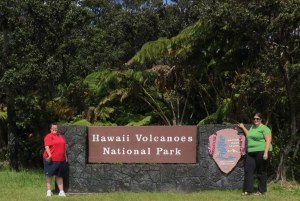
There are so many photos like this from our childhood. This one’s for you, Dad!

One of the volcanoes is serious about its active status, though. Kilauea has erupted in the last 20 years (taking out most of the town of Kalapana), and now a part of it is constantly erupting, spewing smoke into the air in the Halemaʻumaʻu crater. You can take a helicopter ride to see lava flowing, or you can do a night walk to try and spot lava as it enters the ocean. These were both expensive options, and heavily dependent on the mood of the weather, so Heather and I skipped them. Instead, we paid our $10 national park entrance fee and got more than our money’s worth with a full day of natural wonders.
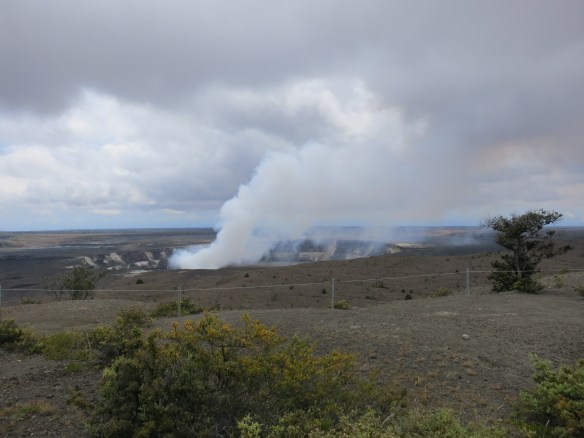
Volcano!

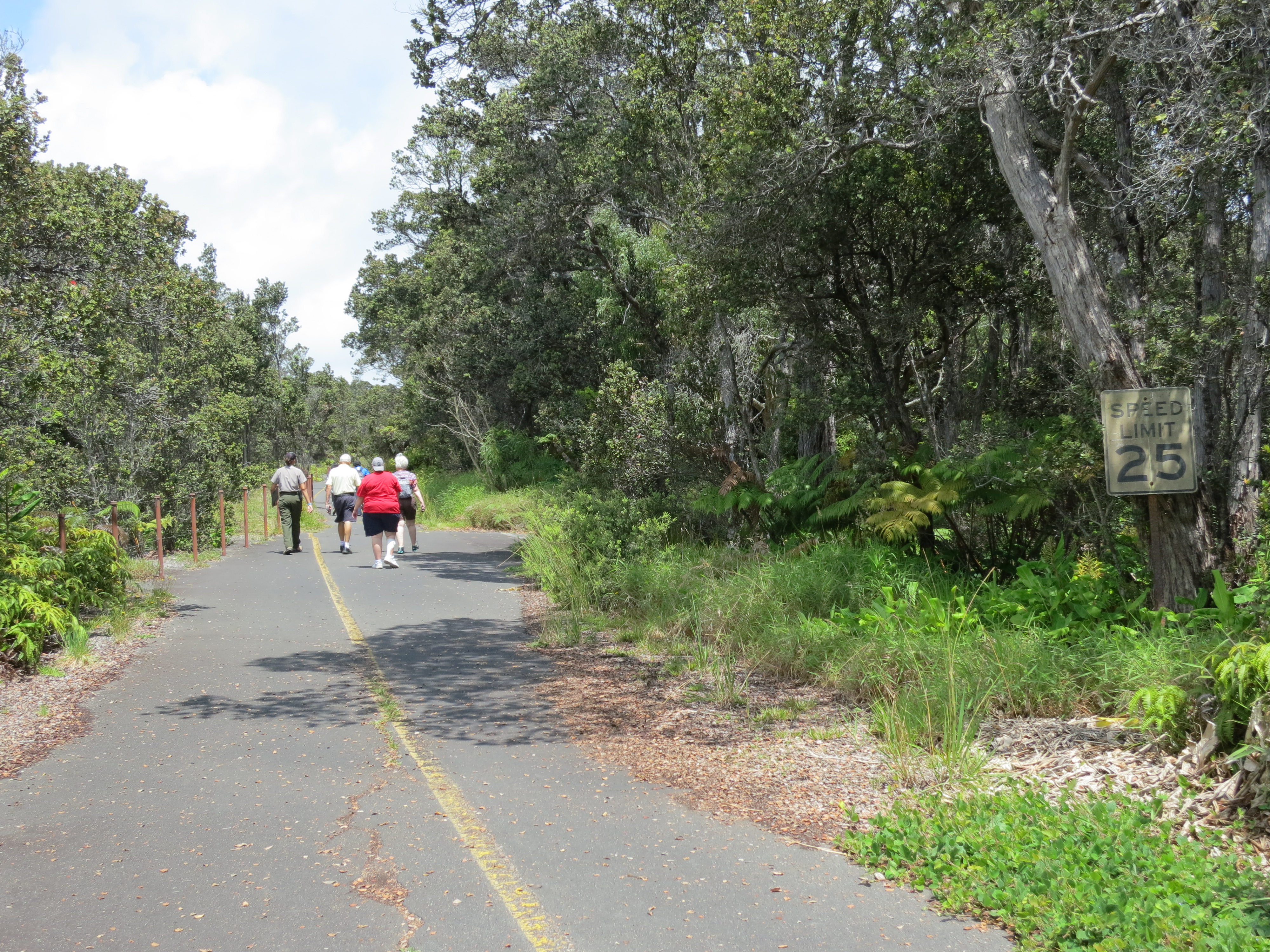
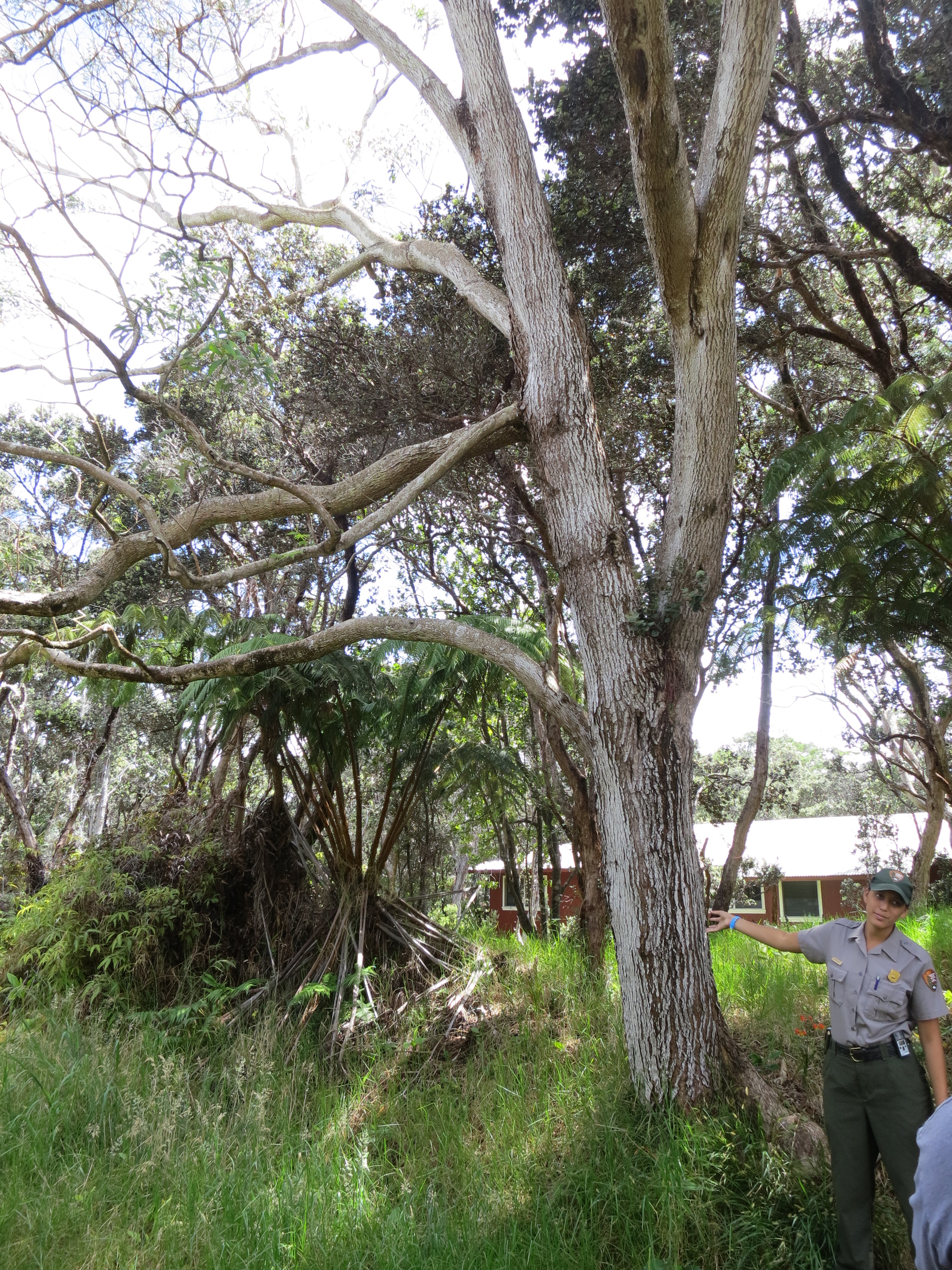
We had good luck from the start—a ranger-led tour started just 15 minutes after we arrived at the visitor center. So we joined up and learned about various plants on the walk out to Waldron Ledge. We were struck by the alarming statistic that 90% of the island’s flora and fauna is not indigenous, and we learned about the efforts to contain the spread of some of the more pernicious plants. Our guide pointed out two plants that look very similar; one is an invasive, and one is a rare native. This is why visitors are not encouraged to weed out any invasives on their own time. More likely than not, they’d pick out the wrong plant. The park does sponsor days where volunteers weed out invasives under the watchful eye of a park ranger, though, so you can contribute to the effort. (This is what my friend Matthew does in the northern part of Michigan’s lower peninsula—invasives are found all over the world.)

A koa tree – not an invasive
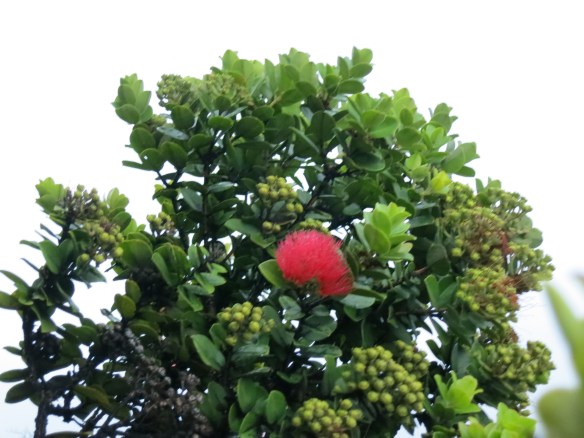
Lehua blossom on the ohia tree; this has a tragic love story myth behind it

The path out to Waldron Ledge is actually the old road that used to circumnavigate the volcano. The park realized that the road was in a dangerous spot, and they built the current road, which takes a wider path. Sure enough, in 1983, the old road buckled in an eruption and much of it crumbled away into the giant mouth of the volcano. Now it’s overgrown with plants and part of it intersects with the path out to the lookout.
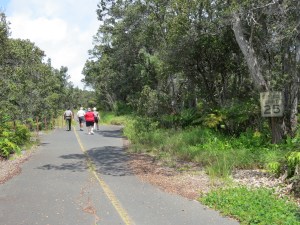
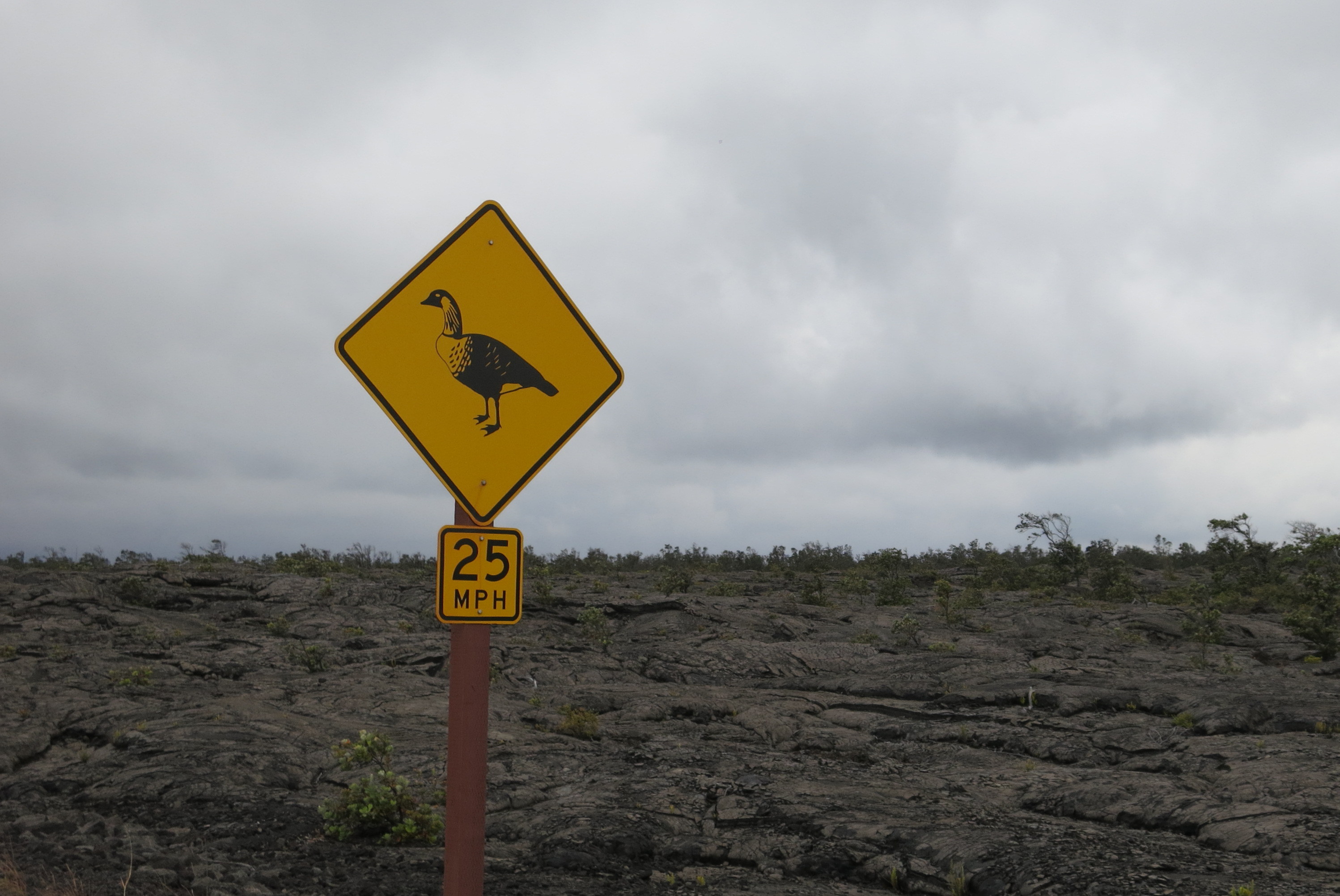
We didn’t quite get up to 25 MPH on our walking tour

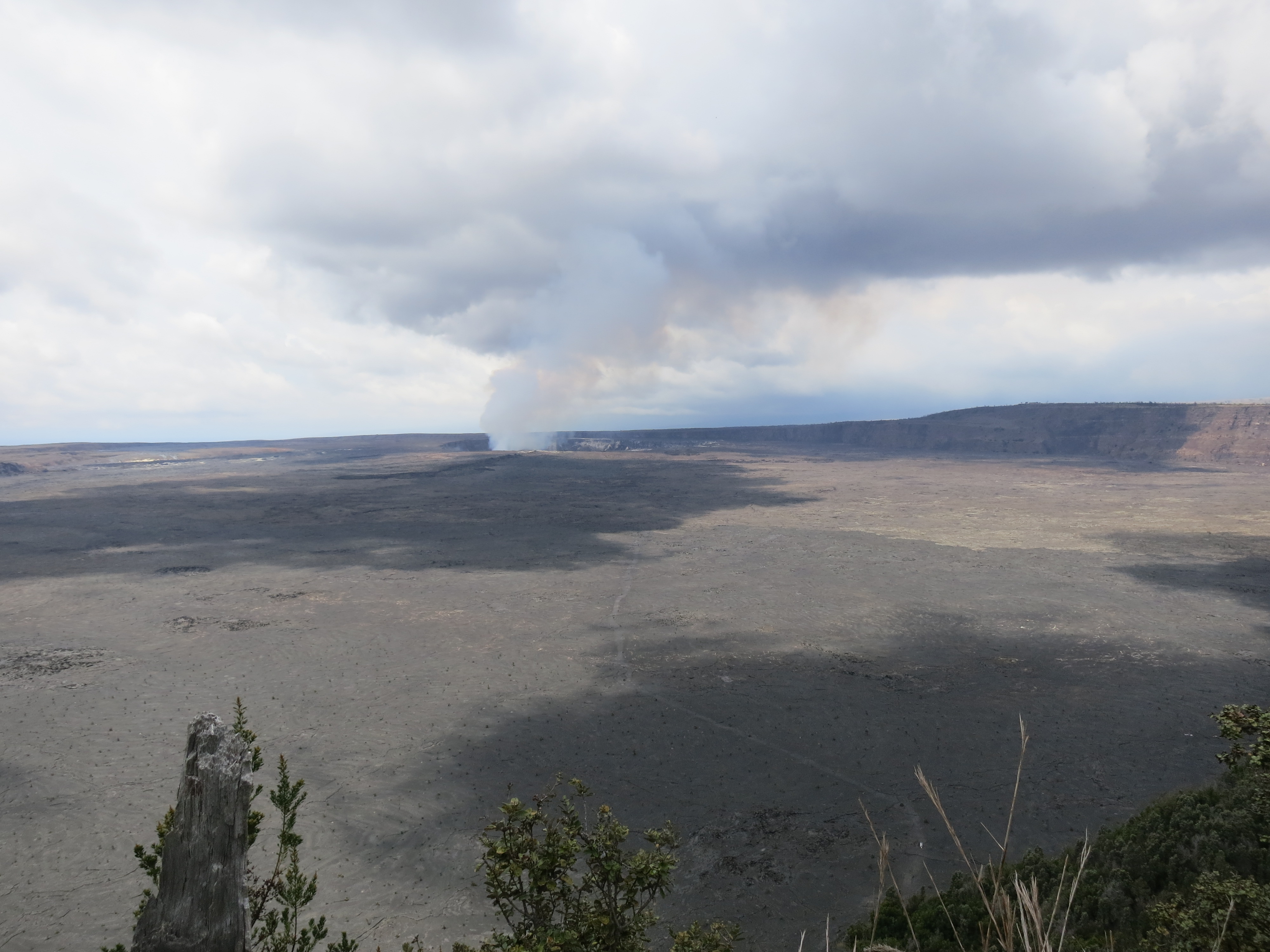
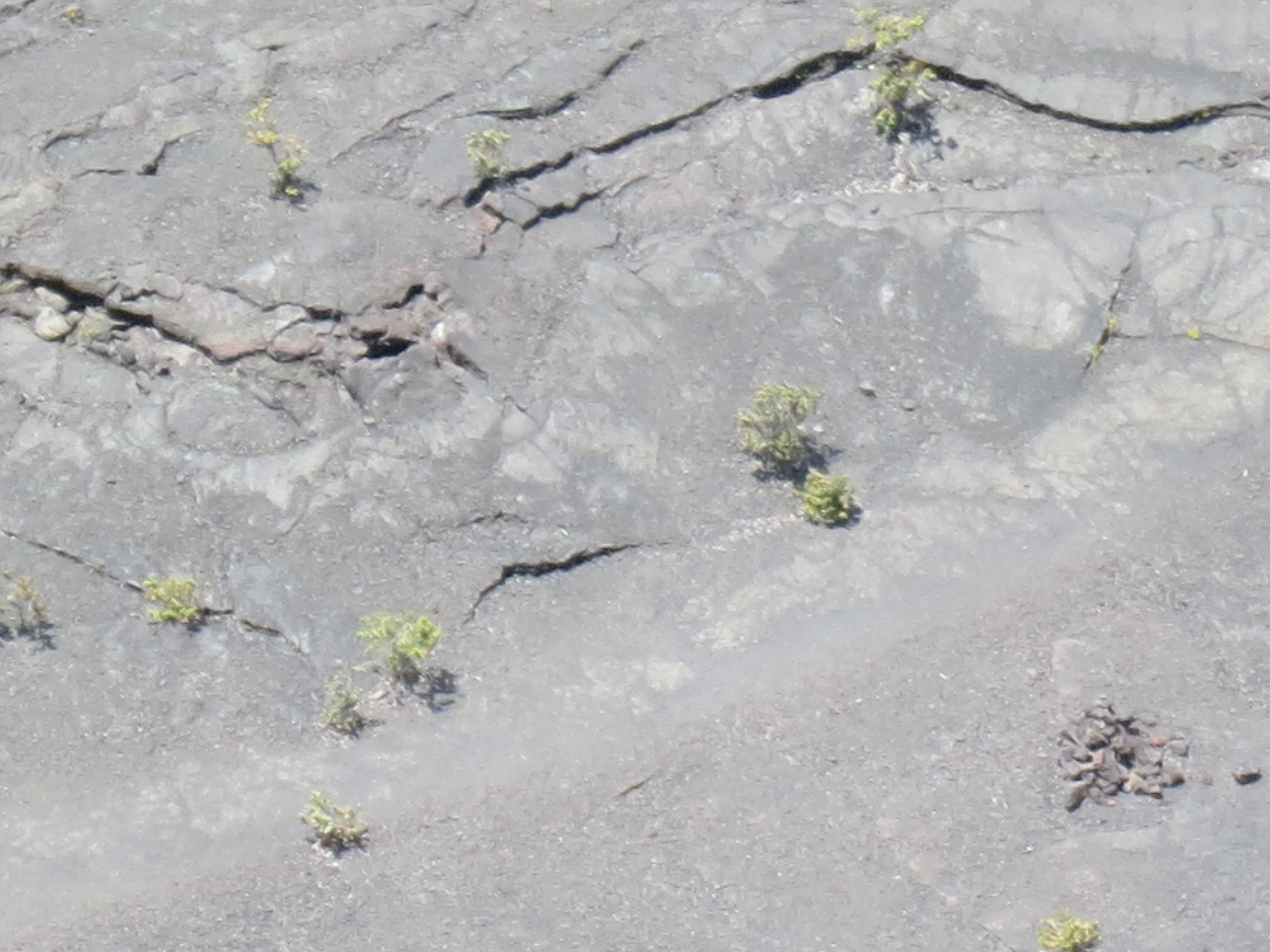
Once we were there, we saw just how vast the volcano is. It goes on for miles, and at the other end is the a vent, huffing and puffing into the air while the crater around it sits silent and nearly barren. I say nearly because plants are unstoppable; they will grow anywhere. There are plants dotting the floor of the crater, pushing their way up through the volcanic rubble and stubbornly holding on in that alien landscape. Those plants impressed me almost as much as the crater they’re growing in, actually.

Vast, I tell you

Stubborn little plants

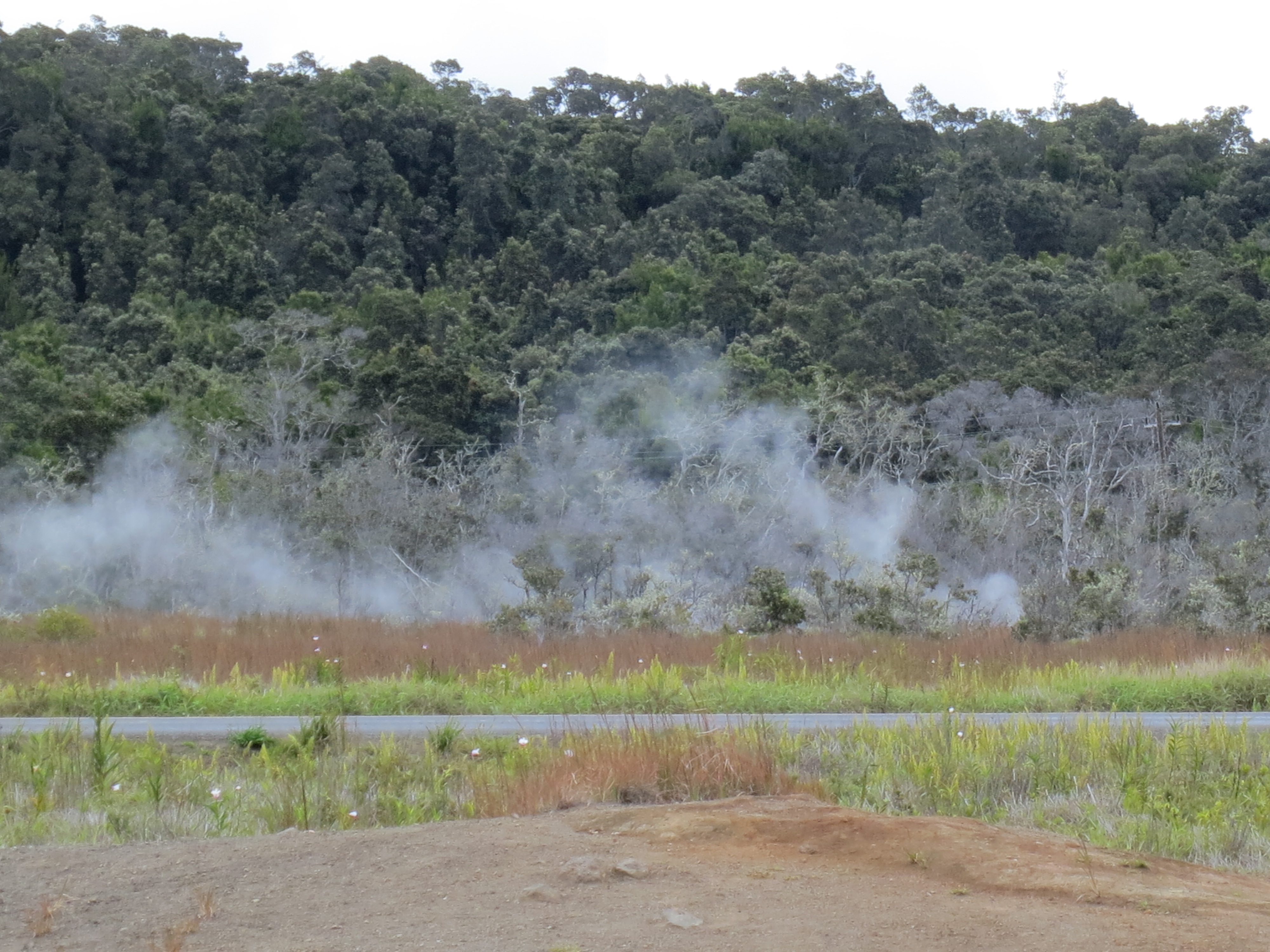
We drove over to the vent and gazed at it while munching on lunch. The Jaggar Museum there has a few good displays on the volcanoes, and also a seimograph that draws a shaky zig zag if you jump up and down near it. After lunch, we went for facials at the steam vents. These aren’t sulfuric vents, so there was no smell of rotten eggs, just warm water soaking our faces and fogging up our glasses.

Hot ‘n’ steamy

Next we went to the lava tube. It sounds like an amusement park ride, doesn’t it? “Shoot down the lava tube from 50 feet off the ground! You’ll be positively glowing from all the excitement!” It wasn’t quite like that, but it was pretty cool. A lava tube is formed by lava running down a hill, and part of it cooling into rock before the rest of it does, so that lava flows through the hardened lava rock. What’s left behind is a cave made up of lava, tunneling through the tropical plants.
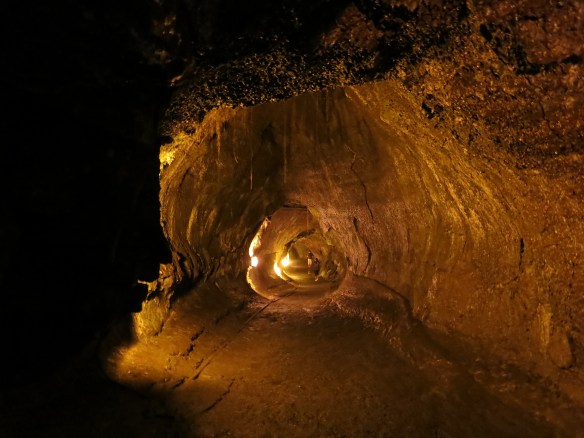
A cave that isn’t a cave

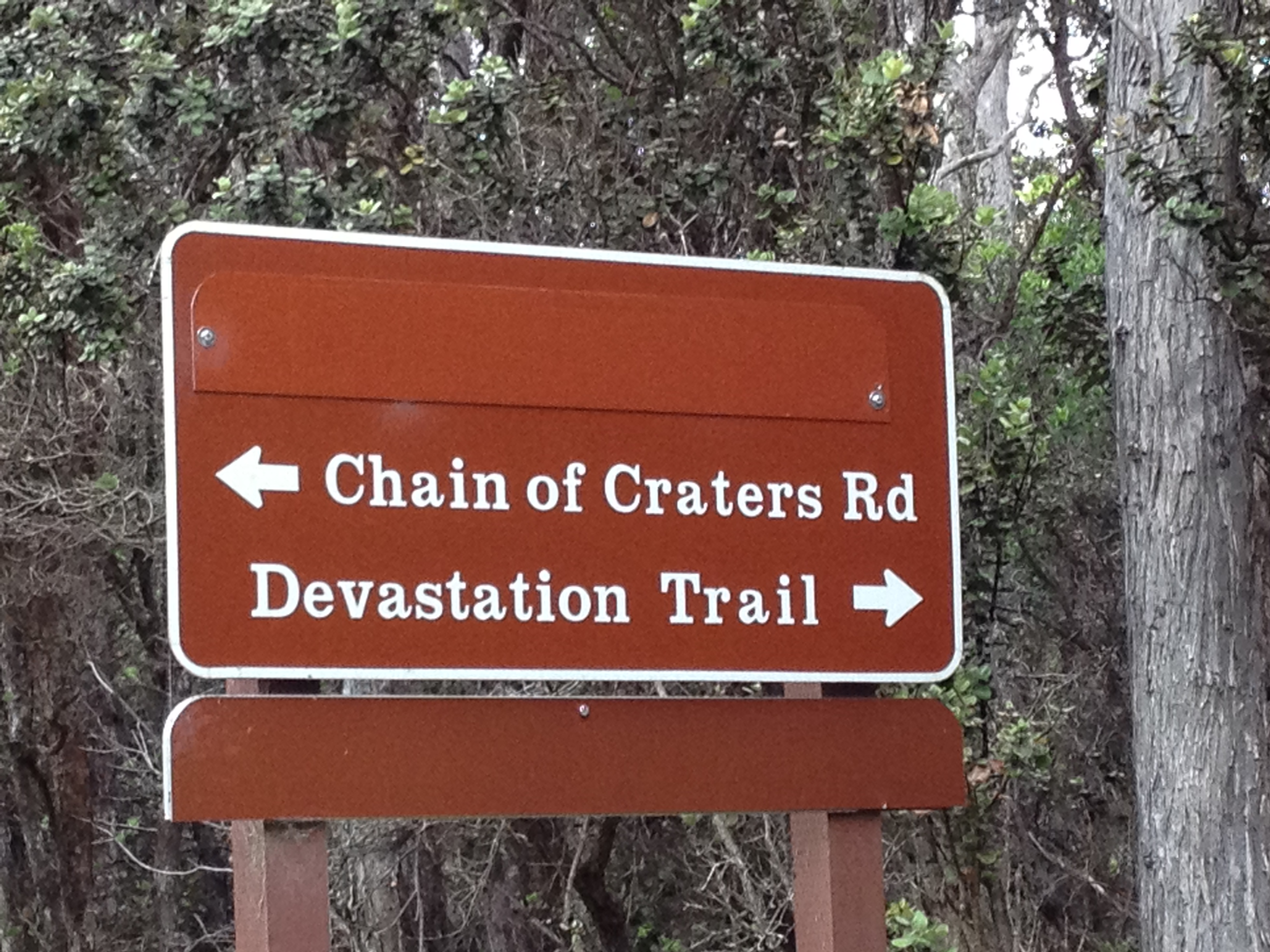
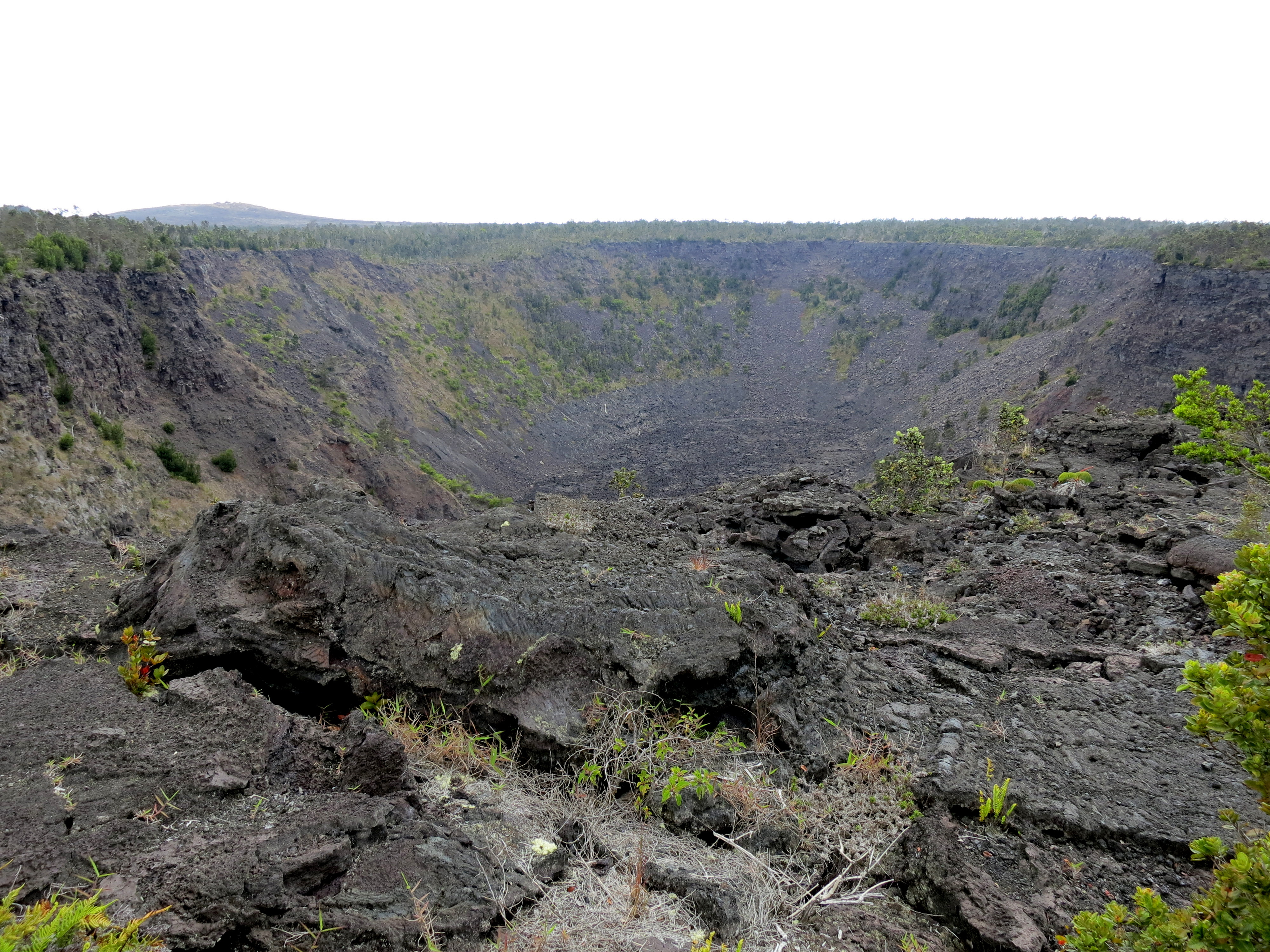
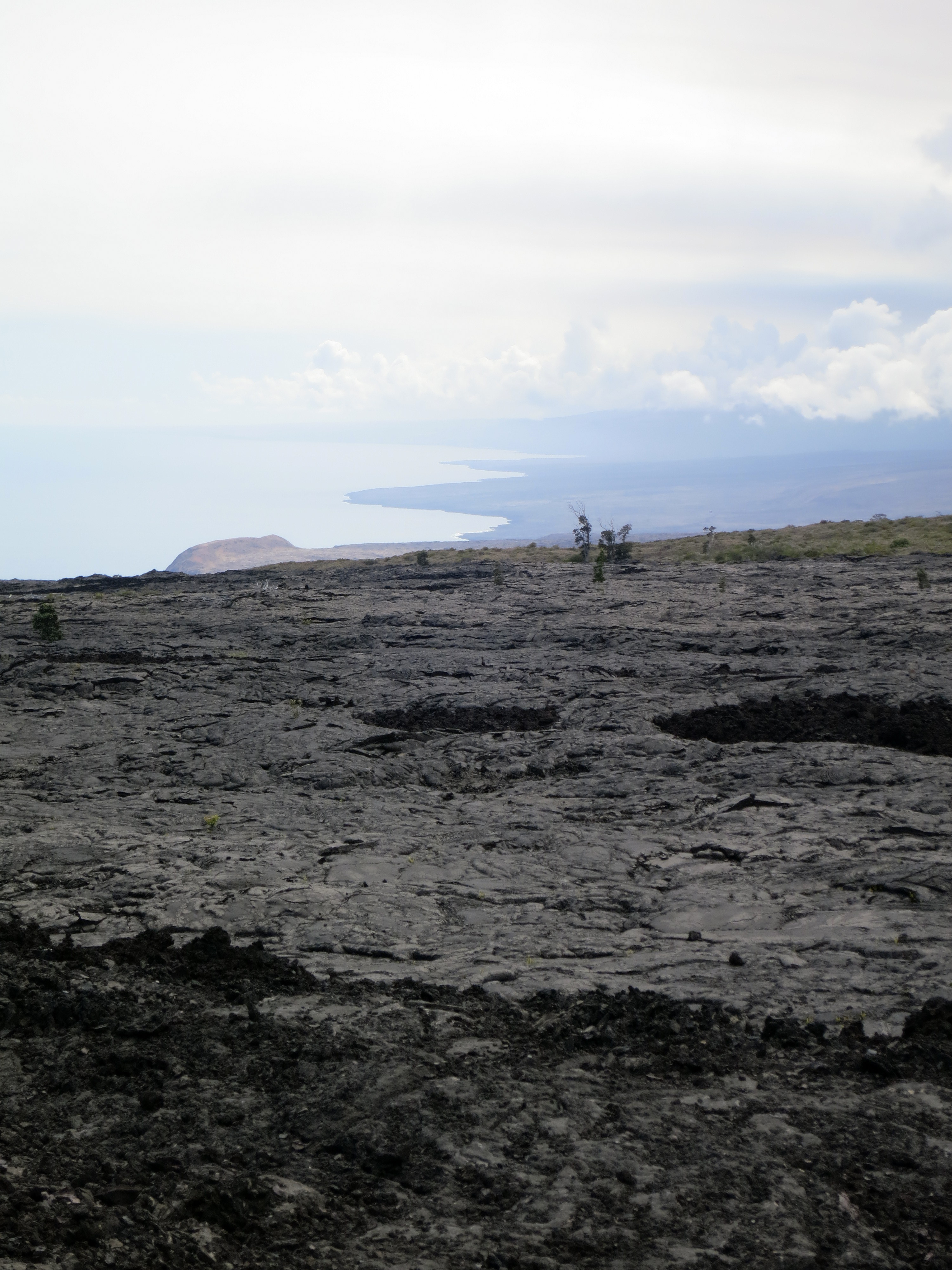
After walking through the lava tube, we got back in the car and went off to see more evidence of what these volcanoes can do. We drove along the Chain of Craters Road, a phrase both literally descriptive and wonderfully poetic. I’m not sure exactly how many craters are found along this road, but we saw many. Most of them look like rock quarries that have been used up and abandoned—uniformly gray rock, a steep wall down to the bottom of a pit, empty of life and machinery. Soon enough, we were in sight of the ocean, and the views got more dramatic from there. We took hairpin turns down the side of the mountain, losing elevation rapidly, and ended up on an eerie plain of misshapen volcanic rock stretching out to sea.
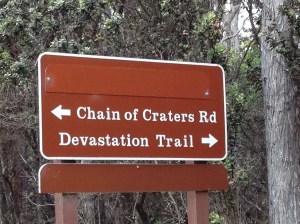
These names!

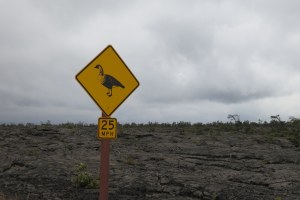
There were several signs warning to slow down for nene, a rare native bird that inhabits the park.
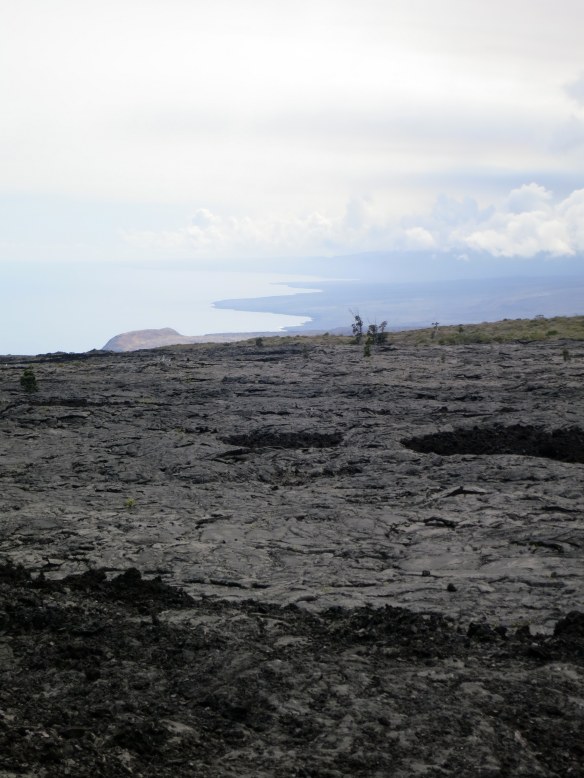
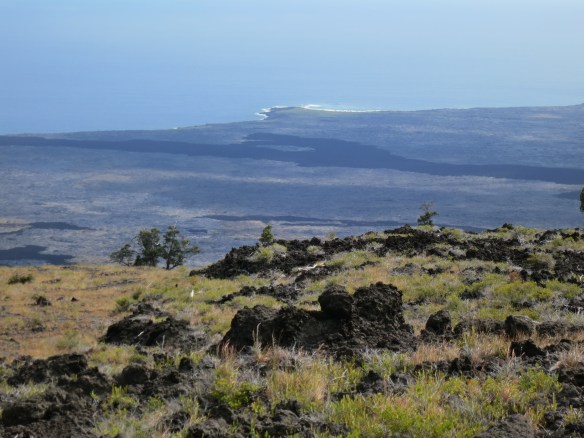
The road was pretty scary to drive on.

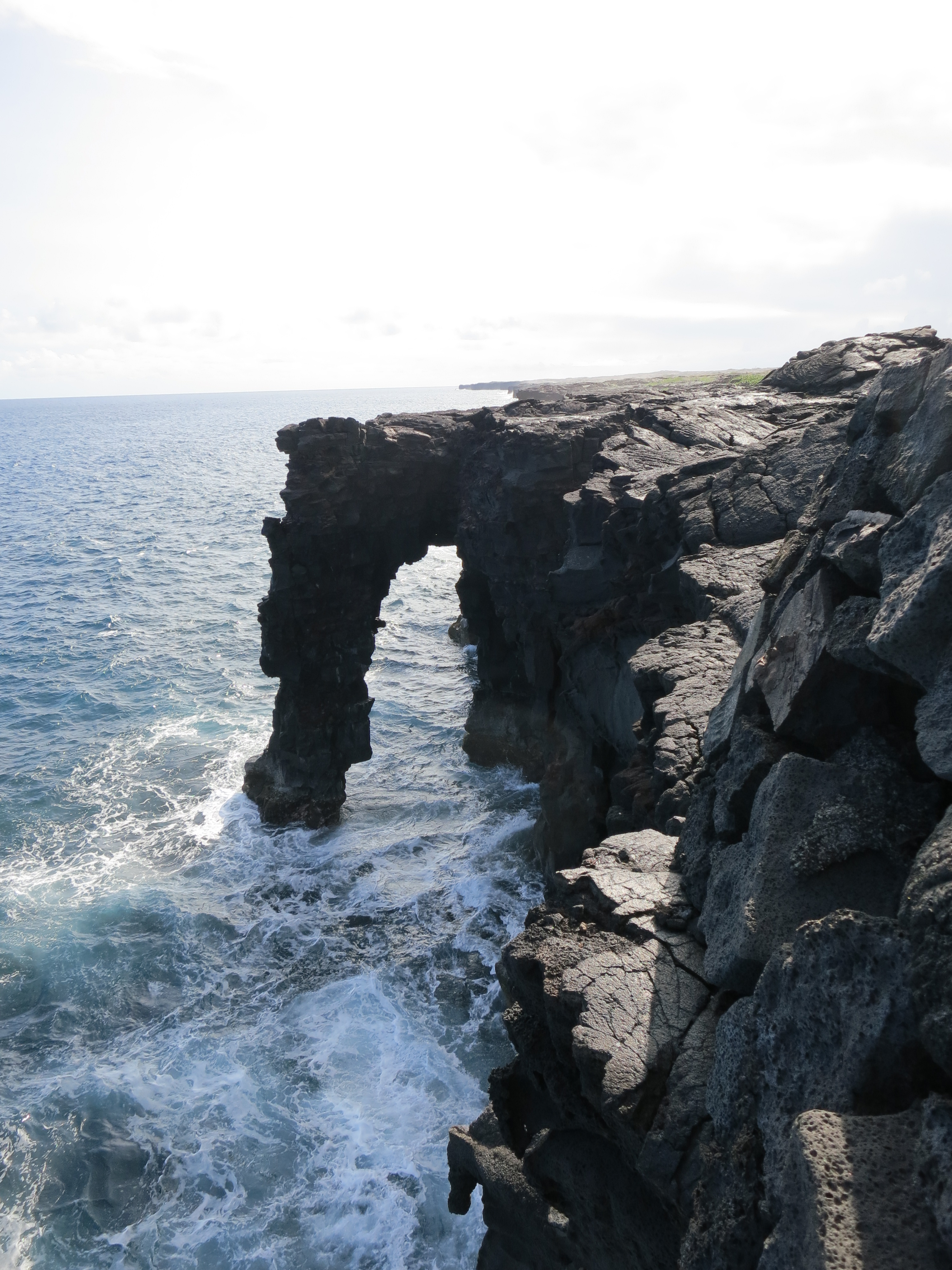
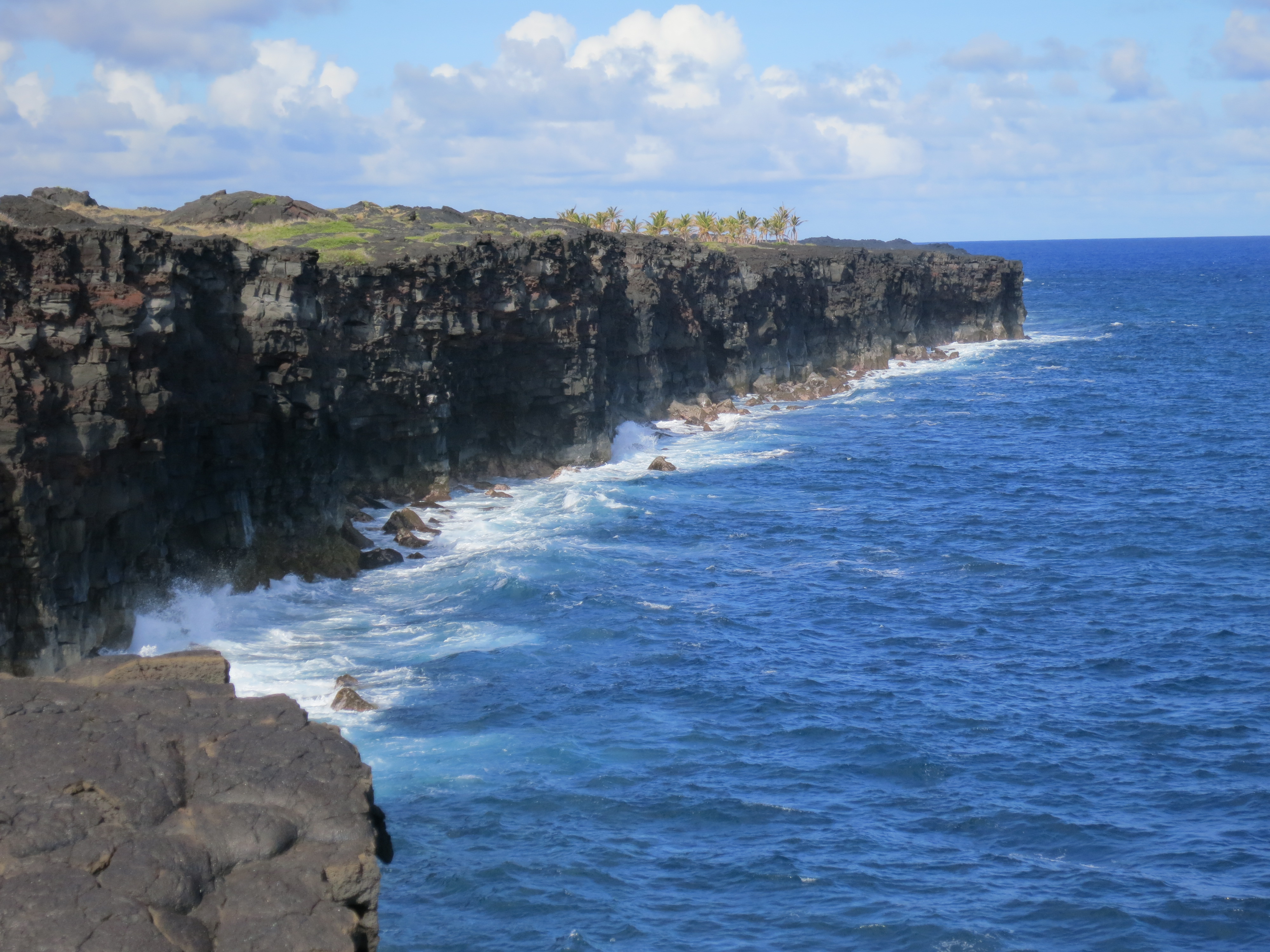
At the end of the road, you hop out and you can walk farther down the road to see what Kalapana might have looked like, or go across the road and scramble down a few rocks to the cliff’s edge. Here, you can see where the rocks cut off abruptly into space, dropping down in a cliff to the ocean. Holei Sea Arch connects a little bridge to nowhere, and the surf crashes underneath it.

Toilet at the end of the world

Holei Sea Arch
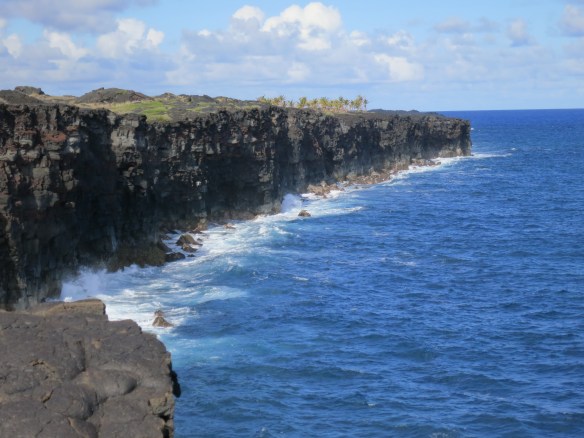
After wending our way back up that mountain and through the chain of craters, we went to Volcano Village for a little rest. We treated ourselves to a milkshake and fries at the Lava Rock Café (haha, yes), and Heather caught glimpses of football games on the TV while I retraced our route on the national park map.

It was raining when we arrived back at the Jaggar Museum but we were prepared. I zipped up my raincoat and Heather donned her yellow poncho, and we waited for the sun to set. Lots of other people were there for the same thing, so we chatted with a couple from California and watched the smoke rising from the vent grow brighter as the sky grew darker.

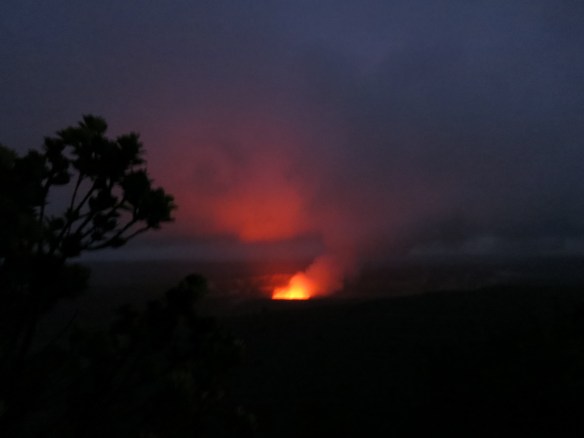
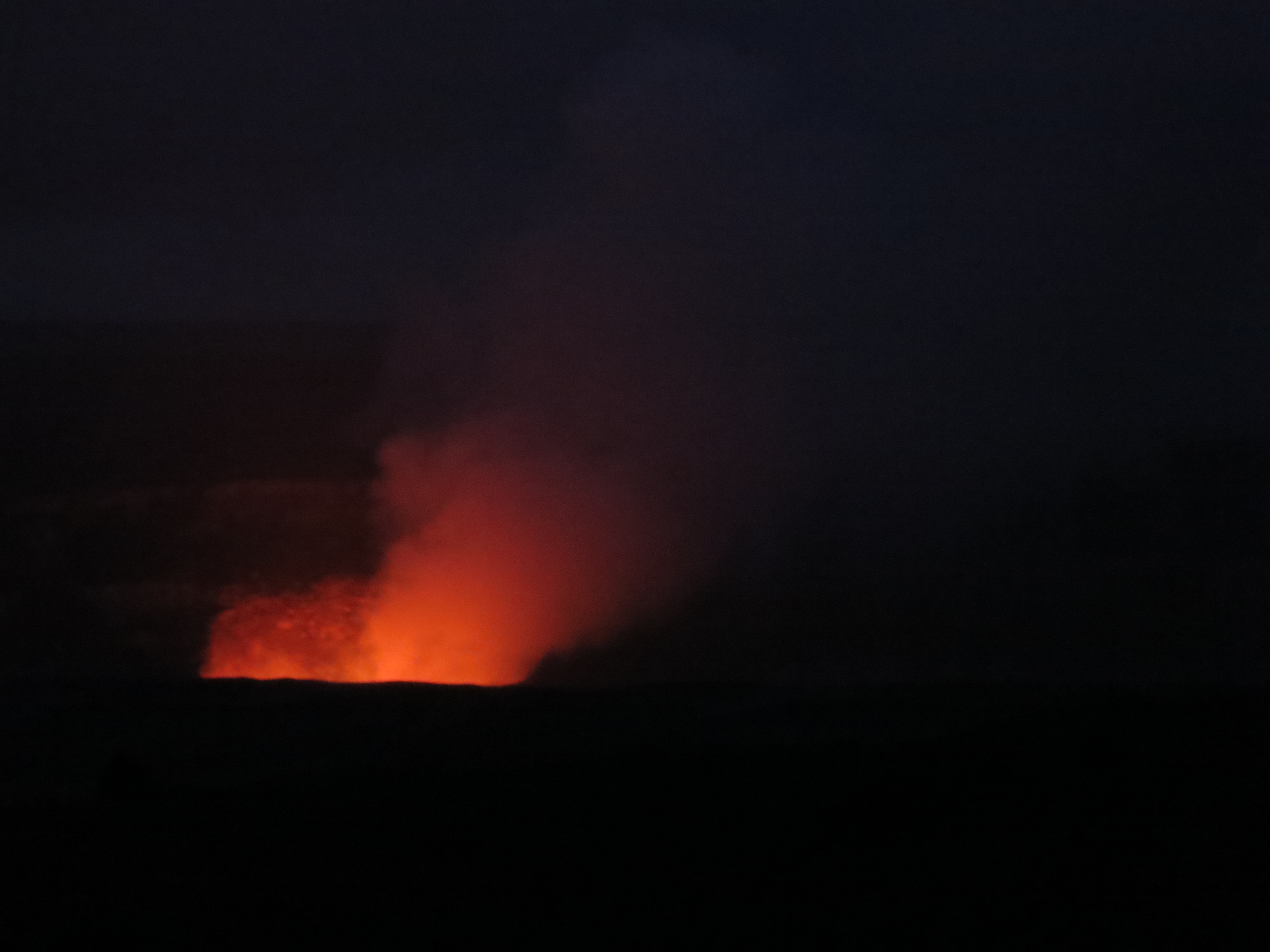
At first, Heather wanted to know how much longer we needed to stay, and to be fair, it was cold and rainy. But after a while, she wasn’t asking that anymore, because she, like the rest of us, was mesmerized by the glow. This was one of my favorite parts of our time in Hawaii, watching the glow of an active volcano as it breathed smoke and fire into the night air.
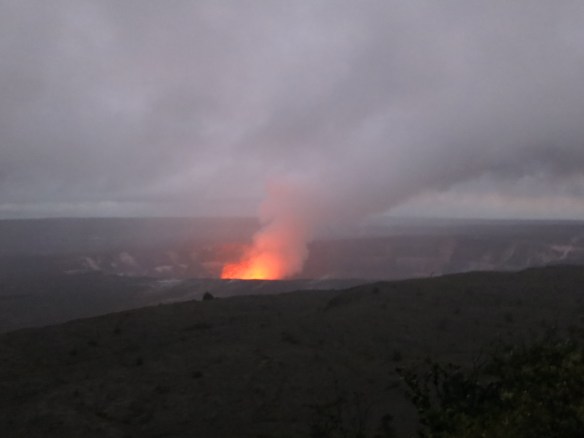
Life goal!
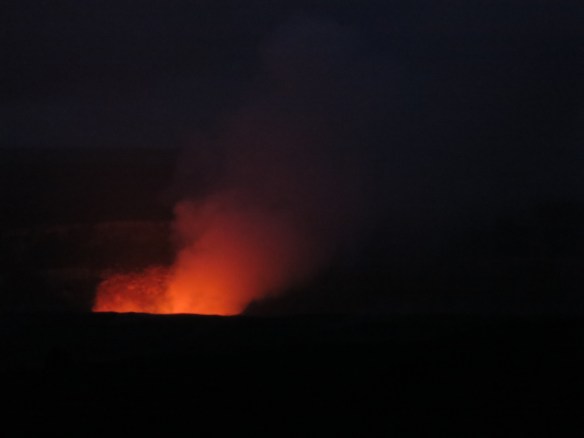
Finally, we left the park about 10 hours after we’d first arrived, and headed back to our rental house, which was an hour and a half away. It was a scary drive, in the near total dark and at times torrential rain, but we made it back safely, and that night I slept with visions of secret caves and lava glowing in my head.
Big Times on the Big Island, Part 1

We went to the island of Hawaii because our parents told us to. Not that we were given strict instructions to follow, but the people who showed me how to travel have a good idea of what I like to see and do, and having themselves visited years ago, they knew I’d like this. In the maddening manner of good parents, they were, of course, totally right.

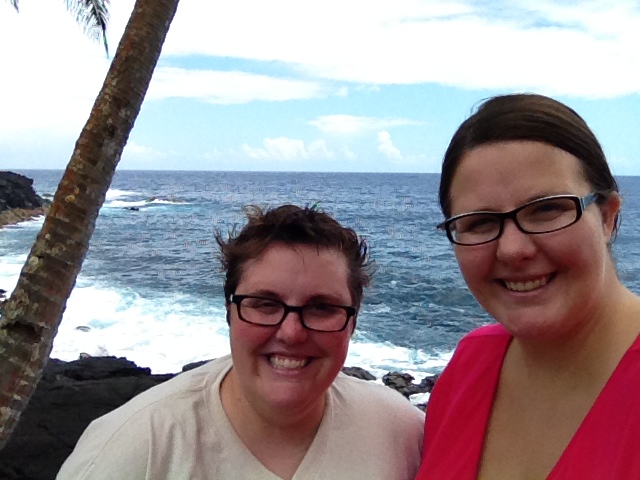
Beaming in the Puna district of the Big Island

The island of Hawaii is often called “the big island” because people get easily confused when you say you’re going to Hawaii, in Hawaii. It’s the biggest island by far, and the youngest. It’s made up of active volcanoes that are still playing around with geography, knocking out a village here, adding miles of black coastline there. Its 4,000 square miles contain 4 of the world’s 5 major climate zones, which didn’t mean much to me until we drove from the east side of the island to the west, and saw tropical rainforest give way to lush farmland, which turned into bone-dry desert, all in just a few hours’ drive.

A palette of blues and greens

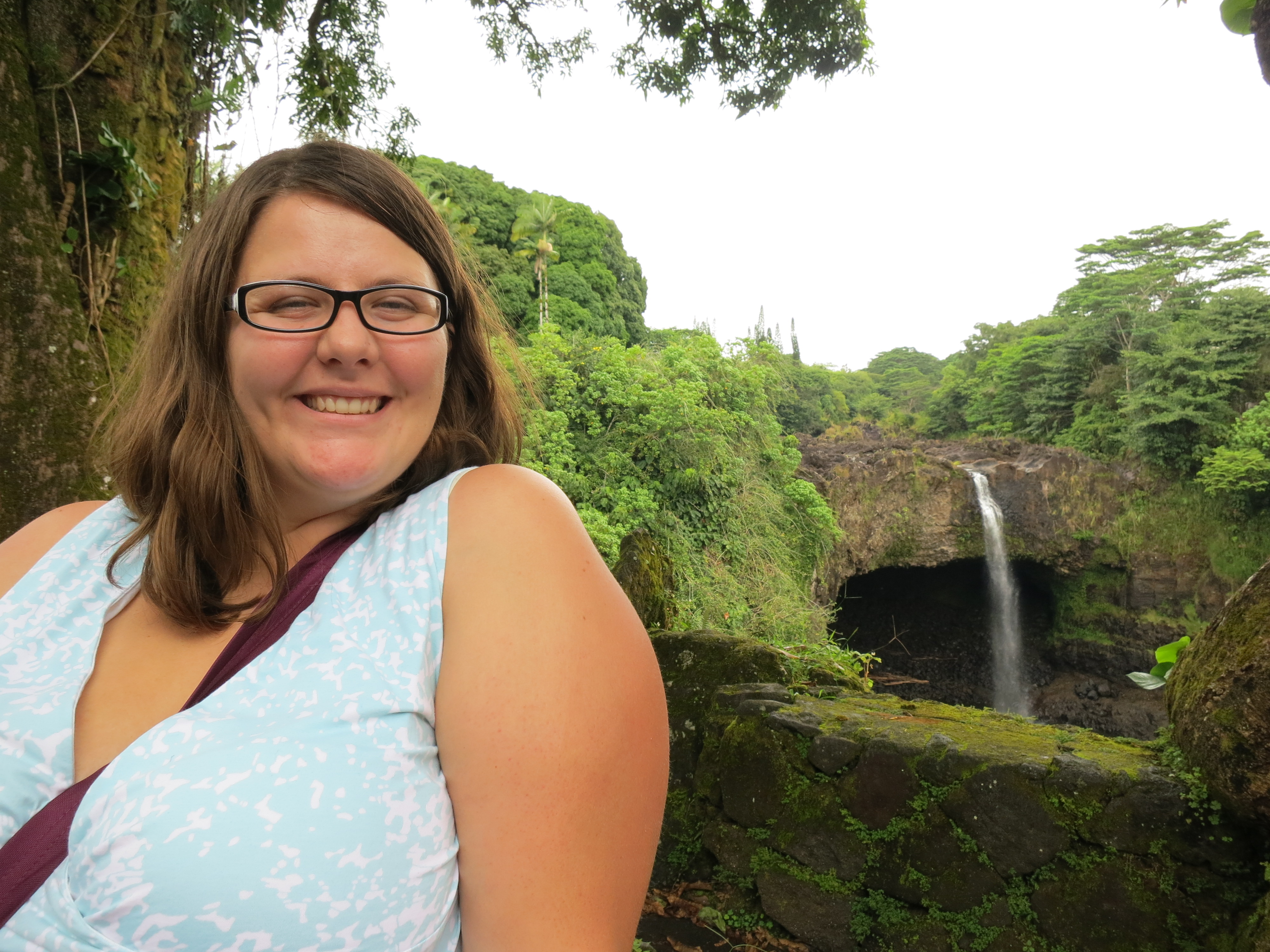
We flew into Hilo from Honolulu, and after some car rental shenanigans, we set off to see a couple waterfalls. The area around Hilo has many waterfalls, and if you go further northwest in the Waimea region, there are even more, although those require more of a hike to see. We went to two: Rainbow Falls and Akaka Falls. Rainbow involved parking the car and walking 10 yards down a concrete path to a lookout. Voila! Instant gratification waterfall, as my guidebook put it.

The grin of a waterfall enthusiast

I don’t care how little effort it required; I was just happy to see the water rushing down the rocky face of the hill. Waterfalls are about my favorite thing in the world, and I could have looked at that one for a good hour, but we had a more impressive one to visit while the sun was still bright.

on the approach to Akaka Falls

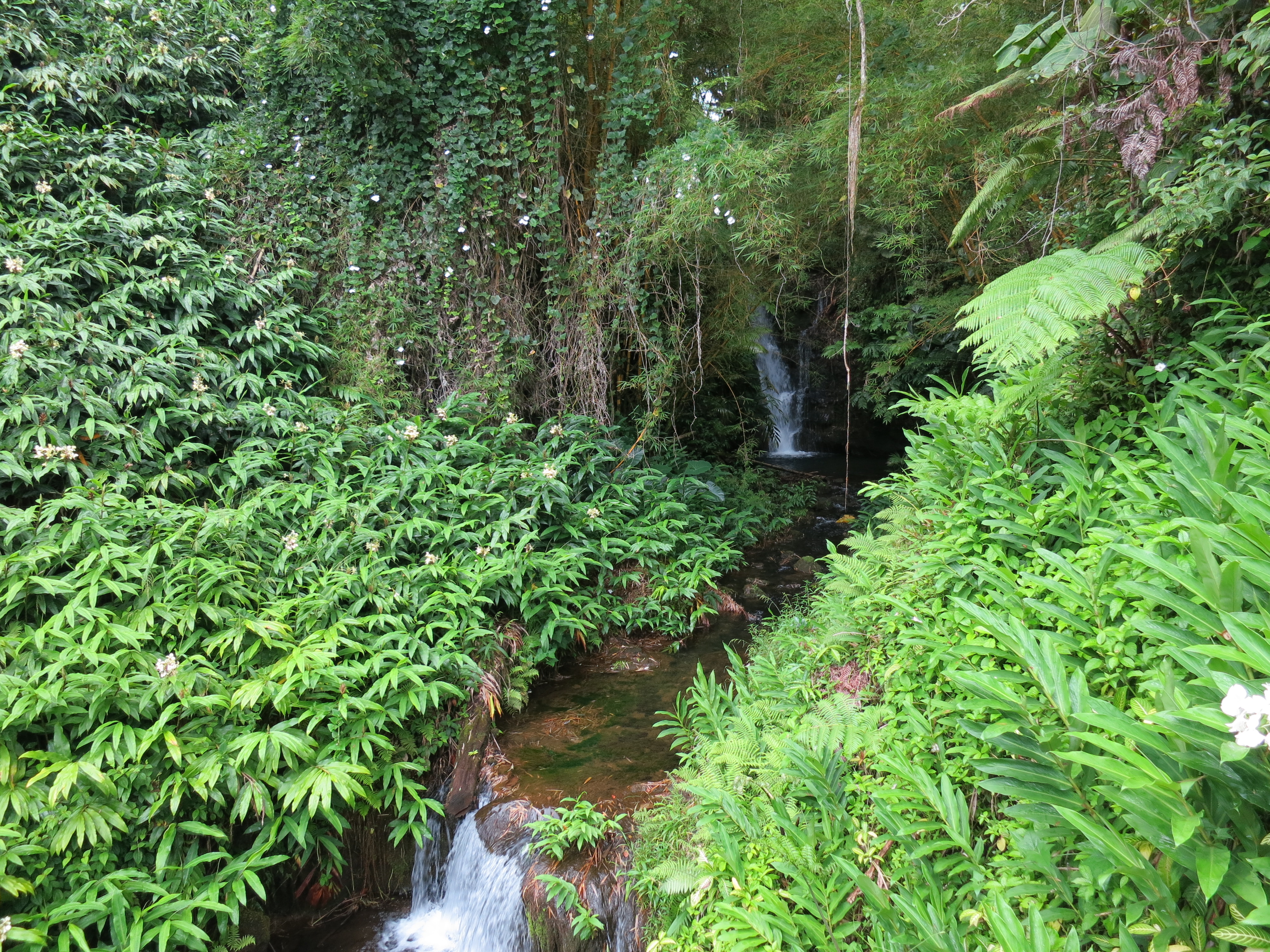
By the time we’d parked near Akaka Falls, it had started raining, but that only lasted a few minutes. Heather and I split up to take different paths to the falls. I took the longer loop, which gave me a glimpse of Kahuna Falls in the distance and plenty of green canopy to gawp at before I arrived at Akaka. The sound of water rushing over a cliff and plunging into a river below is thrilling and soothing all at once, and again, I could have just stared at it all day. I’m glad we started with a short hike in the rainforest. This, more than anything else I’d seen so far, impressed upon me that I really was far from home and well on my way to new and exciting places.

Bamboo canopy on the trail to the falls

We went on to our house rental, which was one of my best finds on Airbnb. It’s in the Puna district of the island, right off what is sometimes known as Red Road, named for the color of the pavement years back. Heather and I toasted our drinks on one of the two porches and watched the sun set with the ocean visible in the distance.

Sunset from the balcony

The next day, we drove down Red Road in an exploratory mission. We discovered it is harrowing driving. It’s a super narrow road that twists and turns, as well as goes up and down in dozens of little blind hills, and of course natives drive it like it ain’t no thing, so just as you’re starting to feel confident about a stretch of road, a 4WD comes barreling down from the other direction, and you’re swerving and hoping you don’t put the rental car into a tree, especially as you declined the damage coverage. Or at least that was my experience.

Red Road

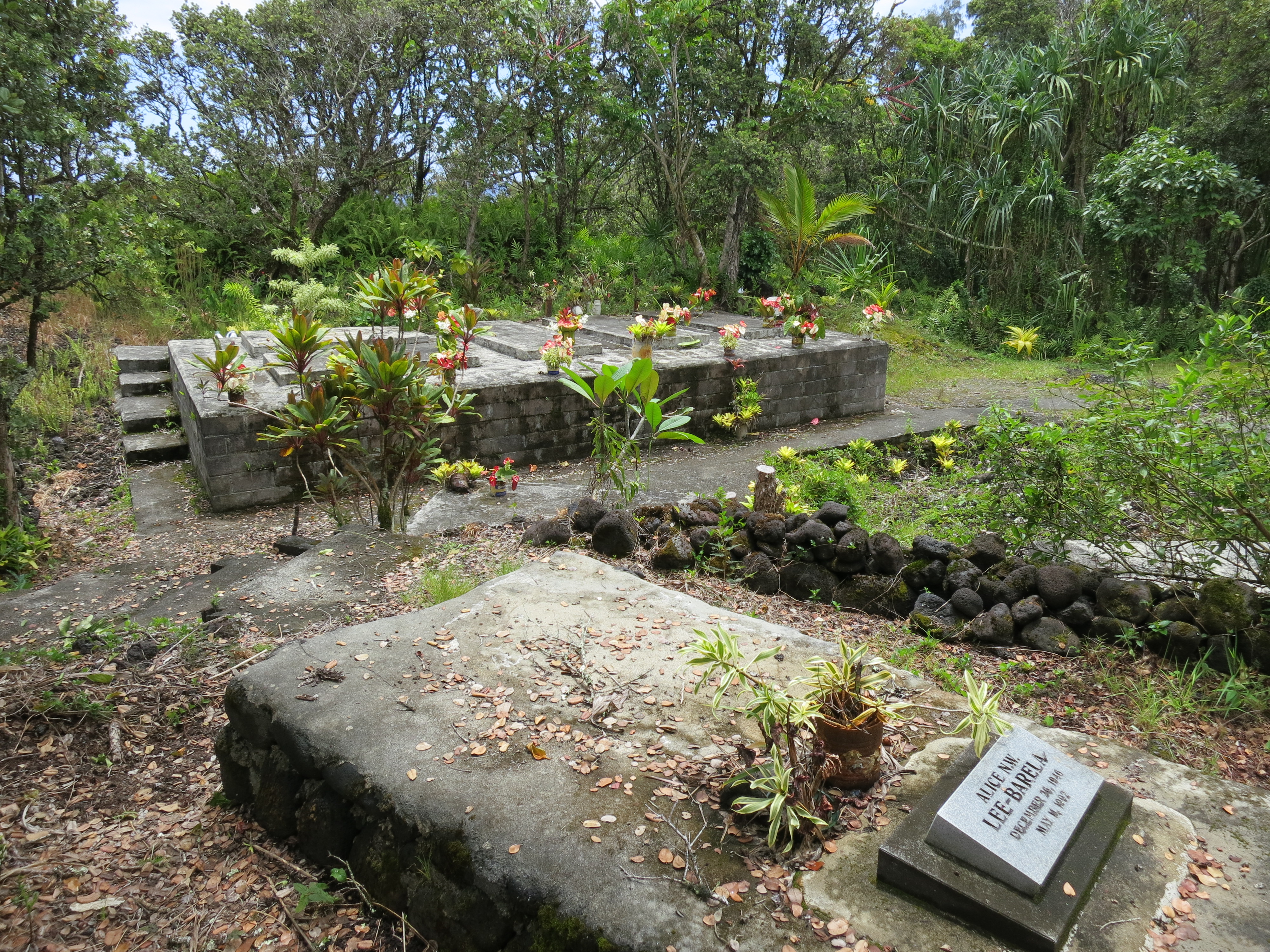
Roadside gravesite, looks like for one family

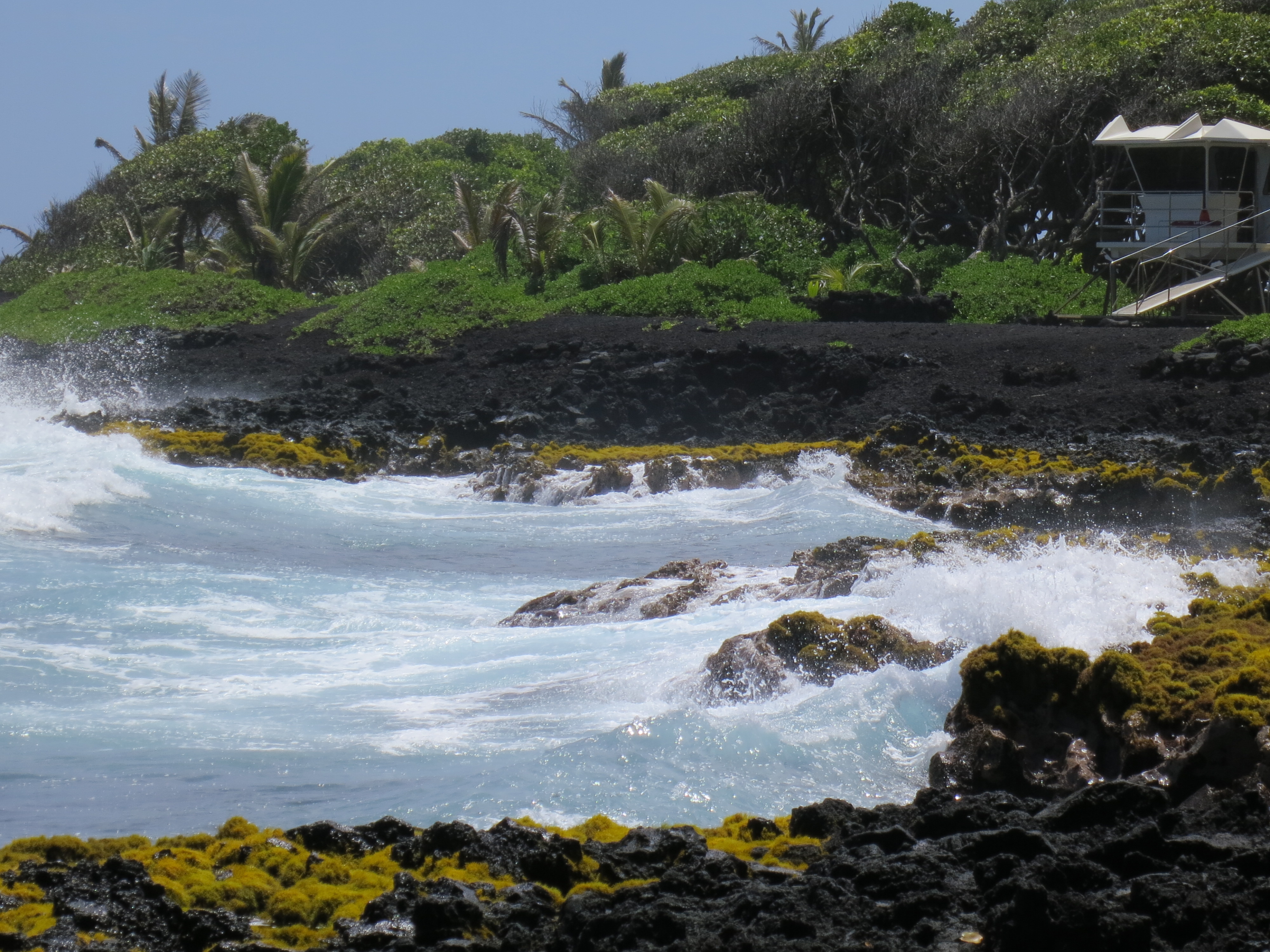
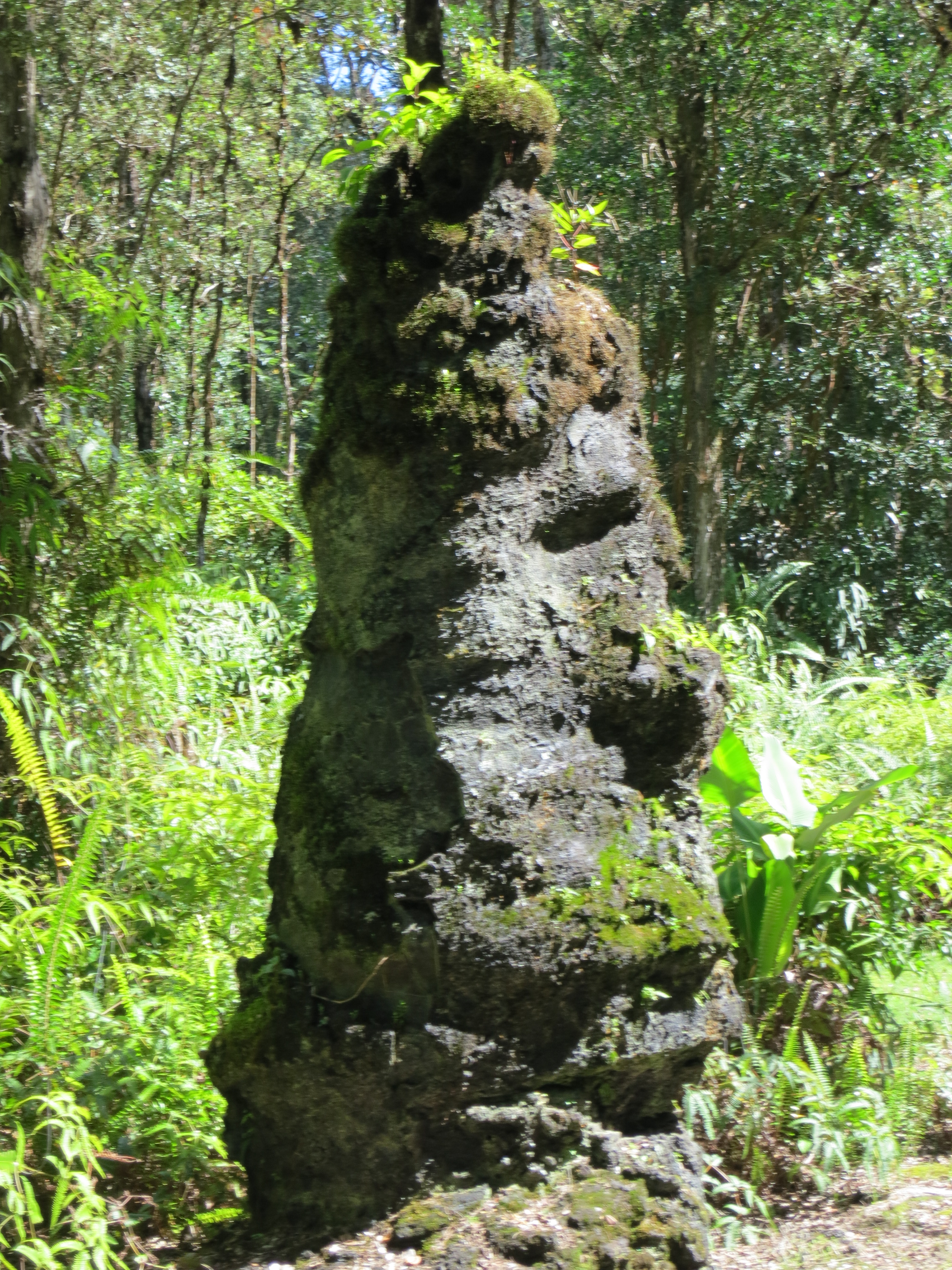
It’s a beautiful road, though. We stopped for lunch on a volcanic rock beach, watched surfers at Isaac Hale Park, walked around Lava Tree Monument, and cruised through downtown Pahoa.

Isaac Hale Beach Park

Lava Tree State Monument

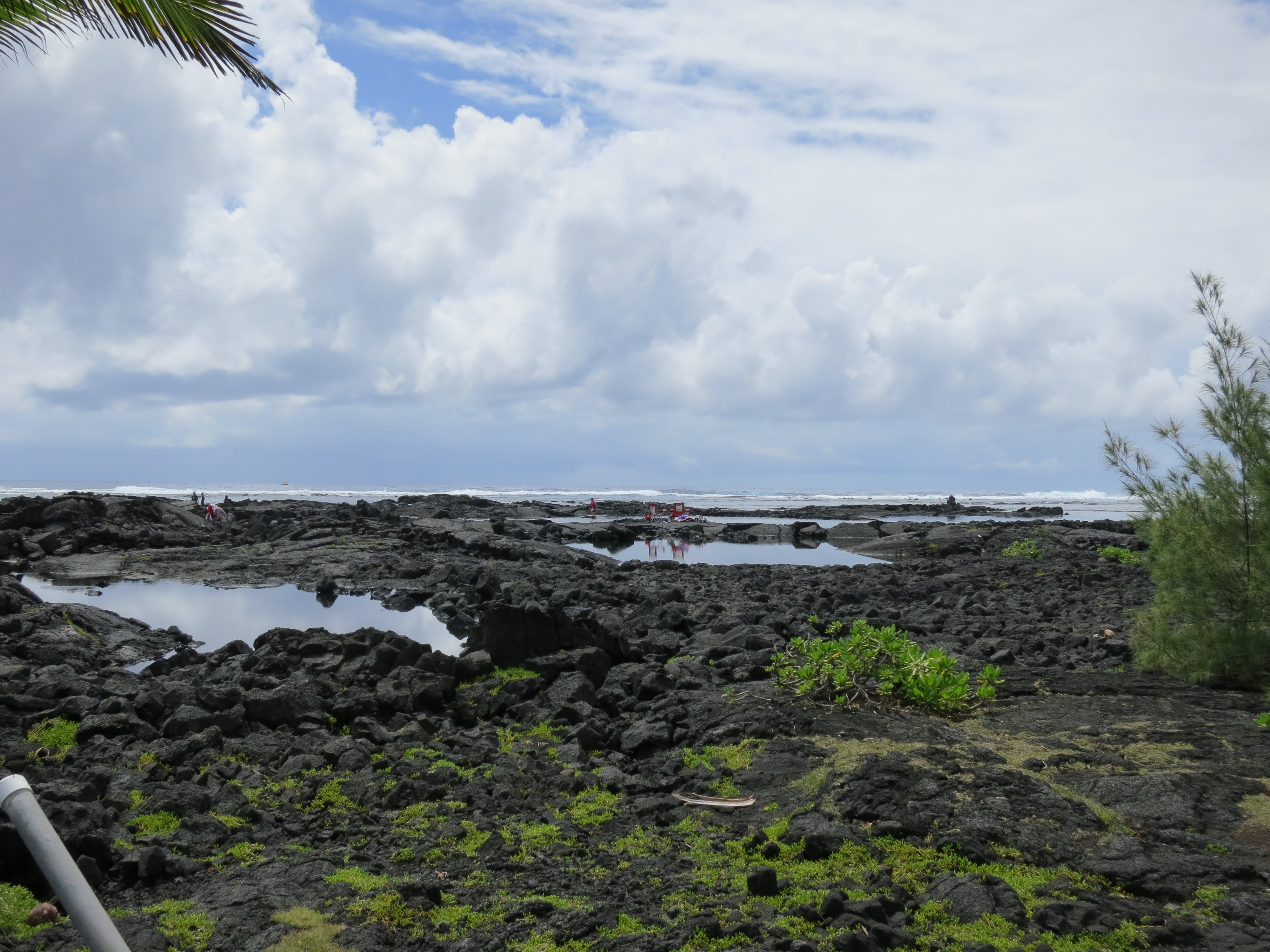
Our final full day in Puna, we went to the tidal pools out at Kapoho. These apparently are great for snorkeling, but we didn’t have any equipment, so we just got in the water and paddled about. Heather and I are both water babies, so we don’t really mind where we are, as long as we get to float and play around. The tidal pools were pretty enough, but they were painful to get in and out of, since there’s no real entrance point and you just find a rock that seems less sharp than the others and creep down that into the water, then repeat the process on the way back out. I was so worried about slipping on our way in that I had Heath and I sit down and scooch in on our butts. We both tore up our hands and knees crawling back out again. Not really what I’m looking for in a relaxing swimming experience.
The treacherous tide pools of Kapoho

We had an ice cream at what used to be Kalapana. In 1986, the Kilauea volcano erupted and wiped out almost the whole town. We saw a few dilapidated structures and a sign explaining about the eruption, then just black rock far out into the ocean. It was eerie to see a reminder of how unpredictable and powerful the island remains.

Okay, that’s it for the Big Island, Part 1. Part 2 will cover our time at Volcanoes National Park, and Part 3 will be the drive to the Kona side of the island, and the luau we went to there. You’ve already seen the snorkeling we did over there, which was another amazing part of our time on the Big Island.

I’m off to tour Uluru and Kings Canyon tomorrow (so exciting!), so I’ll be away from internet for a few days. Please comment as usual, but if your comment gets caught in moderation for some reason, that’s why I can’t get to it right away. Have a wonderful week, y’all.

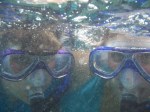
A-Snorkeling We Will Go

When my sister Heather and I started planning this trip, we drew up a list of things we wanted to do in Hawaii: visit a volcano, swim at Waikiki Beach, go to a luau, and snorkel. But that last one actually made me a bit nervous. I love swimming and could easily spend all day frolicking in the water, but that’s all under the power of my own breath. Breathing while under water is just unnatural. I can’t see myself ever scuba diving, but I thought maybe I could handle snorkeling, seeing as how it’s much easier to surface if necessary.

Turns out snorkeling is really easy. (You probably already knew that, but see how I’m growing and learning on this trip?) You just put the mask on, tip your head down, and breathe. We took the advice of my travel book and asked for prescription goggles at the rental place, which ensured that we saw fish instead of brightly colored blobs once we got in the water.

We drove five miles south of the center of Kailua-Kona to Kahalu’u Beach Park and joined the many other snorkelers. At first we tried putting the flippers on and clown-shoeing into the water, but that was comically difficult, and we noticed other people were walking into the water barefoot and putting flippers on once a little further in. This was a much better plan.

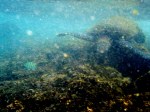
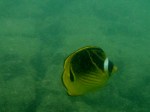
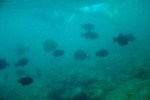
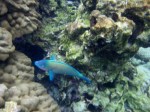
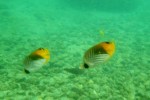
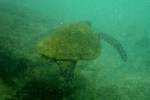
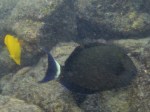
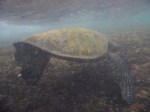
And then, the fish! For two hours, we paddled around staring at fish, giving each other the thumb’s-up, and taking photos with Heather’s underwater camera. Yep, there are pictures. They’re mostly cloudy, since the area we were in on the first day of snorkeling was full of people kicking up sand, and we ran out of batteries on the second day, when we were in a quieter, clearer area. They’re still pretty cool, though. Enjoy!

Aloha from Hawaii

Aloha, dearest fellow travelers! I’m sitting on wicker furniture in an airy open-plan house on the island of Hawaii. The ocean surf was audible earlier, but night has fallen and the chirruping of the coqui frogs has taken over. Heather has fallen asleep and I’m typing up this short post before going to bed myself. We have an early morning tomorrow, heading to the tide pools up the coast before they get too crowded.

Today was our fourth day in Hawaii, and I think I’m just starting to believe that I’m here. I still can’t believe I’ve actually started my trip–I expect landing in Sydney might help with that–but I can believe that my sister and I are really in paradise. I mean, we’ve swum in the Pacific, sunbathed on Waikiki, hiked to a waterfall, and seen dozens of plants and birds we’ve never seen before. Definitely not in Kansas, etc.

More to come as the trip continues! For now, have a slideshow to tide you over.

This slideshow requires JavaScript.