ACAM: What to Do in China

China is a giant country, and I could easily spend my entire trip exploring its large cities and rural villages. But I’ll probably have more like six weeks to spend there, and I want to spend that time well. Here are some ideas to start me off–do you have any other suggestions?

Dissonance

The Forbidden City, Beijing
Foreign visitors to Beijing always make it to at least the Forbidden City and the Great Wall, and for good reason. The vast complex that is the Forbidden City is impressive for its scale alone, not to mention the imposing architecture, the royal treasury, and the centuries of history seeping through the walls. Just seeing a giant portrait of Communist crusader Mao gracing the southern entrance of a formerly imperial residence should be enough to set my head spinning.

No, you can’t actually see it from space with the naked eye, but it’s still plenty impressive.

The Great Wall
I’m not sure what there is to say about the Great Wall of China that hasn’t already been said. It’s a giant, mostly failed border policy built and added to over centuries of rule by various dynasties. It’s a testament to human perseverance and a monument to the thousands of laborers who died working on it. It’s falling apart in some places and extensively restored in others. It’s a glorious thing to see and climb, and I can’t wait.

Colonial architecture meets night lights

The Bund, Shanghai
I’d never heard of The Bund until I started ACAM research on China. Apparently, “bund” means “embankment” and in this case, it’s a stretch along the Huangpu River in Shanghai of various colonial buildings. These buildings housed the major banks of the country, as well as hotels for visiting dignitaries and financial folks. I’m not sure why the buildings weren’t razed during the fervor of Mao’s reign, but they remain and in the last thirty years they were renovated and put to use for government departments and pricy hotels. It looks like a nice place for a walk.

Arty design for an art museum

Shanghai Museum
This art museum has eleven galleries, one for each material or medium (jade, calligraphy, sculpture, etc.). Eleven galleries of ancient art! And apparently, if I get there early, I can get one of the free tickets they pass out every day. Cultural nerdy paradise.

Image 1. Image 2. Image 3. Image 4.

How I Learned to Stop Worrying and Spend it All on the Dream

If you’ve seen me in the last month or two, and you’ve asked me how plans are shaping up for my trip, first of all: thank you. Second of all: I’m sorry. Because I’ve recently realized that almost every time someone’s expressed interest in this exciting adventure of mine, I’ve responded with, “Yes, but I’m so worried about the money. It’s so expensive.” And that is a super annoying response.
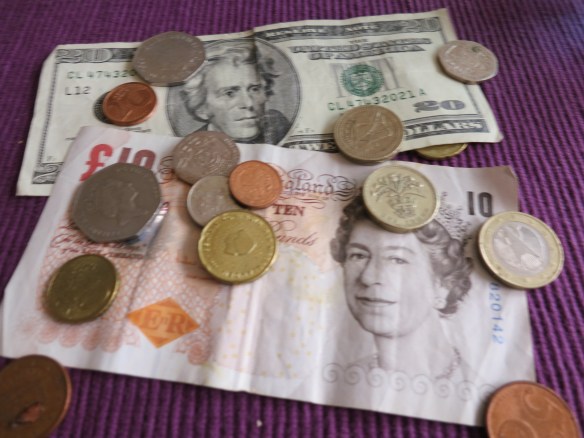
Counting every penny

It’s annoying for a few reasons, right.

1) The basic middle-class-white-woman-in-the-US problem, wherein just by those demographics alone, I am in an impossibly higher income and standard-of-living bracket than so many of the people I’ll be meeting on this trip. Privilege is a complex thing, so it’s never as easy as “other people have it worse than you, so quit whining”; it’s more “other people have it worse than you, so what are you going to do about it?” For me, the answer involves voting across all levels of government, making public stands with others at rallies and marches, calling my representatives on big issues (don’t just email!), and coming up, volunteering with various organizations. That’s all well and good, but the basic distastefulness of fretting over funds for a year-long pleasure trip in a world so fundamentally unequal remains.

2) This isn’t exactly an attainable thing for a lot of people I know, either. Most RTW blogs like to talk about how anybody can do this! live your dream! cast off fear! And that’s a nice sentiment, but it blithely ignores crushing student loan debt and wretched wages in this economy, not to mention health problems and family obligations. RTW trips aren’t everyone’s cup of tea, but even for those who’d like to take one, there are very real and sizable obstacles. I’m unattached, not in a career job, debt free, and in good health–a relatively rare confluence of conditions.

3) I have saved quite a bit of money! I never did the hardcore saving, giving up daily luxuries and forgoing drinks at the bar; instead, I enjoyed the heck out of my life in Chicago and still managed to put away a few hundred dollars every month for this trip. I’ve done dozens of calculations, and I’m pretty sure that barring any disaster (knock on wood), I can at least make it through eight months of travel, enough to get me to England for my grandmother’s 80th birthday celebration. Of course, I intend to keep traveling after that, but if that has to be the grand finale, well, that’s not too bad.
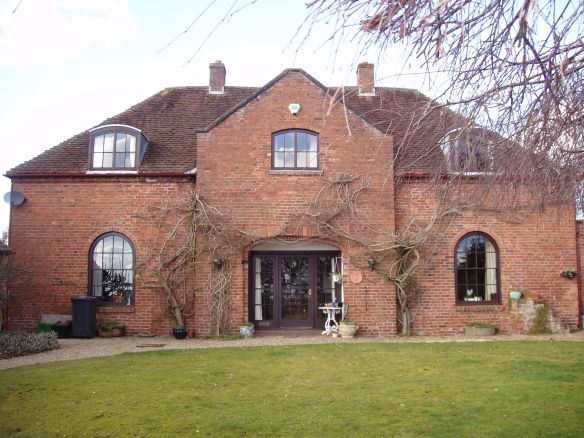
If the trip ends sooner than expected, I’m okay with it ending here.

4) It is just plain obnoxious to complain about how broke you are. Unless you were born into cyclical poverty or are having a really rough time making ends meet and genuinely wonder how you’ll make rent this month, please don’t complain about your finances. (Not to say there aren’t good sites for talking about the very real money problems we all face, especially young people trying to figure out how it all works.) Setting aside whether anyone else would want to go on the trip I’m about to go on, no one wants to hear me moan about my money woes. We all have them.

Seriously, no one wants to hear about your money woes

Okay, but I’m still concerned about money for this trip. You can skip this if you’re already burned out on the subject (I don’t blame you), but in case you too are planning a RTW trip and wonder why no one ever seems to talk about this on their RTW blogs:

1) It’s all about stability, right? It’s scary to leave the best apartment I’ve ever rented, and a decent job, in a city I love, not to mention all the people I’ll miss. It feels selfish and foolish to leave an office job in this economy. I hate job hunting–it’s all the worst parts of dating without any of the fun parts–so I haven’t looked for anything in the last five years. But I have many friends who have moved jobs, and it’s been rough. Some of them looked for over a year to find something in their field, and these are really qualified people. It’s a scary thought, coming back to an economy that I can’t imagine will be much improved (and if a certain someone is elected in November, might well be worse). Sure, there’s the whole spin of “I’m a great candidate because of the new experiences my travels afforded me,” but let’s be real, that’s no clincher.

Does “sat on a beach in six countries” make me upper management material, Bob?

2) As I’ve shamefacedly admitted before, I’ve been so focused on this trip for so long that I haven’t made any plans for my return. At this point, I think I have $800 saved in a separate account labeled “Back to Life, Back to Reality.” That is… one month’s rent in Chicago. Not even one month’s rent plus security deposit. I’m really into planning things (shocking, I know), and it freaks me out to be setting myself up for a day-to-day life with no clear picture of what comes after, or how I’ll pay for it.

3) I’ve always prided myself on my independence, but there’s living on your own in the country you grew up in, and there’s being totally alone in countries that use a different alphabet from yours. I’ve gotten good at laughing with a carefree air whenever someone expresses surprise at the idea of traveling solo for such a long period of time, but inside, I’m thinking, “Yes! It is super scary!” I know it will be far more wonderful than frightening, but it’s still scary. Money is the cushion that eases any new/scary situation, so I think I transfer some anxiety about traveling solo onto the more tangible issue of traveling with enough money.

4) With limited funds (and limited time), it is impossible for me to visit every place I’m interested in visiting. This has been a hard one to accept, as you can see by the many times my proposed itinerary has changed. I have serious FOMO about travel (I hear the kids are using that term). I’ve read so many accounts of amazing experiences in just about every country in the world, and I’ve been anticipating this trip for so long, that I’ve convinced myself it won’t be worth it if I don’t do everything all in this one go. Yeesh! What pressure.

I have a lot of pins, okay?

I don’t generally consider myself someone who gets worked up over money issues, because I’ve been fortunate enough to always make enough to be comfortable (those two years in the publishing industry excepted). So these overwhelming fears about having “enough” have taken me by surprise. I see where they’re coming from, but they’re no good. I gotta move past them.

Partly, that involves adjusting my approach to travel in general, and that is something I’m looking forward to doing. I won’t be engaging in the kind of slow travel that some do, but I will be slowing down my usual pace considerably. Rather than zipping from sight to sight to make sure I get everything checked off my list, and rather than worrying about how much it’s going to cost to do all that checking off, I’m going to go at it a bit more leisurely. A week in one location here, a couple weeks in another location there, and I hope to come away with a better understanding of the places I visit and the people I meet. Incidentally, this approach also cuts down on the cost of plane tickets.

I think it’s a sign.

It’s probably terribly gauche to post a PayPal link after a post like that, but here it is. I am genuinely easing up on my anxiety about money, but if you’d like to shut me up about it once and for all, and also fund a swim with dolphins or a volunteer project with elephants, please check out the post here. No worries if you don’t! I’d hate to drive away readers with pleas for money, so I’m trying to keep these few and far between.

Images 1 and 2 mine. Image 3. Image 4. Image 5.
Hometown Tourist: Chicago Cultural Center

What’s that saying about the hidden gem of a city? I’ve found Chicago’s, and when I say “gem” I mean “it looks like a beautiful jewelbox on the inside.” The Chicago Cultural Center is a neoclassical building running the length of a city block on Michigan Avenue. Even though it’s across the street from Millennium Park, I’d never heard of it before a few of my friends went on a tour and urged me to visit. What an odd and lovely building it is.

Chicago Cultural Center

You start out at the Randolph Street entrance and the tour works its way up and across the building until you’re at the Washington Street entrance. We had a wonderful guide, a lifelong Chicagoan who used to come to the Reading Room back when the building was still the city library. She knew everything there was to know, and editorialized subtly enough that you could miss it if you were so inclined, or hear her little digs at Daley’s 1989 plan to turn the building into a mall and such.

Recessed ceilings, as the Romans did

Apparently, after the Great Fire of 1871, Queen Victoria helpfully sent over thousands of book to replenish the city’s library–except Chicago had never had a library to replenish. So a library board was formed, and after fighting over the land with the city and then with Civil War veterans who wanted that land for a museum, they finally agreed to share for awhile, and went over budget to finish building it in twice the allotted time. Chicago!

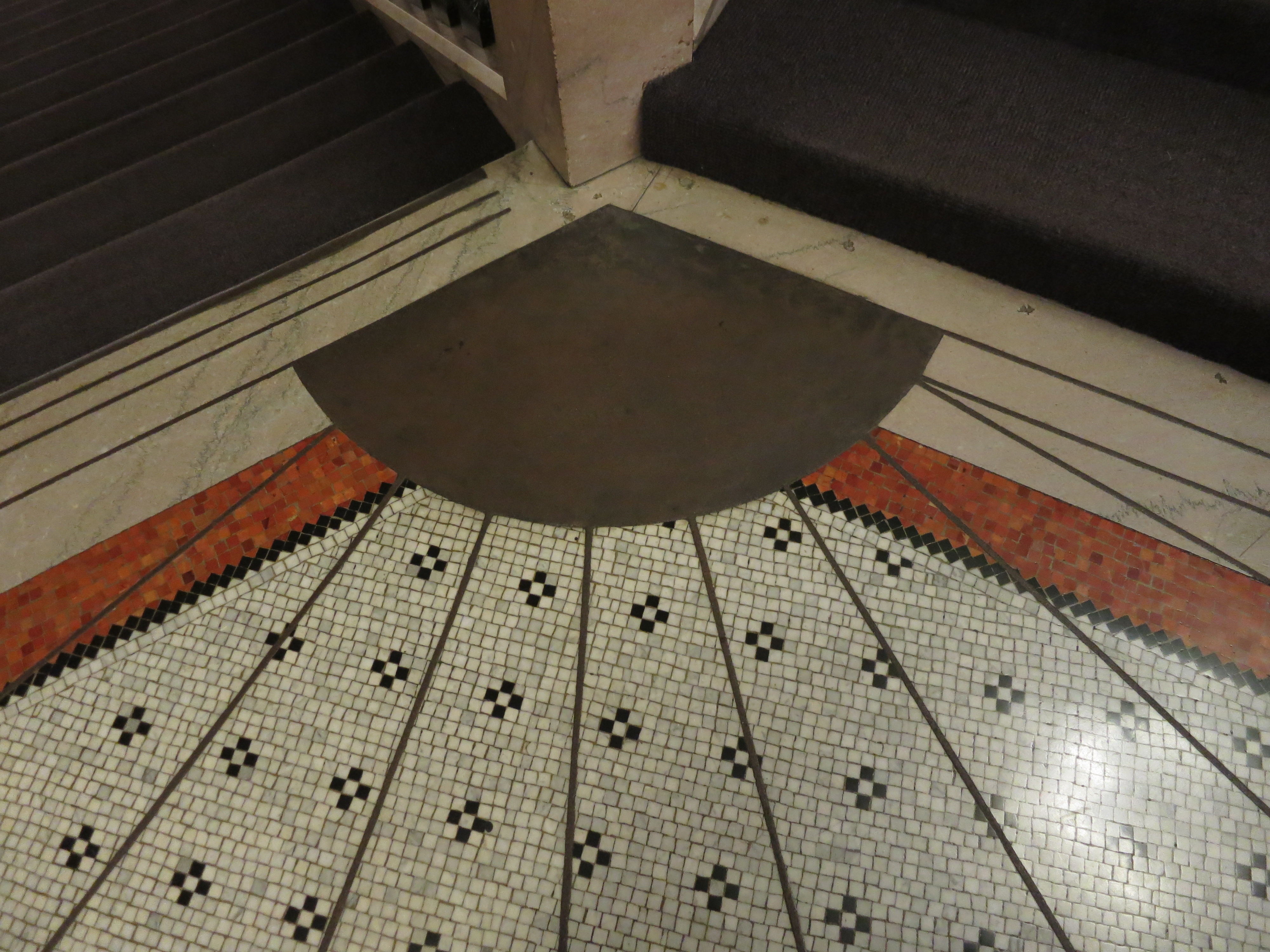
Sunburst on the stairs

Even when it was finished, it was an unusual thing. You can only go from one part of the building to another on the first and fourth floors, one side of the building has a fifth floor and one doesn’t, and the second floor isn’t even the same height all the way across the building. You’d never know this from looking at the building’s facade, and I’m still not clear on why it ended up this way, but it’s quite an adventure walking around inside. A guide definitely came in handy.

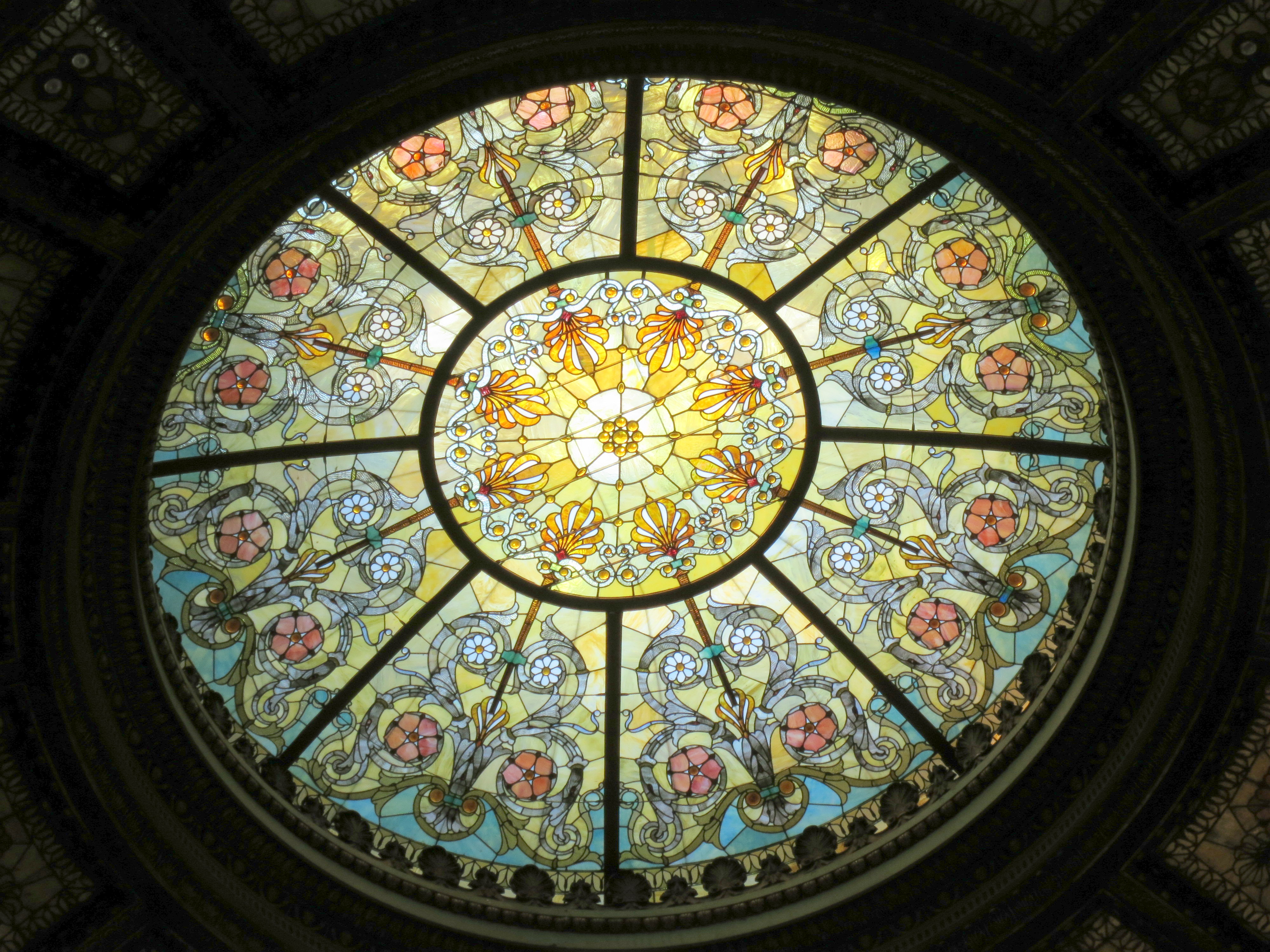
The dome in the Grand Army of the Republic Hall — they covered it up to protect it form the weather and it muted the colors.

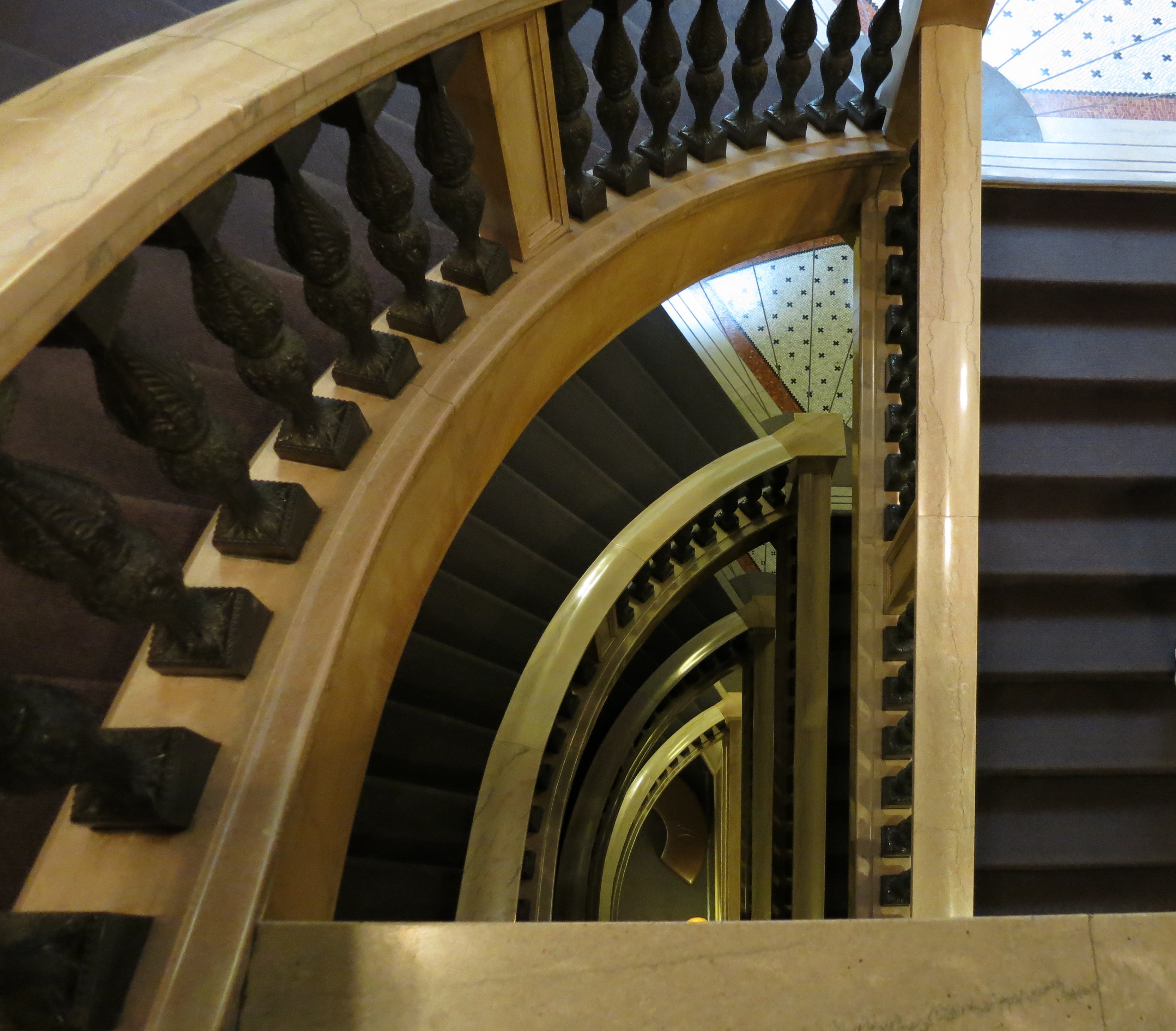
The Randolph entrance is all delayed gratification: through hand-carved mahogany doors, under a recessed ceiling pained white and gold, through a lobby full of people escaping the heat under more recessed ceiling, and finally to the two-sided staircase. Everything is made of marble, one of many safeguards against fire. Marble walls, marble staircase, inlaid tile on the ceiling… I don’t think I would have noticed if our guide hadn’t pointed it out, but much of the building didn’t have any painted surface at all, because there was no plaster to paint over. Everything was just solid. And it looked great; I can see why emperors and rich folks are so fond of using it.

They carpeted over the marble — quel horreur!

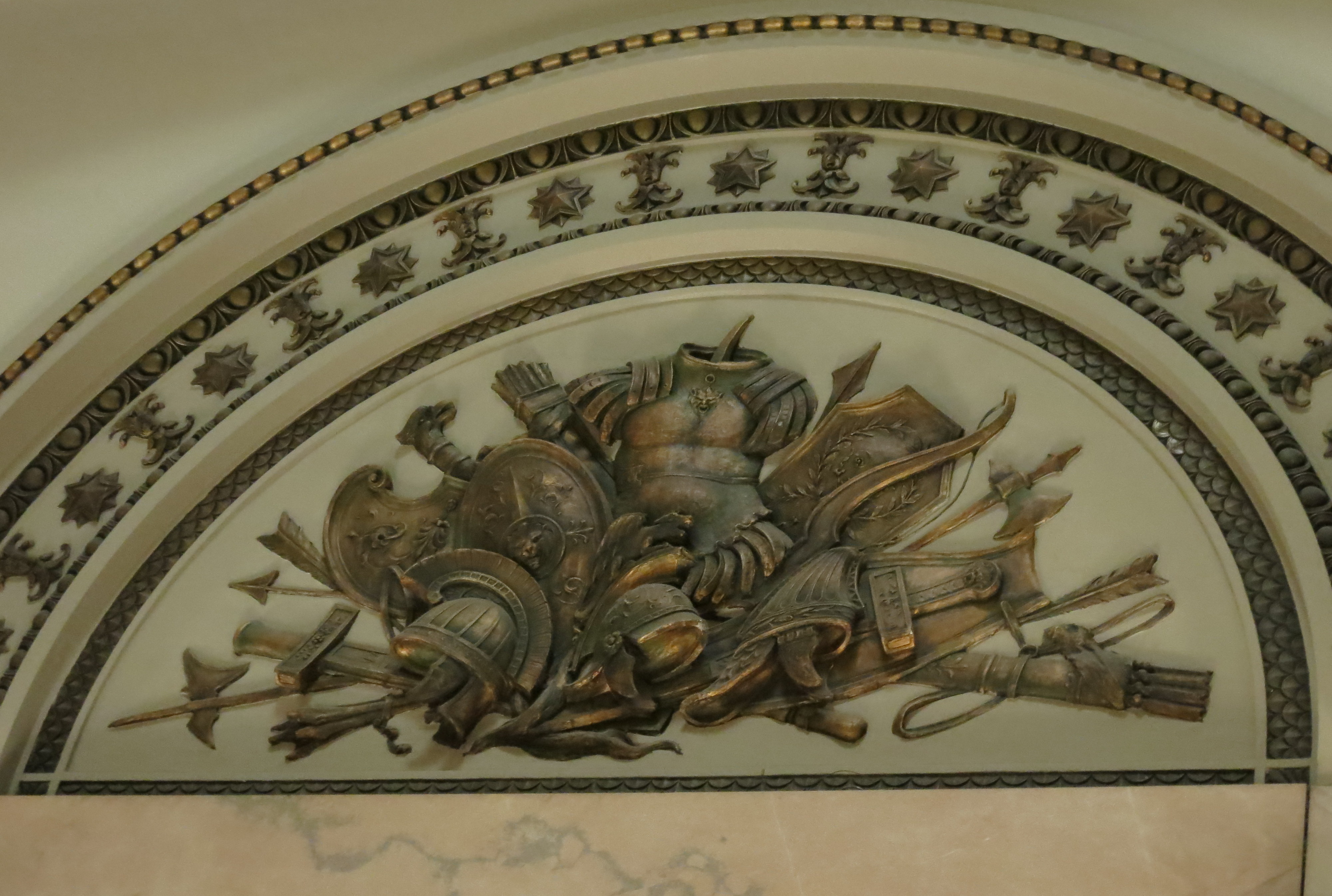
We looked at what was once the museum of the Grand Army of the Republic (those Civil War veterans from earlier). The view from that room is amazing, and they do $50 civil service weddings there every Saturday, in 15-minute increments. The walls under the dome of the GAR are decorated with brass bas-reliefs of piles of weapons. Just piles of them, haphazardly thrown together over archways. Very strange.

I like how the giant sword is sticking up through the top of the breastplate

They uncovered the cupola in the GAR dome a few years ago, and look at the difference!

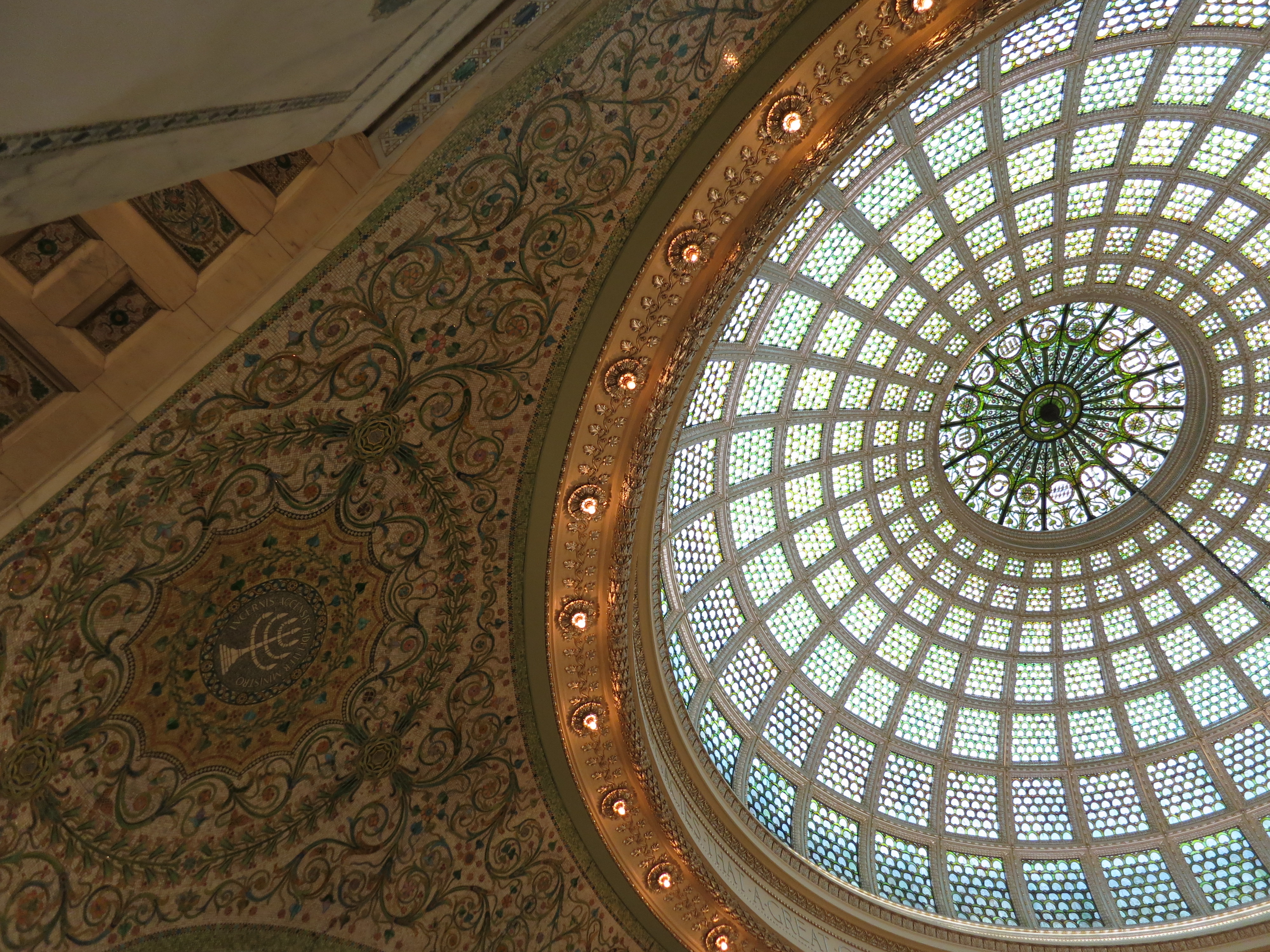
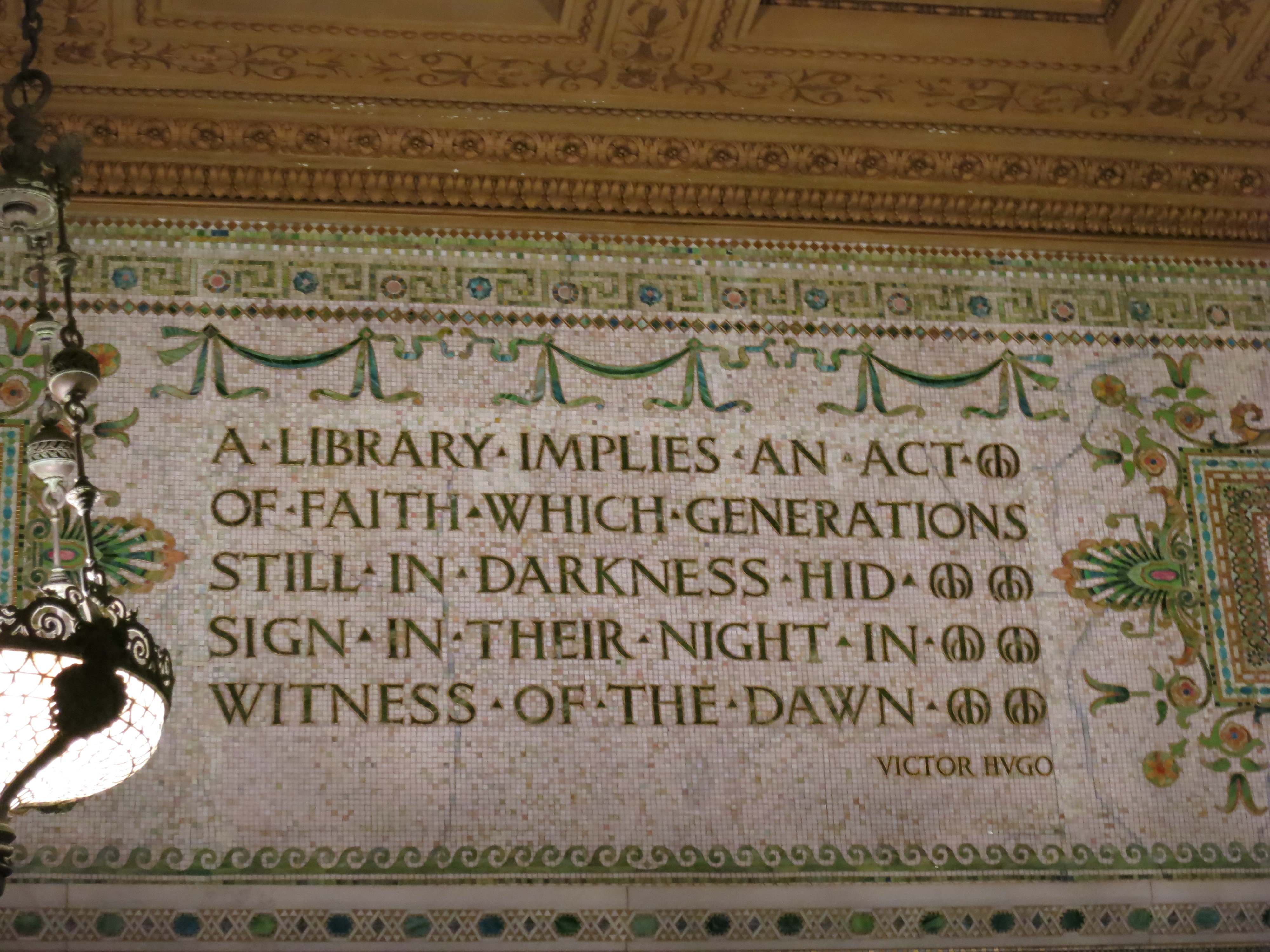
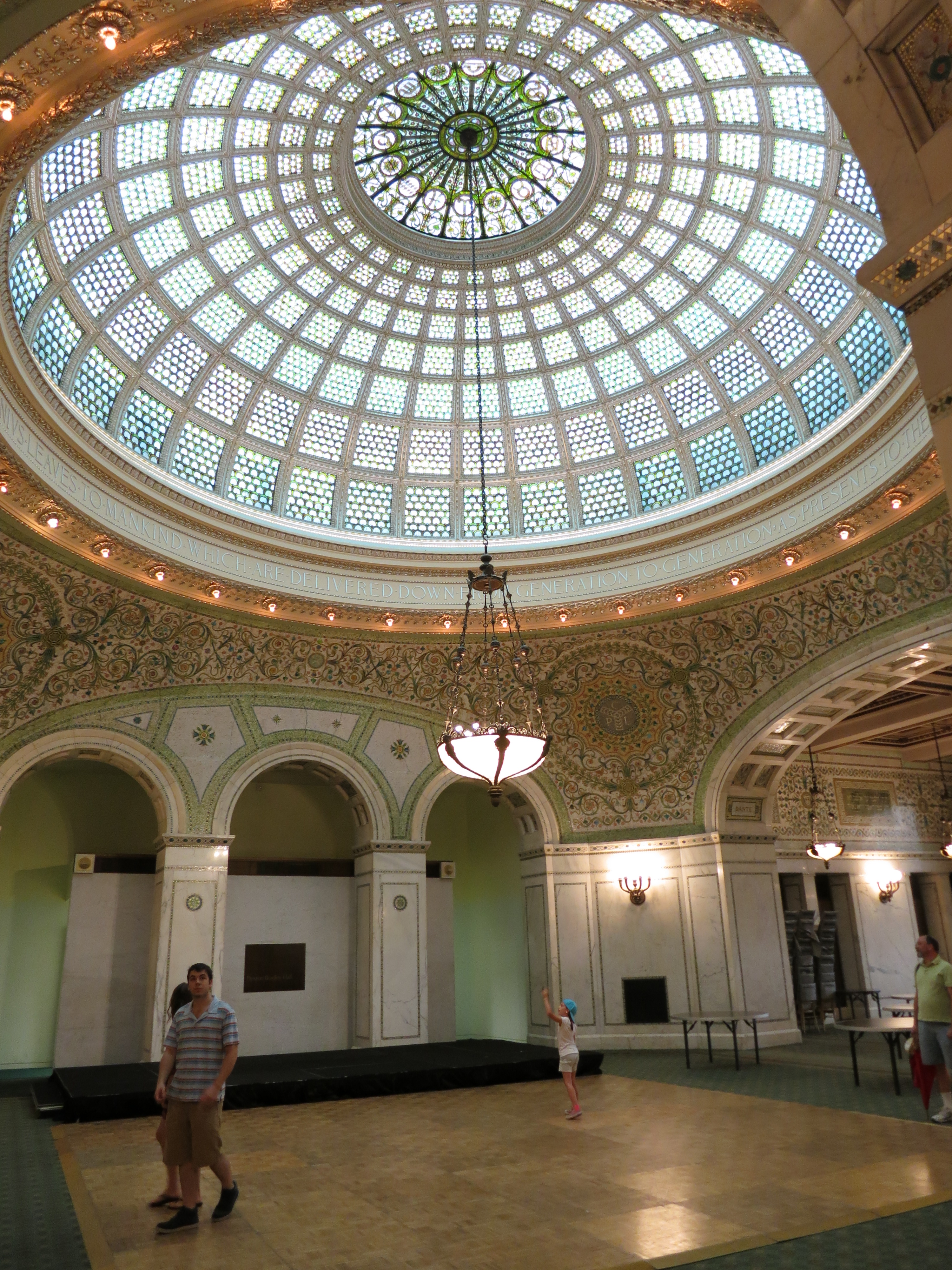
The other side of the building carries on the marble theme, but here it’s white marble from Italy, inlaid with brightly colored glass and gold leaf that glistens in the light, brightening up the whole area. There’s more inlaid tile here, too, in intricate patterns naming famous authors and spelling out quotes about literature in various languages. If you were to enter the building from this side, you’d be immediately struck with the size and beauty of the staircase leading up to the hall with the Tiffany dome. But I’m glad we came in from the side; we made a progression from impressive site to impressive site (we had to skip a couple rooms because they’re switching out the exhibitions, but those are meant to be lovely too), and then we walked down a rather dull and small corridor, rounded the corner, and voila! Stunning.

Quite an entrance

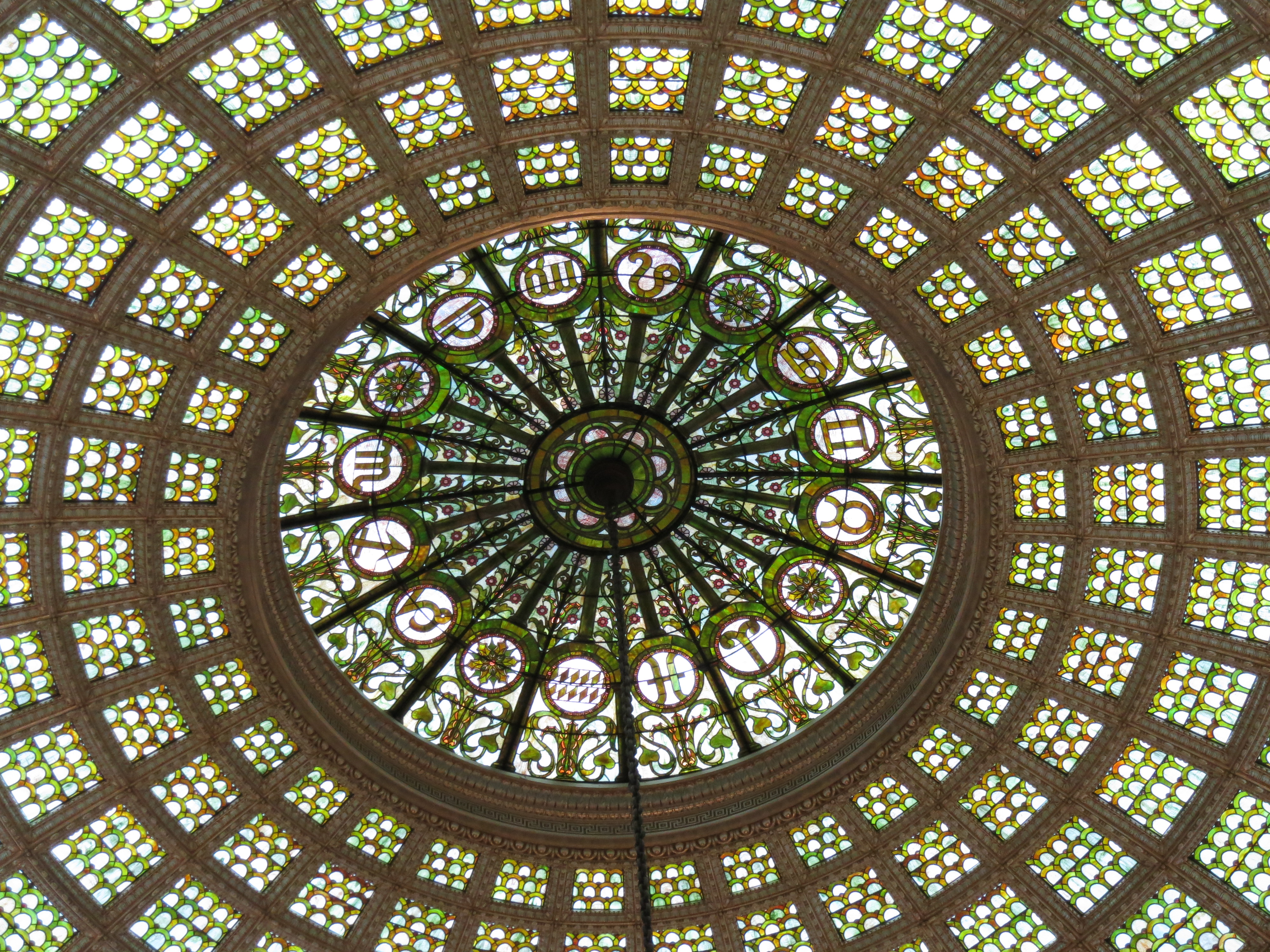
Preston Bradley Hall contains the largest Tiffany dome in the world, and the largest display of intricate inlaid tile in the country, outside of a church in St. Louis.

Are those symbols of the zodiac?

I found the Cultural Center to be a lovely surprise, and a place I wish I’d visited years ago. Get going!

Where it is: The official address is 78 E. Washington St., but if you go for the tour, you’ll enter on Randolph.

When to go: The free tours are Wednesdays, Fridays and Saturdays at 1:15 pm. They last about an hour and a half, and that time flies by.

What to see: The tour points out all the architectural features, but of course this is an active cultural center, so you can come here for concerts, art exhibitions, and lectures. You can visit the art studio and gallery for mentally and physically disabled artists on the first floor, and buy some of their artwork. You can use one of the lobby areas to relax, eat a lunch, use the wireless. You can duck into the Visitor Center and get some official info on touring Chicago. You can convince some rich friends to hold their reception in Preston Bradley Hall so you can dance under that Tiffany dome.

Cost: For the most part, free!

Image 1. All other images mine.

Hometown Tourist: Humboldt Park

Hometown Tourist is a series that hears that chipper tip, “be a tourist in your hometown!” and says, “Okay!” When friends come to visit, I like to show them a combination of standard tourist spots and the neighborhood places they’d never know to look for. Why not write about all those places? If you have suggestions on Chicago places you’d like to see covered for Hometown Tourist, add it in the comments.

I might never have started this blog were it not for Humboldt Park. Humboldt is bordered by North Ave, California, Kedzie, and Division, a vast expanse of green on the west side of Chicago. When I lived on California, I would walk the seven-tenths of a mile down the street and find a spot next to the lake to sit and read. In 2009, I’d been thinking of starting a blog (nothing like joining a trend a year or two late). On a few sunny September afternoons, feeling stifled and uncreative in my apartment, I walked down to Humboldt Park, sprawled out on the grass, and wrote. Surrounded by families barbequing and teenagers biking and old men fishing, I scrawled some ideas in a notebook and decided they would be enough to go on.

A typical summer day in Humboldt Park

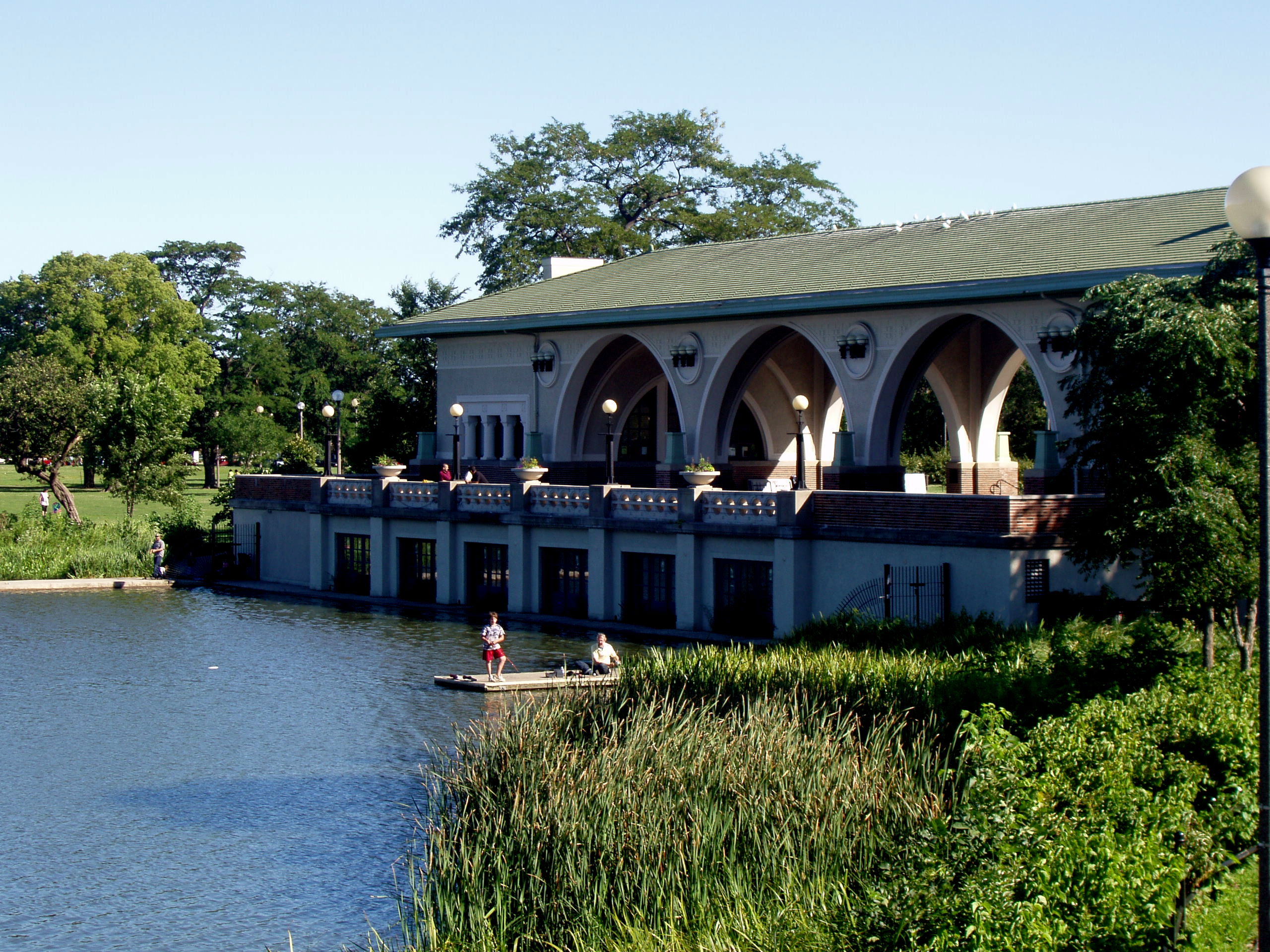
The manmade lake is stocked with fish, and the patient and hopeful find many places around the perimeter to set up their poles and see what they can catch. The boat house is basically a big pavilion covered by graceful arches, and I mostly look at it from afar, although it can give a nice view of the lake when you’re standing on it. Also, there are barebones bathrooms in there, which is useful.

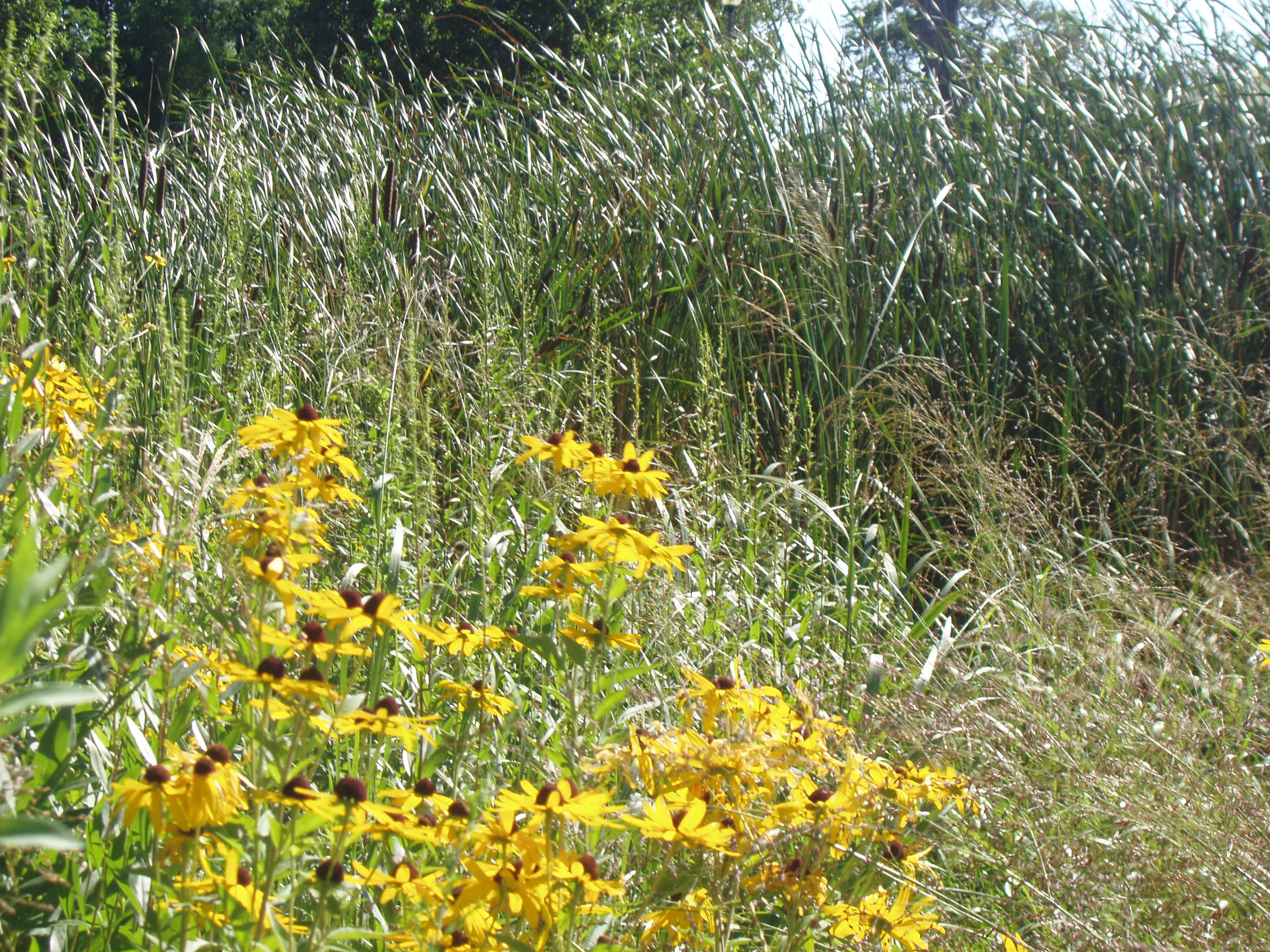
Native plants

The park was designed by Jens Jensen, who designed various other parks in Chicago and throughout the Midwest. One of Jensen’s main principles was using native plants in landscape design, rather than importing exotic plants. He believed that a space was most beautiful when it used the materials at hand, and looking at the prairie design of Humboldt, it’s easy to agree. I also think of my friend Matthew, who works for a parks department in Michigan and spends a large part of his time removing invasive plants and educating homeowners about the dangers of invasives and the benefits of natives. Looks like Jensen may have been ahead of his time on this one!

You can see the Sears Tower (or Willis, sure) in the distance

The park is so large that a road runs through it so cars aren’t inconvenienced. All the pictures here are ones I took in the eastern side of the park, but the western side has great stuff too: a fancy fieldhouse, a small lagoon with a sand beach (the only such beach in the city that’s not on Lake Michigan), and a little river flanked by benches sheltered by plants in just such a way as to make them perfect makeout spots. A bike path meanders through the whole park, baseball fields host games all summer, and the playground is almost always covered in children squealing with delight.

The boat house

Humboldt Park is the name of the surrounding neighborhood as well as the green space, and it’s a predominantly Puerto Rican neighborhood. Giant, metal Puerto Rican flags straddle two of the streets, and almost every other storefront is a restaurant with delicious foods. The city of Chicago hasn’t really caught up to the street food craze sweeping the nation, but there are several food huts and carts at the park with tasty jibaritos and alcapurrias for sale. In June of each year, the streets host an official parade and also an unofficial parade of jubilant, flag-waving people in slow-moving cars for the Fiestas Puertorriquenas. People sit out on their porches and grill food, bomba and salsa music blasts from stereos, and everyone’s in a great mood. All this is concentrated in the park, where a large carnival is set up and live music plays. It’s a good time, and a total change to the usually peaceful park.

In short, if you’re anywhere west of Western and north of the Eisenhower, stop by! It’s a lovely place to spend an afternoon.

Where it is: In the square created by North Ave, California Ave, Kedzie Ave, and Division Street

When to go: Whenever! Obviously, it’s not as active in the winter, although the scenery is just as beautiful as it is in the summer, if different.

What to see: The lake and boat house, the gardens tucked away in the shade, a baseball game at one of the diamonds, the shallow swimming lake on those hot summer days

Cost: Free

Popping Pills Badly

Image

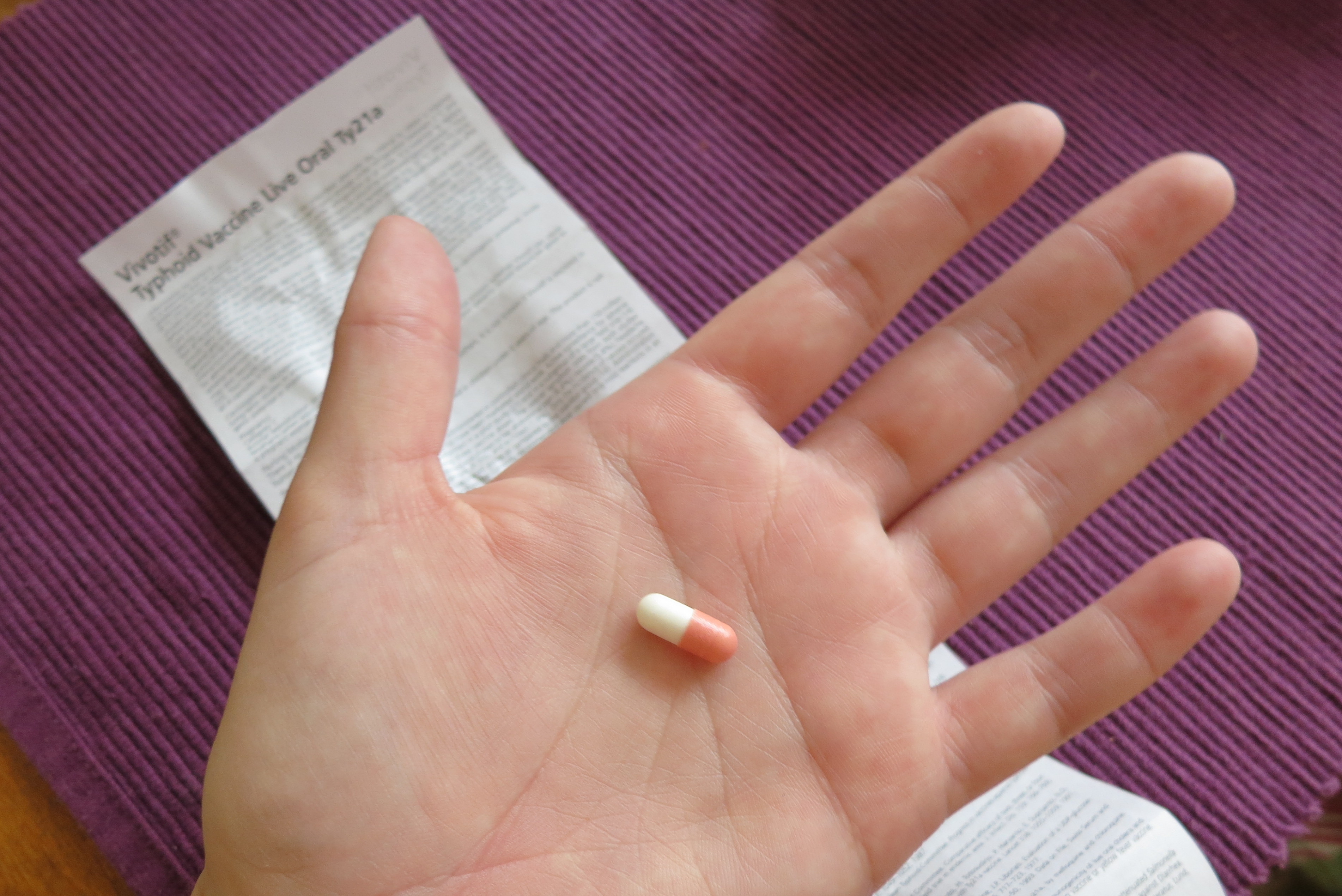
The record-breaking heat streak we’re on here in Chicago is seriously damaging my brain cells. Evidence 1: It took me three tries to write “damaging” without an extra “n” in there just now. Evidence 2: I forgot to take my second typhoid pill this morning. I realized it as soon as I got to work, told my boss the situation, and went straight back home. Then back to work, and now I have no lunch hour today. Yeesh!

Something’s missing…

The Donate Button is Live

Dearest fellow travelers, as you know, I’ve been saving for this trip for a very long time, and I’m proud to say that it’s all my own savings. Still, I’m not one to turn down others’ generosity. Some friends and family members have expressed interest in helping me out a little, and I’m grateful to them and want to make that process as easy as possible.

I’ve set up a page with special excursions I hope to make that are a little pricier than the fee for a museum or national park. You can take a look at these and decide if you’d like to contribute a little toward getting me there. I think this is more fun than handing me $5 and hoping I do something worthwhile with it. You can find that page, called “Fund This Stowaway,” in the top banner of every page. You can also click the “Donate” button in the left sidebar, to go straight to the PayPal page.

I have a longer post brewing about the anxieties of travel, money, and self-sufficiency, but for now I’ll just say: It’s important to me to pay my own way. It’s important to me to grow comfortable with the fact that I can’t afford everything I want to do on this trip. It’s important to me to gracefully accept the help others offer to open up possibilities.

Thanks for reading this and all the other posts. I enjoy keeping up this blog more than I expected I would, and I’m excited to keep it going on my trip. Please feel no pressure to press that “donate” button, and just enjoy the posts and leave comments. If you do donate, thank you, and I’ll email you personally to say it again.