
Sunset, Grand Rapids, Michigan

Sunset, Grand Rapids, Michigan

Bridgnorth, England; July 26, 2014
Last June, I stretched out my time in Croatia from four days to fourteen, because there was so much to see and do: Dubrovnik, Split, Sibenik, Krka… After days of amazing cultural and natural sites, I got to Zadar and flipped to the party hostel schedule. Zadar was my last coastal stop before heading inland to the fantastic Plitvice Lakes, and I intended to make the most of my time on the sea. So I slept in late in the mornings, went to the saltwater pool in the afternoons, listened to the sea organ at sunset, and danced on the sun salutation at night.

Disco lights by the seaside

No big deal, I just live on Karma Street
The saltwater pool was the first of its kind I’d seen. It was literally a pool built around a part of the sea, with bleachers along the shore, and an Olympic-height diving board looming over the sea outside the pool. As someone commented before, it’s all the fun of ocean swimming with none of the fear of sharks. When I was at the pool with a few people from the hostel, one of the guys revealed that he hadn’t been swimming in ten years, but now he was going to go try the high dive. The rest of us watched with bated breath as he climbed the stairs, paced the board a couple times, and then jumped right in. Impressive!

The saltwater pool
Like everywhere else in Croatia, Zadar has several historically important sites, and I kept intending to visit them, but I stayed at a hostel outside of town, and during the two or three days I stayed there, I somehow never made it to the city center before sunset. I’m sure on another trip, I’ll check out the church and cobblestone streets.

Some of the historically significant sights I never saw in daylight
This time, I danced in clubs until the music got too unbearable, then I danced on the sun salutation to the sounds of the waves lapping on the shore and the mournful song of the sea organ. The sea organ consists of holes cut into the concrete of the boardwalk, and tubes underneath, which are played by the waves lapping against them and the wind whistling through them. Different tones come from the length of the pipes and the height of the waves. I listened to the random notes for nearly an hour, mesmerized by the repetition and slight variation.
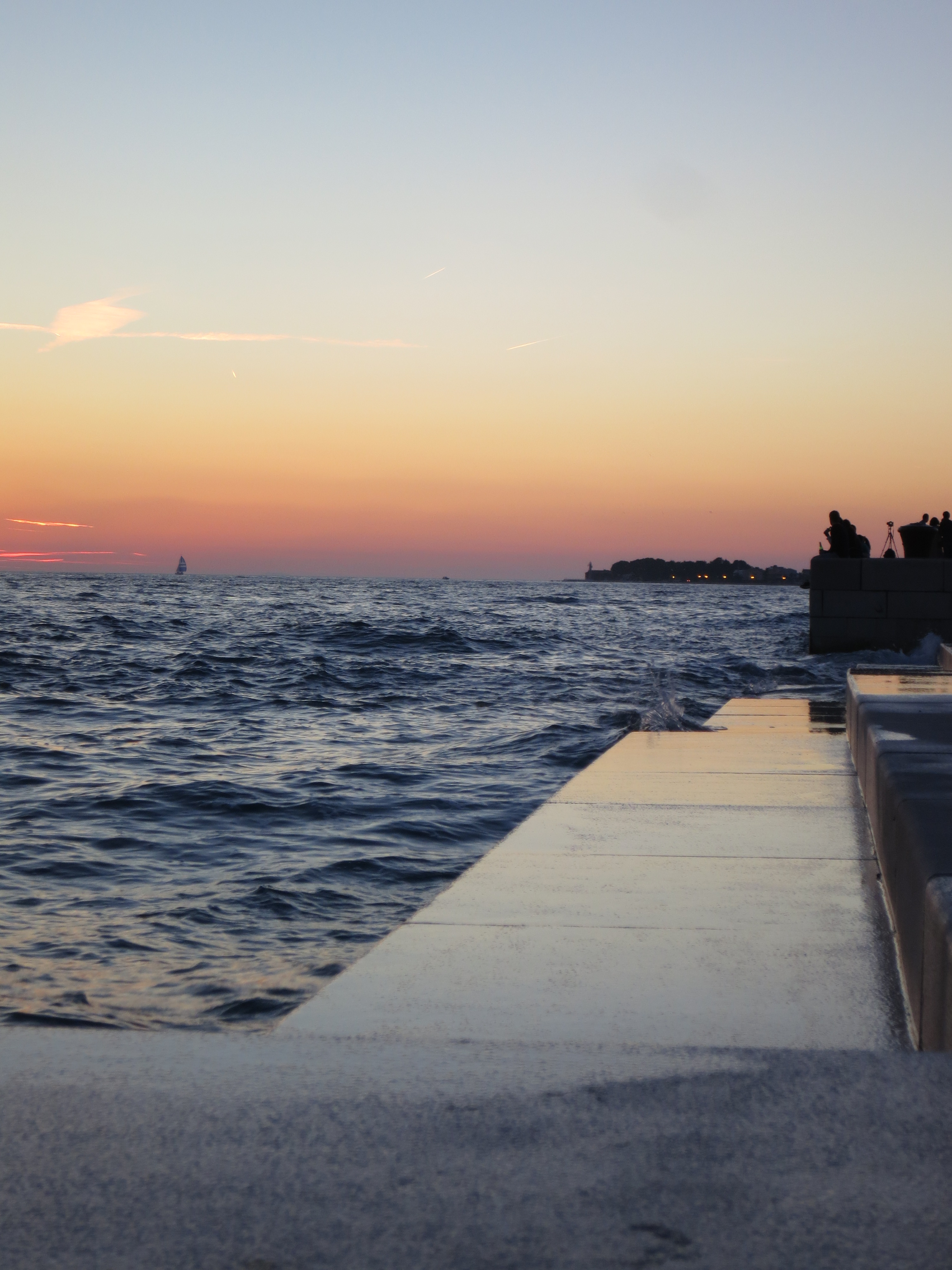
The sea organ
The sun salutation art installation uses solar cells to soak up the sun during the day, and then lights up a giant glass display starting in the evening and going well into the night, depending on how much sun it took in over the day. The lights change colors in what appear to be random patterns–sometimes a block of red, then purple, then all the colors blinking on and off at once. It’s hard to see at sunset, because everyone crowds around, but it’s a different story later at night, as the lights twinkle well past four in the morning.

The sun salutation installation at three in the morning
Here’s a video of the sea organ. Enjoy the soothing whistling sounds.
Bienvenida, señora. Welcome to Astrid & Gastón, the flagship restaurant of Lima’s most famous chef, Gastón Acurio, and one of the top 50 restaurants in the world. We’ve recently moved to this hacienda in the wealthy San Isidro district, and we now offer cooking classes, a room for the tasting menu, a bar area for a la carte dining, and even a vegetable garden that children can access to learn about food and the environment. Right this way.
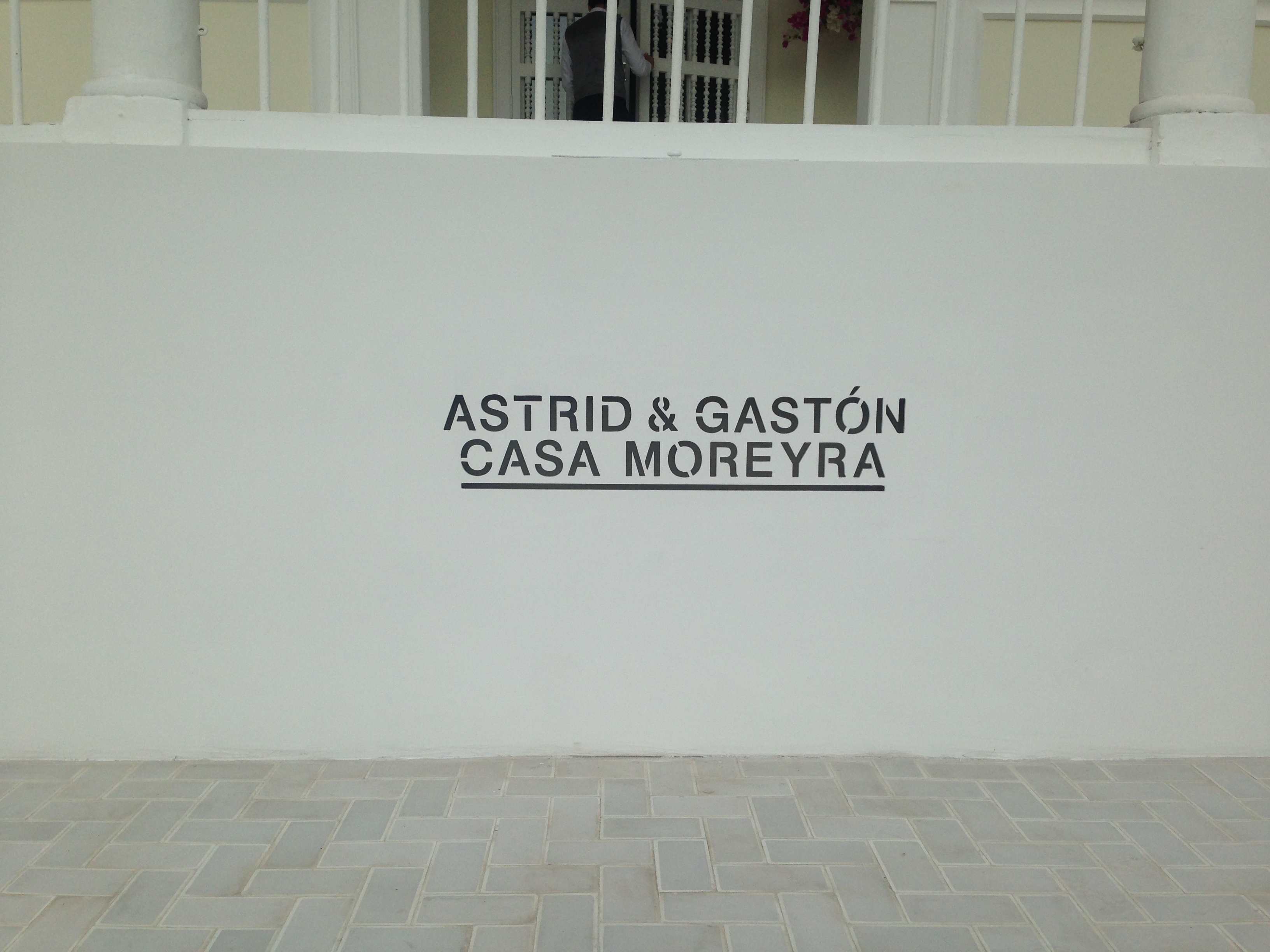
Ignore the weird spray paint effect, and you have a clean, elegant font that matches the rest of the restaurant
Here are some starters of bread and olive oil, as well as nuts encrusted in cumin and other spices. We’re sure you’ll like–oh, you’ve eaten them all. You did like them. Now our sommelier will help you choose a wine. You’re embarrassed to say that you want to eat fish but you prefer a red wine? That’s fine, how about this crisp red wine from Argentina.

Starters and an Argentinian wine

Cumin-encrusted nuts
Now, for your first course, may we recommend a cold dish. Try our deconstructed causa, which is a mashed local potato dish with egg, a chili called aji amarillo, and lime juice; we’ve also added raw fish and onions, which makes it like a combined ceviche and causa dish. Ah, you find it absolutely delicious, all the textures and flavors coming together in just the right way, and now you want to try ceviche all along the coast, excellent.

Fancy causa
Here’s your second course, a warm dish. Just to mention that it’s a little spicy–uh oh, what’s that look on your face? It’s too spicy? Your mouth is about to explode and you can’t possibly finish this expensive dish? Oh dear, I’m so sorry I didn’t warn you when you ordered, that’s fine, we’ll take this away. Here’s my manager, who wants to be sure you’re taken care of. Can we interest you in something else? May I recommend a black quinoa dish (quinoa is a major crop here and in neighboring Bolivia; we are at the forefront of the superfood movement in the Andes)? This particular mix of quinoa and tubers is a house invention. I can see you’re politely not telling me that it’s a little flavorless for you, and a little too much like eating something healthy, but I’ll pretend I didn’t notice. Oh, Americans.
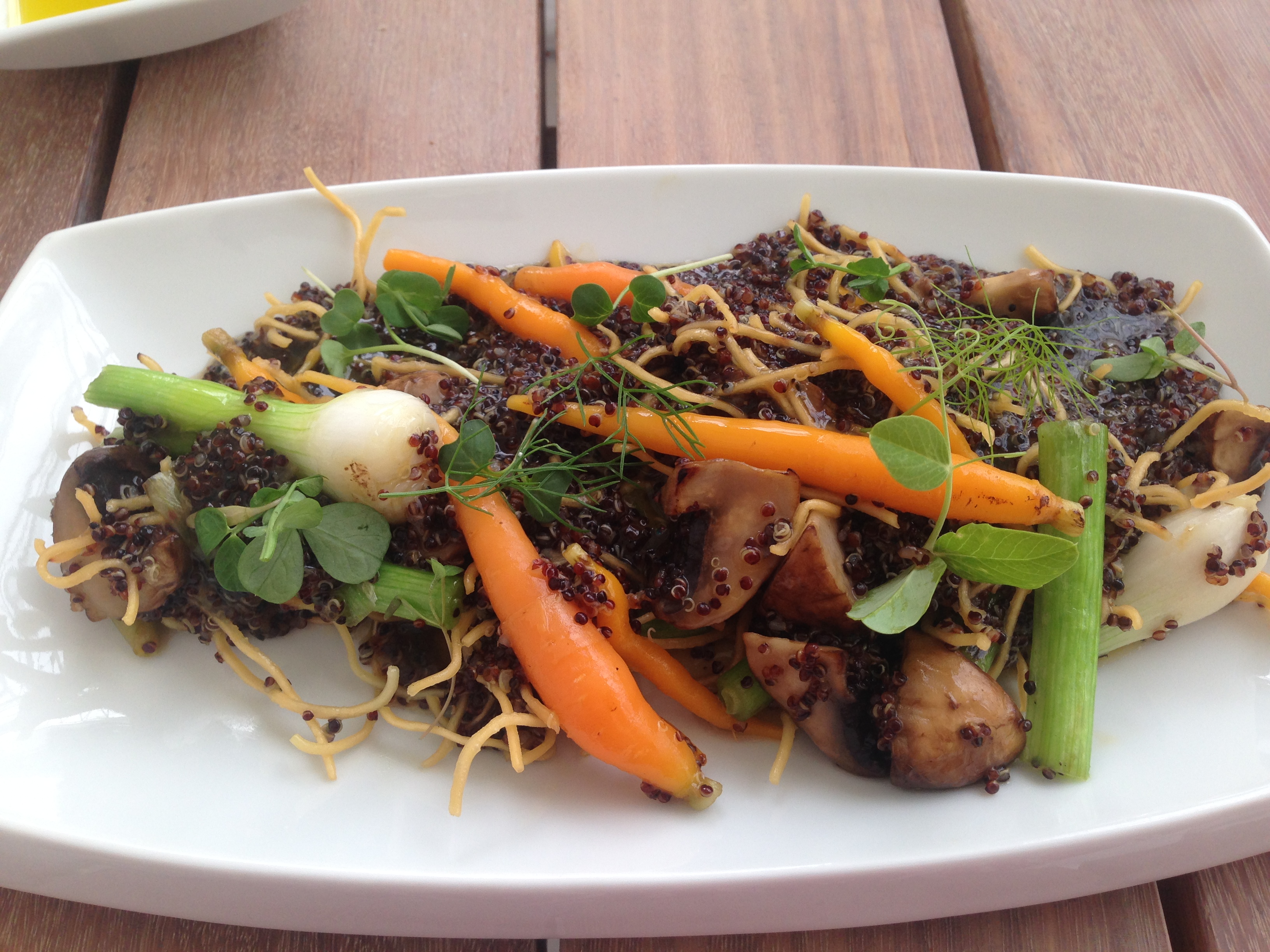
Black quinoa dish
Can I interest you in a dessert? No? Well, then, here’s your bill, when you’re ready. Yes, it’s 150 soles, including a service fee. That’s about $50 in US money. We hope the food and experience have been worth the indulgence. What’s that? With the airy room that somehow didn’t have the echo-y acoustic problems many modern restaurants have, the attentive but not pushy service, the simple and elegant aesthetic, and of course the delicious food, it was worth every penny? We’re pleased to hear it, gracias. Enjoy the rest of your time in Lima, one of the gastronomic capitals of the world.
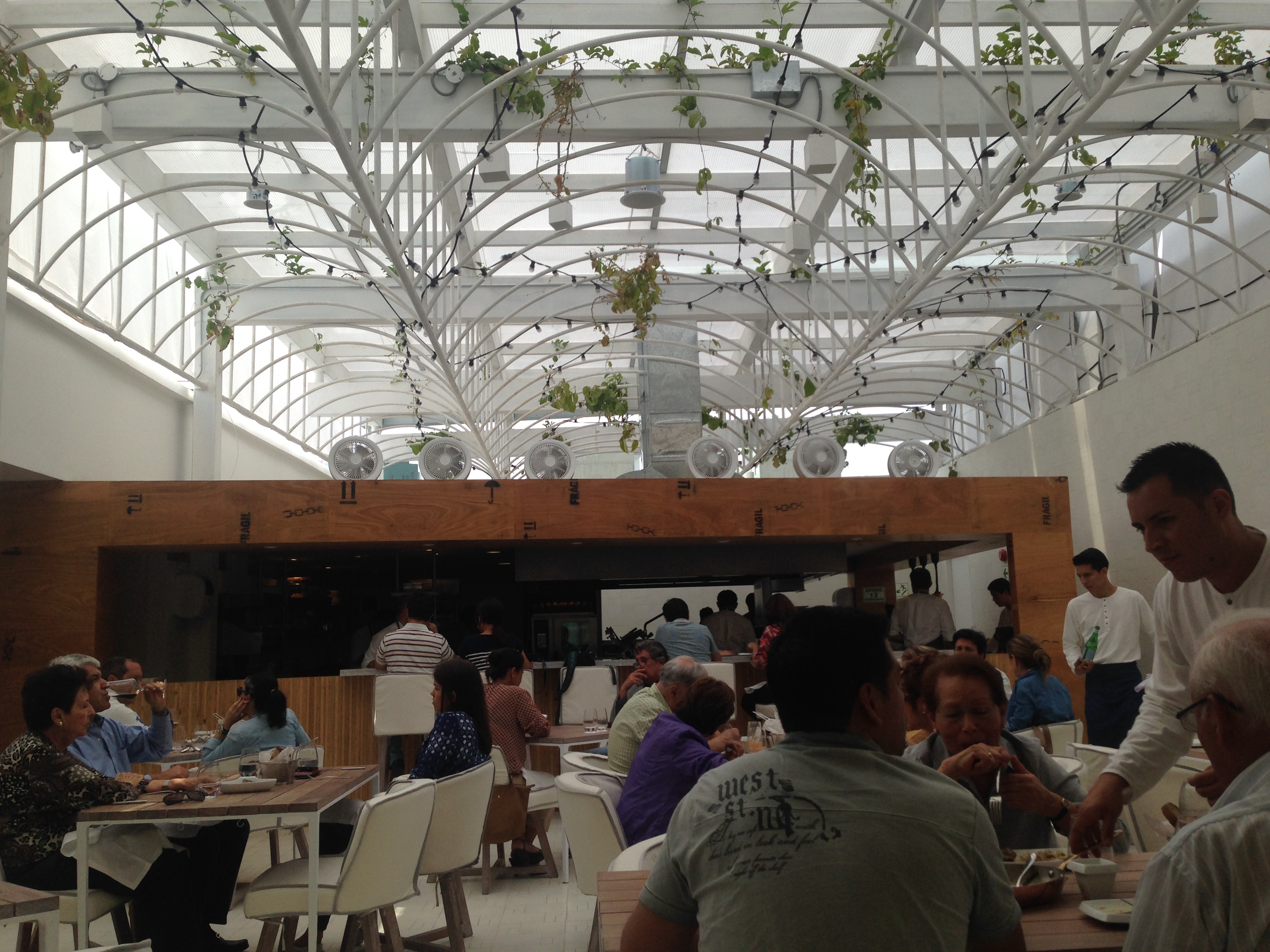
Light as air dining at lunchtime
 Stowaway Travel Writing & Editorial Services