My day trip to Kawagoe was the first time I saw the historical side of Japan alongside the modern. I got a map and directions at the train station, and followed the crowds past a shopping mall, down a walking street full of people shopping at Golden Week sidewalk sales. My favorite booth was one that held a man, his dog, and jars of what looked like honey. People paid money to sit with the dog on their lap, and the man took pictures of them. I’m not sure where the honey entered into it.

Golden Weekers on parade

The modern side of town

My favorite booth
Colorful fish windsocks hung from wires strung zig-zag style across the street; these were put up in celebration of Children’s Day, a national holiday celebrating the children of Japan. (It was originally Boys’ Day, and some Japanese people I met still referred to it as such, but officially it’s now for boys and girls.) The flags fluttered in the wind, wiggling the fish bodies so they looked like they were swimming in the air.

Fun fish for Children’s Day
I stopped briefly at a small shrine, and watched people pay their respects. People used wooden dippers to ritually wash their hands, they rang a bell at a central structure and clapped their hands, and walked in sock feet on the pebbled path leading up to the main area. It felt like a carnival atmosphere to me; everyone was happy and talking in normal voices, not the hushed tones of temple interiors or church altars, and everyone rotated through the various activities under colorful banners.

Hand washing at the shrine

A diagram of the foot to the side of this walkway made me wonder if this was for meditative or massage purposes. Or both?

The fortune ring toss
I admit that what probably put “carnival atmosphere” in my head, though, was the ring toss. I think the idea was that you toss the ring to reach the peg, and if you’re successful, you select a slip of paper with a fortune on it from a box to the side. (I can’t find confirmation that the ring toss and the fortunes were connected activities; please correct me if you have better information.)

The first Edo period building I saw
I expected to leave one walking street for another when I reached the old part of town, where the Edo-period buildings were, but strangely, these major attractions were on a busy main road. They were also mixed in with contemporary buildings. Crowds streamed down the sidewalks, often spilling into the street, but the most the drivers ever responded with was a polite “beep beep.” No cussing or laying on the horn. Welcome to Japan.
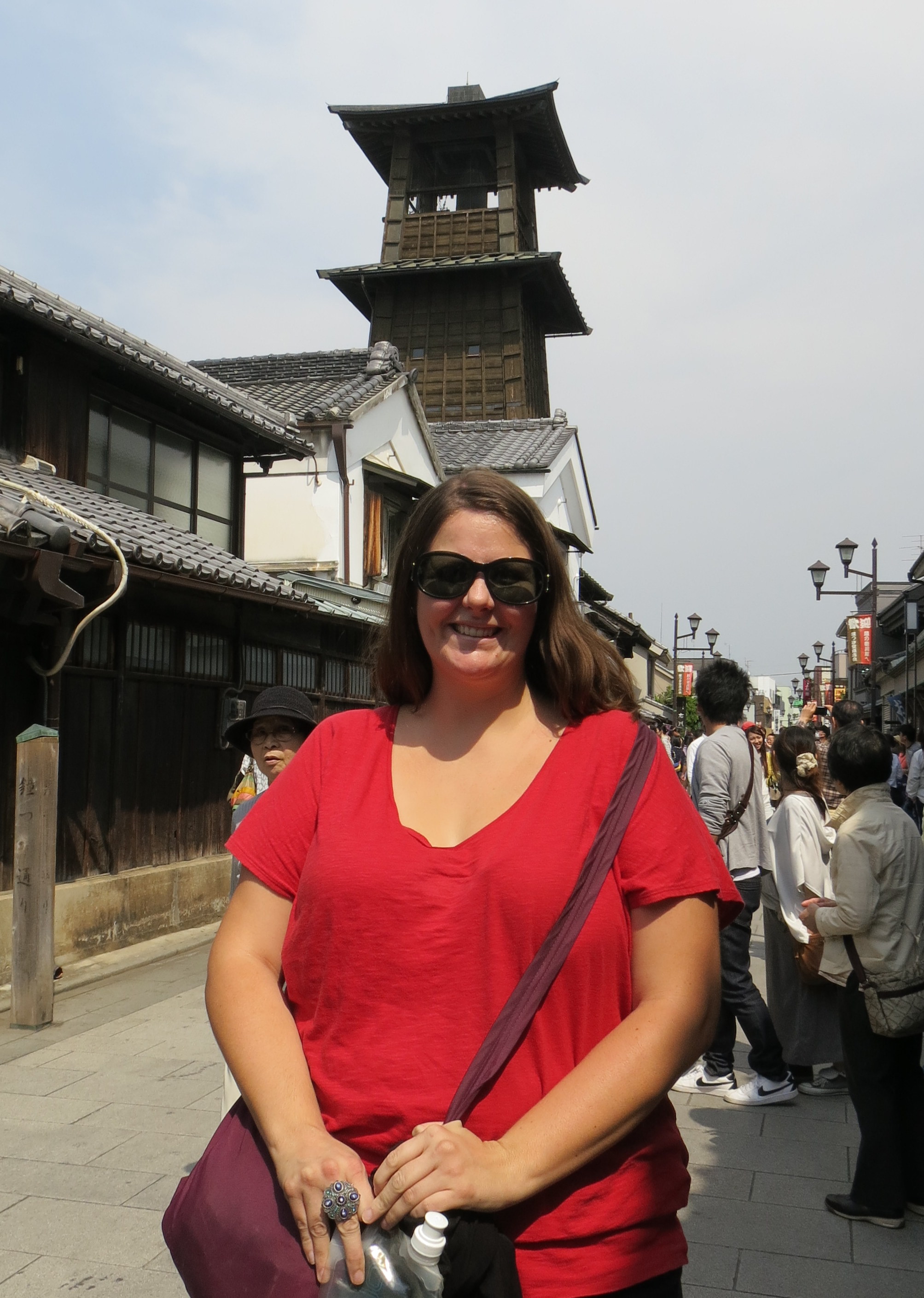
In front of the clock tower, waiting to hear one of the 100 most beautiful sounds in Japan
The Edo period is a 265-year span named after Edo, the city that later became known as Tokyo. The warehouses and shops in this area of Kawagoe are from that time; in fact, Kawagoe is sometimes called “Little Edo.” The clock tower that stands on a side street today was rebuilt in 1894, after a fire demolished an earlier structure. It’s still considered to be the clock tower, though, as if the essence of the clock tower matters more than the wood beams and bell ropes. According to the sign by the tower, the bell that rings four times a day is considered one of the 100 most beautiful sounds in Japan, and is officially recognized as such by the government. I love that!

Sweet potato and vanilla, a surprisingly delicious ice cream
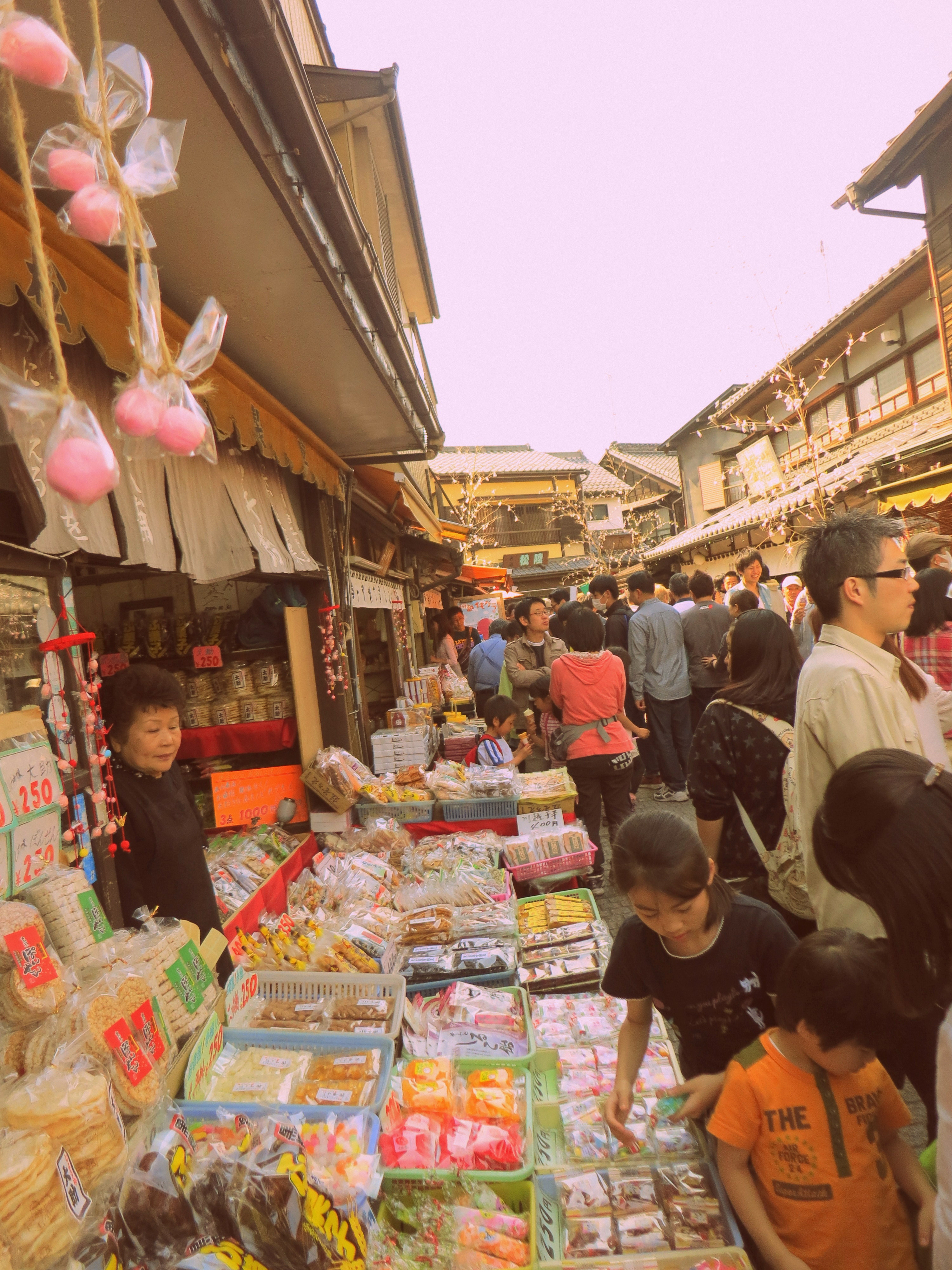
Sweets as far as the eye can see on the penny candy street
I followed the lead of the Japanese enjoying their stroll through town, and ate a lot of snack foods and desserts in Kawagoe. Grilled balls of what I think were tofu; red bean paste mochi; a waffle in the shape of a fish, stuffed with custard; sweet potato and vanilla soft serve ice cream (the area is famous for sweet potatoes); and, about a million sweet treats found on a street my map labeled the “penny candy lane.”
Everywhere I looked, people were stuffing their faces with yummy treats I’d never encountered before, and admiring the buildings of an earlier era. I happily joined them.
 Stowaway Travel Writing & Editorial Services
Another wonderful post of a special day in a totally different culture.
Thank you, Lisa!
Glad you liked it!
How awesome is it that the government of Japan has 100 Most Beautiful Sounds? That is so freakin’ cool.
It was one of my favorite things to learn about the country. Now I have to find the list and seek out the other 99 sounds.