Tailor-made in Southeast Asia

Getting custom-made clothes is a popular thing for tourists to do in Southeast Asia. A whole industry has sprung up in Thailand and Vietnam. The attraction for Western tourists is that you choose from an array of local silks or other fabrics, the outfit is made to your measurements, and it’s all done so quickly. I’d thought another attraction was a cheap price, but I didn’t find that to be the case when I had clothes made there.
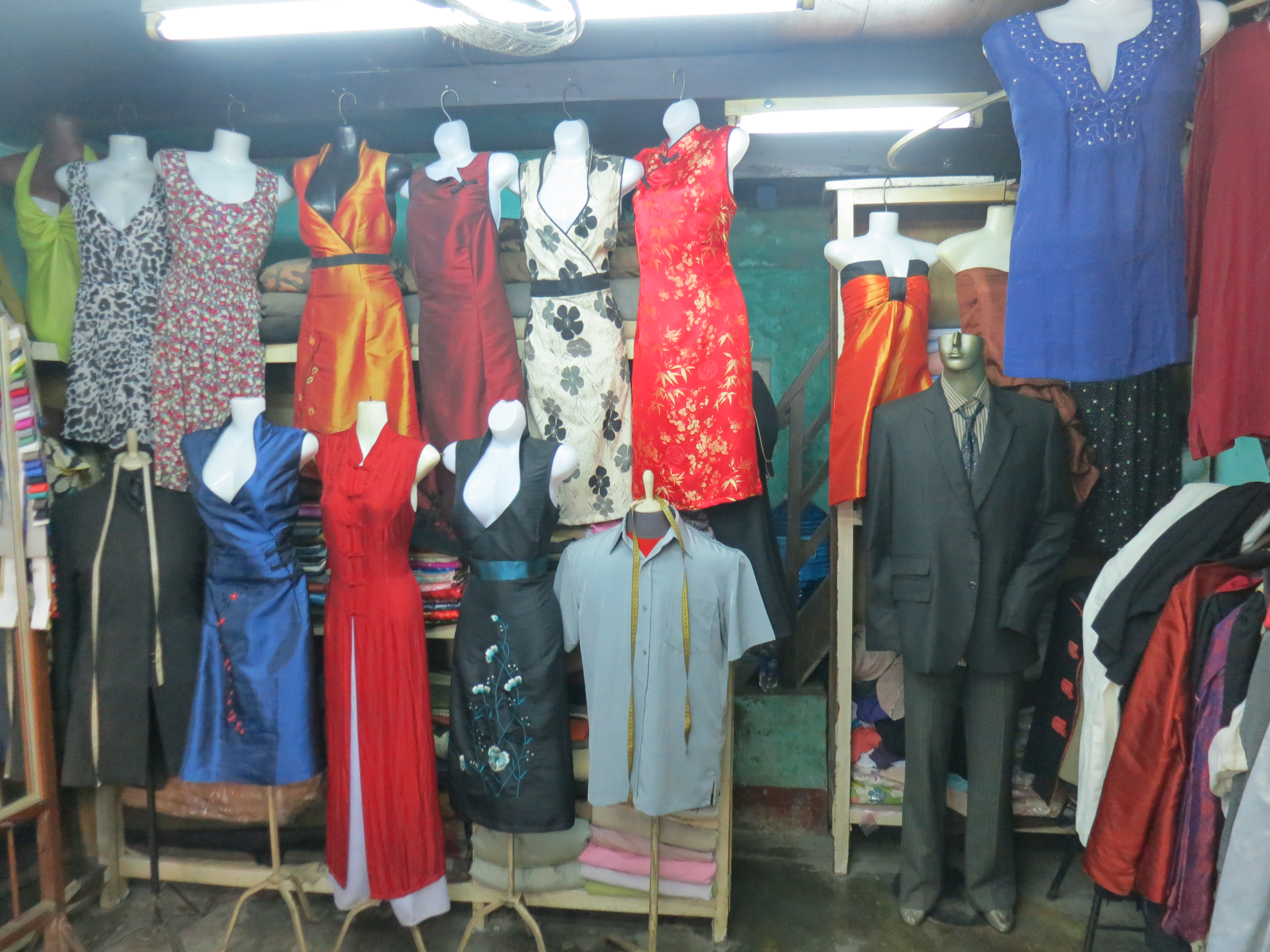
I wanted all the pretty dresses

I wanted all the pretty dresses

Part of the problem is that I couldn’t find reliable information on what a good price was. Or any information, really. I’m a notoriously poor Googler–when people joke that I like books so much I should be a librarian, they are misunderstanding the many research duties a librarian has and my total inability to fulfill such duties–so when I Google “prices clothes thailand” or “cost of tailor vietnam” I get a lot of posts on travel forums of people saying how much they liked or didn’t like a particular tailor. But no one seems willing to write down in black and white how much they spent, which I think must be largely because people are worried that they didn’t get a good deal, or not as good as the other guy, and they don’t want to talk about it lest they get found out.

Okay, so here’s the breakdown for me: I spent $200 on two dresses in Thailand, $25 for a skirt in Vietnam, and $50 for a shirt and trousers in Vietnam. I bought silk from a silk warehouse in Chiang Mai and used some of it for a dress I had made there, and some of it for the skirt made in Vietnam. Otherwise, I used the fabric they had at the tailor’s shop, which is how it’s generally done. Did I get a good deal? Did I get my money’s worth? Sort of.

Please invite me to lots of fancy parties so I can wear this all the time

Please invite me to lots of fancy parties so I can wear this all the time

The pink dress I had made with the silk I bought off-site turned out exactly how I’d hoped, fit well after two small adjustments, and garnered all the compliments one hopes for when one shows off a new frock and nonchalantly says, “Oh, I had it made in Thailand” when asked where one procured it. Worth it.

The purple dress, made specifically for me to wear while standing up in my sibling’s wedding, was much more problematic. I’d brought in photos of designs I liked, and I looked through the design books they had at the store. I talked at length about what kind of design I preferred, and the tailor recommended a design that seemed to fit best with what I needed. I described the kind of purple I needed to match the color palette, and he brought out just two swatches, both of similar texture. I chose one and we went from there. But he failed to mention how ill-matched the design and the fabric were. No way this kind of material could hang the way the material in the design did.

The first fitting, when I hated what they gave me

The first fitting, when I hated what they gave me. The smile is a lie.

So at the first fitting, I was horrified to see something very different from what we’d talked about. But the material had been cut, there was no turning back. I’m no fashion expert (if I were, I would’ve figured out the material/design divide), but I made suggestions on how to spice it up here, make it less scandalous there. Eventually, I ended up with a dress that I thought was okay, but not great, and not noticeably better than something I could have got off the rack somewhere. Not worth it.

The last fitting, when I was much more satisfied

The last fitting, when I was much more satisfied

I had a skirt made for my cousin in Vietnam, half from material I’d bought in Thailand, and half from the tailor’s store. I went to the slightly chi-chi place recommended by my guesthouse. It turned out beautifully, and my cousin liked it. Worth it.

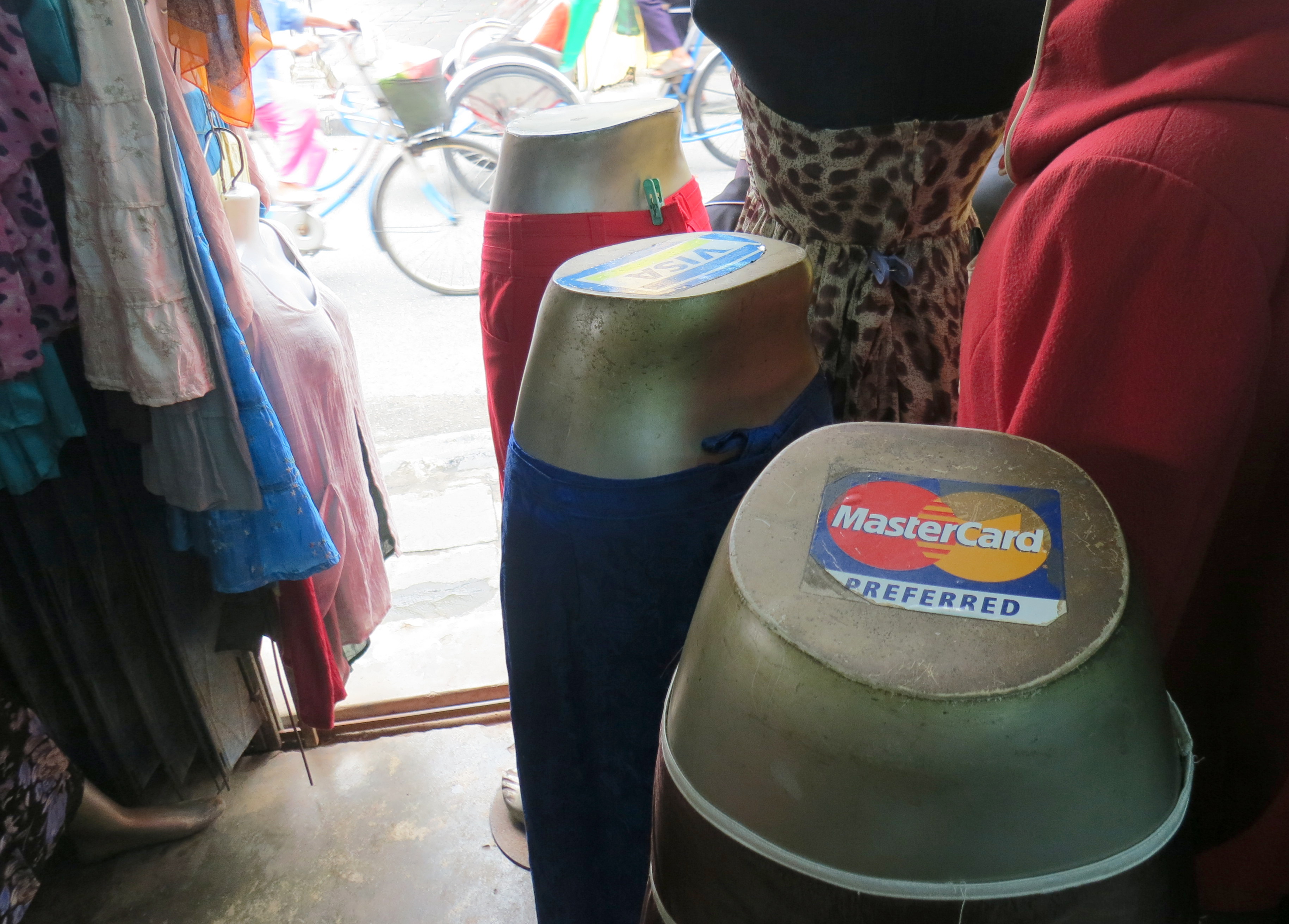
Finally, I got an overnight order made my last night in Hoi An. I didn’t go to a recommended place, just chose from the many shops lining the streets of the old town. I didn’t really intend to buy anything, but I obviously looked interested enough for the tailor to give a good sales pitch, which I fell for. I got a pair of linen pants, and a linen/cotton hybrid long-sleeve shirt. I picked the designs from the mannequins lining the shop. The shirt turned out well, needed no adjustments and looked pretty good. The pants were hemmed too short and started pilling from the moment I wore them. Not really worth it.

It's not a great photo, but those are the clothes I had made in Hoi An. I'm showing them off near Ho Chi Minh's palace in Hanoi, naturally.

It’s not a great photo, but those are the clothes I had made in Hoi An. I’m showing them off near Ho Chi Minh’s palace in Hanoi, naturally.

Part of the appeal of these places is that you can get custom-made clothes in just a few days, before you go back home or move on to your next tourist destination. But how is that possible, unless an army of seamstresses sews overnight to get it done? It’s very like most of what we consume, actually; you pick out what you want in a comfortable environment, with a salesperson eager to make you happy, and then you go off to have a nice dinner while underpaid workers labor ceaselessly to make what you require. I definitely should not have bought anything at that last place, where it literally had to be done overnight because I was leaving the next day. Possibly I shouldn’t have supported the other places either, but I feel more okay about those, because they had 3 days to make the skirt, and 7 to make the dresses. That seems like a fair expectation of labor. And the quality from those places was better, too, which is not a hard equation to figure (more time = better quality).

Did I overpay, though? I talked to a few fellow tourists who had more clothes made, for less money than I’d spent. I don’t know what the quality was like, and I don’t know if the clothes were more complex than mine. My shirt and pants started falling apart quickly enough that I think I did overpay for them. The purple dress has a bit of a shine on it from bad ironing after one of my fittings, but it’s otherwise good, and the pink dress and the skirt are great, so maybe I paid a little more than I could have elsewhere, but maybe it was for good reason.

Despite the photos of Daniel Craig with the cheesy tagline "Be James Bond!" outside, this was a good shop.

Despite the photos of Daniel Craig with the cheesy tagline “Be James Bond!” outside, Kimmy Custom Tailor was a good shop.

This turned into a very long post on what I bought on my trip, but I am hoping it’s helpful for others who plan to get tailor-made clothes in Thailand or Vietnam. (Keep in mind, too, that although I say “tailor” throughout, the person you talk to is usually not the person actually sewing the clothes. They are the salesperson, with a good understanding of the process, and the best English out of everyone in the shop.)

Price:
I don’t know what a “good” price is, but this is what I spent: $200 for two dresses (one that I was also buying material for and one I wasn’t), $25 for a skirt, and $50 for a shirt and trousers. Probably your Googling skills are better than mine, so you can find better info that way. Prices were given to me in baht in Thailand and dollars in Vietnam, and I could pay in either dong or dollars in Vietnam.

Here’s where I went:
CM Tailor in Chiang Mai. I went to the branch off the main road, but by the third round of fittings for that tricky purple dress, the tailor took me to the main shop (on Rajchapakinai Road) so his boss could oversee things. It was an all-male operation, while everyone was very cautious of my modesty, they were definitely flirting in a persistent way, and telling me how great I looked in a way that seemed disingenuous and not helpful in figuring out the actual issues of the dress. A lot of the reviews online (which is how I decided to go to this shop) were by men who got suits made, and probably that’s a very different experience. The problem dress was made from their fabric and the good dress was made from mine, so maybe go to the main branch to see the full selection of fabrics, and bring your own if you don’t like what you see. They did as many fittings as I needed for me to be satisfied, they were not pushy in the sales pitch, and they do offer to ship anywhere in the world. Recommended, with reservations.

Kimmy Custom Tailor in Hoi An, on Tran Hung Dao Street. Super busy shop, designs displayed on fancy tablets and computer monitors, fitting room upstairs. I was a little rushed here, but they did seem to grasp what I wanted right away, picked out a complementary color for the skirt immediately, and had it ready as scheduled. Recommended.

Anh Thang in Hoi An, on Tran Phu. Lots of cool examples to choose from. Pushier sales pitch than anywhere else I went, which made me uncomfortable but also worked on me. It is easy to see how well the end result turns out when you have the 3-D version of the design right there in front of you, so I liked that. Not great quality and I probably could have used more fittings, if I’d allowed the time. Not recommended.

Is the answer to go to the big-name places that have all the Trip Advisor reviews? Can you trust your guesthouse to give you a good recommendation, or just a place they get a kickback from? What’s been your experience having clothes made in Southeast Asia?
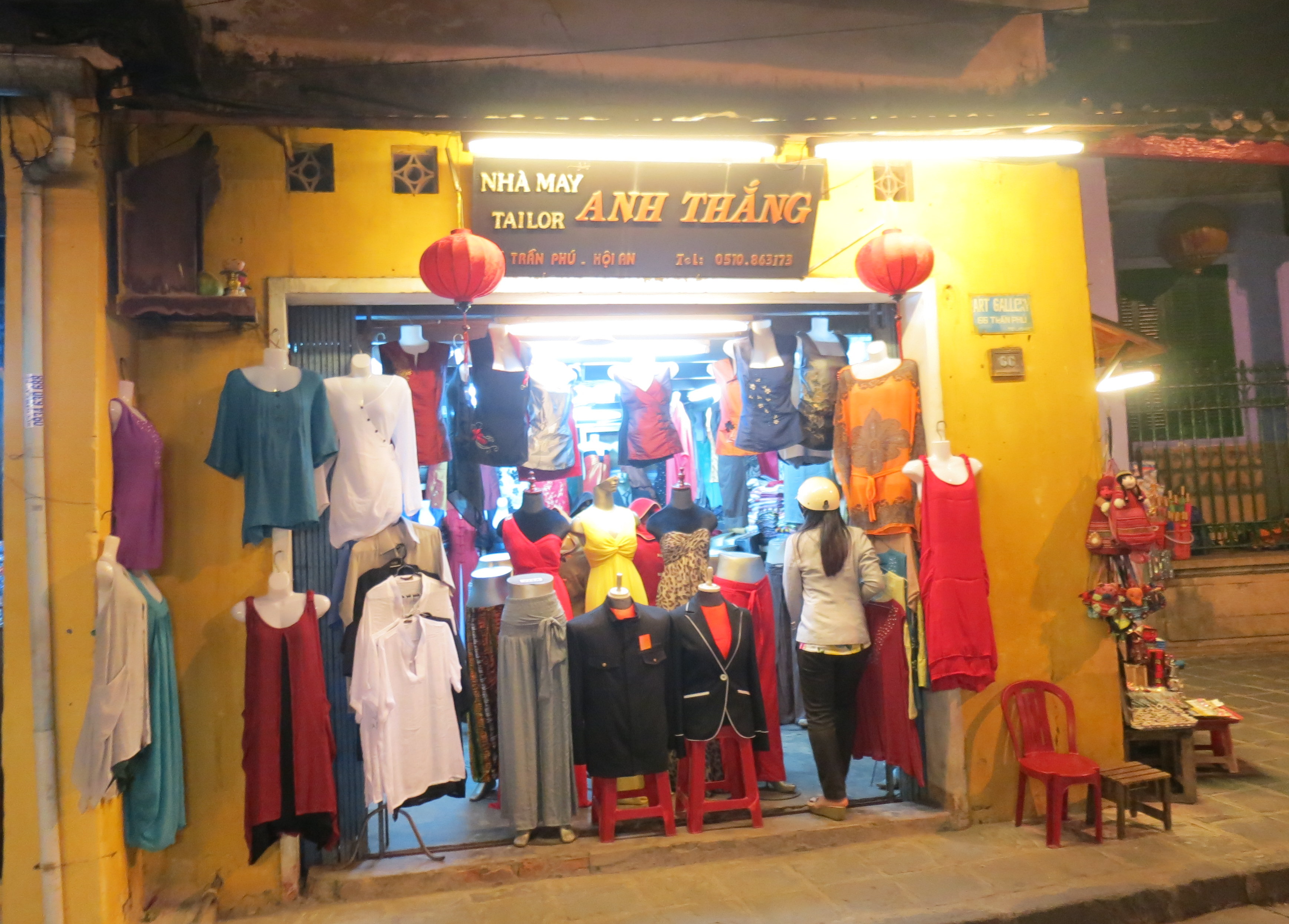
My final tailoring experience in Southeast Asia

My final tailoring experience in Southeast Asia

Train Travel in Vietnam

I’d read that train travel in Vietnam was comfortable and cheap, and the best way to see the countryside if you didn’t have a lot of time. I found it somewhat comfortable and well priced, and a good way to see the countryside. It was also a chance to talk with other travelers.

Train ticket

Train ticket — about $13 for a 270 mile trip

I traveled from Ho Chi Minh City to Nha Trang on a nine-hour journey. I purposely chose a daytime trip, so that I could see the landscape as it rushed by. When I boarded the train, it looked like most of the Vietnamese weren’t really paying attention to their assigned seats, and they just sat wherever suited them best. The tourists, on the other hand, stuck with the number on their paper, so it was a funny mix of me stubbornly searching for the seat that matched my ticket while everyone around me negotiated with one another for favorite spots.

Full train to Nha Trang

Full train to Nha Trang

There were a few other tourists in the same car, and that’s how I met Laura, a lovely woman from London. She was traveling with a friend, Kate, whose seat was somehow several rows behind ours. Laura and I chatted most of the trip, and I hung out with her and Kate in Nha Trang, and later in Hue, when our paths crossed again. I probably should have just offered my seat to Kate so they could sit together, but I liked my window seat and didn’t want to break the rules. If I hadn’t stayed in my spot, I never would have met them and hit it off so well, so the moral of the story is that sometimes being uptight pays off!

hue to hanoi train

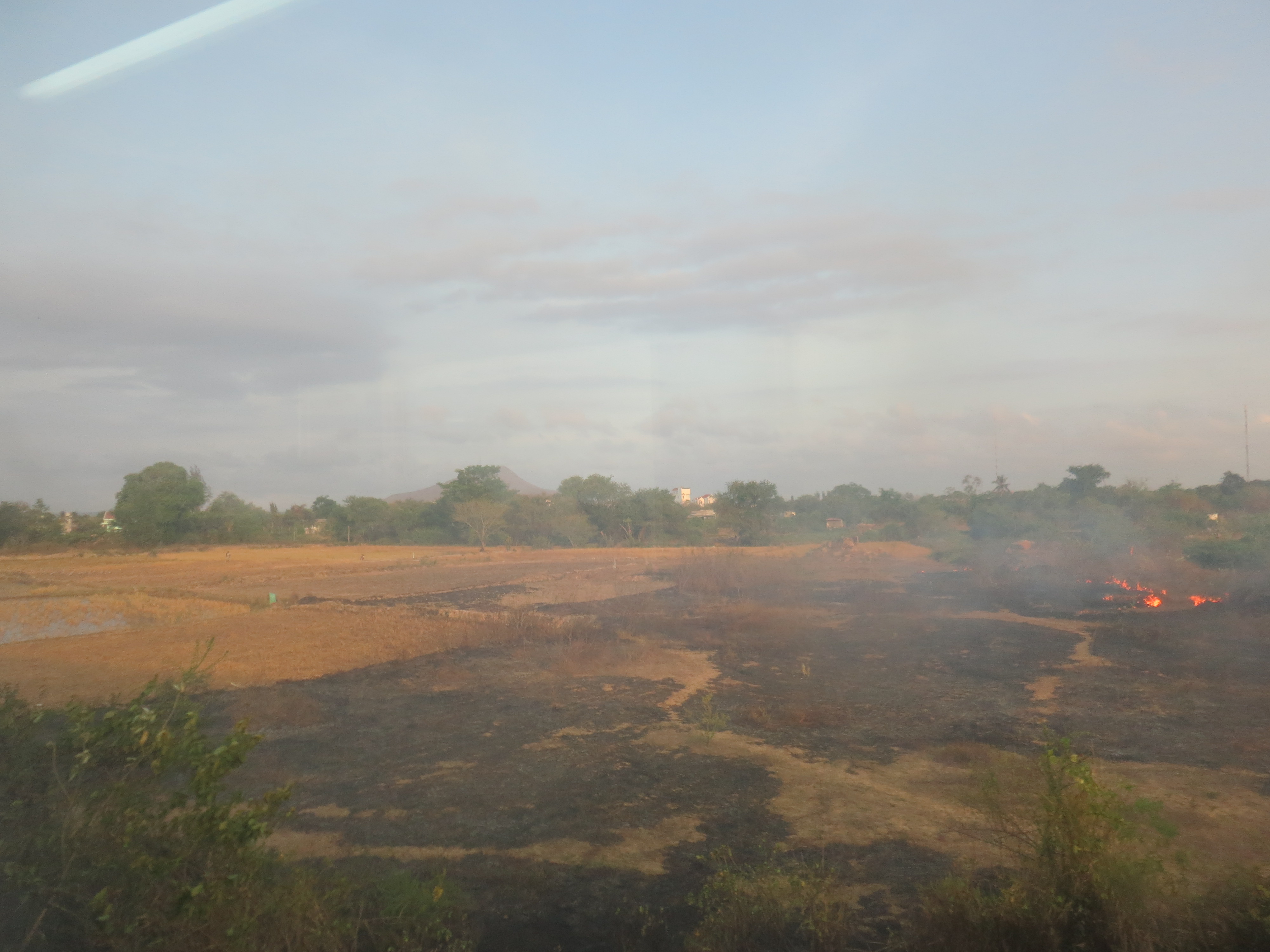
Burning in the fields

Burning in the fields

Scenery on the way from Saigon to Nha Trang

Scenery on the way from Saigon to Nha Trang

The train had a couple TVs on it, playing flashy ads and soap operas. Nearly all the coat hooks were being used to hold people’s bags of food. A cart came around a couple times, selling treats and drinks. At one point the train stopped longer than usual at a station, and Laura nudged me, pointing out the possible reason: a couple of men in official looking uniforms, arguing with a middle-aged woman in a seat six or seven rows in front of us. A couple stations later, the uniformed men led her off the train, carrying what looked like a toy machine gun. We’re guessing the toy was hers and it wasn’t allowed? We really hope it was just a toy. It remains a mystery.

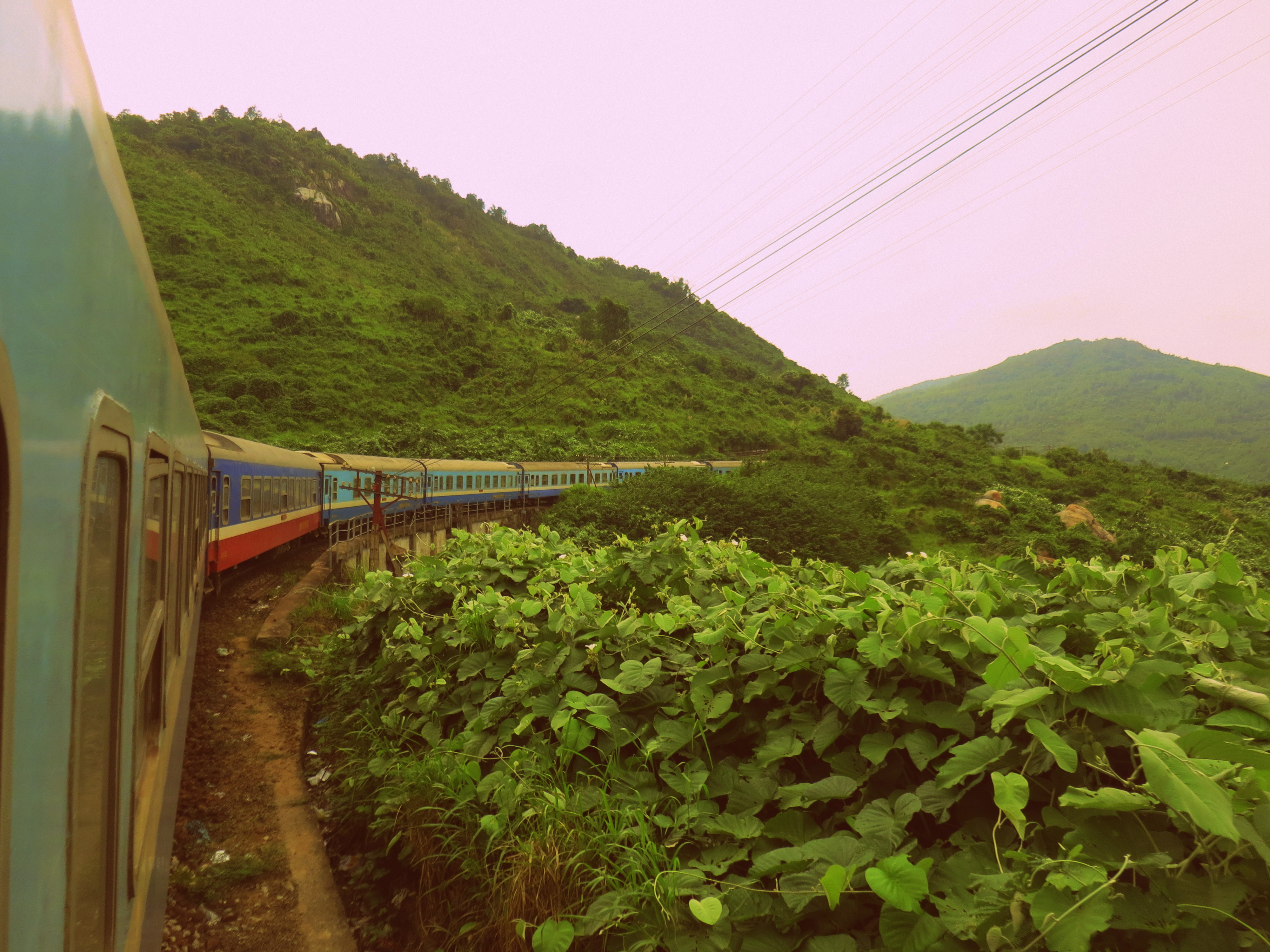
From Danang to Hue

From Danang to Hue

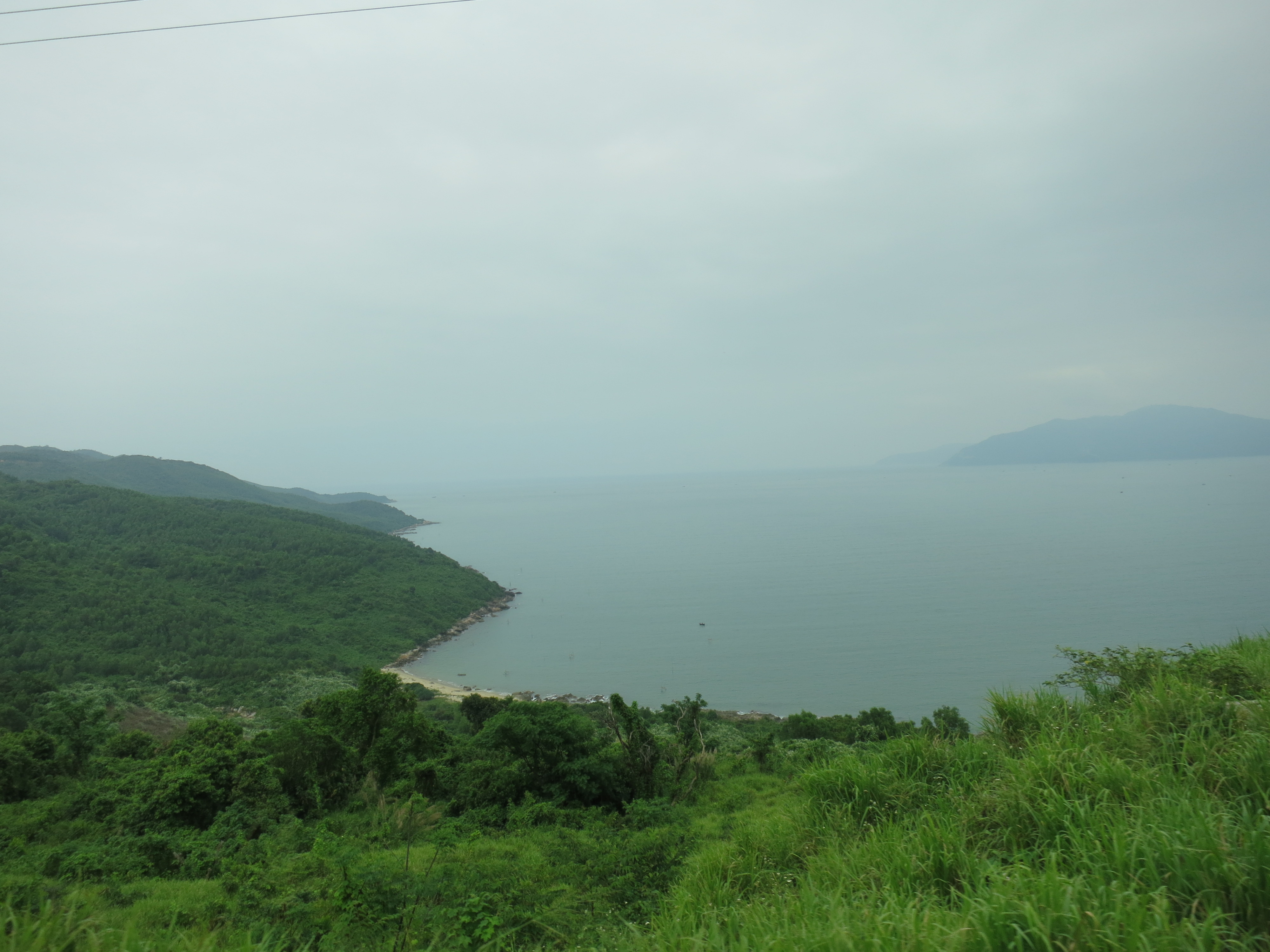
Misty coast

Misty coast

I took a train from Danang to Hue, and that was the prettiest train ride of my trip. The tracks followed the coast, and even though it was an overcast day, I saw plenty of lush tropical forest tumbling down the hills and into the ocean. This train was empty, so we all just picked which seats we liked best, which was good because the seat I was assigned seemed to have some springs poking out of it. This train was not as nice as the first one, but with scenery like that, who cares.

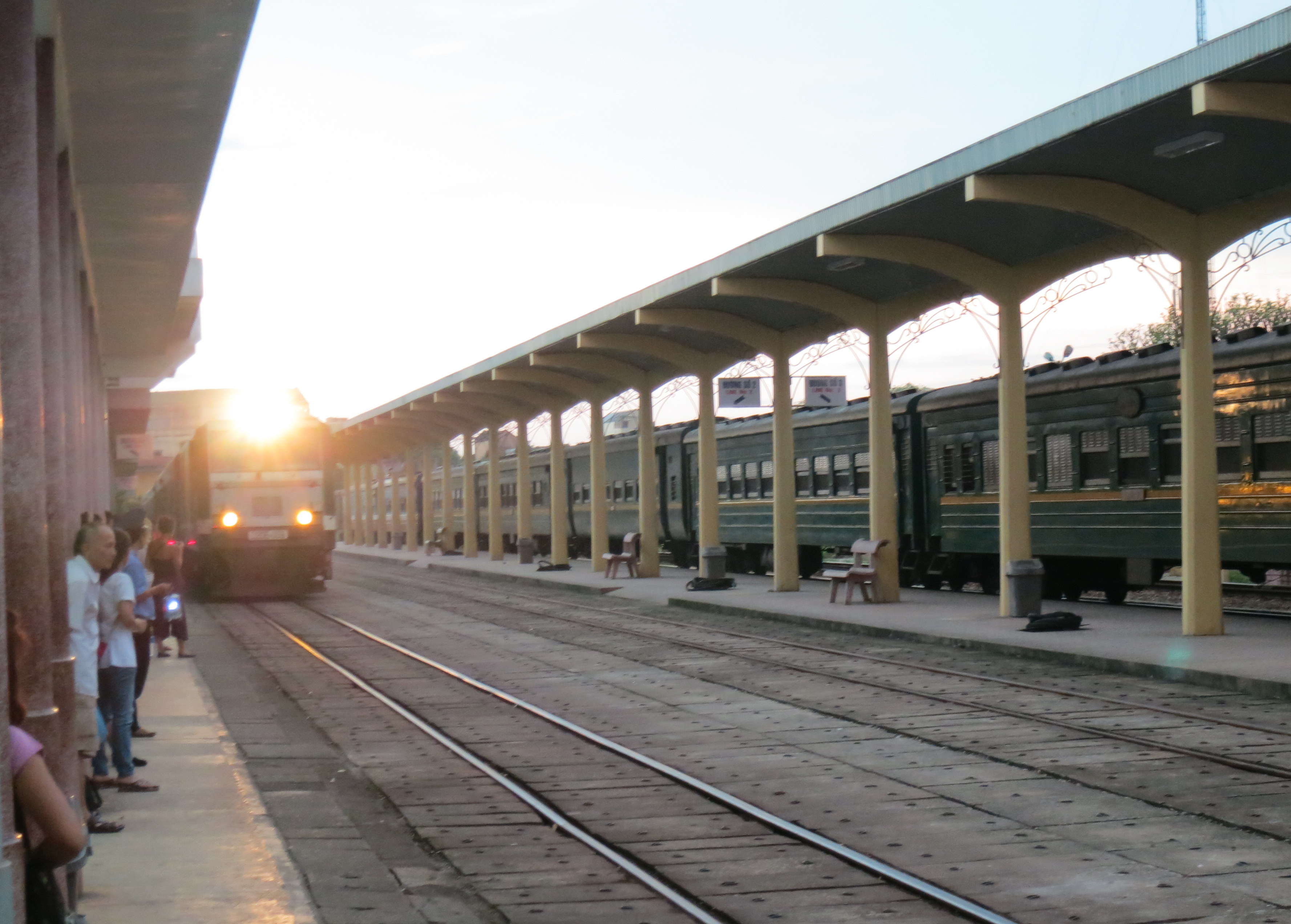
That sunset ride is pulling in

That sunset ride is pulling in

hue to hanoi train

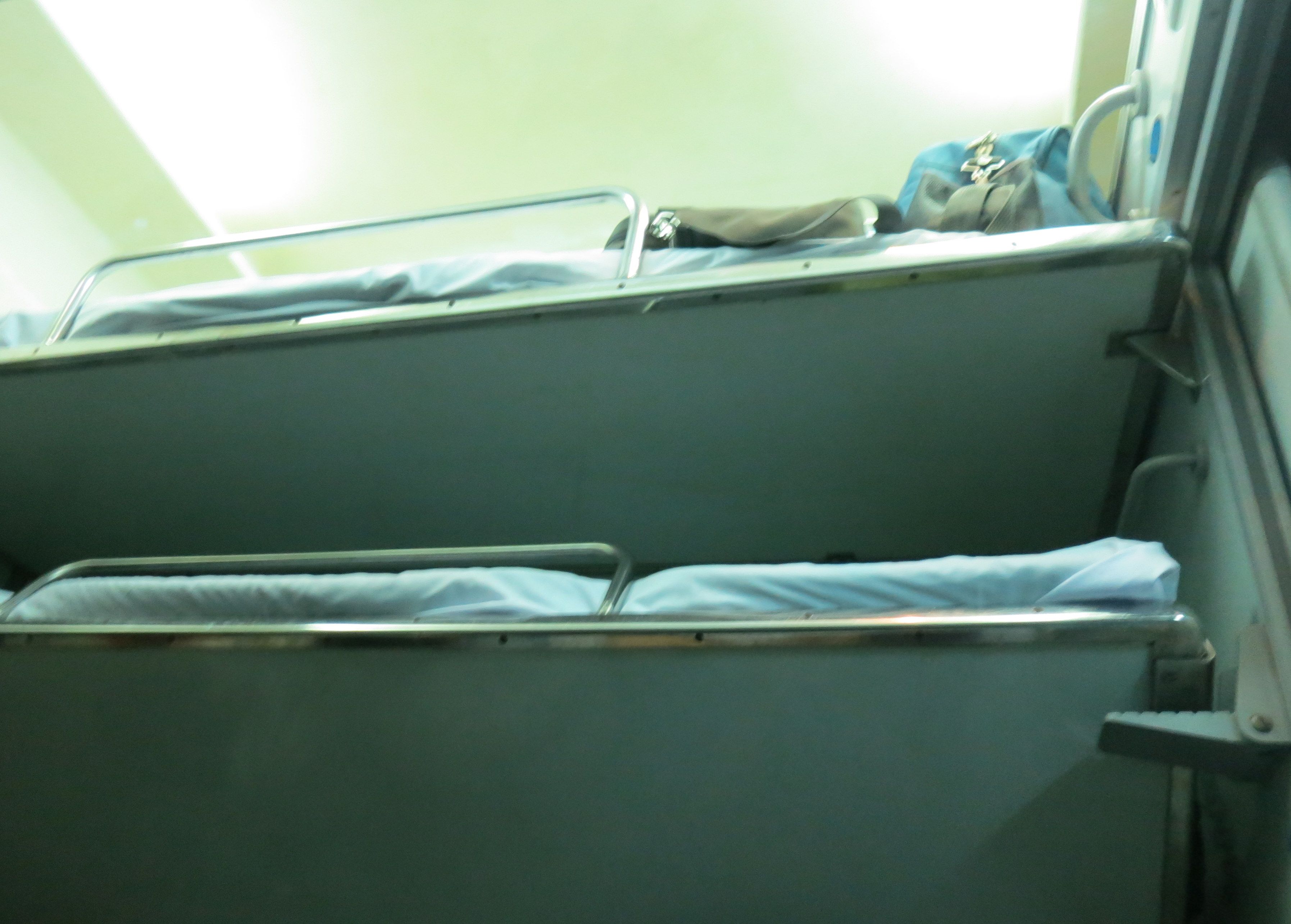
The last train I took in Vietnam was an overnighter from Hue to Hanoi. I was determined to be picky about my seat, since I’d paid extra for a bottom bunk in a six-bunk cabin. Imagine my surprise when I arrived in the cabin and found the pillow and blanket tossed to the side, and a man sitting on my bunk. Once I showed him my ticket proving it was my spot, he gave it up and sat on the other bunk with his friend and the woman whose bunk it was. I only meant he couldn’t sleep there, not that he couldn’t sit while we chatted, but that was just the first of a series of small misunderstandings. I fit my bags in around the five-gallon jar of homemade whiskey the guys were transporting, and then we faced each other and tried to talk. I had bought a small bag of sticky rice at the station and ate that while we talked, which the three of them found hilarious (I am not very good at chopsticks).

Bunks on the overnight from Hue to Hanoi

Bunks on the overnight from Hue to Hanoi

My bunk, with the homemade whiskey just visible in the corner there

My bunk, with the homemade whiskey just visible in that rucksack in the corner there

The two men had very limited English, and I only knew how to say “please” and “thank you” in Vietnamese, so it was a real struggle to talk. The most astonishing sunset was taking place outside the hall window, but every time I tried to peek out there, the guys pulled me back and tried to talk some more. There’s a lot to be said for cross-cultural communication, but when the language barrier is this huge, there’s really only so much that can be said. They would ask a question, and I would respond, and they’d smile, uncomprehending. Then I would ask a question, and they would respond, and I’d smile, uncomprehending. Any attempts to clarify what was said were met with more smiles and shrugged shoulders. I learned that their names were Tien Troung and Van Hien (they wrote their names for me in my notebook), and they were engineers on a work trip to Hue, returning home to Hanoi. They brought the homemade whiskey with them and were eager to return to their wives and children. Tien Truong showed me a photo of his six-month-old. That, at least, is universal. I congratulated him, and he grinned proudly.

Tien Truong and Van Hien

Tien Truong and Van Hien, who insisted on posing for photos and asked me to pose as well

Sleeping on that train was nearly impossible, since the guys played music on their phones and two other passengers climbed in the middle bunks midway through the night, and I had to use the bathroom twice, and tried to forget the experience each time because it was so disgusting that if I remembered how nasty it was, I’d never be able to go again.

hue to hanoi train

We arrived in the capital around 6am on Gio to Hung Vuong Day, a celebration of the Hung Kings, who founded Vietnam. I said farewell to my cabinmates, scooted my bags away from the whiskey jar, and left the train behind.

Remains of a Cultural Capital in Hue

Hue was once the site of Chinese authority, the outside force with the most influence on the cultural development of Vietnam. Starting from the 16th century, the Nguyen family of Vietnam reigned here, and in 1802 they became the imperial family of the country, with Hue as the official capital. The Nguyens were backed by the French, then ruled by the French when Vietnam was a protectorate, then ousted in 1945 during the French Indochina War.

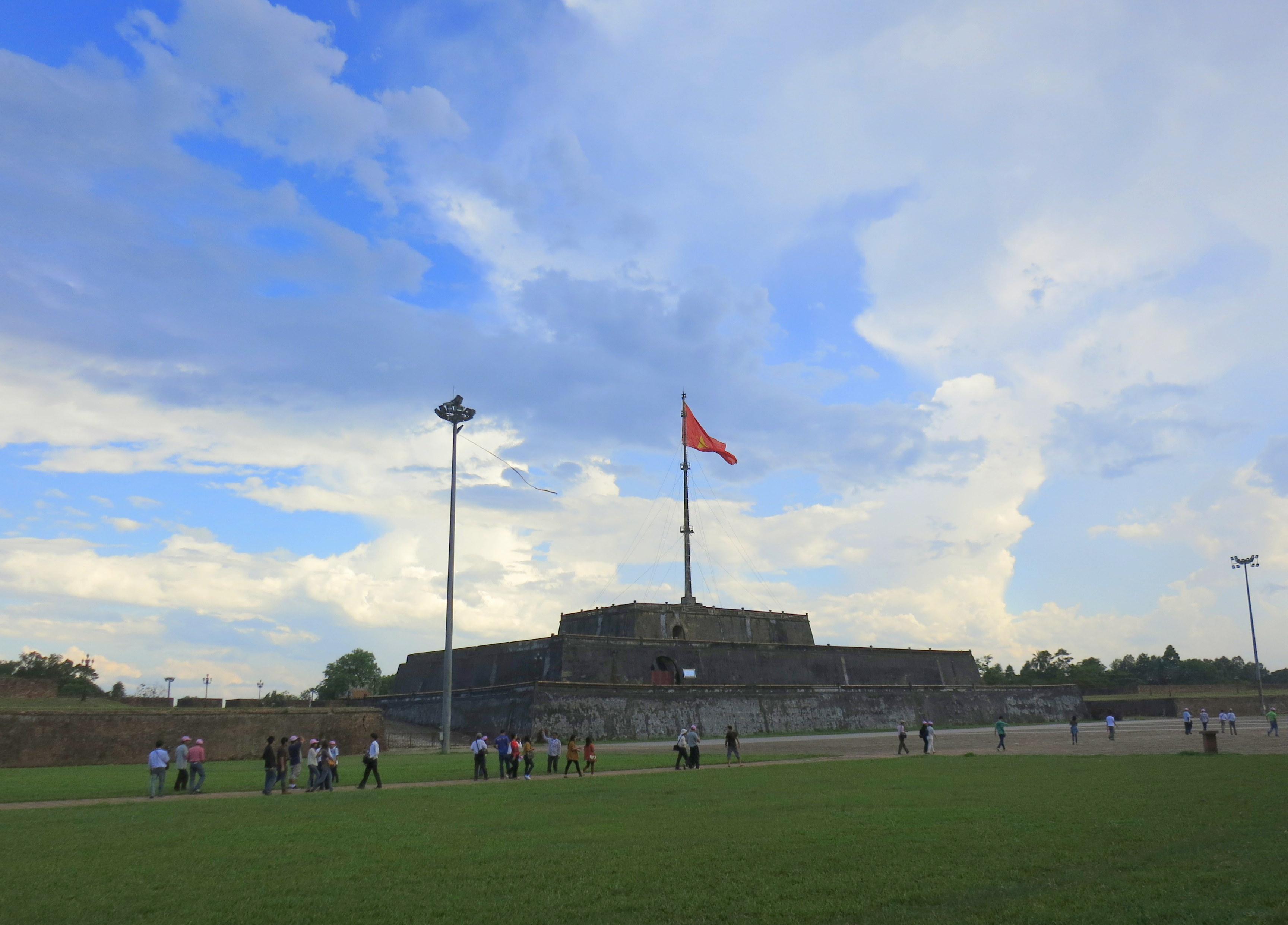
The citadel in Hue

The citadel in Hue

The southern entrance

The southern entrance

The capital of the country moved to Saigon and later to Hanoi, and Hue’s been of secondary importance for decades, at least politically. Culturally, it’s been seen by many Vietnamese as the seat of learning, religion, art, and cuisine. Part of the struggle over the city during the Tet Offensive of 1968 was its geographic position at almost the exact center of the country, just miles from the Demilitarized Zone (DMZ), but part of it was a symbolic struggle for the heart of Vietnam.

Restored artwork in the palace

Restored artwork in the palace

hue citadel

The imperial city, behind the walls of the citadel, is about 2.5 kilometers along the perimeter. It used to house the main palace, in the Forbidden Purple City, but that was destroyed by the French in 1947. Apparently, the American and South Vietnamese forces were instructed not to touch the historically important citadel during the Vietnamese-American War, but as the Battle of Hue in 1968 dragged on, the restrictions were eased, and eventually many buildings were damaged or destroyed. Bullet holes can still be seen on many of the remaining structures.

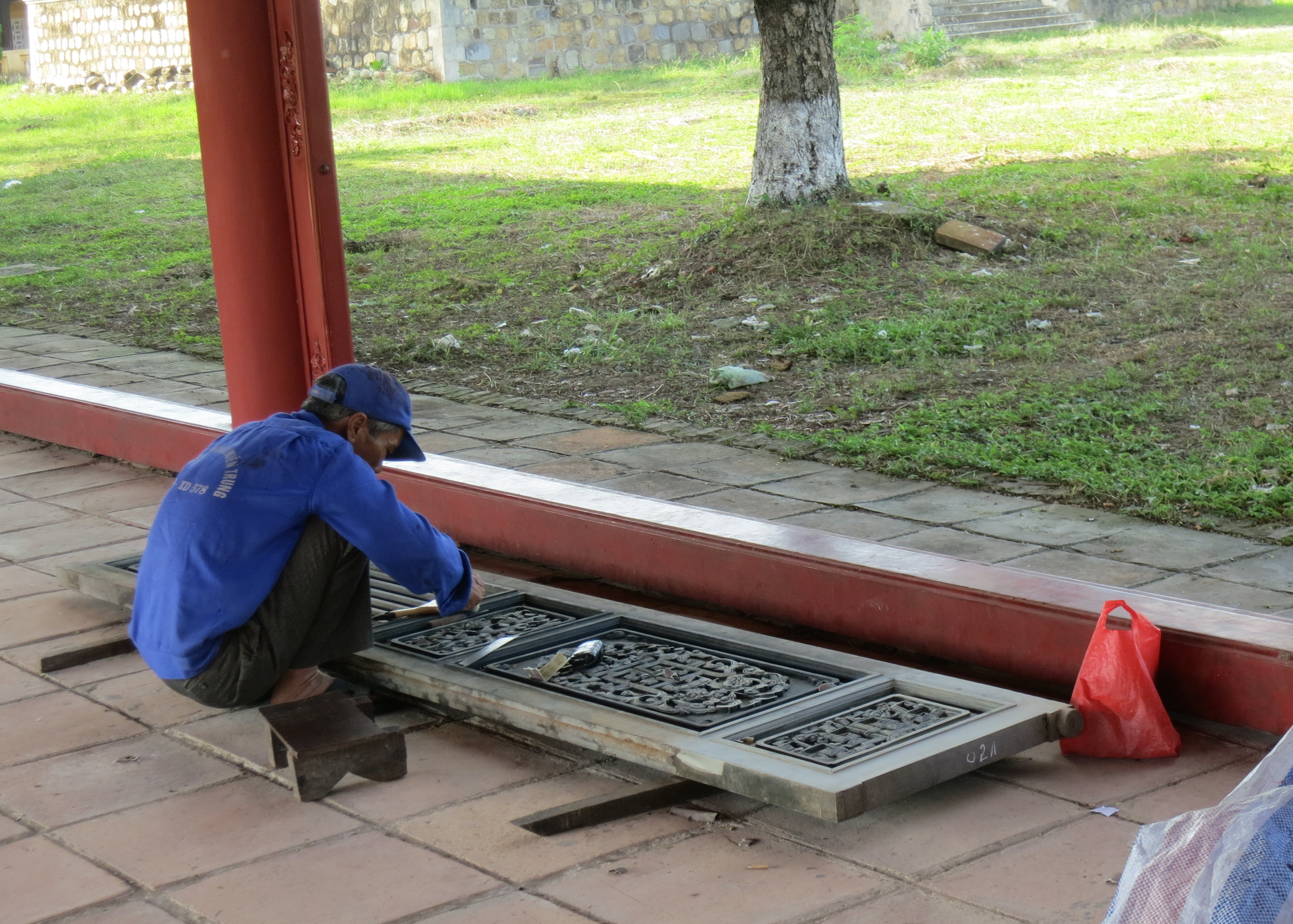
In 1996, the communist government of Vietnam, which had not previously prioritized rebuilding a symbol of imperialism, realized the tourist dollars a reconstructed city could bring in, and it committed to a 15-year plan to rebuild it. When I was there, I saw the project in action, as craftsmen sawed and carved wooden doors to hang along the long halls of the interior palace. (Also, it’s not just foreigners who bring in the money here–only a little under half of the tourists in Hue are from out of the country.)

Possibly where the emperor used to sit, who knows

Possibly where the emperor used to sit, who knows

The flag tower of the citadel looms on the north side of the Perfume River. Beyond the citadel are the walls of the palace grounds, and once you buy your ticket, you pass through the gates and find the Hall of Supreme Harmony, fronted by a broad tiled pavilion and two fish ponds. You can’t take photos inside the hall, but it was gorgeous in there. A crab shell-style roof covered a long, empty hall; the pillars were carved with dreamy cloud and dragon combinations, and the beams of the ceiling displayed poems written in Chinese characters. In the back, a video played on loop, using digital reconstructions to show what the whole palace complex looked like in its glory days.

hue citadel

Hall of Supreme Harmony

Hall of Supreme Harmony

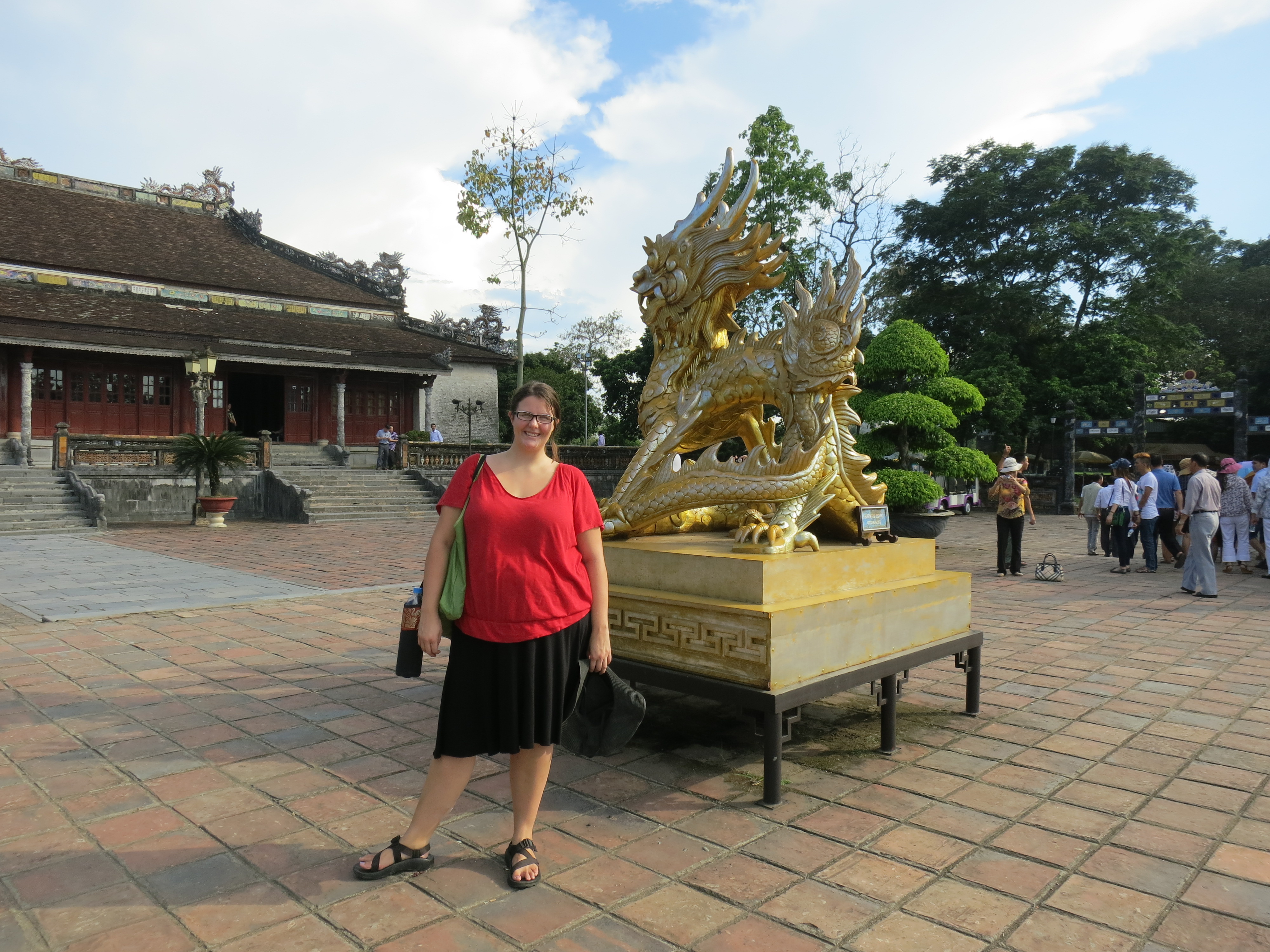
Hangin' with a gold dragon

Hangin’ with a gold dragon

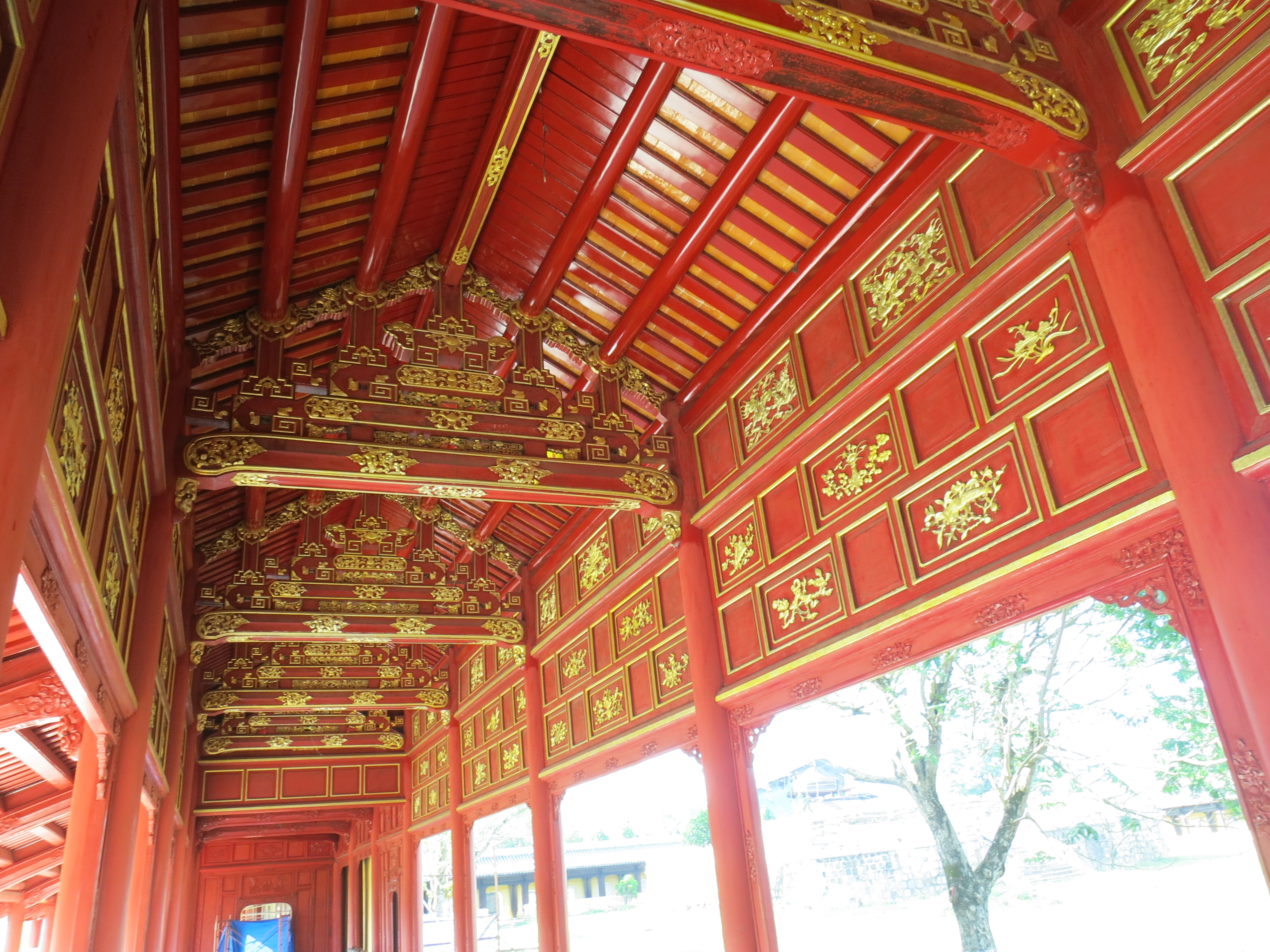
Behind the hall, I posed with a giant golden dragon, like you do, and then walked down one of the side halls of what remained of the interior palace. The side halls started out in magnificent style, double rows of red pillars, long lines of tall doors opening out onto the side gardens, but as I walked closer and closer to what used to be the center of the palace, the doors disappeared, the columns were unpainted, scaffolding appeared. What was once land so rarefied only the emperor could walk on it, was now flat stone foundations and trimmed green grass, barely the memory of a palace.

A totally reconstructed hallway

A totally reconstructed hallway

hue citadel

I loved these passageways

I loved these passageways

Restoring one of the doors

Restoring one of the doors

Looking out over the few remains of the innermost palace

Looking out over the few remains of the innermost palace

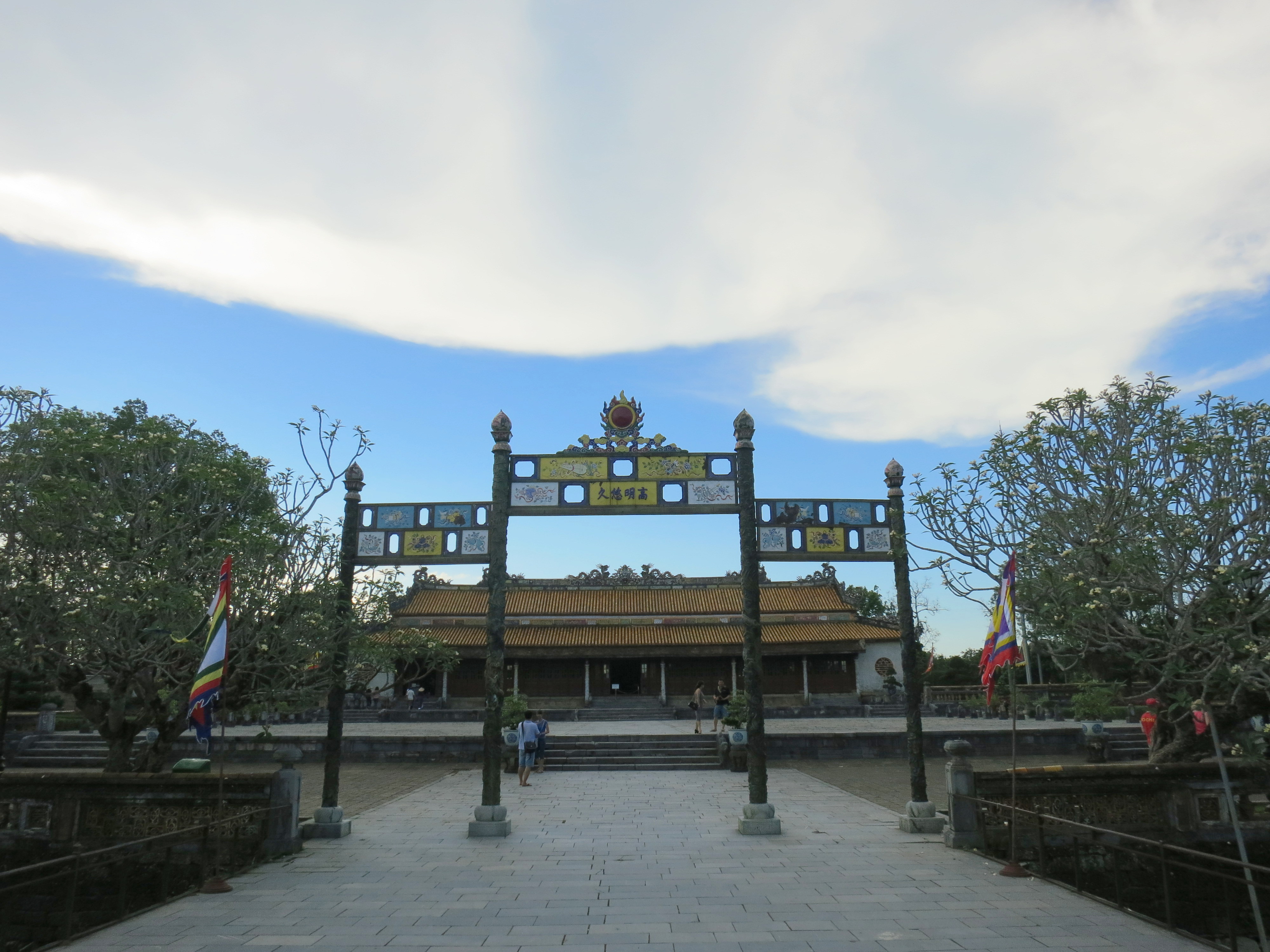
I then walked to the Dien Tho Residence, where the queen mother lived in the later years of the palace’s use. This had its own three-arched gateway, a couple lotus ponds, and long, low buildings (which I couldn’t take photos in).

Gateway to the residence

Gateway to the Dien Tho Residence

hue citadel

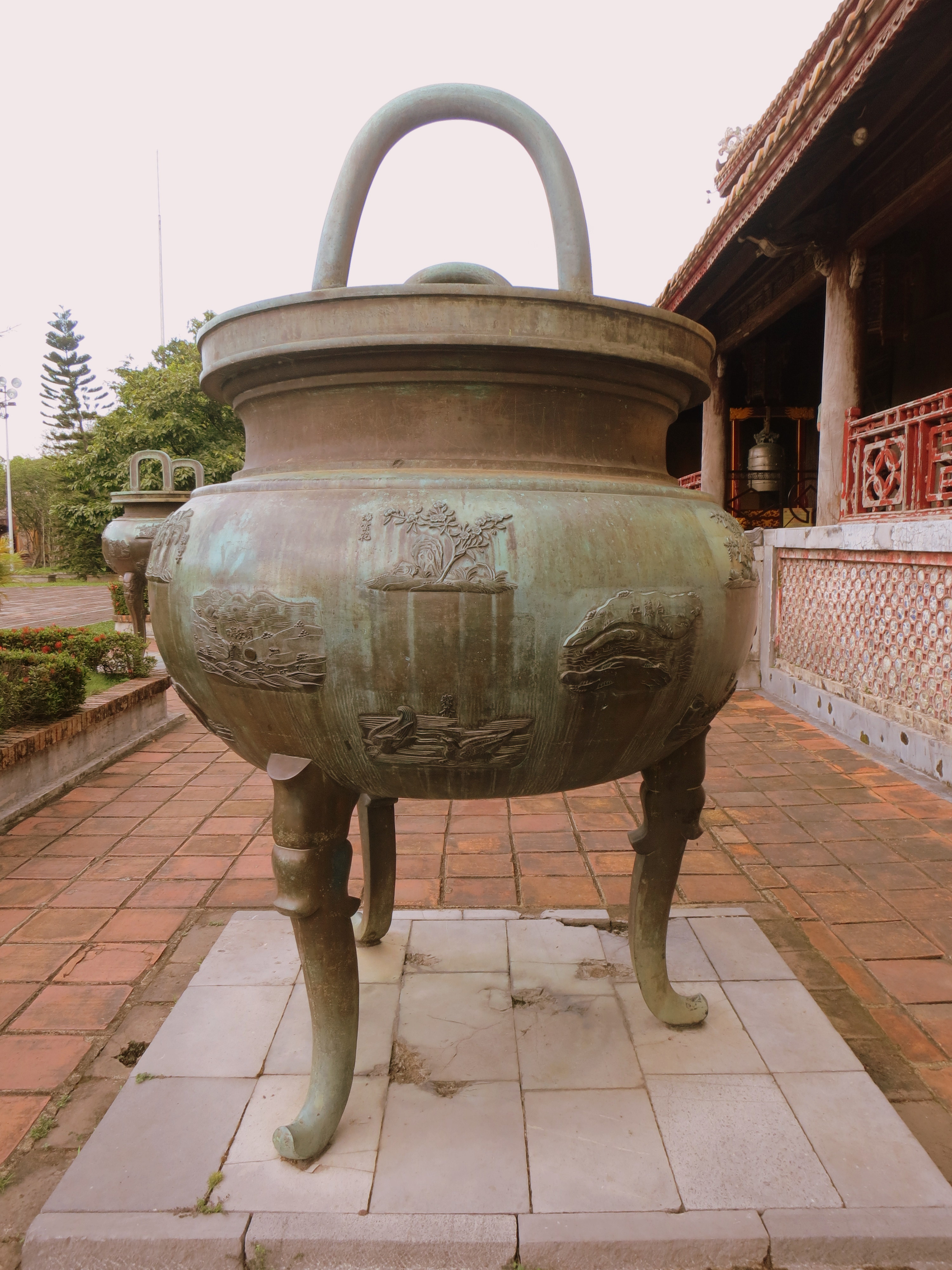
Finally, I visited the Hien Lam Pavilion, which has the The Mieu Temple on one end, and nine dynastic urns on the other. The temple is richly decorated, showcasing portraits of emperors and queens. The urns are lined up outside, giant bronze castings carved with scenes of natural beauty, each urn named after an emperor of the Nguyen dynasty.

The ?? Pavilion

The Hien Lam Pavilion

One of the nine dynastic urns of the ?? Pavilion

One of the nine dynastic urns of the Hien Lam Pavilion

On one of the nine urns

On one of the nine urns

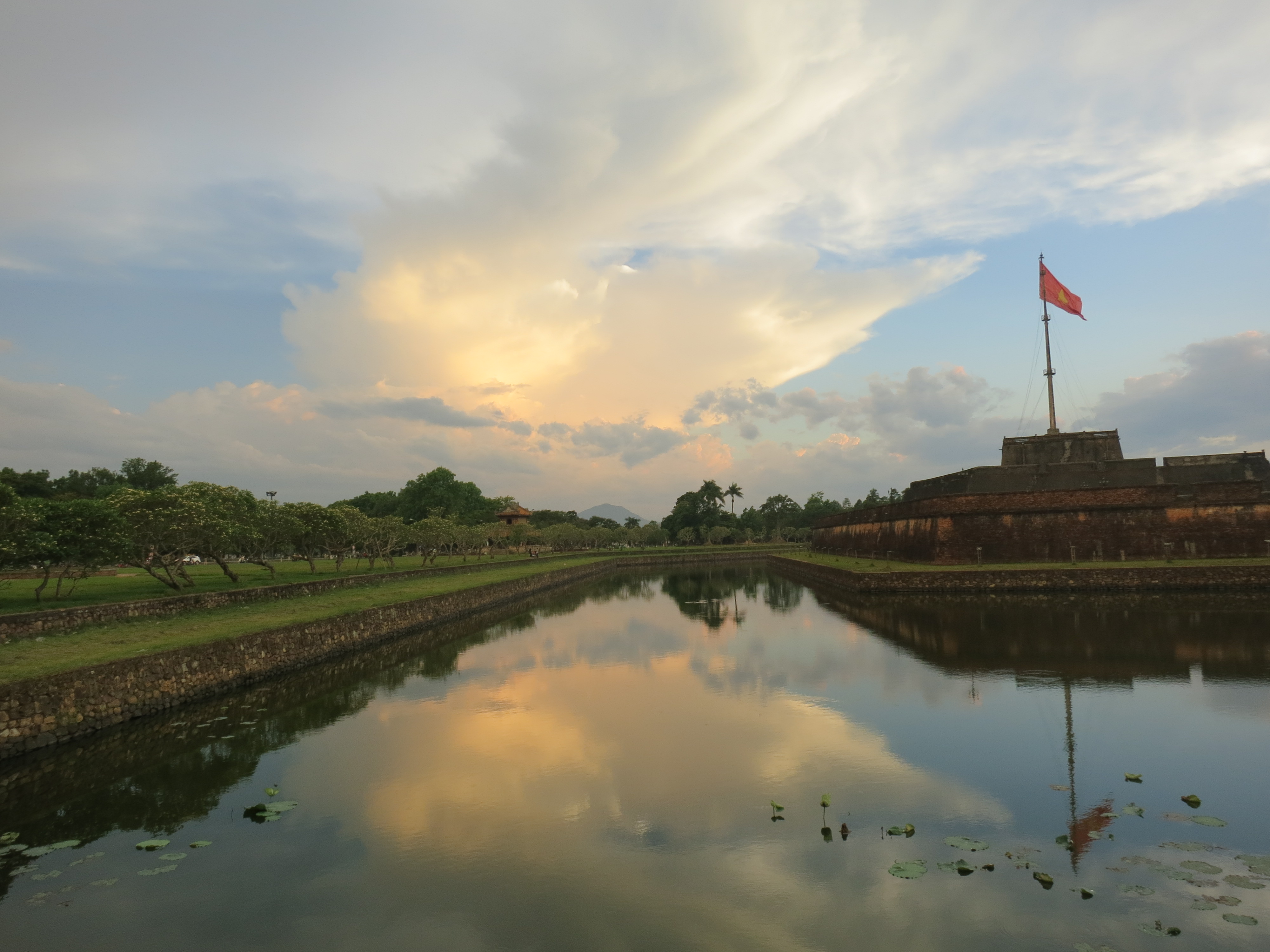
Walking away as the palace closed for the day, I left the swirls of clouds and curves of trees on the urns, passed the rows of flowers along the path and the sun setting behind the citadel walls, and strolled back into the city.

Sunset outside the palace

Sunset outside the palace

Hoi An: A Town Suspended in Amber

World Heritage sites are meant to protect and preserve sites of cultural and natural beauty around the world–that’s a given. But I was surprised by Hoi An, a city near the coast of the middle part of Vietnam, whose old town is a World Heritage site. Although people live and work there–bustling about selling food and trinkets, ushering tour groups through historical houses, calling out to children down the street–I somehow still felt as if the place was stopped in time, like an insect suspended in amber, mid-flight.

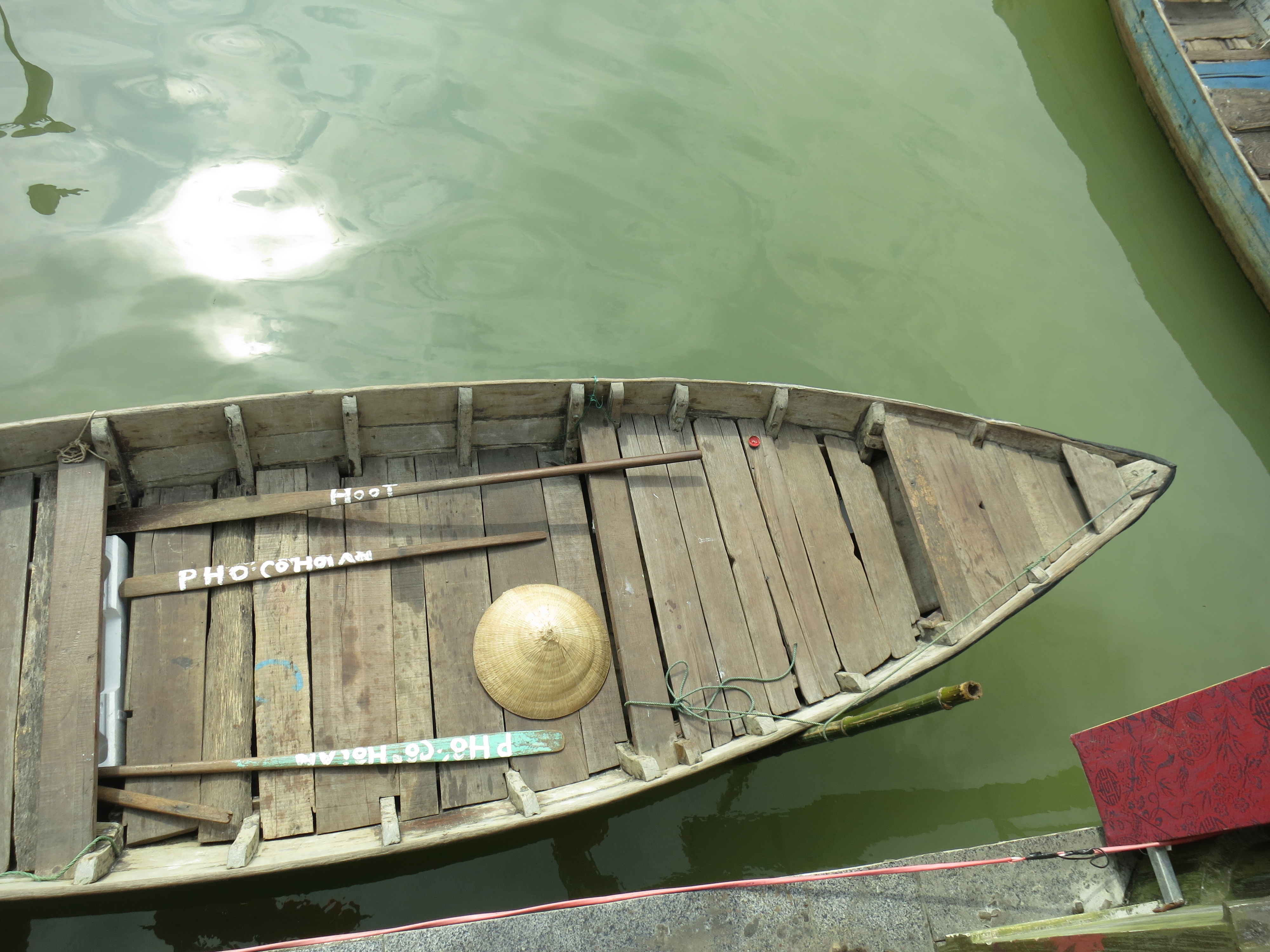
Boat rides in Hoi An

Boat rides in Hoi An

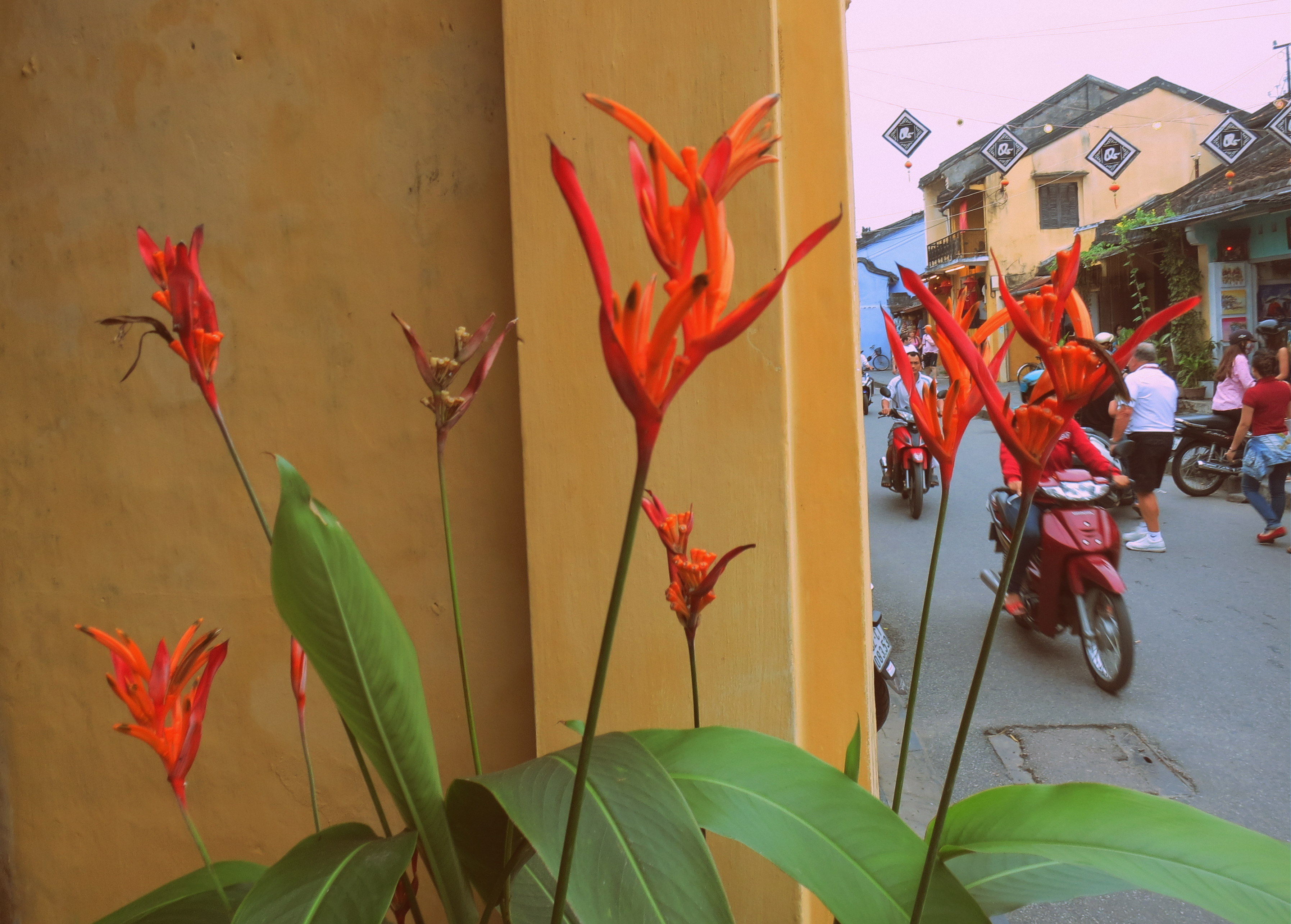
The buildings are a combination of Chinese-style shophouses and French colonials. Almost every single one is painted a bright yellow, decorated with hanging lanterns, the occasional flowering vine, and not much else. Simplicity seems to be the decorating byword here, and it works really well. Everyone took photos against the backdrops of yellow houses and magenta flowers, sometimes with an old-fashioned bicycle as a prop. I’m no exception.

hoi an

I won't wear shoes that are anything less than a dozen Franklins

I won’t wear shoes that are anything less than a dozen Franklins

But that’s what the whole “ancient town” felt like–a prop. My mom asked me if a town that was so carefully preserved felt like a display at Disneyland, and it kind of did. Part of that was due to the restrictions on vehicles; only human-powered vehicles were allowed, so the usual crush of motos, cars, and buses was missing, and only cyclos (bicycle taxis), bicycles, and handcarts rolled through the streets. This made me less fearful for my life, but it also made it eerily quiet. There was so much space; although the buildings were all full of businesses, somehow the streets weren’t as full of people visiting them as they were just a few streets away, on the other side of the UNESCO sign.

Most of those businesses seemed to be for tourists only, and I guess that’s the basic point: I’ve never been anywhere else that’s had such a sharp tourist/local divide, where locals only venture to make some money off tourists. Except for maybe Navy Pier in Chicago.

Which is not to say the houses and their contents weren’t beautiful, or historical, or worth preserving. They were all of those things. But the liveliness that surely accompanied the building and decorating of those houses had faded away.

Carrying different loads--the locals and the tourists

Carrying different loads–the locals and the tourists

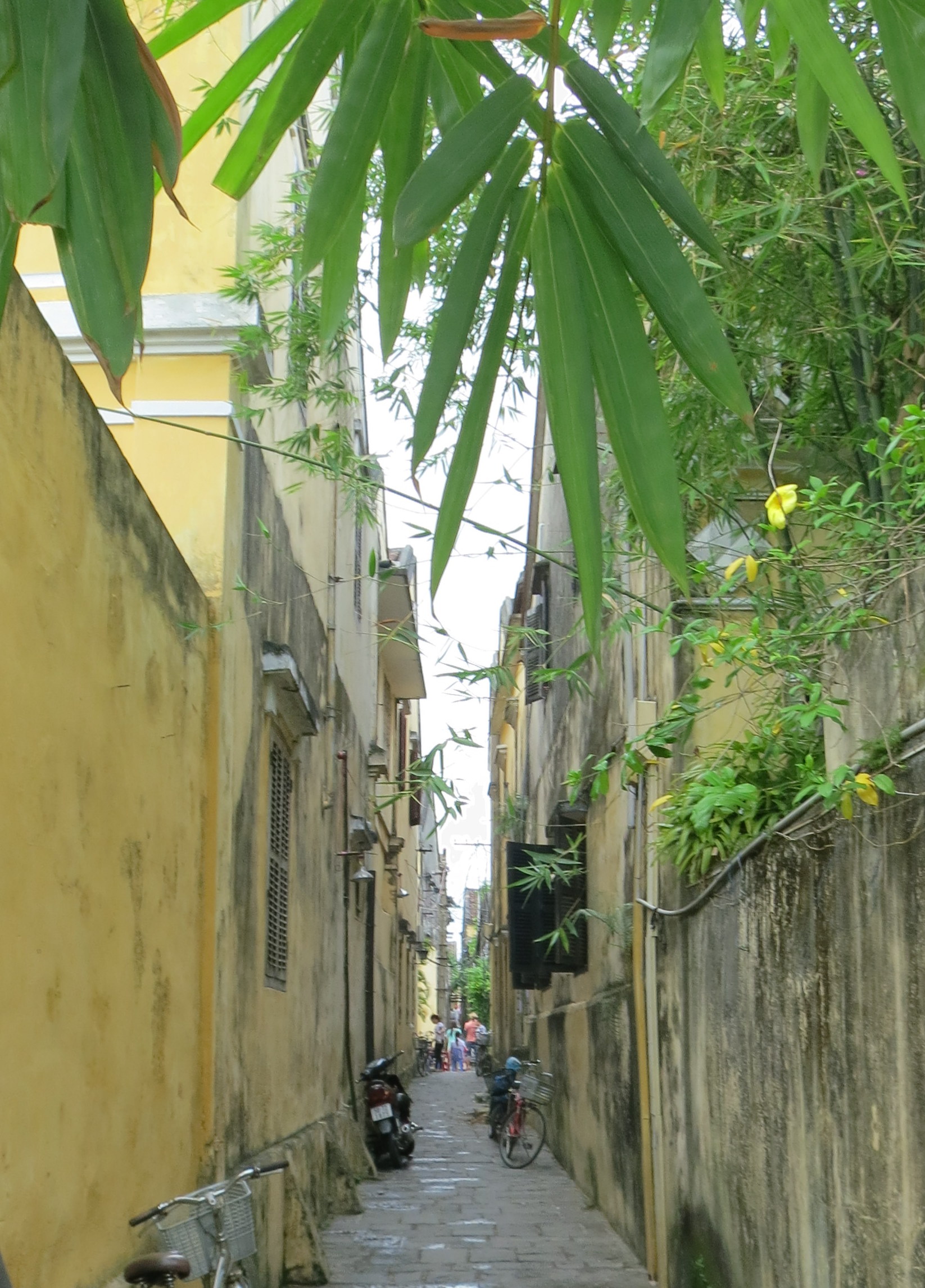
The beautiful, but oddly empty, streets of Hoi An

The beautiful, but oddly empty, streets of Hoi An

The Japanese Bridge

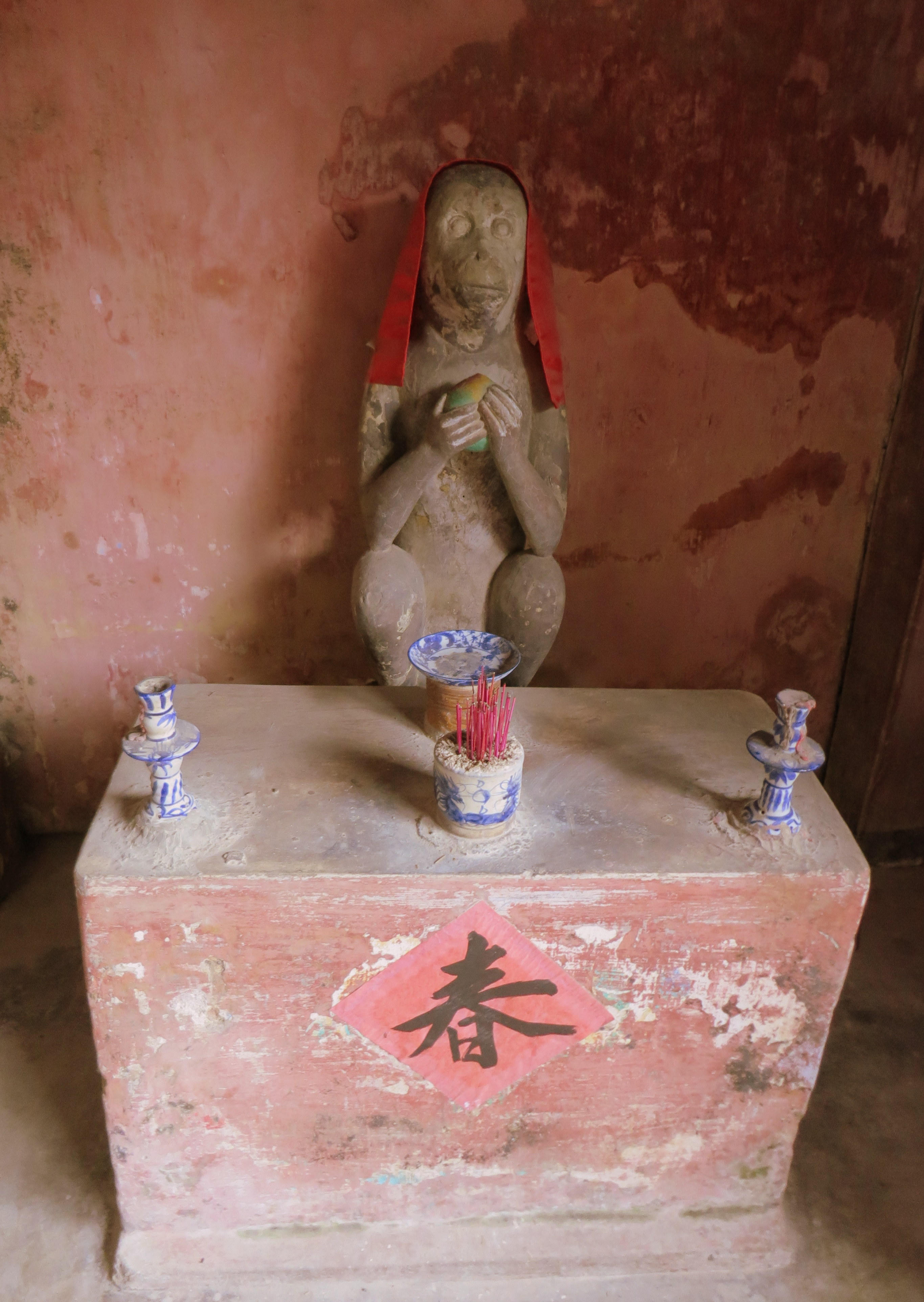
Hoi An was a trading town for centuries, and both Chinese and Japanese merchants settled here and had a large influence. One of the main sights of the town is the small, lovely covered Japanese bridge over one of the estuaries of the river. It was built centuries ago, connecting parts of town where different ethnicities lived, and for a while was called the Friendship Bridge. You can pay to see the tiny altar in the center of the bridge, or you can just walk on the wooden structure, admiring the curlicued beams above and the solemn dog and monkey altar statues below.

At the Japanese Bridge in Hoi An Ancient Town

At the Japanese Bridge in Hoi An Ancient Town

A small shrine on the Japanese Bridge

A small shrine on the Japanese Bridge

A collections box

A collections box

A war memorial

A war memorial

I lucked out on the first day I went down to the old town. You have to buy a multi-ticket packet and use one ticket per attraction. I wasn’t sure where to buy a ticket when I got down there, so I asked a couple of Canadian women outside the Tran Family Chapel where to go, and they said, “oh actually, we’re done for the day, take the rest of our tickets.” Excellent!

The Tran Family Chapel

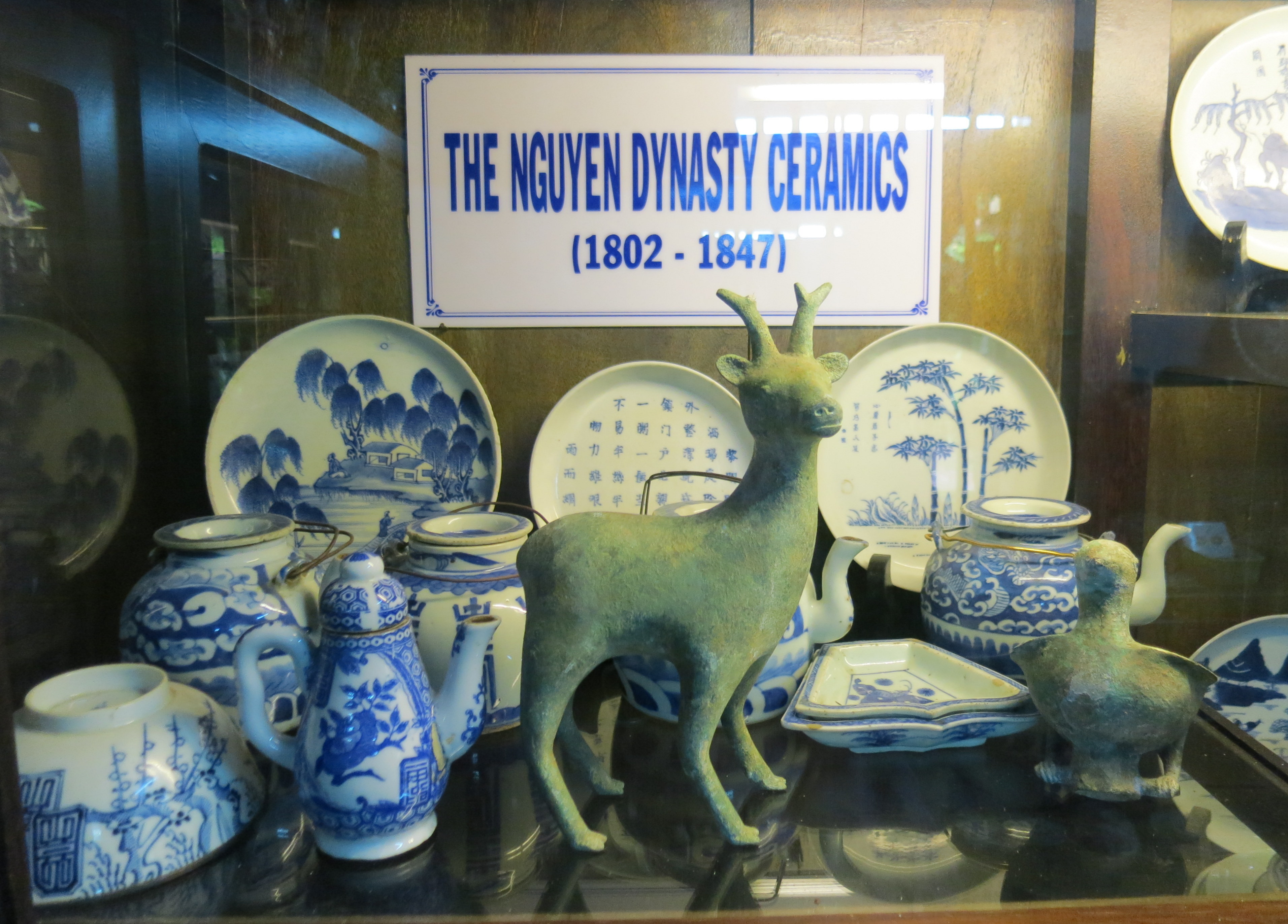
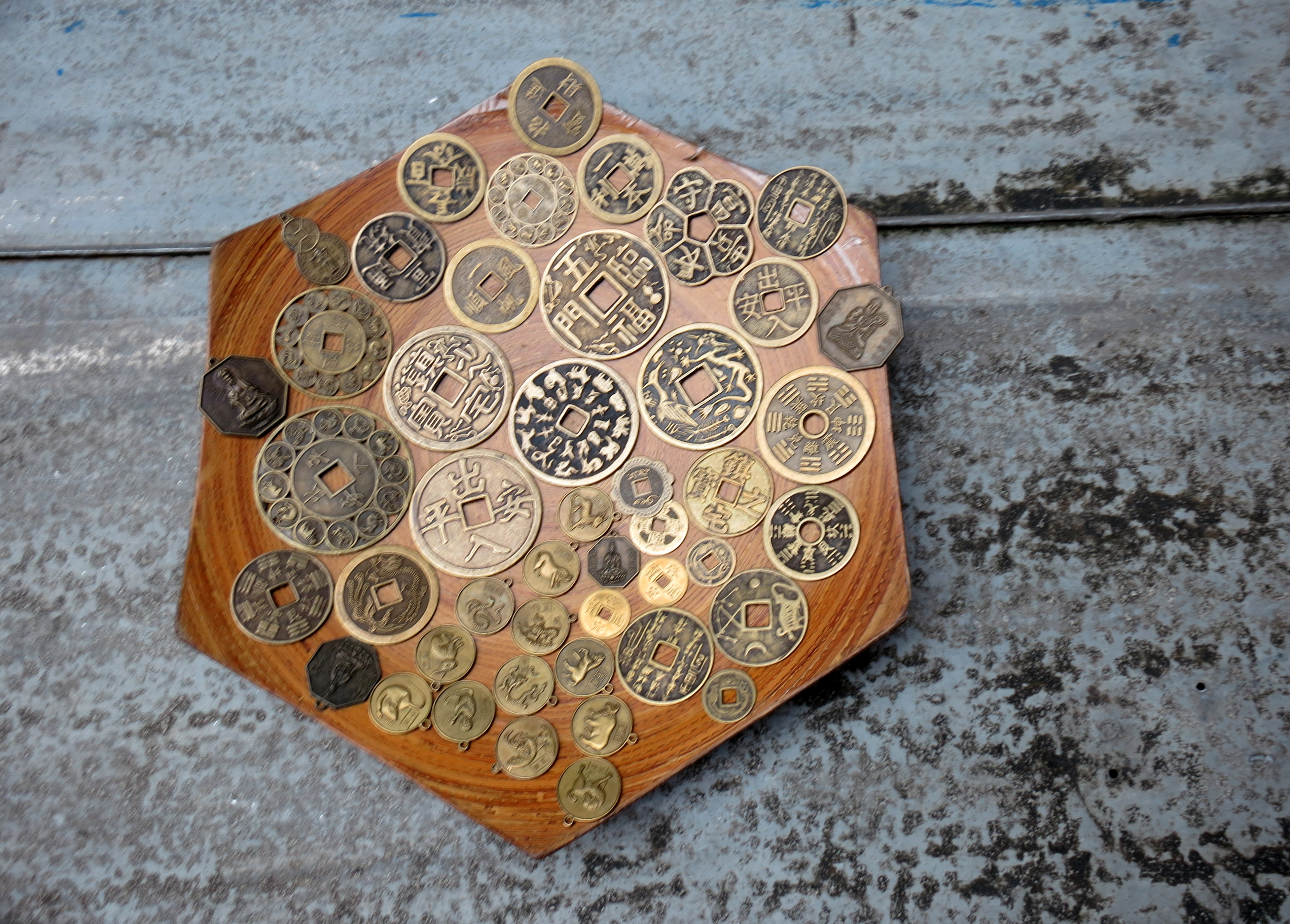
The Tran Family Chapel is one of the names for this 200-year-old building, constructed in the style of a Vietnamese garden house. The central entrance was only used on very high holidays, and normally men and women enter from different side entrances. The altar was surrounded by small, thin boxes that I believe contained the ashes, or perhaps the mementos of deceased members of the family. You can’t walk through the place by yourself; a guide gives a short speech on the architecture of the building (Japanese-style three-tiered wooden beams; a door sill that trips you up if you’re not careful, so you are forced to look down when crossing it, thus showing respect for the ancestors as you cross into their space) and then brings you into the back room, which is full of ceramics, coins, and trinkets you can buy as souvenirs. It wasn’t too hard a sell, happily.

Tran Family Chapel

Tran Family Chapel

Tran Family Chapel waiting room

Tran Family Chapel waiting room

Part of the large collection of ceramics, coins, and statuary for sale

Part of the large collection of ceramics, coins, and statuary for sale

hoi an

The Tan Ky House

Mother-of-pearl inlay in the Tan Ky House

Mother-of-pearl inlay in the Tan Ky House

The Tan Ky House is the most visited Chinese house in Hoi An. It’s over 200 years old, and it’s been owned by the same family that whole time. An older woman, sixth generation of that family, handed out tea to visitors and smiled serenely as each tour leader pointed out her importance.

hoi an

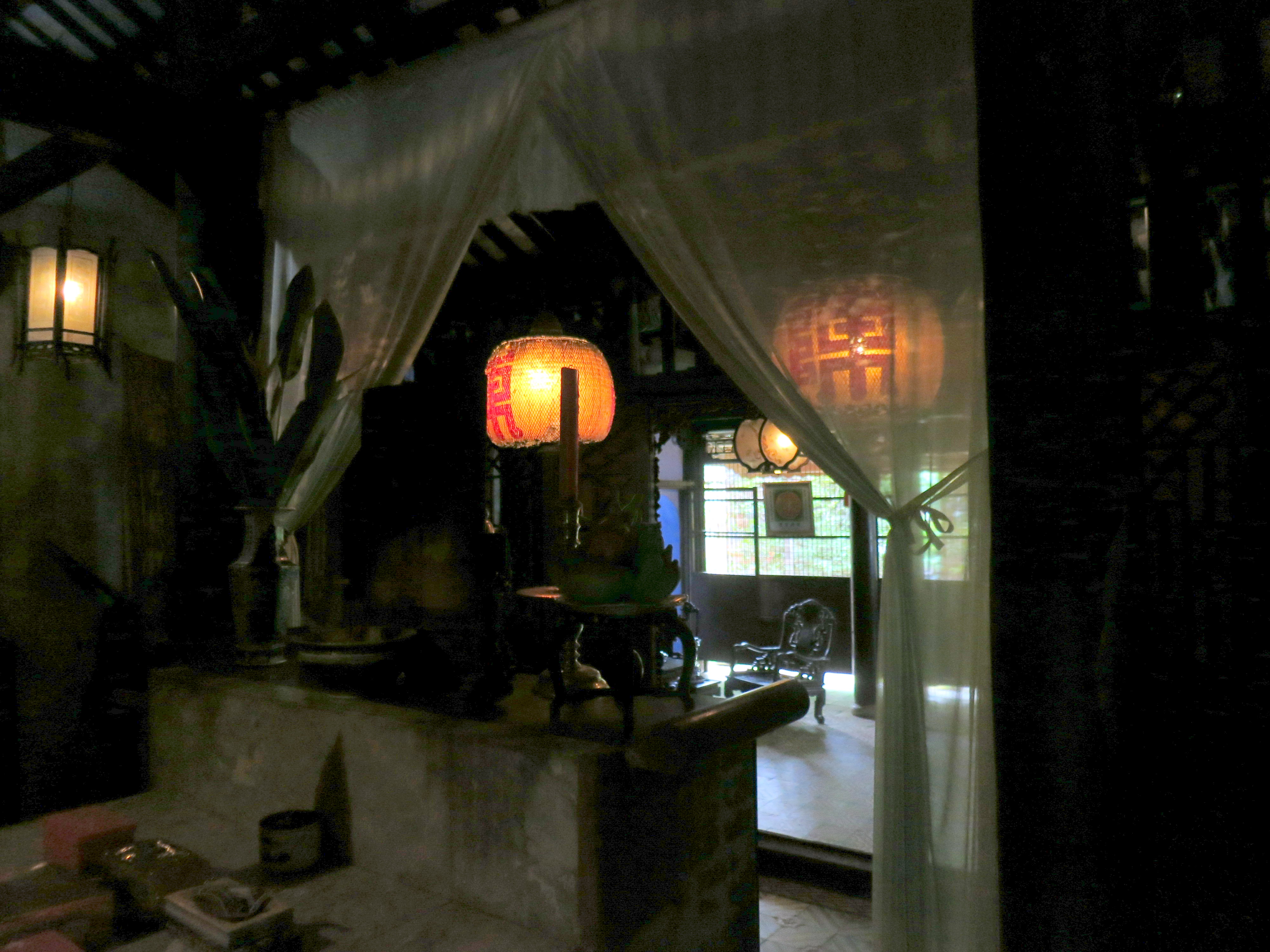
One of the major reasons the town is a World Heritage sites, these old houses are all built in the same way: doorway, opening foyer with altar, outdoor courtyard, back room/kitchen. Sometimes beds were set up in the back, but it looked like most bedrooms were upstairs (we were only permitted to see the downstairs in each place). Guides pointed out the Chinese elements (the writing, the shophouse layout), the Japanese elements (the three-tiered wooden beams in the foyer), and the Vietnamese elements (the building materials and particular family touches) that appear in each house.

Markings of how high the floodwaters rose over the years

Markings of how high the floodwaters rose over the years

The river has flooded many times over the last few decades, and one wall of the Tan Ky house was chalked up with how high the waters rose during various floods. The houses looked good for how many times they’ve been submerged.

Coins for the future

Coins for the future

The lacquered woodwork found in the Tan Ky house and the Quan Thang house (another place I visited), and mother-of-pearl inlay in the former, were beautiful. The inlay looked like calligraphy, and some of it even made Chinese characters out of “brush strokes” in the shapes of birds, which was just lovely. The woodwork in all the houses shines from polishing, revealing pastoral scenes of flowers, animals, and twisting plants.

Old House of Quan Thang

Old House of Quan Thang

Lacquer woodwork

Lacquer woodwork

Fukien Assembly Hall

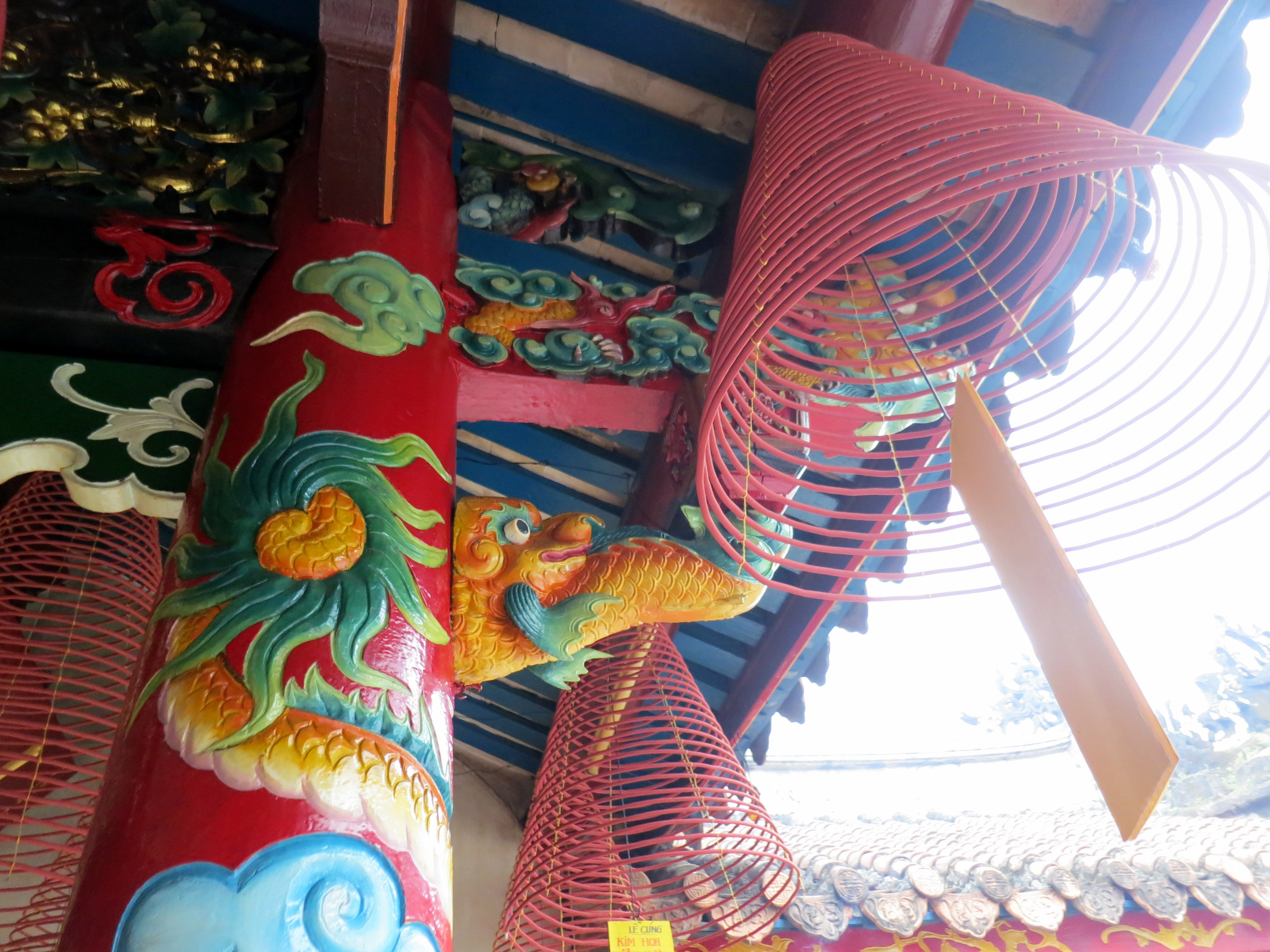
The Fukien Assembly Hall was built in the 17th century as a temple and was also used as a gathering place for the Fukien Chinese people who built it. It’s a long approach, past a fountain and through a triple gate, past two large paintings depicting heroic stories, through the open courtyard hung with giant prayer coils, red and smoking, and finally into the main room containing the large altar and another small pond. The altar room had some beautifully carved and painted pillars, and a feast laid out for the ancestors and gods on the altar. This was a great reminder of the huge Chinese influence in Vietnam, and how strong that influence still is.

Fukien Assembly Hall

Fukien Assembly Hall

Offerings at the altar

Offerings at the altar

hoi an

Lovely detail

Lovely detail

Tailors

Hoi An is the main tailoring hot spot in Vietnam. I am not exaggerating when I say that out of eight storefronts on one street, seven of them were tailor shops. I had some silk I’d bought in Thailand, and I had it made into a skirt for my cousin, which turned out beautifully. I had almost decided not buy any clothes for myself, but I succumbed to a different shop owner’s persuasions. She made a long-sleeved black linen/cotton shirt, which I generally like although it can be a little shapeless, and a pair of cream linen pants, which pilled after two wearings, and which she hemmed too short. I should’ve stuck with my original plan!

In the tailor shop

In the tailor shop

Plumeria

Plumeria
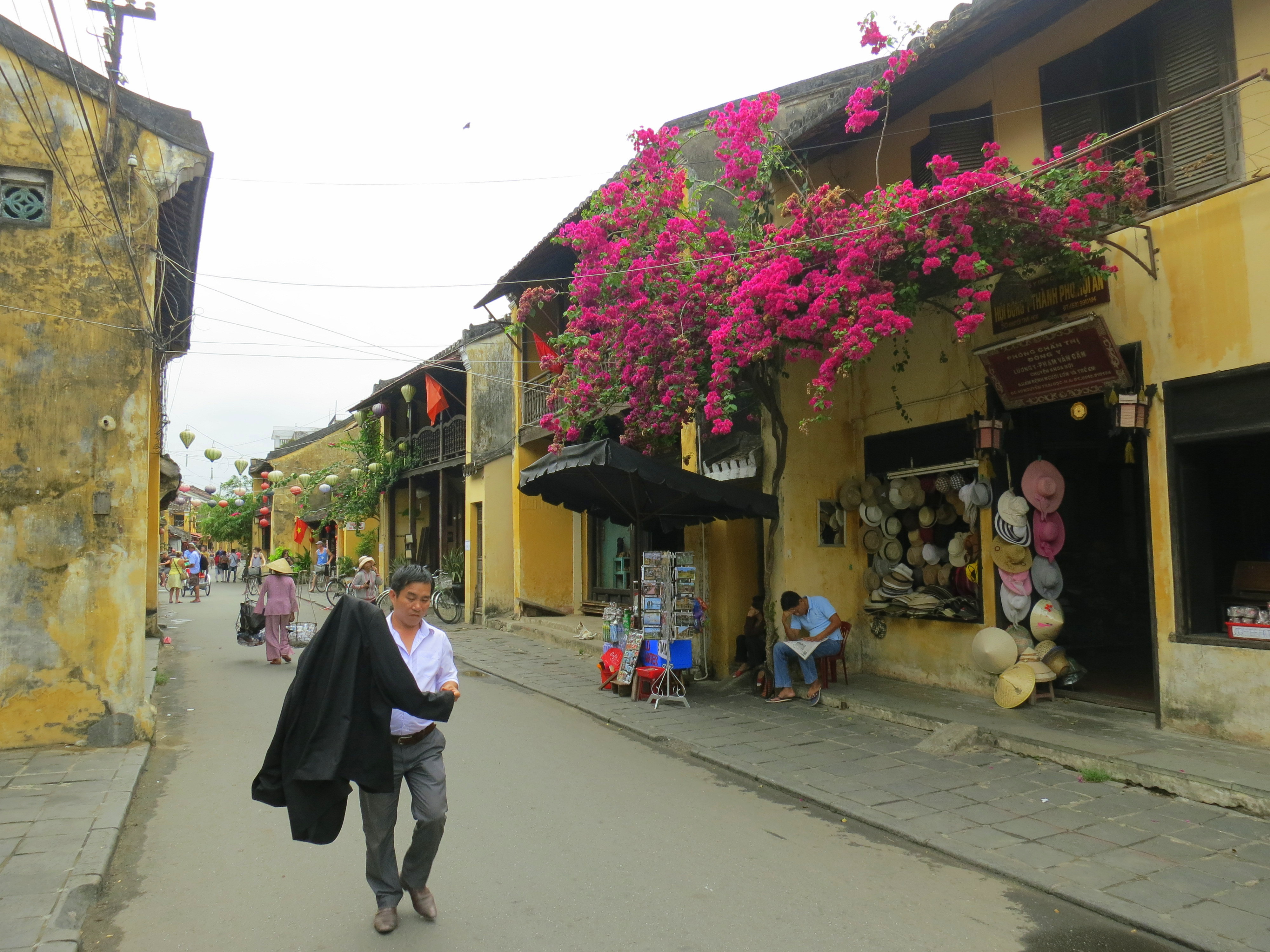
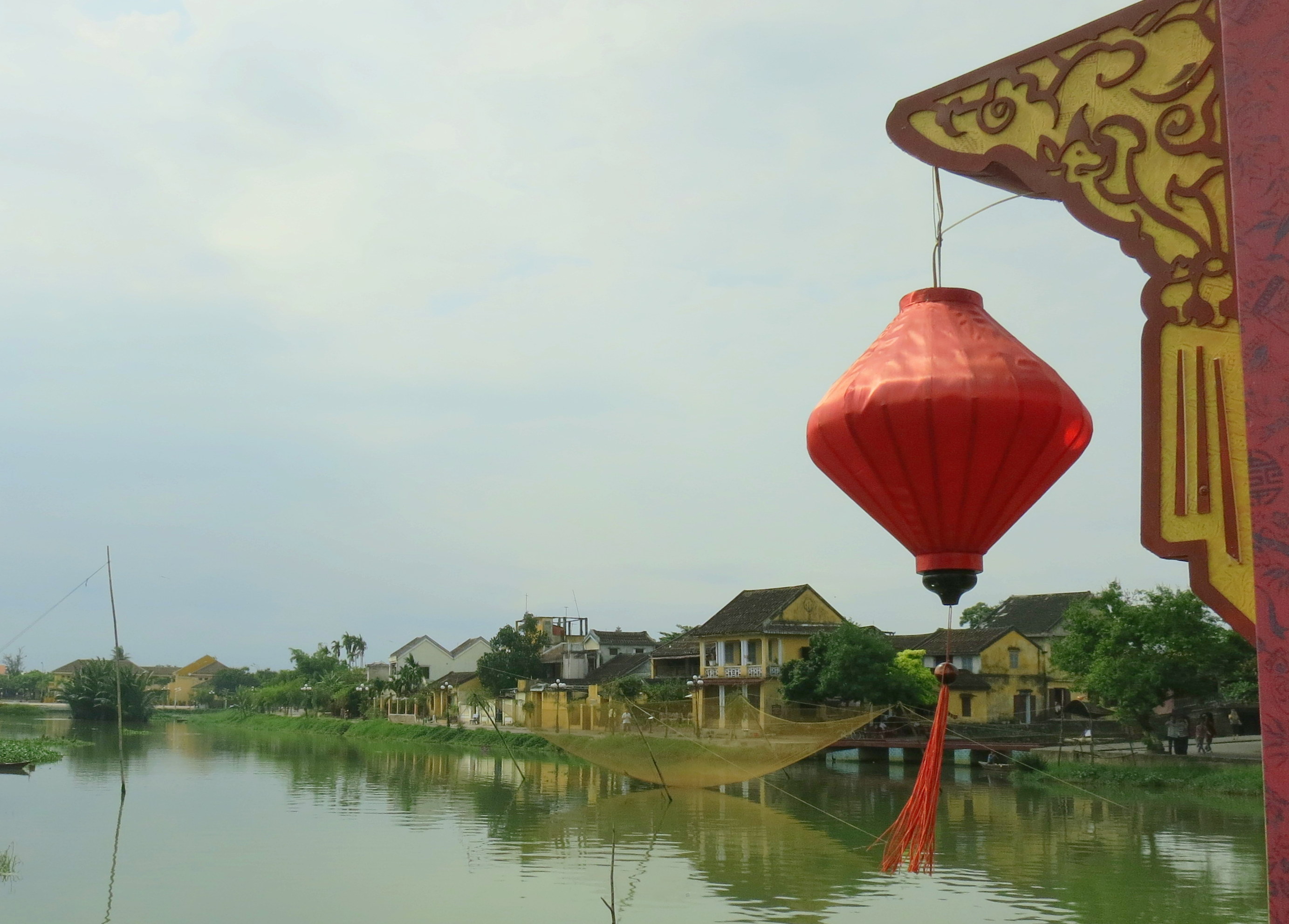
Along the river in Hoi An

Along the river in Hoi An

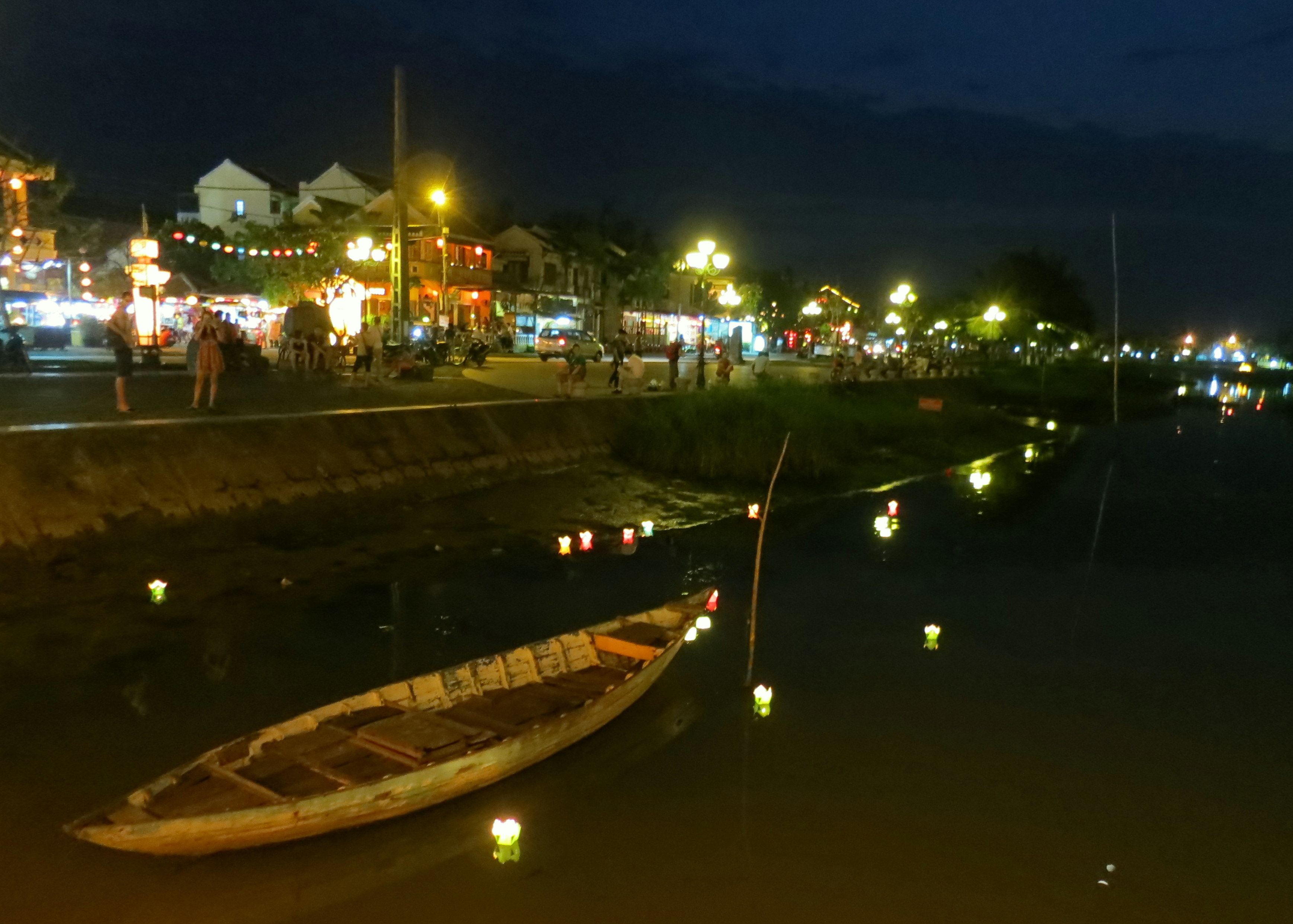
Hoi An was picturesque as any town I’ve been to, and it was a relief to walk around in a mostly pedestrian-only area for awhile, relaxing into the bright colors and quiet atmosphere, eating cao lau noodles and running my hands over rich fabrics in the shops. But even though I wandered at night under the lanterns strung across the streets, a part of me still thinks that maybe they shut the whole set down overnight, then open up this peculiar theme park again the next day.

hoi an

Hoi An by night

Hoi An by night

hoi an

Oh yeah, I took model shots

Oh yeah, I took model shots

A Short Visit to Nha Trang in Low Season

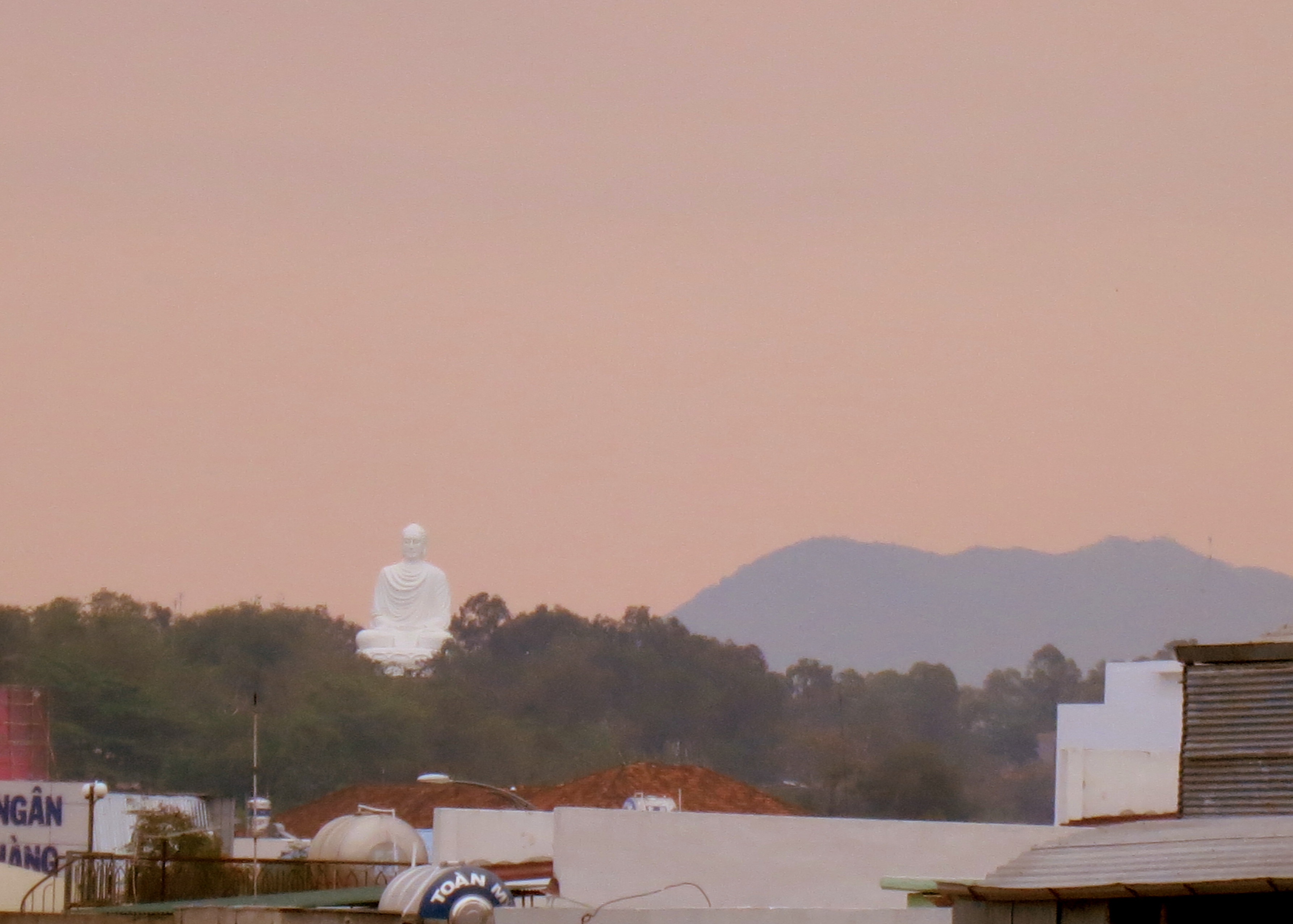
I didn’t intend to go to Nha Trang, a coastal city in southern Vietnam, and the way things turned out, I wish I hadn’t. But it was a good midpoint stop on the way from Ho Chi Minh City to Hoi An, and my friend’s dad had described it as a “the Riviera of Vietnam,” so I thought I’d stay a couple days to lay out before moving on. As it turned out, I got hit by a car my first full day in town, and I never made it as far as the beach.

Buddha in the distance

Buddha in the distance

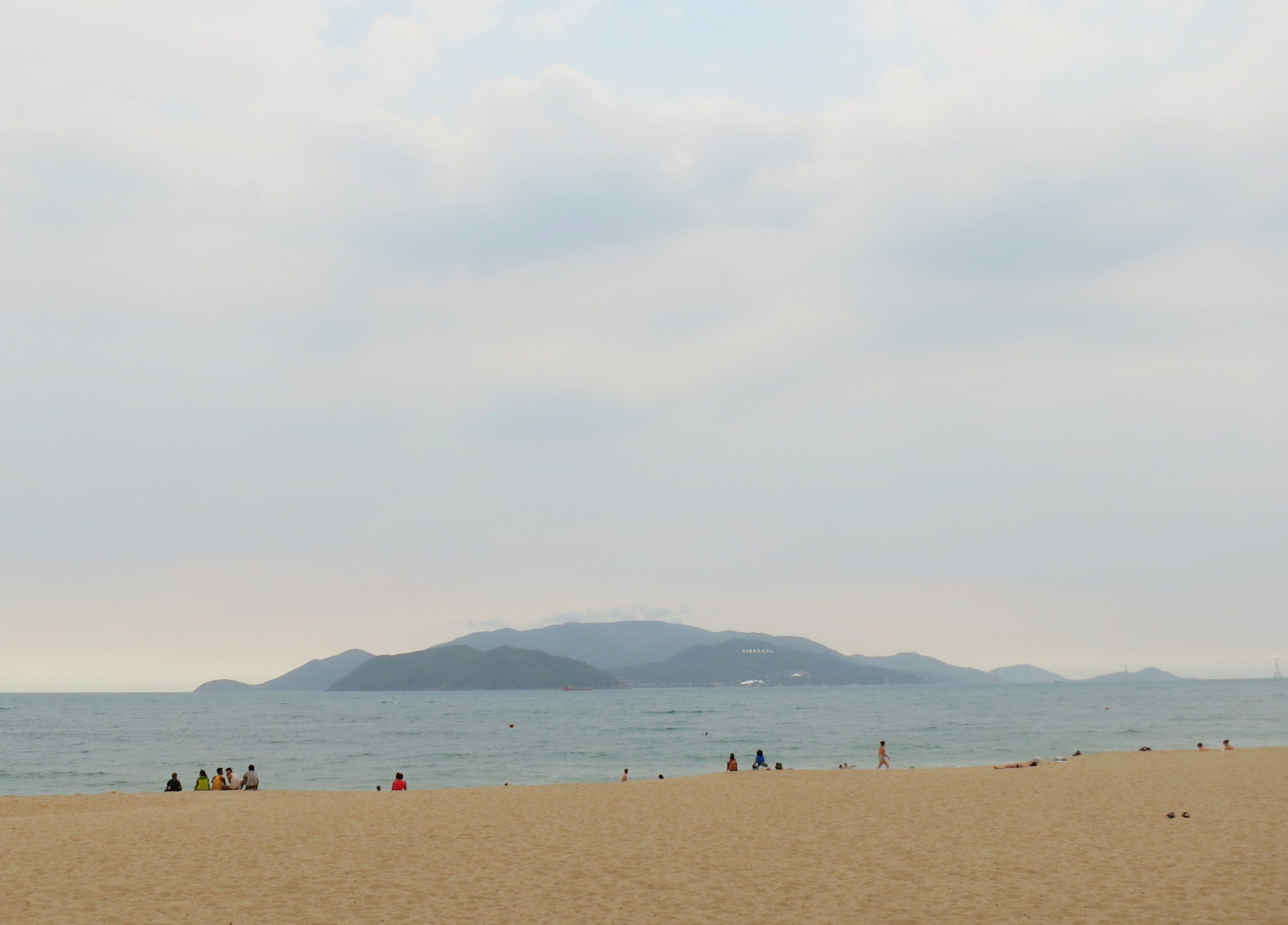
The “hit by a car” story is one for another day, but suffice it to say I didn’t explore too much of the town after that. (Yes, I’m fine now, and it’s a funny story in retrospect, so watch this space.) Nha Trang was in low season, anyway; most tourists come during the summer. The weather was warm, of course, but overcast and sticky. Not great for laying out or even working up the energy to go swimming. I saw maybe a couple kids in the water when I took a walk to the edge of the beach. But the wide expanse of sand and the view of hilly islands in the distance hinted at what a nice place this would be in the sunshine.

The beach at Nha Trang

The beach at Nha Trang

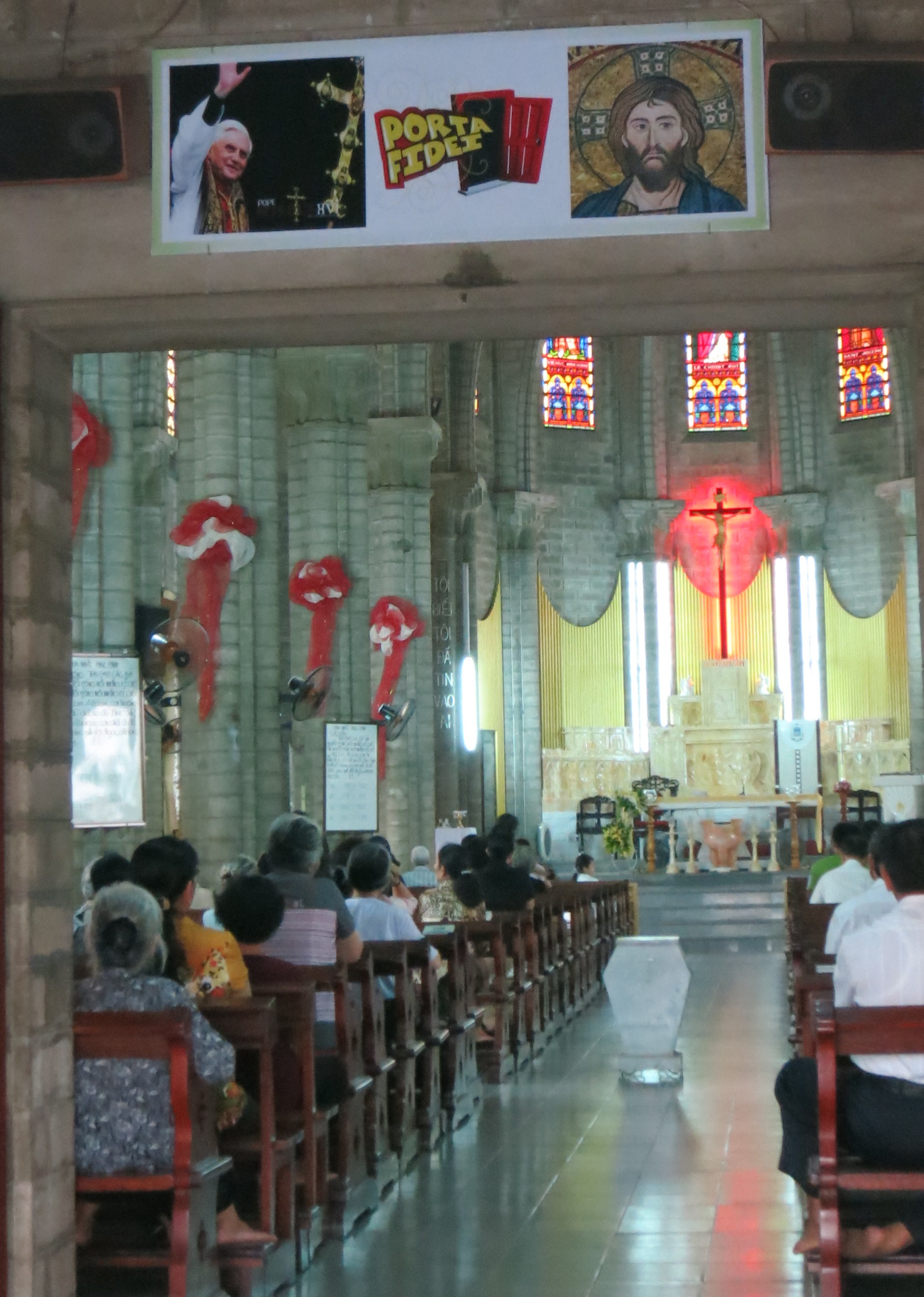
I walked up to the Roman Catholic cathedral, which was a strange sight after the many temples I’d seen throughout Southeast Asia. Services were being held when I got there, so I didn’t go in for a good look around, but I did glimpse the neon red cross blazing over the altar. I had to step aside for several elderly ladies zooming up the hill on their motorbikes to attend church.

Nha Trang Cathedral

Nha Trang Cathedral

Neon Jesus

Neon Jesus

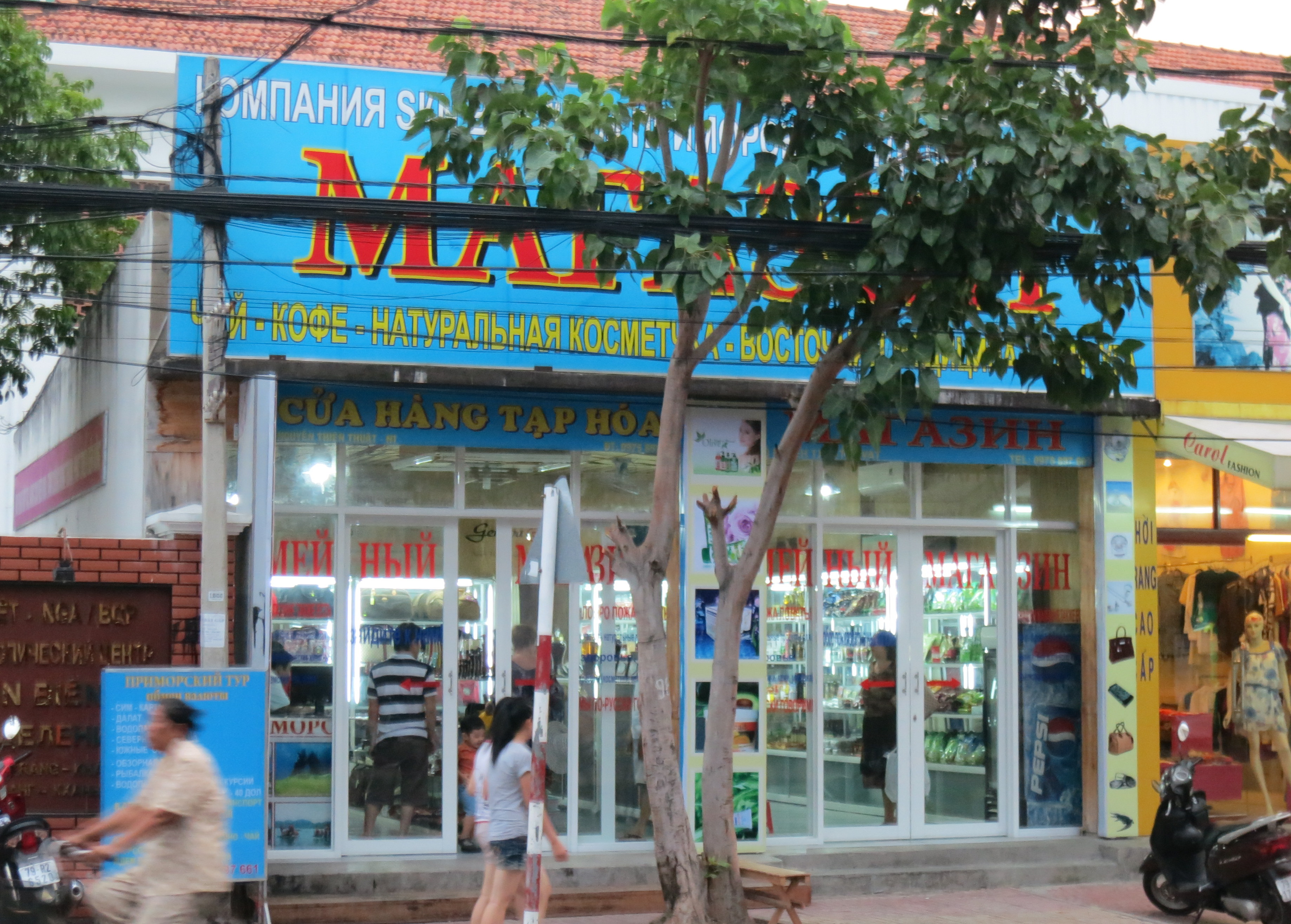
nha trangI got lost on the walk back to my hostel, which was great, because I walked through a couple different neighborhoods and got an idea of what the town is like. I walked through an entirely Vietnamese neighborhood, where I smiled at the behind-the-hand giggles my size and whiteness prompted. I then passed through a tourist area filled almost entirely with Russians; this is a popular resort town for people from the eastern part of Russia. Finally, I got within blocks of the beach, an area that mixed English and Russian signage and was entirely populated by Vietnamese tourist businesses and their customers.

I'm not sure why I didn't take any better photos of the Russian signage in town--it was striking to see Vietnamese, Russian, and English all on one storefront

I’m not sure why I didn’t take any better photos of the Russian signage in town–it was striking to see Vietnamese, Russian, and English all on one storefront

Cycle taxis in Nha Trang

Cycle taxis

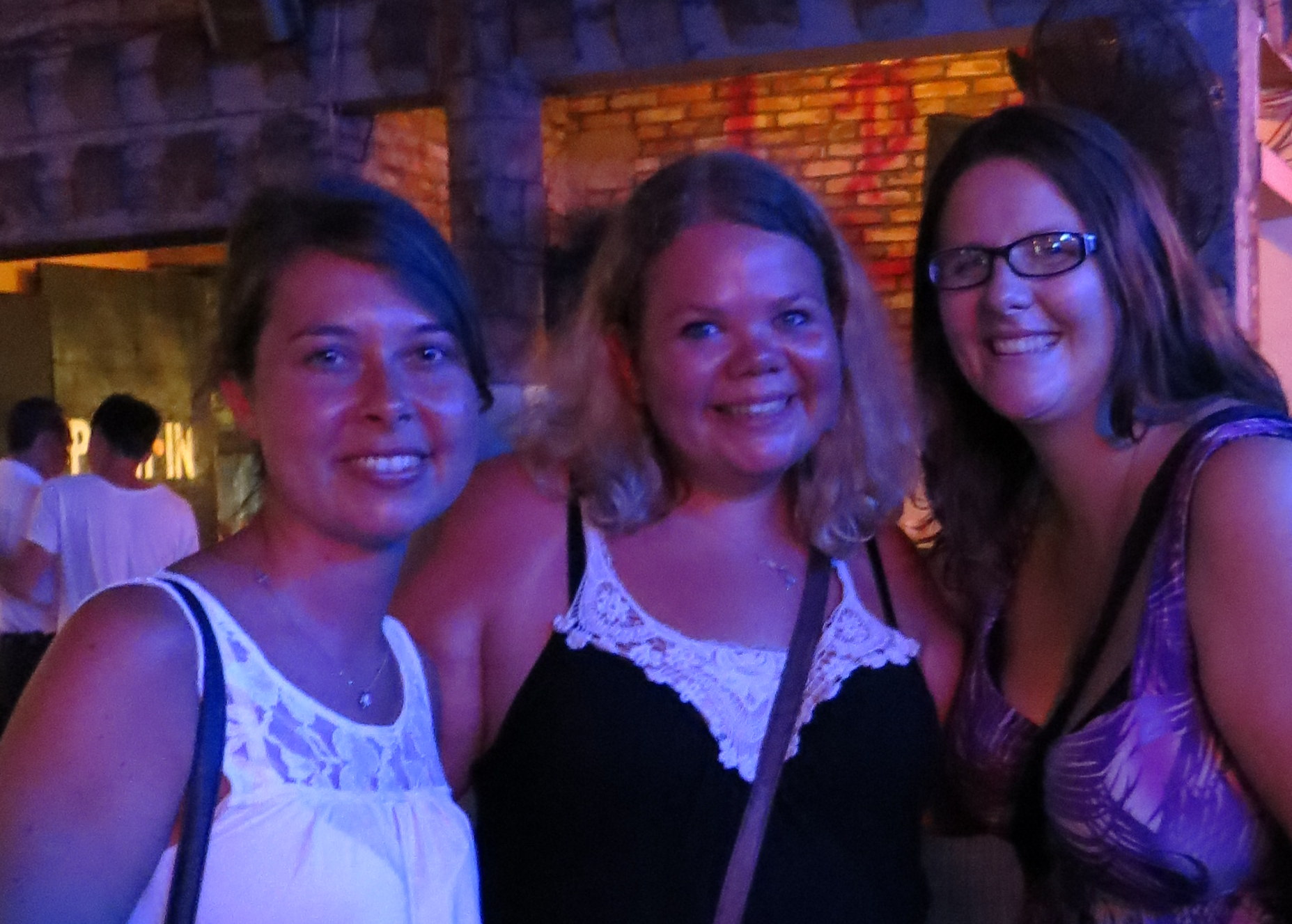
I’d met a couple of lovely women on the train over from Ho Chi Minh City, and we met up for dinner and drinks at one of the many tourist-and-expat bars in town. Laura and Kate cheered me up immensely after my scrape with a 3,000-pound metal bully, and we danced the night away at an establishment that guaranteed “Free Headache Included” at the bottom of its drinks list. Kind of a fitting end to my brief, strange visit to Nha Trang.

Kate, Laura, and me

Kate, Laura, and me